The Cloud by Käfer - Munich
Dining in a glitzy museum
Rating: 16/20
Where: Munich, Germany
When: Dinner for 2 on 21 July 2026
Cost per Person: Tasting menu 290 Euro ($330), Wine pairing 160 Euro ($185)
Accolades: 2 Michelin Stars
Why: South America inspired dishes with many local ingredients from Bavaria
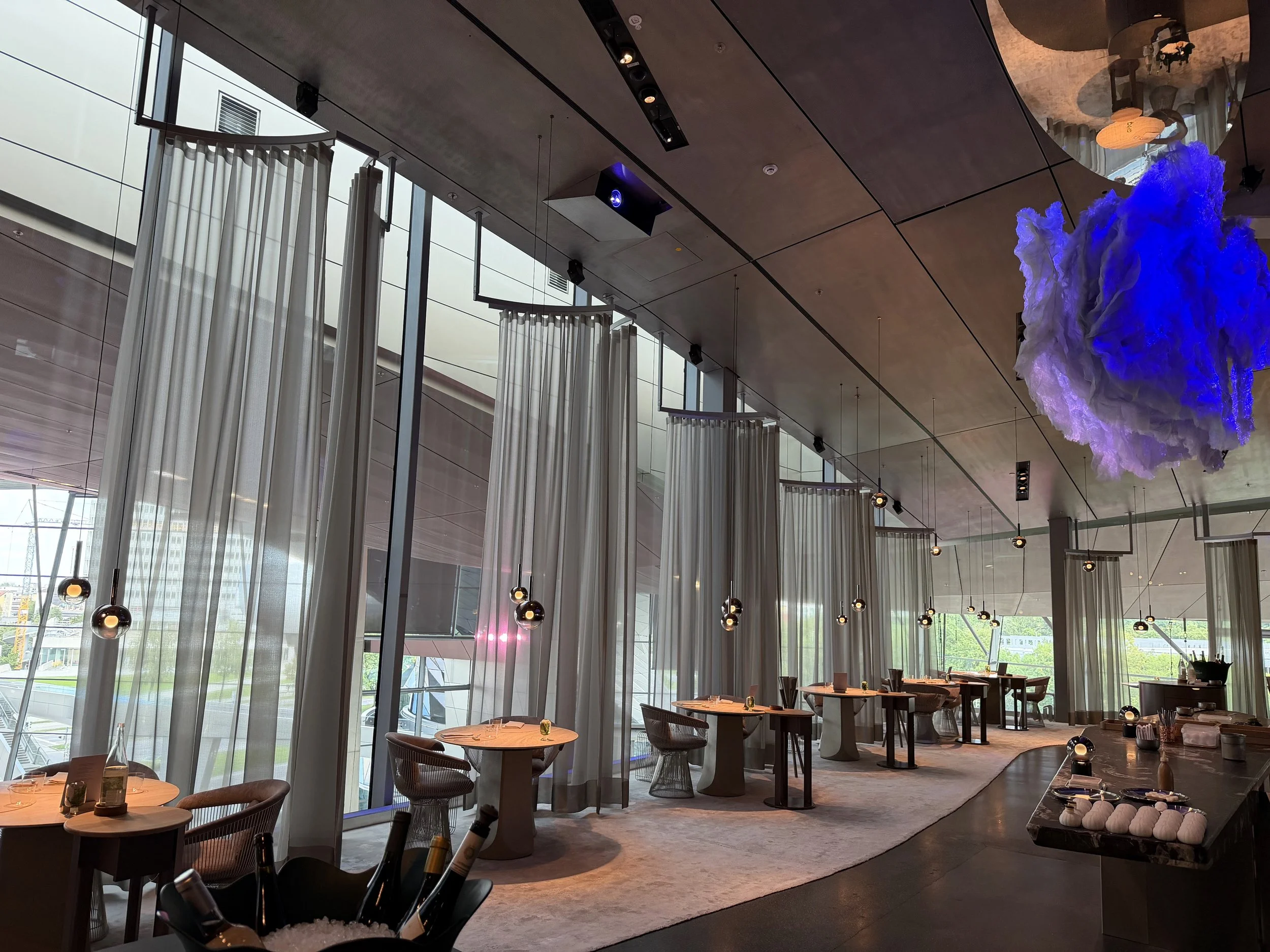
The restaurant “The Cloud by Käfer” not only has a slightly unwieldy name, but also a unique location and an interesting culinary concept. Let's start with the location - the restaurant is inside Munich's BWM-Welt (literally: BWM-world), a museum owned by the eponymous car company that happens to be headquartered right across the street. The futuristic building looks newer than its over twenty years of age, and is the most visited tourist attraction in Munich - not a bad accomplishment for a city that is not exactly short on sights to see. One can assume that the vast majority of BWM-Welt's visitors are blissfully unaware of The Cloud's existence, since the restaurant is hidden on the building’s third floor, accessible by elevator only during business hours.
The Cloud is not the first restaurant to occupy this space. It follows two-Michelin-starred “Esszimmer” (literally: dining room), where The Cloud's head chef Jens Madsen had worked as a executive chef. In early 2025, he oversaw a complete remodel of the space, to better fit his new culinary concept. The plan was to create an entirely new menu once a year, serving dishes inspired by a specific region of the world. The restaurant’s first “season” (as they call it) ran for one year after opening, and was based on the chef's travels to Africa. It was a great success, earning the restaurant two Michelin stars and a “best new opening” award from Michelin. Our visit was right at the beginning of the restaurant's second season, which was now focused on the cuisine of the Amazon basin. Naturally, I was curious to see how the results would compare to what I had seen on my recent trip to Brazil (see here and here).
I should note that my dining companion at The Cloud did not come from my usual cadre of more or less willing family members and friends. Instead, I had dinner with a writer from a German business magazine, interviewing me about my travels to three-Michelin-starred restaurants around the world. As a result, this was pretty much the opposite of an anonymous visit. But I don't think that this materially affected the meal served by the restaurant, and I still paid my bill as usual at the end.
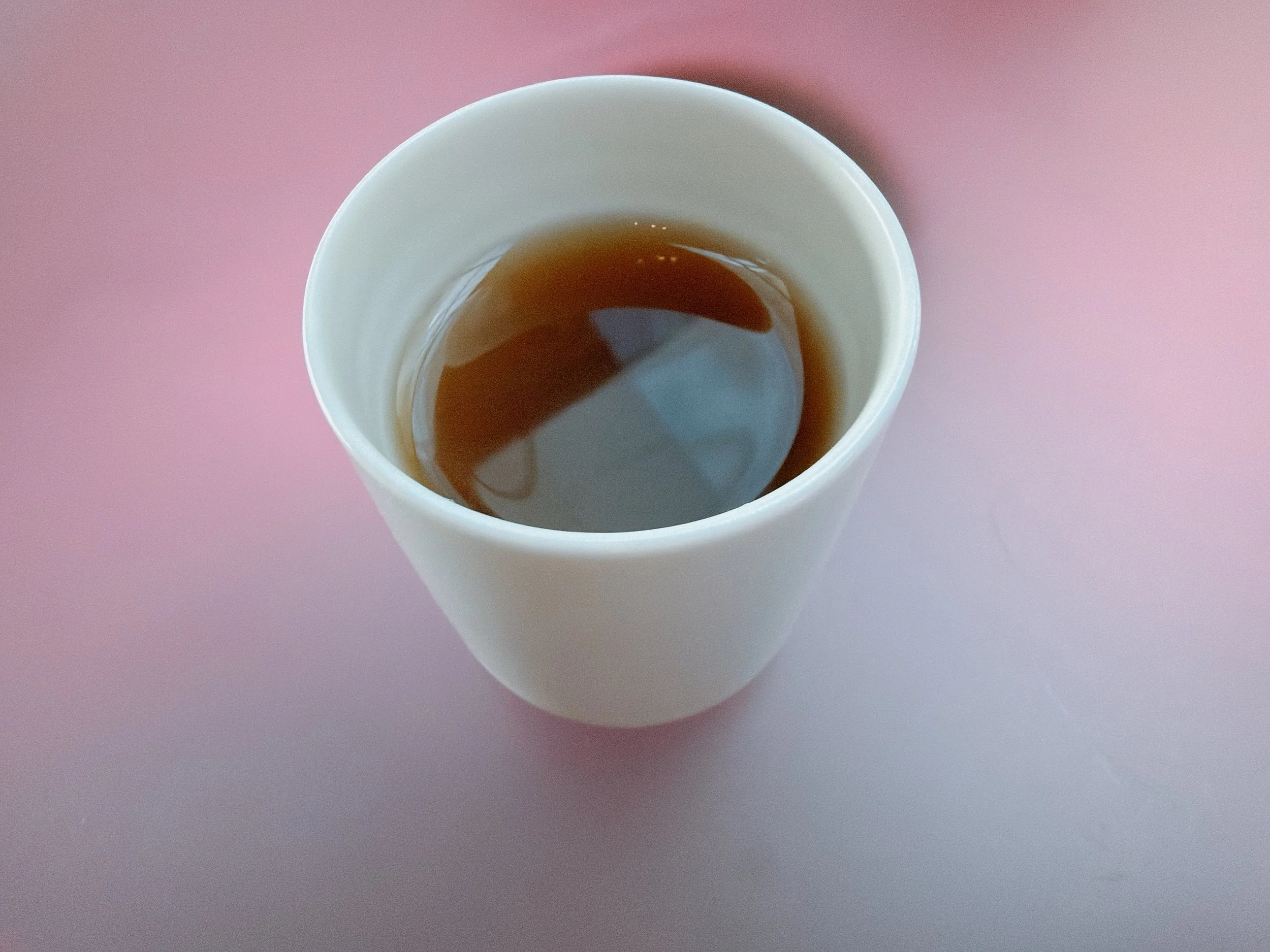
Our experience at The Cloud started on the ground floor of the museum in front of the elevators. Here, guests were greeted, and then whisked up to a lounge on the third floor. While standing at high tables overlooking the museum, we were served a welcome drink based on cracked cocoa beans, limes, tonka beans, and coconut water. The drink at first had an almost intangible flavor, presumably from the cocoa. On later sips, it shifted more towards a sweet and acidic taste profile reminiscent of tamarind. Not bad, and a gentle introduction to Amazonian spices 17.
While standing at the high tops, we also had the opportunity to order an aperitif, which was not a bad idea since there would be many more appetizers to come before any pairings might start. We tried a refreshing (non-alcoholic) sparkling white tea made by a local brewery (12 Euro, about $14).
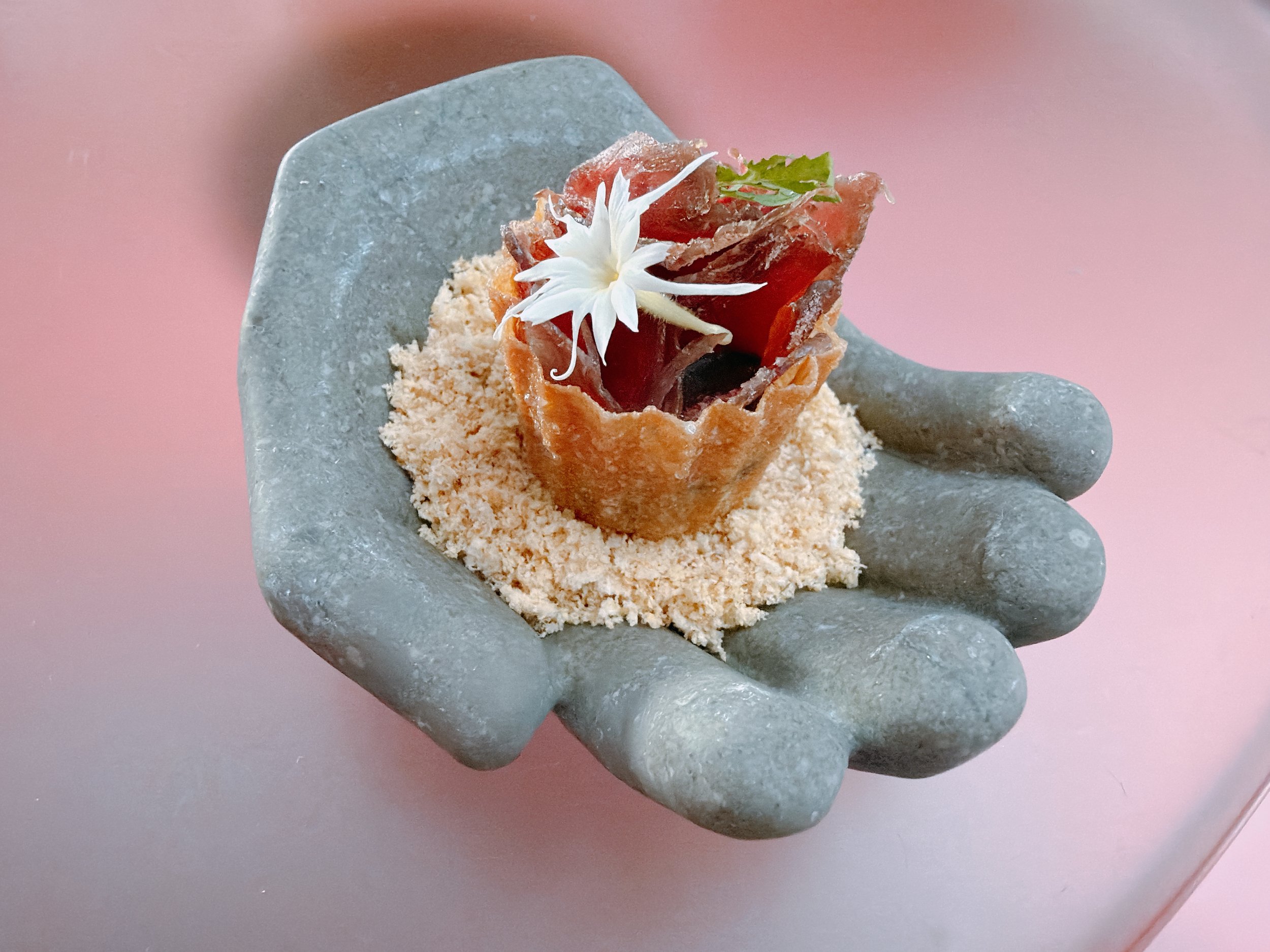
Next was a small bite prepared at a food station next to the high tables. A crunchy cracker cup was filled with cassava, açaí, green strawberries, and salted roast beef. The whole was seasoned with a lightly acidic cream. The beef on top curiously reminded me more of a Bavarian Brotzeit rather than something from South America. Either way, this was quite tasty 17.
After the chef gave us an introduction to the restaurant's concept, we were led into the main dining room. In this long room, large floor-to-ceiling windows overlooked the museum. Opposite the windows was a large stone slab that doubled as a cold station. The main kitchen was not visible from the dining room. Curtains between tables gave one some sense of privacy. The interior design was very modern - no white table cloths here. Hanging from the very high ceiling was the eponymous “cloud”, lit up in different colors throughout the evening - starting with blue, and ending on a sunset-colored orange. The moving cloud was supposed to represent the travels that the cuisine did around the world. My dining companion remarked that the space had the feel of a hotel lobby, somewhat reinforced by the background music.
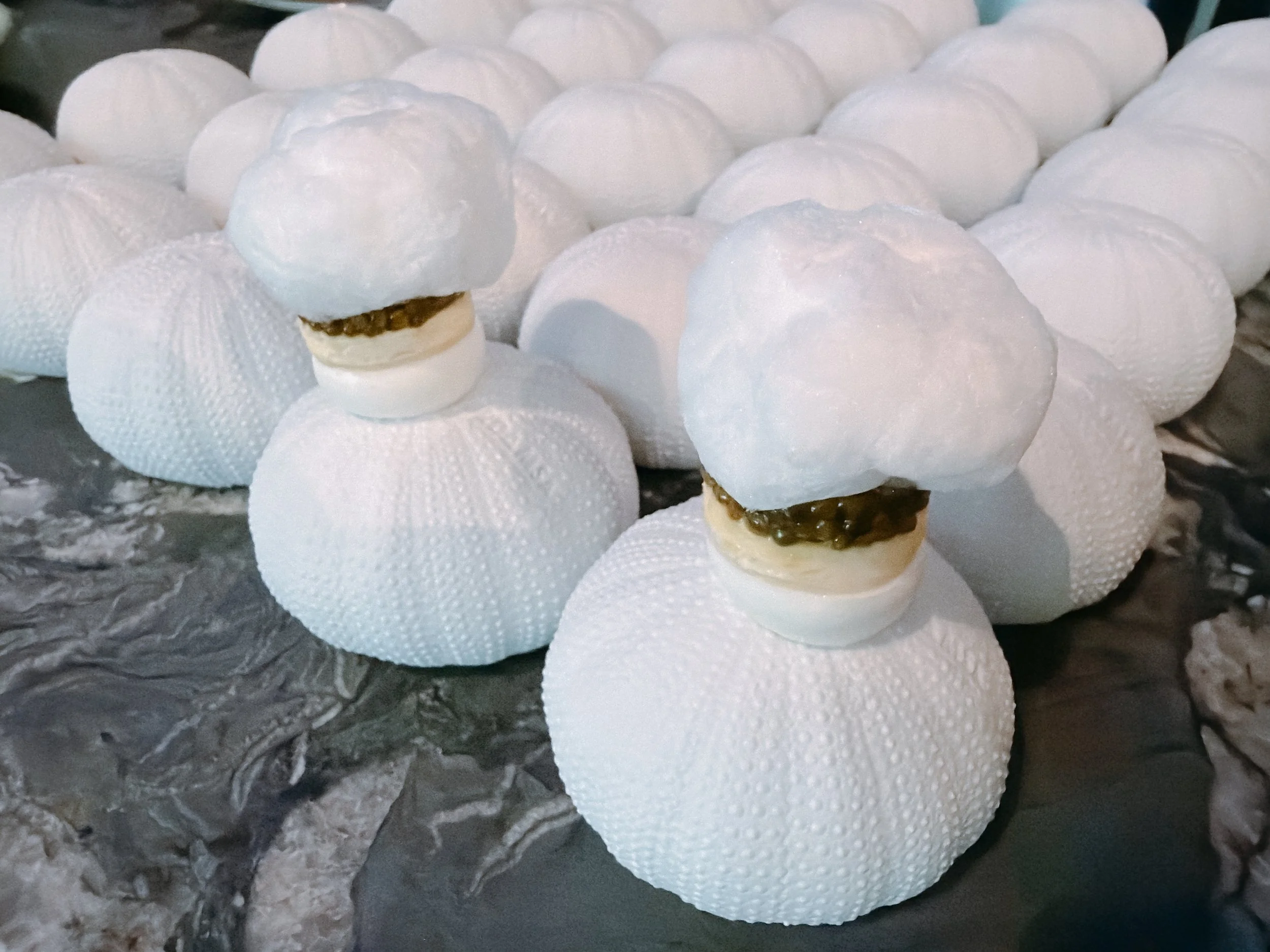
Before we got to sit down at our table, we made one more stop at the aforementioned cold station. Here we were served the single holdover from the first season’s menu - an edible representation of a cloud. This dish was a stack of different ingredients, among them a lime-ginger mousse, caviar, a pickled radish, and finally - on top - a bit of cotton candy. When eaten in a single bite, all these ingredients combined so well that it was hard to make out any of them individually. The result was quite tasty though: sweet with a hint of acidity 17.
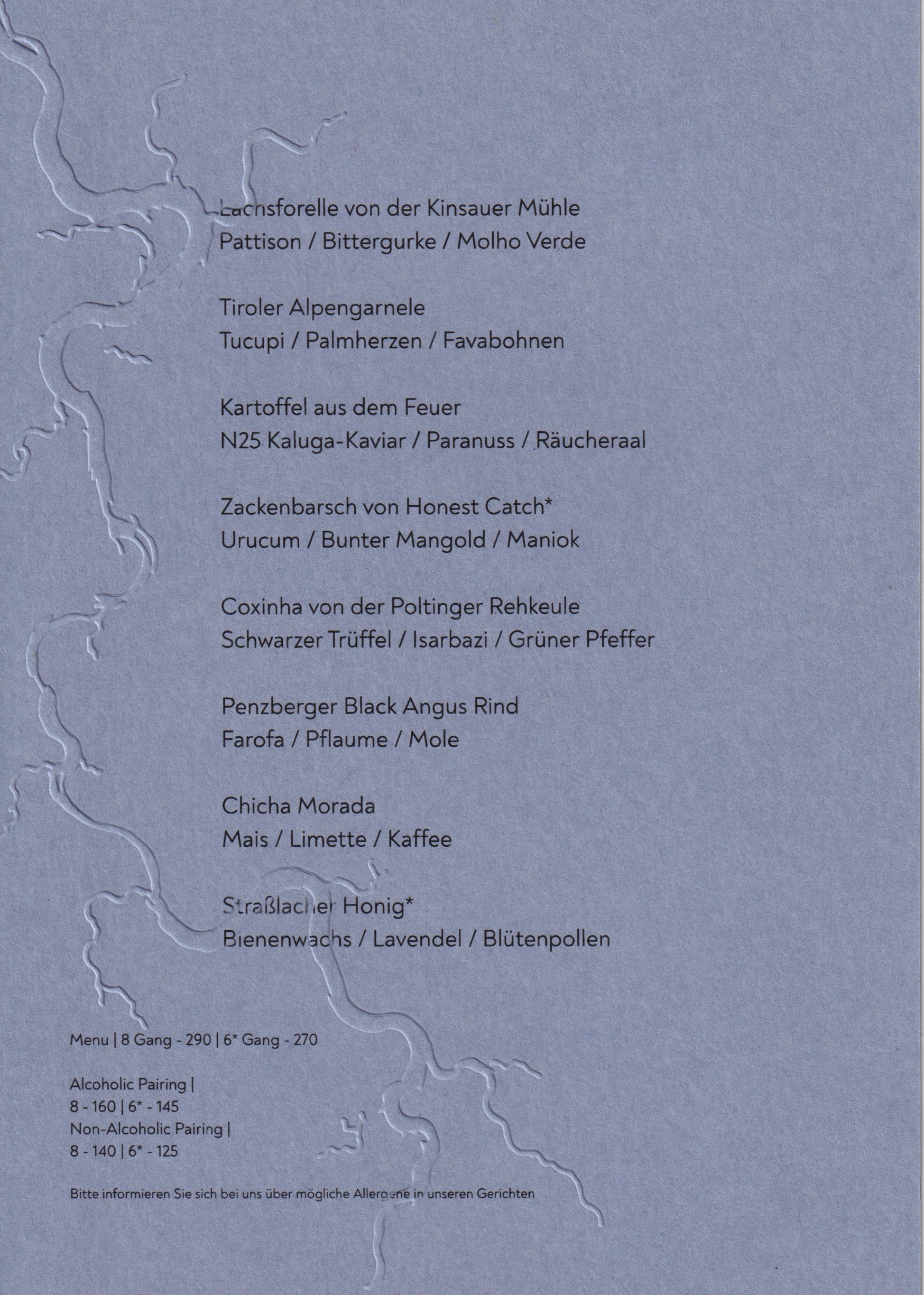
Once we were seated, we got to choose among the menu options for the remainder of the evening. The restaurant served an eight course tasting menu for 290 Euro ($330) that could be shortened to six courses for 270 Euro ($310). Drinkswise, there was an alcoholic beverage pairing consisting of six wines and two cocktails (160 Euro, $185) and a non-alcoholic pairing with eight mocktails (140 Euro, $160). Each pairing became 15 Euros cheaper if one opted for the shorter menu. I went for the alcoholic pairing, and the wines and drinks were consistently very good, however one cocktail was a questionable pairing for the food (see below). The non-alcoholic pairing reportedly had similar issues: these were good mocktails with complex preparation methods, but they weren’t always the best match for the food.
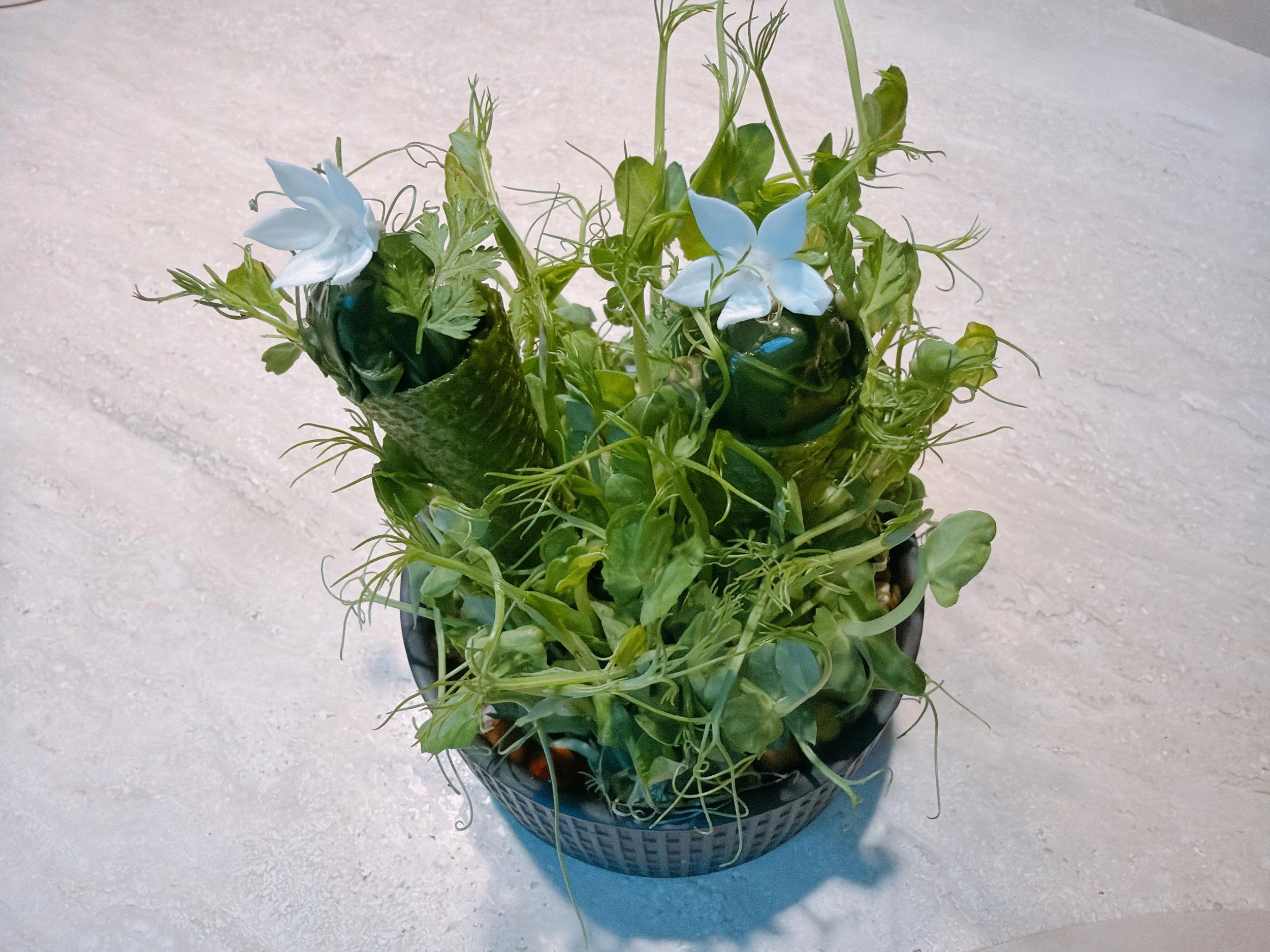
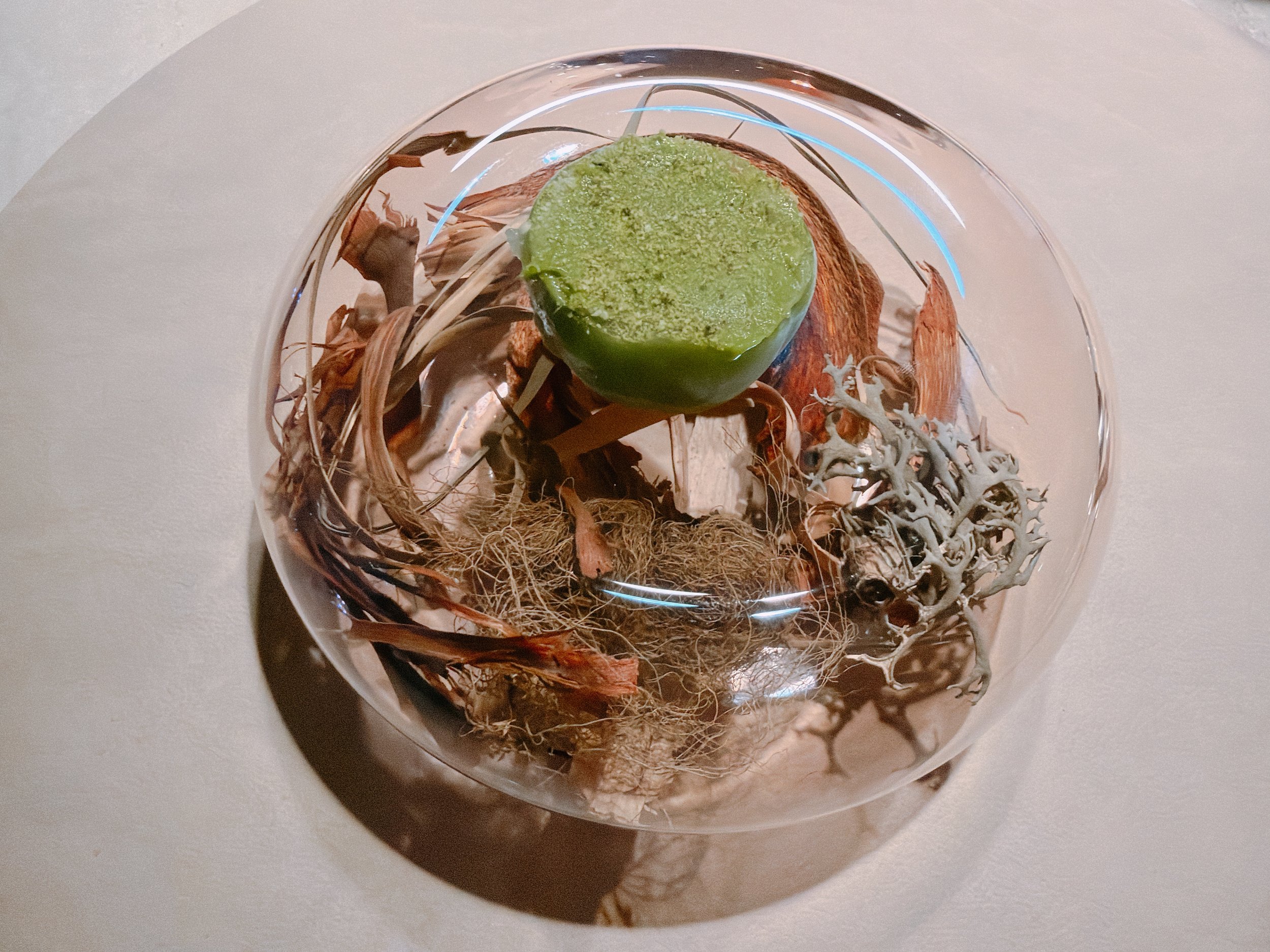
This first of three amuse bouches served at the table was a green cone made from plantains that was filled with an equally green cream consisting of avocados, plantains, and chilies. It arrived nestled among green foliage - a visual representation of the rain forest. A fresh tasting, but pretty dense, savory dish that had a hint of spice 17.
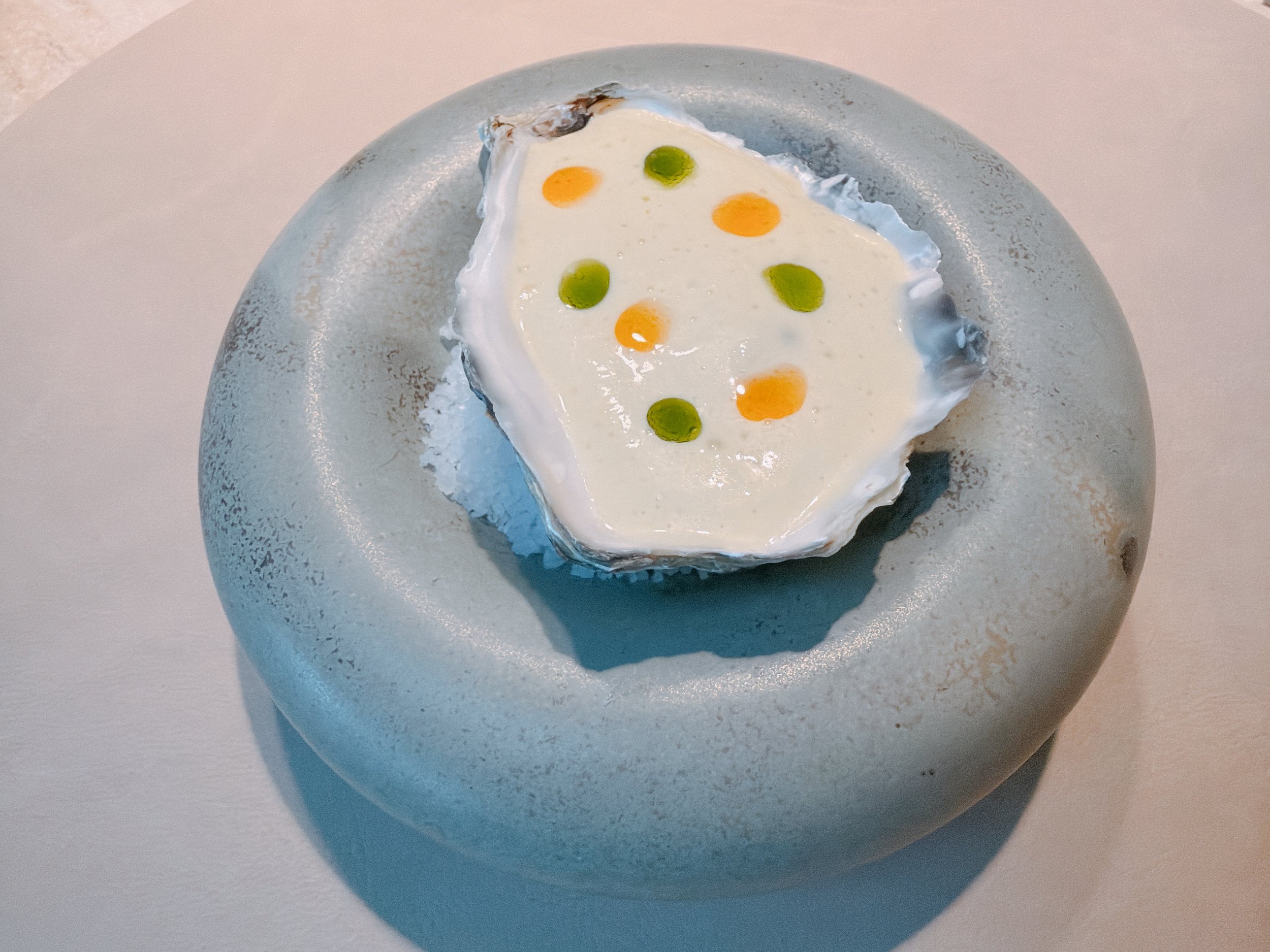
An oyster “ceviche” was served in an oyster shell with a corn foam and two kinds of chili. Thanks to the corn, this dish was slightly sweet, and it tasted quite fresh. There was some texture as well, seemingly from onions and passion fruit seeds. Oddly, the result tasted neither much of oysters (the other flavors were stronger), nor was it particularly acidic - as one might have expected after hearing the word “ceviche”. Not a bad dish, just not necessarily what one would have expected based on its description 17.
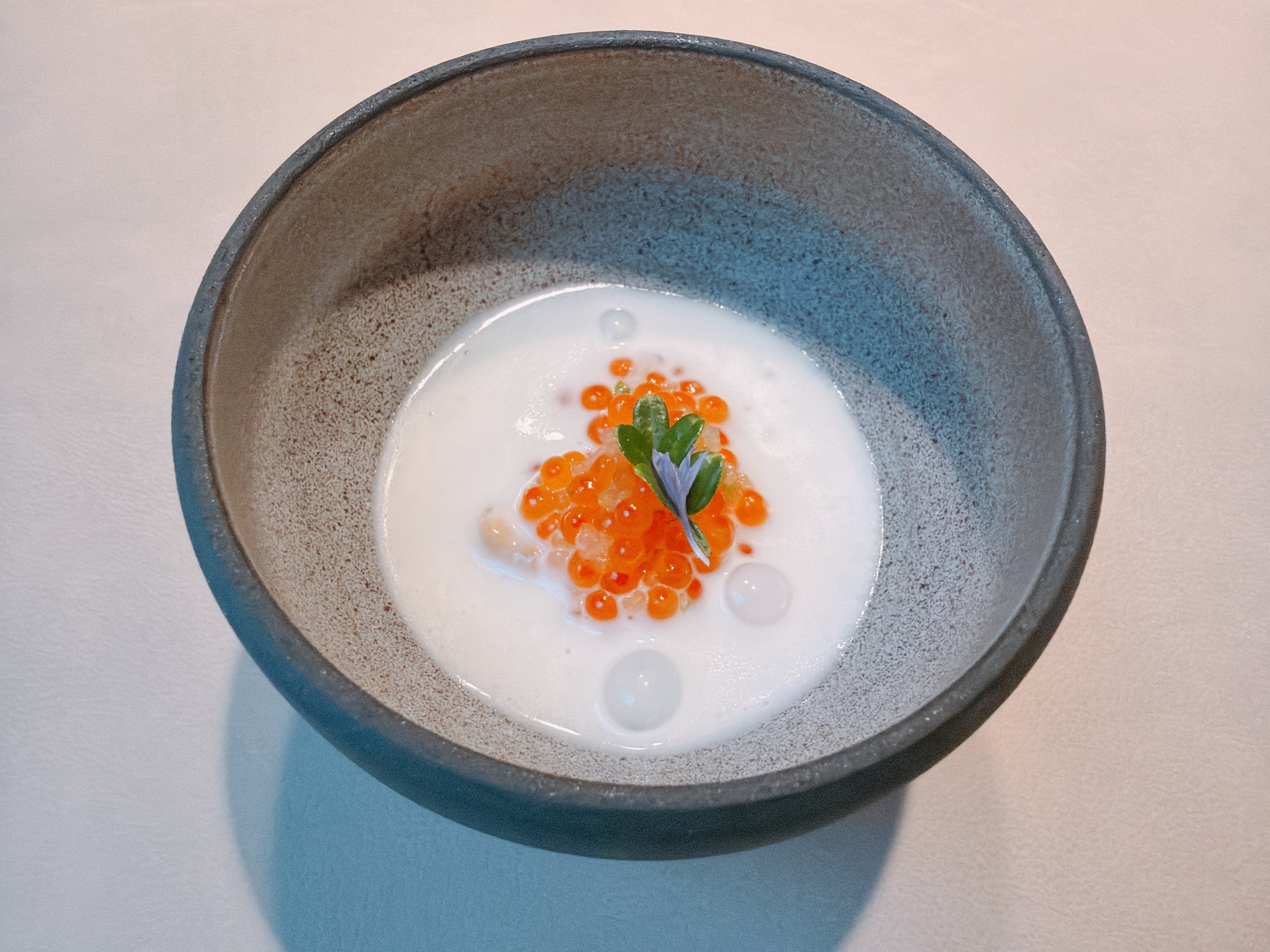
The last amuse bouche was a cashew panna cotta, seasoned with cocoa and a lime vinaigrette, and topped with a cashew foam, finger limes, and fish roe. Served warm, this dish was creamy, but not particularly heavy. The cashews underneath the foam were nicely crunchy, and the dish as a whole had a light cashew flavor that was balanced by the salty roe. A nice combination, and a great showing for the frequently underappreciated cashew nut 18.
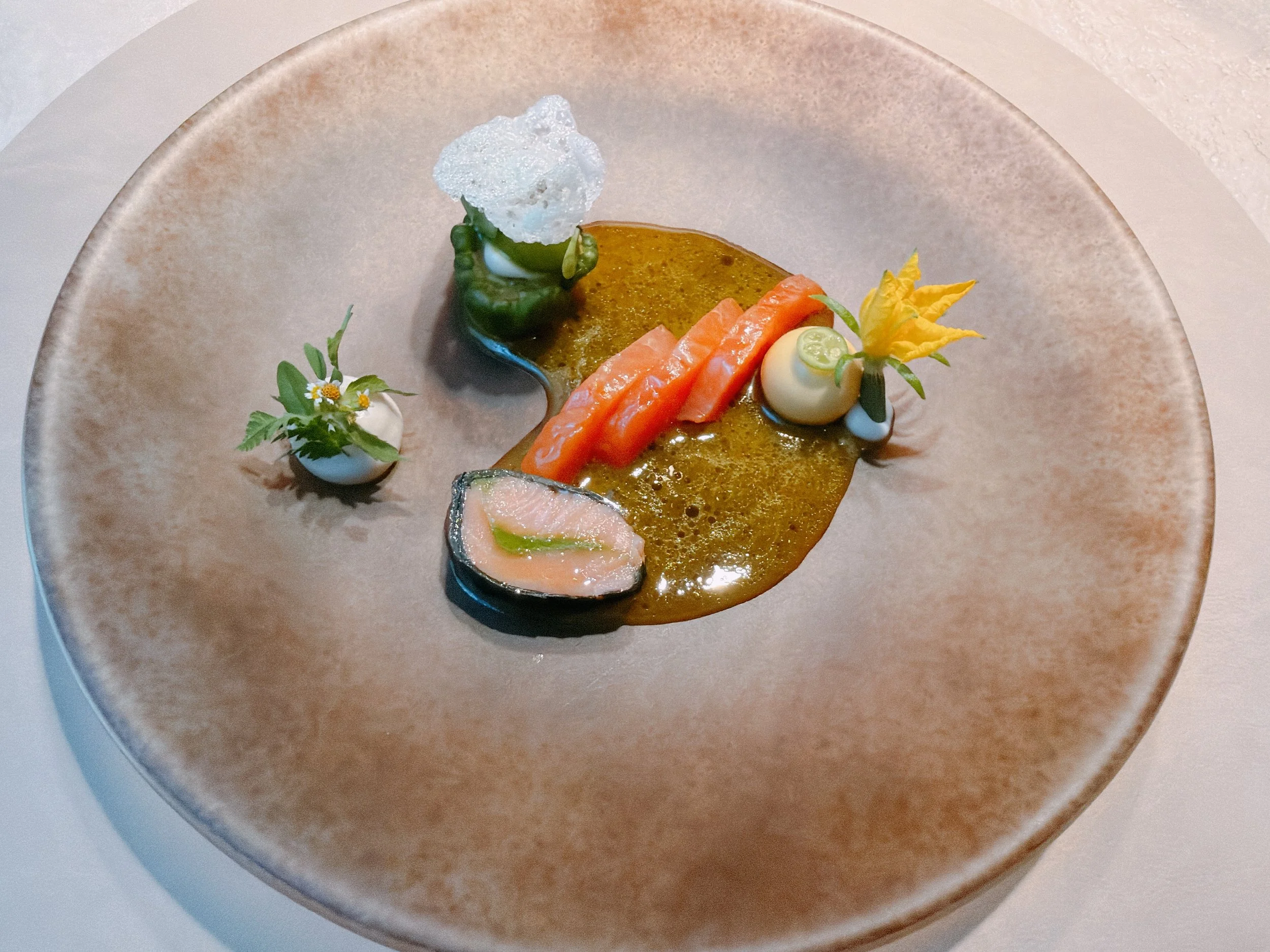
The official first course featured local salmon prepared two ways: first, simply marinated in salt, and second, cooked wrapped in leeks (as a local reimagination of the traditional Amazonian method of cooking fish wrapped in banana leaves). The accompanying sauce was a fish stock seasoned with pumpkin oil. There were also a few small side dishes: a squash filled with a bitter melon sorbet and topped with a cassava chip, as well as two little balls made of pumpkin and corn cream, respectively. The fish was nicely cooked, making it tender and not too dry, and the sides were consistently lovely with good flavors and an acidity that balanced their creaminess. My only issue with this dish was that there was a bit too much going on - the individual components were lovely, but they didn't really cohere into a single whole 17.
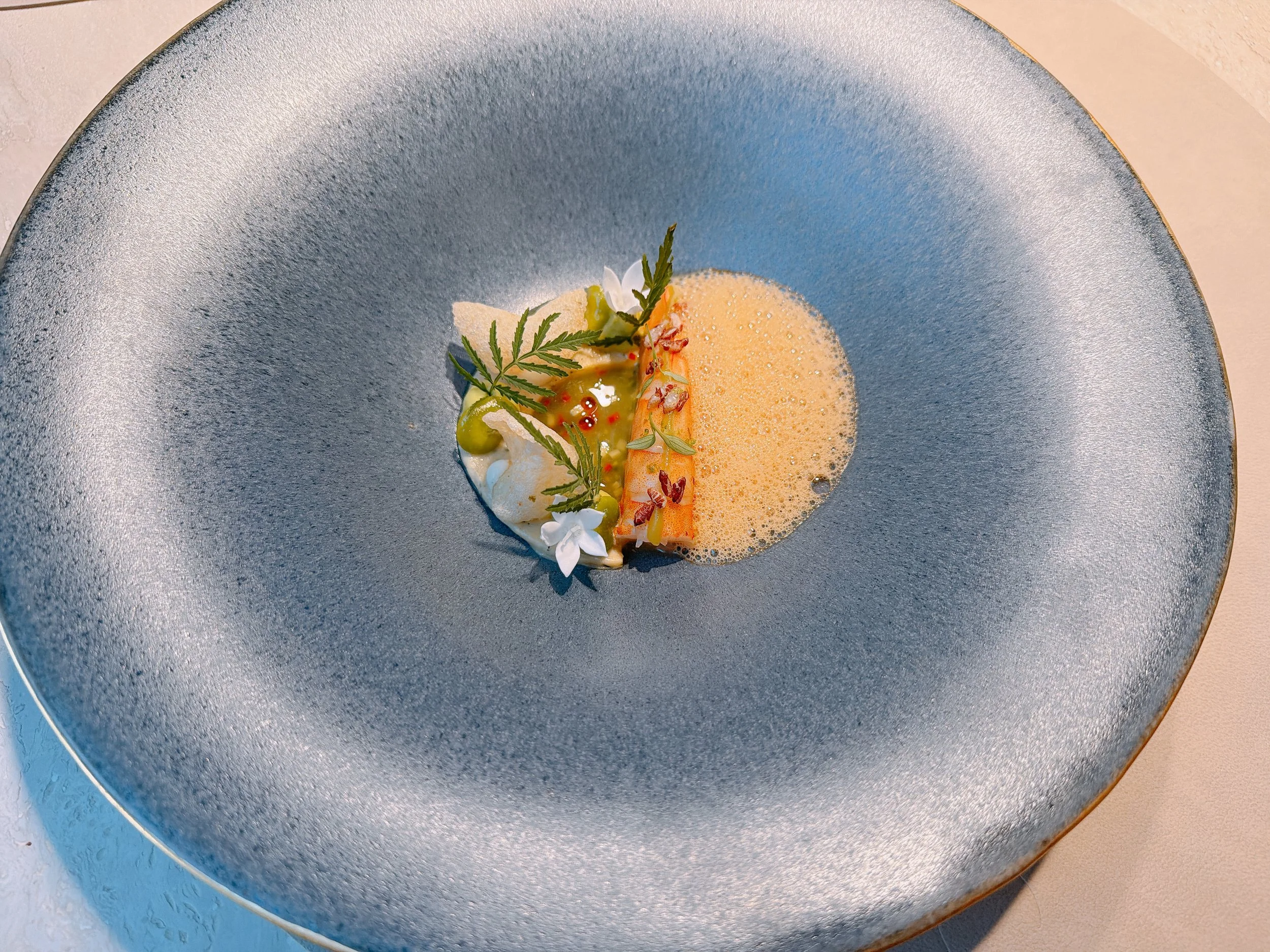
An alpine lake shrimp was served with tucupi - a traditional sauce made from fermented cassava. Also on the plate were a heart of palm mousse, a bean puree, some broccoli, lime zest, and a green salsa. The shrimp itself was amazing: it was cooked perfectly: juicy, salty, and even crunchy thanks to what looked like roasted grains on top (18 or 19). The rest of the accompaniments were also nice, apart for the heart of palm ring that had an interesting flavor but an odd texture. Ignoring that, though, a compelling preparation 18.
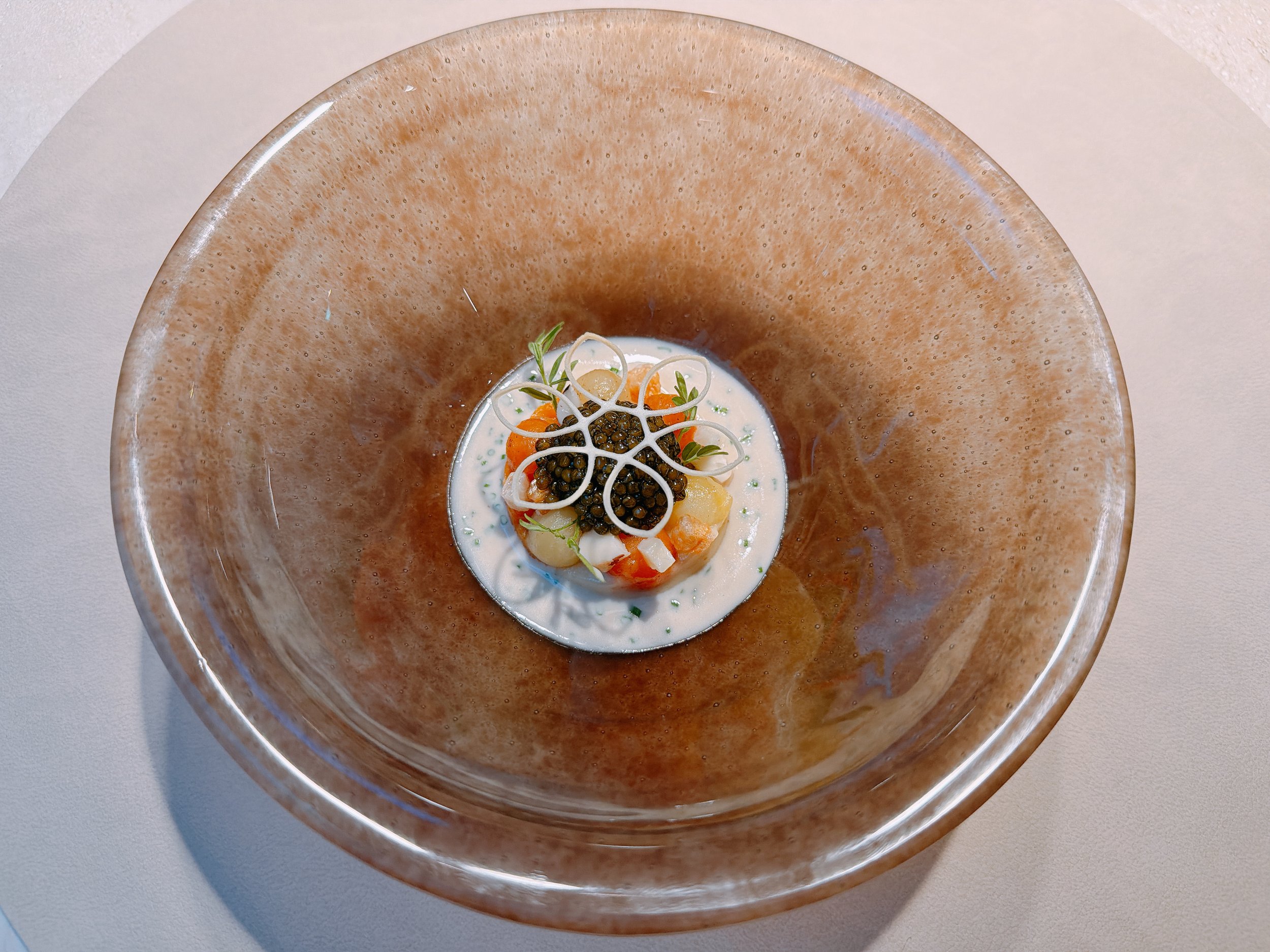
The next dish contained small balls of fire-roasted potatoes and yams, as well as smoked eel and chopped Brazil nuts. They were topped by N25 caviar and surrounded by a Brazil nut milk sauce. The potatoes and eel were nicely cooked - smoky and savory. The nuts added some crunch and a bit of fattiness. All in all, though, this dish felt more German than South American. The preparation techniques might be motivated by the chef's travels to the Amazon, but they were not directly apparent from what was on the plate 17.
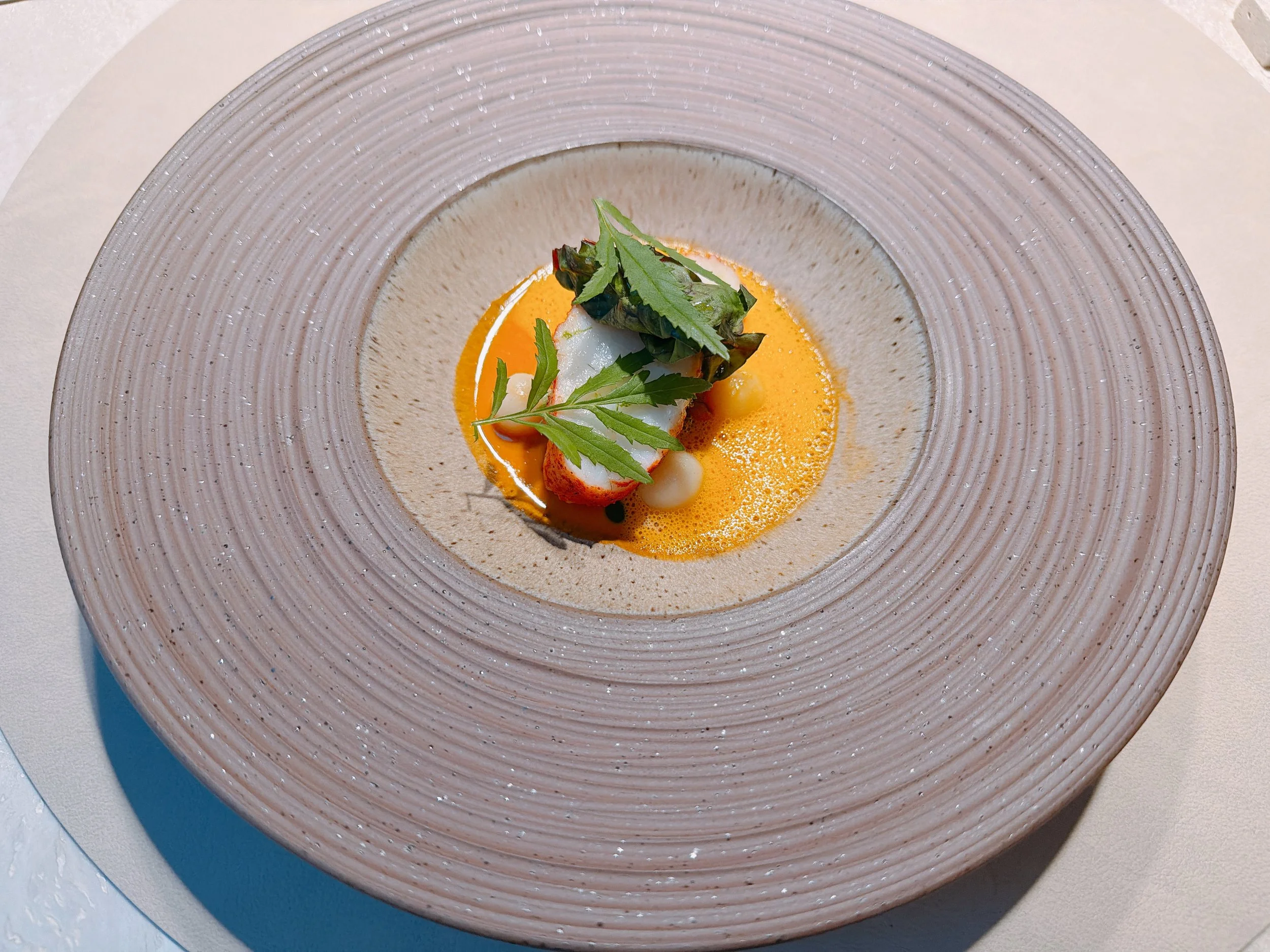
A filet of grouper had been prepared with a red colored rub consisting of annatto, bay leaves and onions. Also on the plate: some swiss chard, snow peas, and gnocchi made from cassava roots. The gnocchi were excellent, they had a very light consistency. The sauce was equally lovely and full of flavor. The only disappointment was the fish itself, which felt a bit overcooked (or at least too firm), and wasn't particularly aromatic by itself 16.
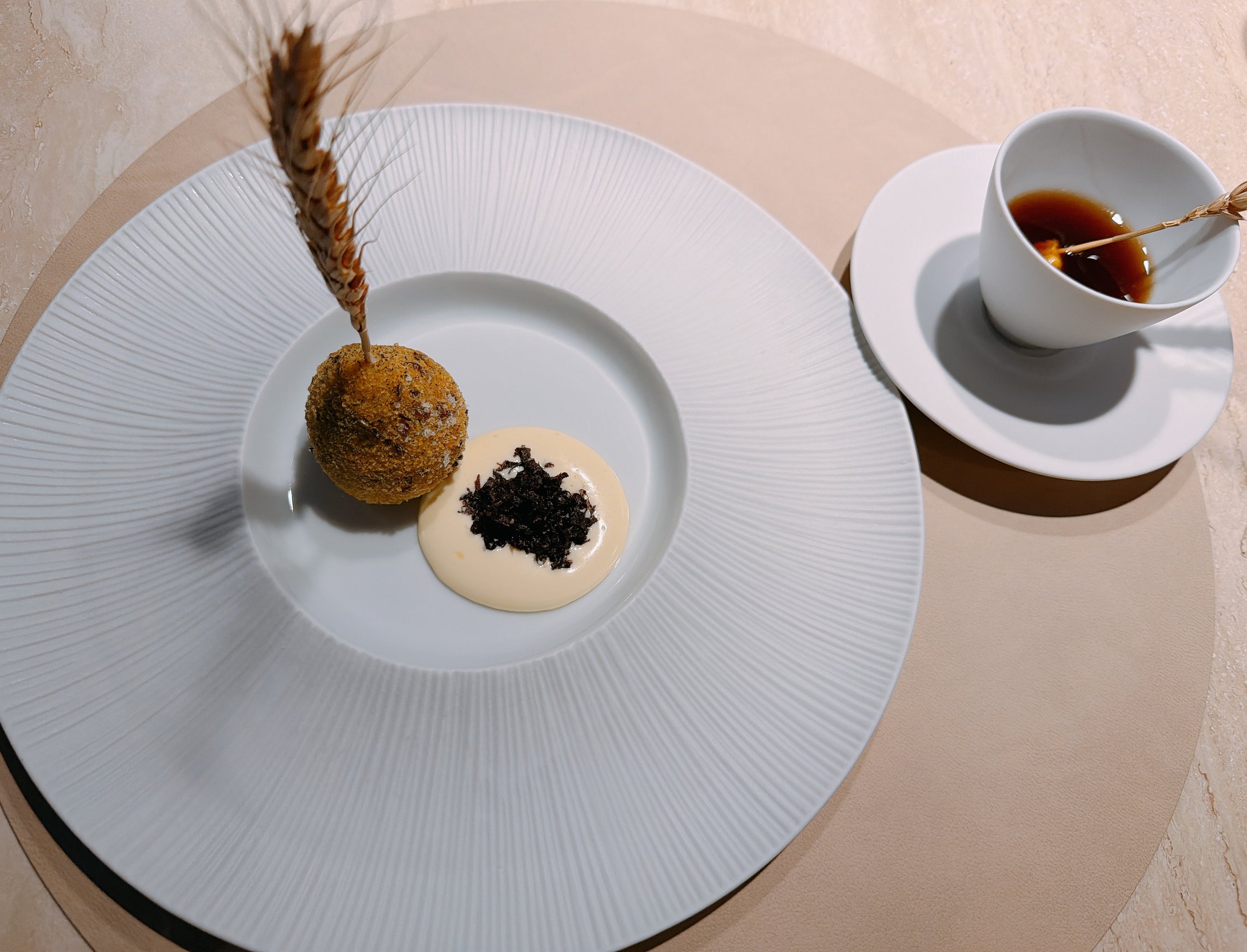
According to our server, the chef always likes to include some finger food in his tasting menus, and that’s what we got next. A croquette (coxinha) filled with minced venison was meant to be dipped in a local Bavarian cheese (Isarbazi) that was topped with shredded truffles. On the side was a cup filled with game essence that sported some corn and a truffle mousse on a stick. Let's start with the broth: it was quite flavorful, and the truffle mousse was equally lovely. The croquette was unfortunately less compelling. First of all, its “stick” - a wheat stalk - slid right out of the croquette, so it served more as decoration than a utensil. The meat was very finely ground, and felt a bit dry and heavy - maybe some acidity would have helped? It also didn't taste much of venison; this could have been beef for all we knew. The cheese was pretty heavy, and I couldn't taste the truffles on top. Lastly, the paired cocktail was much too fruity for a dish that was intended to be savory. But all nitpicking aside, this was not a bad dish in the end, but it definitely had the potential of being much better 15.
A palate cleanser arrived in the form of a hollowed out green tomato filled with a frozen mixture of tomatillo chutney, chopped pastrami, and lime. The filling tasted somewhat like a (frozen) green salsa that was slightly spicy and contained bacon bits. Said bacon bits had sunk to the bottom of the dish, which explains why they cannot be seen in the photo. Tasty, and definitely a successful palate reset after the preceding fried dish 16.
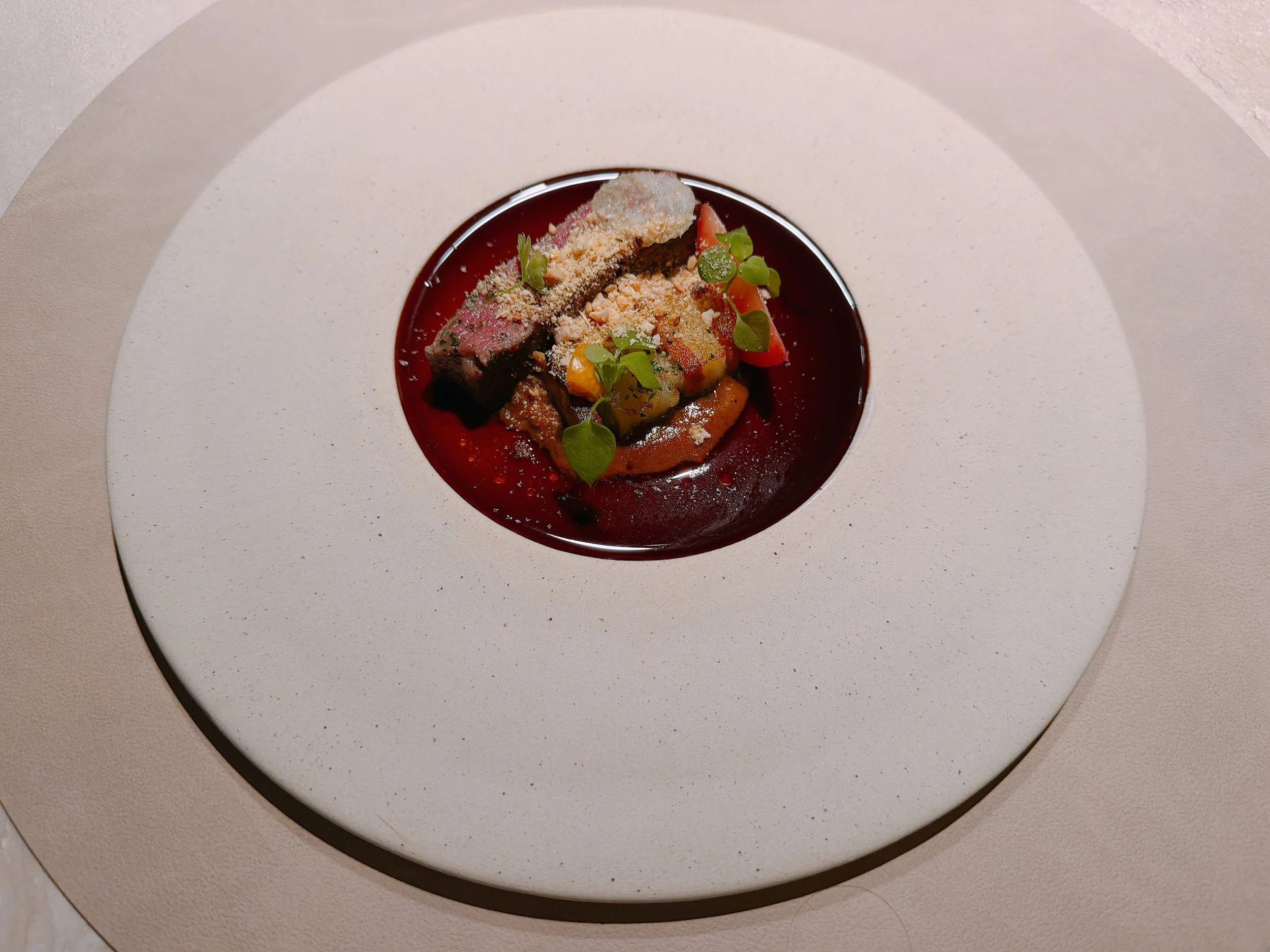
Our final savory course was based on a local black angus beef. It appeared as a steak, as pastrami, and as a notably fatty cut. This served as a deconstructed version of the traditional Brazilian picanha cut (see here for a more typical example). Along with the beef came a sauce made from plums and beef jus, a dark chocolate/chili mole, a wedge of plum, and a cassava cake. The angus beef was oddly soft, and its exterior was not very seared - a more distinctive texture would have been better. The pastrami was nice enough, although my dining companion did not particularly care for it. While the mole was spicy and quite good, the lightly sweet plum sauce was less compelling. A somewhat lackluster finale to the savory dishes, but also one that could easily be improved with a better cut of beef 14.
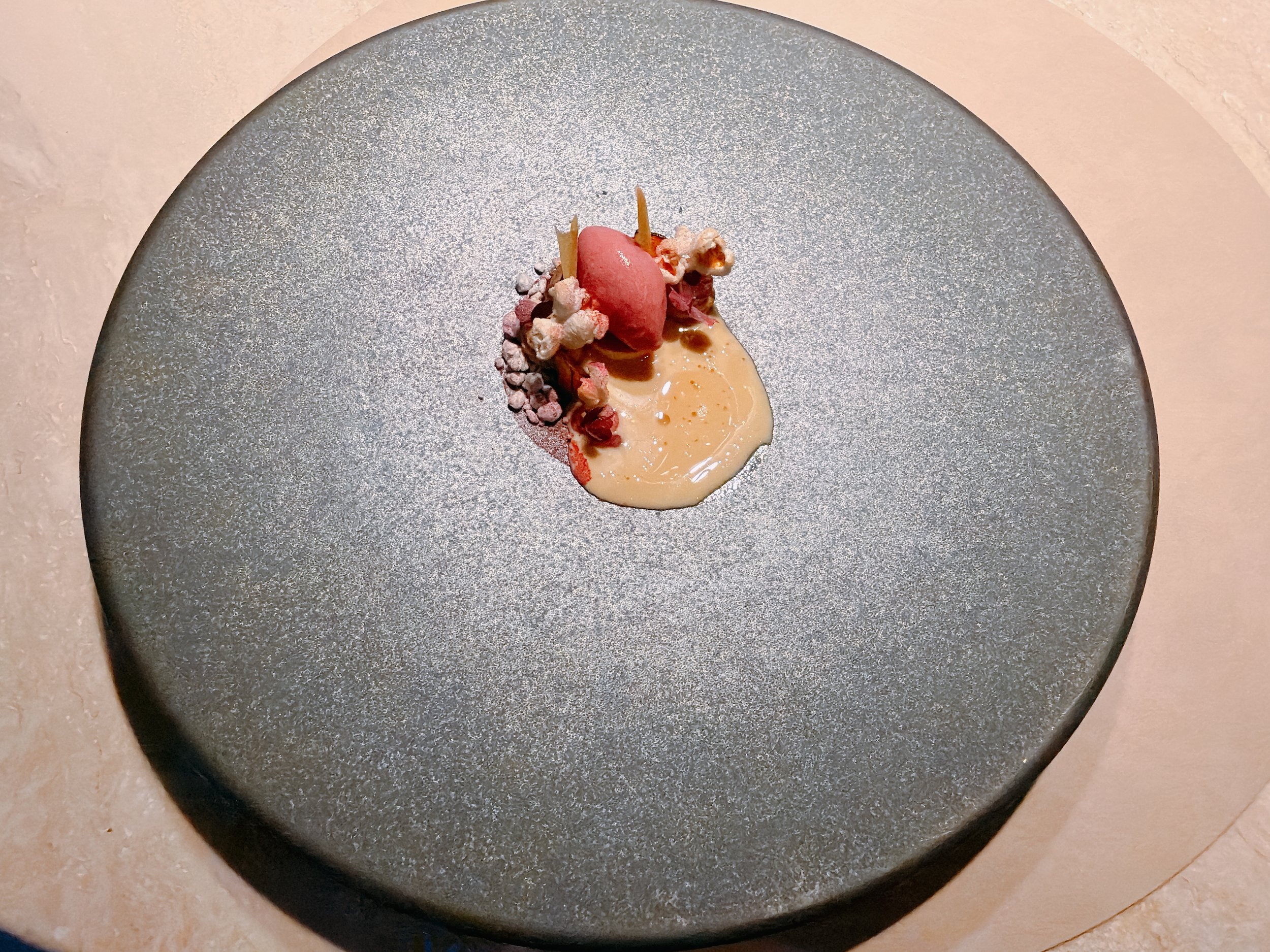
The first dessert was based on Chicha Morada, a traditional Peruvian drink made with purple corn, fruits, and spices. Here, we got a Chicha Morada ice cream, accompanied by popped corn, cornbread, a roasted pineapple triangle, and a sauce made with corn, coffee, cream, and cayenne pepper. This was a dish where all components were best eaten together. This resulted in fruitiness, some spice, some crunch, and even a hint of coffee. The cornbread had a pretty dense texture, and was not too sweet. In this case, the paired (sweet) cocktail was a great match 15.
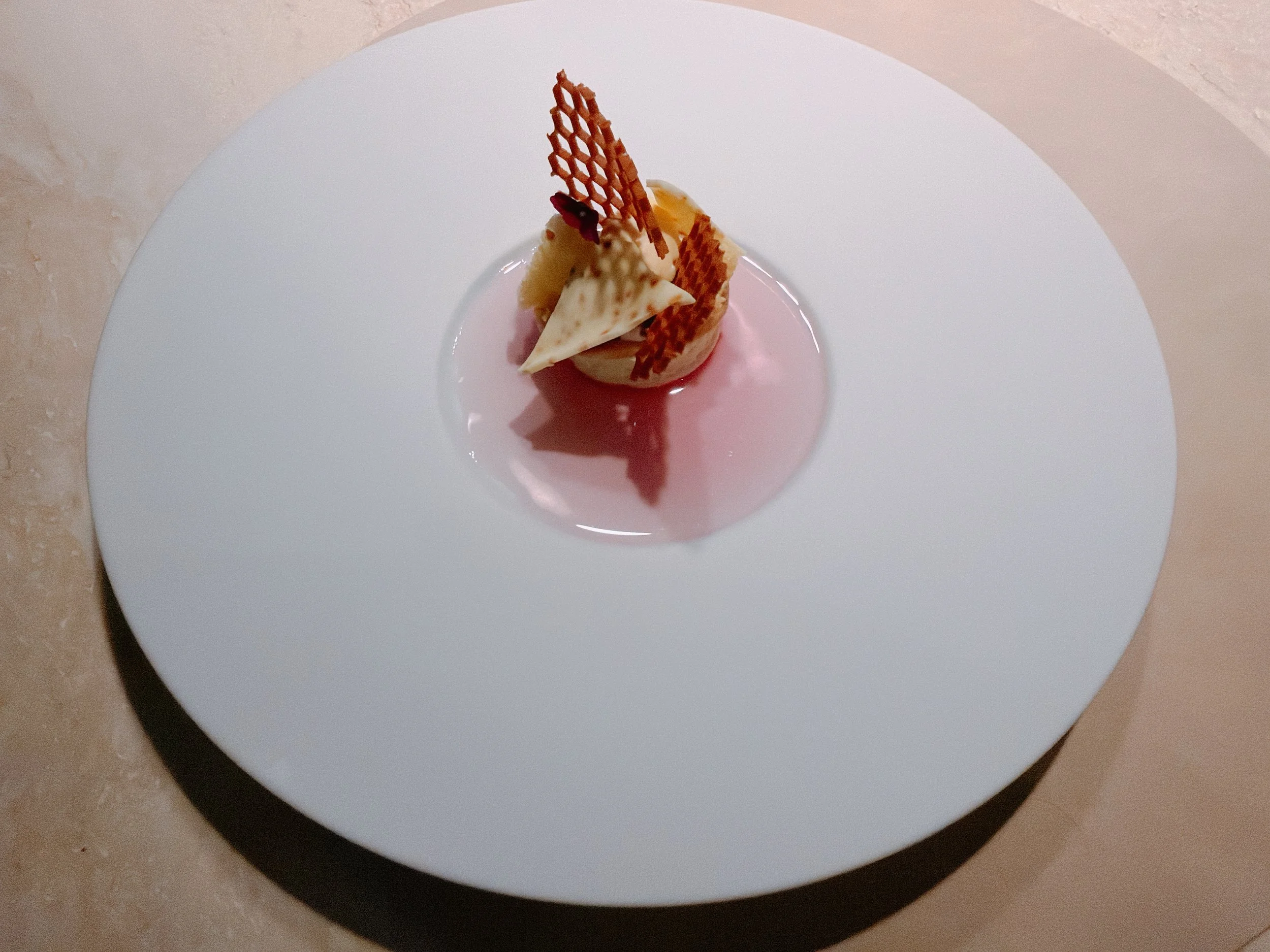
The following dish was based on honey, an ingredient often seen in South American desserts. The honey appeared in multiple forms, most notably as a beeswax ice cream. There was also a cheesecake made with white chocolate, some white chocolate chips, and a chantilly/lavender jelly. Lots of stuff going here, with different textures that ranged from creamy to crunchy to jelly. A cracker in the middle of the dish was surprisingly hard to cut, and any attempt of doing so quickly disintegrated the whole presentation. The ice cream did indeed taste faintly of beeswax, but kept a well-chosen balance between cream and beeswax to prevent this from feeling like eating a beeswax candle. I probably would have preferred a straightforward honey ice cream, but this preparation was definitely more unusual. The cheesecake was good as well, and tasted notably of white chocolate. Overall, a pretty sweet dessert - maybe not surprising given that honey was a major ingredient 16.
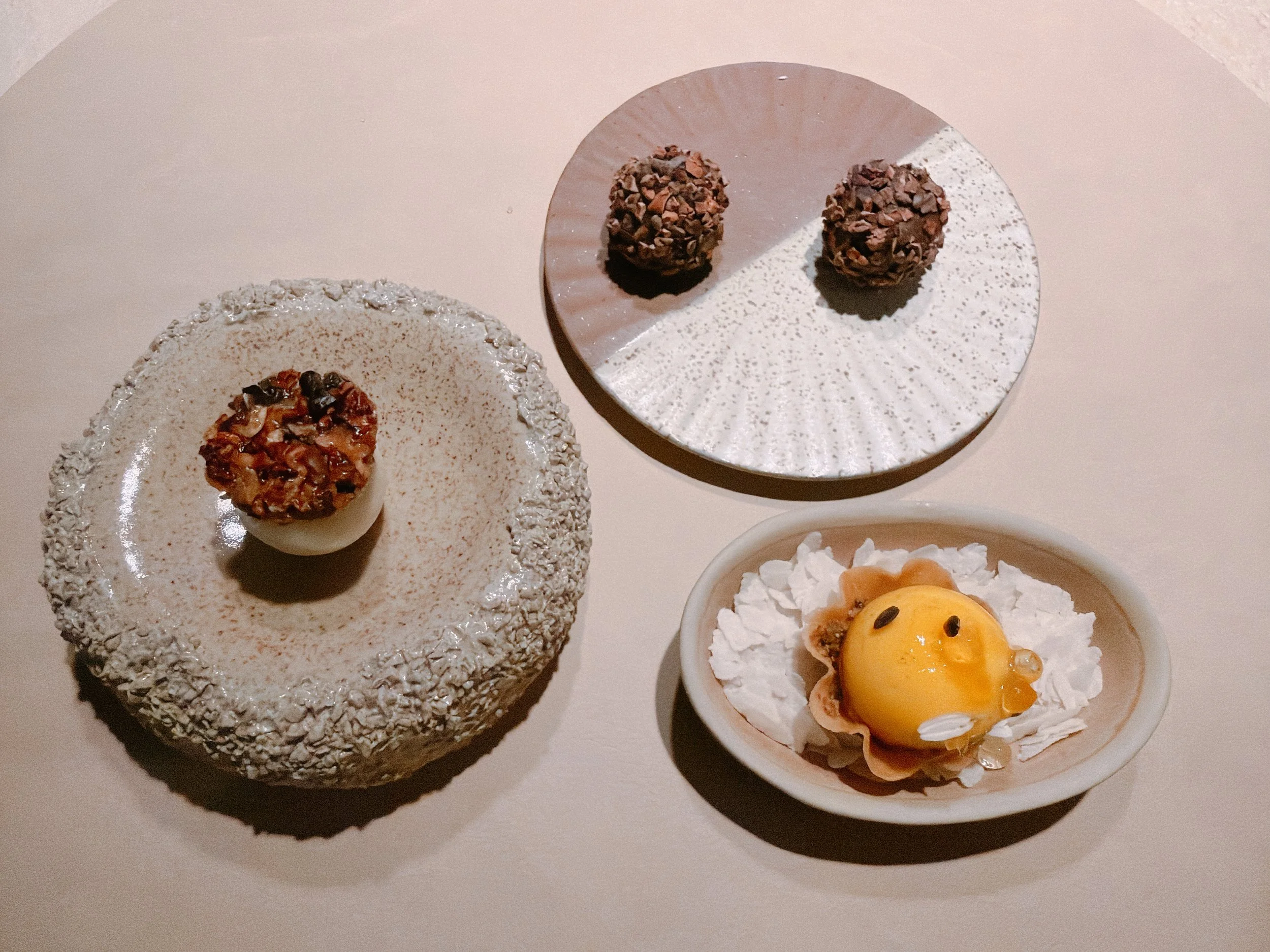
Our dinner ended with three mignardises. First, I tried a mango/passion fruit cheesecake bonbon served on a cracker. The cracker base had a good crunch, and the dish as a whole felt quite light, with a good combination of cheesecake and fruit. We were told to eat this in one bite, but I did not notice any supposed liquid center 16. An ice cream had been made by boiling the bark of the lapacho tree, and was topped with a pecan nut cracker. This was a delicious bite; the ice cream tasted vaguely of tonka beans, and the topping had a nutty caramel flavor 17. Finally, there was a brigadeiro - the traditional Brazilian truffle made from cocoa and condensed milk. It had a chewy consistency on the inside and crunchy cocoa nibs on the outside. A very chocolaty bite - and somewhat surprisingly the only true chocolate dessert in this menu motivated by the Amazon basin 17.
Thus ended my first experience with “The Cloud” and its approach of honoring foreign cooking cultures. What surprised me the most was how “normal” the dishes seemed. If we hadn't been told about the background of the menu, and hadn't read the place cards detailing the motivations and preparation techniques behind each course... well, in many cases we wouldn't have guessed that this was anything other than a “modern” cuisine with local ingredients. I think that there are at least two reasons for this. First, while many dishes used preparation methods popular in South America, this was not readily apparent from what was on the plate - the same result could have been achieved by more conventional means. Second, the number of South American ingredients and spices was somewhat limited. Cocoa, cassava, and açaí berries don’t feel terribly exotic these days, since they are available in many well-stocked supermarkets. And the vast majority of the remaining ingredients were local to Bavaria and the Alps. Admittedly, it's probably impossible to import all the fruits and vegetables that make South American cuisine distinctive. But maybe using stronger flavors and spices might have done the trick of giving this a more distinctly “foreign” feel?
Overall: An interesting take on South American cuisine - prepared in Germany with mostly local ingredients. There were several very strong dishes at the beginning, but they seemed to get a bit weaker towards the end of the savory courses. Many preparations were South American less by virtue of their ingredients, but rather by their preparation techniques, so the results often felt less exotic that one might have expected. But the restaurant has only just embarked on this new year-long menu, so some fine-tuning will surely follow soon enough. A very strong 16.