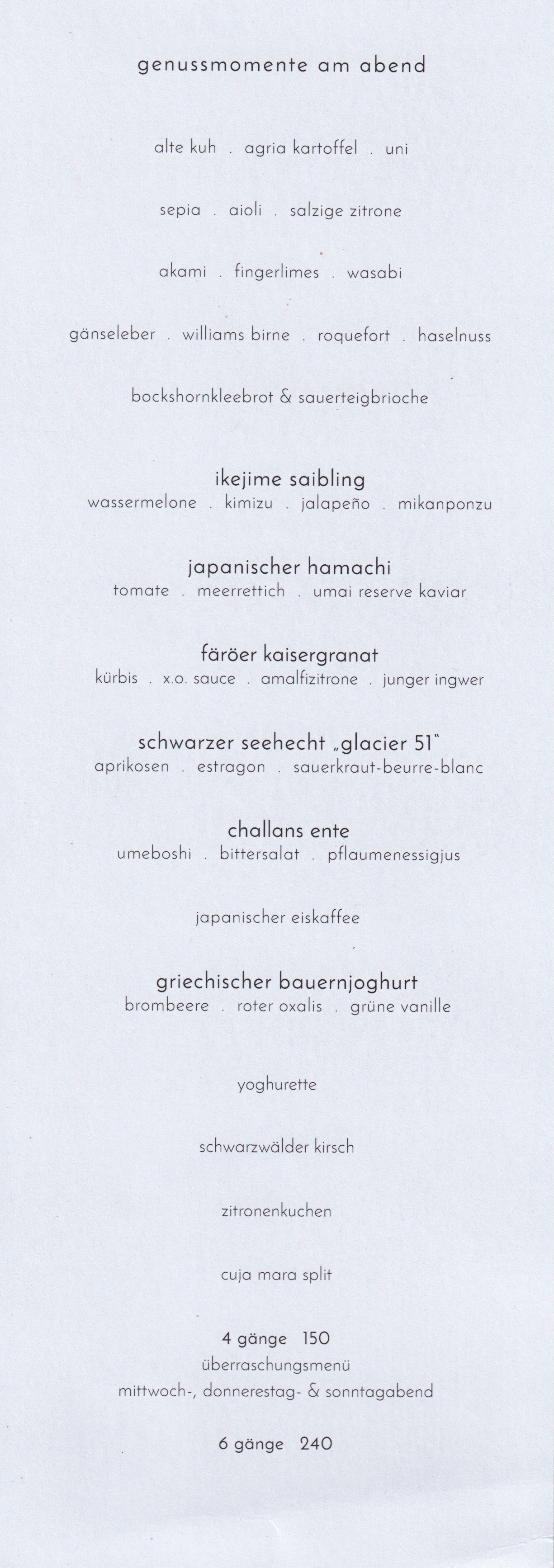
sein - Karlsruhe
Cozy dinner on the day of the world cup final
Rating: 17/20
Where: Karlsruhe, Germany
When: Dinner for 4 on 19 July 2026
Cost per Person: Tasting menu 240 Euro ($275), Wine pairing 125 Euro ($145)
Accolades: 2 Michelin Stars
Why: Punchy flavors in a seafood-heavy cuisine with French and Japanese influences
Anyone traveling through the state of Baden-Württemberg in Southwestern Germany will sooner or later make a stop in Karlsruhe. The city is home to one of Germany's major train stations, with direct train lines to cities all over the country and even to Paris. Fewer travelers actually leave the train station, though, and visit the midsize city best known for being the out-of-the-way seat of Germany's Supreme Court.
When it comes to fine dining in Karlsruhe, one has to venture a bit outside of the city center. There, in an unremarkable residential area, is the two-Michelin-starred restaurant “sein”. Its name simply means “being”, which - apart from the restaurant's aversion to capitalization - doesn't really reveal much about it. To find out more, we came here on a quiet Sunday evening in mid-July. The streets near the restaurant were practically deserted - probably thanks to that night's finale of the soccer world cup.
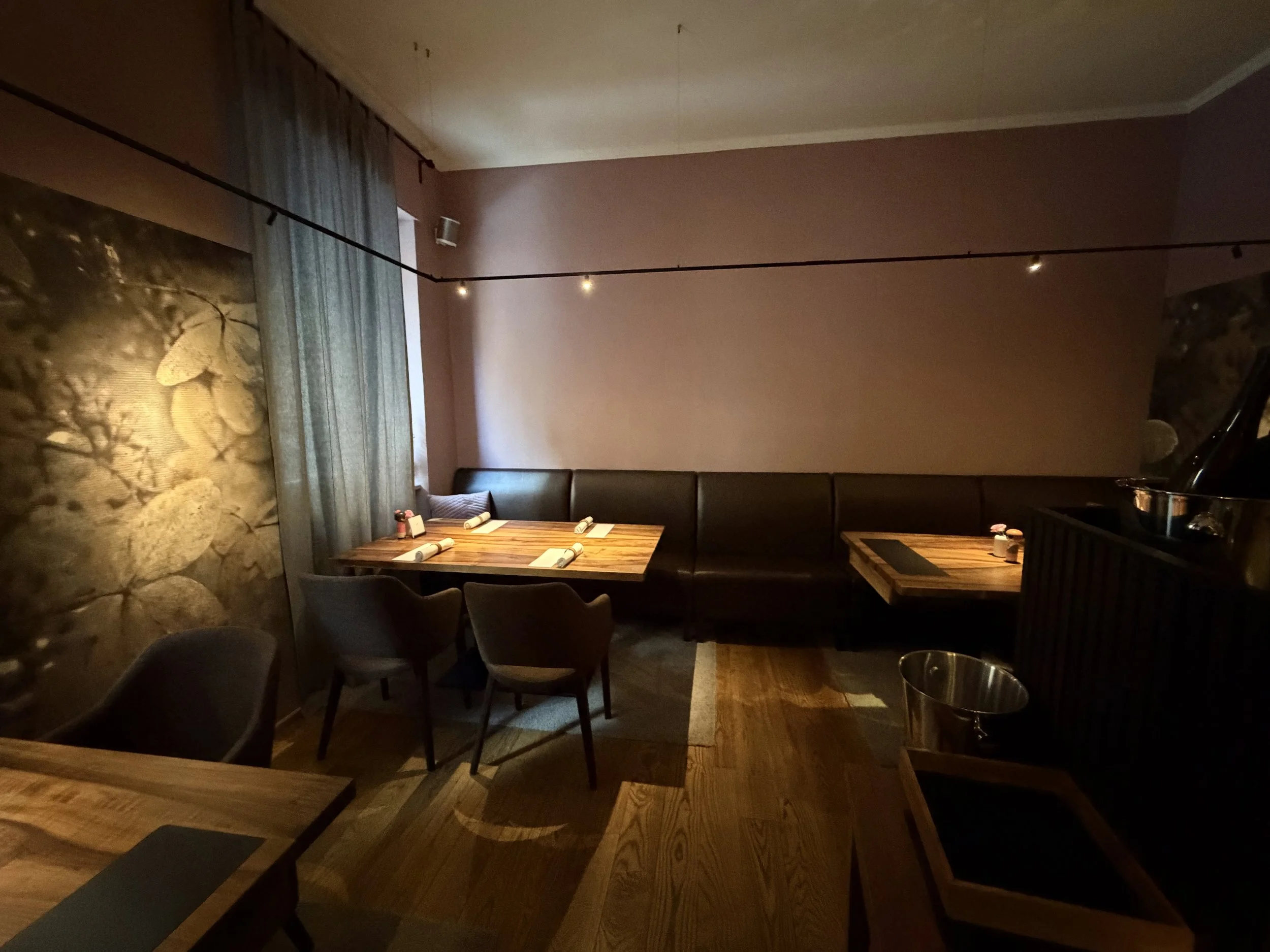
The restaurant's exterior blended in with the neighborhood, and its interior looked similarly casual, giving one the feeling of a well-kept bistro or neighborhood bar. Only half of the six or so tables were occupied during our visit, presumably thanks to the aforementioned soccer match. The friendly service and unhurried pace (maybe a bit too unhurried - our dinner took over five hours) further gave the restaurant a welcome sense of unpretentiousness.
Relaxed vibe or not, though - a quick glance in the menu made it clear that “sein” was serious about its food. The restaurant offered only tasting menus: six courses were available for 240 Euro (about $275), and four courses for 150 Euro ($170), but not on Friday or Saturday. We went for the longer version, because when in Rome (or in Karlsruhe)… Dietary restrictions were accommodated with prior notice, and the vegetarian menu served for one of us looked pretty well designed - not the afterthought that it often happens to be. A wine pairing and a non-alcoholic pairing were offered as well, both priced at 125 Euro ($145) for six glasses, and proportionally less for the shorter menu. I quite enjoyed the wines, two of which were from Germany, and they fit the food well. The non-alcoholic pairing consisting of bespoke house-made drinks was a big hit with the underage segment of our party. Giving the two pairings the same price made an implicit point about them being of equal value, but probably also reflected the fact that much more work had gone into making the non-alcoholic one.
Our dinner started with a welcome drink: a small glass of green tea kombucha. This beverage was not fizzy, and instead somewhat sweet with a hint of bitterness. Not bad, and maybe an indication of what to expect from the non-alcoholic pairing.
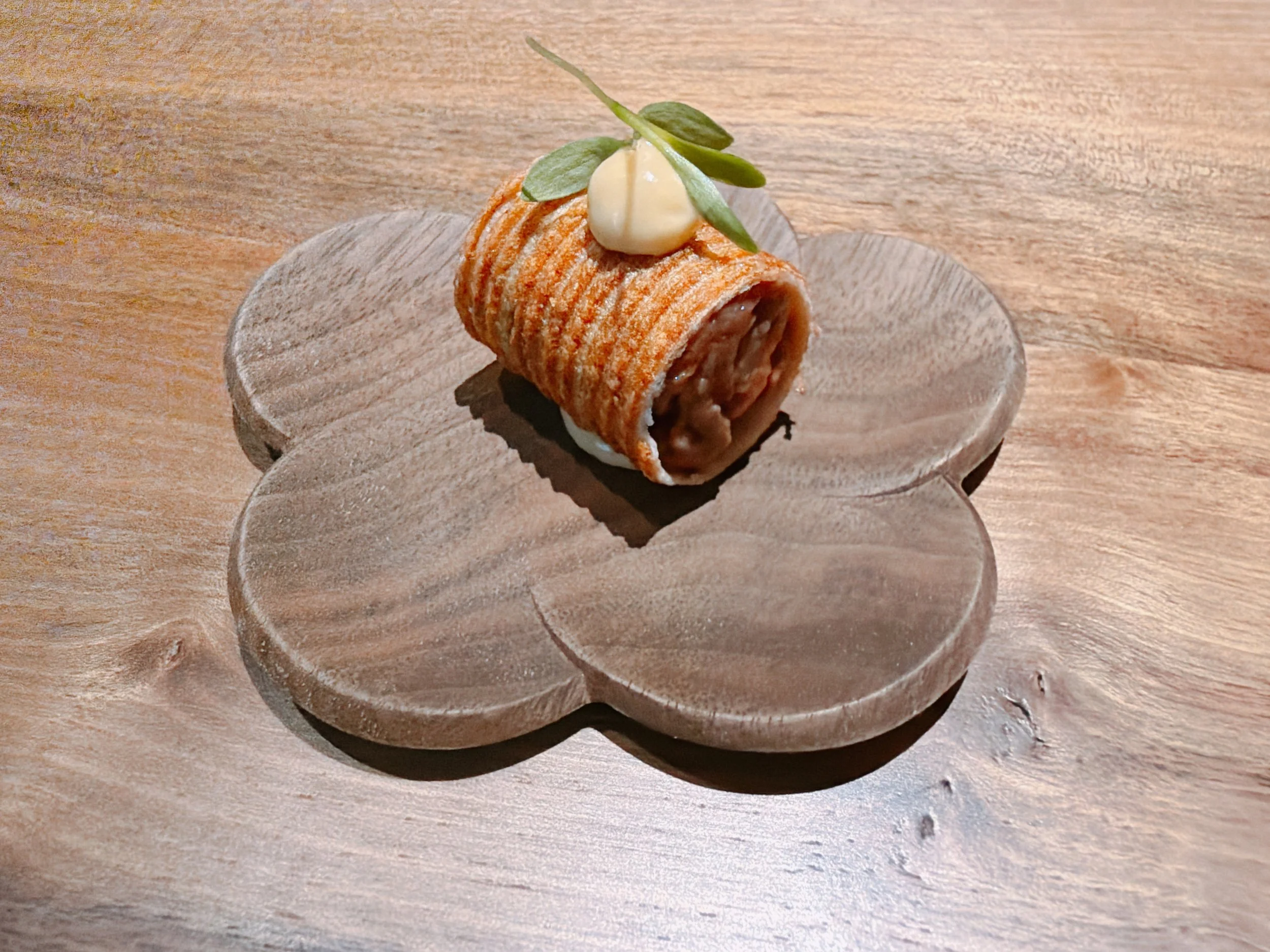
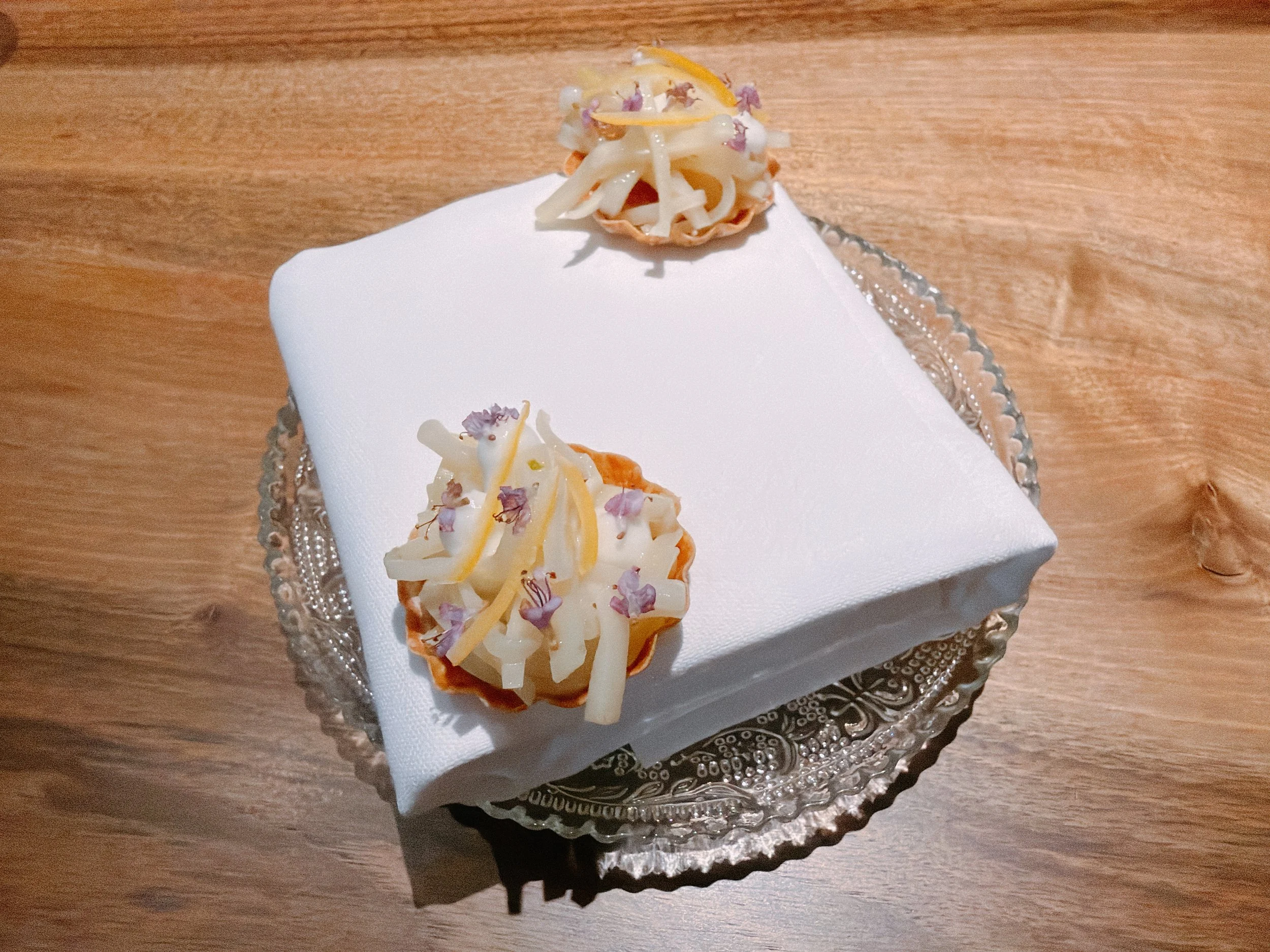
The kombucha was followed by four appetizers, served two at a time. Our first bite was a potato chip roll filled with an aged cow tartare and topped with an uni (sea urchin) dip. The potato chip tasted pretty much exactly like that - a crunchy potato chip. The beef was coarsely chopped, and strongly seasoned. I couldn't really taste the uni 16. “Pasta” made from cuttlefish was flavored with a salted lemon aioli and served in a cracker cup. The cup had a good crunch, the cuttlefish was tender and nicely seasoned with a bit of spice 17.
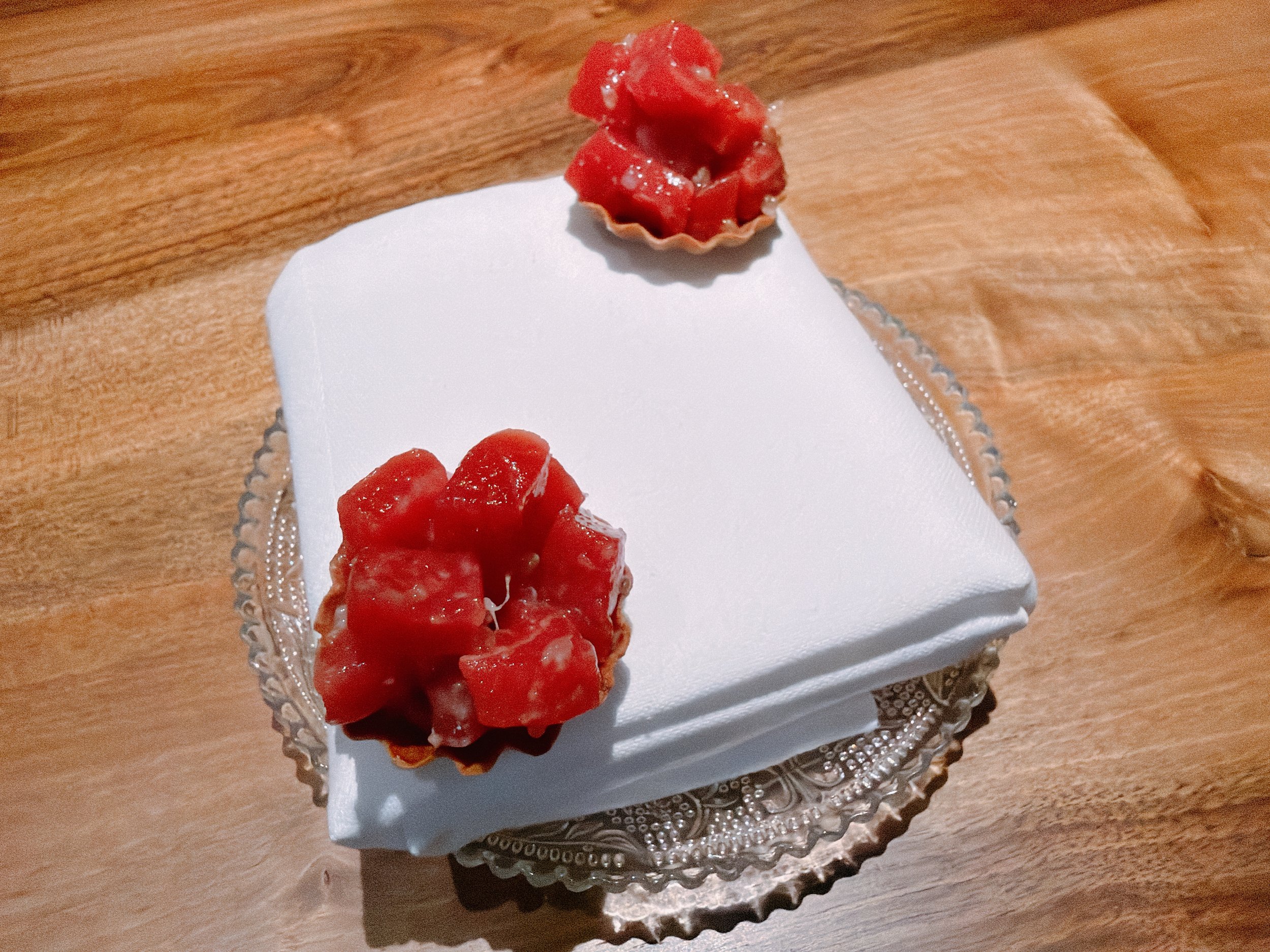
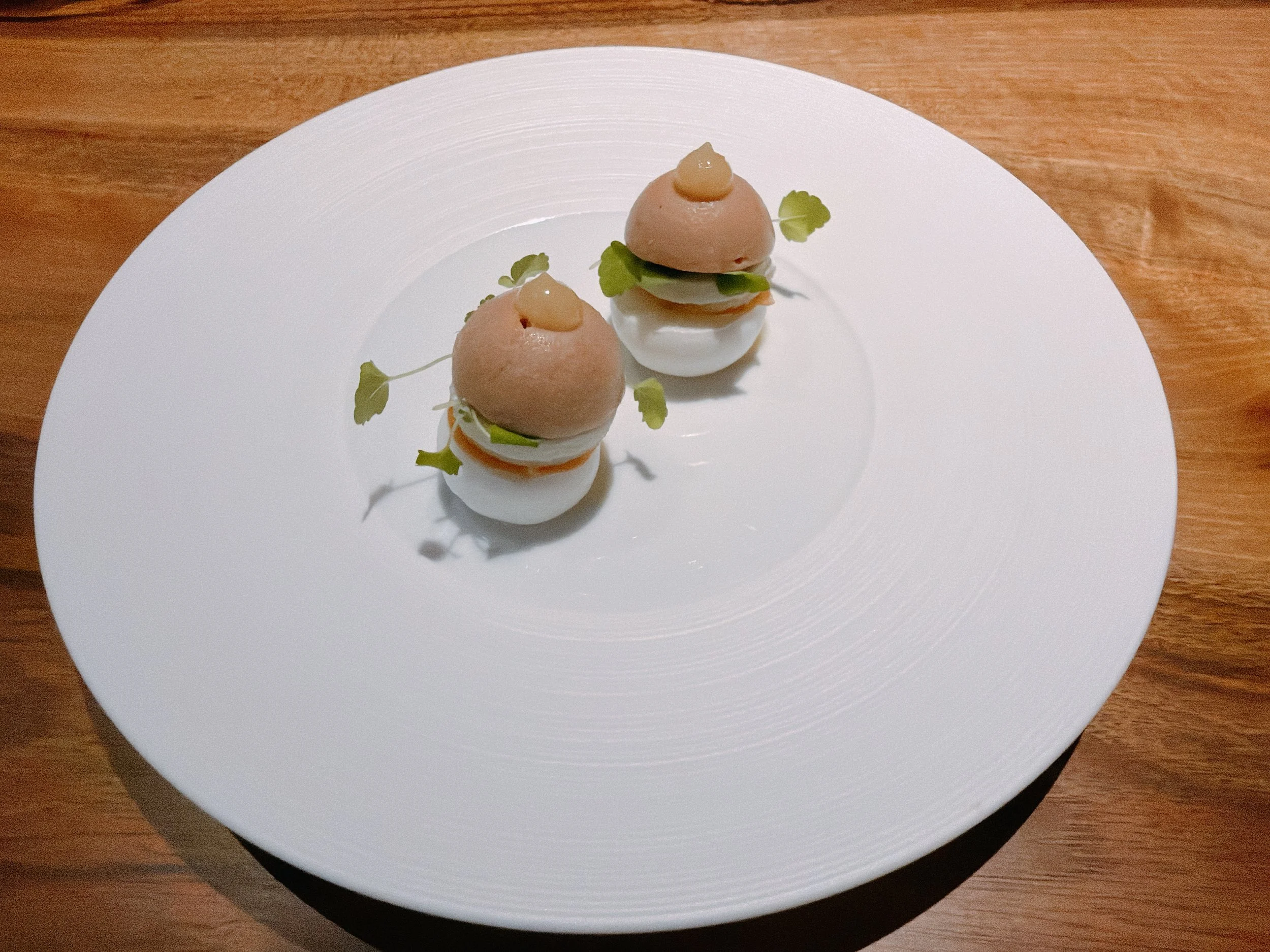
Next up was some raw tuna tartare (akami) that had been dressed with finger limes and Japanese wasabi. Served on a crunchy cracker base, this felt like good quality tuna with a healthy amount of wasabi. Rustic, but tasty 16. And lastly, we got a stack of horseradish meringue, goose liver, pear, hazelnuts and Roquefort cheese. This bite had a strong liver taste and an aftertaste of blue cheese. Altogether there seemed to be a bit too much going on here - many different competing flavors and textures that didn't quite come together as a whole 15.
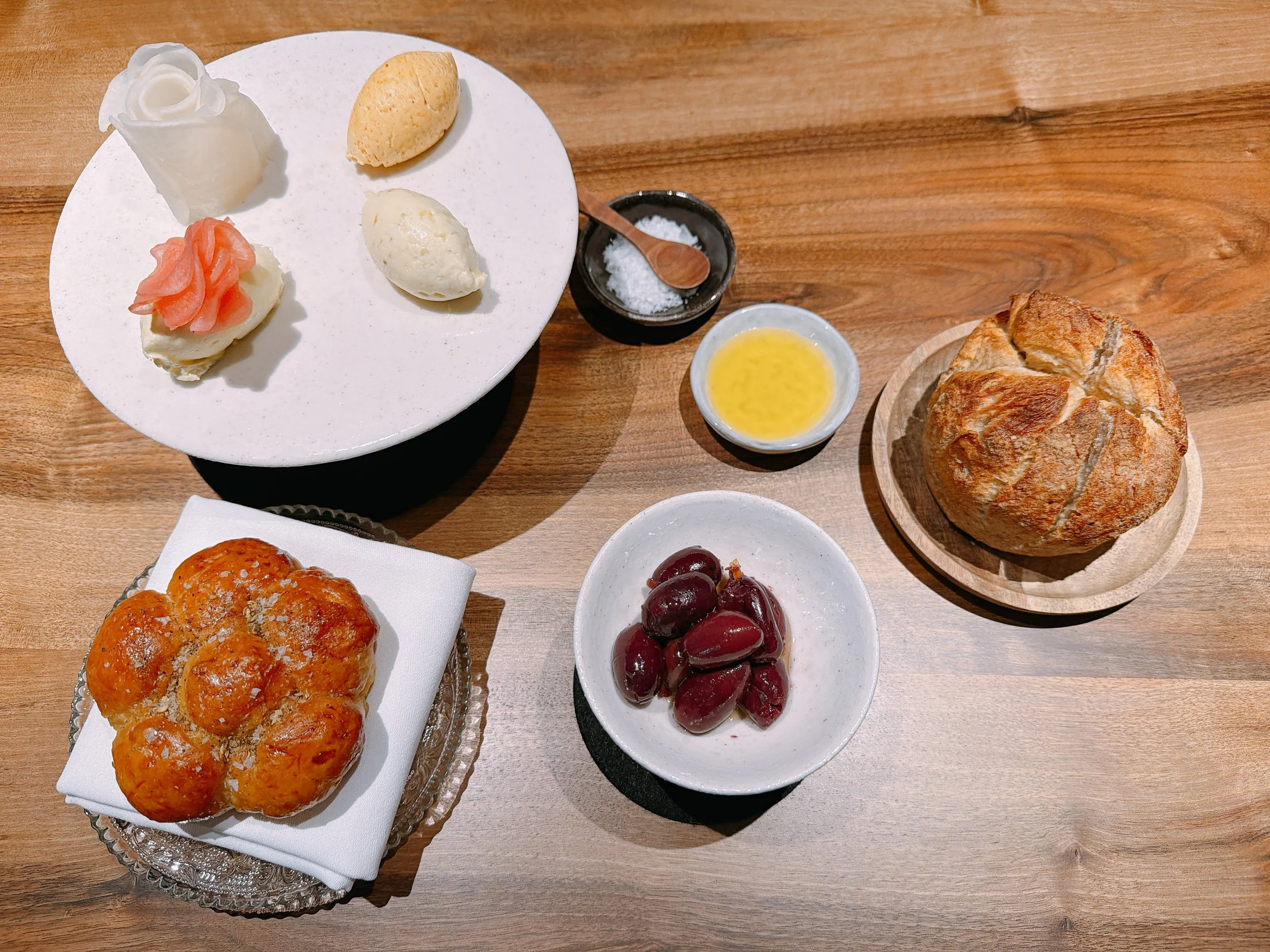
Two kinds of bread were served warm: a loaf of fenugreek bread, and a sourdough brioche. There were three butters: a salted butter from the Allgäu, another seasoned with yuzu, and lastly, a butter seasoned with pimento peppers. In addition, we received some fleur de sel, an olive oil, pickled radishes, and Kalamansi olives. This was definitely an extensive bread course. The fenugreek bread had a light crunch and a relatively neutral taste, but it went great with all three butters. Personally, I was not the biggest fan of the very dense brioche, but the rest of our table was quite happy with it 16.
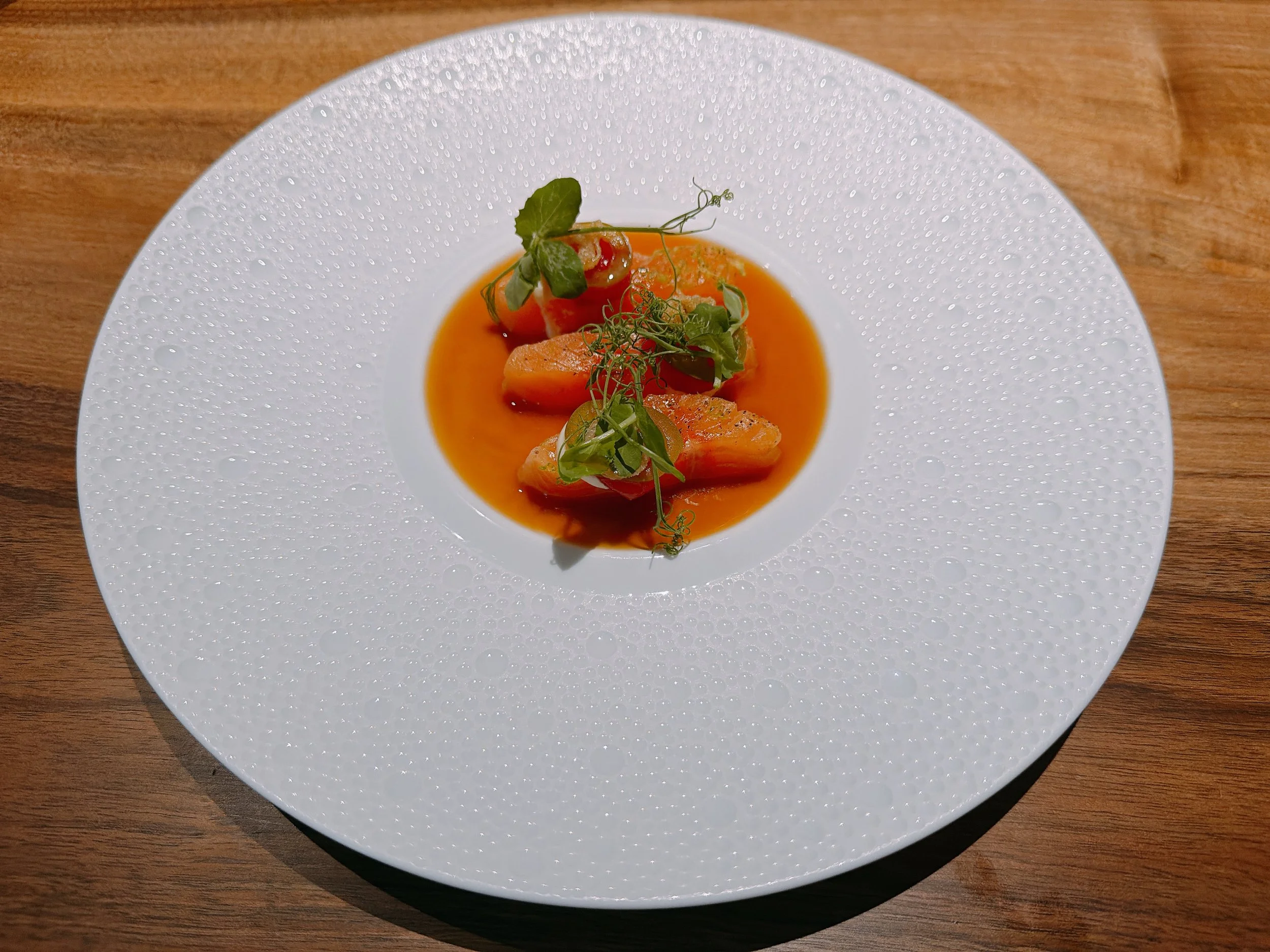
Raw arctic char was topped with pieces of fermented watermelons and jalapeños, as well as a Japanese mayonnaise (kimizu). The whole was surrounded by a mikan ponzu (mikan is a Japanese mandarin). At first, this dish reminded me a bit of the Japanese fusion staple of hamachi jalapeño. The fish was tender, the spicy pepper added a little kick, and the watermelon had a bit of acidity. The flavors were clearly defined, but following the German interpretation of Japanese cuisine that boasts strong and straightforward seasoning rather than Japanese subtlety 16.
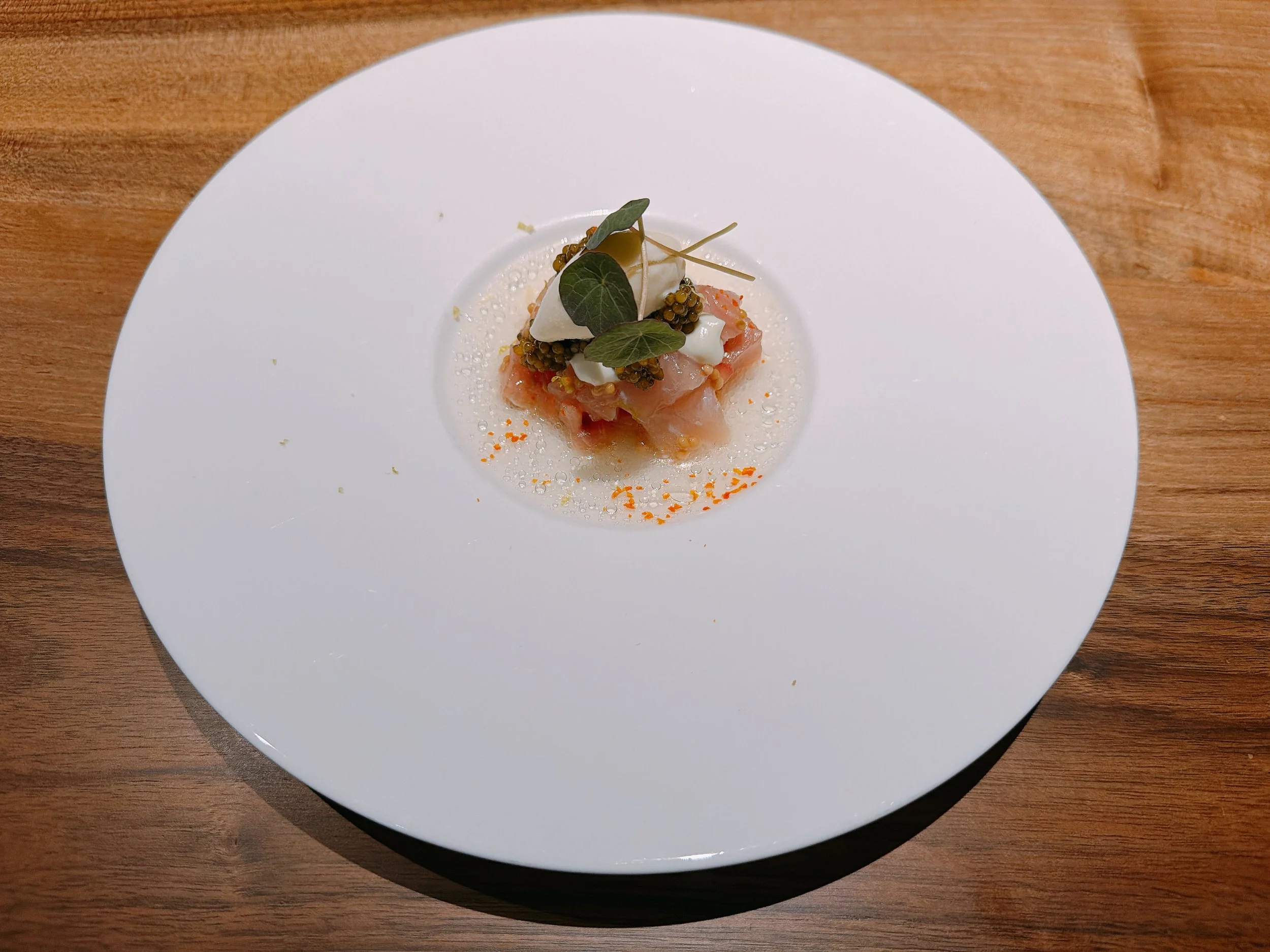
Chopped Japanese hamachi was served with a horseradish cream, caviar, a clear tomato broth, a tomato concassé, and shavings of tomato skin. This dish also had strong flavors; the horseradish in particular was quite noticeable. The combination of fish, caviar and horseradish was beautiful (possibly a 18). What didn't work for me was the tomato concassé underneath the hamachi. It was too salty, and its tomato paste flavor didn't really match the rest of the dish. The more subtle tomato flavor of the broth was a better complement for the fish 17.
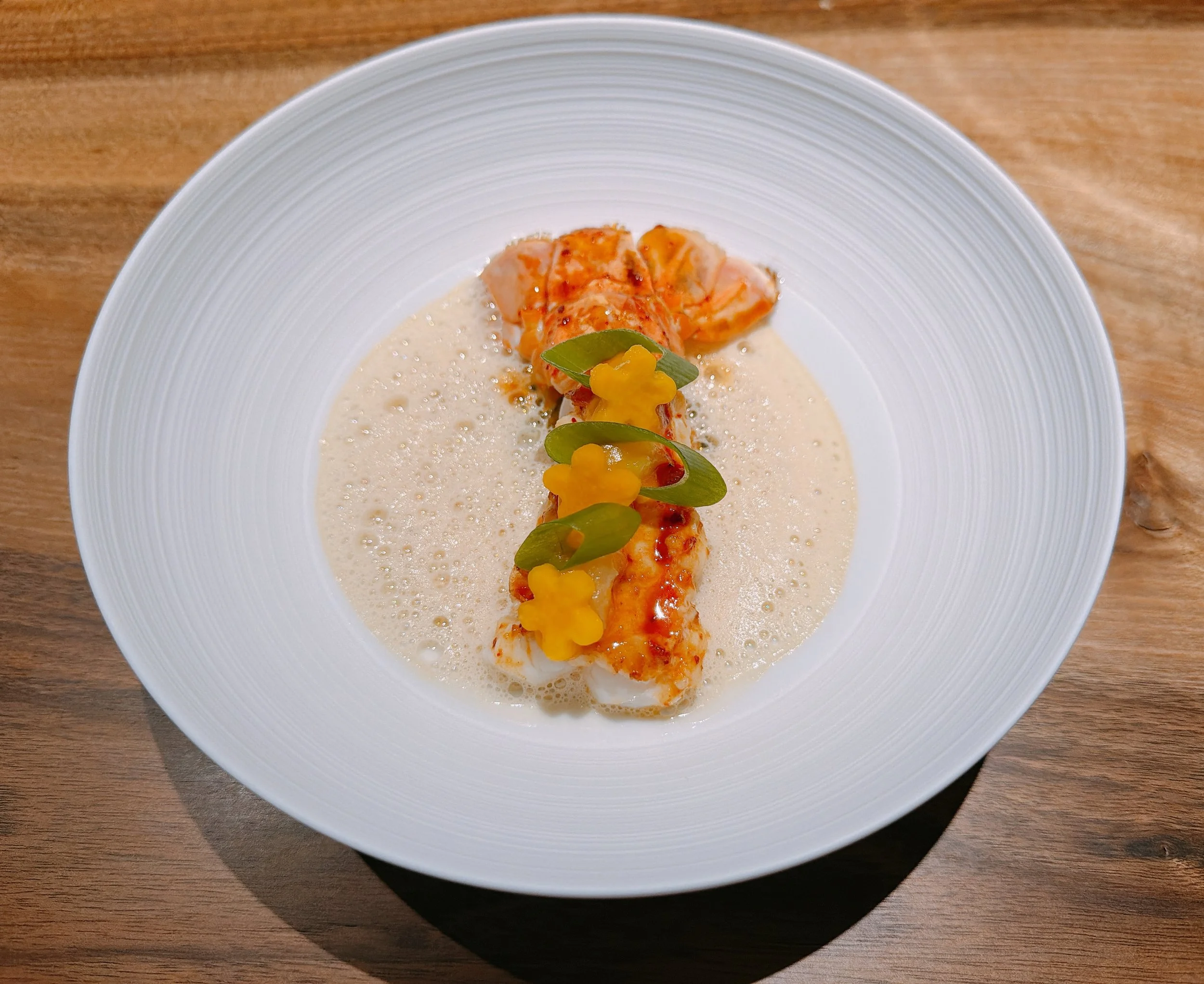
A langoustine tail from the Faroe Islands had been briefly fried, and came with an XO sauce made from the carcasses of the langoustine and shrimps, a ginger beurre blanc, and some pickled squash. The langoustine was cooked excellently and had a lovely grilled flavor. The beurre blanc was also delicious, while the XO sauce added a hint of spice. The squash was not sweet, but savory and nicely acidic 18.
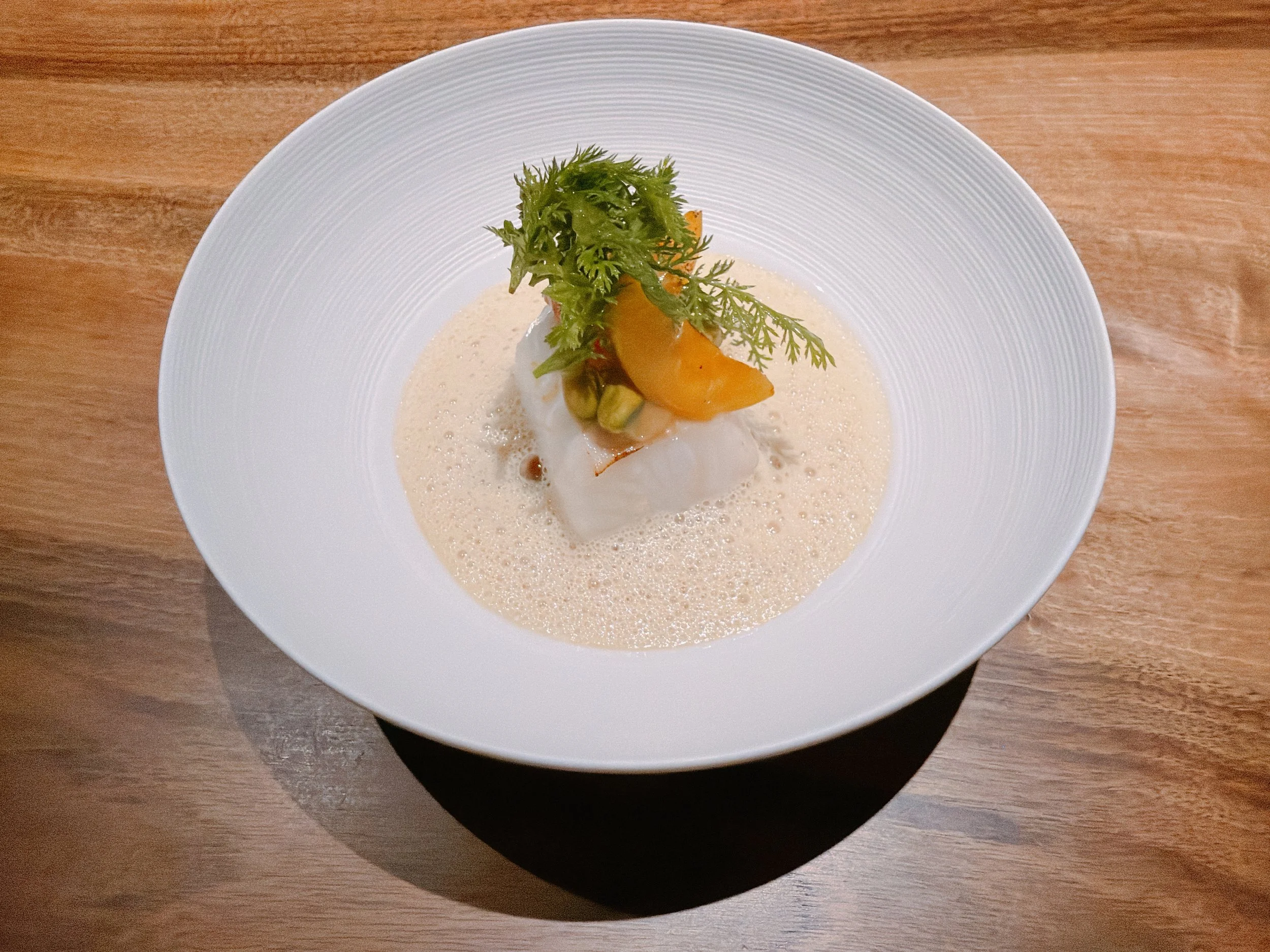
A filet of Canadian hake was dressed with apricots, pistachios, a tarragon oil, and a sauerkraut beurre blanc. One can never have too much beurre blanc in my opinion, and this was another great rendition, made lightly acidic by the sauerkraut. The fish was cooked wonderfully: tender and fatty, it fell apart easily - which explains why no knife was provided for this course. There were some bitter herbs, the pistachios added texture, and the apricot contributed a bit of sweetness, but not too much 17.
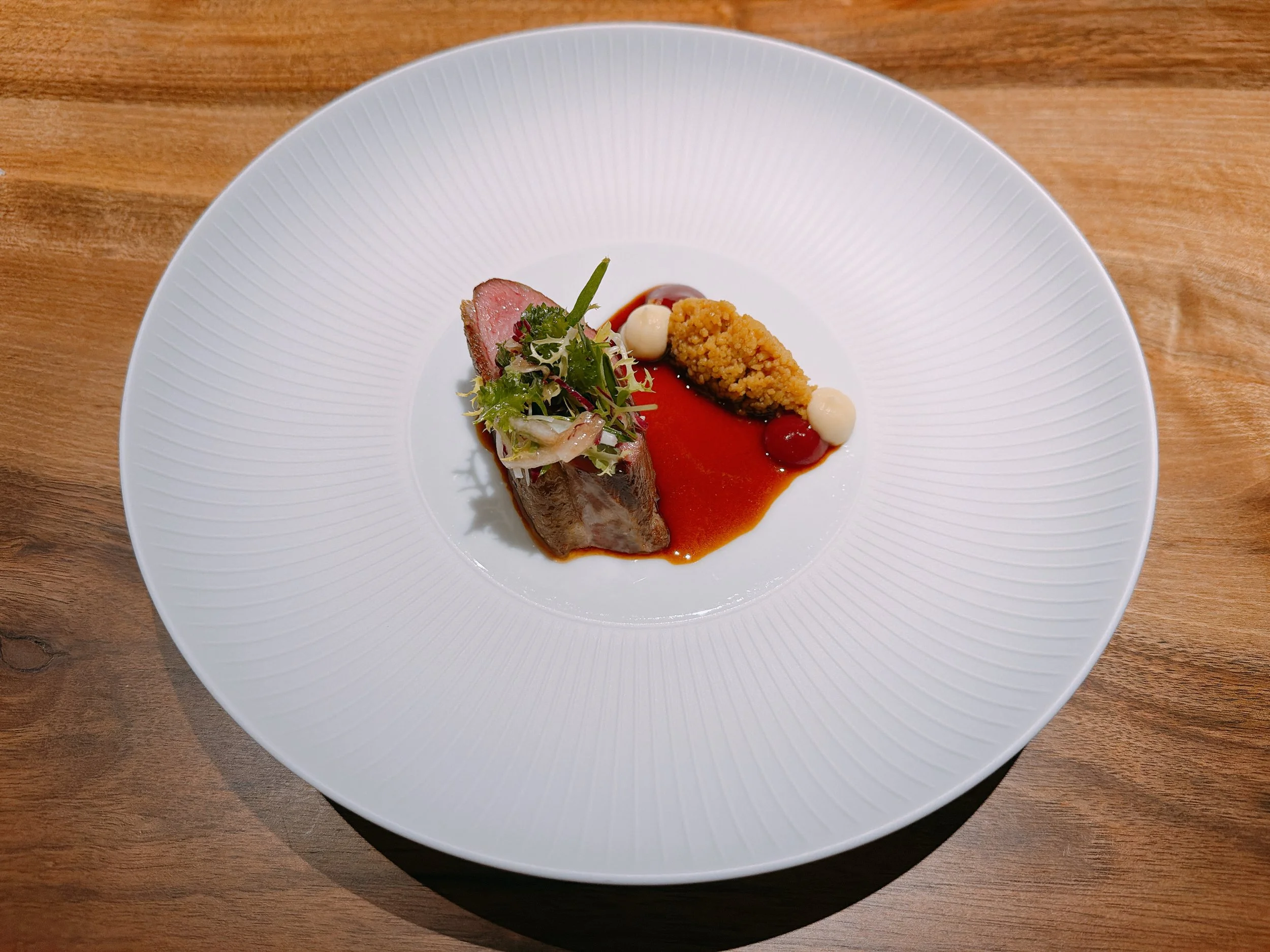
A Challans duck was served with bitter herbs, bulgur, a celery puree, an umeboshi plum/fig sauce, and a grape/pomegranate jus. I'm generally not a big fan of duck, but this one was executed really well. The meat was tender and flavorful, it had very little fat, and the duck's skin was only lightly crunchy. The sauces provided a hint of fruit, but not too much, and they were actually more acidic rather than sweet. A welcome departure from the countless duck dishes that go in a cloying sweet direction. Only a minor criticism: the salad was pretty muted flavor-wise; a lighter, fresher-tasting salad might have brightened the dish up a bit 17.
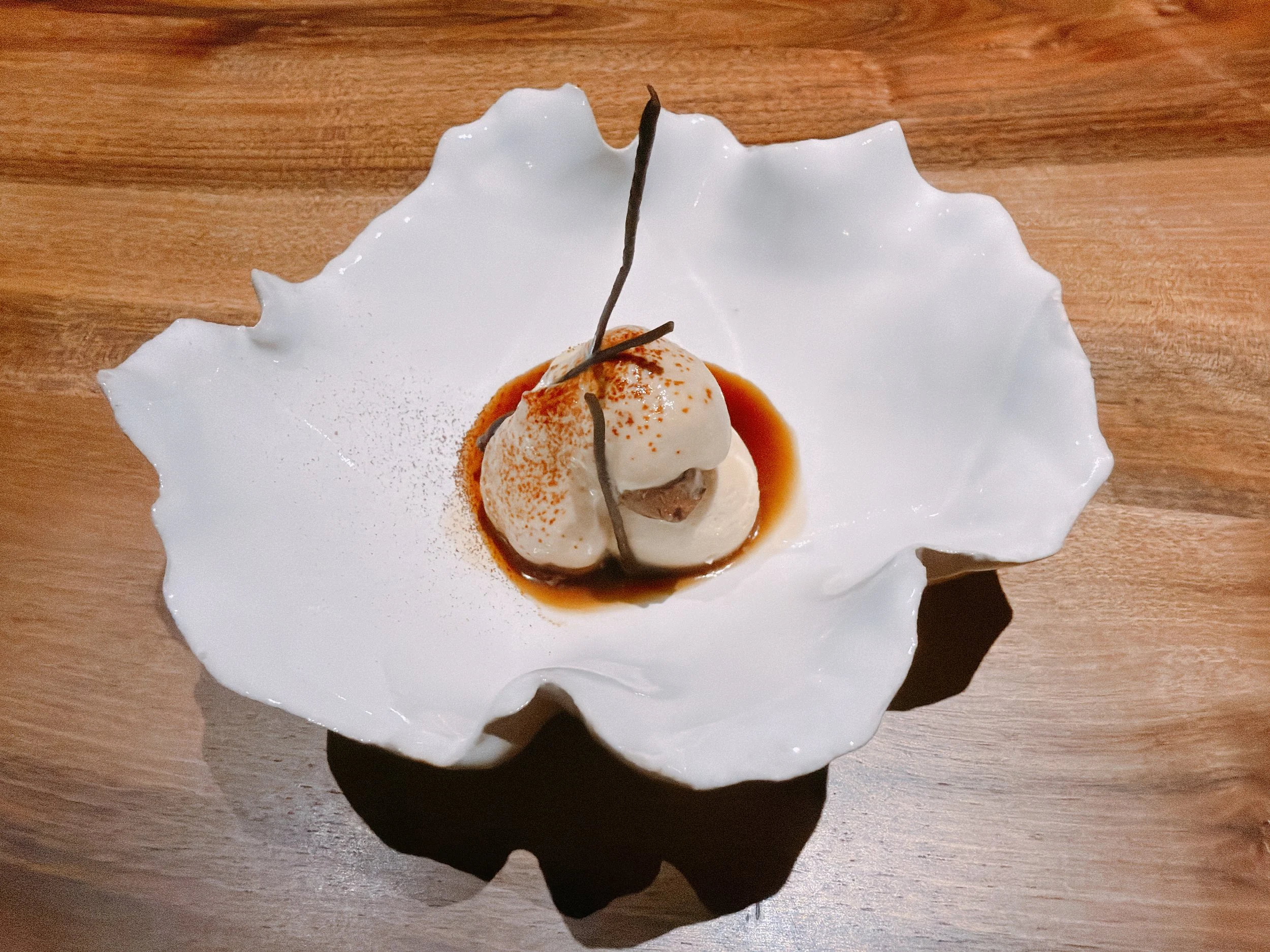
Transitioning to desserts, we first received a “Japanese iced coffee”. A coffee mousse was topped with chocolate ice cream, a mirin cream (unless I misheard), a coffee espuma and a coffee/caramel sauce. There were lots of different things going on here: the caramel sauce was lovely, the espuma and ice cream were fine, but the mirin cream tasted a bit weird 15.
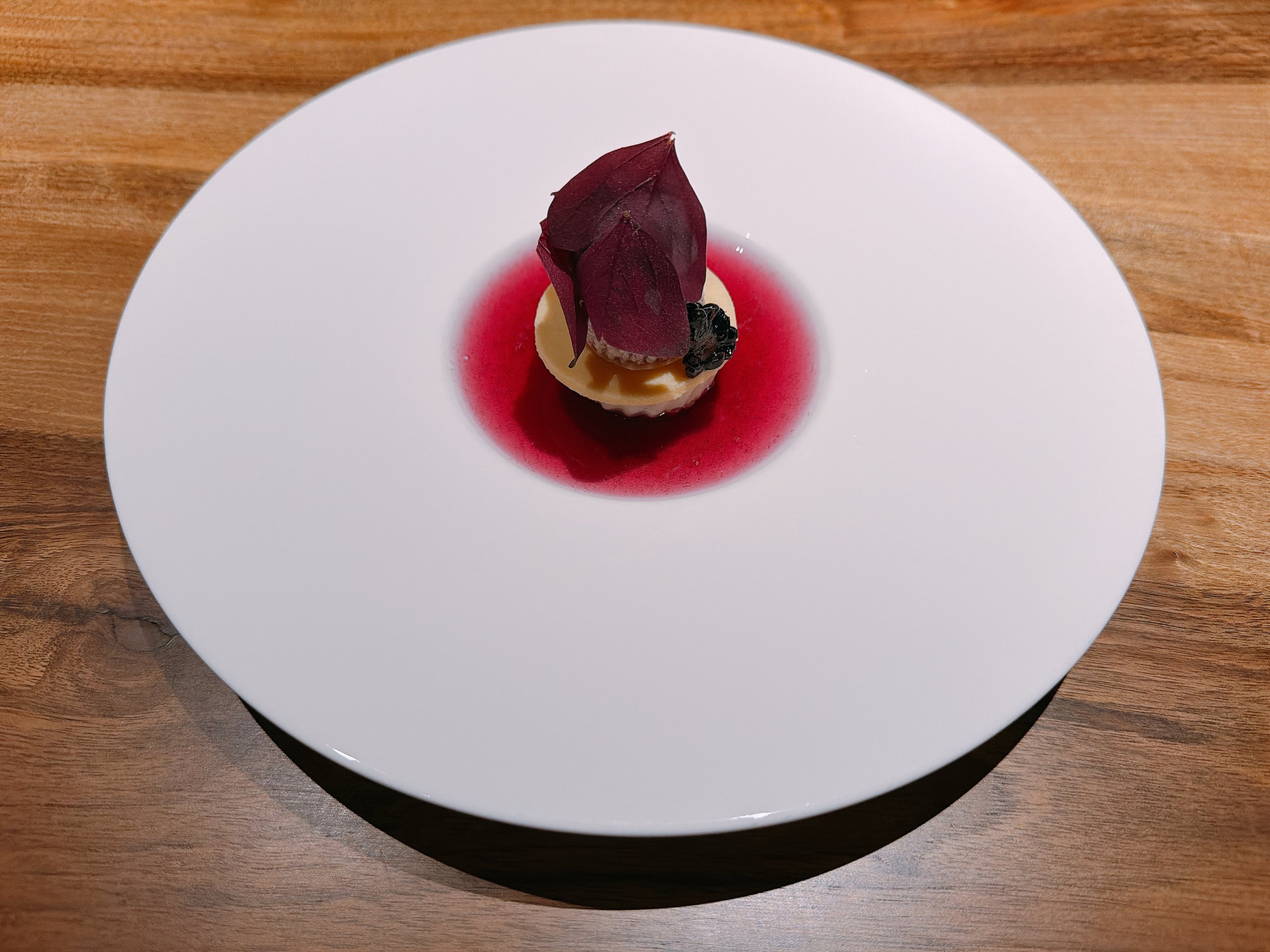
The main dessert was also a combination of several components: a Greek yogurt mousse, an ice cream, a mousse of blackberries, some red oxalis leaves, and a red oxalis jus. This dessert was not particularly sweet, but tasted fruity and got some freshness from the yogurt. Its only problem was that it was relatively hard to eat: the mousse was almost frozen solid, so all the components quickly started to slide around the plate - they were hard to “cut” with only the provided spoon. A lot of clanking of spoons on plates was heard throughout the restaurant 17.
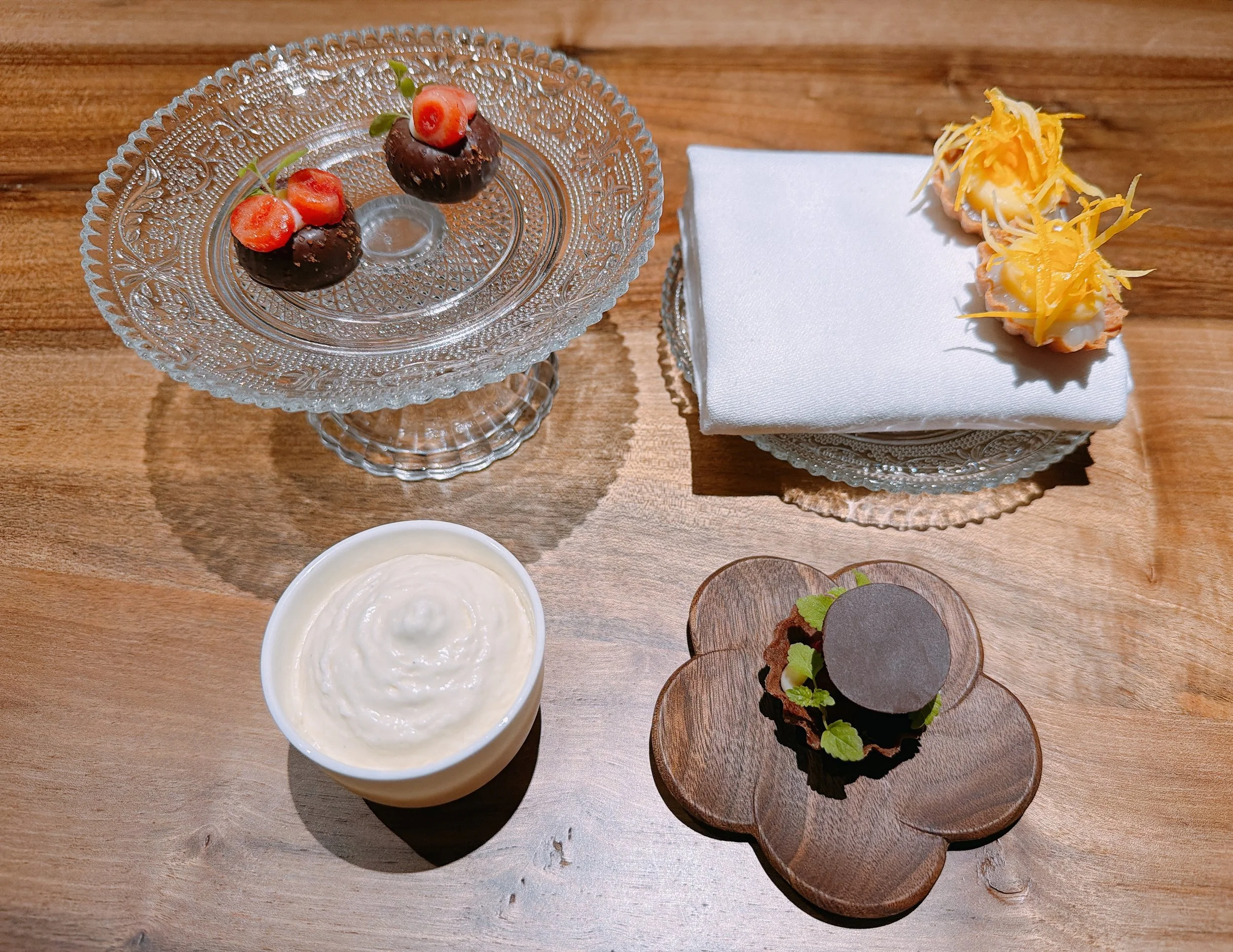
Four small bites concluded our dinner. The first was a play on the German Yogurette chocolate candy: a combination of yogurt, chocolate and strawberries. It tasted quite unlike the traditional candy, and was also much heavier, more like a soft brownie 14. Sein's take on a Black Forest Cake used chocolate, a crunchy tartlet base, and maraschino cherries. Crunchy, chocolaty, fruity 14. A “lemon cake” was topped with copious amounts of lemon peel. The tartlet had a light crunch and a strong lemon flavor 16. Finally, the restaurant's rendition of a Cuja Mara Split - a popular ice cream that comes with a passion fruit coating. Here, it was kind of the reverse: a creamy foam atop a passion fruit sauce. Flavor-wise, this was actually not that far from the real thing, albeit not fully frozen 15.
Overall: Michelin considers sein to serve “modern cuisine”, but one could describe it (much more verbosely) as “seafood-heavy cuisine with the occasional French technique, some Japanese influences and a contemporary German taste profile with punchy flavors”. Either way, this was a lovely meal, with particularly strong main courses, and slightly weaker appetizers and desserts. The service was wonderful as well, only the five hour runtime could have been tightened up a little. Or maybe that was by design? Giving us more time just “to be” 17.