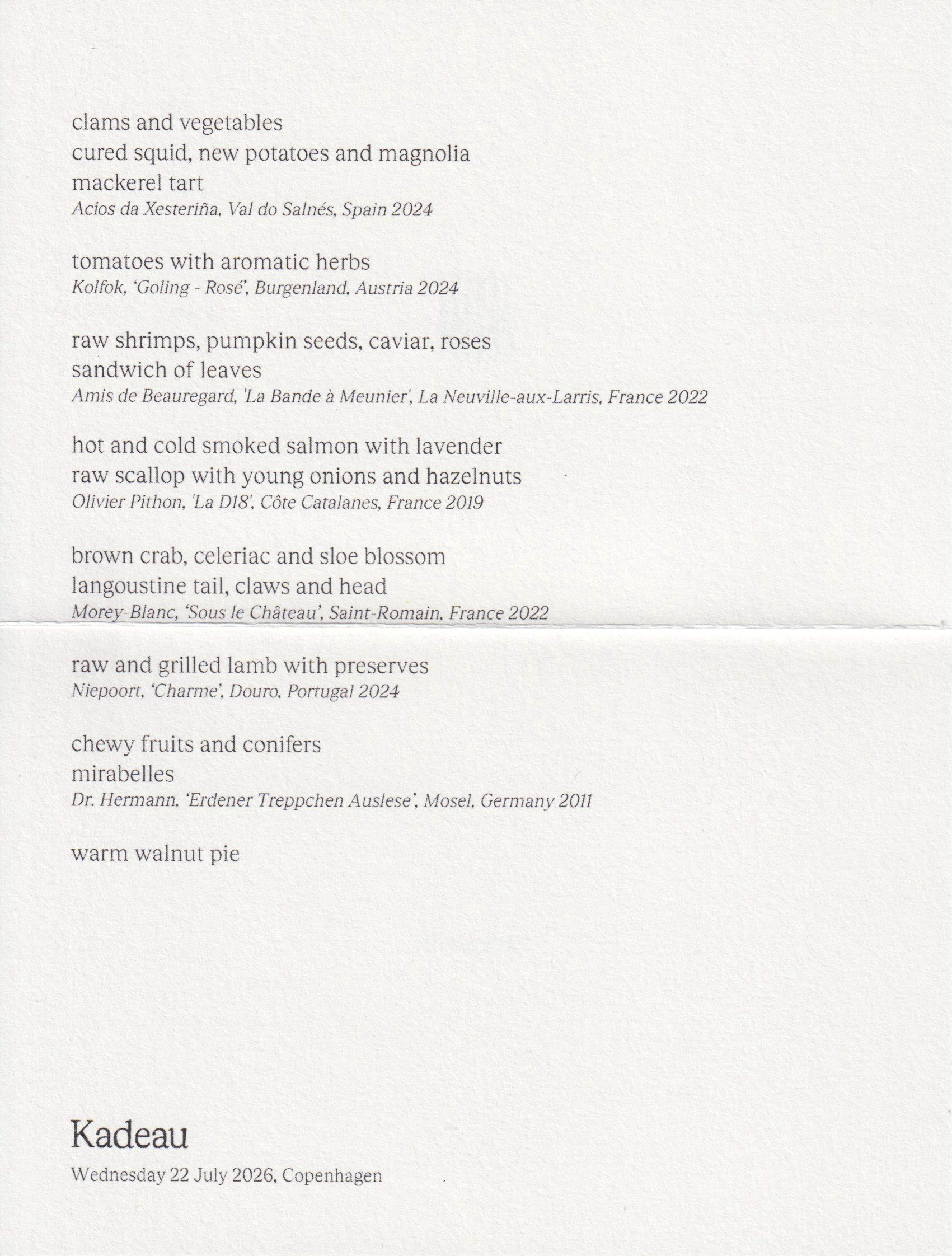
Kadeau - Copenhagen
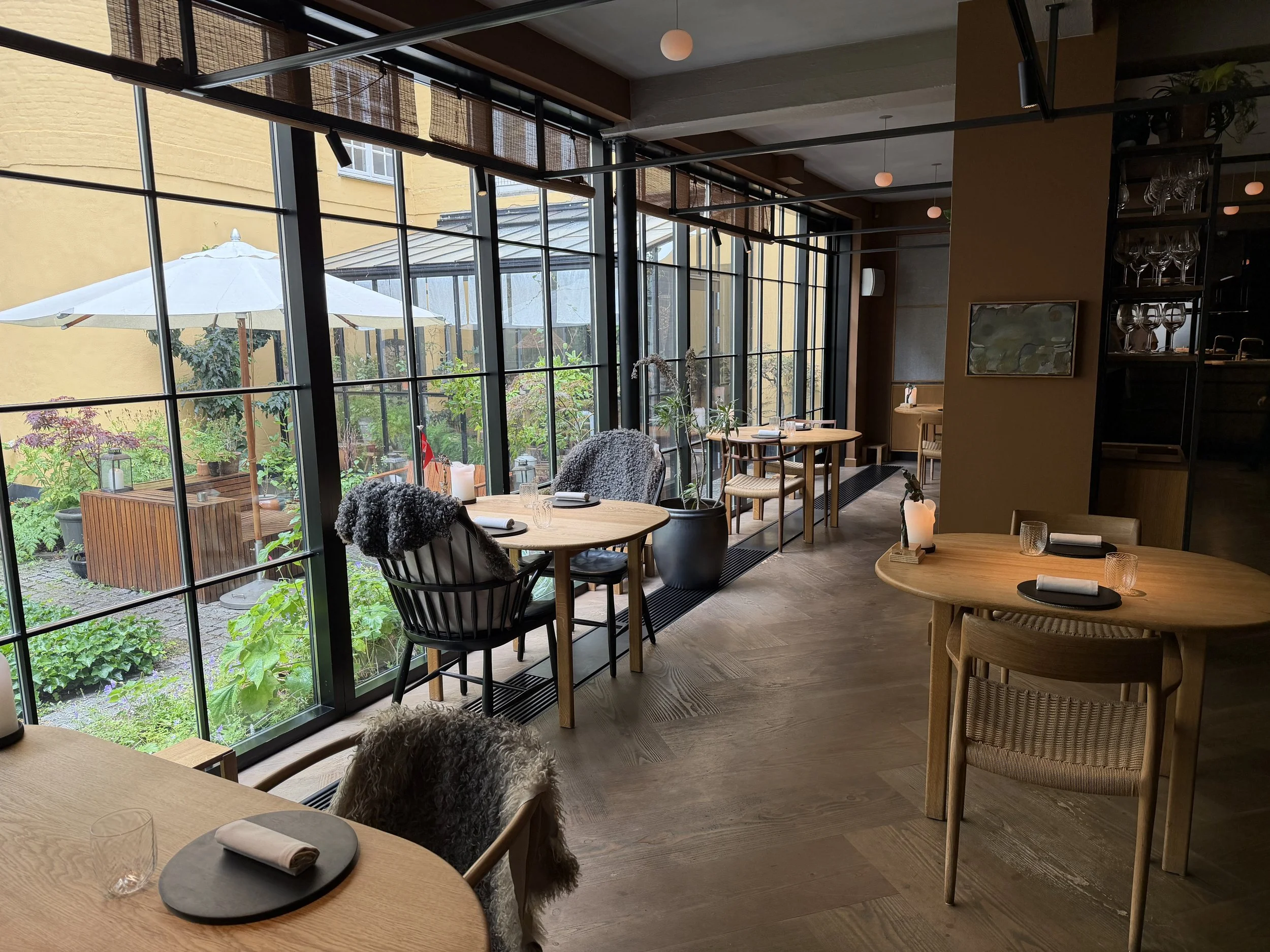
Relaxed seating with a view of the garden
Rating: 17/20
Where: Copenhagen, Denmark
When: Dinner for 3 on 22 July 2026
Cost per Person: Tasting menu 4150 DKK ($635), Wine pairing 2500-5800 DKK ($380-$885)
Accolades: 3 Michelin Stars, #41 on World's 50 Best Restaurants list (2025)
Why: Wide variety of presentations using local ingredients; more buttery than most New Nordic cuisine
Copenhagen's Kadeau is a restaurant that one could literally stand right in front of and still have no idea that it existed. The restaurant has no windows facing the street, only an uninvitingly closed door and some sparse signage (the restaurant's logo is much more prominent than its name). But when one - encouraged by a reservation made potentially months before - rings the doorbell, things are quickly starting to look up. Friendly staff leads one down a short corridor, first to the open kitchen, and then to the dining room furnished with practical wooden tables and chairs. To keep things fresh, the walls of the dining room are repainted twice a year and all the art is replaced.
This restaurant in the Christianshavn neighborhood of Denmark's capital is actually the second location for Kadeau. The original Kadeau opened in 2007 on the remote island of Bornholm, with the express goal of using only ingredients coming from the island itself - all year round, a challenge especially in winter. Its Copenhagen offshoot arrived four years later, and similarly draws many of its ingredients from Bornholm. However, a bit of rule bending is apparently allowed here, and there is also some produce from the rest of Scandinavia. The Copenhagen restaurant has been in its current location since 2015, and was awarded its third Michelin star in 2026. Every year, the restaurant offers two different menus: a summer menu that uses mostly fresh ingredients, and a winter menu that focuses on preserved foods. On this visit (and during a previous one in 2024), I was able to try the summer menu. Back in 2024, I had liked the use of local ingredients, but felt that the meal as a whole was surprisingly underseasoned. Presumably, that would have been an easy thing to fix, so we were excited to see how the restaurant was doing two years later, especially now that it had received Michelin's highest honor.
On our visit, Kadeau served a fifteen course tasting menu, for which dietary restrictions were taken into account with prior notification. There were two wine pairings on offer, priced at 2500 DKK and 5800 DKK (about $380 and $885), as well as a non-alcoholic pairing for 1500 DKK ($230). For the undecided, there were combinations (half-half) of either wine pairing and the non-alcoholic pairing, costing 1950 DKK and 3950 DKK, respectively ($300 and $600). The wines in the basic wine pairing were enjoyable, and matched the food quite well. If this had been anywhere else in the world, I would have thought that the price of the pairing was outrageously expensive - but this was Denmark, where the bills at the end of dinner are not for the faint of heart. On the positive side, the pairing started with the very first food serving, so there was no need to get an aperitif.
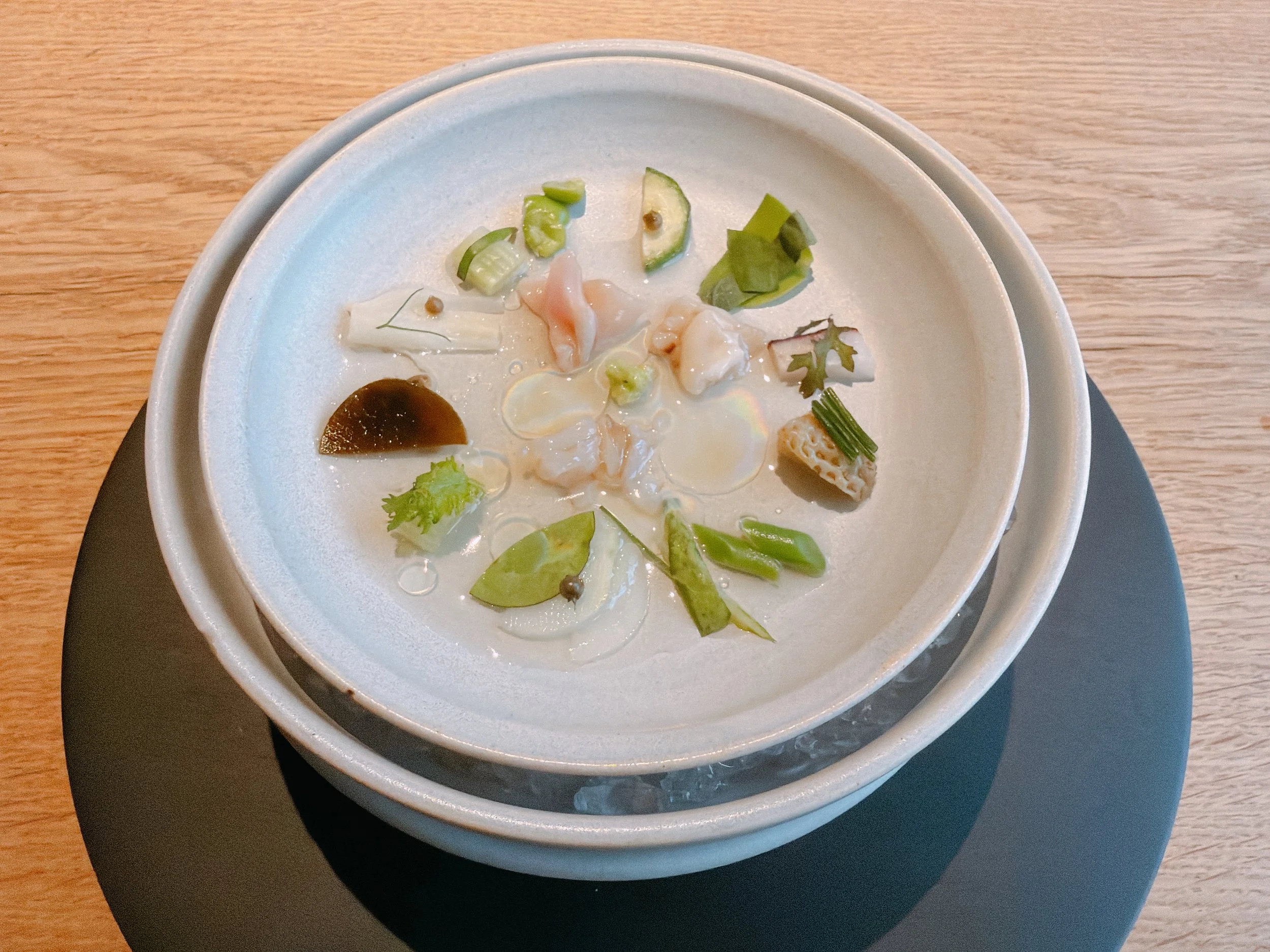
The first course was a salad, albeit a very sparse looking one. Three kinds of clams (mahogany clam, carpet clam, and razor clam) were presented with little pieces of vegetables (and one stray green strawberry), as well as a dollop of wasabi. The clams had a slight bite, but were otherwise tender. For the most part, the clams and crunchy vegetables were only seasoned with salt. They made for a tasty, but very light dish that was unfortunately a bit hard to eat with the provided spoon since the plate was very shallow. As far as rating this dish… well, reasonable people might have very different opinions about it. Similar to Japanese kaiseki, the presentation here went more for subtlety, focusing on individual ingredients rather than providing big flavors or a cohesive whole. So while one could dismiss this dish as being “too simple”, I quite liked the singular focus on the produce 17.
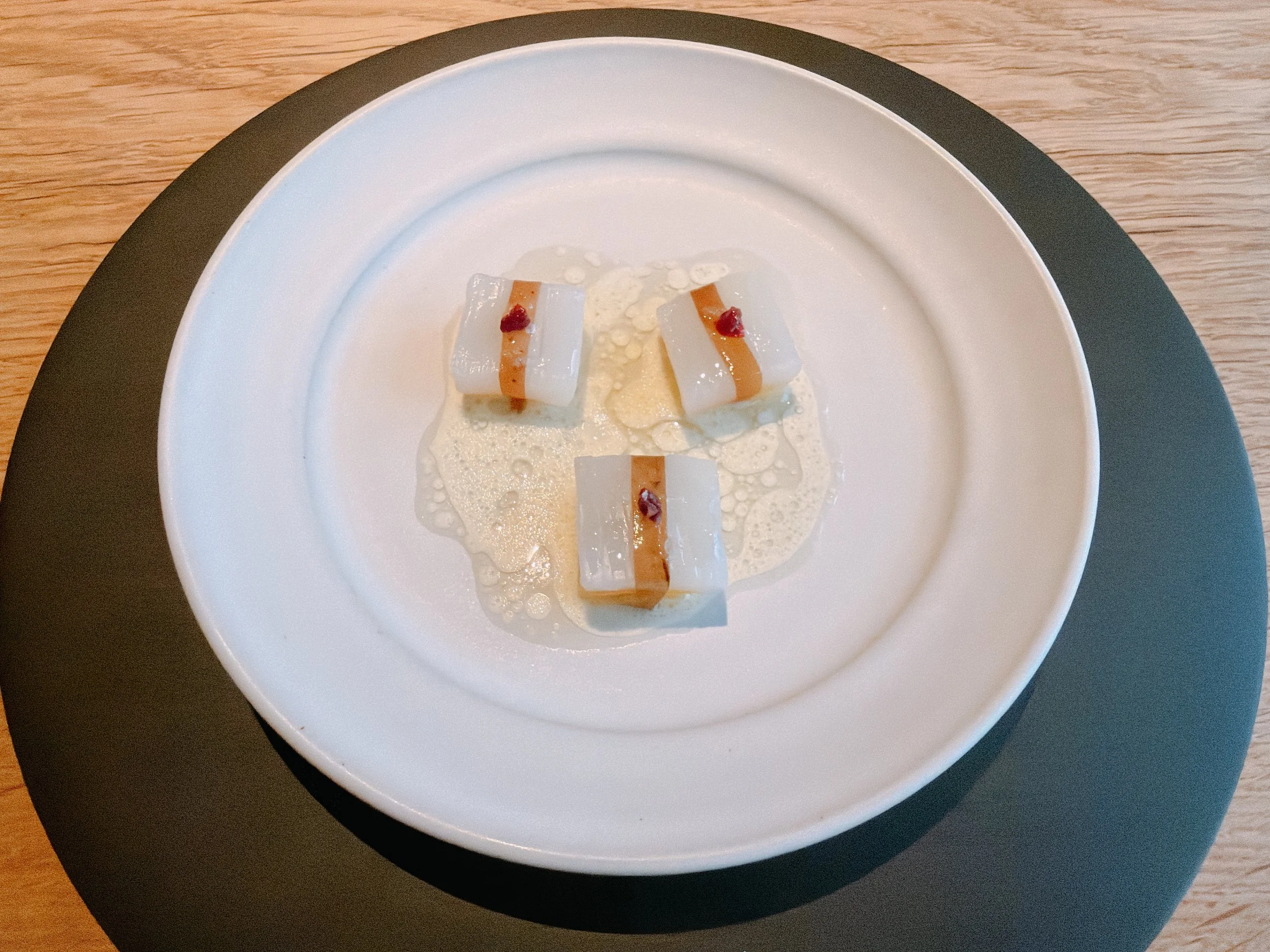
Next up was a dish based on cured squid from Denmark’s west coast. The squid had been cut into squares and scored for texture. The squares were decorated with a pickled magnolia petal and draped over young potatoes. Surrounding them was a sauce consisting of heavy cream and two oils - one made with magnolias, the other with walnuts. The squid had some noticeable bite left, but were definitely tender enough to eat. The potato was a good complement due to its very different texture. So far, so good, but what made this dish truly distinctive was the sauce. It felt quite oily and/or fatty, which managed to give the otherwise pretty light preparation a considerable heft, making it seem almost like a (fatty) meat dish. At the beginning, the oiliness was a bit startling, but once one got used to it, this ended up being a great combination 18.
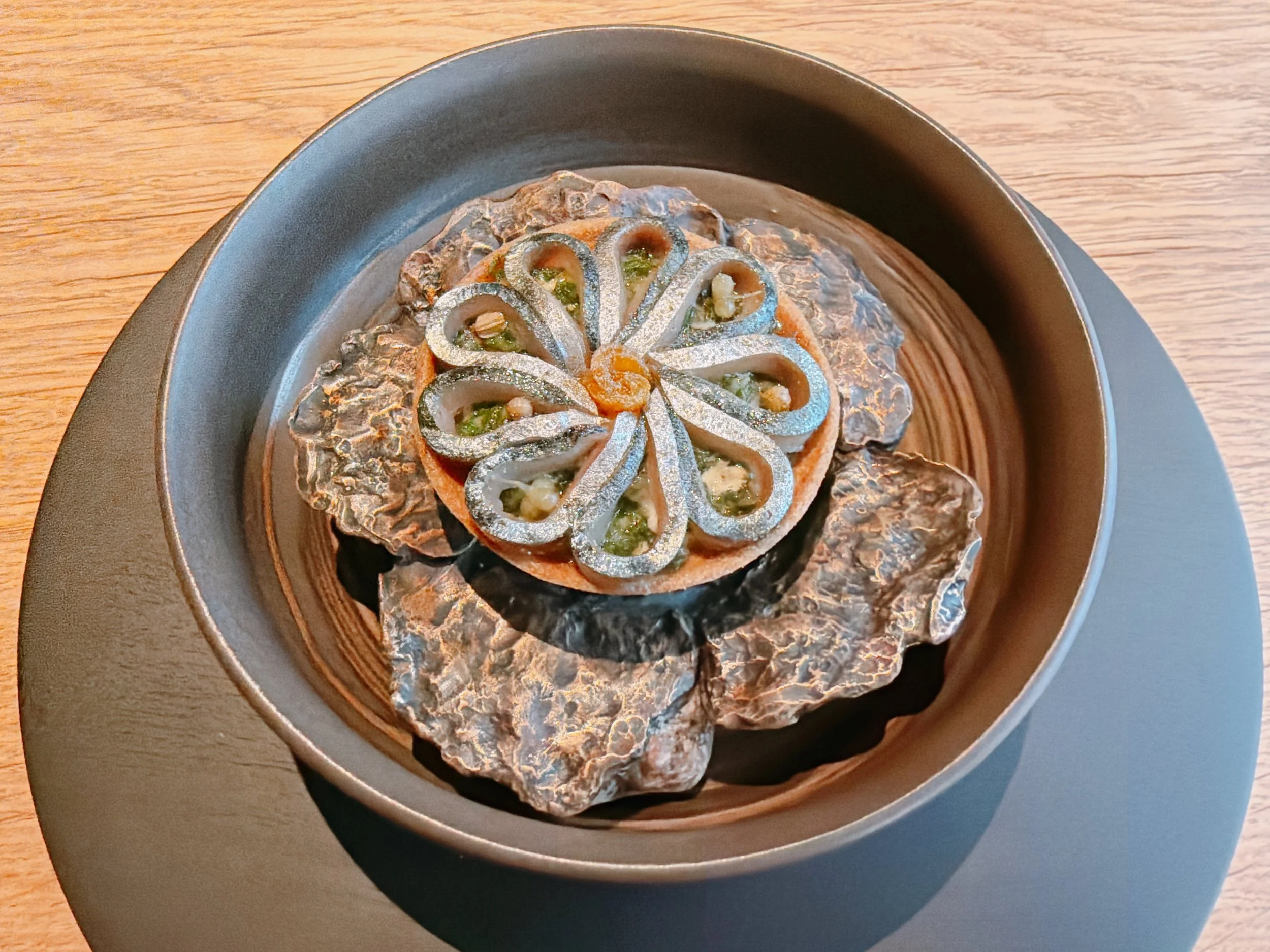
Raw Danish mackerel had been sliced and arranged over fresh Danish cheese and pickled seeds from the restaurant's garden, all sitting on a lightly crunchy rye tarte shell. Oddly, this dish tasted mostly of the cheese and the herbal “pesto”. The fish itself was very, very light in flavor, which - given that this was mackerel - was somewhat of a surprise. Similar to the preceding dish, this one was again somewhat fatty thanks to the cheese and herbs. With a stronger fish flavor, this dish would probably have been more compelling, but in its present form, it was around a 15. However, brownie points for a very pretty presentation 16.
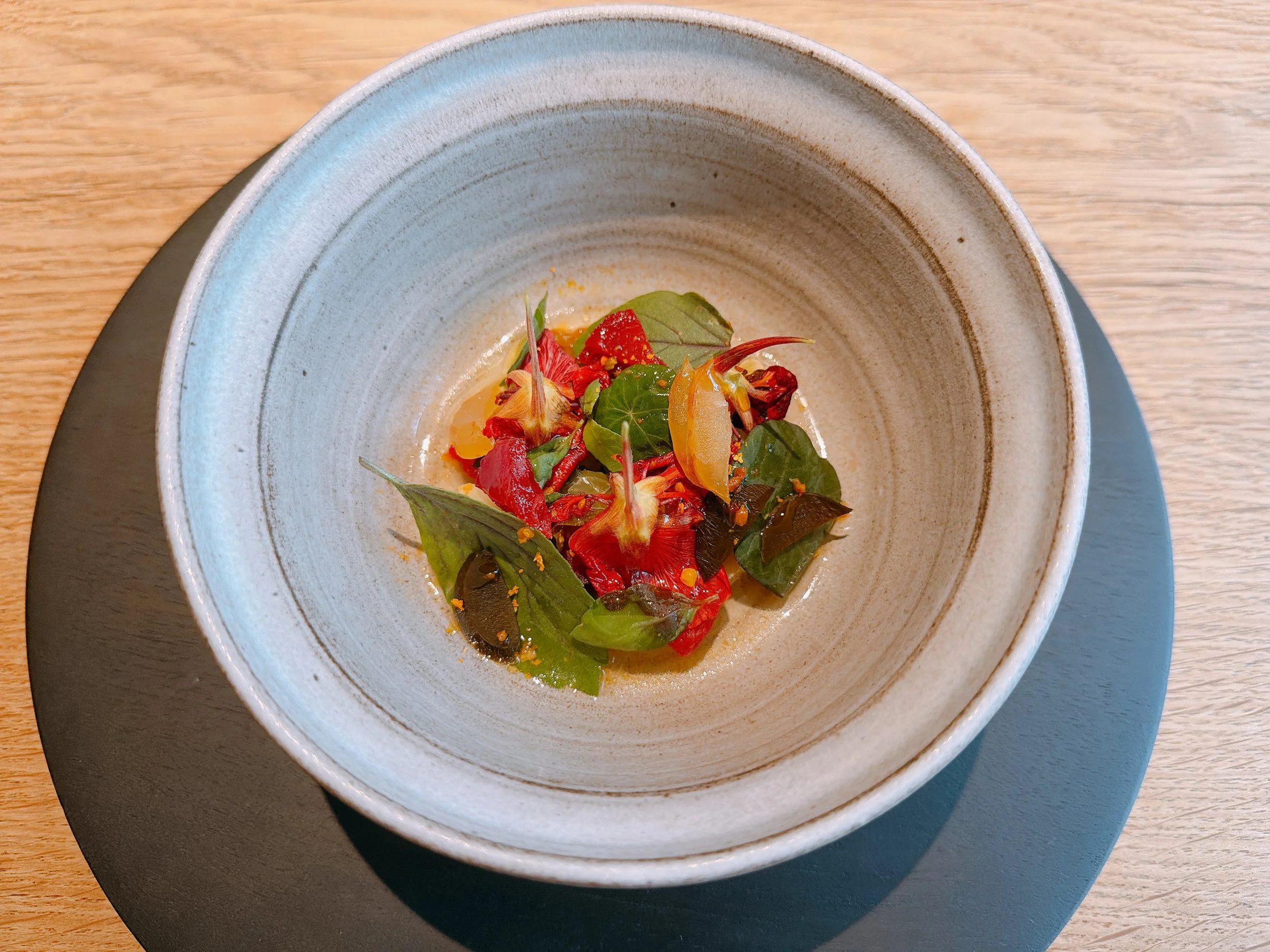
Five different kinds of sundried tomatoes had been filled with various herbs, such as nasturtium, rhubarb, and dulce. They were served as a salad with a tomato broth and some horseradish. The tomatoes were quite flavorful, and had an interesting texture: they seemed only partially dried - not fresh, but also not fully dry. The rest of the dish had some crunchy parts, some bitter parts, and was overall dressed pretty lightly. Even more so than the first course, this didn't really feel like a cohesive dish, and more like a random collection of ingredients. Unfortunately, these ingredients were less distinctive than they had been in previous salad course 14.
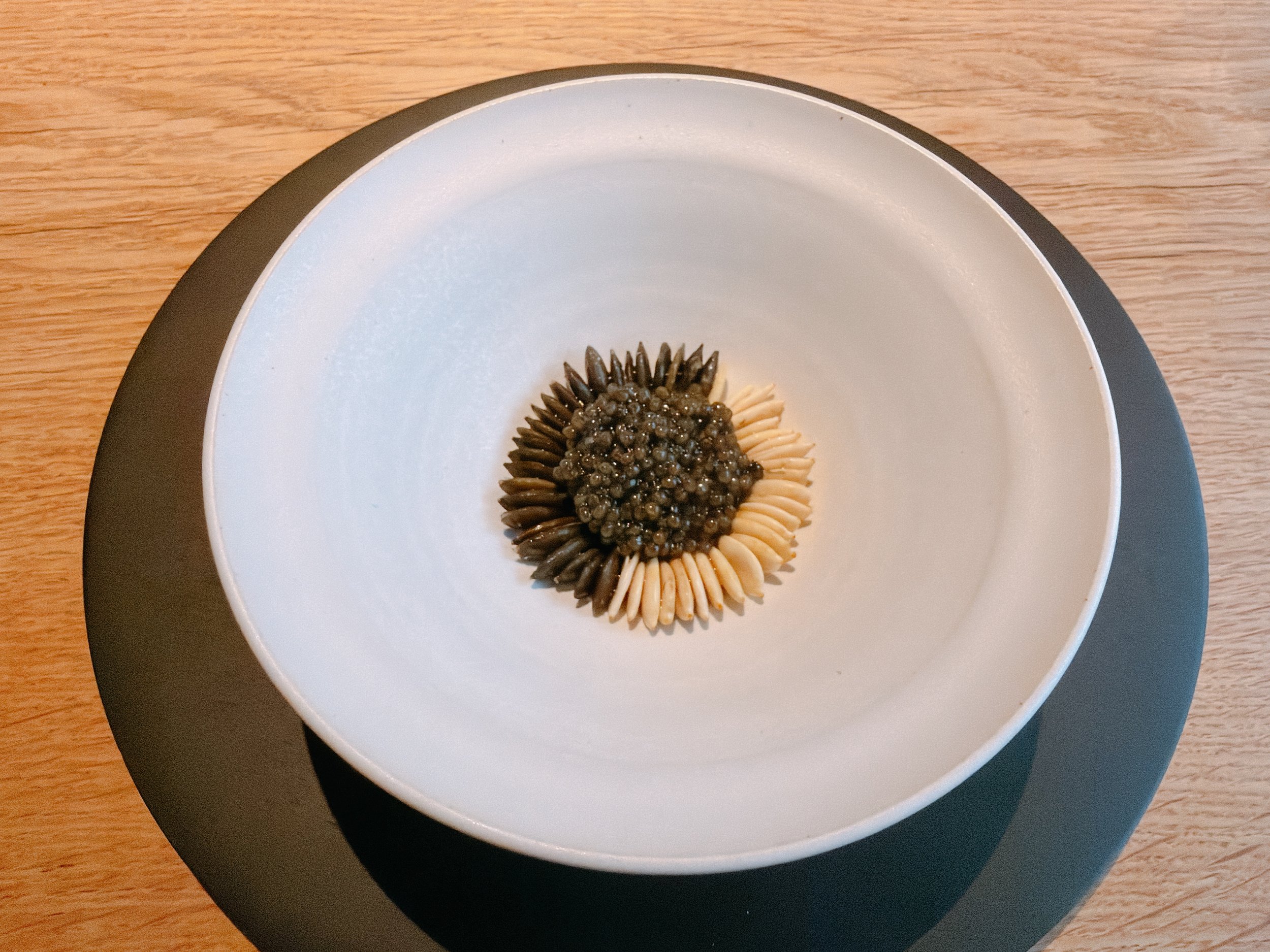
The following dish had two very obvious ingredients: Bulgarian caviar and pumpkin seeds - half of the seeds were roasted and half were raw. Hidden underneath were chopped raw shrimp from Norway, some quince, rose oil, and a cream seasoned with the embers from the restaurant's oven. The theme here was creaminess: the buttery caviar, the shrimp and, well, the cream itself all had a nicely creamy consistency. The combination of flavors worked well too: some salt from the caviar, the taste of the shrimp, and a light, but not distracting, rose flavor. The pumpkin seeds added a nice crunch to the dish - maybe there were a few too many of them, but this was definitely another beautiful presentation 17.
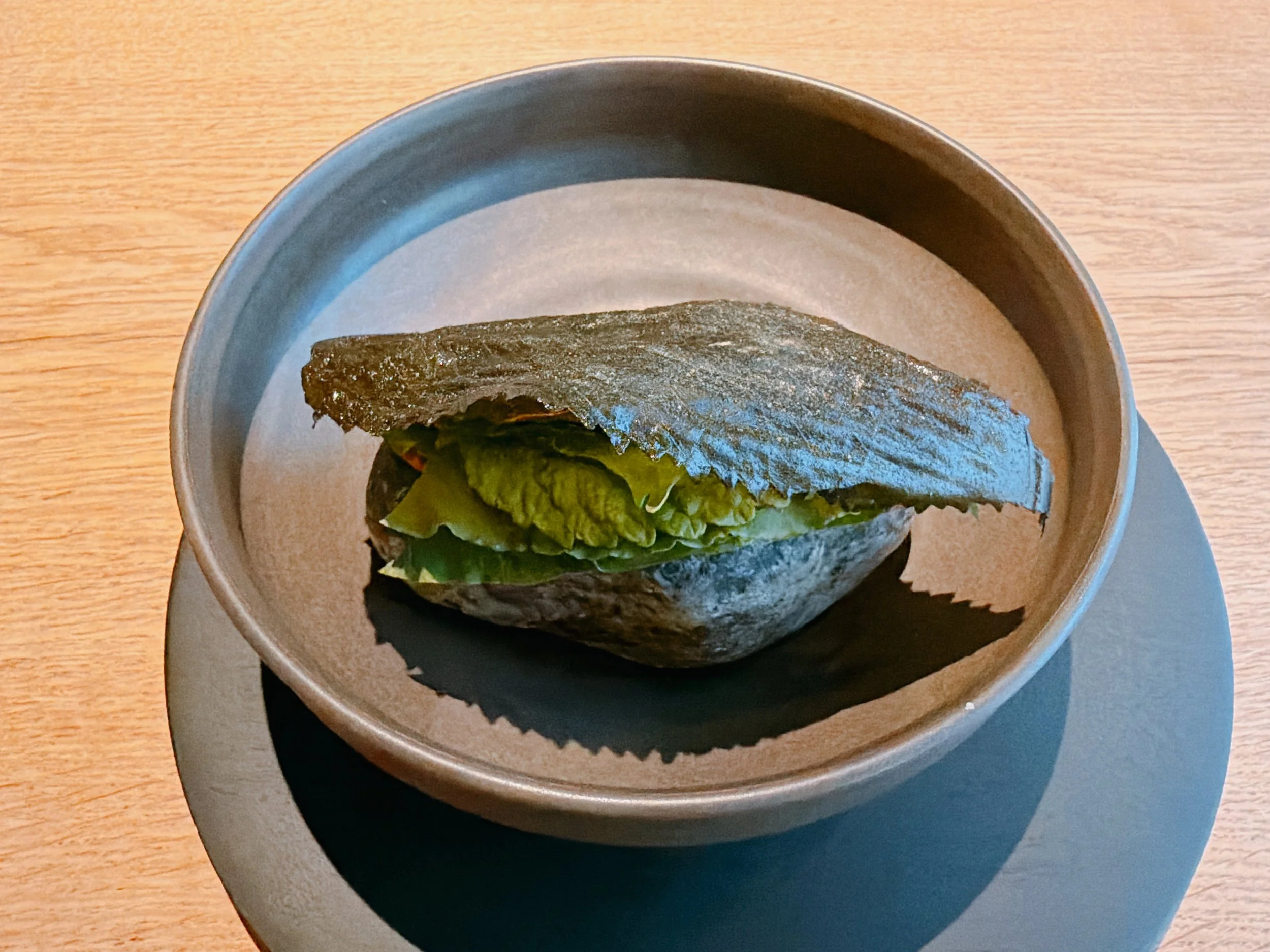
A visually simpler dish came next: a “sandwich” made out of leaves. Its bottom layer was a sunflower seed waffle, on top of which were leaves, both foraged and from the restaurant’s garden. There were sorrel, spinach, Swiss chard, and a fried cherry leaf, all seasoned with pickled capers. The dry leaves were quite crunchy, and the whole dish was reminiscent of eating dried, salted seaweed. I thought it was impressive to create a dish with such simple ingredients, but one of my dining companions would have rated it below a 10. Clearly, a divisive proposition 15.
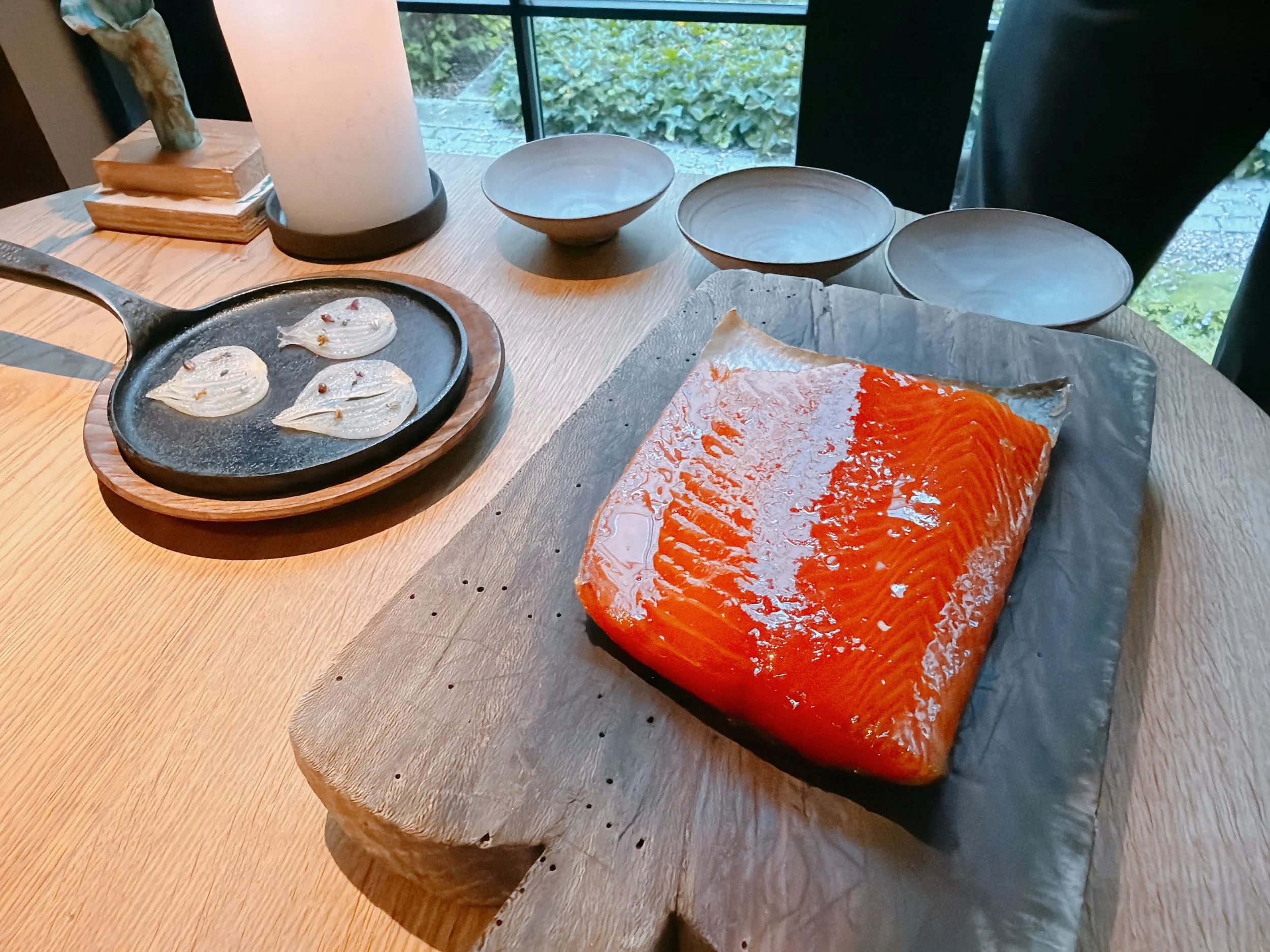
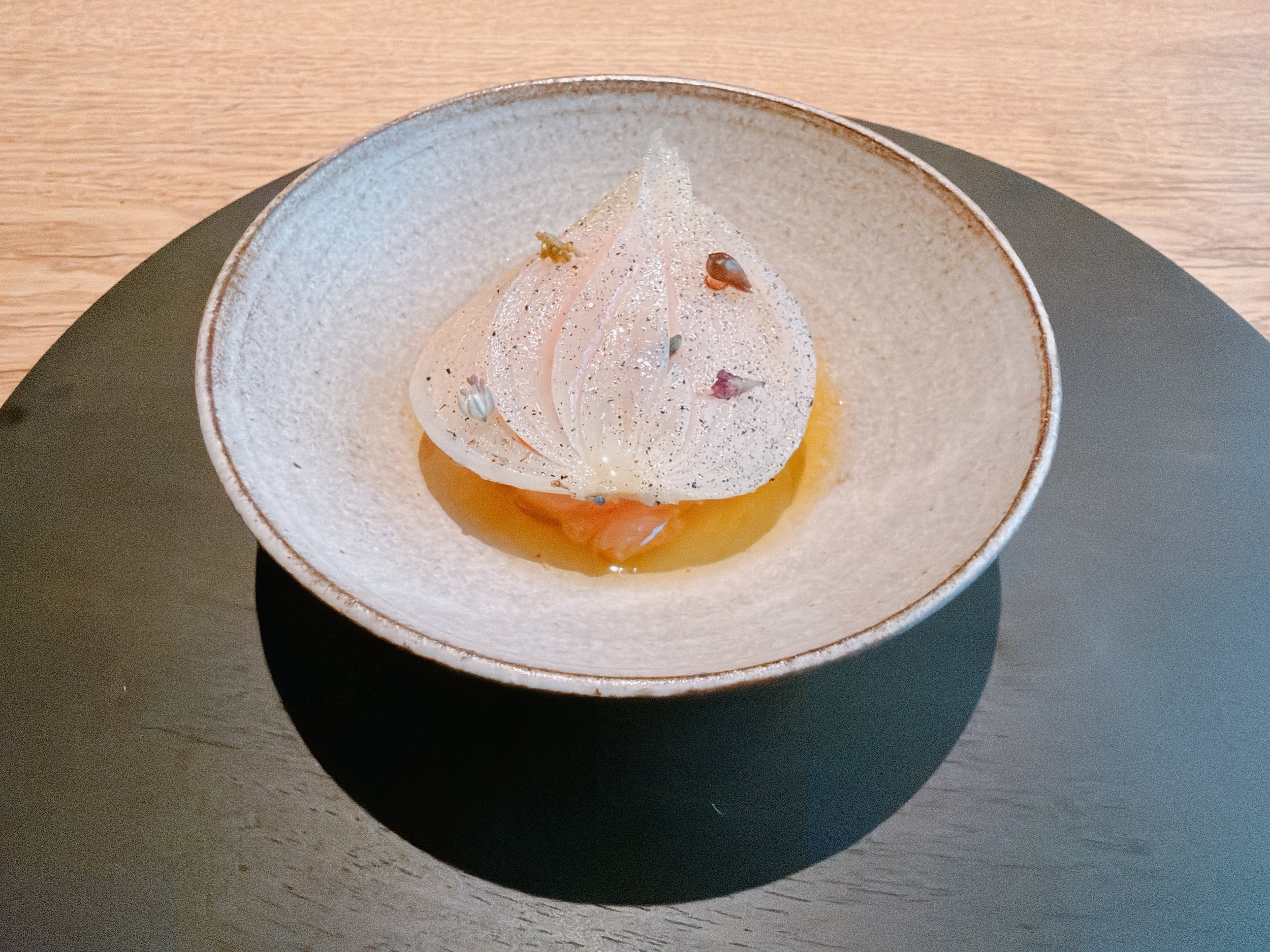
One of Kadeau's signature dishes is the smoked salmon. Creating this dish takes about eight days. A slab of salmon is first cured for a couple of days, then cold smoked for six to eight hours - the hearth is stacked with alternating trays of salmon and ice cubes to keep the circulating smoke cold. Then, it is dried for three days, and finally hot smoked for one hour on the day that it is served. Probably not something one would make for a casual dinner at home... After this whole process, the top of the salmon gets a texture similar to jerky. Our server scooped out the much more tender salmon meat from underneath, and finished it with a slice of sweet onion and a butter sauce seasoned with lavender and apple cider vinegar. This was a dish that grew on you. The first bite was almost shockingly buttery - partly due to the slightly fatty salmon, but mostly because of the butter sauce. (At this point, buttery sauces and dishes began to feel like a theme at Kadeau.) But the combination of salmon and butter was actually very good, keeping the salmon flavor front and center, but giving it more depth thanks to the butter. The onion added some welcome freshness to a dish that might otherwise have been too heavy 18.
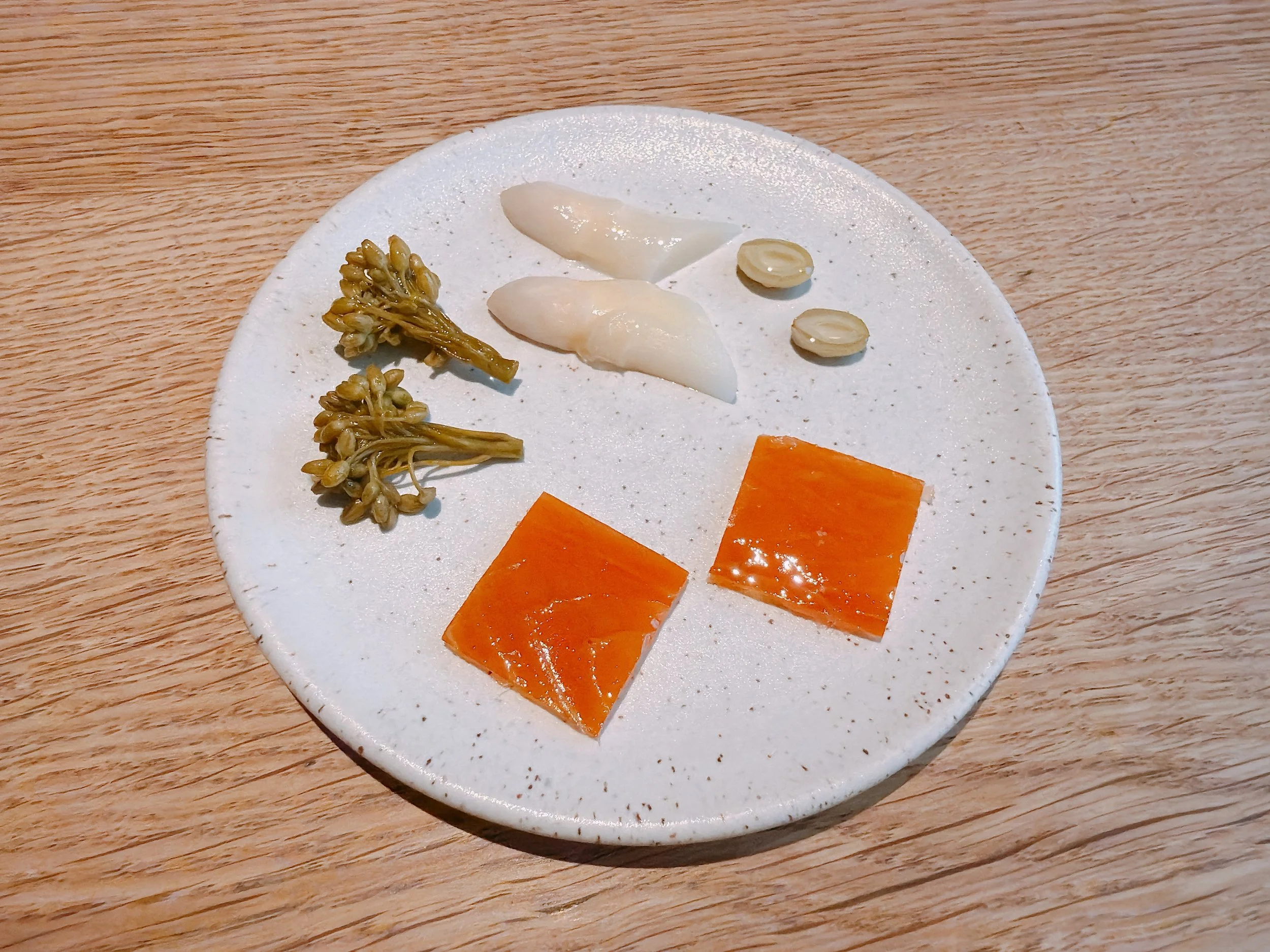
As an add-on to the salmon course, we received a piece of salmon jerky (the top layer of the smoked salmon) along with some pickles: mirabelle plums, white asparagus, and rapeseed. This dish was fine, but not as compelling as the salmon itself. Interestingly, the pickles had been prepared in several different ways, ranging from crunchy sour to sweet 15.
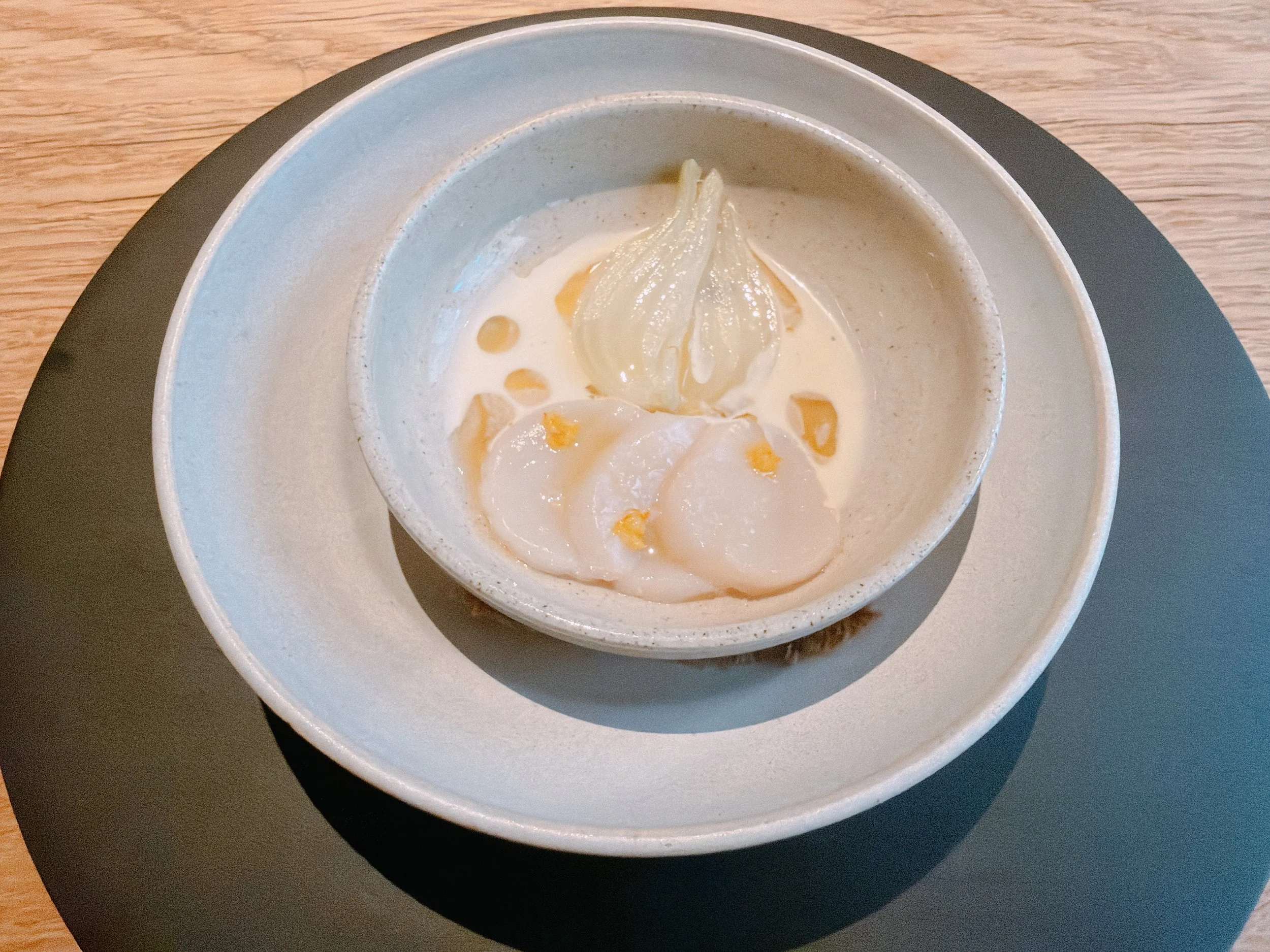
Sliced raw scallops from Norway were served with onions, quinces, and hazelnut milk. This was also a pretty fatty dish thanks to the hazelnut milk, which also dominated the overall flavor. The scallops and onions provided more texture rather than taste 15.
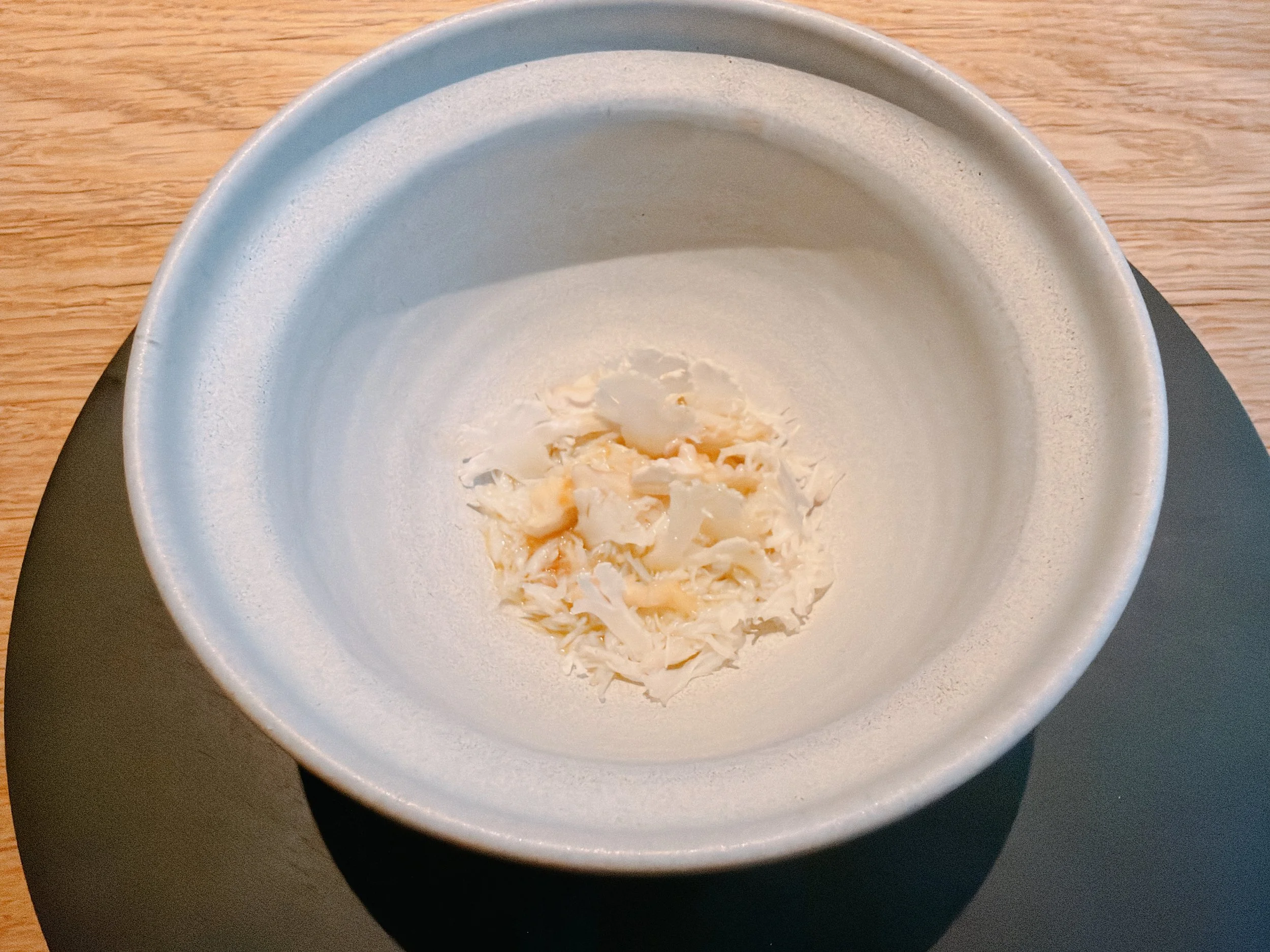
An even more monochromatic dish followed. Stone crab meat was served with celeriac, slightly dried cauliflower and walnuts. This was a fresh crab, to which the cauliflower added some crunch. Again, a pretty fatty dish. Ostensibly simple (at least colorwise), but definitely tasty 17.
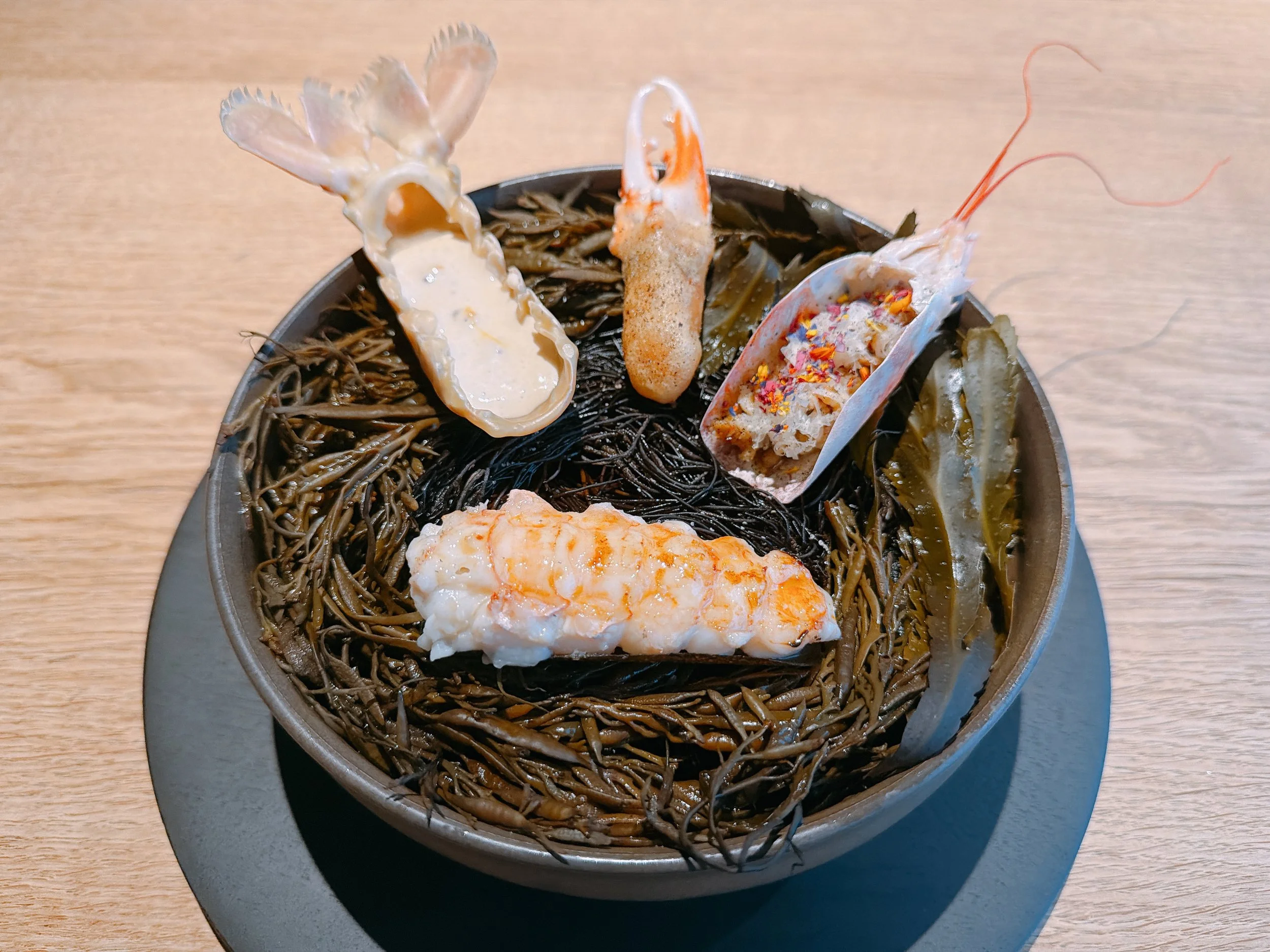
The next course featured several different preparations of langoustines. First, there was its tail, cooked over the fire and served on top of crispy seaweed (also meant to hold it, since there was no cutlery for this course; sadly there were no hand towels, either). Then, there was the langoustine’s claw: battered, fried, and seasoned with ramson, and meant to be dipped into a sauce made from the langoustine's shells. Finally, langoustine meat dressed with the langoustine's brains and a rhubarb root oil. Not all preparations worked for me, but the majority did. The juicy, smoky tail was cooked close to perfection (maybe 18 by itself). The fried claw was quite oily, and unfortunately, that was also the main take away here, since both the claw and its accompanying dip were very light on flavors (14). The crab meat on the other hand was very flavorful and delicious. It was light and had a bit of spice (another 18). Both my dining companions were smitten with this dish 17.
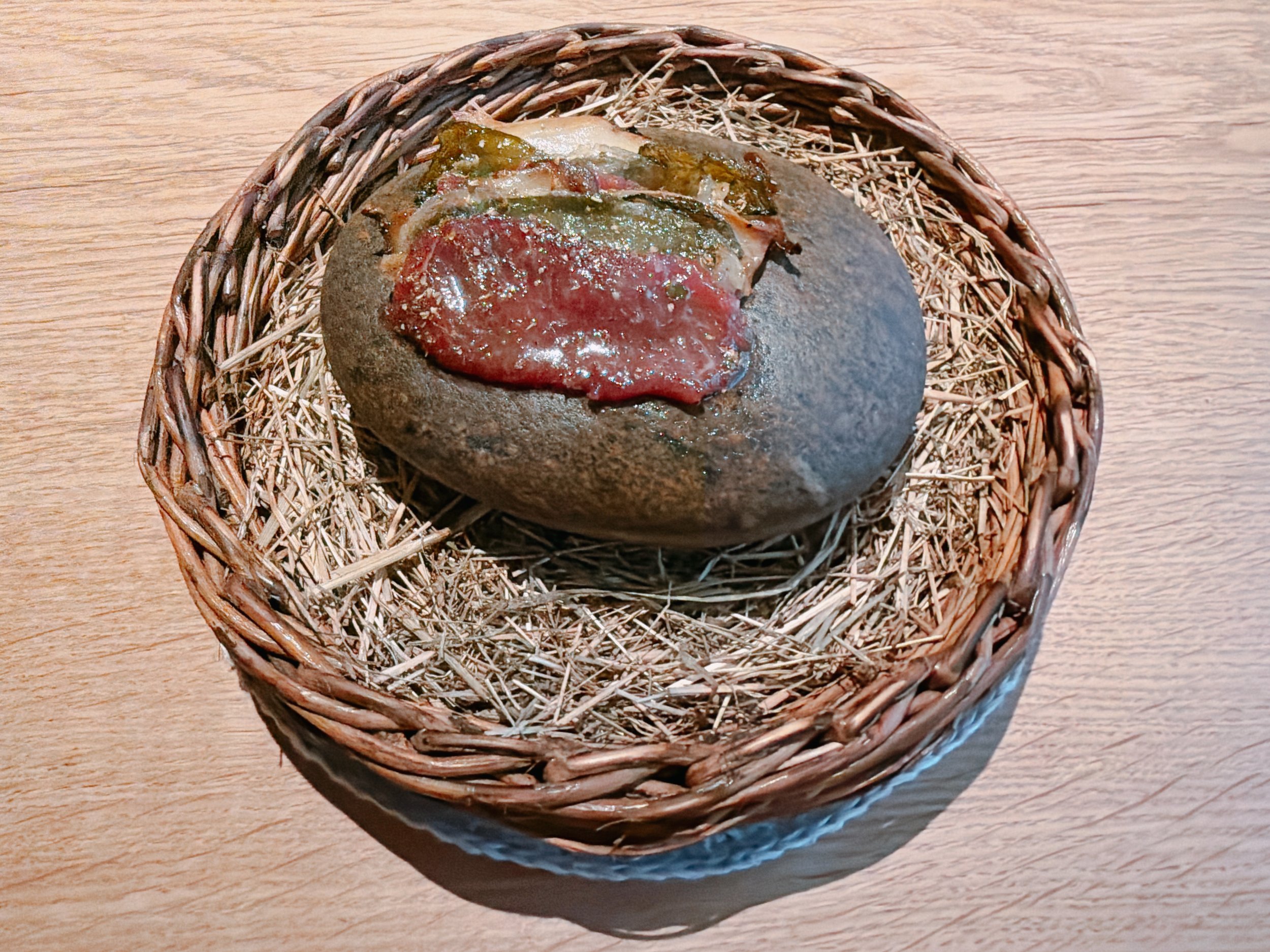
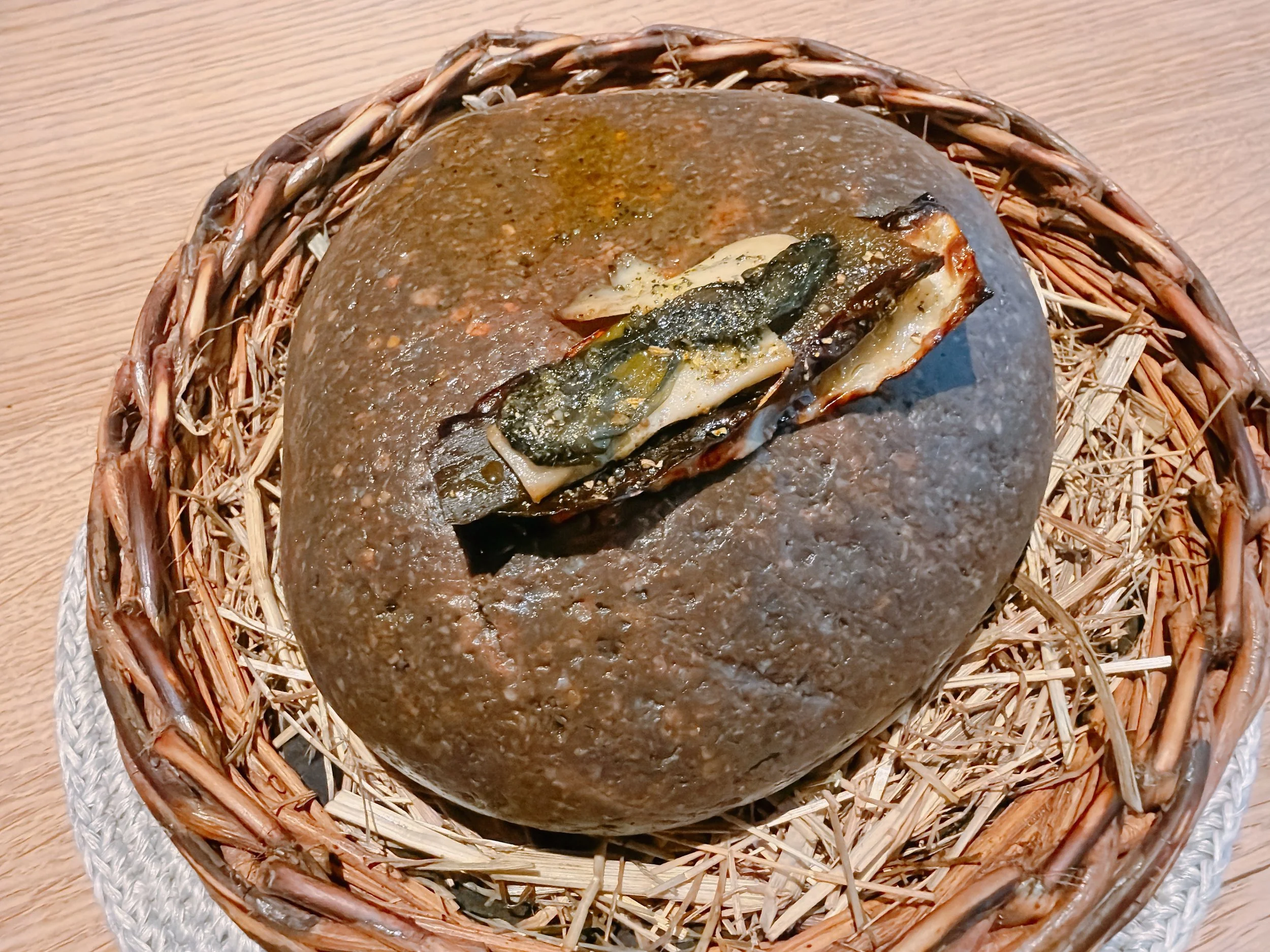
Nearing the end of the savory part of the meal, we arrived at a meat course that presented lamb in two separate servings. First, we received a dish consisting of four layered slices: raw lamb, ramson, lardo, and king oyster mushrooms. There was some oil as well, making this again a pretty fatty dish. But it was also crunchy, meaty, and - not to forget - quite tasty 17. I tried a bite of the vegetarian replacement that used truffles instead lamb. It was delicious as well, and had a pronounced truffle flavor 16.
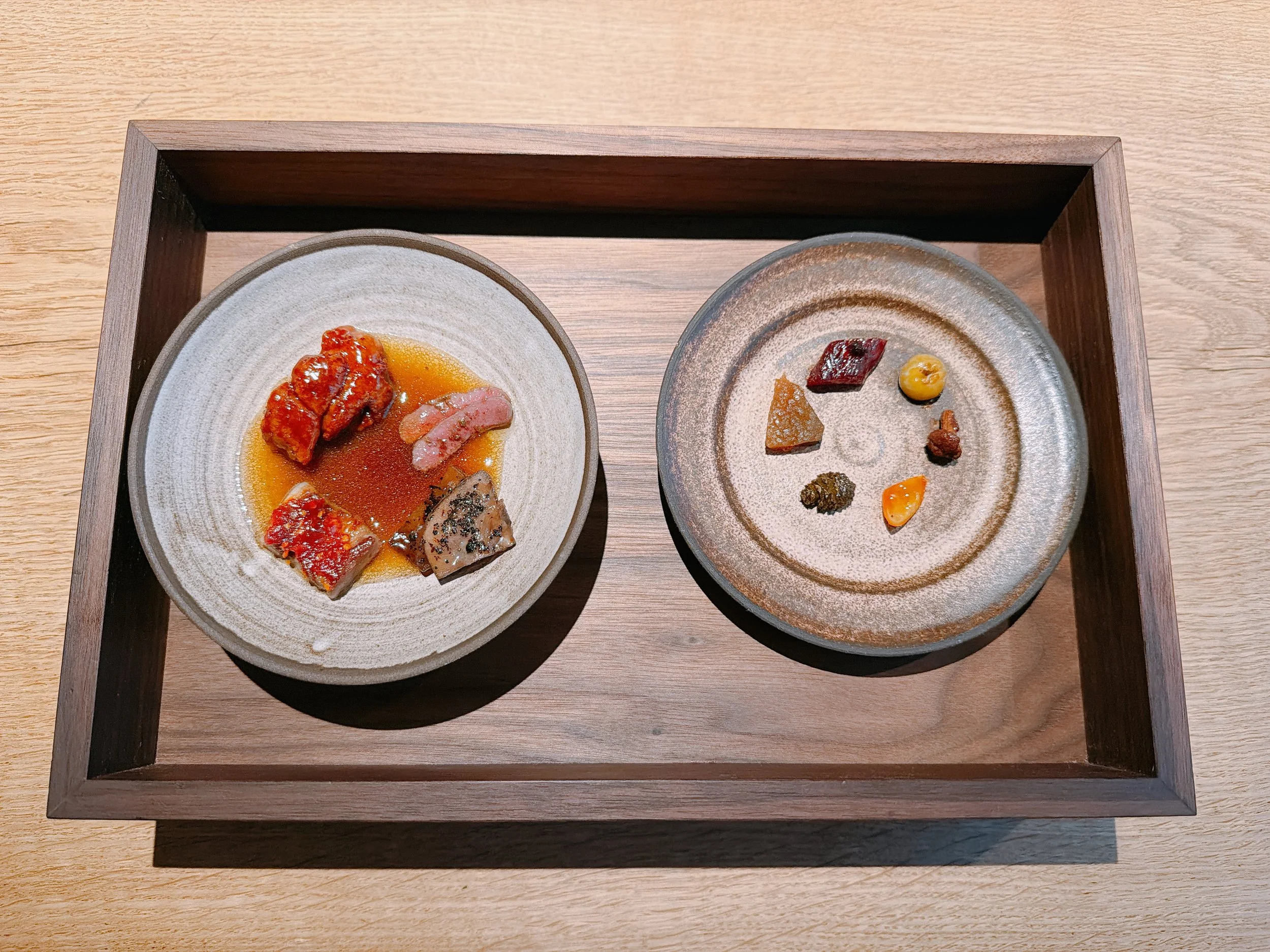
The second presentation of lamb came on two plates. The first one had a variety of cuts of lamb: sweetbreads, heart, tongue, and belly. On the second plate were preserved fruits and vegetables that could be eaten either together with the meats or separately. (The pescatarian replacement used turbot instead of lamb, but I didn't get to try it.) The sweetbreads were crunchy on the outside, but had their typical mealy-ish consistency inside. Admittedly not my favorite ingredient, and this example didn't make me a convert. The heart was tender and had a light flavor, the tongue was fried, crunchy, and tasted of herbs, and the belly had a sweet glaze and was crunchy on the outside. Not bad, but also not very distinctive. The pickles were a mixed bag as well 15.
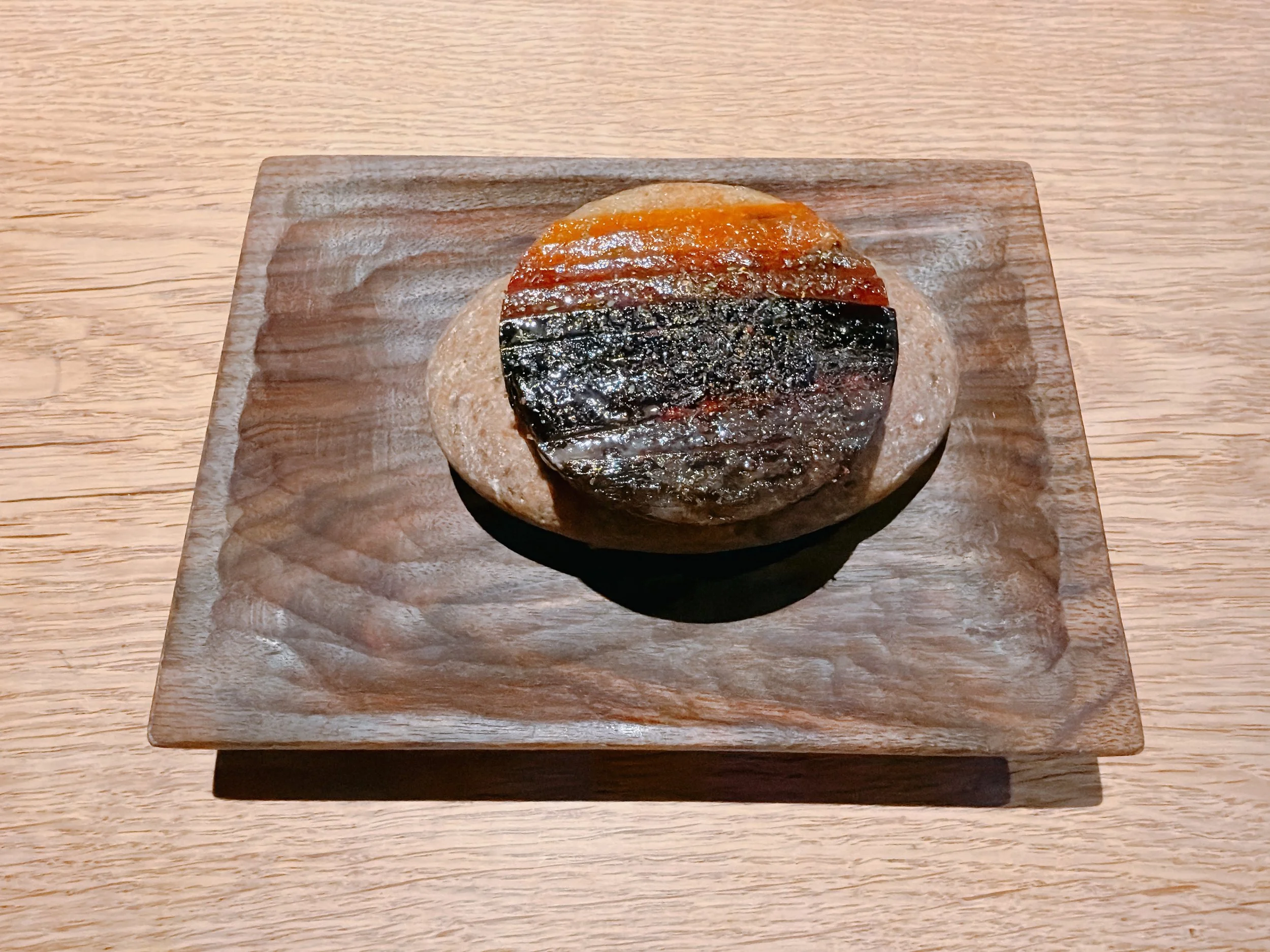
Dessert time! First off, we got a tarte with a thin toasted marshmallow cracker bottom. It was topped with slices of fruit leathers made from a variety of berries, plums and rhubarb. They were arranged by color, and with each bite, we got a slightly different set of flavors (the sea buckthorn particularly stood out to me). The result was quite tasty and sweet, and the marshmallow added a light crunch 17.
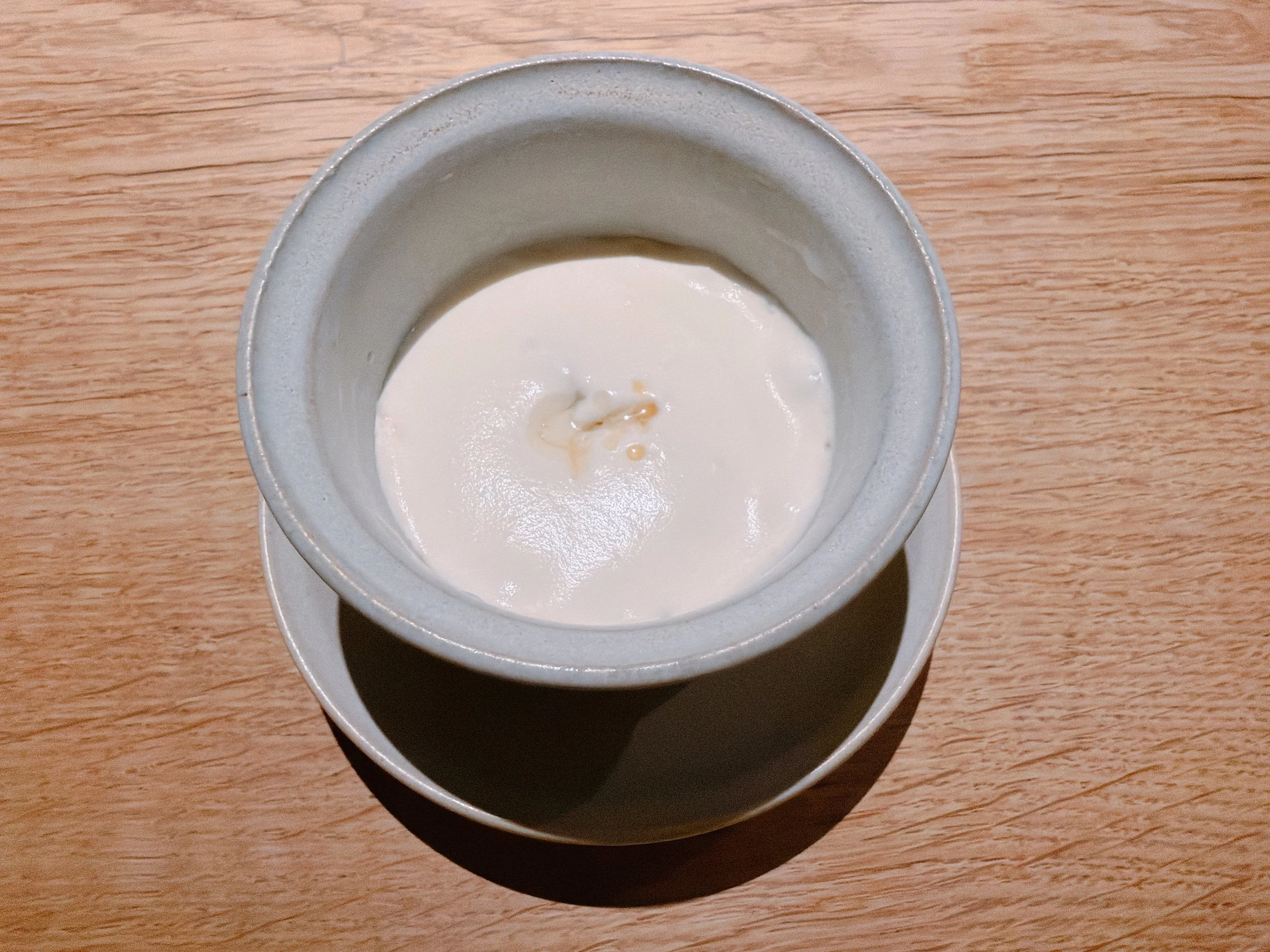
The following dessert featured mirabelle plums and honey from Bornholm. It contained a plum jelly, an ice cream made of plum blossoms, a fruit caramel, and a honey infused with plum blossoms. Texture-wise, this dish felt a bit like a half-melted ice cream or foam. But it tasted great: the honey was sweet and the ice cream delicious - a good combination 17.
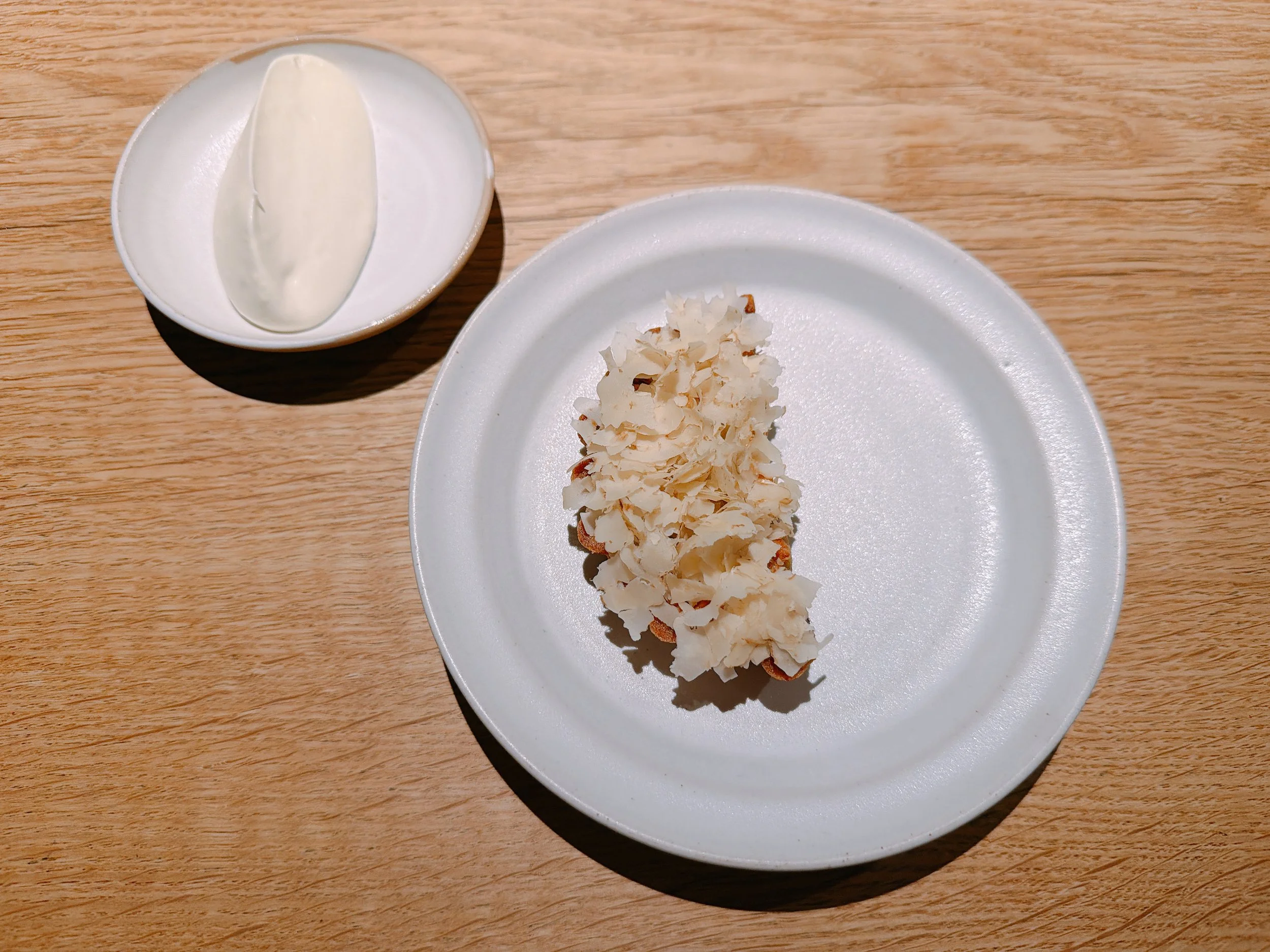
Finally, we were served another staple of the restaurant, its walnut tarte. There were walnuts in the tarte’s base, a filling of summer honey, and plenty of shredded walnuts on top. Some creme fraiche was available on the side. Nutty, crumbly, and sweet. The not-sweet-at-all creme fraiche was not 100% necessary to enjoy the dish, but could be used to lighten it up 17.
Overall: Say what you will about Kadeau, the restaurant definitely serves a wide variety of dishes - no two presentations looked the same. Most were visually stunning, and made good use of local produce. Stylistically, most courses were not about single ingredients, but rather the combination of different flavors and textures. I mention this mostly since summer-time, ingredient-driven cuisine often goes in the opposite direction: it builds whole dishes around single ingredients. Also notably, most dishes at Kadeau were on the buttery side. This didn't make the meal as a whole terribly heavy, but it was a departure from “typical” New Nordic cuisine, where the taste profile tends towards freshness and/or acidity rather than fattiness. Among the wide variety of dishes, not everything worked, but the best dishes were genuinely great 17.