Hajime - Osaka
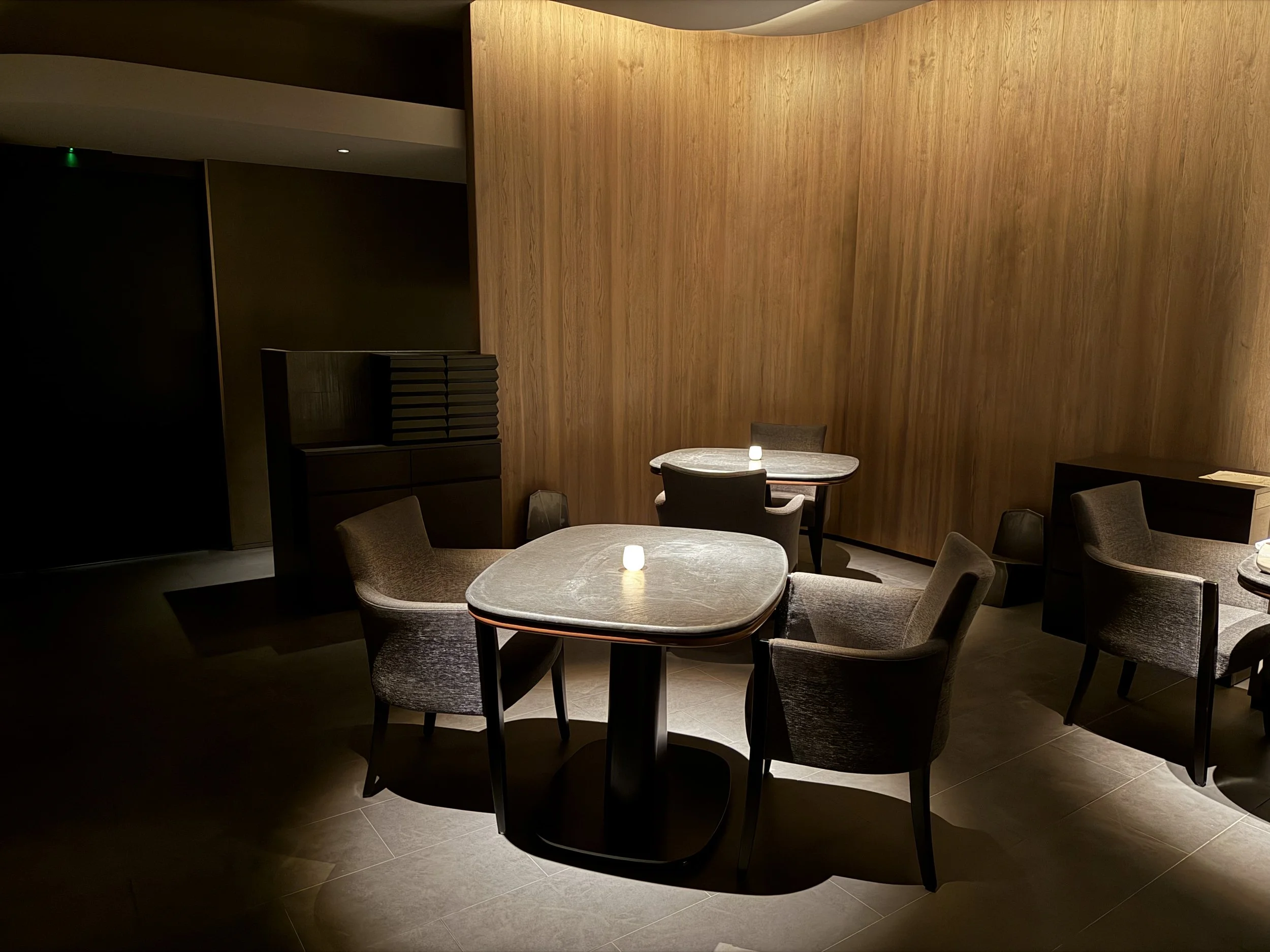
Minimal interior design - all the focus is on the food
Rating: 18/20
Where: Osaka, Japan
When: Dinner for 2 on 20 June 2026
Cost per Person: Tasting menu 89000 JPY ($550), Wine pairing 55000-418000 JPY ($340-$2600)
Accolades: 3 Michelin Stars, Tabelog Bronze Award (2026)
Why: Stunning visual presentations - art on a plate
Calling the entrance to Osaka's restaurant “Hajime” understated would be an understatement, so to speak. It is simply a plain row of floor-to-ceiling windows, with nothing visible behind them, and only an easy-to-miss mention of the restaurant's name on the glass. A prospective diner could easily think themselves to be in the wrong place, and keep on walking. Behind the entrance door is a short corridor that ends at another door with a door bell next it. After ringing that bell, one can enter a small lobby, and then finally a dining room that continues the minimal design. Much of the room, including the waiter’s attire, is black. All tables have simple stone surfaces that are completely empty at the beginning of the meal. Spotlights illuminate the spaces where dinner plates will hopefully appear. The space and the abstract background music make the room feel more like a gallery than a restaurant. And that association is intentional, since the restaurant aims to serve food that is “art on a plate”.
But let's take a step back. Chef Hajime Yoneda started his career as an electrical engineer before switching tracks to work in the kitchen. (He seems to have kept his love of engineering precision, though, as we will see.) Mr Yoneda opened his namesake restaurant in 2008, and initially cooked French food. When the Michelin guide came to Osaka in 2010, Hajime became the only restaurant in the city to be awarded three stars. A few years later, though, the restaurant switched cuisines: from French to a more modern, more visual kind. The three stars went away with that change, but Hajime regained them in 2018 and has held them ever since. We visited the restaurant once before in 2019, but unfortunately I didn't take any notes at the time, and the restaurant had a no-photos policy. I had never been so disappointed that I couldn’t take any pictures in a restaurant - the presentations went above and beyond anything that I had seen before. (Later, I learned that the “no photos” policy was meant to save customers from themselves. Apparently, guests often took too long to take photos and then complained that the food had gotten cold. Tsk, tsk.) Anyway - that policy was history now, so the photos below are all above board. But I have to admit that my mobile phone camera could do only so much; the real plates definitely looked better.
We arrived somewhat early for our 7pm reservation, but unfortunately and somewhat unusually, Hajime refused to seat diners before their reservation time. So we spent some time in the lobby, nursing glasses of water. (We would have taken a walk around the block, but it was raining heavily outside.) After seeing some of the dishes being served, the enforced wait made more sense, though - some of these dishes needed ample preparation time, so the food couldn’t just be served the second a guest walks in. Note to self for next time: don't be late, but don't be early, either.
On our visit, there was about a half-half mix of Japanese and foreign guests. English menus were provided and the servers spoke good English.
Hajime only serves a single tasting menu for 89000 JPY (about $550), with the option of shortening it slightly (76500 JPY / $475) or making it vegetarian (no price change). Apparently, the menu is changed entirely upon revisits (except for one signature dish), and their most frequent visitors have seen over fifty different menus. For our dinner, I asked for the first-time menu, since my dining companion had not been here before.
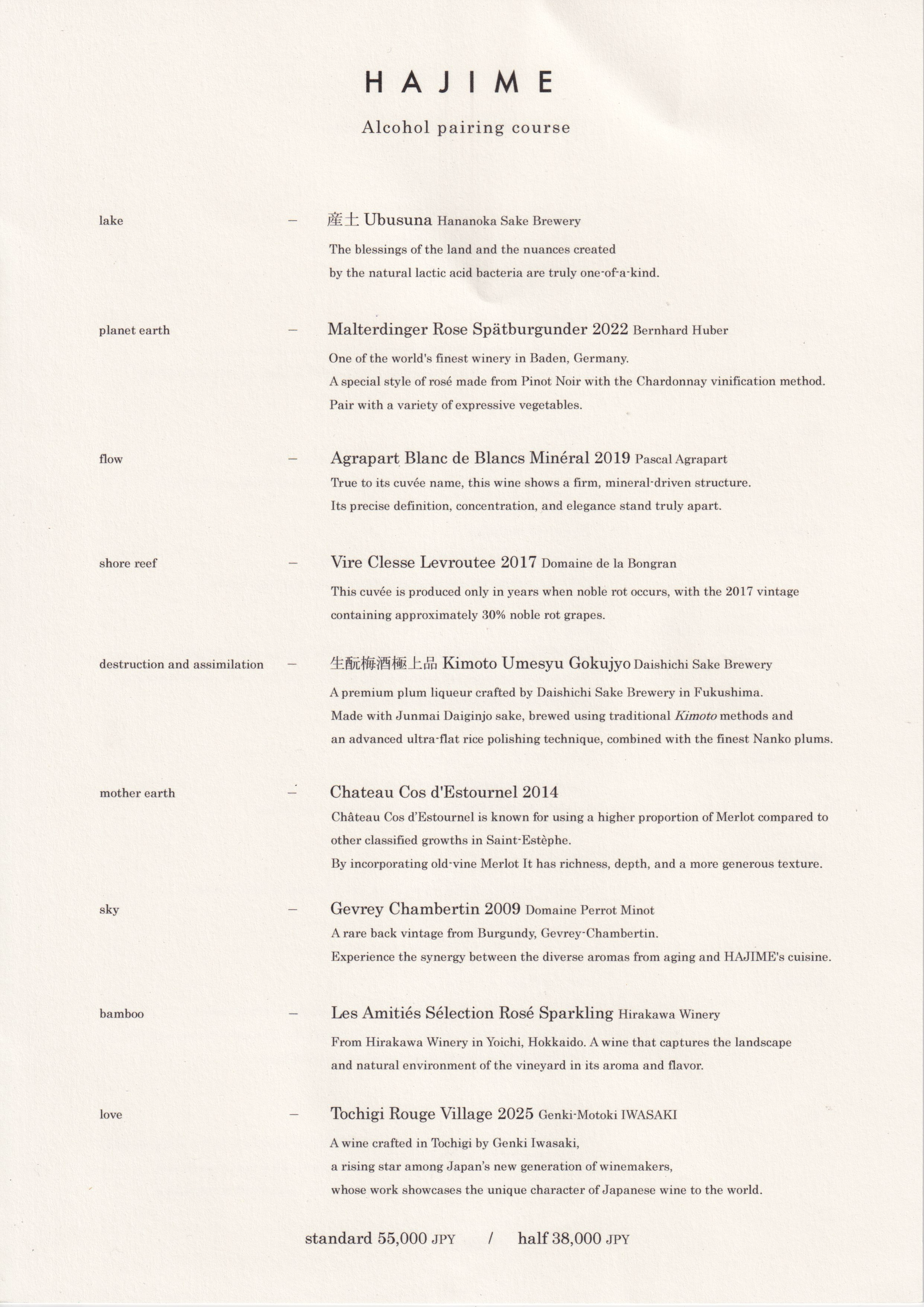
A alcoholic beverage pairing was offered for 55000 JPY ($340), consisting of nine 60ml pours. Half pours (30ml) were also available for 38000 JPY ($235). If one was in the mood (and flush with cash), pricier pairings were also available, for 163000 and 418000 JPY ($1000 and $2600), again with corresponding half pairings. A non-alcoholic pairing clocked in at a more reasonable 27500 JPY ($170). We went for the standard pairing. It consisted mostly of wine (some of it from Japan), in addition to two sakes and one plum wine. All drinks were pretty good and went well with the food. I'm glad that we got the pairing, but a dinner at Hajime definitely does not come cheap. The pairing only started on the third course, so an aperitif might be worth a consideration - uncharacteristically, we didn't get one this time.
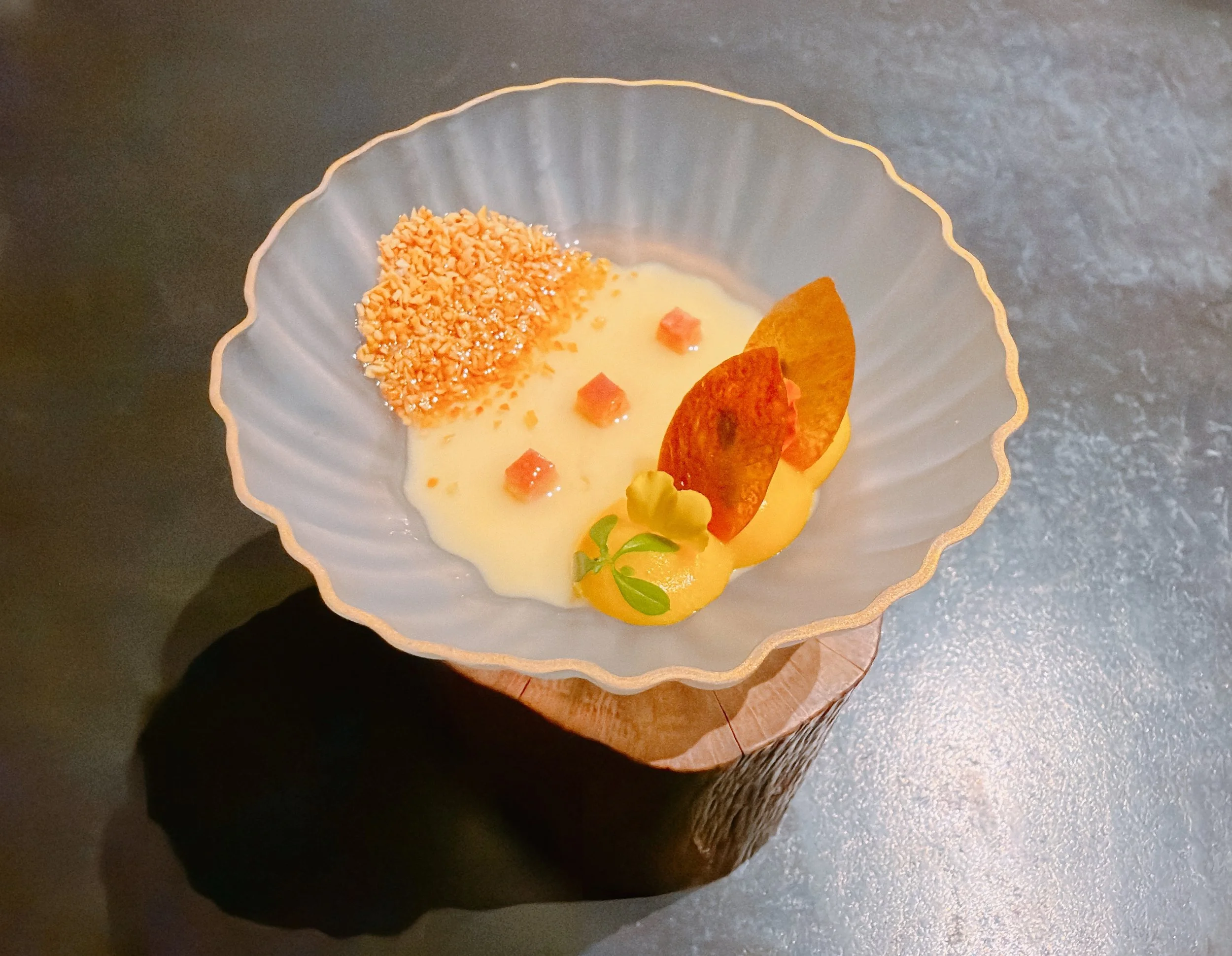
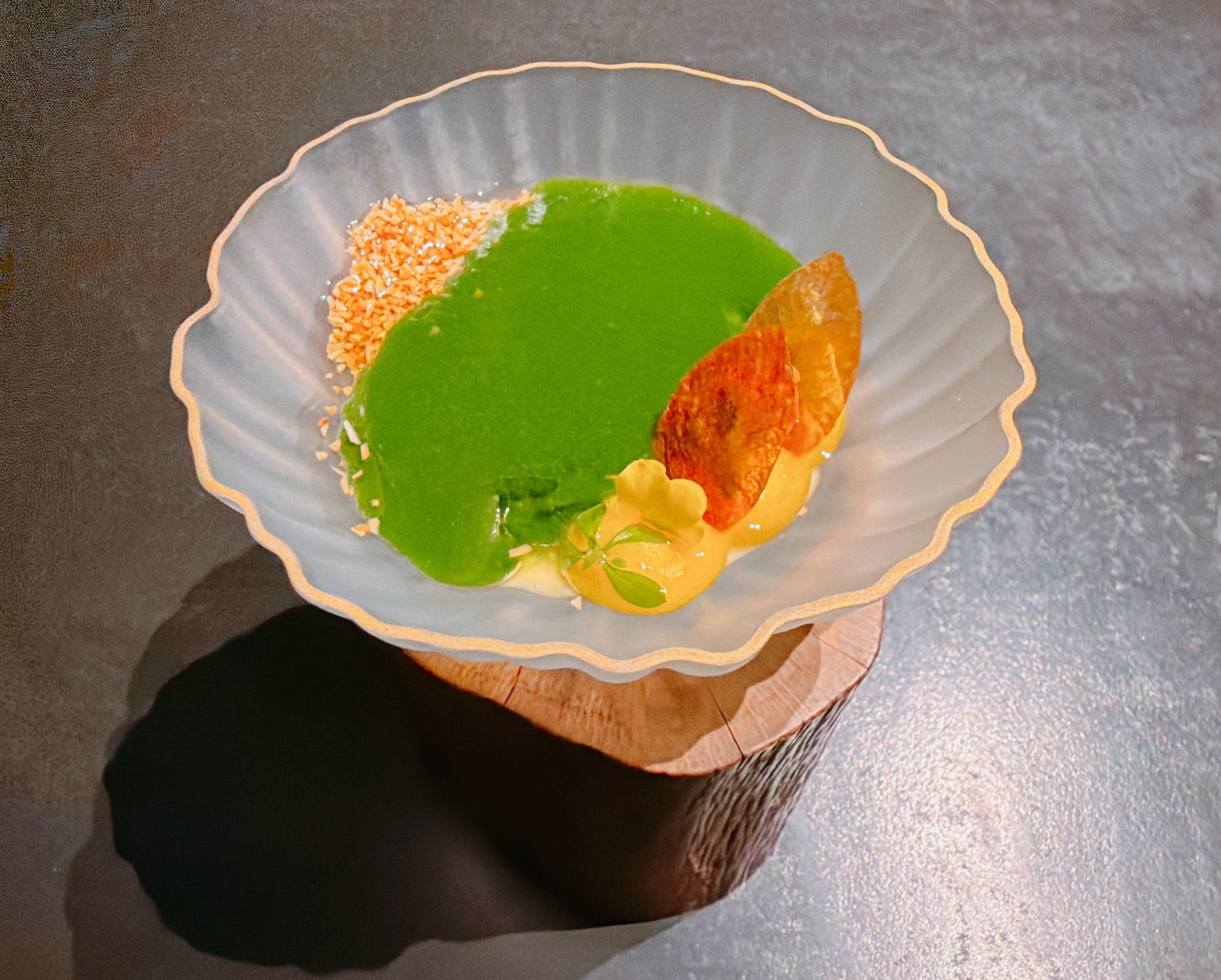
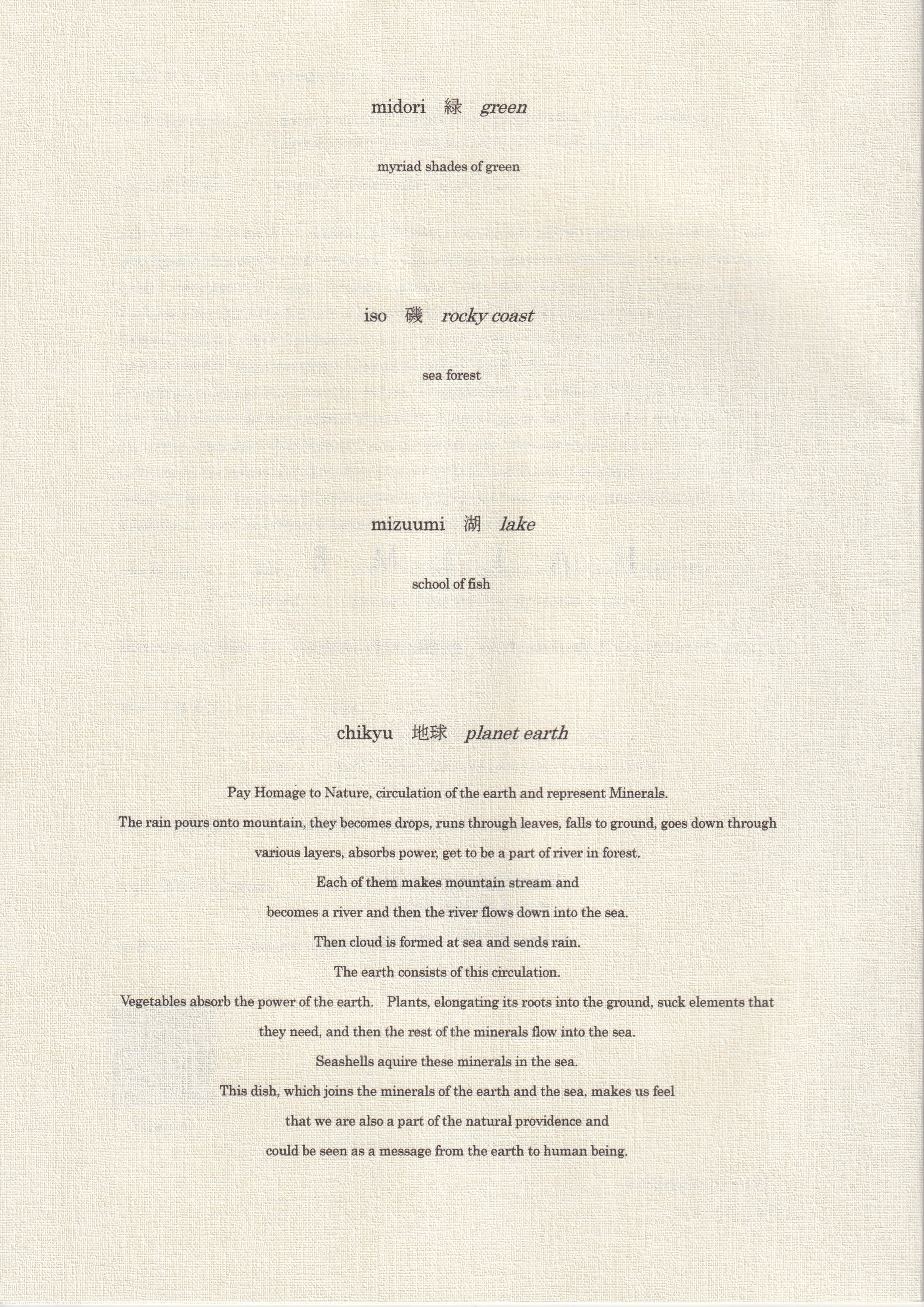
The first course set the scene for what was to come. We were served a little bowl that contained a white asparagus pudding, some ground roasted almonds, little cubes of uncured ham, and a few dollops of a yuzu sauce topped with potato chip leaves. This mostly white dish was supposed to represent the earth at the end of winter. Our server then proceeded to pour a green asparagus sauce over the dish, representing the coming of the growing season that covered the earth in green. Seeing seasonal dishes in the sense of using seasonal ingredients is fairly common. But having a seasonal dish actually create a visual depiction of the time of year? That was truly unique.
The main ingredients of the dish were easily identifiable by taste - the asparagus' flavors, especially the green one, were quite nice, the ham was strong and added some texture, as did the almonds and the potatoes. The yuzu was very strongly acidic, so it was actually a good idea to mix all the components together before eating. A good, elegant beginning to the meal that also had a compelling visual presentation 17.
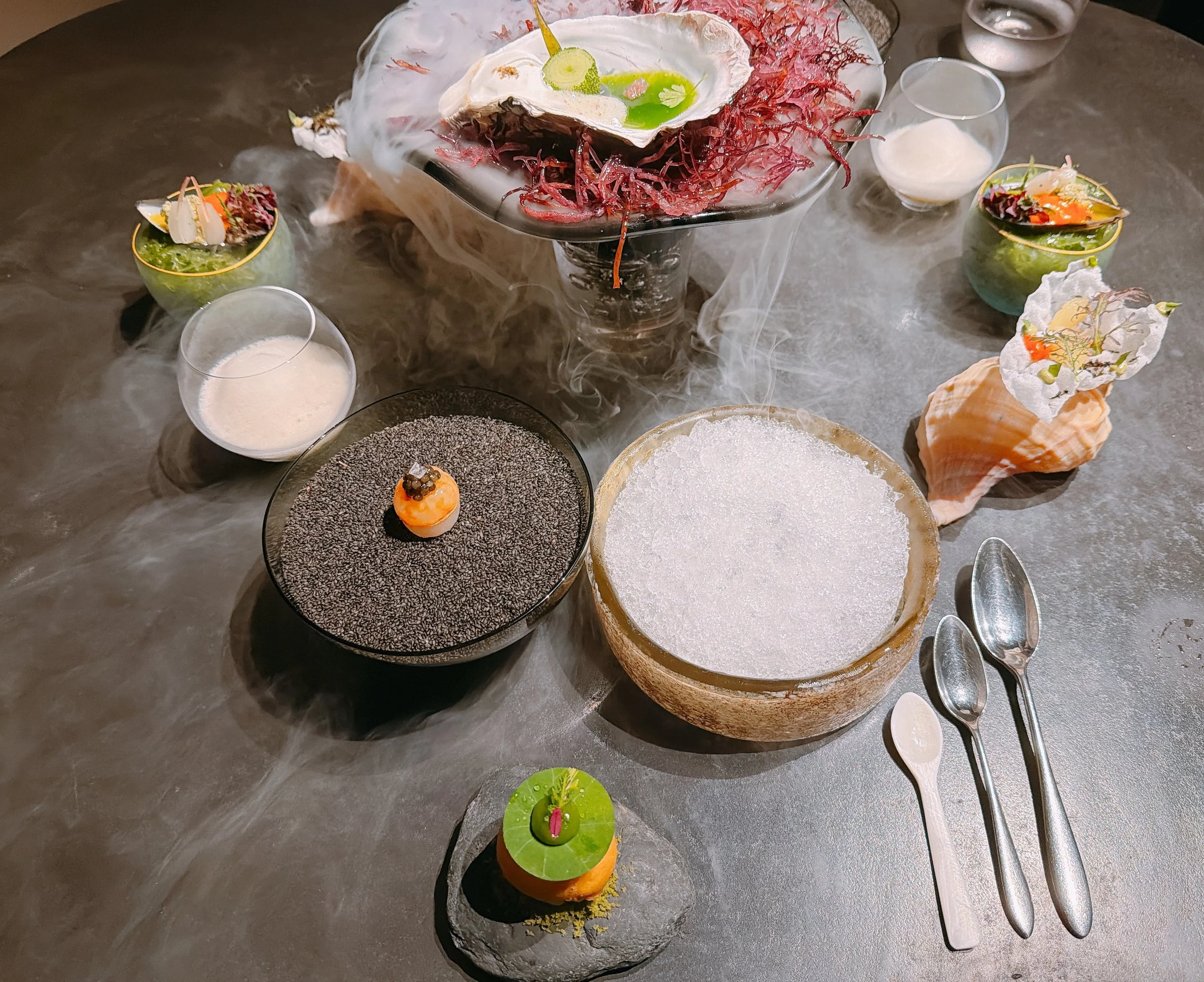
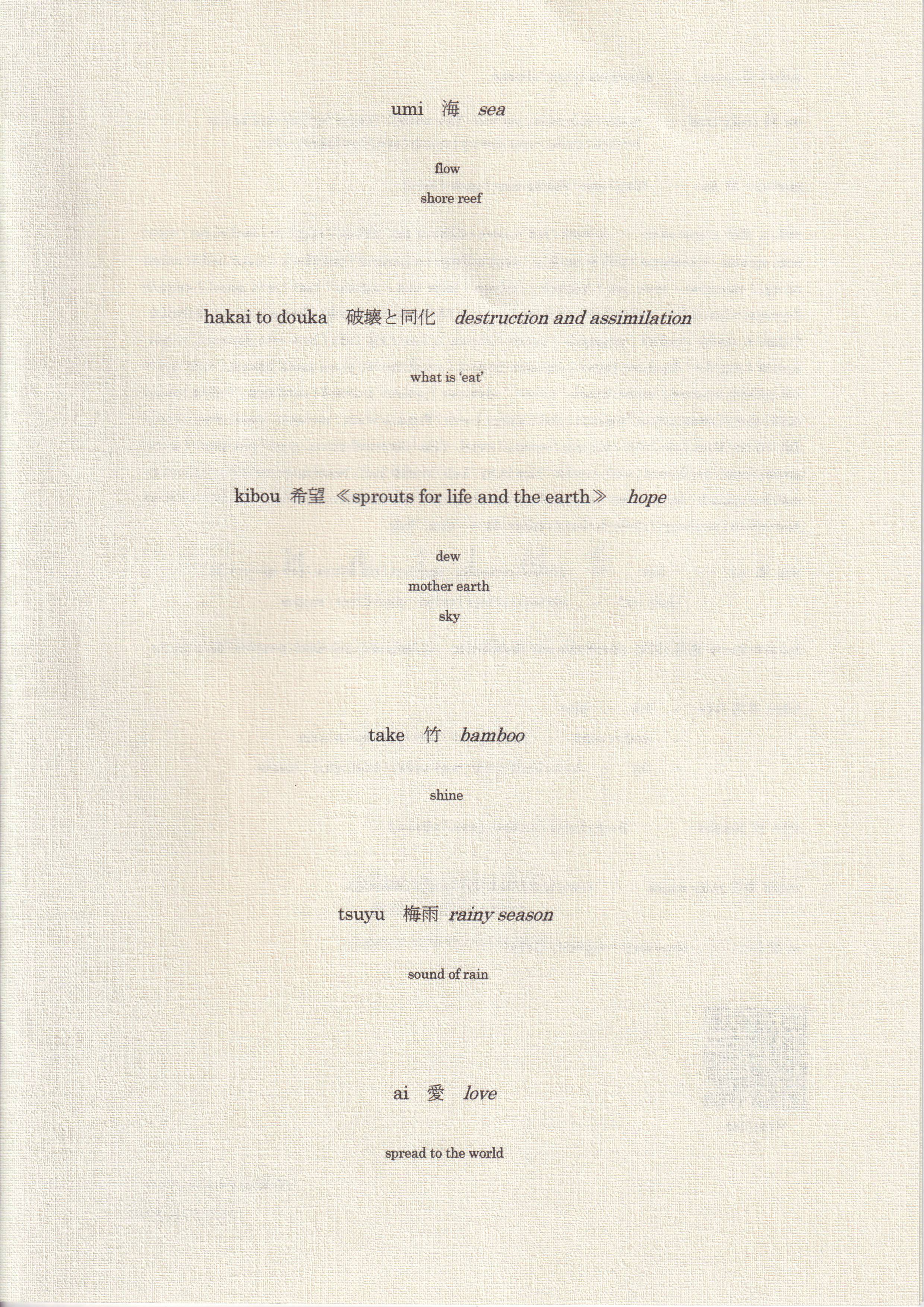
The second course consisted of several dishes, all representing different aspects of the sea. The center piece, decorated with red seaweed, contained some dry ice that created a fog that billowed over our table. Our first bite was a fried fish ball (at the bottom in the picture). It was the only dish to be served warm and therefore the recommended place to start. The fish in the filling was ayu (sweetfish), and the ball was topped with a Japanese vegetable sauce. This ayu had some of its customary bitterness, but it was much less pronounced than the grilled versions that we had on the previousdays. The acidic vegetable sauce also helped in lightening up the fried dish, and I wouldn't have minded had there been even more of it 17. A little bite of spot prawn and caviar sat on a base of cucumber. Tasty and elegant, with a good shrimp flavor 18. An oyster from Hiroshima had been blanched and was served in its own shell (atop the foggy red seaweed). It came with cucumbers, a tomato jelly, yogurt and cardamom. This dish felt almost Mediterranean thanks to the fresh cucumber and the yogurt. The only thing that didn’t quite fit was a crunchy sugar leaf which was incongruously sweet 17. A glass bowl was full of foam covering some more ingredients underneath: uni (sea urchin), a broccoli puree, and a shrimp jelly. The foam tasted a bit of licorice and there was so much of it that it made the dish a bit hard to eat. Less might have been more here. The uni and broccoli were lovely, though, both with good flavors 18. A cooked blue mussel was served in its shell with a bell pepper sauce. The mussel gave the dish a good texture, but the sauce was the true star: bursting with flavor and a bit of spice, but remaining very elegant and smooth 19. Finally, we had a fried rice paper cracker that was seasoned with garlic powder and shaved olives. It was topped with several sauces, herring roe and akoudai fish. The creamy, somewhat sticky texture of the herring roe was similar to bottarga, which made for a good complement for the soft, lightly crunchy cracker. Whatever the toppings of this dish were, they exploded with flavors, tasting strongly of seafood. Delicious, and my favorite among all of these bites 19.
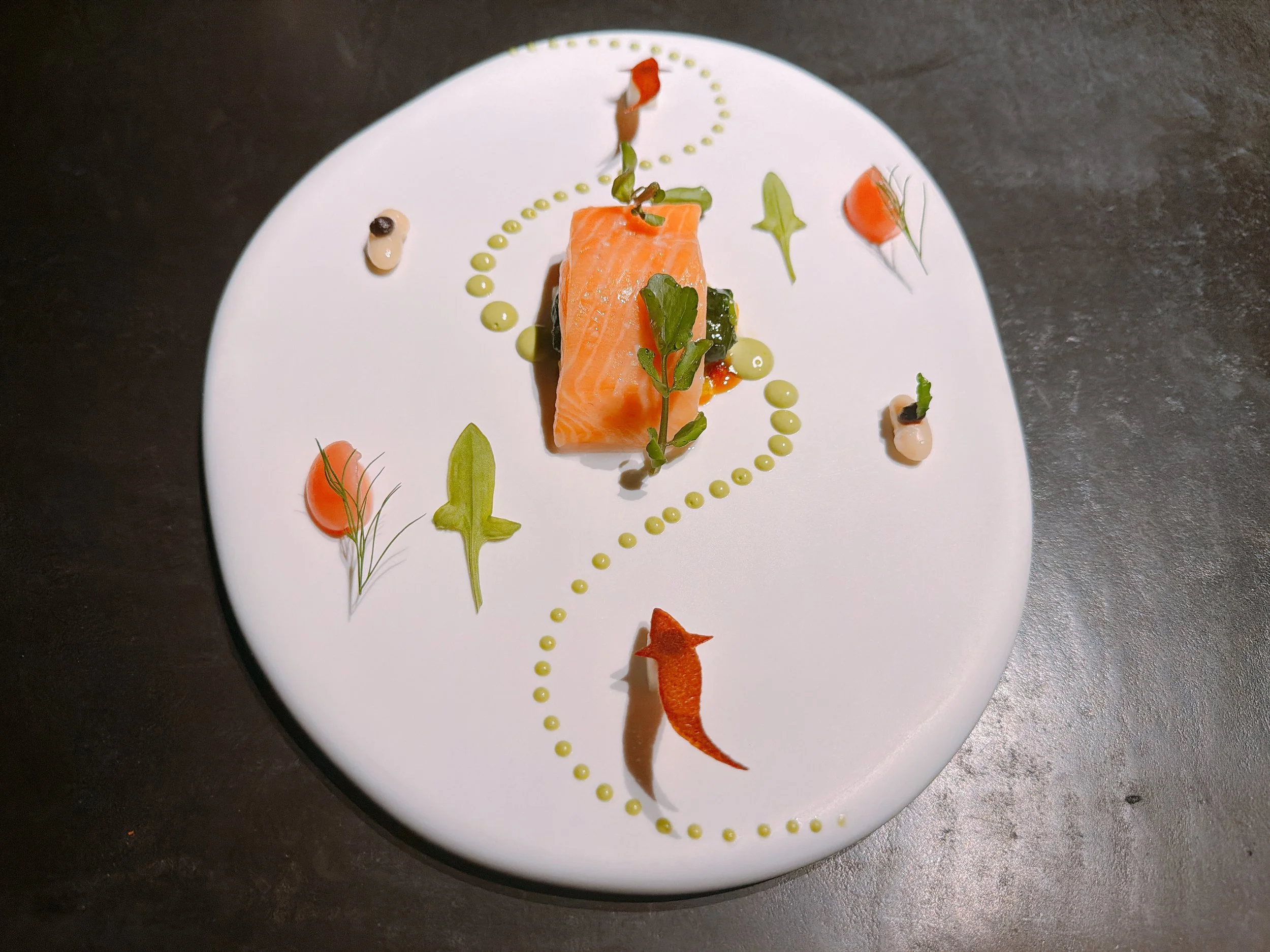
The following dish featured a filet of river trout (biwa) that was dressed with a green sauce made from sola herbs which also appeared raw on the plate. White beans topped with red miso, little fish crackers made from hatcho miso seasoned with sancho peppers, and an apple sauce - all of these were used to create a little river or lake scene. (I was reminded of a vaguely similar presentation using green dots at Disfrutar, but the attention to detail here was way higher.) The trout filet itself was other-worldly. Poached in oil and cooked at a low temperature, it literally melted in the mouth. It's probably impossible to prepare this fish any better. Well, I could nitpick that it could be served slightly warmer. But since, ahem, I spent some time taking photos, I probably shouldn’t. The herbal green sauce was equally delicious. When my only complaint is that I would have liked more of the sauce, you have a winner. The rest of the dish was also good, but not as phenomenal. The roll of spinach (I think) under the fish had more texture rather than taste, and the apple sauce and acidic base of the hatcho miso fish were fine, but did not feel essential for the dish 19.
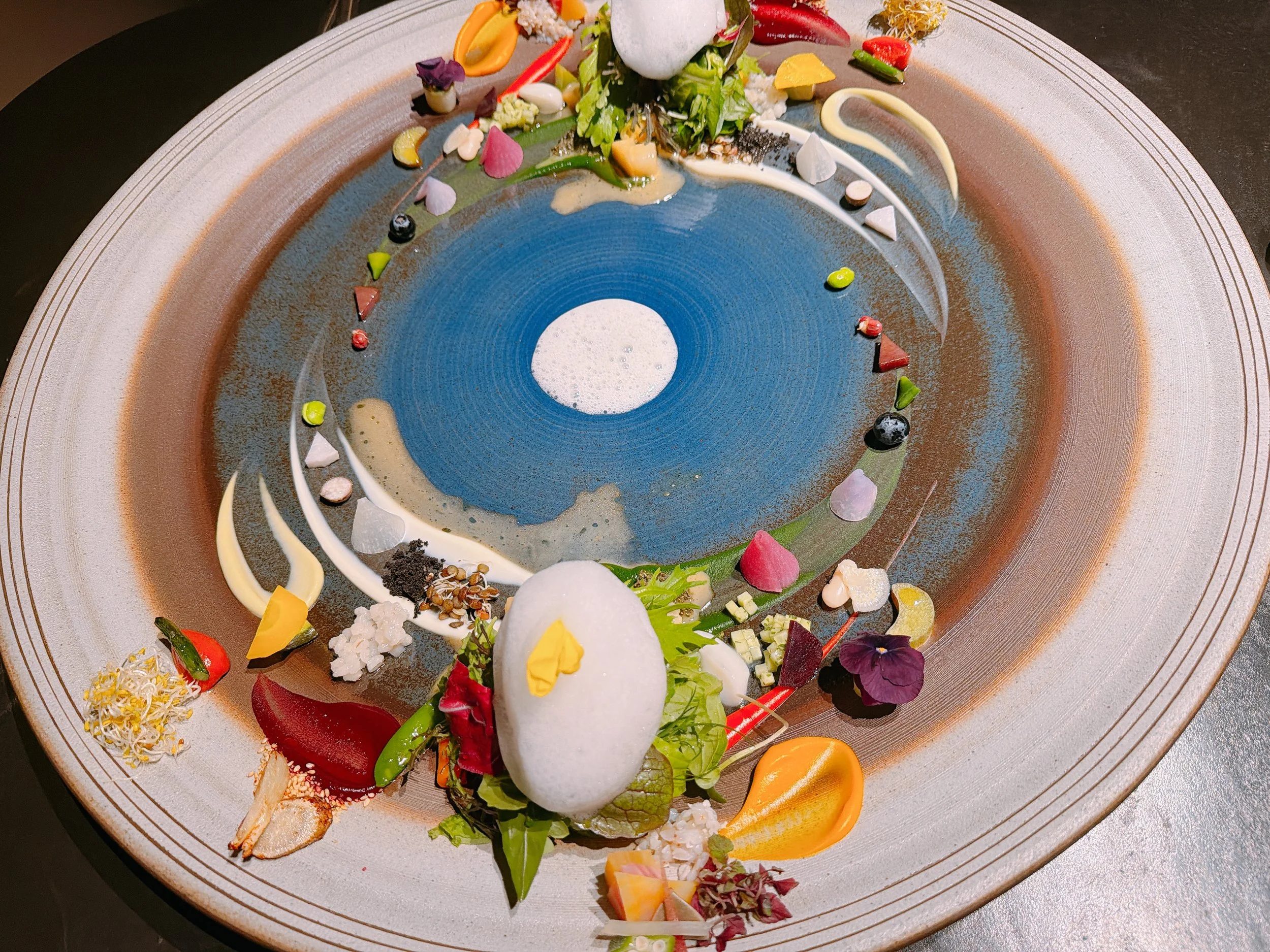
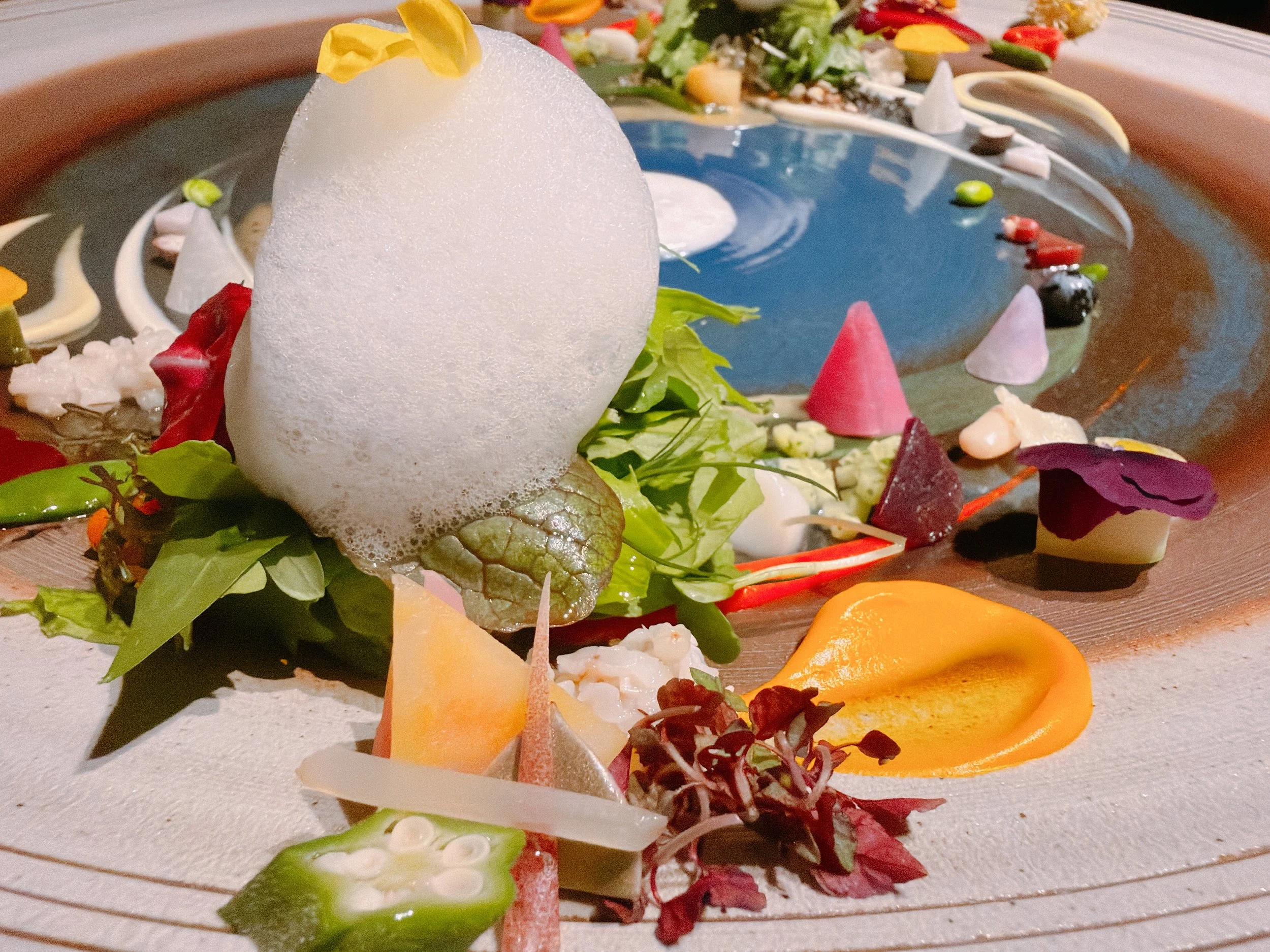
What followed was the signature dish of the restaurant, and the only one to stay on the menu on repeat visits. I'd go as far as saying that this is one of the iconic dishes of modern fine-dining. At its core, it is a salad. But not just any salad, but one with over a hundred different ingredients: lettuces, herbs, vegetables, and (very rarely) fruit. They were prepared in a multitude of ways: raw, cooked, pickled, crunchy, soft, seasoned, unseasoned, etc. About 90% of the presentation stays the same throughout the year, while the rest of the ingredients are seasonal. What was truly mind-bending, though, was the presentation. The individual ingredients were laid out atop a table-filling plate in a precise pattern representing nature’s water cycle. A mountain of lettuces covered some cooked vegetables, and was in turn topped by a cloud made from kombu broth foam. At the center of the plate was a similar broth, symbolizing the sea. This review would triple in length if I went through every single ingredient on the plate. Tastewise - perhaps unsurprising with so many ingredients - there were some great parts, and others that were less compelling. In that sense, it was a good salad, but far from the best that I have had. If one ate this dish with eyes closed, it would seem like the result of a trip to the salad bar that got slightly out of hand, with lots of different pieces that didn't really come together as a whole. So this might be a 16 or 17 if rated on taste alone. But that would do a disservice to the stunning presentation, which needs to be seen to be believed. Very impressive 19.
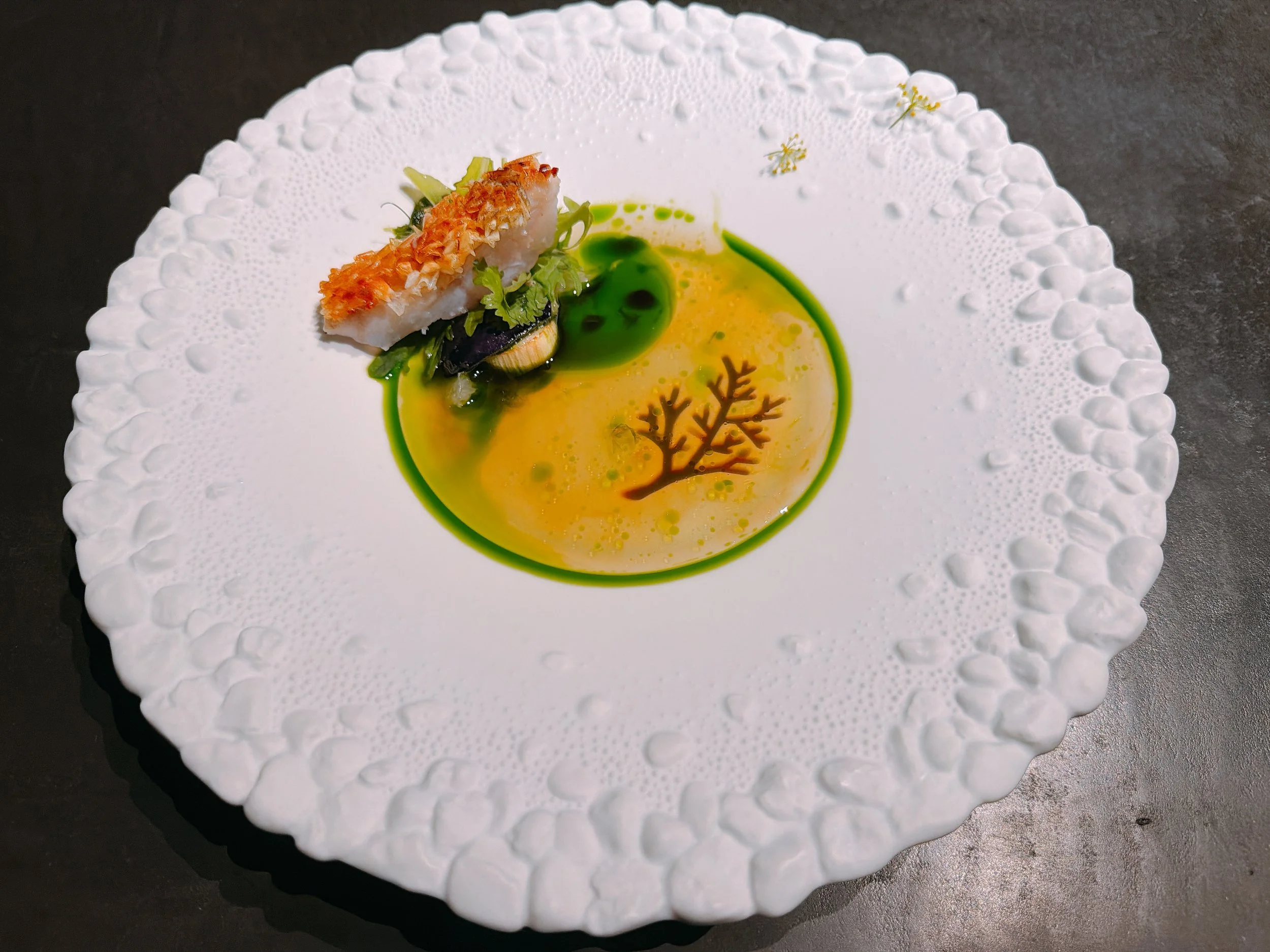
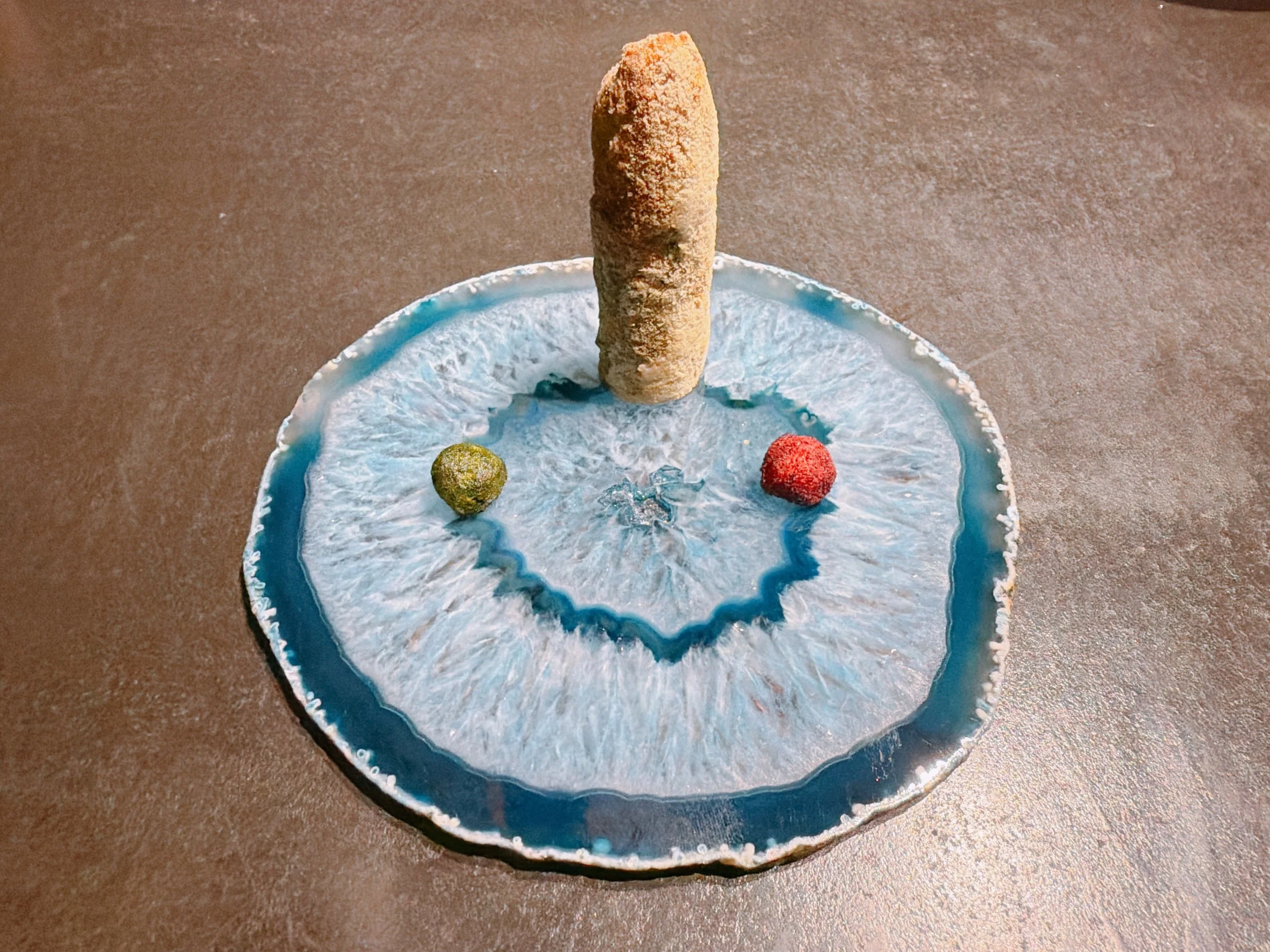
The next presentation was much more traditional in scope - maybe an intentional reset after the salad extravaganza. A filet of amadai (tile fish) with crispy scales was served over eggplant, radishes, and greens. The shallow bowl came to our table only drizzled with leek oil, but was then filled by our server with a snapper/lemongrass dashi. The fish here was cooked wonderfully: very tender, flavorful, with some crunch and toastiness added by the scales. Not quite at the level of the earlier trout, but very good. The vegetables underneath the fish were a mixed bag: the eggplant and some of the greens didn't taste of much, but the radish and the rest of the greens had lots of flavor. Stealing the show was the dashi: it was full of flavor and much more complex than what one would normally expect from a dashi. Excellent 18.
Along with the amadei came the first of two bread servings: a seaweed/seagrass bread accompanied by two seasoned butters. The room-temperature bread had a nice seaweed flavor and went well with the two spreads 17.
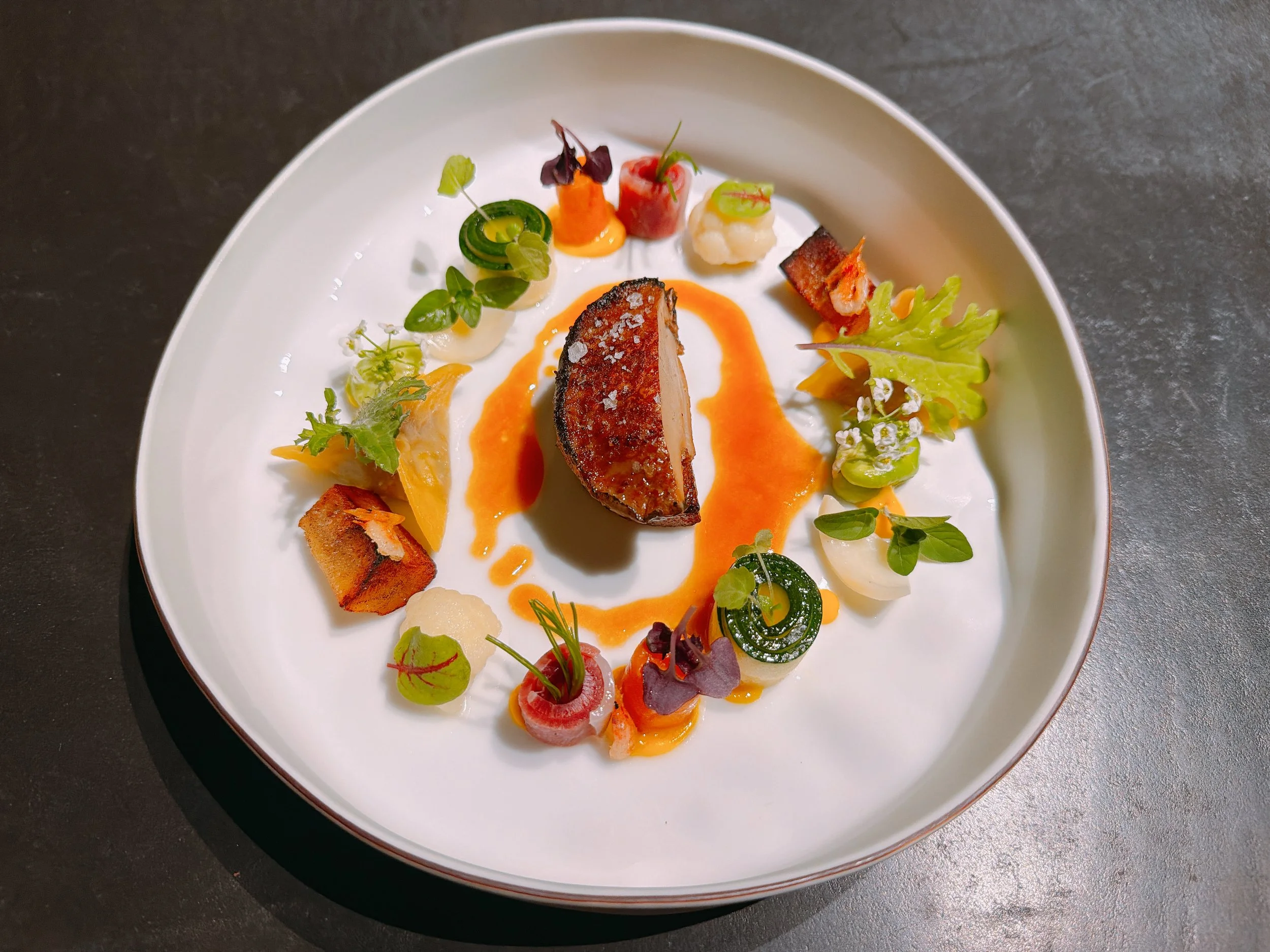
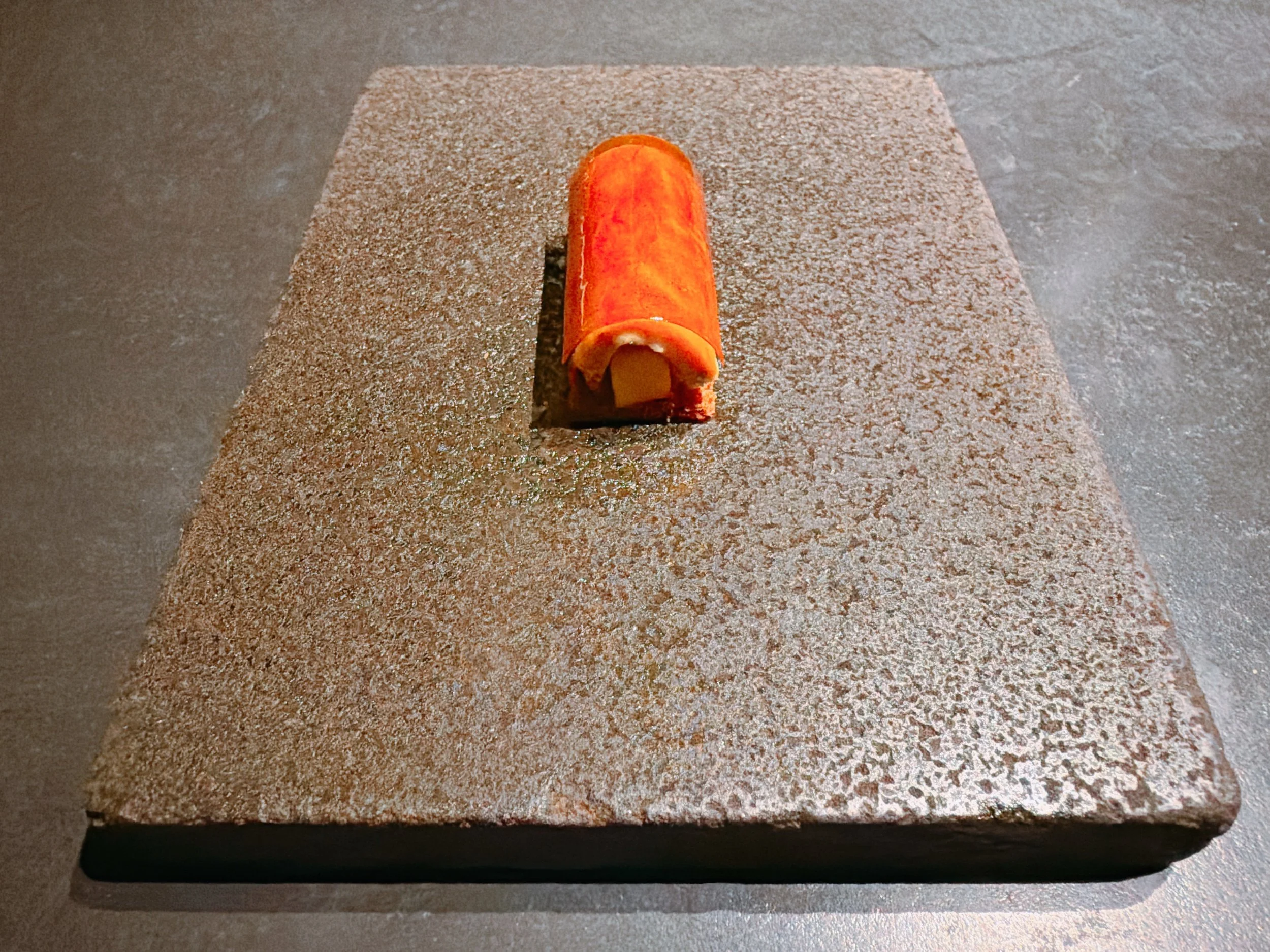
Then we went back to more complex dishes. An abalone from Hokkaido had been cooked in sake and then seasoned with garlic butter. It sat atop a radish and an abalone liver sauce. Our servers drizzled a concentrated orange/shrimp sauce around the abalone, separating it from eight mini-dishes that were arranged around the rim of the plate. To name just three, there were fried squash, rolled cured ham, and little ravioli filled with tomatoes and suppon (soft-shell turtle). And as if that wasn't enough, we got a separate glass filled with an abalone broth. Let's start with the good parts: the abalone here was stellar. Cooked to be tender with only a light bite, it was suffused with flavor, and the sauce added a hint of liver taste. About as good as fresh abalone can possibly get - 19 or even 20, taken by itself. However, there was more to the dish. The additional bites varied greatly: the ham packed a punch, but the rest unfortunately had much more mellow flavors. Also, the eight bites felt somewhat random. To me, the orange sauce tasted too sweet and too strongly of orange to be a good match for the rest of the dish. I felt that this dish would have been much better with some editing, and a stronger focus on its star - the abalone. Less would have been more. The only on-topic addition to the dish, the abalone broth, was actually quite nice, with a lingering aftertaste of abalone. Focusing on the amazing abalone 18.
There were no complaints about unnecessary complexity regarding the next dish. A slice of candied foie gras was draped over mangoes, squash, herbs, nuts and a rice cookie. The result was sweet, crunchy, creamy, caramelly, and had some rice flavor from the underlying wafer - giving it a bit of a sushi vibe. (Clearly, this was meant as a play on a nigiri.) Not bad, but not as distinctive as what had come before it. I actually liked the paired sweet plum wine even better than the dish itself 17.
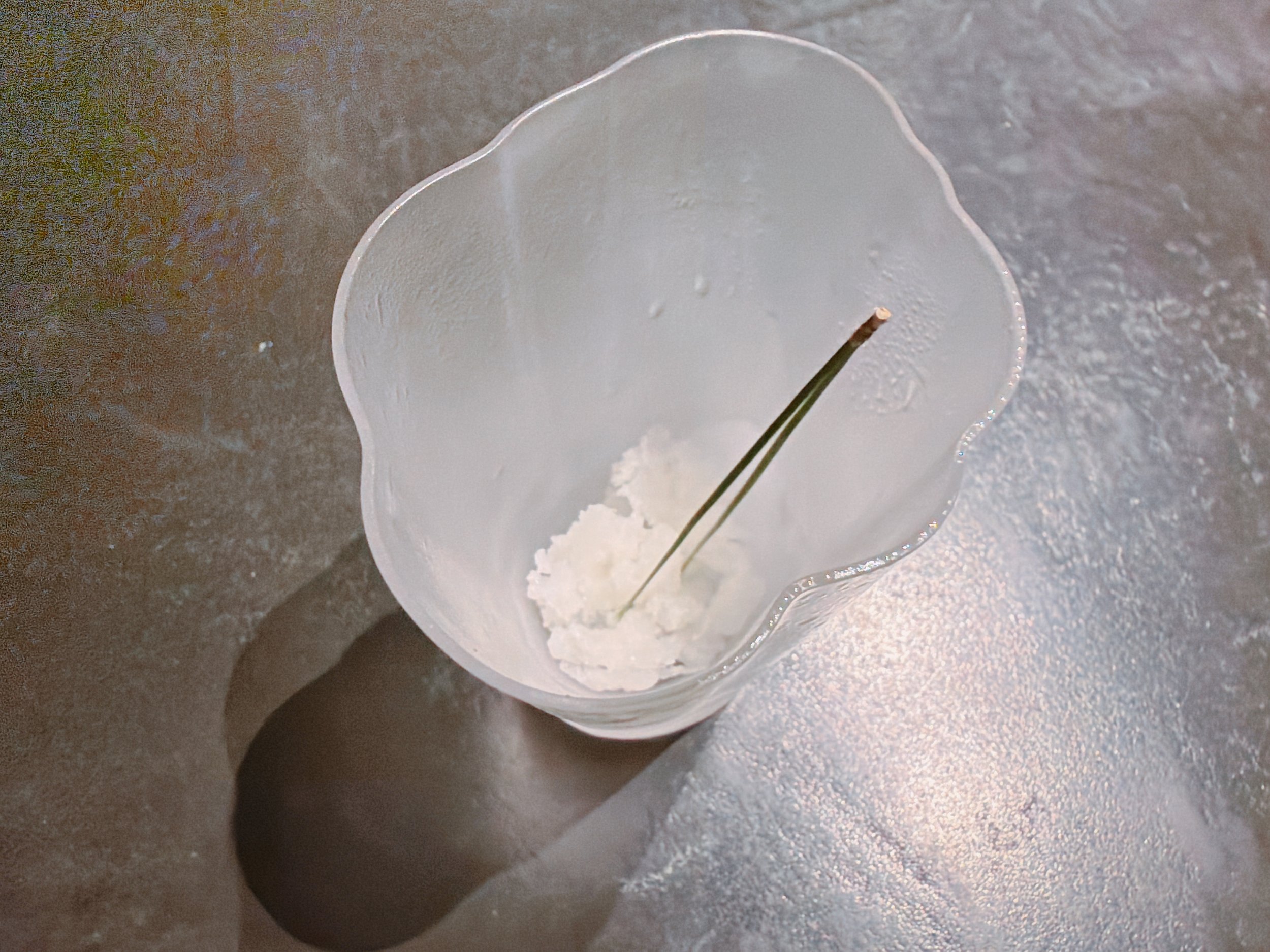
A pine sorbet was served as a palate cleanser. This dish was reportedly inspired by a childhood memory of the chef, when he ate snow directly from a pine branch. The sorbet had an extremely intense pine flavor, with nothing to temper it - no acidity, no sweetness, nothing, oof. Maybe this dish was prepared as intended, but it was not really enjoyable, in fact, it was closer to inedible. A palate cleanser, indeed 12.
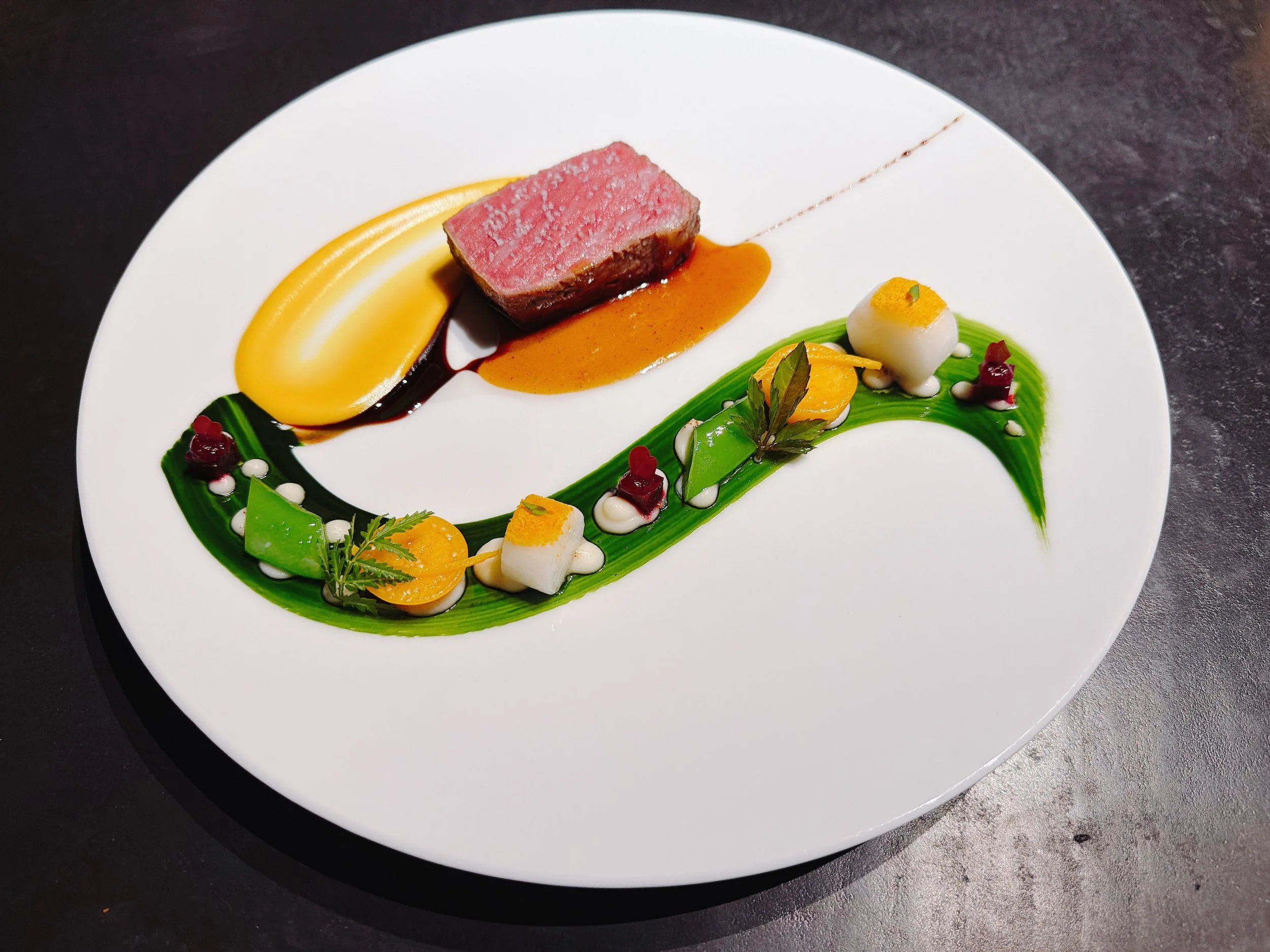
Two meat courses followed, and we were offered to either reduce the portion sizes or stick with the full amounts (60g of beef, 40g of duck). A smarter person than me would probably have gone for the smaller sizes - this meal ended up being a lot of food. (My dining companion, who went for the smaller sizes, still chose to forgo the final two desserts. Consider yourself warned.)
A beef loin from Hiroshima was served with a squash sauce, a matcha sauce, and a variety of sides. The beef had a wonderful flavor, but its texture varied from very tender on the outside to somewhat chewy on the inside. Seemingly not the best cut, unfortunately. The side dishes again felt a bit random, ranging from good to so-so. With a better cut of beef, this might have been an 18, but as it stood 17.
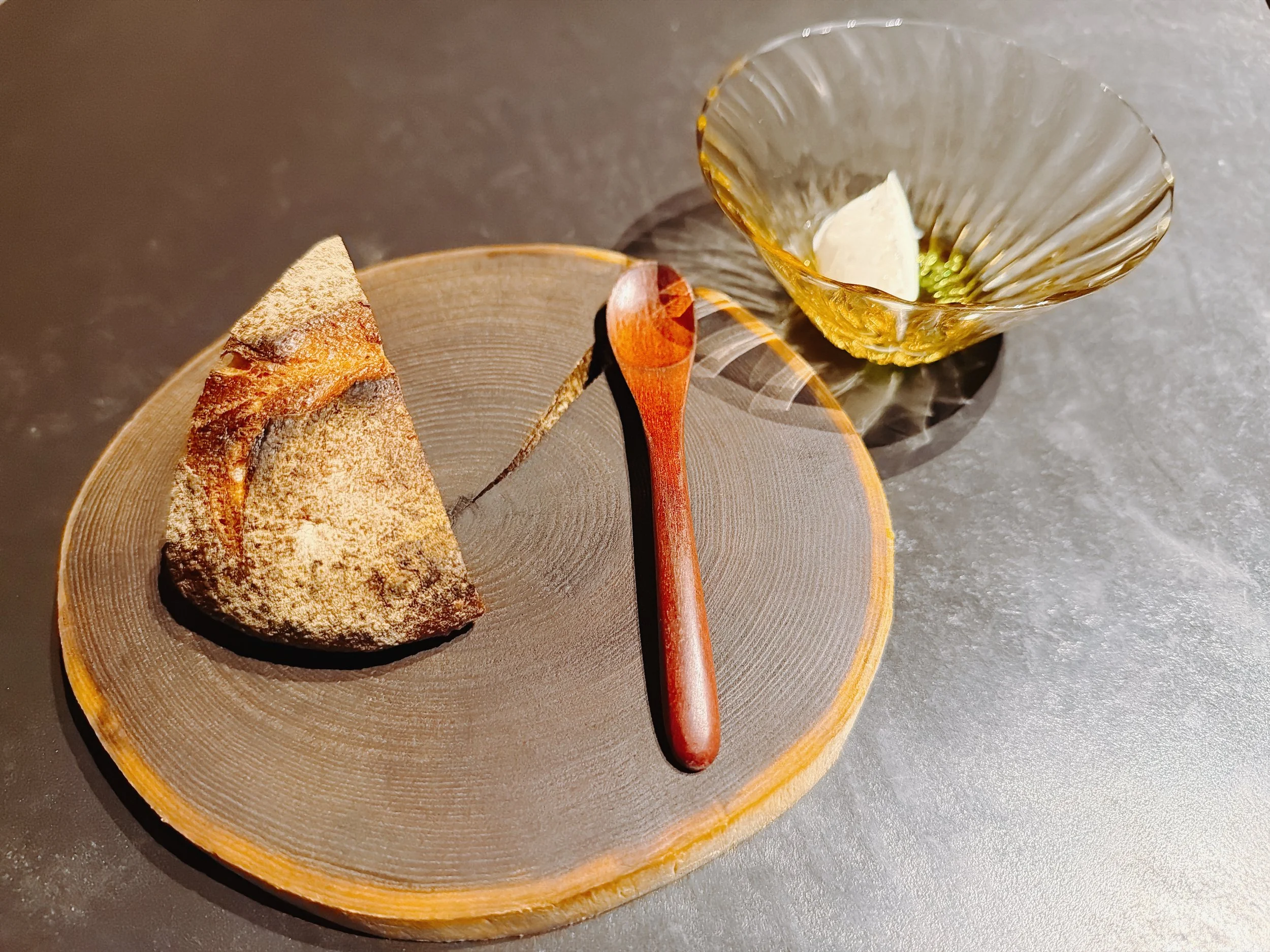
The second bread service of the night was a wheat bread paired with whipped tofu. The bread had a good crunch and flavor, and the tofu sauce tasted very similar to sour cream. A lovely combination 17.
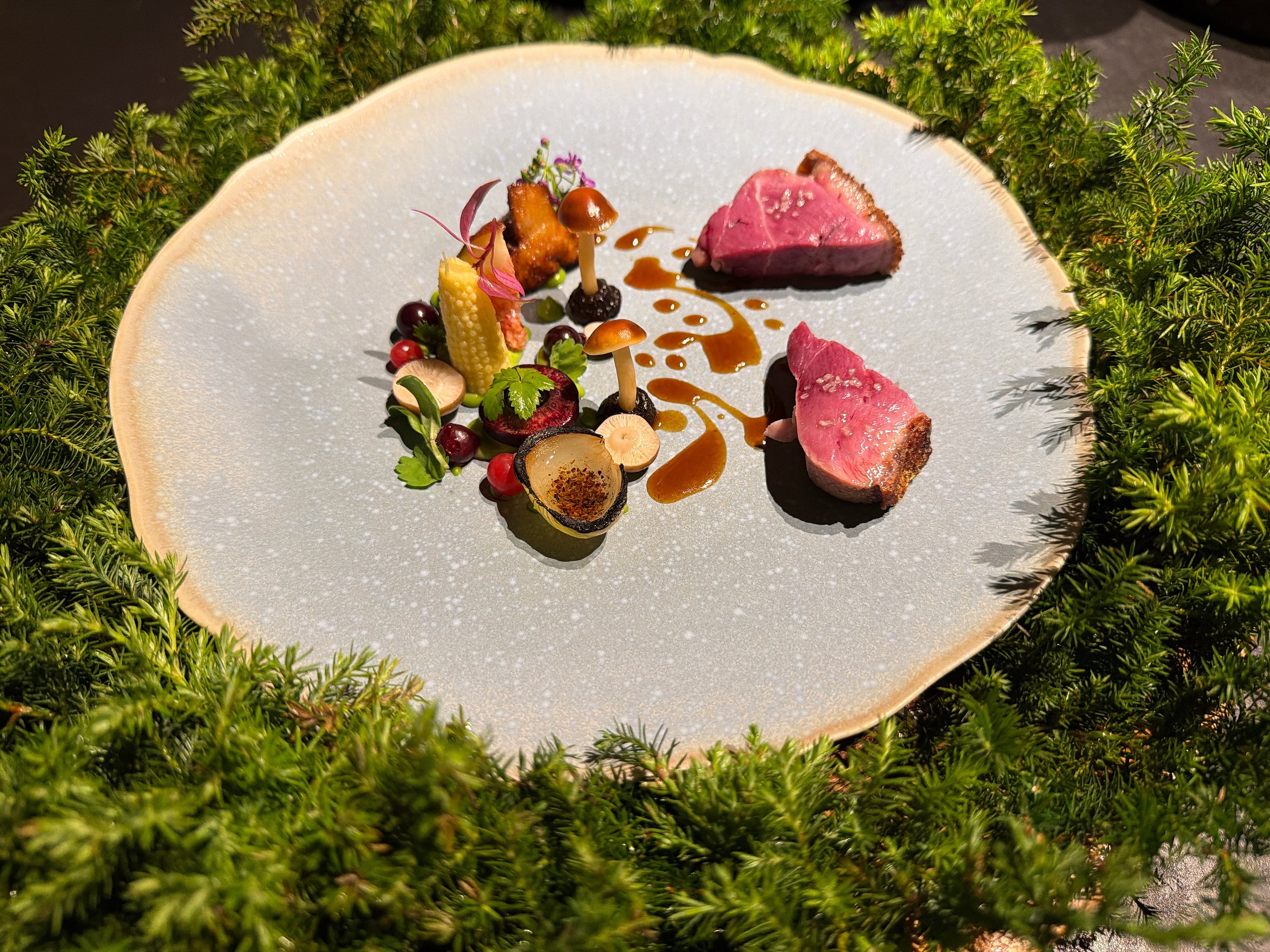
The final savory course of the meal was based on a duck from Kyoto that had been smoked and whose skin was seasoned with sancho pepper. The duck was nicely juicy and quite lean, with a skin that was not very crispy. I'm not a big duck fan, but this was admittedly among the best ones that I've had. As for the sides: they were thematically much more coherent than in previous dishes, and laid out to look like a forest floor. There were various mushrooms, some seasoned with black garlic, and the largest one seemingly cooked in butter - very tasty. In addition to that, there were several red fruit such as cherries and red currants. Duck is often served with cloyingly sweet fruit sauces. Here we got the same fruit, but they tasted fresh and acidic rather than overly sweet - a much better presentation from my point of view 17.
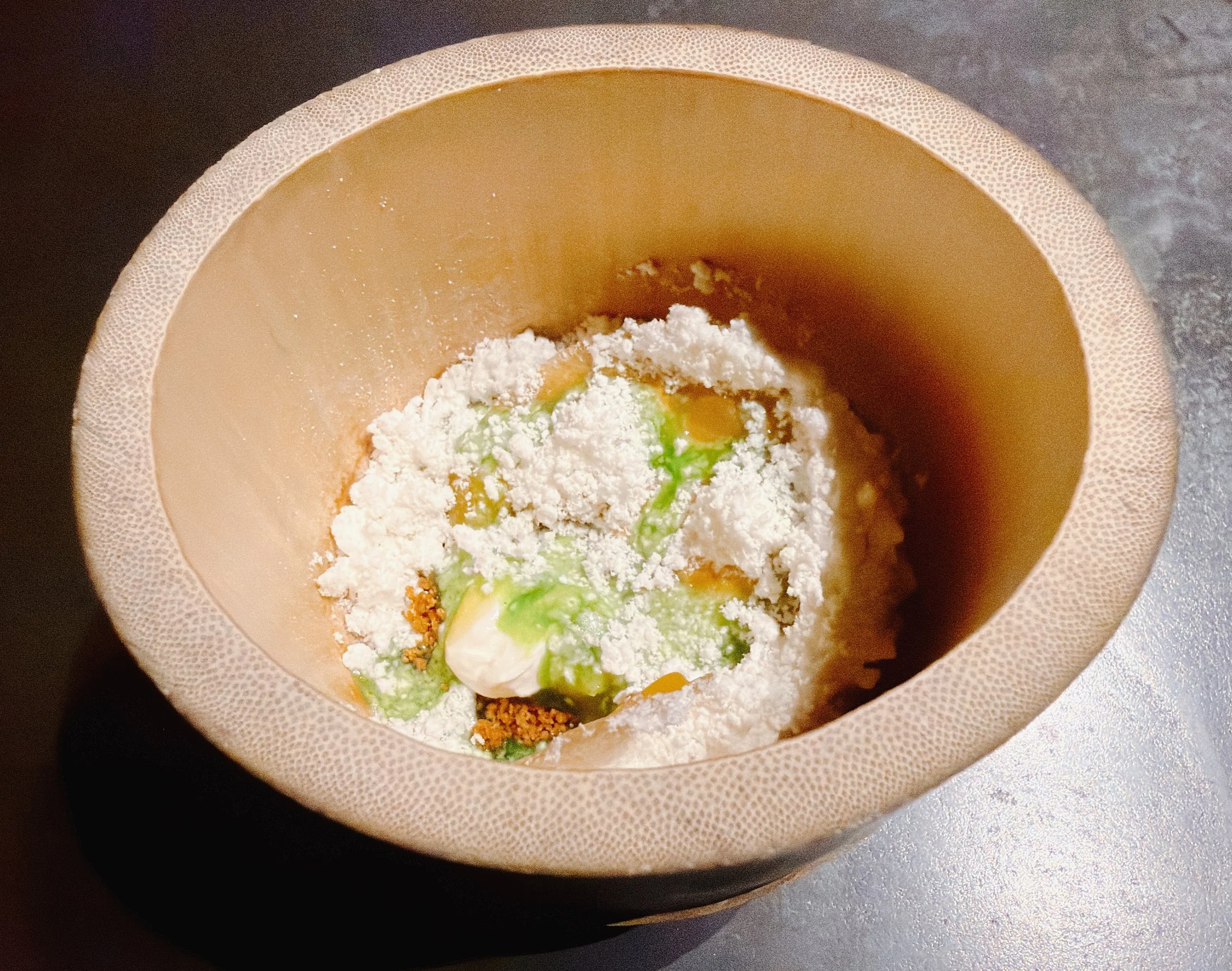
The cheese course was the prepared kind - there was no cheese cart in sight here. Home-made fresh cow’s milk cheese was served with a bamboo grass sauce, an apricot cookie and a topping of olive oil powder made using liquid nitrogen. There was a lot going on here, but the components went well together. The cheese was very similar to cream cheese in texture and taste, and there was some crunch and sweetness from the other ingredients. Tasty 17.
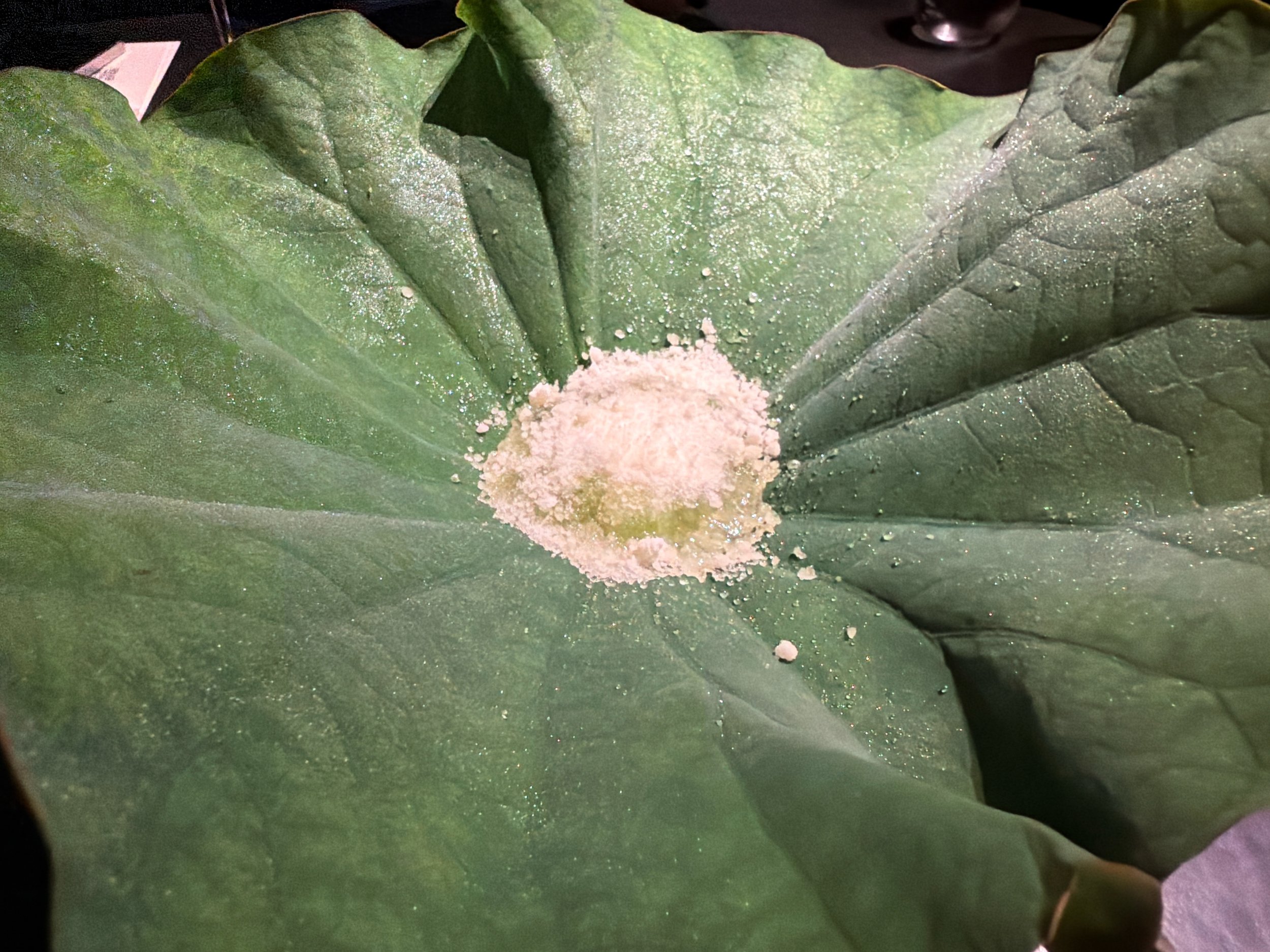
Next, we were handed a large lotus leaf. At its center was a citrus-lime jelly made with Delaware grapes and pop rocks. We had to hold the leaf in one hand, and use a spoon with the other. Simple, but tasty, fruity, and fresh. The pop rocks and the fact that we had to hold this dish in one hand felt somewhat gimmicky at first, but there was a method to the madness. This dish was supposed to evoke another childhood memory of the chef’s. It was supposed to remind us of the rainy season, with rain pattering on large leaves. The pop rocks did indeed do a good job of recreating that soundscape 16.
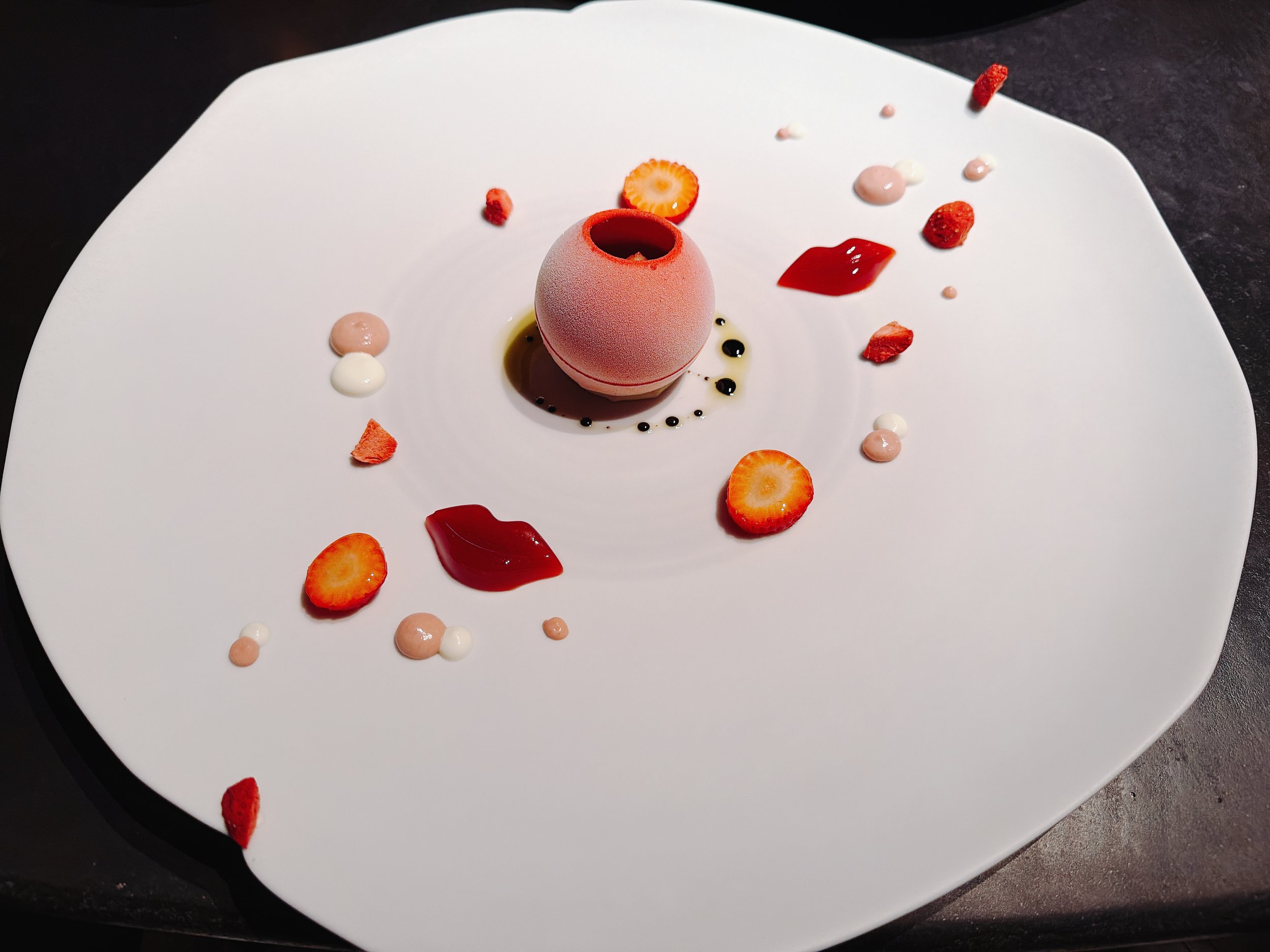
The following dessert had a red strawberry ice cream sphere at its center, into which our server poured a warm strawberry sauce that eventually melted the sphere and then ran all over the plate. Essentially, this dish contained multiple preparations of strawberries (in addition to the two already mentioned, there were: a cream, a jelly, freeze-dried and fresh strawberries), along with cream. There were some cookies for texture inside the sphere, but other than that, this dish presented strawberries and cream in many different ways. Very tasty, and also creative in its presentation 18. Interestingly, this dessert was paired with a dry Japanese red wine, rather than the sweet wine one might have expected. Our sommelier said that the red wine did a better job at highlighting the red fruit in the dessert, and a dessert wine wouldn't have been as good a fit (and maybe too sweet for this well-balanced dessert).
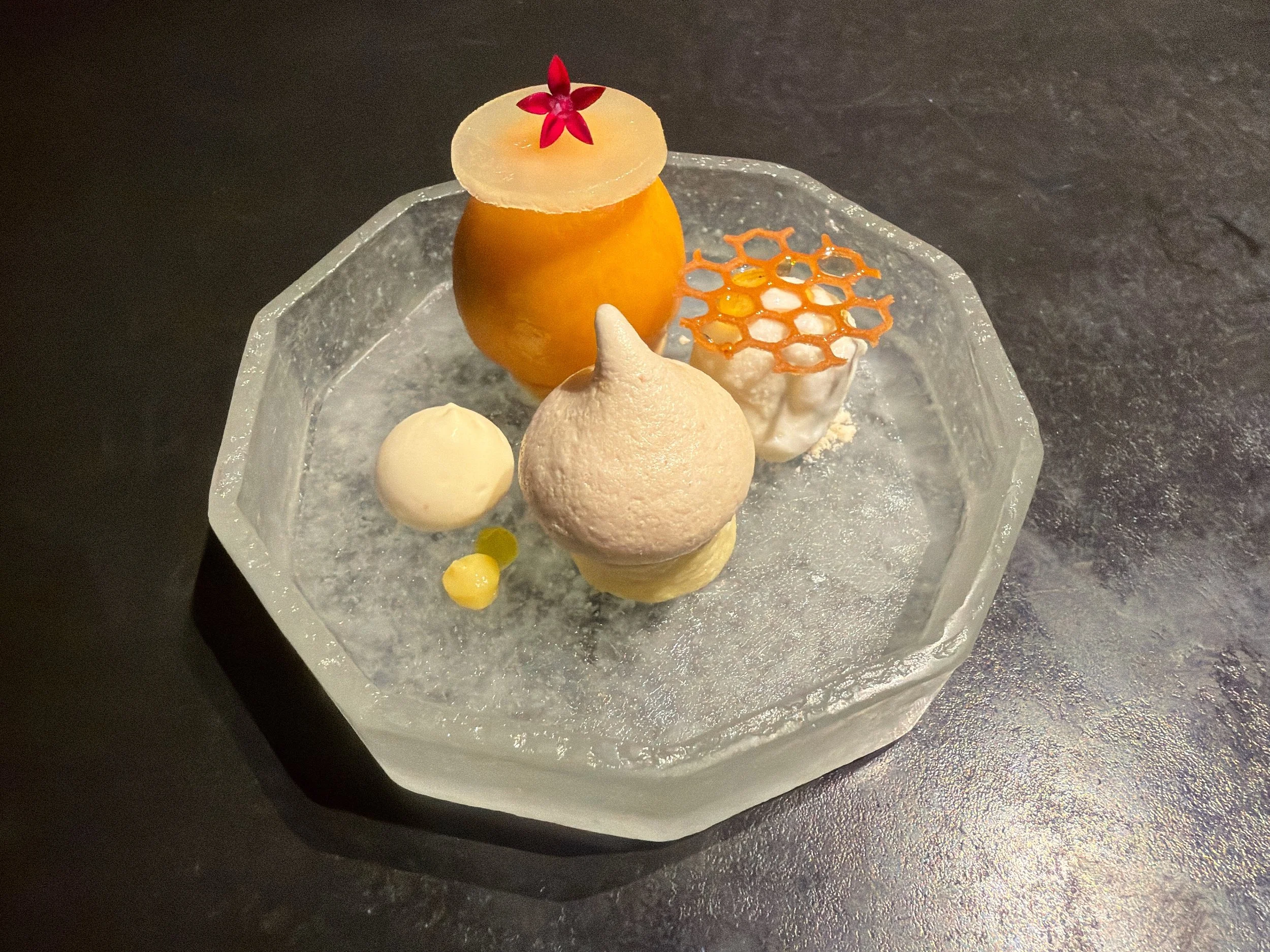
A surprise dessert (that is, one not listed on the menu) was a loquat fruit filled with a chai ice cream and topped with a sudachi citrus disc. In addition, the plate contained a cardamom ice cream, a soufflé and a meringue. Lots of different textures here, with the loquat being very fresh, and the chai filling being a good complement. Much more mellow than the preceding dessert, though 16.
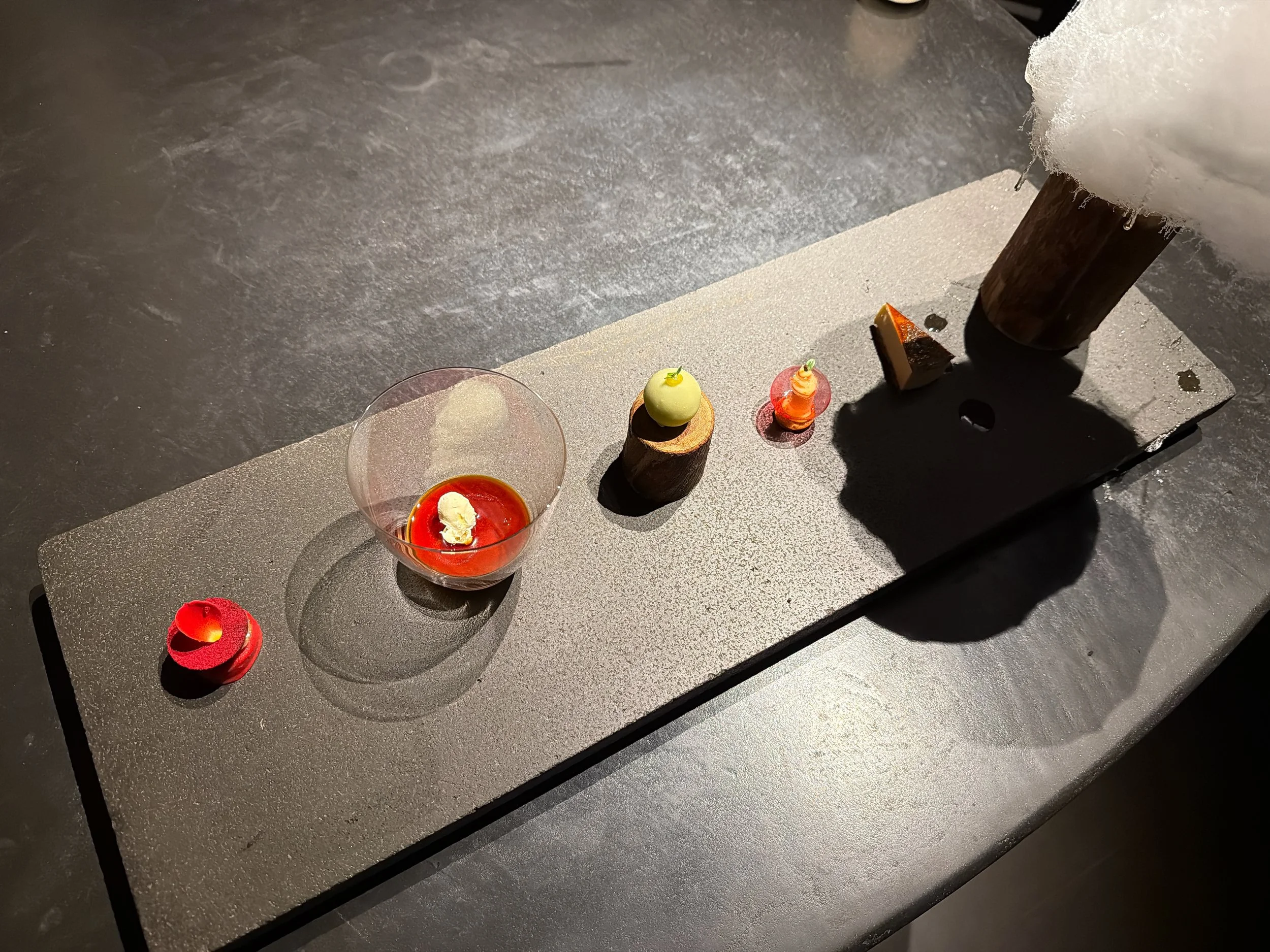
The final dessert preparation consisted of six little dishes, all presented in a row. Going from the right to left, I started with a cotton candy that towered over the other bites. According to our server, it had in a cypress tree flavor. In actuality, I didn't detect any particularly distinctive flavor - this was mostly just sugar. Not that I'm complaining 16. A little mascarpone cheese tart was light in flavor 16. An “apple candy” tasted like a lightly-flavored apple tart 16. A “kiwi bowl” was a little bonbon with a vodka-based liquid filling. This bite was less sweet than the others, and the shell had a bit too much fat for my taste 14. A “popcorn cream” topped with a single popped corn kernel was not that sweet either, and mostly had a corn flavor 14. Finally, a raspberry/chocolate praline proved that this is a perennially great combination 16.
Overall: A stunning dinner with over-the-top visual presentations that also managed to taste amazing. The dishes were not perfect - often there was a bit too much going on. While each course clearly had a singular focus, in many cases not all of the components on the plate seemed truly necessary, and enjoyment-wise they were more hit-and-miss than the much better main ingredient. On the other hand, this little bit of randomness and imperfection actually lent a welcome sense of humanity to a sequence of otherwise almost otherworldly perfect presentations. With the caveat that this is obviously not Japanese cuisine, Hajime is definitely a very worthwhile stop for anyone interested in fine dining in Osaka (or even Japan, for that matter). I can't wait to try the second-timer menu when I return 18.