Taian - Osaka
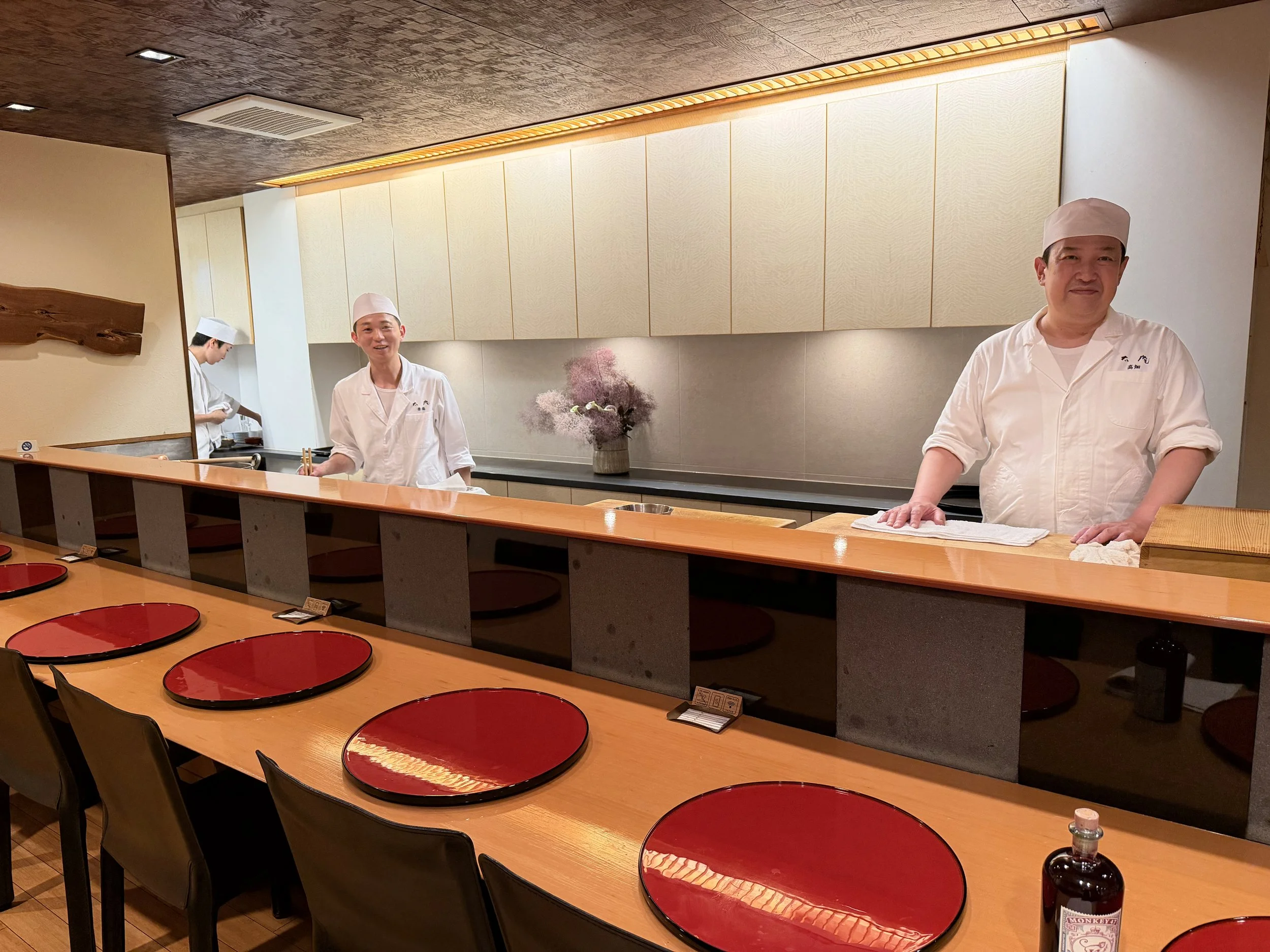
Three star counter seating
Rating: 16/20
Where: Osaka, Japan
When: Dinner for 2 on 19 June 2026
Cost per Person: Tasting menu 22000 JPY ($135), Beverage pairing 5000-15000 JPY ($30-$95)
Accolades: 3 Michelin Stars
Why: Kaiseki cuisine with bold flavors in a relaxed counter setting
When one thinks of fine-dining cuisine in Japan, “kaiseki” is probably the first thing to come to mind. It is a complex, traditional meal, often served by kimono-clad waitresses in private tatami rooms that have views of a garden, and it is often associated with the city of Kyoto. In fact, all current (and even past) three-Michelin-starred restaurant in Kyoto serve a variant of this classical cuisine.
So one might expect a similar experience at “Taian”, a restaurant located one hour south of Kyoto in the port-city of Osaka. Taian also holds three Michelin stars (since 2011), also serves kaiseki-inspired cuisine, but it turns out that's where the similarities end. There are no tatami rooms here - guests sit at a counter facing the chefs. Forget about serenity and silence: the diners (mostly from abroad) are happily chatting away, often with the neighbors they just met. And instead of subtle flavors, the ones here pack a punch. All of these differences explain why some people would prefer, say, Kyoto's Kikunoi Honten to Taian, but they explain equally well why someone (e.g. me) would have the opposite preference.
Taian is located in a lively neighborhood, with many restaurants (and the signs advertising said restaurants) lining the streets. After work, lots of people, many of them on the younger side, were walking down the narrow streets, avoiding the occasional car that was courageous enough to try to pass through.
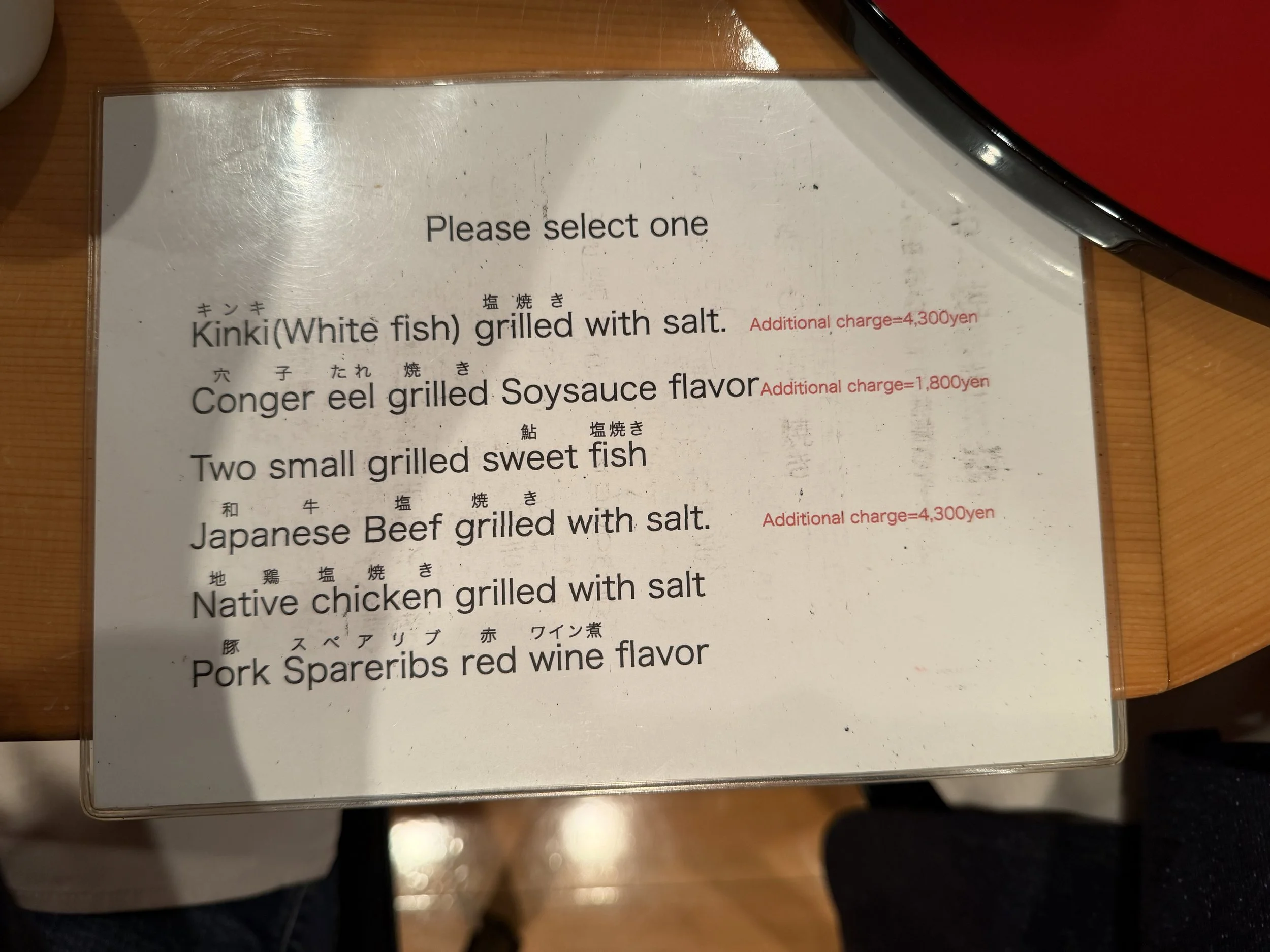
The restaurant serves a single omakase tasting menu, inspired by kaiseki cuisine. There was only one food choice to be made, namely what to get for the grilled course. There were six options in total: seafood (three kinds), chicken, pork, and beef, some of which came with a surcharge (see photo below the review). Beverage pairings were offered as well, ranging from three to seven glasses, with the wine for the grilled course being adapted to one’s dish selection. The shortest pairing had two sakes and a glass of wine for 5000 JPY (about $30), while the longest began with a glass of champagne followed by three sakes and three wines for 15000 JPY ($95). The long pairing was not an insubstantial amount of alcohol, considering that the entire dinner lasted for less than two hours. But the wines and sakes were all pretty good, and the price of the pairing was a steal compared to what one would pay in many other countries. One thing to beware of: if you order a pairing that includes a glass of champagne, the champagne will arrive before the first course, and that course will follow only a couple minutes behind with its own pairing. Bottoms up!
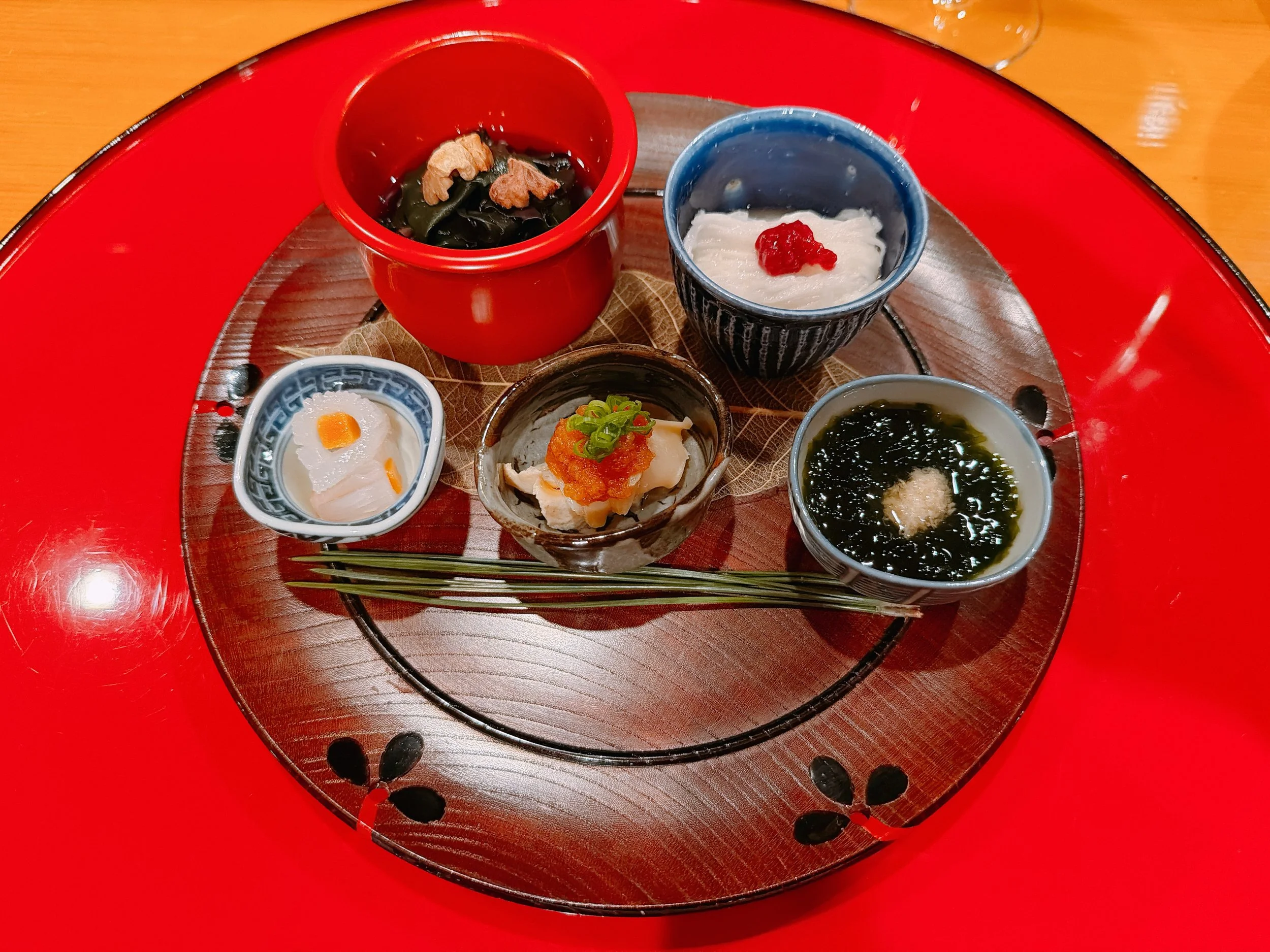
The first course was a hassun: a collection of small appetizers. We tried them from top to bottom and from left to right. First, there were some Japanese vegetables (kinjiso) and mushrooms in a dashi-like sauce that were topped with freshly roasted walnuts. The vegetables were nicely crunchy, the mushrooms had soaked up the sauce, and the walnuts added a nice crunch. A simple, clean tasting dish 16. Next, a mountain yam puree topped with ume. The pickled plum sauce packed a salty and sour punch, complementing the appropriately slimy, but not too flavorful yam 17. Squid (ika) was filled with bits of karasumi, a fish roe preparation similar to bottarga. The squid was tender, and its filling added a salty, seafoody flavor 16. Geoduck was topped with grated radish that had been seasoned with soy sauce and vinegar. This topping was intensely flavored, somewhat overpowering the tender geoduck 16. Finally, seaweed topped with ginger was vinegary as well, but less than the geoduck's condiment had been. This dish also contained a slice of cucumber that gave it a light cucumber note 16. What was notable here were the strong flavors in all the appetizers - quite different from the kaiseki meals that we had enjoyed in Kyoto during the preceding days.
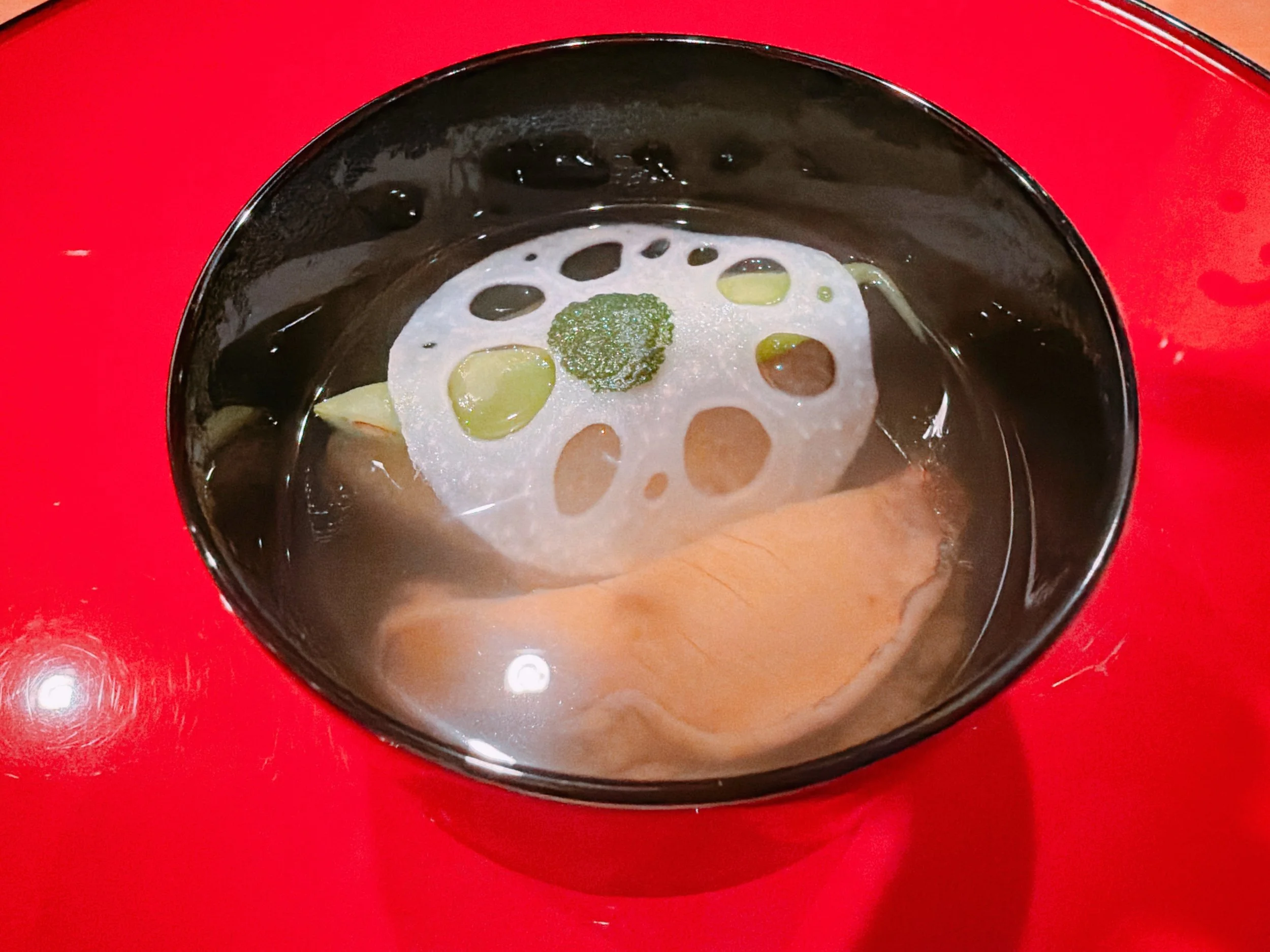
A clear soup followed. It contained slices of winter melon, abalone, a green bean, lotus root, and a small citrus peel. So it was not surprising that the broth had a citrusy note, but overall it was light in flavor. The winter melon was juicy, had soaked up the broth and tasted of dashi - lovely. The abalone was on the chewier side, making this large piece somewhat difficult to eat. It was also not as flavorful as the winter melon had been. The green bean on the other hand was very fresh and had a distinctive taste 16.
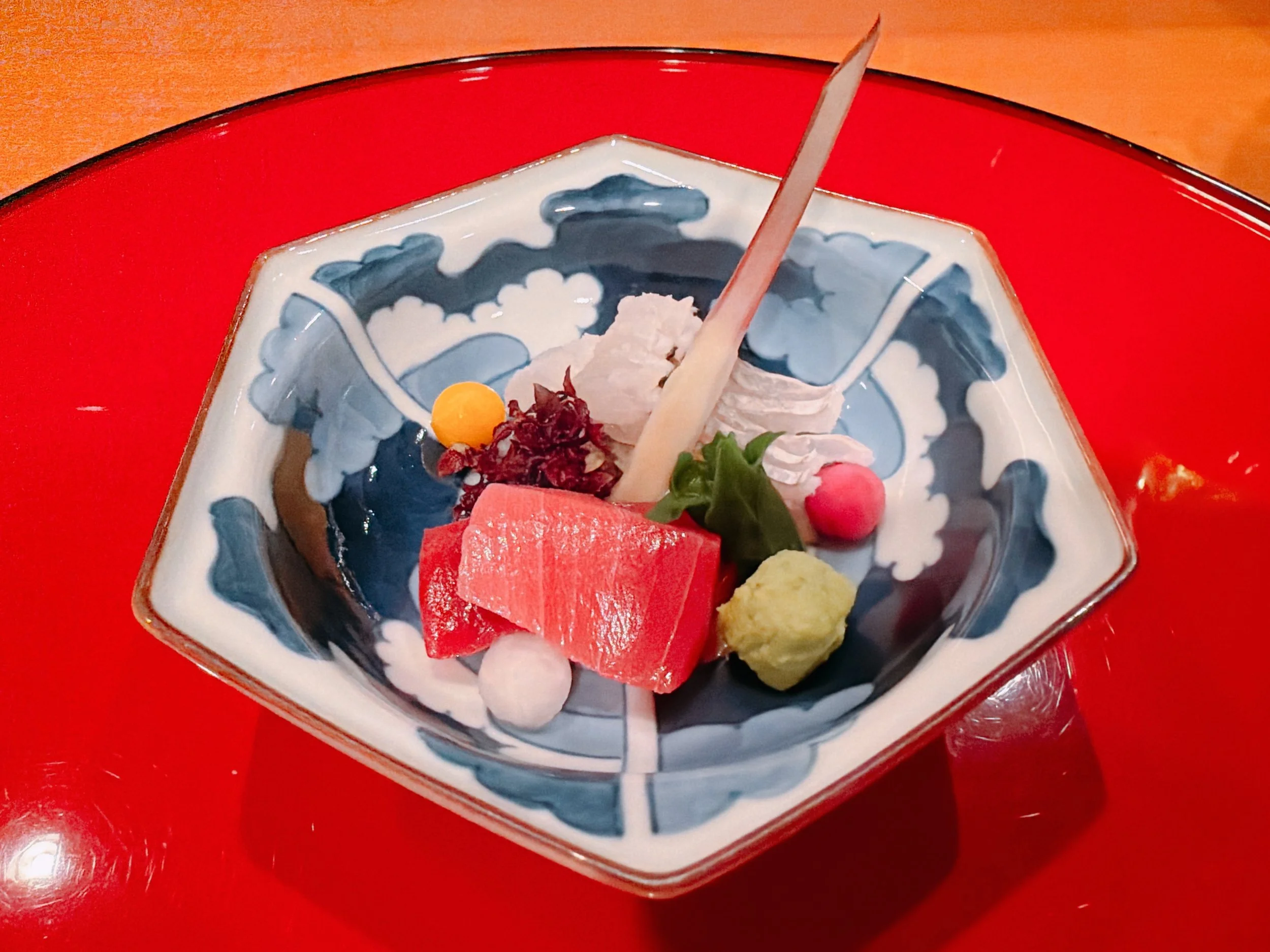
Two kinds of sashimi were served next: conger eel (hamo) and different cuts of tuna. We were told to eat some of the conger eel with a provided yukari (ume/sesame) seasoning, and use soy sauce for the remaining sashimi. The eel was proper sushi (compared to our dinner the previous night). It was somewhat chewy and had not much flavor, but went well with both seasonings. I'm not sure whether I had yukari with sashimi before, but it was an interesting and tasty addition. In a sense, the conger eel played the role of tai here, also known more for its texture than its taste. After this, we tried the three cuts of tuna, presumably otoro, akami and chutoro. All quite good, and the otoro in particular was sublime - very tender and fatty 17.
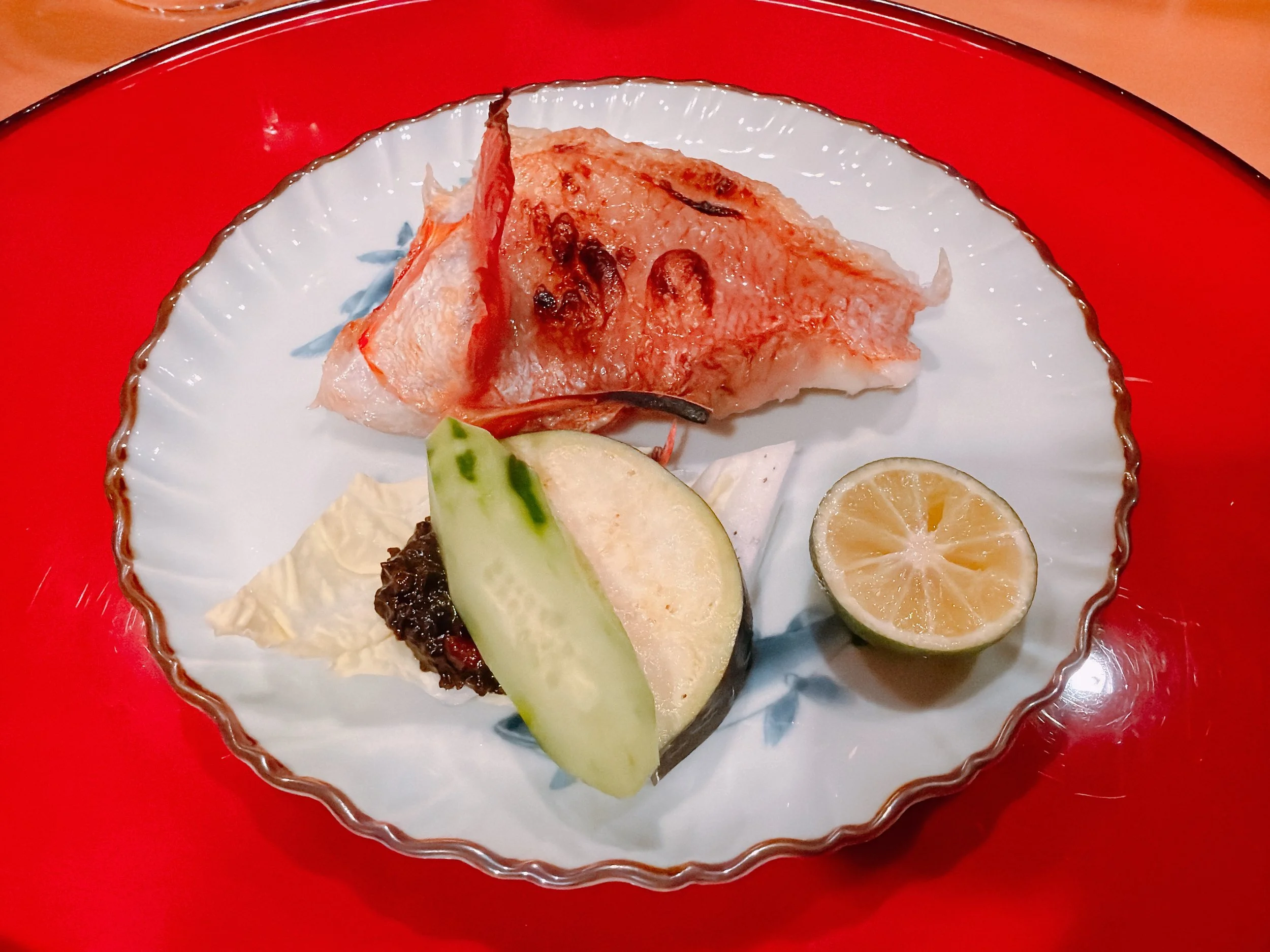
At this point, we were served the grilled dish that we had chosen at the beginning. Mine was a kinki fish, seasoned only with salt and squeezed citrus juice (for an additonal 4300 JPY / $25). On the side were some vegetables dressed with a miso sauce that were apparently paired with all grilled dishes. The fish was cooked to perfection: tender, fatty, flavorful, an having a distinct grill taste. Very good, my only nitpick would be that there was a fair number of fish bones to contend with. The vegetables' miso dressing was quite savory, and the fresh greens were a good complement for the heavier fish 17.
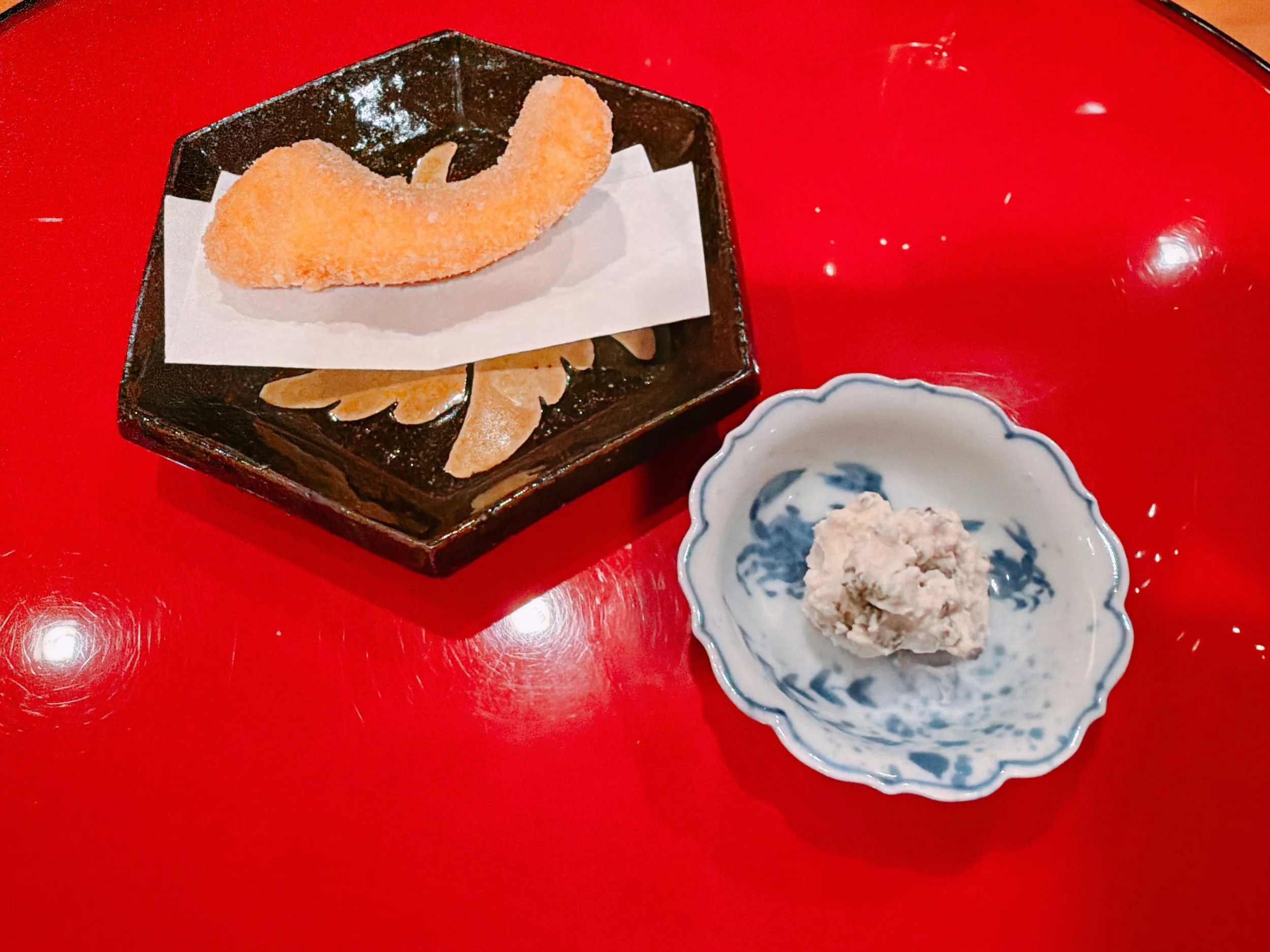
Next came a breaded and fried salmon that was accompanied by a mascarpone cheese seasoned with pepper flower - the latter looking almost like blue cheese. Both the salmon and the cheese very pretty light in flavor. A nice, but not particularly Japanese dish that could have used a bit more oomph flavorwise 16.
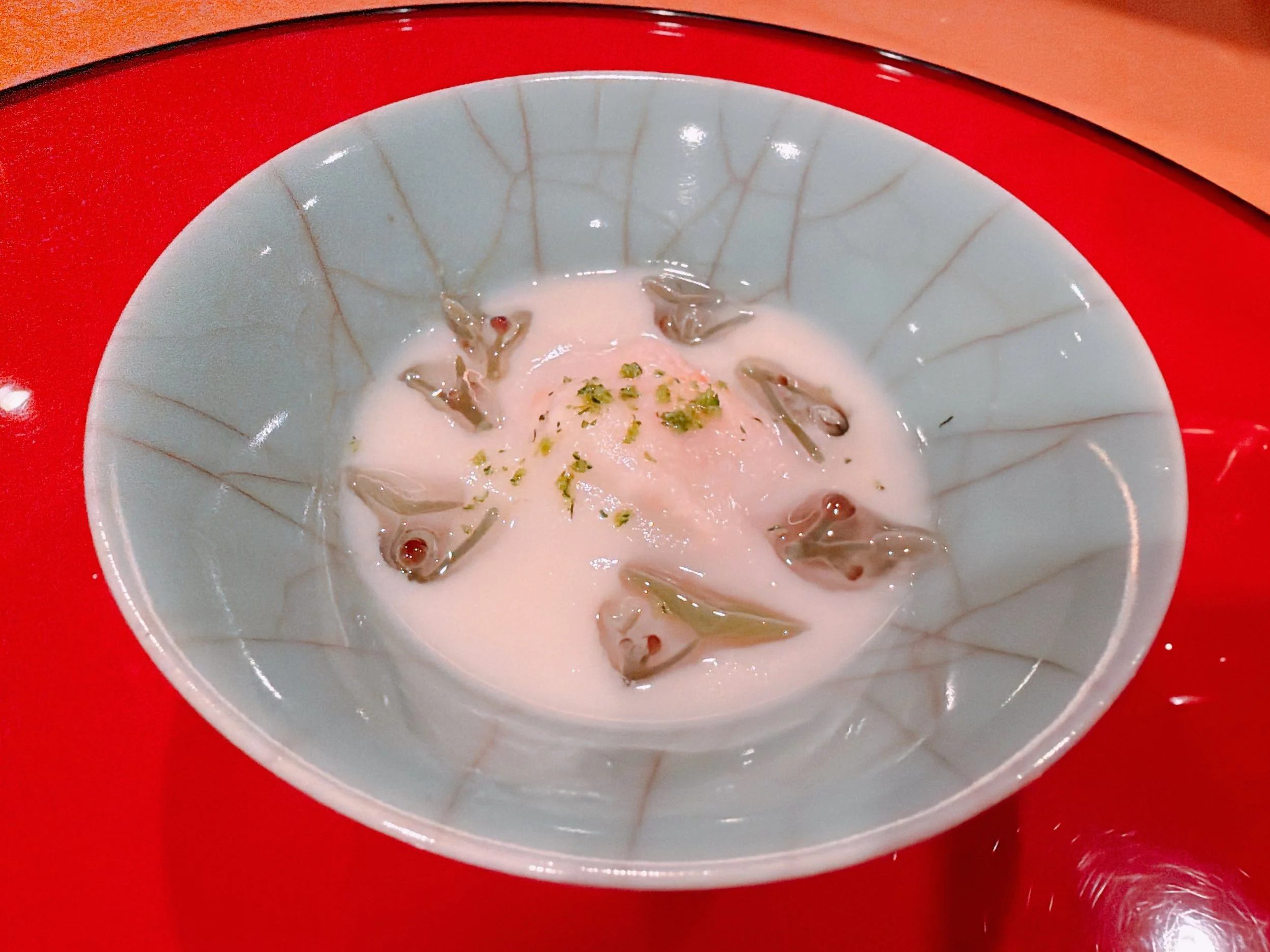
An onion soup contained crab meat and junsai (watershield) leaves. This was a lovely, thick soup that - oddly enough - didn't really taste of onions. The crab was fresh, the greens crunchy 16.
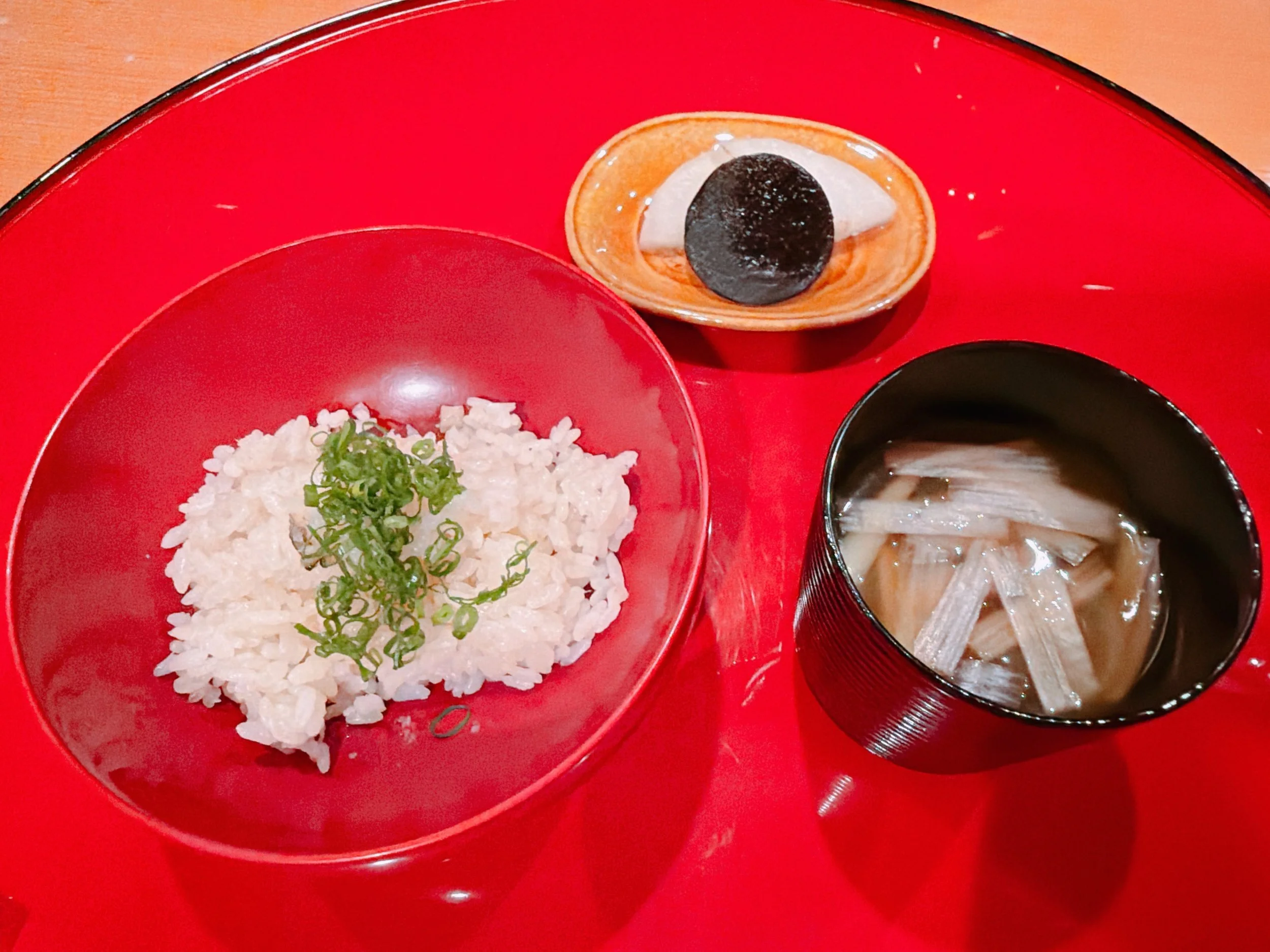
This already brought us to the final savory dish: a rice course. Ginger rice was topped with a piece of conger eel. On the side came a miso soup, pickles of radish and kelp, as well as some green tea. The rice was actually quite nice by itself, with little ginger cubes giving it some flavor. The pickles were pretty strong, making them good additions for the rice 16.
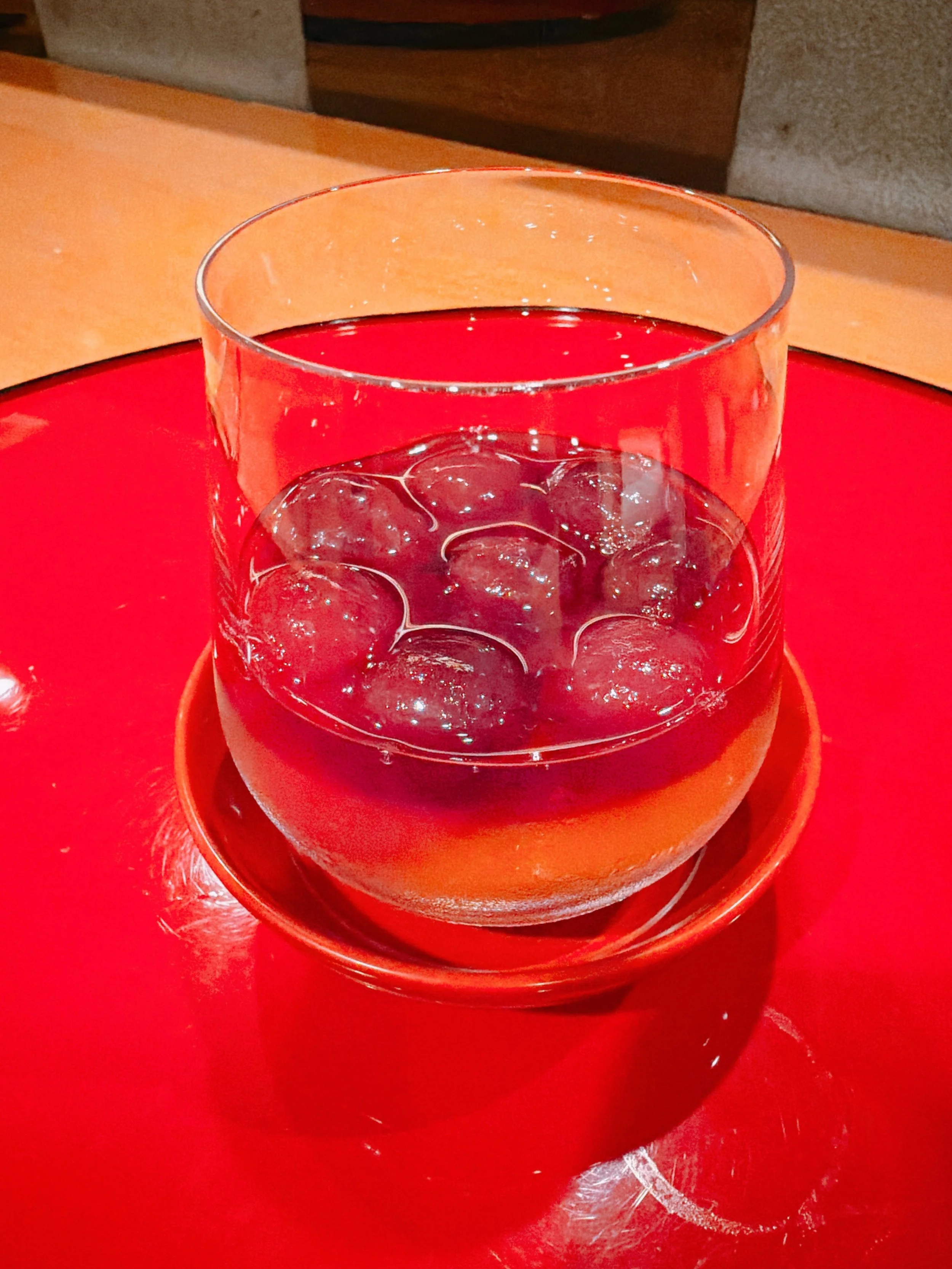
The single dessert of the night was a collection of fruit: watermelons, mangoes, dark cherries, as well as some red and green beans, all served in a fruit jelly. Monkey 47 gin from Germany was available for adding a small boozy kick to the dish. The cooked fruit were quite nice, and the number of beans was pretty small for a Japanese dessert. A good dish, but the paired port was not sweet enough to be a good match 16.
Overall: This was a very enjoyable kaiseki dinner with much punchier flavors than what we had seen at several recent three-star dinners in Kyoto. Preparations were consistently on point, and in a few cases extraordinarily good. Add to that the communal, relaxed counter seating, and this was a lovely experience 16.