Californios - San Francisco
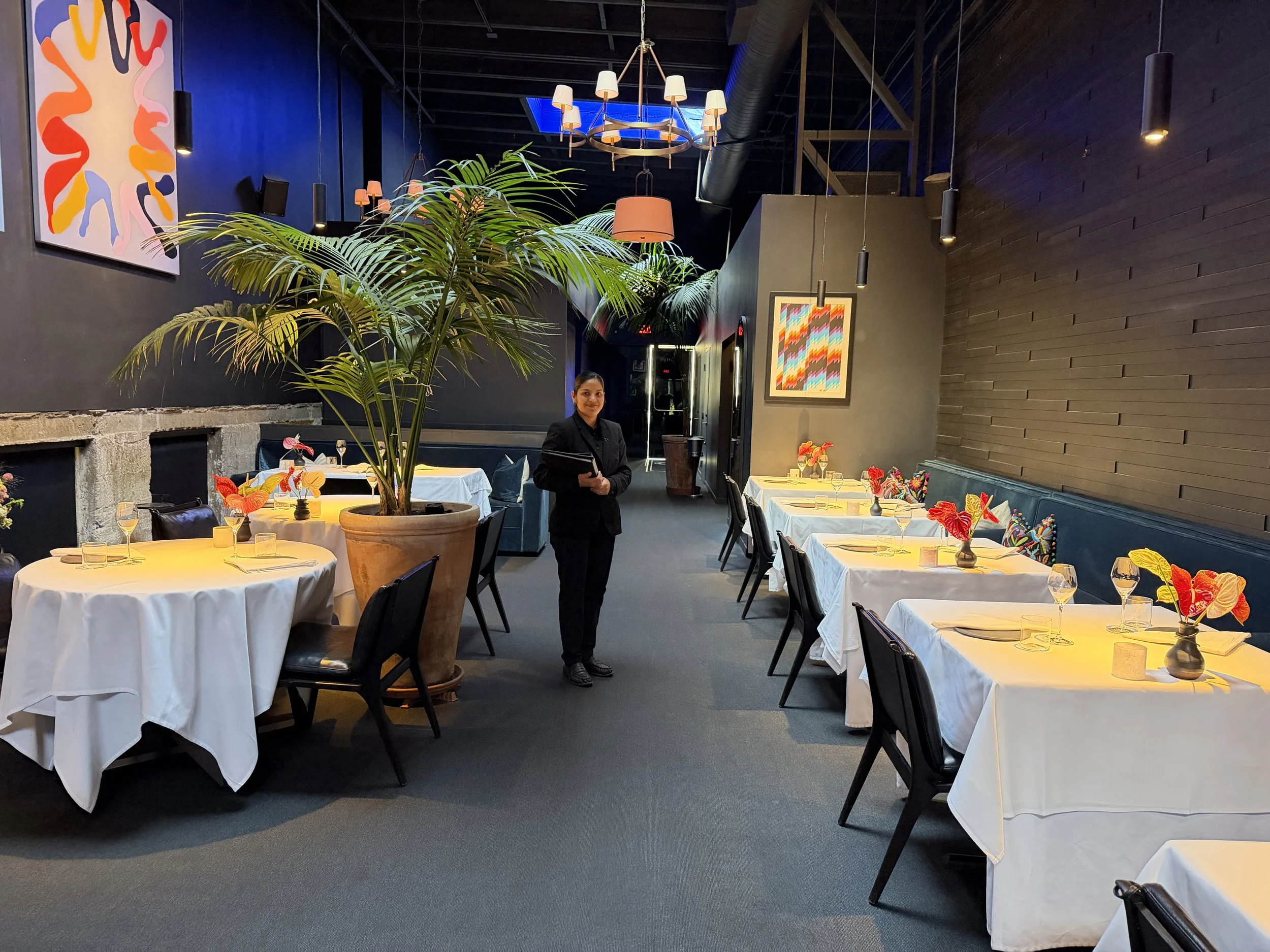
Paint It Black - and add some modern art
Rating: 17/20
Where: San Francisco, CA
When: Dinner for 2 on 9 July 2026
Cost per Person: Tasting menu $325, Wine pairing $197
Accolades: 3 Michelin Stars
Why: The world’s only three-starred Mexican restaurant
San Francisco offers plenty of good choices for Mexican food. Most of them, including the locally invented “Mission Burrito”, tend to be on the more casual side, though. So for most of the past decade, there has only been one game in town when it came to “fine-dining Mexican cuisine”. That restaurant’s name is “Californios”, and it opened its doors in 2015 in the same Mission district that invented the aforementioned burrito. We had visited this original location in 2016 and 2019, right after it received its first and second Michelin star, respectively, and then a couple of times in its current home in SOMA, where it reopened after the pandemic. In 2026, Californios became the world’s first Mexican restaurant to receive three Michelin stars. Our ten year wedding anniversary happened to be just two weeks after the ceremony, so we took that as the perfect opportunity to return for a double celebration.
For context, I should note that our last visit to Californios in 2025 had been underwhelming, falling well short of its (then) two stars. But there is a reason why I return to restaurants after they receive their third star. Restaurants always change, so we had high hopes to have a better meal this time. And if all else failed, then the 2016 Mouton Rothschild we had brought along (corkage was $85) would be a good consolation price.
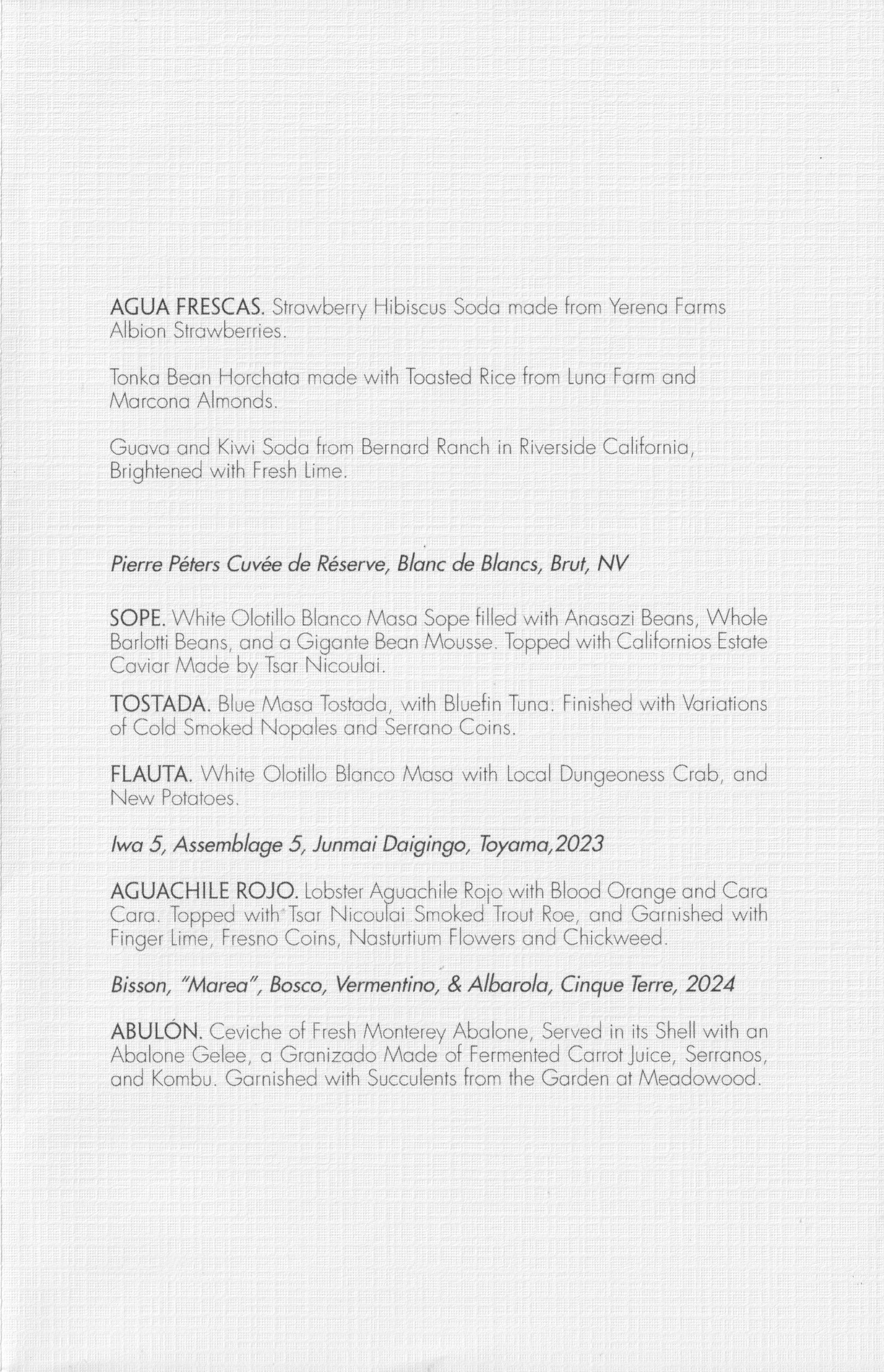
This time, our dinner began in the restaurant’s outdoor lounge. Here, we were served a welcome drink from three different choices: a horchata, a white guava-kiwi soda, and a strawberry-hibiscus agua fresca. We tried the last two, and I particularly liked the strawberry drink: fresh, sweet and fruity 17.
After a few minutes, we were led to our table in the dining room. Black was the main “color” used for the interior design, with the monotony broken by some large abstract modern art pieces. The kitchen was out of sight, leaving only the black-clad servers to interact with the diners. All two-tops were placed along one side of the room - thankfully spaced reasonably apart from each other. For better or worse, all tables were pretty much the same, and there was no obvious “best seat” in the house - the best bets would be the tables for larger parties on the other side of the room.
Once seated, we were welcomed with a complimentary glass of Mexican sparkling wine, in recognition of our celebration (a birthday also works, as we saw at another table). Foodwise, no decisions had to be made: the restaurant serves a single tasting menu priced at $325, with payment taken upon reservation. Dietary restrictions, such as a pescatarian menu, were accommodated with prior notice. When it came to drinks, there were several pairing options. First, a wine pairing (which included a sake and a beer) for $197, and a non-alcoholic pairing for $95. Then, there were two-glass “pairings” of one Mexican and one European wine each, made from the same kind of grape ($36 for two whites, $43 for two reds). Finally, there were four glass flights of either mezcal or tequila for $150 each. I went with the standard wine pairing, and the wines were all quite good, apart from one Italian white that I didn't particularly care for. Curiously, we had previously tried many of these wines at other restaurants in San Francisco, suggesting that they all use the same local resellers.
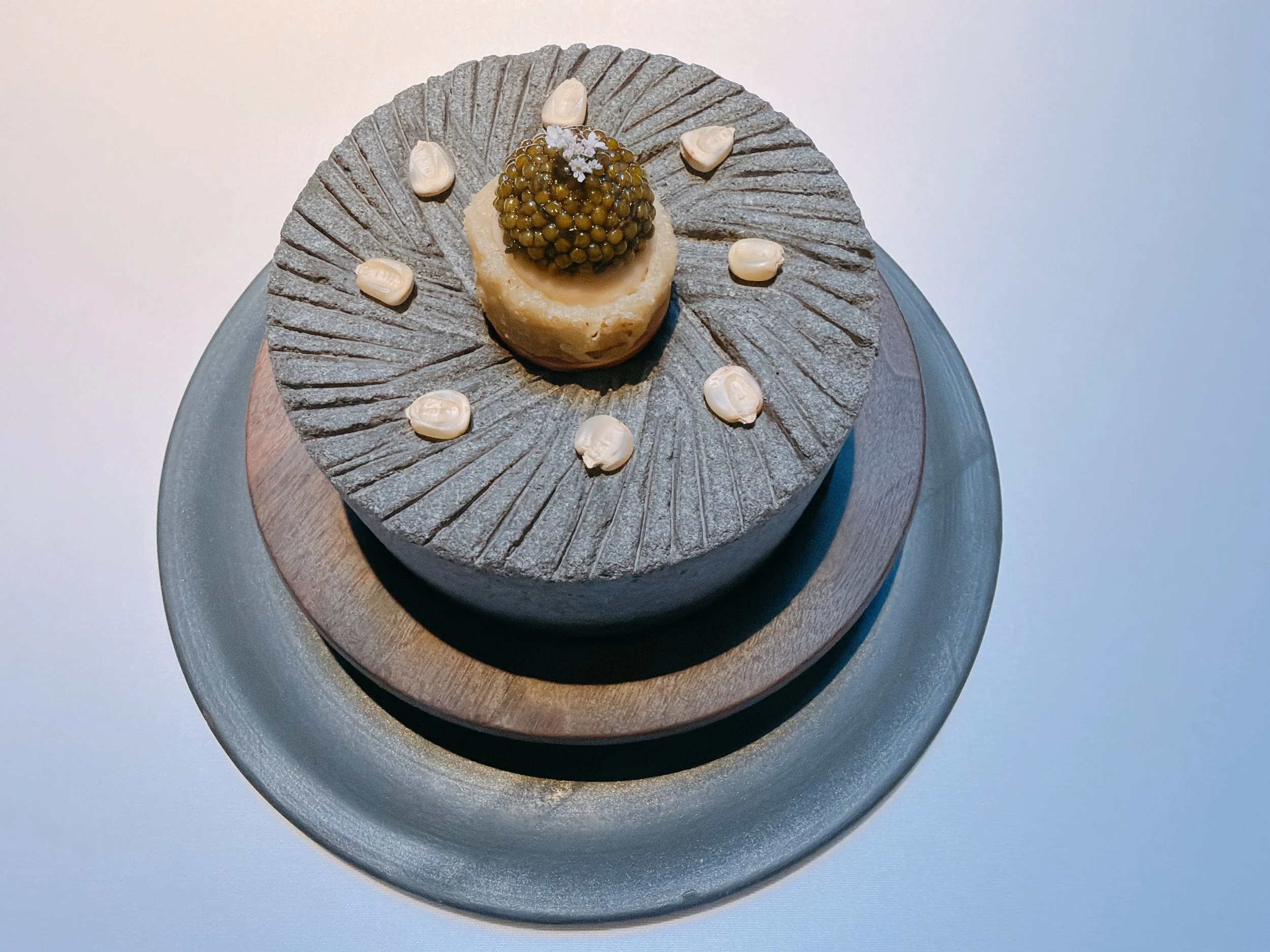
The first three bites of the tasting menu were all based on “masa”, the traditional Mexican corn dough. First, there was a cup made from white olotillo corn. It was filled with three different kinds of beans and topped with a dollop of caviar from California. This ended up being a well-balanced dish: the creamy bean filling contrasted with the rougher masa shell, and the caviar added some saltiness 17.
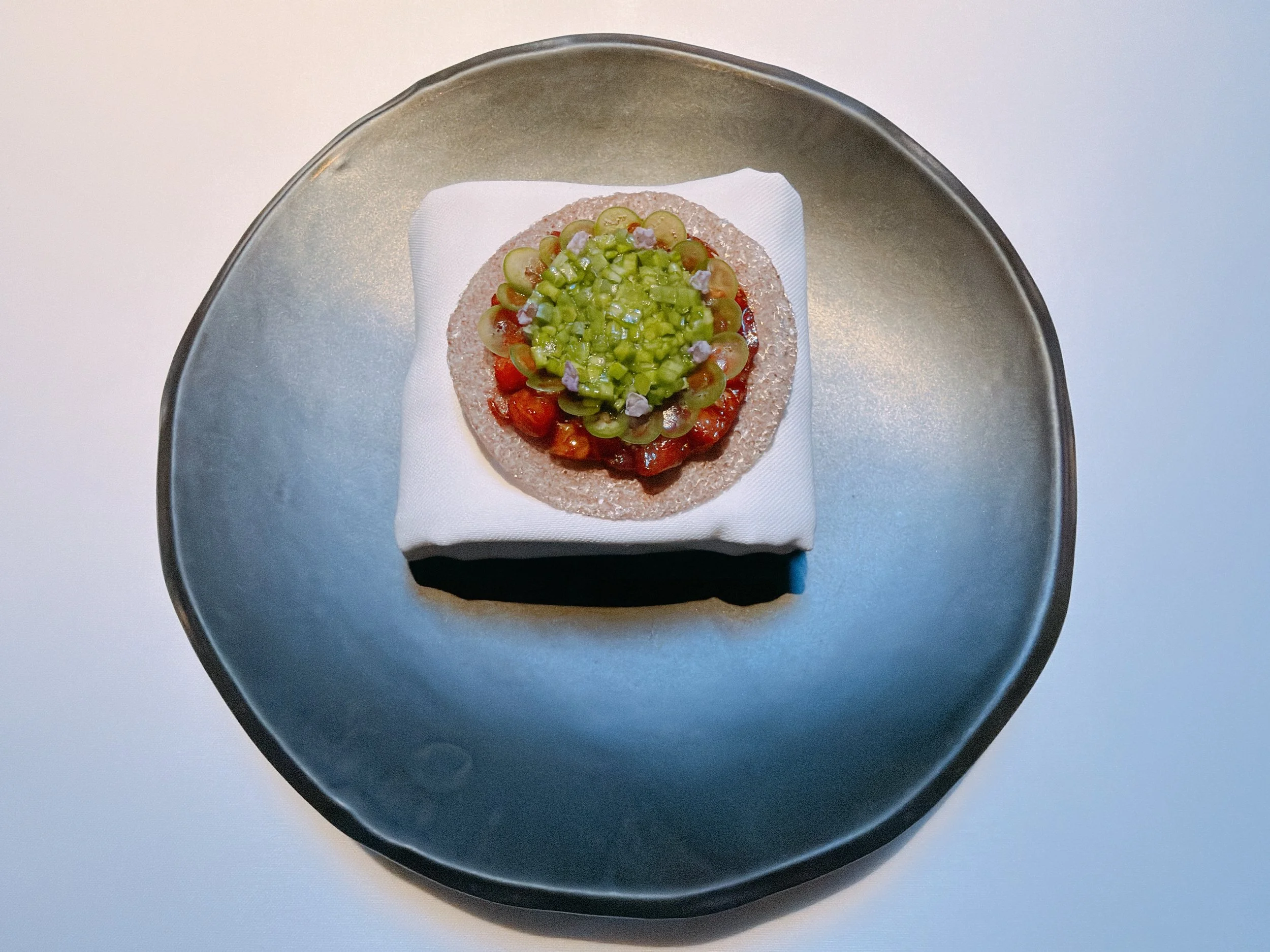
Next was a blue corn tostada - essentially a thin round cracker - topped with blue fin tuna, an avocado mousse, chopped smoked nopales cactus, and serrano pepper slices. The tostada had a good crunch, and held together well when eaten in multiple bites. This dish was also not about a single one of the ingredients, but rather their combination. Neither the fish nor the greens stood out, but they created an enjoyable, faintly spicy mix 17.
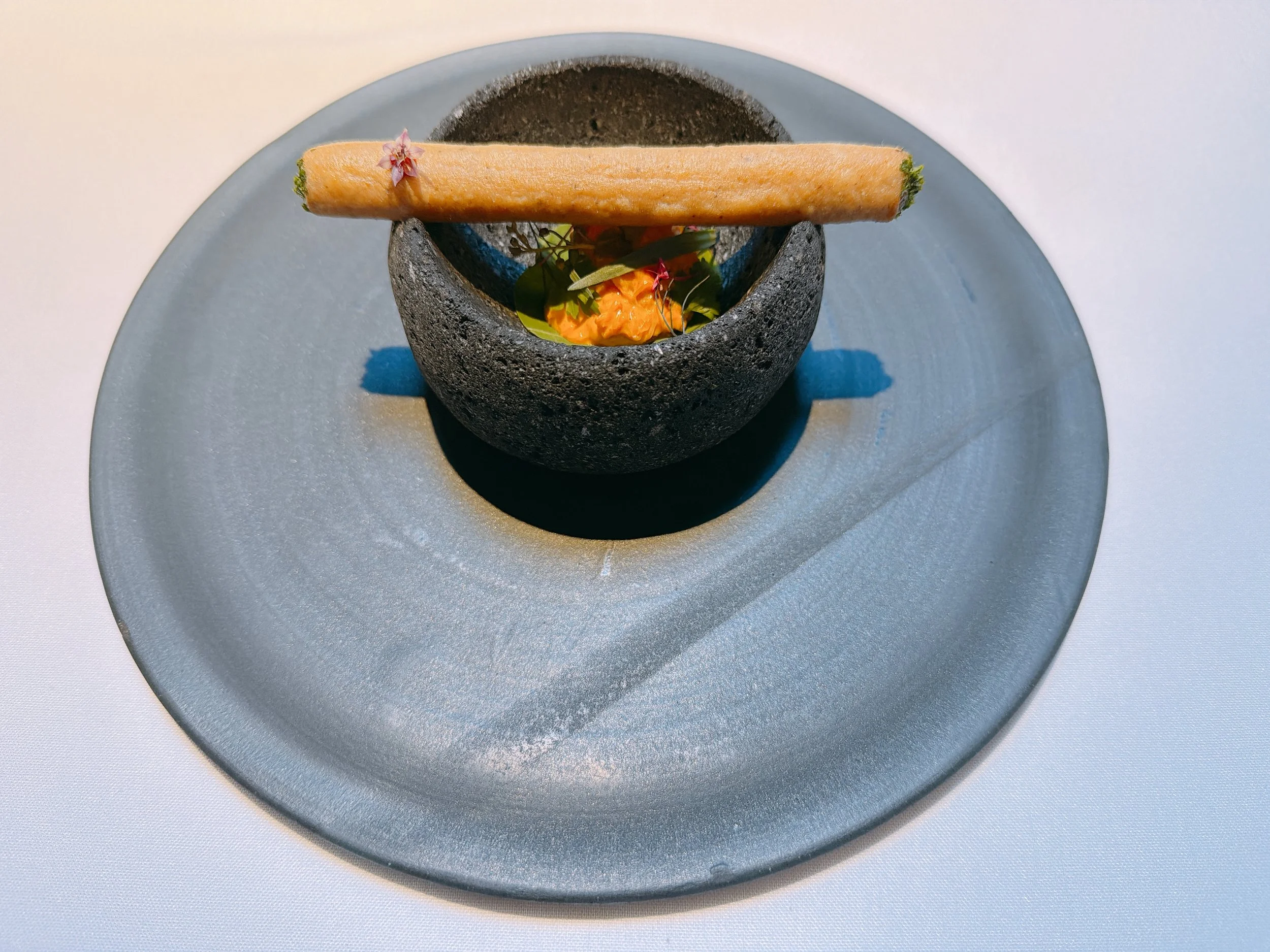
A white corn masa flauta (“flute”) was filled with Dungeness crab meat and served with a dip made from crab meat and chilies sitting on top of a nasturtium leaf. The crunch of the flauta was much softer than the tostada’s, and the crab meat in the spicy dip was quite lovely. The nasturtium leaf made it easy to scoop up the rest of the dip 17.
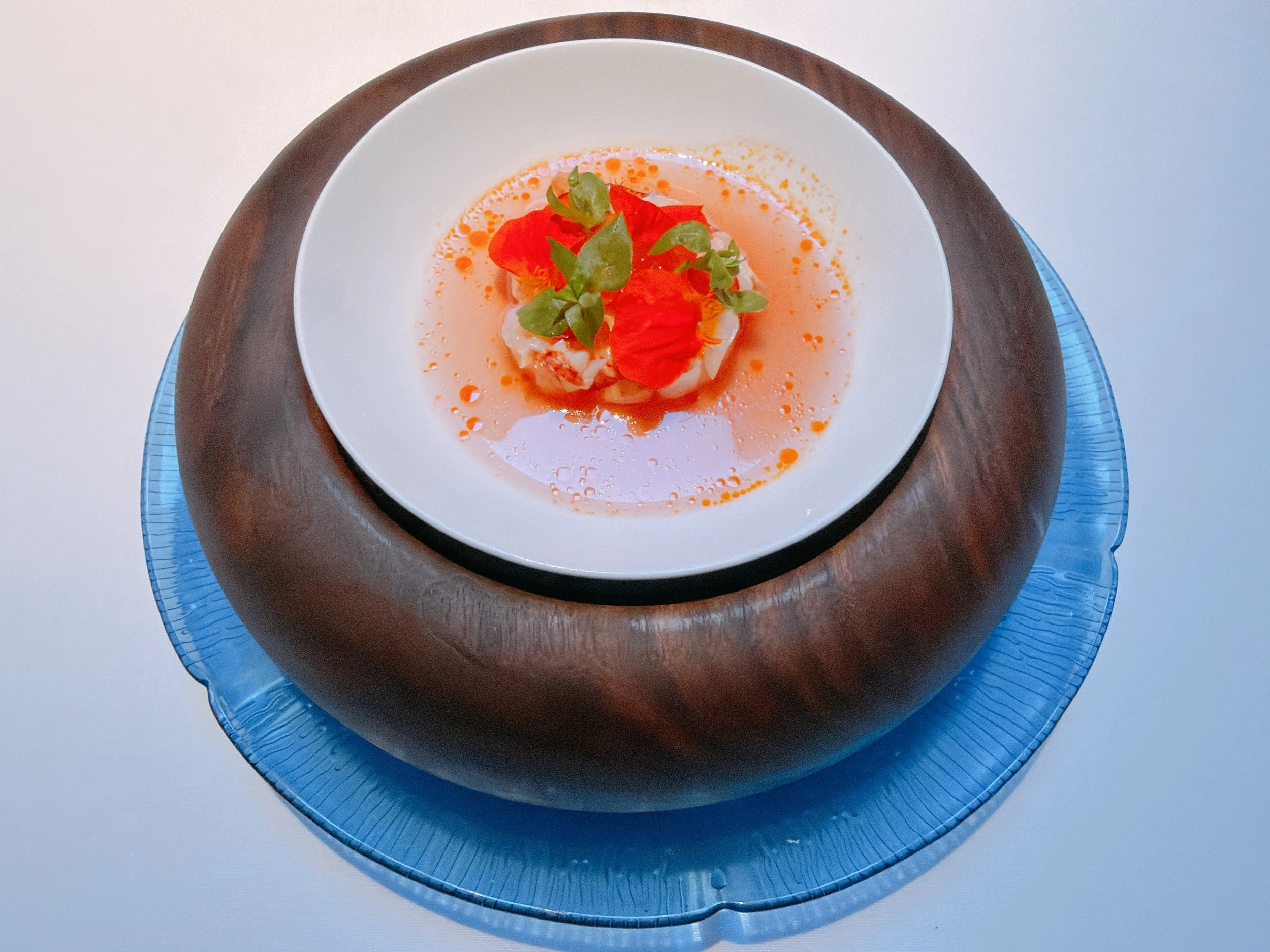
Taking a break from masa, we continued with a ceviche dish. Pieces of lobster meat were topped with cold smoked trout roe, nasturtium flowers, and chickweed. The dish was finished with a red aguachile containing cara cara and blood oranges. The lobster meat here was exemplary: very tender and fresh. The roe was nicely crunchy, but overall the seafood flavors were light - the herbs were just as strong. The aguachile had remarkably clean flavors, making this a very well done dish 18.
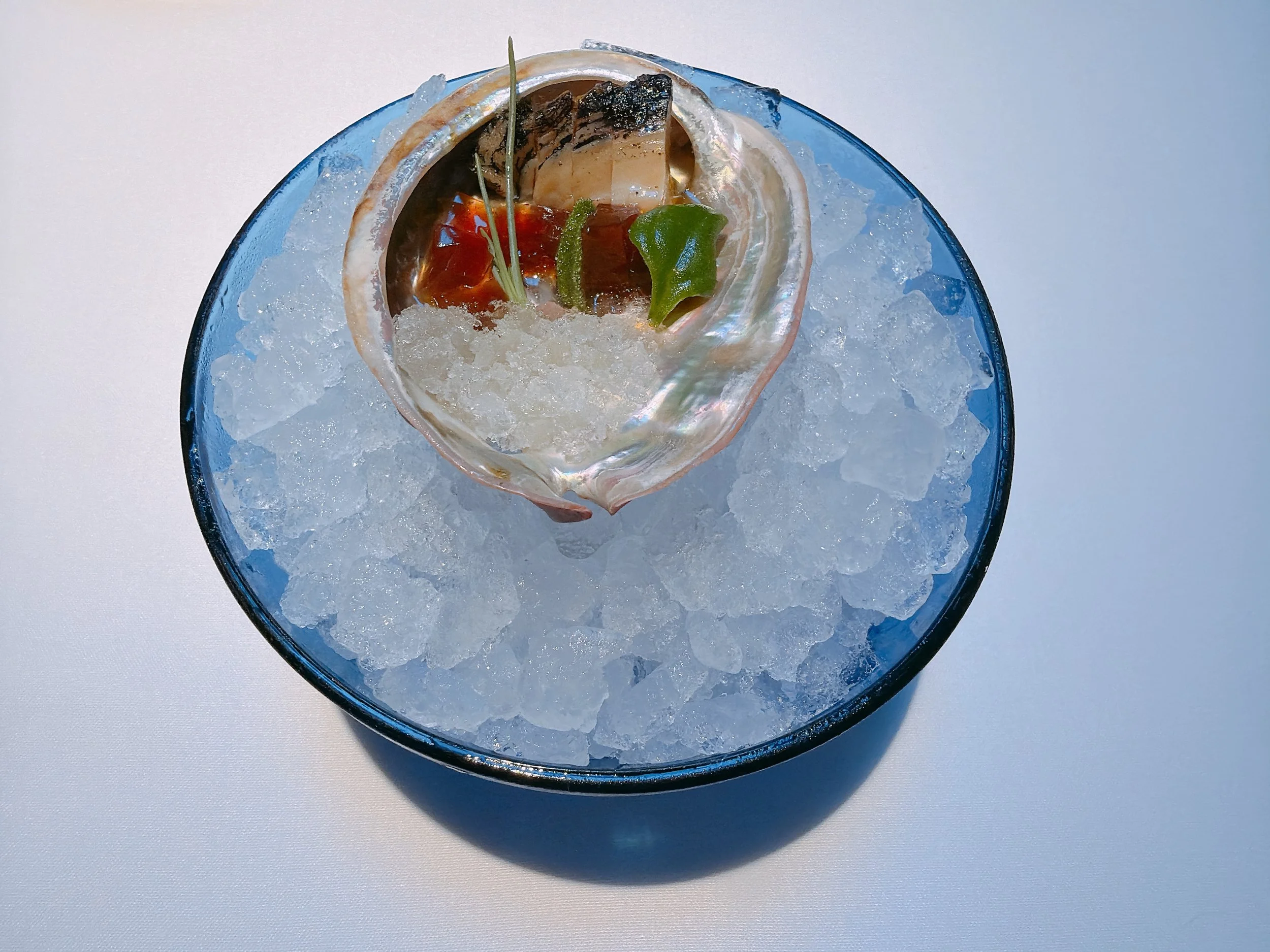
Abalone from nearby Monterey Bay had been braised in a seaweed broth for three hours. It was served with an abalone juice jelly, a vinaigrette, and shaved ice made from carrot juice, serrano peppers, and kombu. The abalone was nicely cooked and tender, but had hardly any flavor by itself. That was more than made up for by the rest of the dish, which very flavorful and salty, making for a nice combination overall 17.
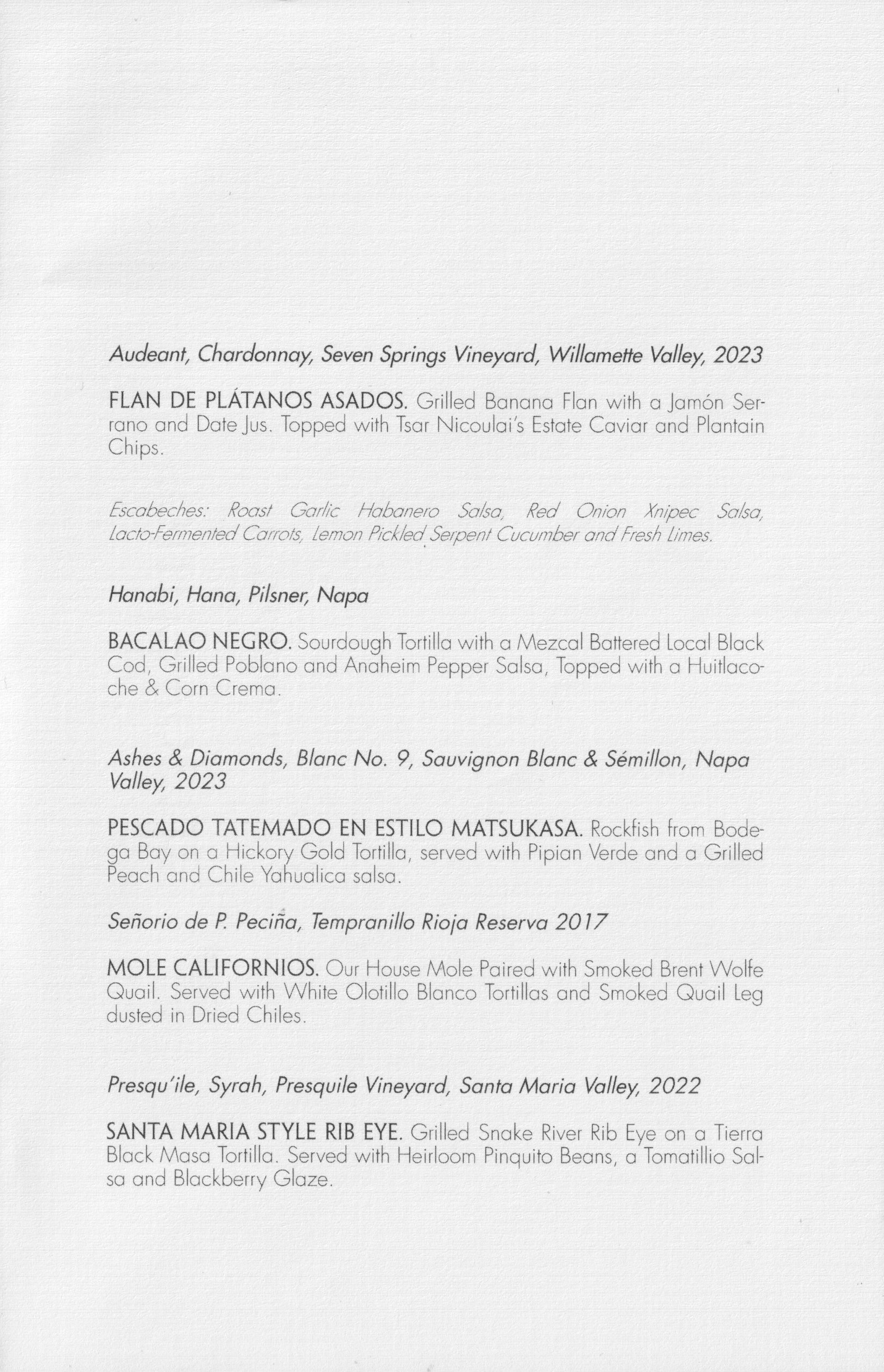
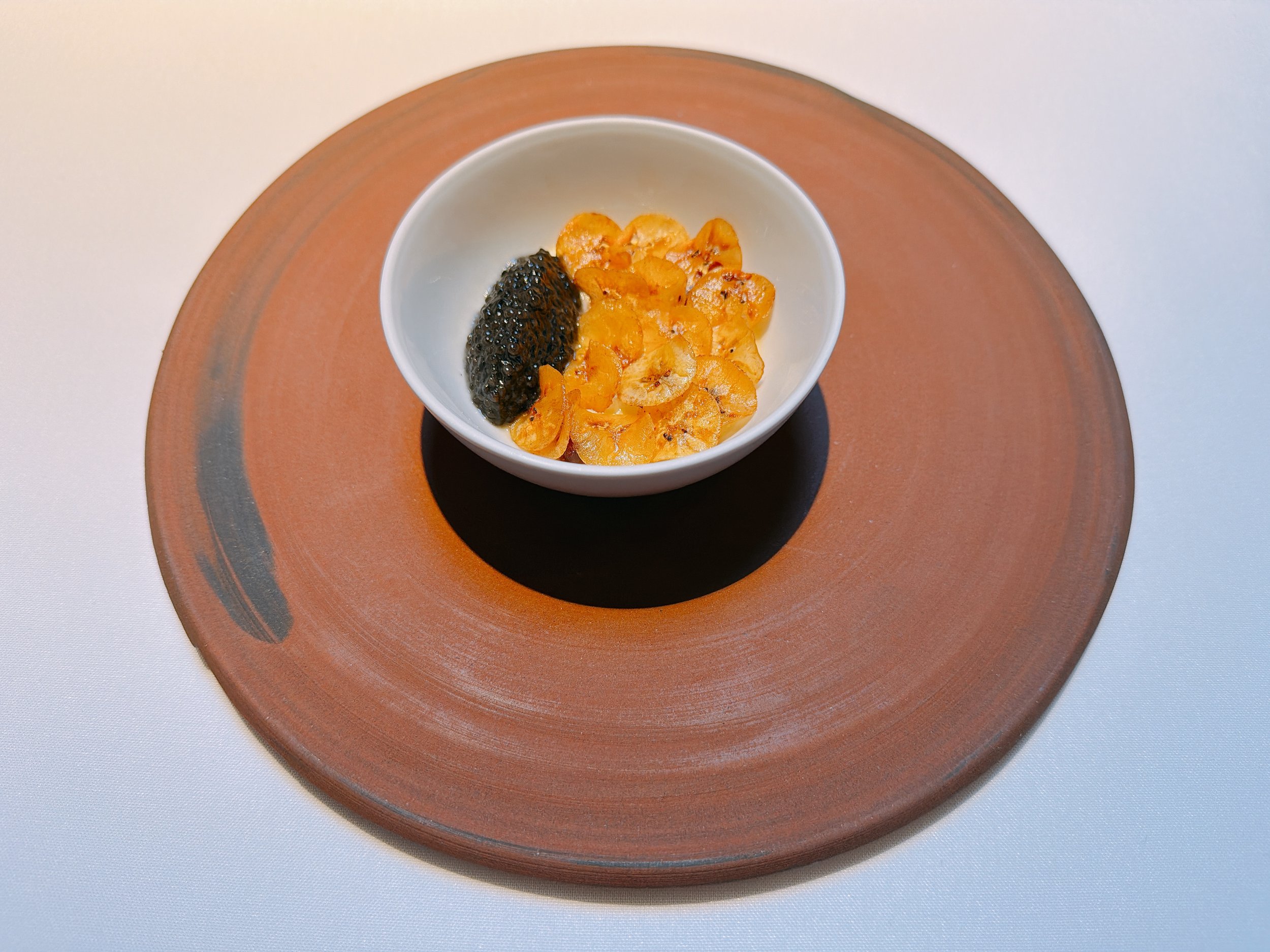
Since its inception, every meal at Californios has always included a course based on bananas and caviar. One can’t quite call it a signature dish, since the actual preparation has changed over time, but definitely a signature theme. Unfortunately, I hadn't been the greatest fan of this combination in the past. Today's iteration was based on a savory flan made with grilled bananas, sitting atop a jamon iberico/date jus. The whole was topped with small plantain chips and a generous helping of caviar. The caviar's texture was creamy rather than having clearly defined roe. Some of the dish's saltiness came from the caviar, but most of it stemmed from the jamon jus. There was definitely some banana flavor as well - and I still wouldn't consider this a winning combination -, but this was the best balanced banana/caviar dish I've ever seen at Californios. Maybe because the flan and the plantains were not that sweet? In any case, the wine pairing (a chardonnay from Oregon) also helped by being a close to perfect match for the food 17.
The grand savory finale of a dinner at Californios seems to always be a series of tacos. During our last dinner, we had felt that the “protein on tortilla” theme had gotten a bit old after a while, but this was thankfully not the case this time, for reasons that we'll see in a minute.
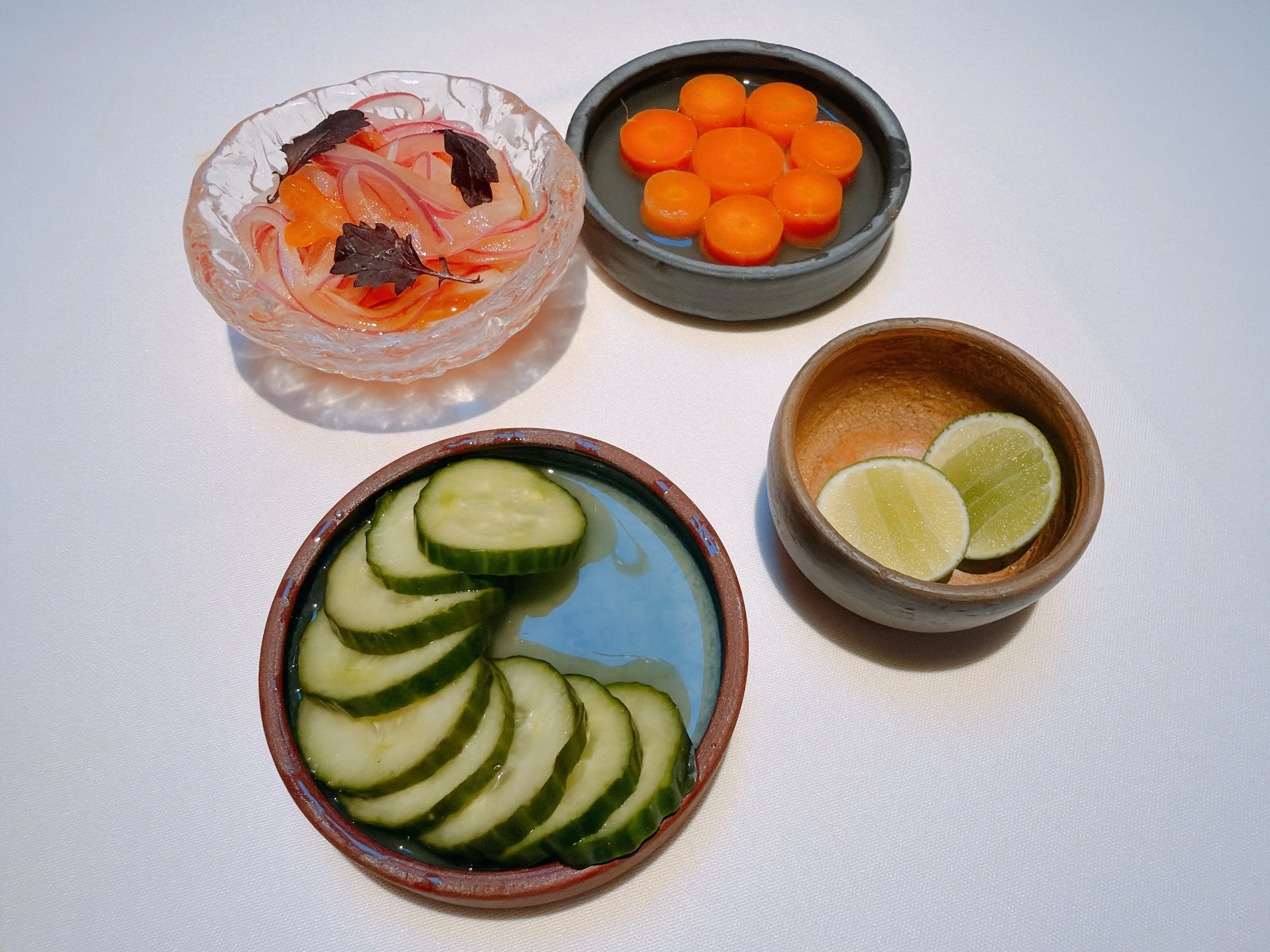
Along with the first two tacos, we received a series of condiments. Key limes were to be squeezed over the fish, a red onion/calamansi/chili mixture could be used to add spice, and pickled Persian cucumbers and lacto-fermented carrots were meant as palate cleaners between bites. All of them tasted fresh - good for lightening up the dishes - and the carrot had a nice crunch.
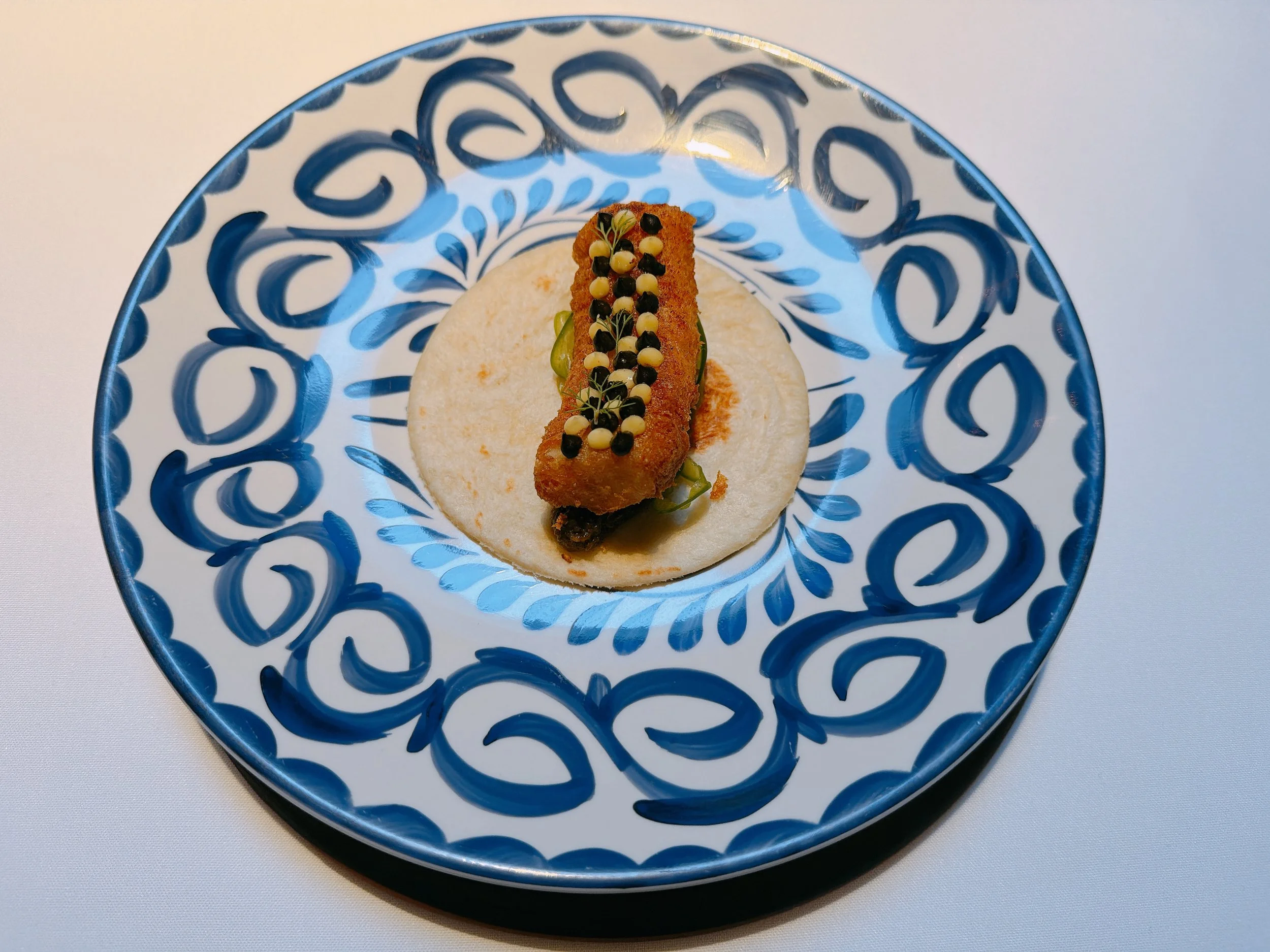
The first taco was a fixture on the restaurant's menu. A breaded and fried black cod had been decorated with countless dots of huitlacocha and corn cremas. It sat atop a pablano/Anaheim pepper salad and a sourdough tortilla - the latter was a chewy nod to San Francisco's favorite kind of bread. The fish was nicely fried, and while the topping sauces were sweet, one wouldn't notice that when everything was eaten together - all the flavors combined very well. The textures of this dish might have been rustic - battered, fried fish in a tortilla -, but the flavors were definitely much elevated over a traditional fish taco 17.
For the second taco, also based on fish, we received one additional sauce, a salsa negra made with aliums, tomatoes, and countless other ingredients recited too quickly to write down. This salsa had tons of flavor, lots of smokiness, and considerable heat. Probably a 19 if I rated sauces by themselves. Even if we had been served ten times the amount, we would have found a way to finish it off.
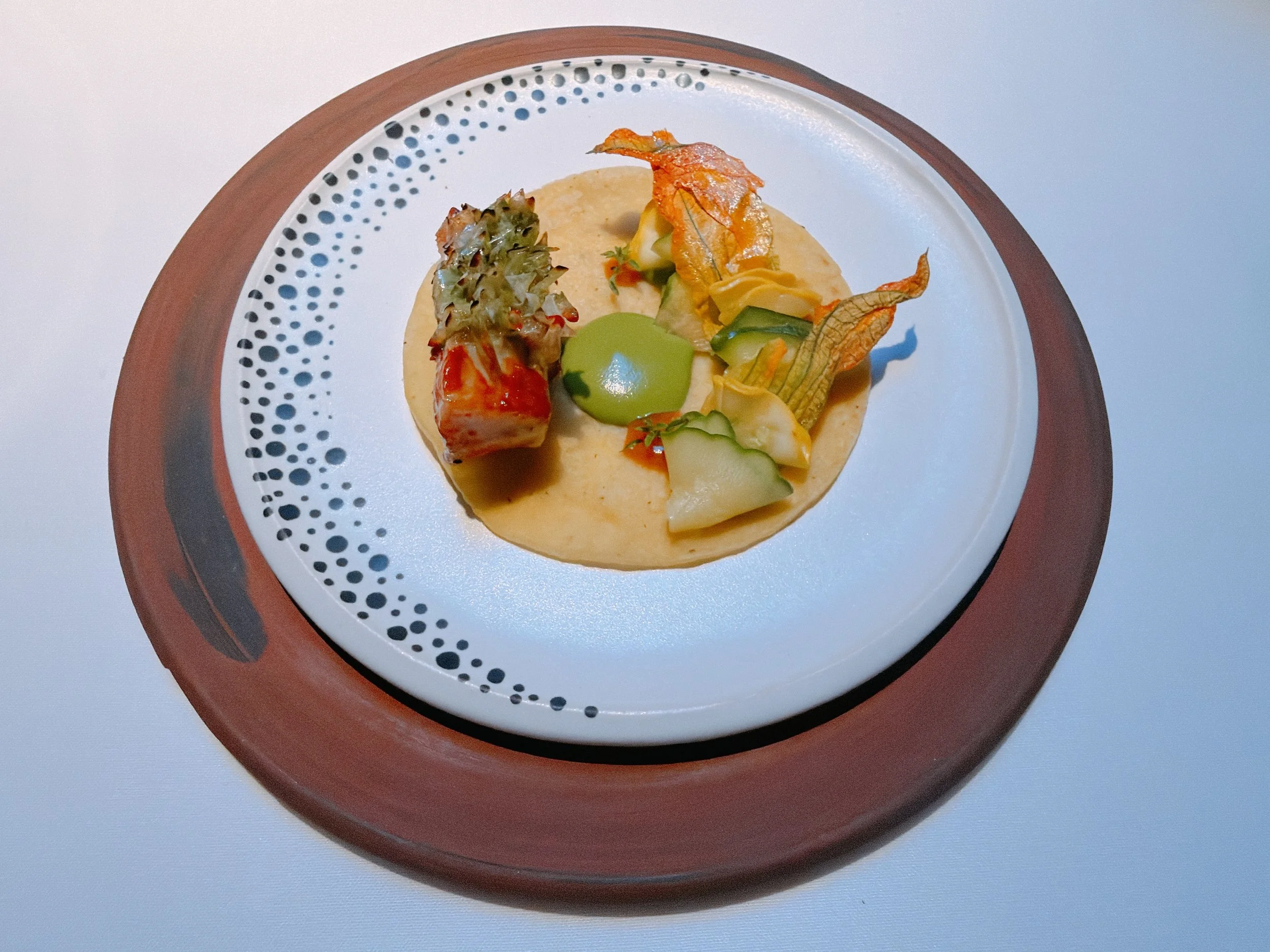
The taco itself consisted of a rockfish with crunchy scales, served over a golden tortilla with summer squash, zucchini blossoms, and two salsas: a green one, and one based on peaches and chilies. This fish, grilled instead of deep-fried, made for a much lighter preparation than the previous one. The squash further brightened up the dish 17.
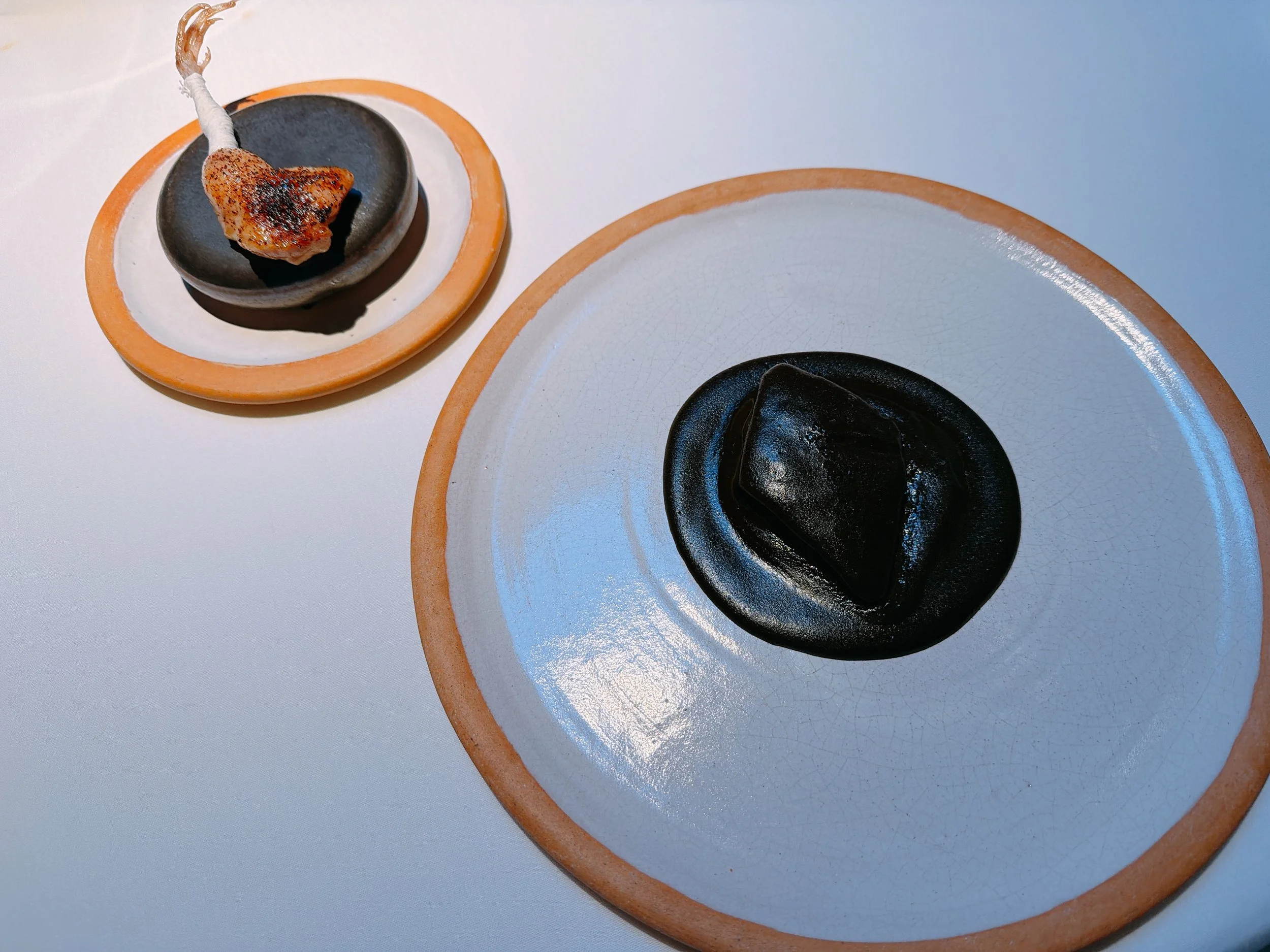
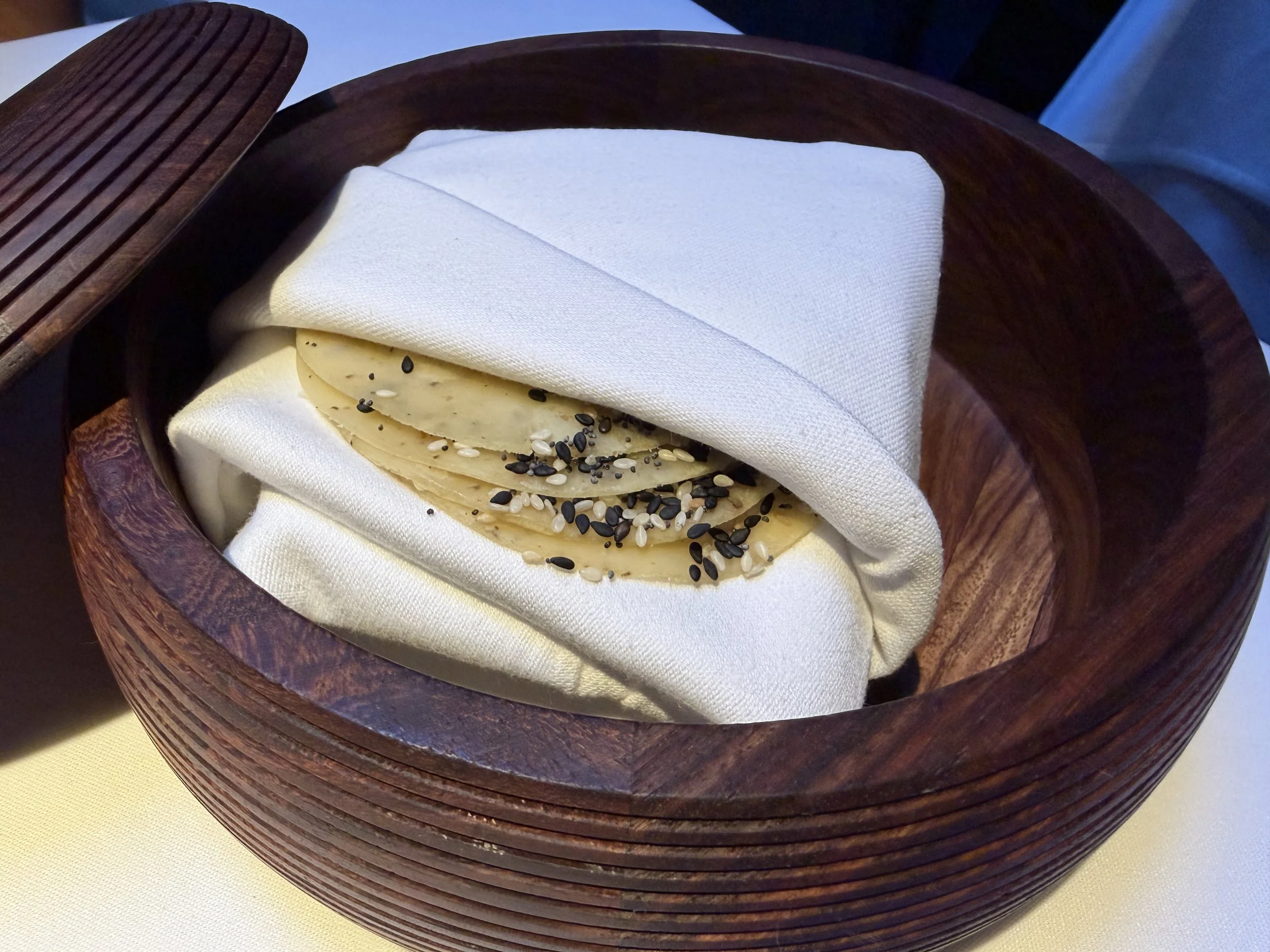
Next was a dish centered on quail. The quail's breast was smoked and covered with a black mole. This thick sauce was also a staple of Californios, and had at least a dozen of mostly black ingredients. On a separate plate was a grilled quail leg seasoned with dried chilies. Finally, there was a covered wooden bowl containing some white tortillas that were seasoned with poppy seeds and sesame seeds - these could be used to make a taco, or just torn into pieces to sop up the sauce. The quail breast was cooked beautifully: very tender and getting lots of flavor from the spicy mole. The leg was nicely juicy and also very well seasoned 17 (tending towards 18). While this was ostensibly a part of the “series of tacos”, the fact that the tortillas were optional made it feel much more like a regular meat dish, which broke the monotony of the taco sequence. The pescatarian alternative dish replaced the two versions of quail with a caramelized sweet potato and a plantain on a stick. To me, this potato felt way too sweet for the sauce - the two were almost clashing. The plantain was less sweet, but overall this was still a much less compelling variant of the dish 14.
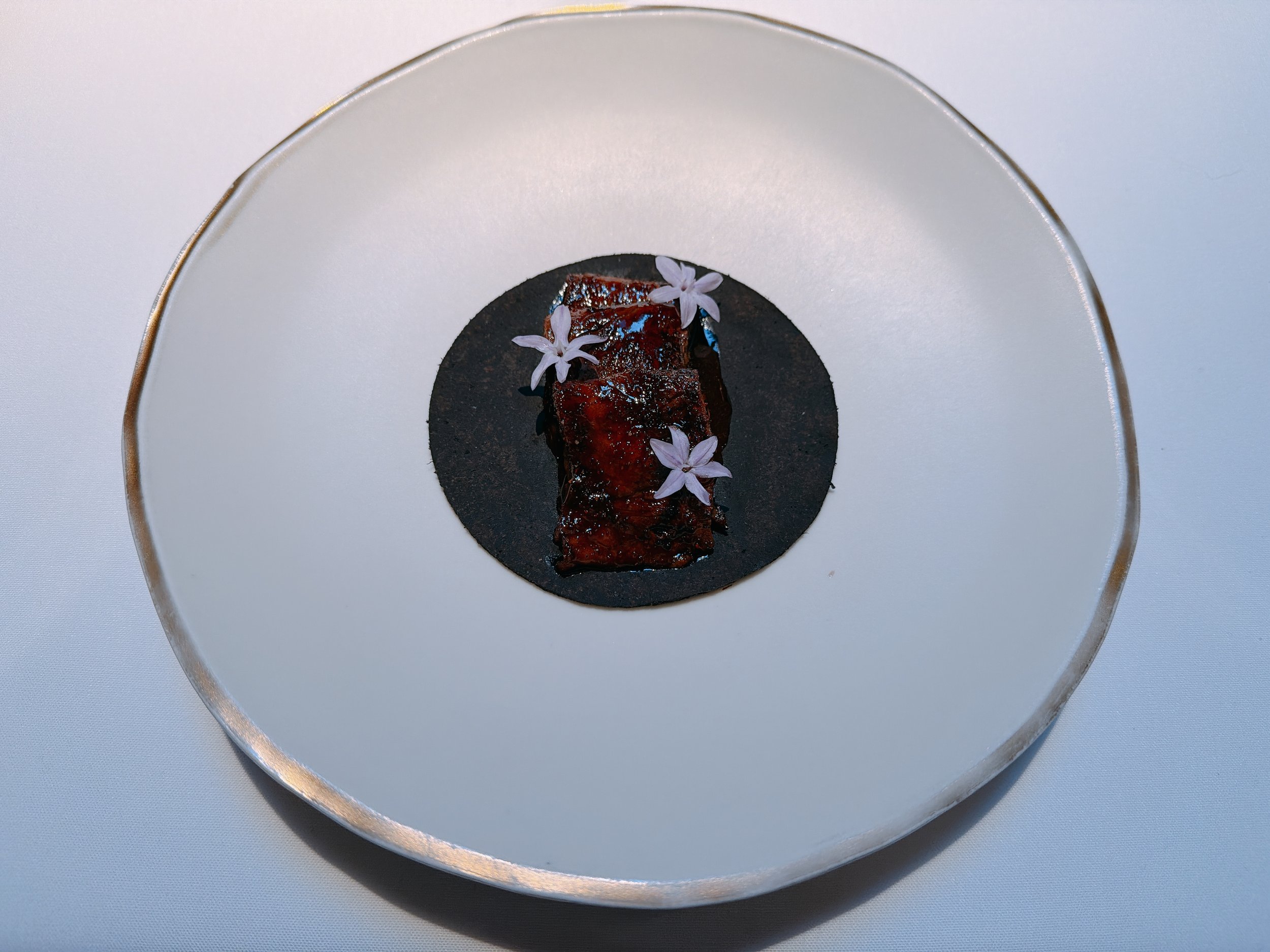
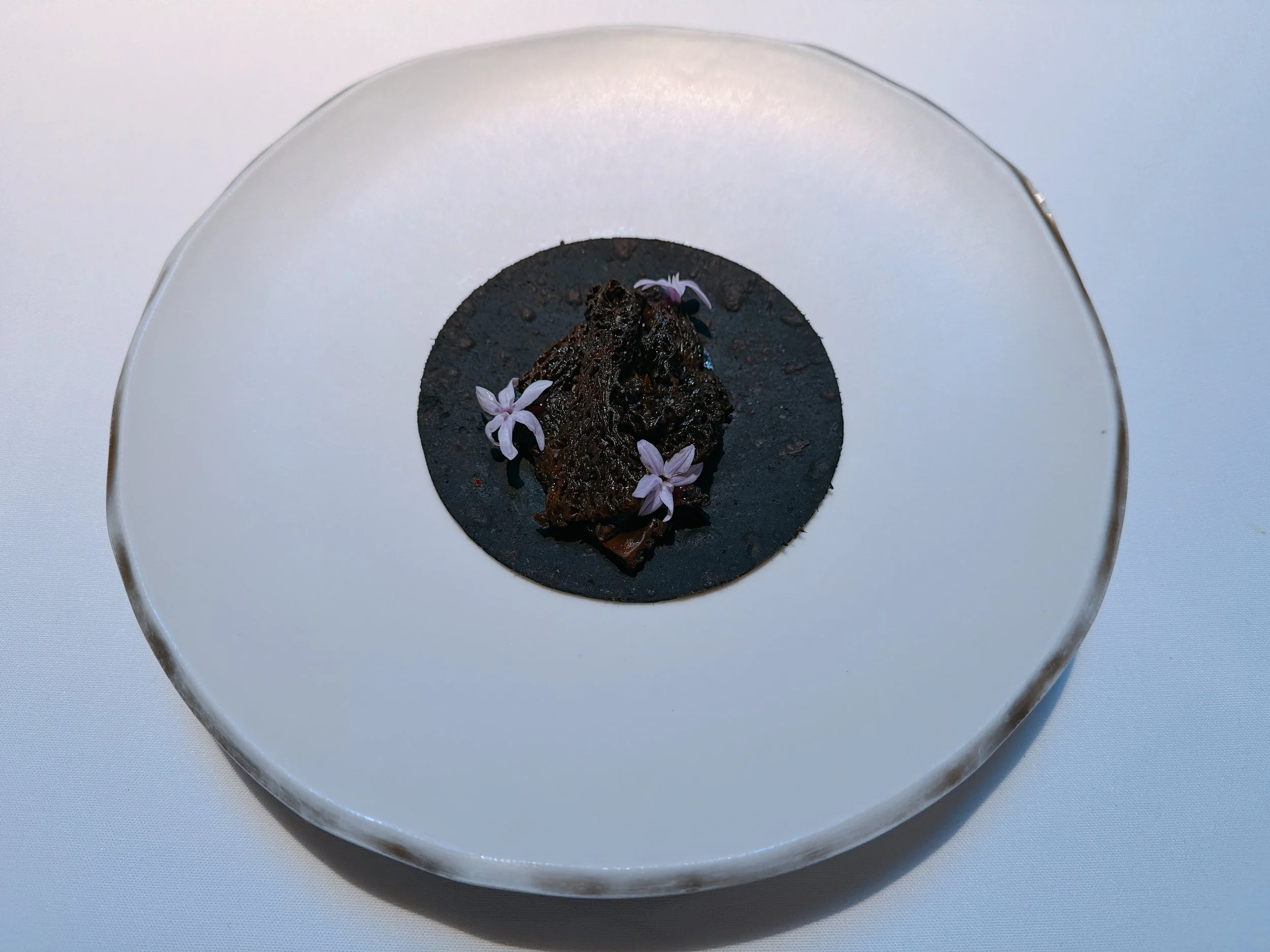
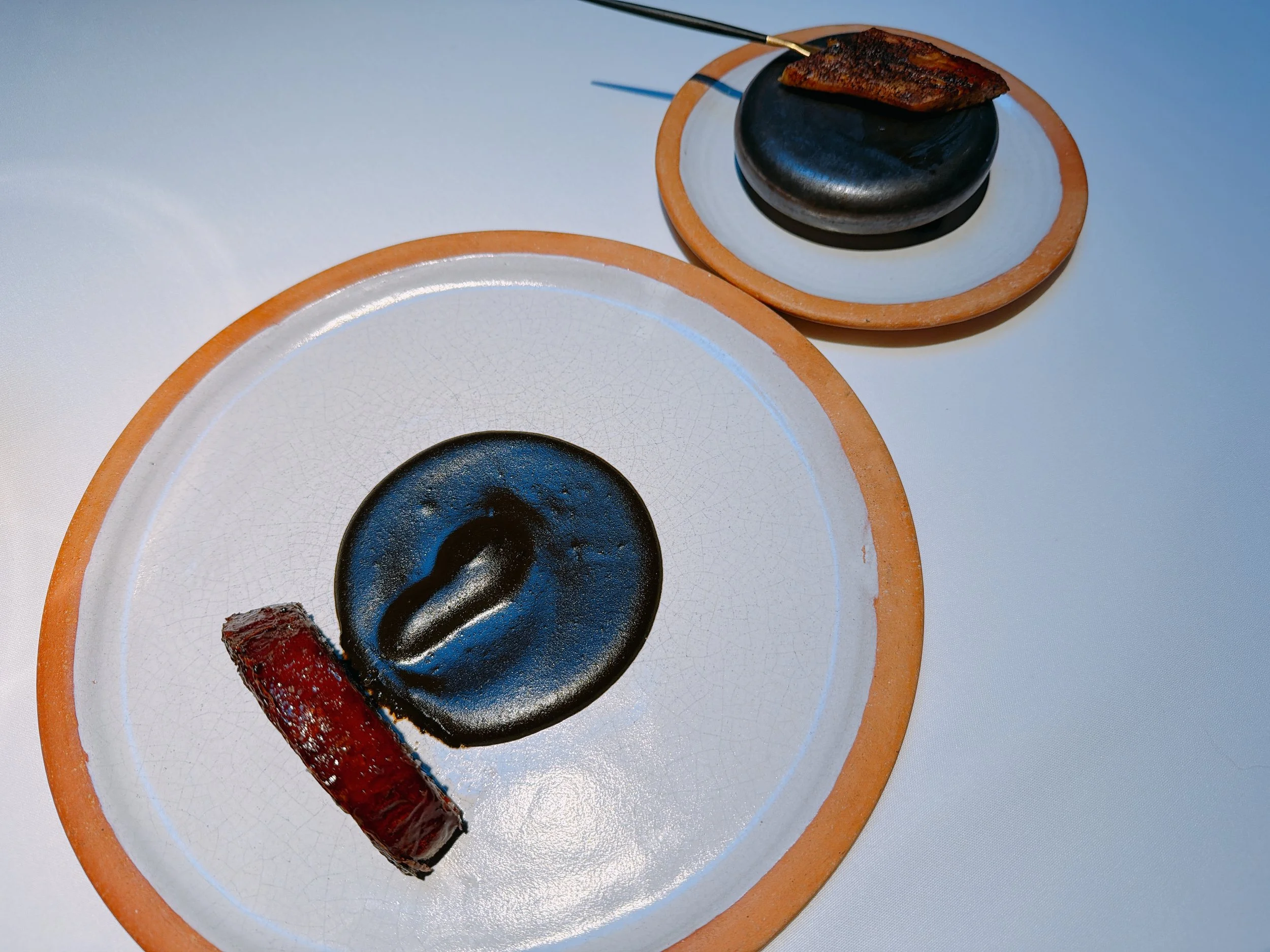
The last taco of the night celebrated the - according to our server - only BBQ style to originate in California. In that spirit, we received a Santa Maria-style barbecue of ribeye, served with pinquito beans, avocado and a blackberry/syrah/black pepper glaze, all atop a black tortilla. The meat was very tender, and the lightly acidic sauce added lots of flavor to the presentation. A rustic, but very good dish 18. The vegetarian replacement had lovely morels instead of the beef, and was equally good 18.
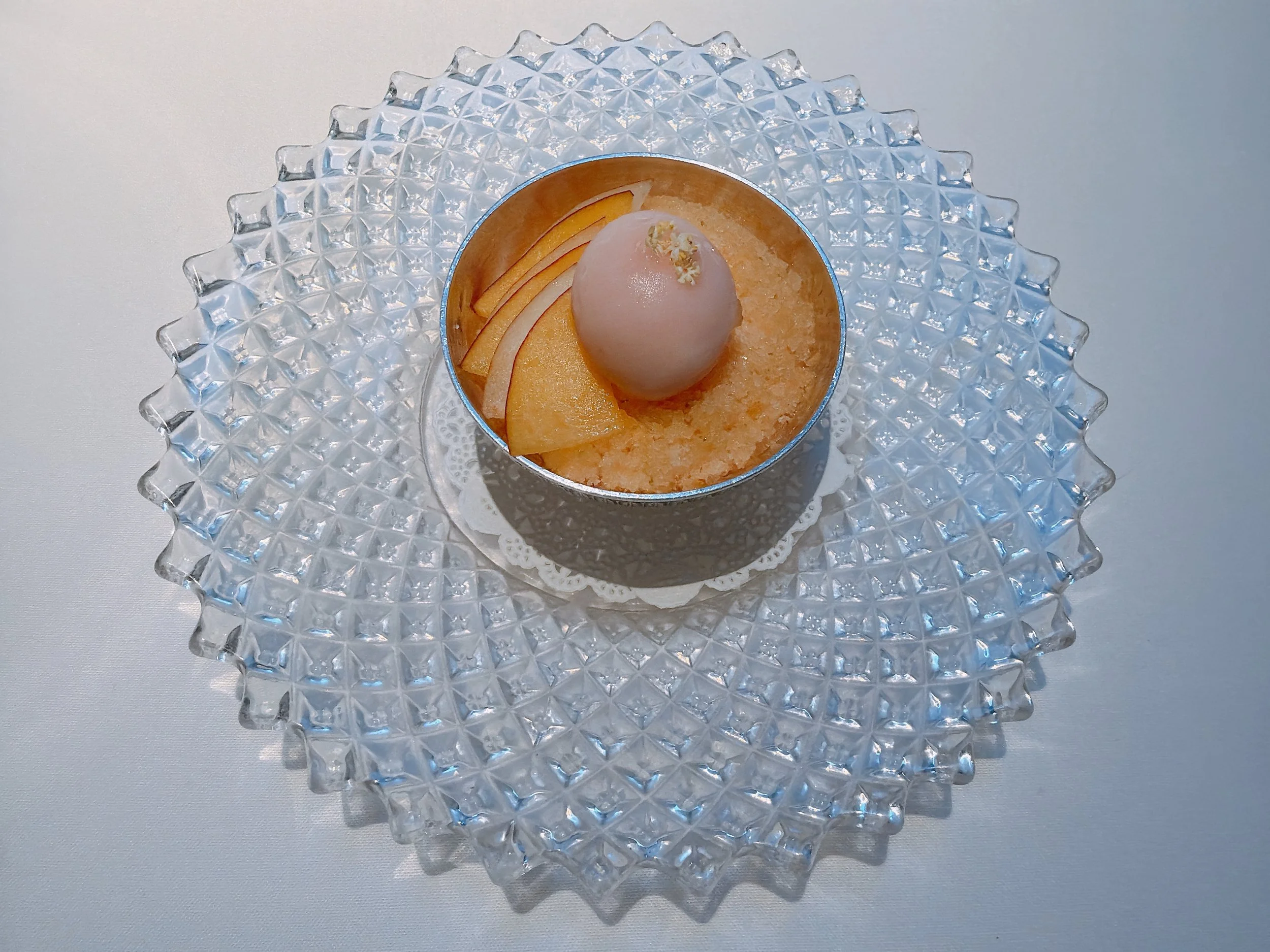
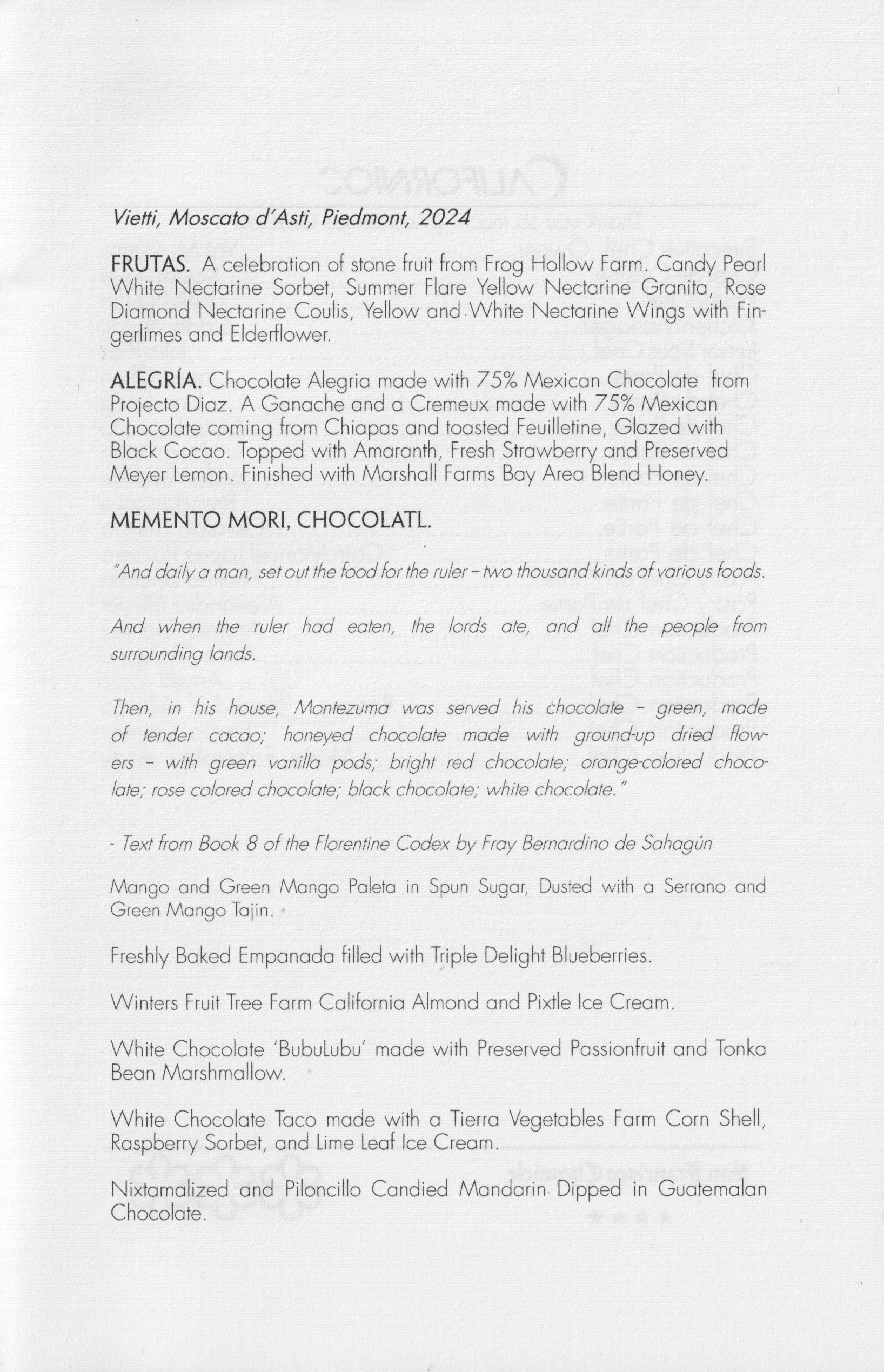
Nectarines were the base of the first dessert. Several kinds of them appeared in different preparations: sliced, as a sorbet, as a granita, and as a coulis. A fruity, light dessert, with maybe a tad too much granita 16.
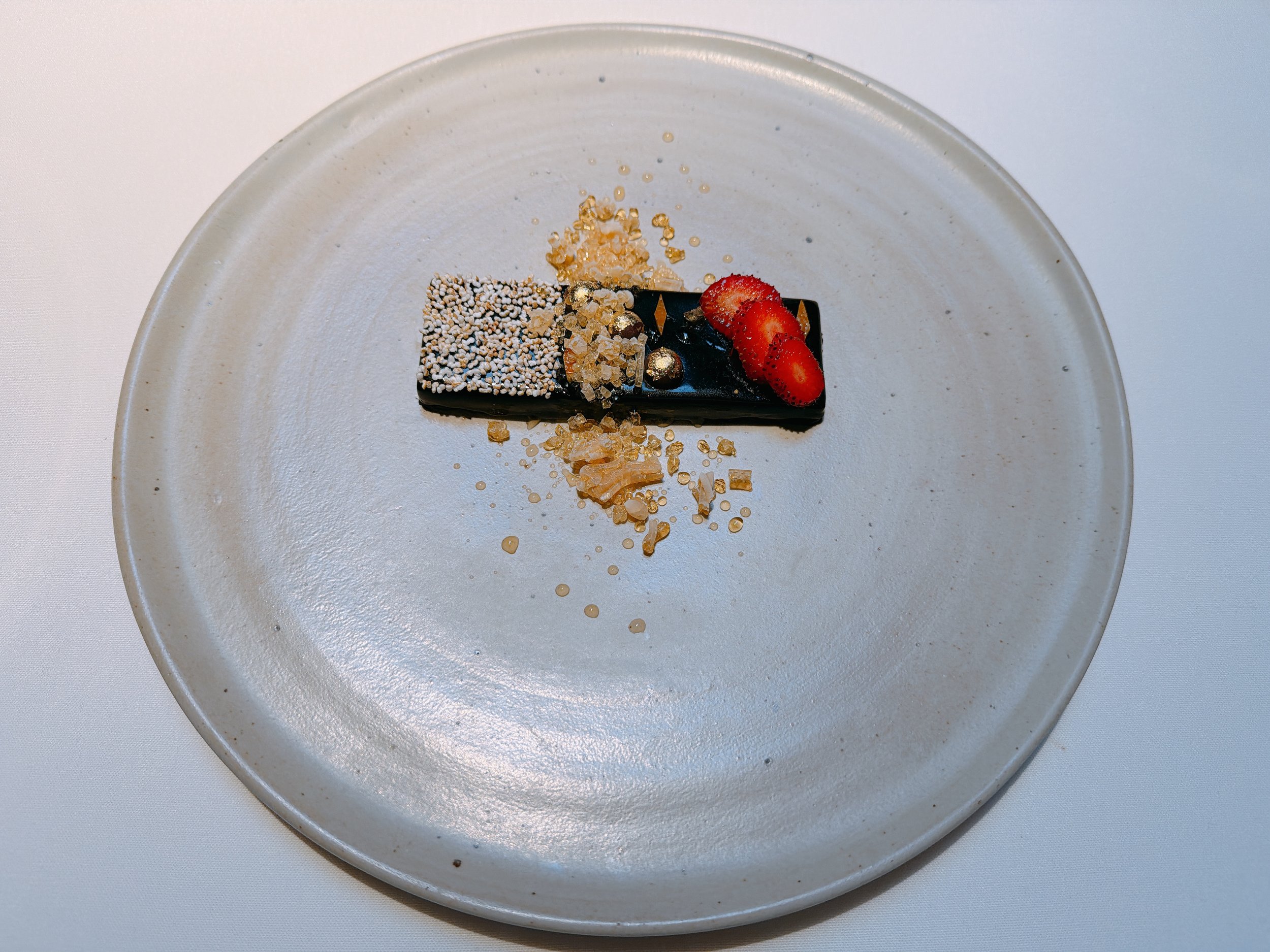
The second dessert featured a 75% Mexican chocolate, presented as a cremeux (think: mousse) covered with a ganache. It was topped by amaranth grains, crispy feuilletine balls, and fresh strawberries. Tableside, our server added some lemon-infused honey that had been frozen using liquid nitrogen (it quickly melted on the plate, changing its texture from crunchy to sticky). The chocolate base of this dessert was lovely: creamy, chocolaty, and of just about the right size to be enjoyable without becoming too heavy. The different toppings managed to make this feel more like three separate desserts - variously crunchy, fruity, and sweet (from the sticky honey) 18. (My wife was less enamored with this dish and would have rated it a 17 or lower.)
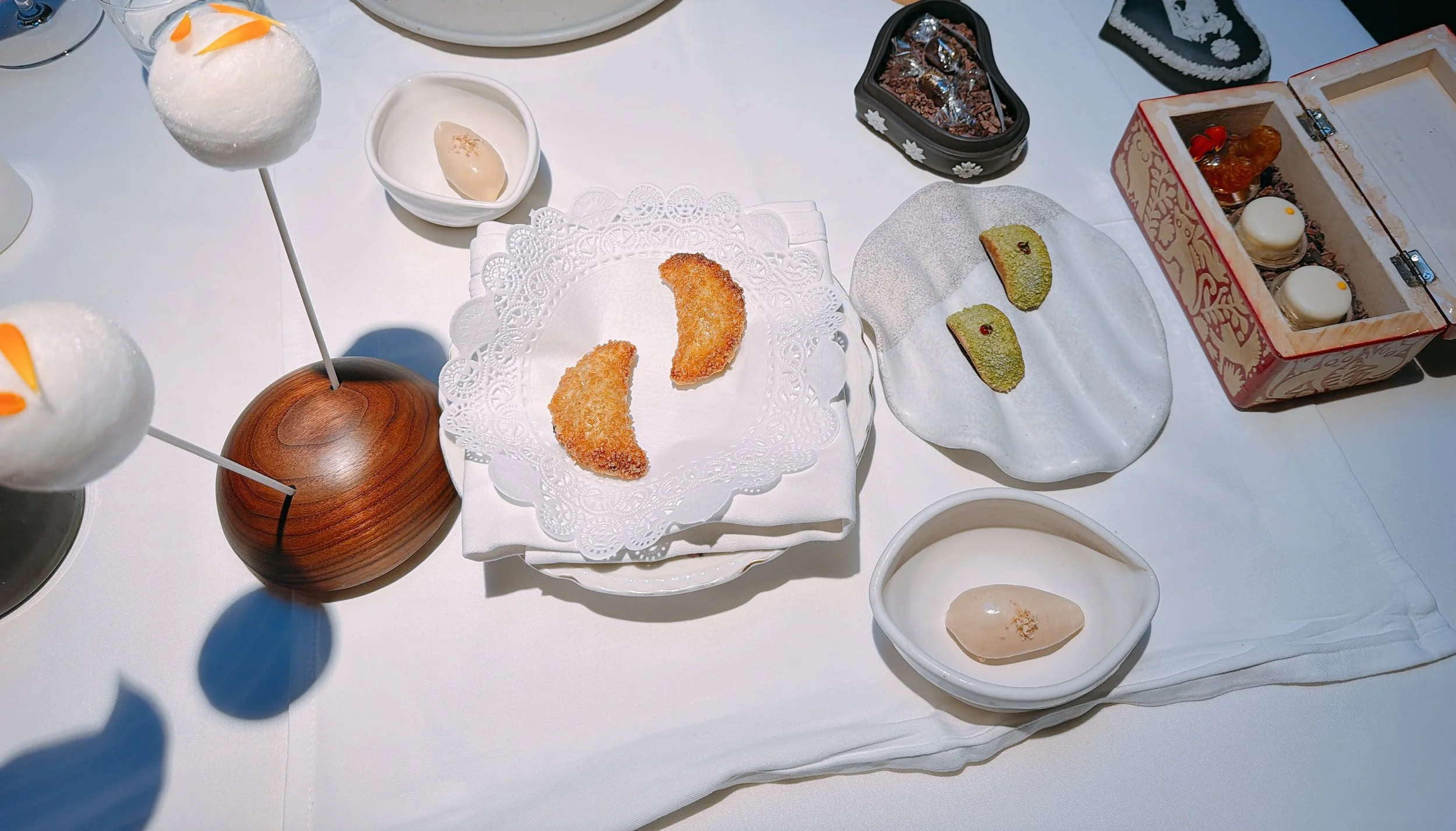
Our dinner ended after about three hours with a selection of mignardises. A marcona almond ice cream had been made with seeds of the mamay tree (called pixtle). It was quite thick in consistency, with a notable almond flour, but without the fattiness that one might see in almond butter 16. A little ball of cotton candy contained a white chocolate bonbon that was filled with mangoes and tequila blanco. This dish was really just about the frozen praline with its frozen mango filling; the spun sugar felt mostly decorative 16. Warm blueberry empanadas tasted like blueberry pie with lots of crunchy sugar on top 16. An ice cream taco was filled with white chocolate, a raspberry ice cream, and a lime leaf crumble. This dish felt a bit unbalanced; it tasted too much of citrus, and ended up very lime leaf flavored 14. A while chocolate praline filled with tonka beans and passion fruit had a nice jelly filling, but was otherwise unremarkable 15. A dehydrated mandarin slice dipped in chocolate tasted almost of nothing 12. Finally, a wrapped chocolate caramel bonbon. This was an example of a quite nice caramel - its only downside was that it was so tiny 16.
Overall: An enjoyable dinner of elevated Mexican cuisine. Even though staples like corn and tortillas appeared frequently, the menu did a good job of not feeling too repetitive - a welcome change from our previous dinner here. Apart from one vegetarian replacement dish, there were also no misses. The dishes stayed at least at a solid two-star level, and some even pushed into three-star territory. The service was fine, but some of the dish descriptions felt a bit rote and were recited too fast to follow (thankfully, the printed menu was very detailed). While not among the strongest three star restaurants, it was definitely the best Mexican fine dining experience that I've ever had, and as such, definitely worth a visit 17.