Isshisoden Nakamura - Kyoto
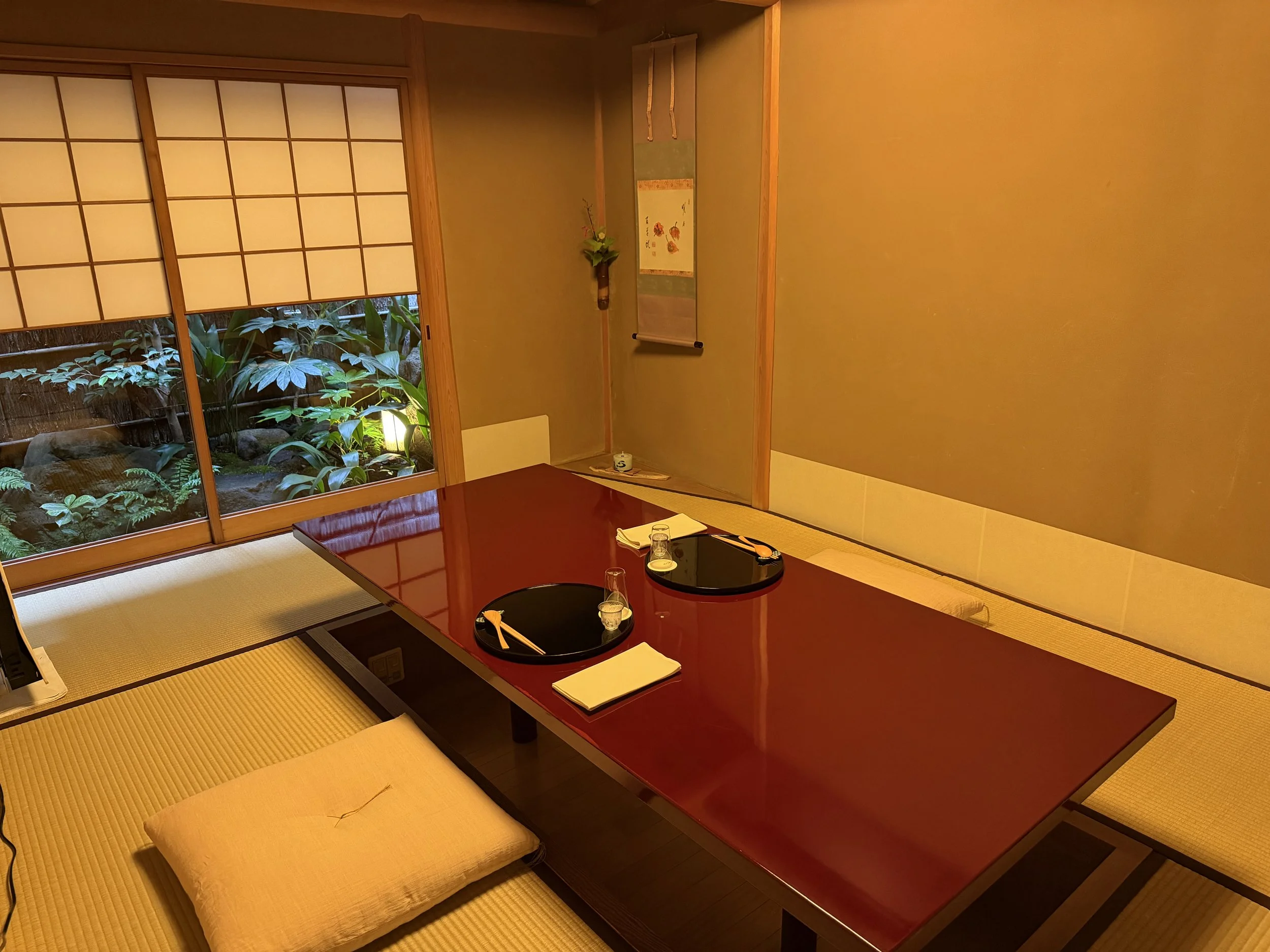
Private room with a view - of a little Japanese garden in this case
Rating: 15/20
Where: Kyoto, Japan
When: Dinner for 2 on 16 June 2026
Cost per Person: Tasting menu 33000-44000 JPY ($205-$275)
Accolades: 3 Michelin Stars
Why: Kaiseki-inspired cuisine with some delicious signature dishes
Kyoto’s restaurant “Isshisoden Nakamura” is over 180 years old, and has been owned by the Nakamura family for six generations. What started out as a fish importer is now a Japanese restaurant that has held three Michelin stars continuously since 2011. I had visited the restaurant once before in 2019, but didn't take any notes - and after eating kaiseki cuisine for several nights in a row, all the meals blurred together in my mind. (First world problems… I know.) So on a return visit to Kyoto seven years later, I took the opportunity to finally add Isshisoden Nakamura to my list of three-star reviews.
The restaurant is located on a small side street not too far from Kyoto's city hall. The building looks unassuming from the outside, and all signs are written in Japanese. Behind the traditional sliding door is a short stone-tiled walkway, after which guests have to take off their shoes before being led to their private dining rooms. We sat in a compact tatami room, thankfully featuring a recessed floor under the table. There were no backrests for our seats, but we were definitely comfortable for our 2 1/2 hour meal.
We did not catch sight of the chef during our visit, but our kimono-clad servers all spoke fair English, and announced all major ingredients of each dish. The timing of the courses was generally very good - I don't know how they always seemed to know when we were done with a dish -, except at one time towards the end of our meal, when there was first a longish wait, and then three courses appeared almost at the same time to end up on our table together.
There was no beverage pairing, but there were a handful of sakes available by the carafe, in addition to sochu, beers, and non-alcoholic drinks. Tea was free. At the suggestion of our server I tried two different sakes that were of decent but not amazing quality. At 2000-3000 JPY (about $12-$19) per 180 ml carafe, they were definitely not a bad choice, though.
There were two tasting menu options, priced at 33000 and 44000 JPY ($205 and $275) respectively, but these prices were set to change to 44000 and 66000 JPY ($275 and $410) in a couple weeks. Taxes and service charges amounting to 15% were added to the bill automatically. As is pretty customary at these kind of restaurants, there was no prior indication of what the difference between the two menus might be - the assumption is that the additional money goes towards more premium ingredients, and maybe the odd additional course. We went with the pricier 44000 JPY menu just to give the restaurant a better chance to shine.
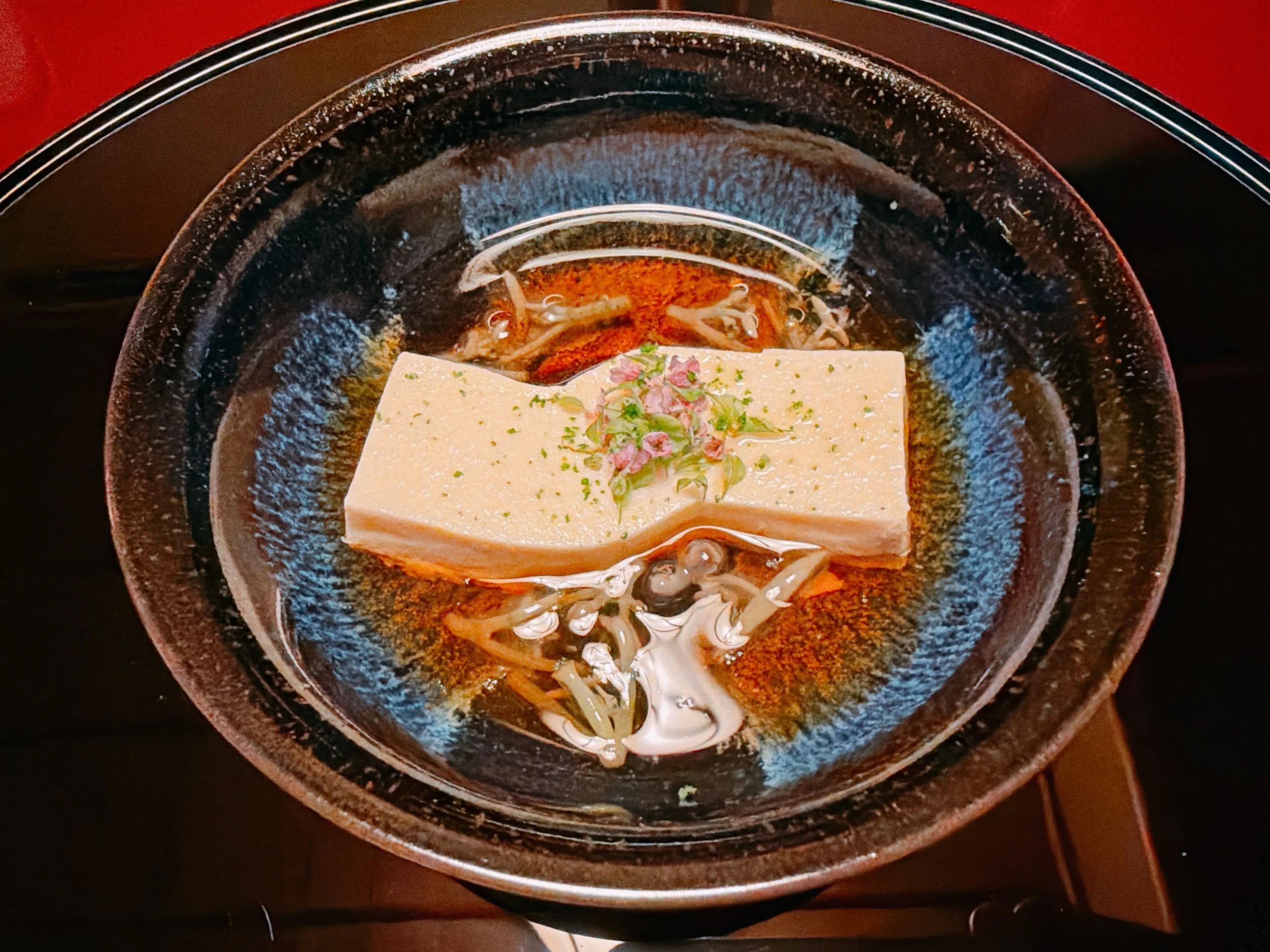
Our first dish of the night was a “river tofu”, named thus because it was cut into a wavy shape that consisted of many individual thin strips - resembling waves or water streams. The tofu was classically made from soy milk and was topped with shiso flowers and yuzu peel. It sat in a dashi sauce along with some watershield plants (junsai) from Hiroshima. This was a refreshingly straightforward dish, very light and with clean flavors. The tofu was creamy, the shiso flowers added just hint of spice, the watershield plant provided a light crunch, and the dashi was just the right level of flavorful. Not overly complicated, but very well executed 17.
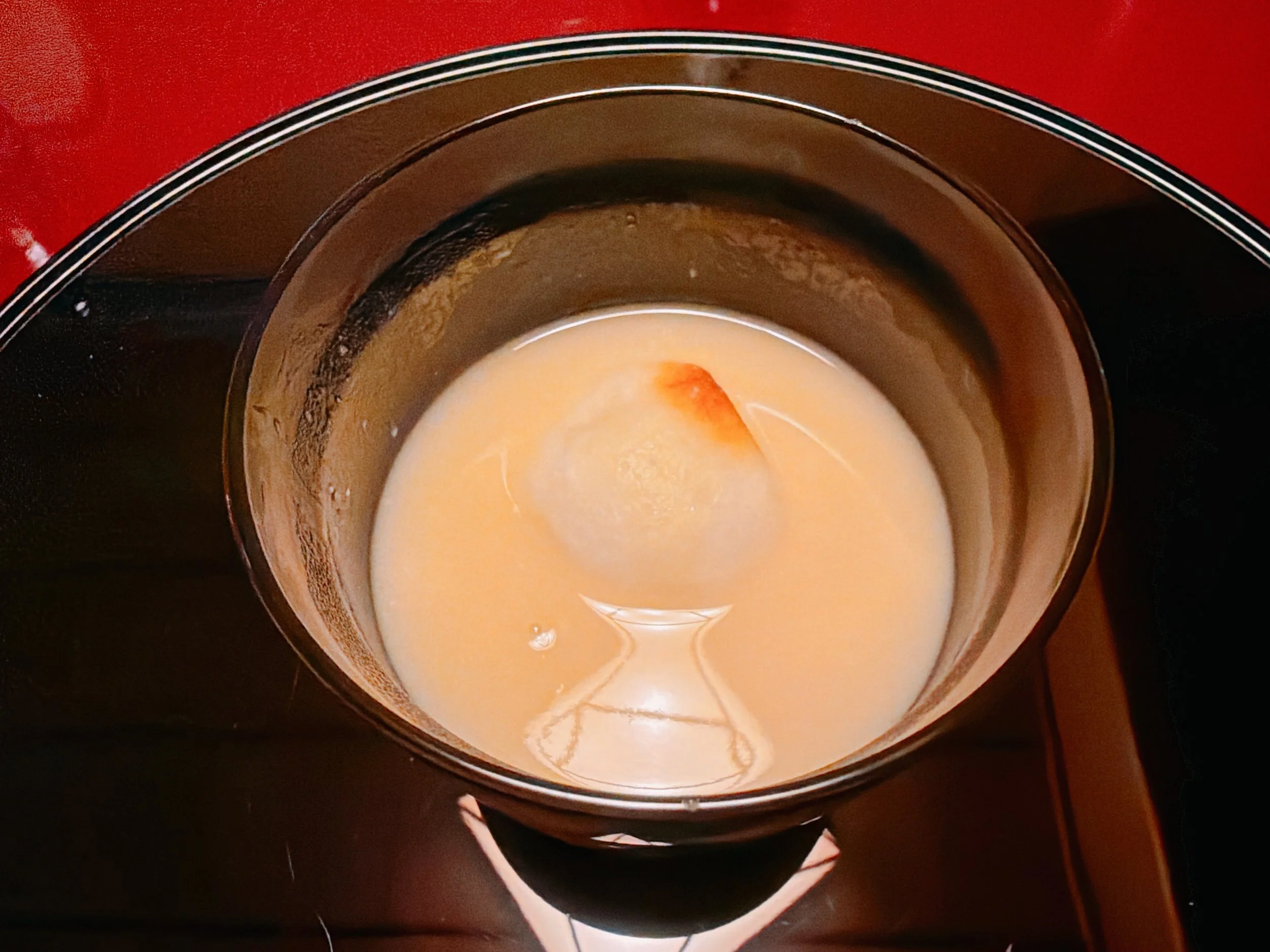
Next came the first of two signature dishes of the restaurant: a white miso soup containing a mochi ball. The soup was amazing - it was bursting with flavors: miso combined with a strong mustard taste. But even though these flavors were quite strong, they blended together perfectly into a cohesive whole (18 if rated by itself). However, there was also the mochi ball or “rice cake” as our servers called it. It was literally flavorless when eaten by itself, and unfortunately didn't do a particularly good job at soaking up the soup, either. Sadly, it was also pretty large (12 for the mochi). I get that miso soup and mochi are a traditional combination, but still would have been far happier with more soup and less mochi 16.
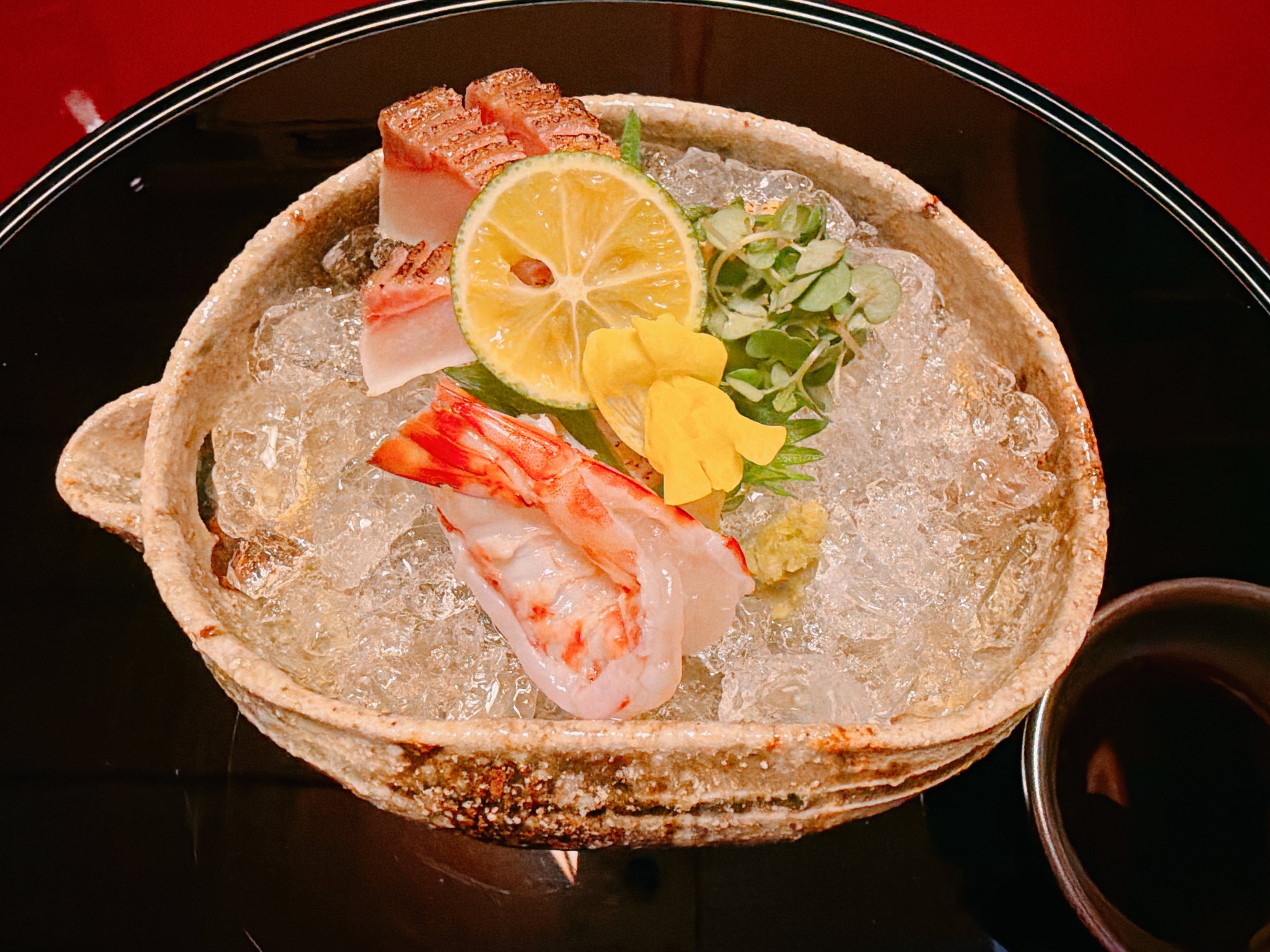
Two sashimi courses followed. The first one featured kuruma ebi (Japanese tiger prawn) and three slices of shima aji. The shrimp was meant to be eaten with soy sauce and wasabi. It had a good consistency, but it was totally overpowered by the very strong wasabi. Well I suppose it was my fault for adding all of the wasabi in one go... The shima aji was meant to be seasoned with sudachi juice and (optionally) some soy sauce. The fish seemed to have an aged texture. Not bad, but not my favorite in that regard 15.
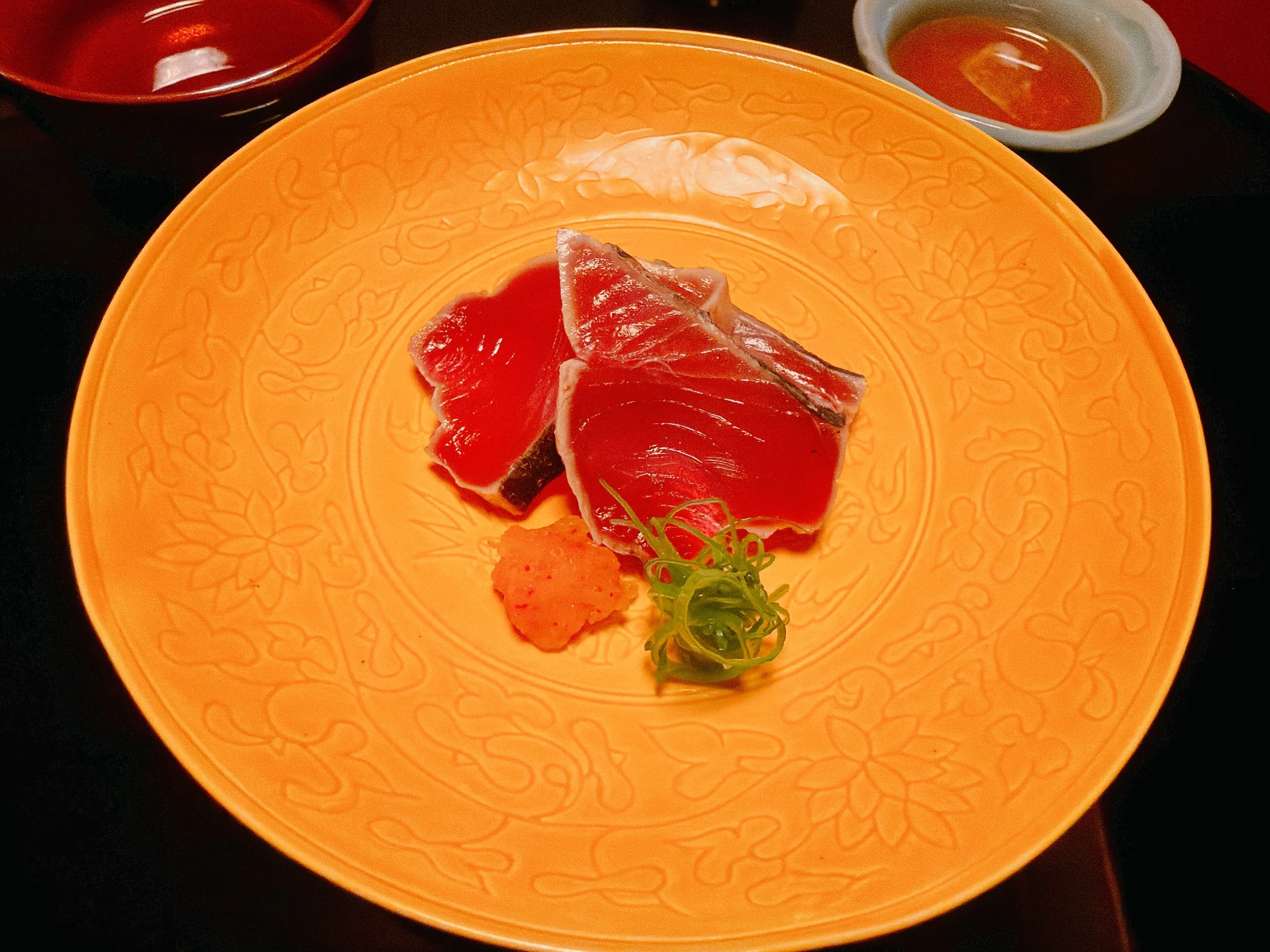
The second round of sashimi contained just a single fish: bonito. It came with spiced radish, green onions, a ponzu sauce, and an egg sauce. The bonito was merely so-so - neither a particularly good cut, nor notably flavorful. It became better after adding all the condiments, but still remained less compelling than the preceding sashimi course 14.
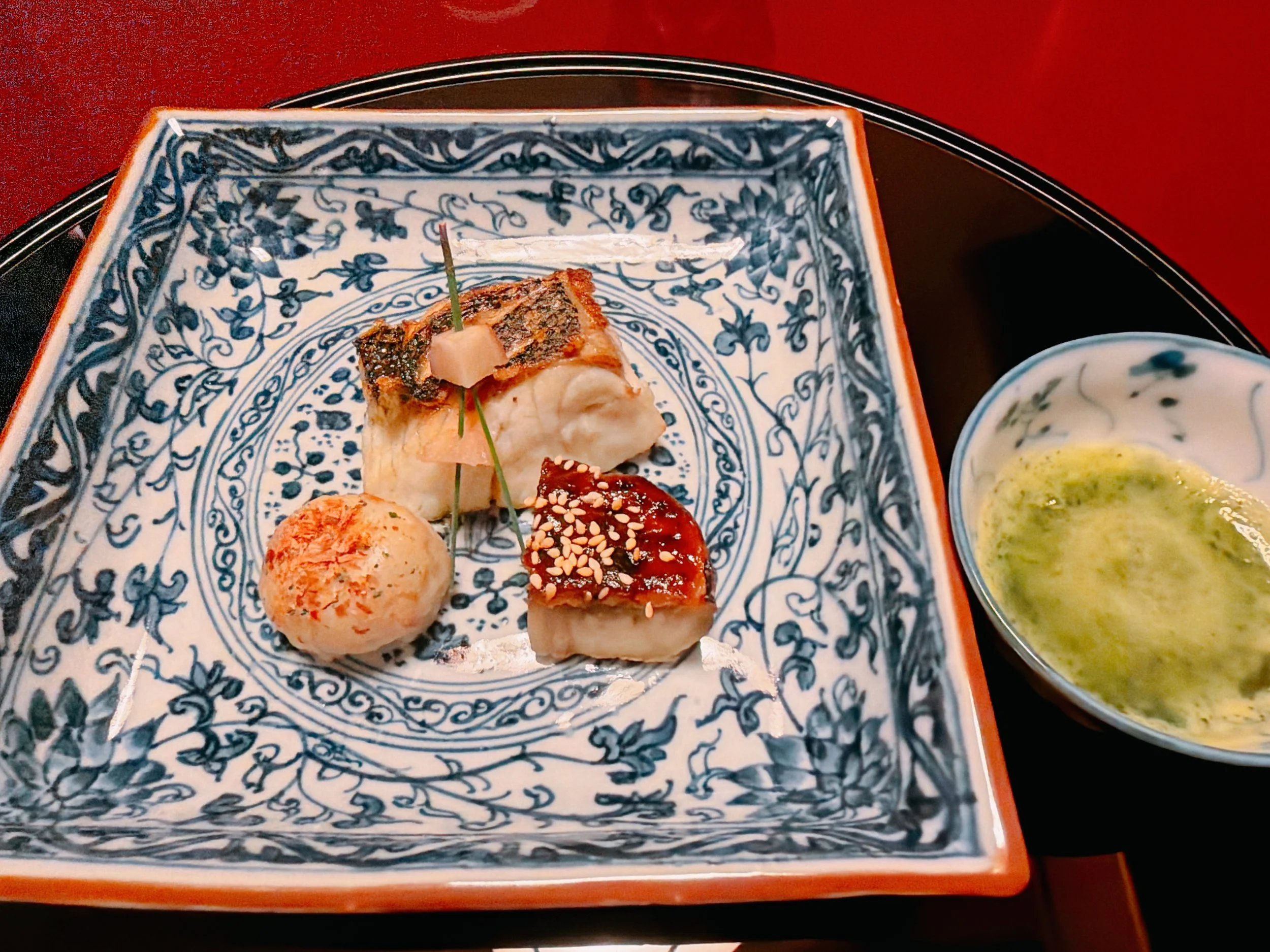
Some grilled fish came next. A filet of sea bass was paired with a dipping sauce made from vinegar and Japanese mint. Next to it sat a little Japanese potato seasoned with katsuobushi, as well as a piece of eggplant seasoned with miso and sesame seeds. The sea bass was cooked fine, but it had little flavor. Unfortunately, the dipping sauce didn't help much in that regard, either (13). The potato was noticeably cooler that the rest of the dish, and was an ok, not great, example of its ilk (13). The best part of the dish was the eggplant - cooked well, it had a notable light miso flavor (15). Averaging generously 14.
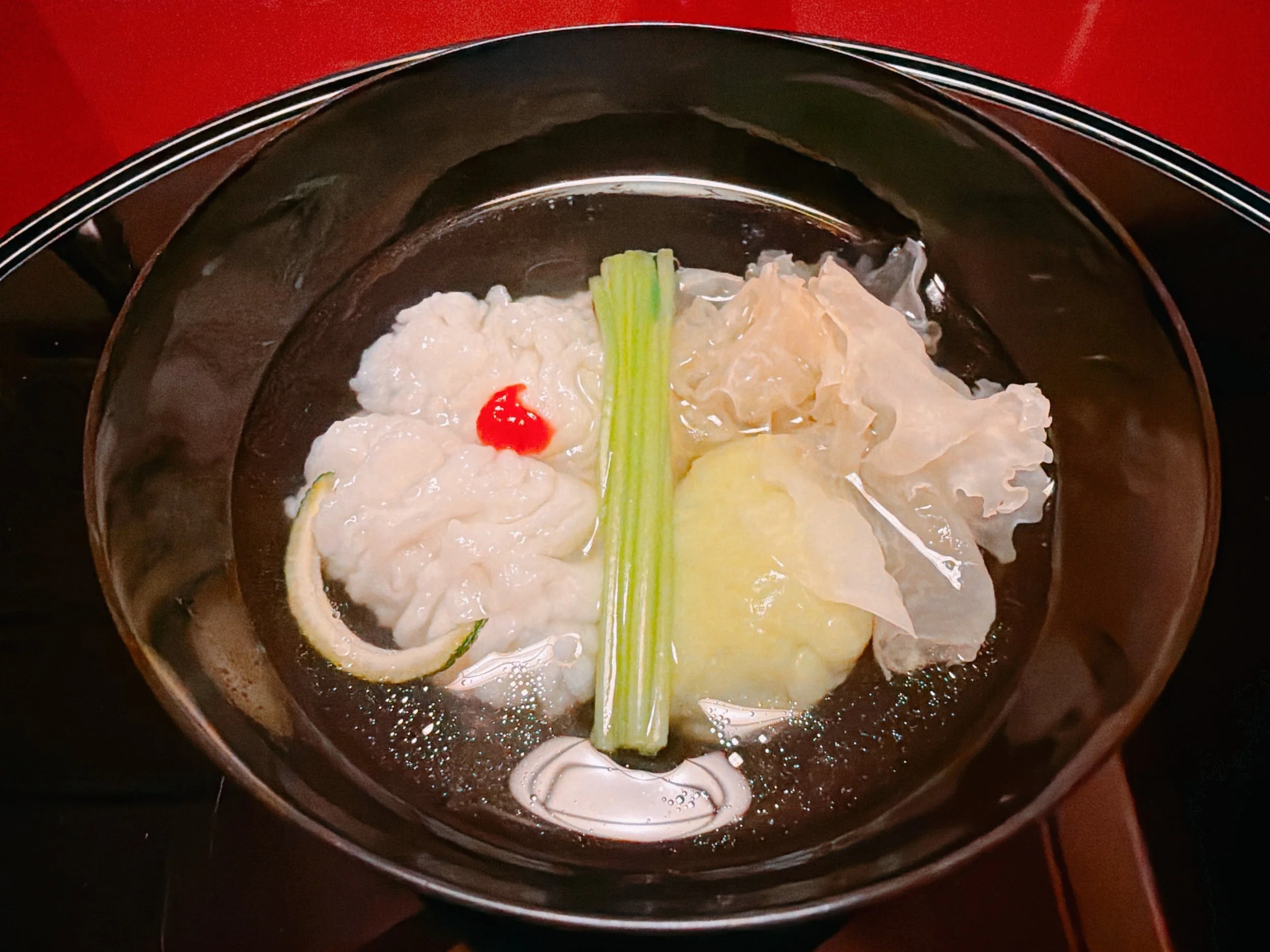
Any kaiseki meal has to feature a clear soup. In this case it was introduced (unilluminatingly) by our server as a “Japanese soup”, and contained conger eel topped with a plum sauce, a green pea tofu, some fungus, and a (so-described) “Japanese vegetable”. After approaching this dish with the expectation of light flavors, it actually turned out to be pretty good. The broth was lovely with a slight citrus note. The conger eel soaked up the broth, and therefore ended up with the same flavors. The tofu had a light pea note. Nicely done 16.
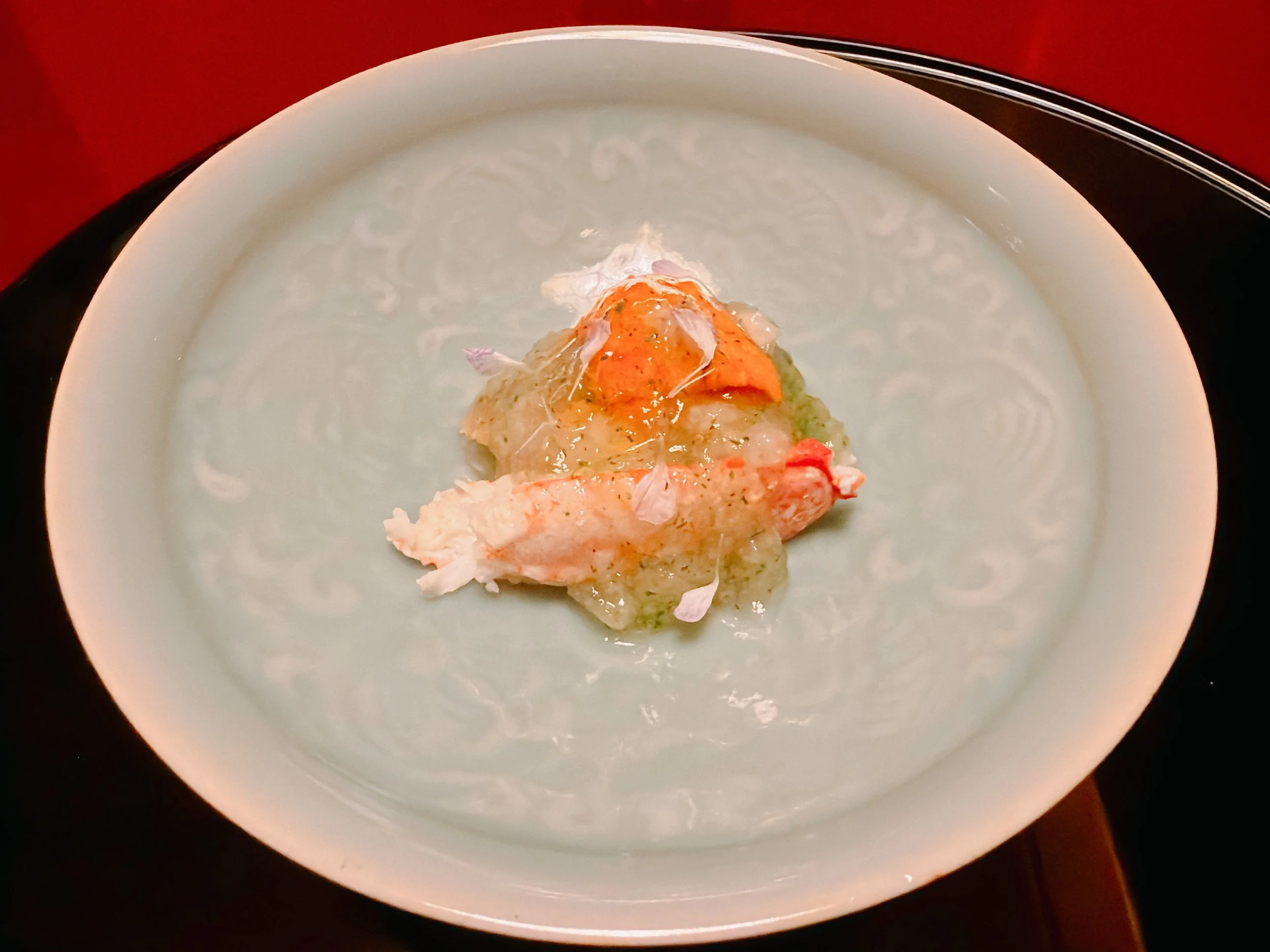
A crab, a sea urchin (uni), and a clam walk into a vinegar jelly... Not the setup for a joke, but the description of the following course (except for the walking part). The jelly in question was seasoned with radishes, ginger, and sudachi peel. Edible radish flowers topped the dish. But even with all of these ingredients, the sauce was pretty light - most of the flavor came from the seafood. The crab was fresh and sweet, the uni a bit sweet and of great quality, only the clam was a bit of a letdown. Not only was it less exciting from a flavor perspective, but it was also a bit chewy 16.
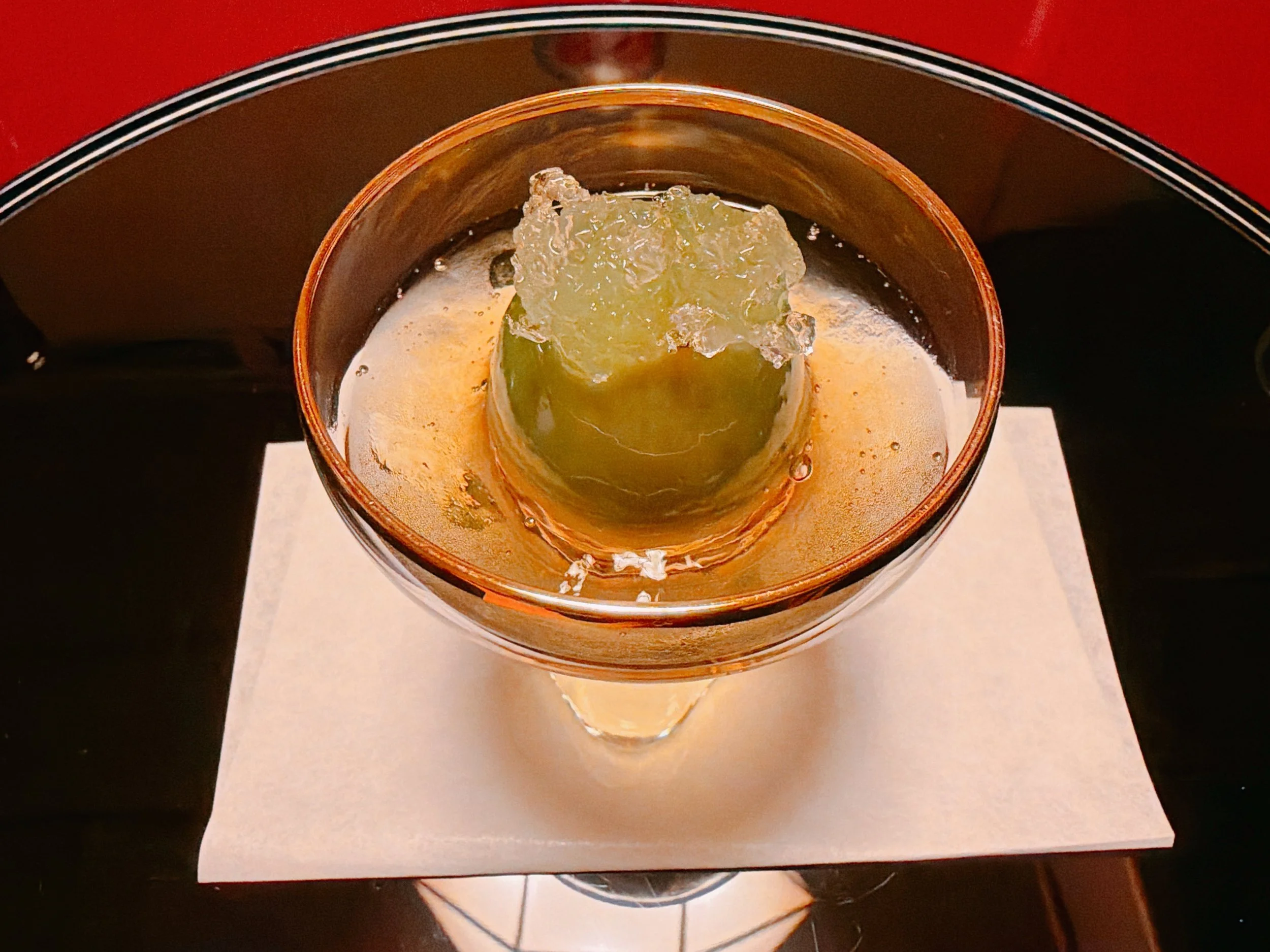
An ume plum was served in a sweet jelly with some crushed ice on top. This was nice enough, but surprisingly sweet for a palate cleanser between savory dishes 15.
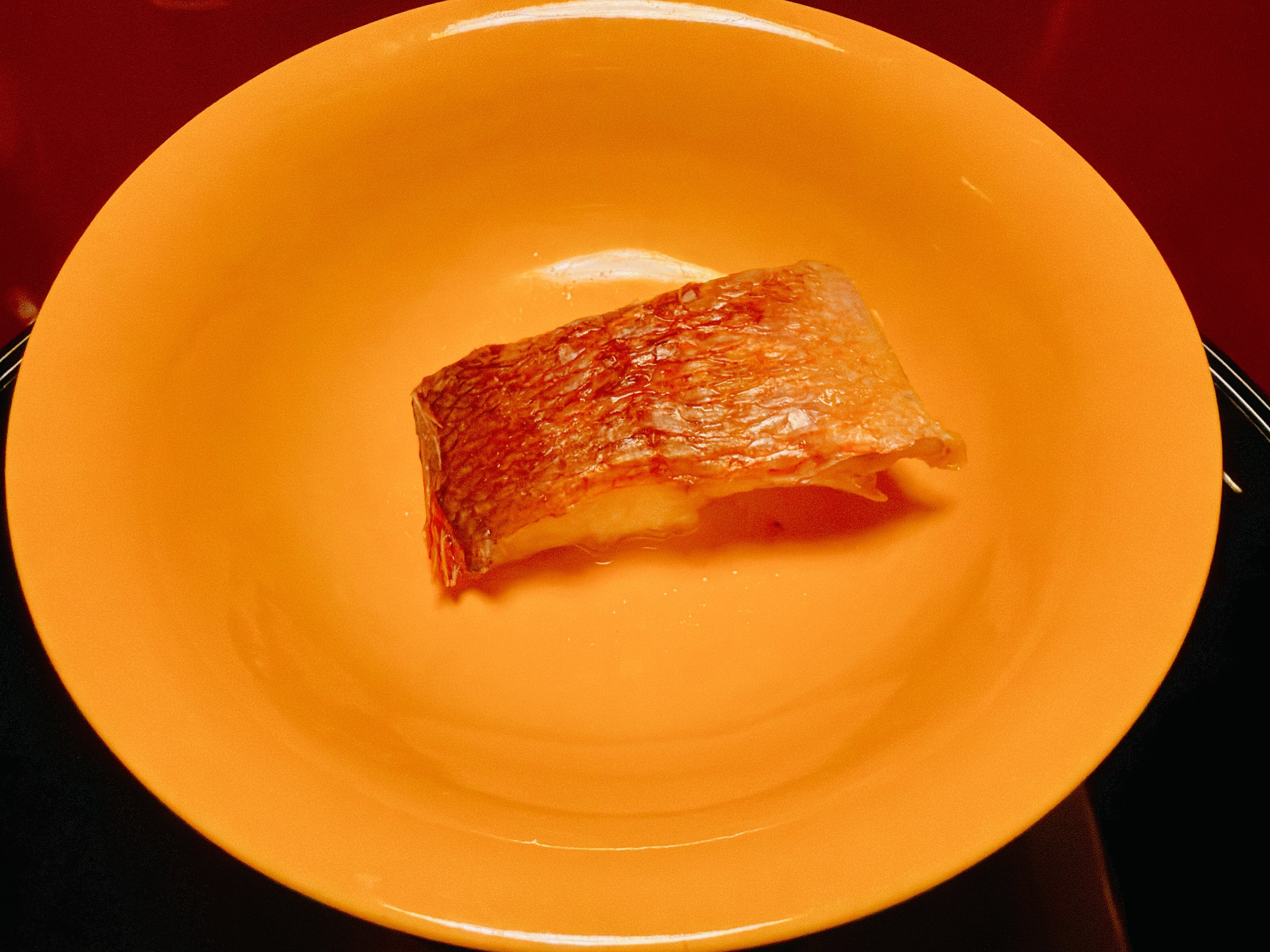
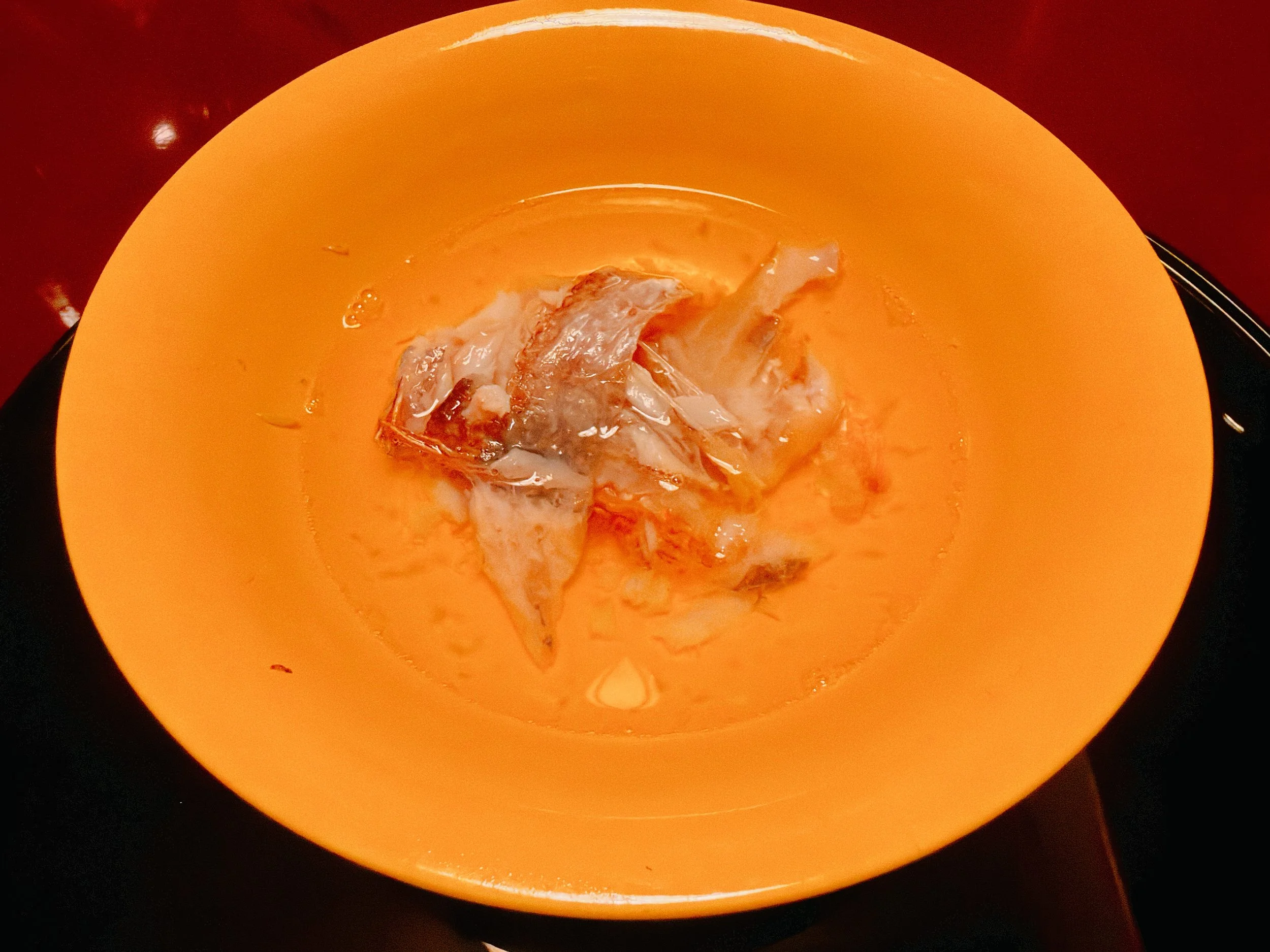
The restaurant's second signature dish started out as a grilled filet of amadai. The fish had been nicely seasoned and was quite flavorful. We were instructed to eat most of its meat, but leave the skin and the bones behind. (There were a lot of bones, unfortunately.) Once we were done, a kelp dashi broth was added, and the flavors of the fish leftovers soon permeated the broth. The resulting soup was a bit oily, but also nicely smoky - it felt as if someone had dipped toasted bread into the soup. An impressive dish, coaxing lots of complexity out of just a couple ingredients 17.
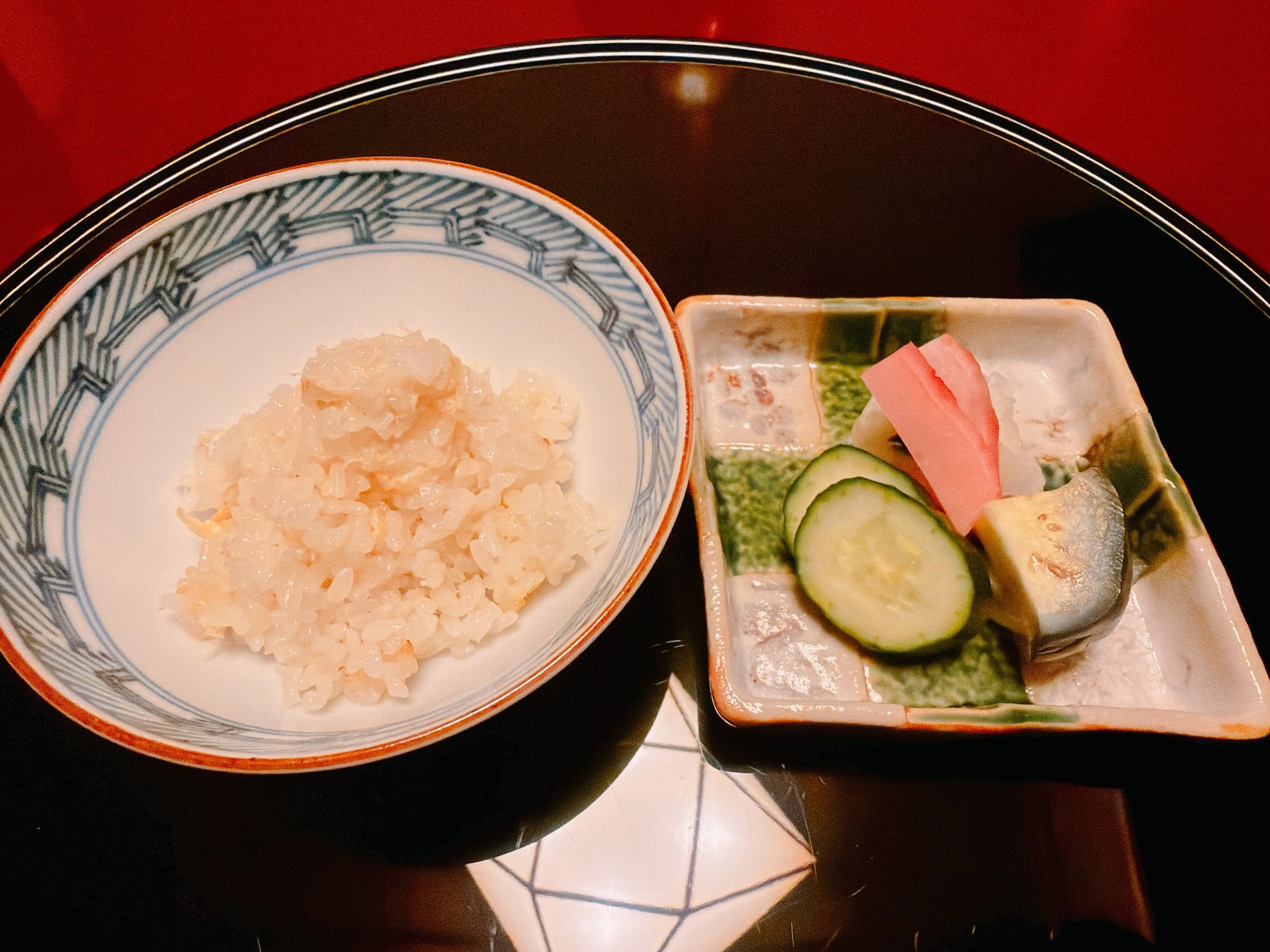
While we were still eating the amadai soup, two more courses arrived in short order. The first one was the rice course that generally concludes a kaiseki meal. Ginger rice came with Japanese pickles (cucumber, eggplant, radish, red ginger) and a cup of hojicha tea. The rice really needed to be eaten with the pickles, since it hardly tasted of anything by itself. Thankfully, the pickles were quite good - the eggplant was tender and not too acidic, the cucumbers fine, and the red ginger very intense 14.
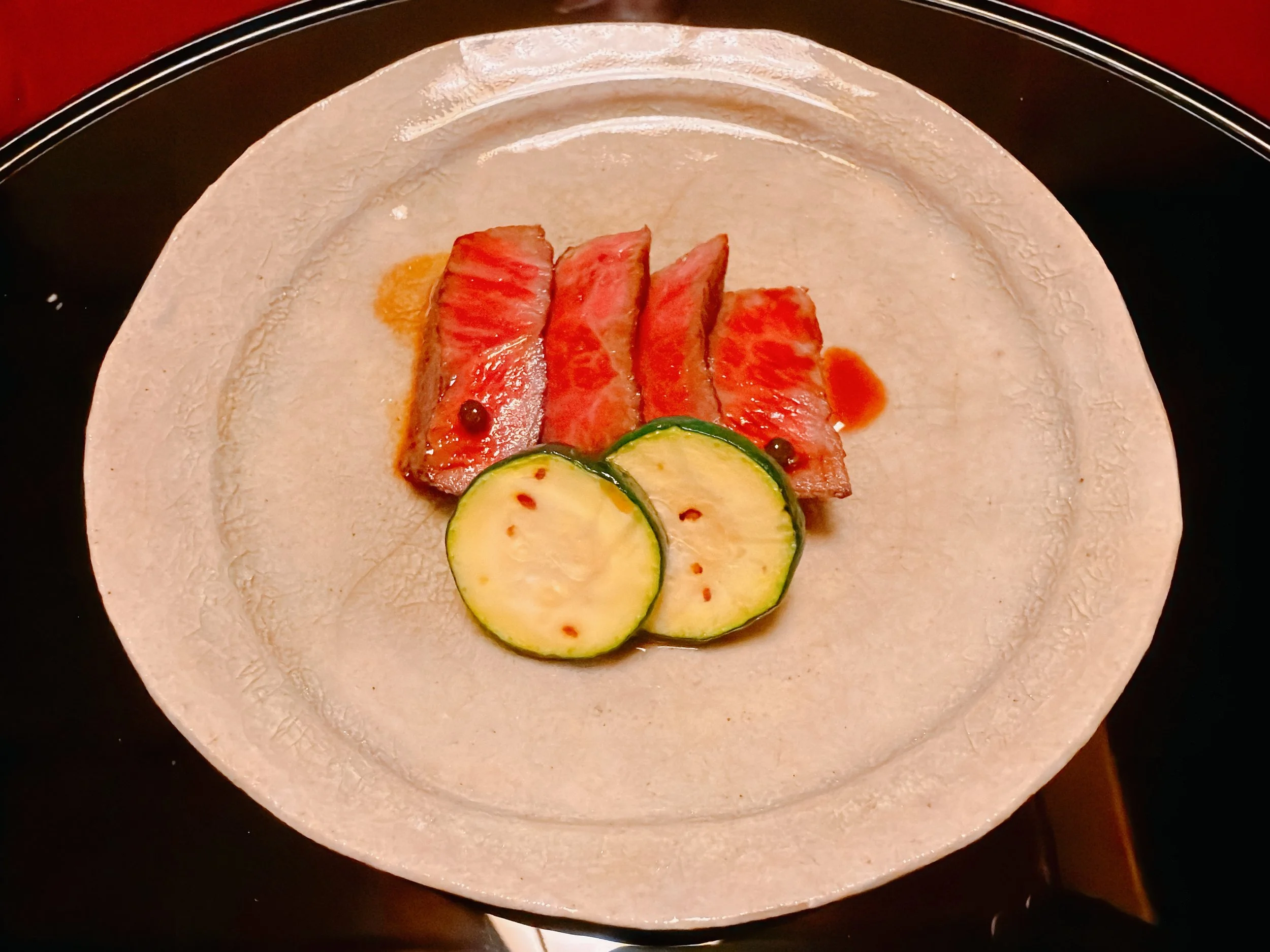
As we were starting on the rice, more food appeared. A sliced filet of Mikumano beef came with some grilled zucchini. The beef was much less tender than I would have expected from high-quality Japanese beef - it was actually notably chewy. Maybe cooking it a smidgen longer would helped? Or maybe simply a better cut? The sauce that came with the beef was quite good, though. The zucchini - served at room-temperature - didn't taste of much, unfortunately 14.
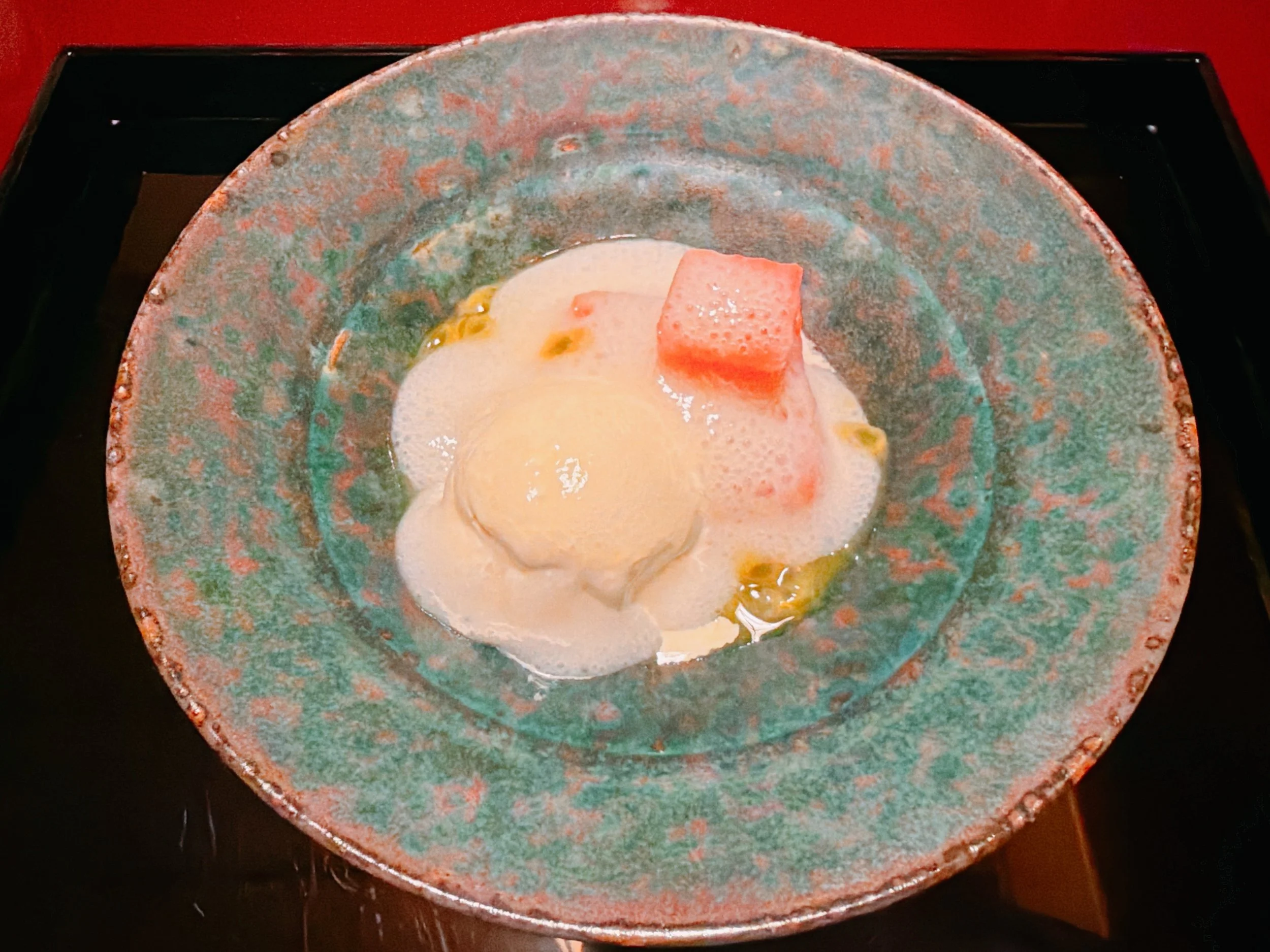
The one and only dessert of the night consisted of ice cream, watermelon cubes, an espuma, and a passion fruit sauce. It's rare there days to see ice cream that is not seasoned with any flavors. But the passion fruit sauce helped with that: it added acidity and fruitiness to the dish. Had there been more of the sauce, the dish would have been even more compelling 14.
Overall: This was a good kaiseki-style meal with a couple of outstanding dishes. The old-school private dining room allowed for a relaxed atmosphere. While this was not a bad meal by any means, its three-star rating felt a bit puzzling. There was not a single dish solidly at that level, and a fair number would have struggled to justify even a single star. At this price point, there are more compelling options in Kyoto 15.