L.A. Jordan - Deidesheim
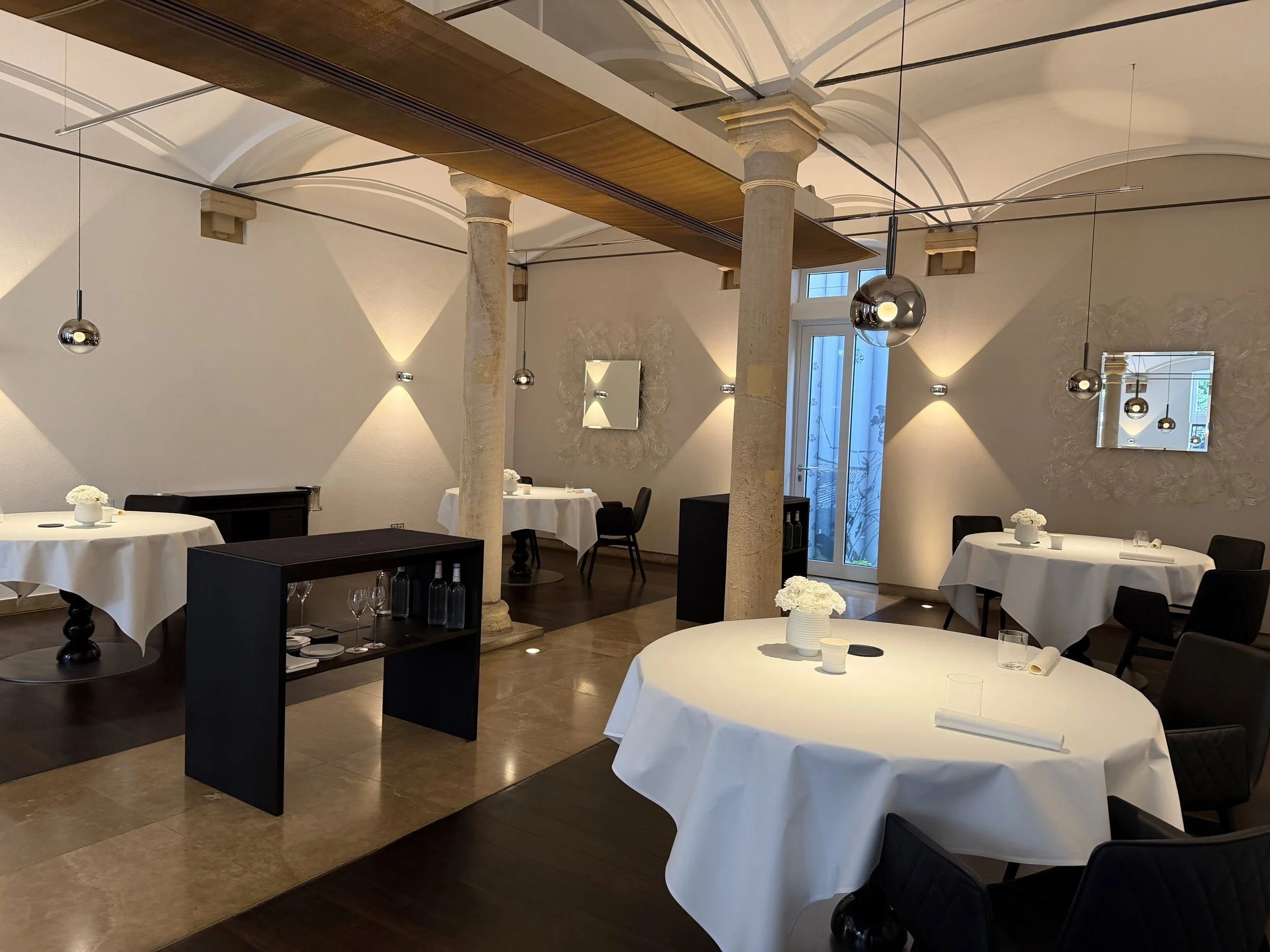
Dining room with slightly out-of-place columns
Rating: 18/20
Where: Deidesheim, Germany
When: Dinner for 2 on 18 July 2026
Cost per Person: Tasting menu 325 Euro ($370), Wine pairing 185 Euro ($210)
Accolades: 3 Michelin Stars
Why: Flavor-intense, seafood-heavy cuisine with many Japanese ingredients
The Pfalz is one of Germany's main wine regions, and amidst the countless vineyards lies the “Weinstraße”. Literally translating to “wine route”, it is a north-to-south road that passes through many wineries and picturesque (and seemingly well-off) small villages. Naturally, good wine invites good food, and the region offers both rustic and fine-dining restaurants for any budget. Centrally located on the Weinstraße is the town of Deidesheim, home to about 3700 inhabitants. From a culinary perspective, it was best known in the 1980s and 1990s as the place where German chancellor Helmut Kohl took foreign dignitaries, and treated them to the local specialty of “Saumagen”, essentially a pig's stomach stuffed with meats and potatoes, resembling a large sausage.
While this story is about a restaurant in Deidesheim, it is not about Helmut Kohl's favorite. The restaurant “L.A. Jordan” opened much later (in 2006), and despite its name doesn't have anything to do with either Los Angeles or basketball - it shares its name with a local vintner and politician who lived here in the 1800s. The restaurant is part of a hotel complex that opened around the same time, but is housed in a separate building from the hotel itself, accessible through a large shared courtyard. Chef Daniel Schimkowitsch has worked here since 2014, following stints at various Michelin-starred restaurants, most recently at Restaurant Überfahrt in Bavaria. Michelin soon took notice, and in June 2026, the restaurant achieved the guide's ultimate honor - three stars. That was an excellent reason for me to return to the Pfalz, and to visit Deidesheim for the first time.
L.A. Jordan's interior design was mostly modern, but some columns in the middle of the dining room seemed to have wandered in from Italian wine country. The restaurant had two adjoining dining rooms with a total of about ten tables, in addition to a high table near the entrance that was meant for more casual dining. Well, at least that was the theory. On our visit, only one of the dining rooms, with a total of six tables, was in use (and it unfortunately wasn't the room that had a view into the kitchen). So there were only a total of thirteen guests on this Saturday night in mid-July. It was a bit surprising that a newly three-starred restaurant was not at capacity, especially when Opentable claimed that the next bookable date was almost three months out. It so happened that there was a simple explanation: a lack of staff. There were only two servers for the entire dining room (plus an apprentice carrying dishes to and from the kitchen), and only two full-time cooks in the kitchen (including chef Schimkowitsch), again plus an apprentice. No wonder then that the chef had little time to chat with guests in the dining room. Running a three star restaurant with such a small staff must be setting some kind of unintentional record. I'm mentioning this mostly for context - producing the meal that we ended up having with such a handicap seemed nothing short of miraculous. And the service was so attentive and professional that we didn't even notice that they were short-handed until I inquired about the empty tables.
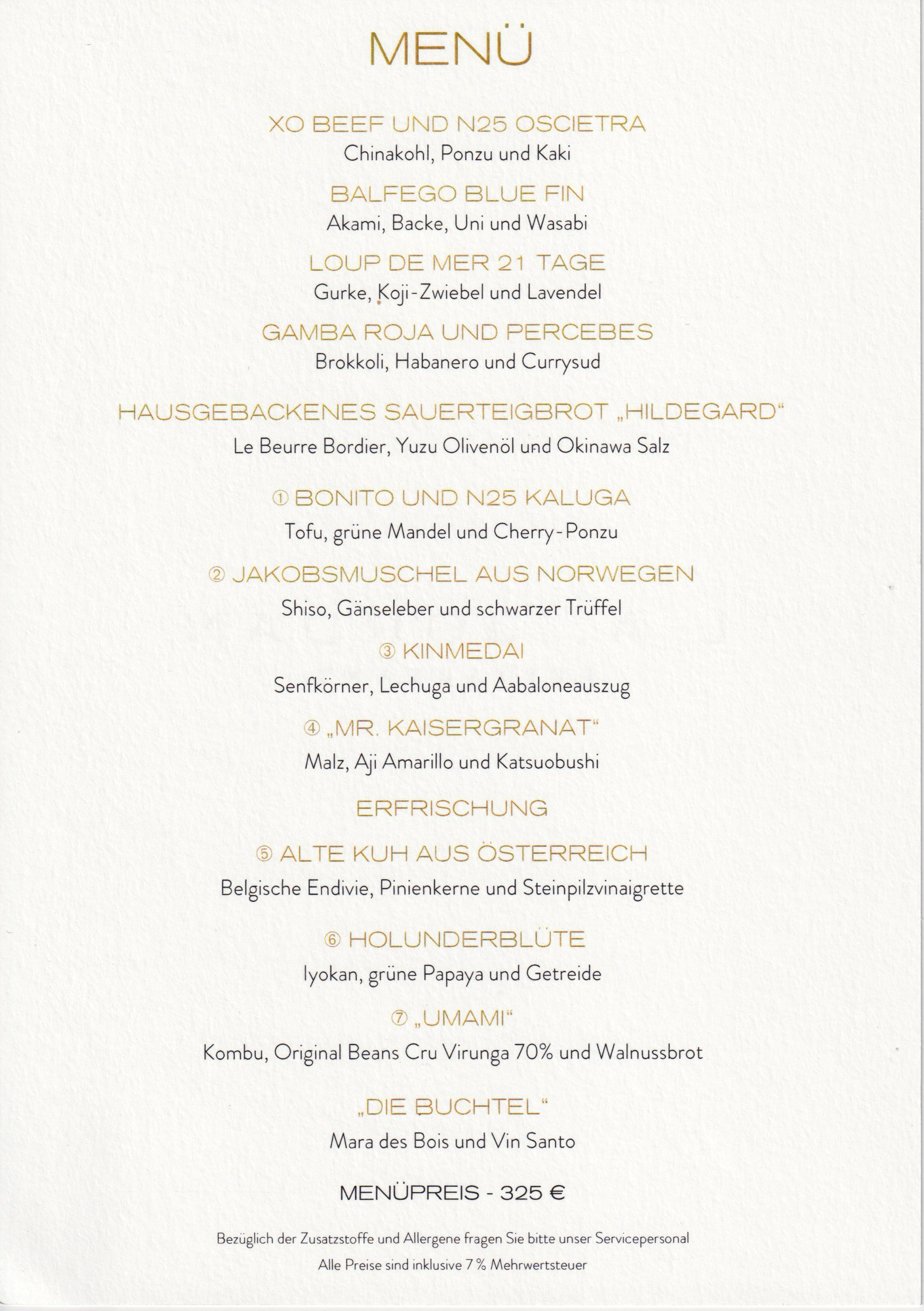
On our visit, the restaurant served a single tasting menu consisting of seven main courses. According to the restaurant's website, this menu could be abbreviated to five or six courses, but we went with the full set. A wine pairing was available as well, consisting of only local wines if desired (185 Euro, about $210). I went for the regular, non-local version, and all the wines were quite enjoyable - both with and without the food. Given the seafood focus of the meal, a bottle of good white wine (of which the local wine region has plenty) would probably carry one through most of the meal as well. There were a fair number of amuse bouches before the wine pairing started, though, so we were happy to have ordered an aperitif (a house sparkling wine for 22 Euro / $25).
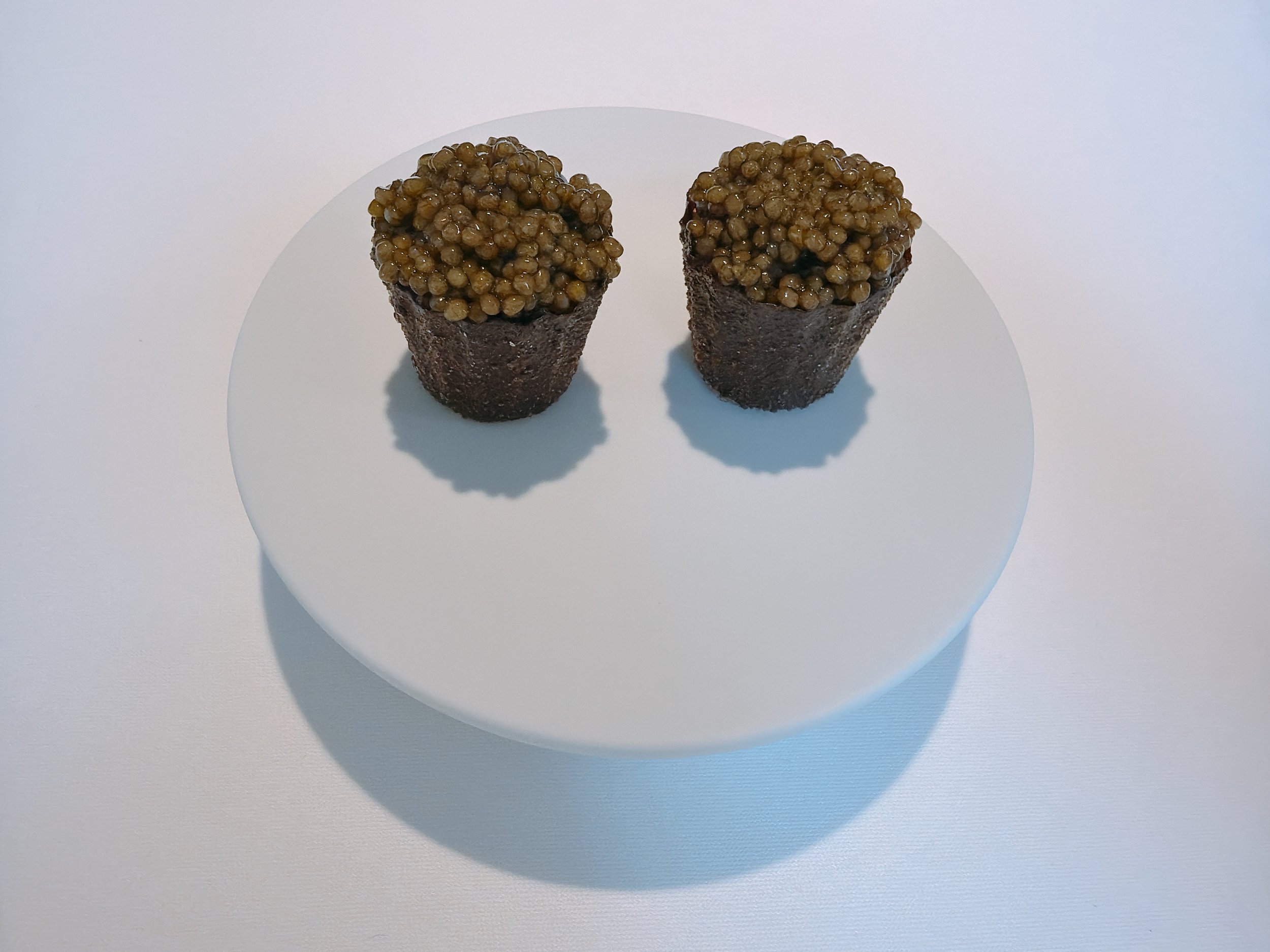
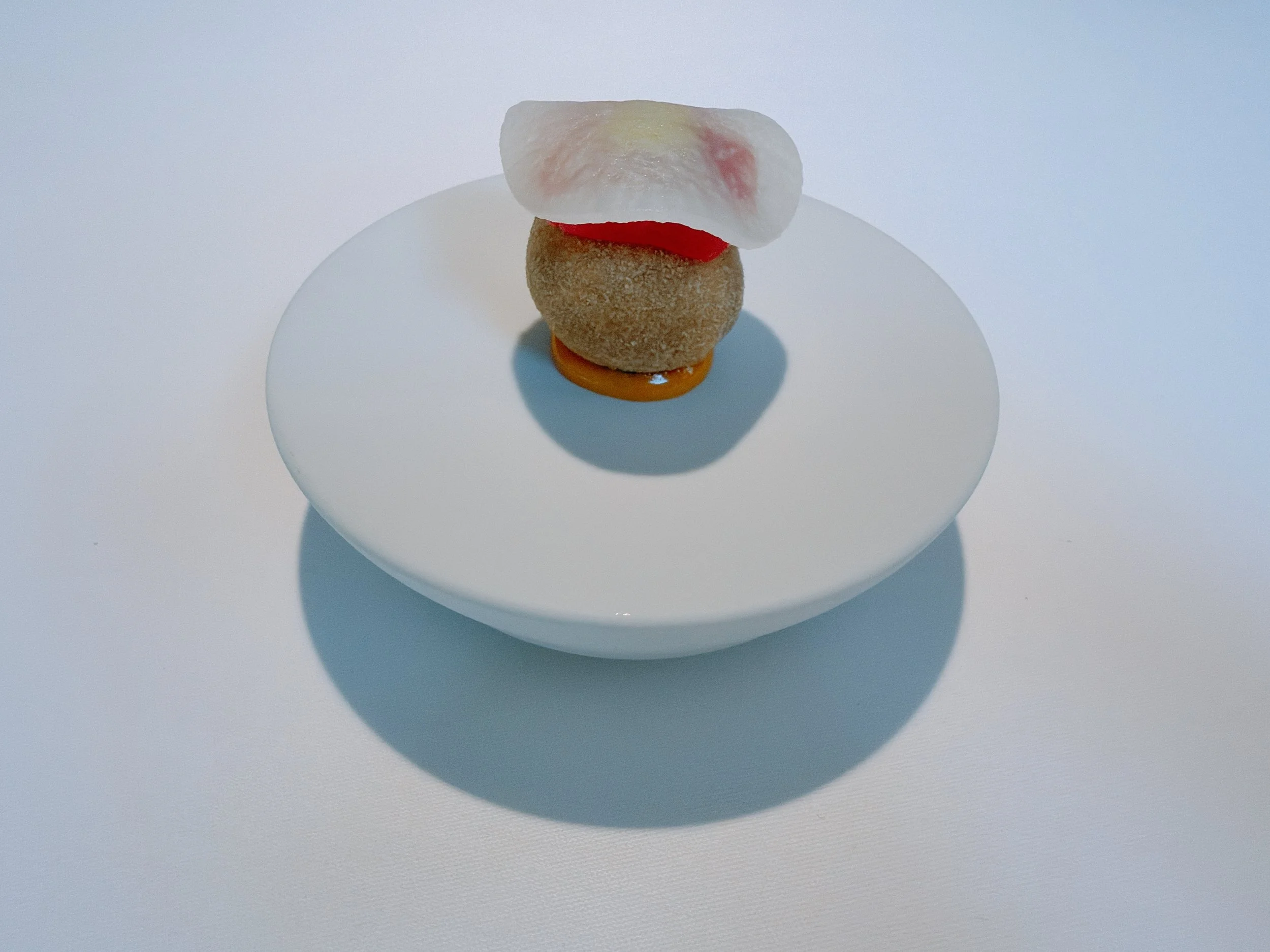
Our dinner started with two small bites that were served at the same time. The first one was a little black cracker cup, filled with a beef tartare seasoned with XO sauce, some Napa cabbage, ponzu, and persimmons. On top was a generous helping of caviar from German producer N25. This dish had strong flavors, partly because it was on the salty side. The beef was of good quality, having a chunky minced texture, while also being quite tender 17. Next to the tartare was a fried dough ball filled with lean blue fin tuna, served with a wasabi-marinated slice of radish and a cream made with uni (sea urchin). This dish was much heavier due to the fried component, and the tuna was fully cooked, making it feel closer to canned tuna than the raw variety. Not bad, but had it been a bit lighter, it would probably have been even better 16.
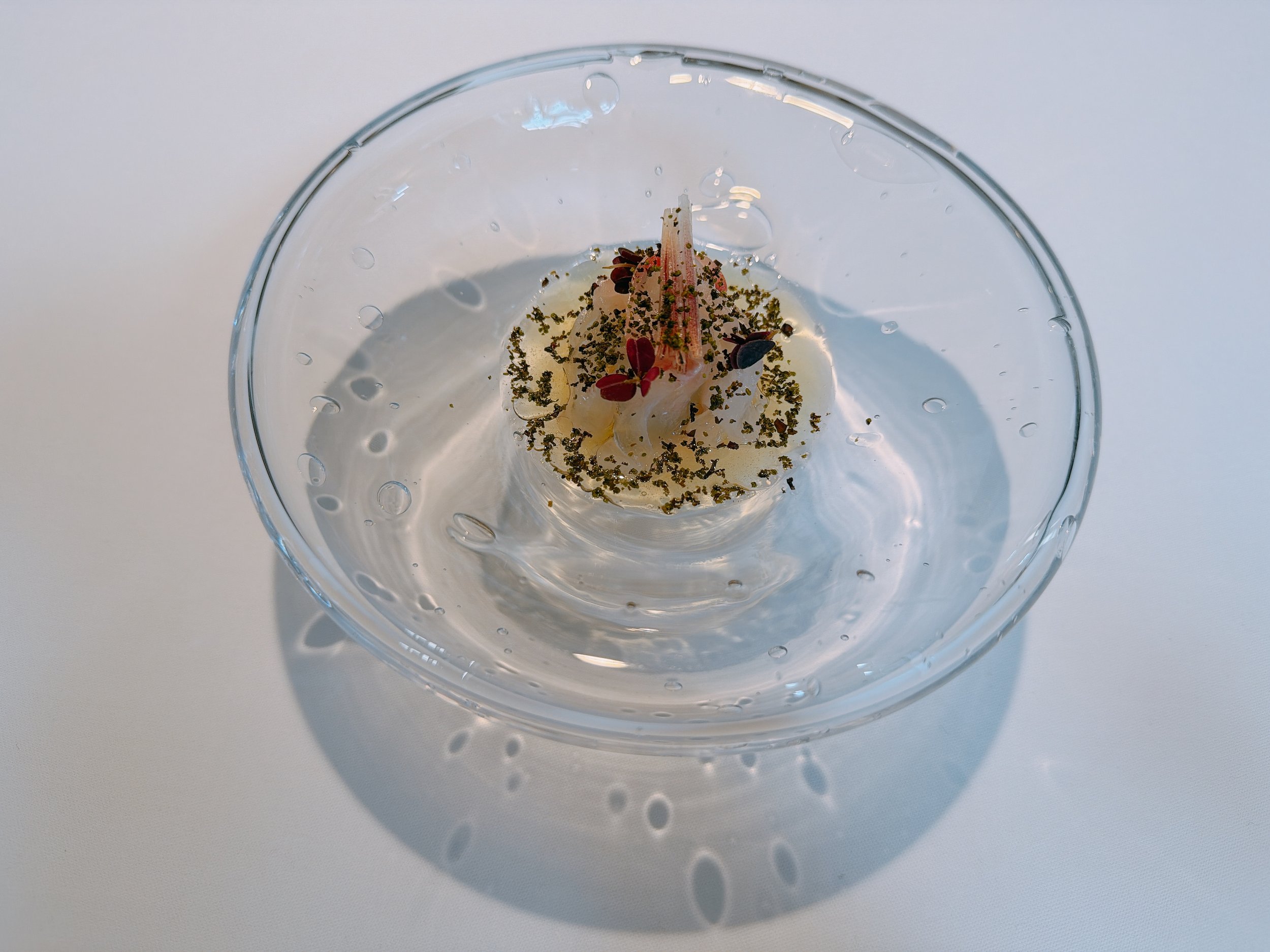
We had no qualms about the next dish being too heavy, thankfully. Slices of 21-day dry aged sea bass were served with cucumbers, julienned onions, and two vinaigrettes: one made with sansho pepper, the other with lavender. The fish was tender, but didn't have too much flavor by itself. That was made up for by the other ingredients, for example the cucumbers that had been marinated in a German sweet-and-sour style. The vinaigrettes were nicely aromatic, but had at most hints of sansho pepper and lavender. In particular, the dish was not spicy at all 17.
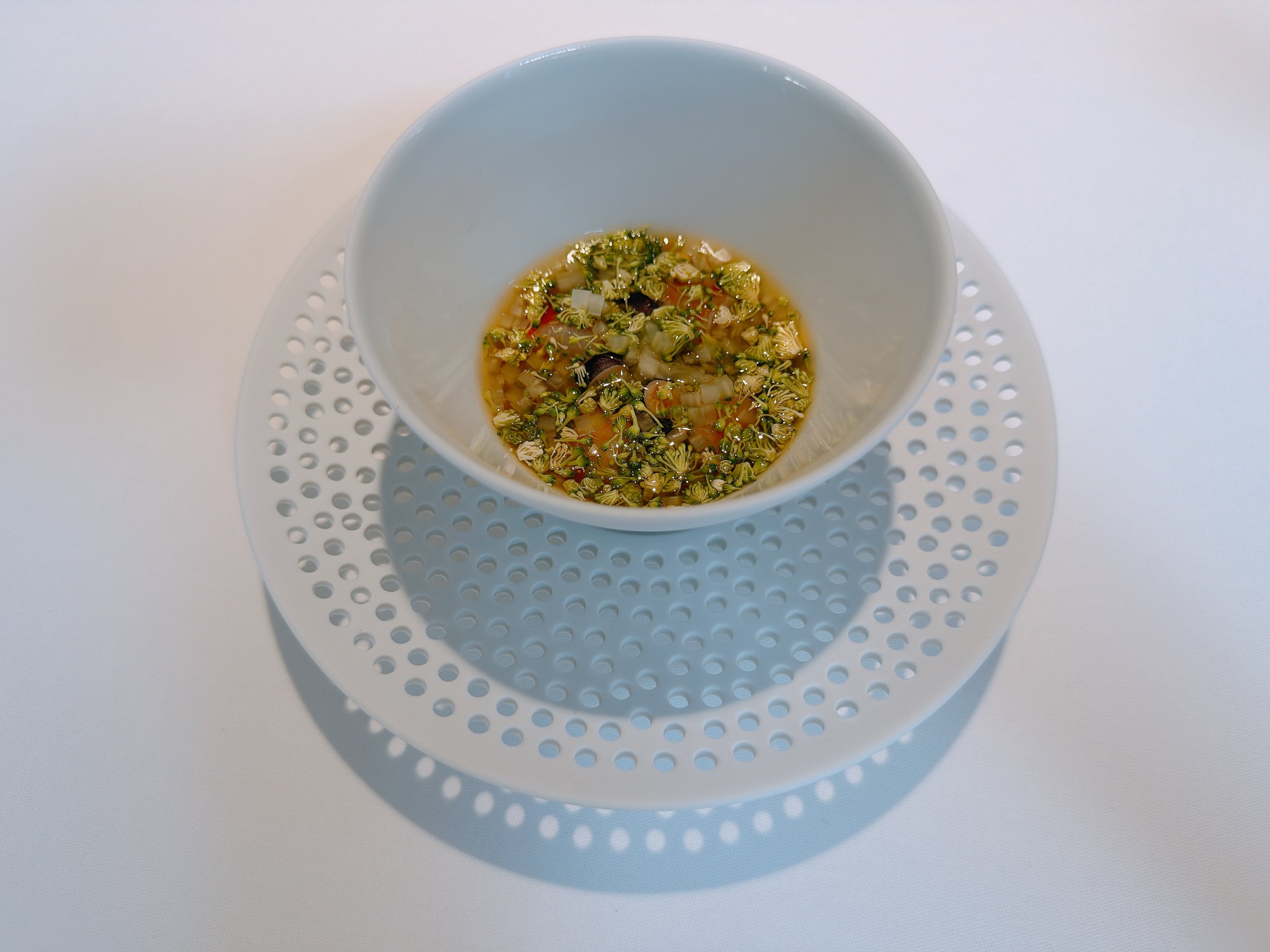
The last amuse-bouche was a dish based on Catalonian gambas (gambas roja) and gooseneck barnacles that were served on top of an egg custard, and surrounded by some finely chopped broccoli, habaneros and a curry broth. “Seafood and egg custard” sounds a bit like chawanmushi, but the taste profile here was quite far from Japanese. There was lots of flavor, but it felt more like a French bouillon with a hint of curry seasoning. Texturewise, the egg was creamy, the gambas juicy, and the barnacles crunchy 17.
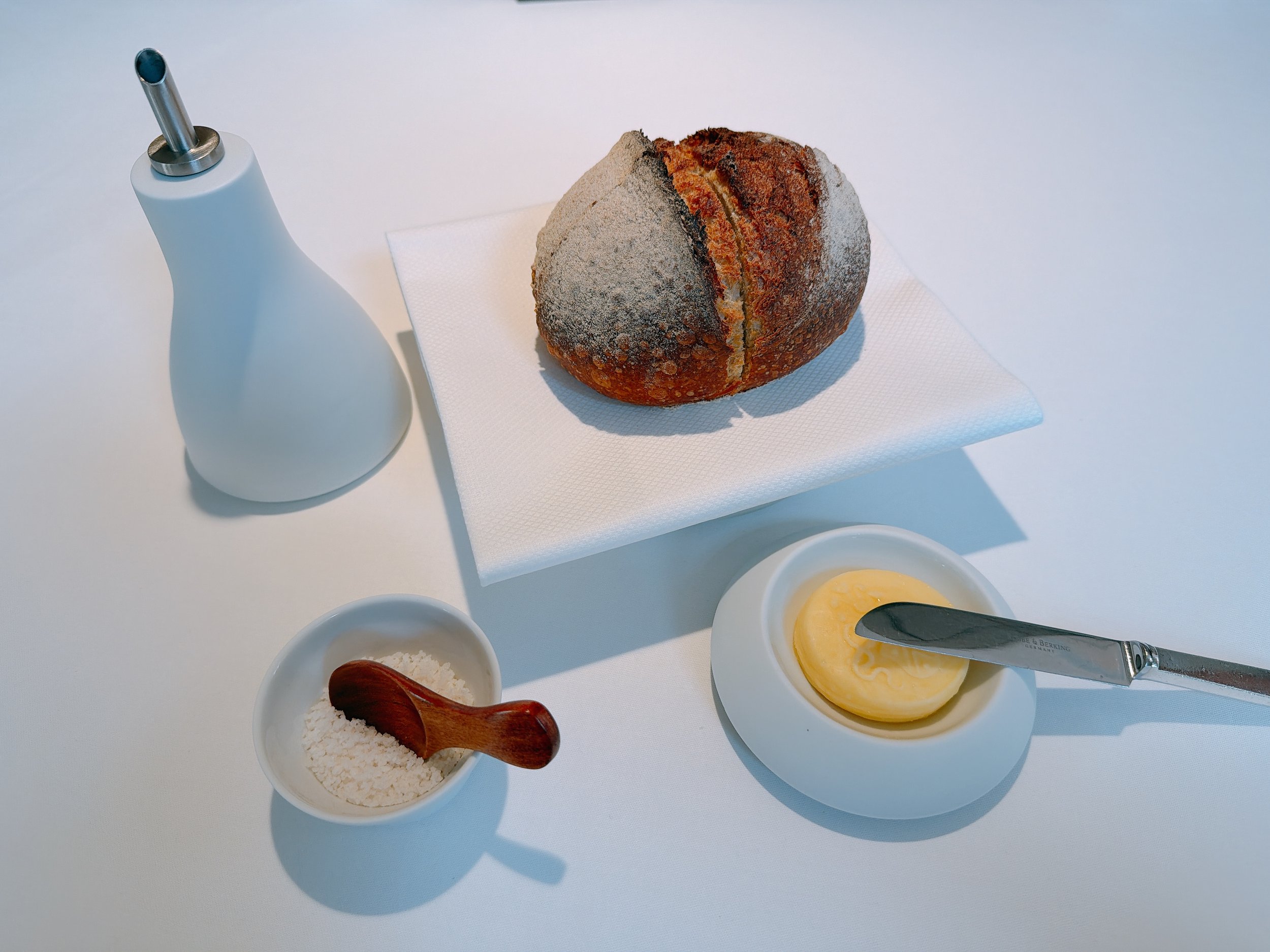
A house-made sourdough bread was based on a starter that the kitchen had named “Hildegard” for some unexplained reason. It came with a salted French butter, an olive oil seasoned with yuzu, and a salt from Okinawa. Served piping hot, the bread had a great crunch and a light, airy interior 17.
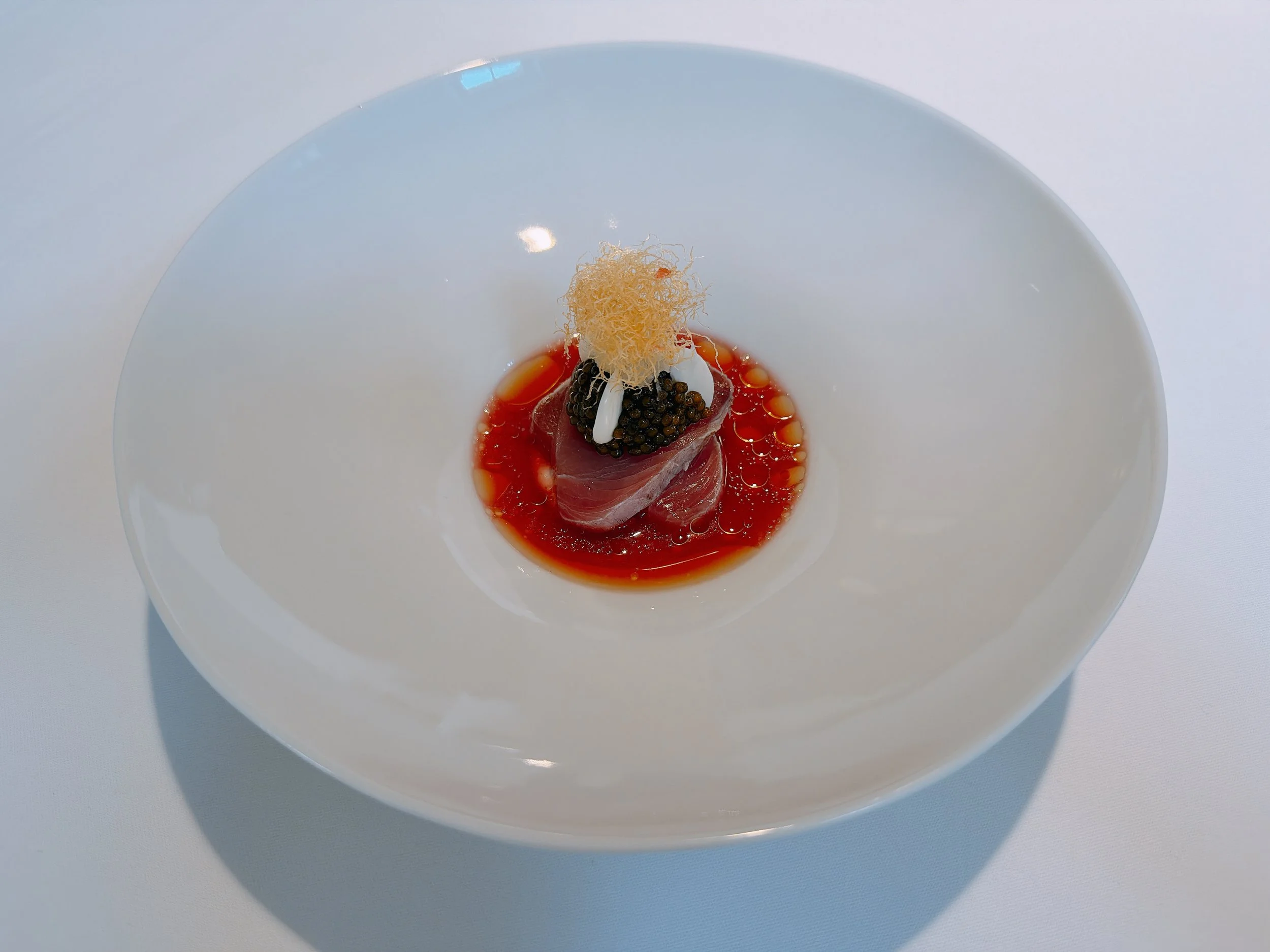
Official course number one featured bonito that was served in a cherry-ponzu sauce, and topped with N25 caviar, slices of green almonds, and crispy ginger threads. The fish was smoky, the green almonds crunchy; there was a light fruity taste from the cherries, and finally a hint of spice. The caviar added some (but not too much) saltiness to this dish 17.
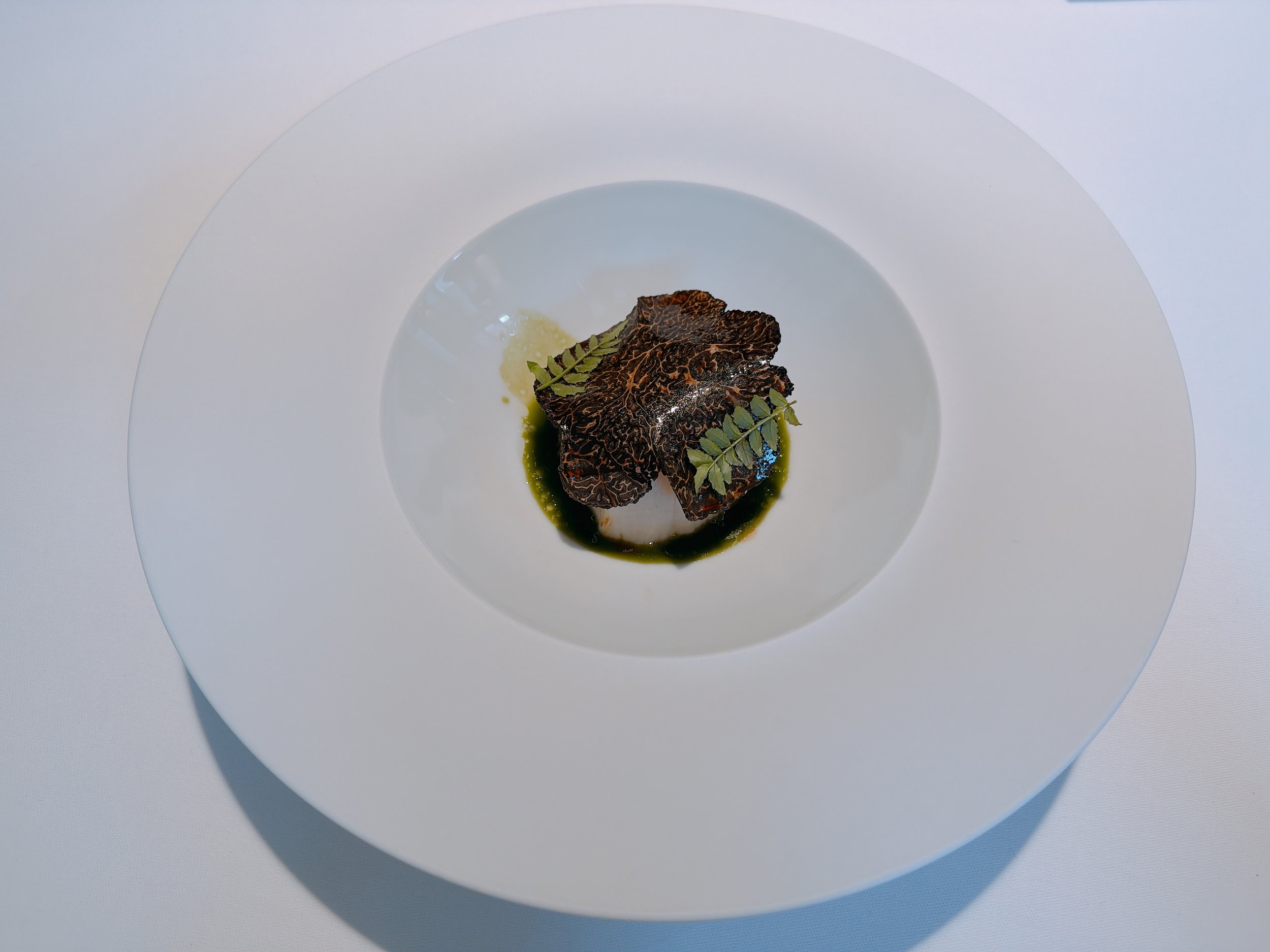
Next up was a large scallop from Norway that was topped with slices of foie gras and black truffle. All of this came with a shiso vinaigrette, of which we got extras in a little sauce pan left at our table. This was a truly amazing dish where all components contributed to a cohesive whole. The scallop was very tender and was best eaten together with the sauce that was practically bursting with flavors. While the sauce was very salty by itself, once combined with the scallop it felt just right - the scallop was pretty large, so the sauce needed to have a bit of a punch. The foie gras was surprisingly (thankfully?) not very heavy, but it still added some creaminess and heft to an otherwise almost fat-free dish. The black truffle was delicious, and had a pronounced nutty taste 19.
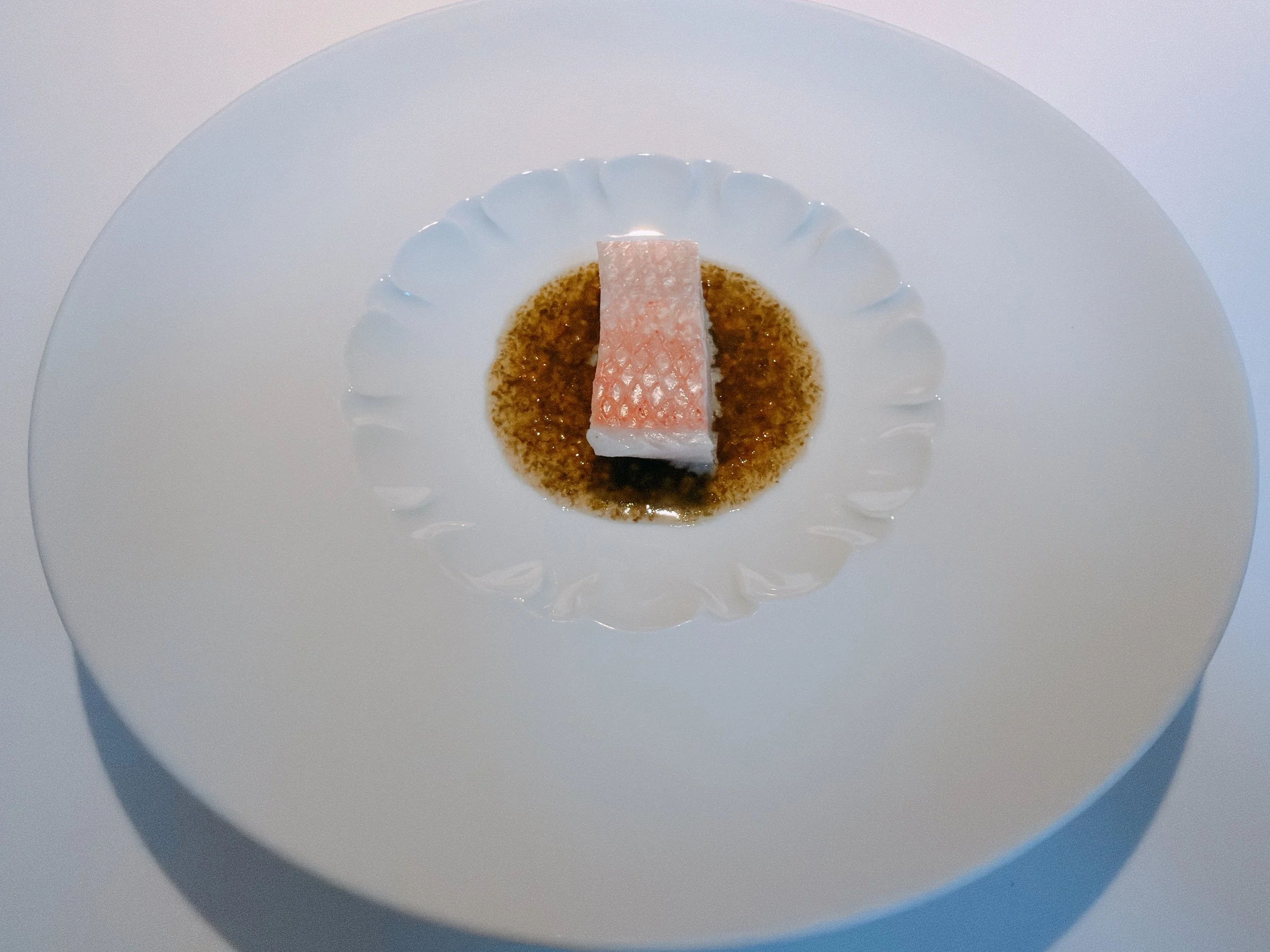
Then it was back to fish, this time in the form of a filet of kinmedai from the Azores, dry-aged for seven days and sake poached. This kinmedai came without the puffed scales often seen in Japanese cooking. Its surrounding sauce contained mustard seeds, seaweed, and an abalone extract. The fish was cooked to a nicely tender consistency, and the sauce was strongly flavored, nicely balancing sweetness and saltiness 18.
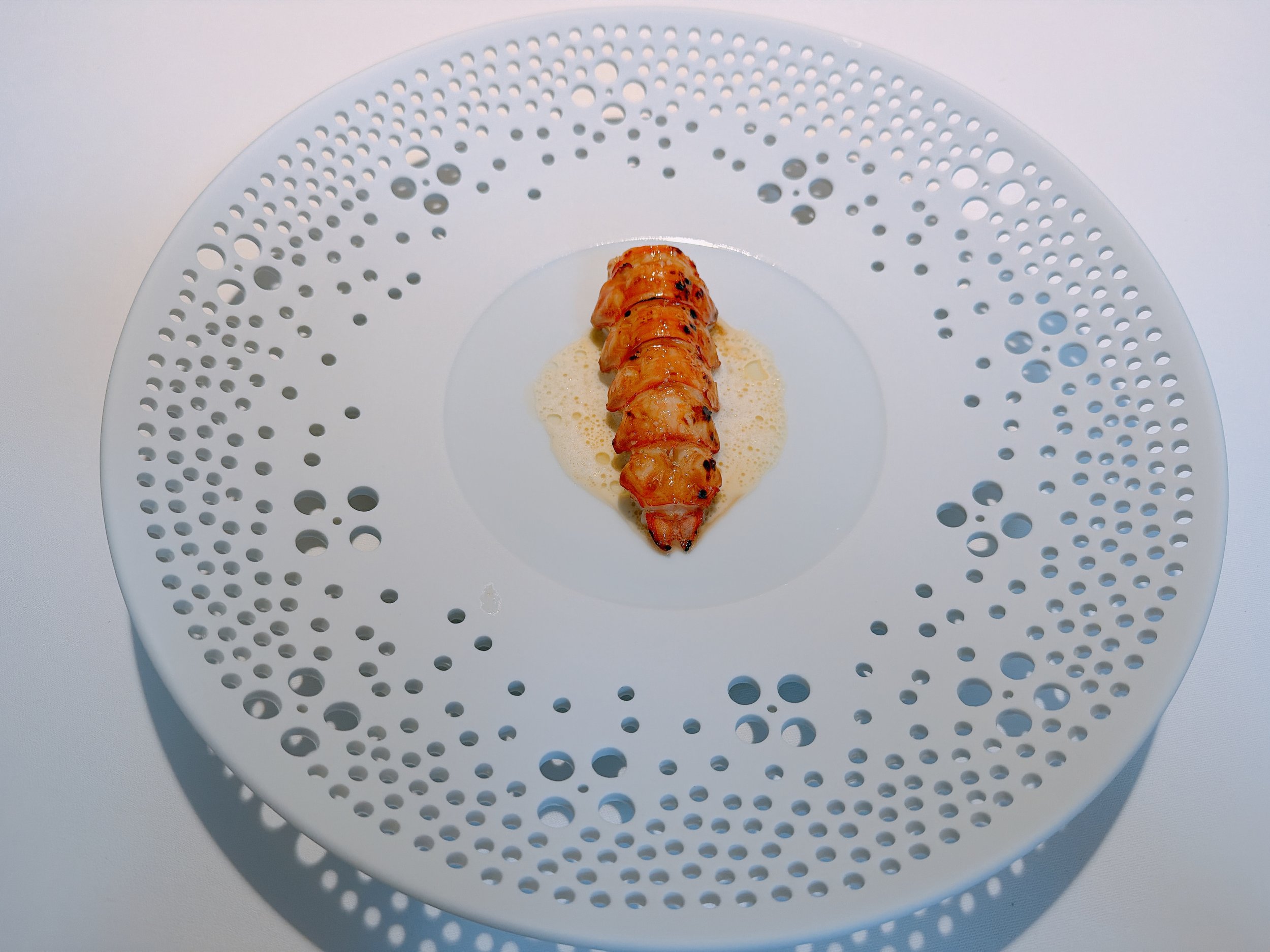
A langoustine was topped with a sweet malt glaze and surrounded by a beurre blanc seasoned with chili pepper. The langoustine was juicy and tender-ish, that is: expertly cooked but maintaining some bite. It was also nicely complemented by the sweet and salty glaze - altogether, a lovely piece of seafood. A bit of a head scratcher was the beurre blanc, which seemed very different from most versions of the classic French sauce that I’ve seen before. Here, the sauce was very thin, and neither creamy nor acidic. It still had a lightly spiced flavor, without being truly spicy. The langoustine was definitely great, but this felt like a missed opportunity - a better sauce could have made this transcendental 17.
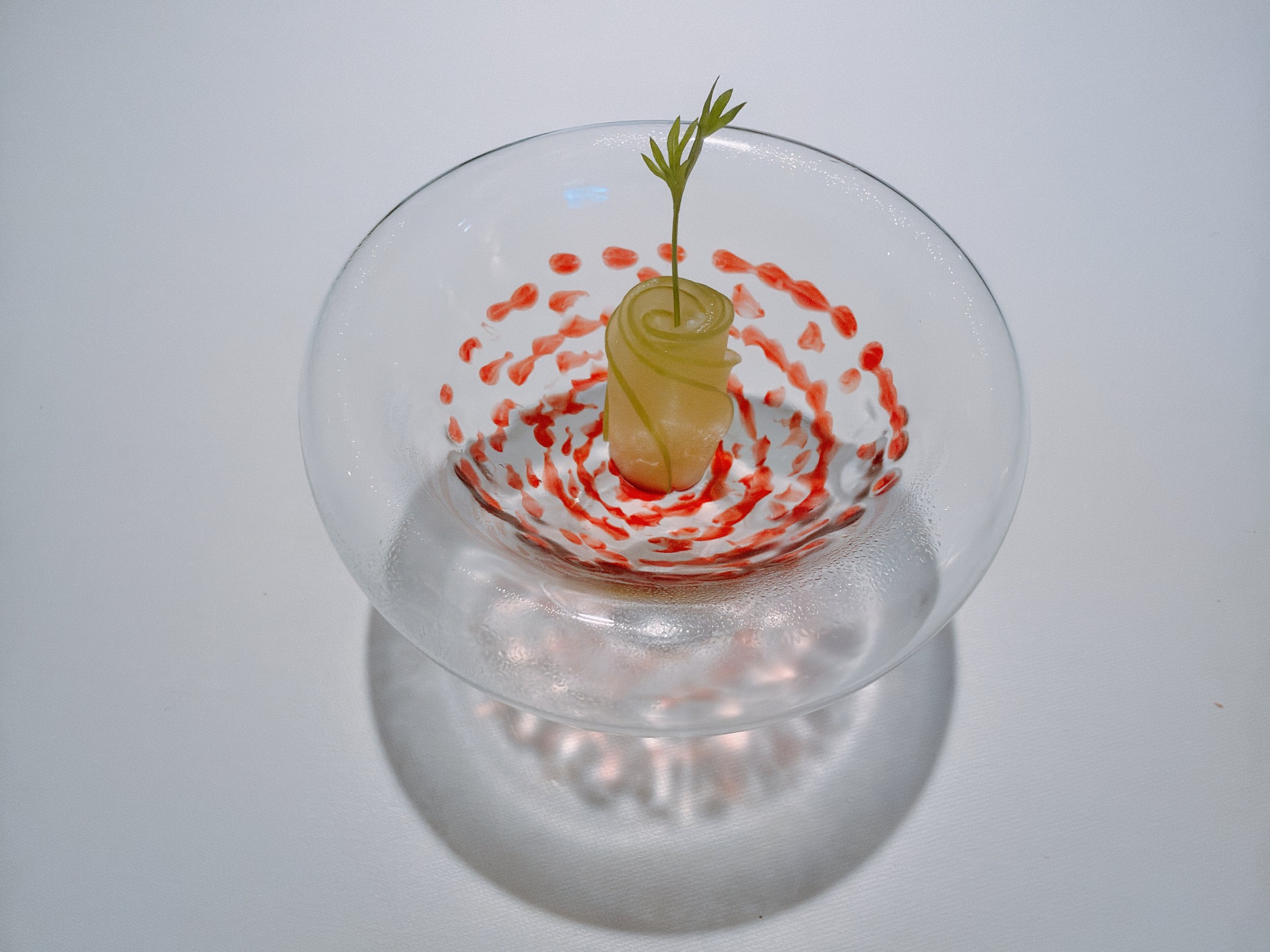
A palate cleanser consisted of slices of green apple, ginger and nasturtium. The result was lightly sour, crunchy, and had a hint of spice. In other words: a nice, light palate cleanser 15.
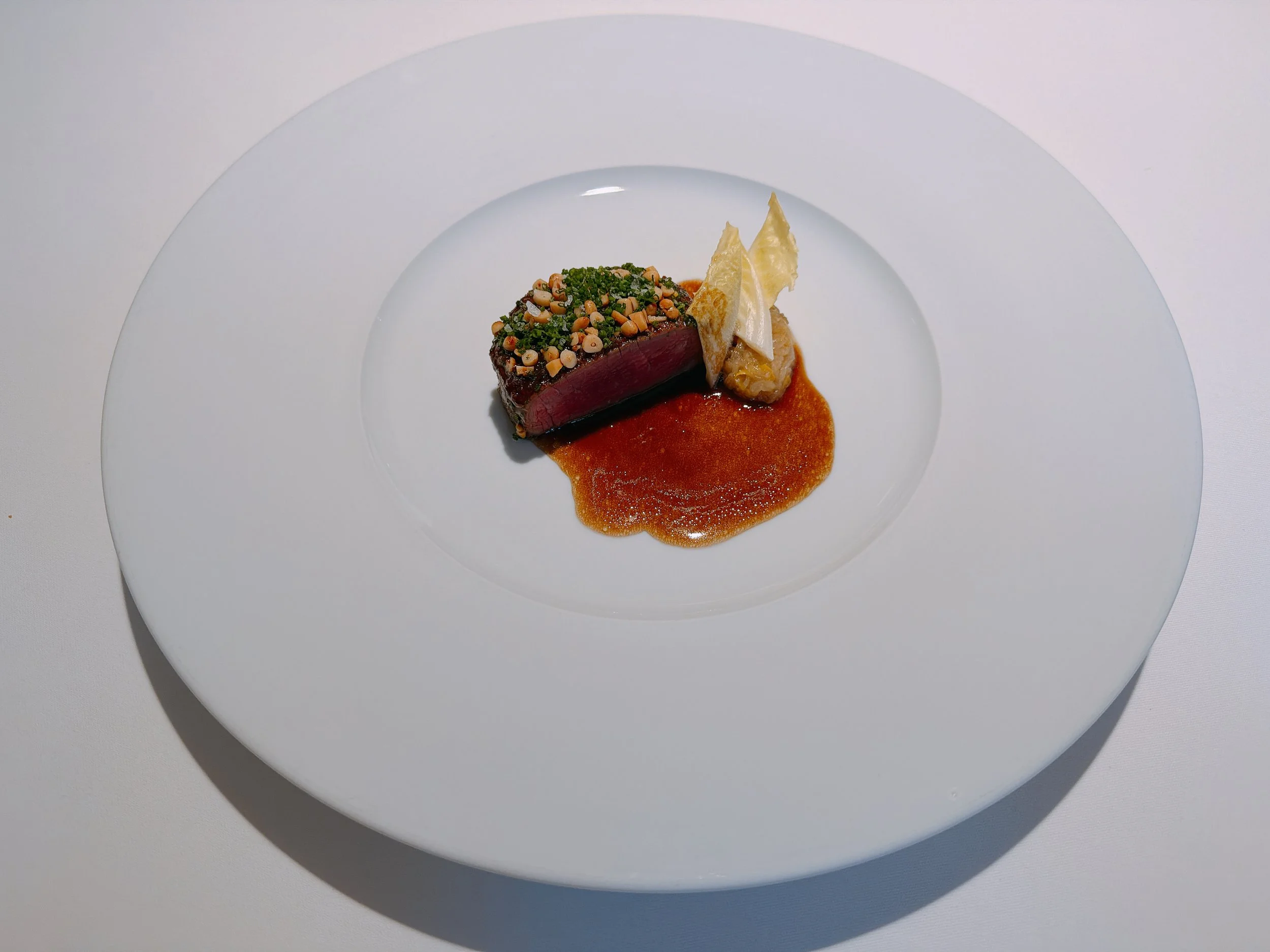
Our final savory course was a filet of an “old” Austrian cow. Topped with some herbs and chopped pine nuts, it sat next to marinated, chopped endives and was finished with a porcini mushroom vinaigrette. The beef was very tender, but with a texture somewhat reminiscent of game, i.e. slightly mealy, but thankfully without any taste of gaminess. The pine nuts added a light crunch, and the endives were delicious, with a pickle flavor that lightened up the dish. The sauce was very salty and notably acidic, but I didn't detect a particularly strong mushroom flavor. This was my dining companion's favorite dish of the night 18.
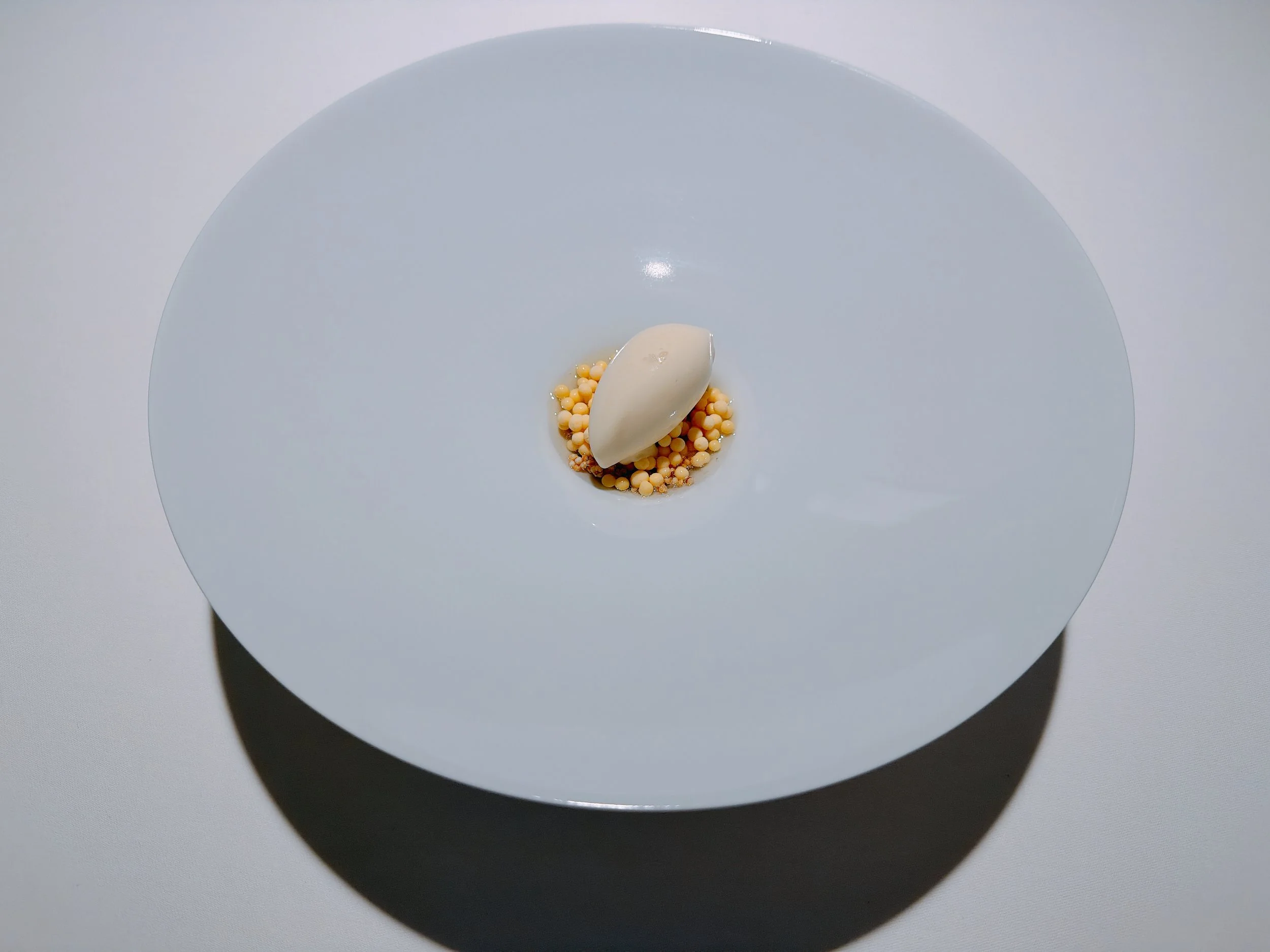
Our first dessert had multiple layers. From the top: an elderflower ice cream topped with fleur de sel, followed by dippin' dots made from iyokon (a Japanese mandarin), then cereals and chopped green papayas. The flavors of this dish were pretty light: mostly hints of elderflower and citrus. More distinctive were the crunchy textures of the toasted cereals and the unripe papaya. A nice combination, but unfortunately also a dish that was hard to eat in the provided bowl, since its center was too narrow to scoop up the food with the provided utensils 17.
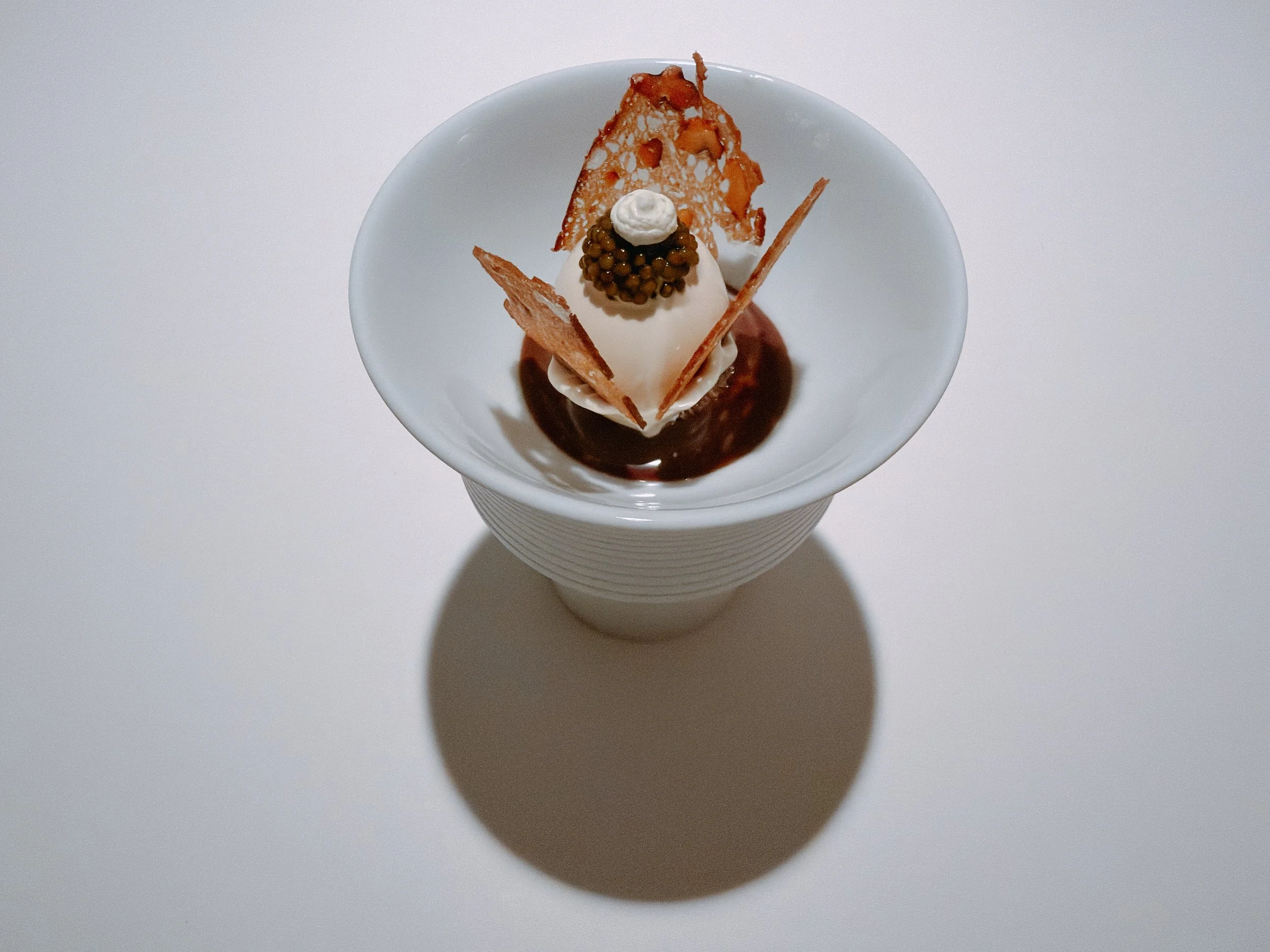
The next dessert, entitled “umami”, combined an eclectic collection of ingredients. There was a kombu ice cream, some caramel, a 70% chocolate ganache, toasted slices of walnut bread, and finally N25 caviar. Impressively, all of these actually came together quite well. The ice cream balanced the heavier chocolate, making this an unexpectedly light dish. The caramelly sauce added a good amount of flavor and sweetness, and the walnut bread provided some crunchy texture. Lovely 18.
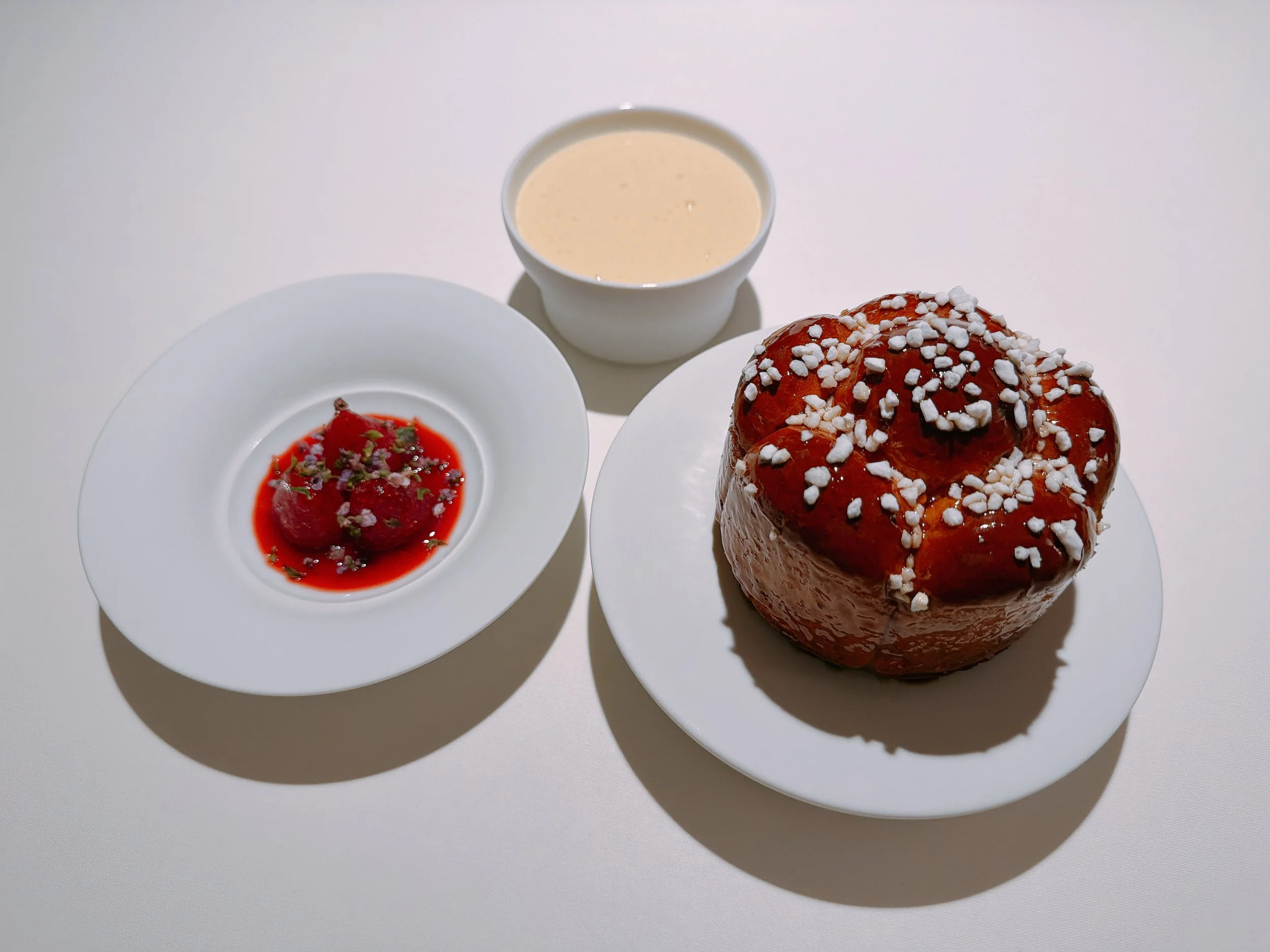
Our last dish was a “Buchtel” aka a sweet yeast bun (kind of like a dense brioche). It was glazed, topped with coarse sugar, and served with two sides: marinated mara des bois strawberries topped with shiso flowers, and a sabayon made with vin santo. The bun itself was sweet and tasty, but might have been even better had it been a bit airier. The strawberries were fine, but not mind-blowing. However, the sabayon was a light and lovely addition to the sweet bun. Overall a nice pastry, but also a less complex dish than what had come before 16.
This was a dinner full of surprises. When I first read the menu, I was struck by the ubiquity of Japanese ingredients: bonito, kinmedai, akami, shiso, ponzu, etc. So I fully expected a French/German cuisine with strong Japanese influences, maybe like Christian Bau's. But interestingly, while the ingredients were definitely Japanese, the intense flavor profile of the resulting dishes was anything but. With preparations that leaned more towards vinaigrettes and pickling rather than subtlety or cream, the flavors were actually closer to the New Nordics than Japan or France.
Equally unexpected was the fact that this meal was prepared by just two full-time chefs in the kitchen. An impressive feat for any three-star kitchen, and one that makes me feel almost pedantic to complain about details that didn’t quite work for me. Hopefully, I'll be able to come back and visit the restaurant at its full staffing level to see what they are capable of in less trying circumstances.
Overall: A seafood-heavy, flavor-intense cuisine that used many Japanese ingredients, but prepared them in a style that was closer to the New Nordics than the Far East. Most of the main savory dishes and the main dessert were comfortably at a three-star level, and even the rest, while slightly weaker, was not too far behind. Considering that there were only two chefs in the kitchen, the resulting meal seemed nothing short of miraculous 18.