The Dune - Frankfurt
Dubai in Frankfurt
Rating: 17/20
Where: Frankfurt, Germany
When: Dinner for 2 on 17 July 2026
Cost per Person: Tasting menu 249 Euro ($285), Wine pairing 159 Euro ($180)
Accolades: 2 Michelin Stars
Why: Light, seafood-focused cuisine with intense flavors
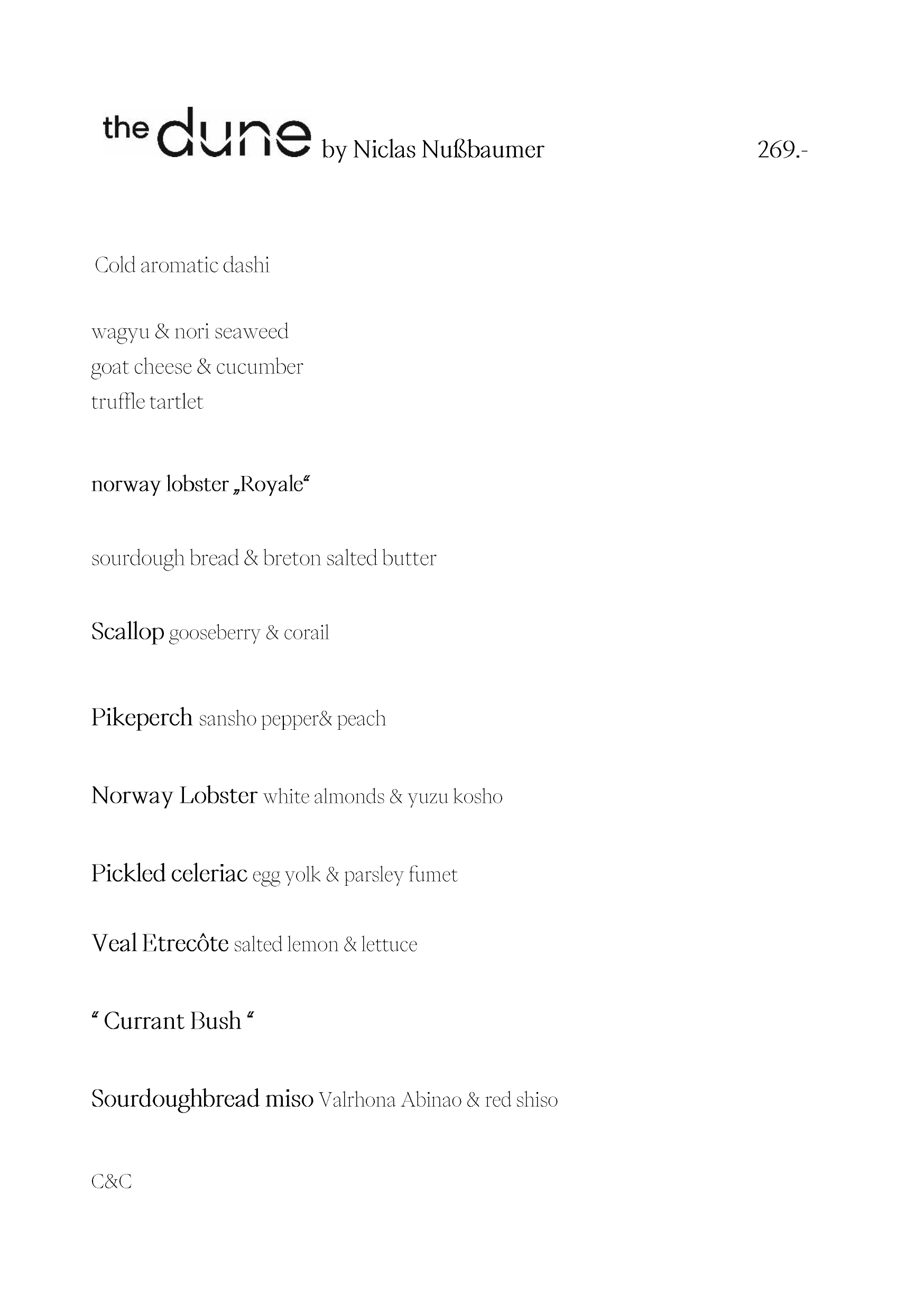
The German hotel chain “Althoff Collection” likes to pair its properties with high-end restaurants. And sometimes quite successfully: about ten years ago, two of their restaurants held three Michelin stars at the same time. So it shouldn’t have come as a big surprise that Althoff's newest hotel, “The Florentin” in Frankfurt, comes with its own Michelin-caliber restaurant. Its name is “the dune” (all lowercase), and it is led by chef Niclas Nußbaumer, who previously worked at the hotel Mühle in the middle of the Black Forest. Our meal there a few years ago was very enjoyable (but we were a bit surprised by the chef's affinity for using salt). So I was quite happy to visit the chef’s new restaurant, only a few weeks after he had regained the two Michelin stars that he had held before.
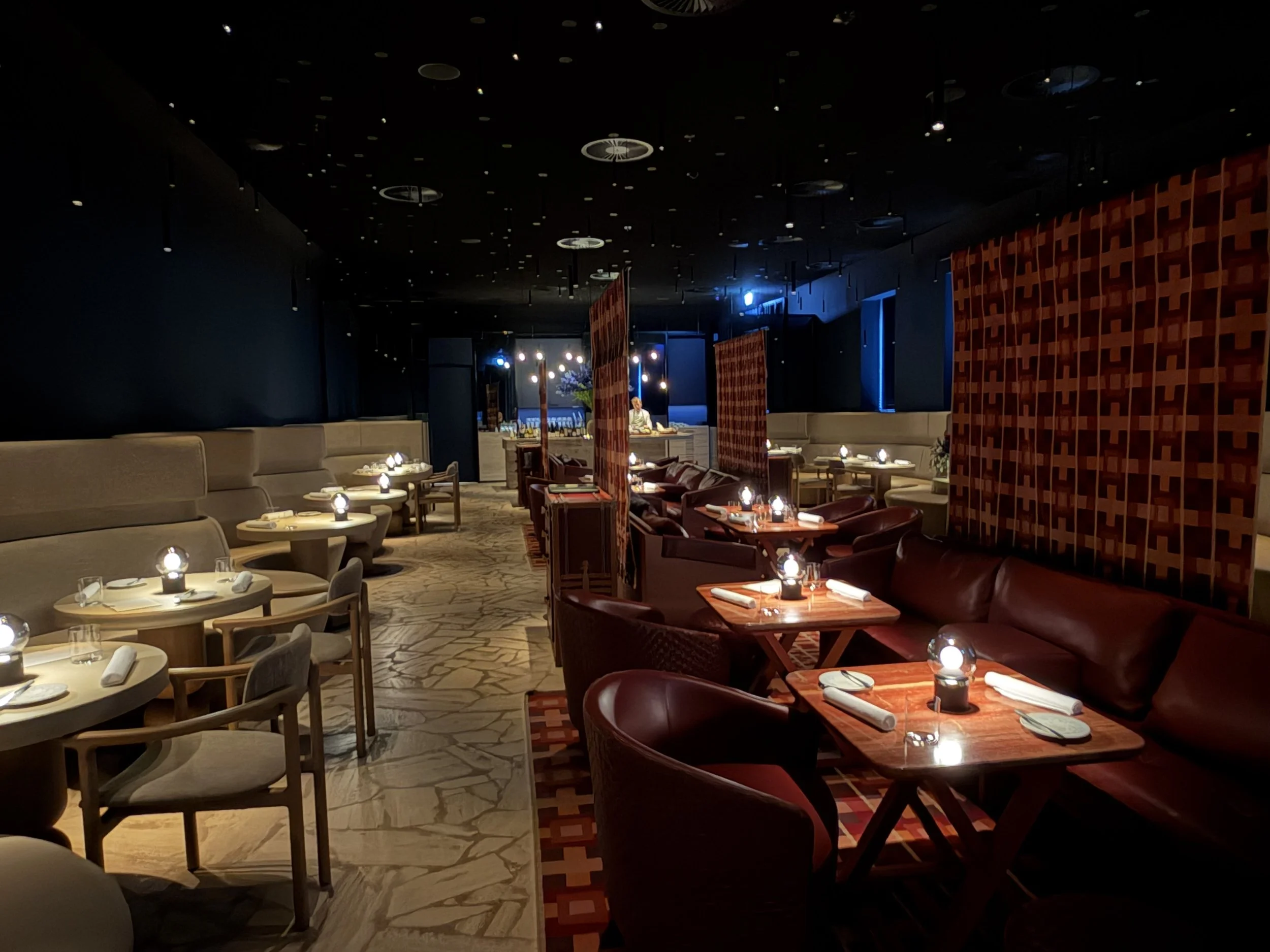
Entering The Florentin's lobby, it was surprisingly easy to miss the entrance to “the dune” - an unobtrusive door to the right of the hotel's check-in desk. Compared to the well-lit lobby, the first thing one noticed about the dining room was how much darker it was - all the windows were covered. Presumably we were probably not missing much, though, since the restaurant faced a nondescript side street. Interestingly, the restaurant's interior design felt more like Dubai than Frankfurt, with a vague modern Arabic look. On both sides of the room were some gently curving beige seats and associated tables, presumably representing the eponymous dune. In the middle of the room, between the two dunes, were several tables that looked more casual. Some hanging curtains loosely partitioned the room, and the ceiling was decorated with a night sky complete with pinprick stars, similar to what one would see on an Emirates airlines flight (more Dubai associations…). Most of the waitstaff were dressed in very casual outdoor jackets, possibly ready for an impromptu trip to the desert. Oddly though, the food had absolutely no connection to the Middle Eastern visual theme, so one wonders what exactly the thinking had been here.
The restaurant served two distinct menus: a regular tasting menu for the seats near the walls, and an a la carte menu for the rest of the room. While the “dune seats” were all occupied during our visit, several of the more casual tables remained empty. I imagine that was partly intentional, so that hotel guests had a chance at getting a last minute reservation.
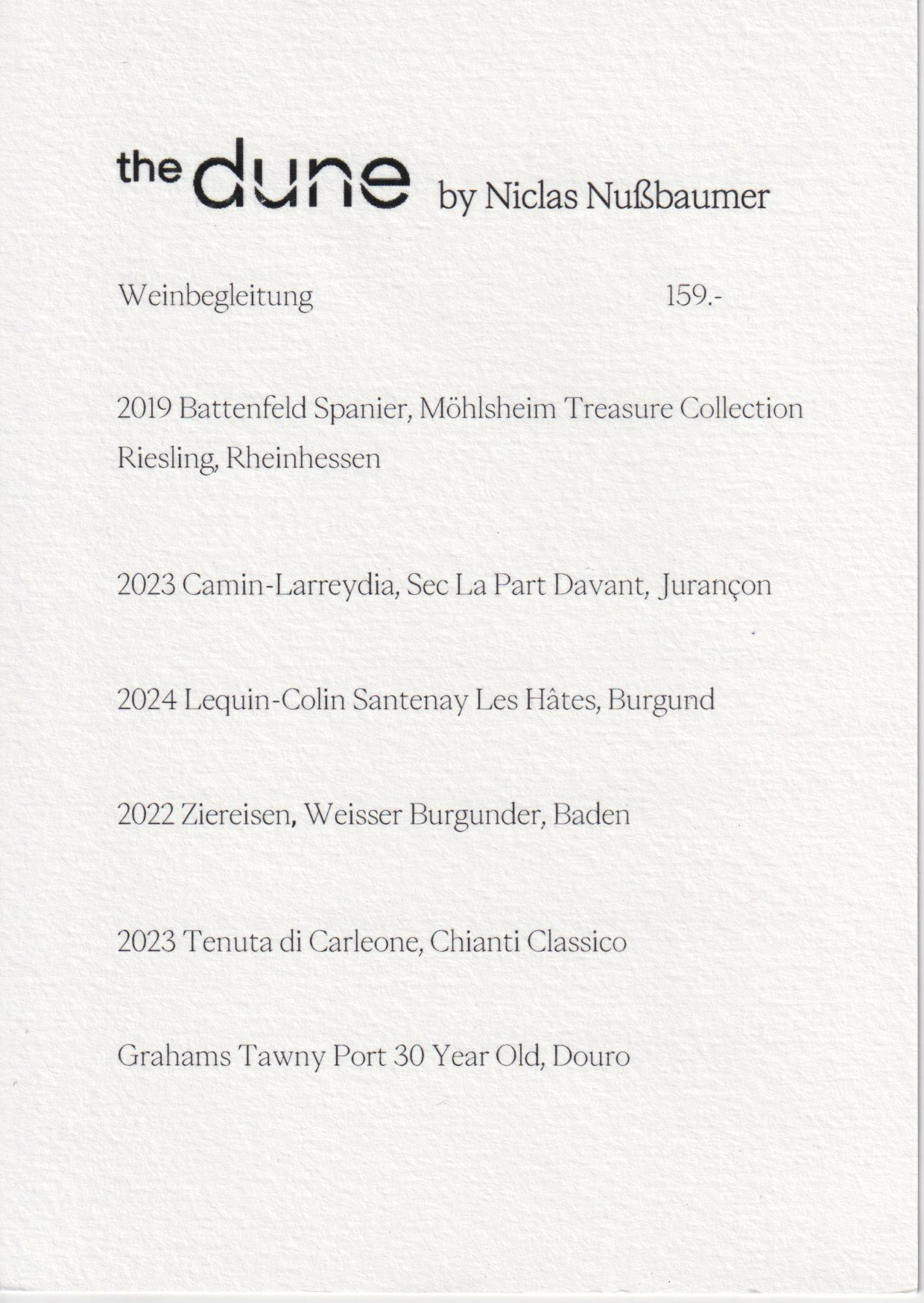
We went for the restaurant's main offering, the eight-course tasting menu (on weekdays, there was also a four course version). There were options to add and/or replace some dishes, including an optional cheese course for 44 Euro (about $50). Drinkswise, there was both a wine pairing for 159 Euro ($180) and a non-alcoholic pairing for 129 Euro ($150). The wines were fine rather than amazing, but matched the food quite well and the pours were very generous. A good bottle of white wine would probably do the job equally well. Notably, the wine pairing started pretty late: only on the second course of the tasting menu, after a series of appetizers. An aperitif to bridge the gap is probably not a bad idea.
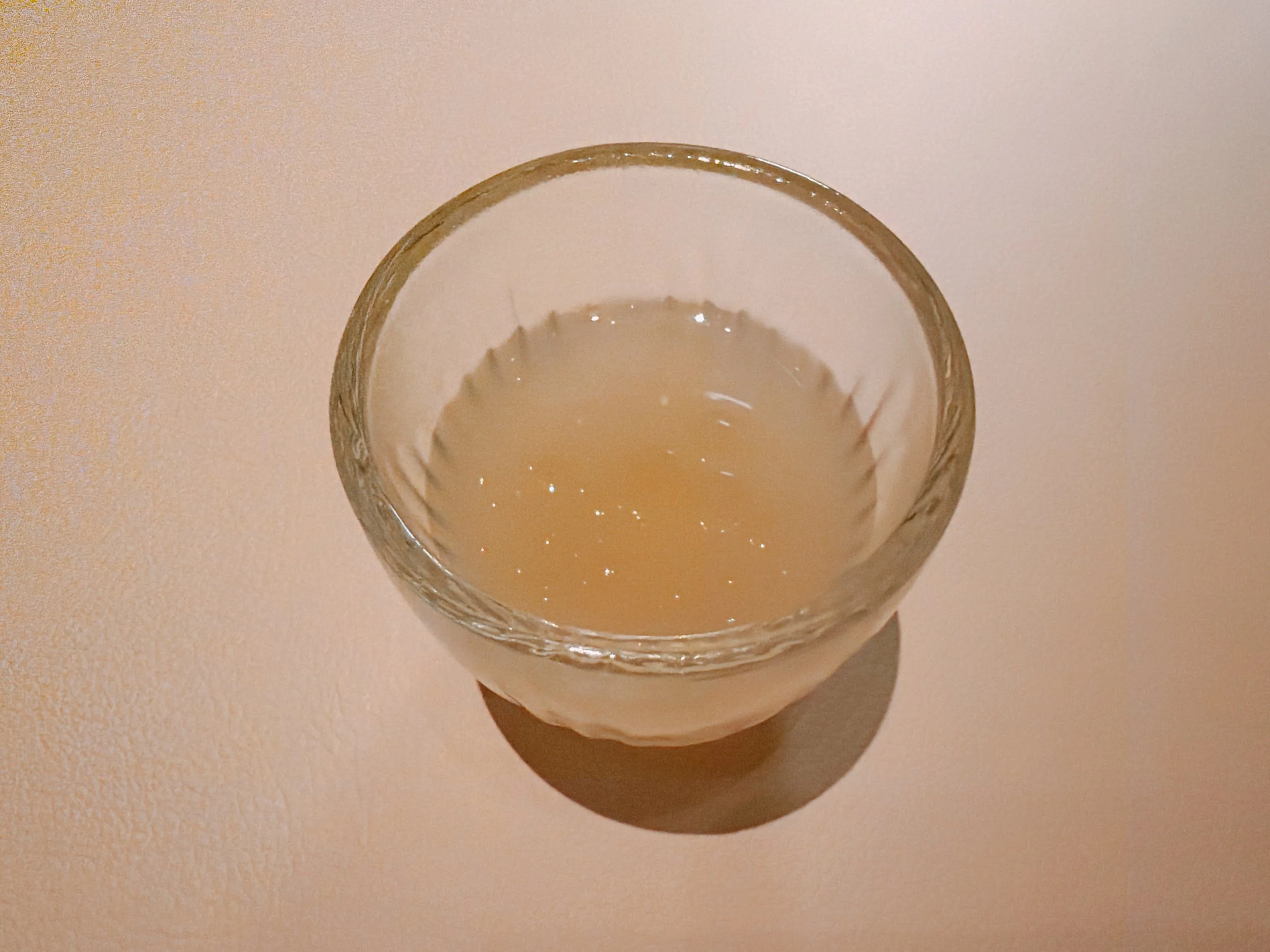
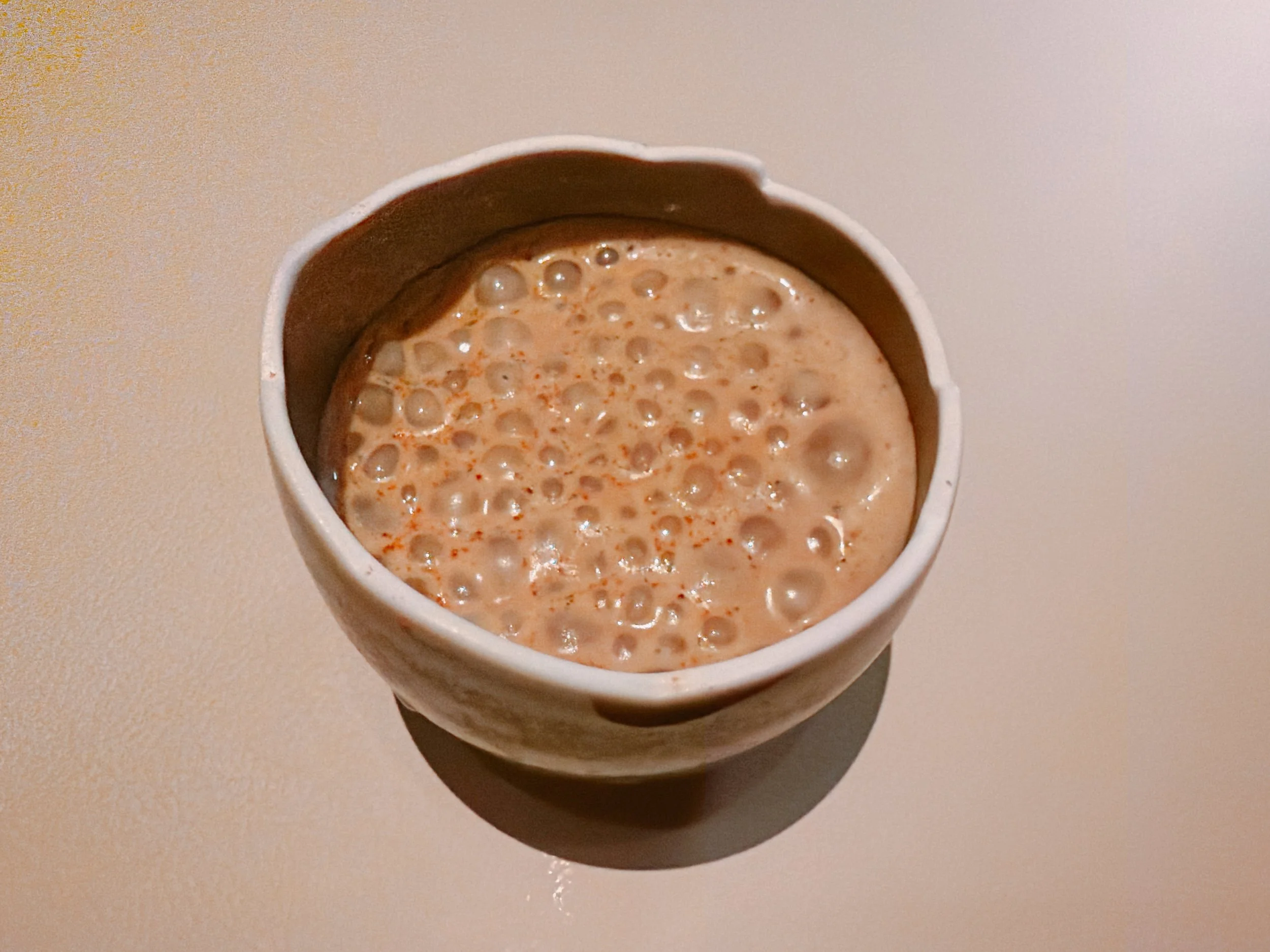
Thankfully, no aperitif was needed for the first dish of the evening. A dashi made from bonito and kombu was seasoned with fermented tomato water, a citrus vinegar (I think), and a bergamot-chili oil. This was a cold and very aromatic drink - lightly acidic and citrusy. Very refreshing, especially after our walk through Frankfurt's warm, humid summer evening 17.
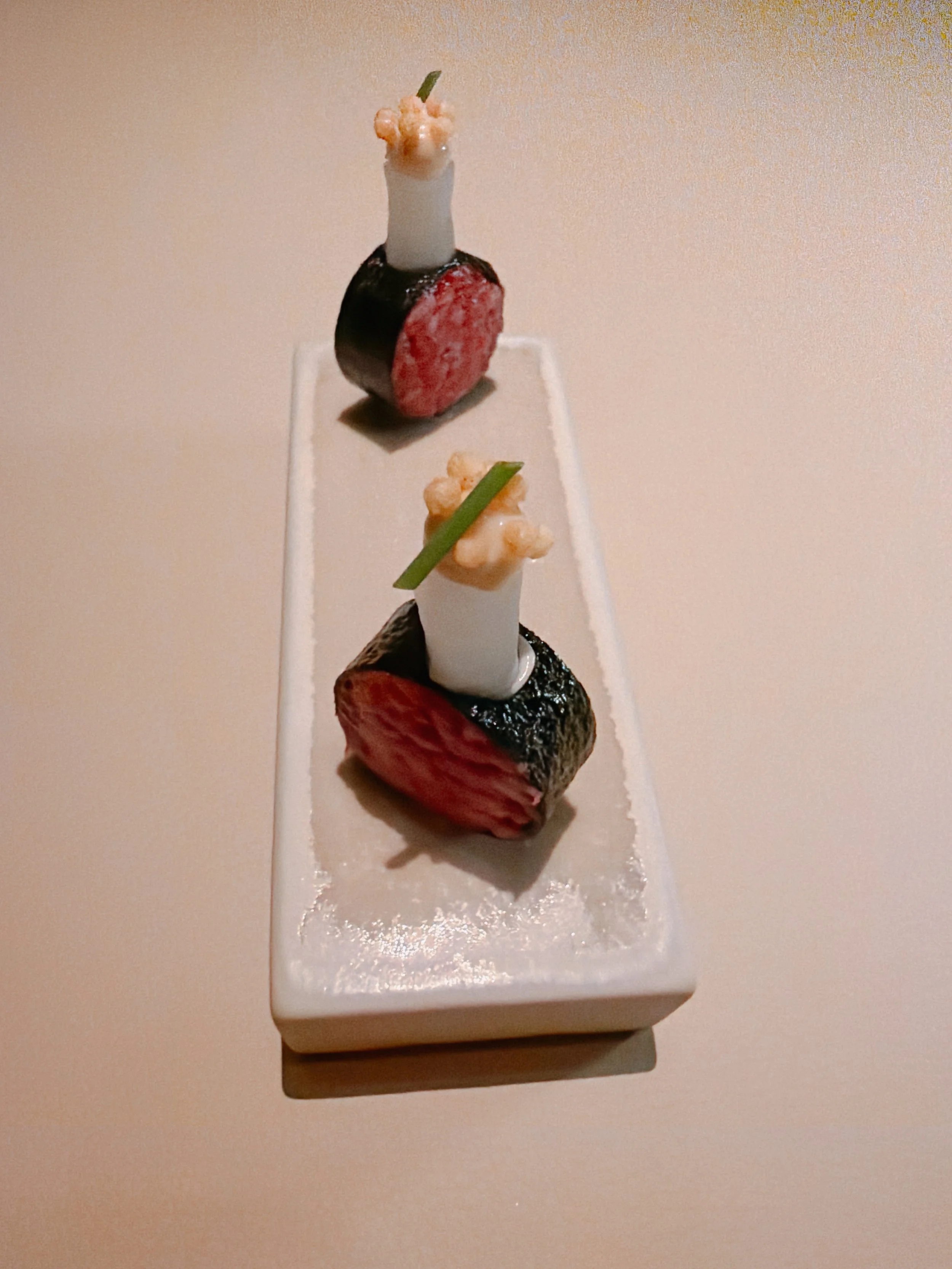
A series of small bites followed. First, a wagyu tartare served inside a nori ring that was topped with a marinated radish and a “rice mayonnaise”. The nori was surprisingly crunchy, with a texture closer to a cracker than seaweed. The flavors of this dish came together well, and ended with an aftertaste of rice. Unfortunately, the beef was a bit indistinctive: pretty lightly flavored and with an indistinctive texture. A more distinctive wagyu might have made this a better dish 16.
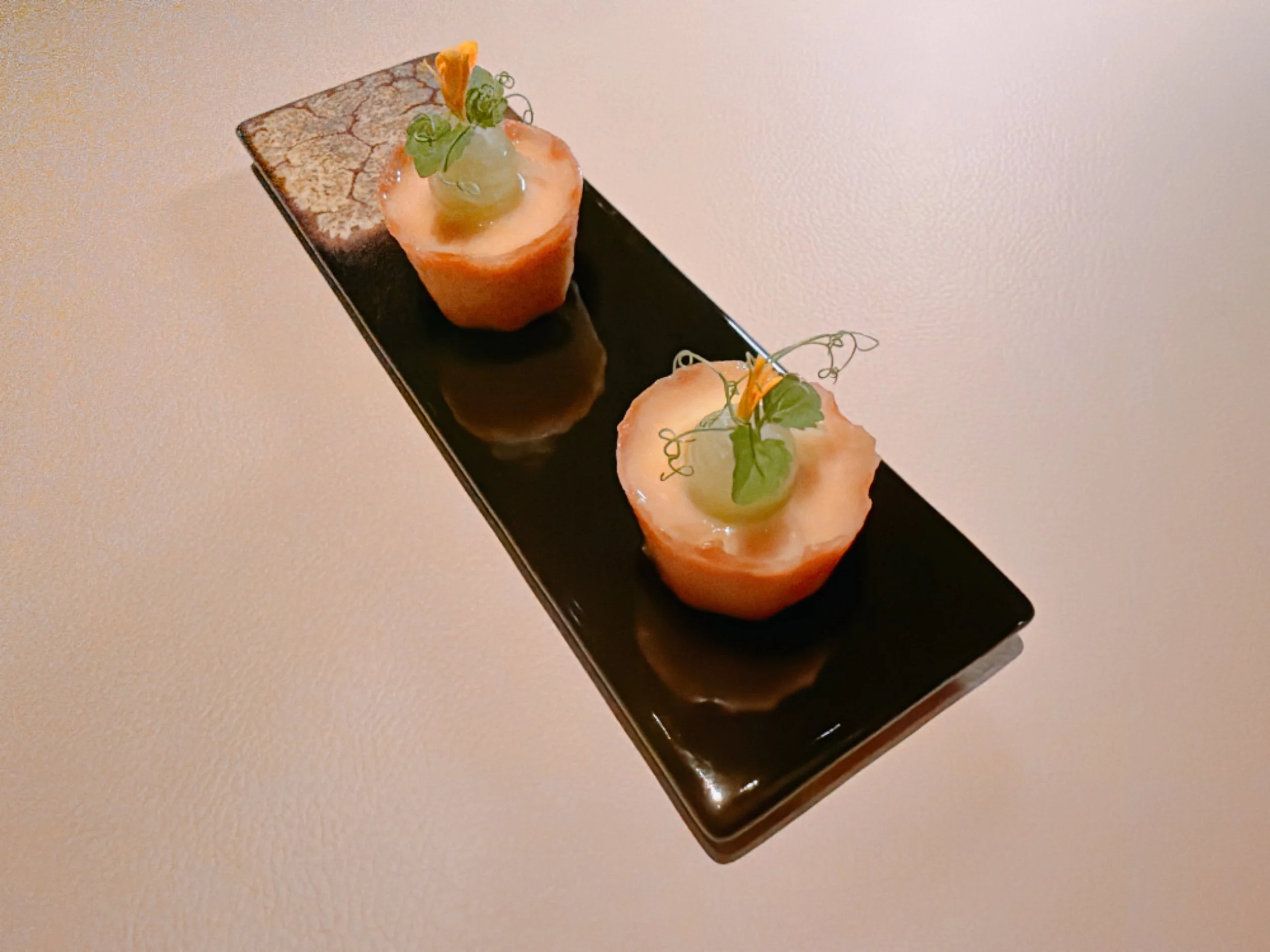
Inside a cracker shell were a goat cream cheese, marinated cucumbers, and miso. This dish was very creamy, with a strong cucumber flavor - almost reminiscent of tzatziki, but without any garlic. Simple, but well done 17.
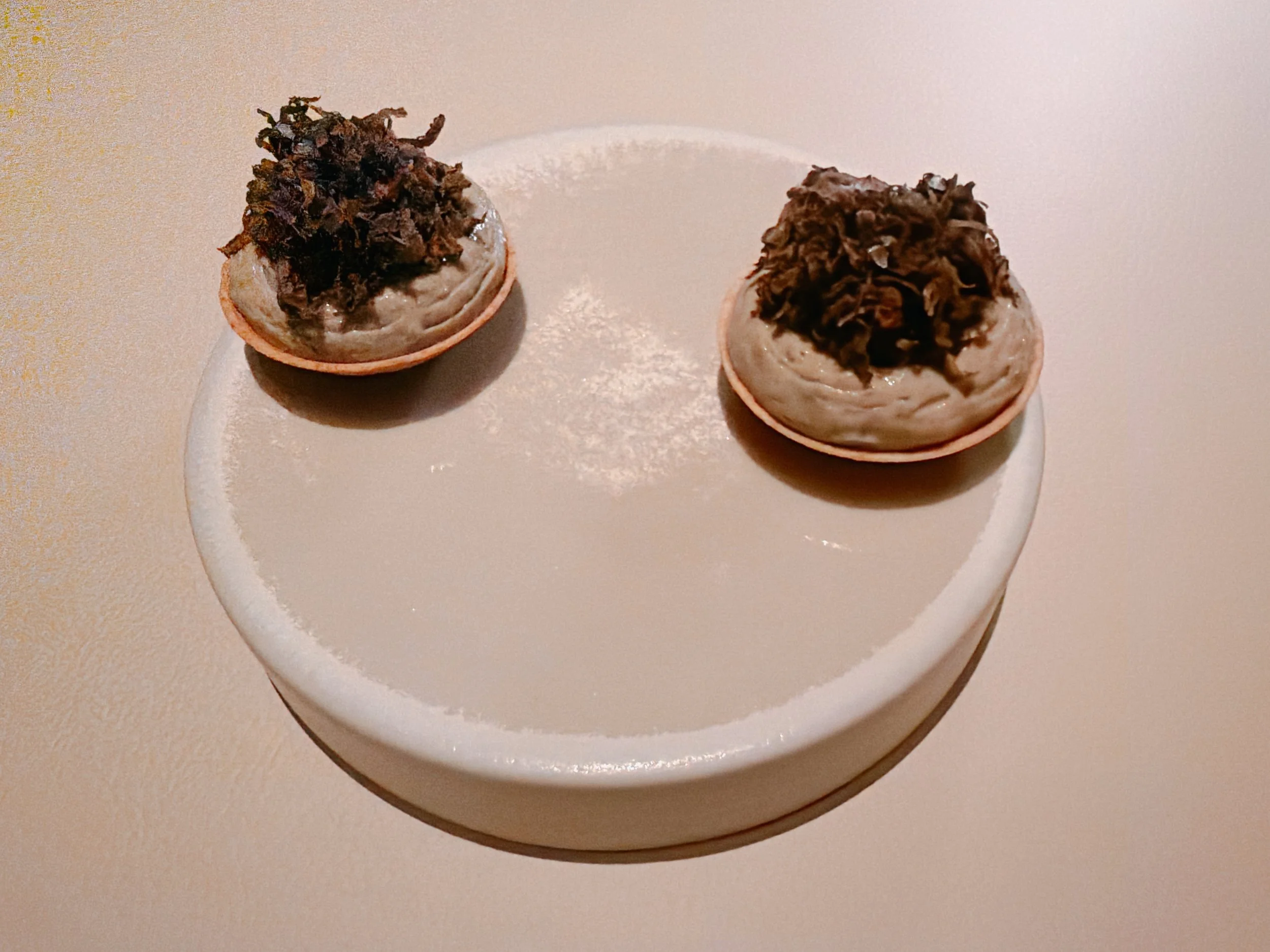
Next came a “truffle quiche”, a little tartlet filled with a truffle cream seasoned with Madeira and port wine, and topped with shredded truffles. According to the chef, these were winter truffles that had been preserved from the previous season - a process that intensified their flavor. The truffles were indeed quite good, but somewhat lighter in flavor than we would have expected based on the introduction. Overall, the dish felt a bit too heavy on the cream, making it less light than it might have been otherwise 16.
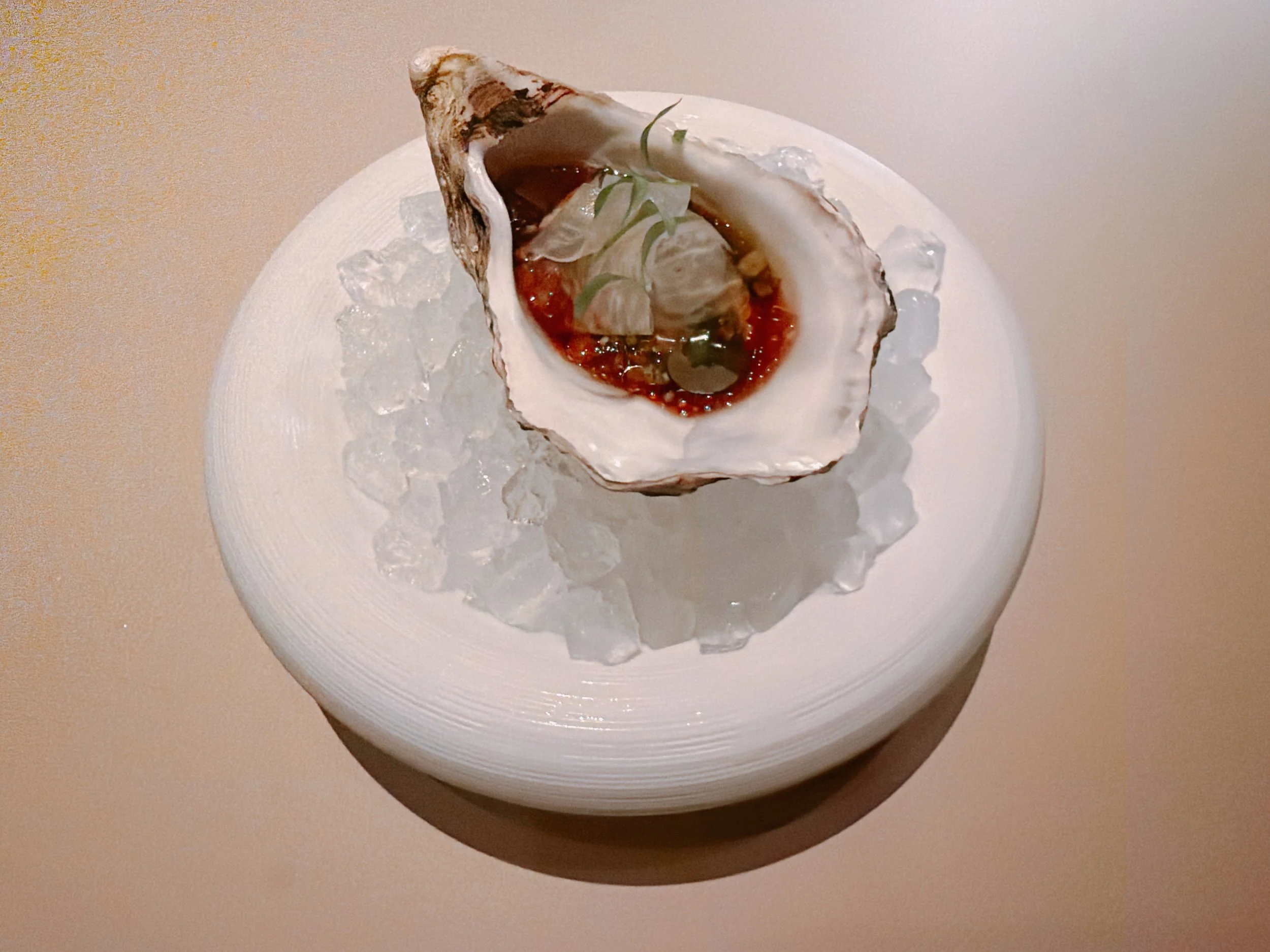
At this point, we had added one of the a la carte dishes (for 14 Euro, $16): a lightly poached, precut oyster that was served in its own shell and seasoned with a soy vinaigrette, some guanciale, fish roe, and marinated radishes. This was by far the most strongly flavored dish up to this point. The radish was fresh, the guanciale crunchy, and the vinaigrette acidic and bursting with flavors. Eaten by itself, the oyster had kept its distinctive taste. One could say that this dish was typical of the chef's style: there were strong flavors, notable acidity, and a healthy dose of salt. The result was undeniably tasty, but it was by no means subtle 17.
The next course, entitled “Norway Lobster Royale”, was the first course of the tasting menu, but still had to make do without a paired wine. At the bottom of the dish was an egg custard that was topped with edamame, pieces of Norway lobster, and a savory bisque. This was an interesting dish that was essentially Japanese at the bottom (chawanmushi and edamane), but whose foam on top was closer to a bouillabaisse in terms of flavor 17.
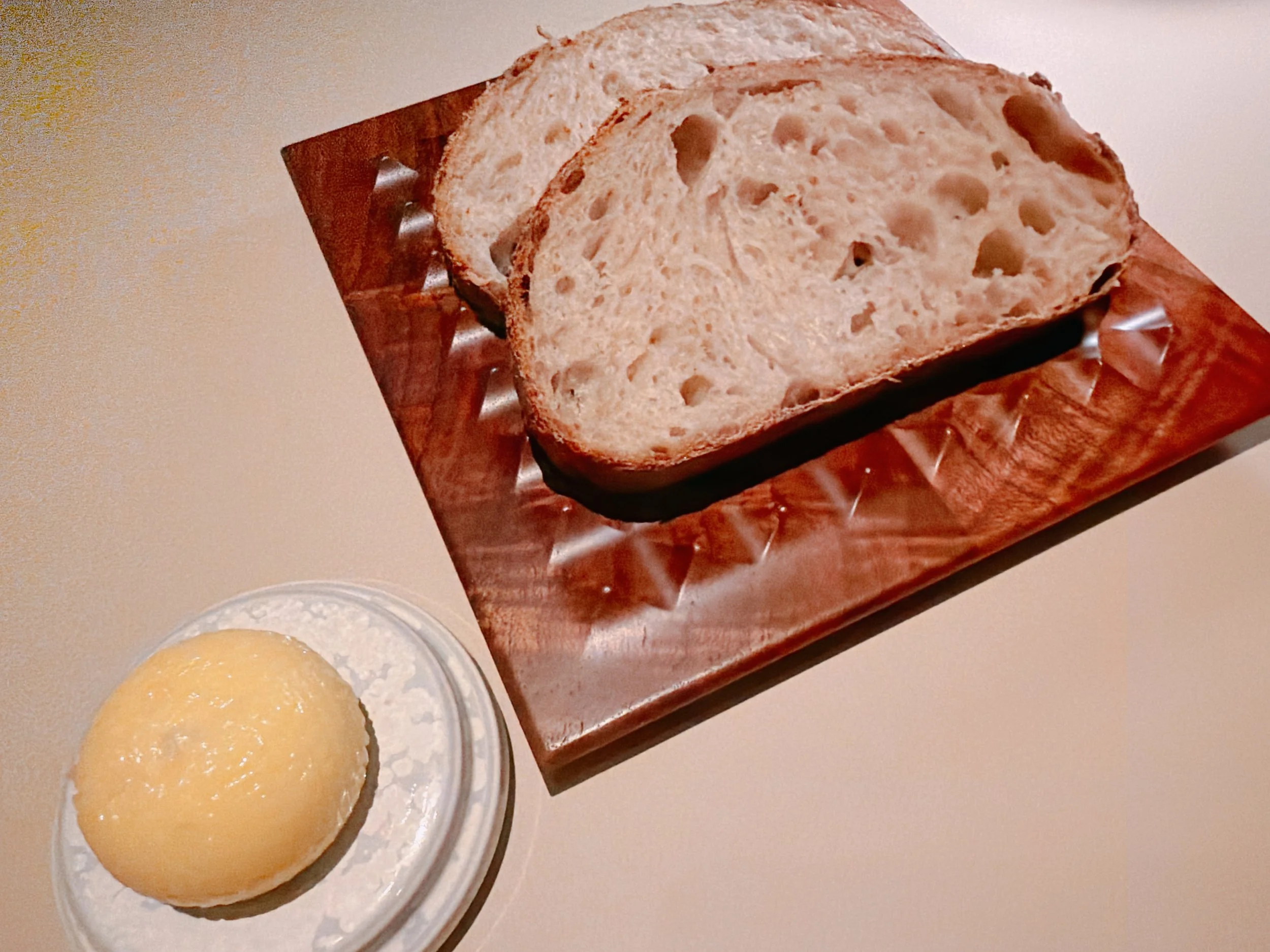
A slice of room-temperature sourdough bread was served together with a salted butter from Brittany. The bread had a great crunch, and a pleasant, light flavor. It went great with the very salty butter 16. Curiously, even though we finished the bread rather quickly (it was that good), neither the bread plate not the butter were removed until the last savory course. No additional bread was offered either, so this felt like an odd oversight during an otherwise solid service.
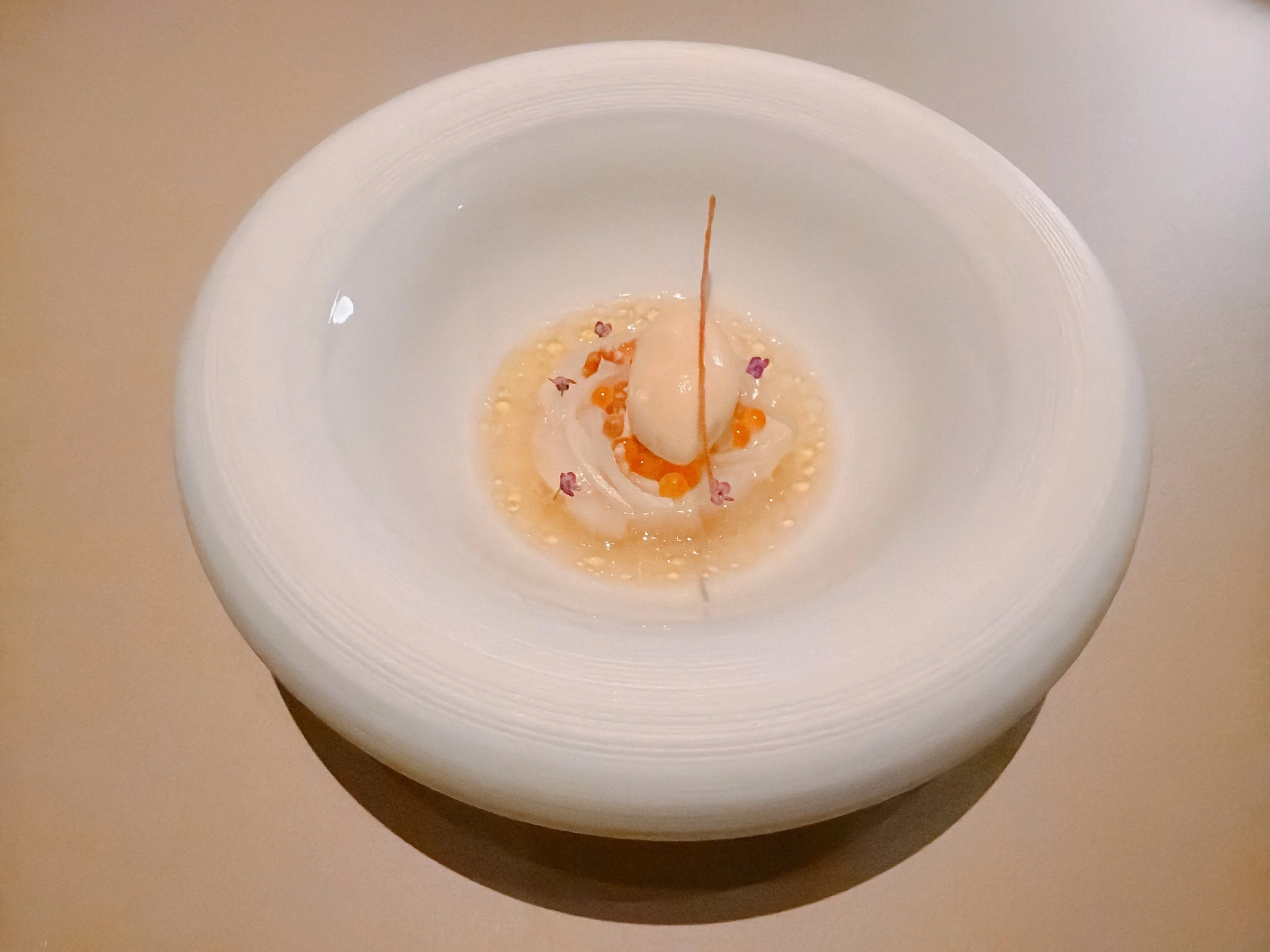
A chopped scallop was served with some radishes, goose berries, and a coral ice cream. The ingredients here were all very good: the coral ice cream had an interesting, seafood-adjacent flavor, the radish was nicely crunchy, and the scallop creamy in texture, all served with a citrusy sauce. Definitely tasty, but somehow not coming together as more that the sum of its parts 17.
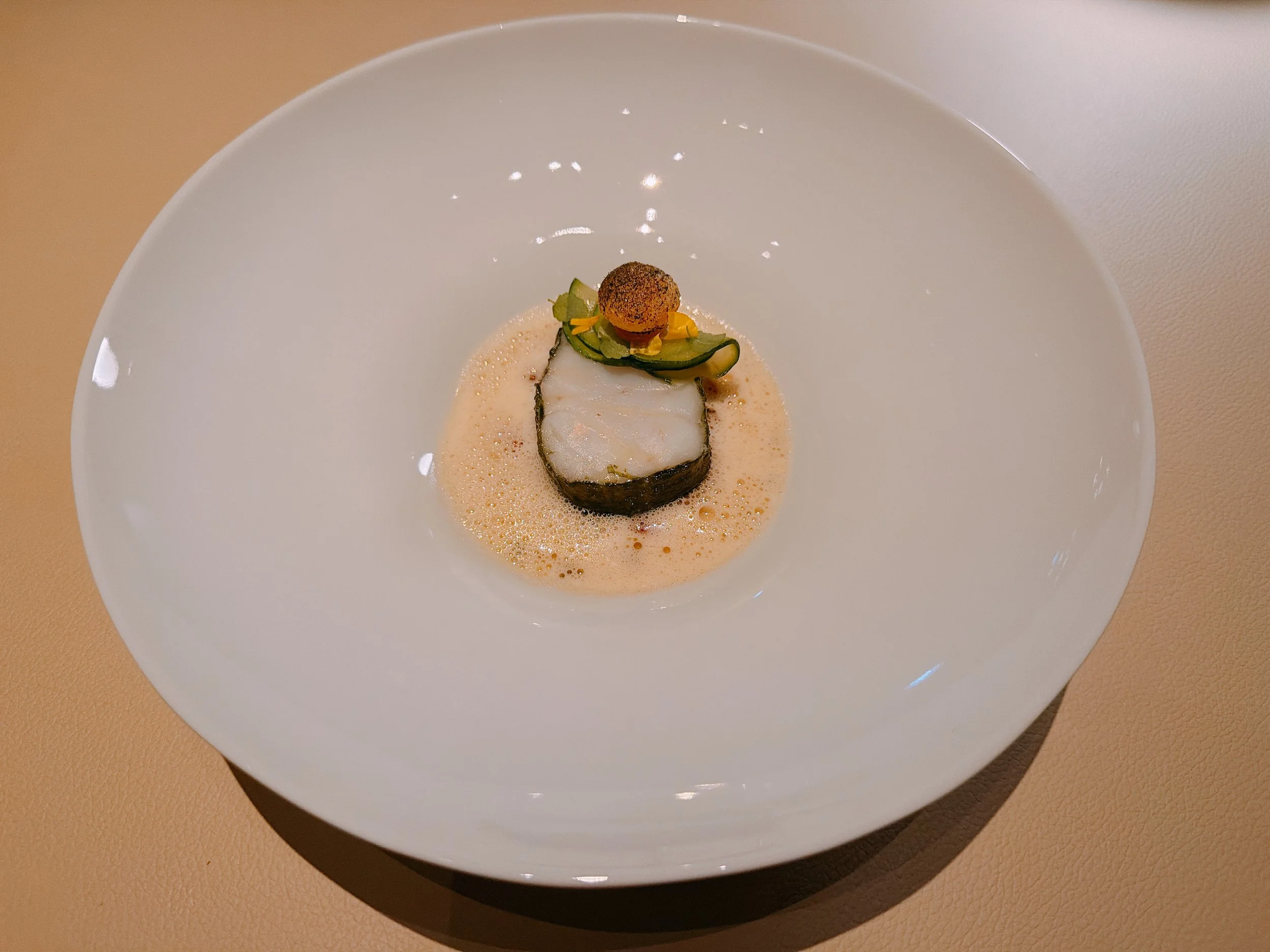
Nori-wrapped pikeperch was served with small pieces of grilled peach and a sansho pepper beurre blanc. The fish filet was cooked to a firm texture, and went wonderfully with the beurre blanc. The peach was an oddly sweet addition to an otherwise savory dish, diminishing its impact somewhat 16.
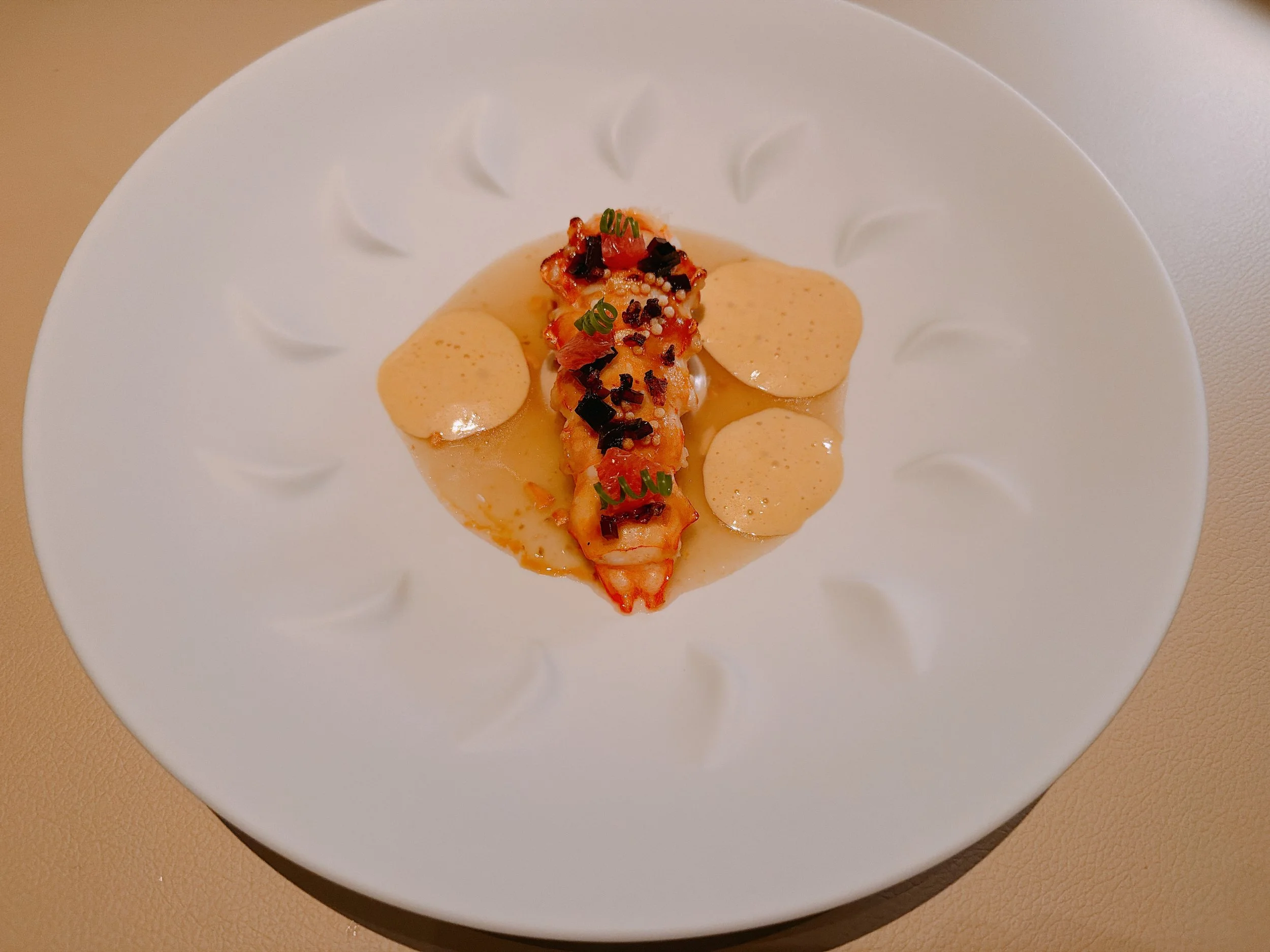
The Norway Lobster returned in the following dish, but this time in grilled form. It came with a yuzu-kosho vinaigrette, white almonds, and a hollandaise made with the lobster leftovers. Saying that this dish had bold flavors would be an understatement. The vinaigrette was extremely strong and very salty, the almonds were close to overpowered in comparison. The lobster itself was lovely, and had a lightly grilled flavor. Overall, this might have been even better with a slightly toned down sauce 17.
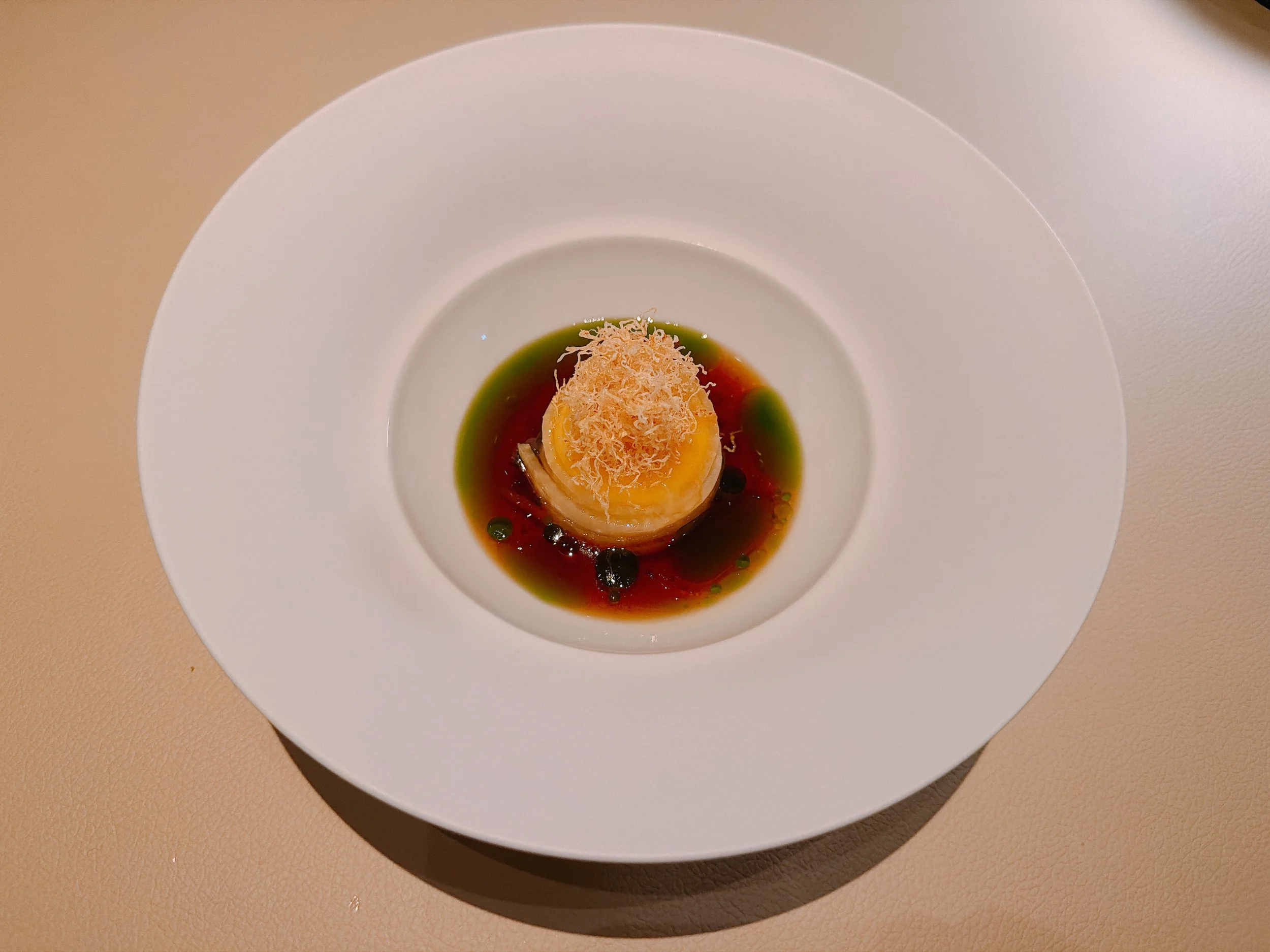
One of the chef's signature dishes was a pickled celeriac served with a soft egg yolk, a vermouth-vinegar sauce, a parsley salad, parsley foam, and a quail consommé. An enjoyable dish that felt more like a noodle soup than anything else, where the celeriac, cut into strips, played the role of the pasta 16.
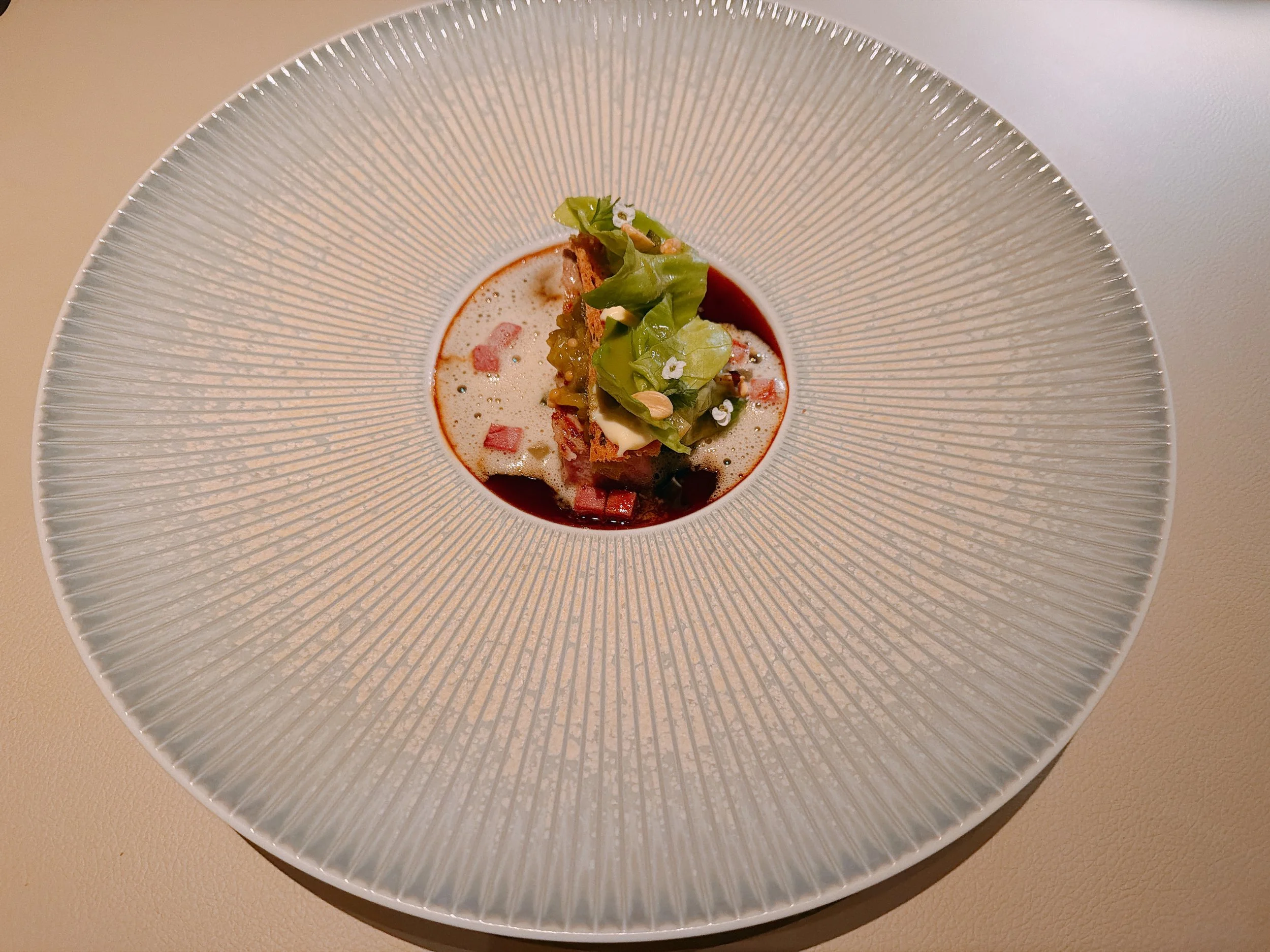
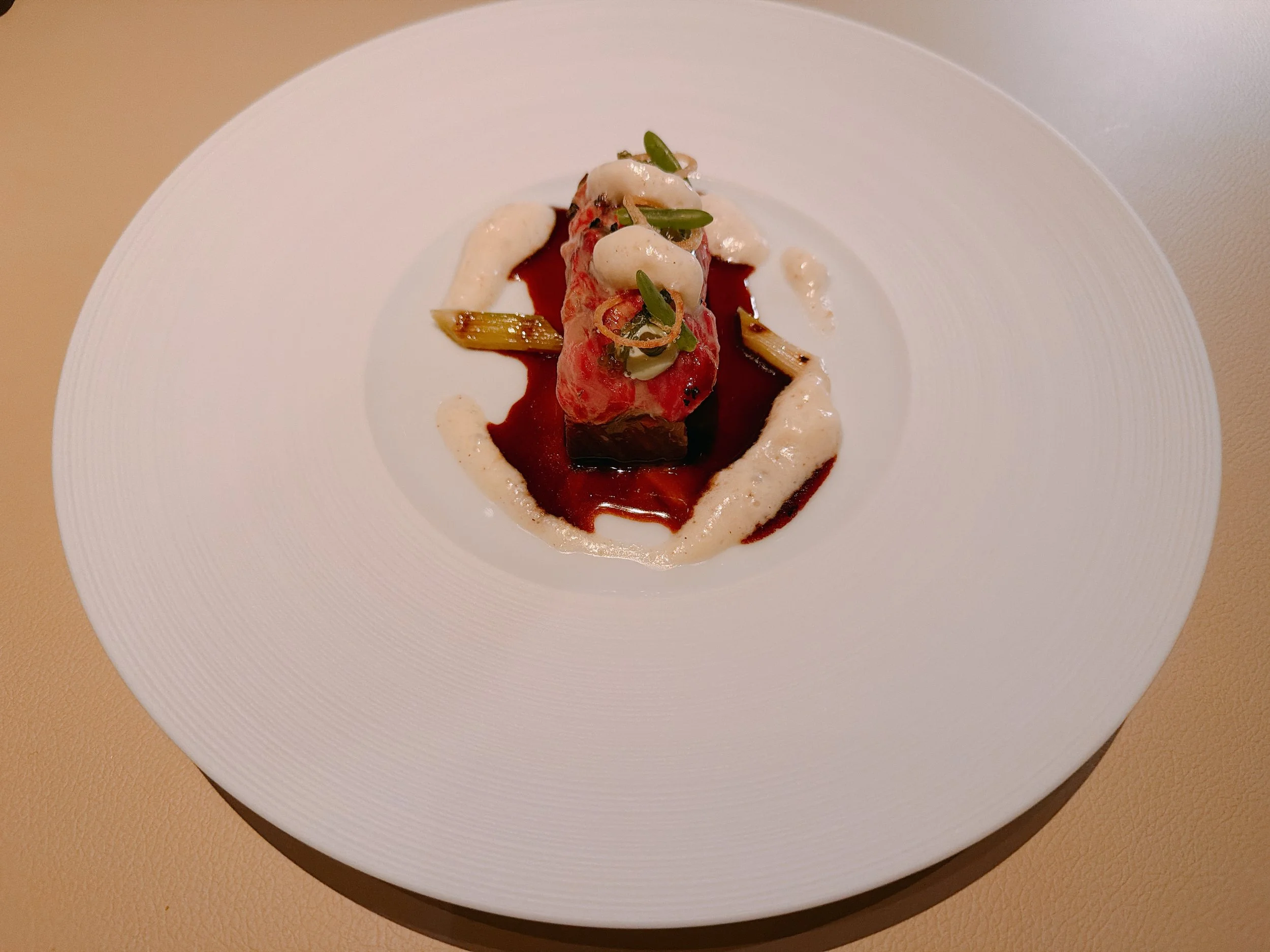
For the main savory course, we had the possibility of upgrading the dish. So naturally, we tried both choices. The standard option was a veal filet served with lettuces, salted lemons, and veal jus. The veal's topping tasted almost like pepperoncini - peppery and a bit spicy. Overall, a somewhat rustic, but otherwise good presentation of veal 17. The optional replacement (for 59 Euro, $65) was a wagyu shortrib, served with a romano salad, alliums, and a pepper jus. The beef was extremely tender, which in some sense was not bad, but a tad more texture might have made this dish even better. The onions were a nice addition to the beef, but in the end, this dish had one main problem: it was just way too salty. Even my dining companion (aka my sister) who has been known to proactively bring her own salt shaker to restaurants said that this dish verged on being inedible due to its saltiness. I guess my tolerance for salt (and presumably now blood pressure) is somewhat higher, but this could definitely be toned down 16.
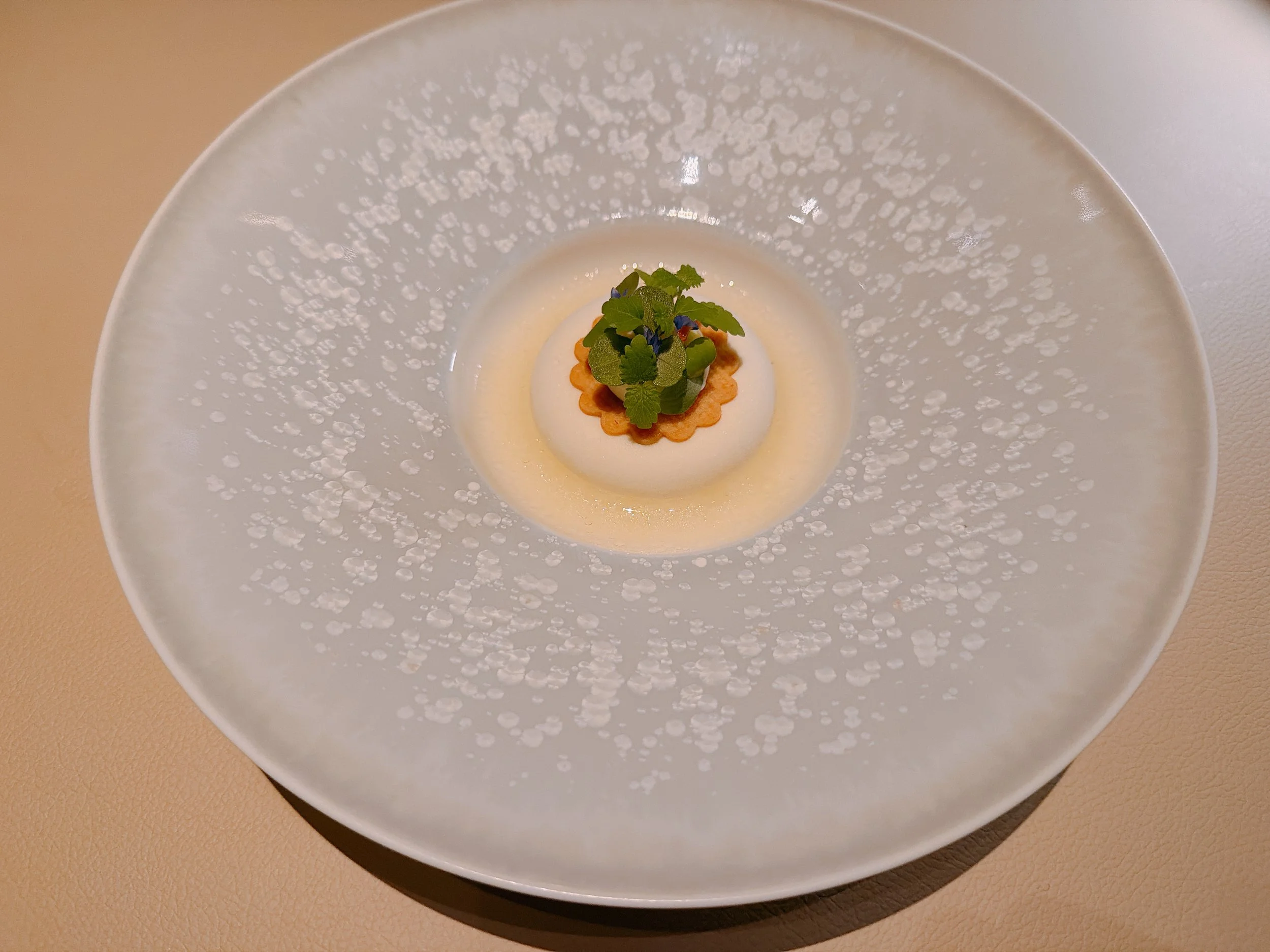
The first dessert was called a “currant bush”, and had been made from its namesake, using pretty much the whole bush (stem, branches, leaves) apart from the berries themselves. So there was a currant leaf jus, a whey vinaigrette made with the currant bush, an ice cream, a cookie, and some currant leaves on top. A tasty, creamy dessert with a light fruit flavor reminiscent of black currants. Quite impressive to achieve this without using any actual fruit 18.
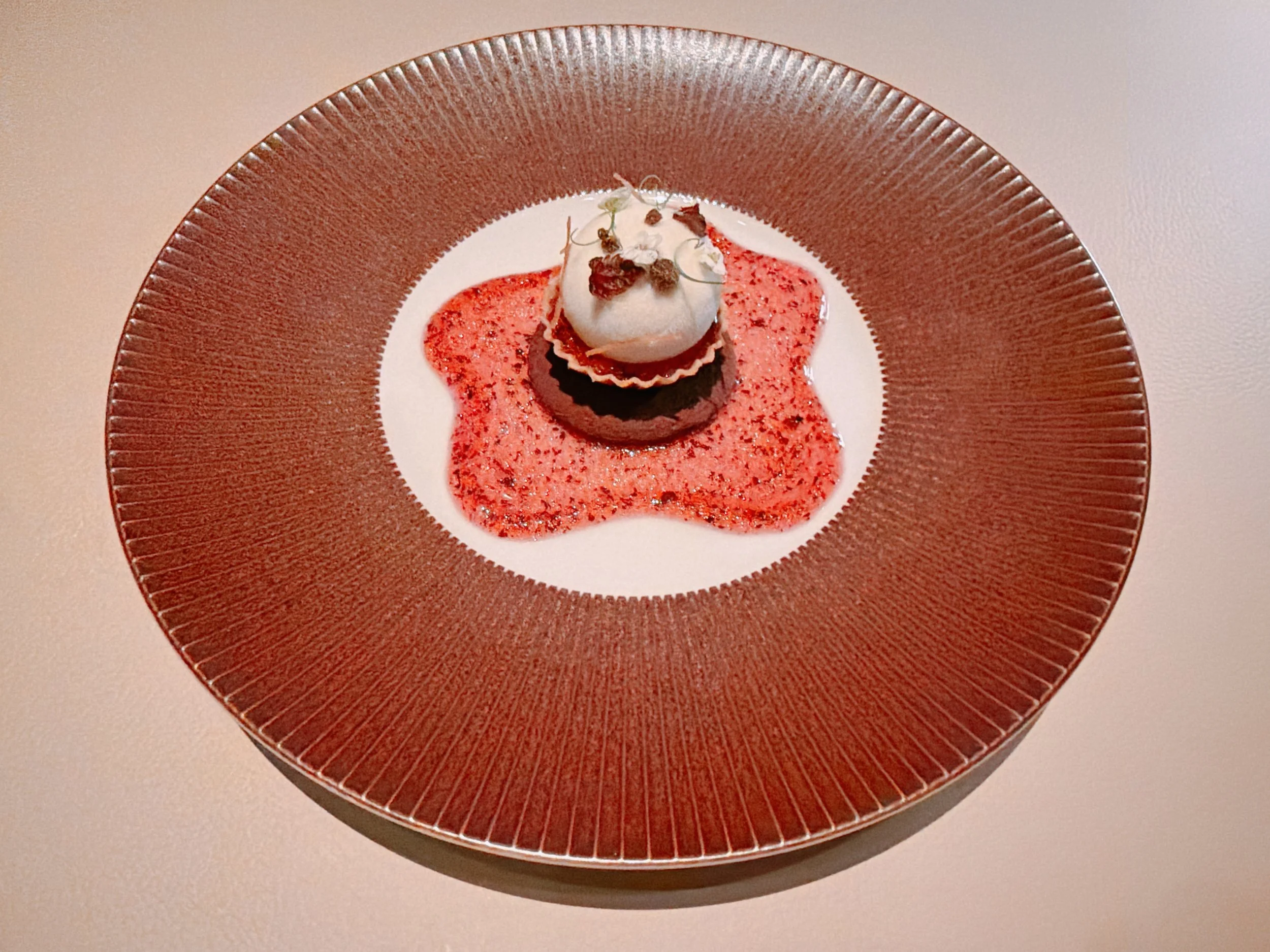
The following two dishes were served at the same time. First, we tried a dish of sourdough miso topped with a sourdough bread ice cream and 75% dark chocolate, all surrounded by a red shiso/strawberry sauce. An interesting dish that was not very sweet, and had a very light fruity note 16.
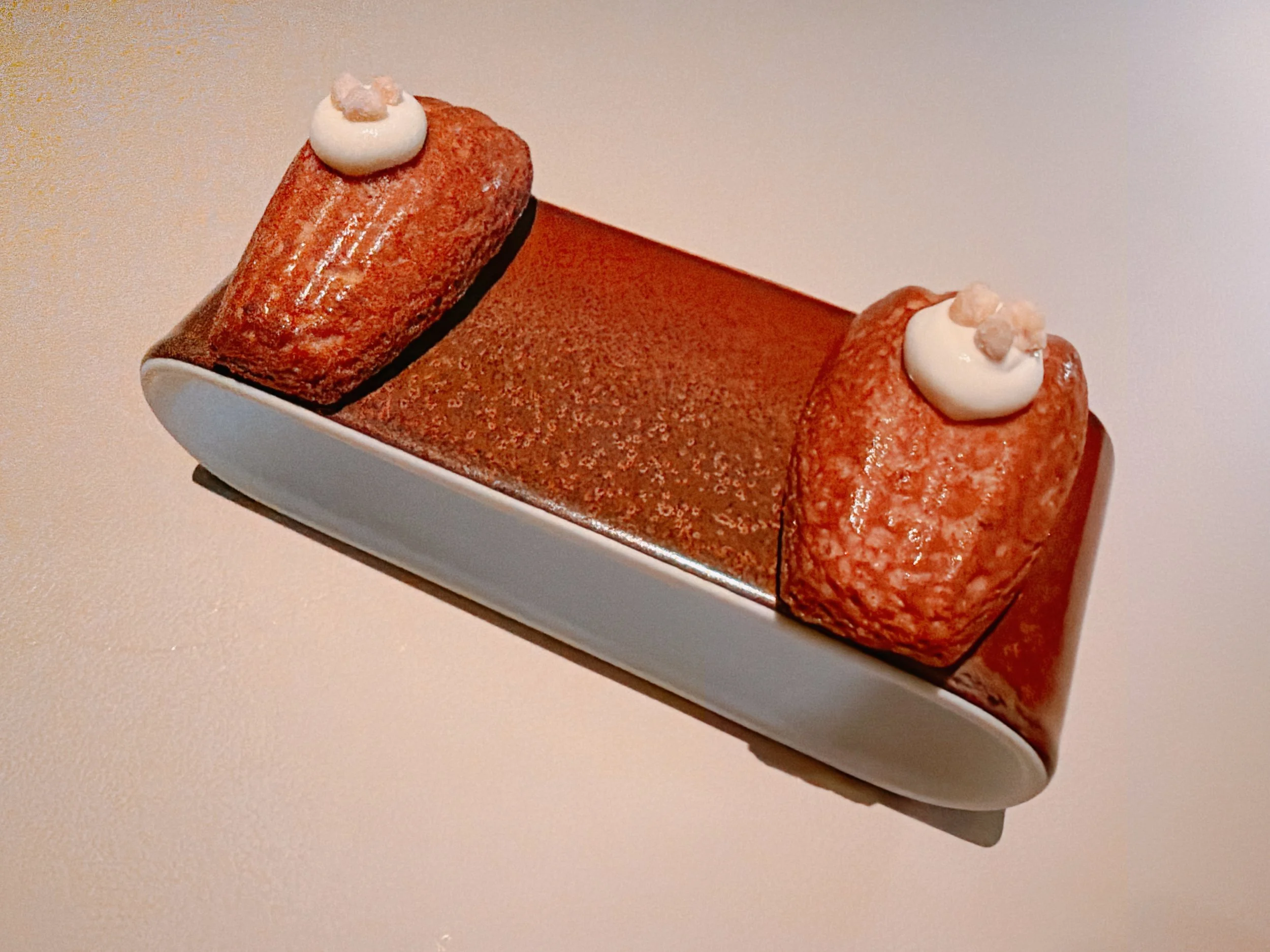
After that, we had a Madeleine topped with whole milk cream. Fine, but on the doughy side 15.
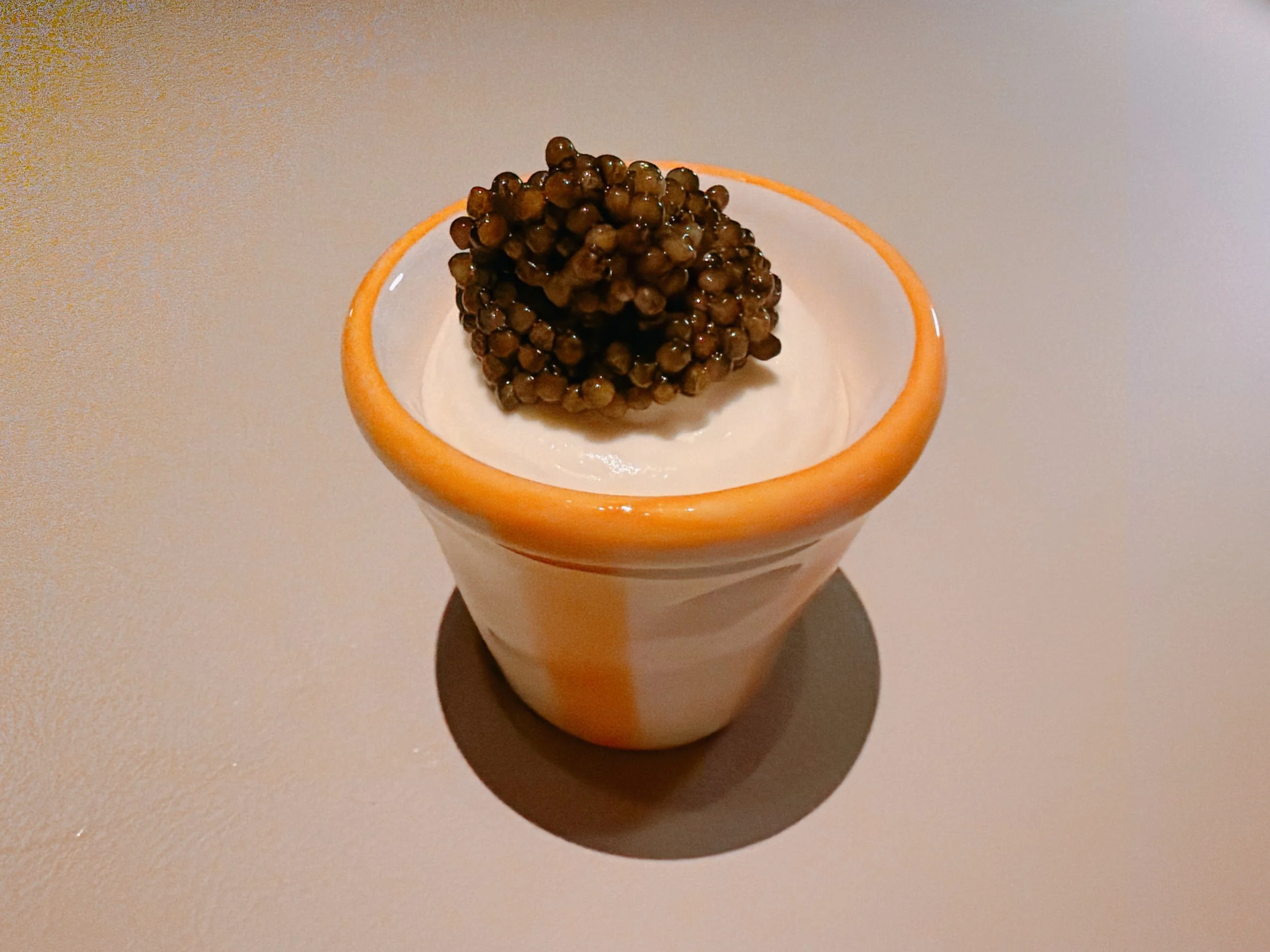
The final dessert was based on corn flakes milk (i.e. the milk left after the morning's corn flakes were gone). The dish consisted of a corn flakes milk/white chocolate mousse, a corn flakes milk ice cream, some corn flakes crumbles, a bit of nori seaweed powder, and finally a dollop of caviar. Two things were notable about this dish: (a) it was very heavy, thanks to lots of thick cream, and (b) it didn't have much of a corn flakes flavor apart from the corn flakes pieces. The caviar felt a bit wasted on this sweet dish - it merely provided a hint of saltiness. The obvious comparison for this dessert would be the famous corn flakes soft serve ice cream from New York's Momofuku Ko (or, these days, Milk Bar). Unfortunately, Momofuku Ko's version was more compelling: it was much lighter (thanks to being soft serve) and also much closer in flavor to actual corn flakes milk 14.
Overall: This was a dinner full of big flavors that sometimes overdid it a bit on the salt front. The seafood-heavy dishes were generally on the lighter side, skipping cream and butter in favor of vinaigrettes and dashis. The chef's style does not easily fit into a traditional culinary mold, but is rather international in terms of flavors and ingredients. In that sense, it is probably a better fit for Frankfurt and its major airport than it had been at the chef's previous restaurant in the middle of the Black Forest 17.