Kiln - San Francisco
Main dining room
Rating: 16/20
Where: San Francisco, CA
When: Dinner for 2 on 25 February 2026
Cost per Person: Tasting menu $305, Wine Pairing $165-$350
Accolades: 2 Michelin Stars
Why: Seafood-heavy cuisine with some use of fermentation; a few stellar dishes
It’s a quarter past six in late February, and the sun has just set on San Francisco. It is a temperate night, and as the lights in the city are turning on, the sidewalks are filled with a blend of of pedestrians, some on their way home, others looking forward to a night on the town. Weaving among them, near Civic Center, are two runners, breathlessly uttering “excuse me”s when passing, and some choice swear words whenever they are stopped by a traffic light. By San Francisco standards, this is not a particularly remarkable sight (in fact, it would take a lot to be considered "a remarkable sight" in San Francisco). So one might not notice that the two aren't actually dressed for running. Perhaps they are late for the symphony? Or headed to the lively indie concert venue in front of which they finally slow down? No, they are actually going next door - to an establishment whose tinted windows give no indication about what might be behind its similarly opaque door.
Our destination that night was “Kiln”, the sole Michelin-starred restaurant in a part of town where “nice restaurant” long used to be synonymous with serving a pre-symphony prix fixe. Kiln opened in May 2023, and is run by former employees of “Sons & Daughters”. Chef John Wesley prepares a Californian cuisine that uses lots of local produce, and gives it a contemporary spin by occasionally employing techniques such as fermentation and cooking over coals.
Within a year after opening, Kiln received its first Michelin star, and a second one only a year later. We had eaten here once before, just after the first star, so it felt high time to return and see how the cuisine had evolved.
"No silverware for you!"
Alas, before we get to the food (which was quite good), let me relate a brief tale of woe entitled “Our Inadvertent Run-Ins with Kiln’s Restaurant Policies”. (Feel free to skip.)
Kiln has a policy of not modifying their tasting menu for any reason. So if you find yourself unwilling or unable to eat some of the courses, you can either skip them entirely or the restaurant “can still present those dishes but not bring silverware so [the rest of the party] may enjoy both portions”. Huh? The pescatarian in our 2024 dining group had the audacity of asking for silverware with her meat dishes. What followed was an uphill battle with our server (“why do you need silverware when you’re not going to eat the dish?!”), a progressively heated argument about whether she was allowed to have silverware - in a restaurant, of all places. Not something I had ever expected to see - maybe in a Seinfeld episode, but not in real life.
I later learned from Kiln's co-owner Julianna Yang that the “no silverware” rule was intended to prevent diners from accidentally eating a dish that conflicted with their dietary restrictions. That might be a noble idea in theory, but it really sounds like a service that should be offered as an option, not enforced aggressively irrespective of a diner’s wishes. (Not to mention that it doesn’t provide any help with finger foods.) Other restaurants manage to treat their guests as adults who can figure out themselves whether or not they want to eat a dish - especially after hearing a recited list of ingredients.
On our return visit, we had planned to avoid any such awkwardness by simply skipping the problematic dishes. Unfortunately - totally our fault -, we ran late for our reservation. When we called ahead while stuck in traffic, we were reminded of Kiln’s strict 15 minute grace period after which our prepaid reservation would be forfeited. But the hostess then allowed that “just today, as an exception, you can have 20 minutes”. Hence our impromptu sprint to the restaurant, where we ended up 19 minutes late. Surprisingly, the main dining room was entirely empty on our arrival, and would never become more than half-full for the remainder of the night. Why then threaten to cancel our reservation rather than saying “don’t worry, just drive safely” as most other comparable restaurants would have done? I don’t know, but it didn’t leave us feeling overly welcome.
In better news, for the rest of our evening, the restaurant's service (and much of the food) was wonderful - much as you'd expect based on the two Michelin stars, making the prior interactions feel even more incongruous.
"I'm just here for the food"
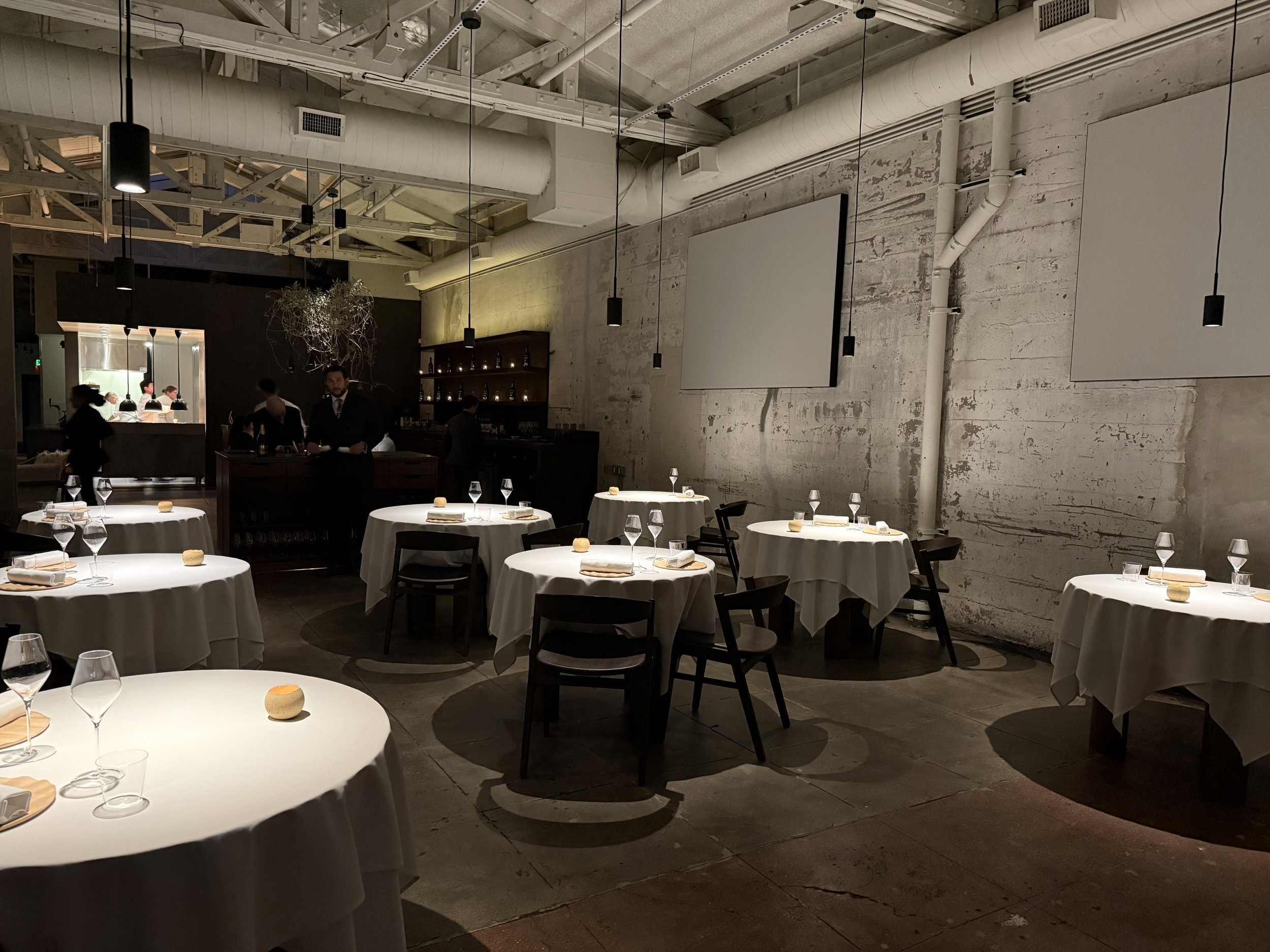
Entering the restaurant, we admired its industrial modern interior design: high ceilings, exposed concrete, patchily white-washed walls, visible piping, large framed canvases (white, sans art) on the walls, and tinted glass windows facing the street. A chef's table was located right next to the open kitchen, and ten wooden, tablecloth-less dining tables were placed closer to the windows. All eleven tables were technically in the same “room”, but the (relatively) loud background music meant that one didn't have to worry about overhearing other guests. On the Wednesday night of our dinner, the private dining table and five of the ten tables in the main dining room were occupied.
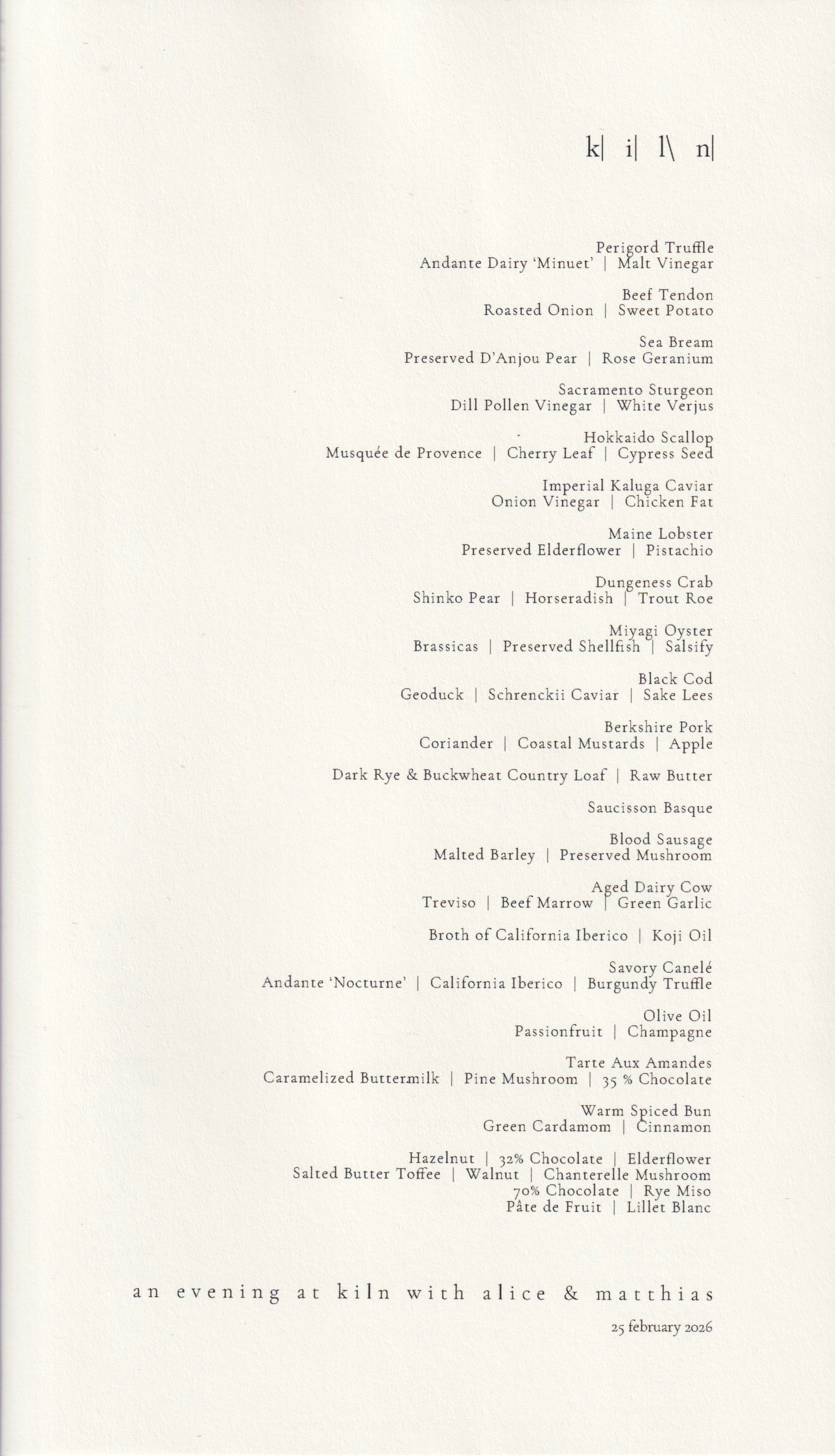
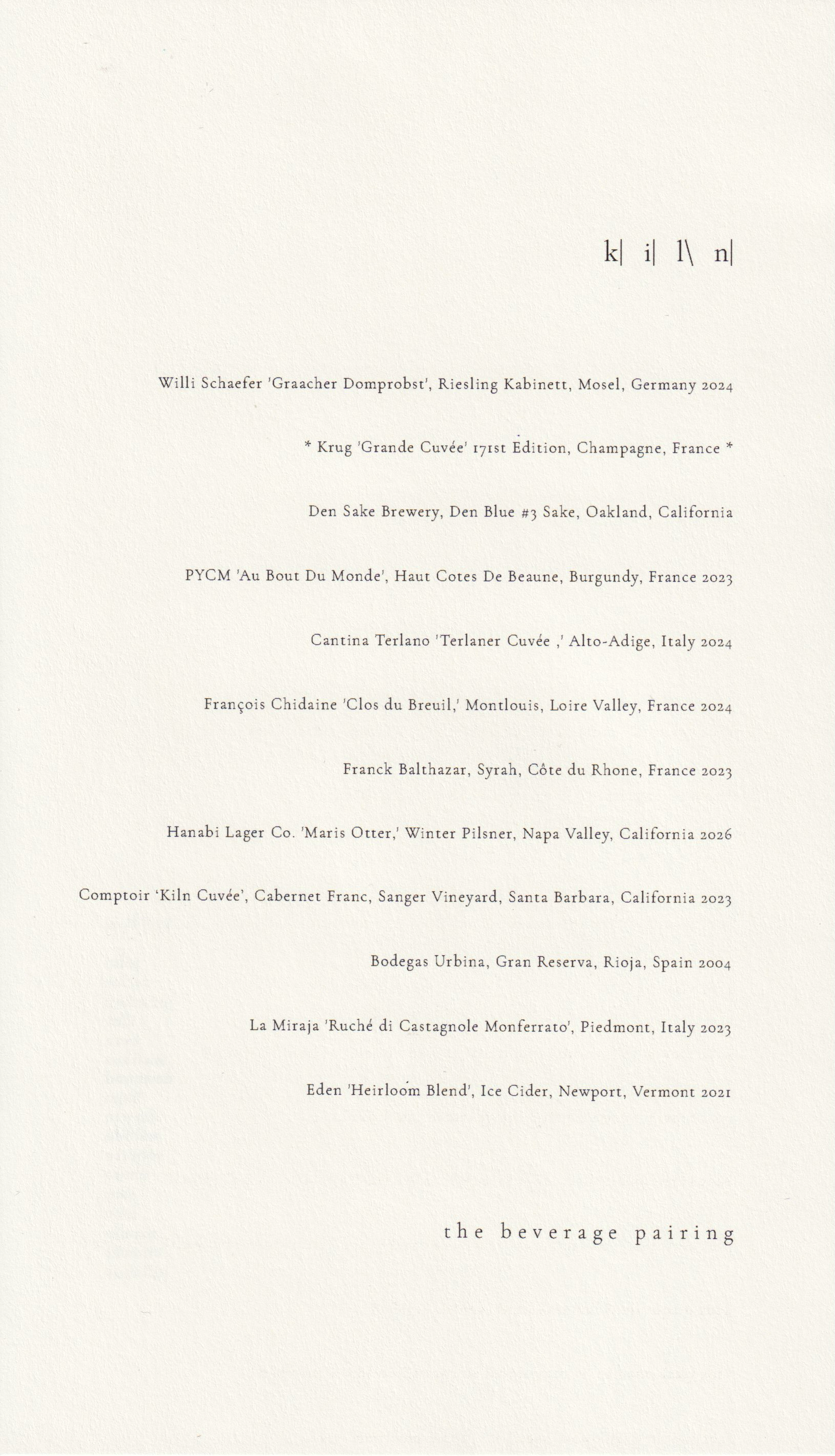
Kiln served a single tasting menu of about twenty courses for $305, with the option (on our visit) to add an additional caviar course for $95. Three beverage pairings were also available: two nine-glass wine pairings for $165 and $350, respectively, and a non-alcoholic pairing for $135. I tried the lower-priced “wine” pairing, which actually also included one glass each of sake, beer, and cider. The wines were all quite good and fit the food well. The corresponding bottles would generally have retailed in the $40-$50 range, making this a typical bang-for-the-buck among wine pairings. Ordering by the bottle would obviously be more cost-effective.
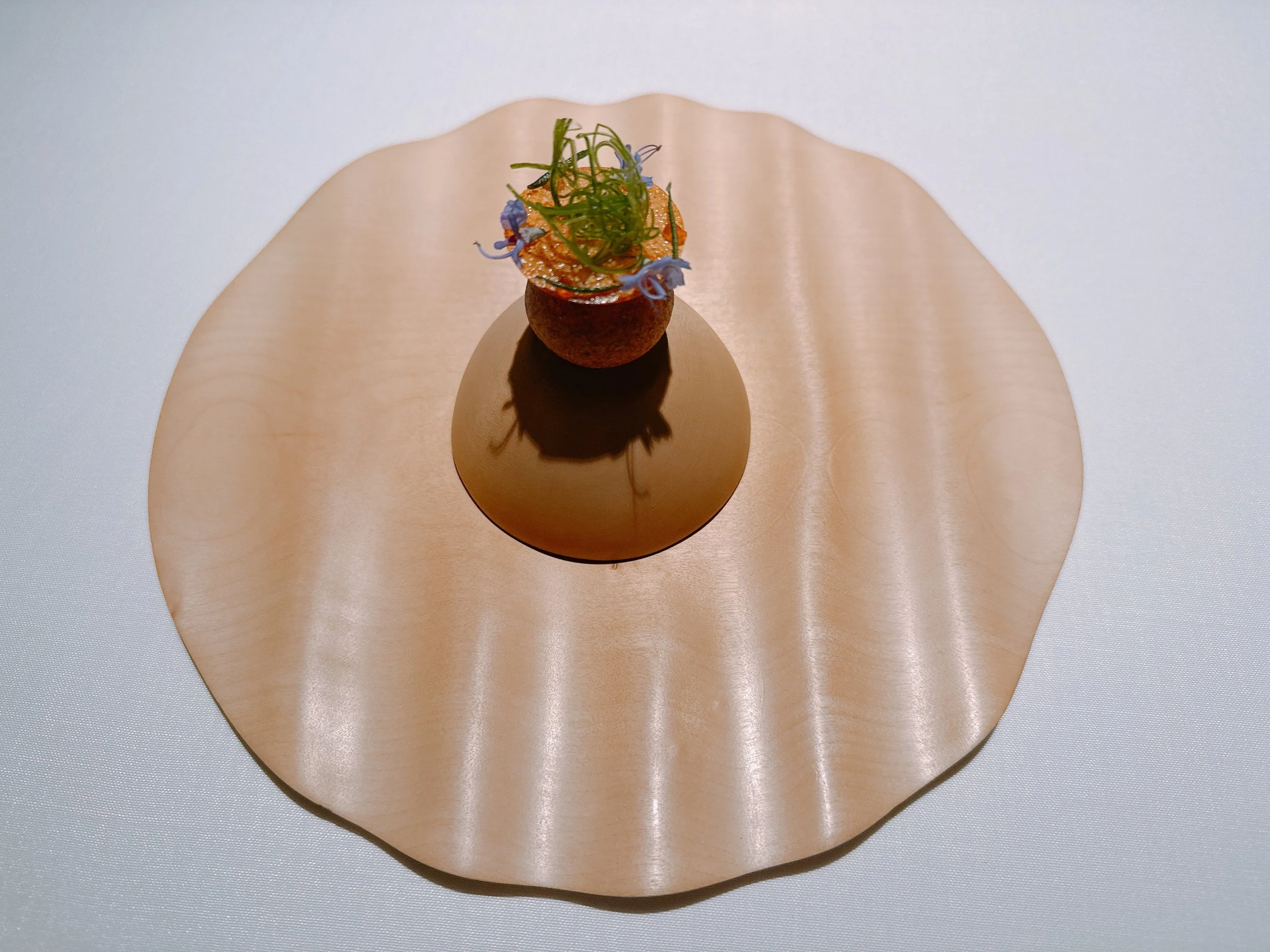
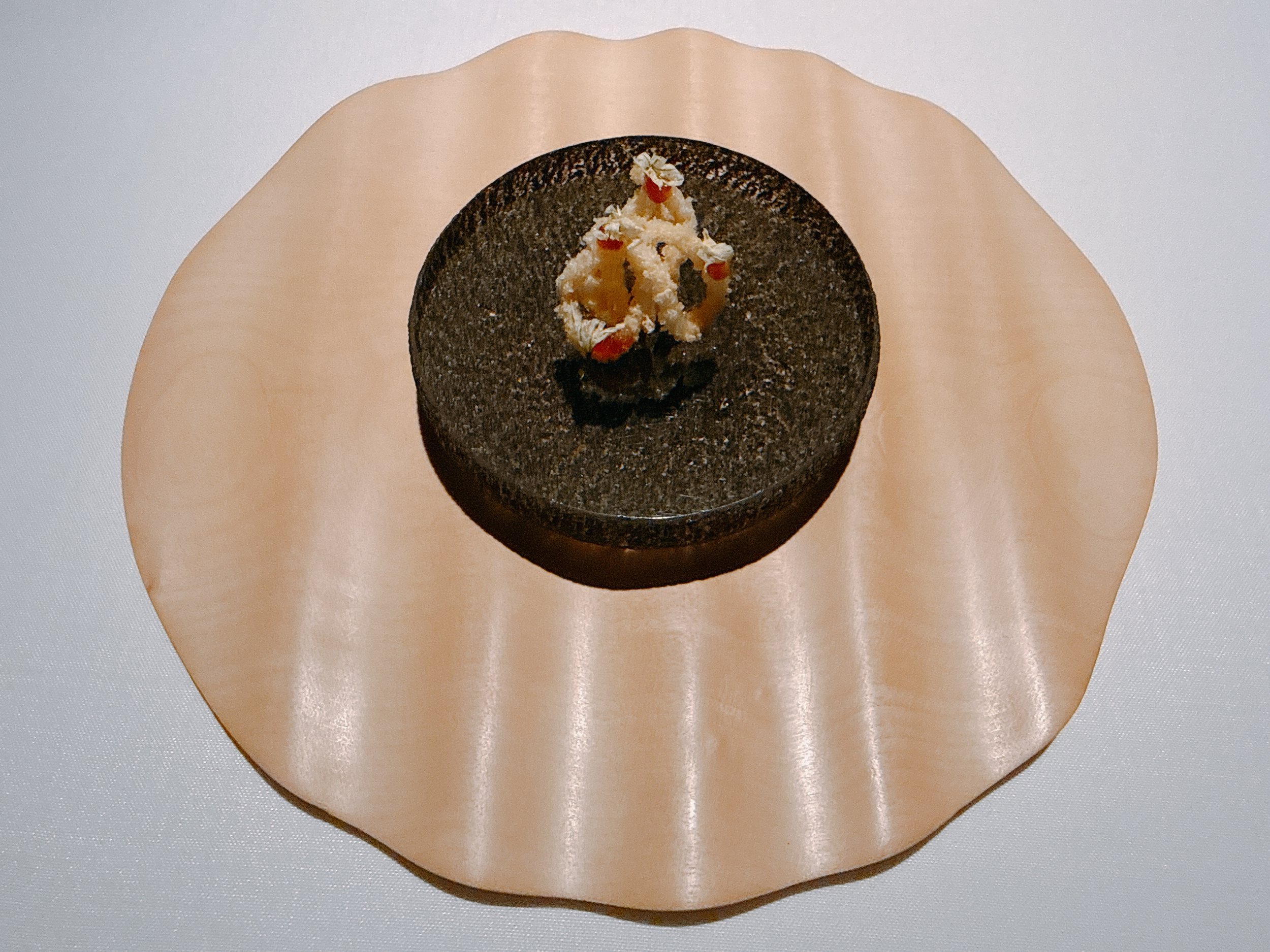
Our evening started with several smaller bites. First up, a beignet made with Pilsner beer. It was filled with a Perigord truffle custard and goat cheese from local Andante Dairy, and seasoned with malt vinegar. The first flavor one encountered were the truffles in the creamy filling. The beignet itself was somewhat thick and heavy for an early bite. I couldn't make out much acidity from the vinegar, unfortunately - it might have lightened the dish up a bit 15.
Next came a puffed beef tendon covered with sweet potatoes and seasoned with vinegar. This was a crunchy, not too fatty bite, but without much taste except from the sweet vinegar 14.
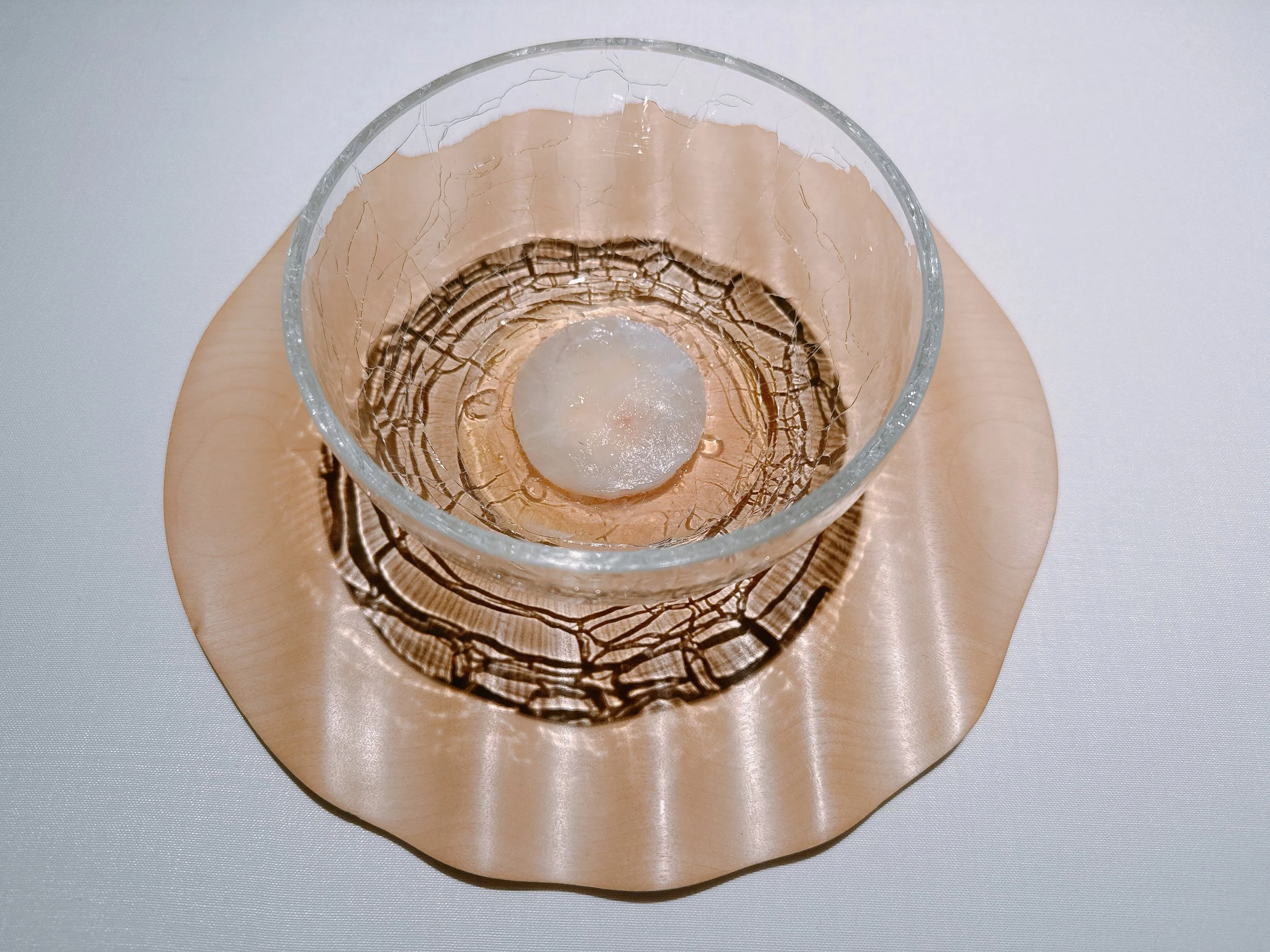
Japanese sea bream was served with brined D'Anjou pears, sansho pepper and a rose-geranium broth. This was a light dish, not spicy at all - if anything a bit sweet and fruity from the pear. There was some acidity, but it was also pretty light. The fish was tender, and the combination of the lightly-flavored fish and the pears actually worked pretty well 15.
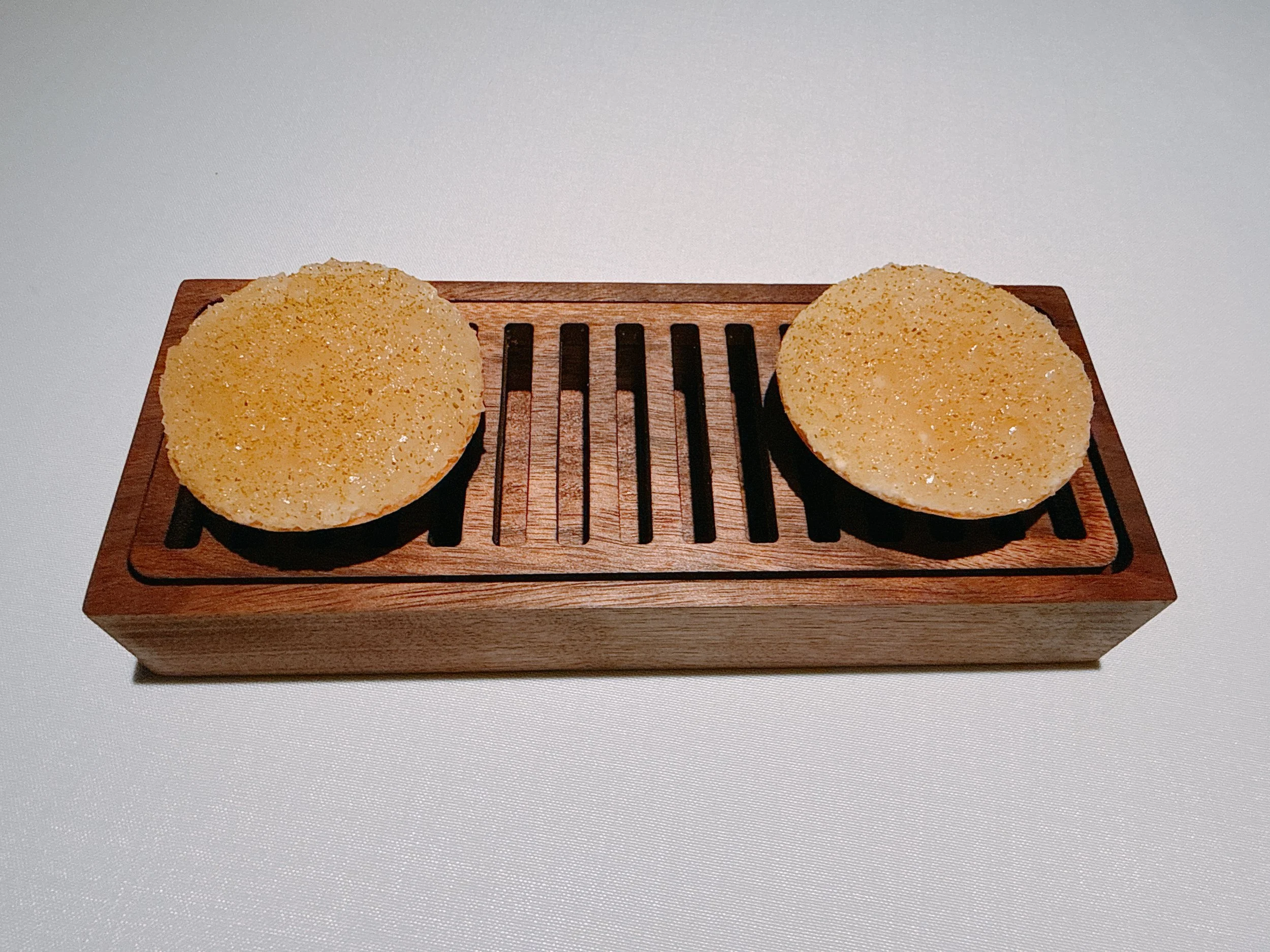
A little tartlet was filled with a smoked sturgeon mousse and topped with a verjus jelly and dill powder. The filling was very creamy, with a light fish taste that was unfortunately overpowered by the much stronger flavored verjus. We could smell the dill, but barely taste it. Less emphasis on the verjus jelly might have made this a more balanced dish 14.
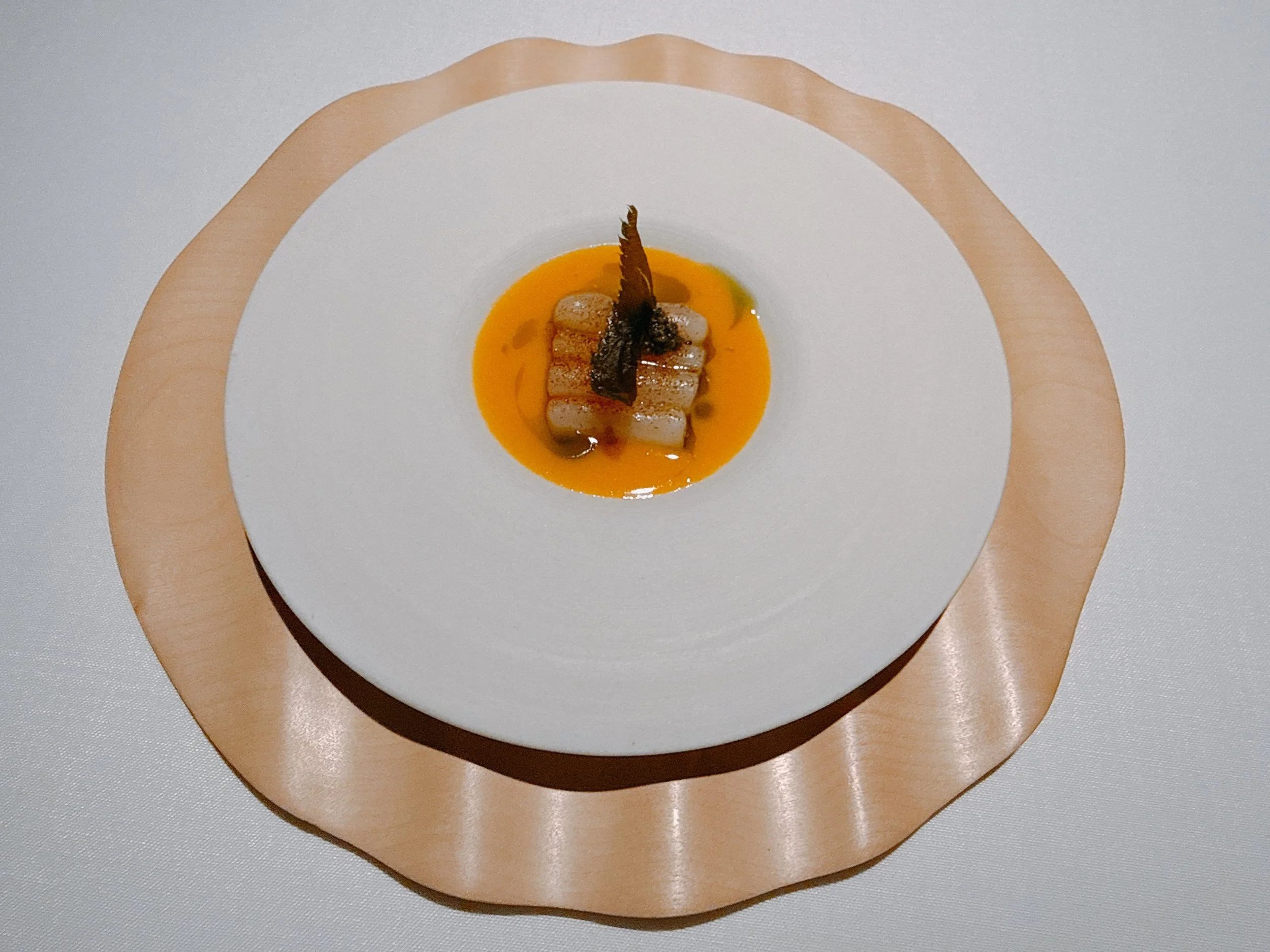
Scallops from Hokkaido had been cooked over the fire, cut into bite-size pieces, and then served with a sauce made from fermented squash, cherry leaf oil, cypress seeds, and a crispy cherry leaf on top. The scallops were perfectly cooked and very tender. The sauce was even better: flavorful, complex, with notable acidity, and only a light squash flavor (and therefore not too much sweetness). A winner, and the first clear sign why Michelin gave this restaurant two stars 18.
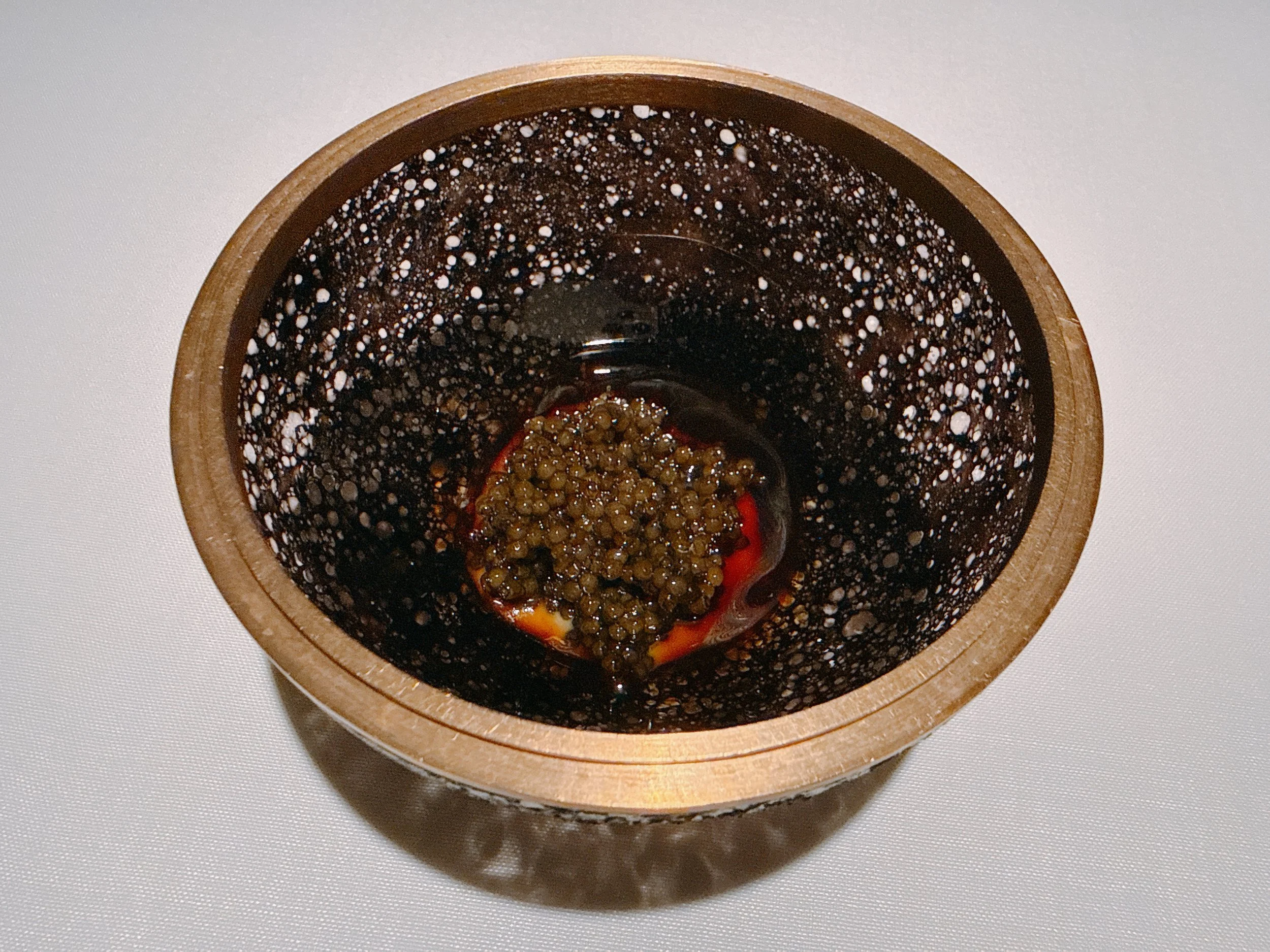
At this point, we received the optional caviar course - we shared one portion between the two of us. Kaluga hybrid caviar was served in a bowl with two “sauces”. First, a cream made of hen fat and bay leaf, and second, a sauce made from pickled and roasted onions. The caviar was lovely on its own, but was overwhelmed flavorwise when eaten together with the sauces. The first sauce added a notable chicken taste and a creamy, fatty texture, but tastewise, the sweet and acidic onion sauce dominated this dish. I liked the attempted complexity of this presentation, but am not sure whether this fully worked as intended. Probably safe to skip next time 15.
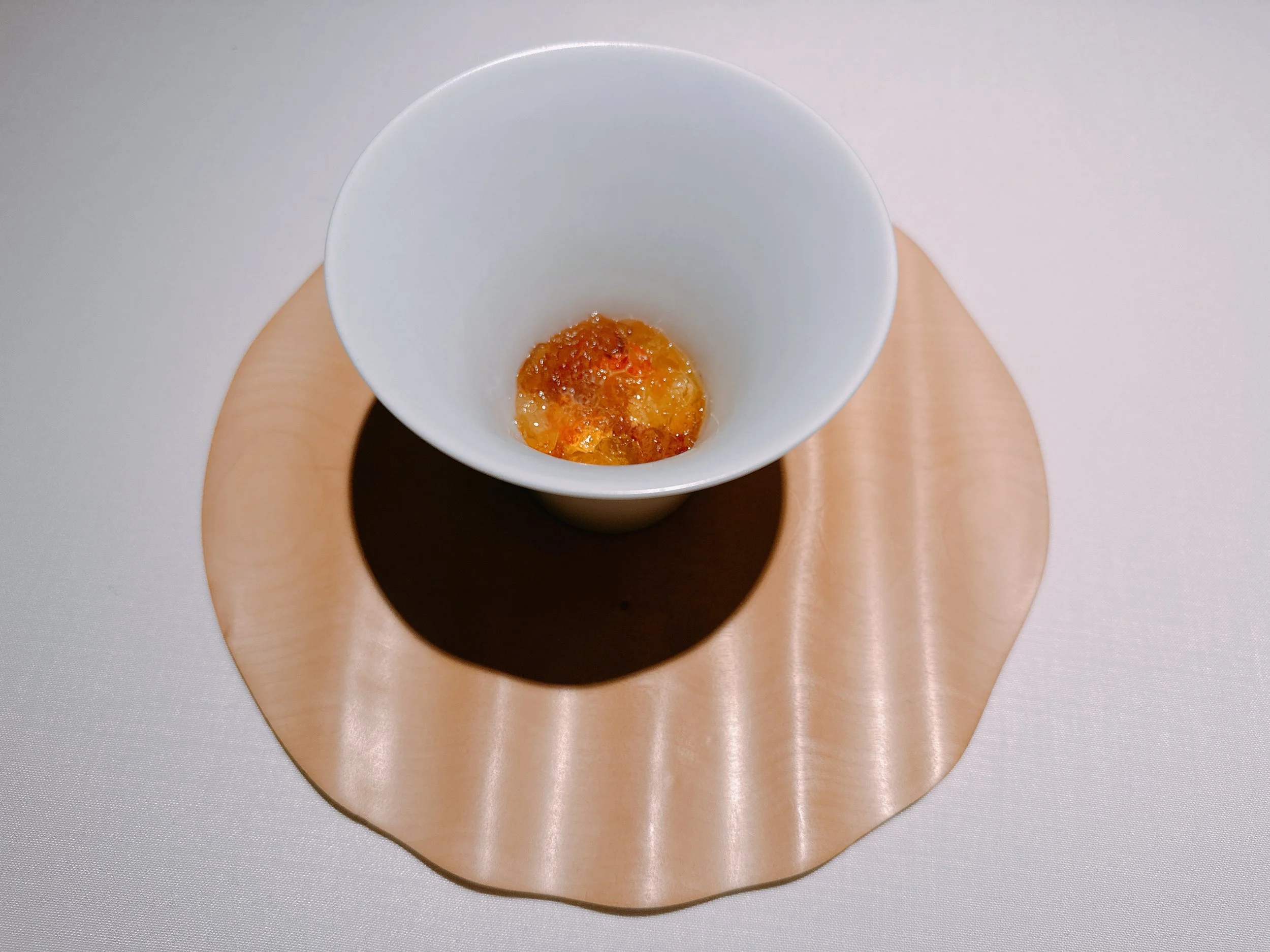
The next course was again served in a bowl, this time filled with poached and then chilled Maine lobster. It was topped with a pistachio cream, pickled elderflowers, and finally a gelee made from lobster heads and pickled magnolias. The lobster was of good quality, tender but with a light bite. The jelly added a noticeable lobster head flavor, and the elderflowers provided texture and acidity to the dish. The pistachio cream’s flavor was at most very faint, so its contribution was more from its color and creamy texture rather than actual taste. Still, between the acidic flowers and lobster flavor, this was an interesting combination 16.
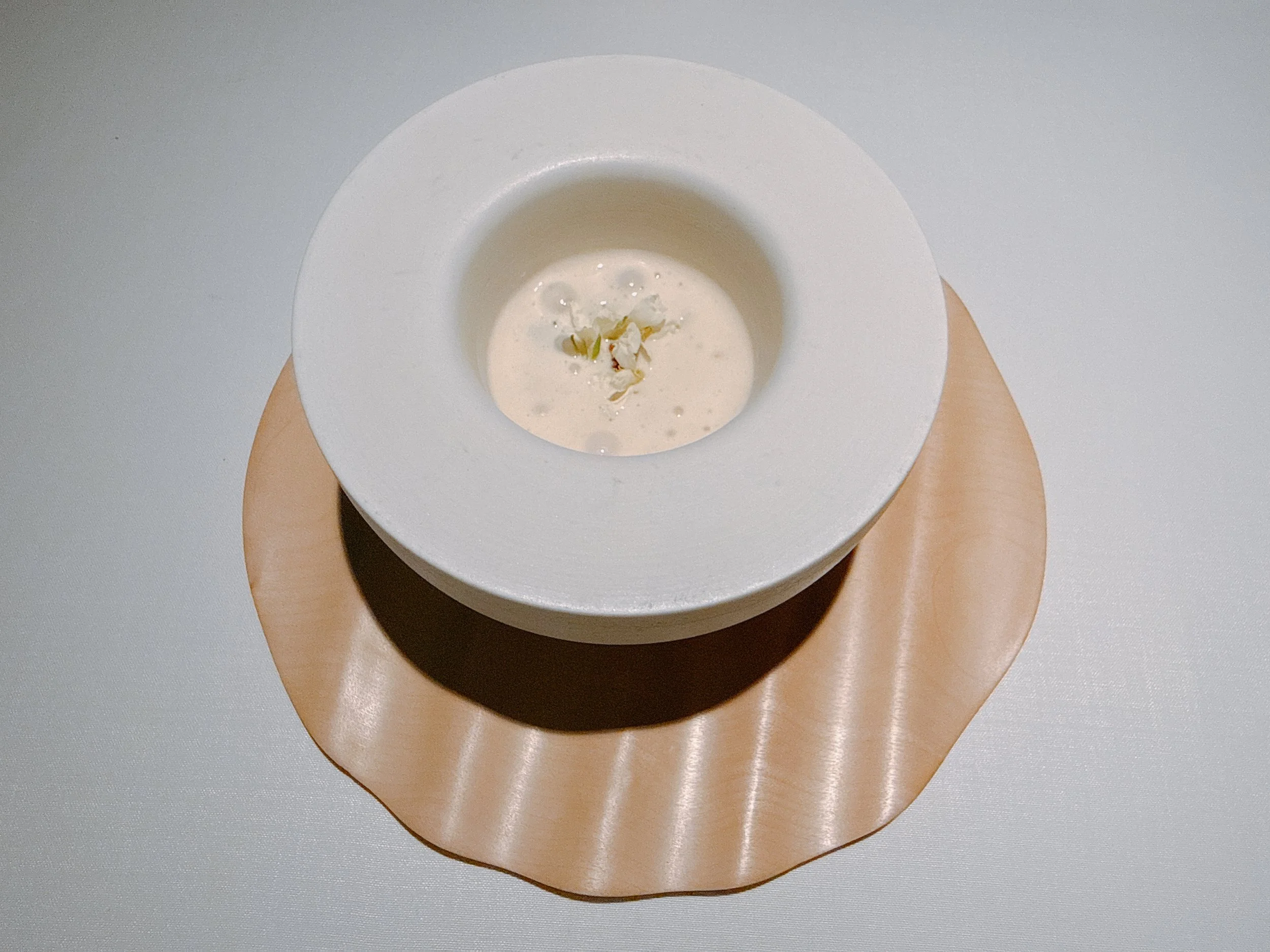
A Dungeness crab custard was served with slices of shinko pears, some trout roe, and horseradish. The dish was covered with a foam made from crab bones and roasted yeast, hiding the rest of the ingredients in the photo. From the first bite on, this dish was bursting with crab flavor thanks to the foam. The crab meat was lovely as well, the pears provided some crunch and a light fruitiness. The horseradish interestingly added some flavor but no spiciness. A very good crab dish, where the different ingredients played nicely together without upstaging each other 17.
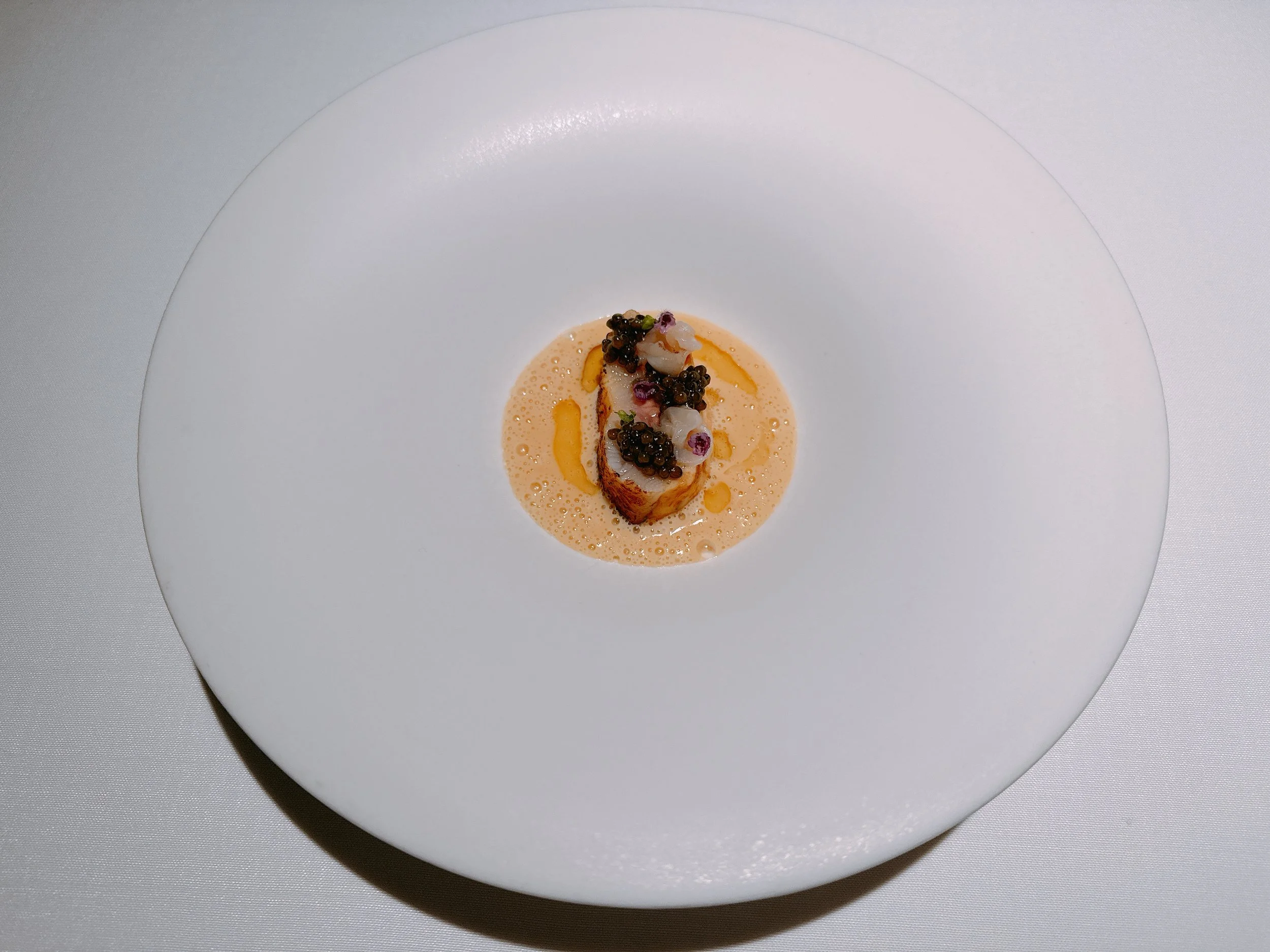
A single Miyagi oyster from Marin County (just north of San Francisco) was served with dried shellfish, brassicas, salsify, blue mussels, and a sauce made with dark beer. The oyster had a nice sea flavor, but felt only secondary to the dish. The stars here were the greens: crunchy, smoky, and full of flavor, reminiscent of what Joshua Skenes used to do with brassicas in Saison's heydays. And their flavors were further enhanced by the lovely sauce. More greens, less oyster, and this dish might become truly mind-blowing 18.
Black cod that had been poached and then finished over the fire was served with caviar, geoduck clams, a kombu vinegar, and a sauce made from fish bones and sake lees. The fish was cooked nicely - very tender, practically melting in the mouth. Oddly, the fish filet had a part that was very gelatinous, maybe from the fat under the skin? Not that bad, all things considered, but unexpected. The geoducks were crunchy, but that was apparent only when they were eaten by themselves. Otherwise, just like the caviar, they were overwhelmed by the rest of the dish. That was partly due to the lovely, complex sauce that was lightly sweet (from the lees, presumably). Nitpicks: the sauce was great, but a step down in intensity from the previous dish. Also, the fish was served only lukewarm - a tad warmer would have been even better 17.
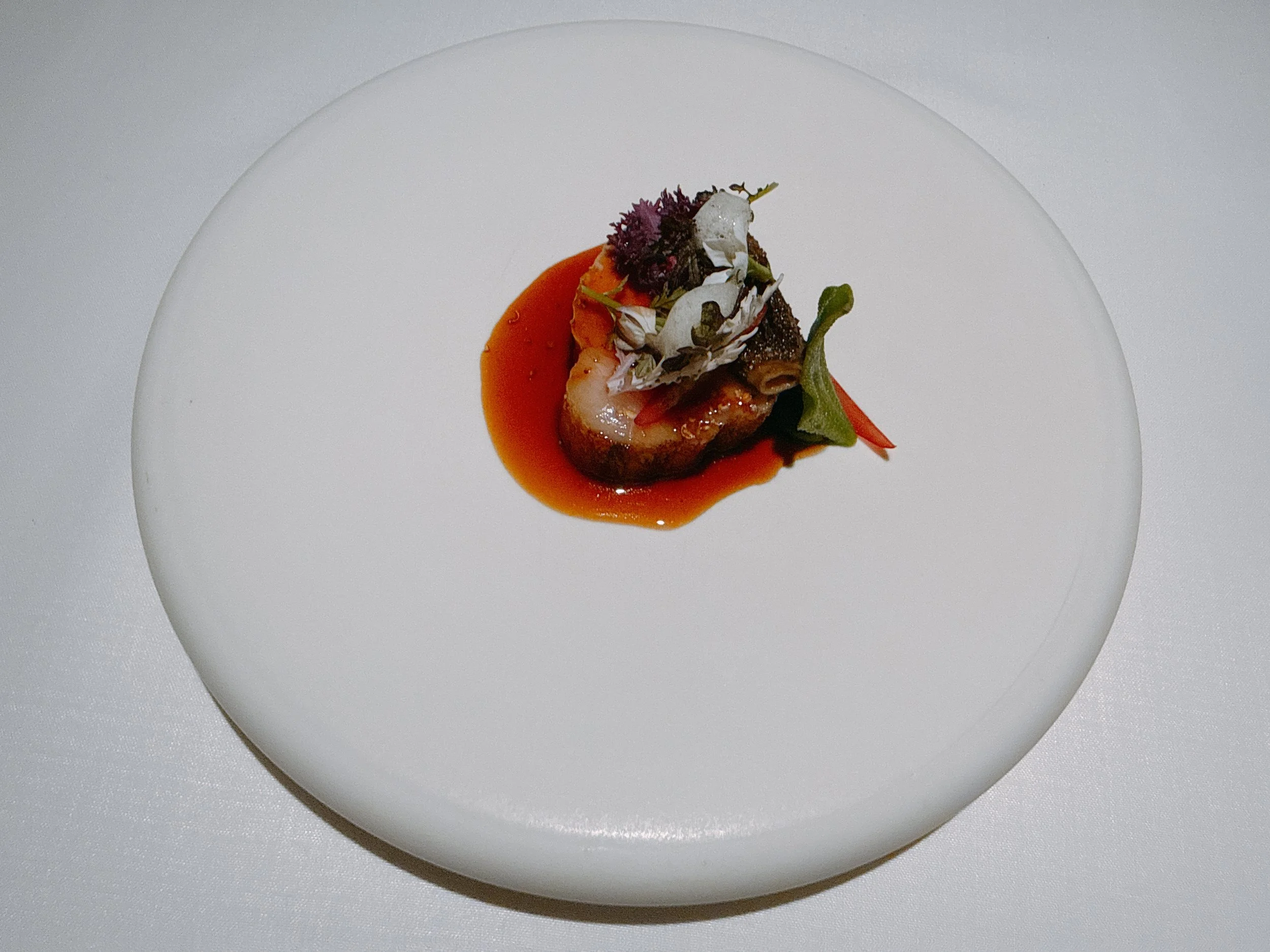
The following dish received a double pairing: a beer from Napa Valley and a Syrah from the Rhone valley. The drinks accompanied a roasted Berkshire pork sirloin glazed with a vegetable paste and topped with a morel mushroom, coriander, and mustard greens, surrounded by a sauce made from pork bones and apple cider vinegar. The pork was tender and took much of its flavor from the lovely sauce. About a quarter of the filet was pure fat - arguably a bit of an acquired taste (and not yet acquired by me, unfortunately). The morel was nice enough, but the fresh herbs really elevated this dish. They had strong flavors, were often spicy and brightened up the dish together with some pickled, acidic fruit slices 16.
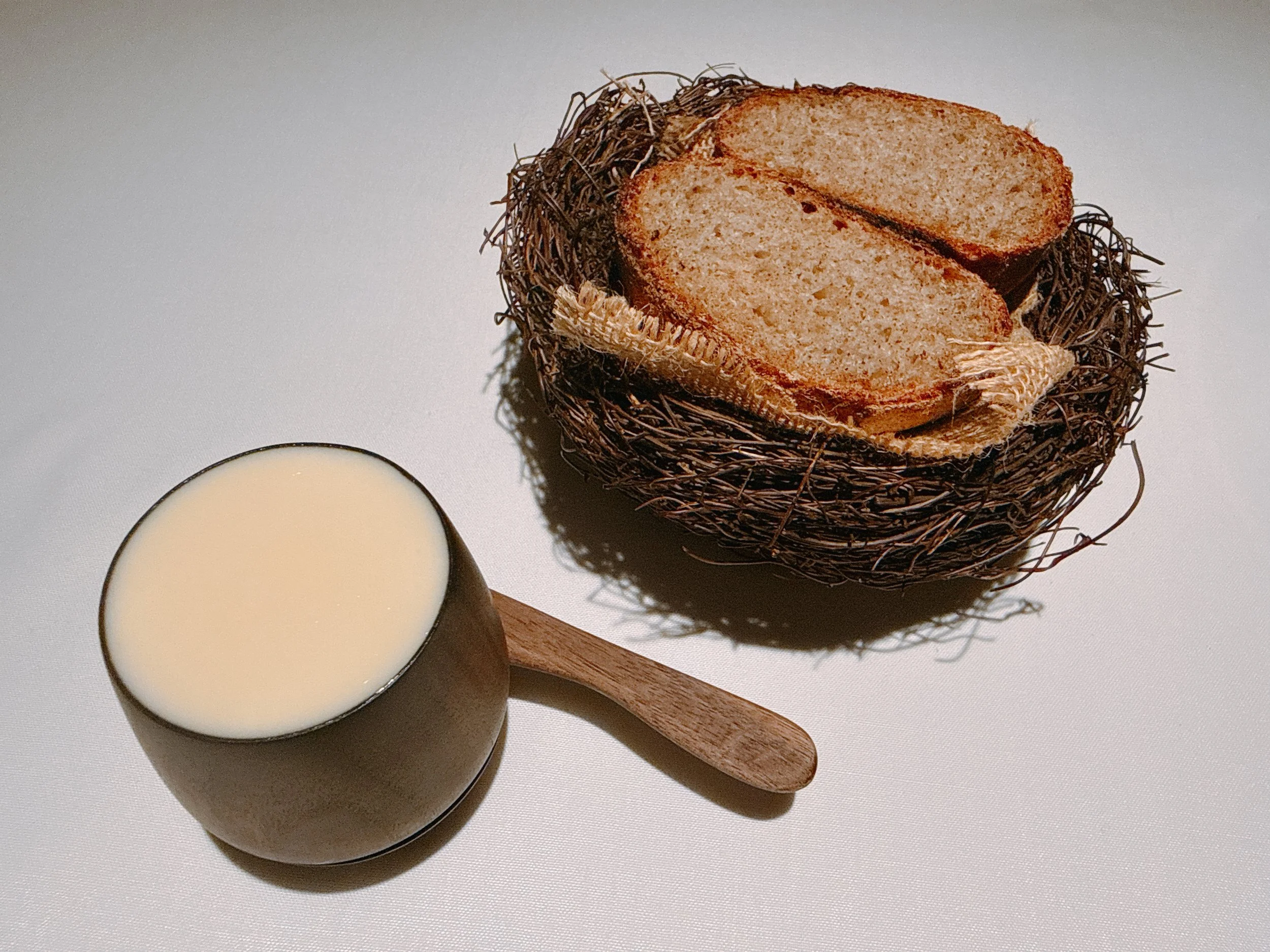
Along with the pork, we received the night's only bread serving. The warm country bread made with rye flour was flavorful and had a great crust. We got two almost-end pieces, where just the very tip of the bread had been cut off - a bit strange. Otherwise, the bread was lovely with the provided butter. Something I'd gladly buy a loaf of 17.
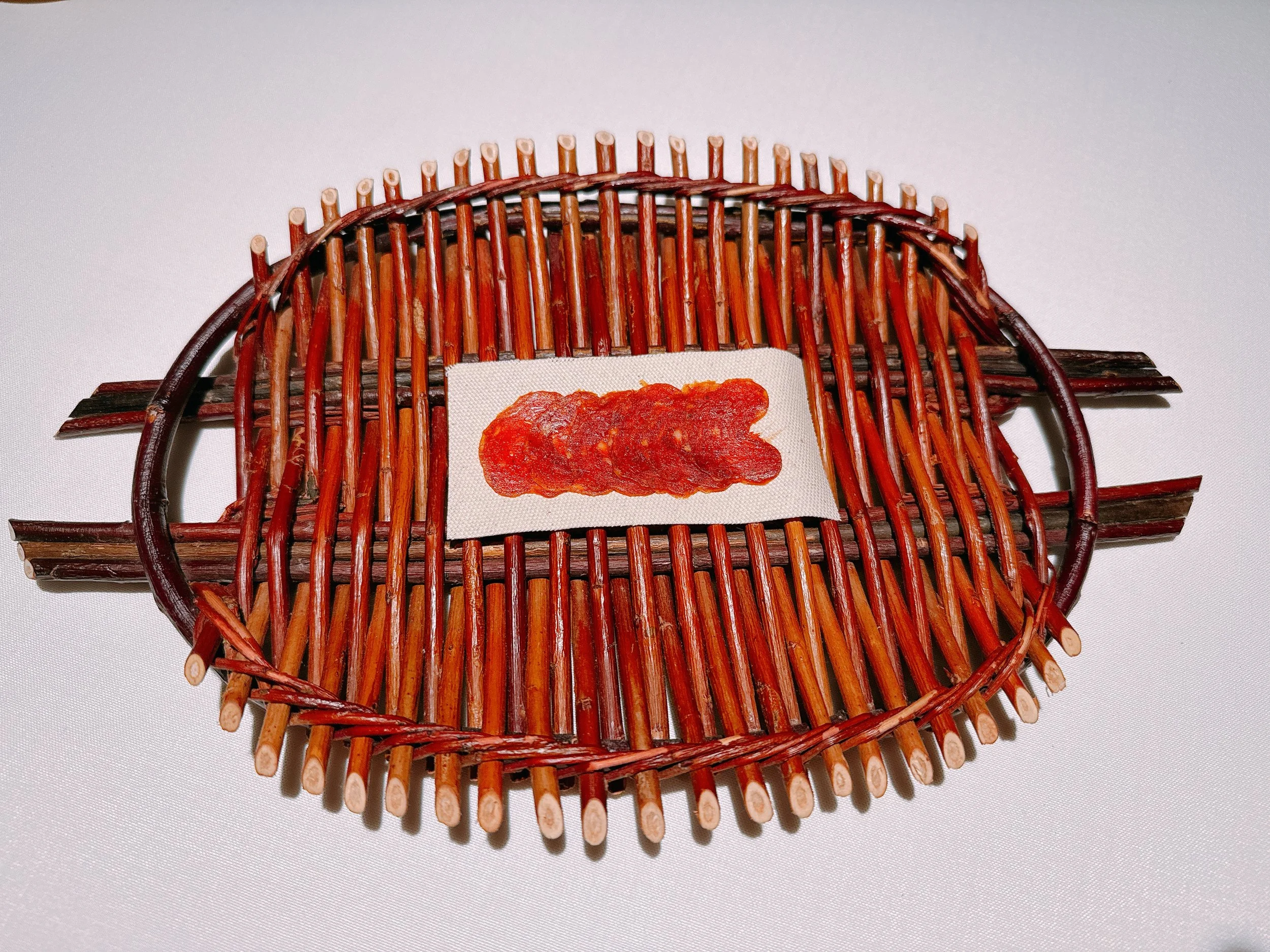
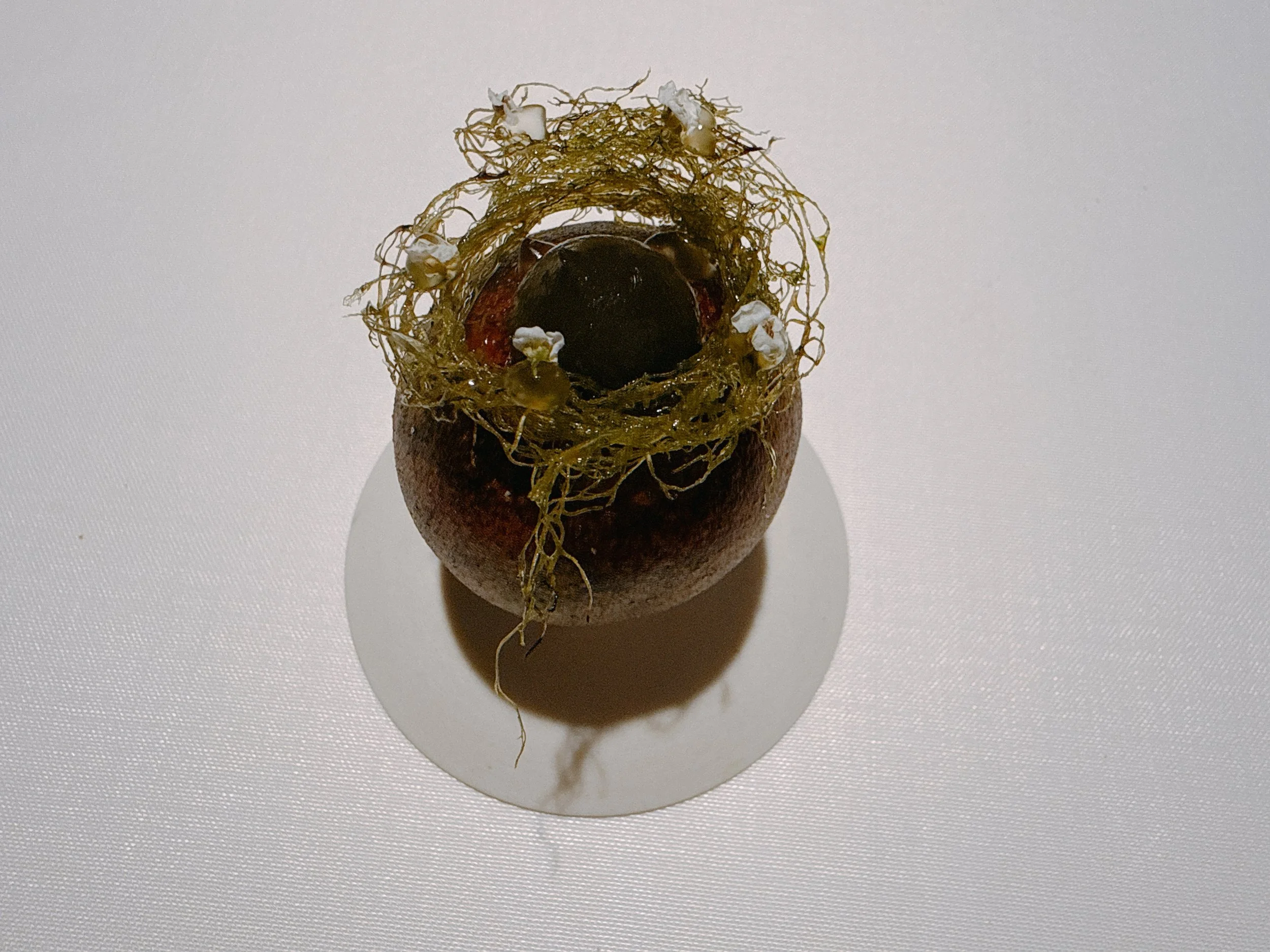
The next serving was a sequel-of-sorts to the pork course. We received slices of a Basque-style sausage seasoned with espelette pepper and a dough ball filled with a combination of blood sausage, reindeer moss, and chanterelle mushrooms. The sliced sausage was essentially spicy chorizo with a good flavor 16. The blood sausage was more muted tastewise, and the enclosing dough shell was much more substantial than the fillings. The resulting heaviness and the somewhat Christmassy flavoring of the dough made me prefer the chorizo 15.
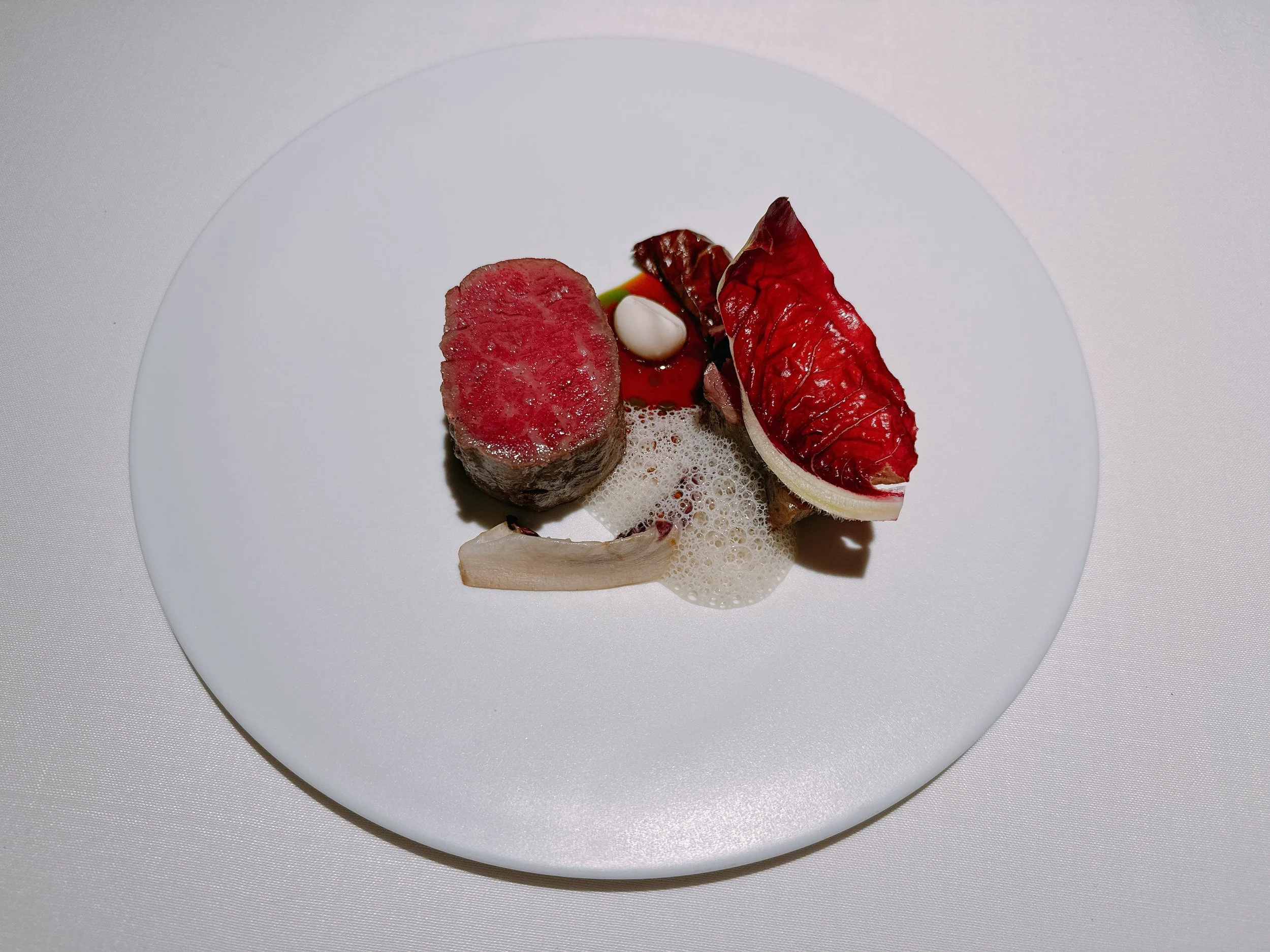
On to the final savory course. Retired dairy cow from Marin was served with treviso leaves and a froth made from bones, lemon thyme, green garlic vinegar, and a bone jus. There were two cuts of beef, with the smaller one being slightly more tender. Both were decent for US beef, tender-ish, not stringy, maybe a bit gamier than “regular” cows, and more muscular rather than fatty. Nowhere close to good beef from, say, Japan, though. The treviso added a touch of bitterness to the dish, and the sauce some sweetness and light acidity 16.
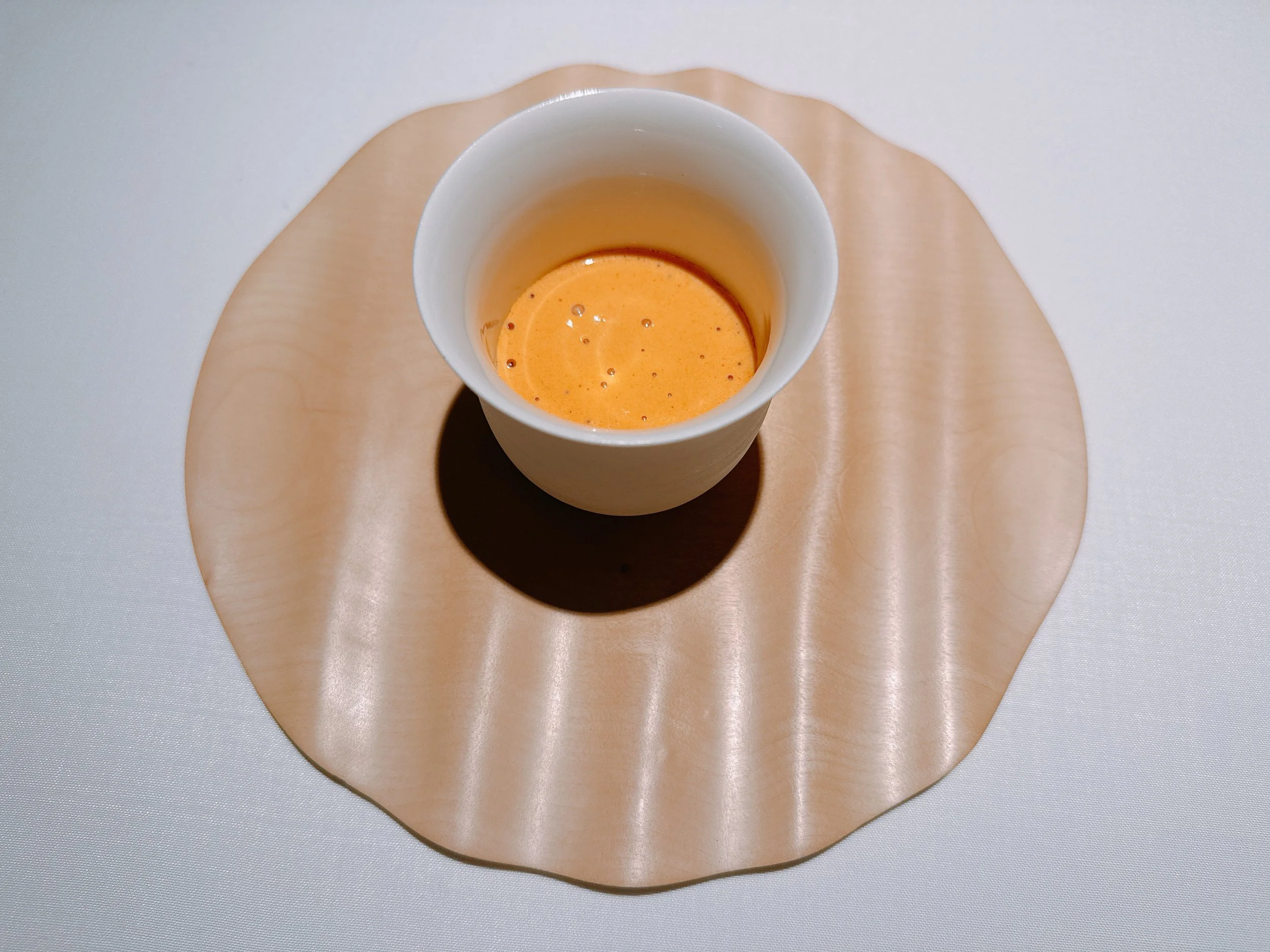
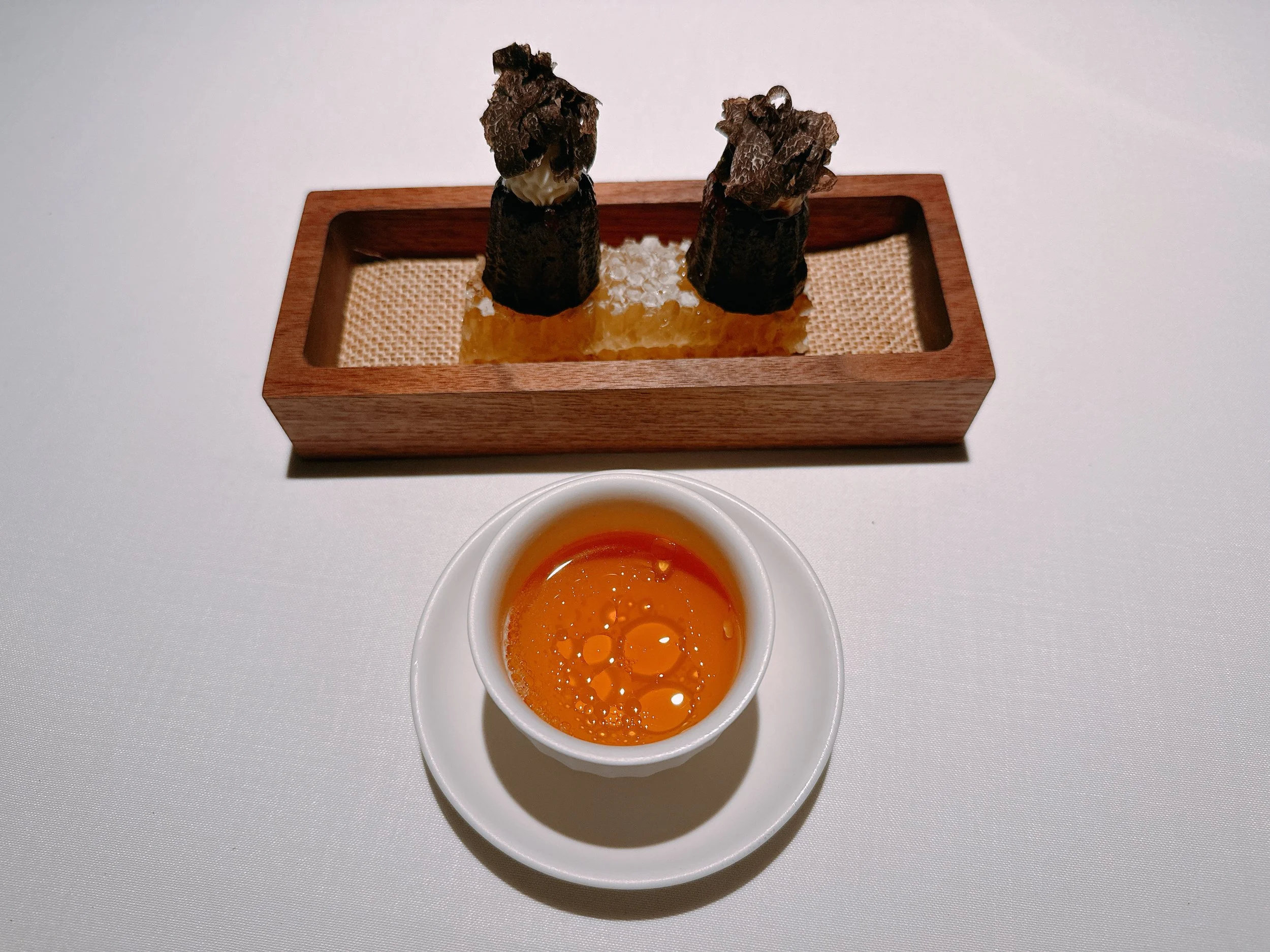
It turned out that there was one more savory bite. A canelé made with roasted celeriac was topped with cows milk cheese, truffles, honey and Iberico ham. It came with a cup filled with a broth made from Iberico ham bones and koji oil. The broth was quite nice, porky and fatty (maybe a 16 by itself). The canelé had light flavors of truffles and ham, paired with the creaminess of the cheese. The flavors didn’t fully come together for me, but the bite was quite good when eaten with the broth 15.
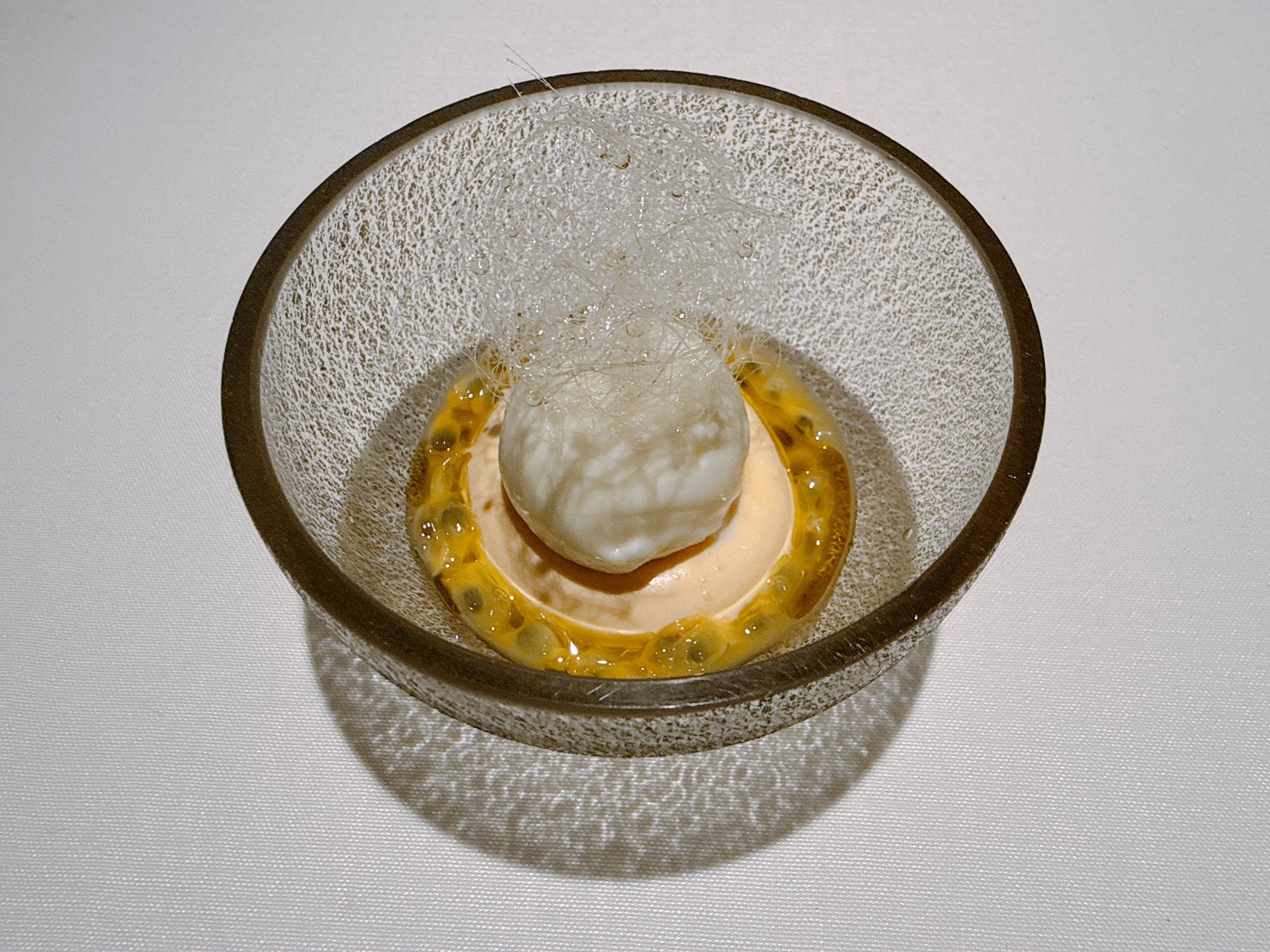
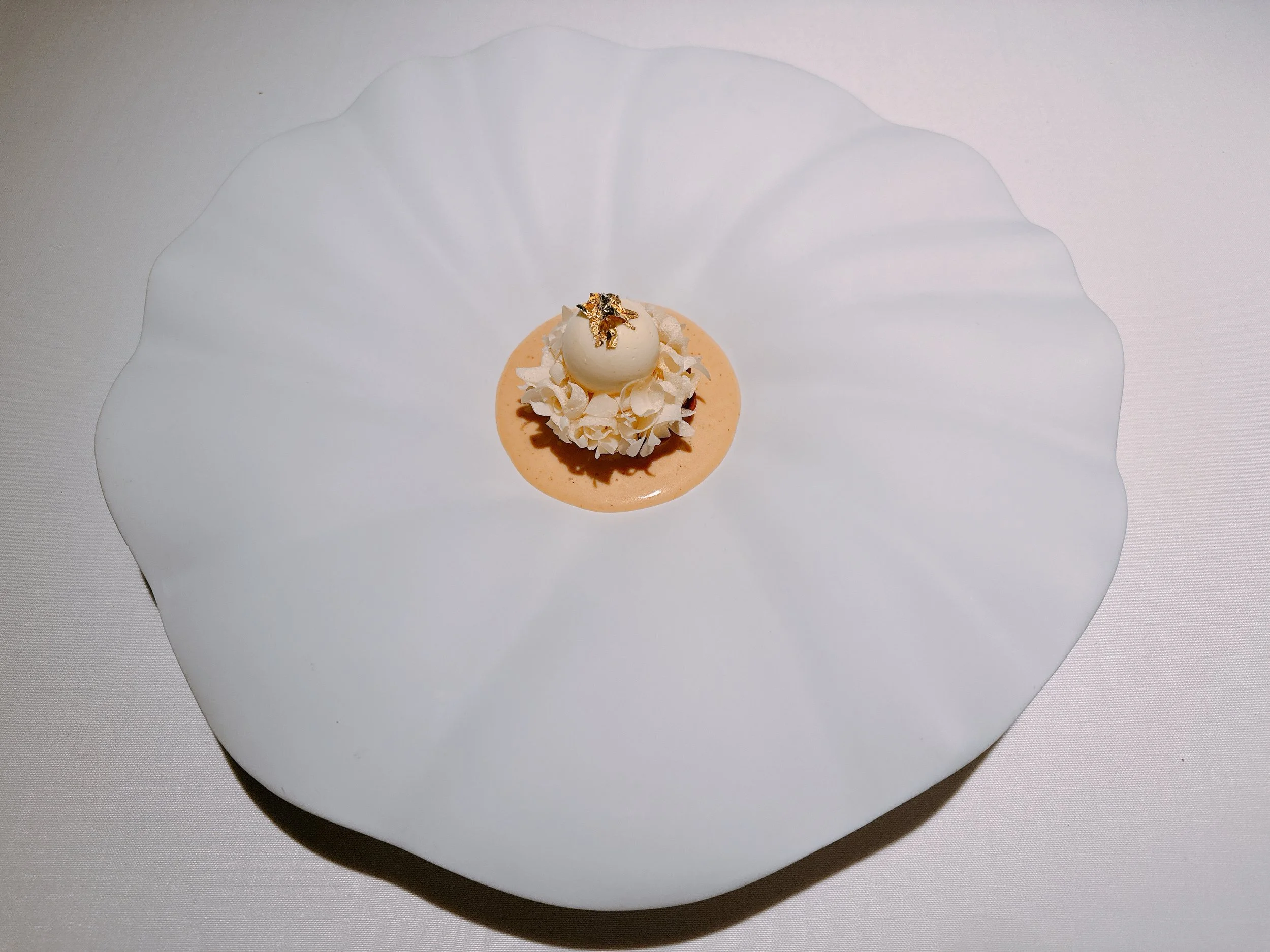
Our desserts began with a glass bowl containing an olive oil sorbet, a champagne cream, and a passion fruit sauce. (Some spun sugar was placed on top as an edible decoration.) The sorbet actually felt more like regular ice cream - the olive oil was apparently not very strongly flavored, making the result pretty neutral tastewise - “vanilla”, so to speak. But that was not a bad thing at all, it meant that the creamy sorbet went nicely with the passion fruit, which managed to be both fruity and acidic. Thanks to the dominating passion fruit flavor, this was a nicely focused and tasty dish 17.
The second dessert was a tartlet made from molasses and frangipane, served with an almond crémeux and caramelized buttermilk. Compared to the preceding dessert, this one was on the heavier, creamier side - not super-heavy, but without any components that would have lightened it up, either. The almond flavor was surprisingly light given the ingredient list 15.
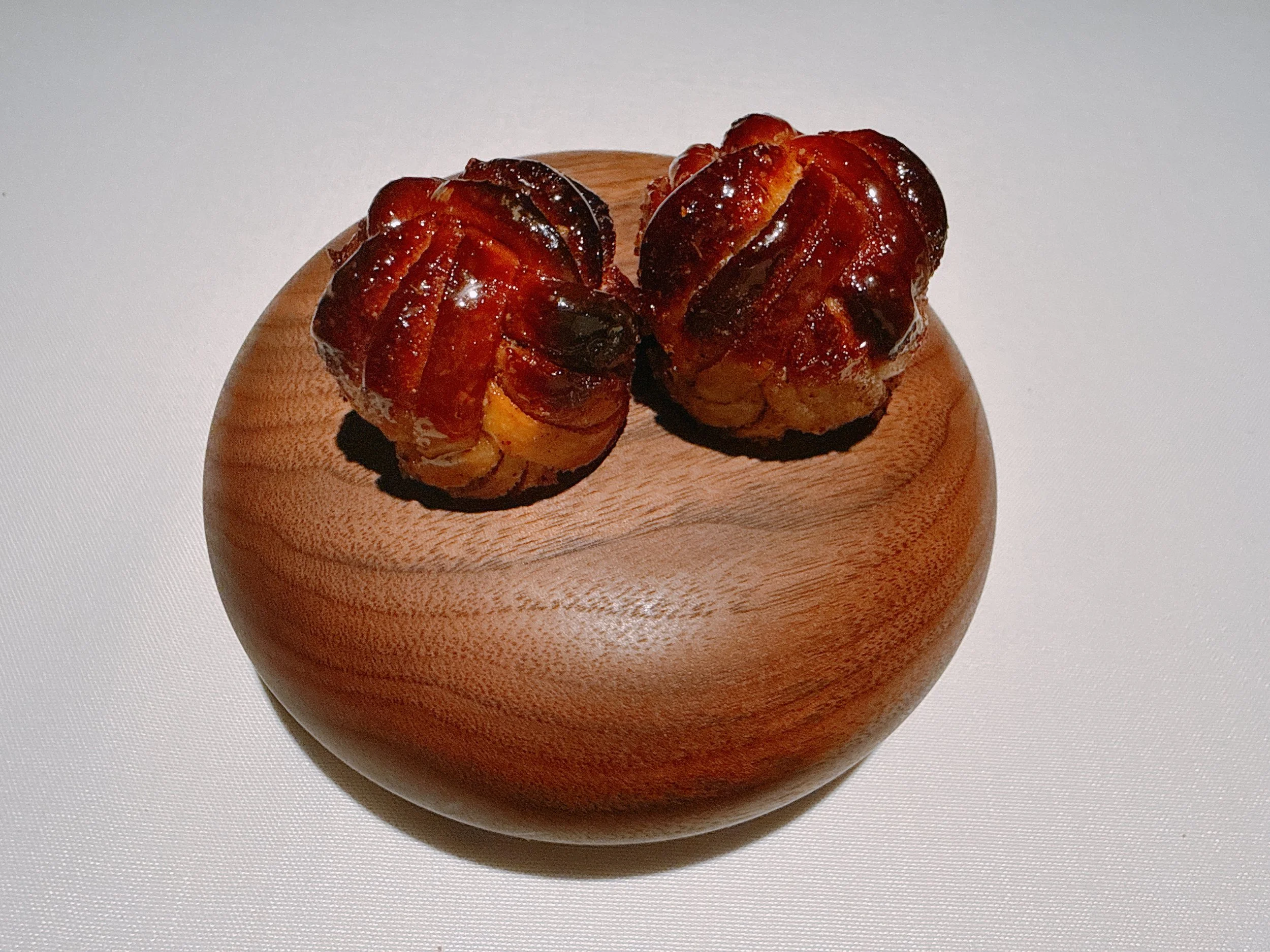
We got one more baked bite, a little freshly made cinnamon cardamom bun. Very nice: crunchy, with a good cardamom flavor. Also something I'd happily buy by itself 16.
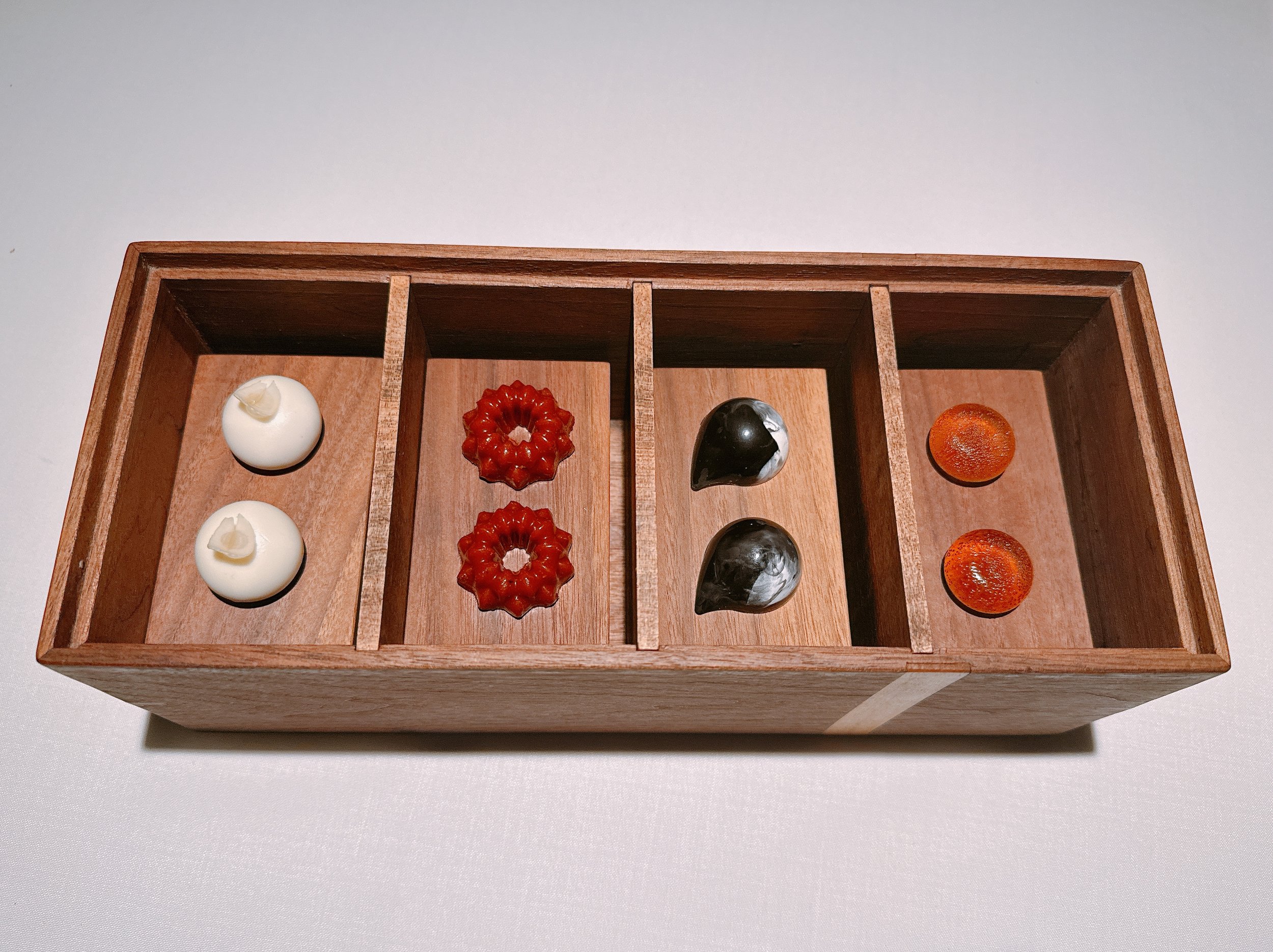
Some petit fours concluded our meal. A pate de fruit made from Lillet (an aperitif wine) was sweet, fruity, and maybe tasted slightly of grapes 14. A dark chocolate praline was filled with a rye caramel miso. The chocolate shell was nicely thin, and its filling tasted lightly nutty 15. A butter toffee made with chanterelles and walnuts was chewy, caramelly, and had nutty and umami flavors. Pretty good, and it was great to see that one could clearly identify all ingredients 16. Lastly, a white chocolate praline made with hazelnuts and preserved elderflowers. This one had an oddly pillowy texture. The hazelnut flavor was pretty light 14.
Overall: An enjoyable dinner with many seafood dishes. Fundamentally, this was seasonal, local California cuisine that took some inspirations from Scandinavia by using fermentation and pickled ingredients. While a fair number of dishes fell short of a two-star level, there were also a couple exceptionally good ones, suggesting a kitchen that is still pushing forward. And speaking of tinkering - hopefully Kiln will also find a way to convey its restaurant policies (no dietary adaptations, etc) in a slightly more welcoming way 16.