Sons & Daughters - San Francisco
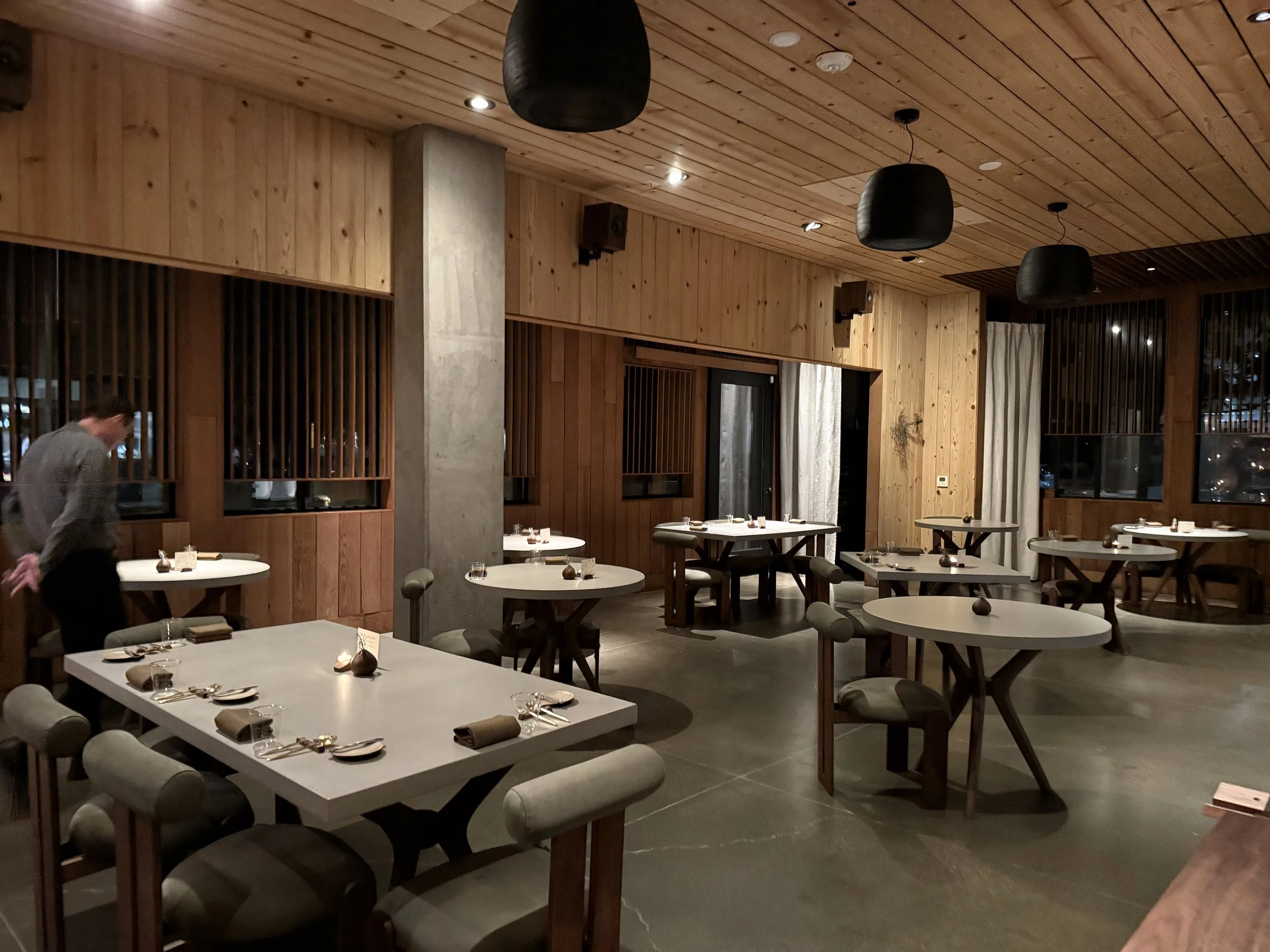
Main dining room before dinner
Rating: 18/20
Where: San Francisco, CA
When: Dinner for 2 on 13 January 2026
Cost per Person: Tasting menu $315, Wine Pairing $185-$385
Accolades: 2 Michelin Stars
Why: Intensely flavorful, acidic take on New Nordic cuisine with Californian ingredients
The history of San Francisco's fine-dining restaurant “Sons and Daughters” really has two distinct chapters. There is its first incarnation: after opening in 2010, it was a reliable one-Michelin-starred standby, serving seasonal Californian food in slightly cramped quarters near Union Square in downtown SF. Not bad for sure, but the real culinary excitement in the city was probably elsewhere.
Chapter two began in 2023 with the arrival of UK-born chef Harrison Cheney, who changed pretty much everything about the restaurant. The cooking went all in for a “New Nordic” cuisine. The ingredients were still mostly local, but the resulting dishes now evoked Copenhagen rather than Chez Panisse. Fermentation, acidity and lots of seafood became the name of the game. After gaining its second Michelin star, the restaurant moved in late 2025 to a much larger, although less central, location in the city's Mission district. At this point, the only remaining connection to the “old” Sons & Daughters is the name. It is truly chef Cheney's restaurant now.
On a mid-January evening, about two months after the restaurant's move, we stopped by to see how things were going - our last visit had been about a year and a half earlier, right after the restaurant had received its second star. The most notable change was definitely the space - there was lots more of it, for once. The dinner started in a lounge with some appetizers. Since there was room only for eight guests, reservations were staggered accordingly. The majority of our dinner, though, transpired in the high-ceilinged main dining room whose prominent use of wood arguably gave the restaurant a slightly Scandinavian feel. The ten or so tables had a good view of the open kitchen, and dishes were delivered to the diners by both the chefs and servers. The service felt effortless and friendly, without drawing much attention to itself. Water was refilled promptly and empty wine glasses disappeared quickly. The focus definitely remained on the food.
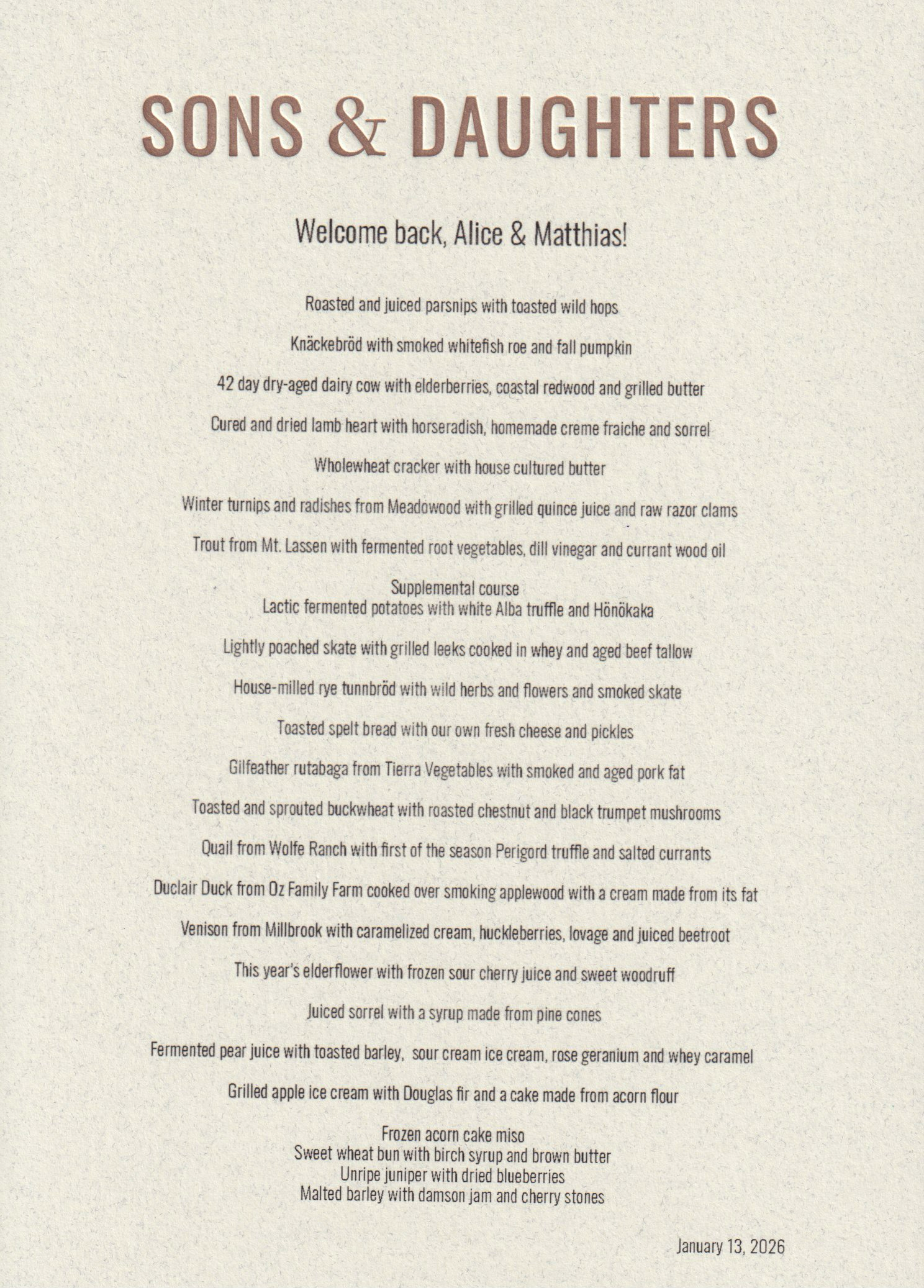
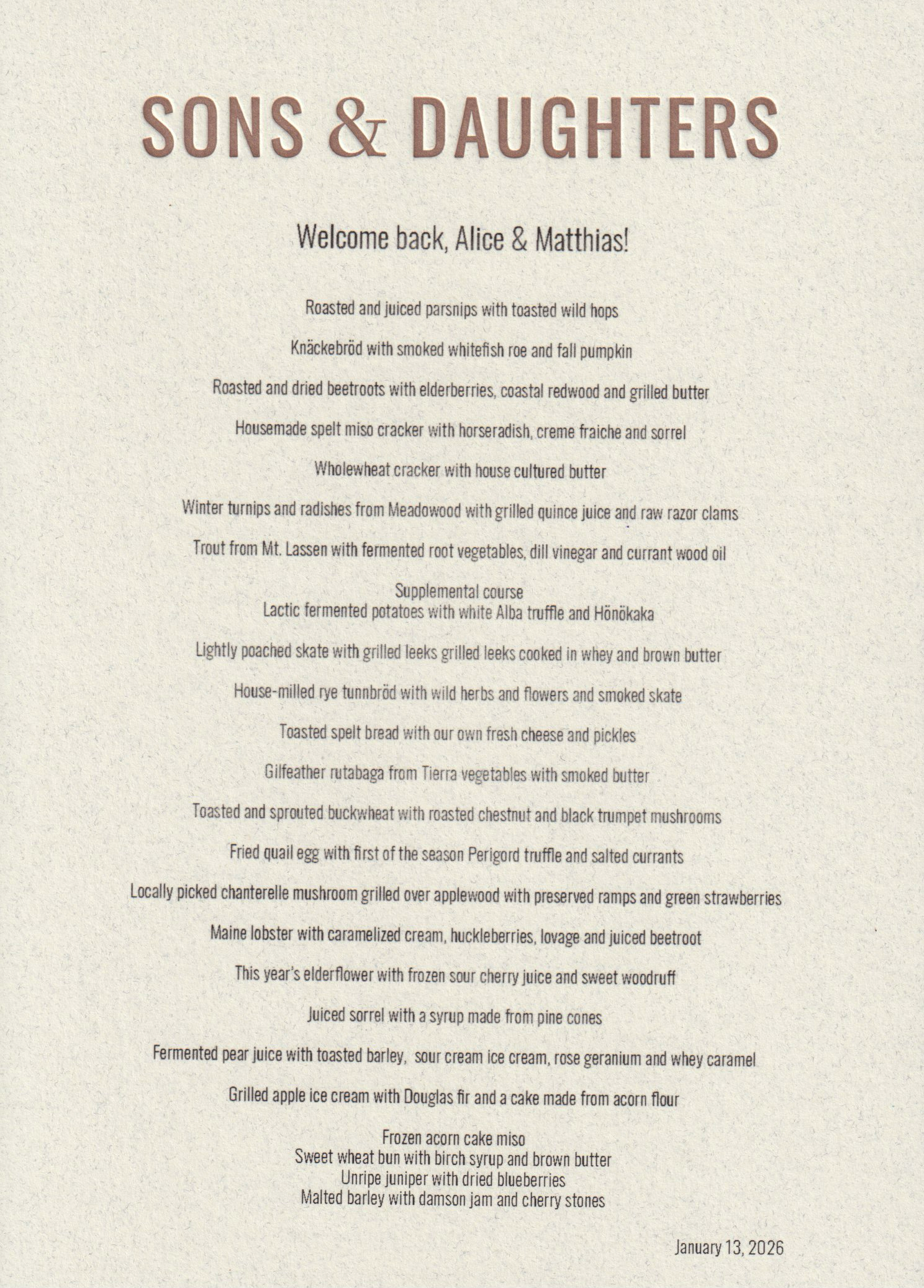
Said food came in the form of a 24-course tasting menu, priced at $315. During our visit, there was an optional white truffle course ($125) that had to be ordered for the whole table - so we were not able to get one portion to share as we usually do. Two nine-glass wine pairings ($185 and $385) and a non-alcoholic pairing ($145) were also available. I tried the $185 “regular” pairing, and was positively surprised - the wines were consistently pretty good, and at $70+ per bottle not too cheap either. Definitely worth a consideration.
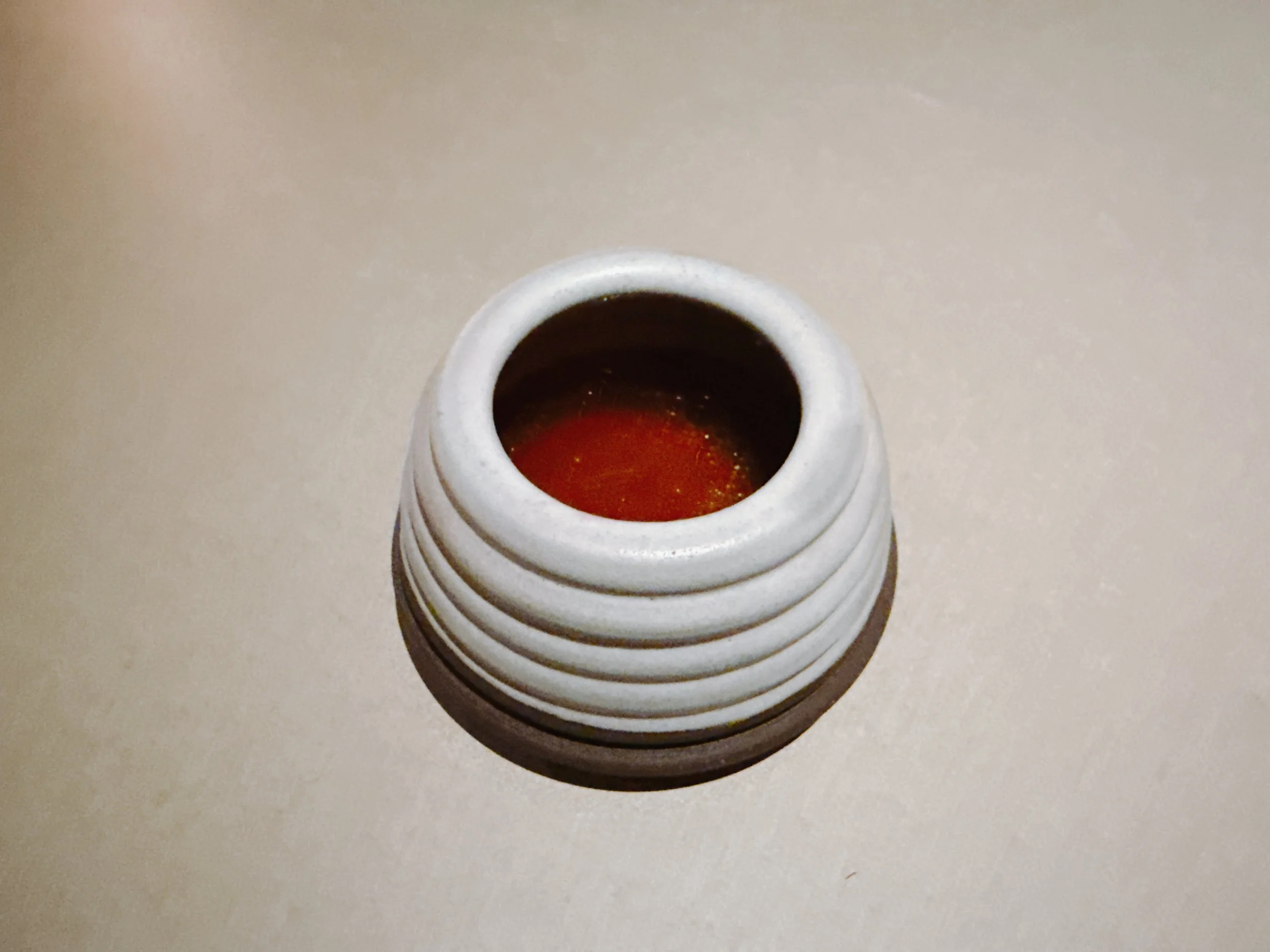
Our dinner started with a drink. A small ceramic cup contained the juice of roasted parsnips, seasoned with mustard and wild hops. This little juice was bursting with flavor. At first, I thought that it was a bit salty, but that was probably just the intensity of the concentrated parsnip flavor. Maybe there was a hint of mustard, but this was really a supremely focused parsnip dish. For what it was, this was pretty much a perfect rendition - very, very delicious. And it started the dinner with a bang 20.
The next bite was a “Knäckebröd” topped with sliced salted leeks, pumpkins and whitefish roe. The Swedish crispbread (available at IKEA for consumption at home, our server quipped) was quite good, but not super crunchy. Its toppings were savory (no sweet pumpkins here), and had a bit of fish flavor, creaminess, and crunch from the leeks on top. Another bite full of flavor 19.
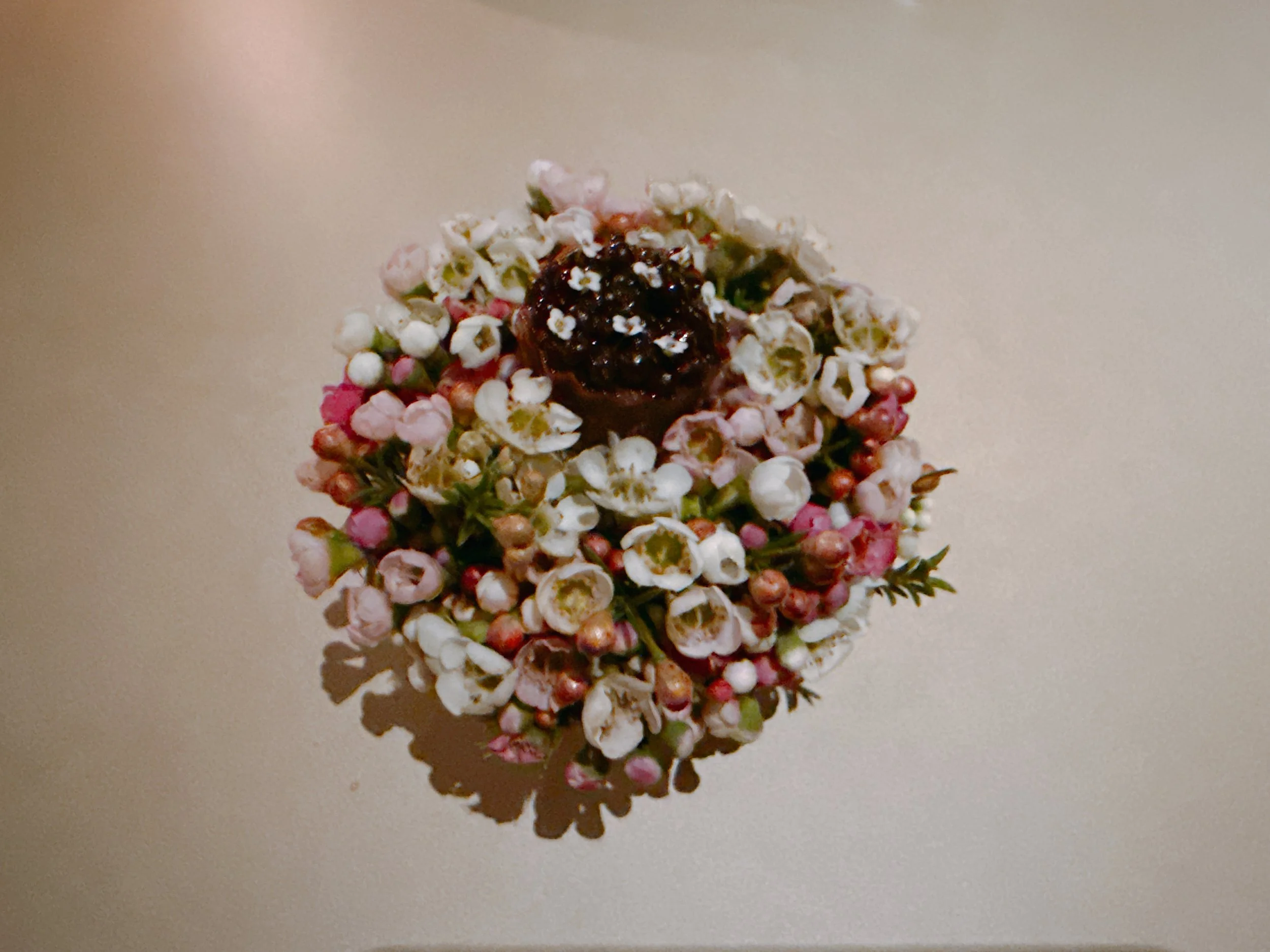
A little cup made of buckwheat was filled with grilled butter, a beef tartare and elderberries. This dish was actually not particularly meaty, but still intensely flavorful and acidic. Lovely 18.
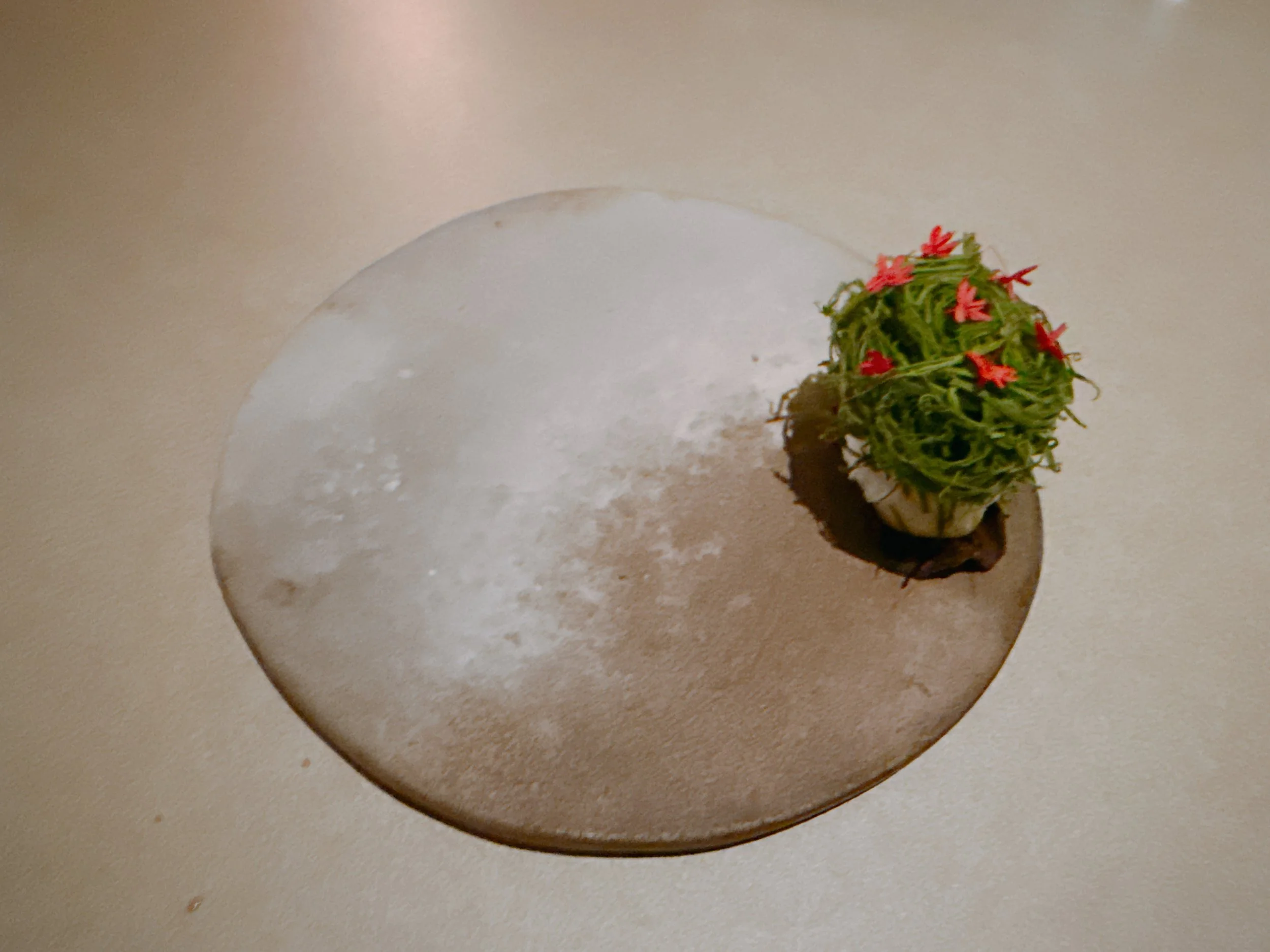
The final bite in the lounge was based on lamb heart - brined, smoked, dehydrated and thinly shaved -, which was topped with crème fraîche, horseradish and sorrel. Similar to the preceding beef dish I couldn't really make out the lamb, but this was still very tasty: creamy and herbal with a little kick from the horseradish 19.
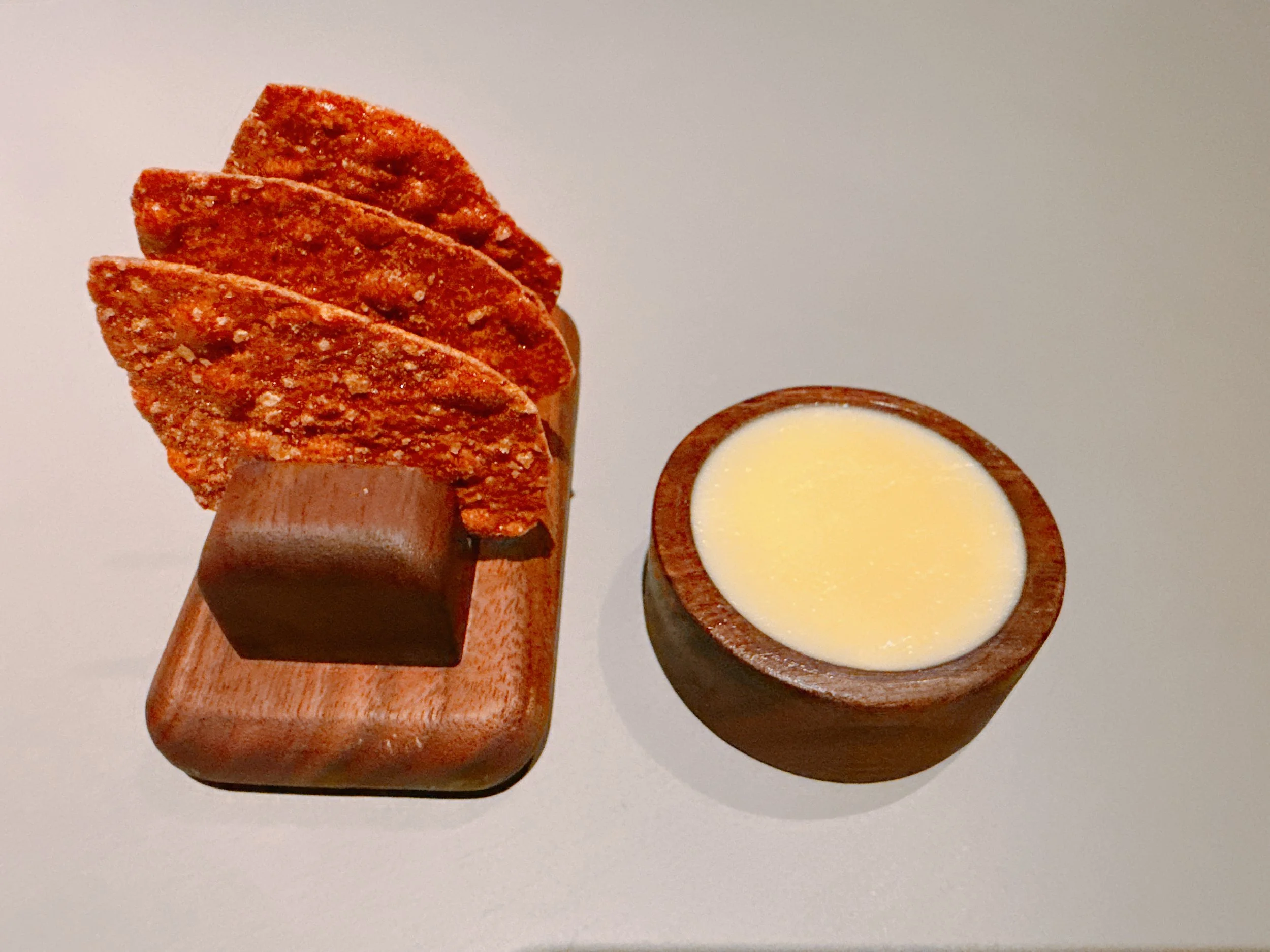
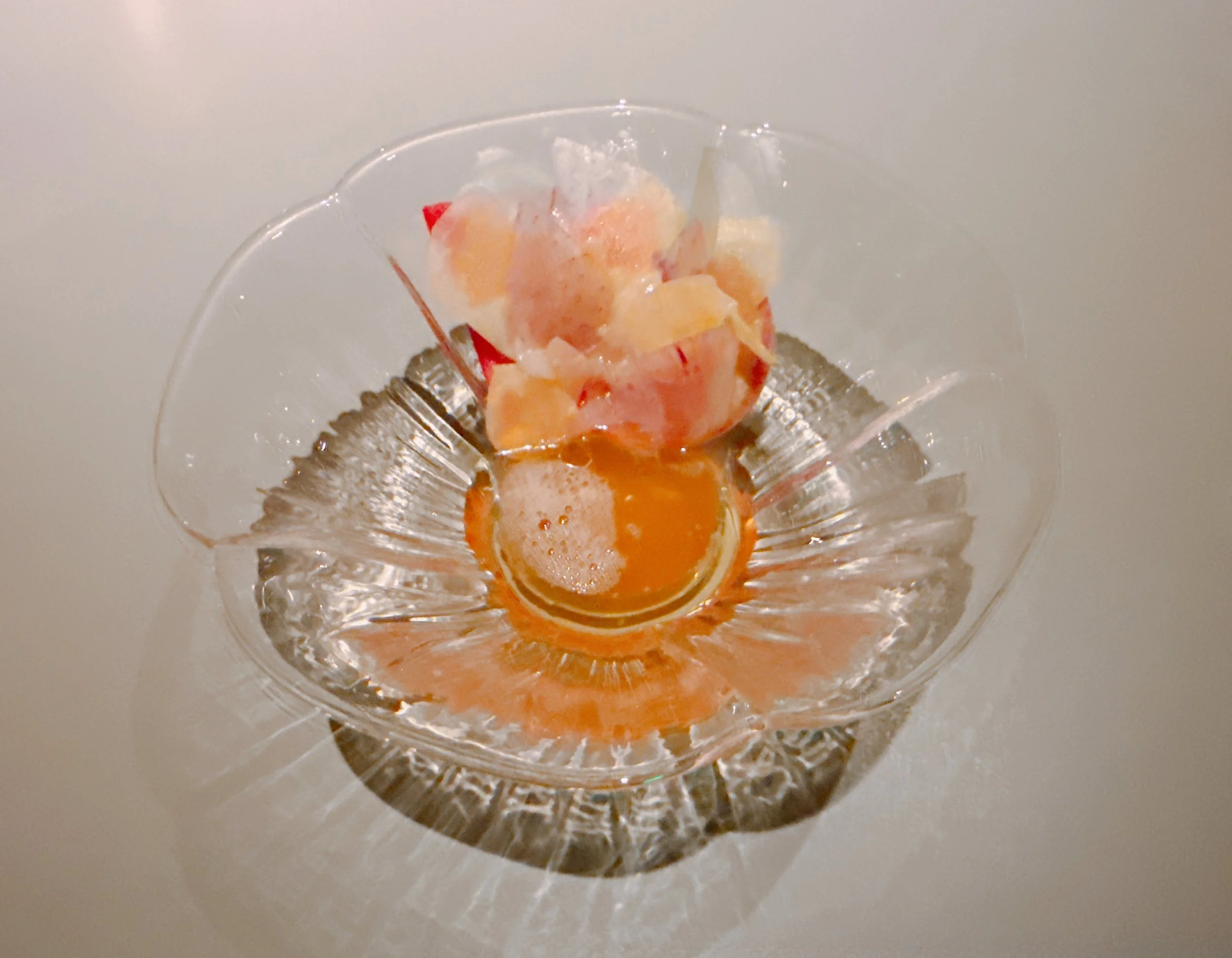
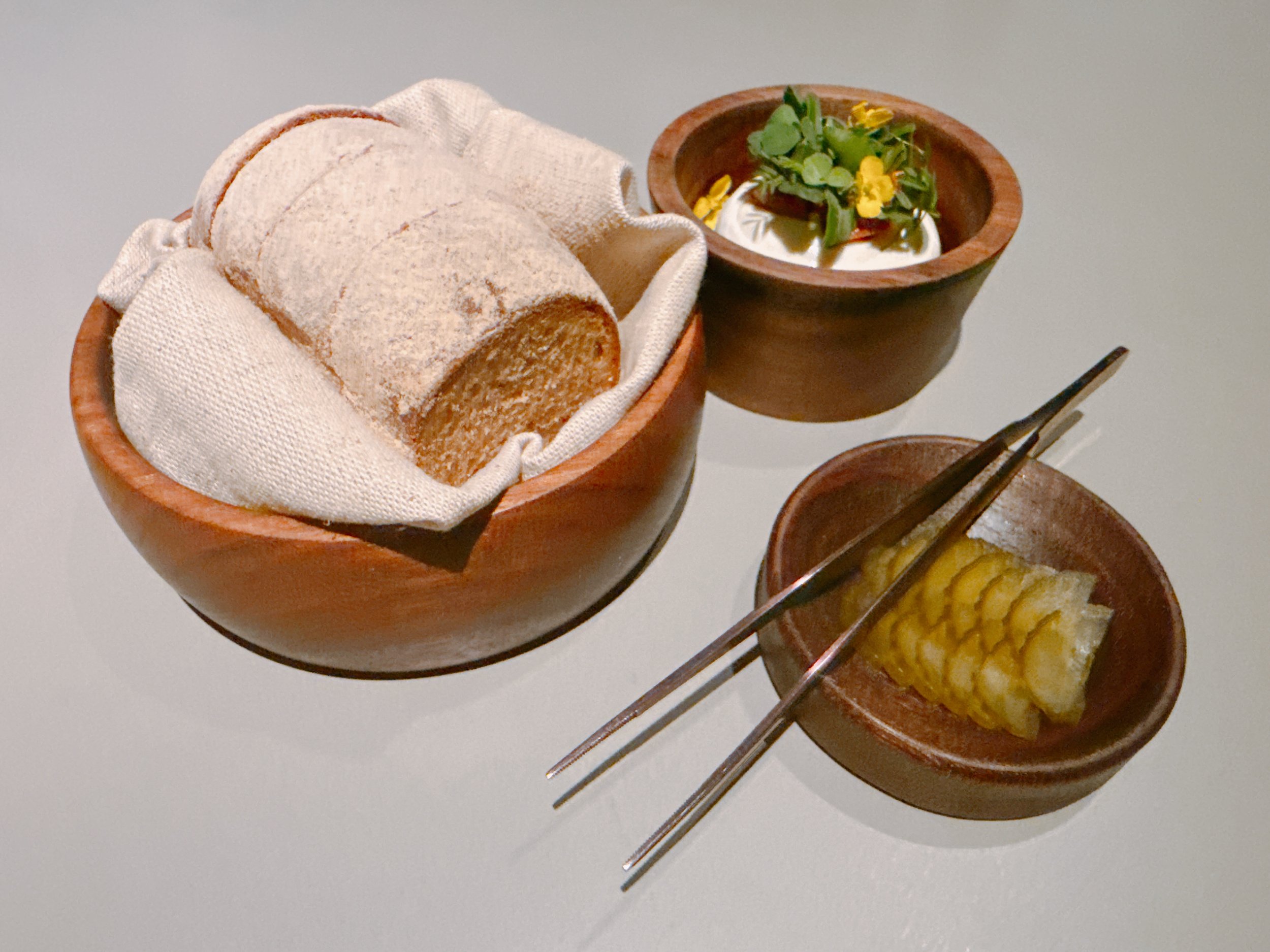
Continuing in the dining room, we received our first bread course along with the next dish. Wholegrain crackers were served with house-cultured butter made from raw cow's milk. The crackers were flavorful with a hint of sweetness and they had a great crunch 18. Next to the bread was a bowl filled with turnips and radishes - some of them salted and pickled -, as well as raw razor clams. To this, our server added a quince juice broth seasoned with rose petal oil. For me, this dish felt too sweet, mostly due to the rose-flavored sauce. The rest of it was better, lightly nutty, but the razor clams pretty much disappeared among the other ingredients 16.
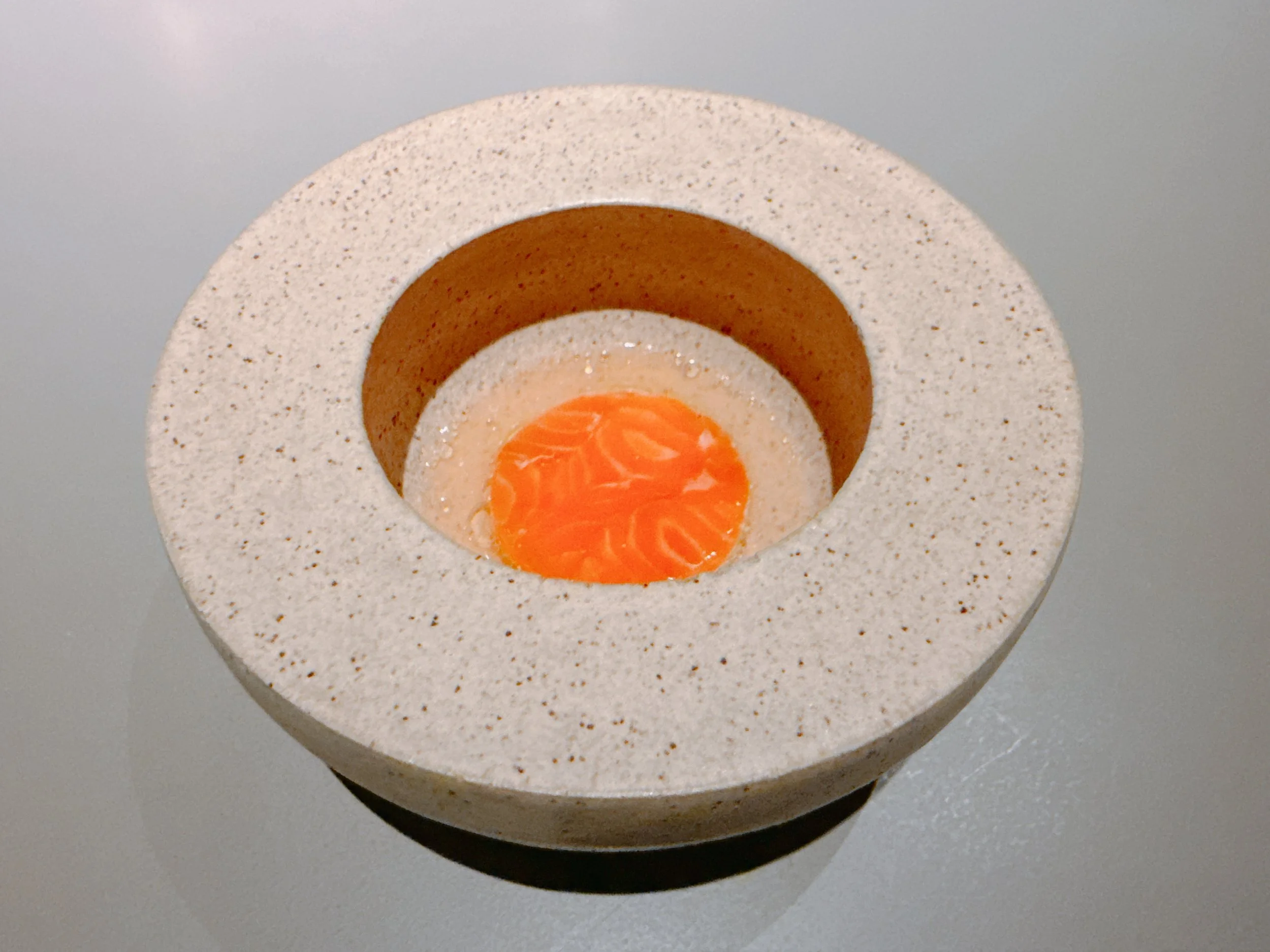
Steelhead trout from Mt. Lassen had been cured in equal parts salt and sugar. Surrounding its filet was a cream made from the trout's trimmings and Meyer lemon, and the dish was finished with brined vegetables and an oil made from the branches of black currants. The fish's flavor was surprisingly intense for a trout - almost too strong. The acidic sauce was delicious 19.
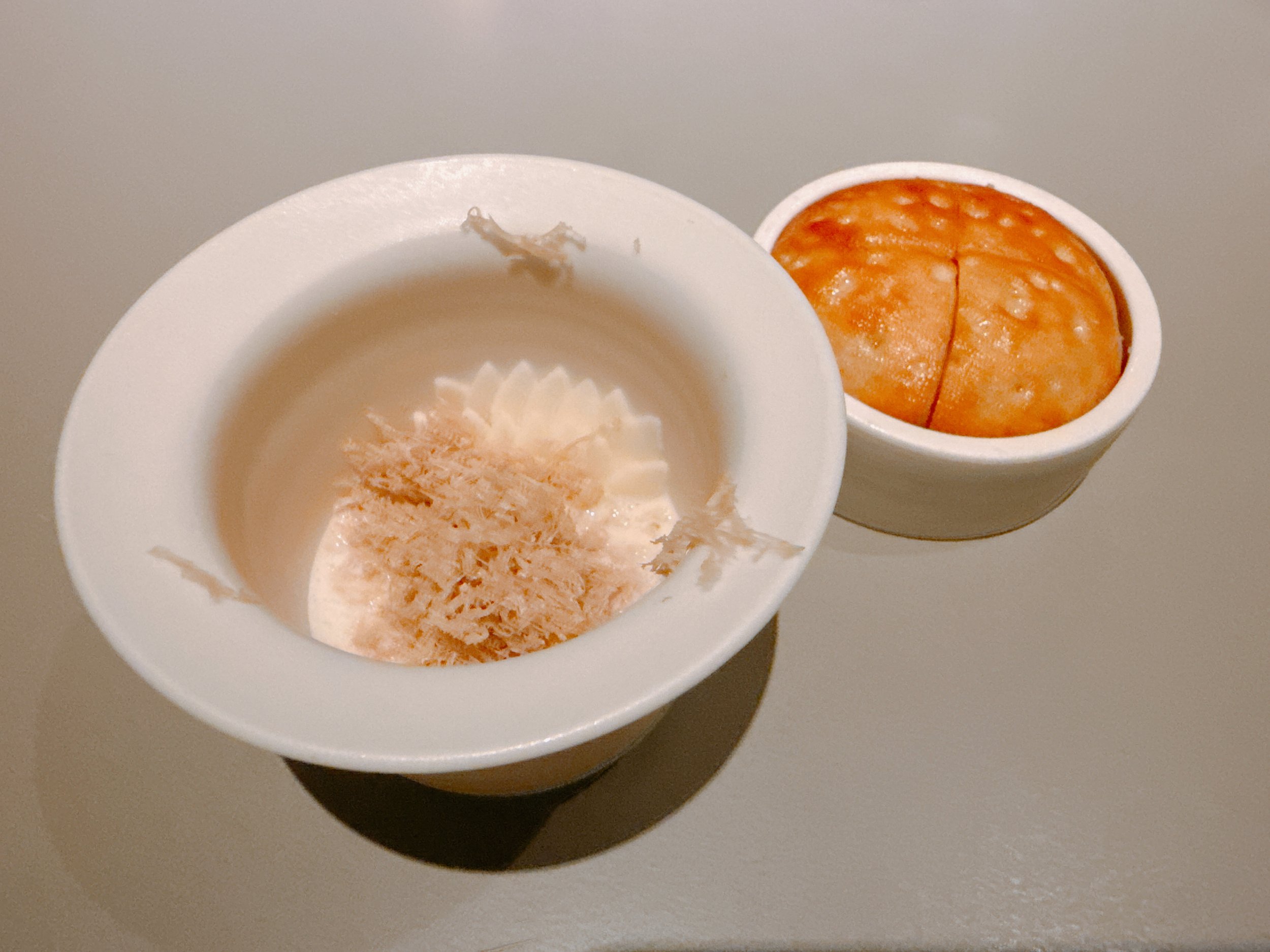
The following course was the optional white truffle presentation. A little bowl contained pickled raw new potatoes, the oil of grilled potato skins, and a cold, lactic-fermented potato broth. White Alba truffles were shaved on top tableside. The potato part of this dish was amazing - crunchy, acidic potatoes, nicely complemented by the lactic acid. The white truffles had a beautiful aroma, as good as what we had seen (smelled?) in Piedmont a month before, but the taste of the truffles was totally overwhelmed by the much stronger potato preparation. So, apart from their aroma, they merely added some texture to the broth. This dish would probably have been equally good without the pricey truffles 19. On the side, we received a light and fluffy Honokaka bread. Good for sopping up the potato broth, but less remarkable on its own 15.
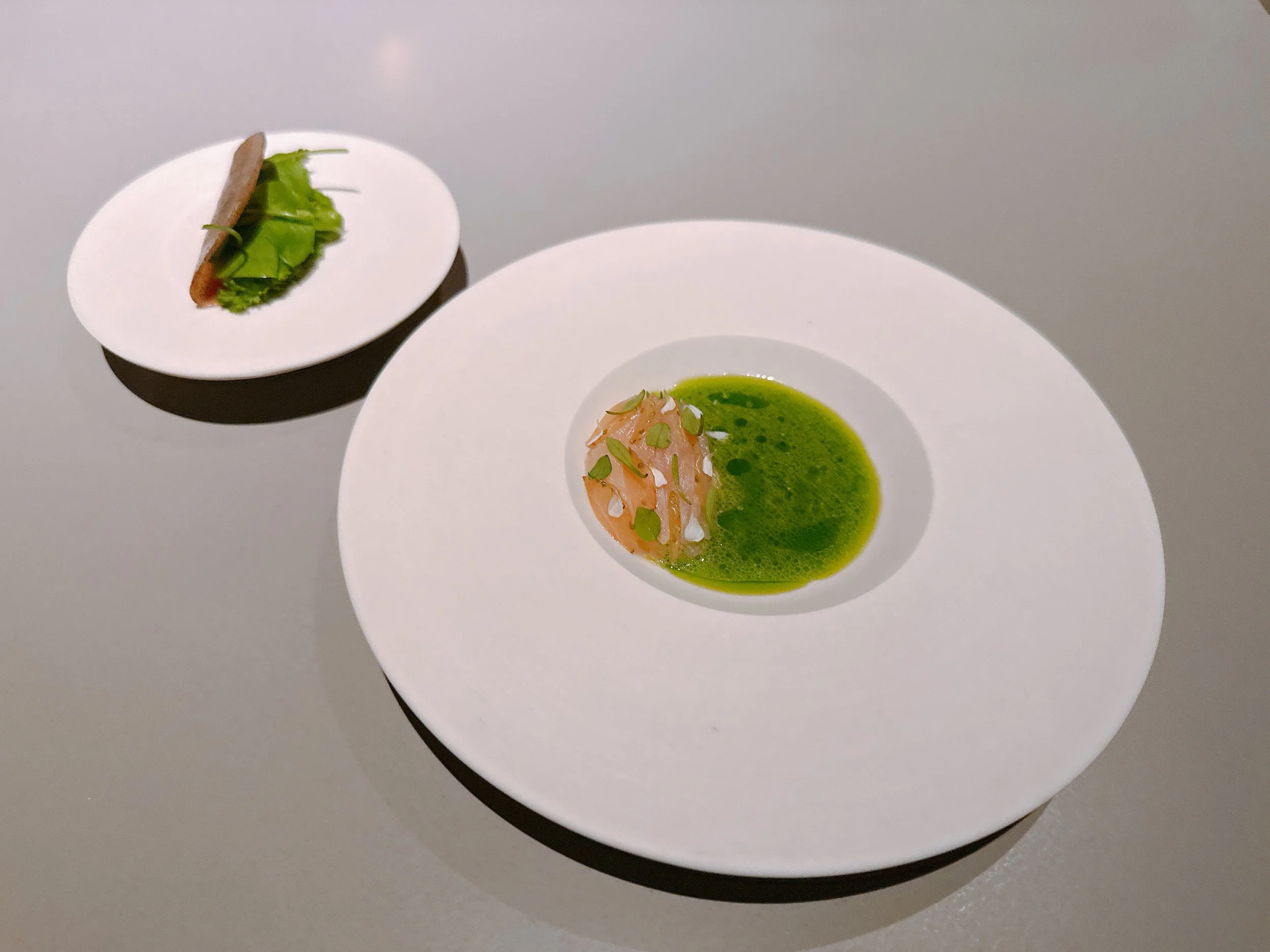
For the next dish, we went back to fish, this time skate from Boston (local skate hadn't been available). The fish had been brined, poached, and then seasoned with garum, green strawberries and a sauce made from aged beef tallow and green leeks cooked in whey. On the side was a little flatbread taco (the bread was called “tunnbröd”) filled with wild herbs and smoked skate. The fish was tender, the warm broth full of flavor and very herbal, and the cream under the fish was lovely as well. An amazing dish. The bread was not quite as mind-blowing, but still nice with its very herbaceous filling 20.
Another bread serving followed, this one a “dinkelbrot” (spelt bread) made with an IPA (beer) and a dark syrup. It was served with a cheese spread topped with pickled chanterelle mushrooms, and some sliced lacto-fermented cucumber pickles. The bread was quite nice, but without much crunch. The cheese was flavorful, and the pickles crunchy and briny 17.
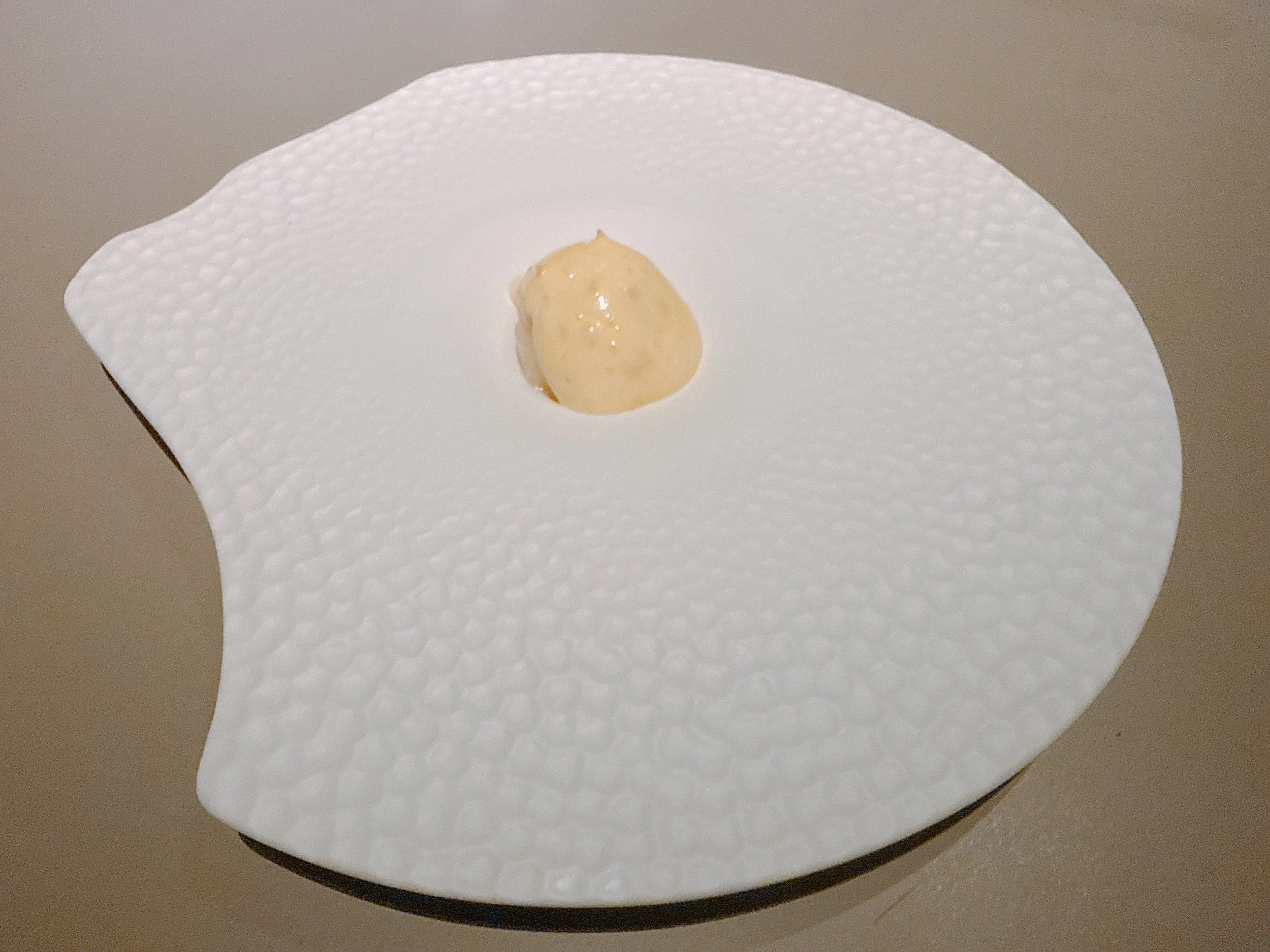
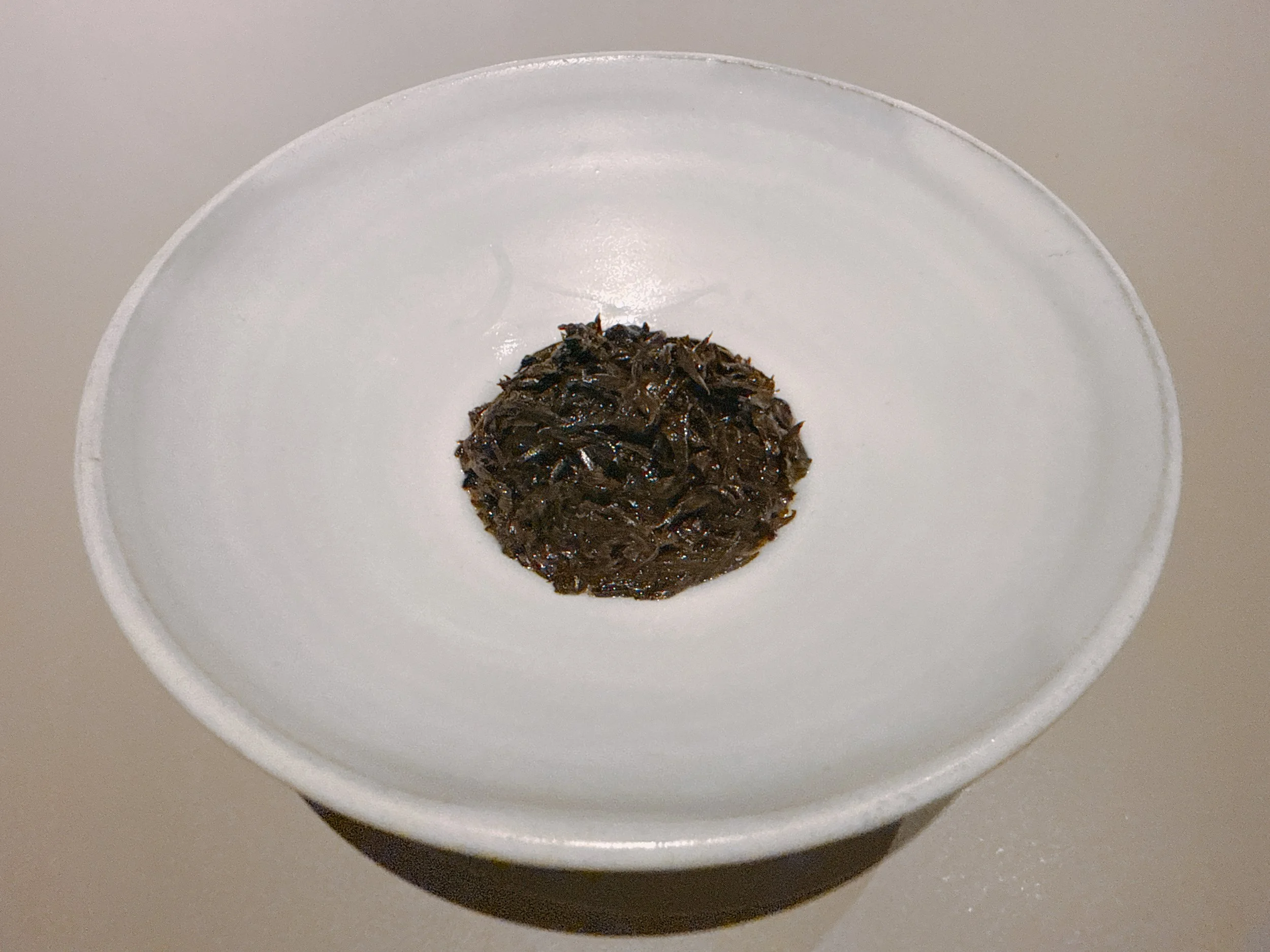
Gilfeather rutabaga was served sliced into noodles (and lacto-fermented). They were topped with a sauce made from pork fat and rutabaga brine. Our server joked that this was the Nordic version of a carbonara pasta. Served warm, these “noodles” were crunchy, and the whole dish was bursting with flavors, buttery, and quite acidic. I couldn't really taste the pork though, so comparing this to a real carbonara pasta was a bit far-fetched 19.
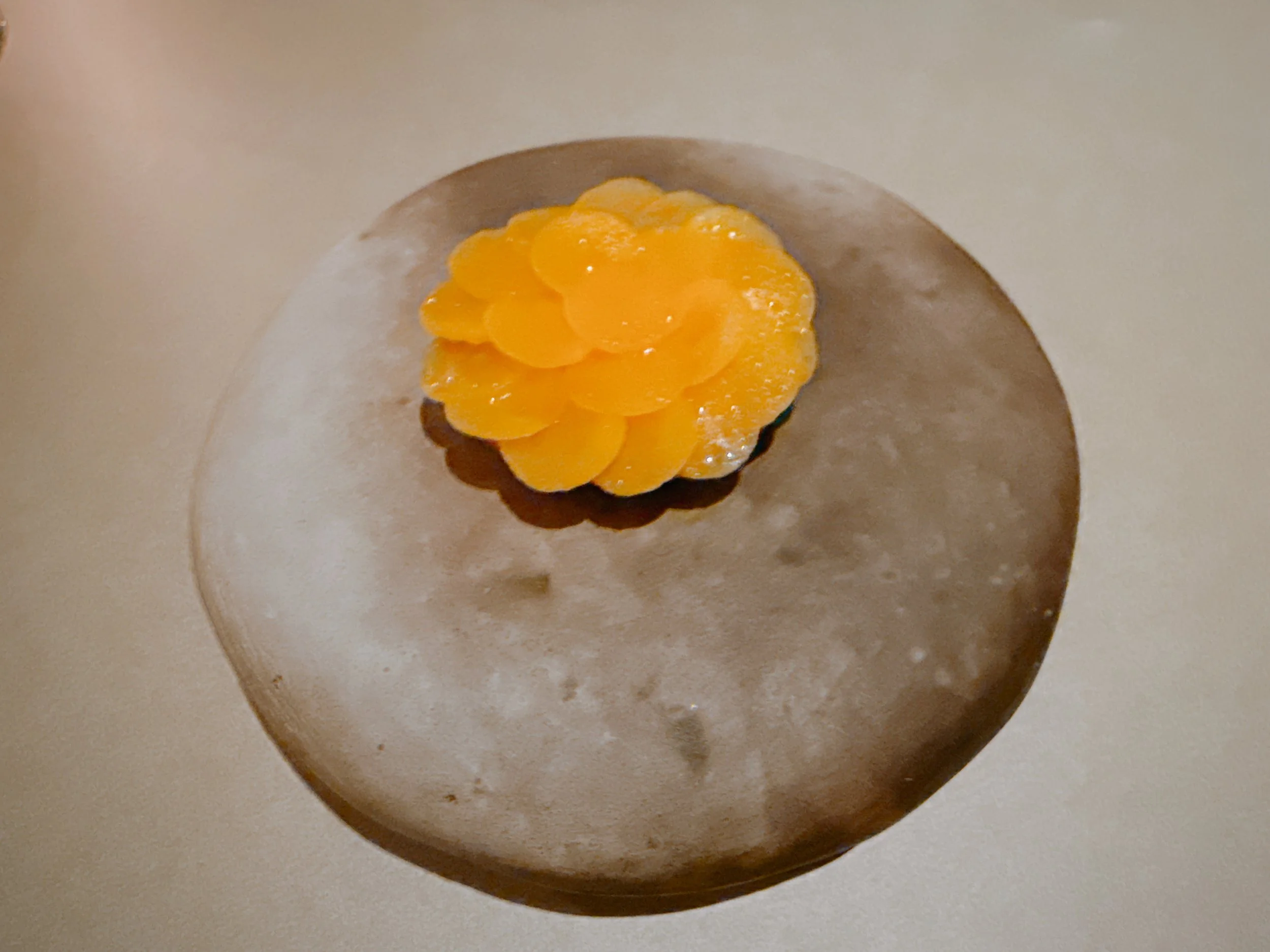
Toasted, sprouted buckwheat was served with hedgehog mushrooms, butter, a roasted chestnut puree, and black trumpet mushrooms. Once we started eating this dish, it looked a bit like uni: black spiky mushrooms covering an orange-colored chestnut puree. Chestnut dishes are often a bit sweet, but not this one. It was savory, creamy, acidic (naturally), and got a light texture from the mushrooms 18.
While we had been thoroughly enjoying our dinner so far, I was slowly starting to wonder how long the highly acidic taste profile would last. I imagine somebody less inclined towards such dishes might have felt that way much earlier. But as it happened, this was exactly when the kitchen changed gears and continued with a more “traditional” series of savory meat courses.
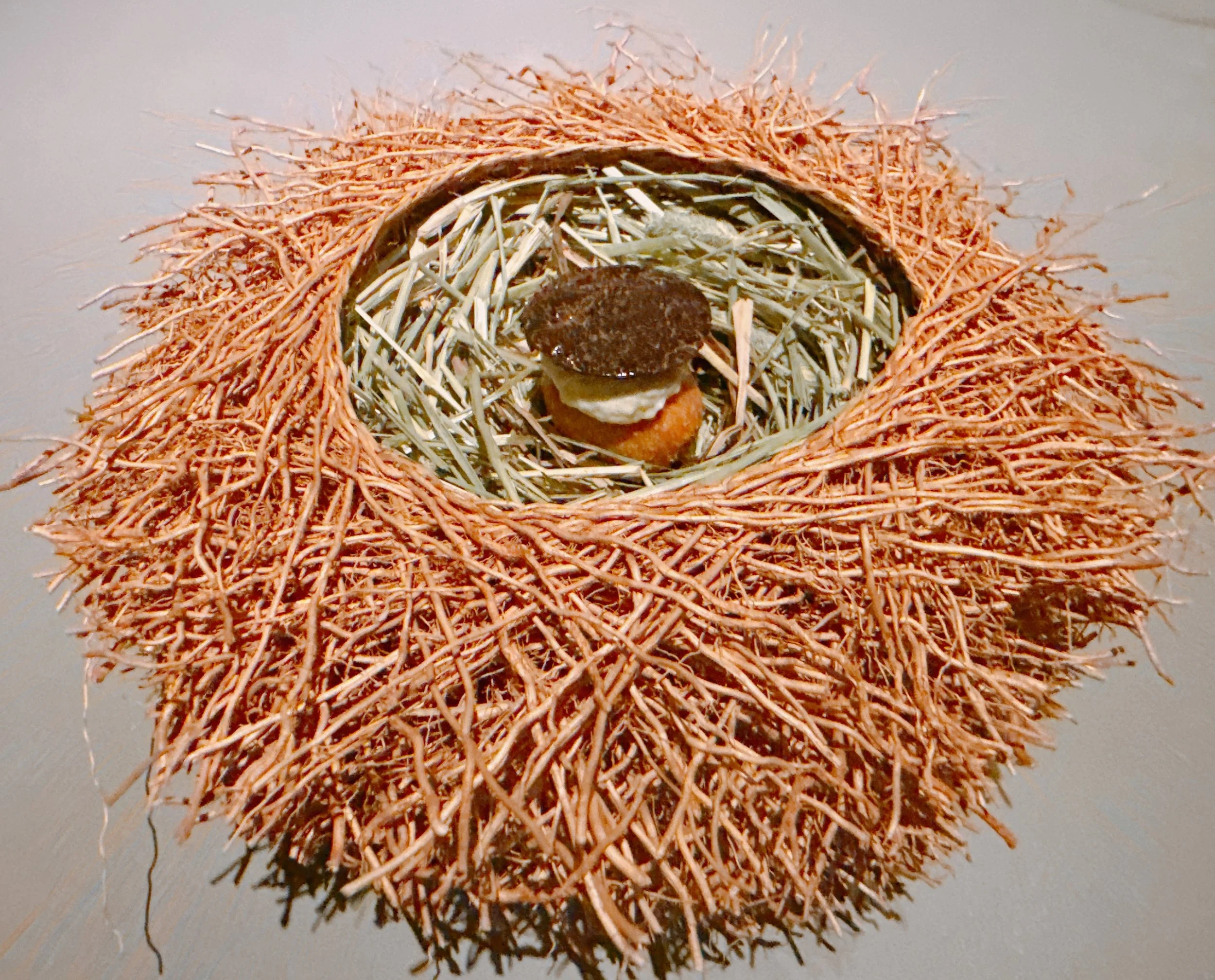
The next dish was the chef's take on a “Scotch egg”. Here, a battered and fried quail egg was topped with salted, unripe currants and a slice of black Perigord truffle. The egg was perfectly cooked, with a runny yolk inside, providing umami and creaminess to complement the crunch of the egg's batter. The currants added some acidity, but it wasn't as strong as in previous courses. A rustic bite 16.
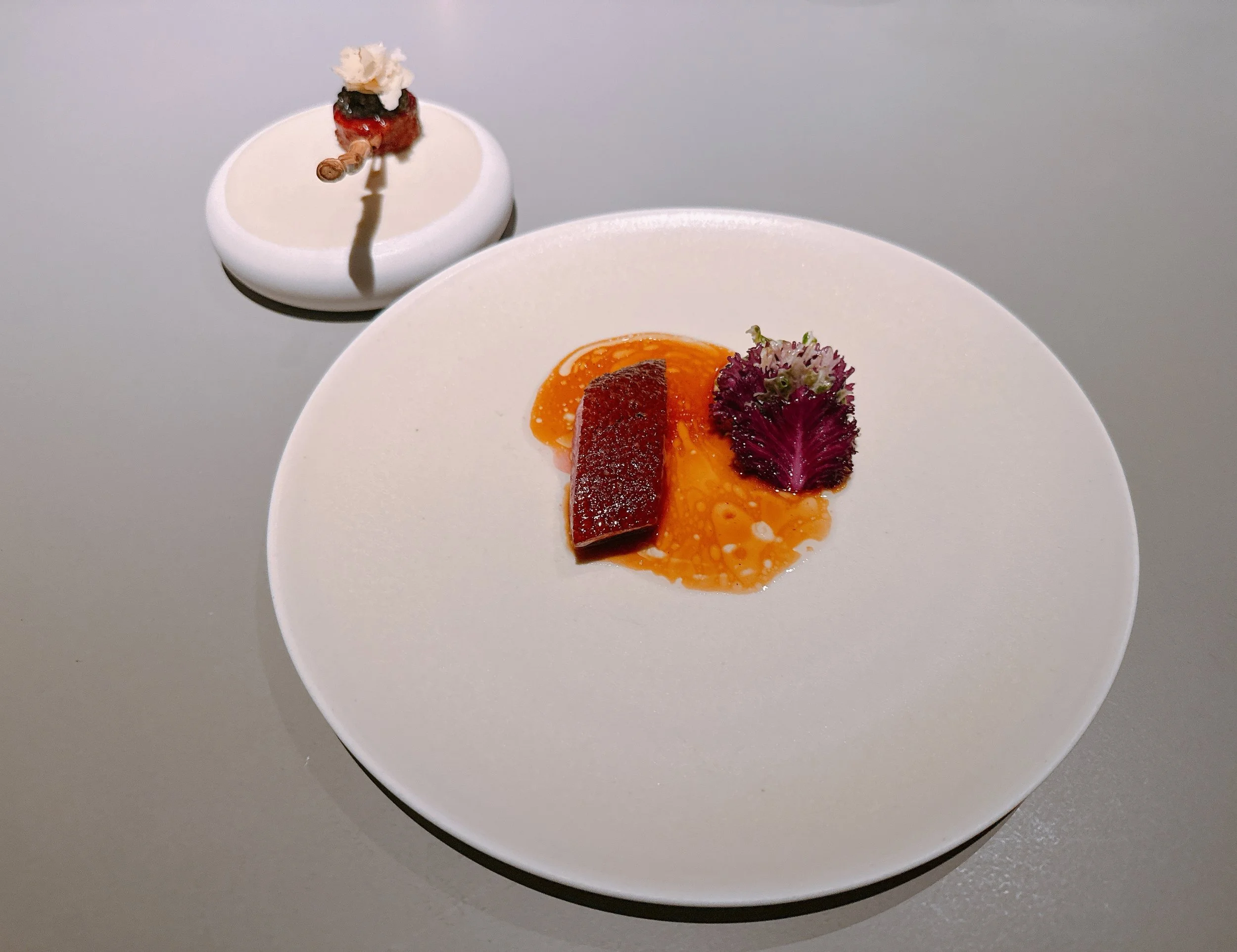
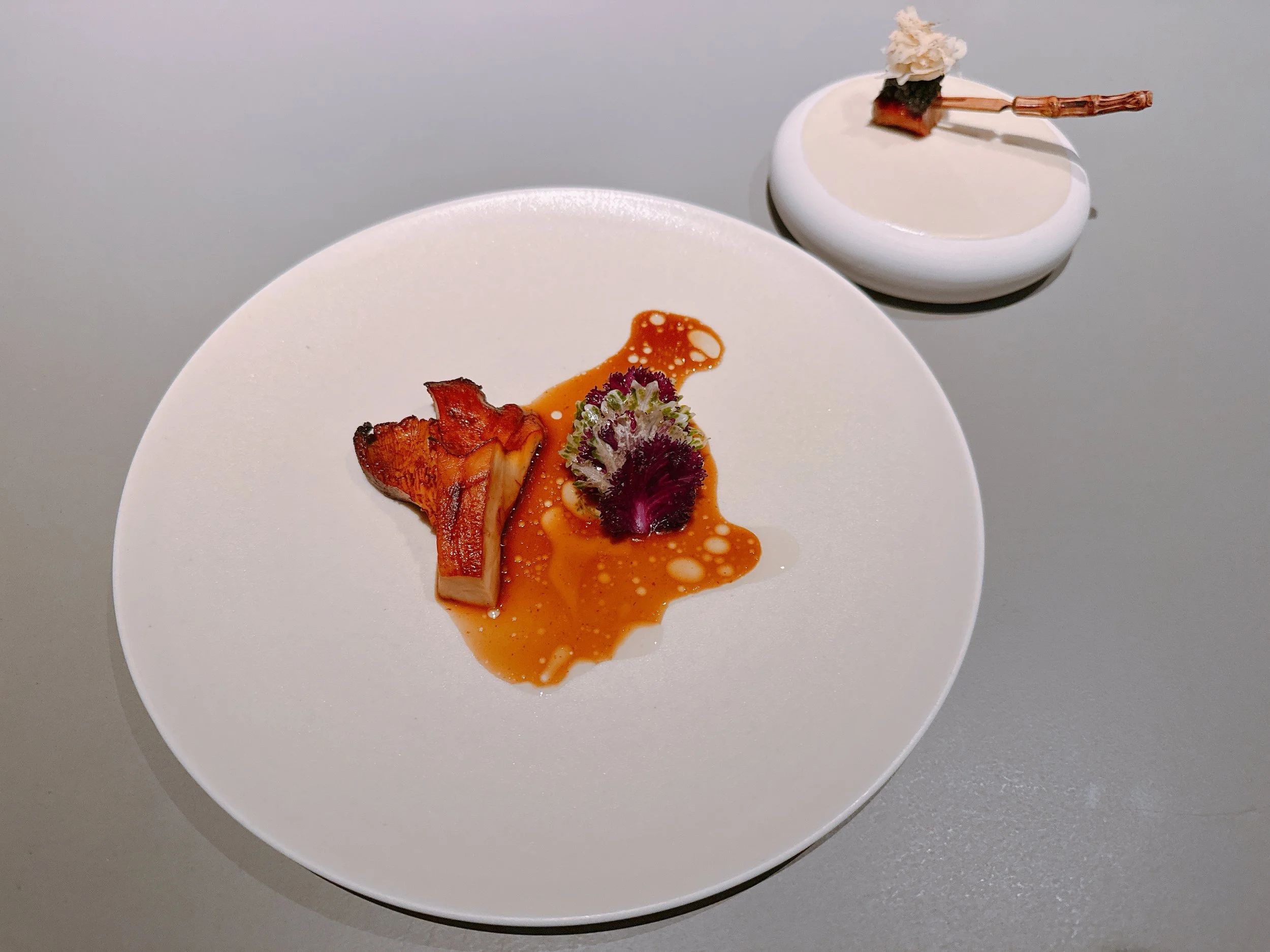
The first of two meat dishes featured a duck breast. The duck in question had been raised to the restaurant's specifications at a farm in Sonoma County north of San Francisco. The duck had been smoked and was served with salted unripe blueberries, kale, and a cream made from the duck's fat. On the side was a duck leg confit seasoned with pluots, and topped with caviar and shaved walnuts. This was a highly uneven dish. Let's start with the good parts: the acidic sides were very flavorful and the lettuce was divine (19). The duck confit also had lots of flavor, and was pretty chunky - maybe a tiny bit chewy (17). I'm not a big fan of duck at the best of times, but this duck breast felt way undercooked to me - it was much too chewy, and a chore to eat (13). Had the duck's texture been more tender, this could have been a terrific dish 16. The pescatarian version of this dish replaced the duck with chanterelle mushrooms, paired with a butter/garlic/thyme/mushroom sauce. A very flavorful and tasty alternative 18.
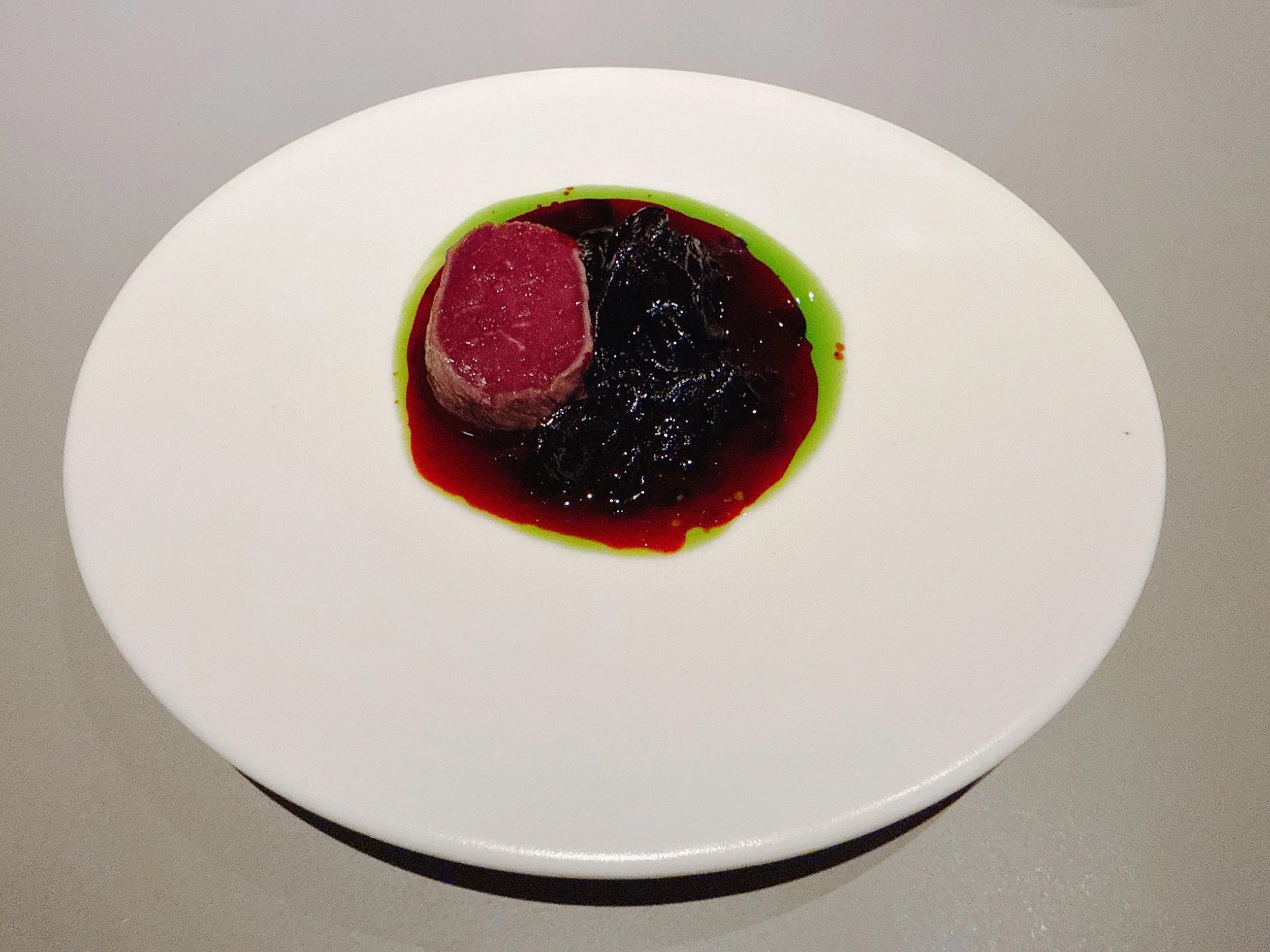
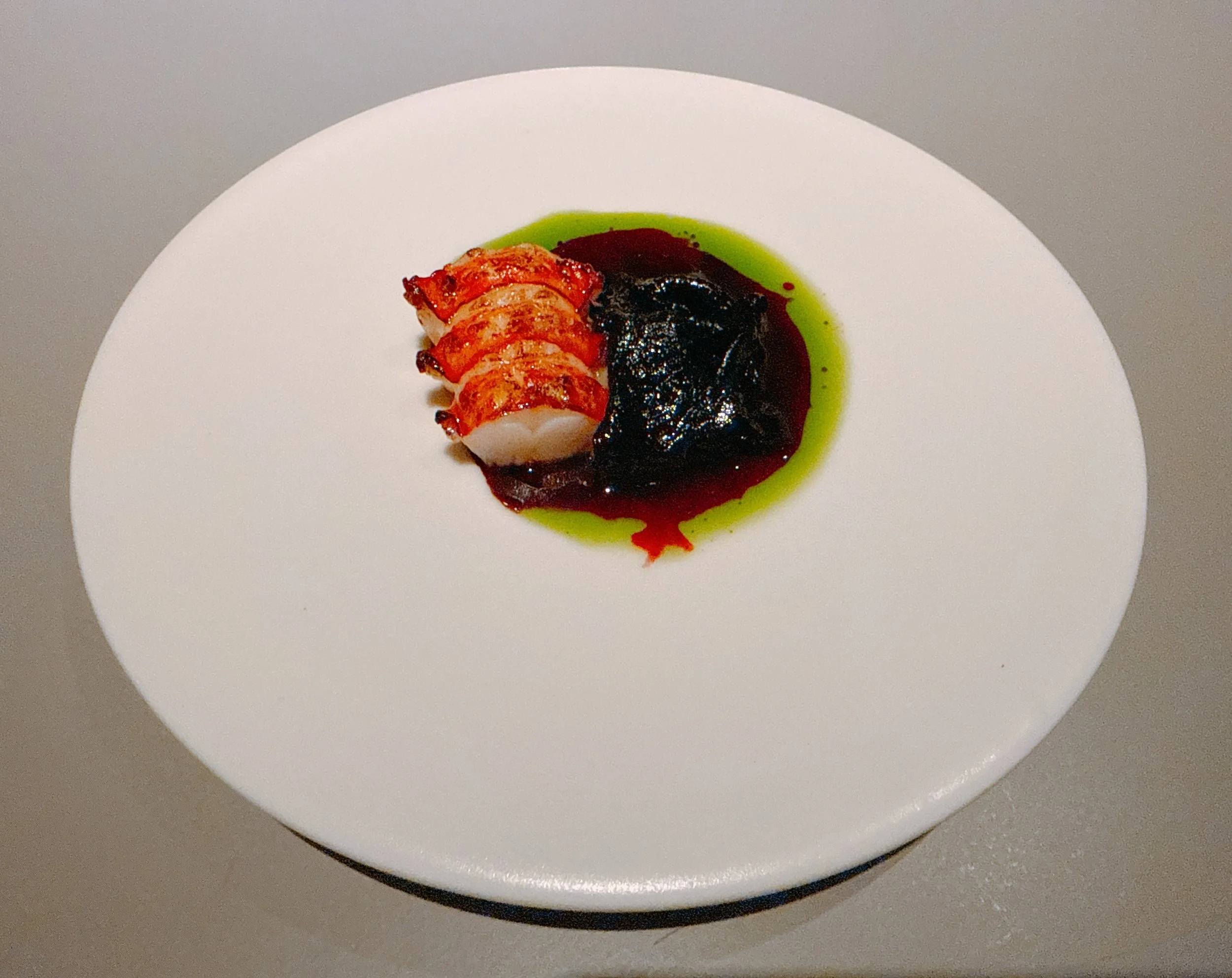
For the final savory dish, I received a venison steak that had been seared very briefly - its interior looked quite rare. It came with a forest butter, caramelized cream, huckleberries, beets that had been dehydrated and then re-hydrated in their own juice, roasted beets, and lovage. The meat here was much better (i.e., more tender) than the duck, lightly flavored and not gamey at all. Most of the taste came from the beets, though, which made the dish taste somewhat sweet. The beets' texture - leathery and slightly chewy - was nice. But overall, I would have preferred a slightly more savory dish (my wife really liked the sauce, though) 17. The pescatarian version of the dish replaced the venison with a grilled lobster tail from Maine. Lightly sweet and juicy, it was perfectly cooked 18.
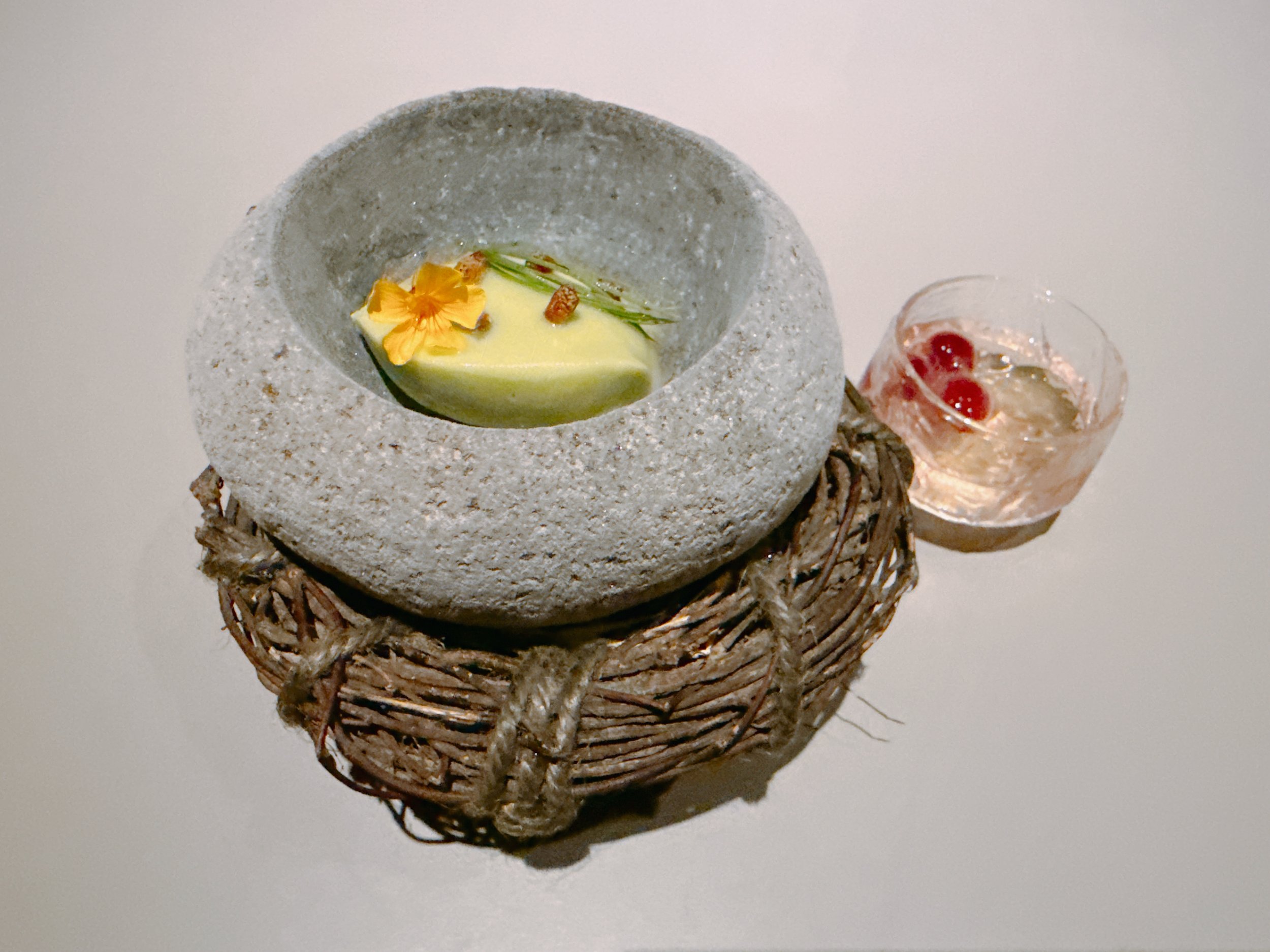
Moving on towards sweeter realms, we received a dish that came in two parts. A small glass was filled with ice made from tart grilled cherries, sweet woodruff oil, and a shrub made from last year's elderflowers. In a ceramic bowl was a sorrel ice cream topped with preserved pine pollen and a pine cone syrup. The “drink” was not too sweet and lightly acidic - very nice. The sorrel ice cream was much sweeter and had some herbal notes. The pollen added some crunch to the dish and the syrup reminded me a bit of (admittedly tasty) cough drops. A great dessert that was sweet, but not too sweet 18.
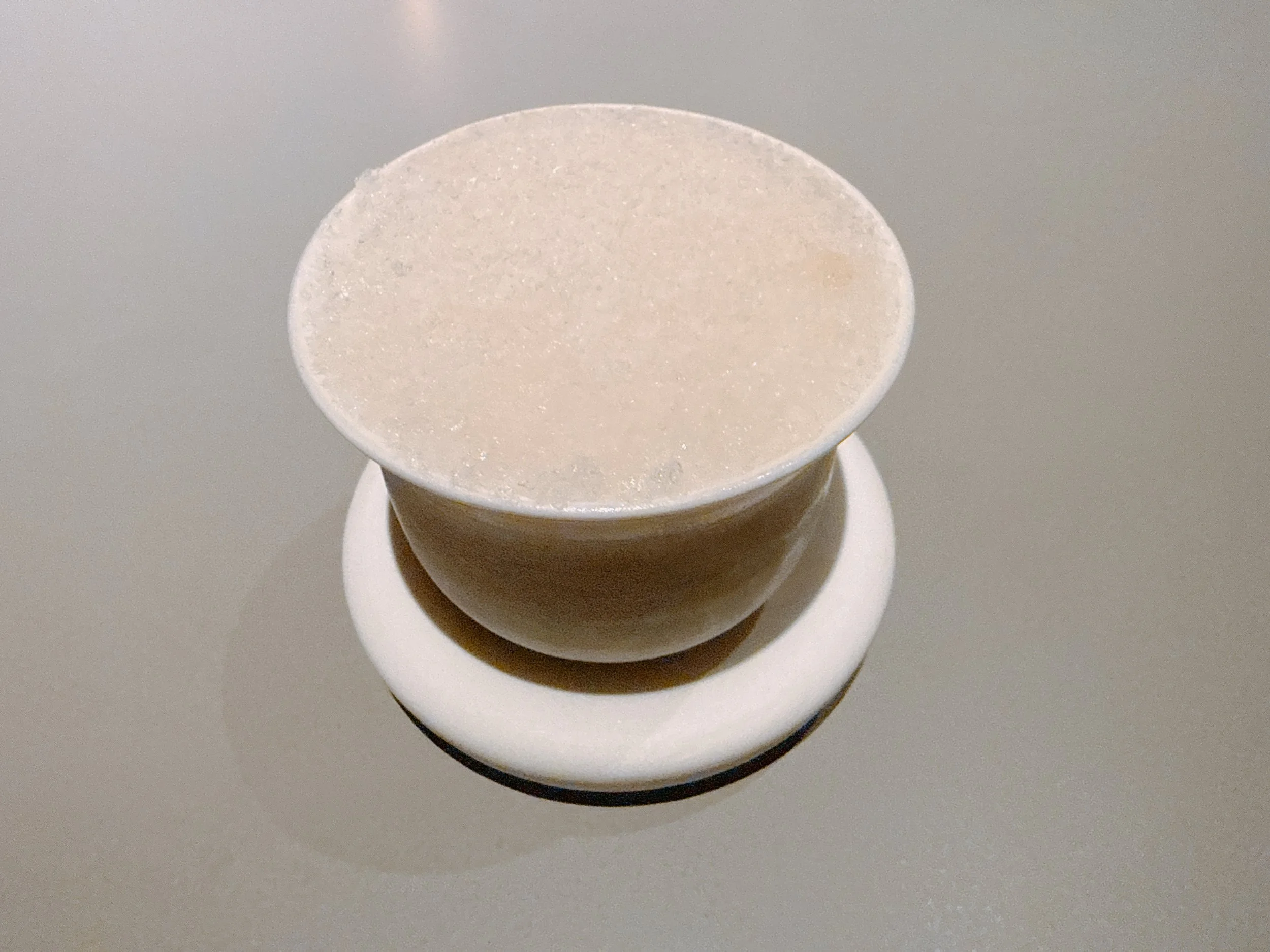
The next dessert might win the prize for the least photogenic dish of the night, but it was actually very tasty. Essentially, it was a layered dish, and nothing except the top layer was initially visible, but we had to eat them all together. In the bowl: sour cream ice cream, a rose-geranium jelly, caramelized whey, toasted barley cream, and a “English perry” granita made from pear juice. It was a great combination of flavors: caramelly, fruity, sweet. Creamy, cold, and not too heavy, it reminded me a bit of a combination of molasses and fruit 18.
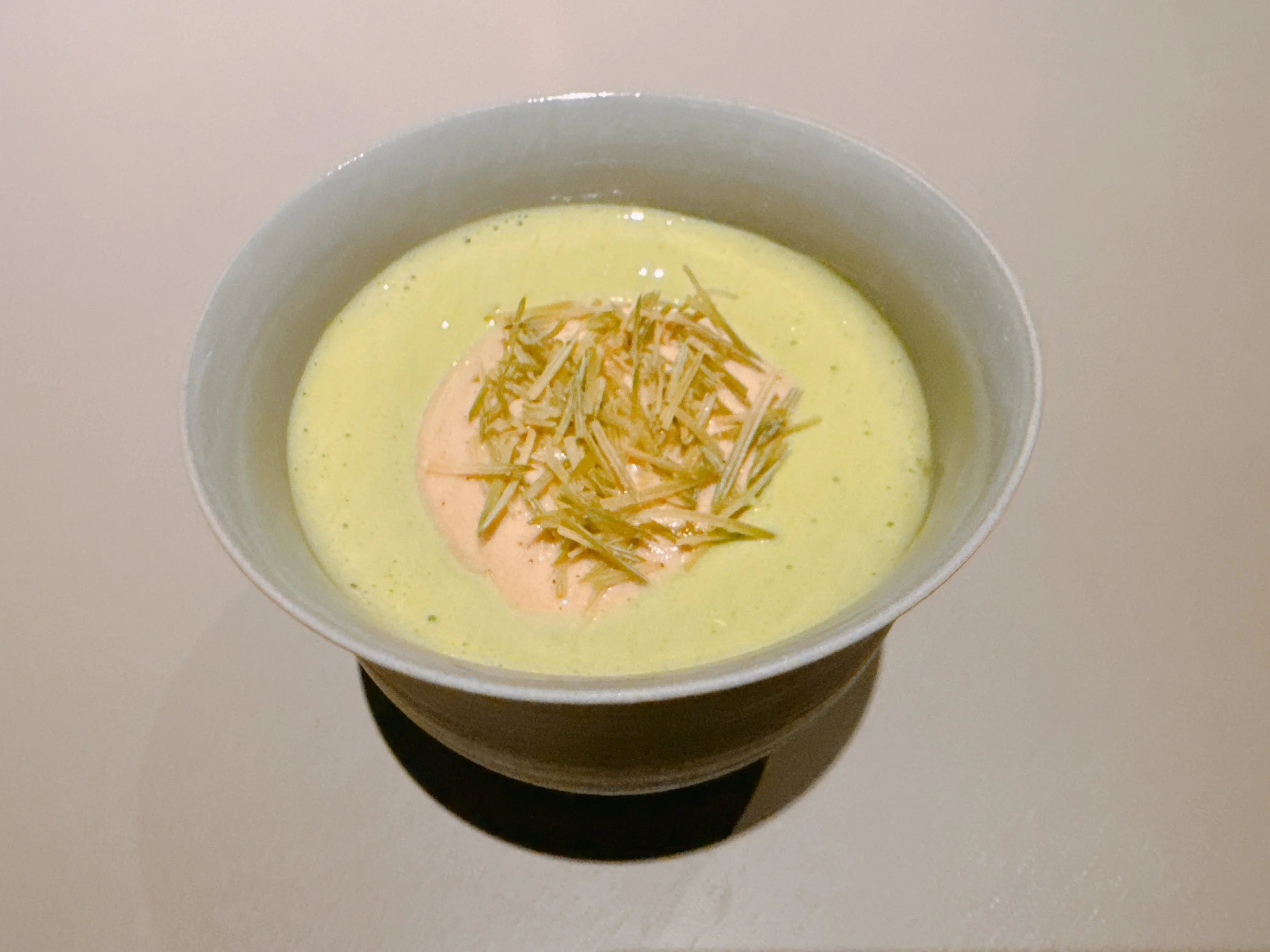
For our final dessert, we were served a grilled apple ice cream topped with a spruce foam, an acorn flour cake, an apple reduction and crispy slivers of apples. This tasted essentially like a moist apple cake, with a woodsy note and crunchy dried apples for texture. Ok, but not as mind-blowing as what had come before 16.
For lack of a decaf espresso on the menu, I ordered a decaf coffee to go along with the final bites, and was surprised to see that the coffee was prepared table-side in a siphon. I'd never seen one of those in a fine-dining restaurant before - and yes, the coffee was very good.
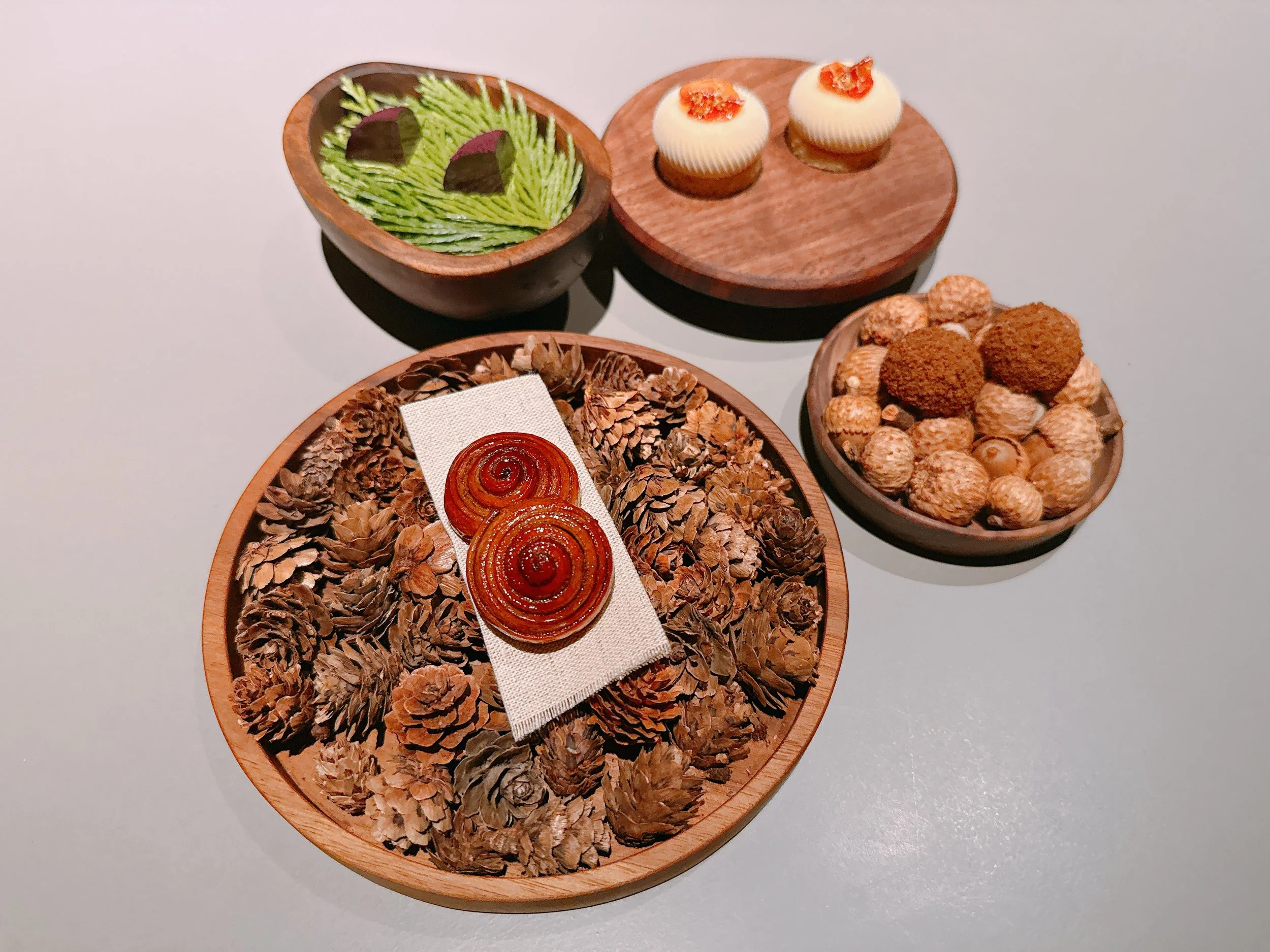
Some petit fours concluded our dinner. A little acorn cake was made with a miso of the acorn's trimming, before being frozen and covered in nougatine. A cold, nutty, cheesy bite - interesting 15. A parfait made from roasted cherry stones was topped with a spongy barley cake and a damson (think: red currant) jam 15. A little bun made with birch syrup and brown butter was not very sweet and lightly sticky 16. Finally, a fruit jelly made from junipers and topped with lacto-fermented blueberries was slightly sweet, but tasted a bit too odd for me, presumably from the junipers 14.
Altogether, this was a great dinner. I loved how the restaurant uncompromisingly leaned into fermentation, acidity, and strong flavors. But I could also see how this approach - especially the acidity - might not be to everyone's taste. So please consider my ratings with that caveat in mind.
Overall: A tour de force of New Nordic cooking with (mainly) Californian ingredients. If one likes flavorful, acidic dishes, then this is a restaurant not to miss in San Francisco. This dinner was even better than on our last visit in 2024, with more assured service and many stellar dishes. For the most part, this felt closer to three than its current two stars - a compelling dinner, regardless of whether it was served in California or in Copenhagen. There were some dishes that didn't quite work for me (in particular the duck), but these felt like issues that could be fixed in time. One to watch (and happily return to) for sure 18.