Virtus - Paris
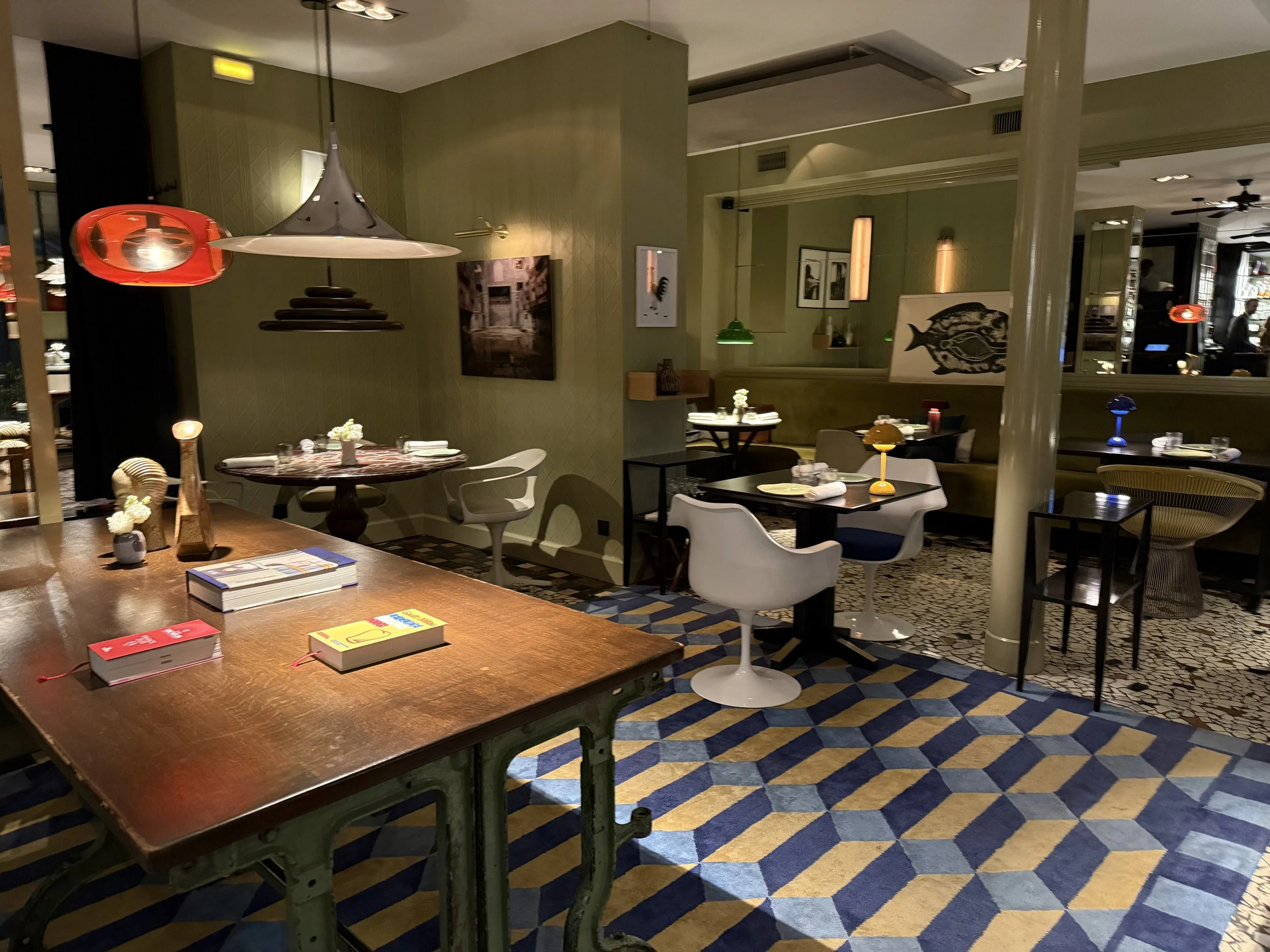
Artistically mismatched furniture
Rating: 16/20
Where: Paris, France
When: Dinner for 1 on 24 March 2026
Cost per Person: Tasting menu 165-195 Euro ($190-$225), Wine Pairing 80-95 Euro ($90-$110)
Accolades: 2 Michelin Stars
Why: Excellent seafood dishes, great service, relaxed setting
Hidden in Paris' 12th arrondissement, in a neighborhood dotted with bars and bistrots, is “Virtus”, one of the city's newest two-Michelin-starred restaurants. Were it not for the Michelin plaque next to the door, there would be little to distinguish it from the many other establishments nearby. The restaurant's interior looks and feels like a mix of an upscale bistro and somebody’s living room, with mismatched tables, chairs and lamps - no two seem to be alike, and some go back all the way to the 1960s. The floors are tiled, but in a patchwork of different patterns, with the occasional rug thrown in. The cobbled-together aesthetic is a deliberate design choice: one can imagine eating at a hidden neighborhood gem, at a restaurant that one got introduced to by an in-the-know friend rather than the Michelin Guide. In a world of multi-million-dollar backed fine dining ventures, this one feels refreshingly unpretentious.
Virtus is run by a husband and wife team. He previously worked in the kitchen of three-starred Vague d'Or in St. Tropez and she just won the 2026 Michelin Service award. That's a bit of a giveaway: these are not exactly the people you'd expect to helm a random neighborhood restaurant.
I arrived at the restaurant right when it opened for the night. The proprietress had just hung the day's menu in a glass case next to the door. Inside, the fifteen tables spread over two dining rooms were all empty, however all but one would be taken by the end of this Tuesday night. No one asked for my name before leading me to my table - presumably since I was the only single diner this early in the evening. The overwhelming majority of the guests that arrived after me were locals, a number of them regulars.
Even though the clientele was predominantly French, there was a printed English menu, and my two servers and the sommelier spoke great English as well. The service overall felt effortless, unhurried and efficient - I didn't even notice my water glass being refilled. How only two servers were able to do this for the nine tables in our dining room, I still don't know. I guess that the Michelin service award really means something.
Virtus served a single tasting menu, consisting of either six or seven courses, for 165 and 195 Euro (about $190 and $225), respectively. There were two choices for an optional cheese course, priced at 22 and 25 Euro ($25 and $30). And finally, a wine pairing for 80 or 95 Euro ($90 or $110), depending on the length of the chosen tasting menu. The wines were all French except for the dessert wine, which was an Irish blackberry (!) wine. An all went nicely with the food - well, except for the blackberry wine, which felt a bit too tart for the dessert. I was also happily surprised by how good the wines were, at a price point that was a fraction of what one might pay in many other countries. Add to that some generous pours, especially at the beginning, and this actually felt like good value-for-money. A rarity among wine pairings.
Since the pairing only started with the tasting menu proper, I ordered a mocktail to accompany the amuse bouches. Unfortunately, the rhubarb-flavored drink was pretty watery, and not very reminiscent of an actual cocktail. Being neither sweet nor strongly flavored might have made it a good fit for the food, but when considered on its own, it was underwhelming.
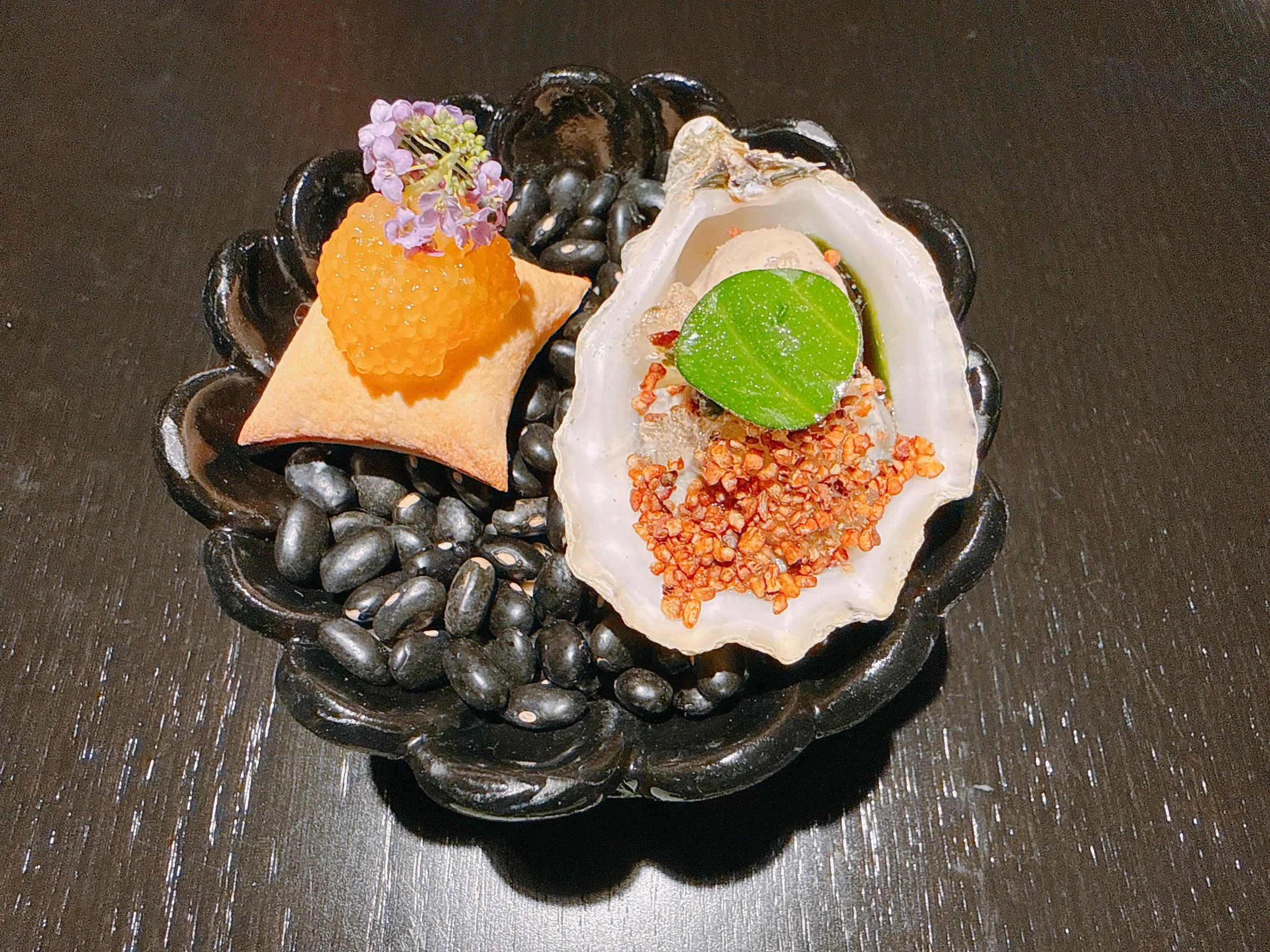
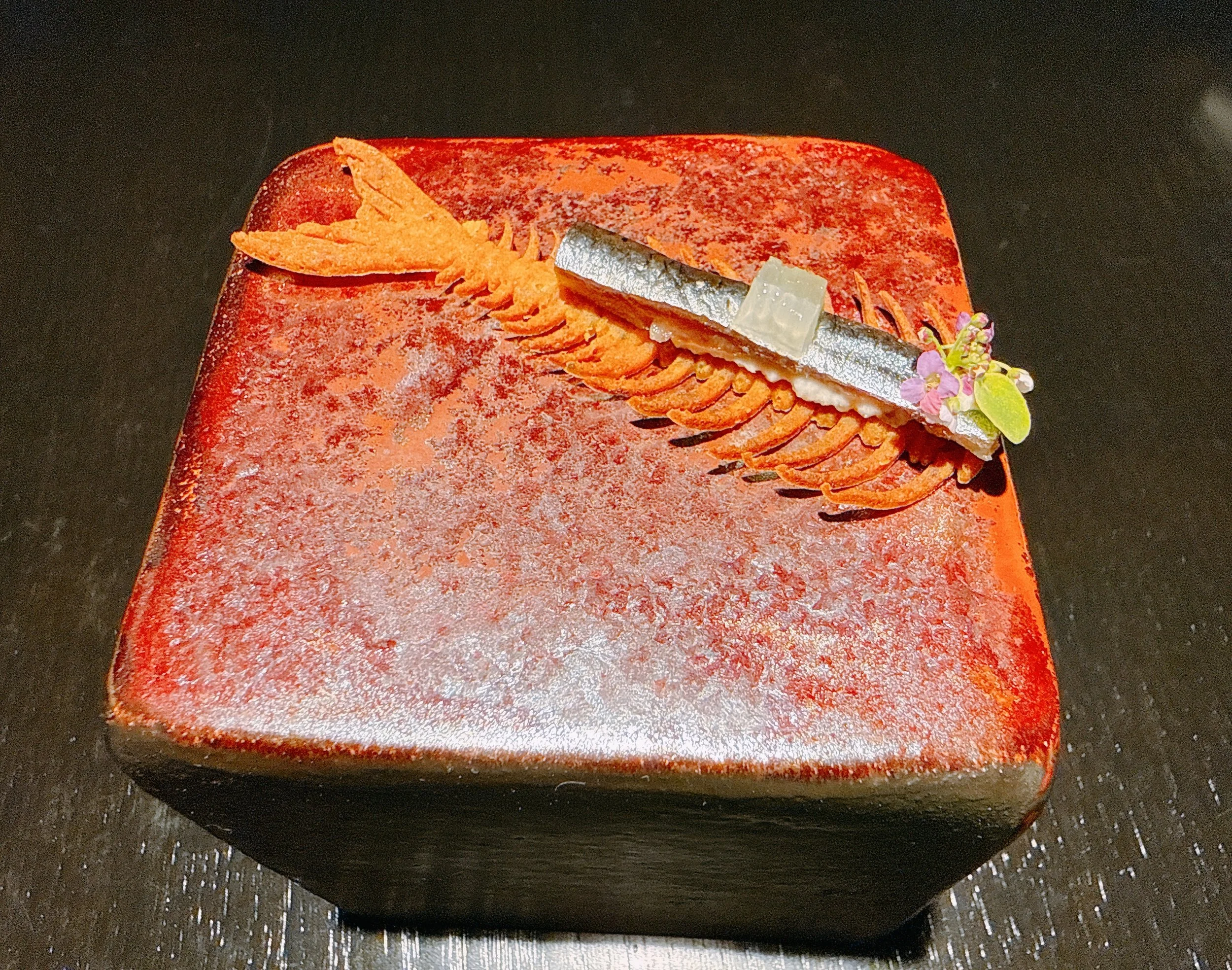
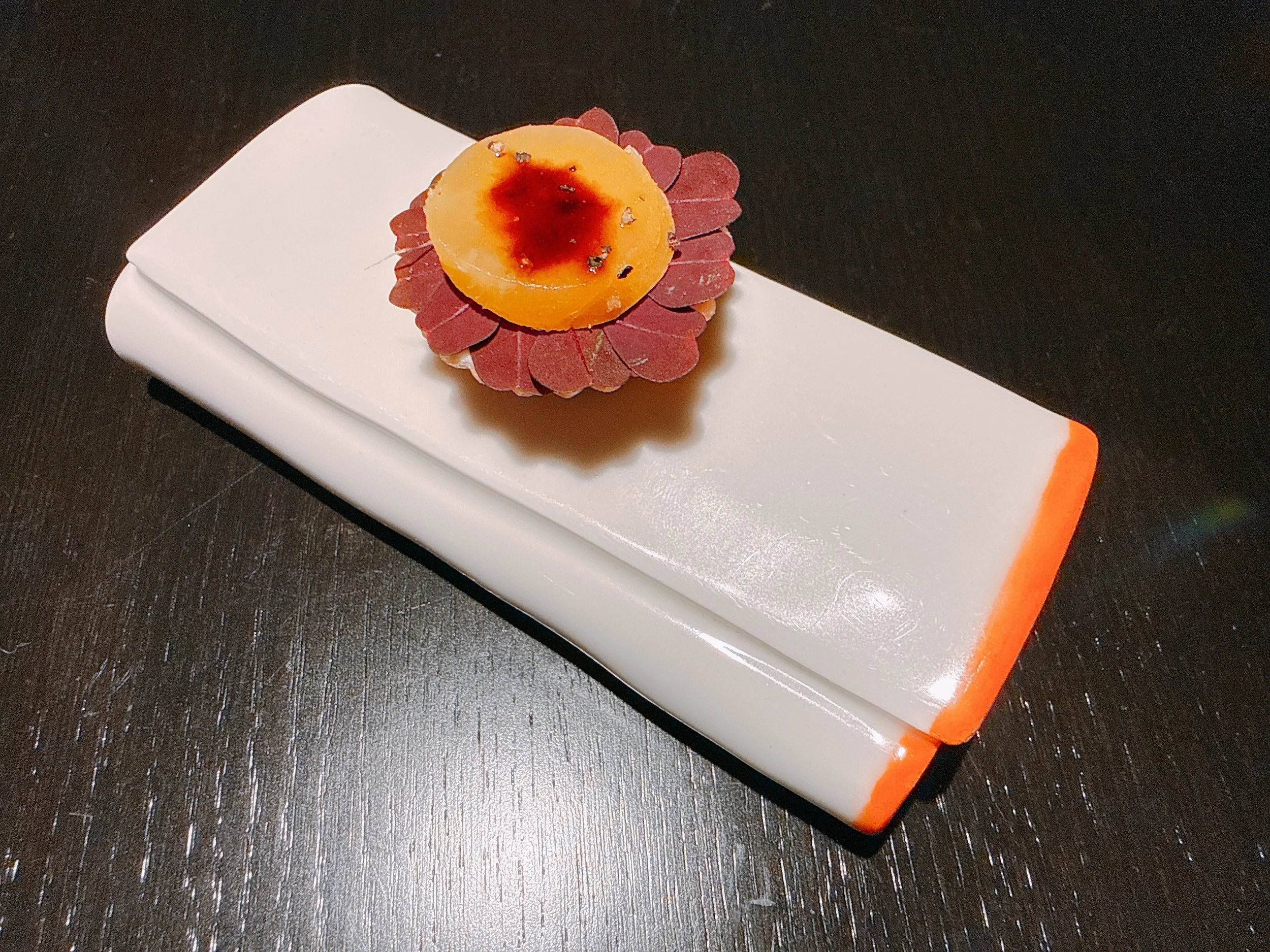
The dinner started with a spread of four appetizers. A poached oyster was served with toasted buckwheat, lovage, and grape jelly. Sadly, this bite lacked flavor, the oyster was chewy, and the grains merely added a bit of texture. The main taste came from the acidic lovage, which lingered after finishing the dish 13. Next was a little cracker pillow that was filled with “tarama” and topped with pike roe. Most - I'd say 95% - of the bite's flavor came from its creamy, salty filling, which tasted lightly of fish. Definitely a big step up in intensity from the oyster, but for an ostensibly straightforward dish 14. A cured piece of anchovy was placed atop a fish-bone-shaped cracker made from chickpeas and onions. This bite started on a fishy note (from the anchovy), and then transitioned to the savory, almost cheesy, taste of the cracker. It was great to be able to identify all the ingredients 15. The last introductory snack was a cracker cup filled with goat cheese and topped with a slice of yellow beetroot and some old wine vinegar. The predominant flavor was of the goat cheese, with some light acidity coming from the vinegar. The beet contributed a bit of flavor, as well as some texture. My favorite bite among the four 15. Interestingly, I liked each bite better than the one before it. Coincidence or intention? Either way, this was going in a promising direction.
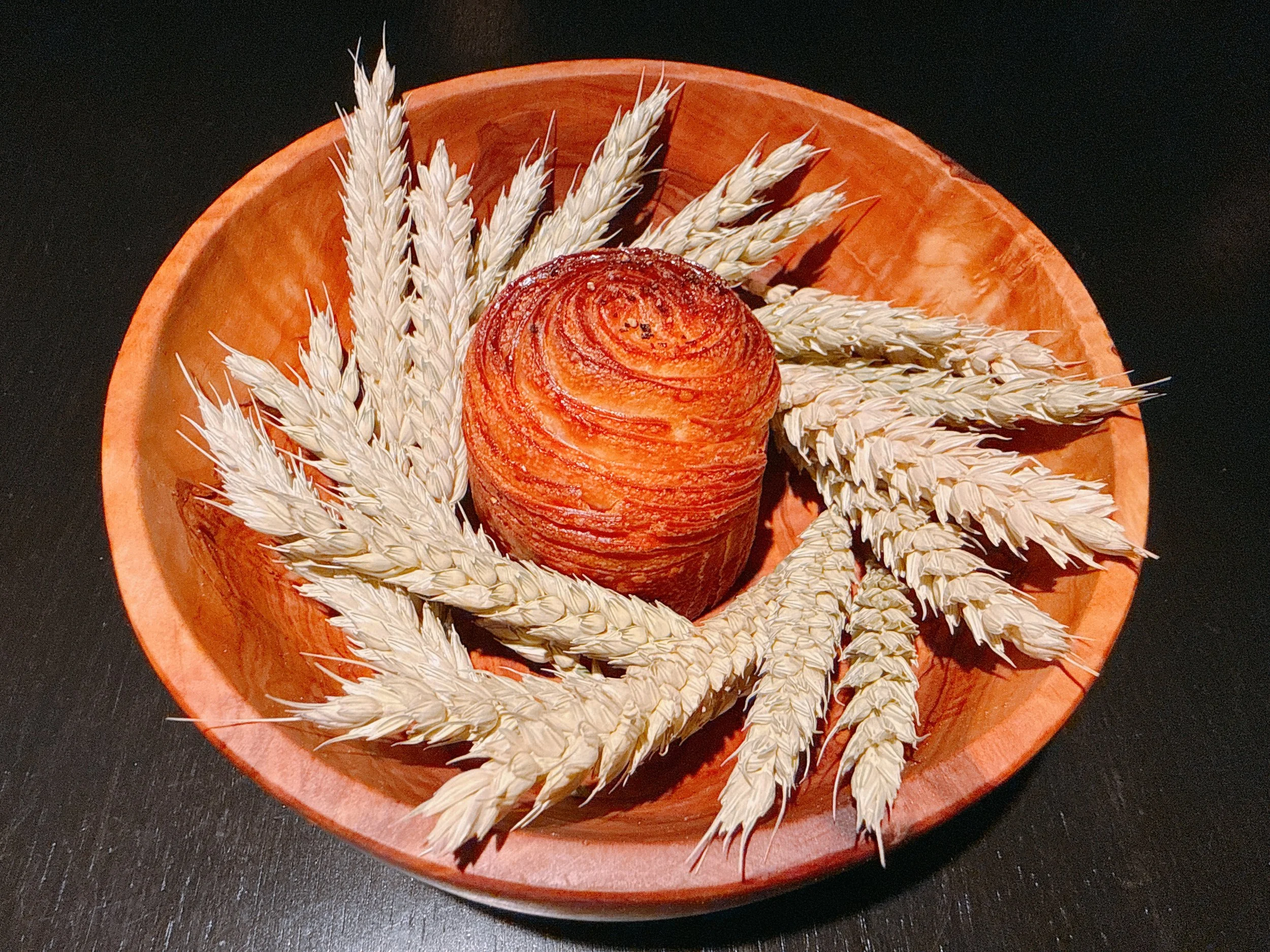
Soon thereafter, I was served the first of two bread accompaniments: a hot brioche paired with a salted butter from Brittany. The bread was lovely: an extremely crunchy crust, a soft interior, and it went great with the butter 16.
The first “official” course arrived hot on the heels of the bread. Actually, if I had to nitpick: the courses showed up a tiny bit too fast at the beginning of the meal. They were paced better towards the end - probably a sign of the kitchen slowing down as the restaurant filled up over the course of the night.
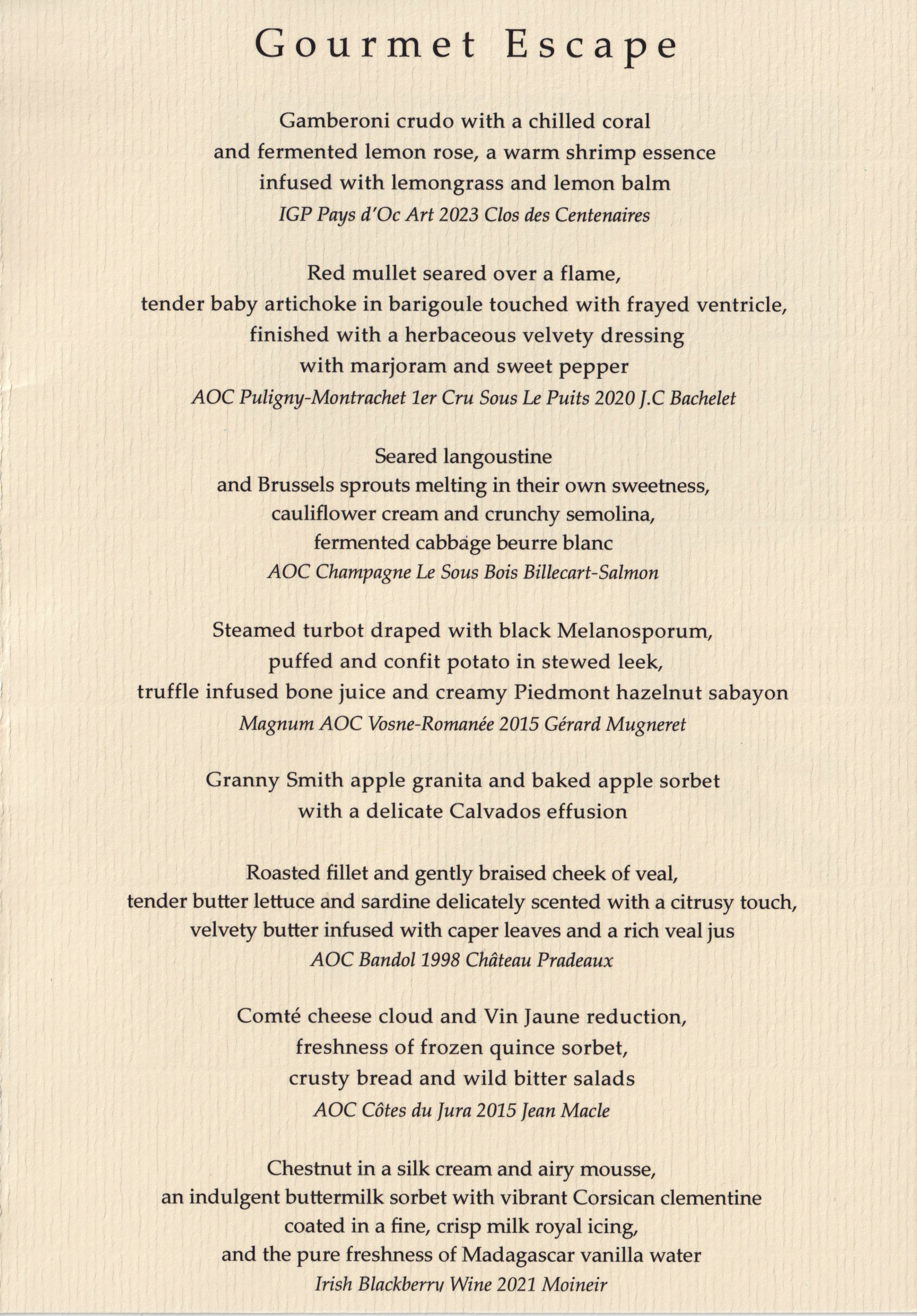
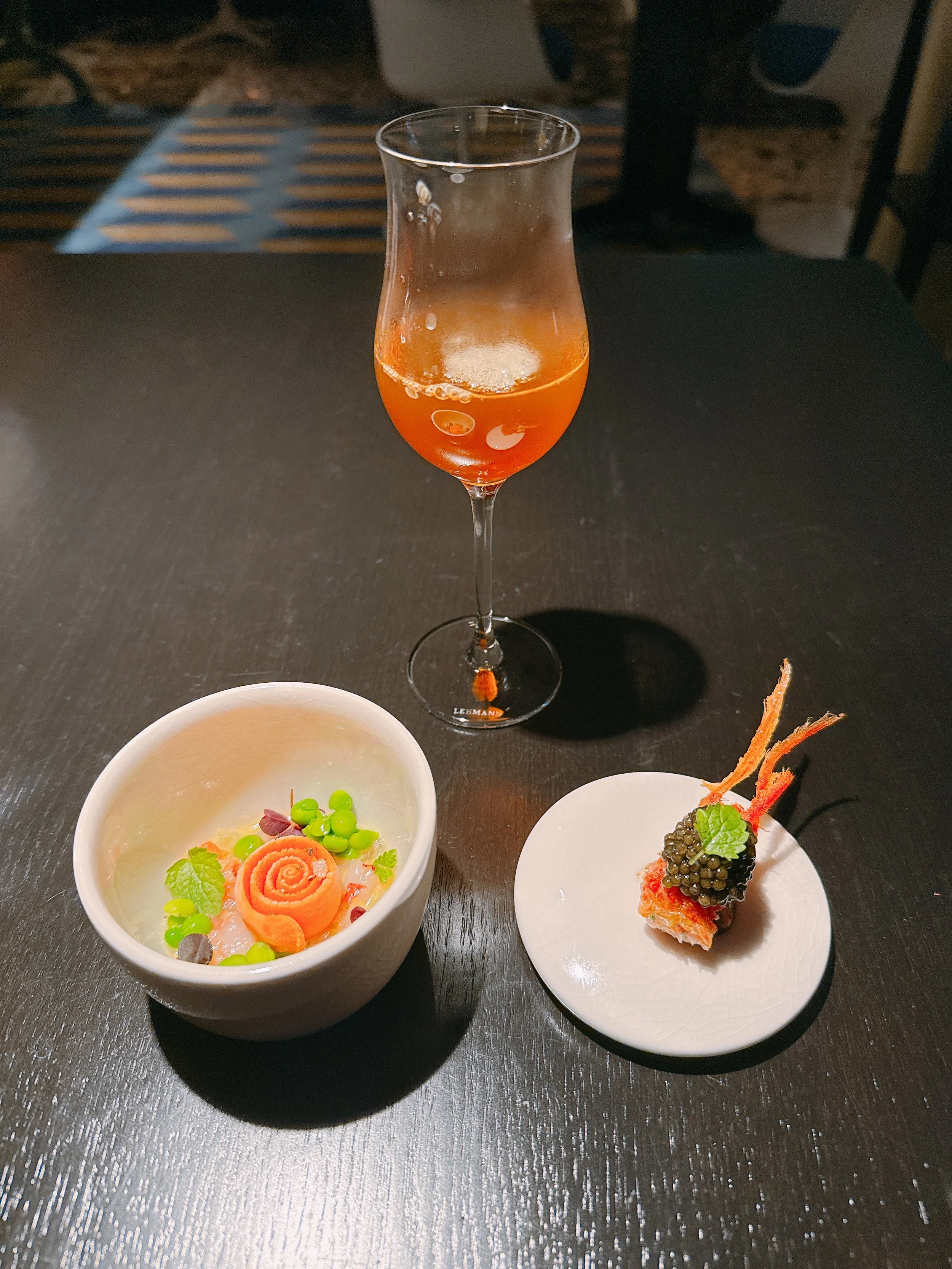
This first course consisted of three entirely different preparations of gambas (shrimp) from Italy's Sanremo. I started with a shrimp head tempura topped with Kristal caviar. Nicely cooked with only minimal batter, it was salty and flavorful. The taste was mainly of gambas; the caviar was mostly there to add some saltiness (15 if rated by itself). In a dessert wine glass was a warm broth made from shrimp, ginger, and lemon balm. At first, I was a bit disappointed by the broth's lack of a strong shrimp flavor. But as I continued to sip on it, I was amazed by how well balanced the flavors were: shrimp, ginger and lemon balm were all there, but none dominated the others. Very well done, and if I had been expecting a shrimp flavor bomb, then that was really on me, misled by what many other fine dining restaurants would have done here (a strong 16). Finally, there was a shrimp crudo served with the season's first peas and a sorbet made from coral and fermented lemons. The crudo had a creamy texture, and its sweetness was accentuated by the peas. The sorbet felt a bit too lemony compared to the rest of the dish and unfortunately dominated the overall flavor. The sorbet looked pretty, but I probably would have liked this dish better without it (15). Overall 15.
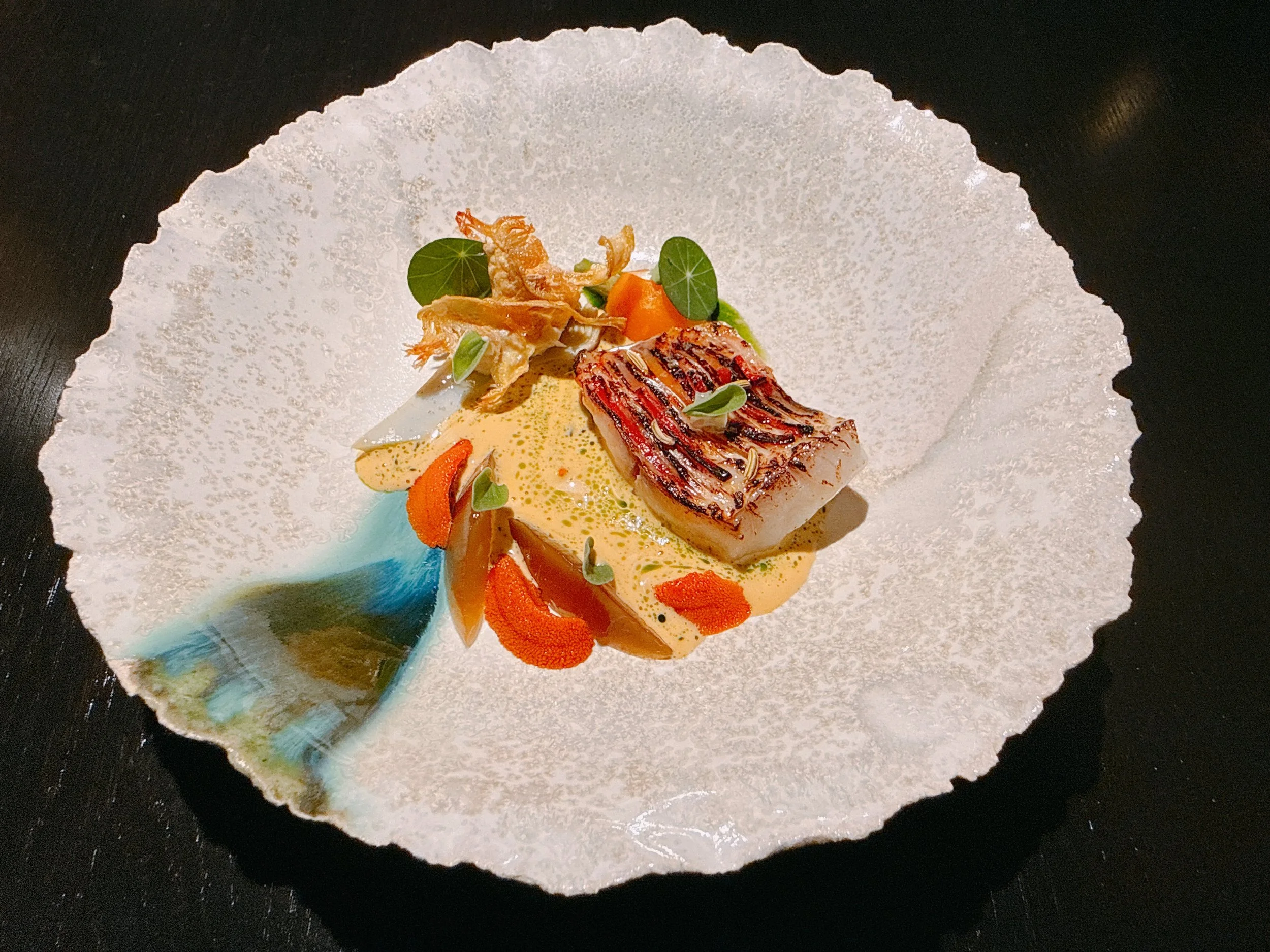
A seared filet of red mullet was served with a baby artichoke (partly cooked, partly fried), a little carrot, some sea urchin, and a sauce made from red bell peppers. For this course and all the following ones, additional sauce was provided on the side. The fish was cooked beautifully: tender without being overcooked, it went amazingly with the creamy bell pepper sauce. On the side was some seafood broth jelly that was also intensely flavored. The artichoke was fine, but oddly enough was served cold. In fact, the fish was the only unequivocally warm part of the dish, even the sauce felt to be more at room temperature. Apart from the odd mix of temperatures, though, the fish and seafood parts of this dish were exceptional 18.
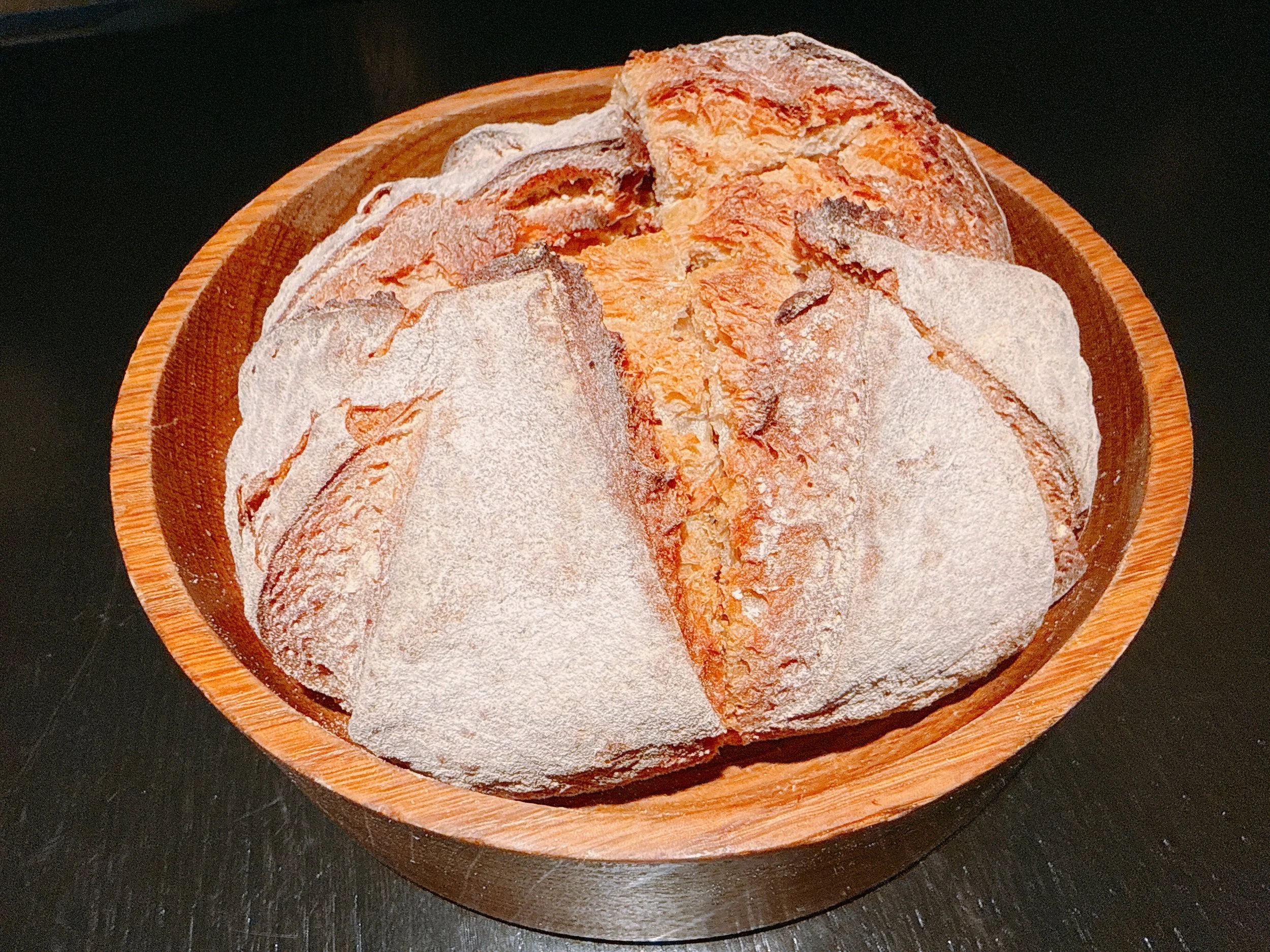
To help with the extra sauce(s), a steaming hot bread boule was served. It had a good crunch and spongy interior. With its relatively neutral flavor it was a good match for all following courses 15.
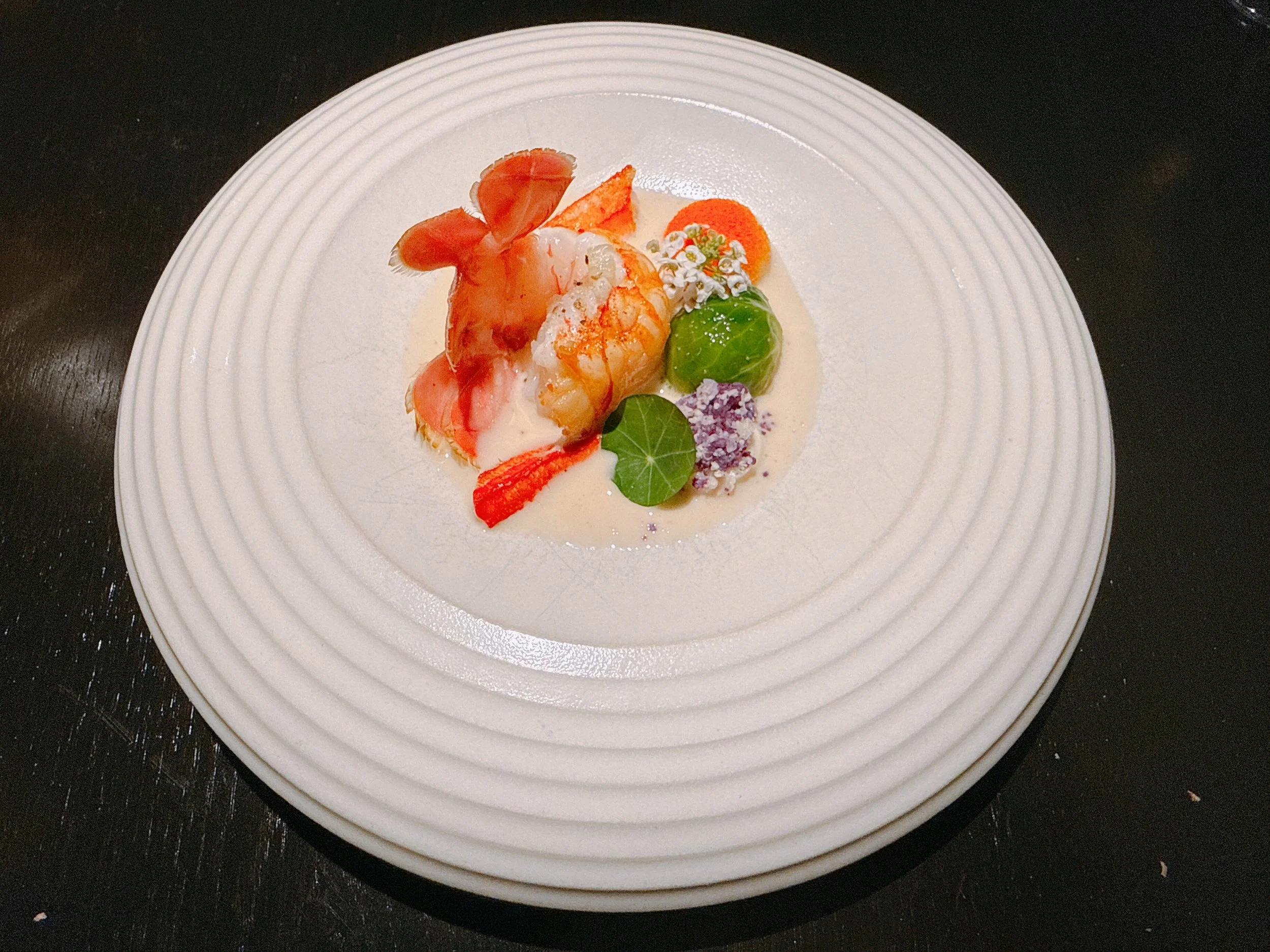
The following dish was the only difference between the six and seven course menus. A seared langoustine tail and some claw meat were served with a variety of cabbage-related vegetables: cauliflower, a Brussels sprout, and a butter sauce infused with fermented cabbage. Some “crunchy” semolina completed the dish. The langoustine was cooked very lightly, making it flavorful, with a lightly seared taste, but still juicy and tender. The claw meat had even more flavor than the tail. By itself, the langoustine might have been a 17. The accompaniments were a bit weaker though; they were notably lighter in flavor. The semolina reminded me a bit of fish cake, the cauliflower did not taste of much, and the Brussels sprout felt a bit too tender. The “butter sauce” was also pretty light and not particularly buttery 16.
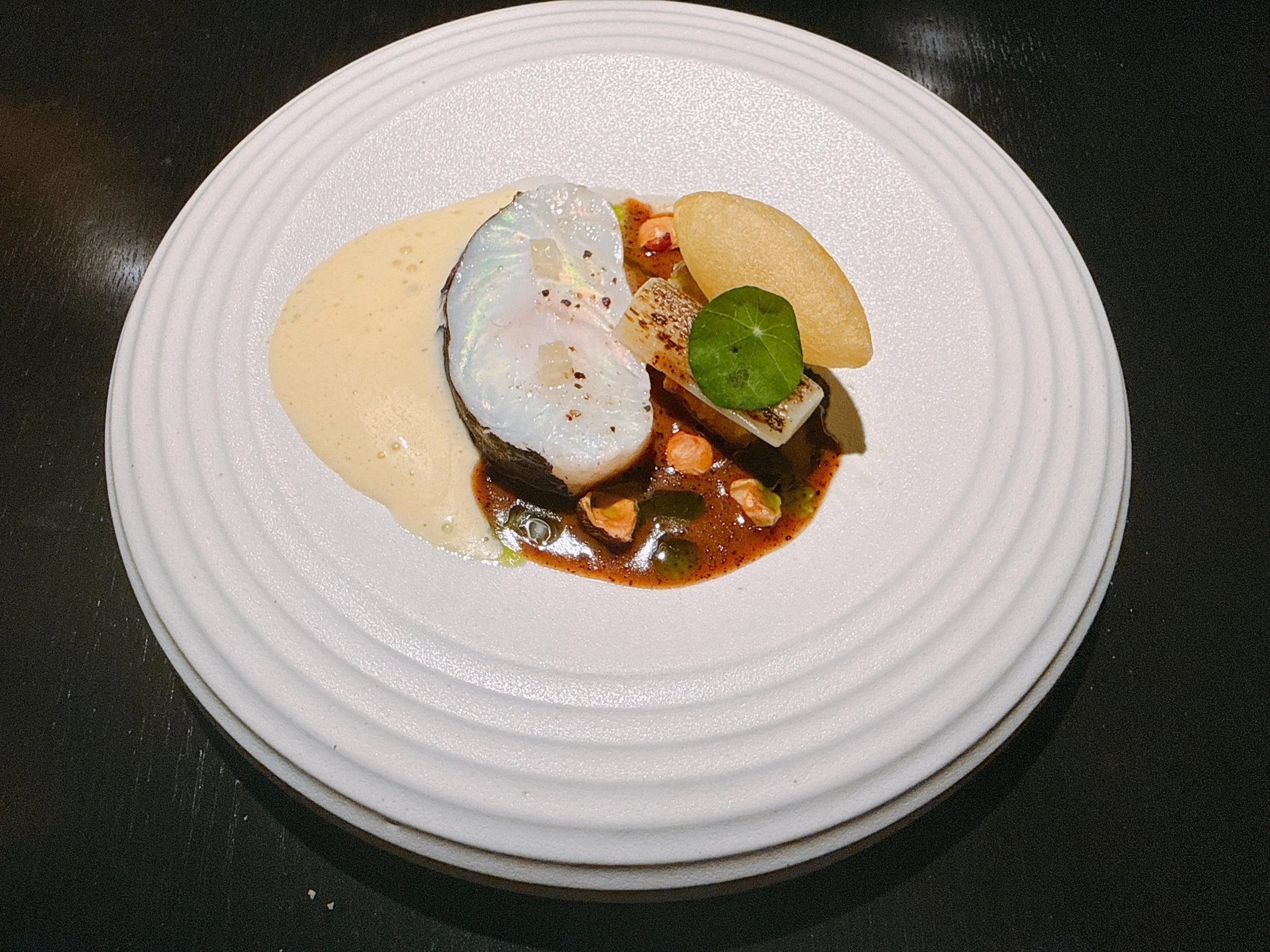
Next up was a filet of lightly steamed turbot, wrapped in black truffles. It was served with two kinds of potatoes: puffed and as a confit with leeks. The dish also came with two sauces: one made with roasted bone jus, truffles and (whole) hazelnuts, the other a sabayon of lemons and hazelnuts. No surprise at this point: the fish was cooked perfectly, and still had some bite. Its wrapping and the sauce gave the dish a light truffle flavor, with the hazelnuts being a nice, crunchy addition. The sabayon on the other hand tasted mostly lemony - it had at most a hint of hazelnuts -, but it was definitely tasty. The puffed potato was somewhat of an oddity - unseasoned, it felt like an unsalted potato chip. The leek was equally underseasoned, but the confit potato was a nice addition to the dish. Unusually for a fish dish, this one was paired with a red wine (a pinot noir). It worked quite well with the heavy-ish sauce 17.
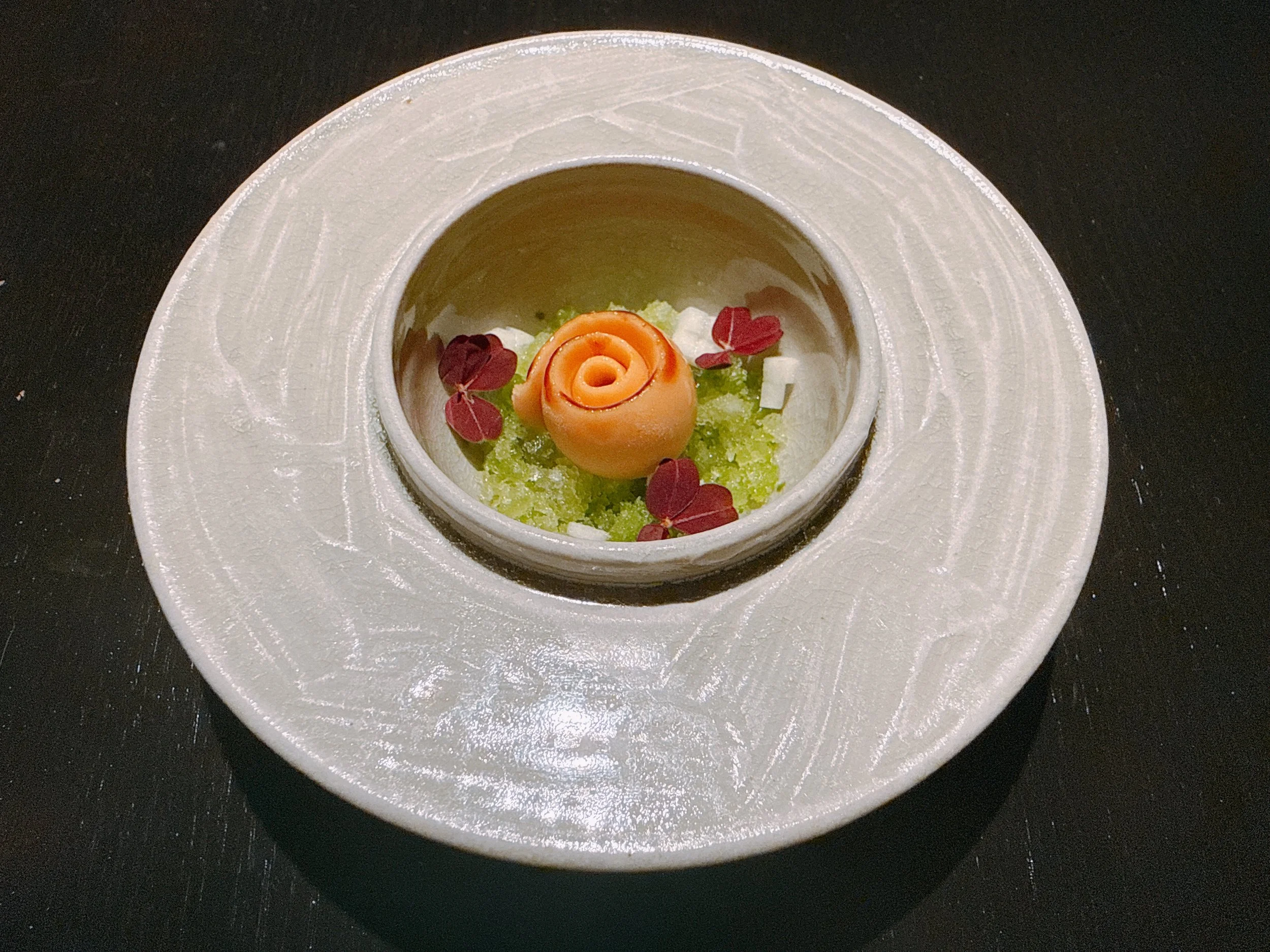
As a palate cleanser, we were served a green apple granita topped with fresh apples and a caramelized apple sorbet, which was finished table-side with a swig of calvados. A lovely combination of different expressions of apple that visually recalled the earlier shrimp sorbet dish. Fresh tasting, with a creamy sorbet and only a hint of alcohol 16.
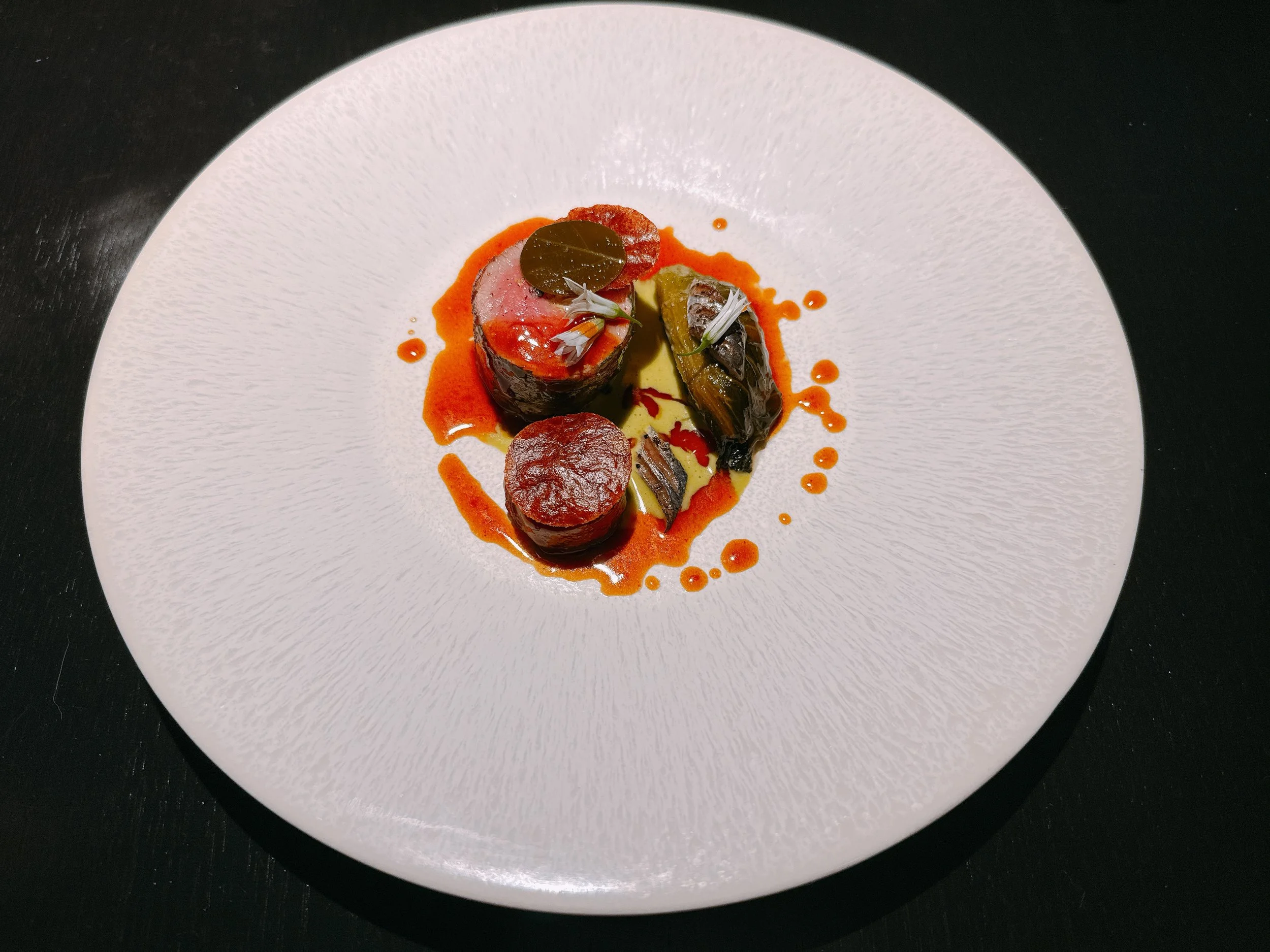
The final savory course was based on veal. A veal filet had been slowly roasted with sage and parsley, and was placed next to a confit veal cheek, braised lettuces, and three pieces of sardine. There were again two sauces: one based on roasted veal jus, and the other a green butter sauce made with caper leaves. The lettuce-wrapped filet (recalling the wrapped turbot) was mostly tender, juicy and flavorful. Only its interior was a tiny bit chewy. The confit was super tender, and a touch gamier than the filet. The sardine was lovely as well, salty and fishy; the lettuce was tender and suffused with sauce. One could call this “surf and turf” - a significantly fancified bistro food. When my main “complaint” is that I would have liked more of the lovely green sauce, then that's actually a compliment 17.
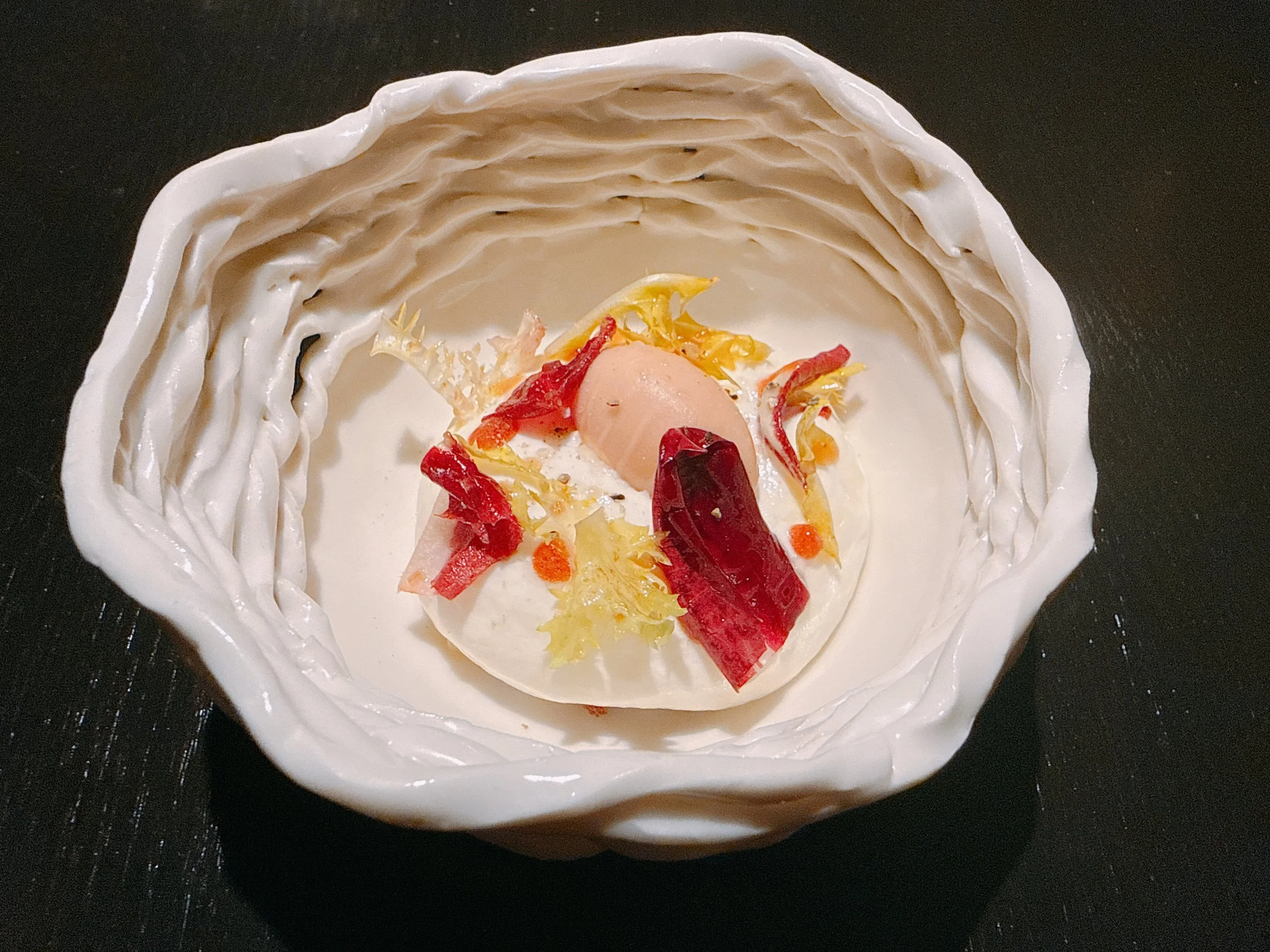
In general, I think that one should never say “no” to a cheese course in France. But since I was pretty full at this point, I was tempted to pass. That is, until I heard that there was no cheese cart, but rather two prepared dishes based on cheese. At my server’s recommendation, I went for the lighter option among the two. (The other one was a truffled brie, which managed to sound both wonderful and an unwise choice for this pretty full diner.) I received an aged comté cheese topped with a comté cheese foam and a quince sorbet. Also in the dish: a honey vinaigrette, some crunchy bread crumbs, and a few salad leaves. And my server was right: this dish was indeed not heavy at all, mostly consisting just of foam, and not very much of that either. The quince was light in flavor and not very sweet, the fresh lettuces lightened up the dish, and the crunchy bread crumbs balanced the creamy foam. In the end, I was glad to have tried this 16.
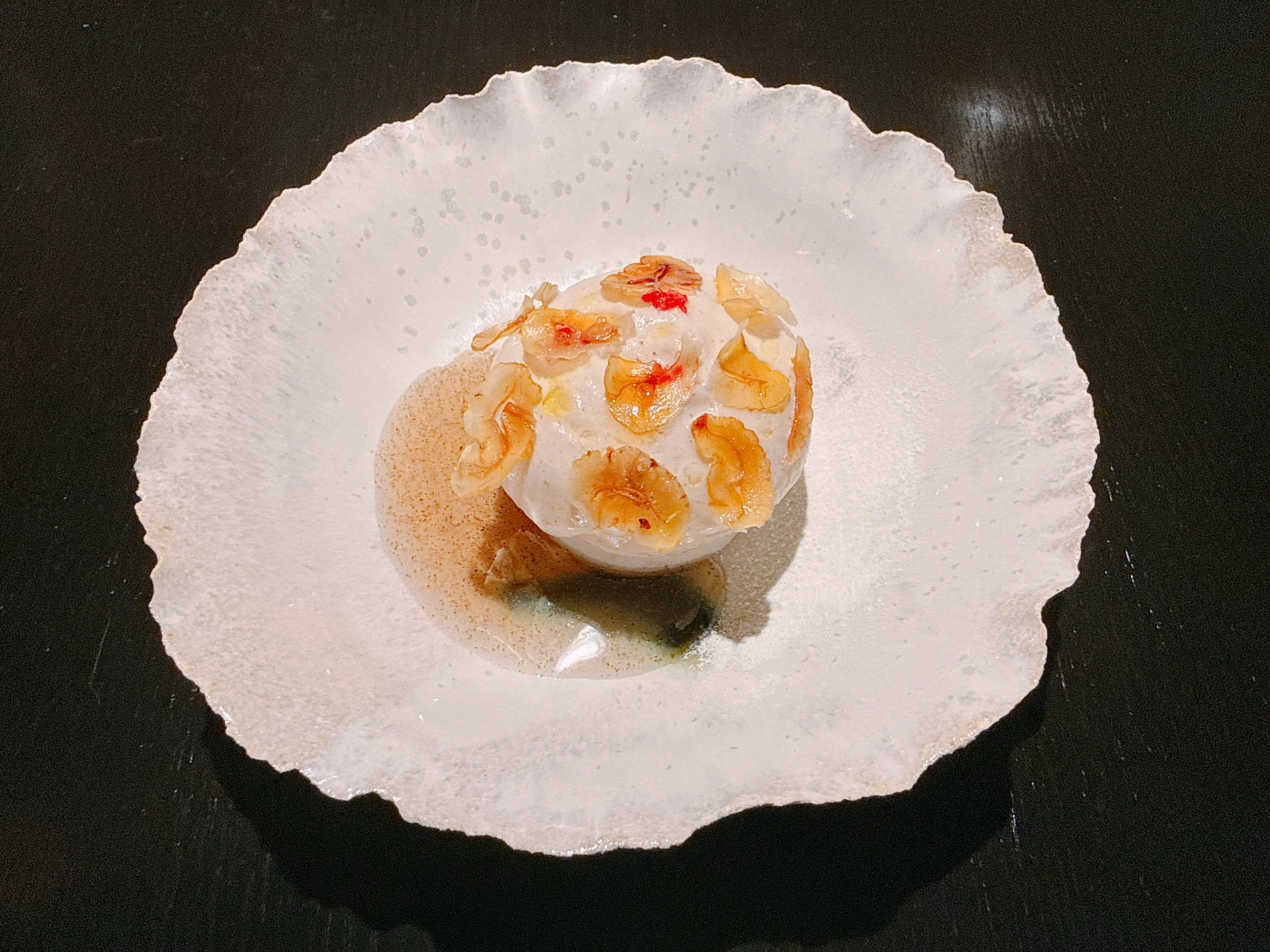
The main dessert was based on chestnuts, represented as both a cream and a mousse. There was also a buttermilk sorbet, some pieces of clementines, and a “vanilla water” sauce. This dish was fresh and light - in my mind, the ideal combination for a dessert after a long dinner. Fruity, citrusy, with some added texture from what felt like crunchy meringue. The sauce added a hint of vanilla, but was neither particularly sweet nor flavorful by itself 17.
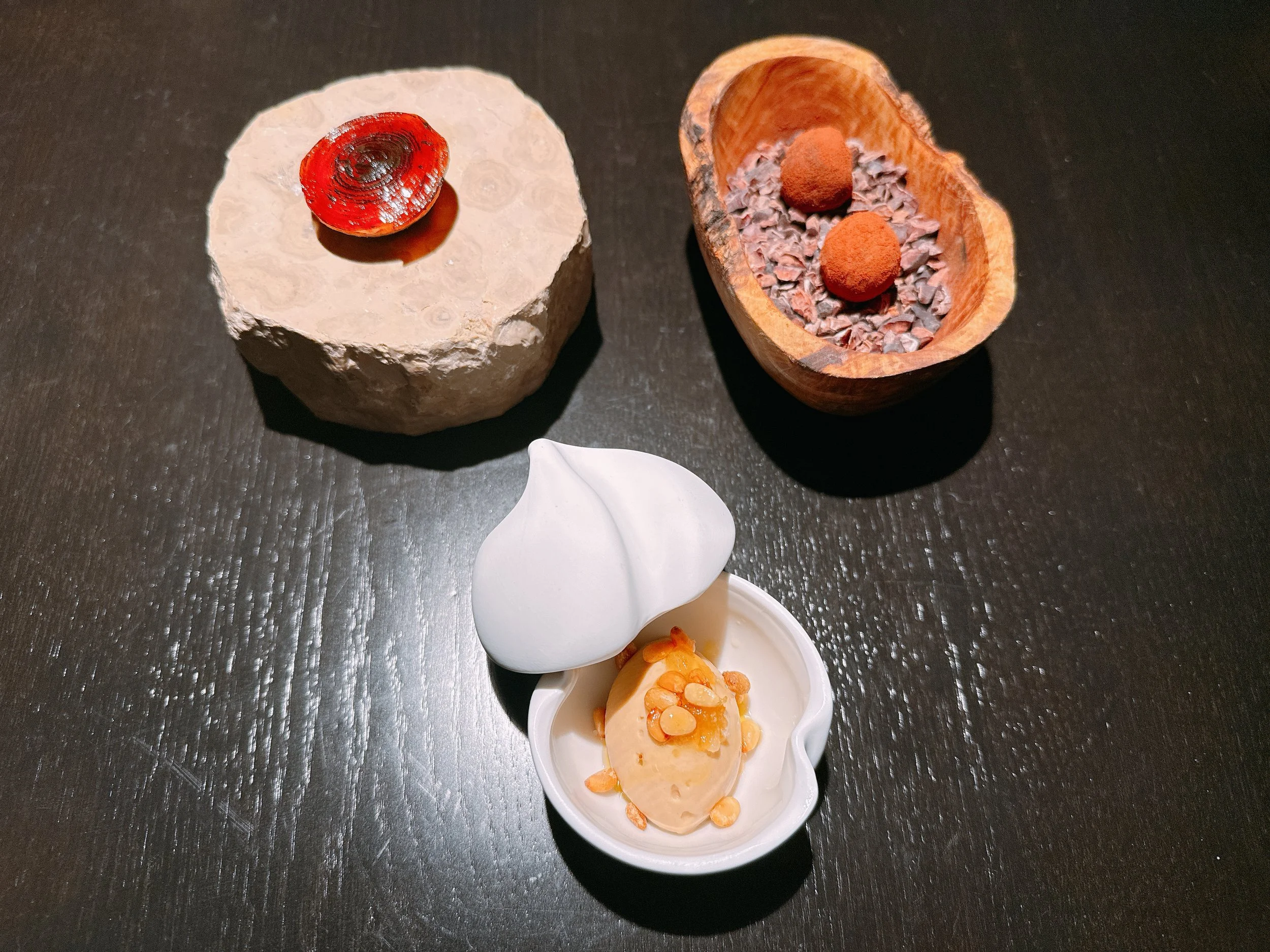
Three small petit fours concluded the dinner. A pine nut ice cream topped with pine nuts, preserved lemons, olive oil, and sea salt had a strong pine nut flavor 16. A little apple tartine was filled with a vanilla cream. Served at room temperature, it had a strong vanilla flavor and a light crunch 15. And finally, a chocolate praline seasoned with tonka beans was made from good chocolate that was slightly bitter and had only a hint of other flavors 15.
Overall: A seafood-centered dinner in a friendly, almost living-room-like setting. Apart from some amuse bouches, there were no let downs among the dishes, and several were very good - the red mullet in particular essentially at a three-star level. A breath of fresh air in a fine dining scene often dominated by highly moneyed productions 16.