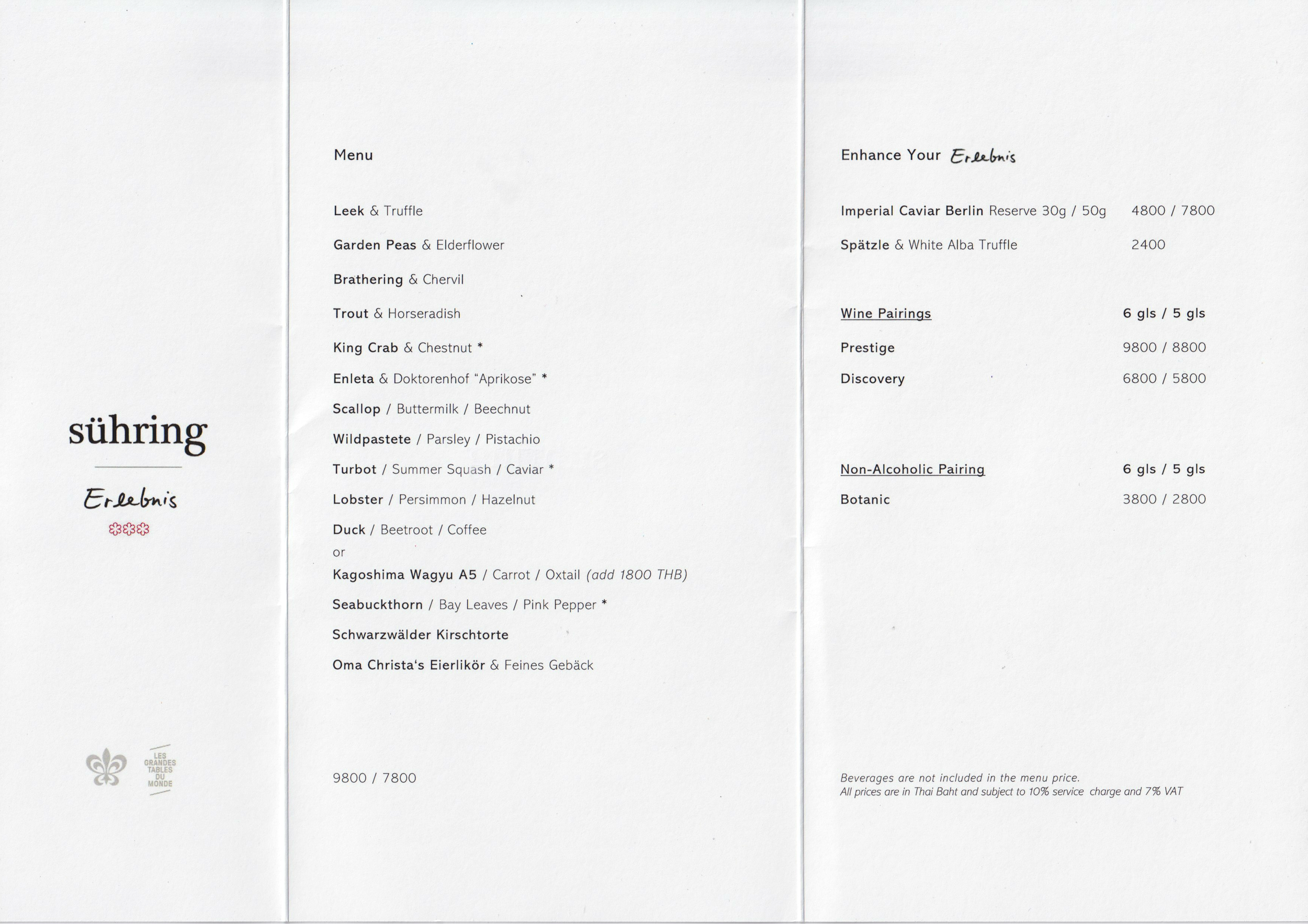
Sühring - Bangkok
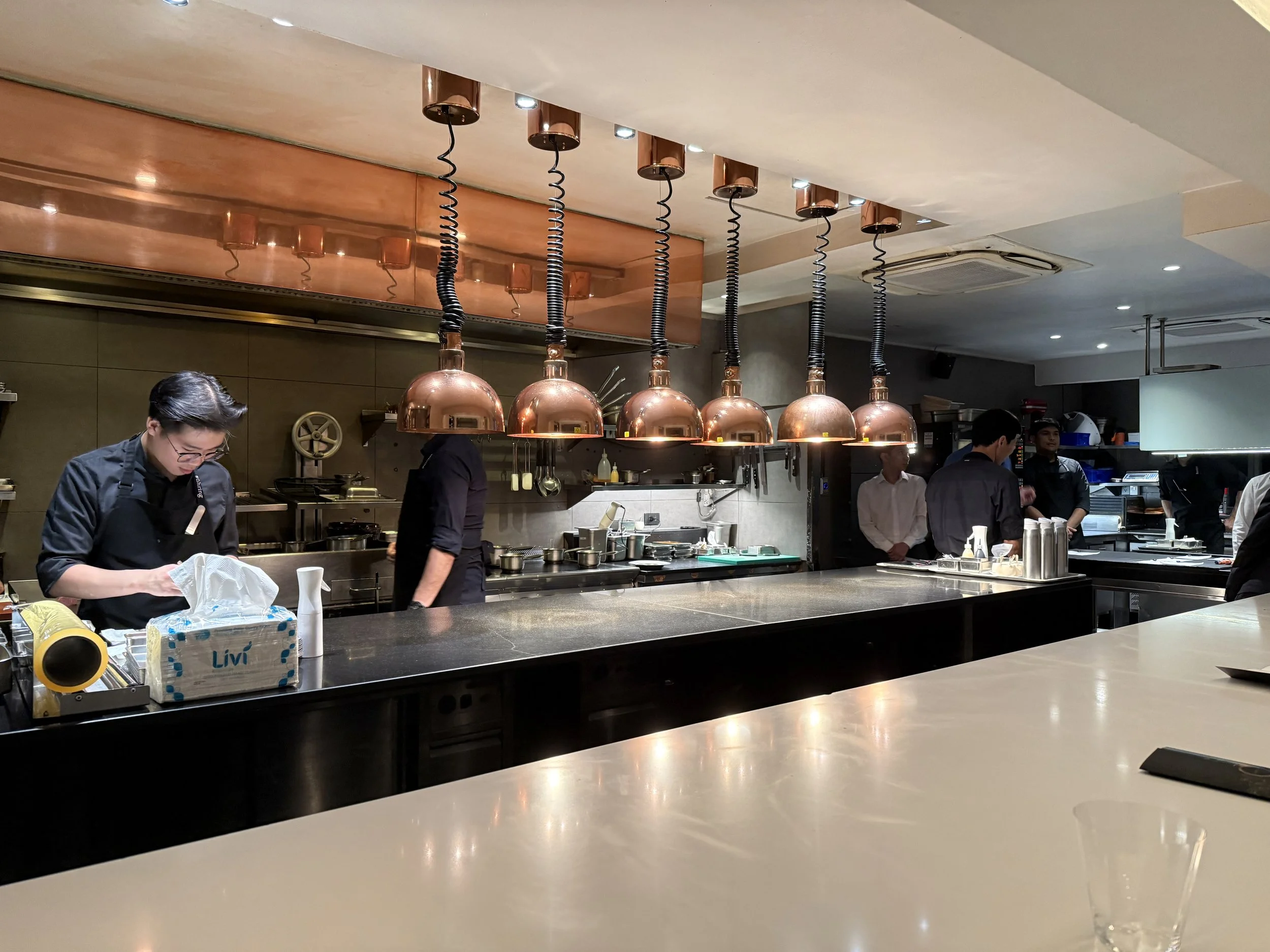
View from the kitchen counter
Rating: 17/20
Where: Bangkok, Thailand
When: Dinner for 2 on 6 December 2025
Cost per Person: Tasting menu 7800-9800 THB ($245-$305), Wine pairing 5800-9800 THB ($180-$305)
Accolades: 3 Michelin Stars, #22 on World's 50 Best Restaurants list (2025)
Why: French cuisine with German inspirations; seating choices from formal to more casual
“Sühring” is a fine-dining restaurant near the center of Bangkok, but a somewhat unusual one. It is run by German twin brothers Thomas and Mathias Sühring, who traveled from their native Berlin to Thailand sixteen years ago, settled down and never left. They now head the only German Michelin-starred Restaurant outside of Germany, and received their third Michelin star in late November 2025.
This was already our second dinner at Sühring in 2025. Our previous visit in February had definitely been “memorable”, but unfortunately not for the right reasons: I had contracted food poisoning earlier in the day, and, well, the resulting dinner experience didn’t really seem appropriate for this blog. Luckily, the third Michelin star gave us an excellent excuse to return, and this time enjoy the meal fully.
Arriving at the restaurant, we felt as if we were entering a residential house, which might indeed have been the building’s original purpose. At least that would explain its unusual layout: many different rooms, with dining rooms both upstairs and downstairs, and an assortment of nooks and crannies. As a consequence, there were several options where to to have dinner: in one of the “regular” dining rooms, at a table next to the kitchen, or at a kitchen counter - the latter two choices had good views of the culinary action. We sat at the counter, probably the most casual option among the three.
Sühring served a single tasting menu, but dietary restrictions were easily accommodated. The length of the menu was also adjustable: between five and seven courses. During our visit, there were even more choices: we could add a course of Spätzle (a German pasta) with white Alba truffles for 2400 THB (about $75), or upgrade the main course from duck to A5 Japanese wagyu for 1800 THB ($55). We went all in: the full seven courses, one portion of Spätzle to share between the two of us, and beef instead of the duck.
Two wine pairings were available: a “Discovery” pairing for 5800 or 6800 THB ($180/$215) - for five or seven courses, respectively -, featuring lesser known producers, and a “Prestige” pairing (8800/9800 THB, $275/$305) with more well-known ones. Both pairings included several German wines in addition to some French ones, and both were pretty good. The more expensive pairing had slightly better wines, but either one did their job quite well. Notably, it was possible to modify the pairings according to personal preferences (e.g., no sweet wines, no pinot noirs, etc).
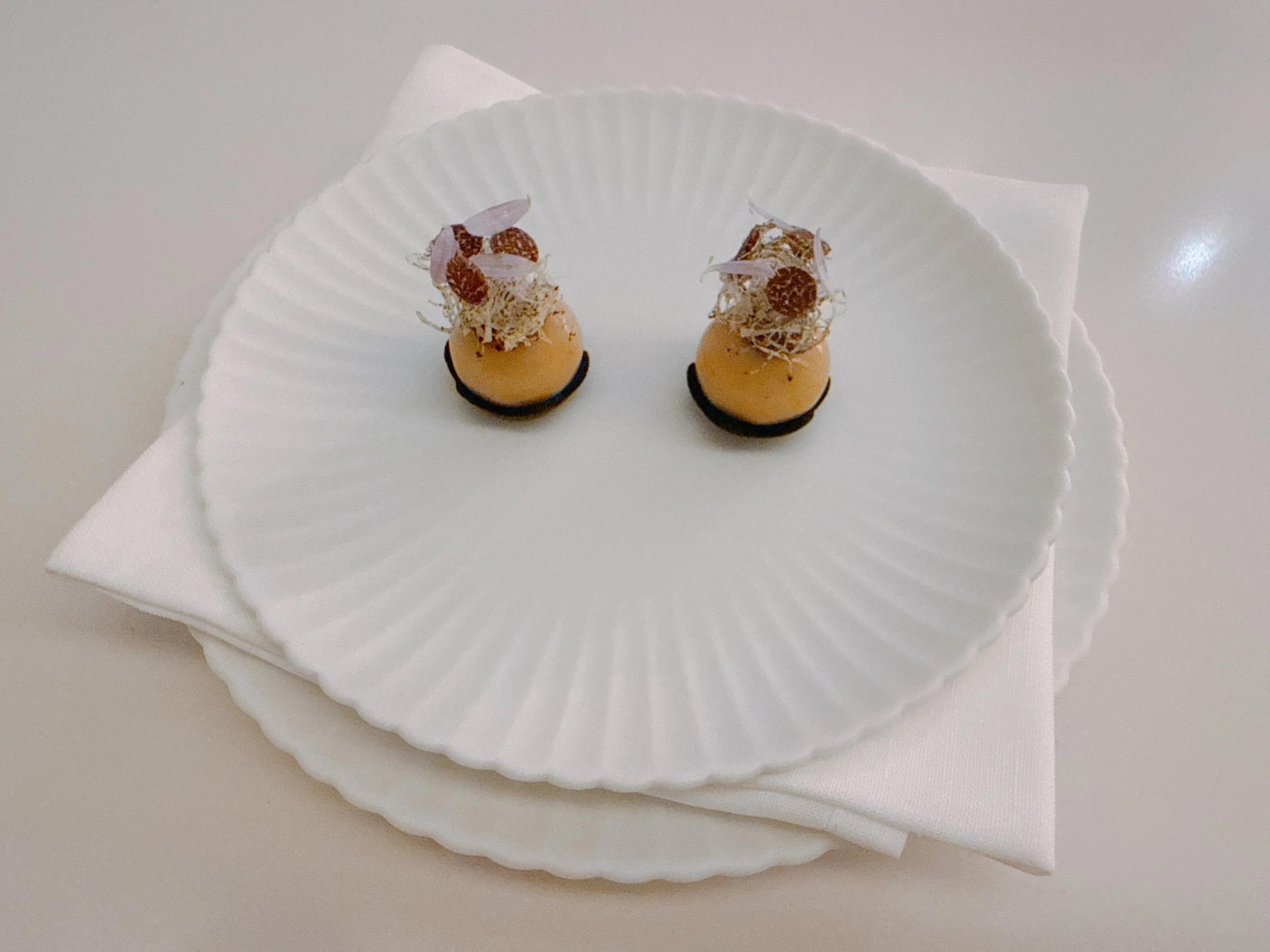
Our dinner began with six smaller appetizers, served in quick succession. First off was a charcoal tartlet filled with a truffle mousse topped with crispy leeks and tiny slices of black truffles. This dish had a liquid center and a strong mushroom/truffle flavor. Delicious 18.
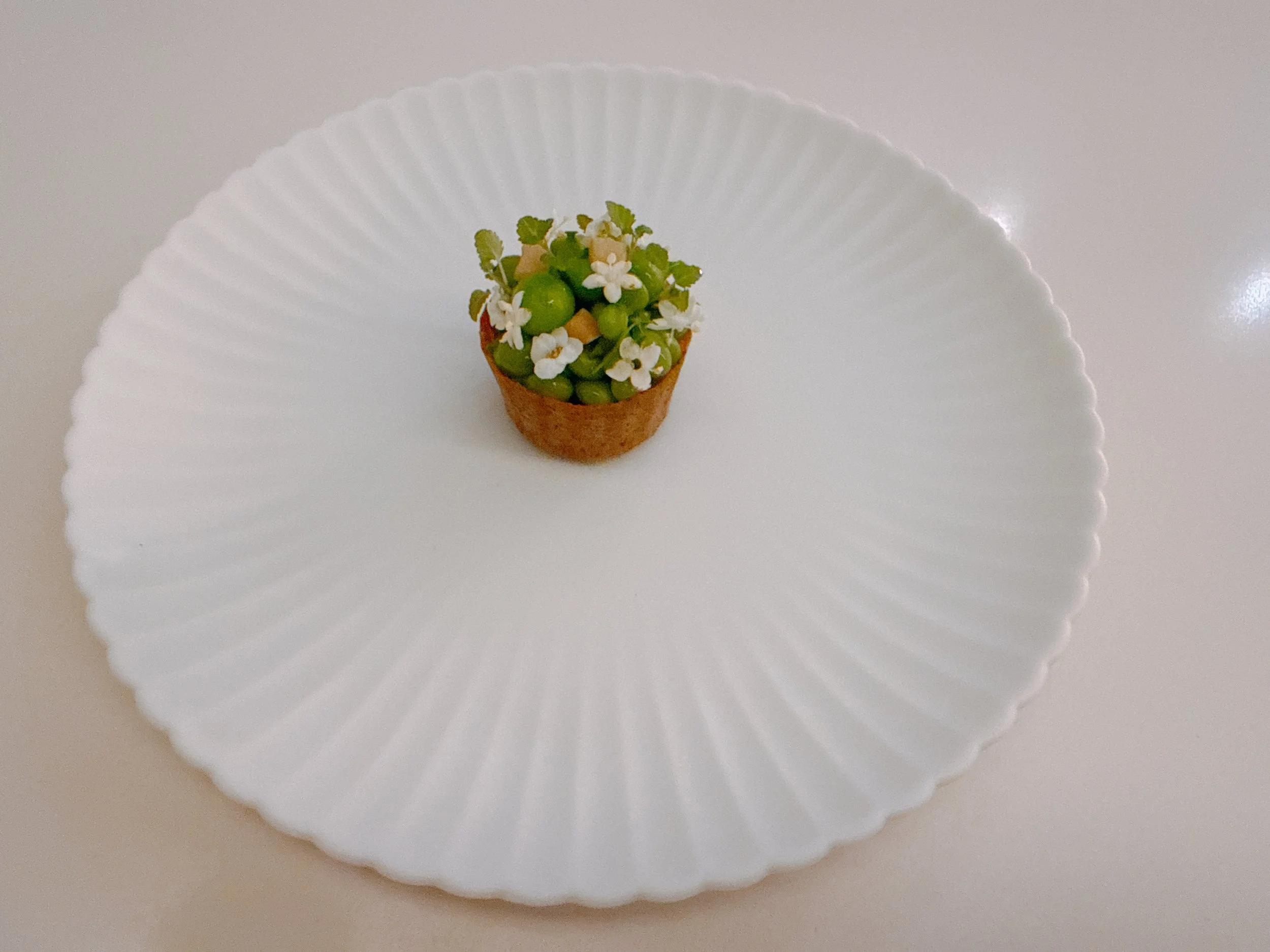
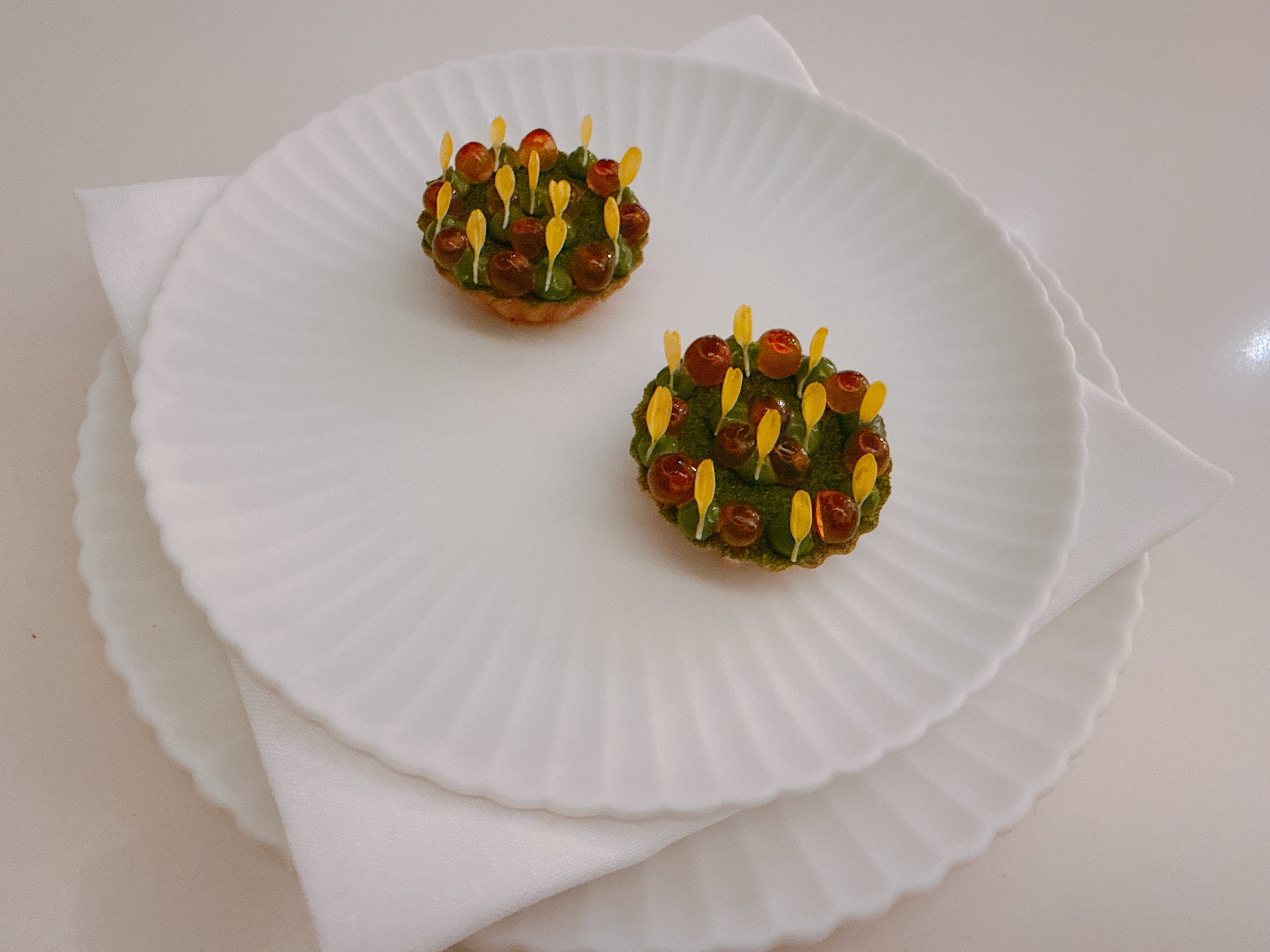
Another tartlet contained a tomato cream, elderflowers, peas and little cubes of ham. The result was smoky with a bit of acidity, and featured some very nice peas. Maybe an allusion to a split-pea soup? 17
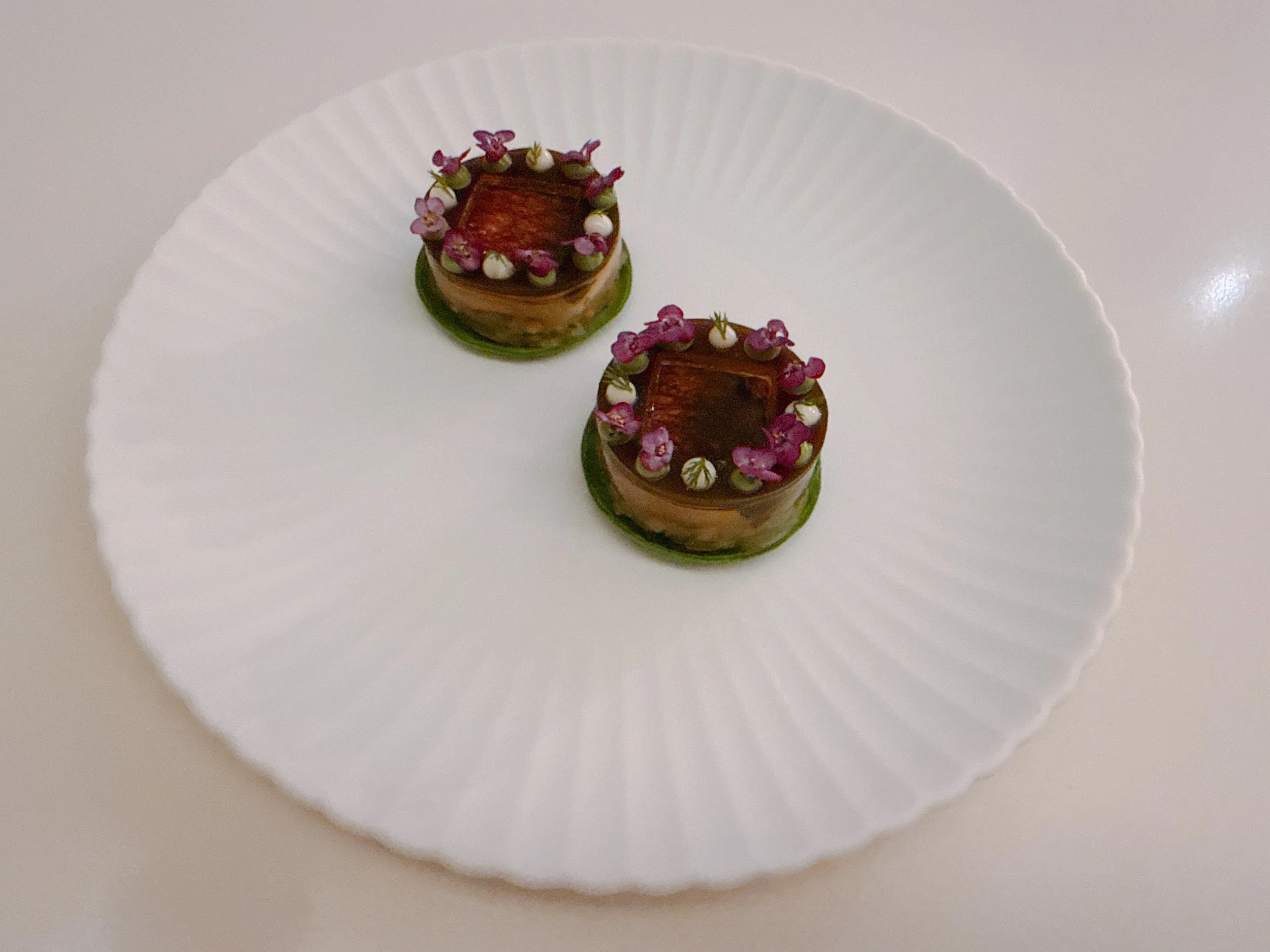
Next came what looked like a miniature torte. It was a pan-seared herring (Brathering) surrounded by kombu water and decorated with little dots of chervil and horseradish, as well as some little flowers. The base of this dish had a light crunch, but the main competing flavors were the strong fishy taste, and a notable acidity. Probably the most German flavor profile so far 17.
The next dish looked very pretty. The picture - a bit dark for lack of direct lighting - doesn't really do it justice. A small tartlet was filled with smoked trout, horseradish, dill, and topped with salmon roe (ikura). The tartlet itself was quite light, presumably to let the rest of the dish shine. Interestingly, that rest tasted mostly herbal - of dill -, and not much of fish; there was at most an aftertaste of fish and horseradish. I wonder if this dish could have used a bit more of a (flavor) punch 17.
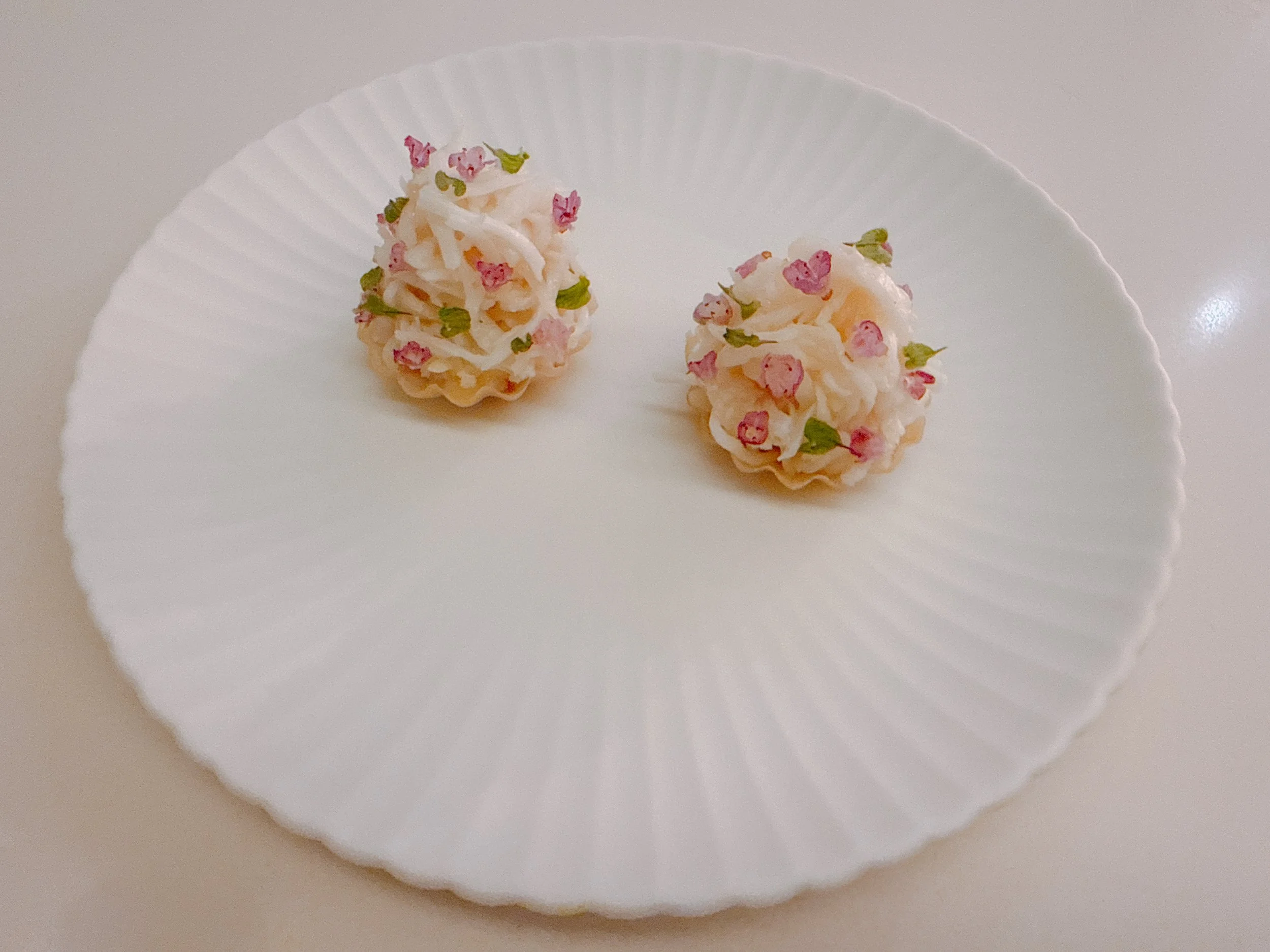
The filling of the next tartlet was citrus-marinated Alaskan king crab, a roasted chestnut cream, ginger gel, and shiso flowers. The crab had a light citrussy flavor, and this dish was overall a bit sweet, possibly from the chestnut cream 17.
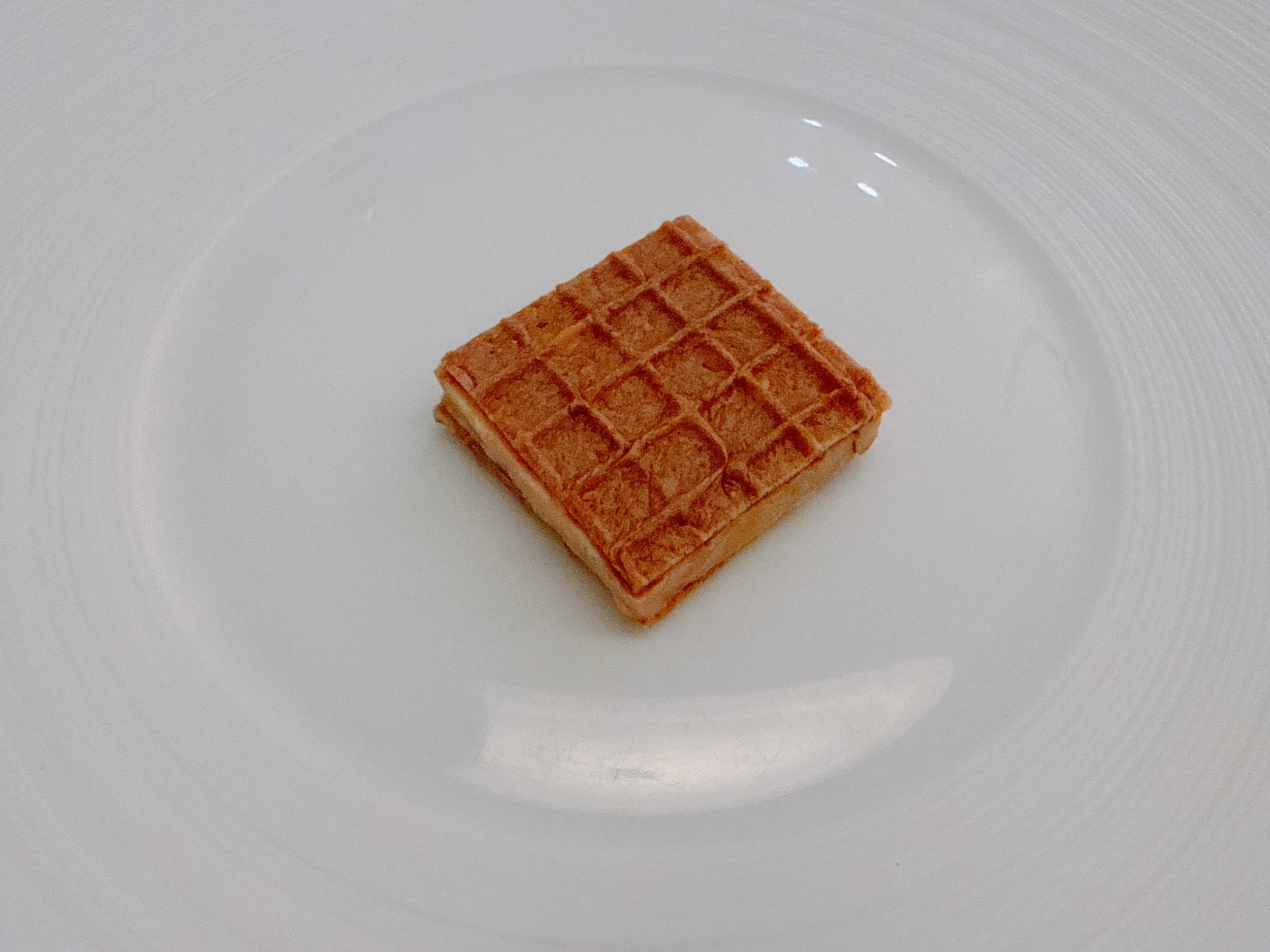
The last appetizer was a little square cracker sandwich filled with duck liver and apricots. It was paired with a syrupy apricot vinegar. The cracker had a light crunch, and its filling was creamy, but not particularly fruity. Maybe a tad more apricots and/or nuts would have been good 16. The pescatarian version of this dish dropped the duck liver, meaning that the sandwich was filled with only apricots and nuts, which made it feel a bit more rustic, and also slightly tastier in my book 16. This dish, called “Enleta”, was a play on “Hanuta”, a popular German candy (a wafer sandwich filled with a chocolate cream and chopped hazelnuts).
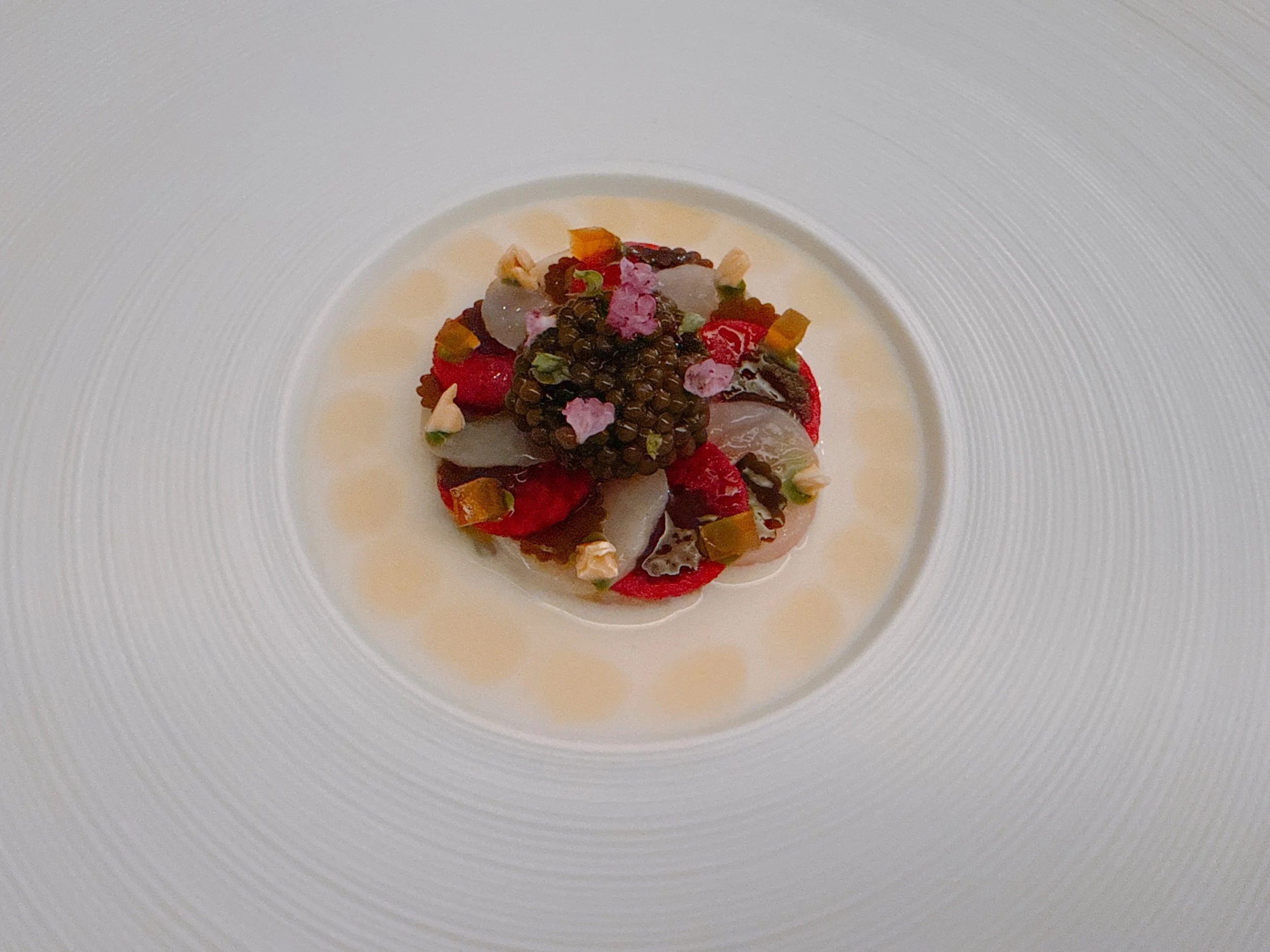
The following dishes started being a bit more substantial, and were now also paired with wines. First off, we received a tartare of smoked scallops from Hokkaido, topped with slices of scallops, kombu-cured turnips, little cubes of Buddha's hand, and Kristal caviar. All of this was surrounded by a dashi made with buttermilk, scallops and beechnut oil - an interesting combination of very different ingredients. There was so much going on, I wouldn't even call this a scallop dish per se - the scallops mostly just provided a creamy texture. So did the caviar (in addition to its distinctive taste), while the turnips added a nice crunch. Tastewise, there was some nuttiness, but also a lot (too much?) of sweetness, both from the sauce and from the citrus pieces. Apparently, the latter were leftovers from a recent collaboration with Beijing's three-starred Chao Shang Chao, so presumably the dish usually comes without them. Overall, this presentation actually felt more French than German 17.
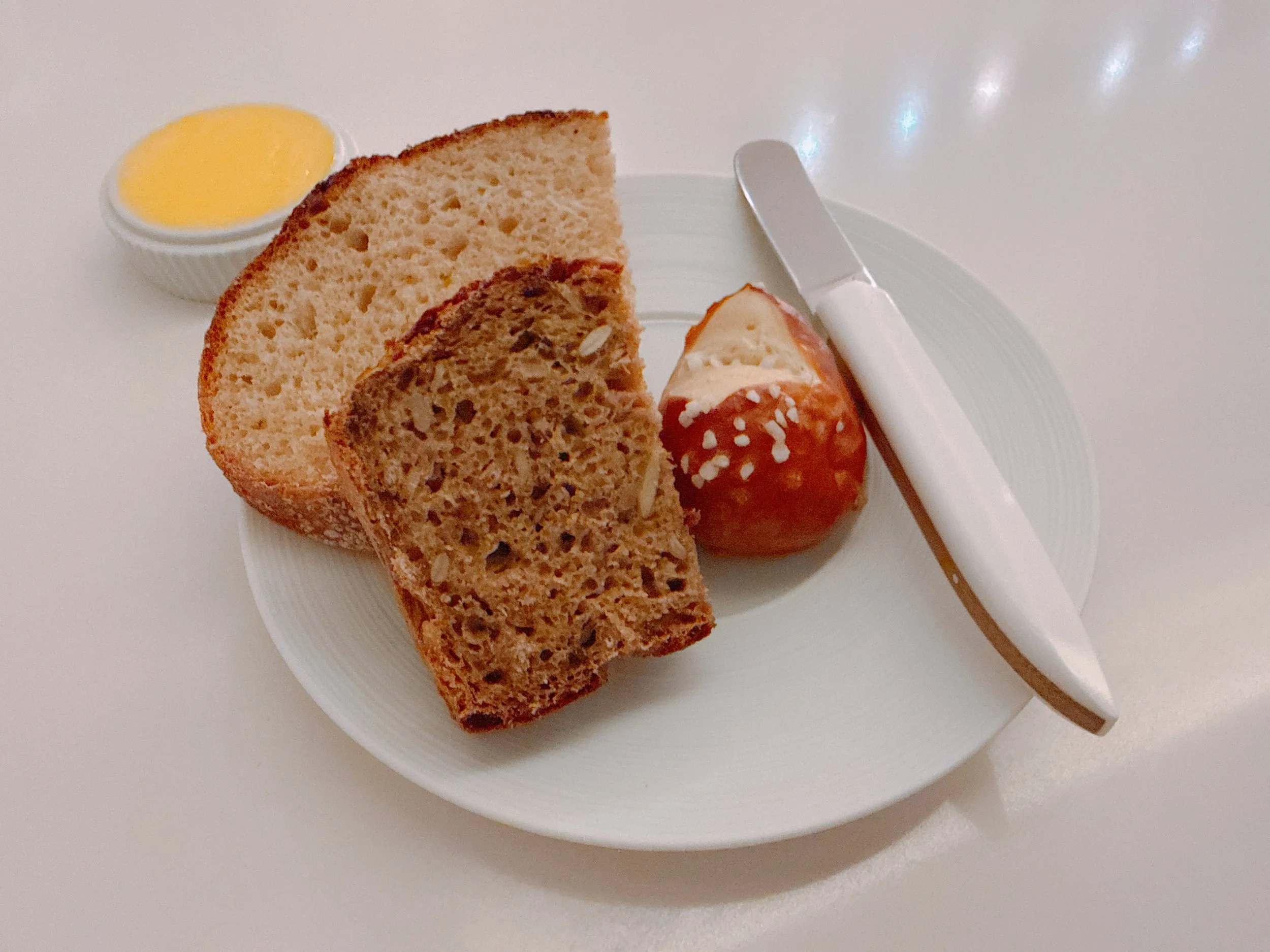
Three kinds of bread were served next, two of which had been made with a ten-year-old sourdough starter. Served warm, the sourdough bread had a nice crust, whereas the pretzel had (admirably) exactly the consistency that one would expect from a pretzel in Germany. Also, all breads were neutral enough tastewise that one could easily use them to sop up the sauces of the following dishes 16.
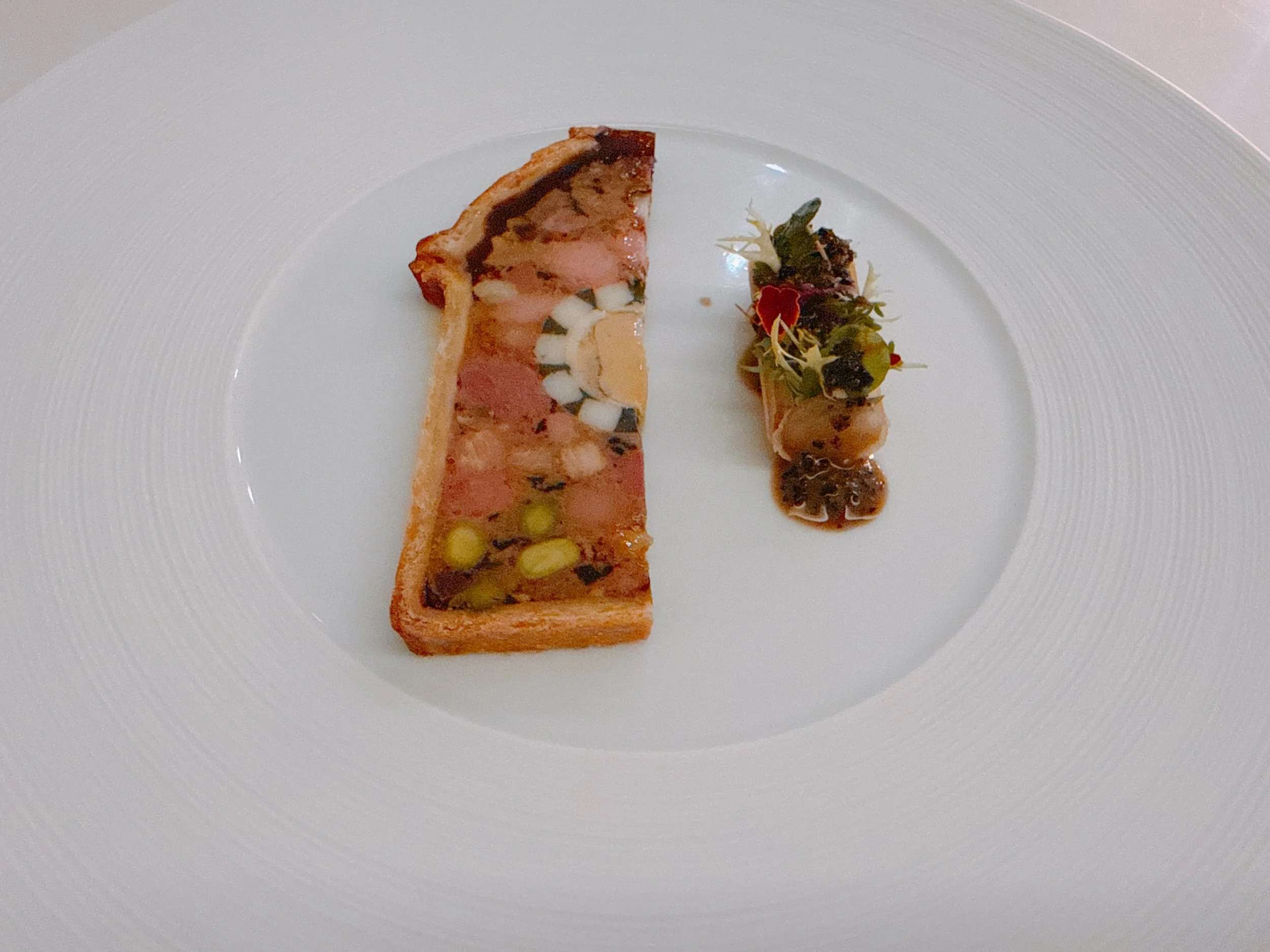
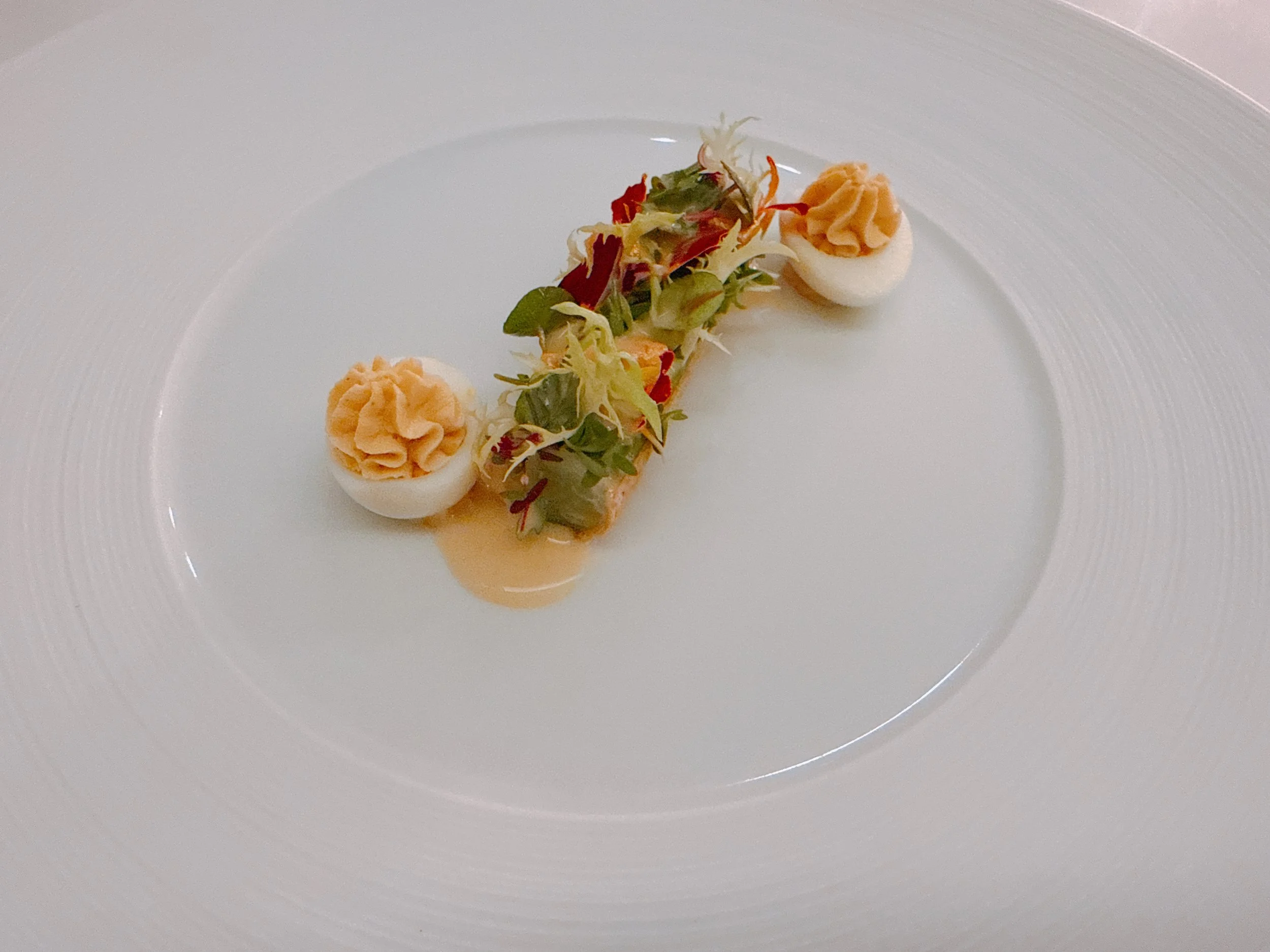
The “Wildpastate” is a seasonal dish at Sühring, only available during the winter months. It's a pate en croute filled with game meat from Germany: boar, deer and pheasant. Mixed in among the meats were some pistachios, and the dish's center had a circular cut of foie gras, surrounded by truffles and turnips. Also on the plate was a little salad dressed with a parsley-truffle vinaigrette. The Pastete was earthy and meaty, but (thankfully for me) not particularly gamey. Its crust had a crumbly rather than crunchy consistency. Matching the rest of the dish, the salad didn't have any bright flavors, it was creamy, but not particularly vinegary. This was very much a winter-time dish, with a very pretty presentation. Personally, I would have preferred a more acidic salad to balance the heaviness of the meat, and some brighter rather than merely subdued flavors 16. The pescatarian replacement here was an “egg salad” made with a parsley puree, a parsley vinaigrette and some deviled quail eggs. This dish was much lighter than the one it replaced, and actually tasted herbal rather than eggy. Little crunchy croutons added some texture. I'm generally not a big fan of egg salads, but actually liked this one slightly better than the meat dish 16.
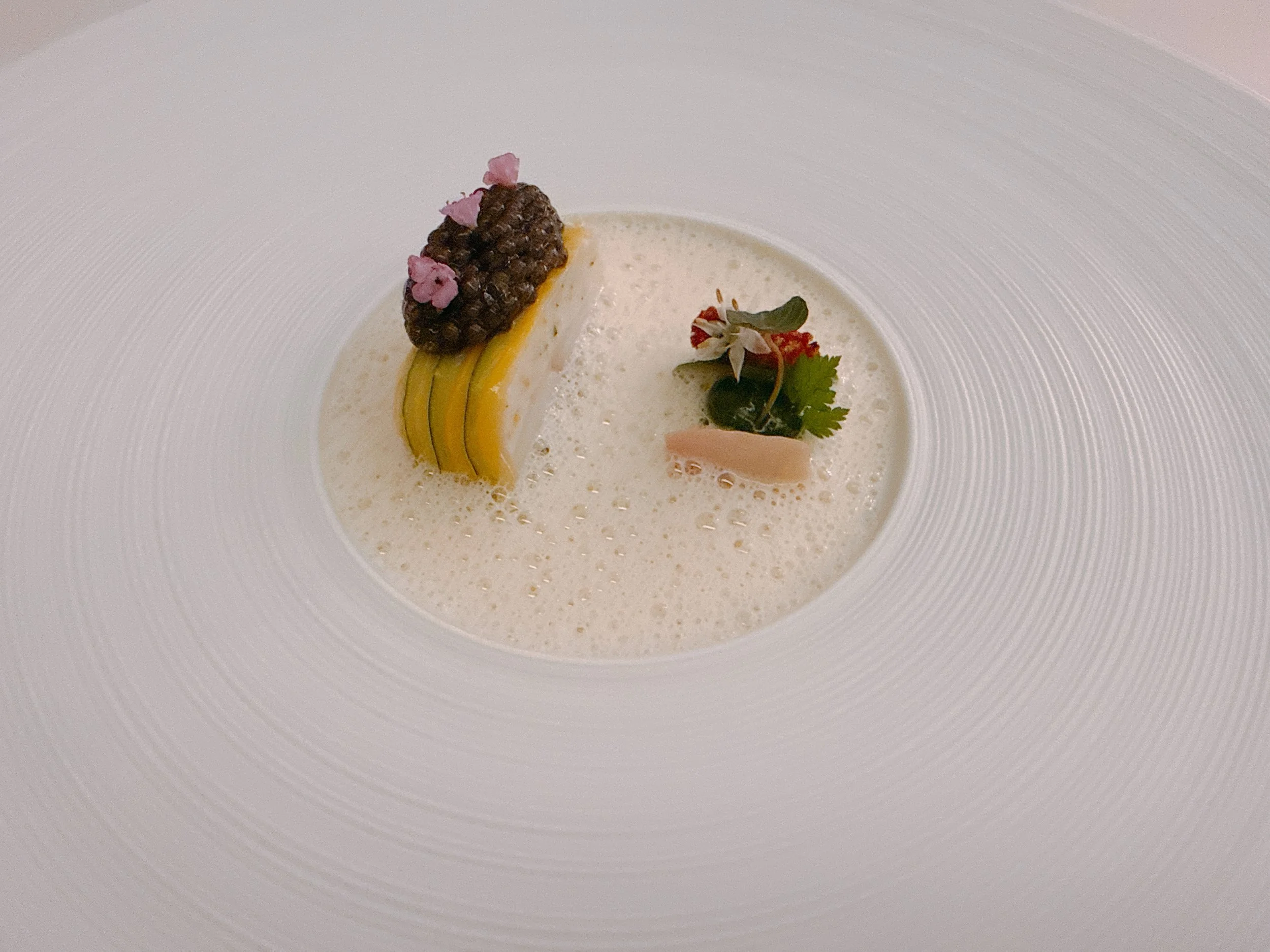
A butter-poached turbot was wrapped in thin slices of zucchini and topped with Beluga caviar. Next to it were some clams, a seaweed puree and a beurre blanc sauce made with vin jaune and the clams' juice. The fish was cooked perfectly and the caviar added both flavor and a bit of saltiness. The zucchini was much lighter in flavor than the caviar, so it was there more for looks rather than taste. The seaweed puree was also bursting with flavor - very nice. If I had to nitpick: the beurre blanc was relatively light flavorwise, and was on the sweeter rather than a lightly acidic side. This dish felt French through and through 18.
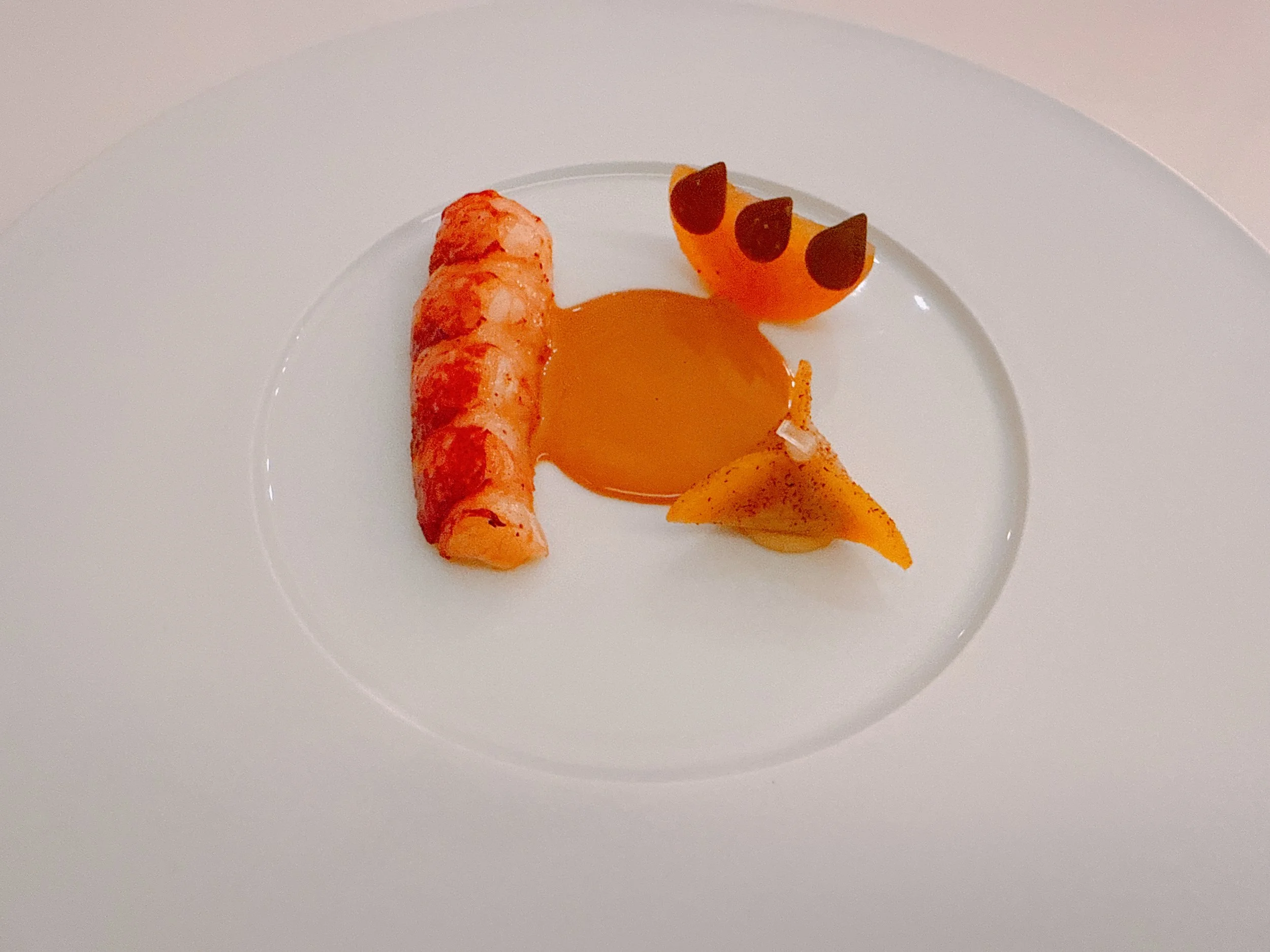
The following dish had autumnal vibes. A lobster from Brittany had been grilled over charcoals and glazed with a vanilla butter. Next to it was a “ravioli”: its skin was a thin slice of rutabaga, and it was filled with lobster meat and hazelnuts. Finally, there was a wedge of persimmon decorated with little kombu “leaves”. A lobster bisque and hazelnut oil completed the presentation. The lobster was very nicely cooked - tender with a lightly smoky flavor. The ravioli had a bit of a crunch and a flavorful lobster filling. The “pasta” sat on top of a lightly sweet cream, presumably to keep it from sliding around on the plate, but also making an otherwise savory bite taste slightly sweet instead. The persimmon had a creamy texture, and was only lightly sweet. I appreciated that this was still essentially a savory dish even though it had some sweet components. Balance-wise, the bisque felt a bit too heavy. Brightening it up with some acidity could have made for a lighter dish 17.
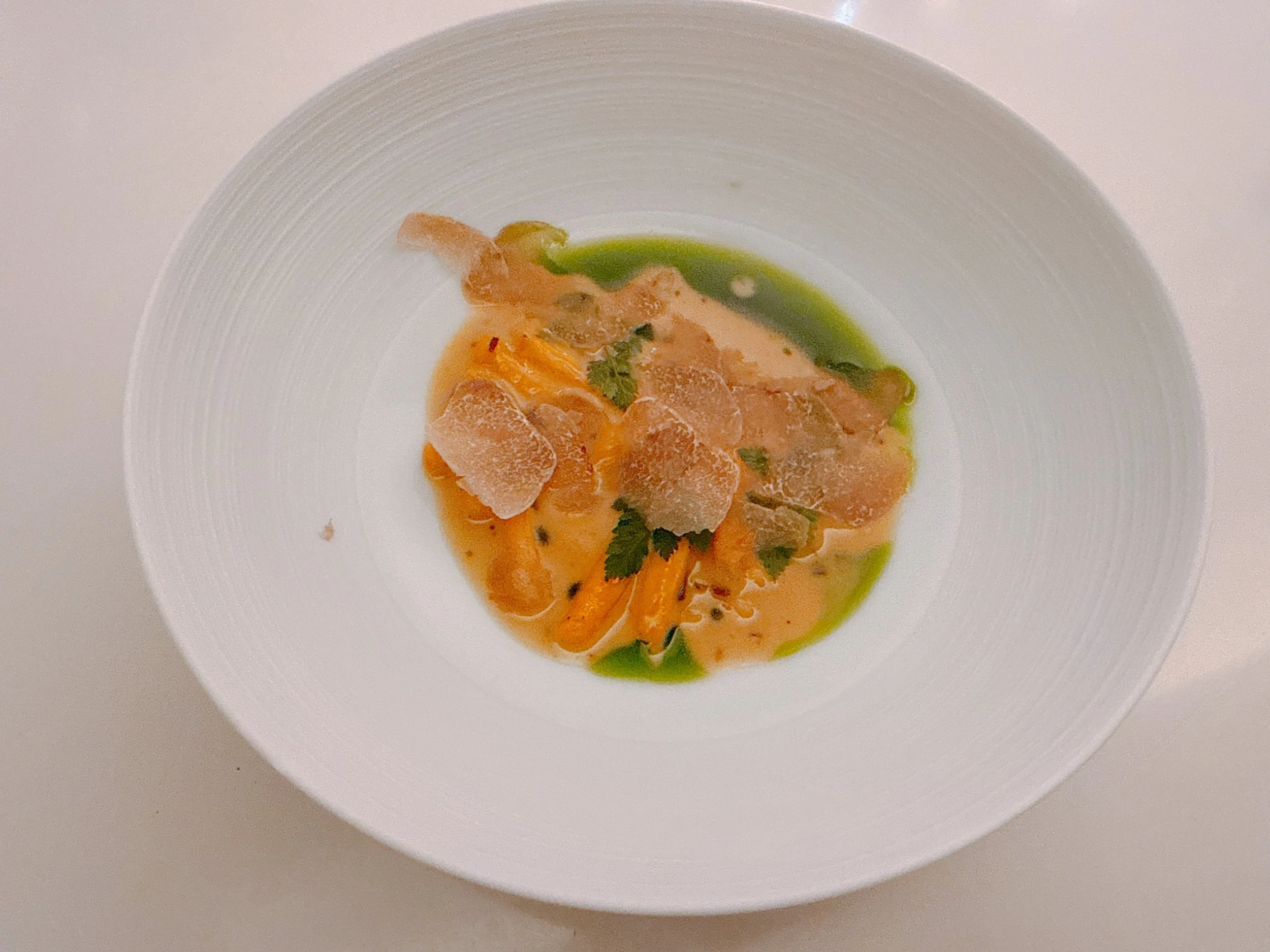
At this point we were served the optional pasta course, split between the two of us. Spätzle were dressed with a creamy cheese sauce and chive oil. Our server shaved white truffles from Alba over the dish, and crispy onion strings were served on the side, ready to be added to the dish as desired. The shape of the pasta, longish cylinders, was a bit different from what I was used to seeing in either Southern German (Swabian) or Austrian cuisine, but the consistency was the typical one: creamy and soft. I couldn't taste much of the truffles (a bane of most truffle dishes), but the sauce had mushroomy flavors. The onions added some sweetness and a light crunch. A lovely dish, although more rustic than what had come before 17.
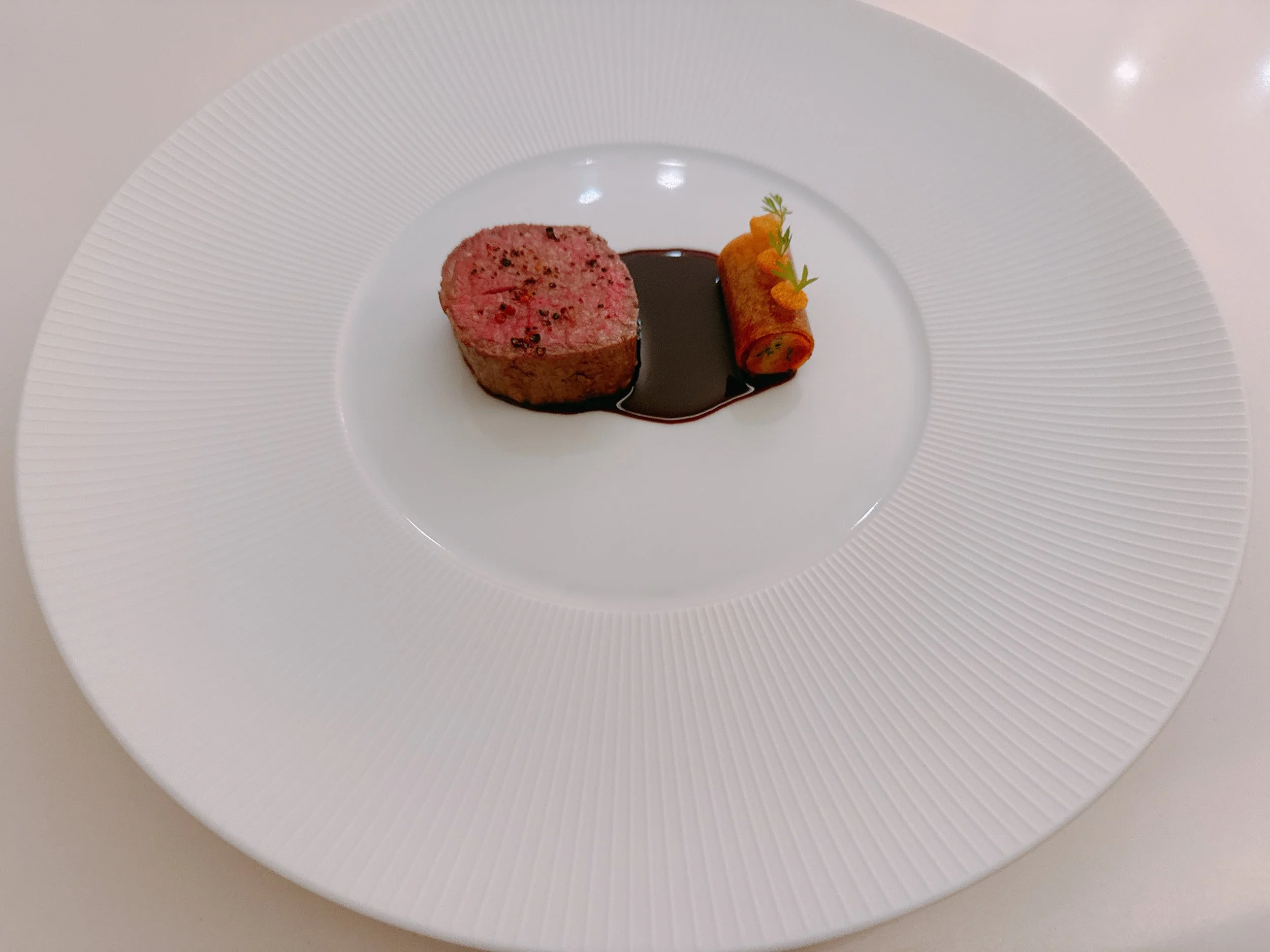
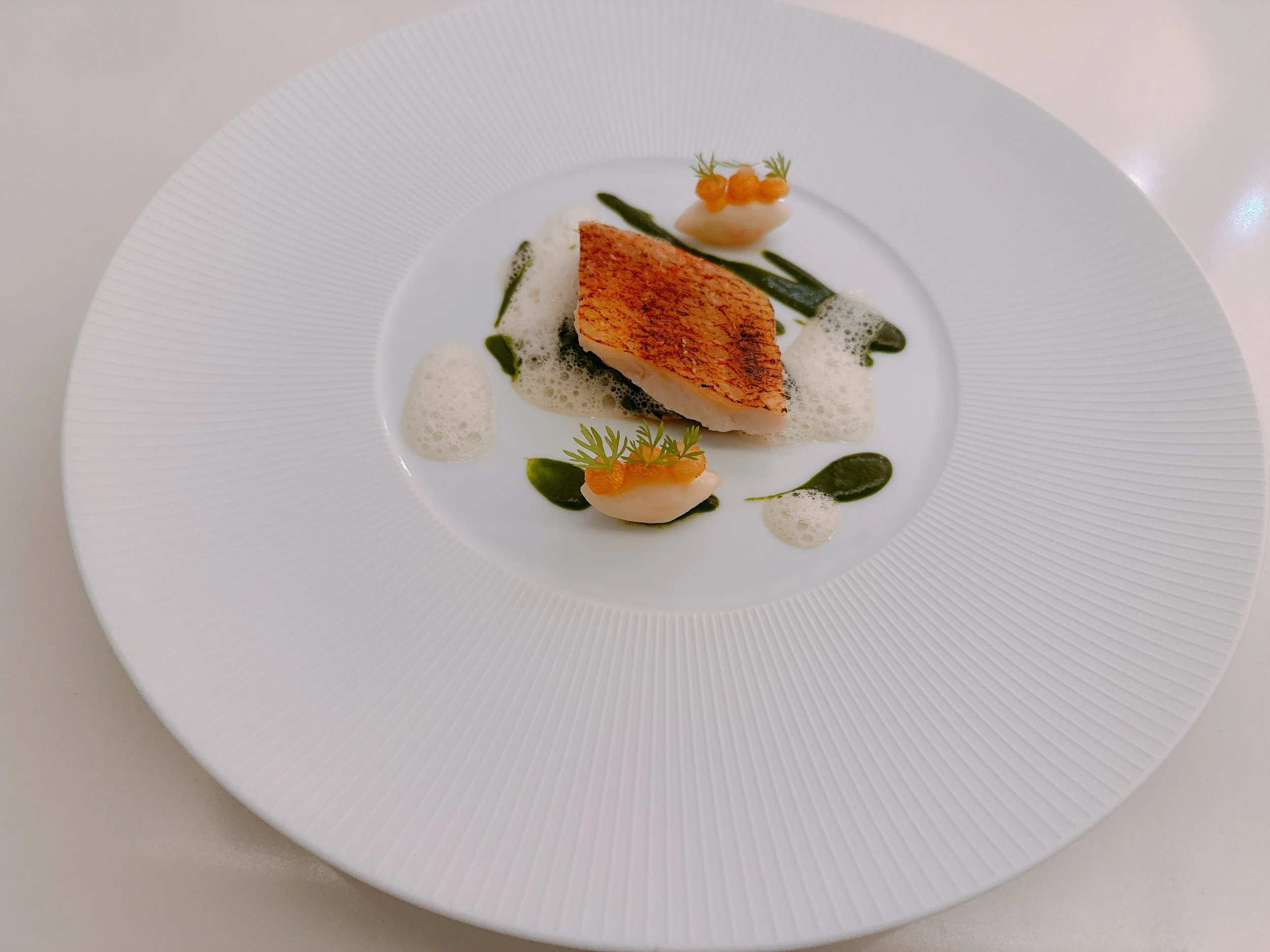
For our final savory course I chose to “upgrade” the standard duck preparation. Its replacement was a filet of Japanese A5 wagyu beef, placed next to a little spring roll filled with oxtail ragout and a sauce made from wagyu jus and Blaufränkisch wine. The beef was very, very tender, almost to the point where I wanted a bit more of a bite, but it went exceptionally well with the flavorful sauce - yum! The tender oxtail and its nicely crunchy roll were great as well, but the dish would also have been wonderful without them 18. The pescatarian alternative for this dish was a butter-poached kinki fish served with a turnip dashi, pommes soufflées, a spinach puree and lemon verbana. The fish had been cooked very lightly and was very juicy - a lovely dish as well 17.
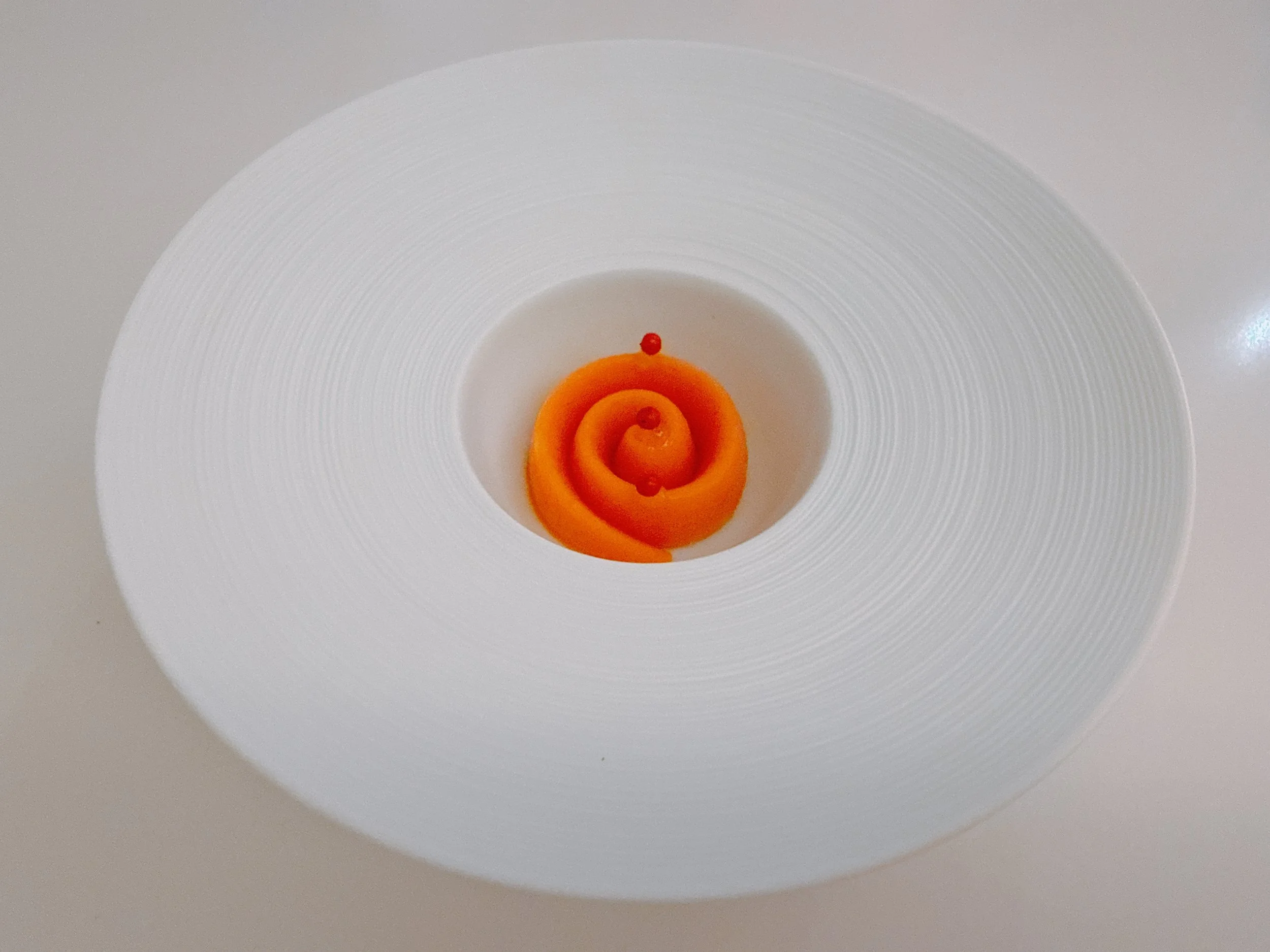
The following palate cleanser (or pre-dessert) consisted of a seabuckthorn sorbet topped with pink peppercorns and a bay leaf oil. This was a tart, not particularly sweet dish - more sugar might have brought out more of the seabuckthorn's flavor. Not bad, though 17.
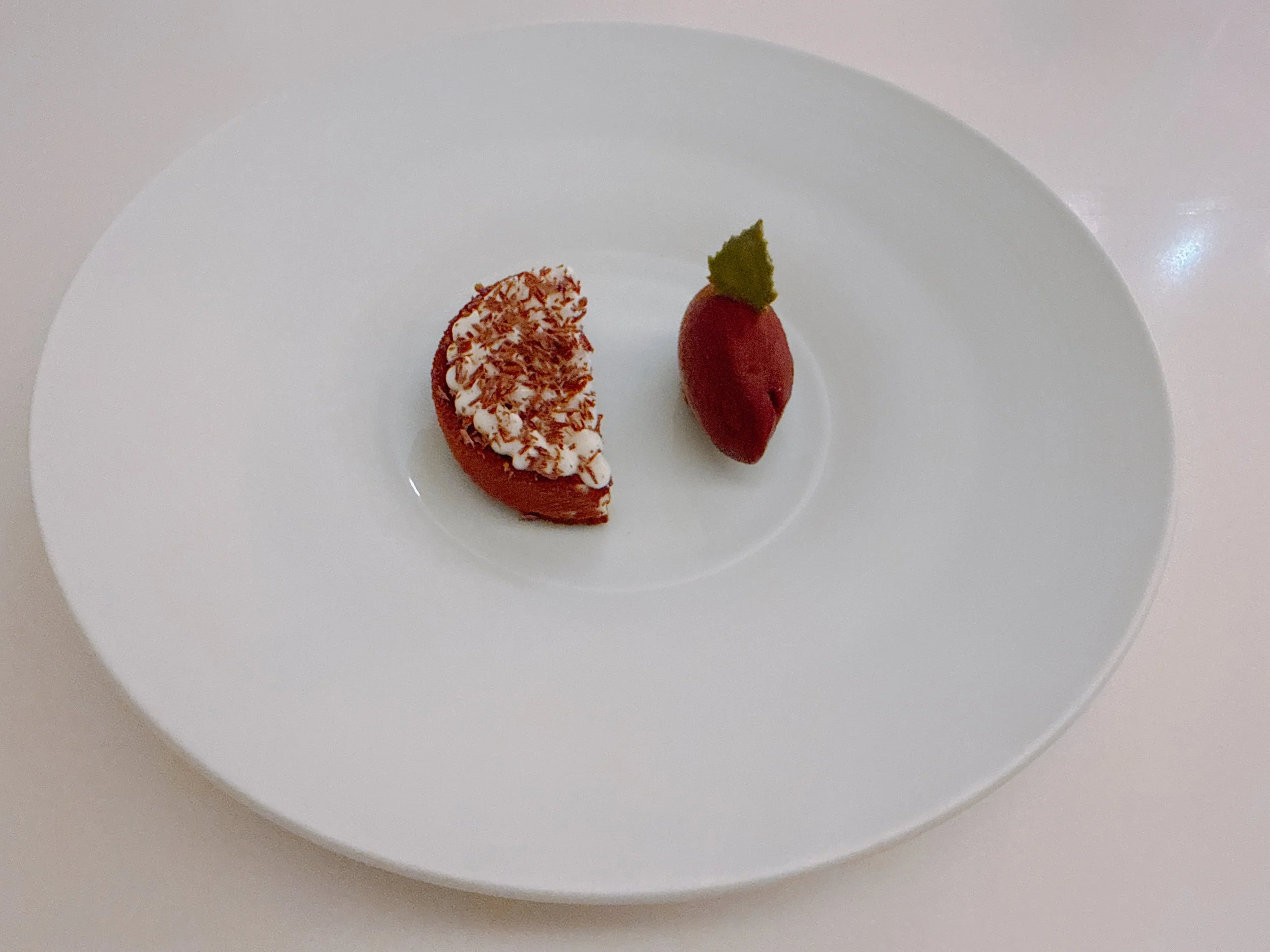
The main dessert was Sühring's take on a Black Forest cake. A little chocolate cake was topped with a vanilla mousse flavored with Kirsch (cherry liquor). The cake itself was pretty light, so that the dish ended up with a very moussey consistency, and a pronounced Kirsch flavor. The dark cherry sorbet next to it was also quite nice 17.
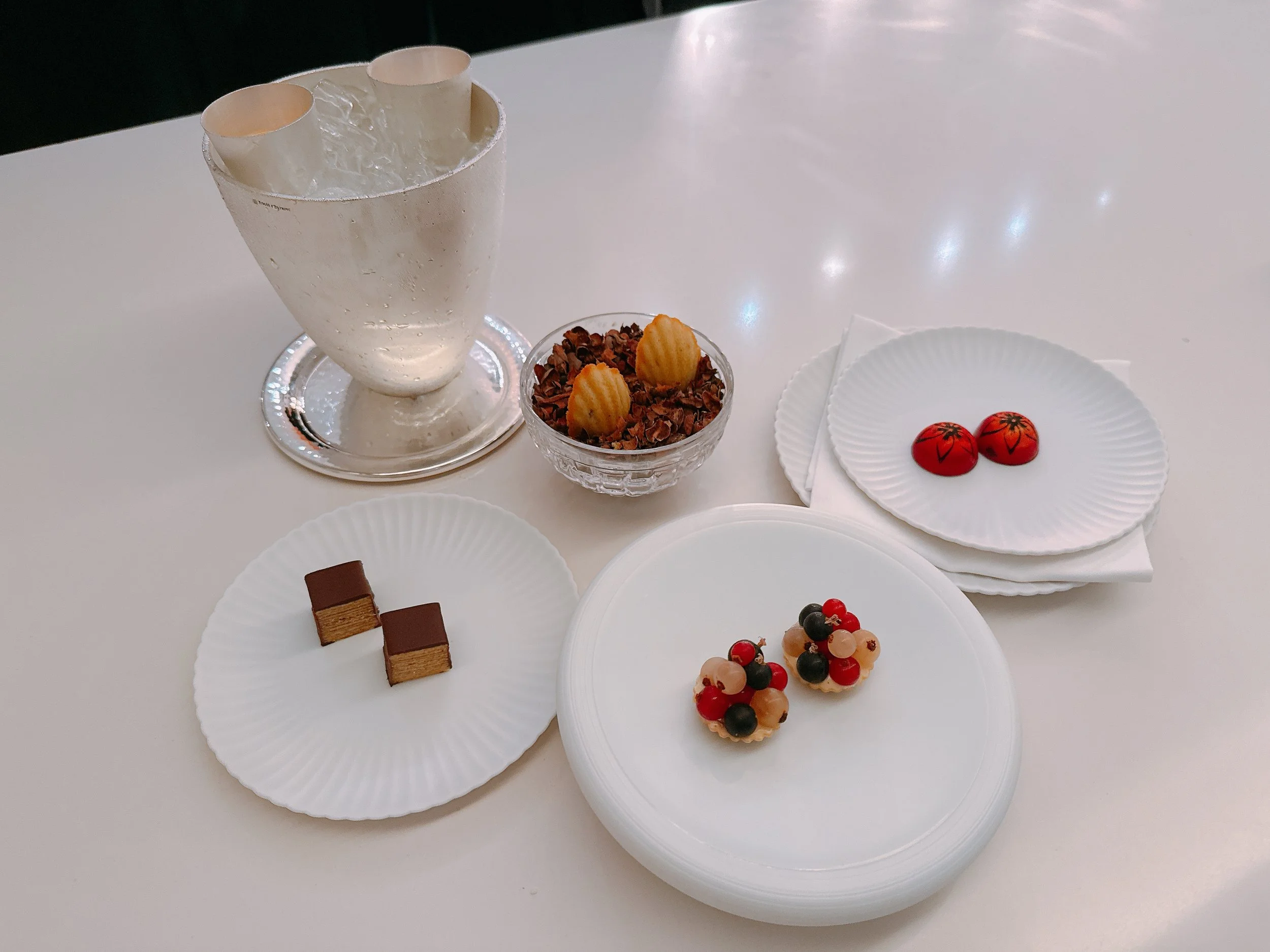
Some petit fours concluded our dinner after about 3 1/2 hours. A little tartlet was filled with vanilla quark and topped with red, white and black currants. This was a fruity bite with lots of (edible) seeds. Its consistency was lightly creamy rather than crunchy 16. A pretty red chocolate praline was filled with a combination of peanuts and caramel. The peanuts were crunchy and the caramel flavor relatively light 16. A Madeleine made with tonka beans tasted fresh, crunchy and light. There was an aftertaste of tonka beans 16. Next, we tried a chocolate-covered piece of Baumkuchen, which was surprisingly bitter rather than sweet 14. Finally, we had some chilled eggnog based on the chefs' grandmother's recipe. Its consistency was very thick and creamy, with a sharp alcohol taste 16.
Overall: German fine dining cuisine is clearly not an oxymoron, as proven by this delightful dinner. (If I was nitpicking though, I'd call this French cuisine with German influences.) As far as I could tell, the cooking had actually improved since our previous visit, with only about half the dishes being the same as ten months earlier. Everything was quite enjoyable, and a few dishes were exceptionally good and clearly at three-star level. Combined with the friendly, welcoming, unfussy service, we had a great time 17.