Aubergine - Carmel
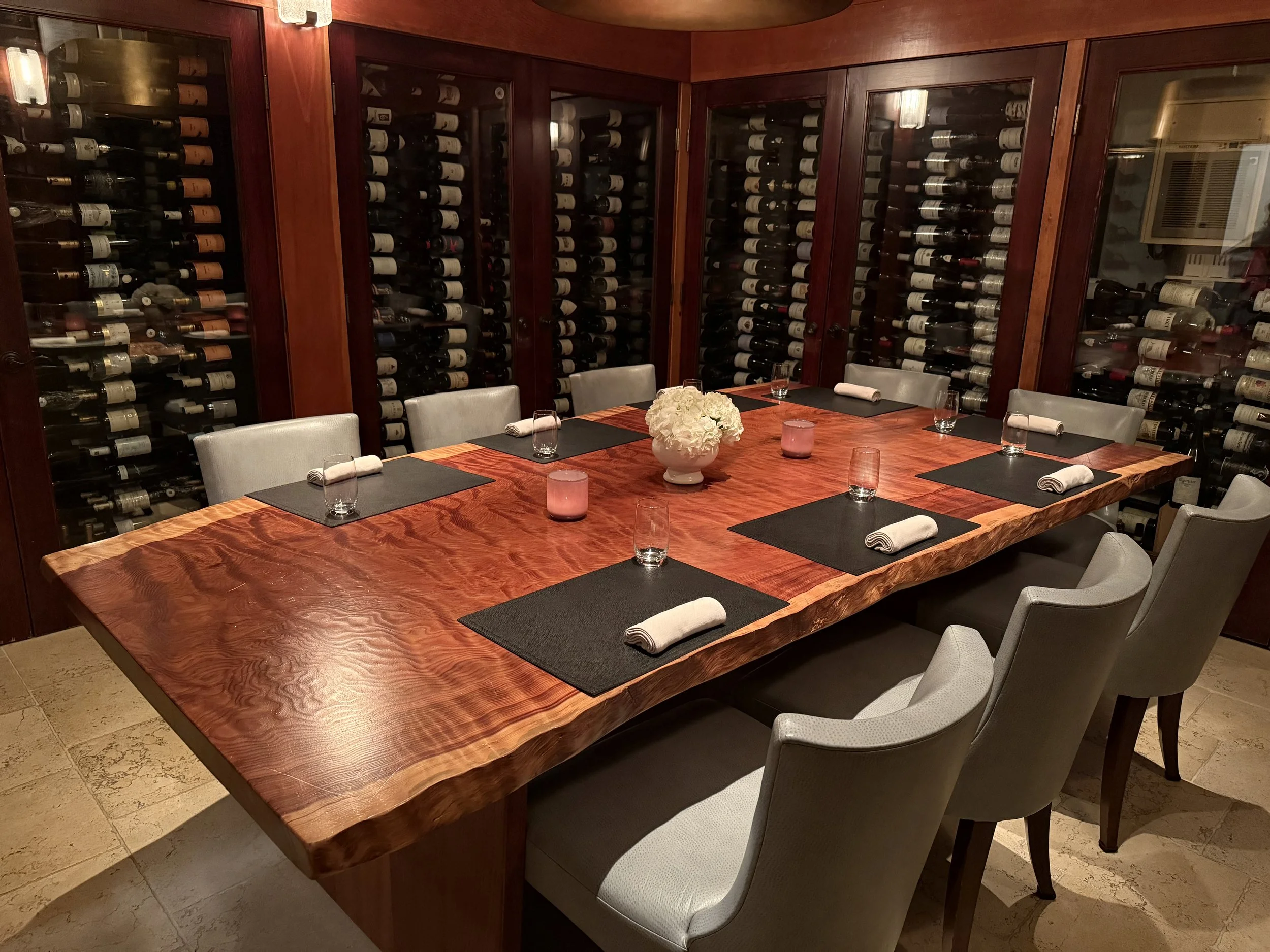
The private dining room aka wine cellar
Rating: 17/20
Where: Carmel-by-the-Sea, CA
When: Dinner for 8 on 21 December 2025
Cost per Person: Tasting menu $285, Wine Pairing $250-$495
Accolades: 2 Michelin Stars
Why: Flavorful Californian cuisine with light Asian influences
Two-Michelin-starred “Aubergine” is probably the culinary pinnacle of laid-back Carmel-by-the-Sea, a small town about two hours south of San Francisco. For a long time, the restaurant had held one Michelin star, while consistently outperforming that level, and finally received its second star in 2024. Just before Christmas, we revisited the restaurant, and this time sat downstairs in the private dining room, which also doubles as the wine cellar. In the center of the room was a irregularly shaped wooden table - a more rustic setup compared to the main dining room, but is also quite comfortable, with space for up to ten people.
The service throughout the night was fine, but felt a touch less responsive than it would have been in the main dining room. Since the private dining room was physically removed from the rest of the restaurant and didn't have a dedicated server, that was probably not totally unexpected. A bit odd, though, was the handling of a mishap that occurred at the beginning of our meal when one of our servers accidentally spilled an entire cocktail over one of us. We quickly got a round of “sorry”s, and a newly made cocktail. Obviously, accidents do happen, and there are certainly worse things to be doused with, but I was still a bit surprised when the check arrived and the cocktail was still on it. Most restaurants in America would at a minimum have comped the culpable drink (without having to be asked) as a token amends for having a guest sit through a multi-hour dinner in wet clothes. I wonder if this would have been handled differently in the main dining room.
Back to the food, though. Like most two-starred restaurants, Aubergine serves a single tasting menu, adjusted to almost all dietary restrictions (this is California, after all). The eight-course menu went for $285 in the regular dining room and for $350 in the private dining room. There were several wine pairings: a regular pairing ($250), a reserve pairing ($495), a champagne-only pairing ($250) and a non-alcoholic pairing ($125). I tried the regular pairing, which went well with the food. Its white wines might have been a bit weak, but rest was pretty good: reds, dessert wines and a glass of sake. The pours were on the lighter side, so if one plans to get tipsy, this might not be the most effective way. On the positive side, though, the pairing started with the very first food arriving at our table. No compelling need for an aperitif, then.

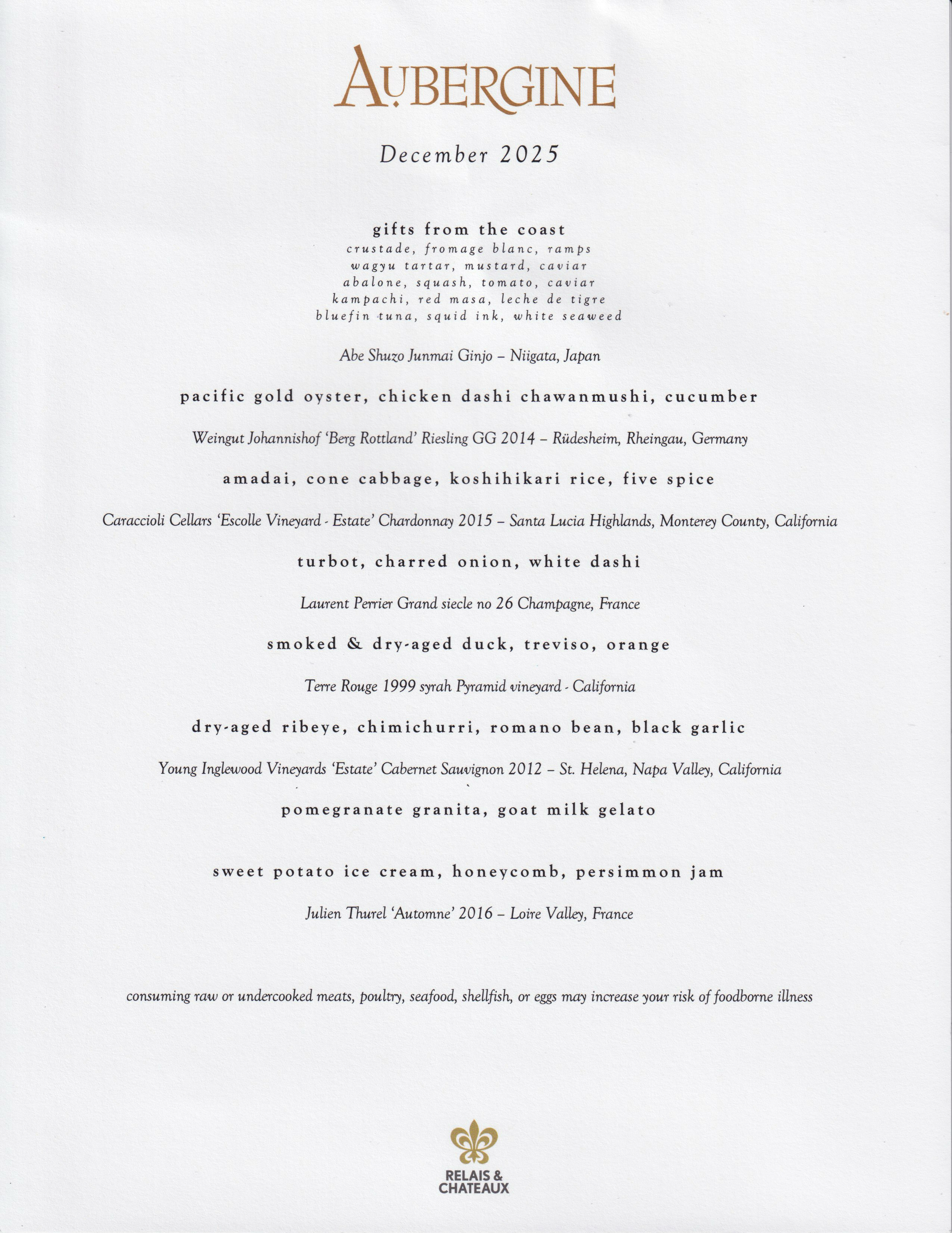
Our first course was a collection of five appetizers. A squid ink tartlet was filled with a bluefin tuna tartare, and topped with kaluga caviar. This bite was full of strong flavors, from both the tuna and the caviar. Maybe a tad too salty, but an impressive beginning to our dinner 18. Next, we tried a crustade filled with fromage blanc, smoked trout roe, carrots and kale. Interestingly, this one was also quite salty. The cracker had a perfect crunch, and the dish was very cheesy. In fact, the cheese was the dominant flavor here, the trout roe was barely noticeable 17. A yellow masa soft taco was filled with avocado and a kampachi tartare tossed with leche de tigre. This really felt like a Mexican dish, since the taste and texture of the masa were so dominant. So dominant in fact that one couldn't taste neither the fish nor the acidity from the ceviche sauce. It was still tasty, but could have been even better if all ingredients had played a role flavorwise 17. Local abalone was served inside a cube of gelatin. The abalone had a light bite, and the gelatin was lightly flavored. Not bad, but we've had much more compelling abalone dishes at Aubergine in the past 16. Finally, there was a cracker topped with wagyu beef and pickled mustard seeds. The cracker had a light crunch, and the meat melted in one's mouth, leaving a bit of a fatty aftertaste. Oddly though, this dish didn't have much of beef or mustard flavor. Especially compared to the first couple bites, this one seemed to be pulling its punches a bit 16.
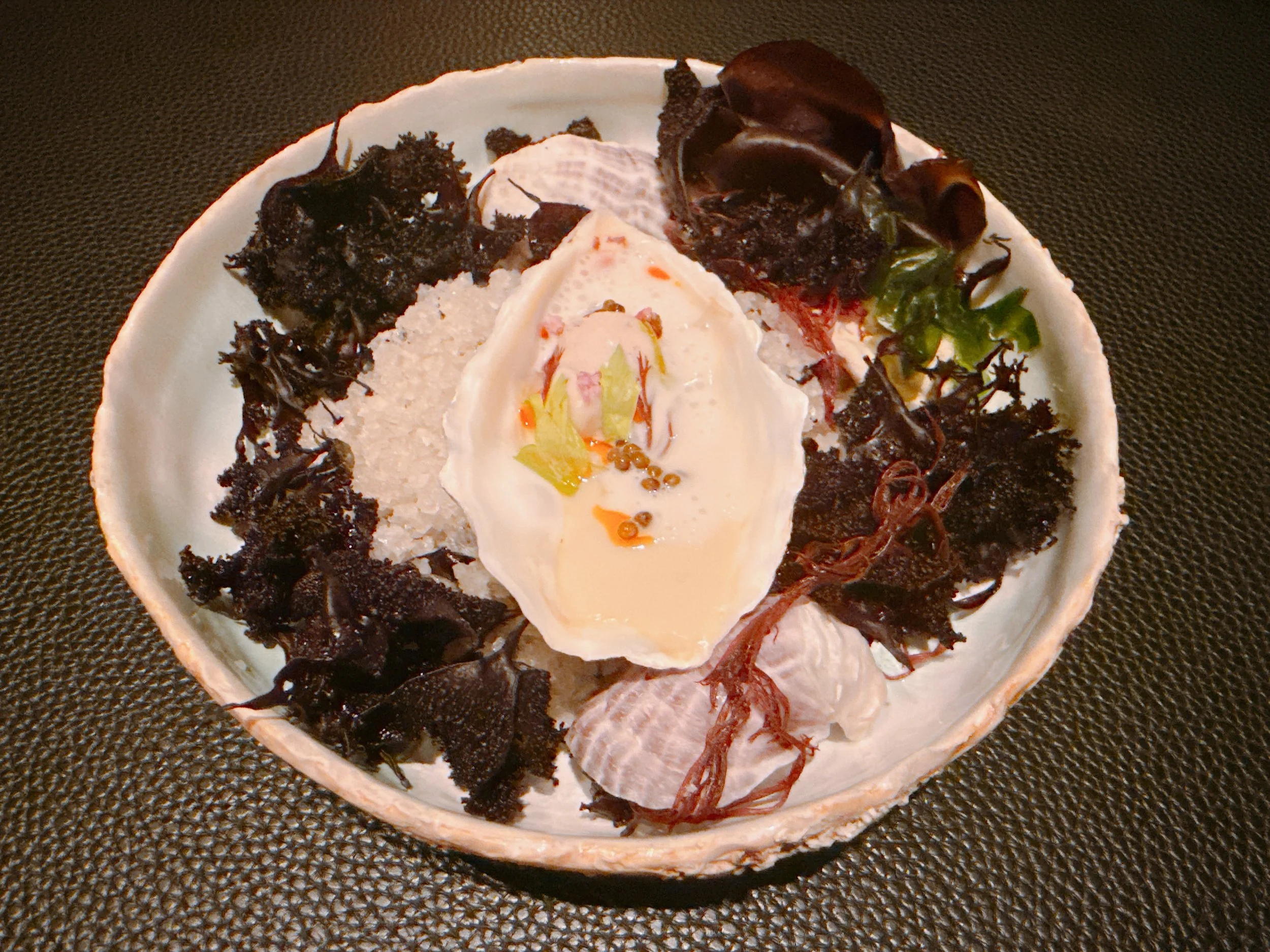
The next course featured an oyster pickled in rice wine vinegar, served with a chawanmushi containing crab meat, shiitake mushrooms, lemongrass, mirepoix and seaweed. Tableside, the dish was topped with a coconut emulsion. Altogether, this was another tasty dish, with the crab and oyster being quite good. The addition of coconut and lemongrass give it a Thai flavor profile 17.
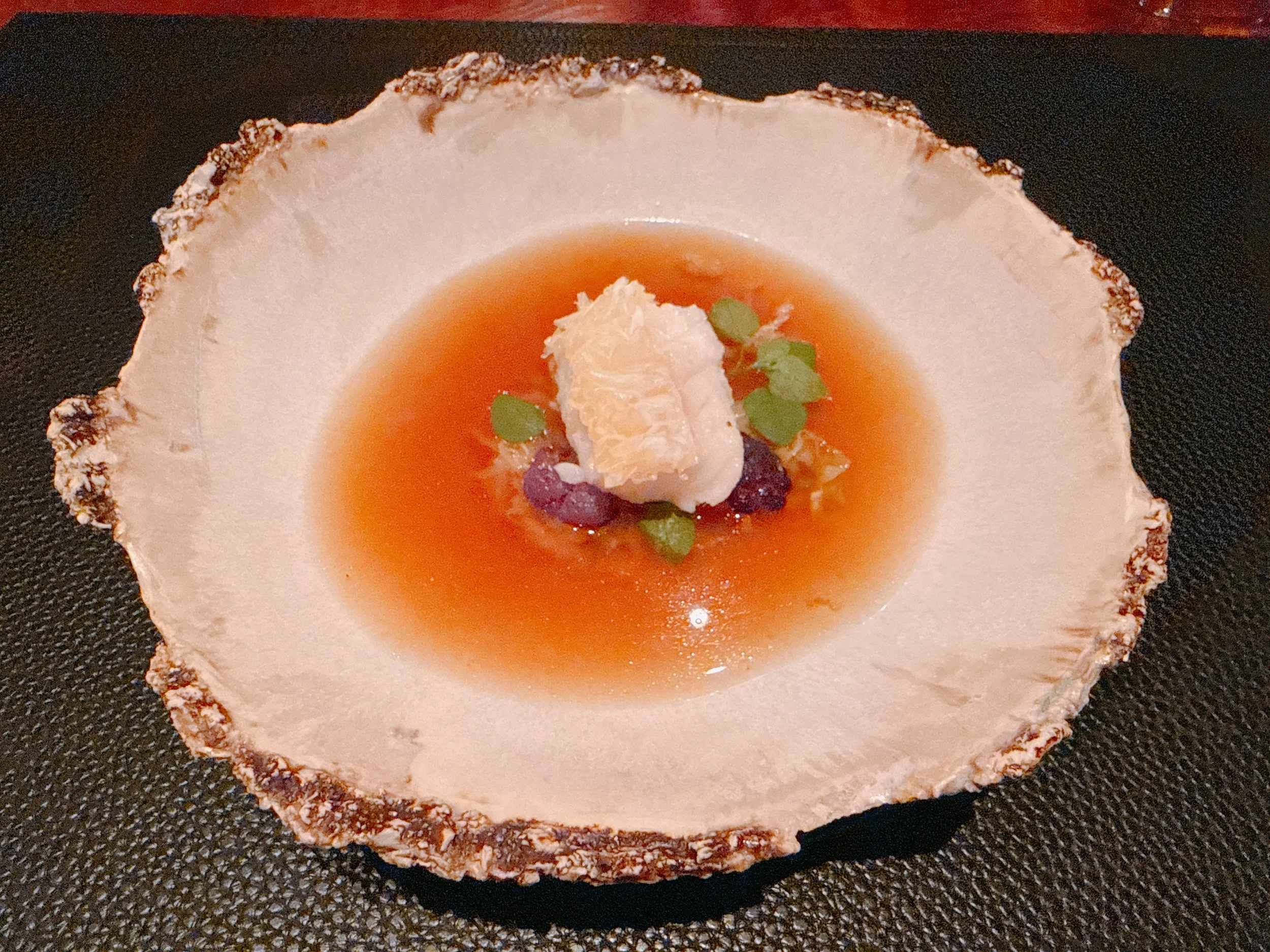
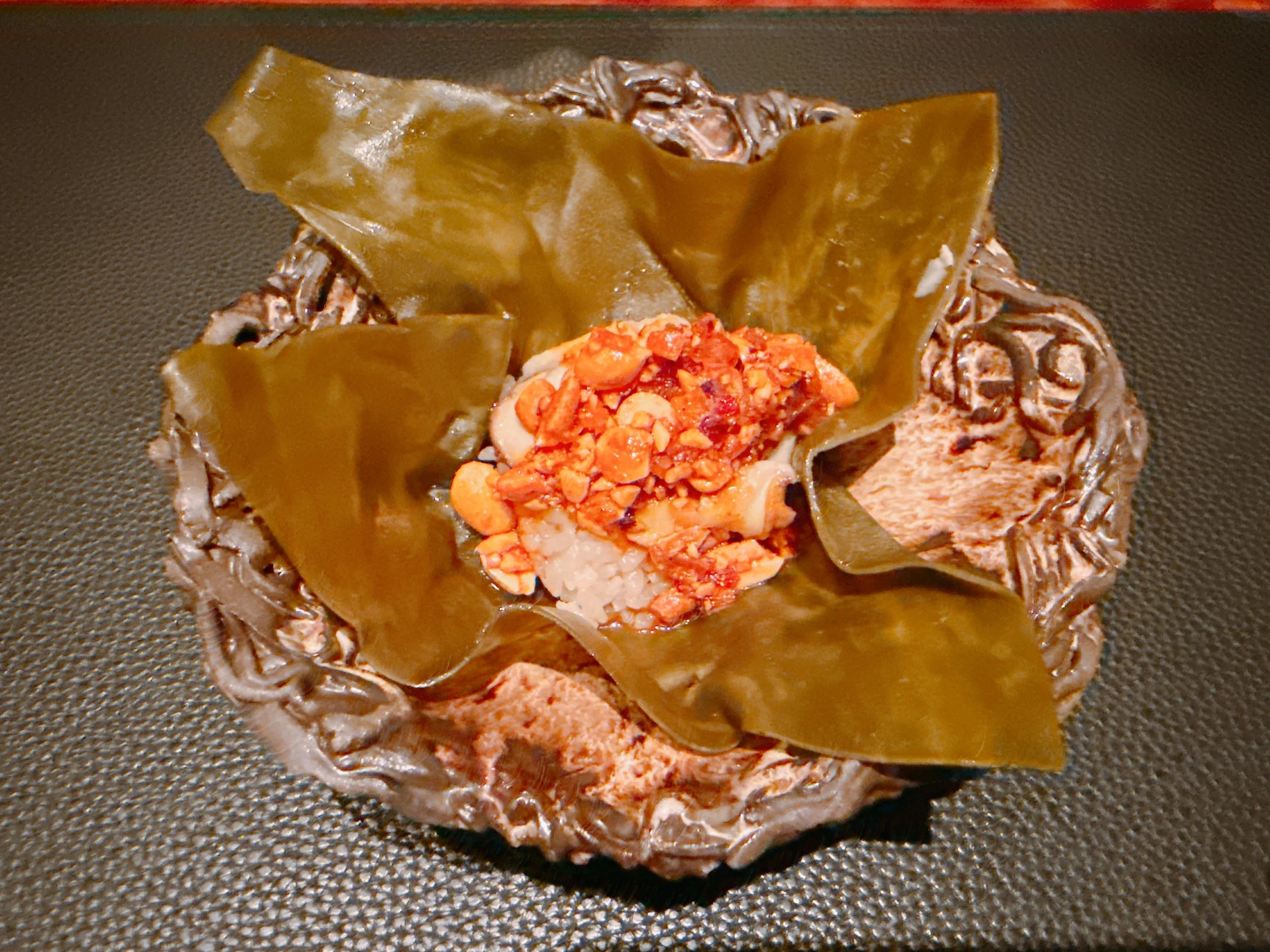
Amadai had been prepared with puffed scales, and came with some cabbage and purple cauliflower in a broth made with Chinese five spice, dark tamari and fish juices. In a separate bowl was some koshihikari rice topped with kombu, confit porcini mushrooms, and a peanut XO sauce. The fish was nicely cooked, but didn't have much inherent flavor. That almost didn't matter, though: the lightly spicy broth was bursting with flavor - excellent. The cauliflower and cabbage provided some nice crunchy texture. The rice was terrific as well, especially thanks to its topping. With the crunchy peanuts, bold flavors and saltiness, this rice dish felt maybe a bit rustic, but overall it was excellent. Being somewhat too salty was actually part of the plan here. We were invited to add the rice to the remainder of the broth, and the two worked very well together 18.
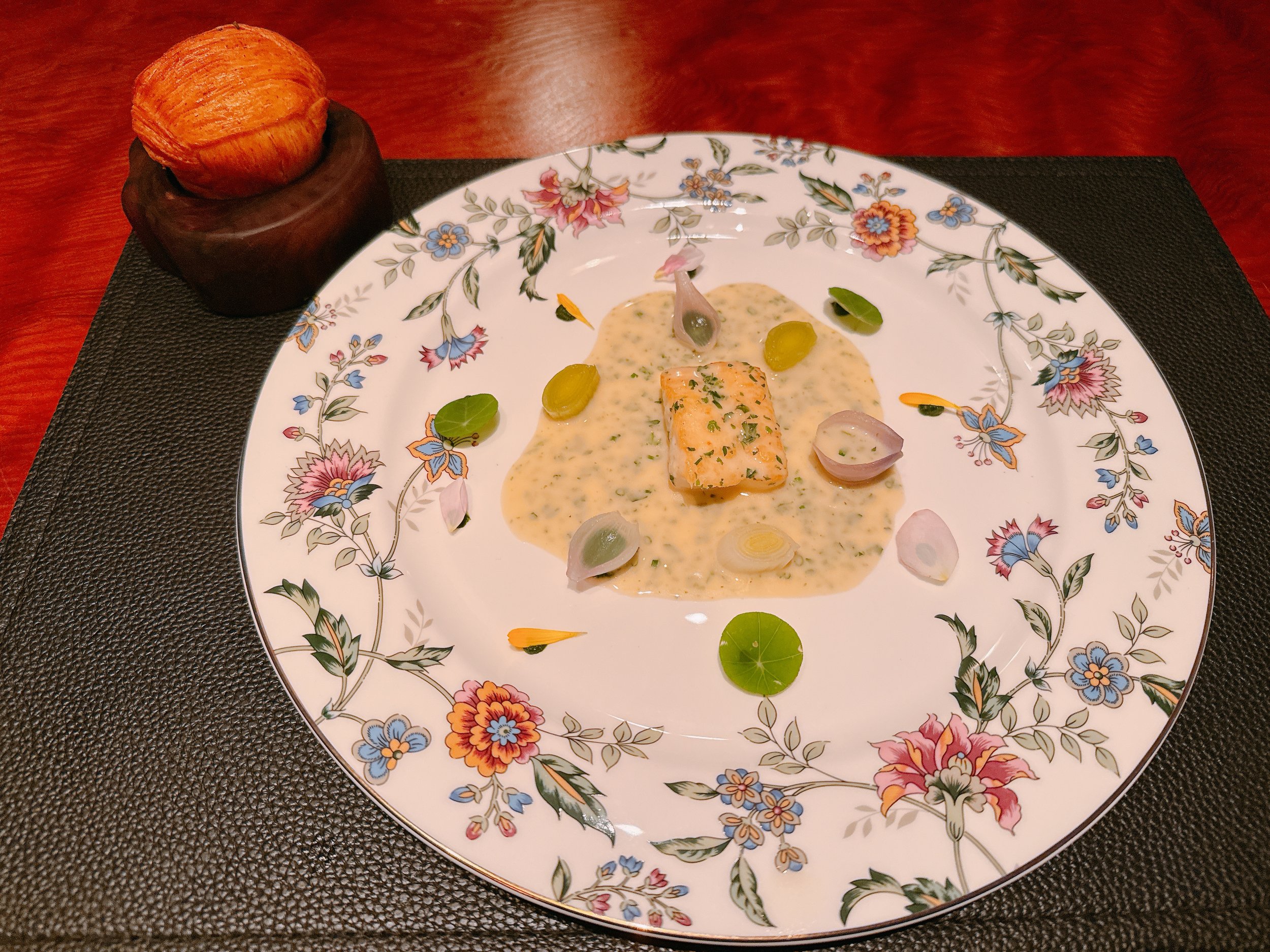
The following course also featured fish, a pan-seared filet of turbot from Holland. The fish was surrounded by alliums (confit pearl onions and melted leeks), a green herb puree, and a sauce based on vegetable umami, butter, and fine herbs. On the side was a laminated brioche that could be used to sop up any leftovers of the sauce. The fish itself was unfortunately a step down from the amadai. It was cooked very firm - a bit more tender might have been better -, and served only lukewarm. The herbal sauce was very tasty, though, and the flaky brioche was excellent as well (those two might have scored a 18 between them) 17.
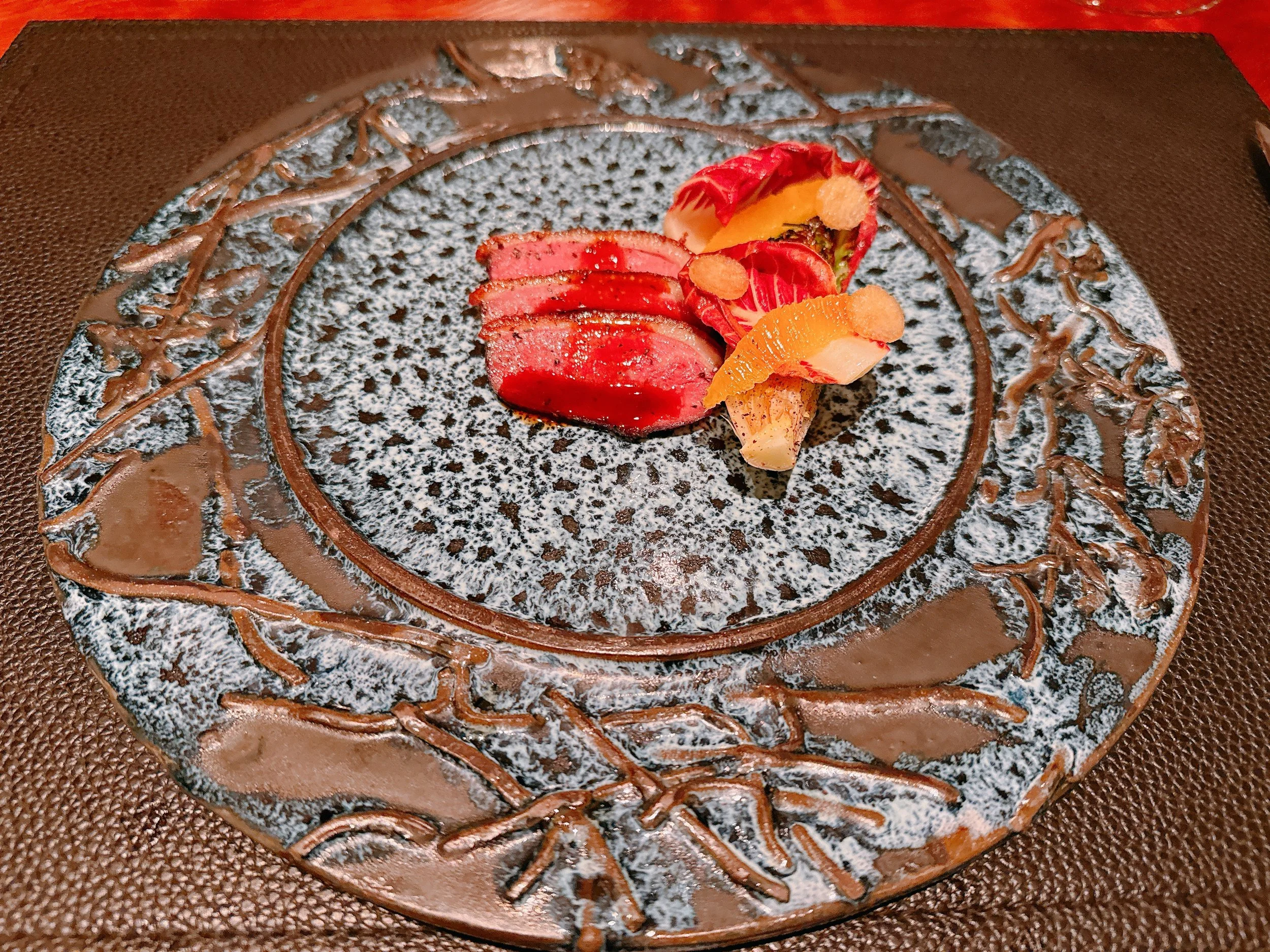
Moving on to meat courses, we were served three slices of Sonoma duck breast that had been smoked and dry-aged. It came with little gem lettuces, black limes, pickled pears and a duck bone jus. The duck was pretty flavorful - earthy, but good. The accompanying limes were fruity, but the “salad” was not too memorable 17. The pescatarian replacement of this dish had slices of salmon instead of duck. Strangely, the fish was served at room temperature. It was lightly citrusy in taste, but I wished that it had been warmer and that the slices had been bigger 15.
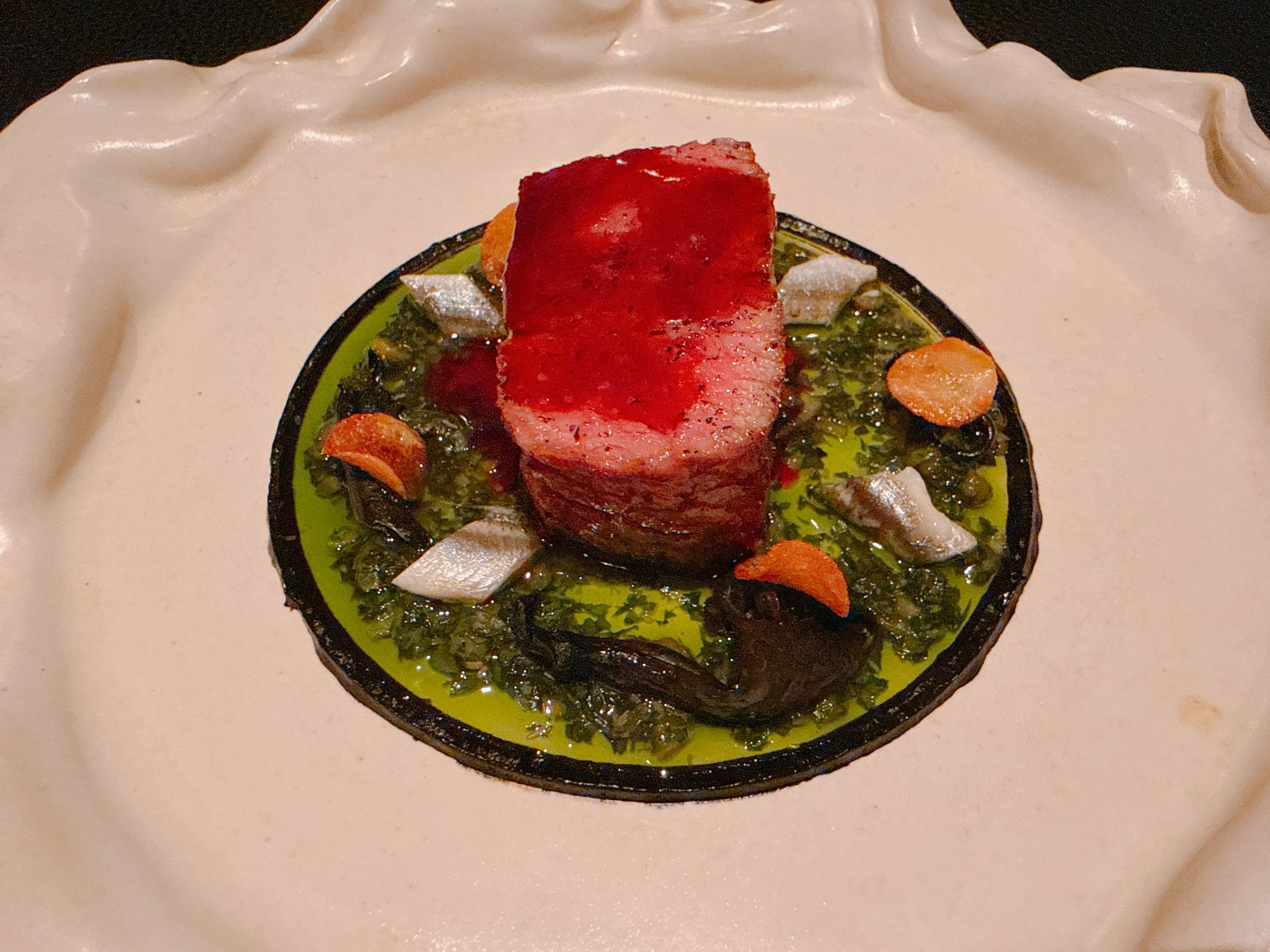
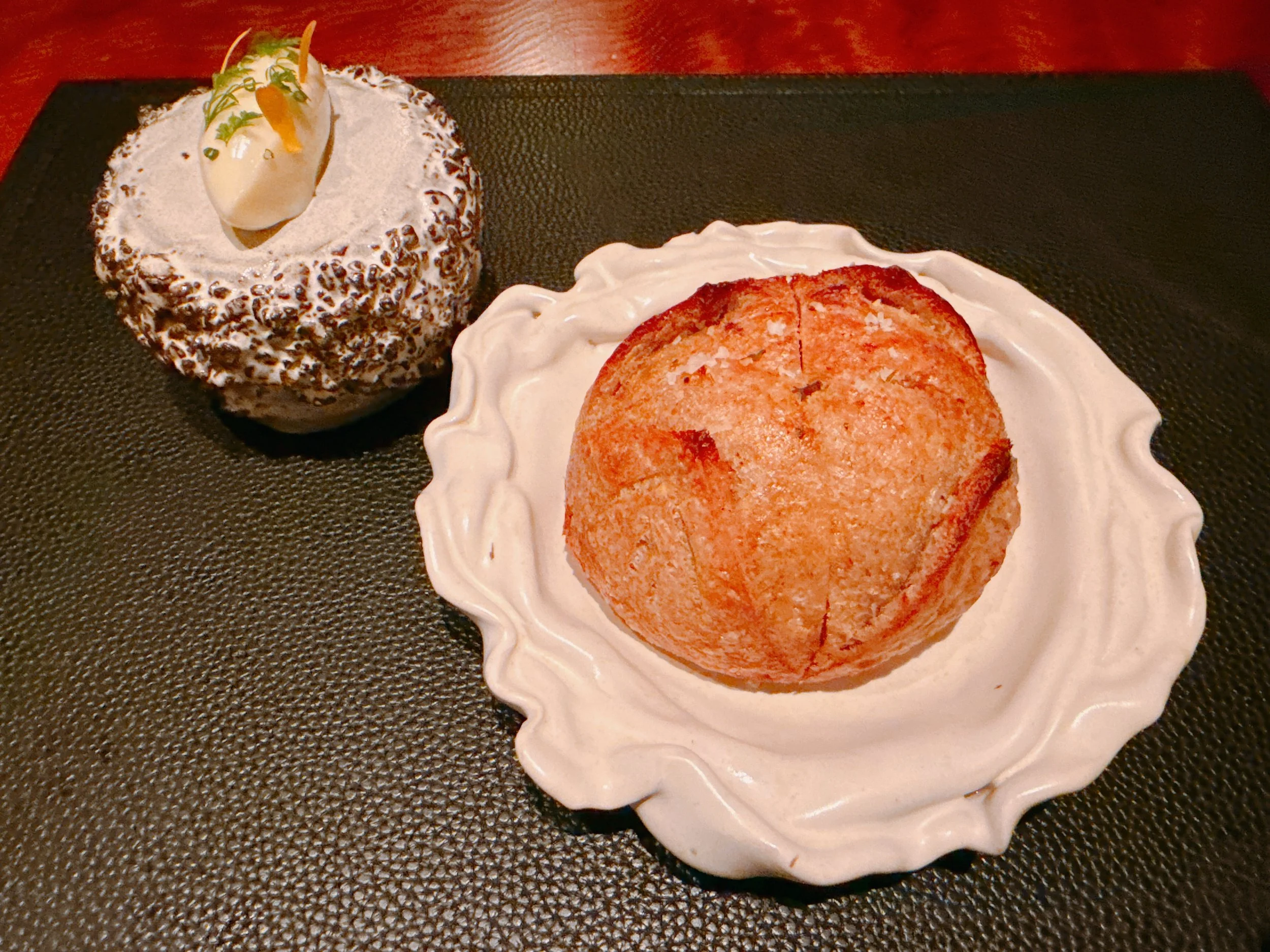
The final savory dish of the night featured a 35-day dry-aged ribeye from Nebraska. It was accompanied by a beef bone jus, black garlic, white anchovies and a chimichurri sauce. On the side were some sourdough bread and butter. The meat was flavorful with a firm bite, but maybe a tad too chewy (compared to good wagyu at least). The chimichurri sauce was an excellent match for the beef, full of flavor, and managing to balance the strong taste of the white anchovies. A great dish 18. The pescatarian version of this dish replaced the beef with seared bluefin tuna. Also good, but the fish felt slightly overcooked 17.
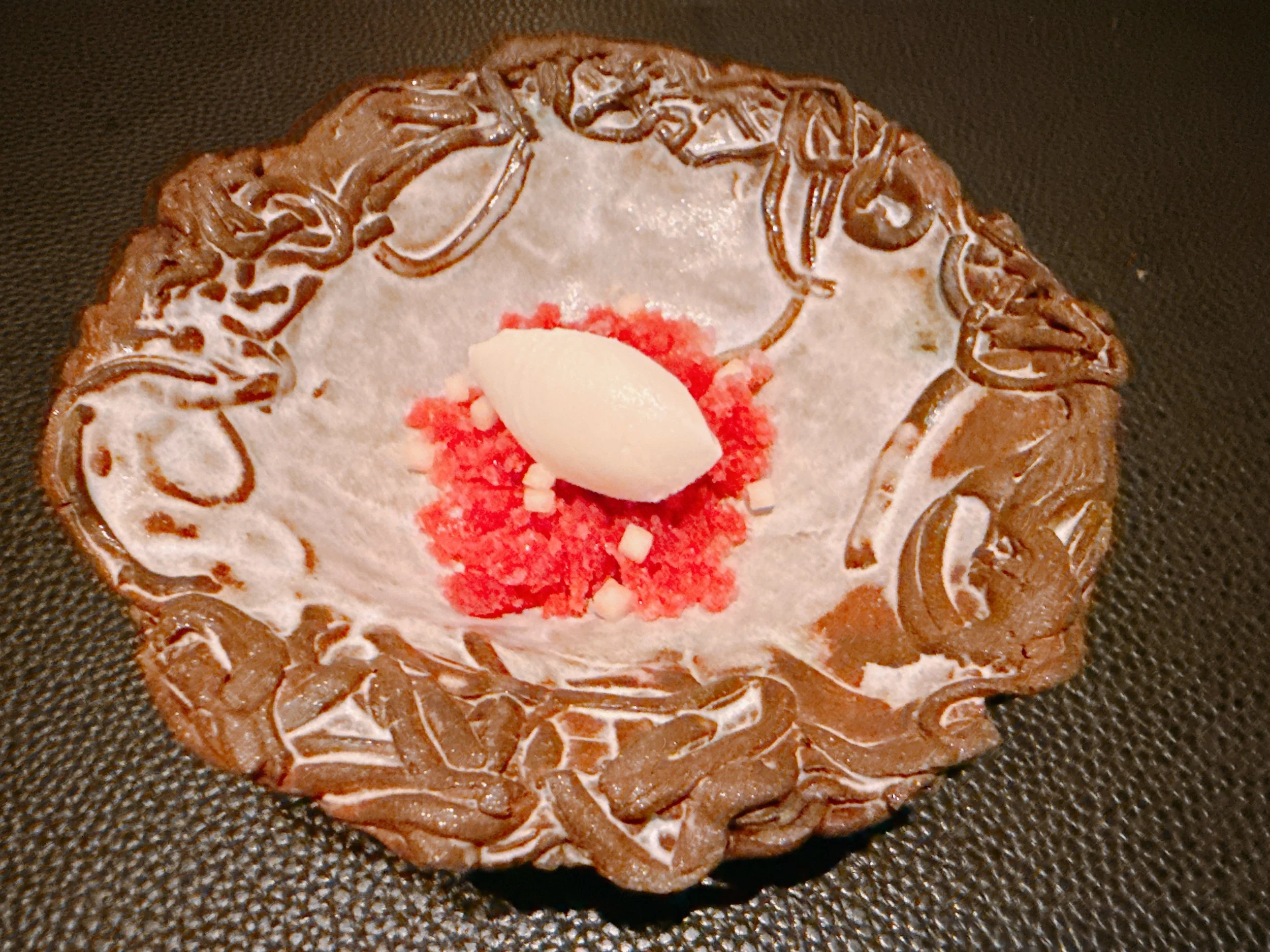
As a palate cleanser, we received a goat milk yogurt gelato that came with a pomegranate granite and little cubes of granny smith apples. Fruity, creamy and not too sweet. A fresh tasting dish 17.
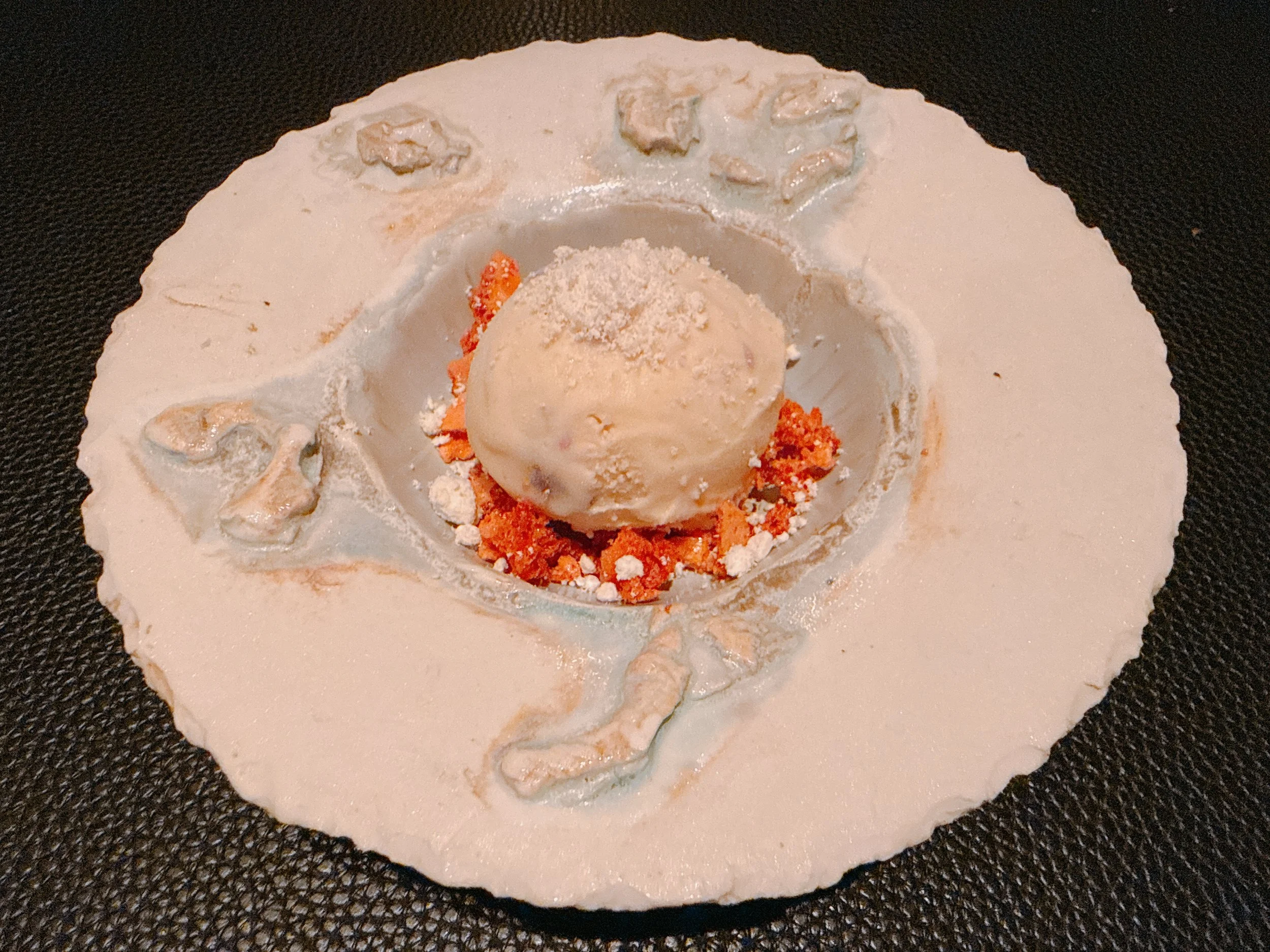
The main dessert of the evening was a Japanese sweet potato ice cream served with honeycomb candy and butter powder. An ostensibly simple, sweet, and delicious dessert. The honey crumbles were sweet and crunchy, and the ice cream interestingly didn't taste much of sweet potatoes. If we hadn't known, we would have assumed it to be merely a sweet cream ice cream. Not that I'm complaining, mind you - a too strong sweet potato flavor would probably have made this a worse dish 18.
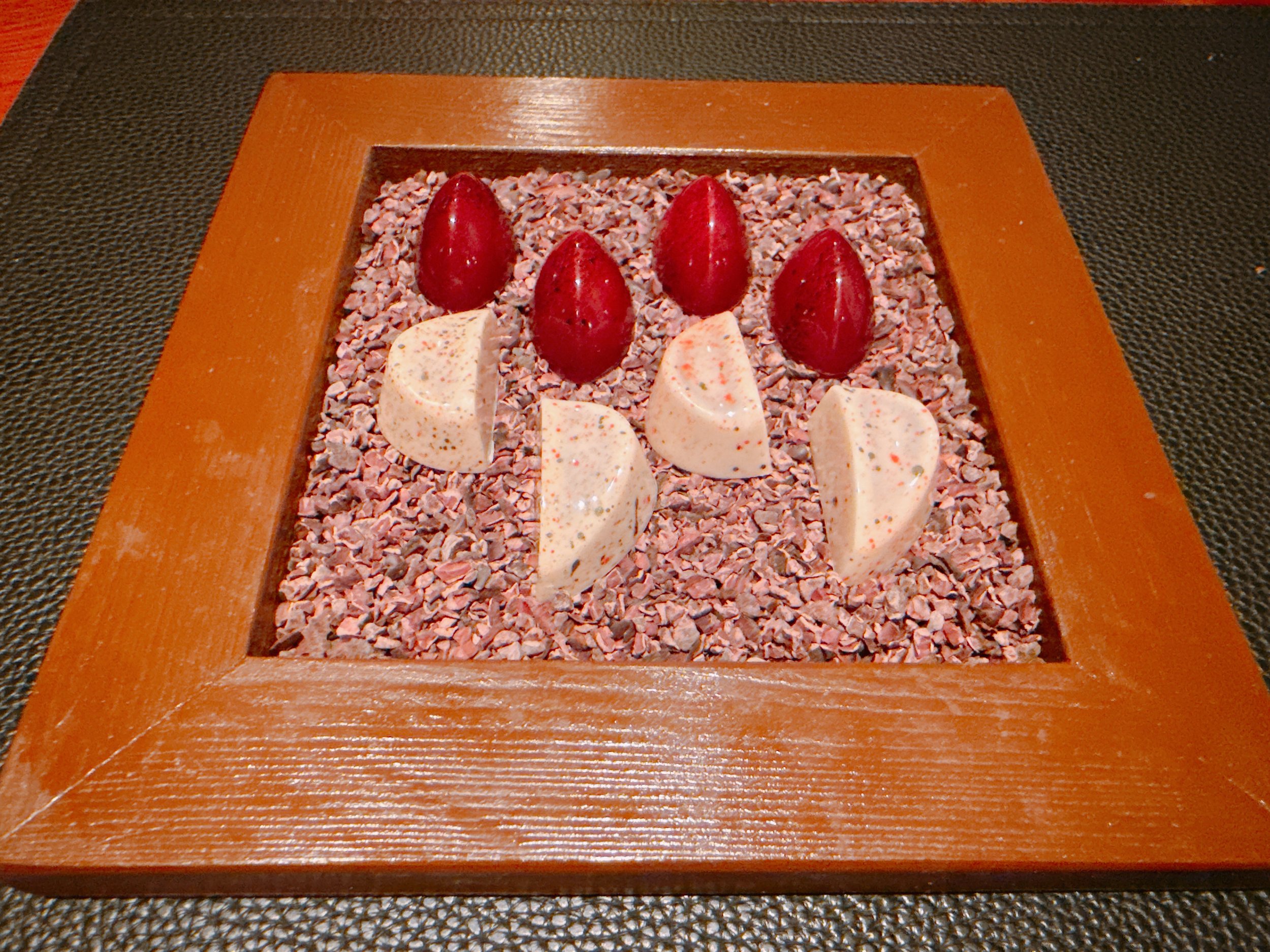
Our meal concluded with two pralines. A white chocolate/vanilla chai praline tasted lightly of chai, and felt a bit Christmassy 16. A black chocolate ganache had a fruity liquid center 17.
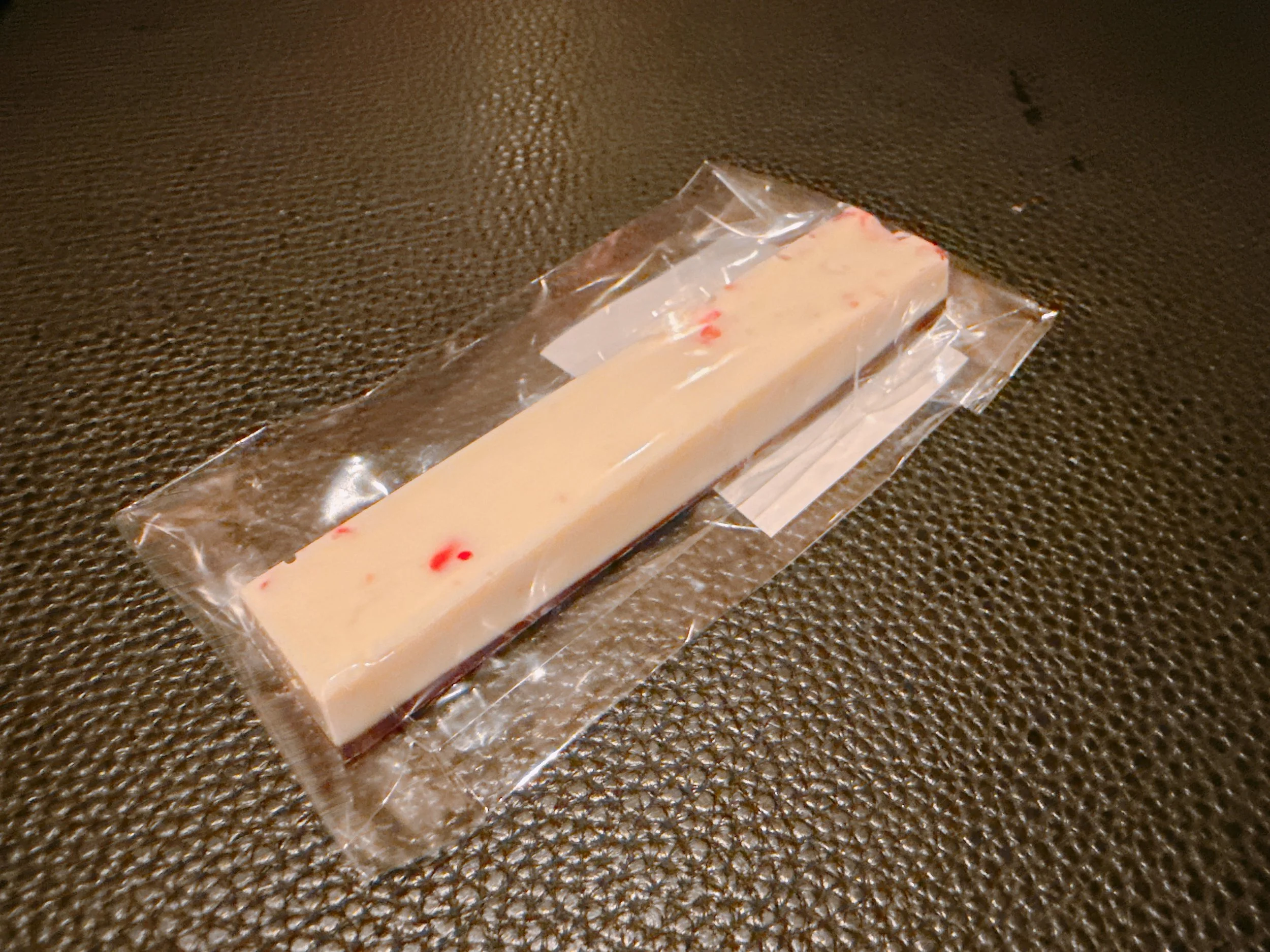
As a take-home present, we were given a dark and white chocolate peppermint cookie. Crunchy, lightly minty chocolate on a creamy cookie 17.
Overall: Aubergine served Californian cuisine with many local ingredients and some subtle Asian influences. I appreciated how strong the flavors were in most of the dishes. Compared to past dinners, though, the Asian aspects seemed to have been toned down a bit, and overall, our last visit had been a tiny bit better. Still, a solid two-star experience with a few dishes that aimed even higher 17.