La Rei Natura by Michelangelo Mammoliti - Serralunga d'Alba
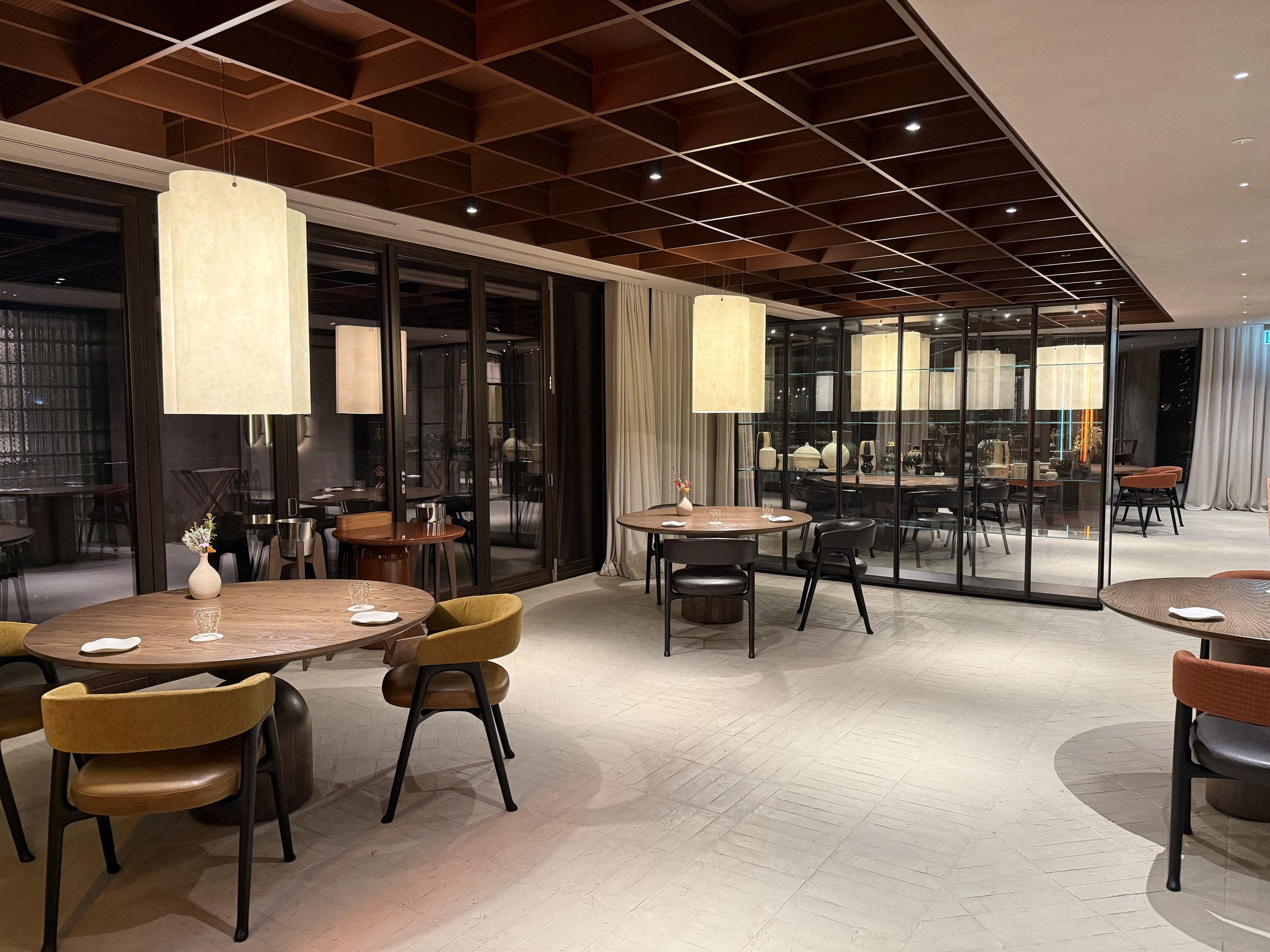
Main dining room - unfortunately without a view at night
Rating: 17/20
Where: Serralunga d'Alba, Italy
When: Dinner for 2 on 3 December 2025
Cost per Person: Tasting menu 280-350 Euro ($325-$410), Wine pairing 160-250 Euro ($185-$290)
Accolades: 3 Michelin Stars
Why: Seasonal, produce-driven cuisine with influences from Piedmont and abroad
One of the happy side-effects of traveling to Michelin-starred restaurants is visiting places that one probably wouldn’t see otherwise. In early December, we flew to Milan, rented a car and drove two hours to Piedmont, famous for white truffles, hazelnuts and Nutella. And, as evidenced by the countless vineyards flanking the road, one of the premier wine growing regions in Italy. Our destination was the “Il Boscareto Resort & Spa”, a hotel built in 2009 and owned by the backers of the Batasiolo winery. Since 2023 it has been home to the “La Rei Natura” restaurant run by chef Michelangelo Mammoliti. Right after opening, the chef regained the two Michelin stars that he previously held at “La Madernassa”, and in late 2025 “La Rei Natura” received its ultimate third star.
The restaurant and hotel are located on the top of a hill, surrounded by vineyards as far as the eye can see. During our December visit, the vines were unfortunately bare and it was raining constantly. However, it was not hard to imagine that this would be a lovely place to stay during the warmer parts of the year.
Making use of the lovely scenery, the main dining room has panoramic windows looking out on the vineyards, with tables arranged so that most guests will have a clear view. Dinner during the summer (or lunch anytime) would be best to admire the surroundings - in our case, we only saw darkness.
The decor of the dining room was fairly minimal. Wooden tables, no table cloths, and chairs that would not be out of place in a conference room. And our meal actually took us through two additional rooms. Both were lounges where a chef prepared some of the dishes in front of us: at the beginning, we got to enjoy some appetizers while deciding on a menu and wines, and at the end, desserts were served in yet another room.
The restaurant offered three different tasting menus. One was focused on classic dishes from Piedmont (280 Euro, about $325), another was a seasonal menu featuring game meats (280 Euro, $325), and the third (and longest one) was a ten course carte blanche menu (350 Euro, $410). There was also the possibility to shorten the first two menus to fewer than their standard eight course. We went for the longest menu, and also added in-season white truffles (12 Euro/$14 per gram) to a couple of dishes. Supposedly, this meant that the menu was adjusted slightly to include dishes better suited for truffles. There were multiple pairing options available for each menu. For the longest menu, there were a “regular” seven glass pairing (180 Euro, $210), a five glass reserve pairing (250 Euro, $290), a five glass champagne-only pairing (180 Euro, $210) and a five glass non-alcoholic pairing (100 Euro, $115). At the recommendation of our sommelier, I chose the seven glass pairing as the best match for the food, since fewer wines had to bridge two courses. The wines were generally quite good, and it was also possible to customize the pairing, for example by having only red wines. Definitely worth a consideration.
As mentioned earlier, our dinner started in a lounge. Along with a complimentary glass of local sparkling wine we were handed a water menu, featuring still and sparkling water options from Italy, France and Norway. Water menus generally strike me as a bit silly, but this one thankfully had many not-too-expensive choices for 6 Euro ($7) per bottle - only a little bit more than the Aqua Panna/Pellegrino baseline for 5 Euro ($6). Pretty reasonable compared to what many other restaurants charge these days. So it was a fun way to explore different bottlings of water, but our choices seemed to make very little difference in practice.
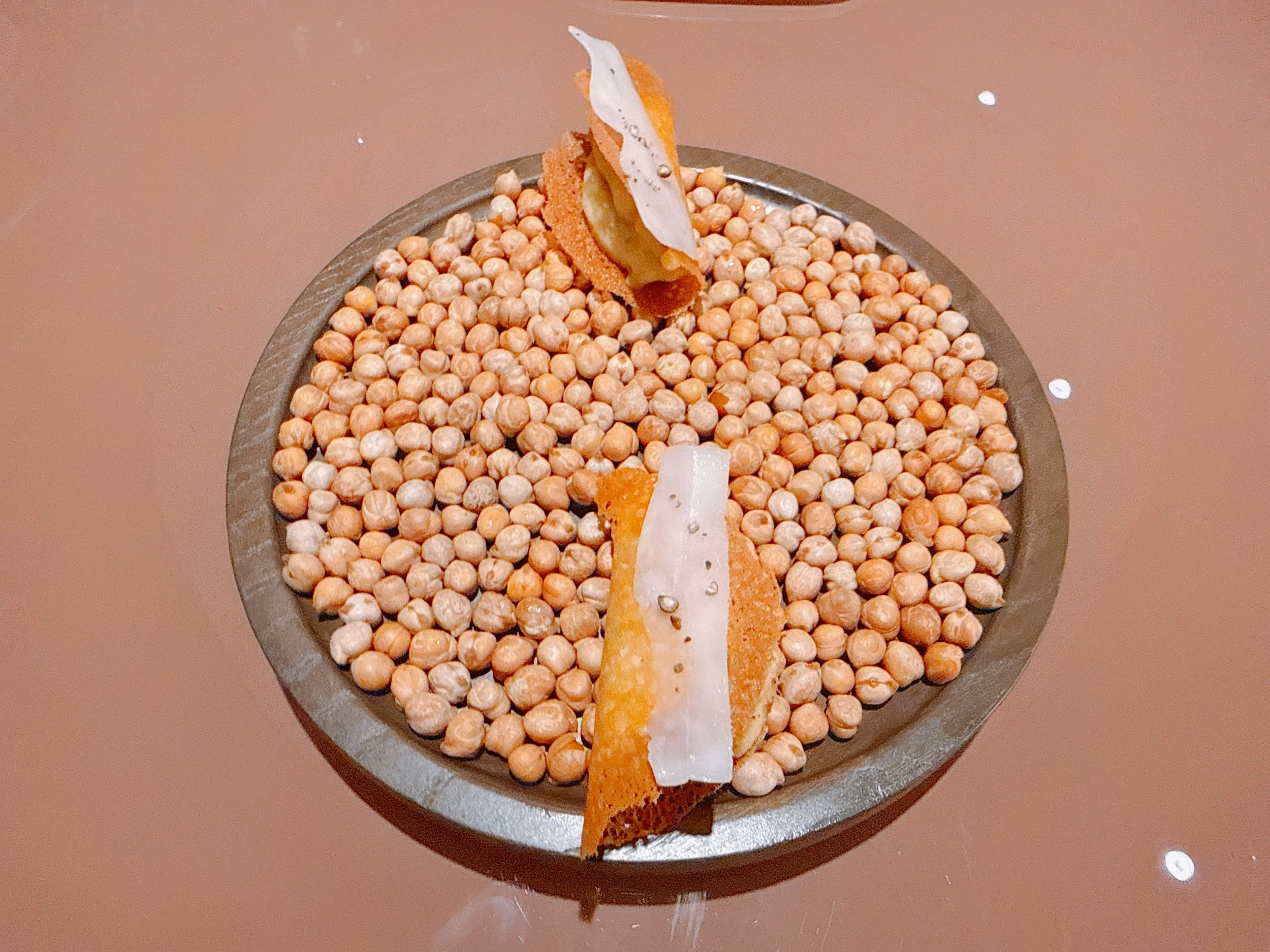
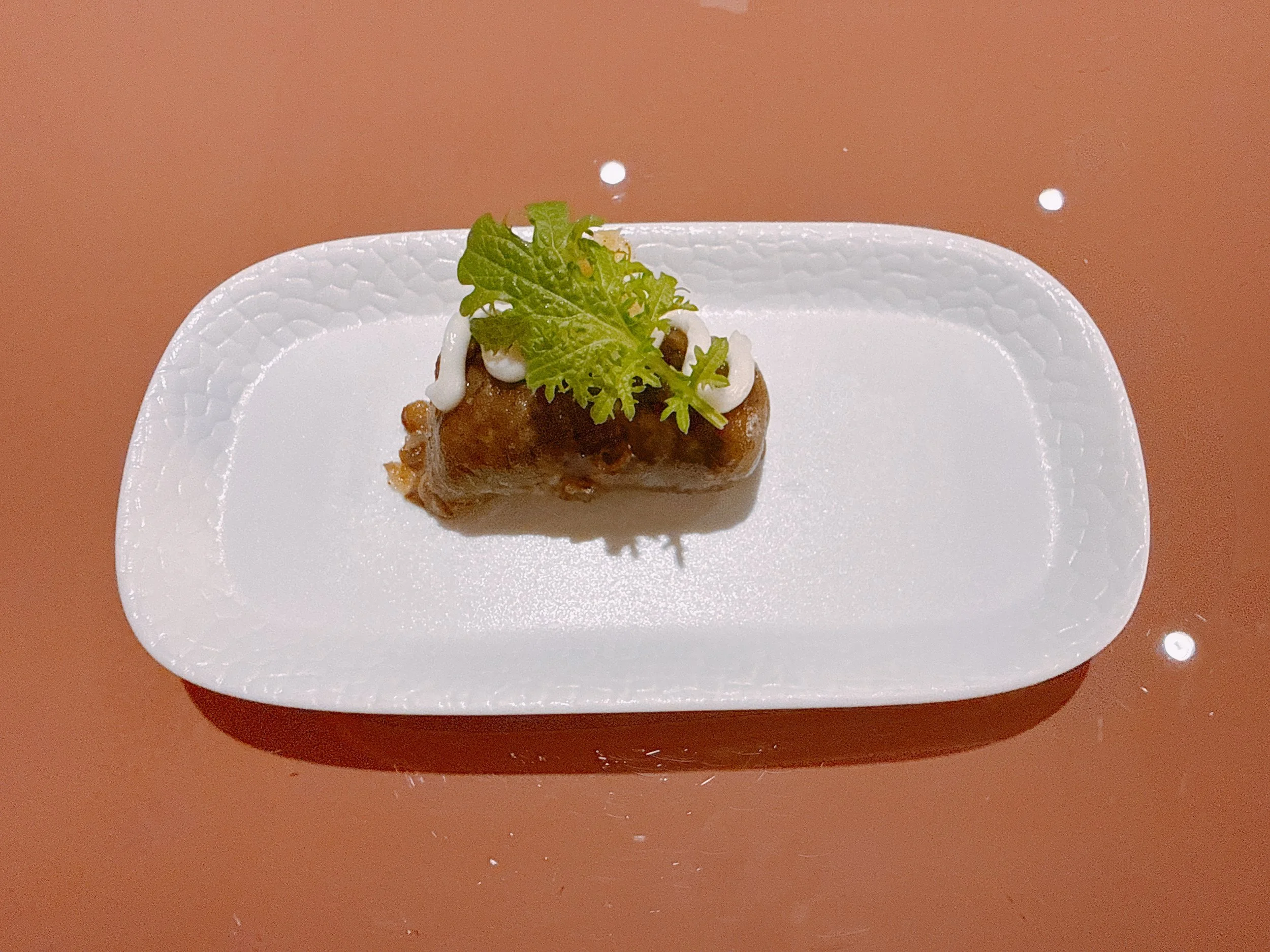
Once the crucial beverage decisions were behind us, we were served a collection of appetizers. A cracker made from chickpea flour looked like the result of a marriage between a dosa and a taco. It was filled with a chickpea cream and topped with a slice of lardo. This was nice enough, with a slightly nutty flavor 16. A little radicchio leaf was wrapped around eel meat and topped with an eel mayonnaise. Served warm, this bite had a noticeable horseradish taste, and its filling had the texture of lentils. Lovely, but unfortunately it was a bit chewy towards the end 17.
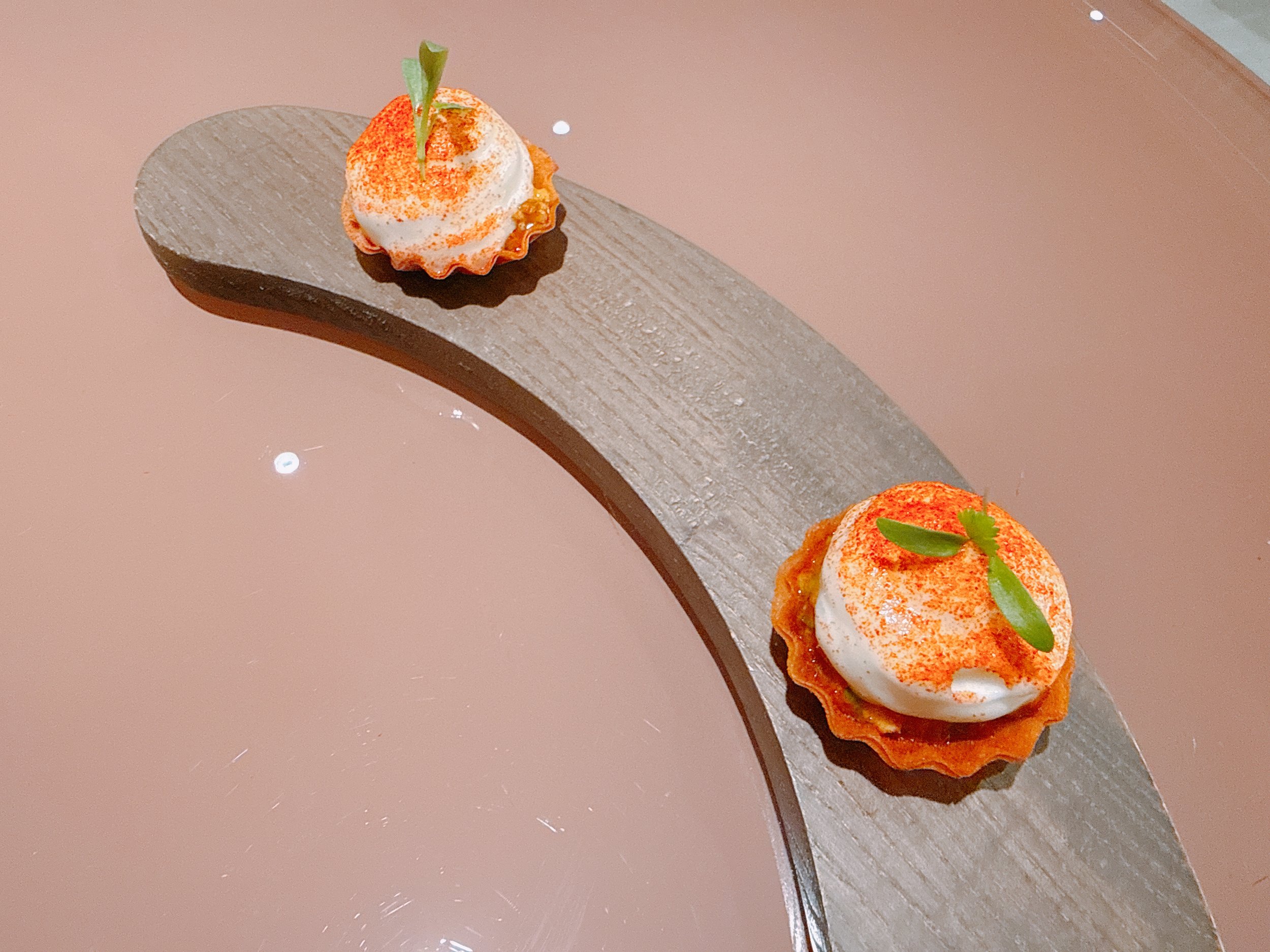
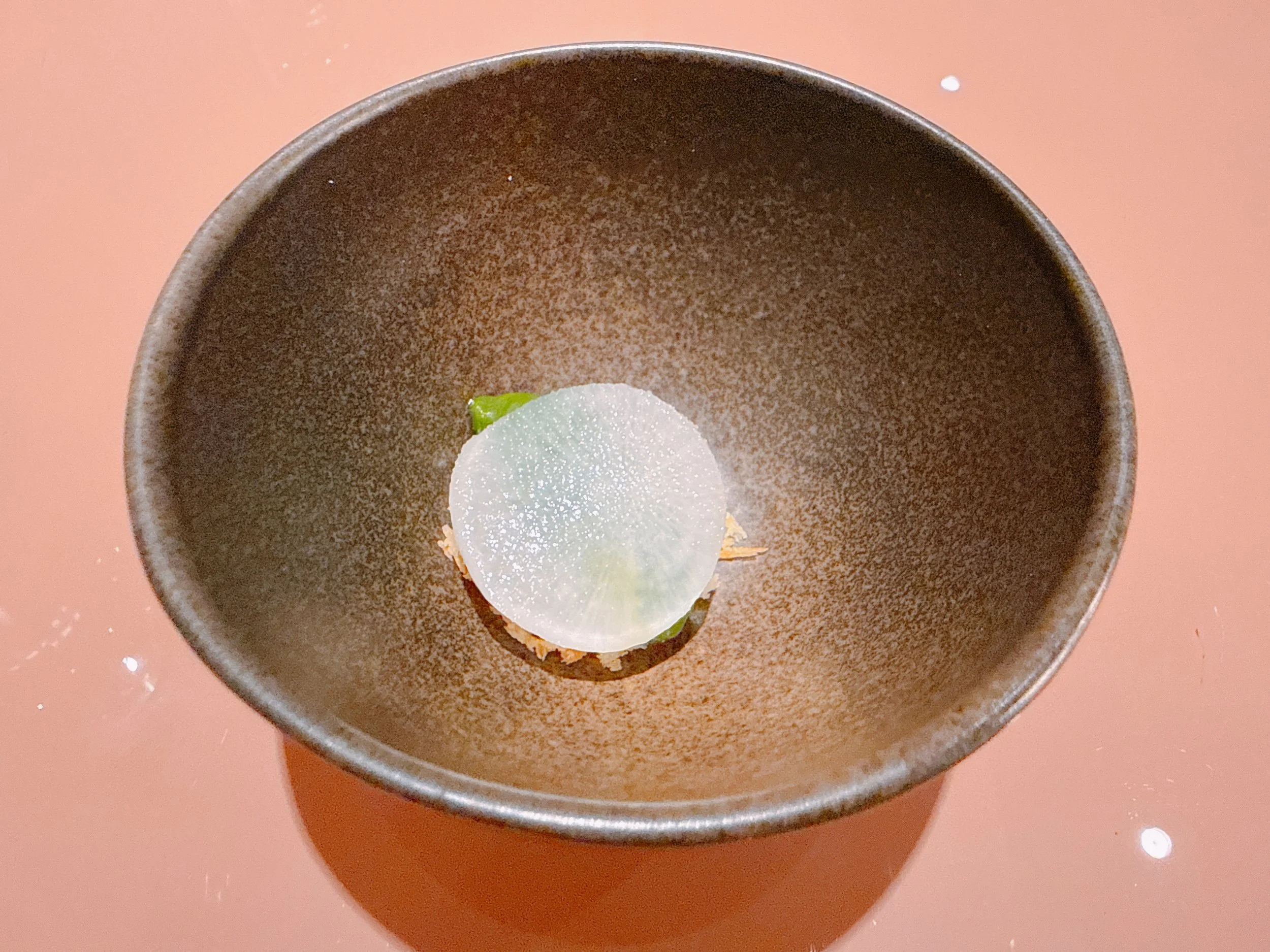
A little tartlet was filled with cucumbers, smoked mackerel, avocados, and a cucumber foam and topped with sweet pepper powder. This was a light dish with an airy foam, and it tasted of cucumber and pepper with a hint of bitterness, and a lingering aftertaste of spice. A nice combination of flavors 17. The final appetizer served in the lounge was a sorbet made from roasted turnip tops, paired with marinated white radish and panko breadcrumbs. This little dish had very intense flavors: the radish was sour, the sorbet herbal and the panko added some nice crunchiness 17.
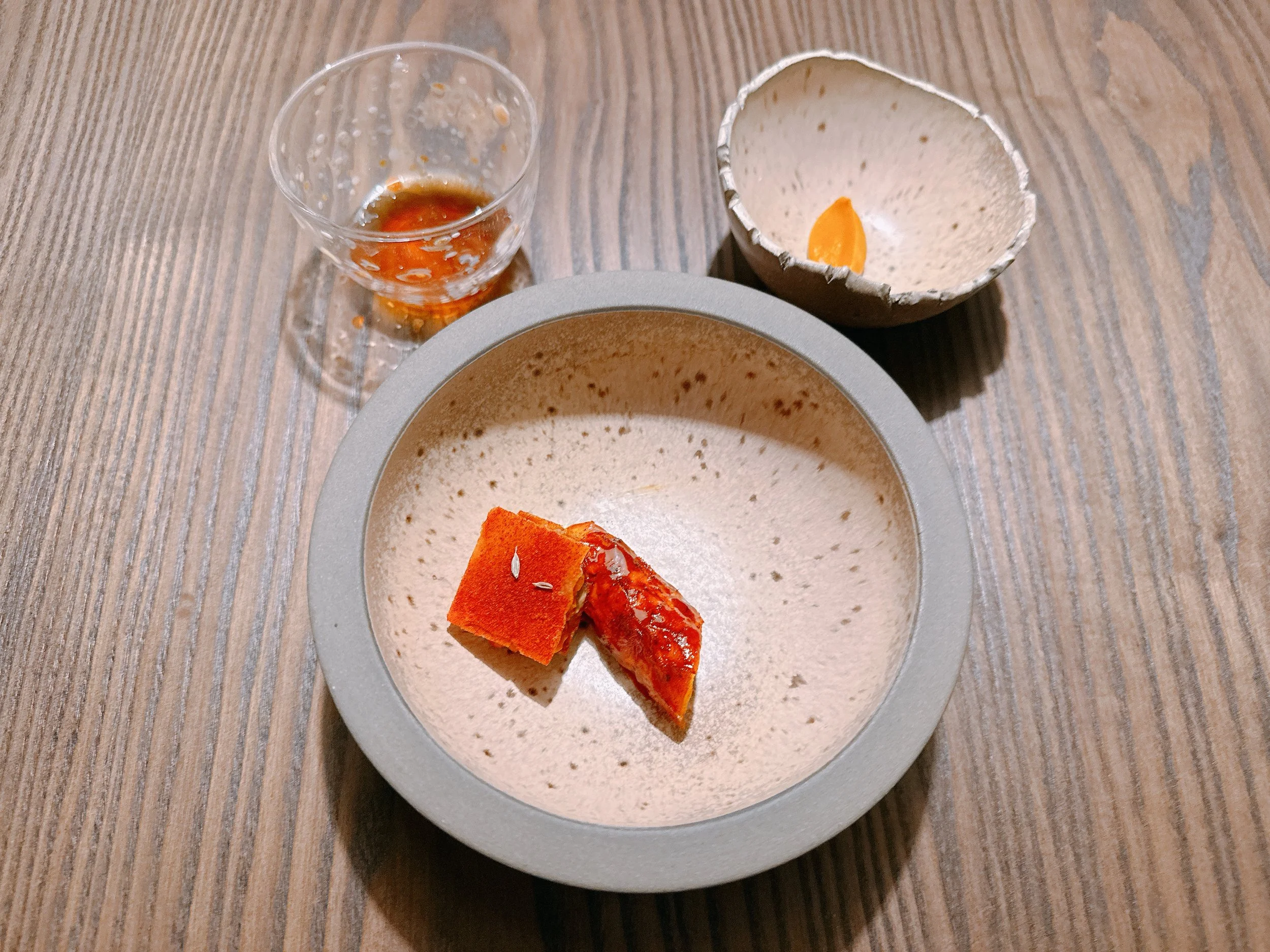
At this point, we were led to our table in the dining room. Before starting with the main ten courses of our tasting menu, we received one more appetizer and the first of two bread servings. This appetizer was based on carrots, which appeared in several forms. There was a little sandwich made from chicken skin and filled with chicken liver and fermented carrots. It was quite earthy (16 by itself), but I actually liked the pescatarian alternative (sans chicken) somewhat better (17). A roasted, caramelized carrot was supposed to be dipped in a carrot ketchup. Temperature-wise, this created a nice contrast between the warm carrot and the cold ketchup. I liked the flavor of the caramelized carrot, but the ketchup didn't add that much to the dish (17). Finally, there was a “hot carrot extraction”, which turned out to be merely lukewarm, tasting lightly sweet and herbal, but not necessarily of carrots (16). Overall 16.
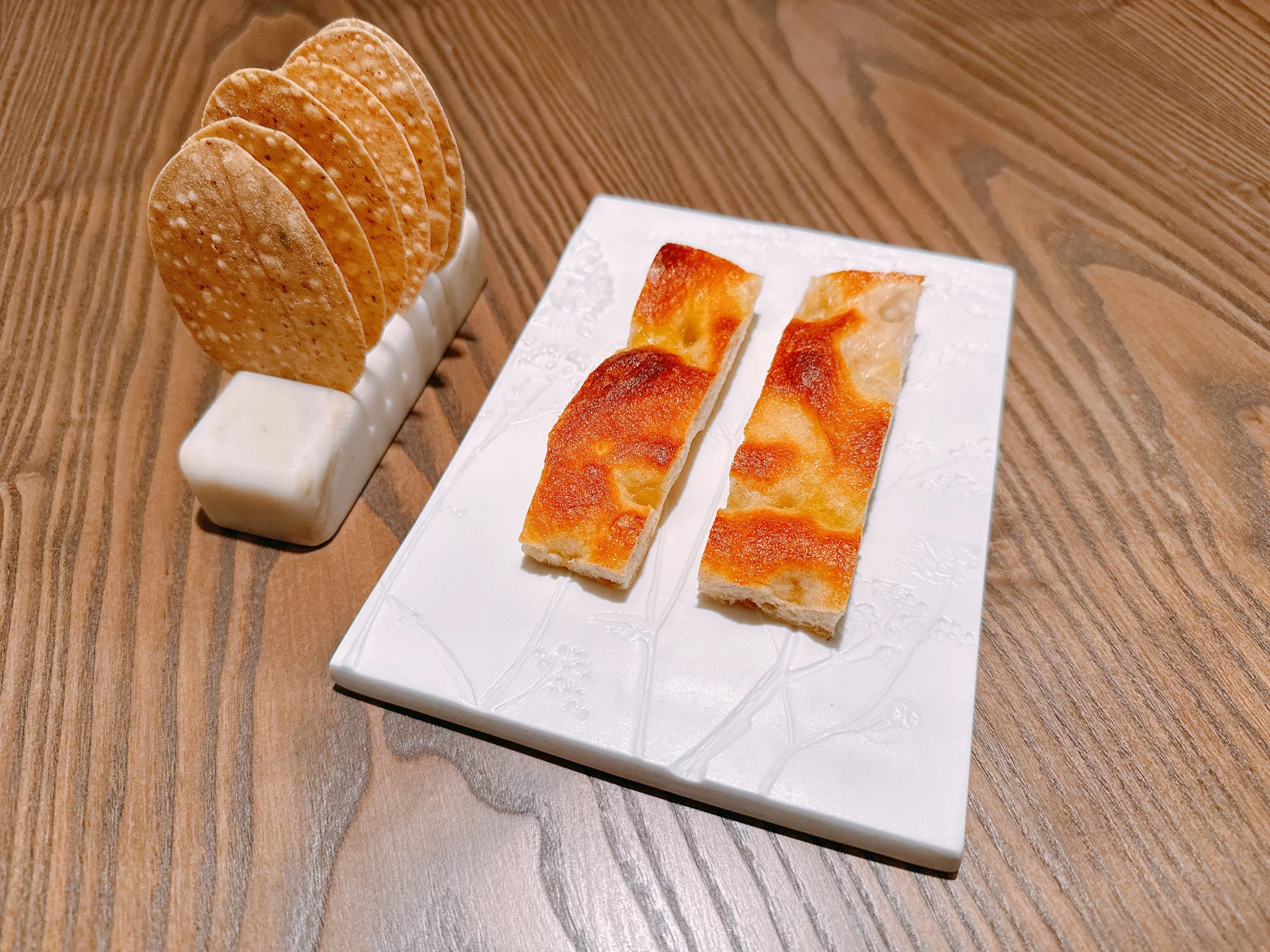
We were served two kinds of breads: an herb focaccia and several carta musica crackers seasoned with capers. For an accompaniment, we were supposed to choose between three different olive oils, but got to try all three after asking nicely. The focaccia was a bit creamy in texture, and the carta musica unfortunately not too crunchy 16. The olive oils were good, but not outstanding. Trying them all was definitely fun, though.
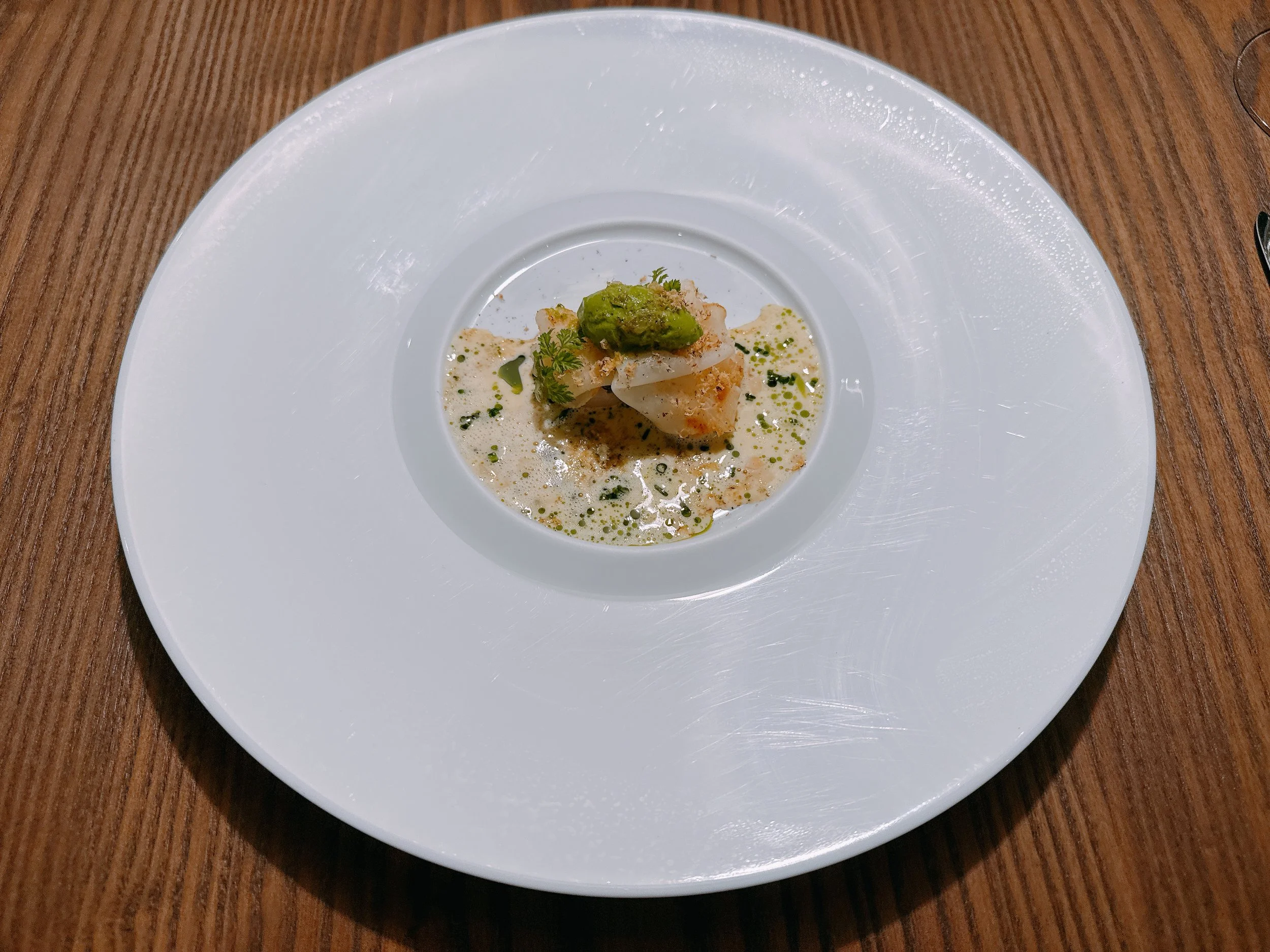
The first official and therefore wine-pairing-accompanied course was a scallop, topped with roasted celery, a coriander sorbet, and shavings of a celeriac “salami”. Tableside, a sauce containing roasted celeriac, spring onions and caviar was added to the plate. The scallop's consistency was very (!) creamy, and the sorbet was herbal and a bit bitter. The sauce was wonderfully flavorful, but not very warm. Given that the sorbet was frozen, this made the dish feel a bit too cold overall 17.
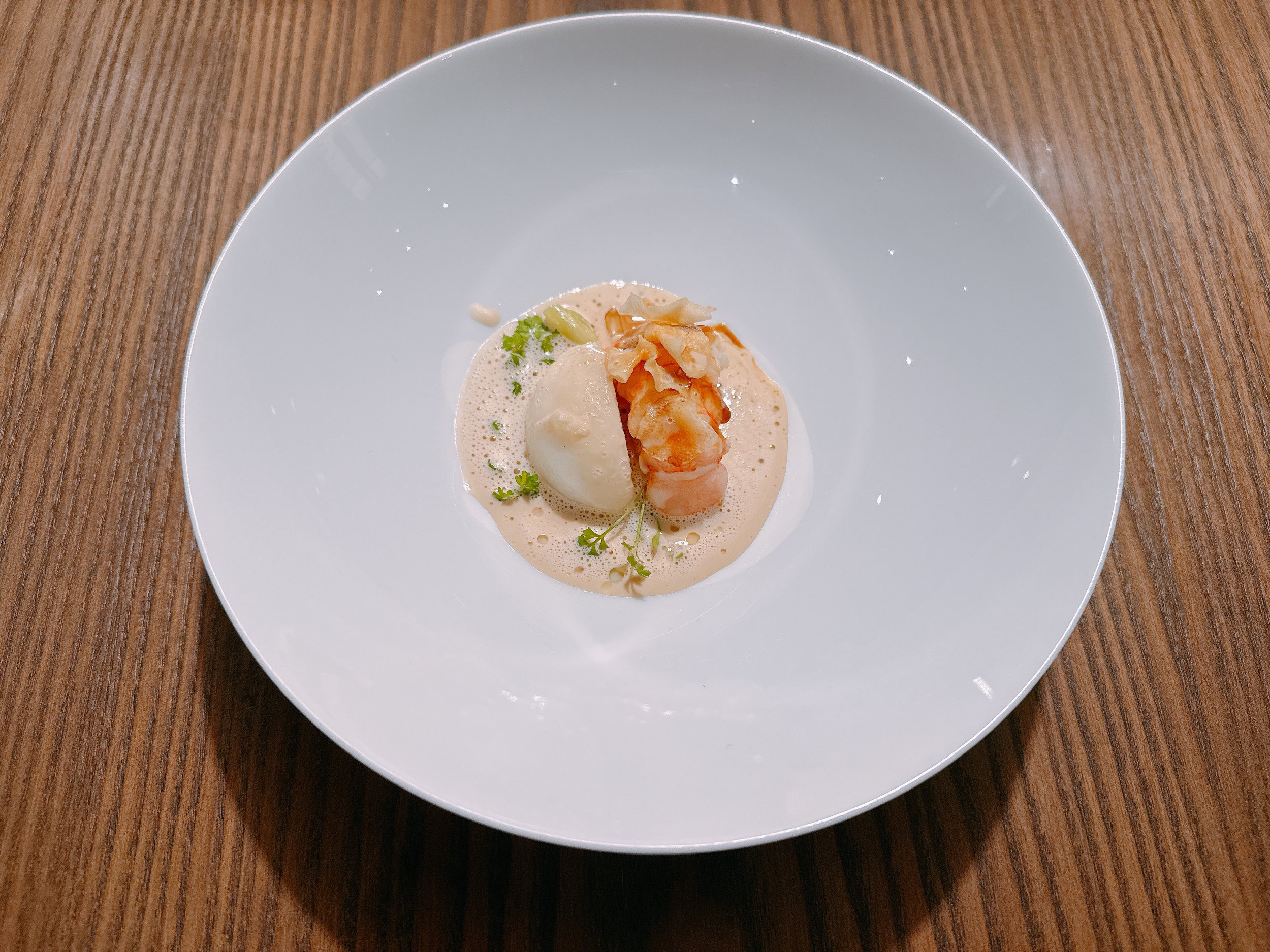
Roasted scampi were served with a sunchoke puree and a white radish that had been cooked papillote-style. A sauce made from pine nuts completed the dish. All components of this dish were executed wonderfully: the shrimp had a nice flavor, the sunchokes had an intense taste, and the radish was very juicy with a more subtle flavor. A lovely dish 18.
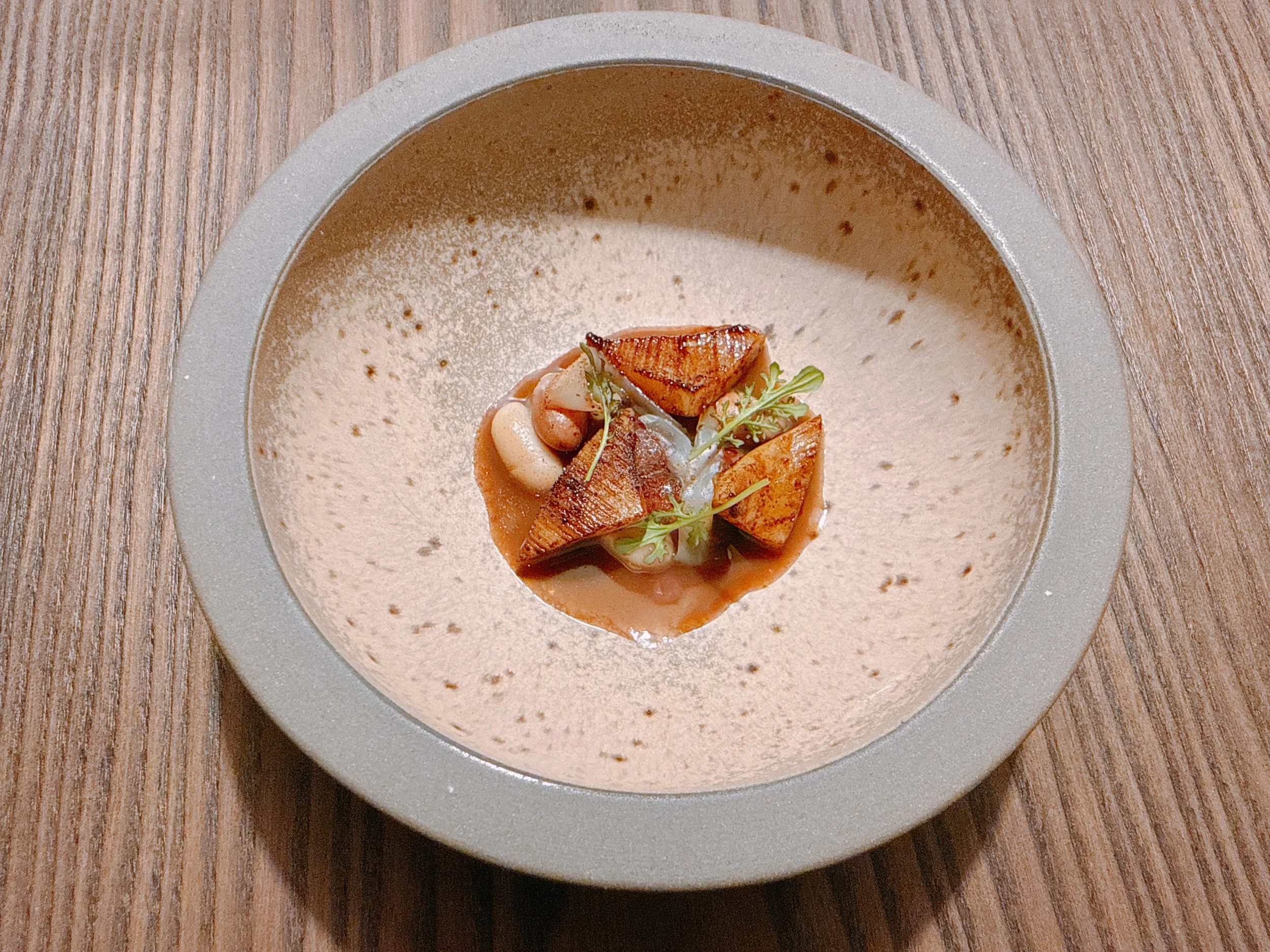
The next dish featured three different kinds of beans from the restaurant's greenhouse. They came with grilled squid, a black squid ink sauce and some coriander leaves on top. The smoky squid with its pronounced bite was a nice complement to the earthy beans with their varying, but generally mealy textures. The flavors of this dish had an astonishing depth 18.
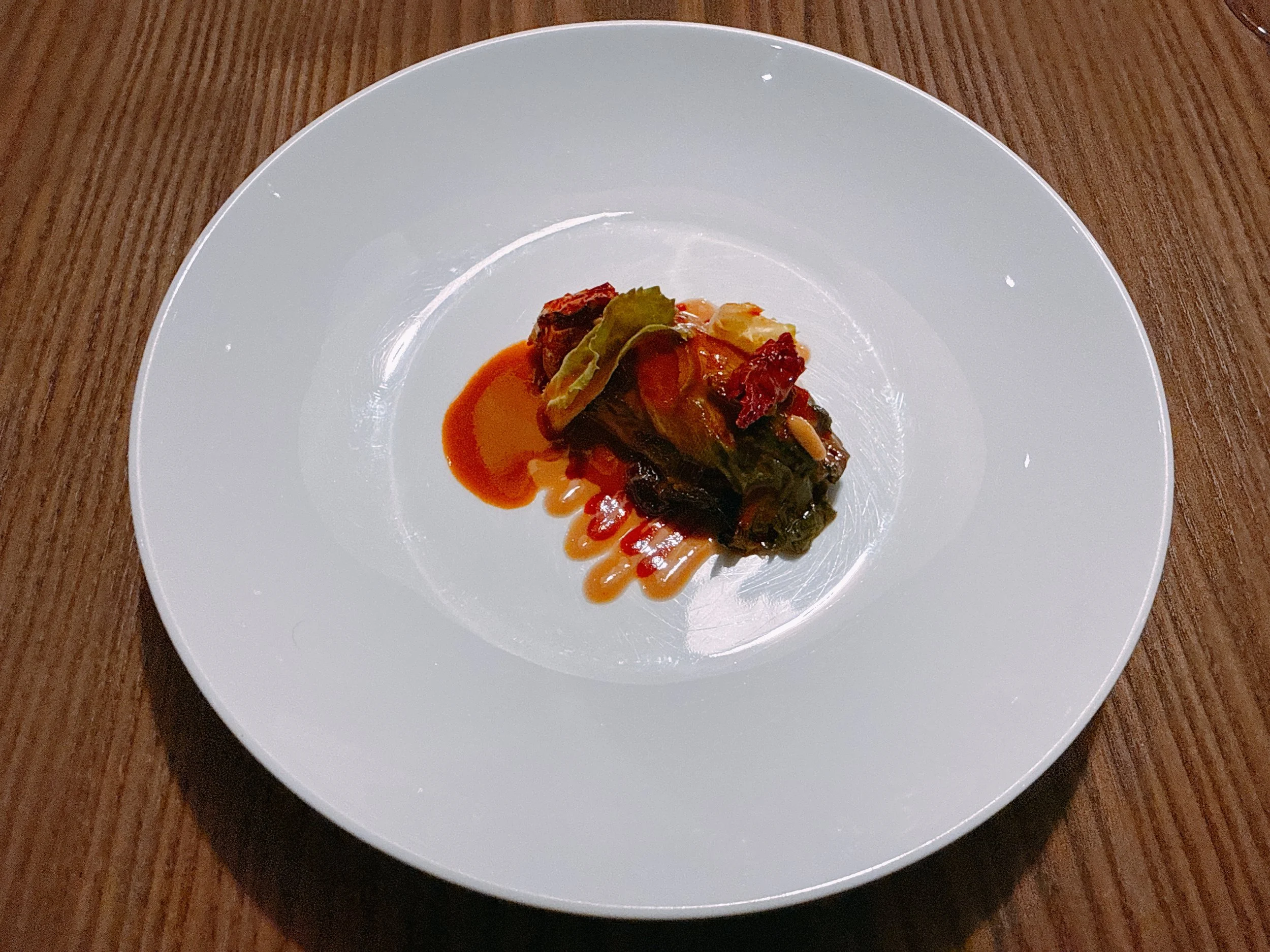
Cooked escarole was served with a roasted bell pepper sauce, a fines herbes reduction, pine nuts, and sultanines. Under the escarole was a bell pepper seed reduction. The greens were slightly bitter, but this bitterness was nicely balanced by the lovely, fruity sauce. In fact, all the sauces in this dinner had been very, very good so far 17.
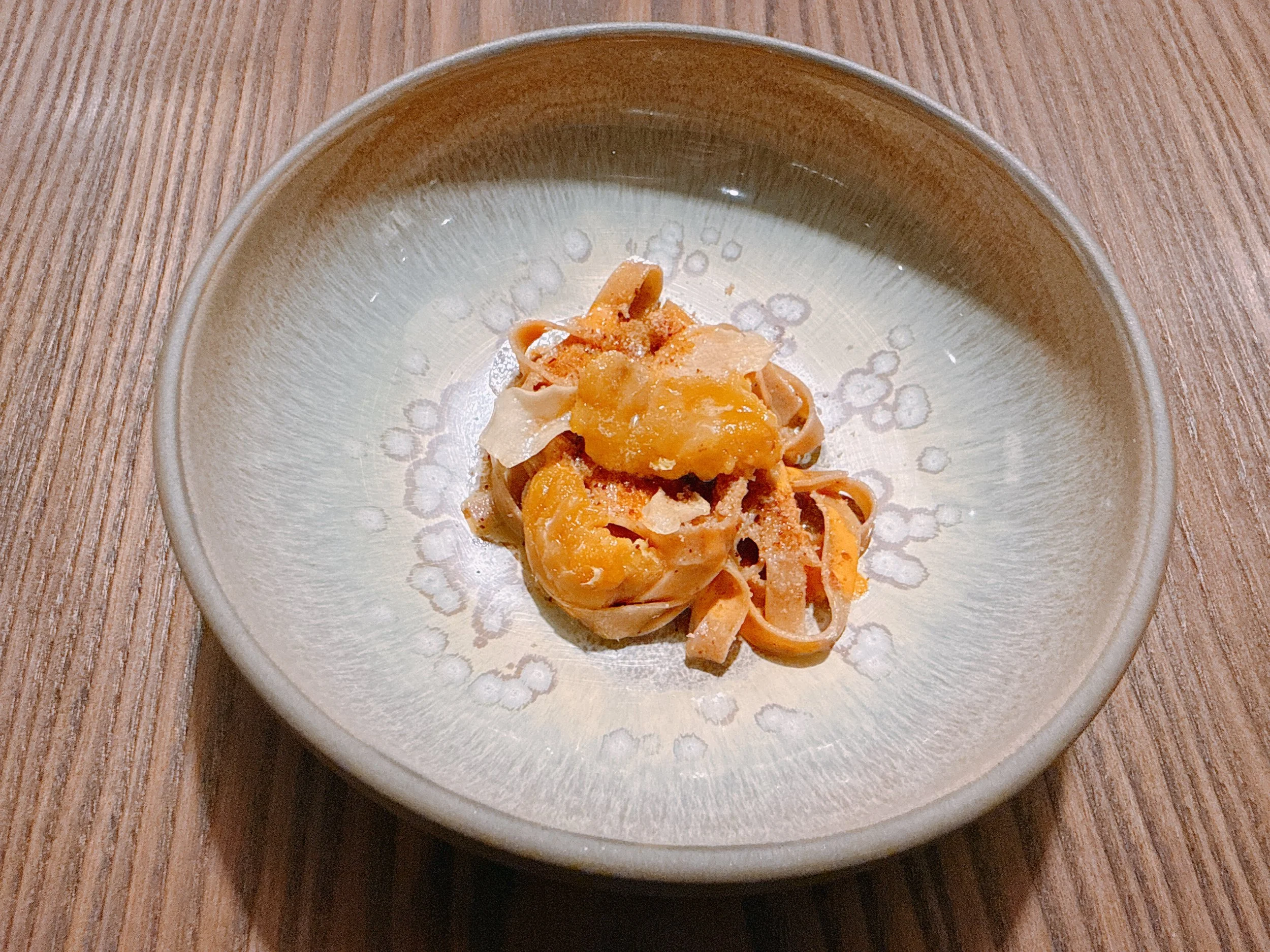
The first of two pasta courses featured fresh parpadelle made from leftover bread. It came with sweet garlic and an uni (sea urchin) based sauce. The pasta was cooked perfectly al dente with maybe a slightly bready flavor. The garlic provided some crunch and sweetness, the uni creaminess, and breadcrumbs added some texture. Ostensibly, this was a simple “leftovers” dinner, but very, very tasty 17.
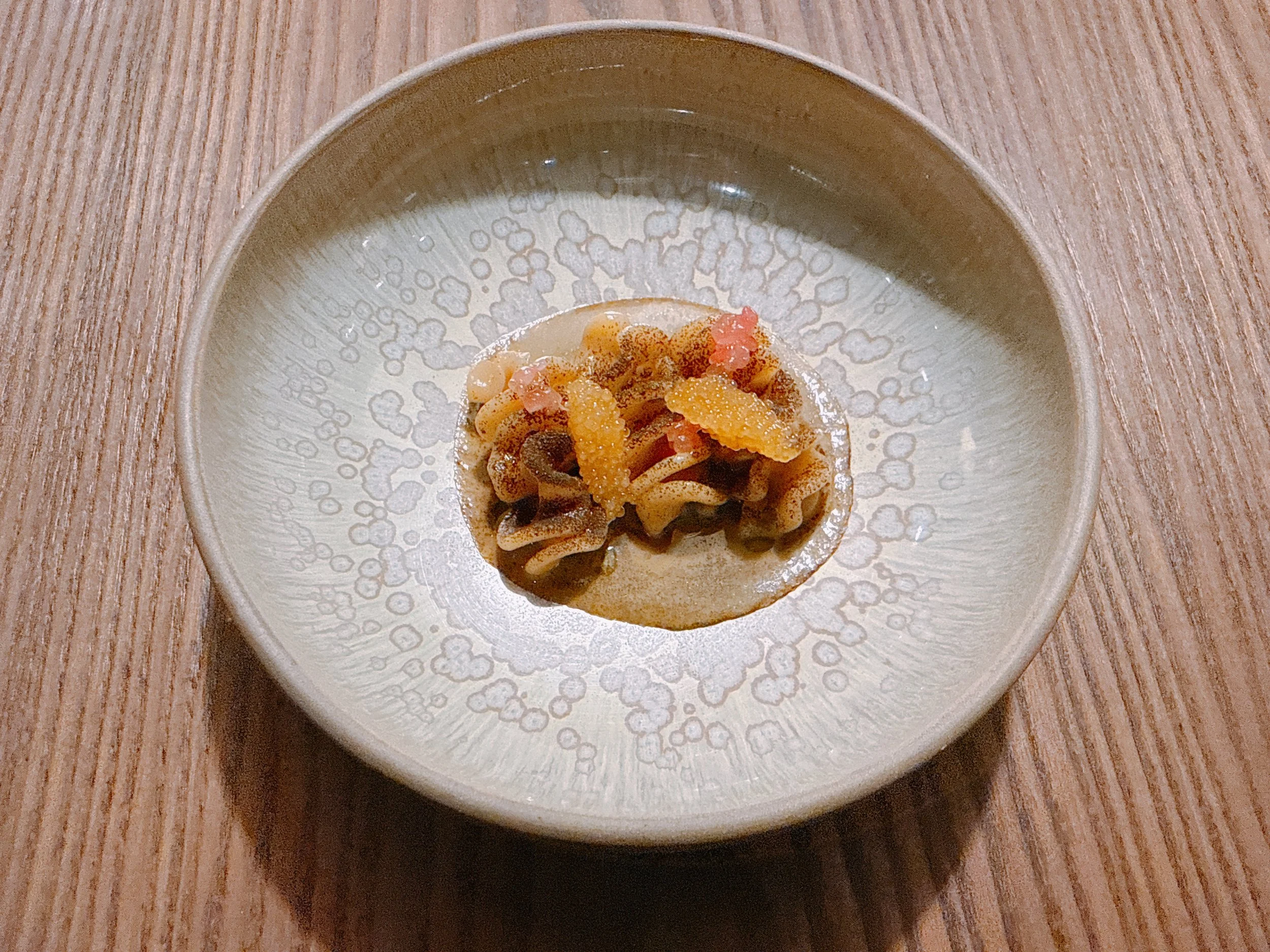
Next, we had some fusilli in an artichoke sauce, topped with finger limes and pike perch caviar (the last two ingredients looked somewhat alike). This pasta was cooked very al dente - too hard for my liking, in fact -, but still had a lightly creamy consistency. The sauce was somewhat bitter - also not really my thing. The finger limes and caviar didn't add much to the overall flavor. This might have been executed as intended, but flavorwise it was just ok 14.
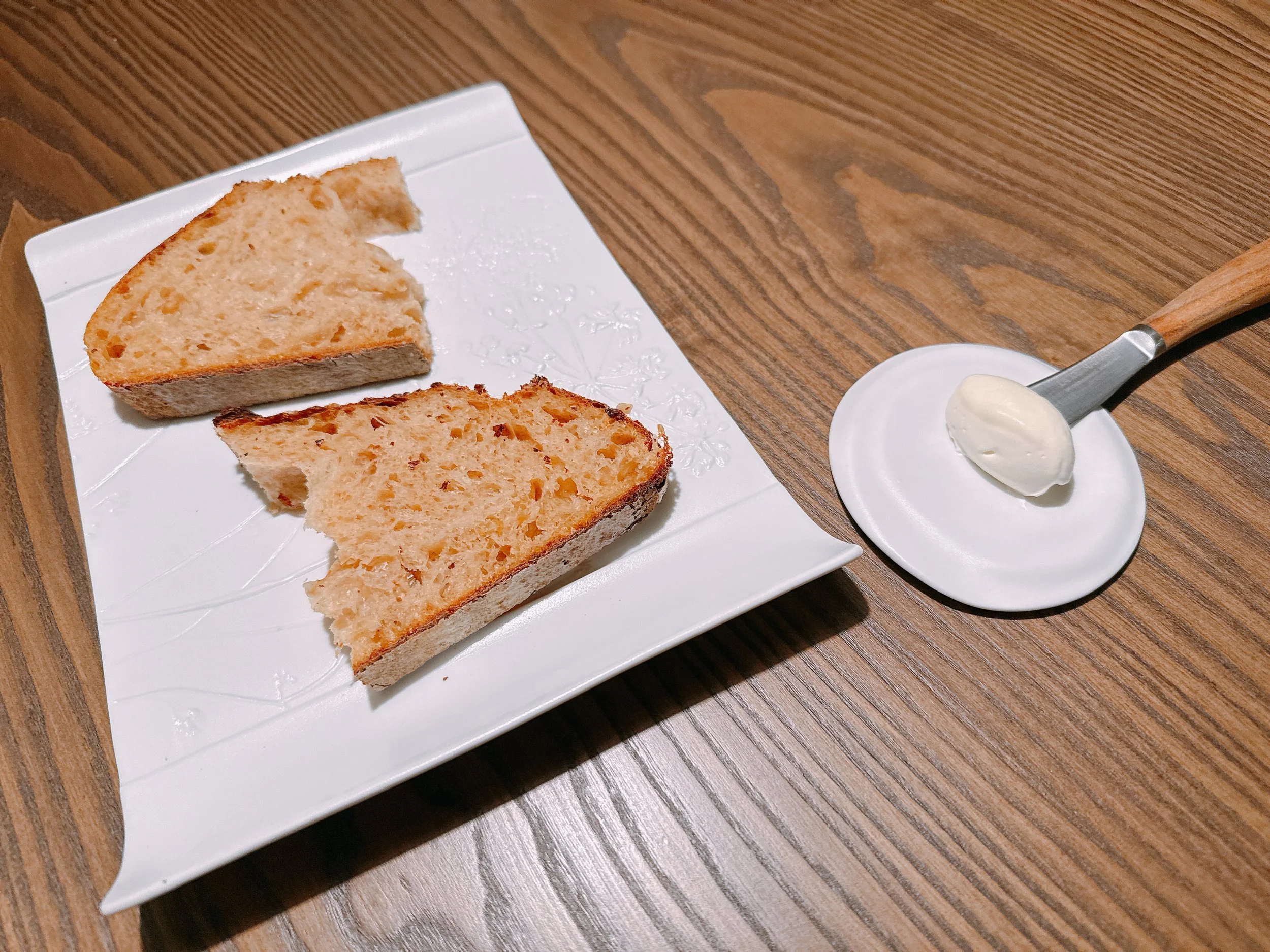
The second bread service of the night was a slice of bread seasoned with Moroccan lemons, paired with an Alpine butter blended with maldon salt. The bread, served at room temperature, had a light flavor (good for sopping up sauces) and a nice, but not too strong crunch 16.
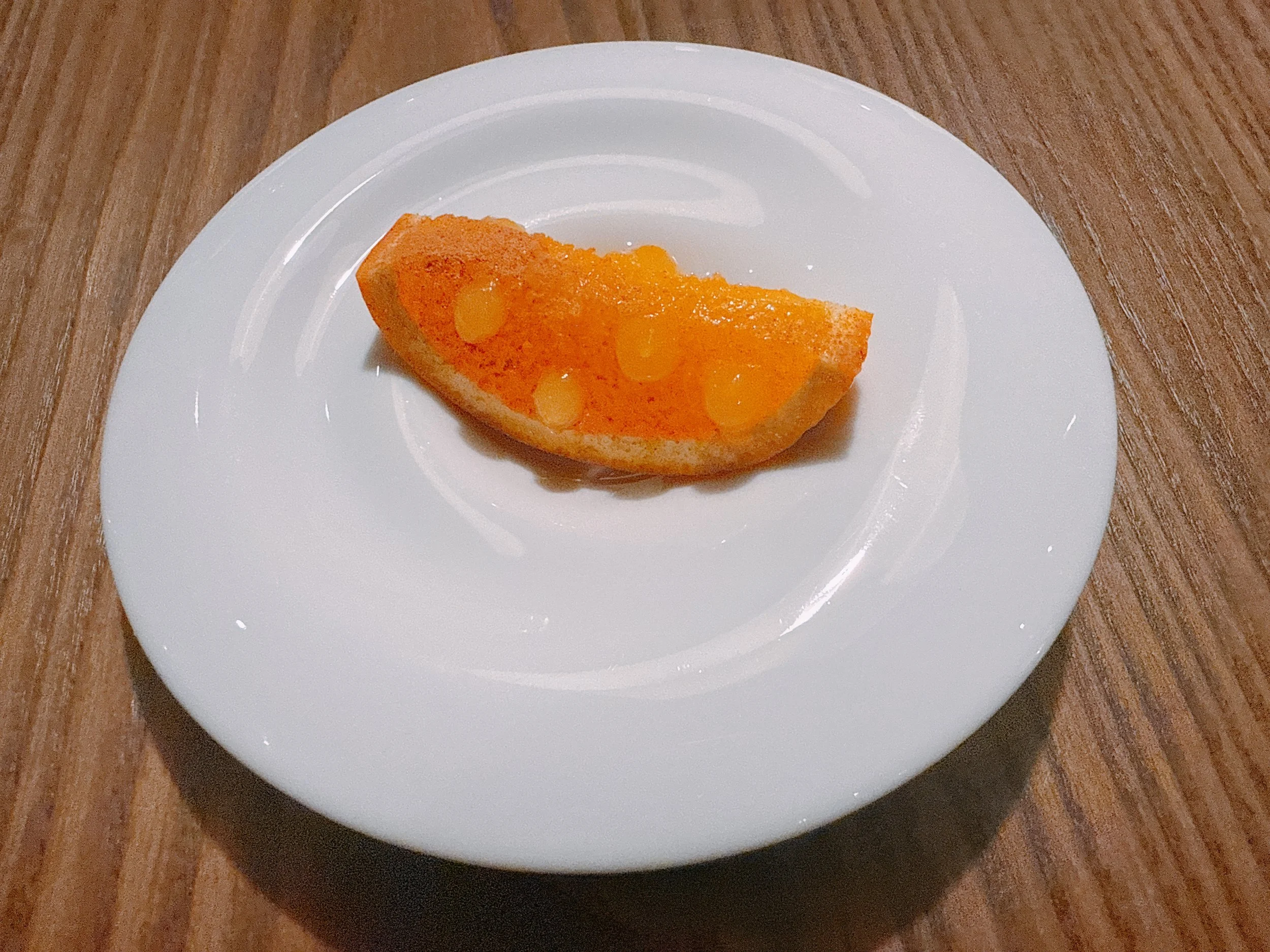
As a palate cleanser, we received an orange slice seasoned with cinnamon, yuzu cream and cognac. In practice, this tasted mostly of orange, the other ingredients added very light spices and maybe a hint more sweetness 16.
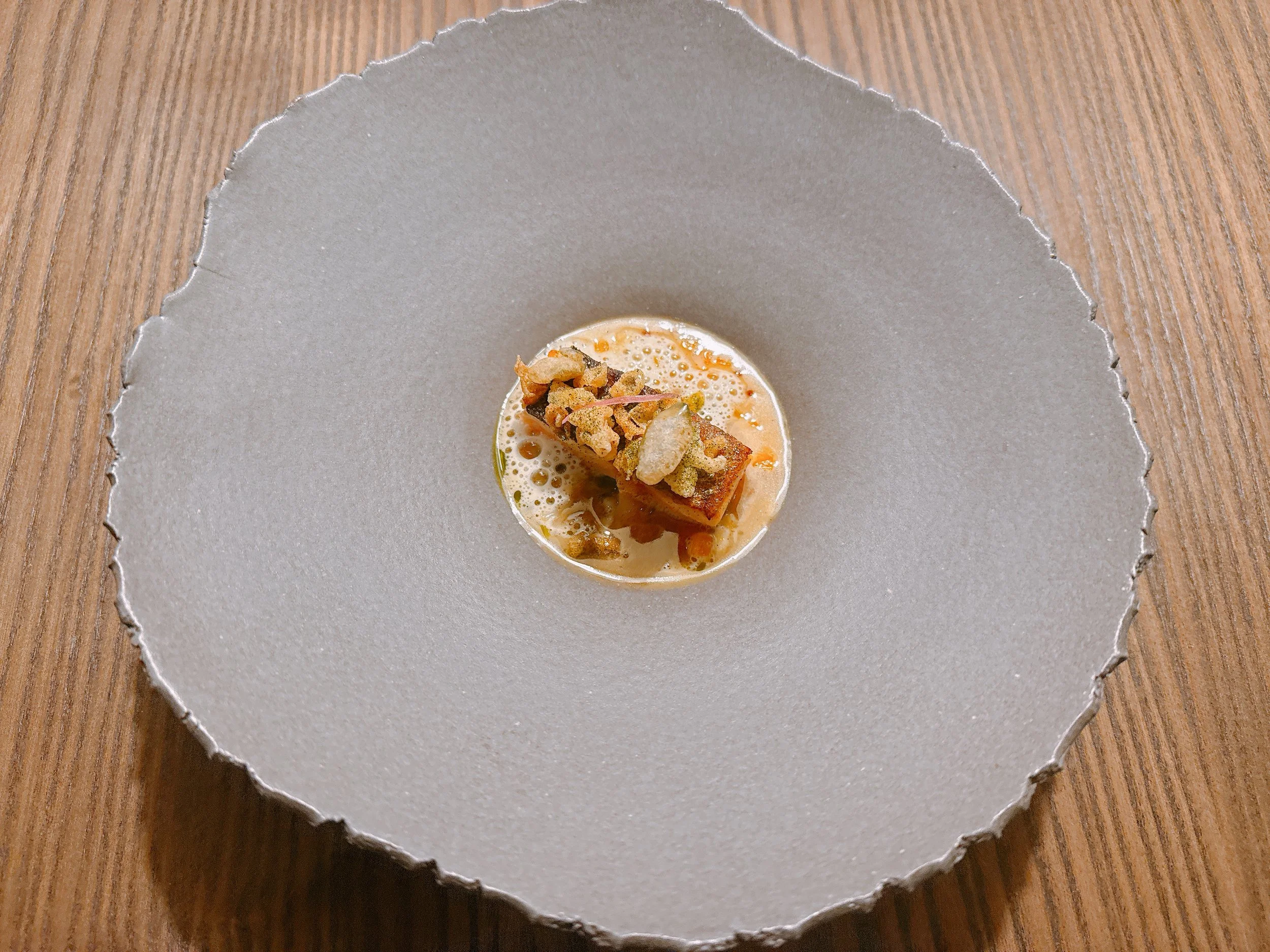
A skin-on filet of char was served with fried sage and onions, and a sauce made from the fish's cooking juice, vinegar, sage, and garlic. That sauce was bursting with flavors: fruitiness, some sweetness, but also acidity. The crunchy toppings on top of the fish gave this dish more texture. The fish itself was very nicely cooked, but flavorwise, it was overwhelmed by the other ingredients 17.
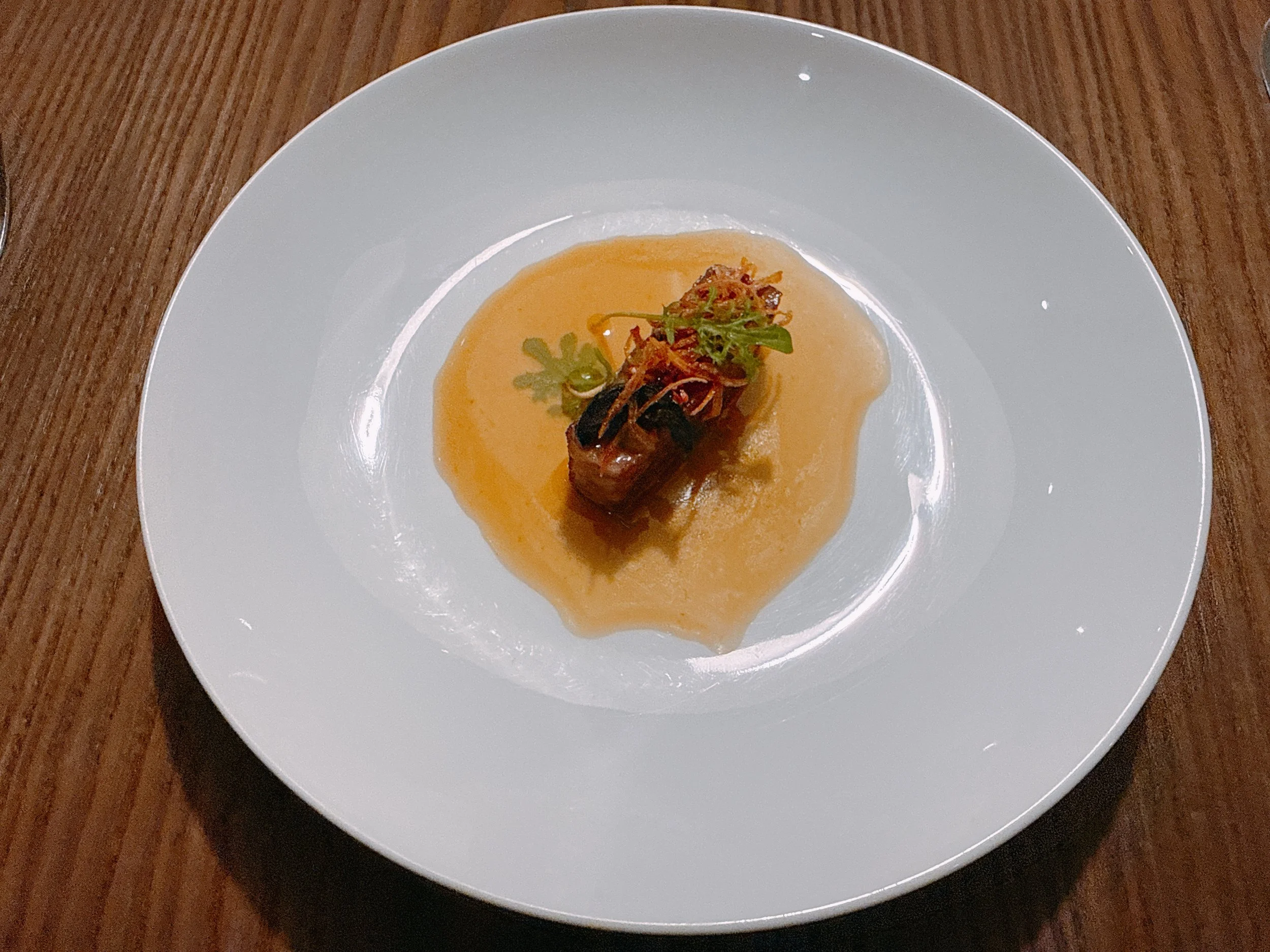
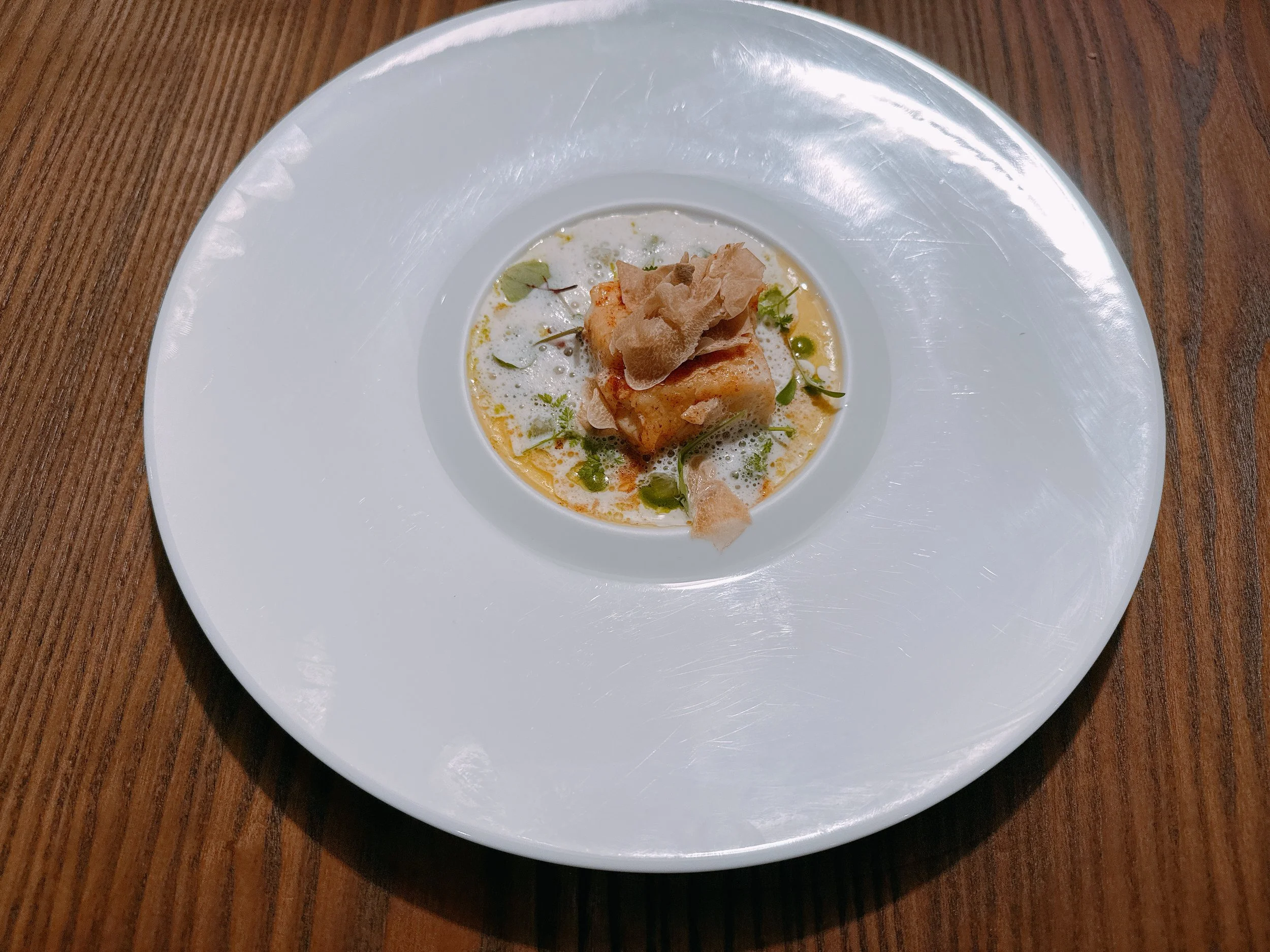
The final savory dish centered on wagyu, which was served with two sauces: one was made from marinated seaweed, the other was a wagyu sauce made with fermented garlic. The beef was tender and well cooked. The acidity in the dish cut through the wagyu's fat - this was a well focused dish. The only nitpick was that the added white truffles got a bit lost - they were not really worth the additional price 17. The pescatarian alternative was a cod filet that the chef had cooked tableside in butter. It was served with a “bagna cauda”, a Piedmontese sauce that contained garlic, lemons, parsley, coriander and a sorrel pesto. The fish was nicely cooked, and the sauce was very lemony and acidic. This dish might have felt a bit rustic (especially given the table-side preparation), but was very good 17.
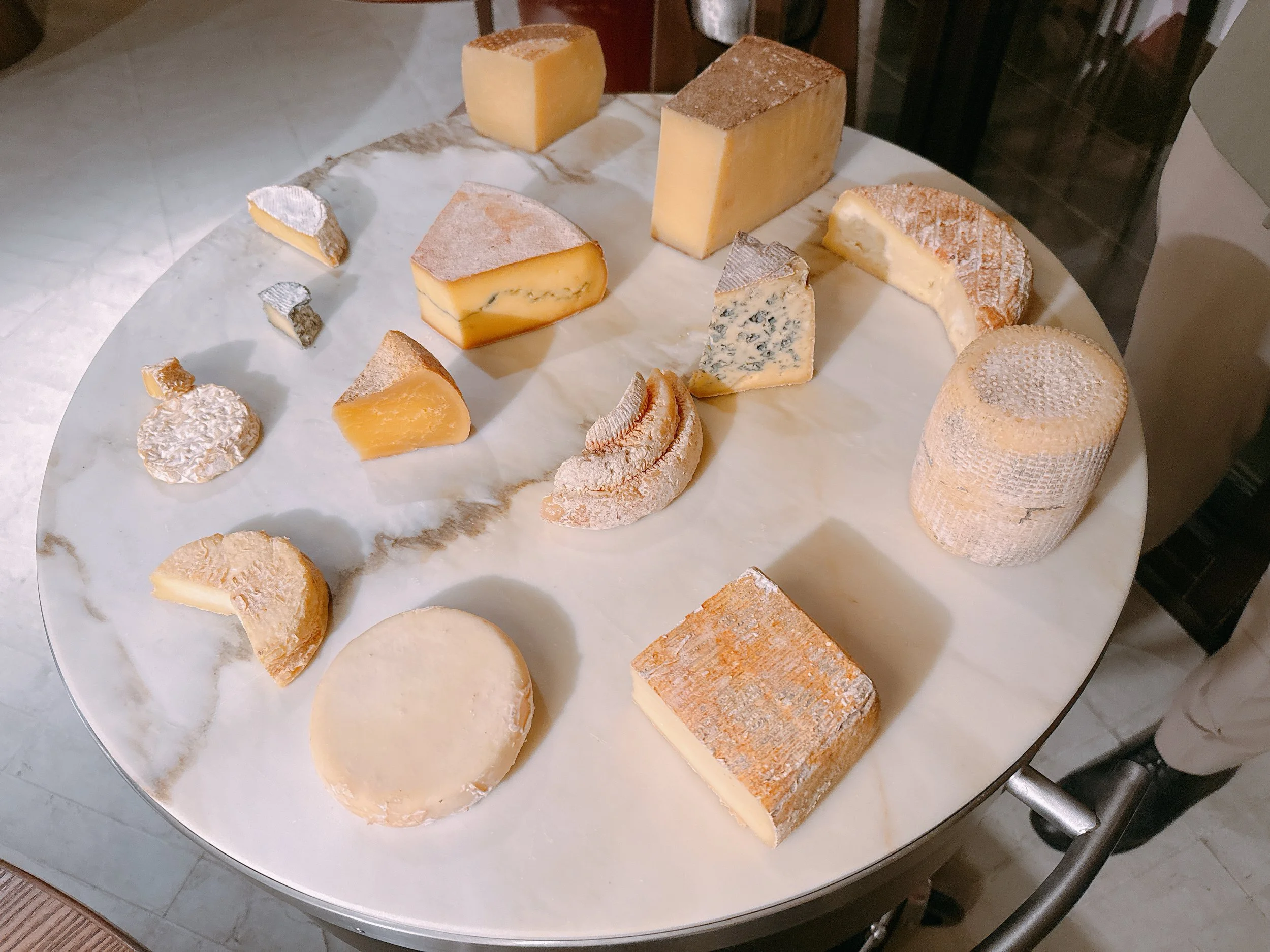
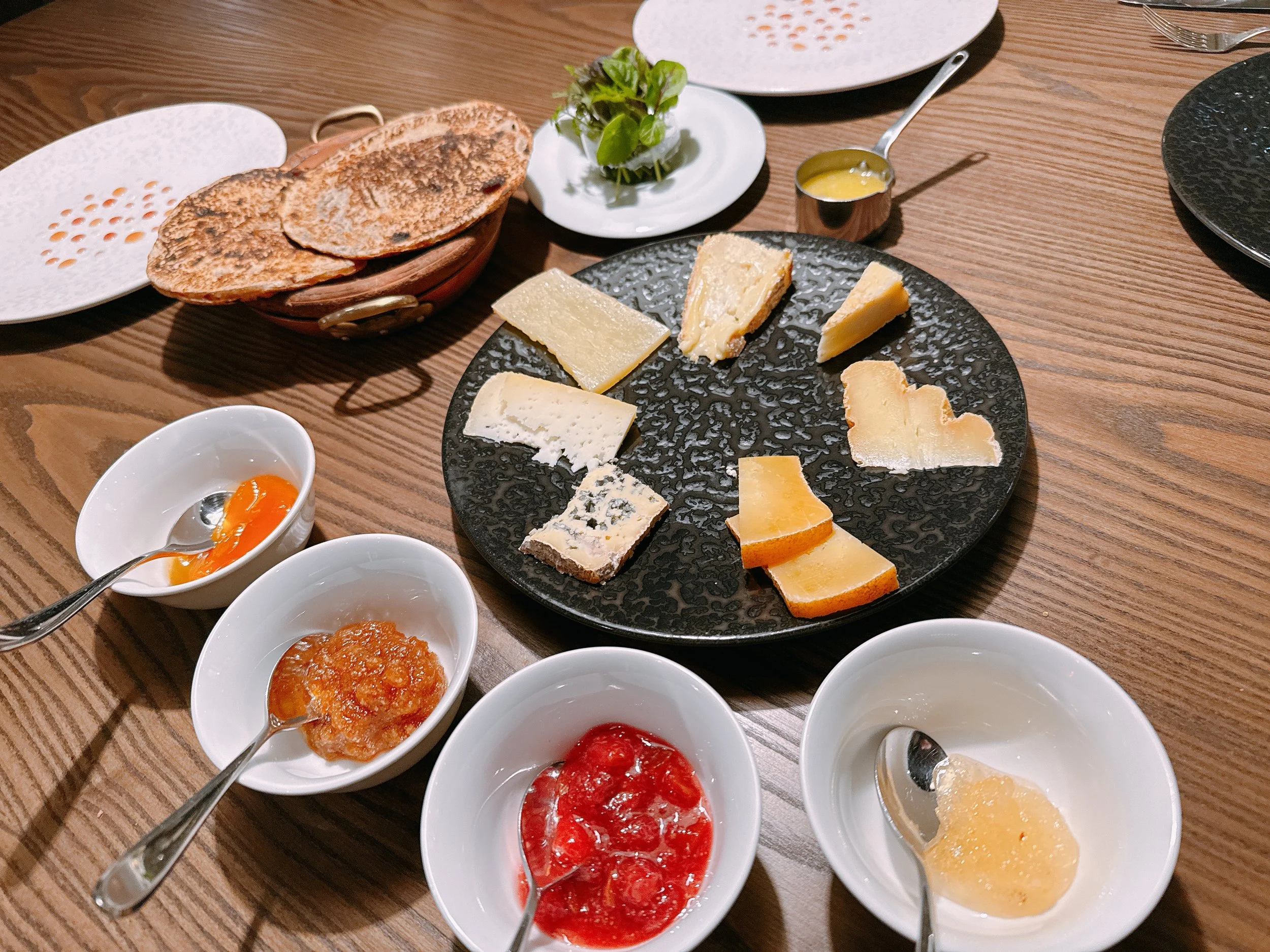
Next, there was an optional cheese course, and we split seven cheeses between the two of us (40 Euro, $45). The cheeses came from both Italy and France, but we stayed within Italy with our selections. They were all quite good, with very distinct flavors. On the side came four sauces: an apple marmalade, a fig jam (that actually tasted slightly bitter, similar to orange marmalade), a fermented prune jam and a pear marmalade made with spicy mustard. I especially liked the pear jam with its spicy kick. There was also a salad served inside a sugar sphere, seasoned with a vinegar reduction that was made from red wine vinegar, apple vinegar and champagne vinegar. The sphere made the salad a bit sweet and crunchy; overall it was nicely herbal with a good vinaigrette (17 by itself). The bread served with the cheeses was a panigaccio made with rye flour: a chewy, blackened flatbread, kind of like a thick roti. The cheeses might not have reached the pinnacles of a three-star cheese cart in France, but they were quite close, and the condiments were varied and interesting. Definitely worth a try if you still have room.
For the desserts, we had a choice of either staying at our table, or moving to a separate lounge, where the following courses were prepared by a dessert chef. We opted for the latter. The tables here were much closer to each other than in the dining room, so if you like your personal space, then staying put might be the smarter choice.
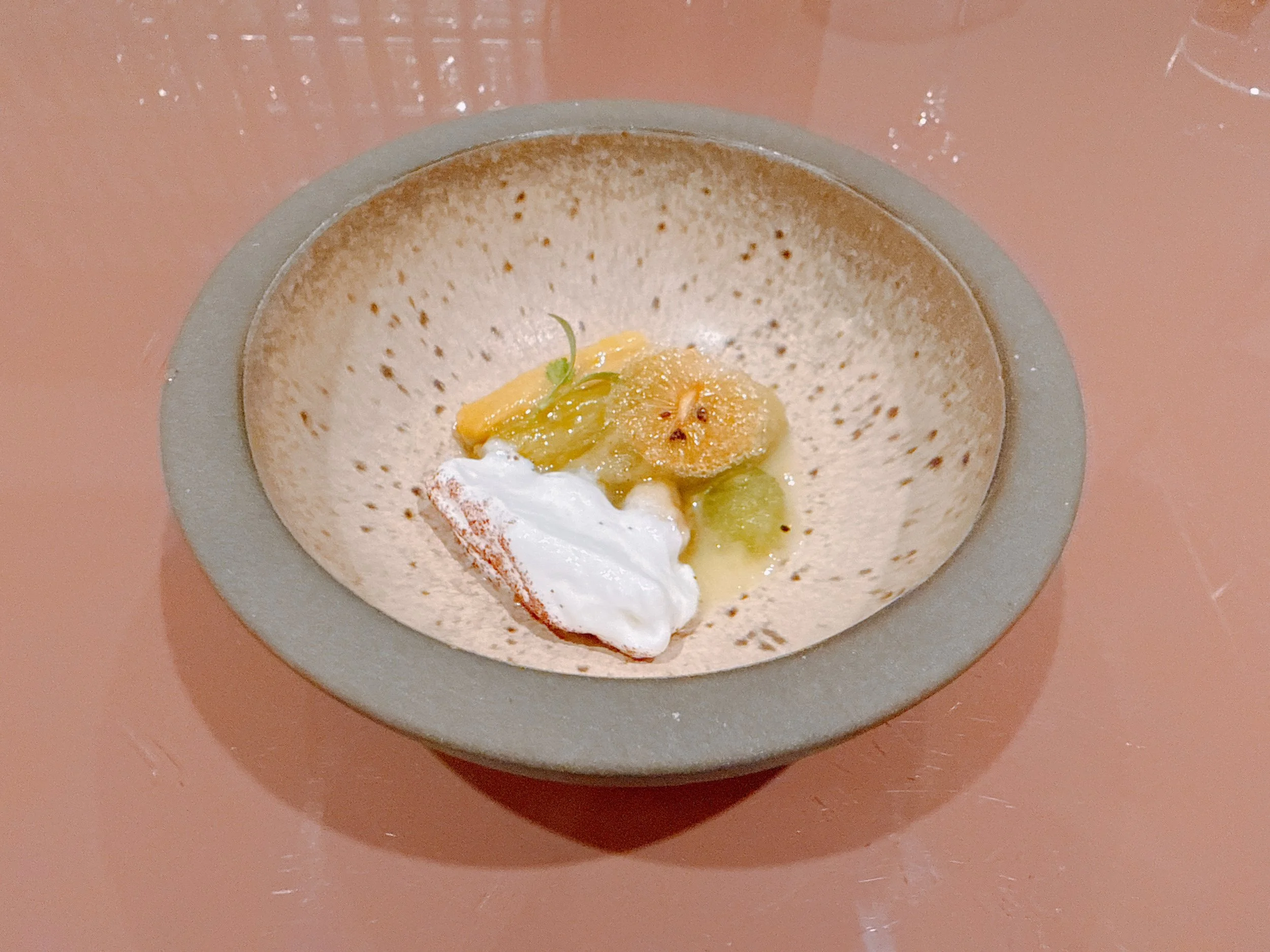
A pre-dessert featured yellow and green kiwi in multiple preparations. They appeared as a confit, as a sorbet of kiwi and coriander, as kiwi cream, and as kiwi and banana spheres. On top was a coconut foam flavored with sumac powder. The sweetest part of this dish was the banana, everything else was quite tart, acidic and almost savory thanks to the kiwis. This transition to desserts that was definitely not a dessert itself yet 17.
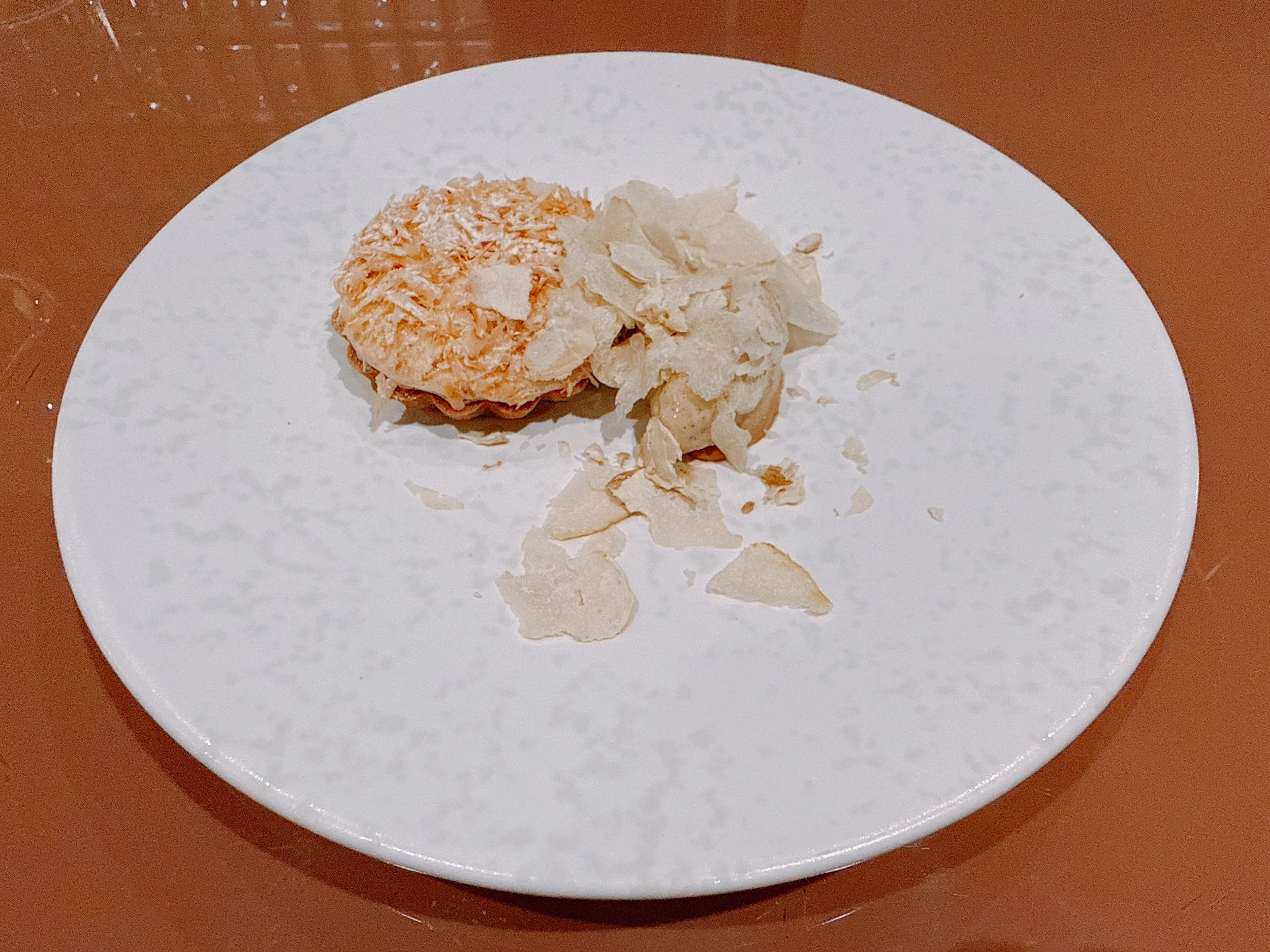
Next came a hazelnut tartlet filled with a mandarin confit, which was paired with a truffle ice cream. Definitely a grand tour of typical Piedmontese ingredients. The warm tartlet was very nice, with a strong hazelnut flavor and a good crunch. Maybe a bit heavy, but still an enjoyable Christmassy dish. The truffle ice cream on the other hand was not very sweet, and would not have been misplaced in a savory dish 17.
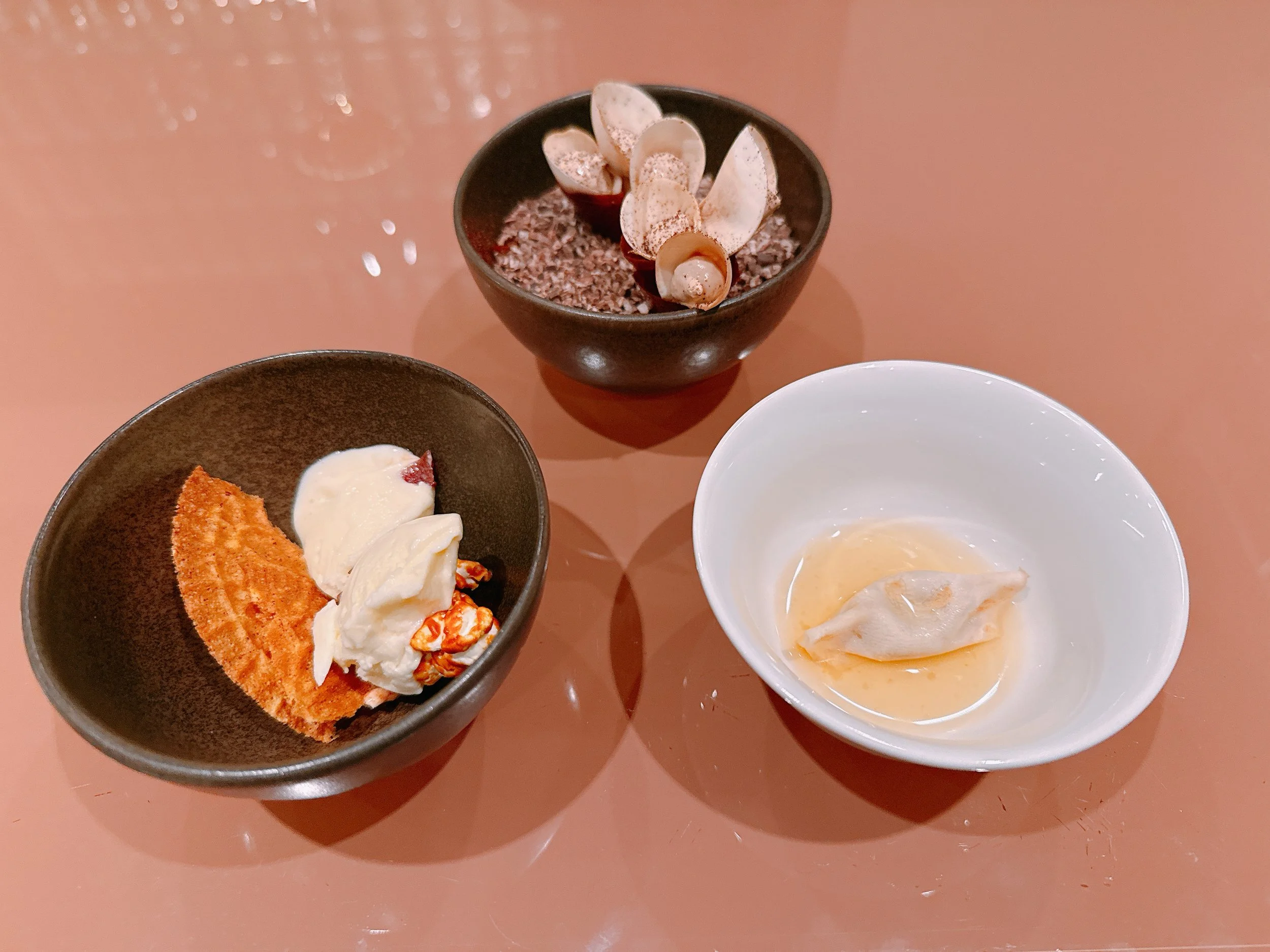
Three smaller bites concluded our dinner. A “celeriac ravioli” contained no pasta, but instead used a slice of celeriac as its shell. It was filled with a strudel cake, and sat in an apple-cinnamon reduction. A fine bite that clearly tasted of apples and cinnamon 15. An artfully arranged dish consisted of thin slices of champignon mushrooms that had been rolled into cones and filled with caramel dough and coffee cream. The result did indeed taste of coffee, but was not very sweet. Intriguing as a concept, but I would have preferred a “real” dessert 15. Finally, there was a “paste di meliga” - a Piedmontese corn flour cookie, seasoned with lemon zest and fermented cherries, and paired with a caramel ice cream and popcorn. A nice combination - the biscuit in particular was crunchy and slightly sweet 17.
Overall: An impressively consistent sequence of dishes that used many seasonal, local ingredients and took inspirations from Piedmontese cuisine and the chef's travels abroad. Dishes ranged from very good to outstanding: probably the best new three-star to come out of Italy in a while. Personally, I would have liked to get some “real” desserts - even the final offerings had strong savory components. Also, the influences behind the dishes were only alluded to, if one wanted a story or theme connecting the courses, the non-carte-blanche menus might be better bets. Something to try next time 17.