Enclos - Sonoma
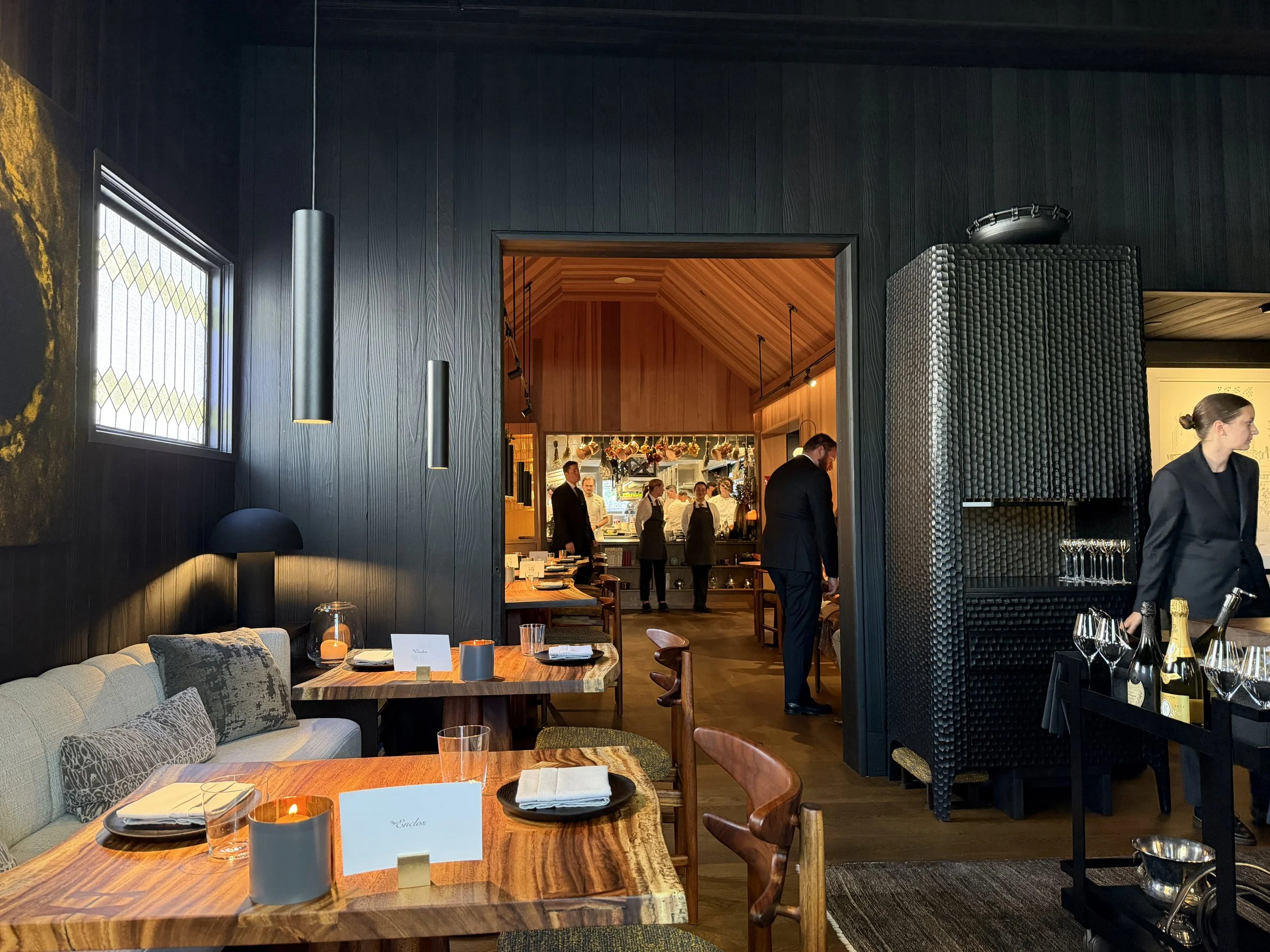
Part of the dining room, with the open kitchen in the back
Rating: 19/20
Where: Sonoma, CA
When: Dinner for 2 on 12 August 2026
Cost per Person: Tasting menu $325, Wine pairing $250
Accolades: 3 Michelin Stars
Why: Californian cuisine with local ingredients and some New England influences; many excellent dishes
California's Sonoma County, located west of the much better known Napa Valley, produces its own share of world-class wines. But that’s where the similarities end; the vibes of the two places are very different. The city of Napa is always bustling, full of crowded restaurants and lively bars. Investors with deep pockets constantly buy vineyards and open glitzy wineries. The city of Sonoma, on the other hand, is much more laid back. Its downtown open air museum on early Californian history invites unhurried strolling. Many of the tasting rooms off the town square occupy unassuming, century-old former bungalows.
The exterior of restaurant “Enclos”, about a block southwest of the square, is similarly unimposing. From the sidewalk, it still mostly looks like the private home that it used to be. Only after entering the building does it become apparent that a significant amount of money has been spent on transforming this quaint dwelling into a Michelin-star-caliber restaurant. Half of the dining room occupies a newly built addition to the house, and the state-of-the-art open kitchen surely wasn’t part of the original single-family home, either. The interior design uses lots of wood, painted black in the new extension, and no table cloths are in sight. Enclos has a more serious vibe than most restaurants in Sonoma, but it holds back from full formality.
The restaurant’s kitchen is run by chef Brian Limoges, who managed the feat of not only getting two Michelin stars seven months after opening, but also receiving the ultimate third star the following year. Clearly, the chef's time spent in a couple of (eventually) three-star restaurants (Atelier Crenn and Quince) was well worth it. (Well-funded backers probably didn't hurt, either.)
We had visited Enclos once before, towards the end of 2025. At that time, we thought that the food was good, but also felt that the two-star rating was appropriate - not much stood out as really pushing beyond that level. But my goal for this blog is to visit three-Michelin-starred restaurants while they actually hold their three stars, and not at some random point before that - so it was time for a return trip. One might ask how much a restaurant can really change in a few months or a year. Well, for almost all elevations from two to three stars in the past, I was able to see at least some improvements, but in most cases, it was debatable whether the changes really amounted to three stars. So we were curious to see where Enclos stood, only nine months after our last visit - was Michelin in a generous mood, or was this the real deal?
Nothing much had changed about the mechanics of the dinner. The restaurant was still tasting menu only, and the price of the menu ($325) was paid when making the reservation. Dietary restrictions were accommodated with prior notice. Beverage-pairing-wise, there was a traditional wine pairing (including one glass of sake) for $250, and a non-alcoholic pairing for $150. Less conventionally, there was a three-glass wine pairing (or rather “flight”) for $150 consisting of one white and two reds from Stone Edge Farm Winery. This winery not only has the same owners as Enclos, but is also the location of Enclos' own farm, the source of many of the restaurant’s fruits and vegetables. Having wisely chosen a hotel within walking distance, we tried the two wine pairing options. The regular eight-glass pairing had several lovely wines that all matched the food quite well. Interestingly, these were not “cheap” wines. For example, for the first glass one had the choice between a 2017 Dom Perignon and a 2013 Cristal champagne. The wines in the three-glass winery-specific pairing were (at least from our point of view) considerably better than the regular pairing, but didn't match the food quite as well. That was kind of unavoidable given the setup: the white and final red wine were good pairings, but the middle glass of red wine was a bit of a mismatch with the seafood courses served at the time. There's no right or wrong, though, simply a matter of preference. Does one want wines that go well with the food at hand, or simply a few great glasses of wine? (In case it makes a difference: the wine pairing started right away, while the three-glass pairing waited until after the appetizers.)
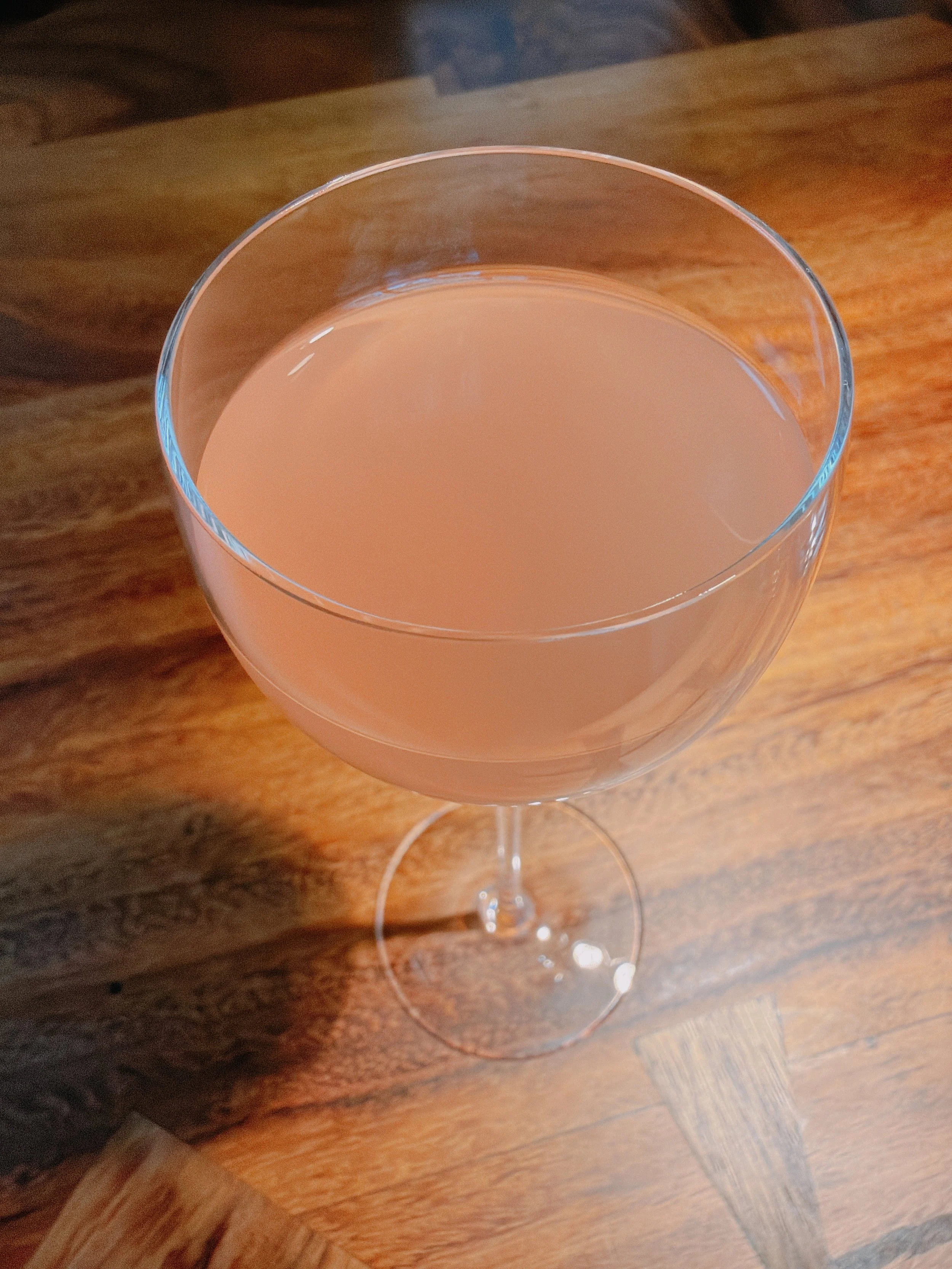
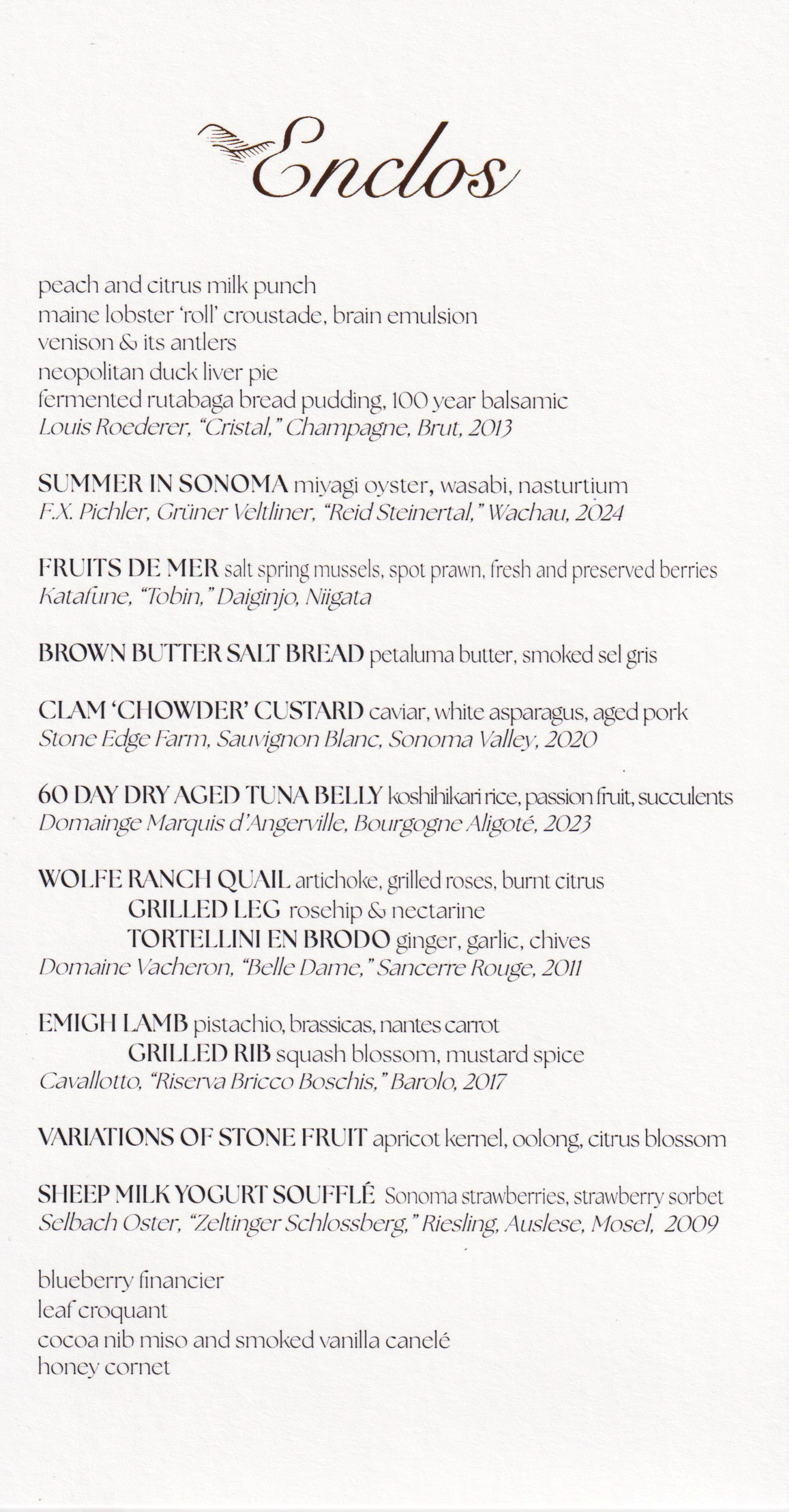
As a welcome drink, we received a clarified milk punch made with citrus fruit, peaches, and peach leaves. It was alcohol-free, lightly sweet, fruity, and also had some herbal notes, presumably from the peach leaves. An excellent, nicely balanced drink that gave us second thoughts about not ordering the non-alcoholic pairing 19.
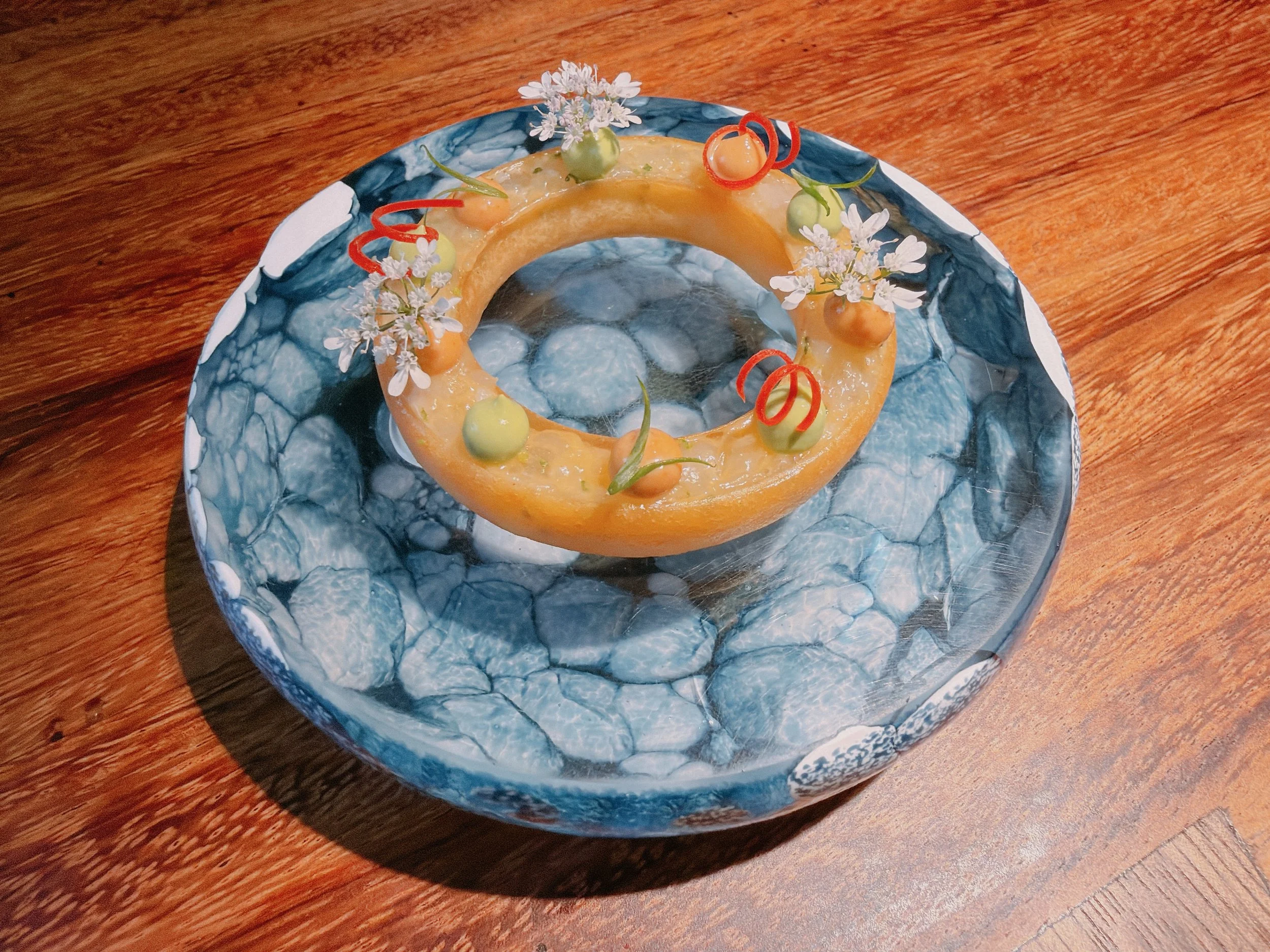
The first food course was familiar to us from our last visit. It was nominally a “lobster roll”, but presented as a croustade ring filled with Maine lobster meat, and topped with a green goddess dressing, a lobster emulsion, and Fresno peppers. If one considers a conventional lobster roll to be a very rustic way to eat this (nowadays) highly prized seafood, then the preparation in front of us was the exact opposite. The croustade had a very delicate crunch, and the lobster meat was delicious - very creamy and tender. The flavors of the sauces were not overly strong, they were at just the right level to let all ingredients harmonize. A very elegant start to our dinner 19.
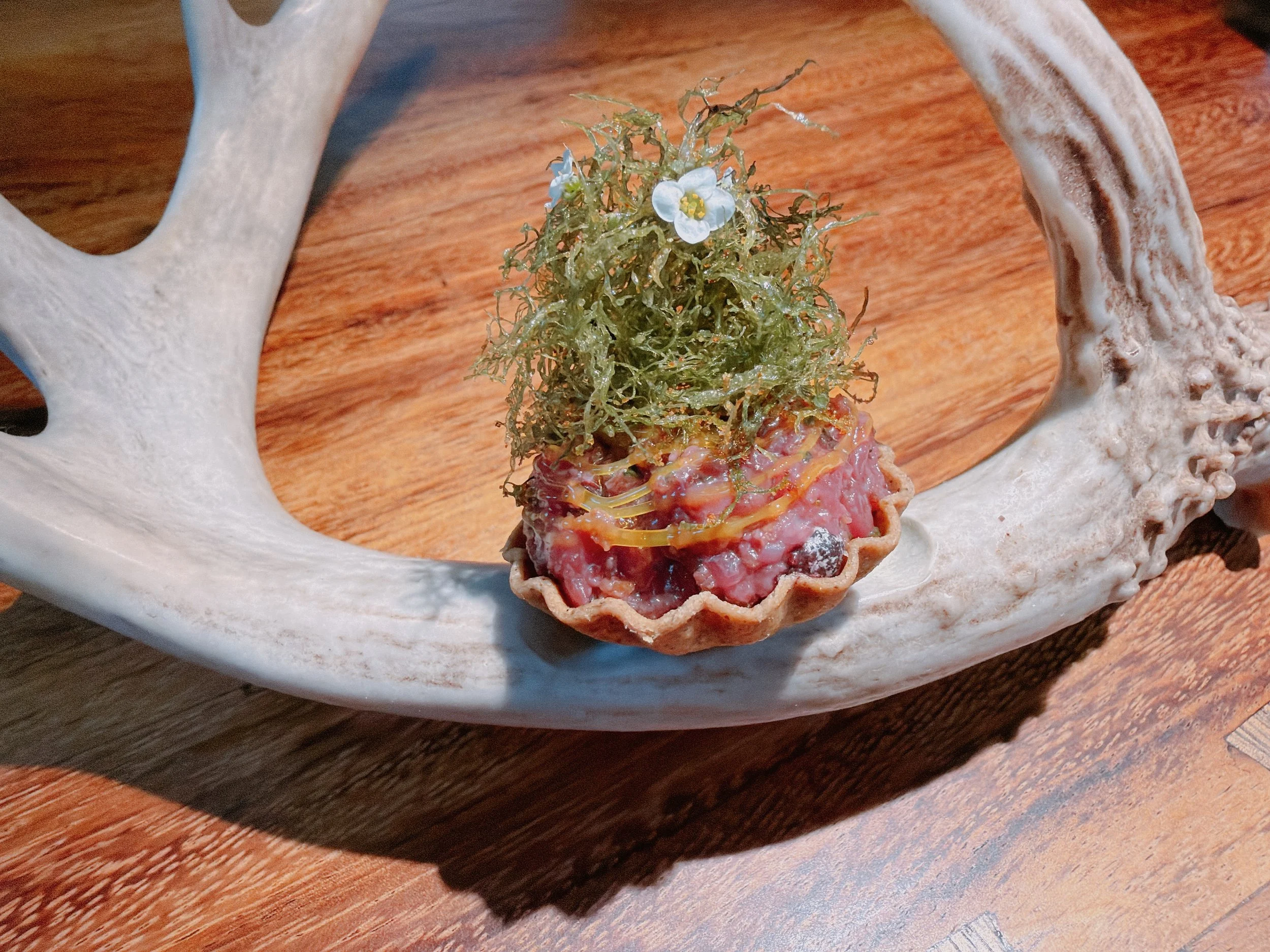
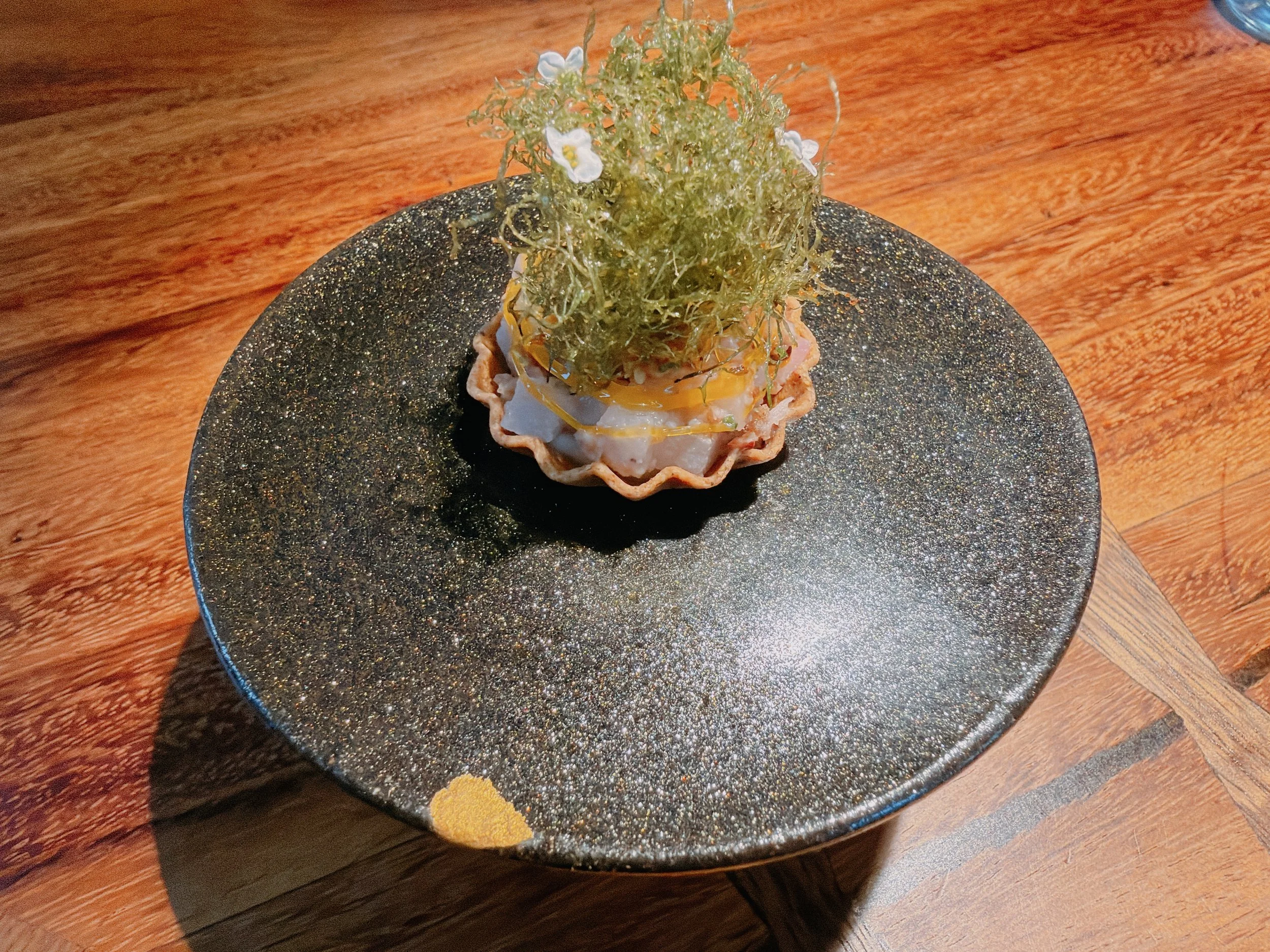
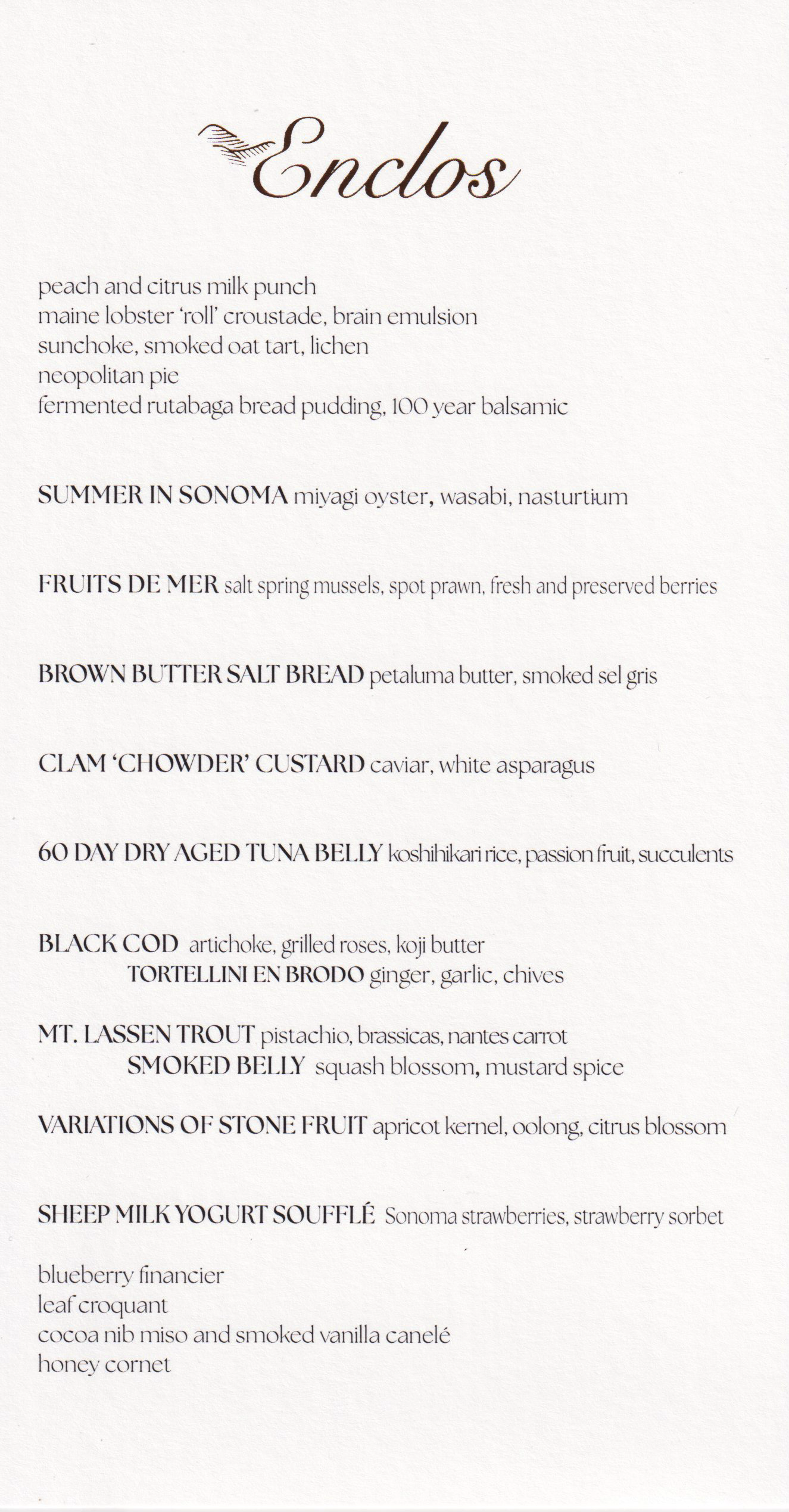
Next came a little oat tartlet filled with venison tartare and dried threads of lichen. The venison was very lightly smoky, and had some acidity to keep the preparation balanced. The tartlet had a good crunch, but tended to fall apart after biting into it, so this was more of a single-biter. The lichen added a bit of texture, but not too much flavor. A delicious, nicely balanced bite 19. The pescatarian (well, vegetarian) version of this dish replaced the venison with sunchokes. Our server explained the reasoning behind the substitution by saying that local deer like to eat sunchokes; before having to admit “well, in addition to everything else from a garden, really”. The sunchokes were much more smoky than the venison, giving this the feel of something cooked over the fire in a campground. The sunchokes were pickled as well, but their acidity was a bit less pronounced than the meat’s 18.
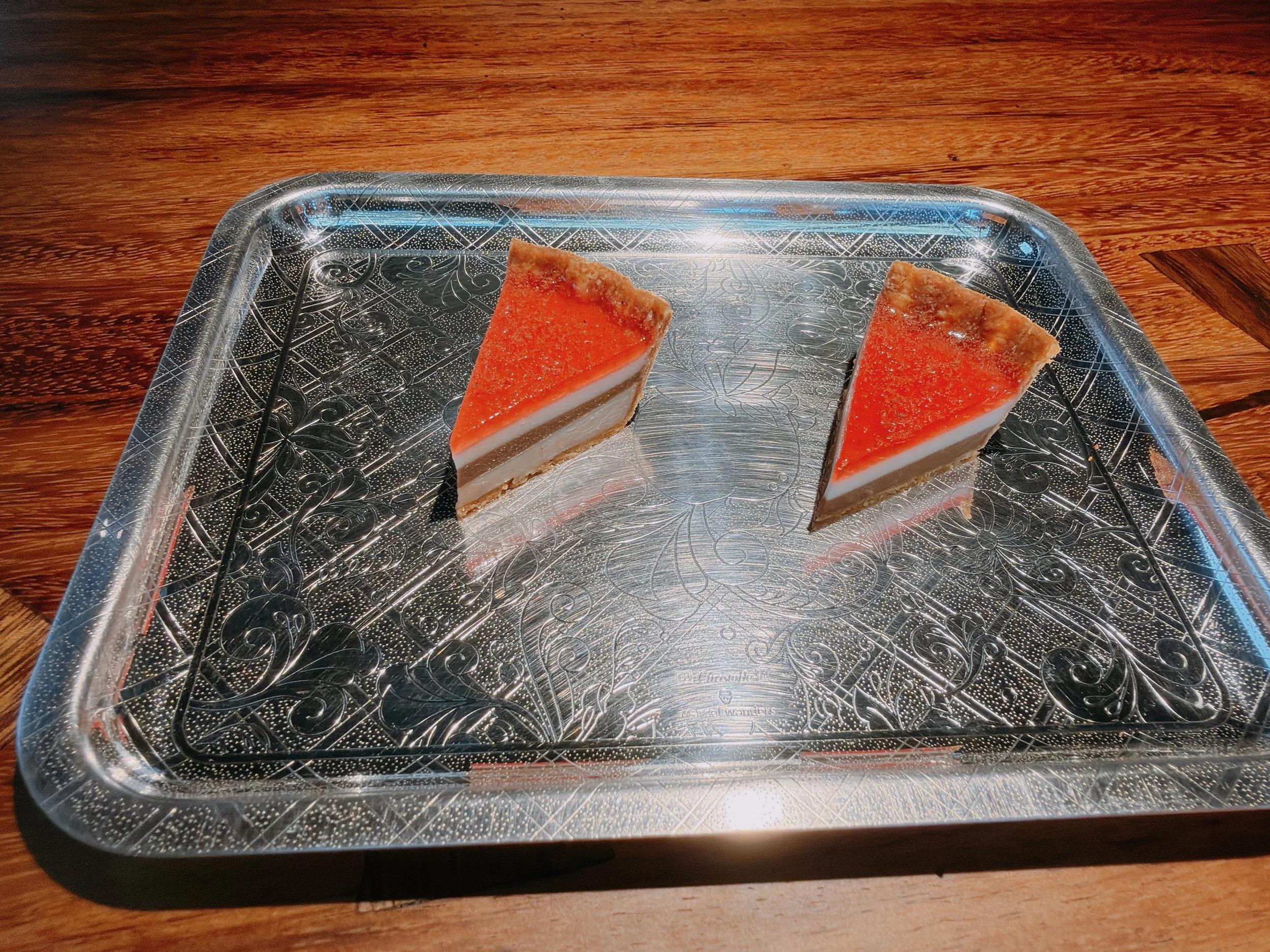
What looked like a slice of cake was the restaurant's take on a Neopolitan. The components from top to bottom were: a pluot consommé, a pluot branch cream, and a duck liver mousse. Oddly, the overall taste reminded me a bit of ice cream. The liver was creamy and not too heavy, and there was a light fruit flavor as well. A fine combination, but not quite as distinctive as the previous bites had been 15. The vegetarian version omitted the duck liver, but was otherwise comparable.
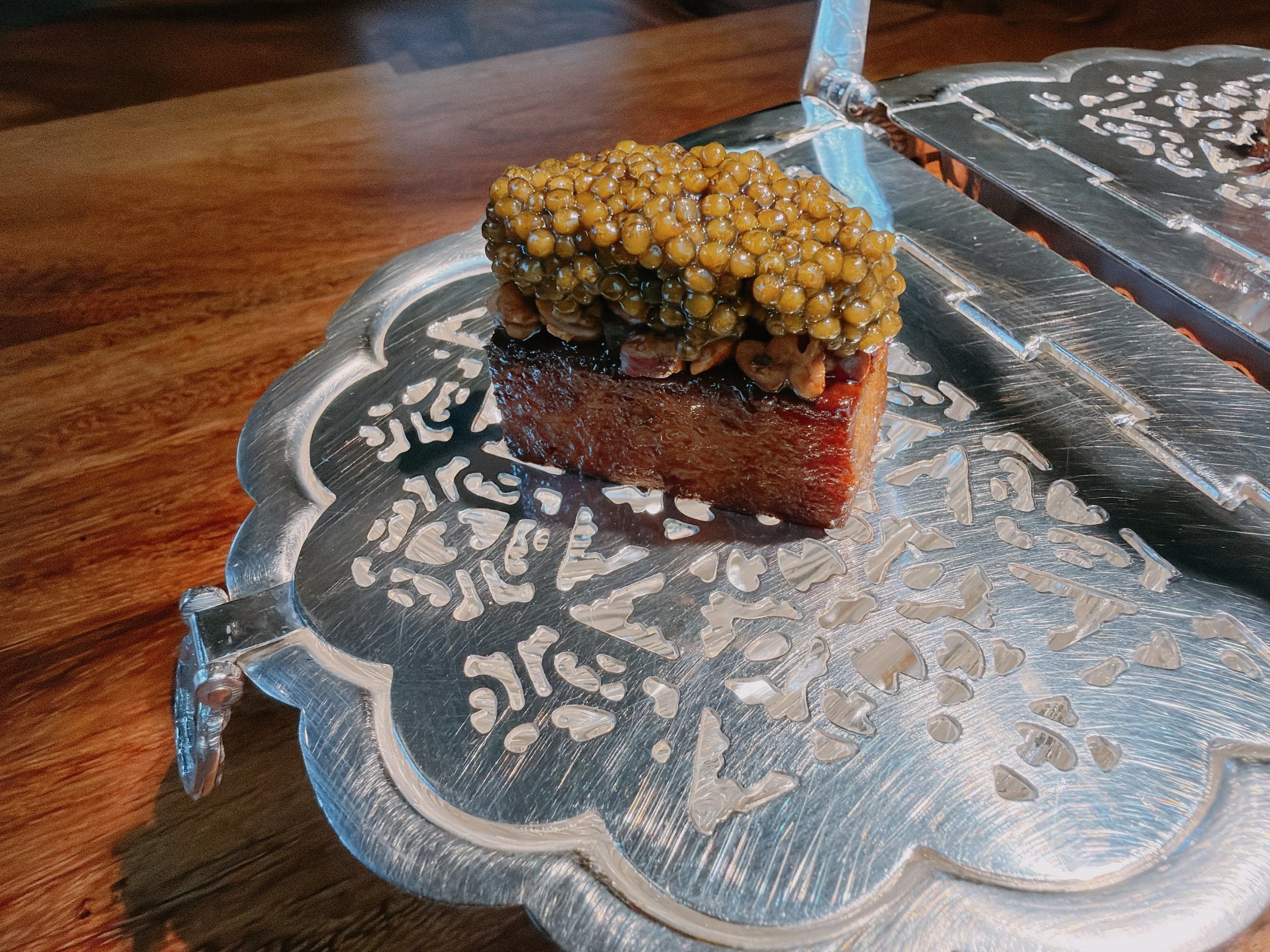
Our last appetizer was a rutabaga bread pudding that had been drenched in apple butter before being topped with pecans and caviar, and then drizzled with a 100-year-old balsamic vinegar. The whole dish was slightly sweet, and gave me Thanksgiving vibes - maybe from the sweet bread pudding or from the lightly crunchy pecans. The caviar was of good quality, but got a bit lost when everything was eaten together 17.
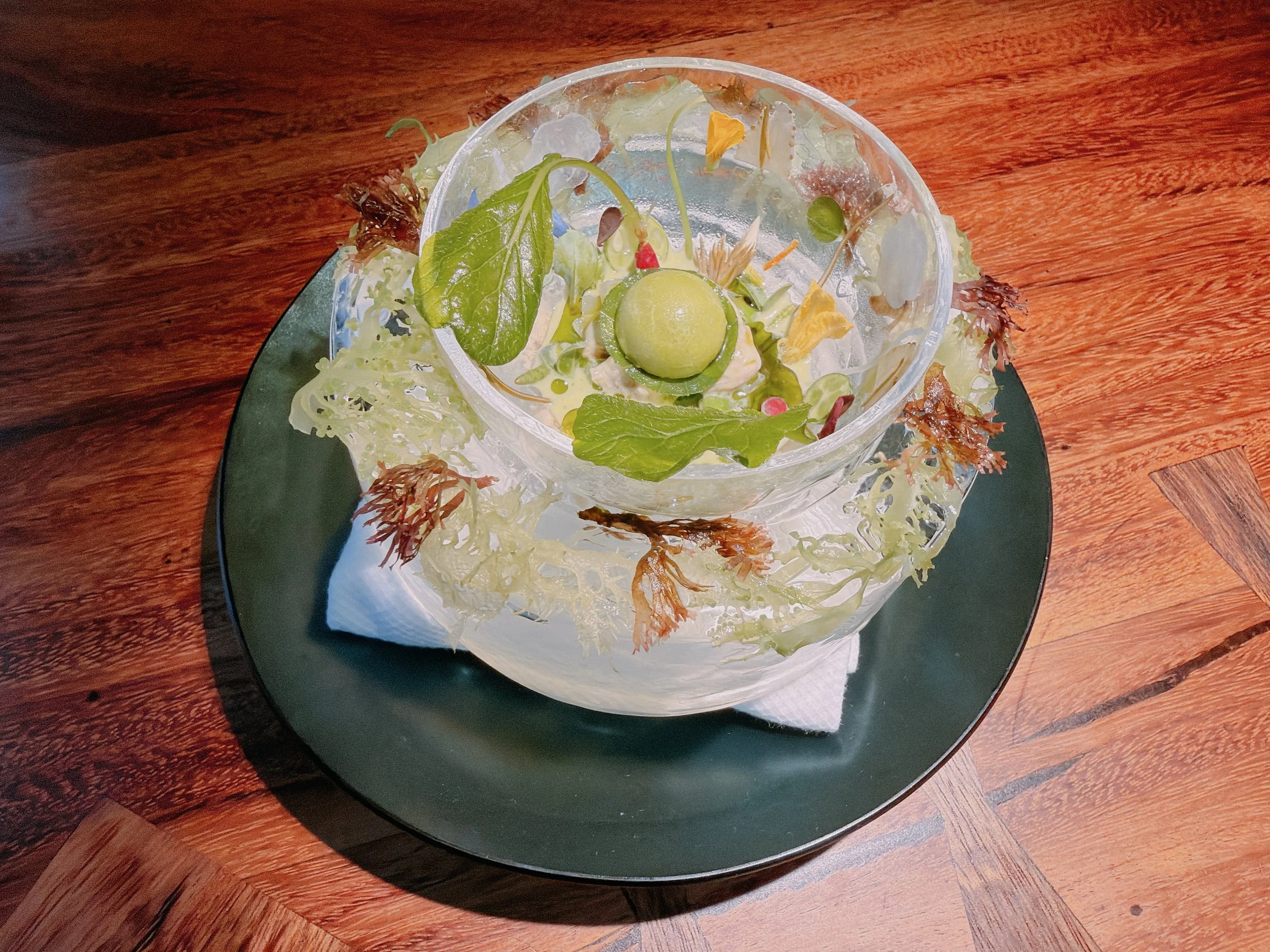
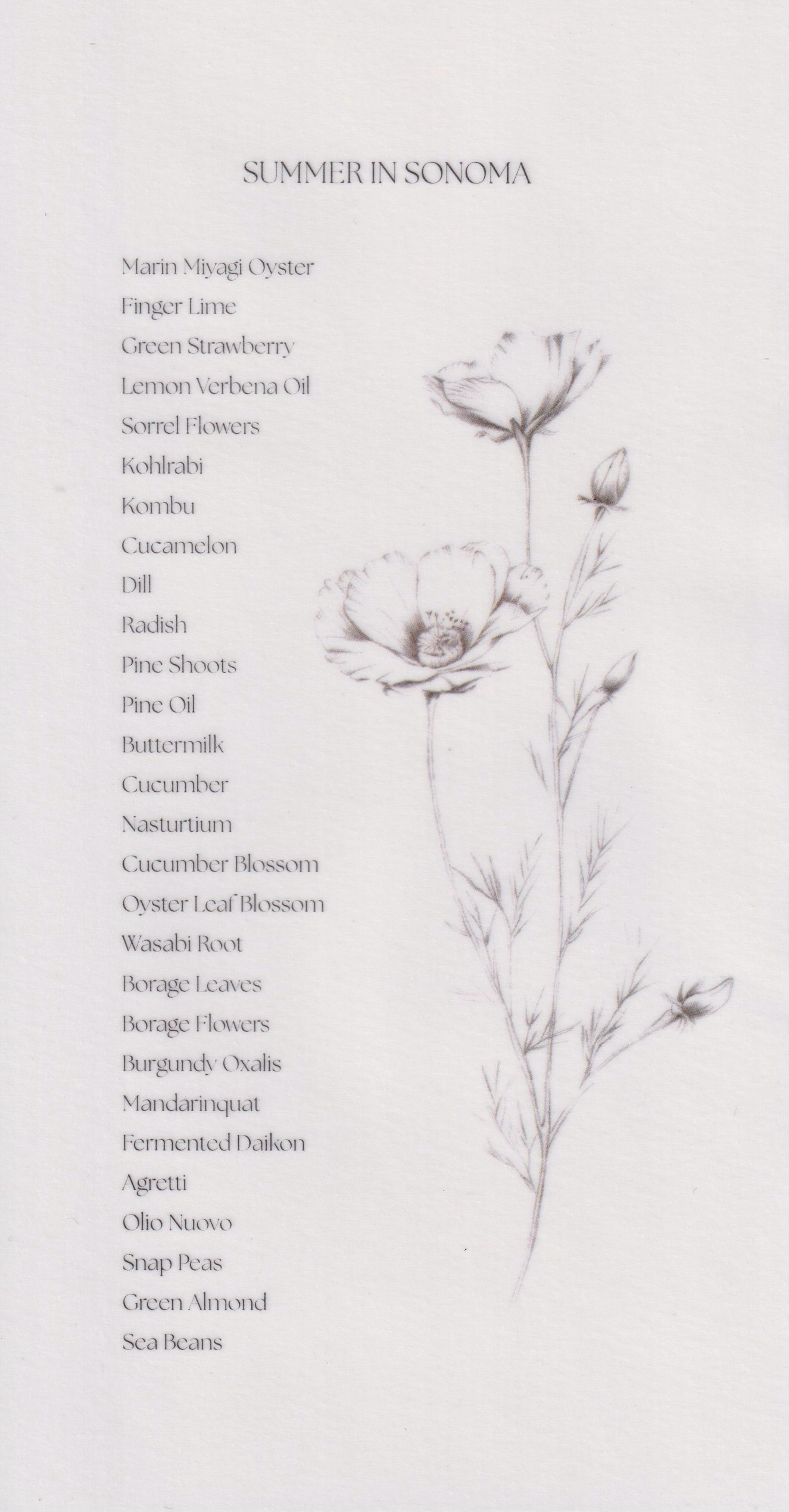
The first “main” course of the tasting menu was a celebration of summer: a salad that consisted of two dozen different ingredients from the restaurant's garden (we were given an exhaustive list, see below). At the center of the dish, sitting on a nasturtium leaf, was a wasabi sorbet made with nasturtium and cucumber. There was a precut Miyagi oyster, pine shoots, baby radishes, and an olive oil flavored with lemon verbena. But the main driver of this dish was the dressing, which was delicious and bursting with flavors (we would have drunk it by the glass, had that been offered). The dressing tasted fresh, green, vegetably, and went great with all the different vegetables presented here. Eating this as a single salad with the flavor-dominating sauce made the dish feel more cohesive than most of the “many ingredient salads” so frequently seen in modern fine-dining cuisine. The individual vegetables didn't leave strong impressions, but with a dish tasting this good, who am I to complain. Some small nitpicks, though: the wasabi sorbet had almost no wasabi flavor, and the oyster, while having some flavor, felt somewhat incidental to the salad. The dish would have been just as good without the seafood 19.
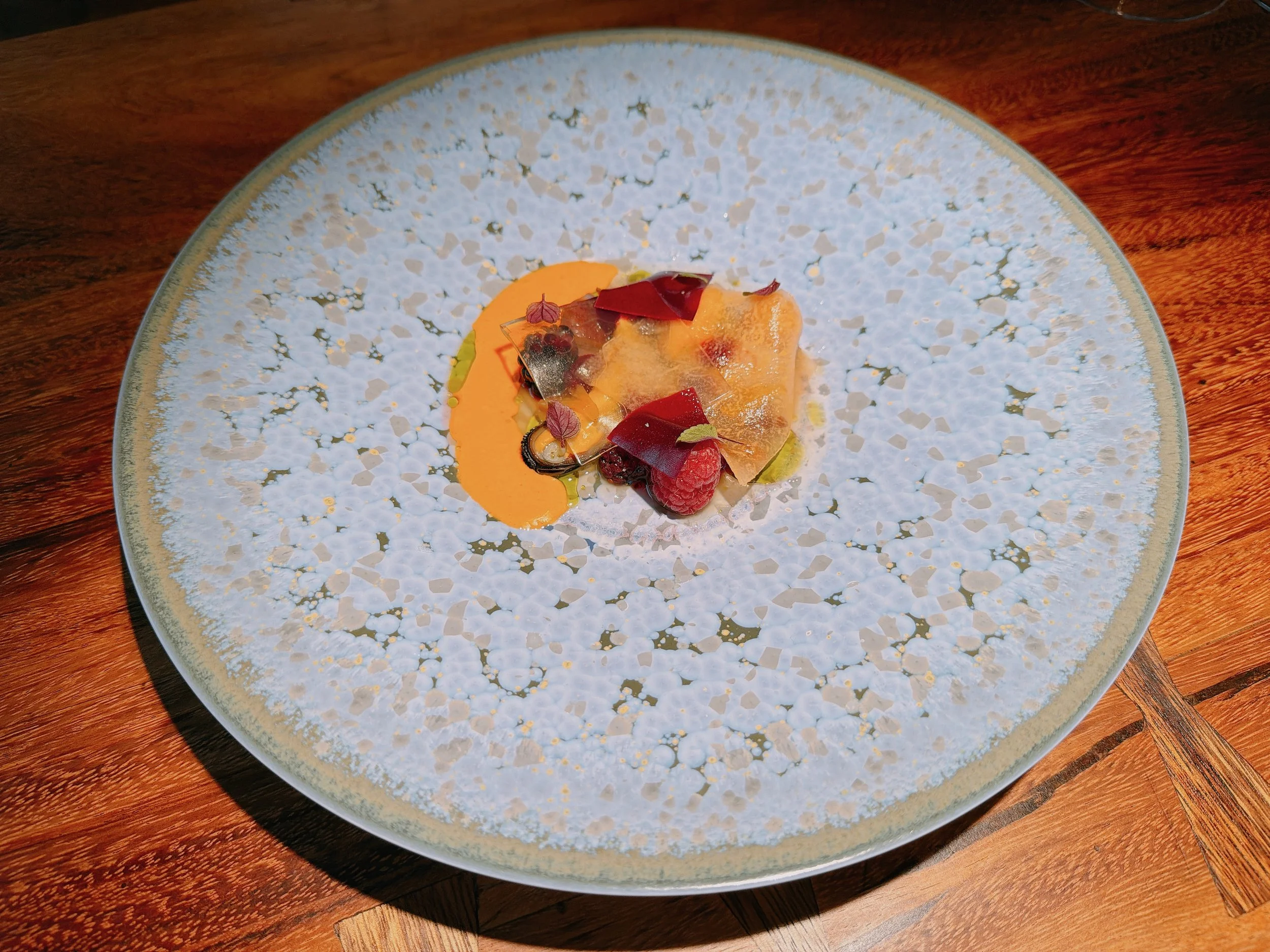
Hearing the description of the following dish, I was highly skeptical that it would work. On the plate was some seafood, in particular precut spot prawns and some salt spring mussels. They were covered with three different squares, one was made from tomato water jelly, another was a thin slice of melon, and the last one was a boysenberry fruit leather. The berry theme continued: there were a large variety of different berries in the dish. And finally, a sauce made from fermented peppers and citrus blossoms. Seafood with a savory sauce accompanied by sweet berries? I generally prefer my dishes to decide whether they want to be savory or sweet, so this dish sounded like a recipe for disaster to me. Astonishingly enough though, the result was perfectly balanced. The seafood was cooked wonderfully, with the spot prawns in particular being very nicely creamy. There was some notable acidity and salt content in the sauce, as it turned out, at just the right level to balance the sweetness of the berries. And while these berries added some fruit notes, it was not enough to make one think of a dessert. In the end, this was not only a very tasty dish, but also a highly impressive, hard to pull off balancing act between savory and sweet. Amazing 19.
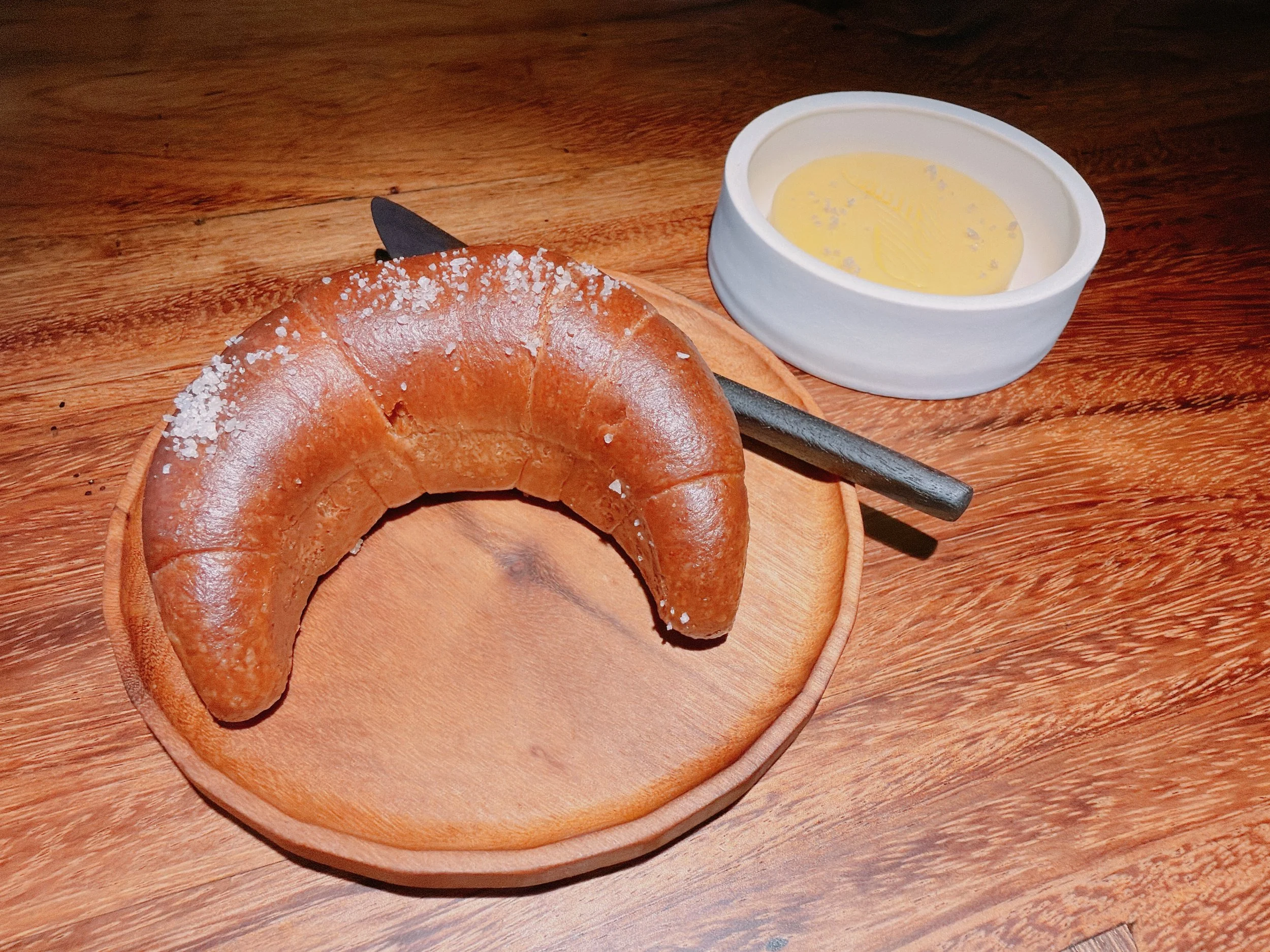
A croissant-shaped sourdough milk bread was topped with sel gris smoked over the restaurant's hearth. (The sourdough starter had reportedly been made from Syrah grapes six years earlier.) The bread was served warm, with a butter made from Jersey cow milk. Its texture was very airy, making it feel almost like a brioche with some pretzel notes. Since the bread was notably buttery and salty by itself, the provided butter counter-intuitively made it seem lighter. In any case, very tasty 17.
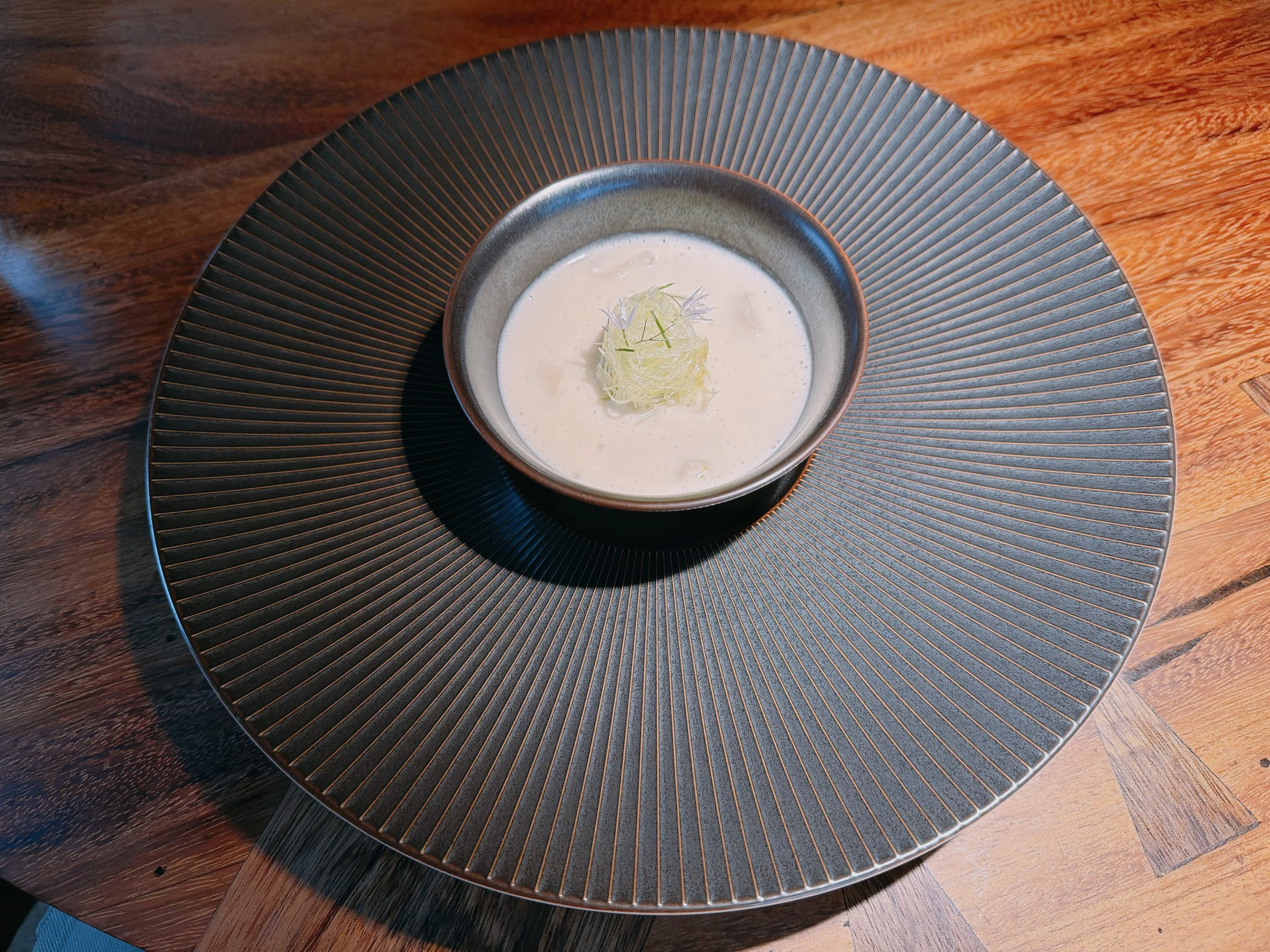
The chef's New England upbringing influenced the following dish, inspired by a New England clam chowder. We got a chawanmushi (egg custard) topped with potatoes, manila clams, celery, and some caviar made with sea salt harvested by the chef himself. The custard was served with a pork dashi made from five-month-aged pork belly, and a white asparagus velouté. The result was a lovely combination of different flavors and textures. The asparagus flavor was subtle but noticeable, the pickled vegetables added some acidity, and there was a great range of textures: the creamy chawanmushi, the mealy potatoes, the crunchy vegetables, and the clams that had a notable bite. This dish was maybe a teeny bit more rustic than what had come before - but still a far cry from Legal Sea Foods. Delicious 19.
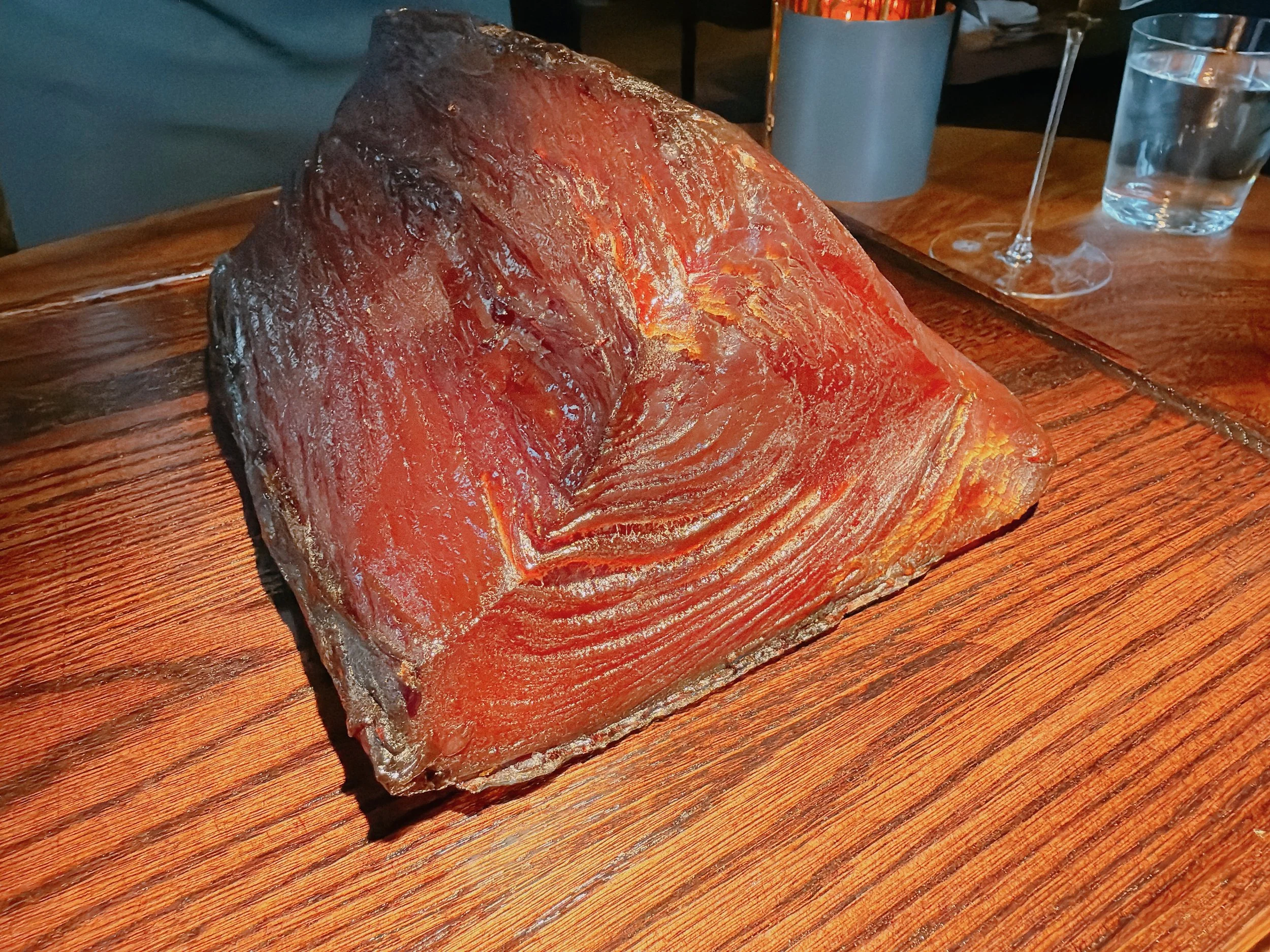
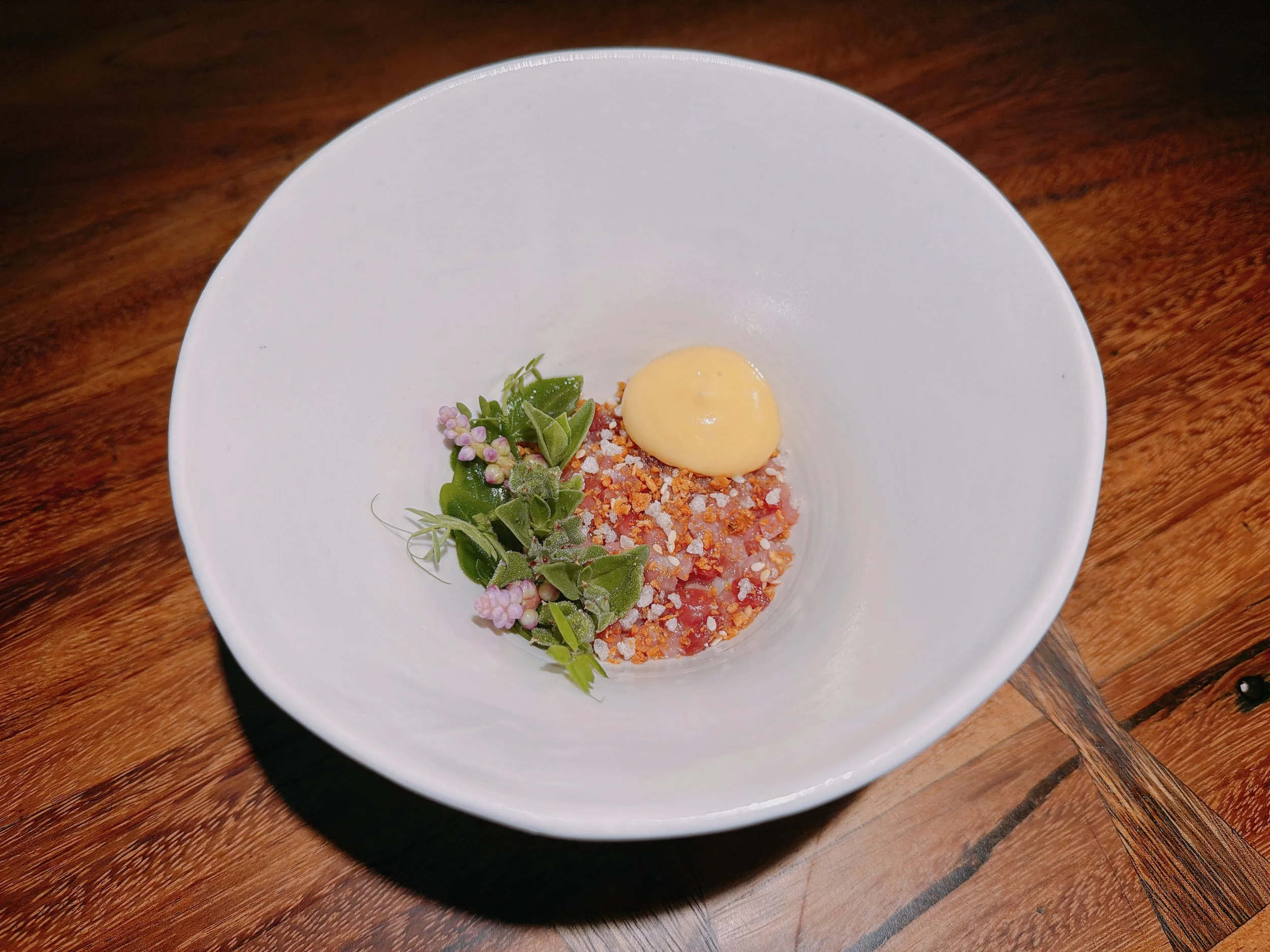
One of the restaurant's signature dishes was based on a sixty-day-dry-aged tuna coming from Half Moon Bay, about three hours south of Sonoma. The chopped tuna was served over koshihikari rice from Sacramento that had been seasoned with tuna bone marrow and smoked seaweed butter. Some succulents from the restaurant's garden, crunchy sweet potatoes, and a uni/passion fruit sabayon completed the dish. The smokiness and the texture of the tuna made one invariably think of bacon. And one probably cannot do much wrong with a dish tasting primarily of bacon. The rice was lovely, there were hints of seafood flavors, and the succulents added some balance to the dish, giving a lighter touch to an otherwise heavier preparation 18.
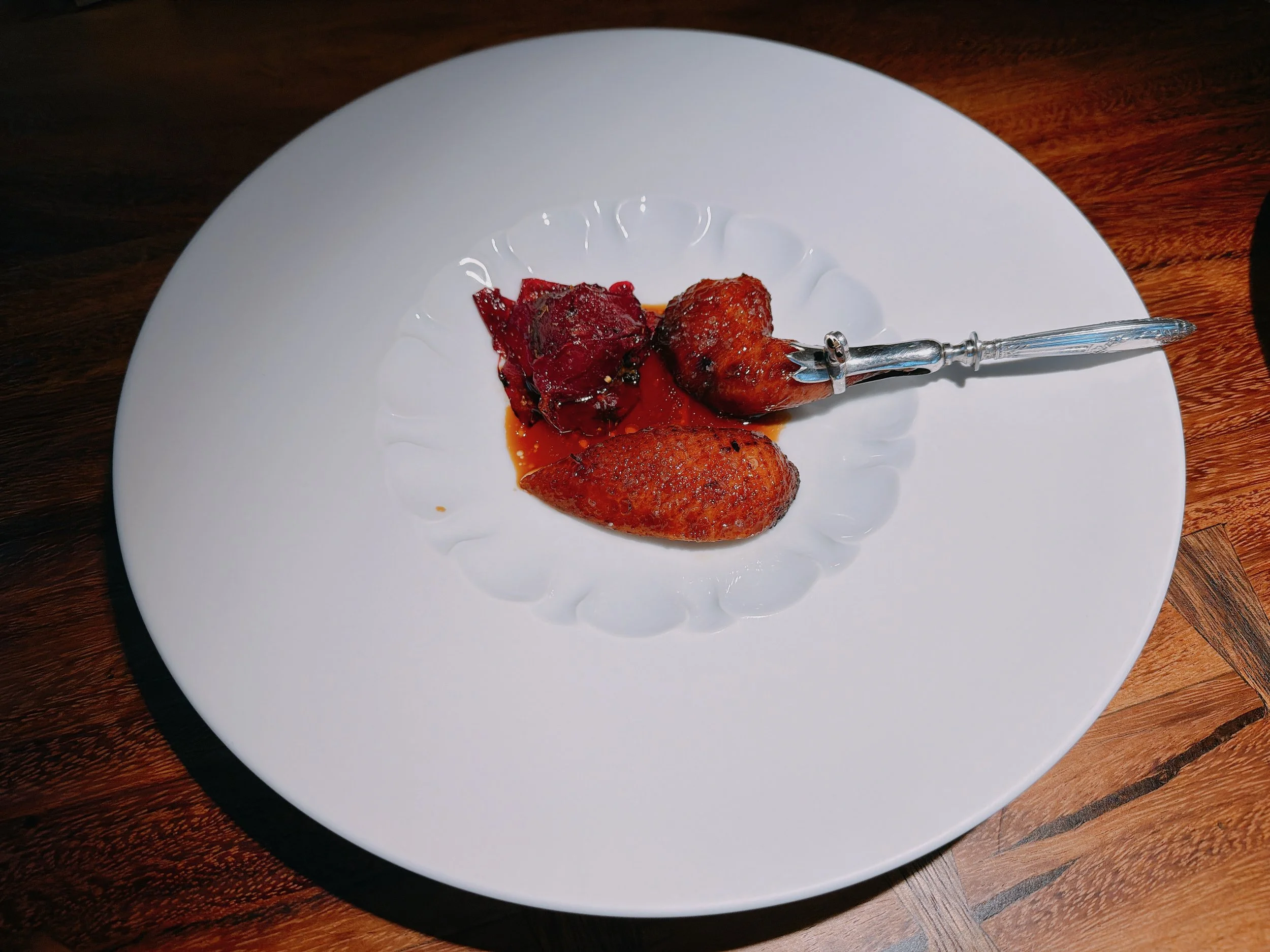
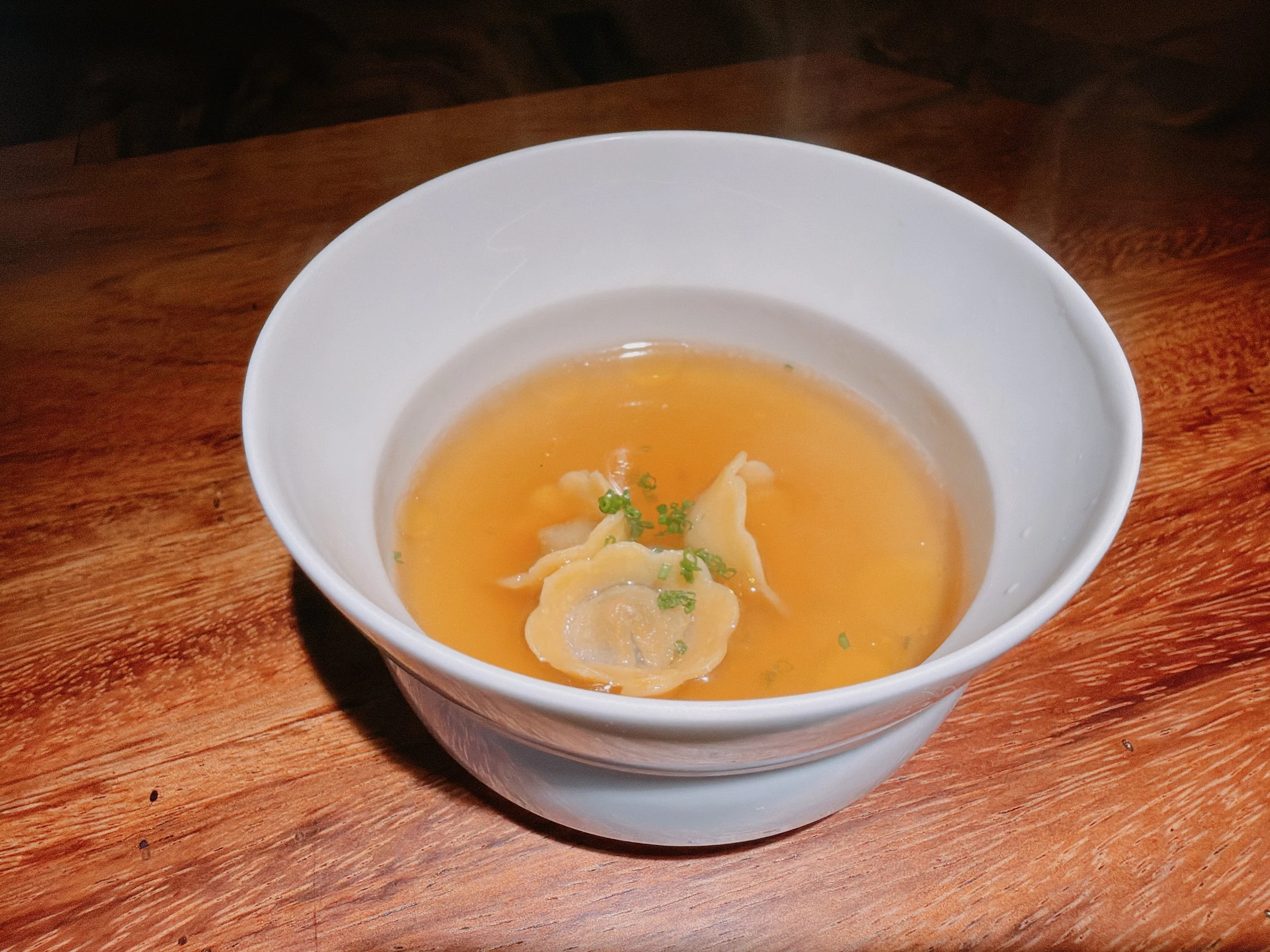
Then we came to the first of two meat courses, both served in two different ways. First, we got the breast and leg of a Wolfe Ranch quail. They came with a sauce made of quail jus and burnt citrus, and sat next to a preparation of marinated rose petals, grilled celtuce and artichokes. The quail meat was nicely seasoned, but the leg was more tender and juicy than the breast. The sides were lovely: there was no notable rose flavor from the petals, but the pickled ingredients had a punchy acidity that balanced the (heavier) meat part of the dish (maybe a 19 for this plate on its own). In a separate bowl were a quail bone broth and three tortellini filled with quail meat. The pasta's creamy filling had a slightly meaty texture. But I was less enamored with the flavoring of the broth. Its “warming spices” made me think of cloves and cinnamon, a combination that would have felt more at home in a winter dish rather than one served in August (17 for the broth). Overall, an 18.
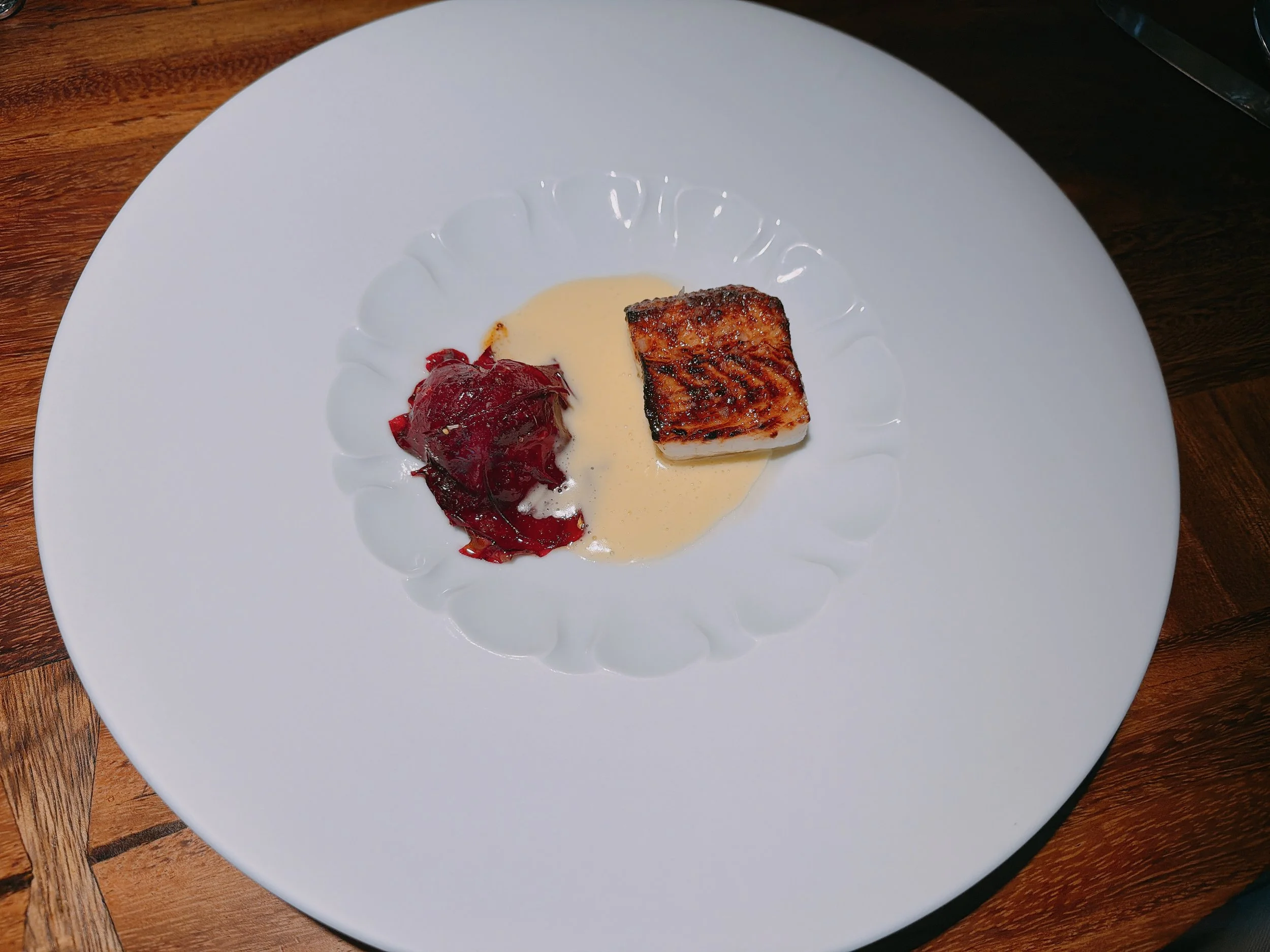
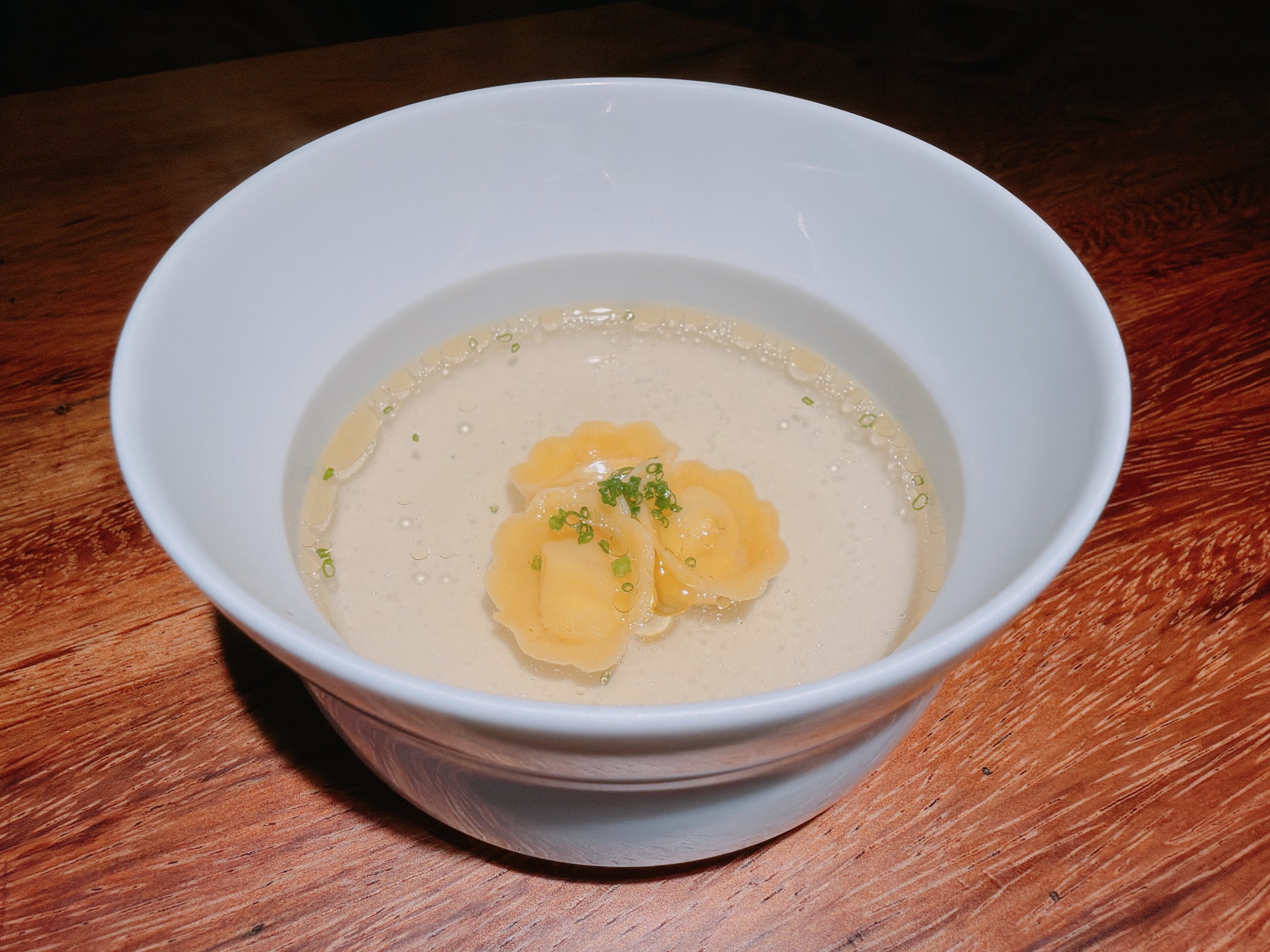
Pescatarian replacements of meat courses frequently feel like an afterthought. But not this time. Instead of the quail, we got a grilled black cod with a koji butter sauce, as well as the same pickled sides (rose petals, etc). The black cod was cooked to an extremely tender consistency, its sauce was lovely, and the sides again provided just the required kick of acidity. Hard to do this any better (20). For this dish, the paired tortellini were filled with ricotta cheese and came in a broth made from 18-month-aged Parmesan rinds. The al dente pasta was quite good, but the broth stole the show: very light, but somehow still managing to have a strong cheese flavor - delicious 20.
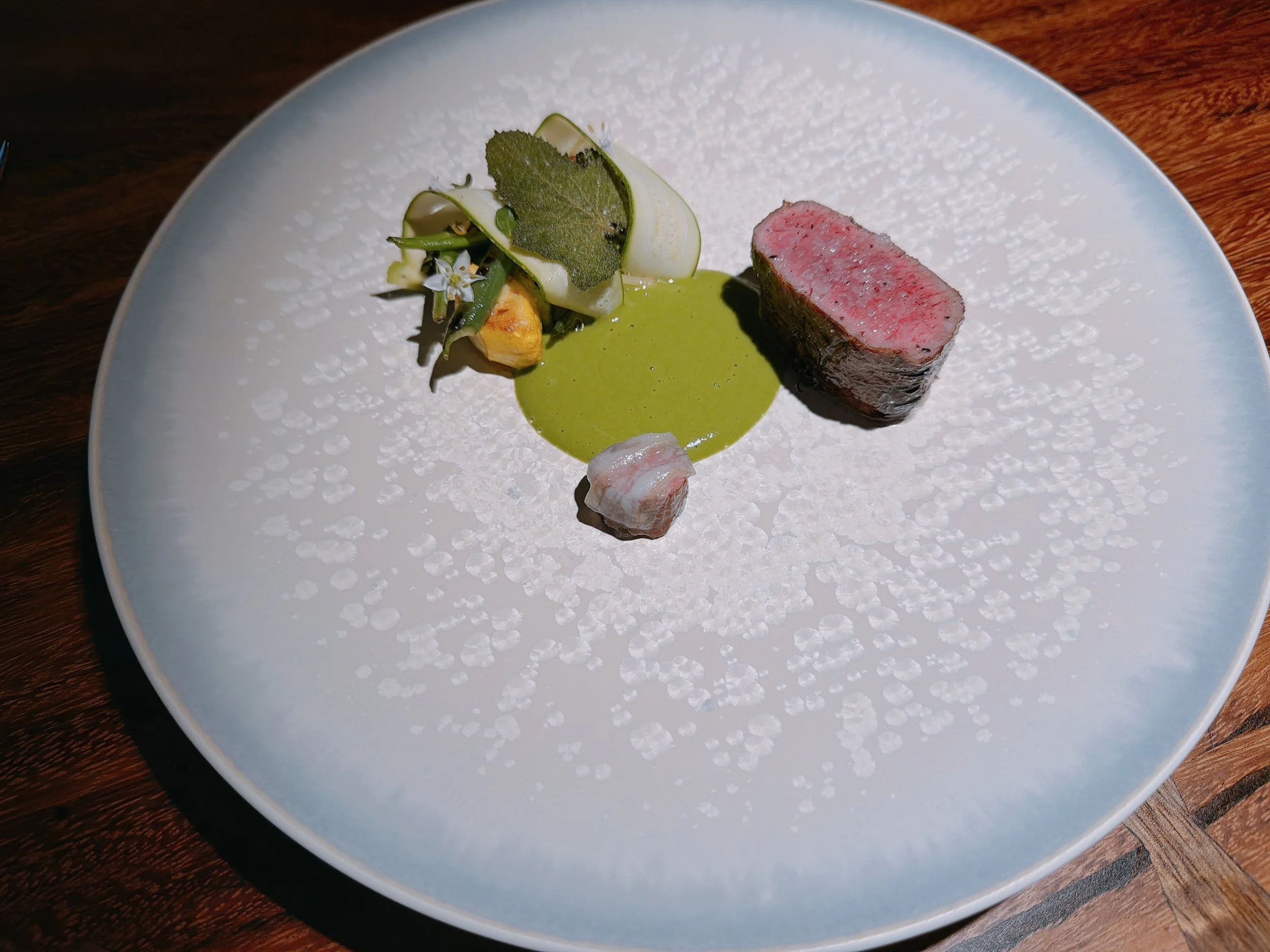
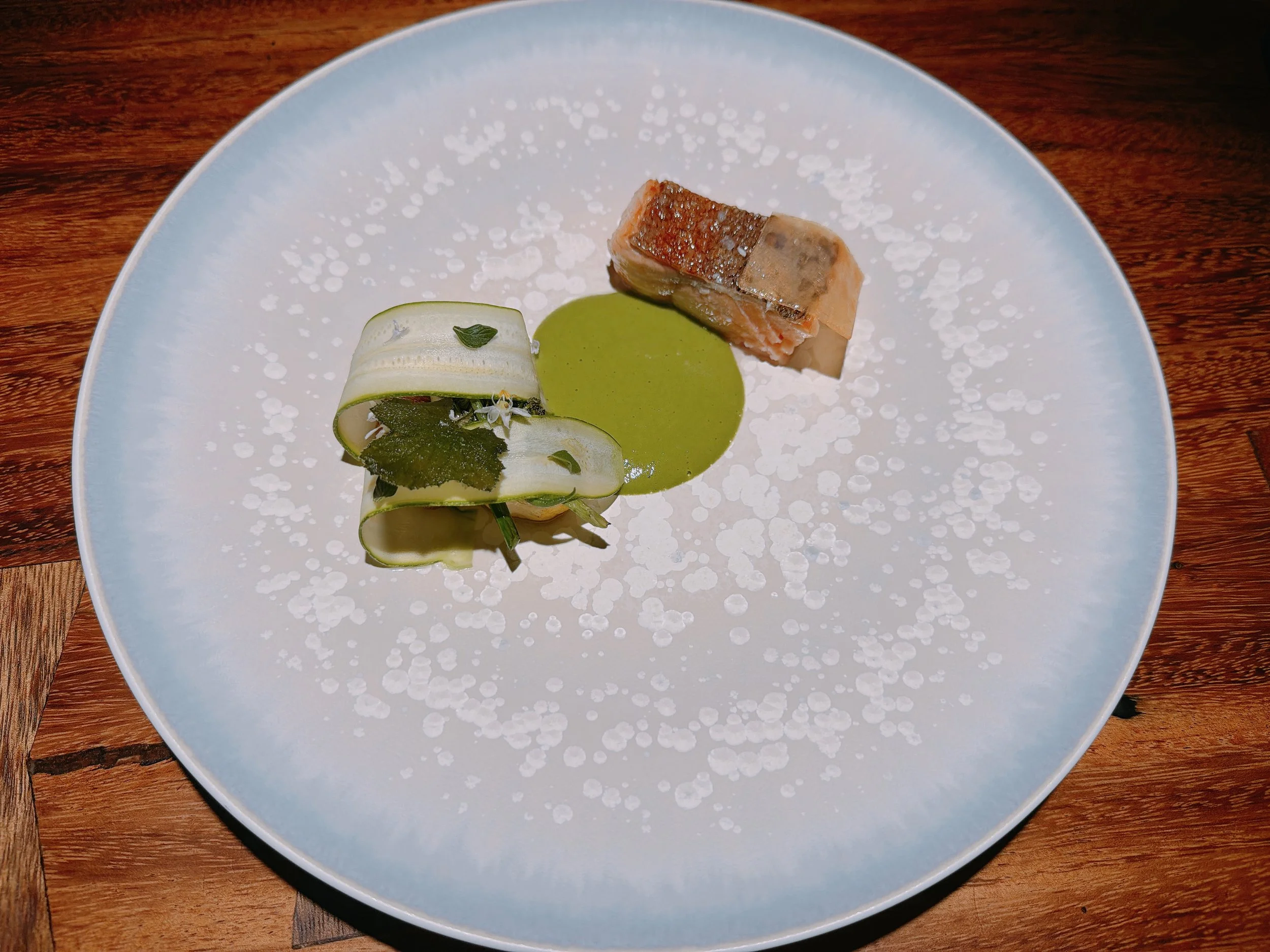
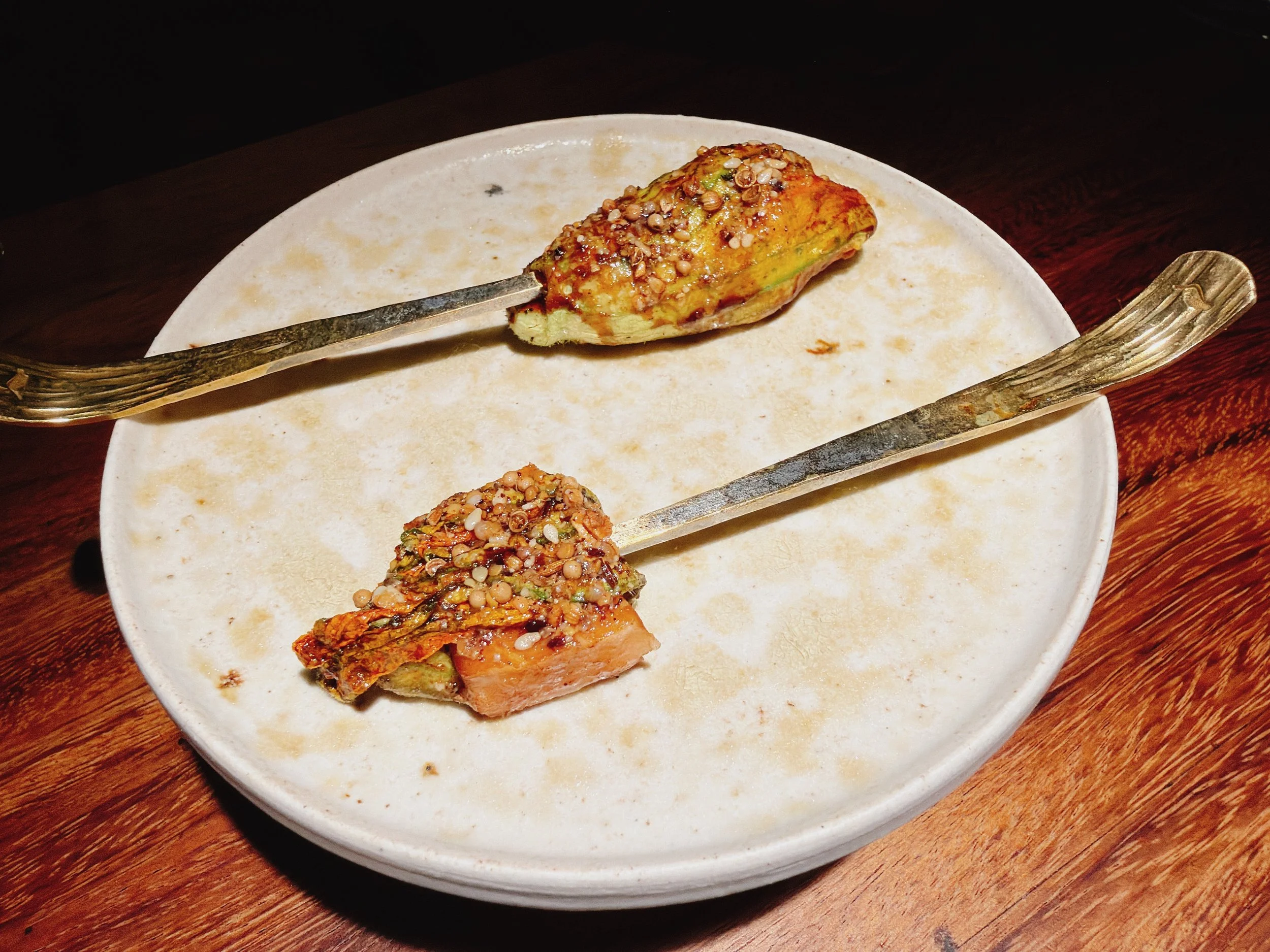
The second meat course was based on lamb. On the plate were a lamb loin, a little tenderloin topped with lamb lardo, some vegetables (summer squash, their blossoms, and Nantes carrots preserved from last year), as well as a sauce made from pistachios and wheatgrass. Let's start with the good parts: the tenderloin was lovely and had a rich lardo flavor, the sauce was flavorful and delicious, and the vegetables were equally wonderful, particularly a nicely chewy root vegetable. On the other hand, the lamb loin was less impressive. It looked nicely grilled, but parts of it were chewy and entirely without flavor. Other bites were better, but overall, this was still disappointing. On a separate plate was a squash blossom filled with meat from the lamb's ribs, seasoned with smoked pink peppercorns and mustard spices. The texture of the meat made this feel like a sausage: flavorful and rustic 16. The pescatarian replacement dish featured a Mount Lassen trout, whose filet was topped with a slice of trout charcuterie. The rest of the dish was the same. The fish itself was fine, but didn't feel very distinctive - the charcuterie was actually more flavorful than the filet. There was also a squash blossom on the side, this time filled with trout belly. Again fine, but not particularly exciting. The vegetable sides and the sauce were better than the fish here 16.
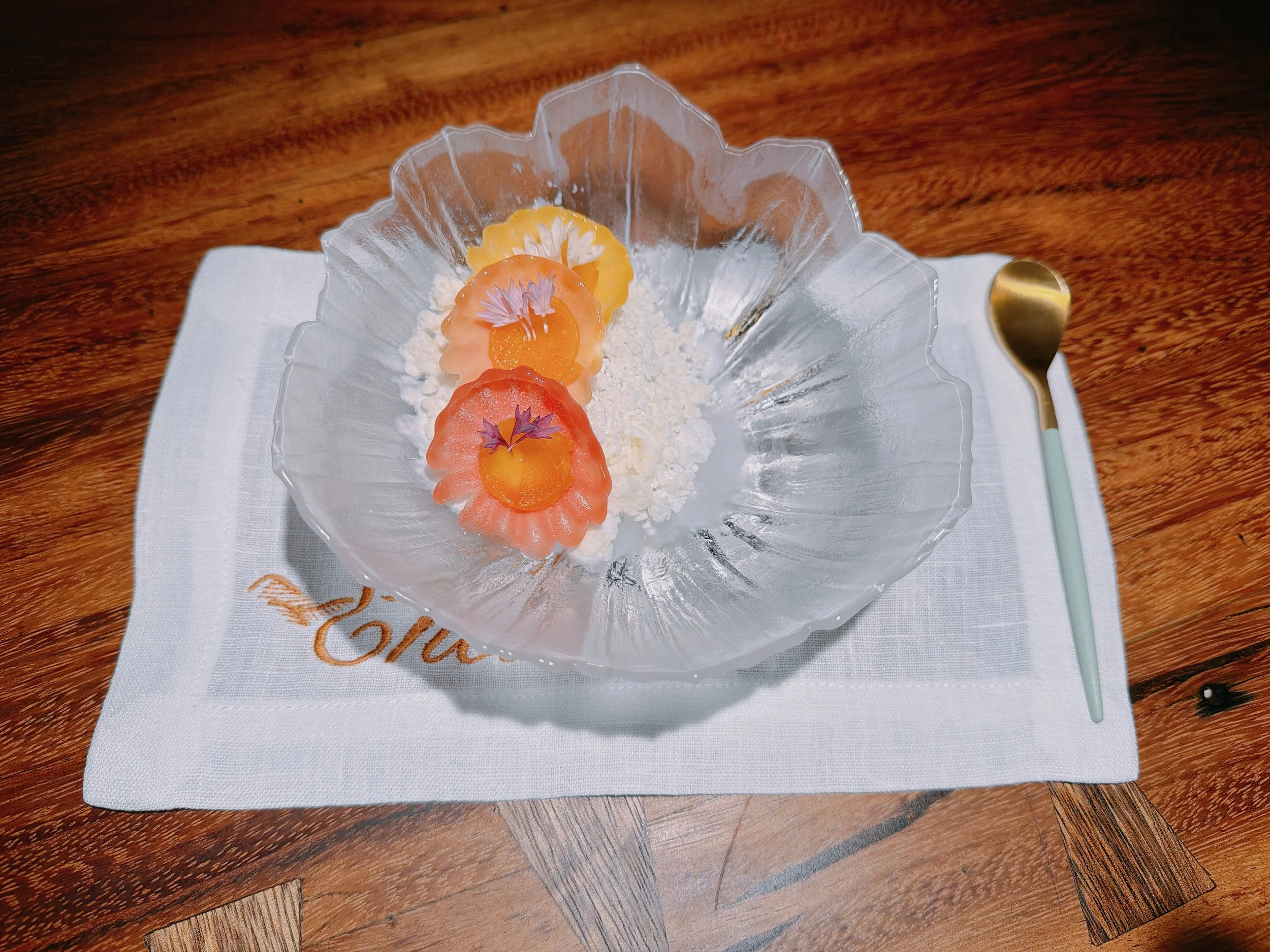
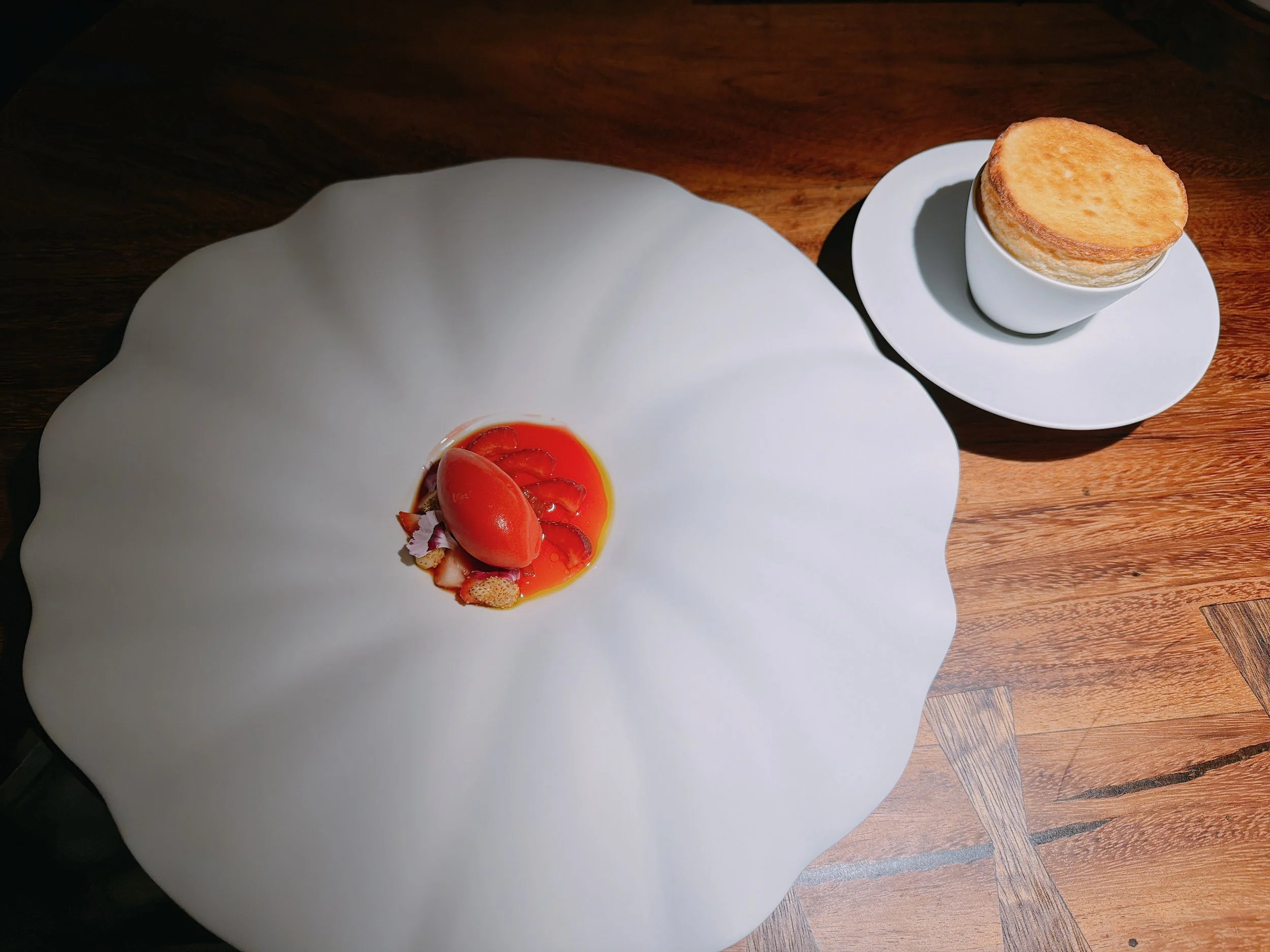
Then, we came to the sweeter part of the menu. We began with the first local stone fruits of the season: pluots, apricots and peaches, all served over a cloud made of apricot kernels, an apricot foam, and an oolong tea jelly. The fruit flavors here were light, but still lovely, and the dish maintained a perfect balance between acidity and fruitiness. An appropriately light dessert after a long dinner 18.
Various preparations of strawberries (raw, as a sorbet, and as a sauce) were served with a sheep's milk yogurt soufflé. The strawberries were amazing: they had strong flavors across all the different preparations. The airy soufflé was not particularly eggy. In fact, it was pretty flavor-neutral when compared to the strawberries, which therefore made a great addition to it 19. My wife would have given the strawberries themselves a 20, but didn't care for the soufflé.
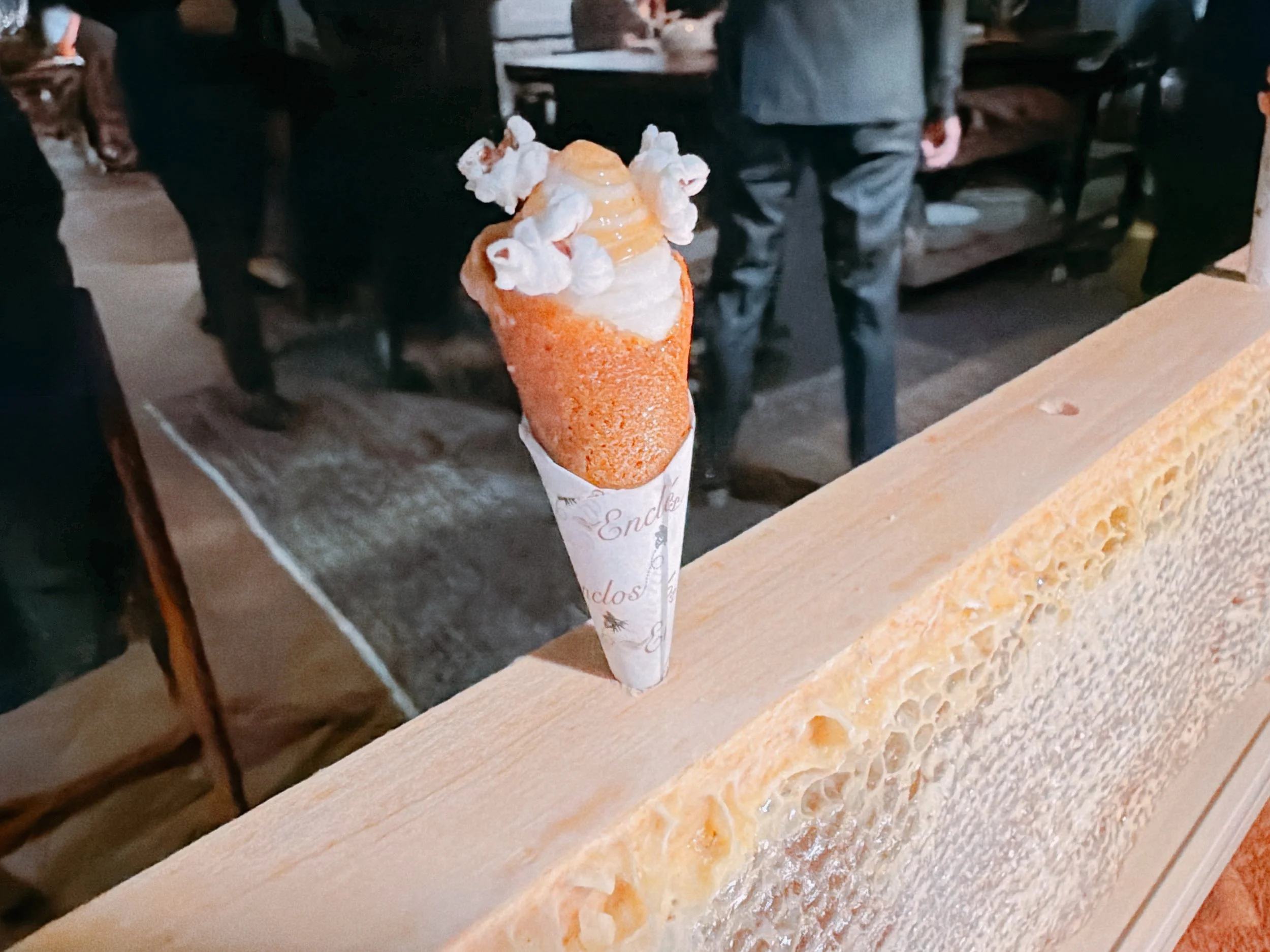
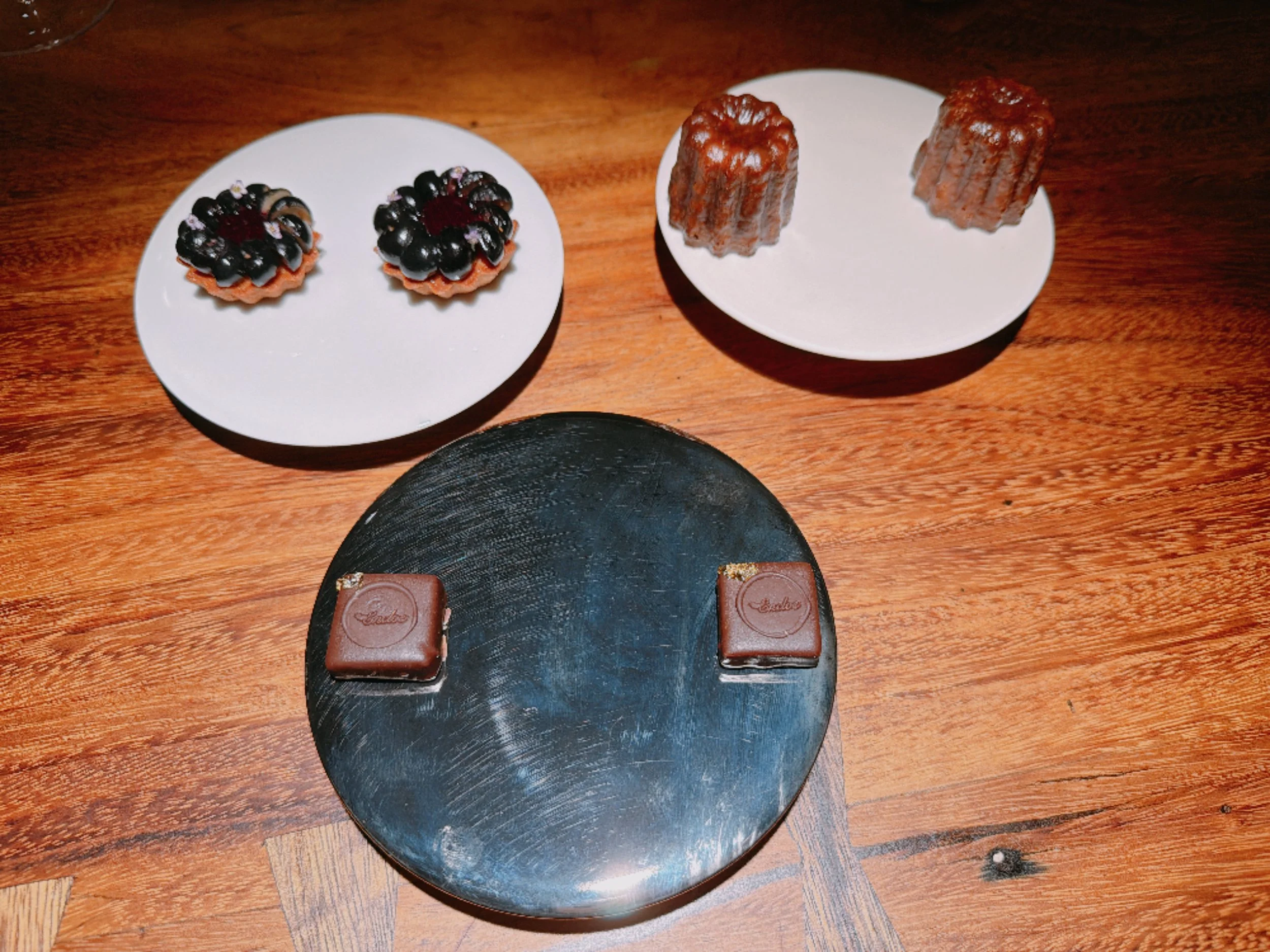
Our dinner concluded with a collection of petit fours. First, we tried a “honey cornet” made from otto file corn, filled with honey ice cream and topped with popped sorghum. The cone had a mealy crunch, and overall this was a clean tasting, sweet treat 17. A blueberry almond financier was nicely chewy (as one would like from a financier), and the fresh blueberries were a great addition 17. An Enclos-stamped dark chocolate praline was filled with peanut leaf - a play on a Butterfinger candy. This was a good combination of chocolate and peanut buttery flavor with a crumbly peanut filling 17. Finally, we had a canelé made with toasted miso, cocoa nibs, and vanilla. The exterior “crunch” of the canelé was a bit too soft for me. The miso gave it some savory notes. With more crunch, and a more focused flavor, this might have been better 14.
Overall: A very impressive dinner of Californian cuisine, featuring many local ingredients, and a few splashes of New England influences. Compared to our already lovely visit in 2025, this was definitely a huge step up, with many delicious dishes and very well-balanced flavors, even in preparations where that would have been very hard to get right. For newly awarded three stars, Michelin often seems to reward the trajectory rather than the restaurant's current output, but Enclos was the real deal: almost every dish was at a three-star level. The service had already been at that level in 2025, but it felt slightly more relaxed now - a step in the right direction as well 19.