Alouette - Copenhagen
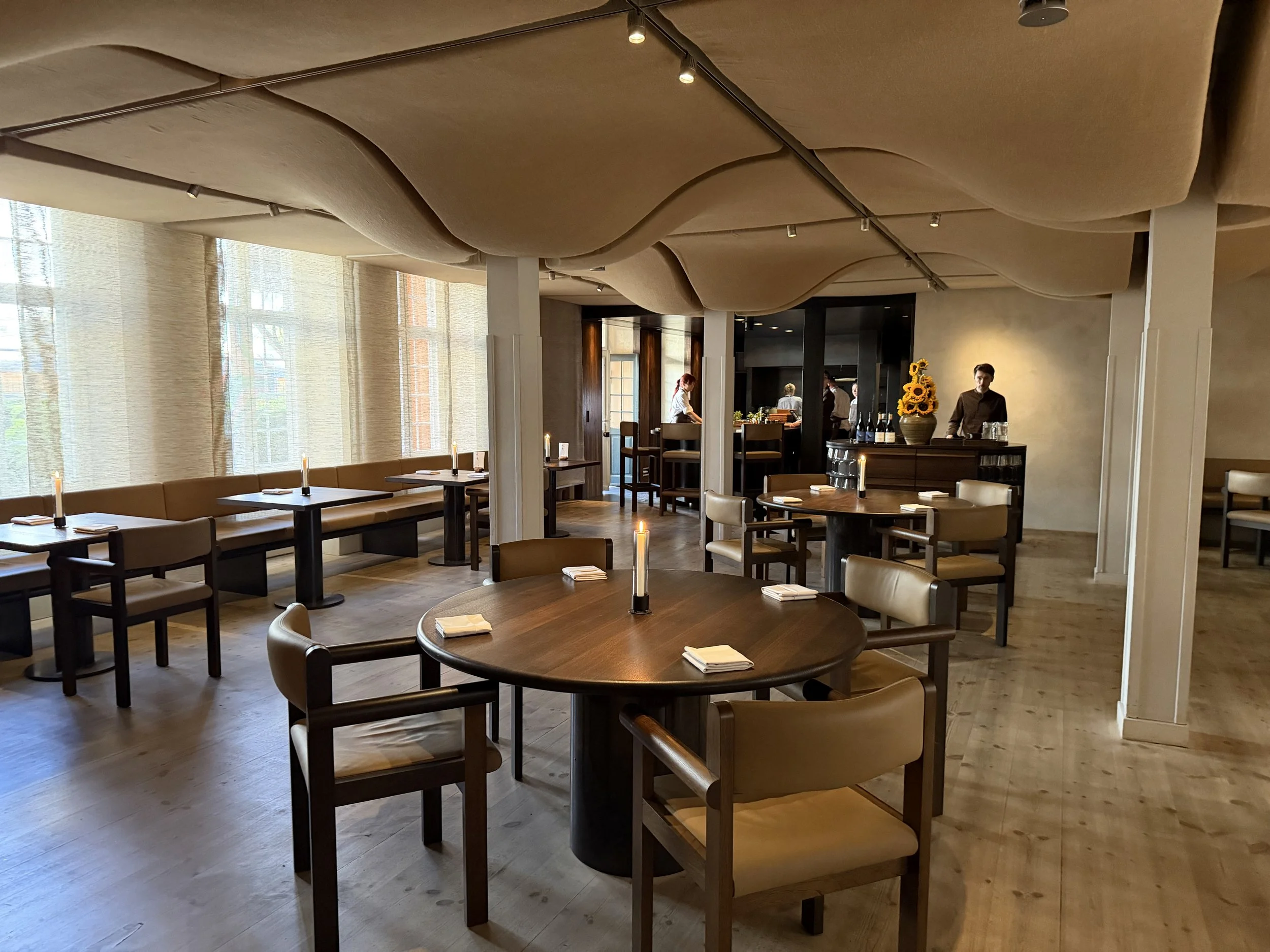
Some counter seats face the open kitchen in the back
Rating: 15/20
Where: Copenhagen, Denmark
When: Dinner for 3 on 23 July 2026
Cost per Person: Tasting menu 2195 DKK ($335), Wine pairing 1400-2500 DKK ($215-$380)
Accolades: 1 Michelin Star
Why: Farm-to-table restaurant featuring four local farms in a relaxed atmosphere
Diners arriving at the downtown Copenhagen location of restaurant Alouette might be in for a surprise: the restaurant itself is nowhere to be seen. My own confusion was thankfully short-lived. A staff member who seemed accustomed to aimlessly wandering guests met me on the street and guided me through a courtyard to a white door nestled among greenery - the restaurant’s hidden entrance. I didn't see any signs proclaiming the restaurant’s name, but there was a plaque announcing the Michelin star that it has held since 2019. Alouette’s American chef Nick Curtin has been living in Copenhagen for some time now, following stints in New York City. One of his main themes is sustainability, and the menu at Alouette featured four farms that the restaurant worked closely with, each providing the main produce for two dishes.
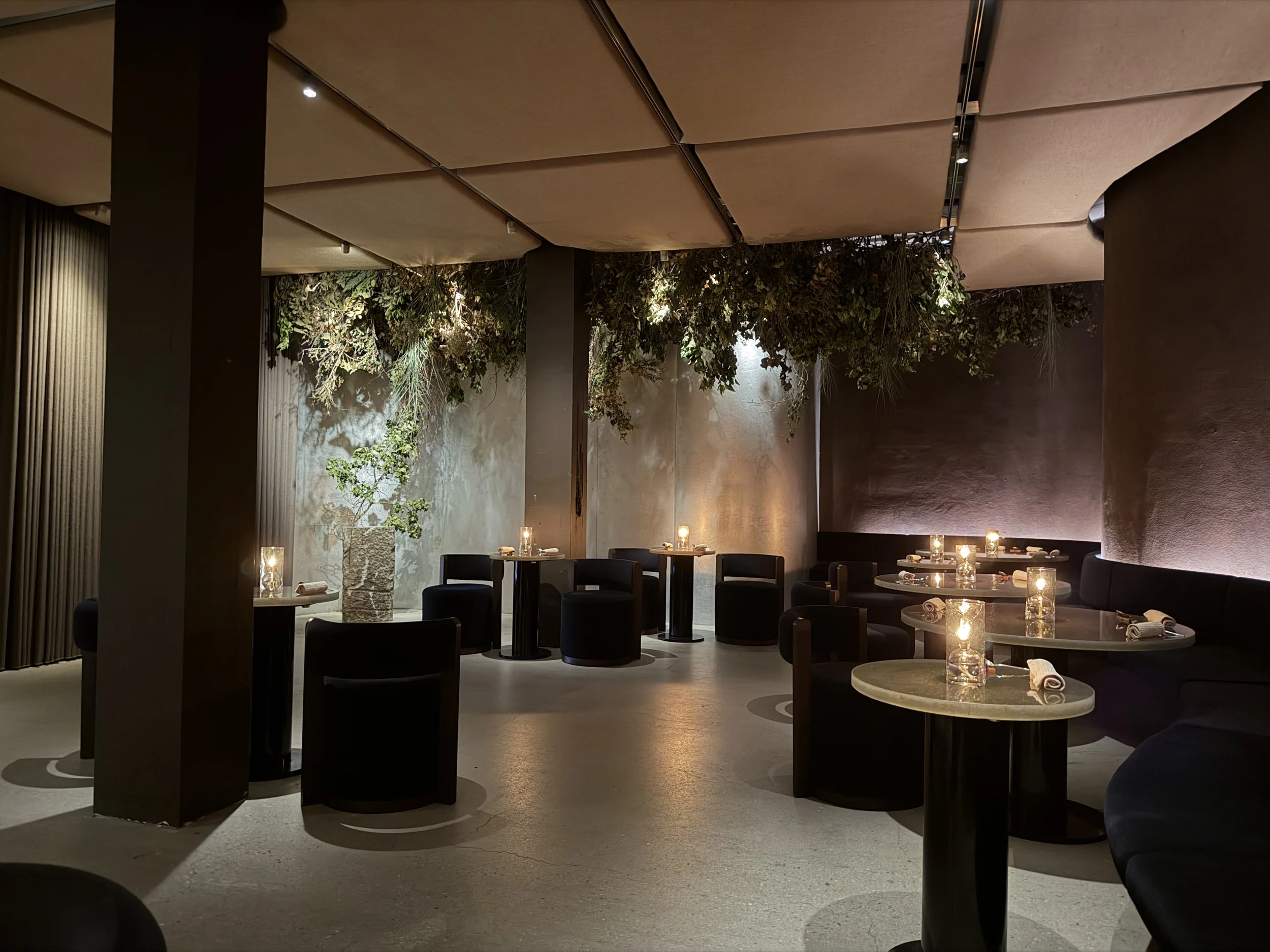
Our dinner was split into two parts. We started in a dining room that was lit by windows on two sides. Wood and brown tones dominated the color scheme, and the open kitchen fronted by a few counter seats was in the back corner of the room. Towards the end of our dinner, we were led into a separate lounge. That part of the restaurant was much more dimly lit, with black being the interior designer's “color” of choice.
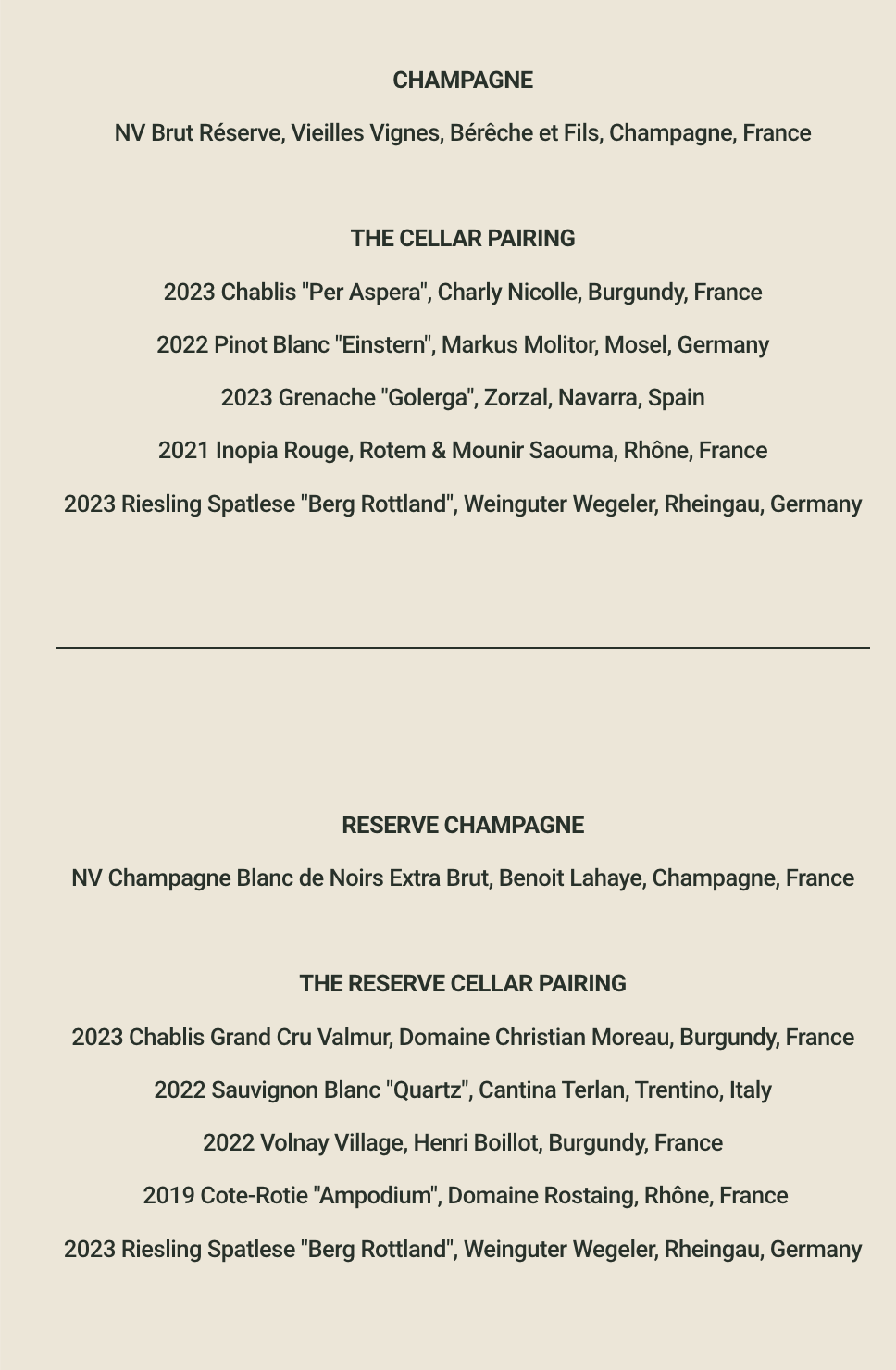
Alouette's served a fixed tasting menu, but pescatarian and vegetarian options were available as well - and these actually introduced additional purveyors, such as a local mushroom farm. There were wine pairings priced at 1400 DKK and 2500 DKK (about $215 and $380), and a non-alcoholic pairing for 1200 DKK ($185). Finally, it was possible to do a split alcoholic/non-alcoholic pairing. The wines in the 1400 DKK basic pairing were pretty good, and the sommelier's descriptions were even better, interspersing pithy stories about the wine makers with explanations of why the wines were chosen for the food.
Our dinner began with a broth made from Danish mountain basil, lemongrass, and perilla. Quite tasty, lightly sweet, and herbal 16.
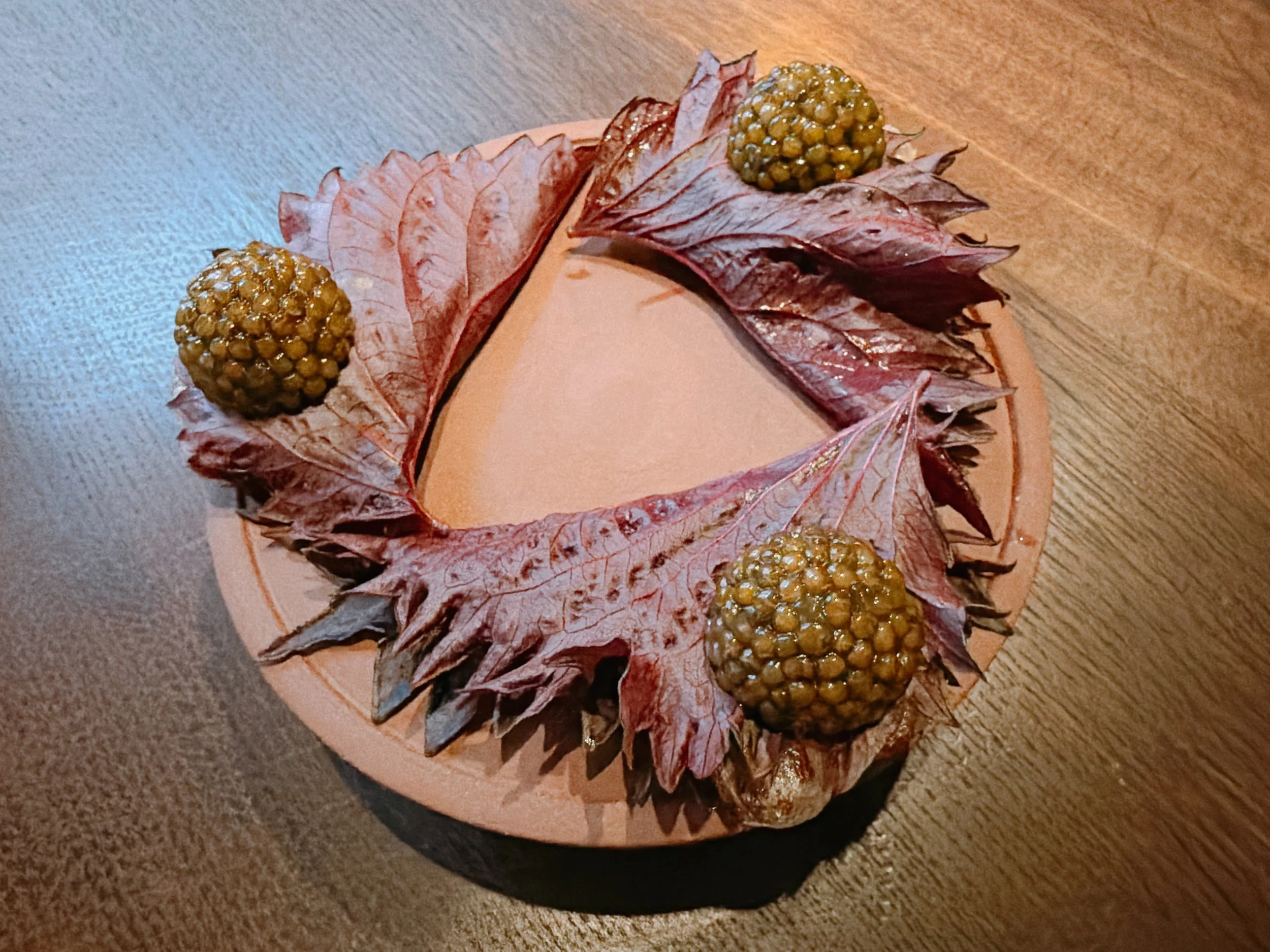
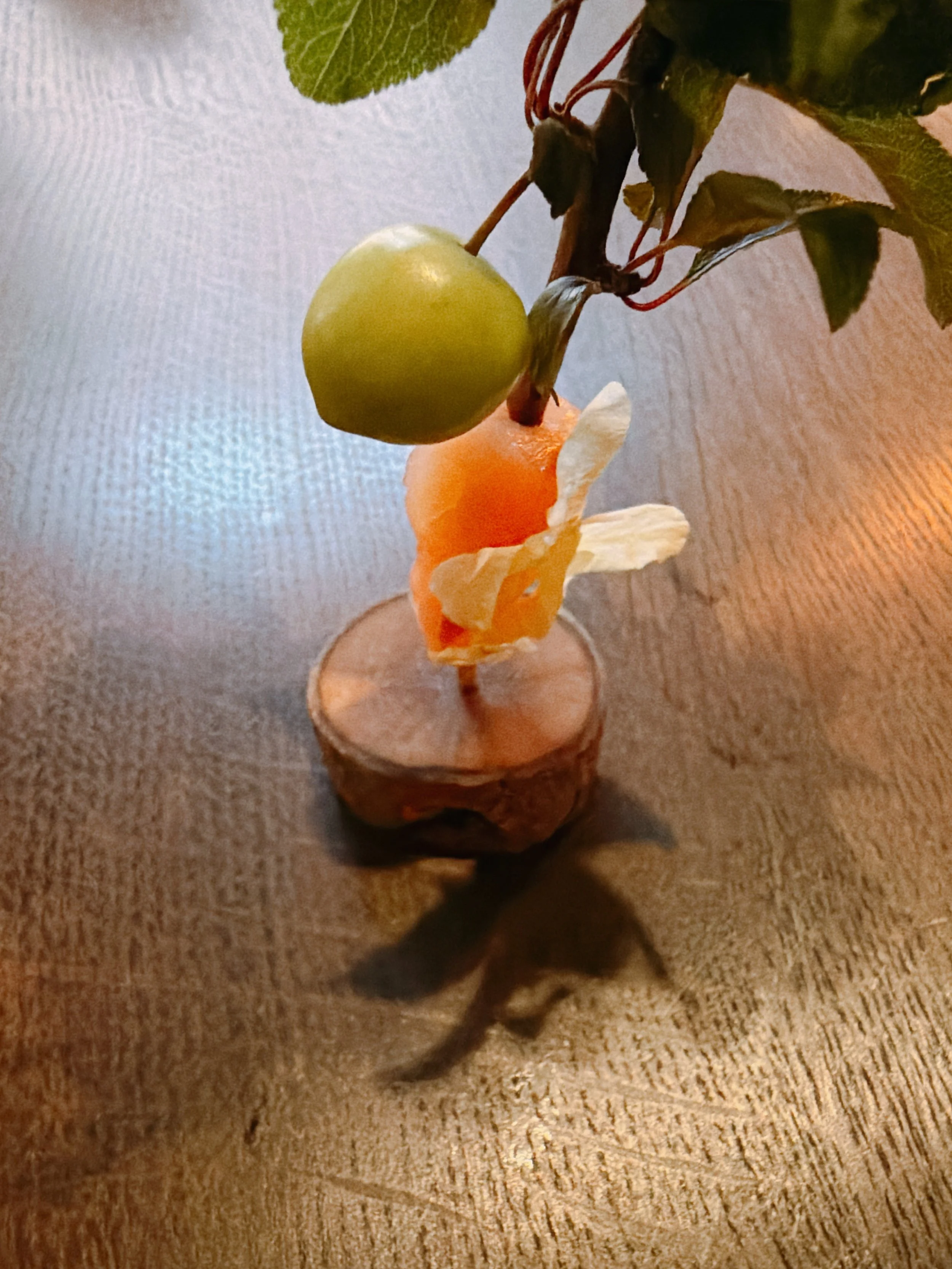
This was followed by four appetizers served at the same time, each representing one of the four farms featured in today's meal. An 800-year-old monastery farm provided the vegetables, and “their” dish was a shiso leaf topped with caviar and wrapped around a tempura'ed new potato. The potato was nicely crunchy on the outside, and creamy on the inside, which (texture-wise) went well with the caviar. Said caviar also added an appropriate amount of salt to the dish 16. The second dish represented a trout farm. A piece of trout was (maybe slightly confusingly) presented as part of a tree. That “tree” was actually a stick, on which the aged, compressed trout had been speared. It was seasoned with a espelette chili oil and decorated with a magnolia blossom. The fish had a light flavor, a pretty firm texture, and was not spicy at all despite the chili oil 16.
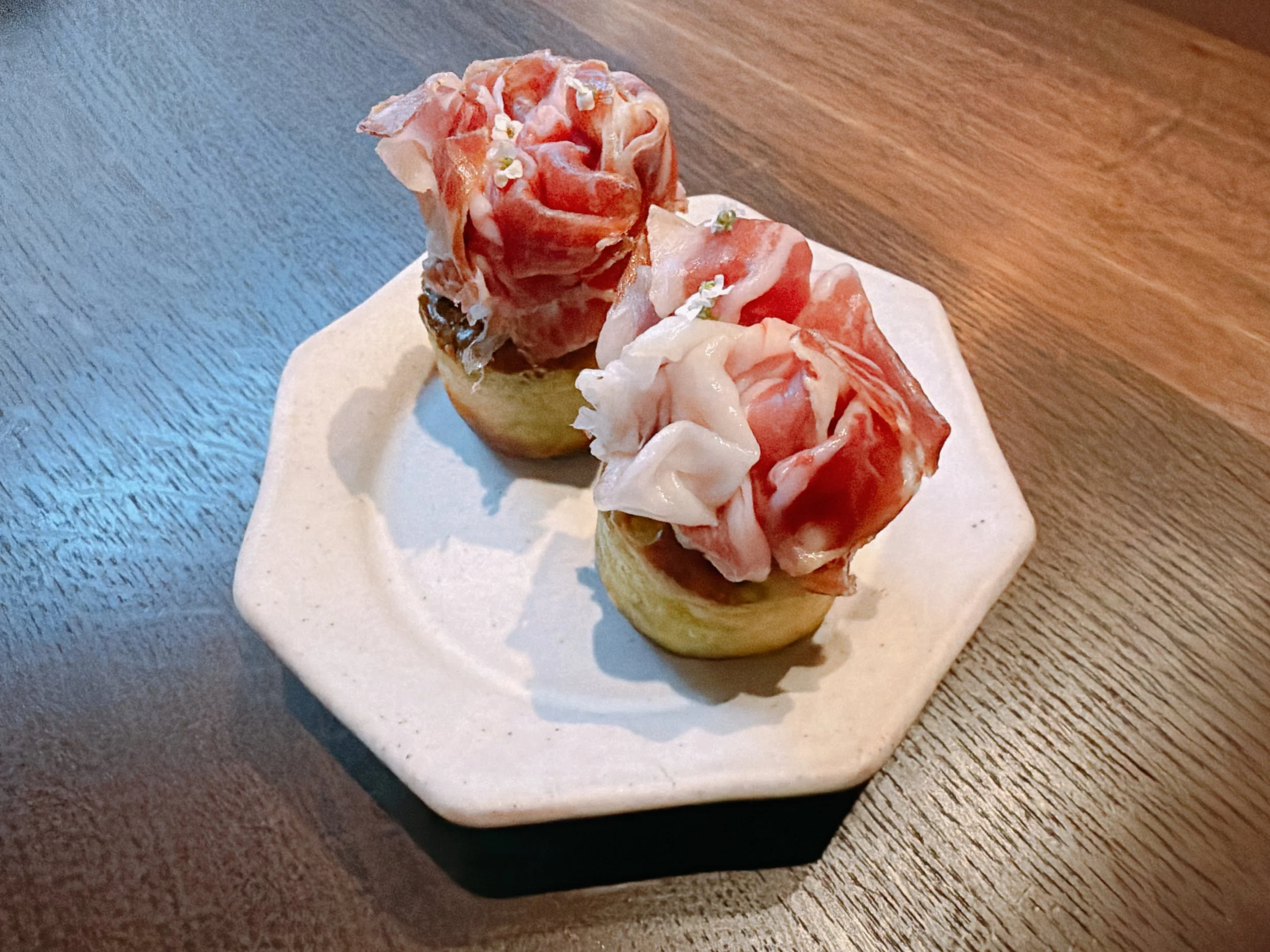
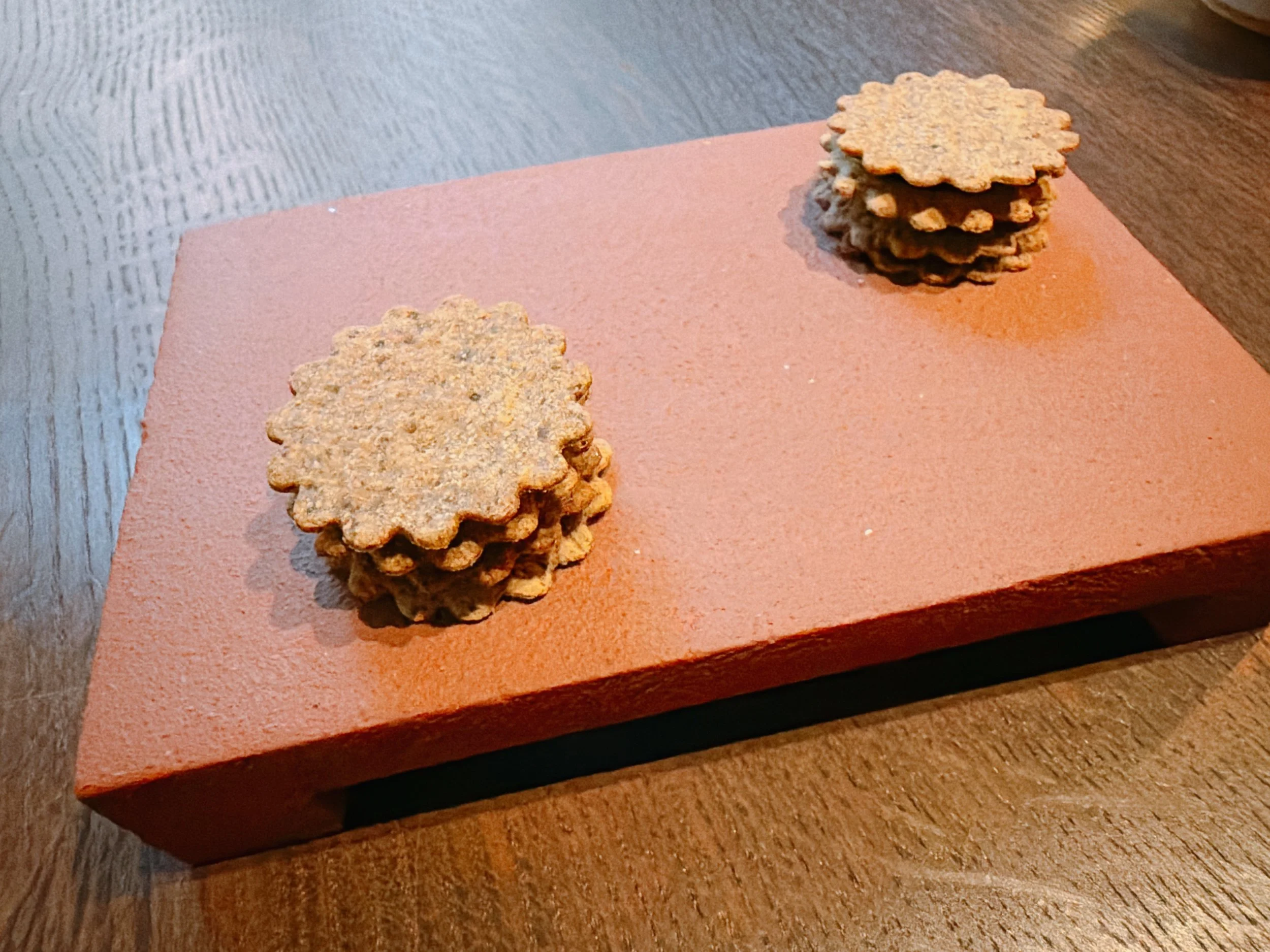
The third farm produced pork. A slice of coppa sat on top of a black walnut paste and a ramson crumpet. This was a bigger bite than the others, but quite tasty. It had a great meat taste in addition to being lightly herbal. Rustic, but good 16. Finally, we got to a fruit farm that would make a reappearance during the desserts. Kombu biscuits were stacked interleaved with a smoked cherry jam and pickled truffles. The overall taste was pretty light on fruit - this was not a sweet dish. But it was pleasant, with a creamy texture, partly due to the only lightly crunchy crackers 15.
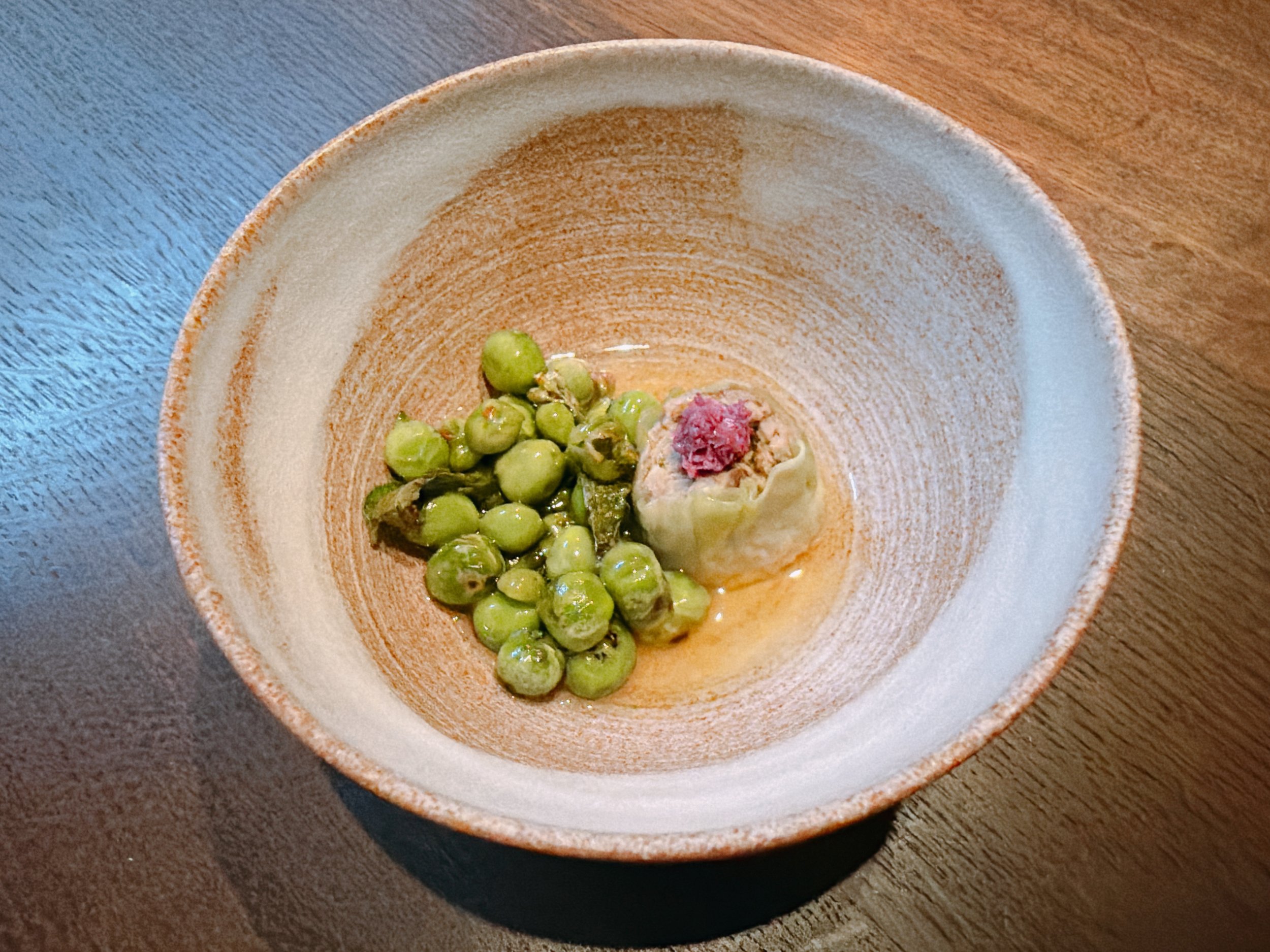
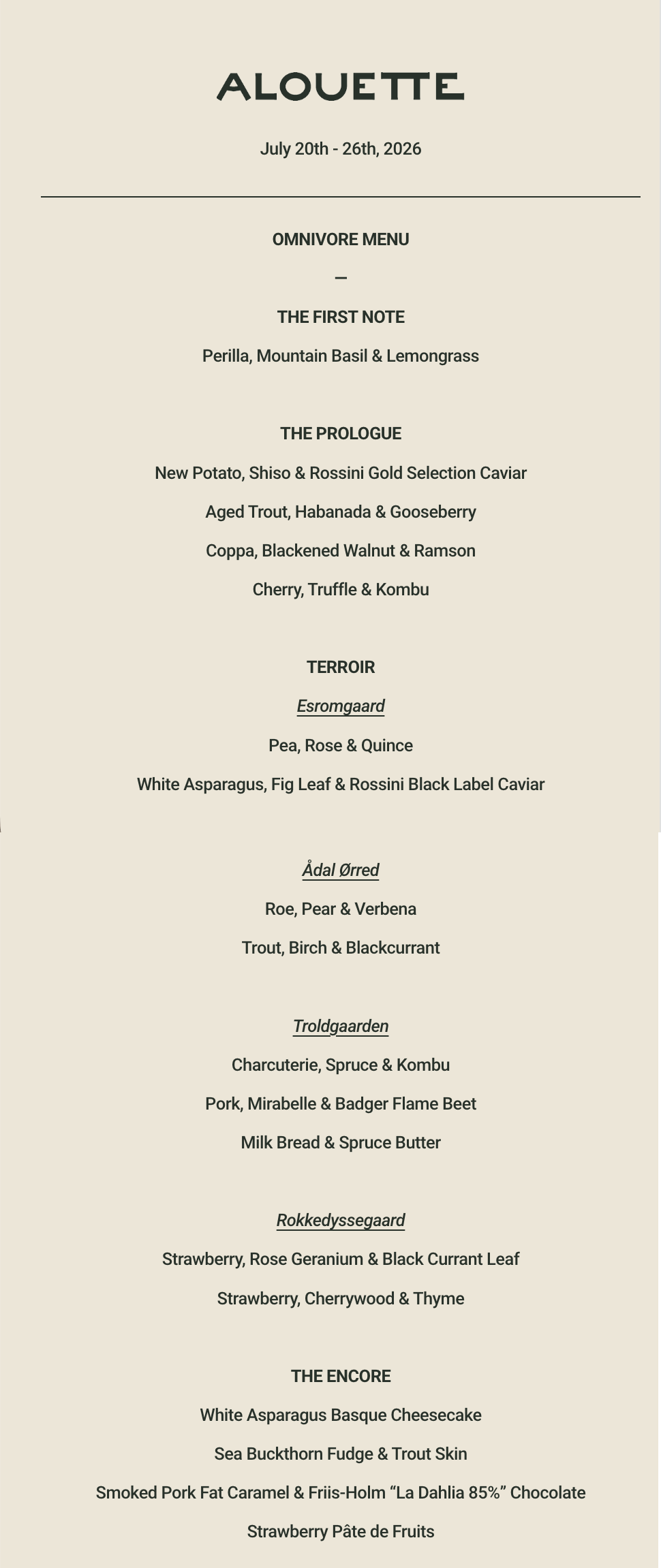
After this, we started with the tasting menu proper, with two dishes for each of the four farms. To begin, we returned to the monastery farm for a couple of vegetable-focused dishes. The first one arrived in a bowl, initially containing only a dumpling filled with asparagus, shiitake mushrooms, and rhubarb (At least I think so, since the description was delivered at breakneck speed). In addition, there was a kombu broth and a pineapple weed oil. One of the chefs then brought out a sizzling hot skillet, from which she proceeded to add some grilled peas seasoned with a strawberry vinaigrette to the bowl. The peas were definitely the star here - they were fresh, crunchy, smoky, and had a strong pea flavor. The dumpling was less compelling. It had a light aroma of rose, but was so soft to have almost no texture - arguably this dish would have been fine without it 15.
Our next course starred white asparagus. It appeared as a flan at the bottom of a bowl, as well as fermented and chopped on top of (half of) the flan, seasoned with a fig leaf oil. The other half of the flan was covered with caviar and little lilac flowers. Tableside, a chef added a hay-smoked cheese sauce to the dish. The result was very creamy with a hint of sweetness, to which the crunchy, pickled asparagus offered some complementary texture. It was just odd that after all this talk about asparagus, the dish didn’t end up having much of an asparagus flavor 15.
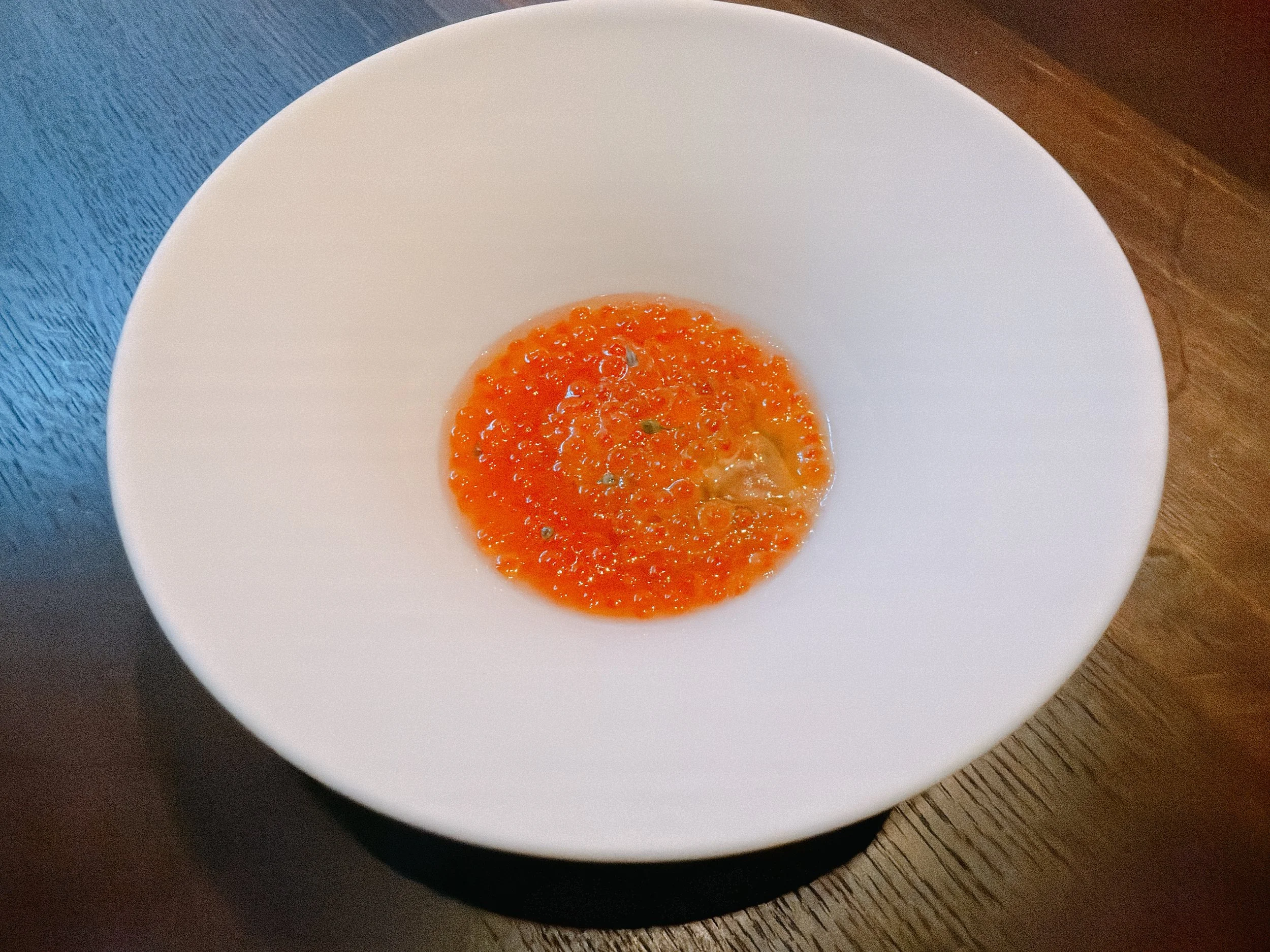
Next, we went to the trout farm. The first dish here was covered with trout roe. Underneath, there was a smoked trout tartare, some celeriac, sunchokes, and leek flowers. Tableside, a pear juice broth was added to the preparation. For me, this pear juice felt much too sweet for the dish - it felt more appropriate for a dessert, and it completely overpowered the taste of the trout. The roe added some nice texture to this dish that, while not bad, could have easily been much better 14.
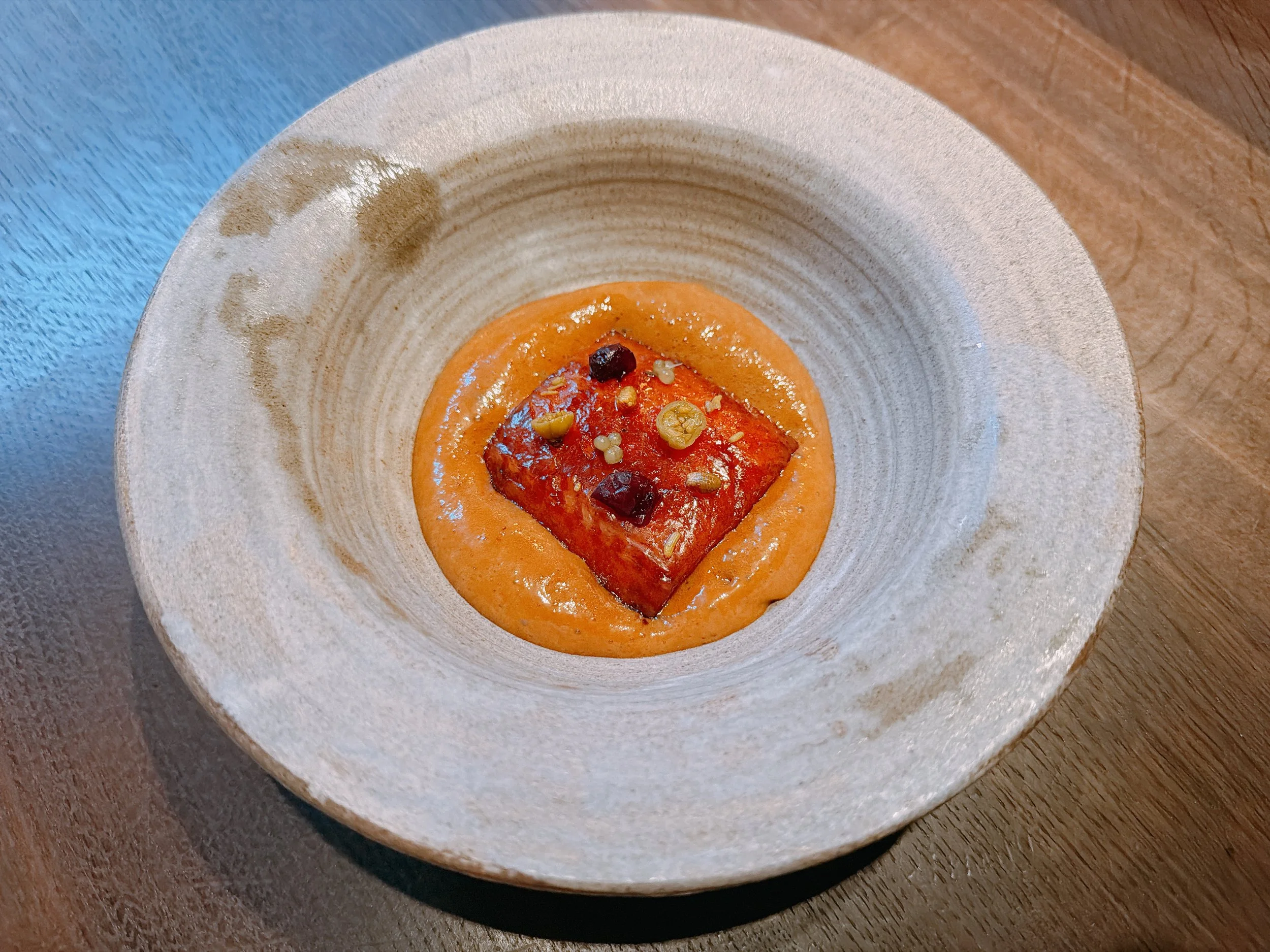
A double-smoked trout loin had been glazed with birch syrup, and it rested on a blackberry puree, surrounded by a birch sap hollandaise. Some pickled currants sat on top of the fish. The sauce here was also a bit sweet, but not as extreme as in the previous course. The trout was very nicely cooked, it was quite tender and fell apart easily. The pickles added some welcome acidity, doing a good job of balancing the buttery sauce 15.
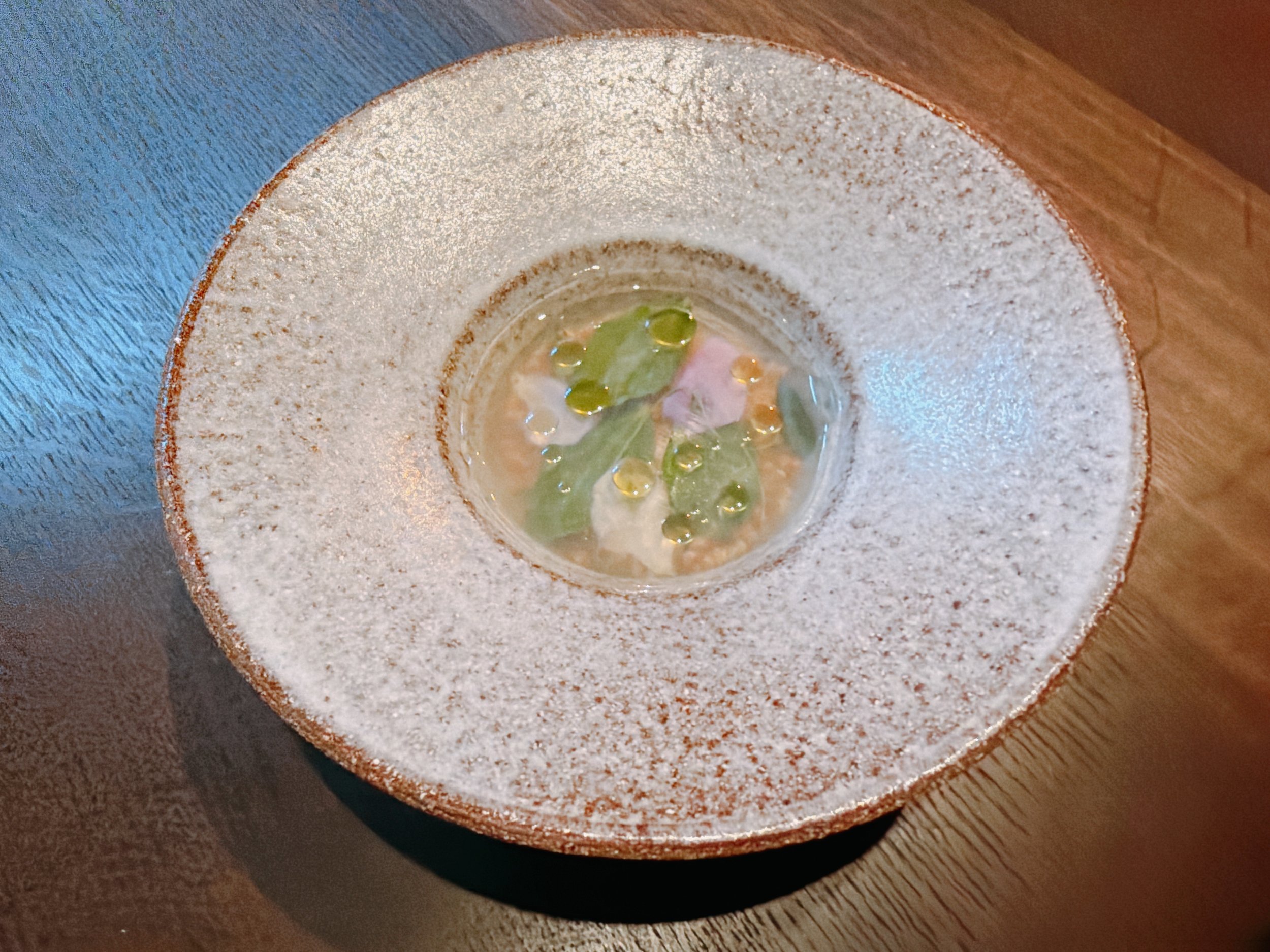
The third farm raised heritage pork outdoors in pine forests, and that's what the next two dishes contained. A chawanmushi was topped with crunchy quinoa, some herbs, pork neck, pork gelatin, and spruce oil. Keeping the quinoa crunchy required a neat trick - it was covered by a layer of gelatin to prevent the sauce on top from seeping down. Strangely, this dish didn't particularly taste of pork, but rather of mint or a similar herb. Whatever was intended here, the combination of ingredients wasn't really working. Rather than being like a cohesive dish, this felt more like bit and pieces that lacked distinctive flavors 13.
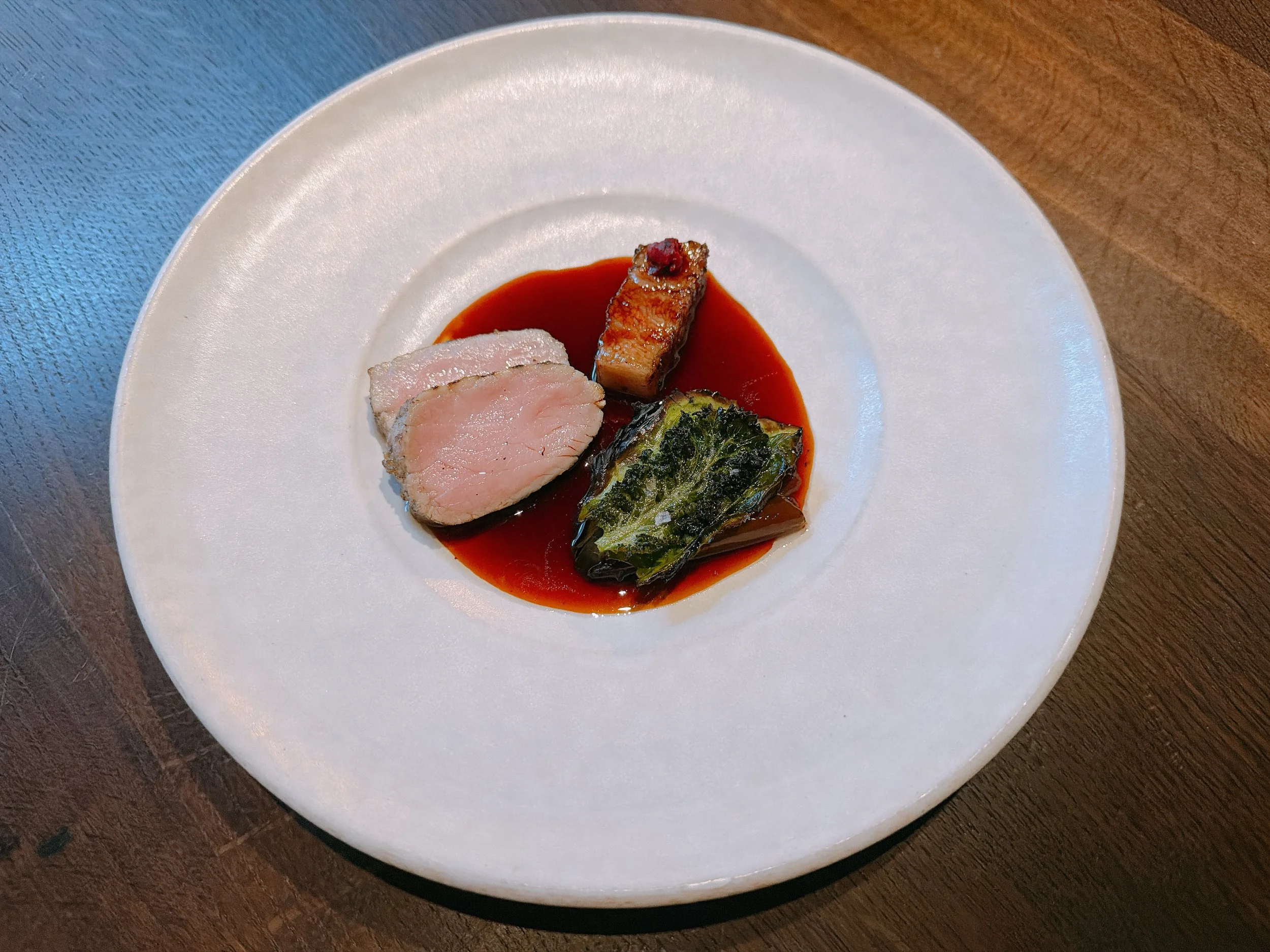
Our final savory course was again based on pork. A pork loin had been “interval grilled”, and sat next to a pork jowl that had been smoked for eight hours to mimic a Texan barbecue. Finally, there was a potato puree topped with fermented ramson stems. The pork loin was quite chewy, though not necessarily in a bad way, while the BBQ felt very (maybe too) fatty. My favorite part of this dish were the mashed potatoes and the ramson 14.
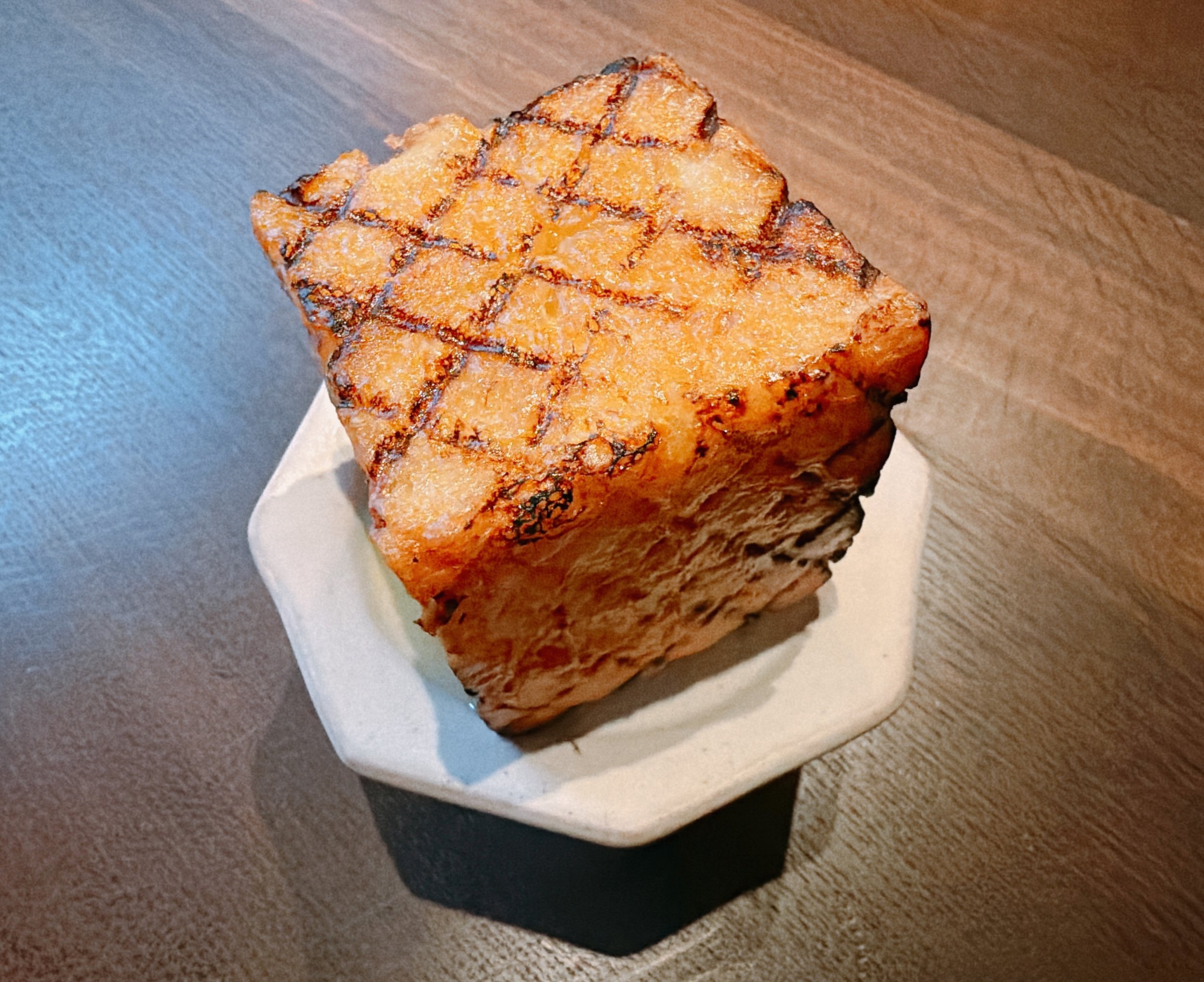
Along with the main course came a grilled milk bread cube that was topped with a pine-infused clarified butter. The bread tasted pretty neutral - this was essentially white bread -, and quite fatty since it had been soaked in butter. But it was a good choice for sopping up the remaining sauce 14.
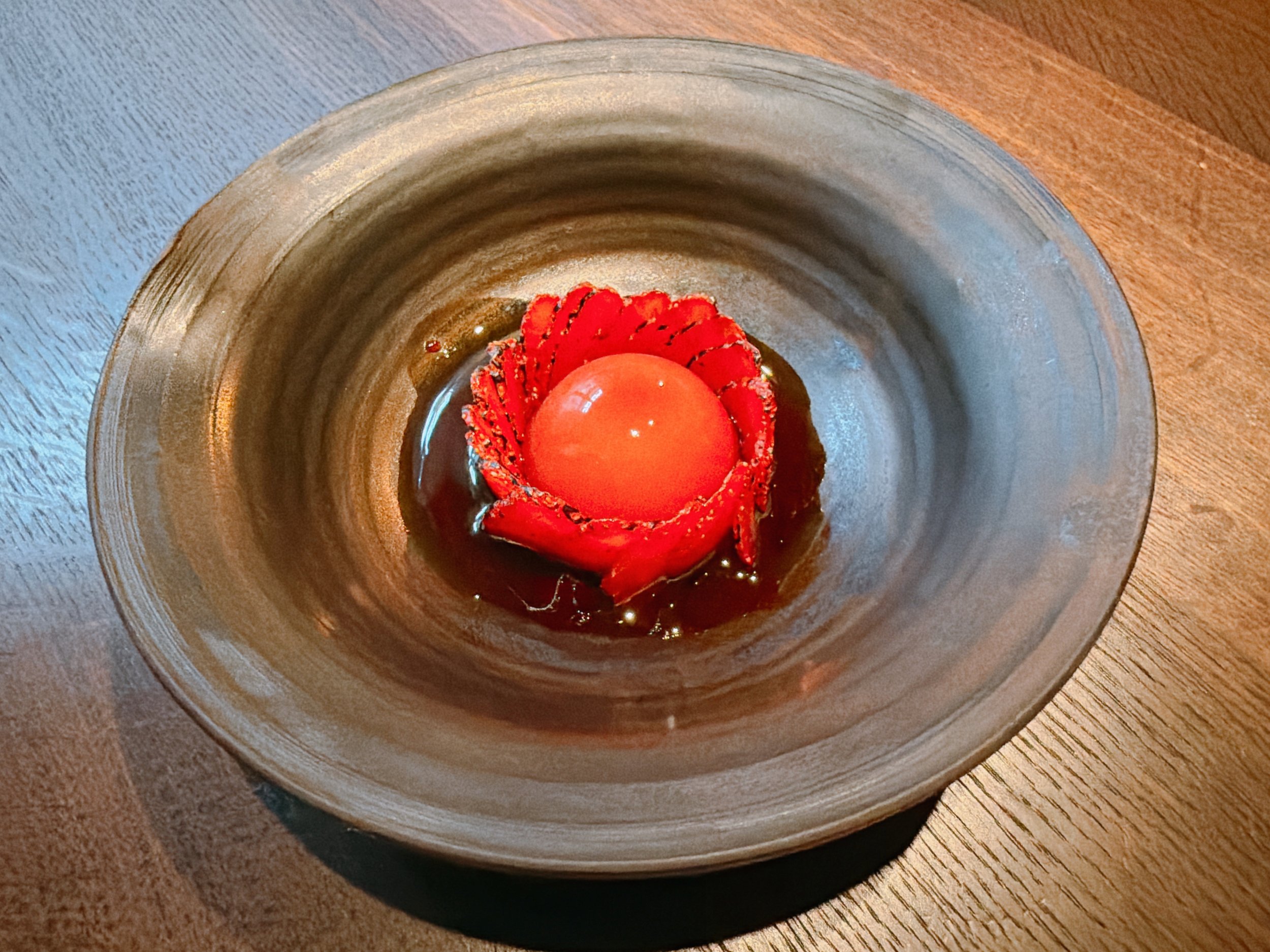
This brought us to the last farm, which provided the fruits used in the desserts. Thinly sliced strawberries surrounded a rose geranium mousse topped with a woodruff gel. The accompanying sauce contained strawberries, blackberries, and woodruff. This dish had a nice contrast between the acidic, not-very-sweet, sliced strawberries and the creamy and sweet mousse. A good combination and a light dessert 17.
At this point, we were led downstairs to a lounge that was nearer to the entrance of the restaurant - presumably so that the staff could prepare our table for the second seating of the night. No rest for the weary.
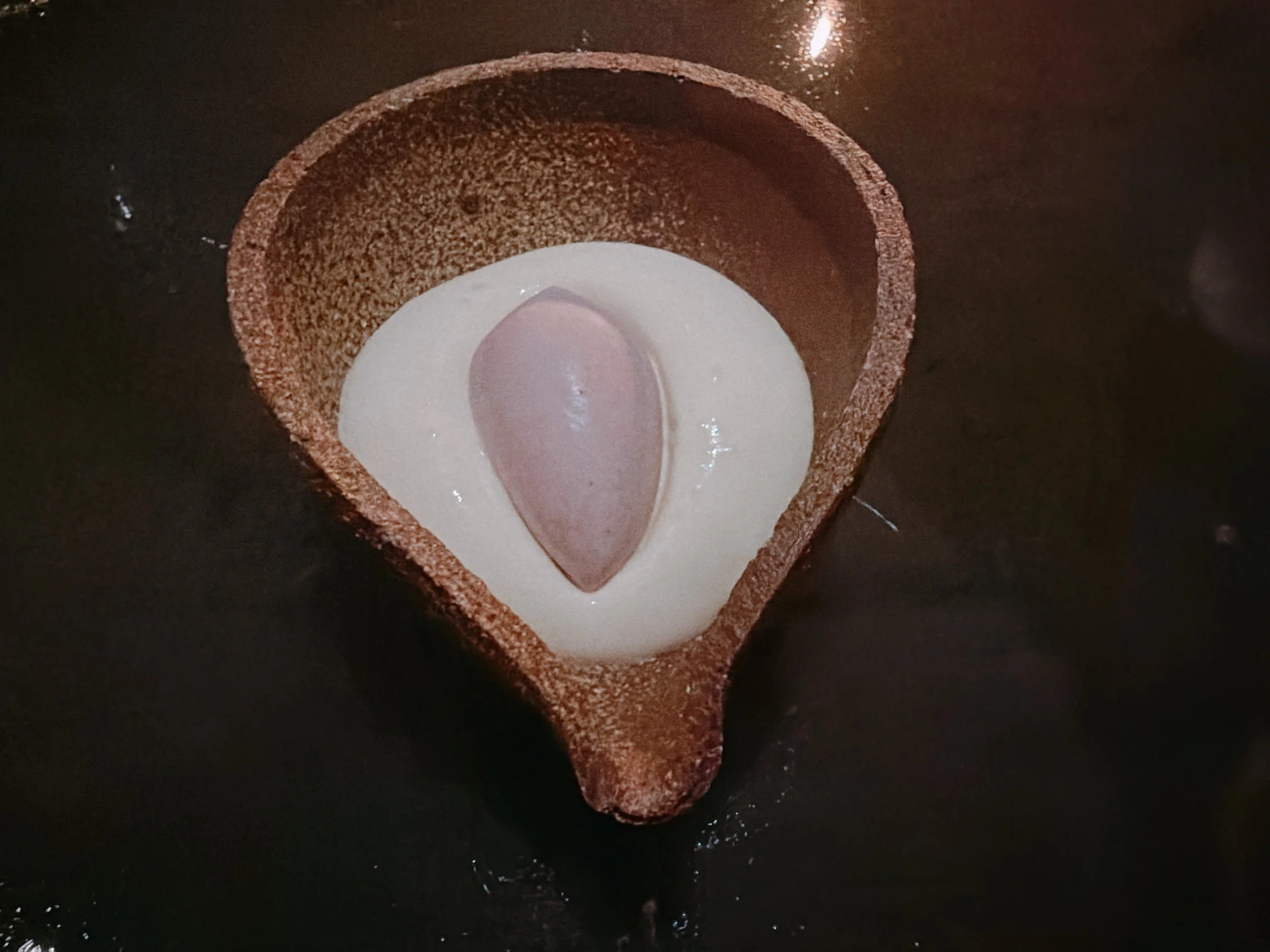
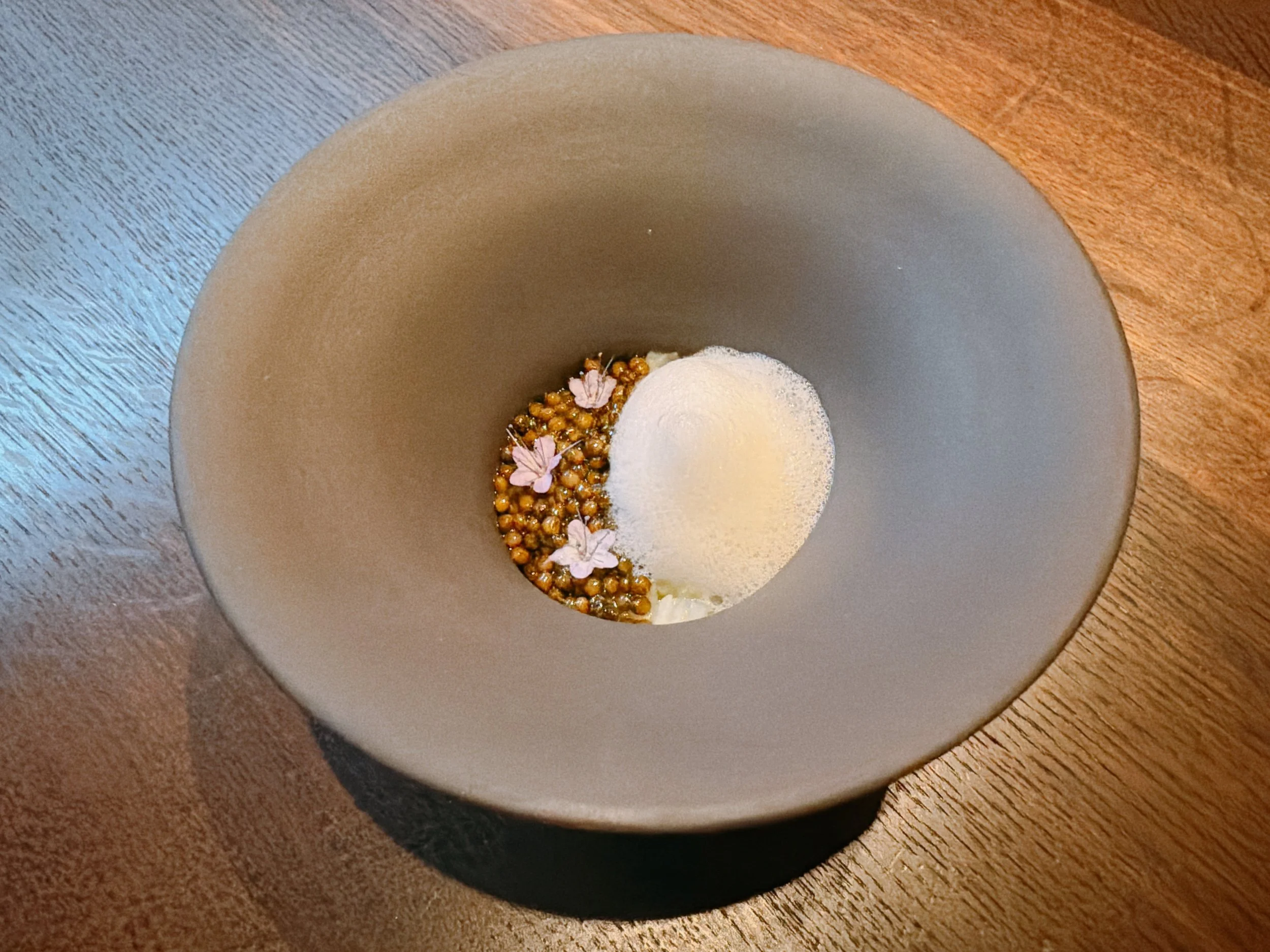
Our second dessert contained fermented strawberries, a strawberry puree, a toasted cherrywood foam, and a grilled strawberry ice cream. There were some crunchy crumbles in the dish as well, but I unfortunately missed their description. Overall, a lovely, light, foamy, strawberry-flavored dish 16.
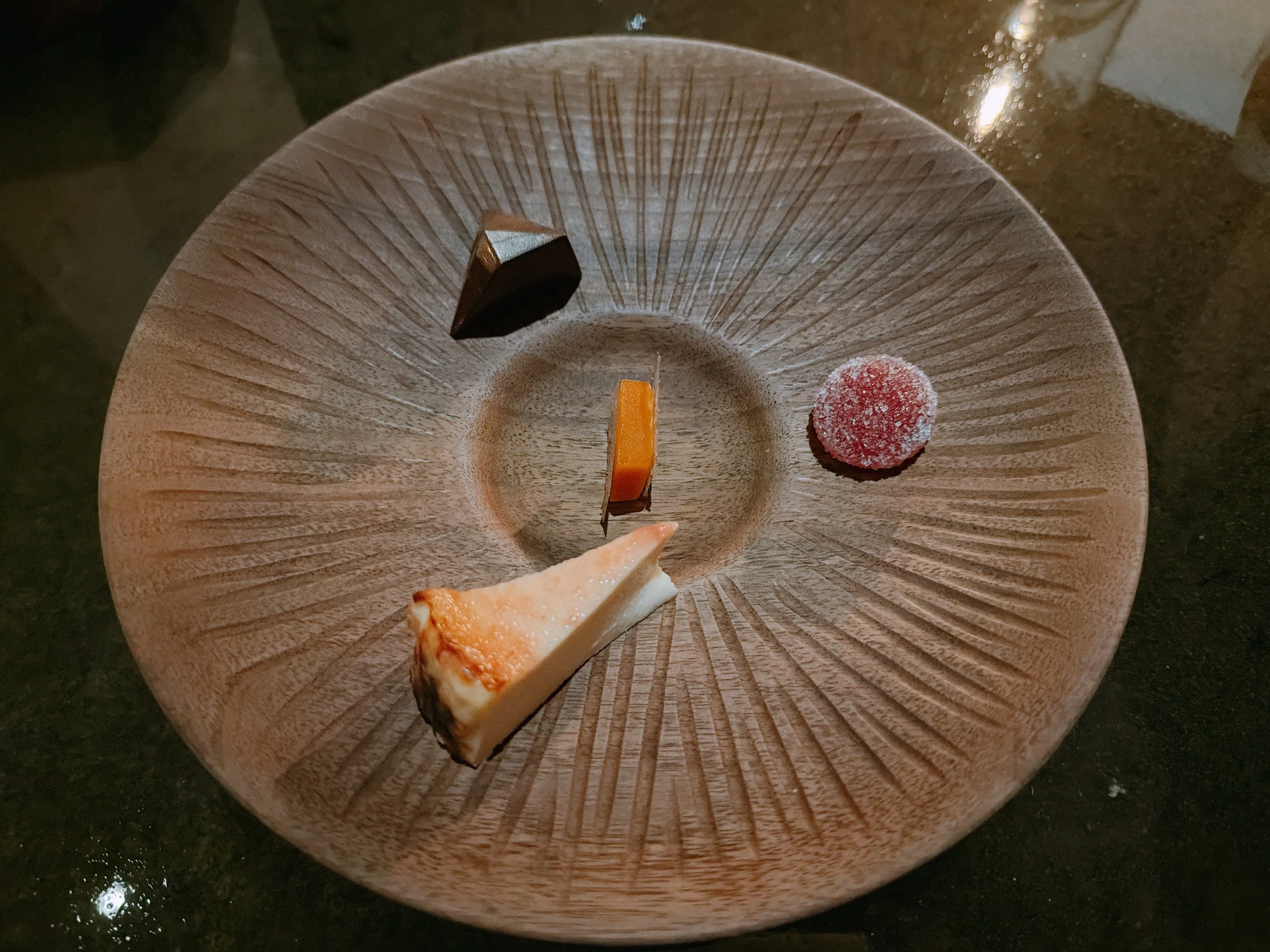
Four petit fours concluded our dinner, and each one represented one of the four farms, just like with the appetizers. The vegetable farm arrived in form of a Basque cheese cake made with white currants and white asparagus. Served cold, this cake and its filling had a good consistency, but the pronounced taste of white asparagus felt a bit out of place in what was ostensibly a dessert 14. A piece of sea buckthorn fudge had been combined with a sugar tuile that incorporated trout scales. The sea buckthorn flavor was pretty light here, and the fudge pleasantly chewy. The tuile added some crunch, but (maybe thankfully) not any detectable trout flavor 16. A 85% chocolate praline had been filled with a smoked pork fat caramel. This one definitely had a strong pork/bacon flavor - oof. A bit of an acquired taste 14. Finally, there was a strawberry pate de fruit with a lovely strawberry flavor - an ending much more to my liking than the bacon-flavored chocolate 15.
Overall: There are “regular” farm-to-table restaurants, and then there is Alouette's four-farms-to-table tour de force. I liked the theme of featuring four different farms and having two dishes each built around their produce. The way this was done, the flow felt very natural, except for a couple odd savory aspects among the the petit fours. There were many lovely main dishes, but also a few that didn't quite work for me. For the latter, we got an inkling of what had been intended, but the result ended up being unbalanced or lacking in flavor - a bit rough around the edges, so to speak. But all nitpicking aside, we definitely had an enjoyable evening, also thanks to the great service, and that at half the price of the three-starred dinner the night before 15.