Enclos - Sonoma
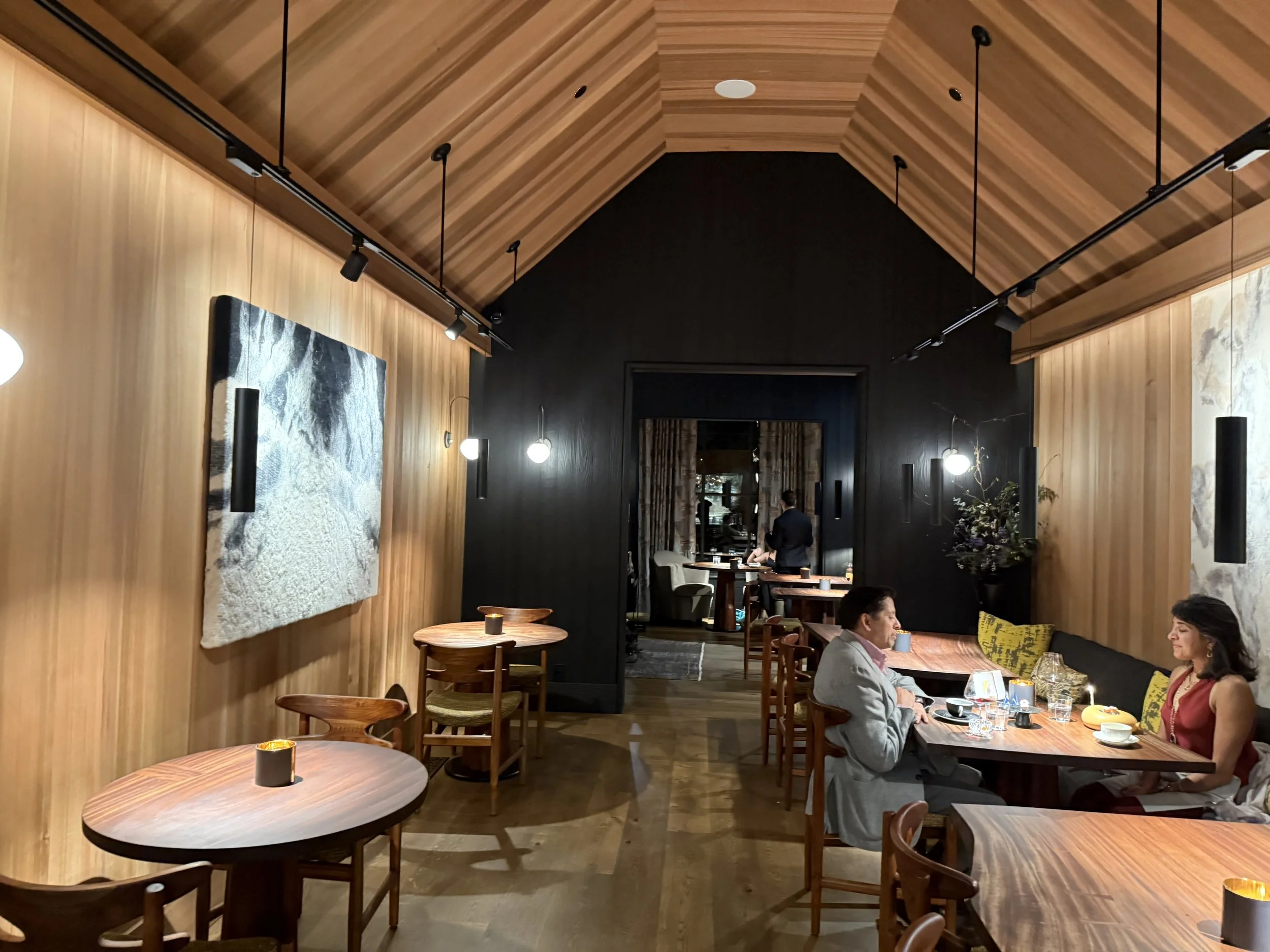
Main dining room, the original house is through the opening in the back
Rating: 17/20
Where: Sonoma, CA
When: Dinner for 4 on 15 November 2025
Cost per Person: Tasting menu $280, Wine pairing $175-$300
Accolades: 2 Michelin Stars
Why: Produce driven Californian cuisine with influences from Japan and New England
Note: For a more recent review, after the restaurant received its third Michelin star in June 2026, please see here.
“Enclos” is a new restaurant in the city of Sonoma in California, situated about half a block east of the main town square. Having opened in December 2024, it went straight to two Michelin stars in 2025, an impressive feat for a chef's first stand-alone restaurant. Reservations open on Tock every two months and sell out within minutes - one of the hottest restaurant tickets in Northern California, for sure. So we were happy to dine here on a balmy Saturday evening in mid-November.
From the sidewalk, the restaurant still looked like the residential house that it had once been. But when walking to the entrance on the right side of the building, it quickly became apparent that the backers of this venture had deep pockets. We entered a newly built lounge annex that served an a la carte menu to members of the wine club of the Stone Edge Farm winery, which shares owners with the restaurant. (In fact, the whole building had started out as a tasting room for that winery.) Beyond the lounge was a state-of-the-art open kitchen and a luxurious dining room, kept in dark wooden tones and decorated with several pieces of modern art. The dining room was L-shaped - the part closer to the street was the original house, whereas the rest was an addition built for the restaurant.
It turned out that not only the interior design was first-class here, but also the service. Led by veterans from The French Laundry and two-Michelin-starred Harbor House Inn, all interactions with the staff were incredibly smooth, though maybe a tad more formal than one might expect for laid-back Sonoma. I was also positively surprised that we were asked for feedback on new dishes and on the new non-alcoholic pairing - one of us was the first person to try it in its entirety (very good, reportedly). Definitely a sign that the restaurant is not planning to rest on its laurels. Also appreciated: there was just a single seating, so no rush to vacate our table, as we would have had to at many other starred restaurants (SingleThread, The French Laundry, etc).
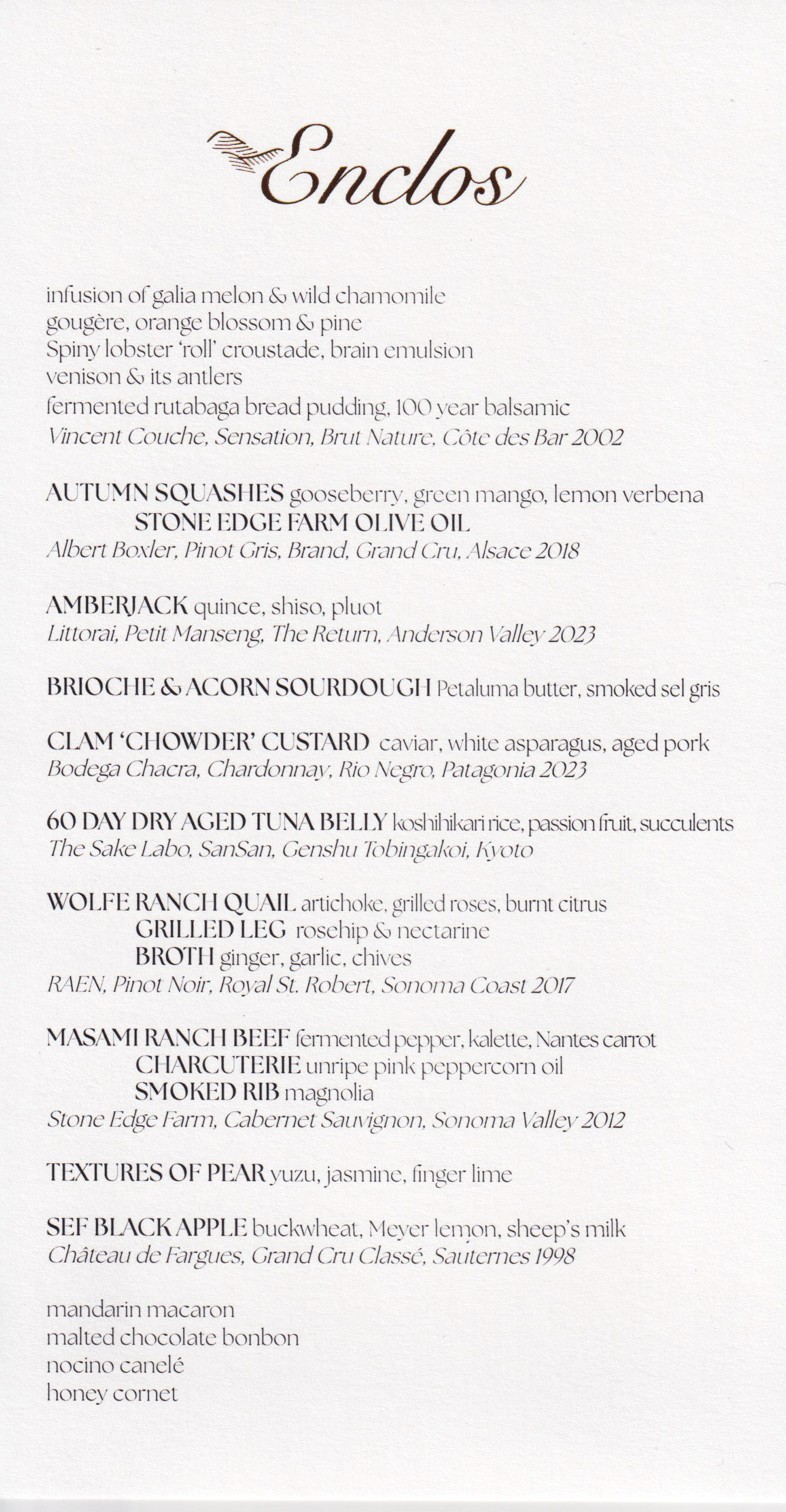
Enclos served Californian cuisine with many ingredients drawn from the restaurant's own farm. There were some nods to Japanese cuisine (not really unusual these days), but also (and more distinctively) some culinary references to New England, the chef's childhood home. There was a just a single tasting menu, but it was adjusted to dietary preferences. There were two wine pairings, priced at $175 and $300, respectively, as well as two wine flights ($85 and $125). The pairings consisted of eight glasses each, essentially one per course, while the flights had only three glasses, all coming from the aforementioned Stone Edge Farms winery. I tried the $300 pairing, which (unusually) started with a choice for the first glass. No fewer than three champagnes were available: a 2014 Cristal, a Krug, and a 2002 Vincent Couche Sensation Brut Nature. (I tried the Vincent Couche mainly for variety's sake. It was not bad at all, but the other two choices would probably have been even better.) The wines (and one sake) in the pairing were all pretty good, a 2012 Stone Edge Farms Cabernet especially so. Altogether this was a nice wine pairing, and I'll have to try to the cheaper one next time to see whether the upgrade is worth it.
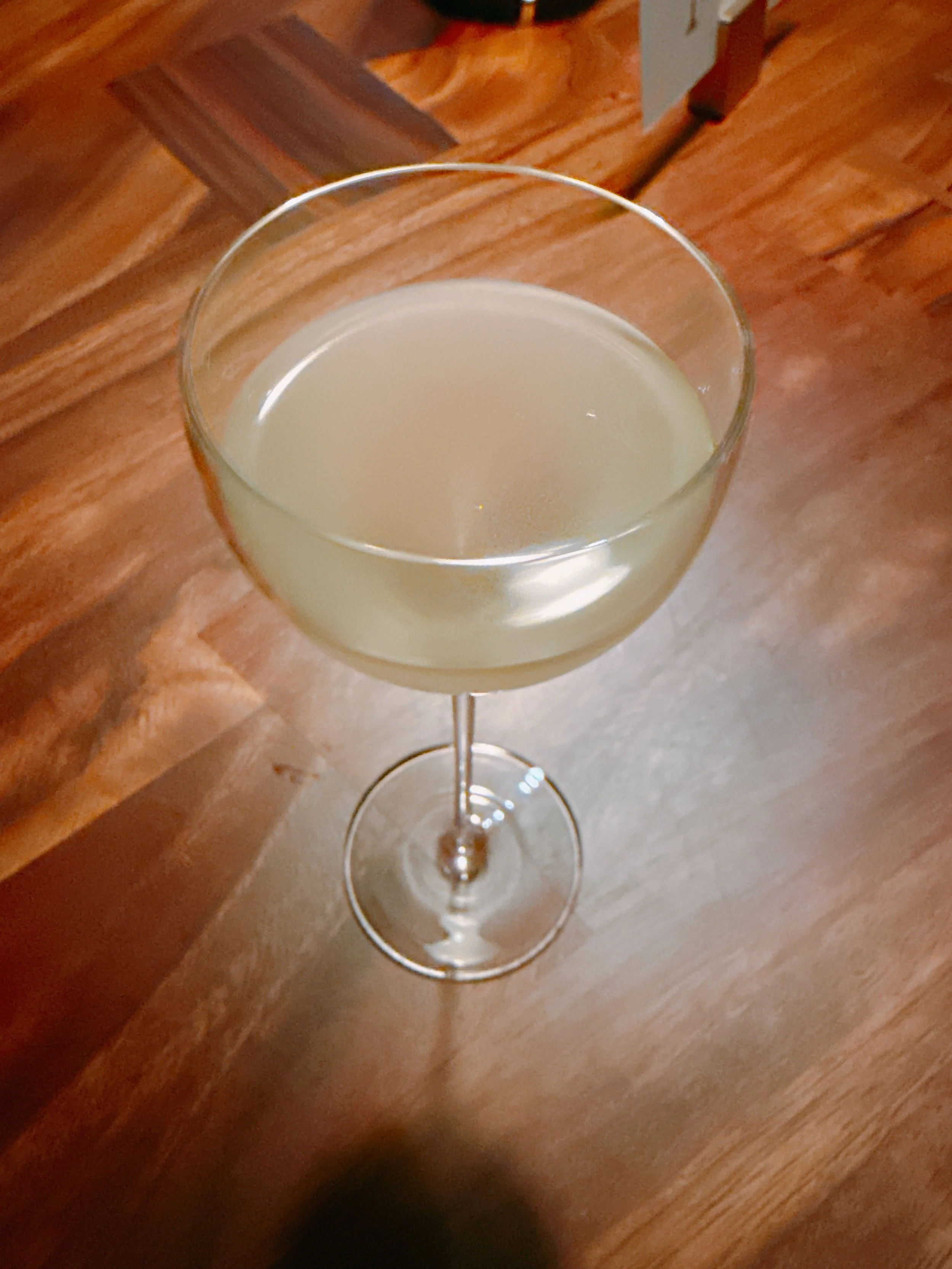
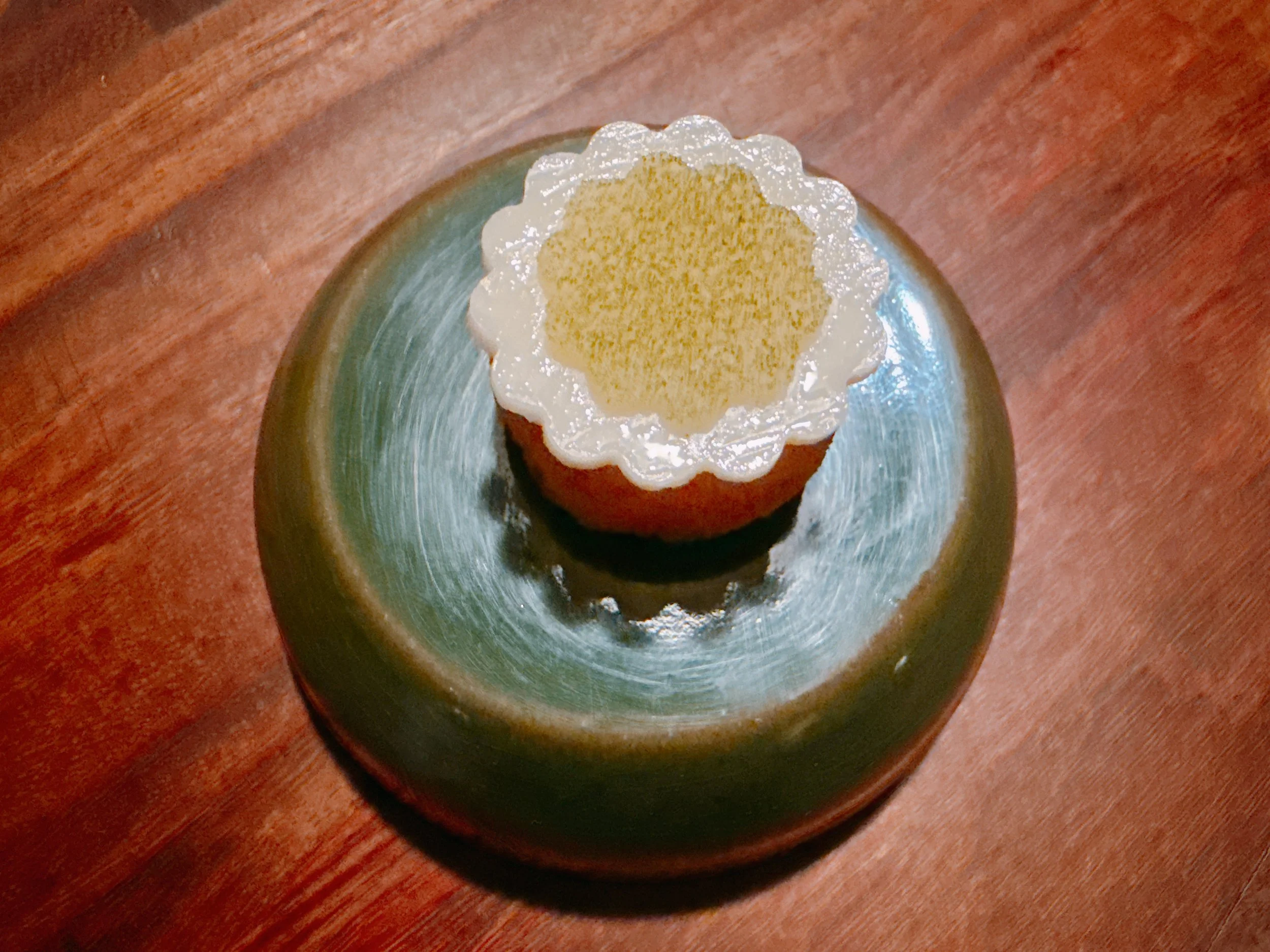
Before our food started, we received a green-tinged drink, an infusion of melons with many other ingredients, such as citrus, shiso, lime leaves, and cucumbers. Served chilled, it was slightly sweet, lightly herbal and had a noticeable cucumber flavor 15.
The drink was followed by four appetizers, served one at a time. First, a gougère filled and topped with a local cheese and seasoned with orange blossoms and pine. This was a nice, warm bite; the cheese on the inside was soft and creamy, while the one on top had a bit of a bite. What felt like a slice of fresh apple on top brightened up the dish 17.


Next, we received a “lobster roll”, albeit a highly unusual one. A croustade ring was filled with spiny lobster meat and topped with a green goddess dressing, a lobster head emulsion, cilantro flowers and Fresno chilies. The ring sat on a glass plate that made it look like it were floating in space. This dish had a delicate texture, and the most notable taste came from the lobster filling. The toppings were much lighter in flavor and added a slight herbal note, but nothing that might overwhelm the lobster taste. This was my favorite among the appetizers 17.
A little tartlet contained a venison tartare, an egg yolk and fried lichen. This was a very autumnal dish, without any bright flavors (for better or worse). There was some smokiness to this bite, some umami and it had a creamy texture (presumably from the egg yolk) 16.
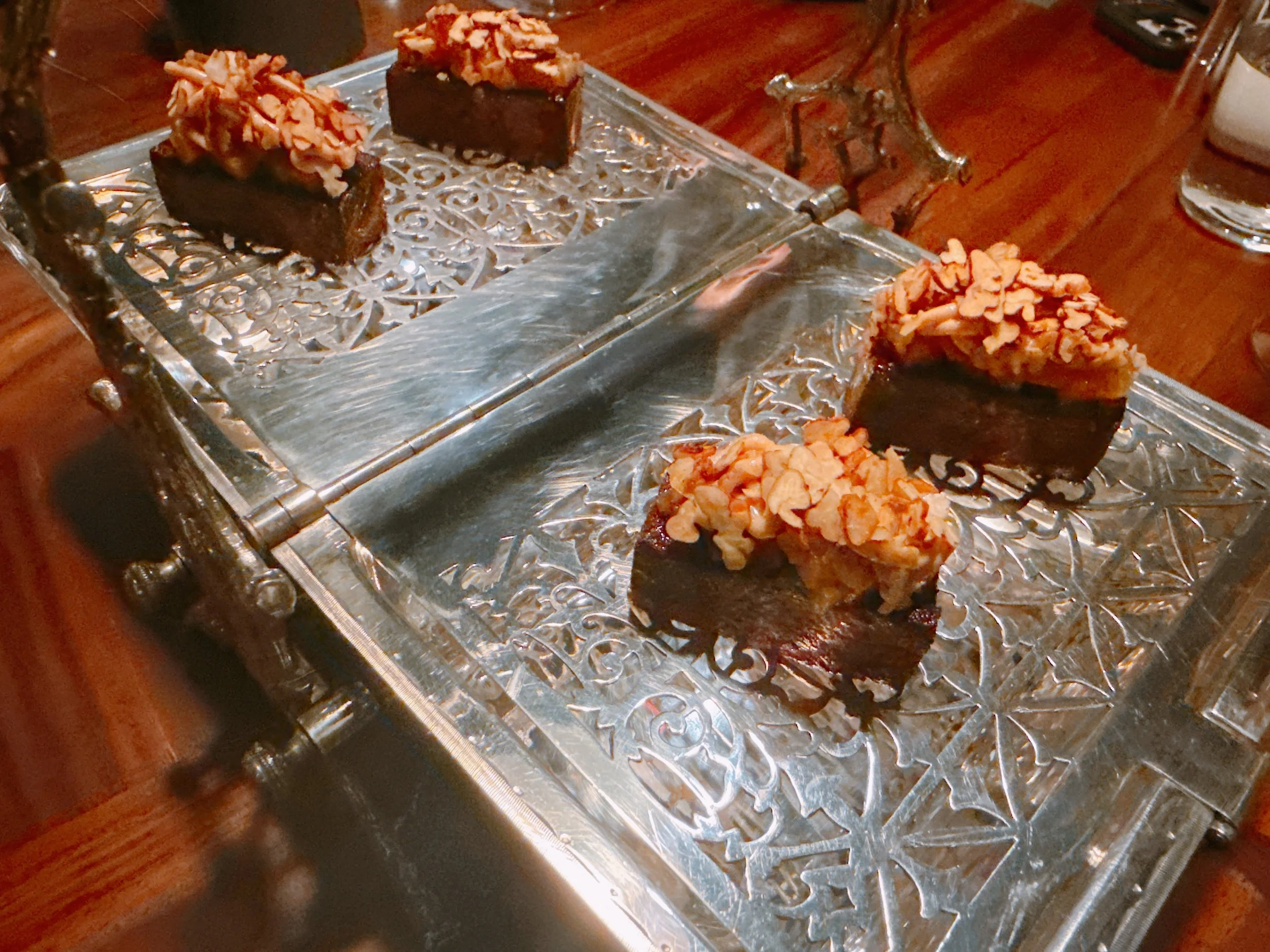
The final appetizer was a rutabaga “bread pudding”, containing duck liver, pecans, some vadouvan spice and a bit of 100 year-old balsamic vinegar from Modena. This bite was creamy from the liver, but surprisingly not that heavy. The pecans added a bit of crunch 16.
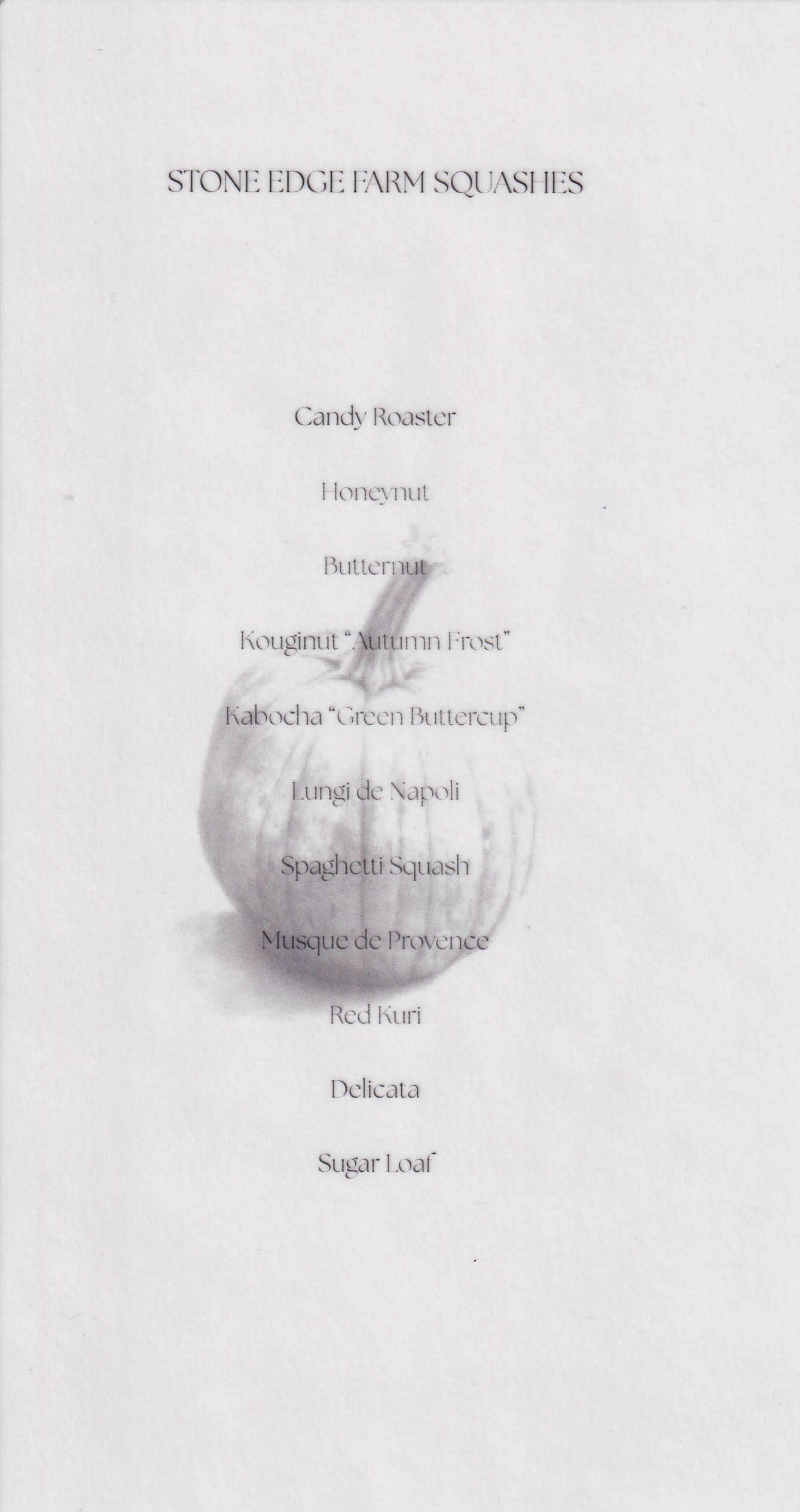
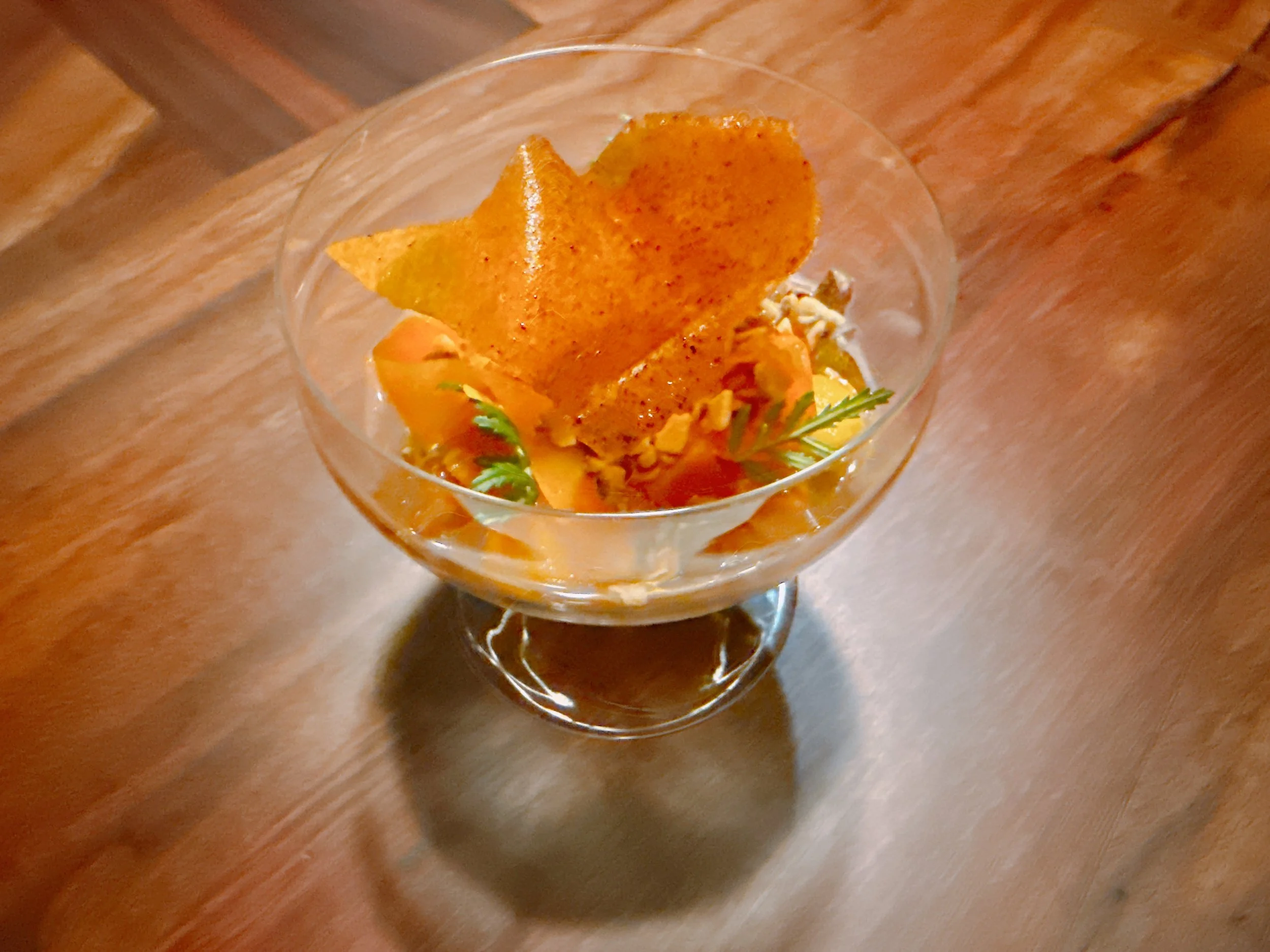
Before the first “official” course, we were handed a menu with a list of eleven different kinds of squash (see below). Not being a great fan of non-summer squashes, I was afraid that this actually listed the main ingredients of the following eleven courses. But thankfully, they all appeared in a single dish. A little glass bowl was filled with squashes prepared in many different ways: cooked, roasted, and as confit. In addition, there was a milk punch, a pumpkin juice, green mangoes, citrus, olive oil, marigold and lemon verbena. And the result was - I never imagined myself saying this about a squash dish - actually quite good. It helped that the dish didn't strongly taste of squash. Instead, it was lightly sweet and felt quite fresh, probably helped by its acidity. Overall, this was actually more of a summery rather than an autumnal fruit dish 17.
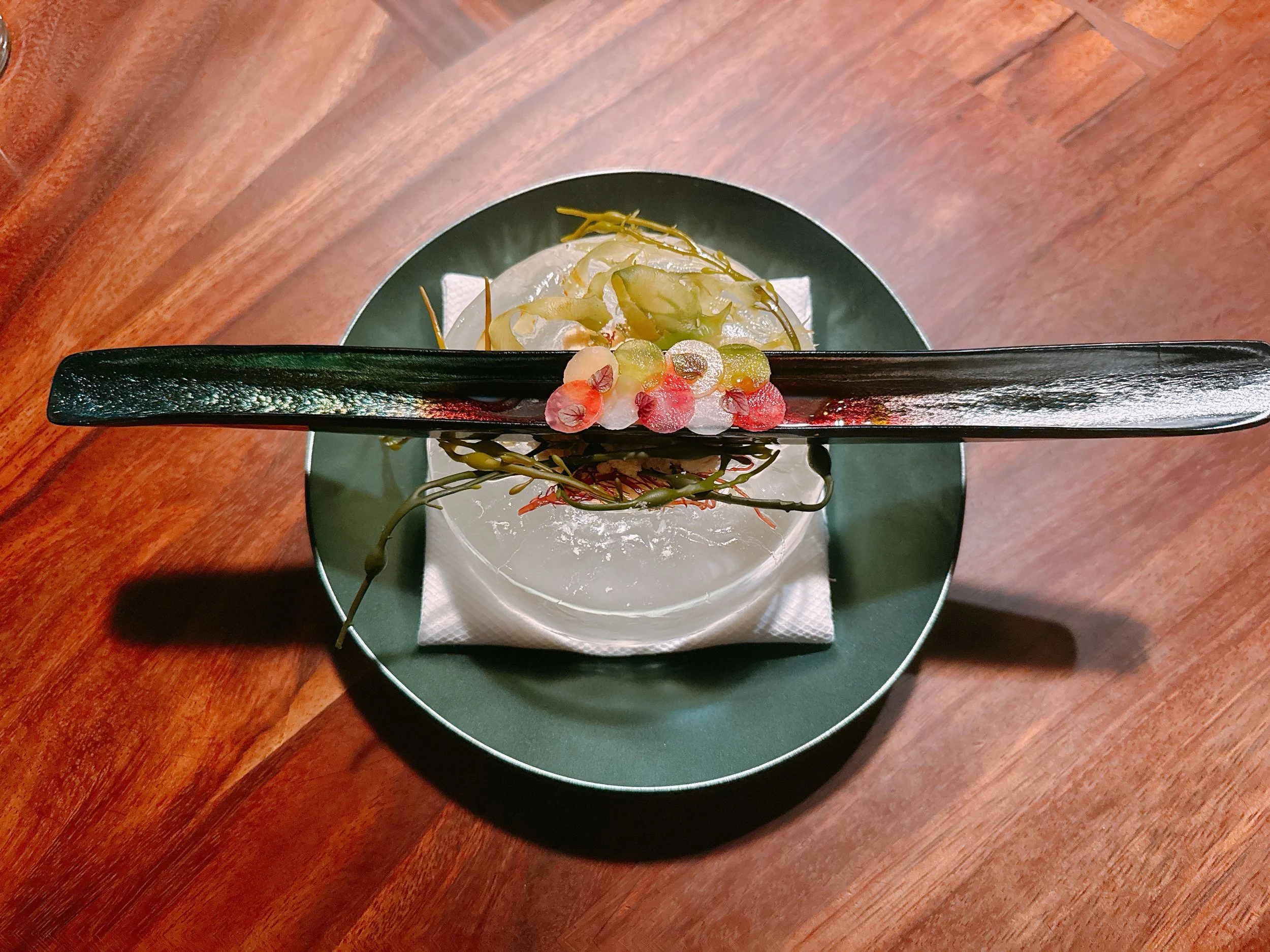

Raw amberjack was topped with little discs of daikon, jalapeño and shiso, and dressed with a pluot consommé and shiso oil. Curiously, this dish was served in a vessel resembling a razor clam shell. The fish was of good quality and its topping added a nice crunch, but overall this felt a bit too lightly flavored. The pluot consommé was also oddly sweet, although one probably wouldn’t notice unless one drank the remainder of the sauce 16.
A bread course featured two kinds of bread. One was a laminated brioche that almost felt like a croissant. The other was a sourdough bread made with acorn flour. Butter from nearby Petaluma topped with sel gris completed the presentation. The sourdough was pretty good, but the brioche stole the show: warm, flaky, and lovely with the salted butter. It's probably a good thing that we didn't get refills - otherwise we might have gorged ourselves on these breads alone 17.
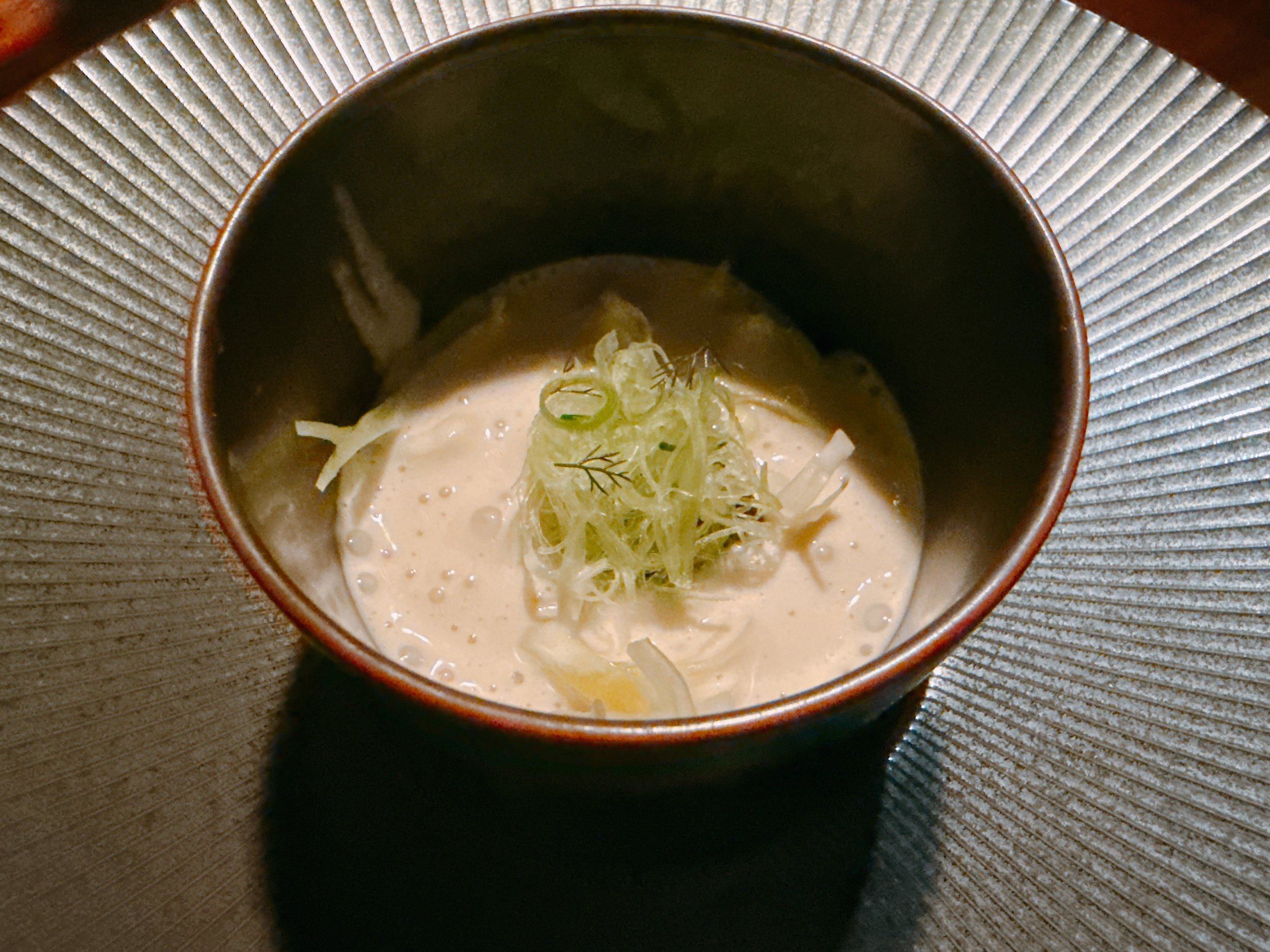

Another nod to the chef's New England heritage was the following clam-chowder-inspired chawanmushi. Besides the Japanese egg custard, the serving bowl contained celery root, caviar and a fermented white asparagus velouté. This dish had lots of clam flavor and a variety of different textures, ranging from crunchy to creamy 17.
Sixty day dry-aged tuna belly (caught off the Half Moon Bay coast, not too far south of Sonoma) had been finely chopped and was served over koshihikari rice grown near Sacramento. The dish was topped with some succulents and a sabayon made from brown butter, uni (sea urchin) and passion fruit. Clearly a Japanese-inspired dish, but made with Californian ingredients. The rice was lovely, light and fragrant, and the tuna was quite good as well, but its texture was unfortunately lost due to it being served as a tartare. The acidic sabayon lightened up the dish 17.
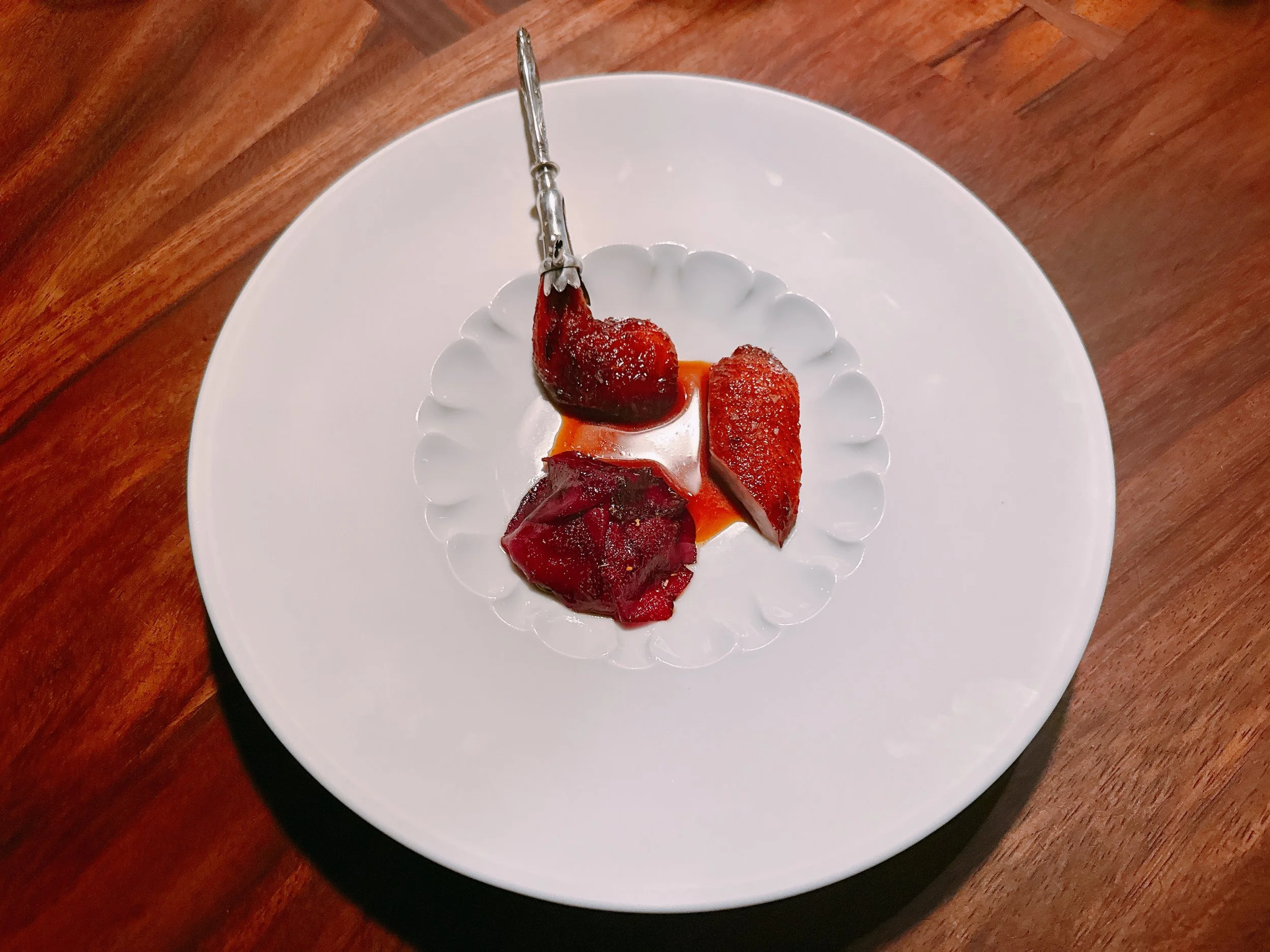
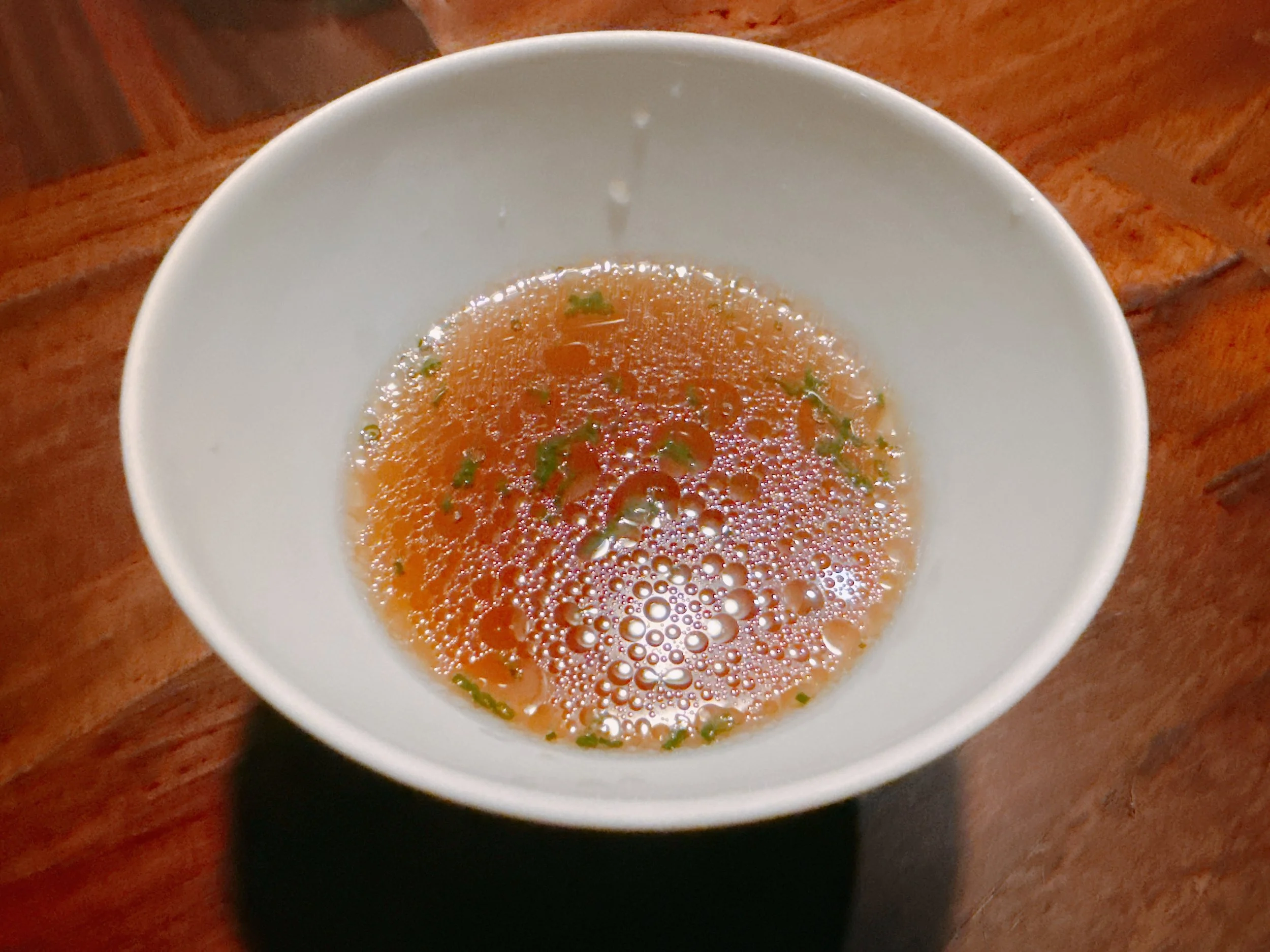
The first of two meat courses centered on quail, served three ways: its breast, a grilled quail leg (seasoned with honey, rose hips and nectarines), and a quail broth seasoned with garlic and chives. Next to the quail meats were some artichokes topped with grilled rose petals and seasoned with mandarines and citrus jus. The quail breast in particular was quite good with a crunchy skin and juicy meat. The artichokes and roses also went surprisingly well together - a combination that I don't recall having had before. The broth was not quite as distinctive, but still flavorful with a light chive taste. Great on a cold winter evening, no doubt 17.
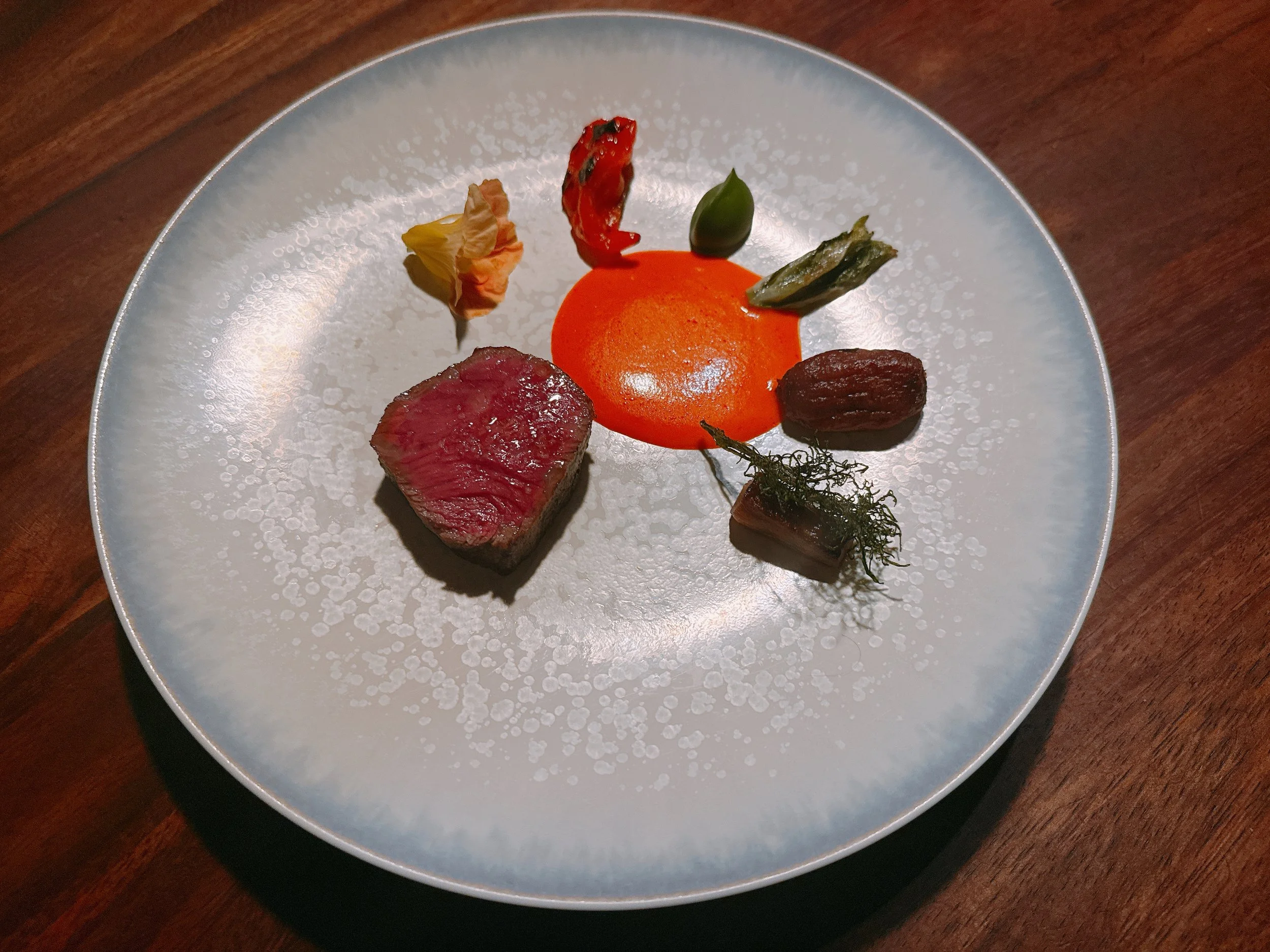
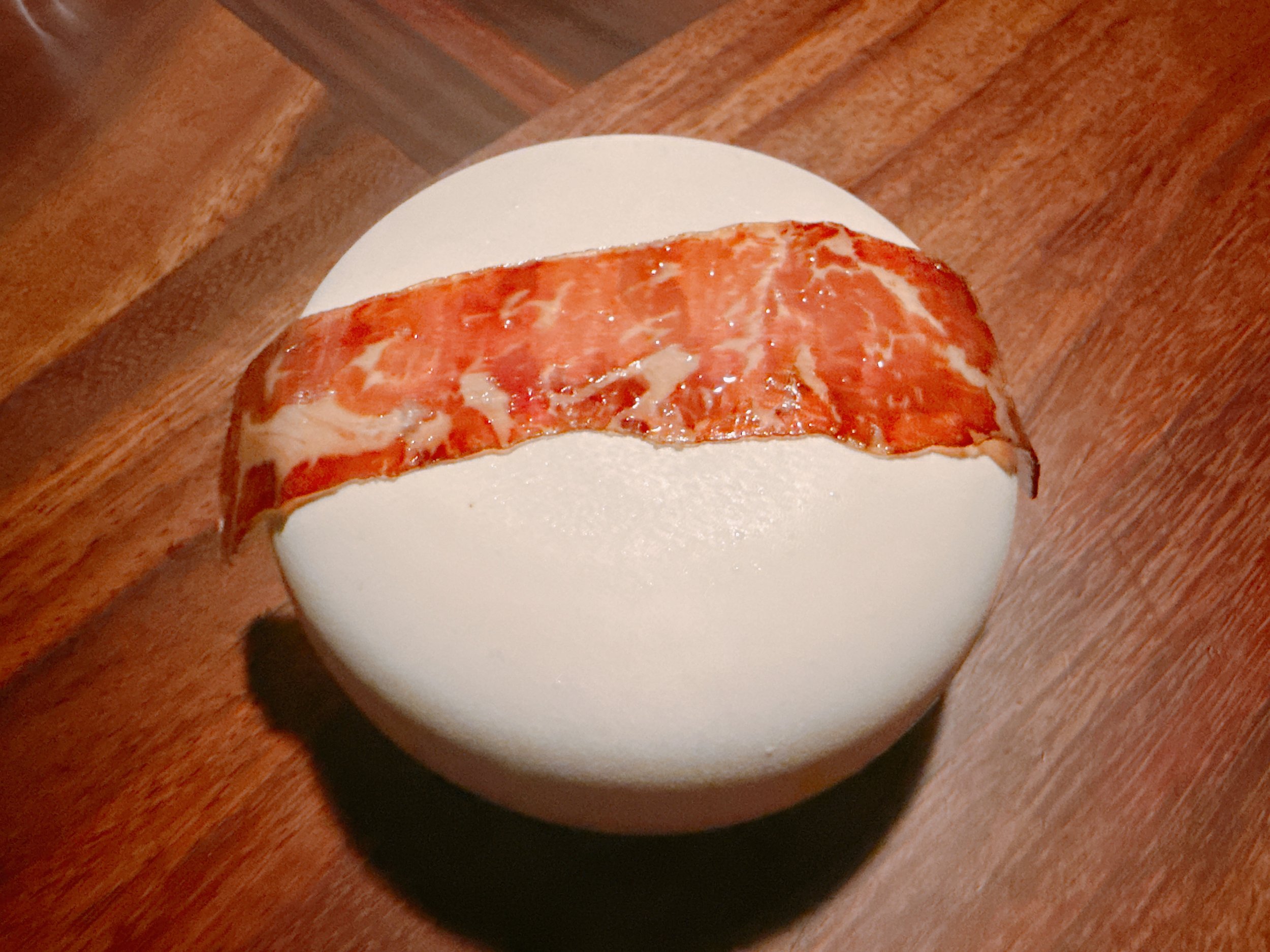
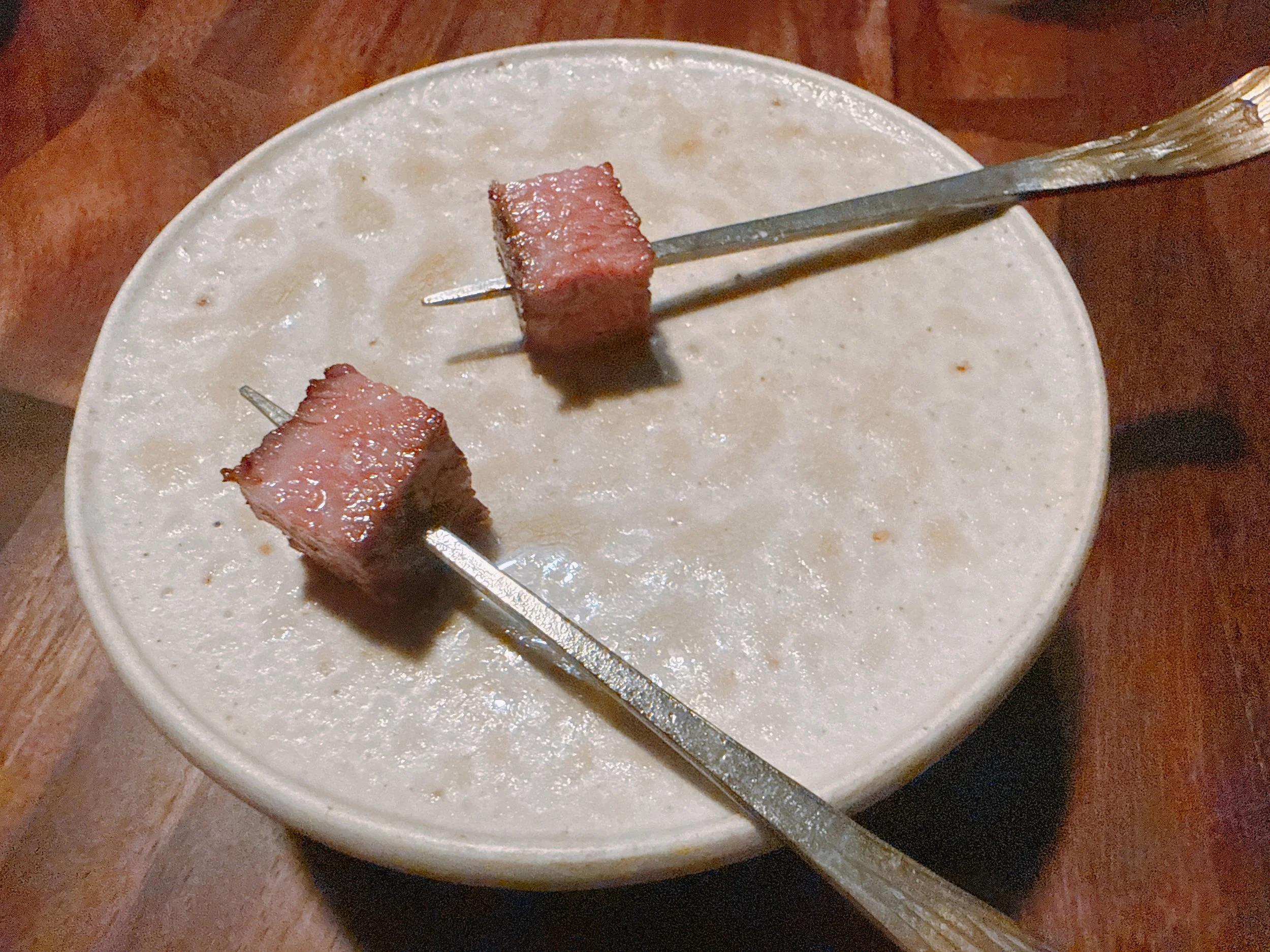
Our final savory course featured wagyu beef, again prepared three ways: as a filet, as dry aged charcuterie and as a smoked short rib cube lacquered with preserved magnolias. Starting from the end: the short rib almost melted in one's mouth - very nice. Even better was the lovely, peppery beef sausage. The beef filet was a step down, unfortunately, and too chewy for my taste. What blew me away about this dish though, were the sides next to the filet: a nasturtium flower, a habanada pepper, green garlic, broccoli, a Nantes carrot, a pickled and fermented eggplant, and a sauce made from fermented peppers. Except for the flower, which was mainly decorative, these sides were bursting with flavor. Some were pickled and acidic, others smoky, and all not just very distinctive but also delicious. With a better cut of beef this would have been a three-star level dish 17.
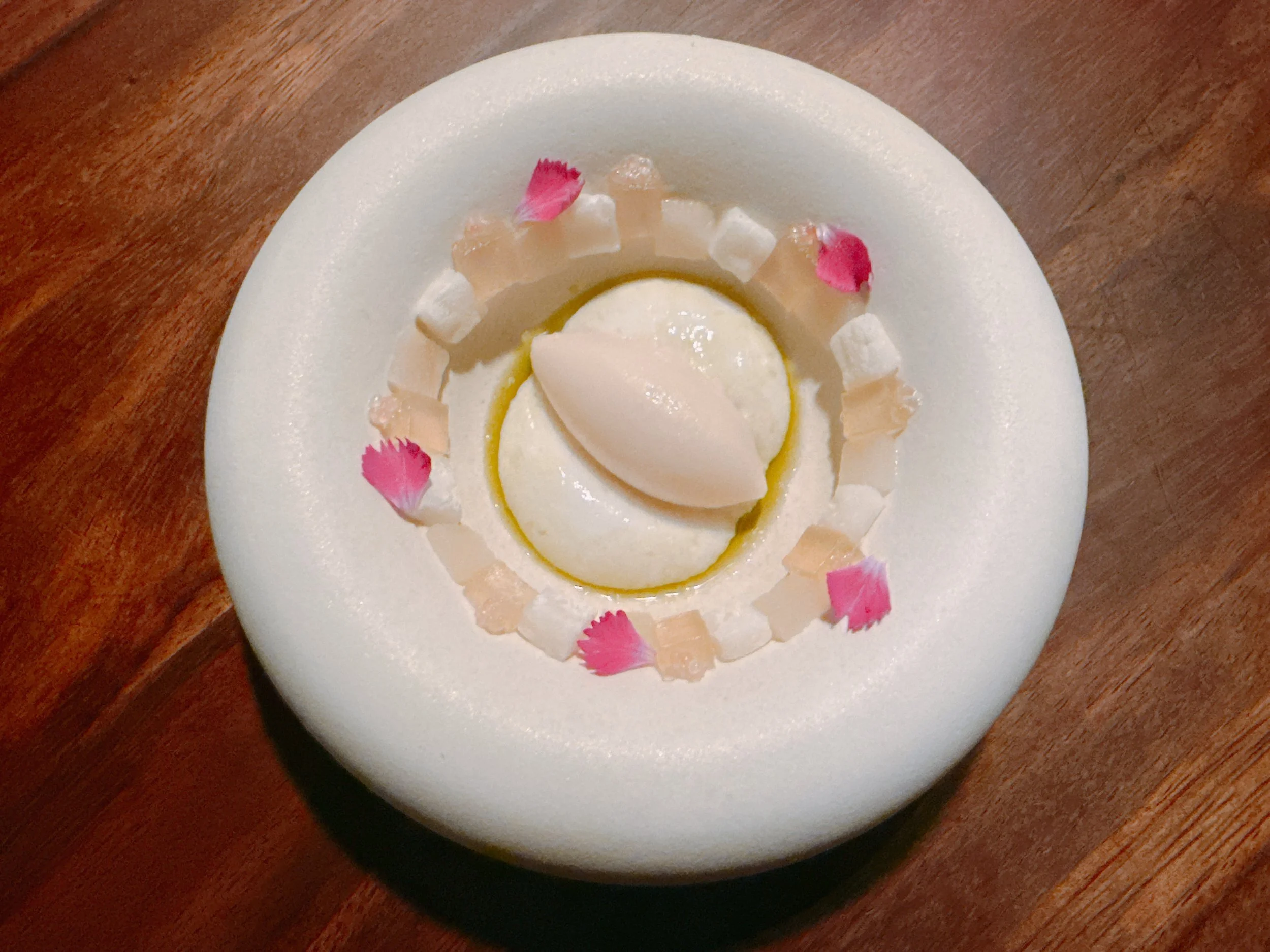

The first dessert had pears in different textures: fresh, chewy, and so on. They were seasoned with yuzu, jasmine and finger limes. A lovely combination, and a sweeter version of the pumpkin dish served at the beginning, in the sense that it used a single ingredient in multiple ways without tasting just of that ingredient. There was some ginger flavor, and a nice sorbet as well 17.
Dessert number two was a deconstructed sticky toffee pudding. Black apples, toasted buckwheat, a Meyer lemon curd, caramelized whey, and goat cheese all made an appearance on the plate - a combination of sweet, acidic and crunchy components. Good, but flavorwise not as bright as the pear dessert, and not a presentation that made me necessarily think of sticky toffee pudding 17.
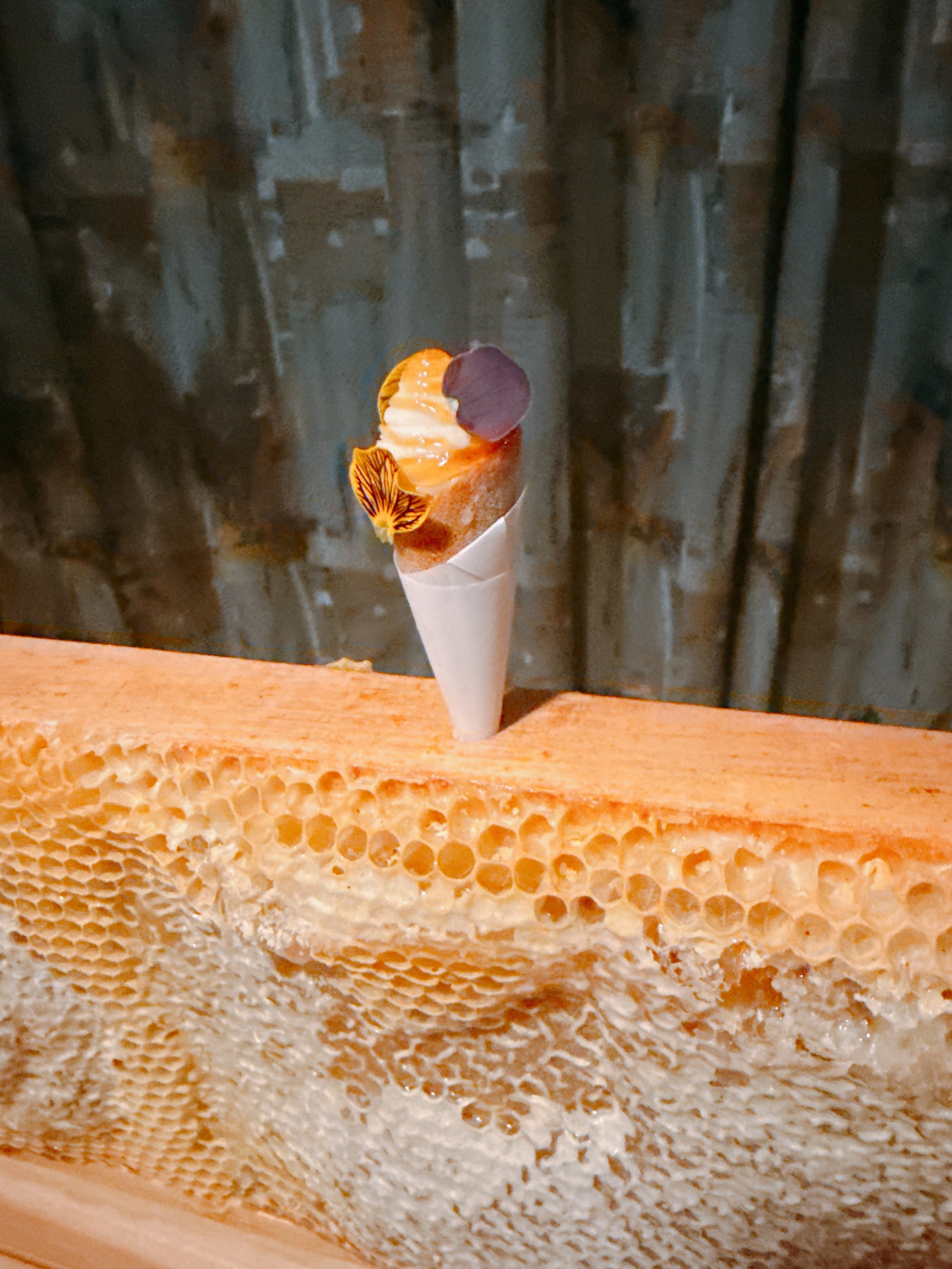
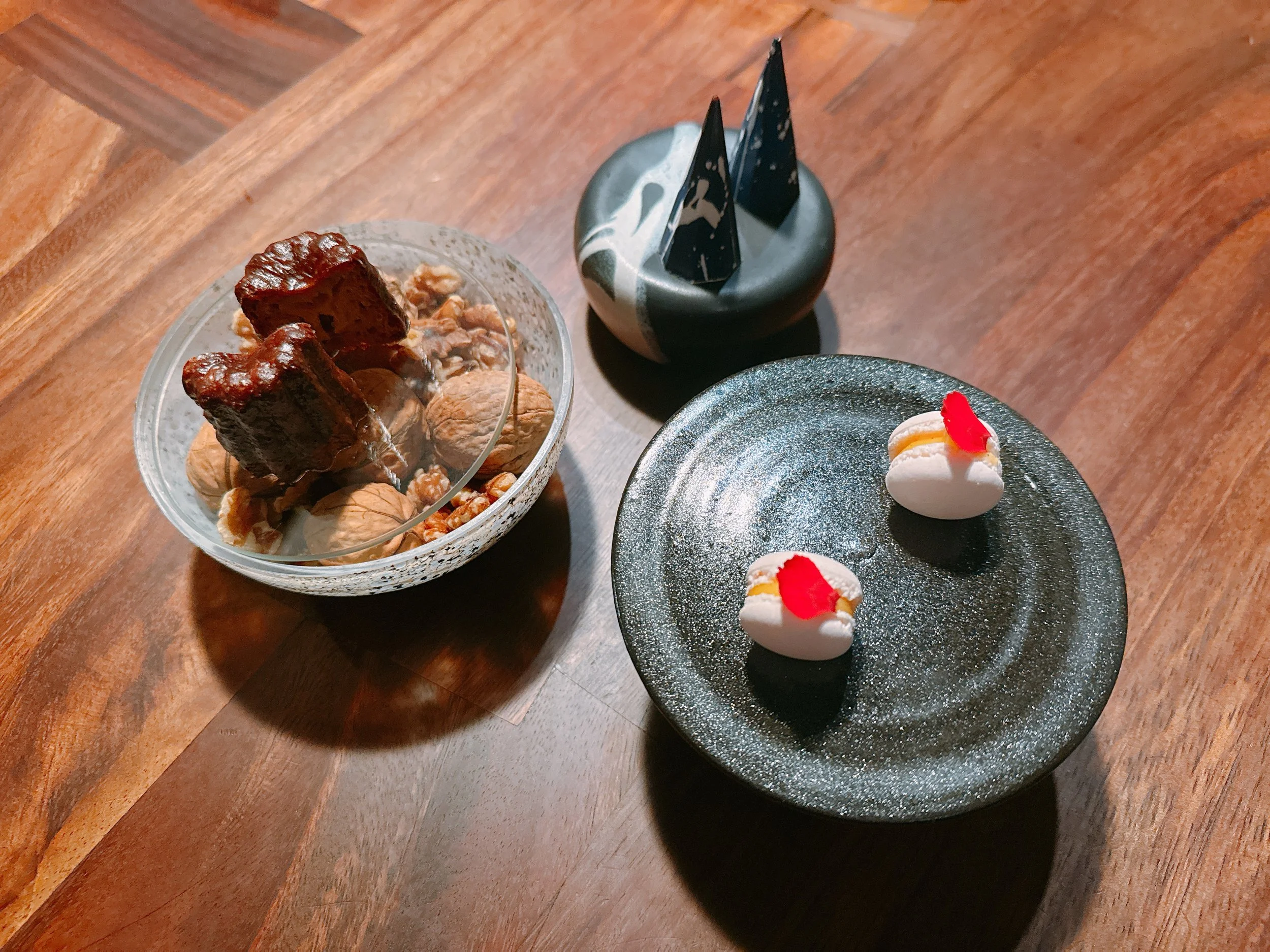
Some petit fours concluded our dinner. The most time-sensitive one to eat was a cornet filled with honey ice cream. Lovely, with a hint of thyme 17. A canelé made with nocino (a liquor made from unripe walnuts) had a nice flavor, but only a light crunch, and its insides were a bit too baked for a canelé 16. Mandarin macarons had only a light flavor 16. Finally, a malted chocolate bonbon was dominated by its crunchy shell. Not bad, but the filling played only a secondary role 16.
Overall: Californian cuisine that was seasonal and produce focused, with some nods to Japan and New England. The most impressive thing about this meal was its consistency - not a single dish fell below a two-star level. That’s not an easy feat for a new (or really any) restaurant. There were inklings of even more: the sides of the beef course were phenomenal - both focused and delicious. The service was already at a three-star level, so I'm curious to see where Enclos will go next 17.