Kahala - Osaka
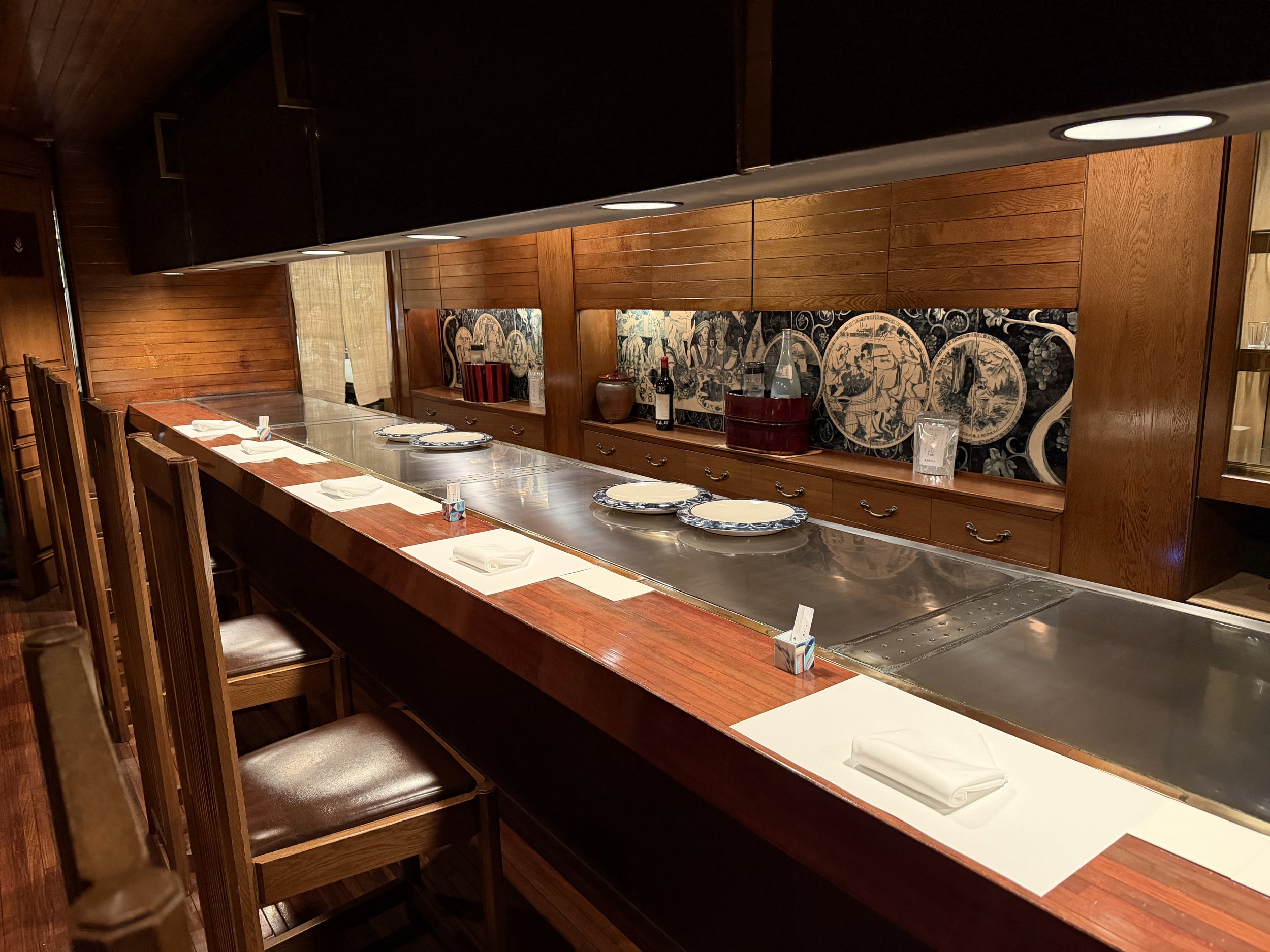
Several dishes are prepared right at the counter - the rest in the kitchen behind the curtains
Rating: 15/20
Where: Osaka, Japan
When: Dinner for 1 on 15 June 2026
Cost per Person: Tasting menu 44000 JPY
Accolades: 2 Michelin Stars, Tabelog Bronze Award (2026)
Why: Inventive dishes with unusual flavor combinations
A dinner at Osaka's “Kahala” is a truly unique culinary experience. It's impossible to pigeonhole the restaurant's cuisine and its presentations are whimsical but well-thought-out. There is ample justification for its two Michelin stars, but some diners might equally well be asking why it has any. Kahala is very clearly a restaurant with Japanese roots, but at the same time does not serve any Japanese food. Sounds intriguing? Then by all means, read on.
Chef Yoshifumi Mori opened Kahala in 1971 (!), and has been in its kitchen ever since. Now in his 80s, he still prepares many of the dishes himself (including the main savory course), and chats animatedly with the guests. On my visit on a surprisingly balmy evening in mid-June, none of the guests or the staff looked like they had been born when the restaurant first opened. Granted, its interior looked a bit dated, with dark wood paneling everywhere, but the focus clearly was on the food, which felt fresher and more daring than what most chefs at half of Mr Mori's age would serve. It was great to see that after all this time, he was still doing such creative work.
At Kahala, diners were seated at a counter that had room for eight. During my visit, there were a total of five guests, of which I was the only foreigner. While one of the younger chefs introduced all of the dishes in English, there was lots of banter going on between the chefs and the Japanese customers, so one’s experience will definitely be transformed by being able to speak Japanese. In fact, the earlier of two nightly seatings was limited to Japanese speakers (and not even bookable if one’s Omakase account is not associated with a Japanese phone number).
Like many counter-only fine-dining restaurants, Kahala served only a single fixed omakase menu. I was asked whether I had any dietary restrictions, so there might be some accommodations. But there are limits: the reservation website states that beef and cheese cannot be omitted. There was no beverage pairing per se, but one of the chefs was happy to pour me a new beverage whenever I had finished the previous one. I thus ended up with three glasses: a champagne, a sake, and a glass of red wine.
Right after sitting down, we were served a welcome drink: a wine aperitif made from locally grown grapes. The chilled drink was quite good, but tended more in the direction of fruit juice than wine, though with a lightly bitter note.
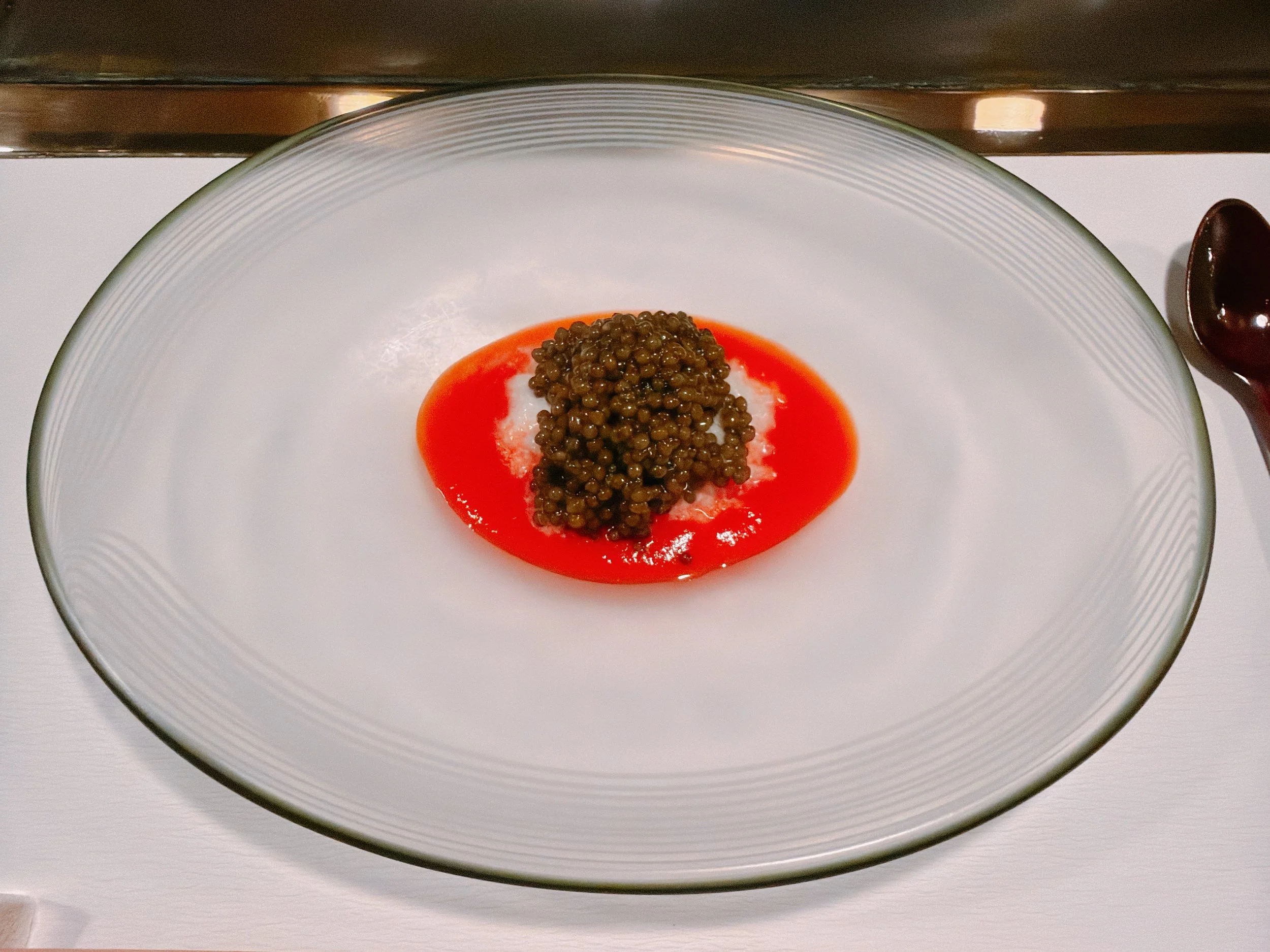
The first dish set the tone for the rest of the meal. A giant serving of caviar sat on top of a mixture of mascarpone and turnips that was surrounded by a paprika/dashi sauce. That was a list of five ingredients that one would not expect to find together on a plate, no matter the underlying cuisine. Individually, the components of this dish were lovely. The sauce had a wonderful paprika flavor, but it became less noticeable when it was mixed with the rest of the dish. In fact, the strongest flavor here came from the cheese. The turnips merely provided texture, and the salty caviar added, well, saltiness but only a hint of flavor. So while the combination of all the ingredients was good, I thought that they were even better individually. One could see why Michelin might reward the technique (great) and inventiveness (even better), while the average diner (such as me) might think that the end result tasted good, but not great. There would be more examples of such splits throughout the rest of the dinner. So on taste alone, this dish might rate a 15 or so, but I have to admire the chutzpah required to combine these five ingredients in a single dish 16.
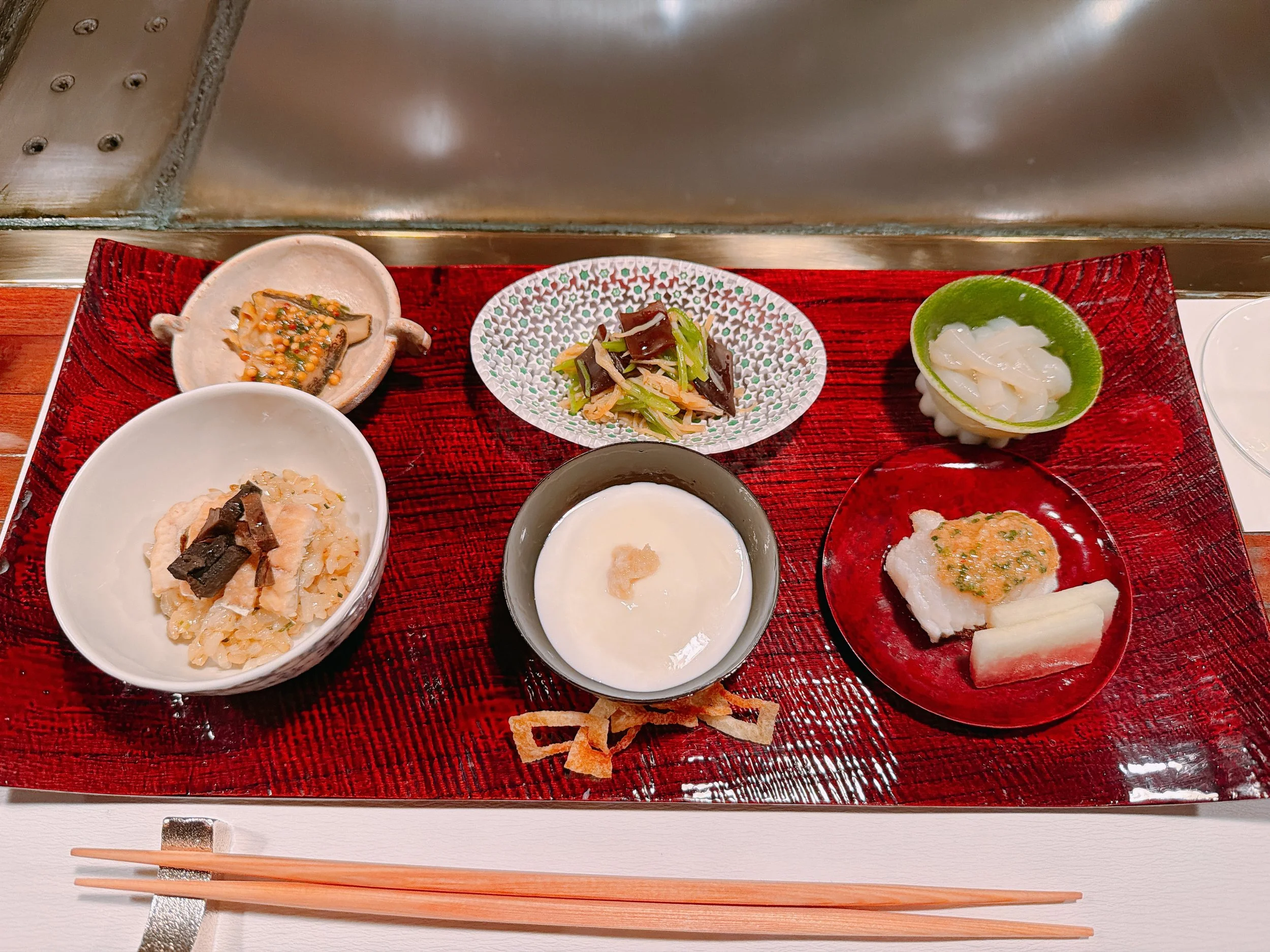
The next course was a “hassun”, a staple in traditional kaiseki cuisine: a seasonal course of small appetizers. We received six different dishes in addition to a little chain made from fried potato chips. Let's start with the potato chips - making them into a chain was a clever and unique presentation, but in the end they tasted only like crunchy but otherwise unremarkable potato chips 12. The dish I tried first (bottom center) was a piece of mozzarella cheese topped with ginger. The cheese tasted fresh with a light ginger note - actually a surprisingly great combination 16. Next was eel topped with a miso sauce, served with two slices of watermelon skin (bottom right). The sauce made this dish very flavorful, it felt almost meaty despite being vegetarian. Yum. The watermelon primarily acted as a palate cleanser 16. Another eel dish (bottom right) employed a different kind of eel (anago) and served it over a risotto with sliced olives. The rice was cooked far beyond an al dente consistency, making it relatively creamy. Compared to the first eel dish, this one was much lighter in flavor, making it feel like a small step down 14. Squid that been blanched for only five seconds was served in an inverted lime skin (top right). The lime skin was balanced atop a radish that had been cut into a ring shape. What a clever way to use food scraps to create serving dishes - and we'd see another example of that later. The squid itself was quite nice: creamy and with a light lime flavor. The radish underneath was nicely crunchy 15. A salad made from multiple kinds of mushrooms and Japanese watercress was served at room temperature (top center), and had a lightly crunchy consistency. Fine, but I wish that the dish had slightly stronger flavors 14. Finally, there were two clams topped with mustard seeds (top left). The clams themselves were quite good, having a nice texture but not much inherent flavors. The mustard seeds made this dish notably sweet, a bit too much so for my taste 14.
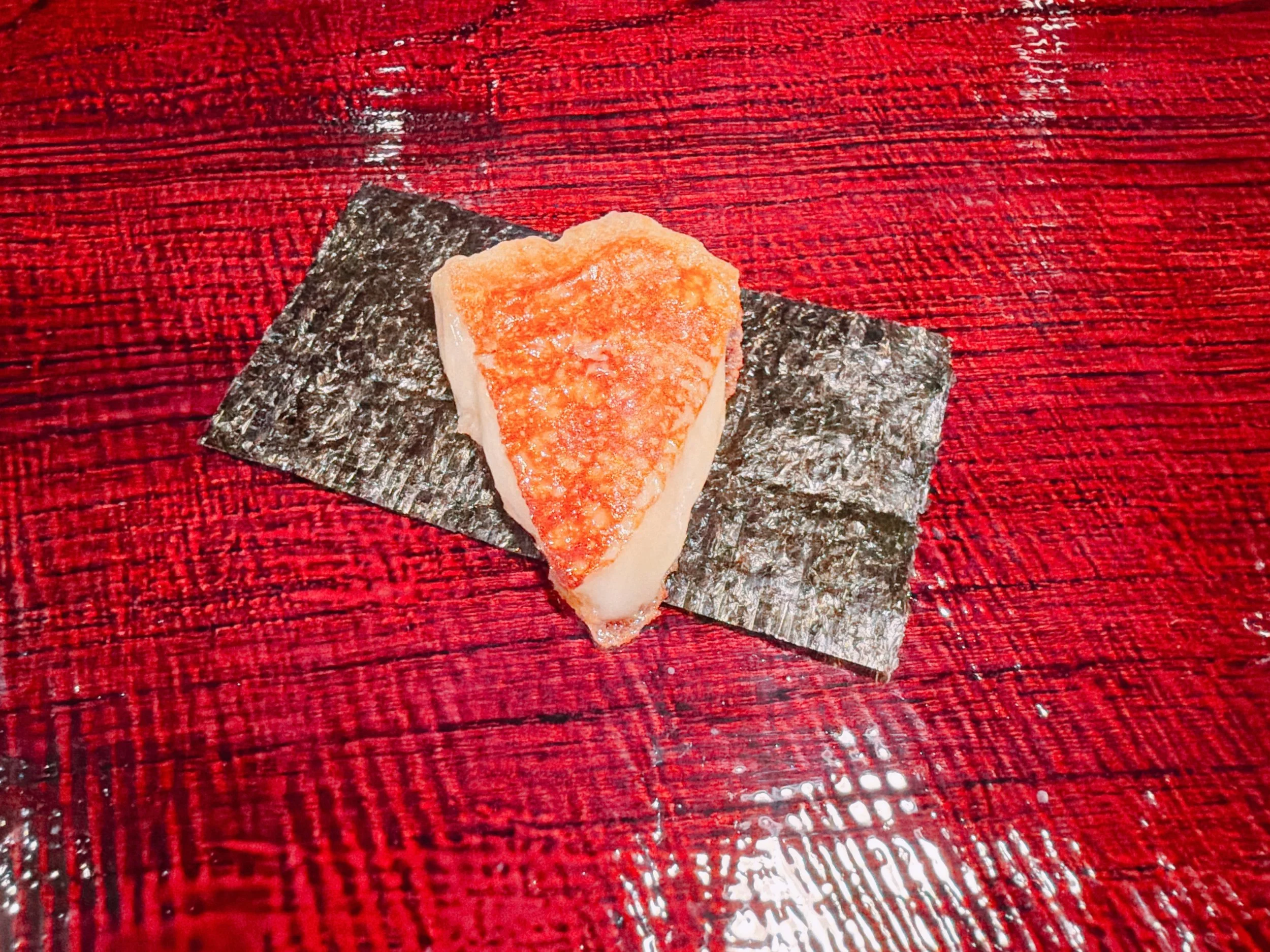
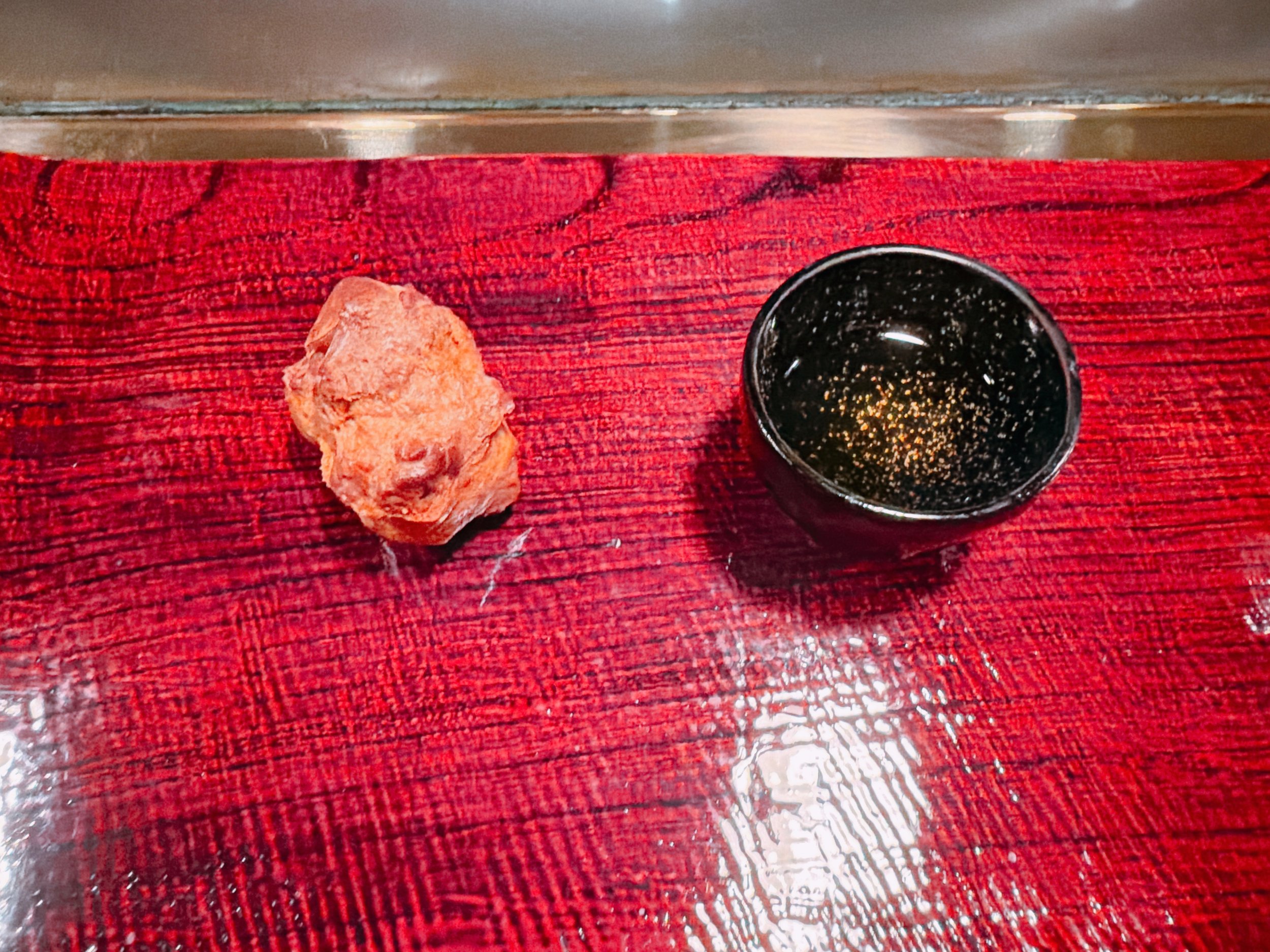
Fried cheese from Hokkaido was eaten wrapped inside seaweed. This was a lovely pan-fried cheese, whose flavor was nicely complemented by the nori seaweed. This was a combination that I hadn't seen before (just like the mozzarella/ginger pairing earlier), but it was so good that I had to wonder why nobody else had thought of this. Not a complex dish by any means - having literally two ingredients -, but very tasty 15.
A little curry puff was served together with a small cup of house-made “coffee oil”. The puff had a good crunch and its filling was nicely spicy - yum! Drinking the coffee oil afterwards added an aftertaste of coffee. It’s debatable whether this coffee flavor actually made the dish better, but it wasn't particularly distracting either 15.
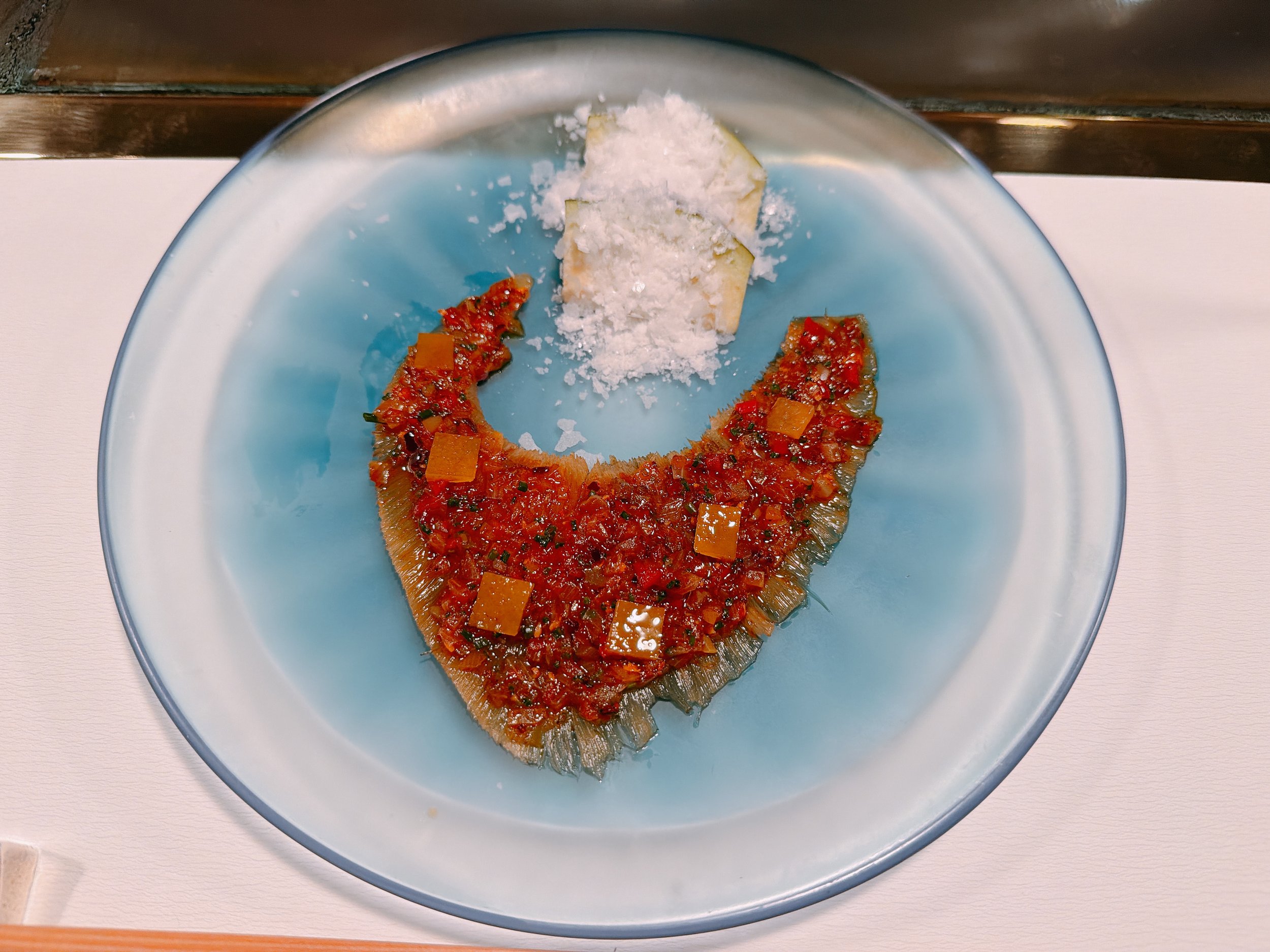
Reportedly one of the dishes that’s always on the menu was a preparation of shark fin. The shark fin in question was topped with a crunchy chili oil and little squares of orange peel. On the side was a raw eggplant topped with “rice salt” - a seasoning invented by the chef himself that he even sells to other restaurants, some reportedly as far away as San Sebastian. I am admittedly not the greatest fan of shark fin - not necessarily due to its culinary qualities, but because of how it is produced. But putting that aside, this one was a fine example of shark fine with the typical gelatinous/thready texture, but with hardly any inherent taste. The flavor here came solely from the chili oil and the orange peel, however it was more restrained than I had expected after hearing the words “chili oil”. That meant that the most impressive thing on the plate (at least for me) was the eggplant. It was somewhat unusual to be served raw eggplant, but this particular variety tasted fresh, vegetably, and not bitter at all. The rice salt had a very flaky consistency, and managed to be very salty while also imparting a light rice flavor. Very tasty, and it’s not really surprising that the chef is able to sell the salt to other restaurants. Mostly for this impressive technique and lovely eggplant, a 16.
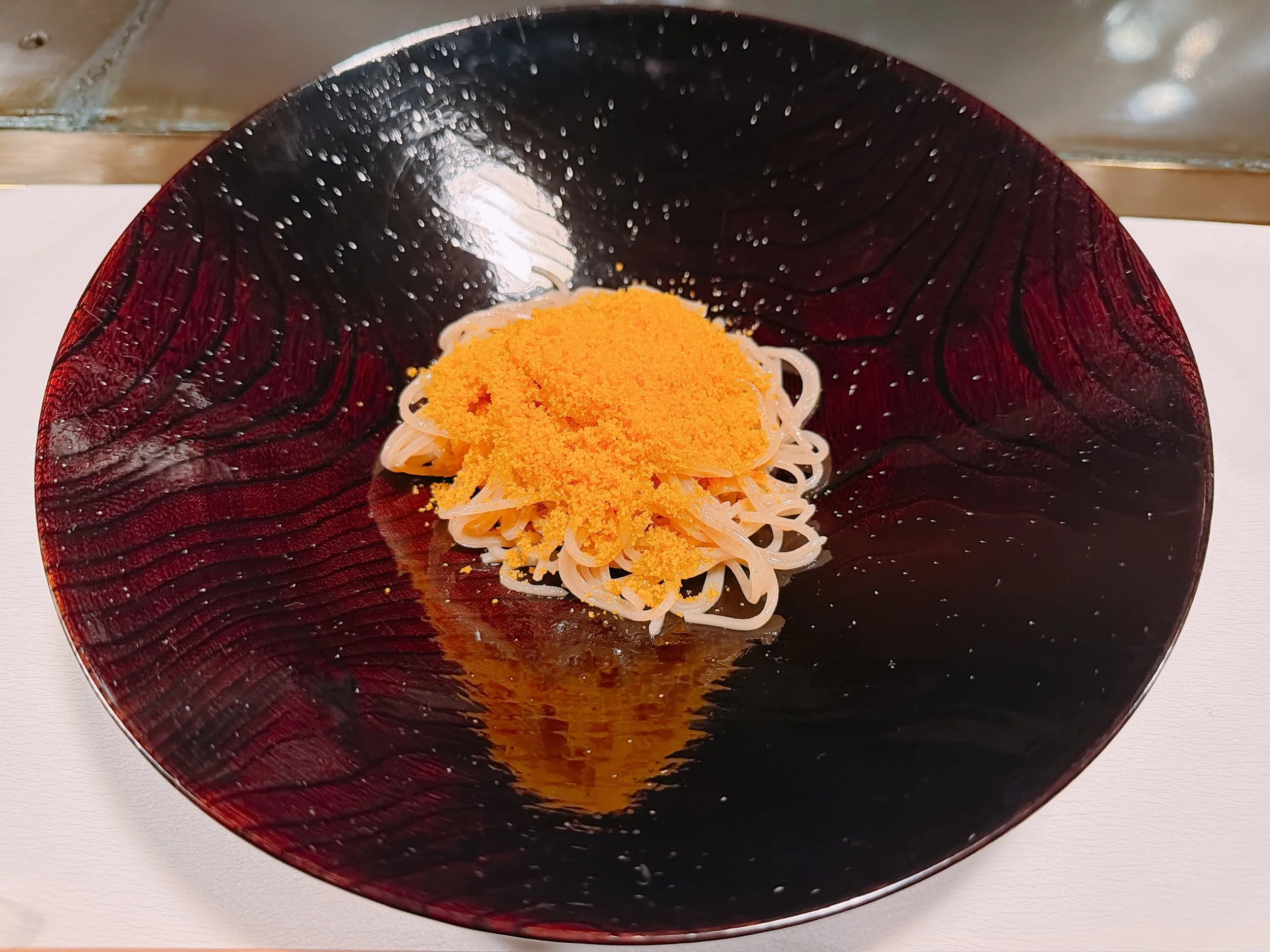
Homemade capellini pasta was topped with shaved bottarga. The long noodles were very good - clearly freshly made and cooked al dente. The bottarga added its typical flavor and creamy texture, which went great with the pasta. Tastewise, this was maybe a 15, but I admired the minimalism here - the courage to make a dish out of only two ingredients, and having it turn out so well 16.
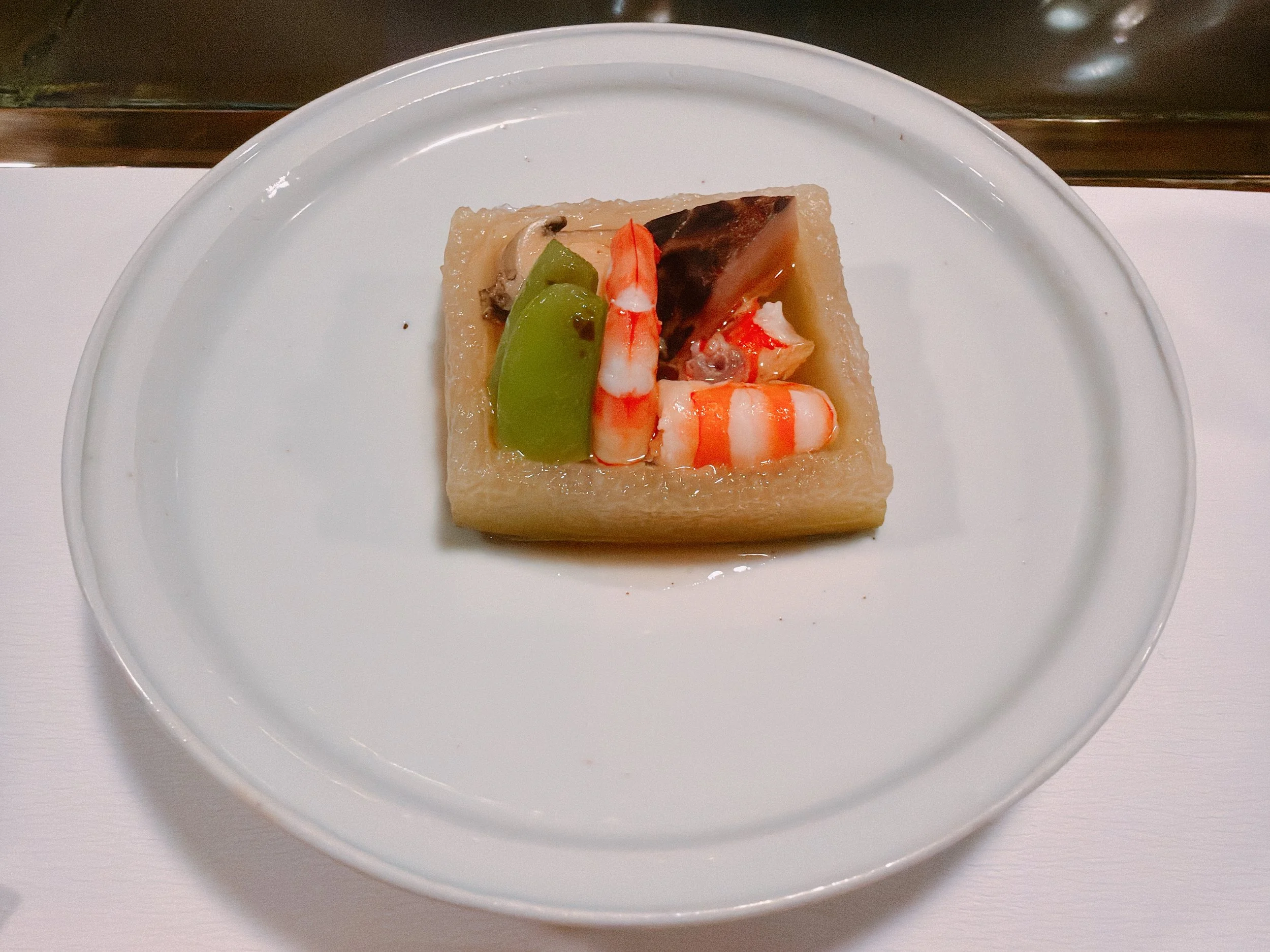
The next course was again served in edible dishware: a soup bowl that had been carved out of winter melon. The soup served in the bowl was made from a kelp/bonito dashi seasoned with soy sauce. Also in the bowl were shrimp, a shrimp head, re-hydrated shiitake mushrooms, some abalone and sugar snap peas. These ingredients were lovely - well sourced for sure. The soup was tasty as well, but the presentation clearly stole the show here. After eating the solid ingredients, the chef sliced off the borders of the “bowl” so that we could eat the winter melon as well. Nothing went to waste. Again, this was more of a 15 for taste alone, but the presentation was awfully cute 16.
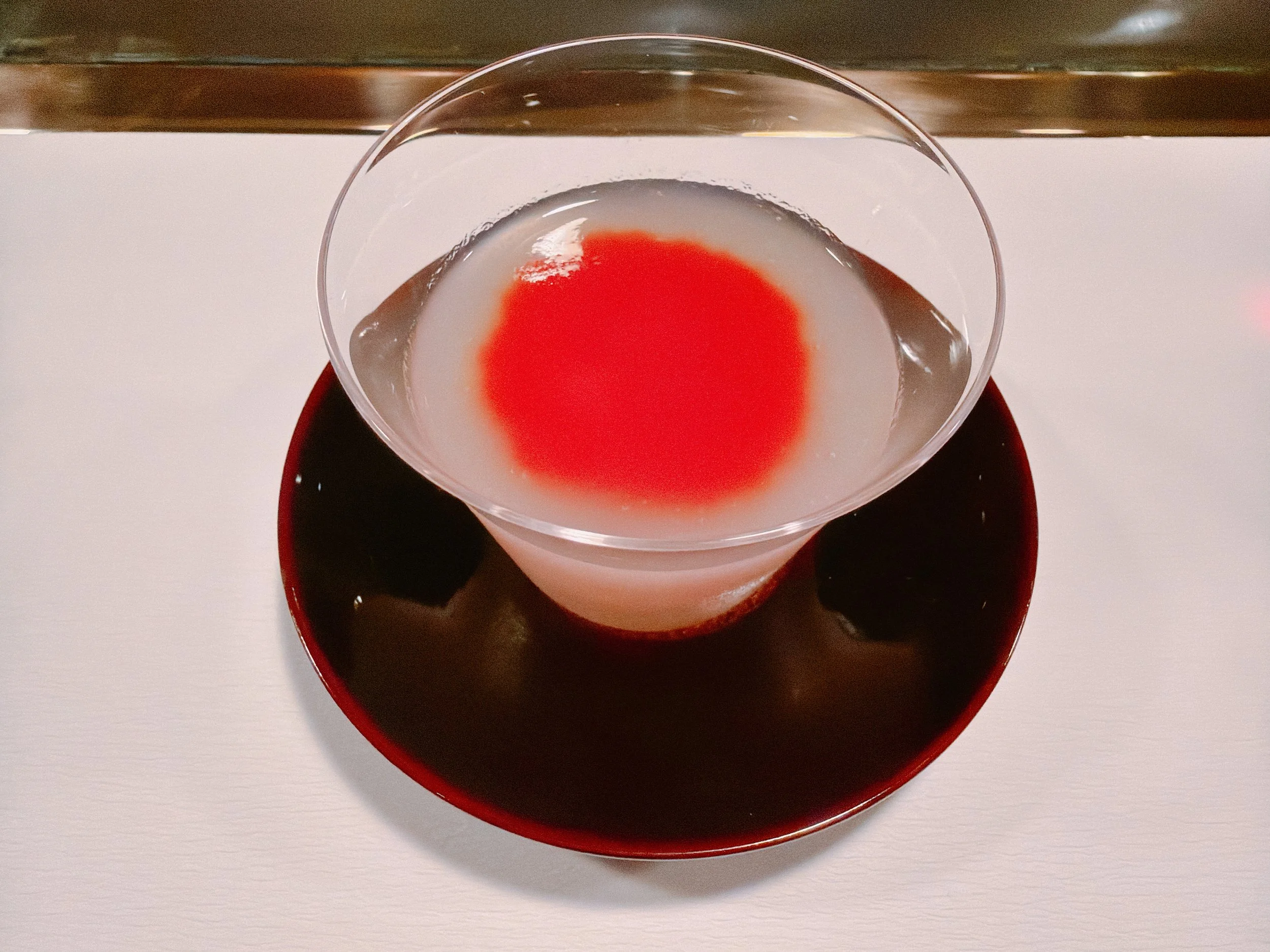
A cold soup had been made from local onions and was topped with tomato juice from Hokkaido. The tomatoes' flavor was so intense that one could easily think that the whole dish was a tomato soup. The onions had been prepared in such a way that their sharpness was totally gone, making the result a bit generic - this could have been mistaken for a lightly sweet melon soup. An interesting technique, but I would have preferred a more recognizable onion flavor 14.
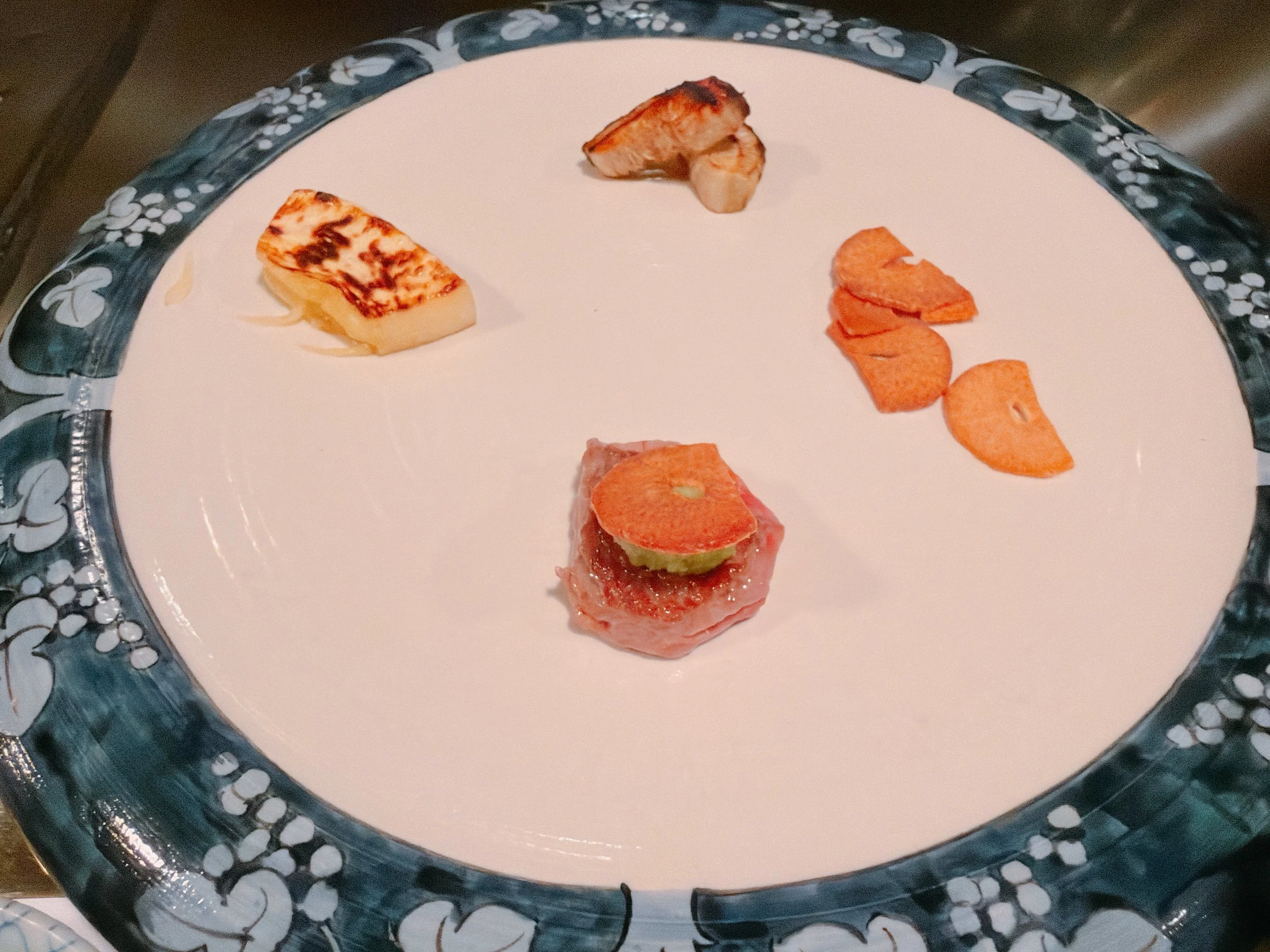
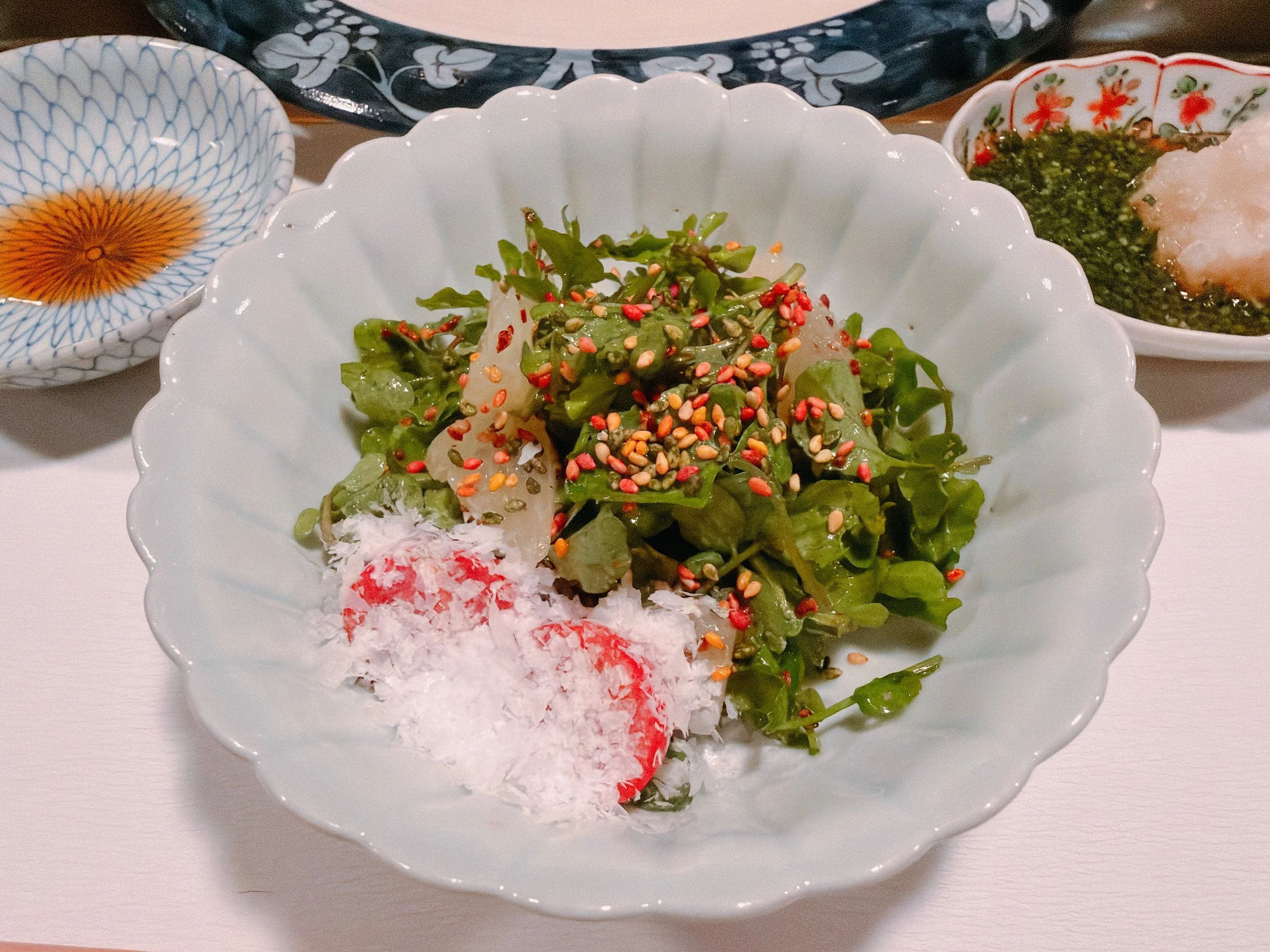
The evening's main savory course was a beef extravaganza. The meat had been cut into layers and then reassembled millefeuille-style before the chef cooked it on the counter right in front of us. In total, we received three bitesize servings of beef, distinguished only by their toppings. The first bite was topped with a fried garlic chip and wasabi before being dipped into soy sauce. This combination was not necessarily a revelation flavor-wise (the wasabi in particular was surprisingly tame), but it really brought out how tender the meat was. Delicious (15 by itself). Next was a piece of beef topped with a garlic chip and shredded radish soaked in dashi. Not bad, but unfortunately, the beef was totally overwhelmed by the much stronger tasting radish (15 or 14). The last bite of beef was topped with yet another garlic chip, wasabi, and a generous helping of the chef's rice salt. This was by far my favorite combination among the three: the salt did a fantastic job at bringing out the beef's flavor (17). It was amazing to see how simply varying the toppings created three such distinct expressions of beef. But that was not all there was to this course: there were also some side dishes. A watercress salad was topped with sesame seeds and served with some cherry tomatoes that had been seasoned with the by-now-ubiquitous rice salt. The salad was well dressed and flavorful, and the salt really brought out the fruitiness and strong flavor of the tomatoes. In addition, we got some grilled vegetables: different kinds of squash and an eggplant (a different variety from the one seen in the shark fin course). For the most part, these vegetables were perfectly seasoned, and had a great BBQ flavor. Unfortunately, it was impossible to take a single photo of everything in this preparation, since it was constantly in flux - dishes kept arriving and empty plates kept disappearing constantly. But it was definitely fun to have the savory dishes end with a real “performance” 16.
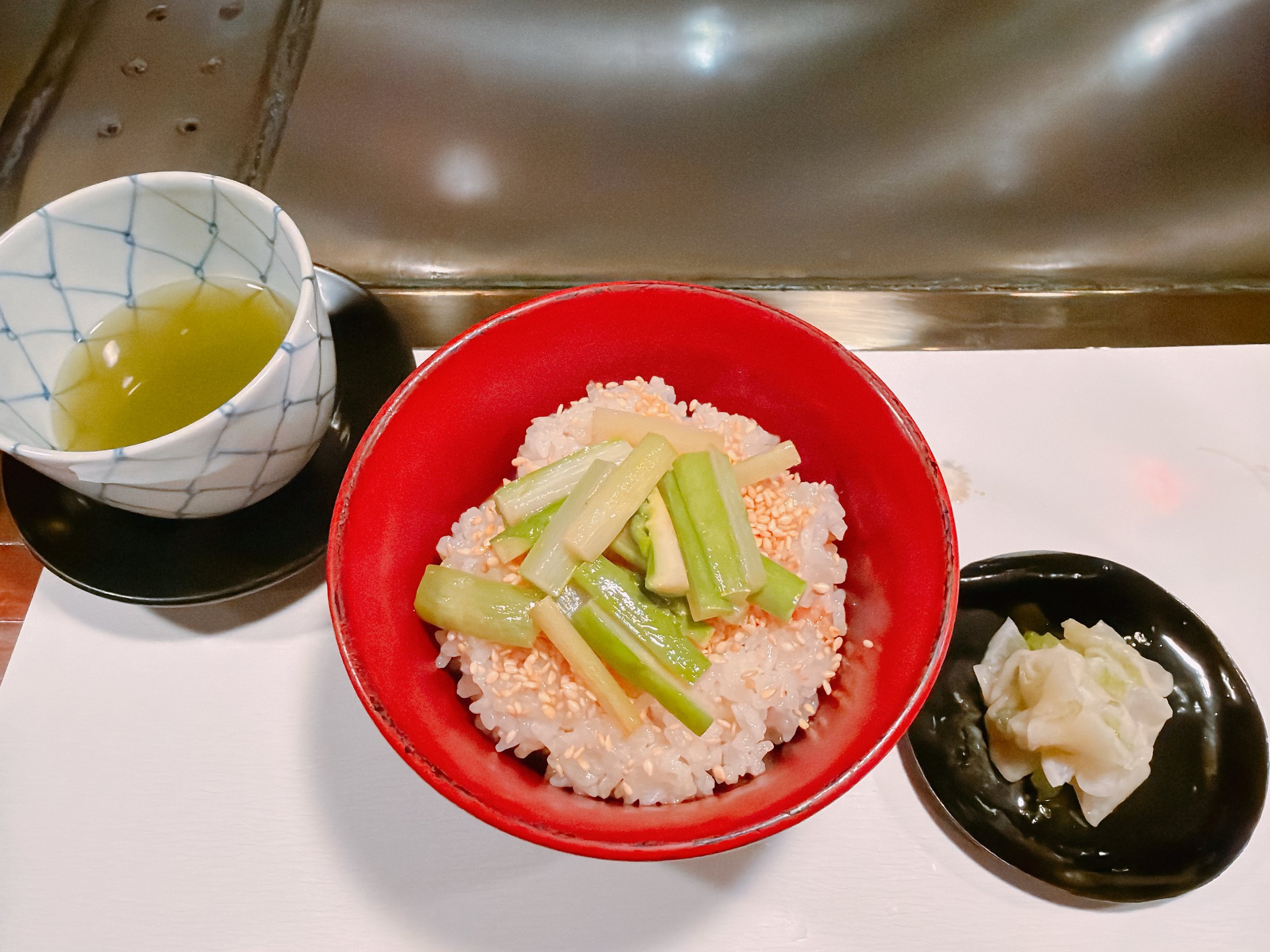
Well, actually there was one more savory dish: a rice bowl. Hidden in the rice was a deep-orange-colored onsen egg, and it was topped with green asparagus and sesame seeds. On the side were some pickled turnips and a cup of green tea. Flavorwise, this dish was - probably intentionally - much mellower than what had come before it. Were it not for the pickled turnips, this dish would have had barely any flavors. It was particularly disappointing that the green asparagus did not taste of much 14.
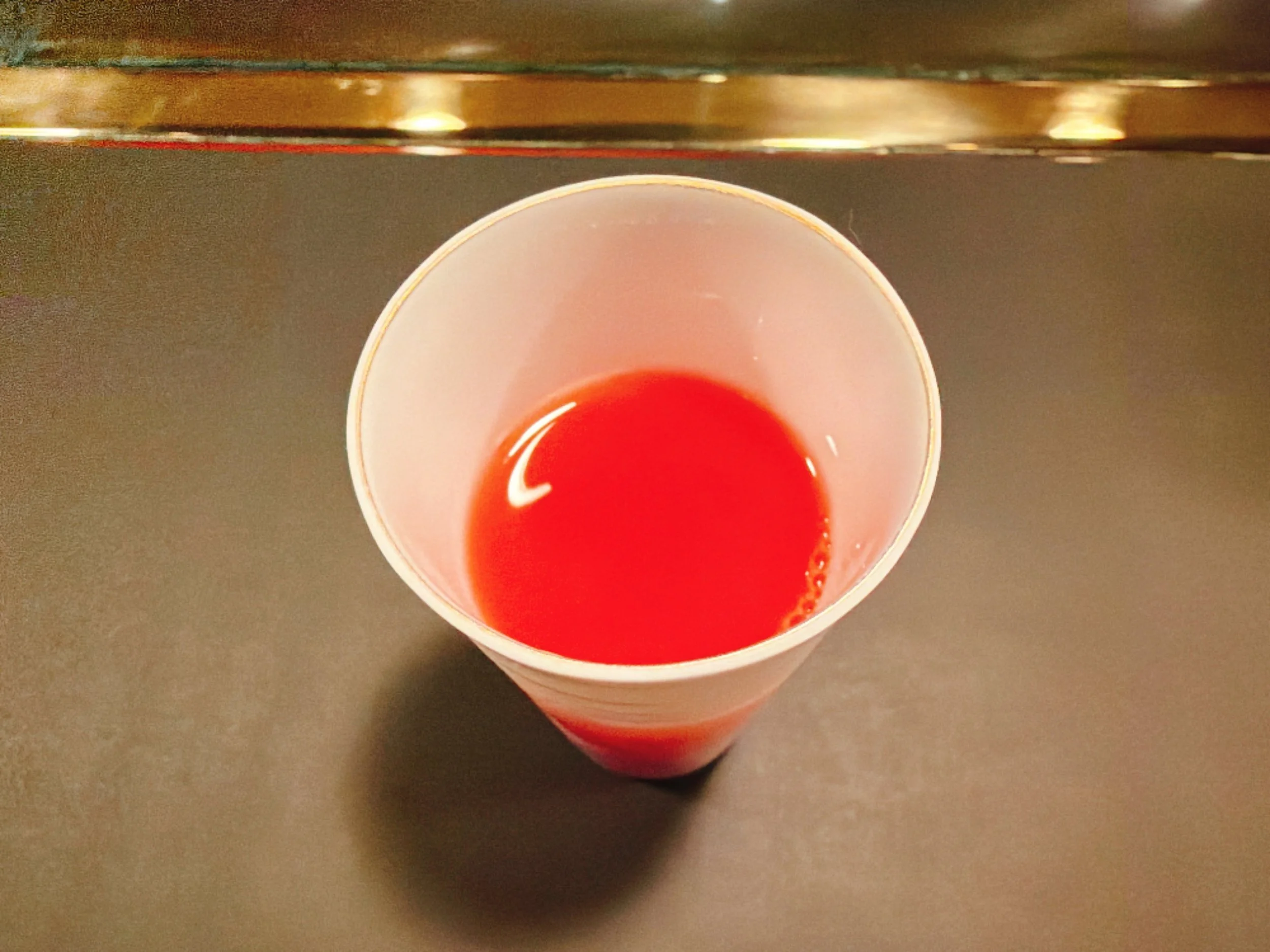
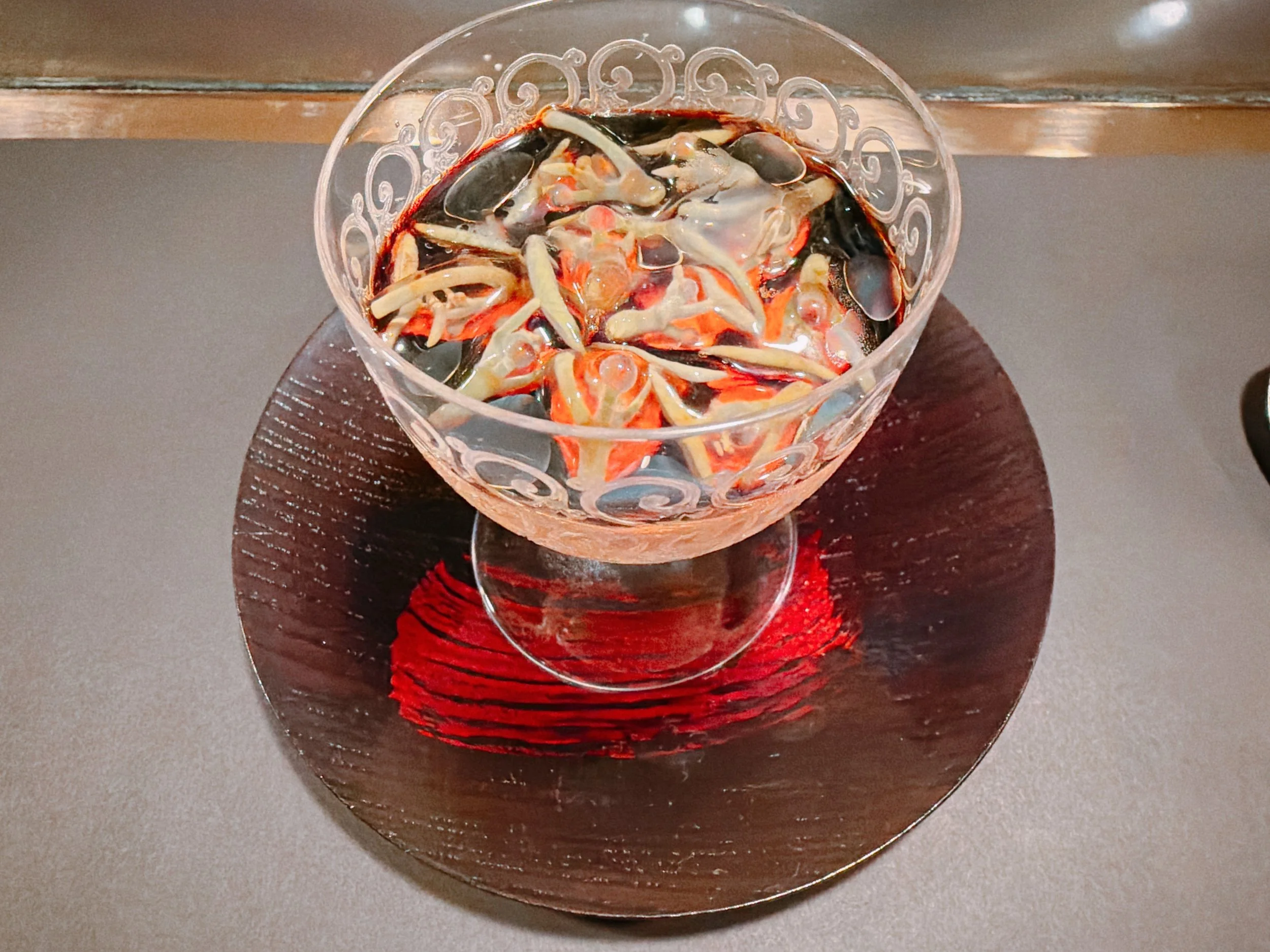
Then we came to the desserts, starting off with a glass of fresh, concentrated watermelon juice. This drink was intensely strong - it was shocking how much better this tasted compared to what one might get in a supermarket. And there was no sugar added, as we were repeatedly assured. Yum 17.
The main dessert was a crème brûlée made with azuki beans and peach pineapple (a Japanese variety of pineapples). The custard was topped with the same coffee oil that we had seen before. (It was a nice touch to use the same ingredient in both savory and sweet dishes.) In addition, there was a black caramel sauce made with honey, and some watershield greens. When all of this was eaten together, the sum felt a bit unbalanced - there was too much going on. There was some crunch from the greens, a bit of fruit flavor, but mostly an overwhelmingly strong coffee flavor. Going a bit easier on the coffee oil might have improved this dish 13.
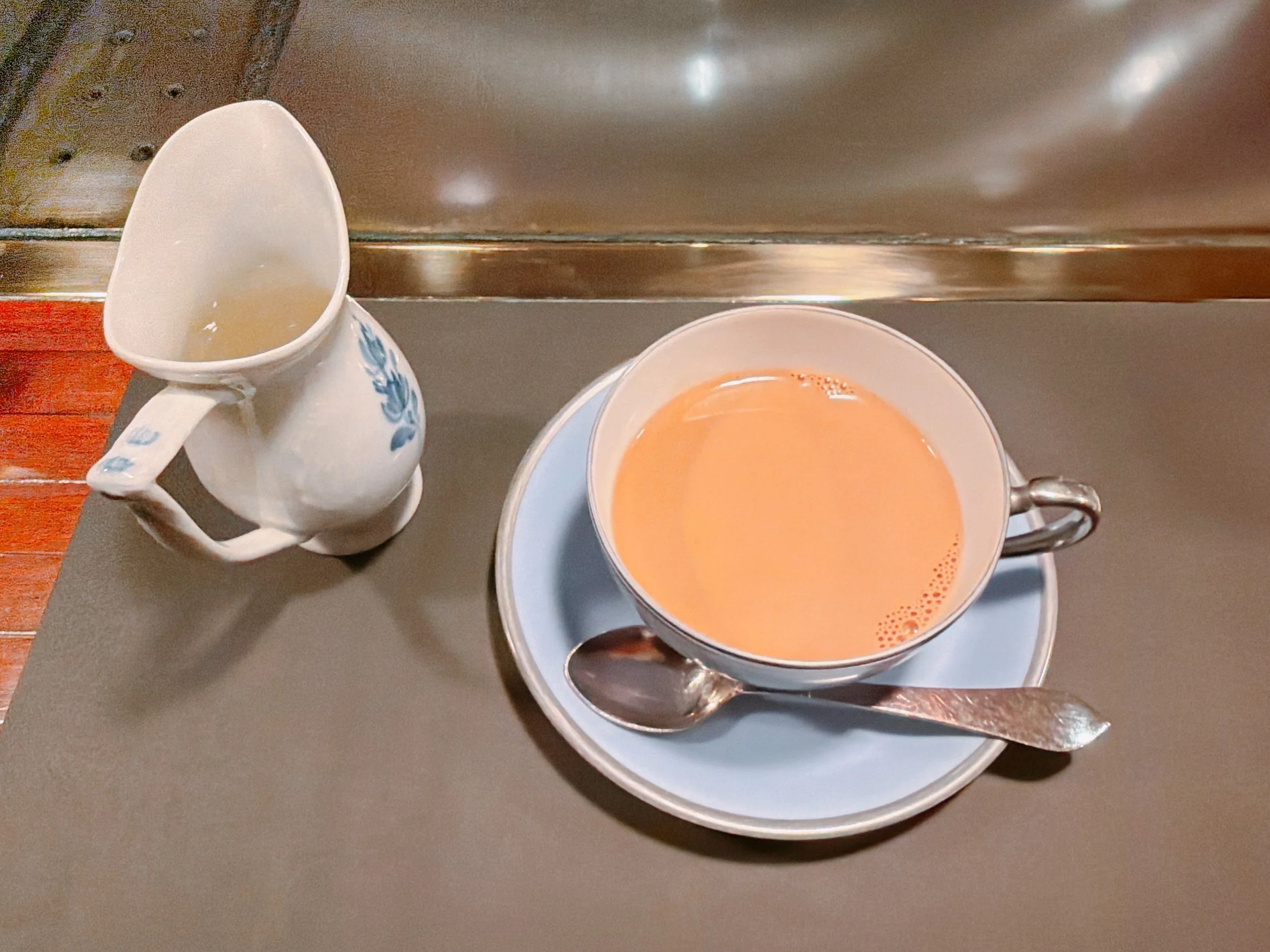
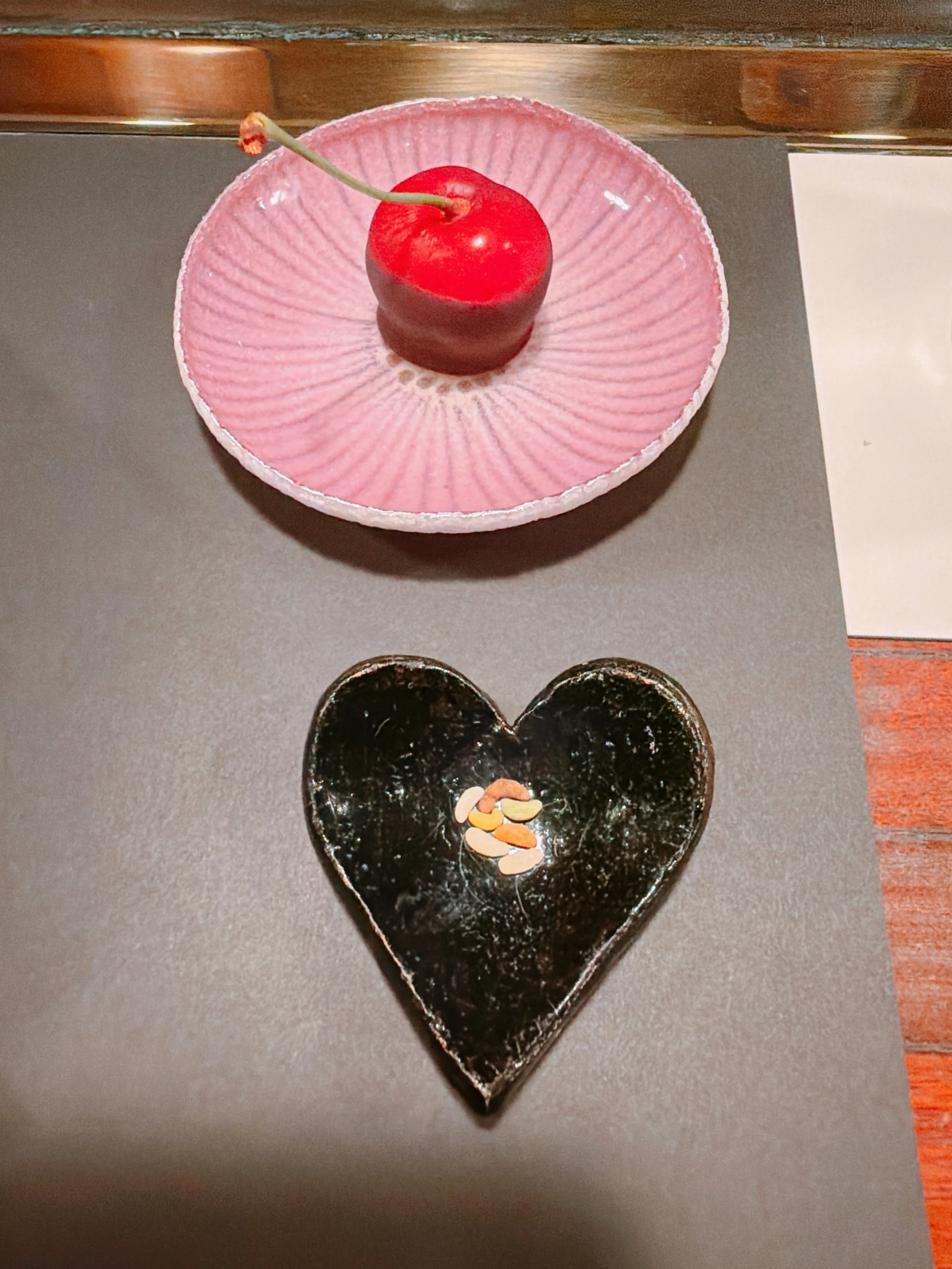
Our dinner concluded with a scene from an Indian restaurant (with apologies to Billy Joel). We were served masala chai, paired with the same honey that had been used in the preceding dessert, meant to sweeten the tea as desired. There was also a pitted cherry dipped in chocolate and some candied fennel seeds. It was definitely an interesting choice to end the meal in an entirely different culinary destination. The homemade masala chai was lovely (15), the cherry was fine, but not really revelatory (14), and the fennel seeds were indistinguishable from what one might get after dinner at a real Indian restaurant - not bad, but nothing terribly special (13). On average 14.
Overall: This was a fun dinner, full of surprising flavor combinations and presentations. Choosing not to adhere to any particular cuisine, the chef made use of this freedom with gusto. Kahala is definitely worth a visit when in Osaka, just don't expect real Japanese cuisine, but good food made with (mainly) Japanese ingredients and precision. Whether this is worth two Michelin stars depends on how much one values inventiveness, precision and culinary chutzpah. But who really cares about stars when there are great tasting dishes prepared by a chef who clearly enjoys what he is doing 15.