Commis - Oakland
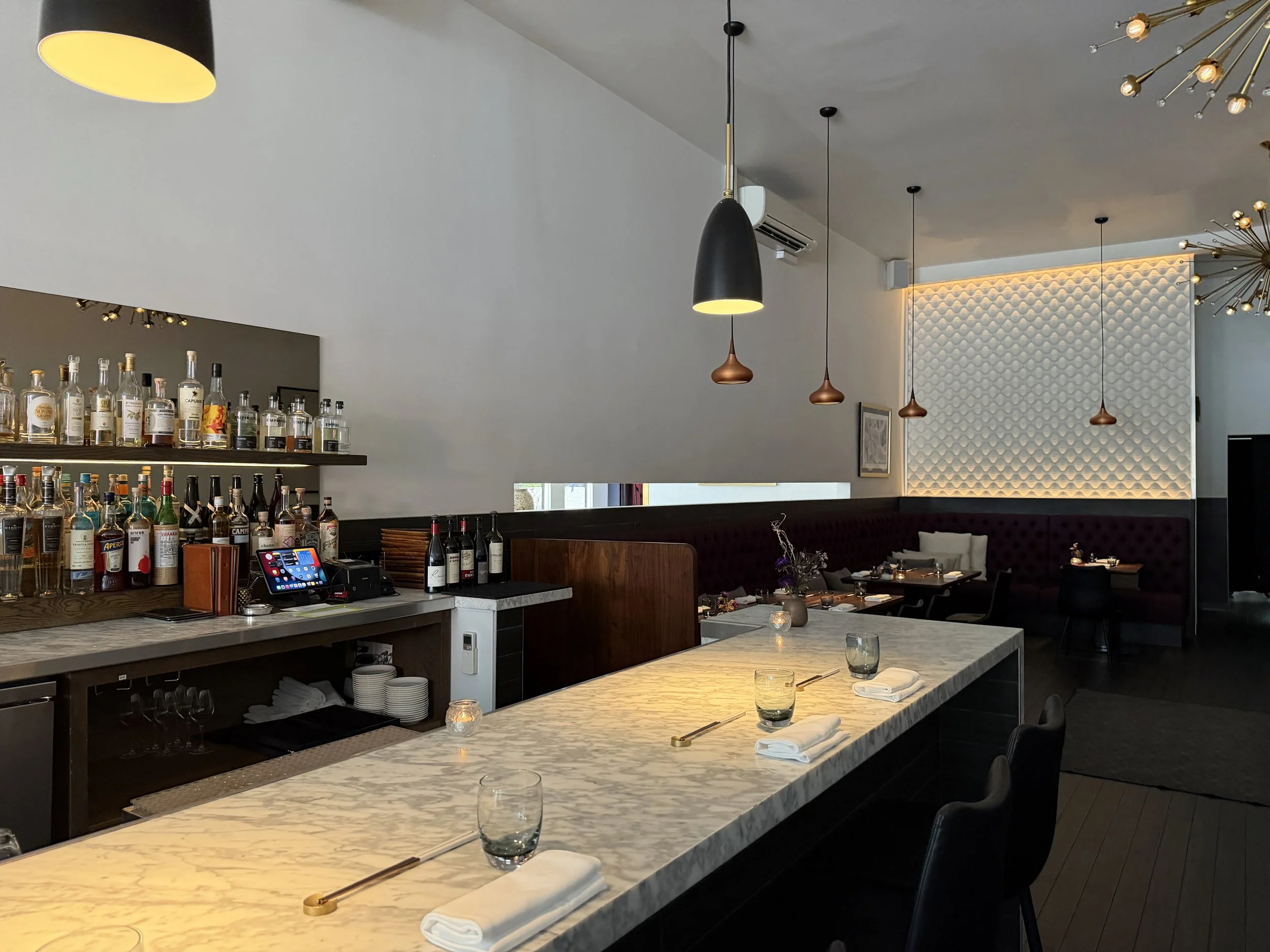
Opportunities to dine at the bar or at tables
Rating: 16/20
Where: Oakland, California
When: Dinner for 2 on 10 June 2026
Cost per Person: Tasting menu $279, Wine Pairing $139
Accolades: 2 Michelin Stars
Why: Californian cuisine with Thai and Chinese influences
Calling your restaurant “Commis” shows a certain humility (a commis is an entry-level position in a kitchen), but also doesn't really define the cuisine in any way - such a restaurant could literally be serving anything. Chef James Syhabout opened Commis in 2009 after a stint at (then) two-Michelin-starred Manresa. The new restaurant’s Oakland location was somewhat off the beaten fine-dining path, and for a long time it remained the only Michelin-starred restaurant in the city (it currently has two stars). We had visited Commis before, but that had been almost eleven years ago, so we were curious what had changed since then.
On one of the warmest days of the year yet, we parked across the street from the restaurant. Considering its understated exterior, we first noticed that the entrance had moved - the restaurant had seemingly taken over the space next doors, creating two connected dining rooms. The old half still contained an open kitchen counter, while the addition sported a glitzy bar. (This change had happened about ten years ago - obviously we weren’t quite au courant.) We sat at a small table in the back of the bar room. Having arrived around opening time, the room remained exclusively ours for a while on this Wednesday night, but it filled up later with guests sitting at both the tables and the bar. The restaurant’s interior design was modern and understated, but servers dressed in suits definitely raised the fanciness level. It was easy to forget that this part of Oakland is usually home to more casual restaurants.
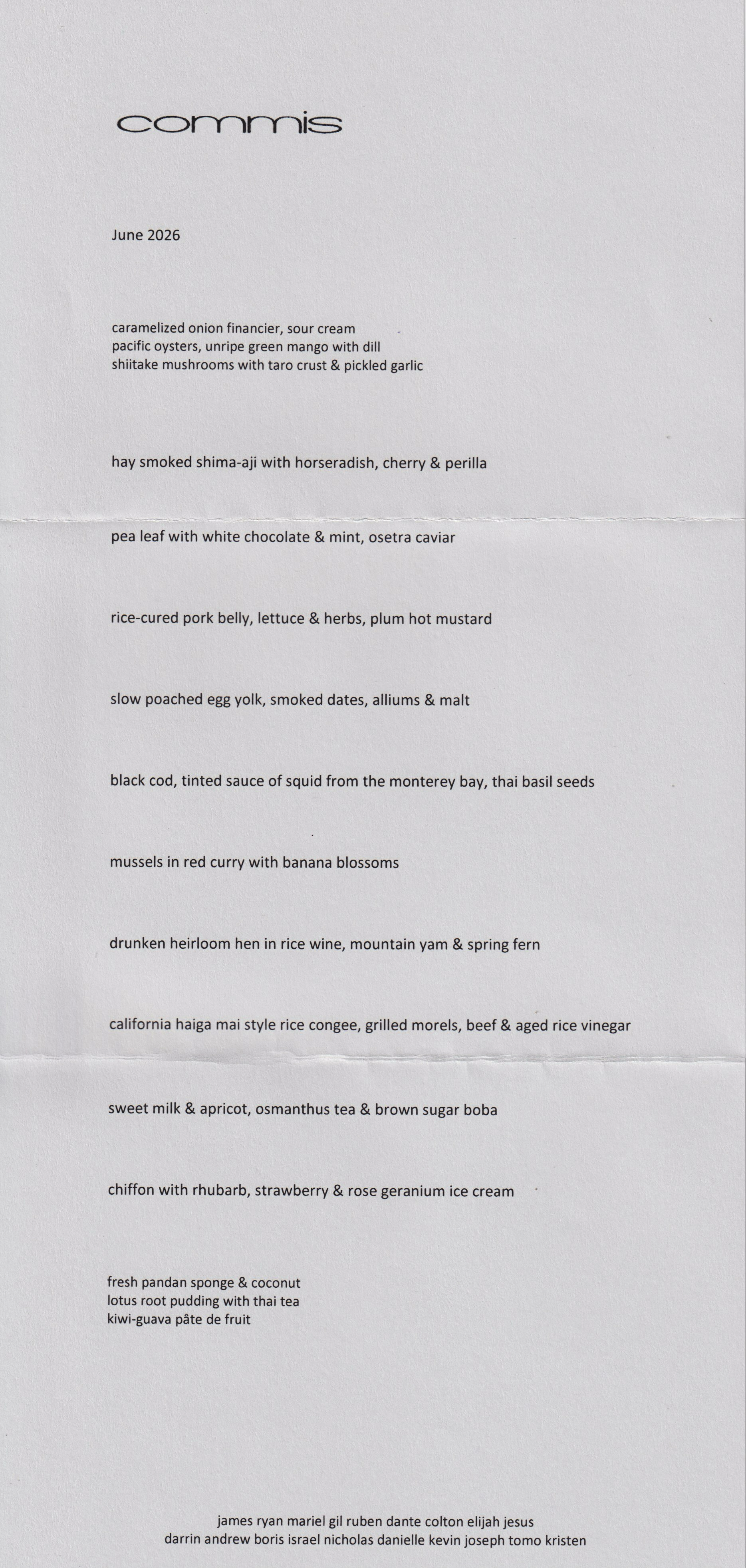
Commis served a single ten-course tasting menu priced at $279. The printed menu was delivered only at the end of the meal. There was an option to add one ounce (about 30g) of A5 wagyu to the final savory course for an additional $30, and a seven-glass beverage pairing was offered for $139. The pairing consisted of an eclectic collection of wines (and one beer). Most wouldn't have necessarily been my first choices to drink by themselves, but they consistently went well with the food, and the sommelier offered detailed explanations as to why each one had been chosen. And surprisingly, the main savory course came without a paired wine - but more on that later. As wine pairings go, this was a fairly enjoyable one, mostly due to the unusual wines. Of course, ordering a bottle will always remain a more economical choice.
Curiously, our server's descriptions of the dishes matched the printed menu (see below) almost verbatim. So there were none of the embellishments or added details usually given. A bit more might have been better.
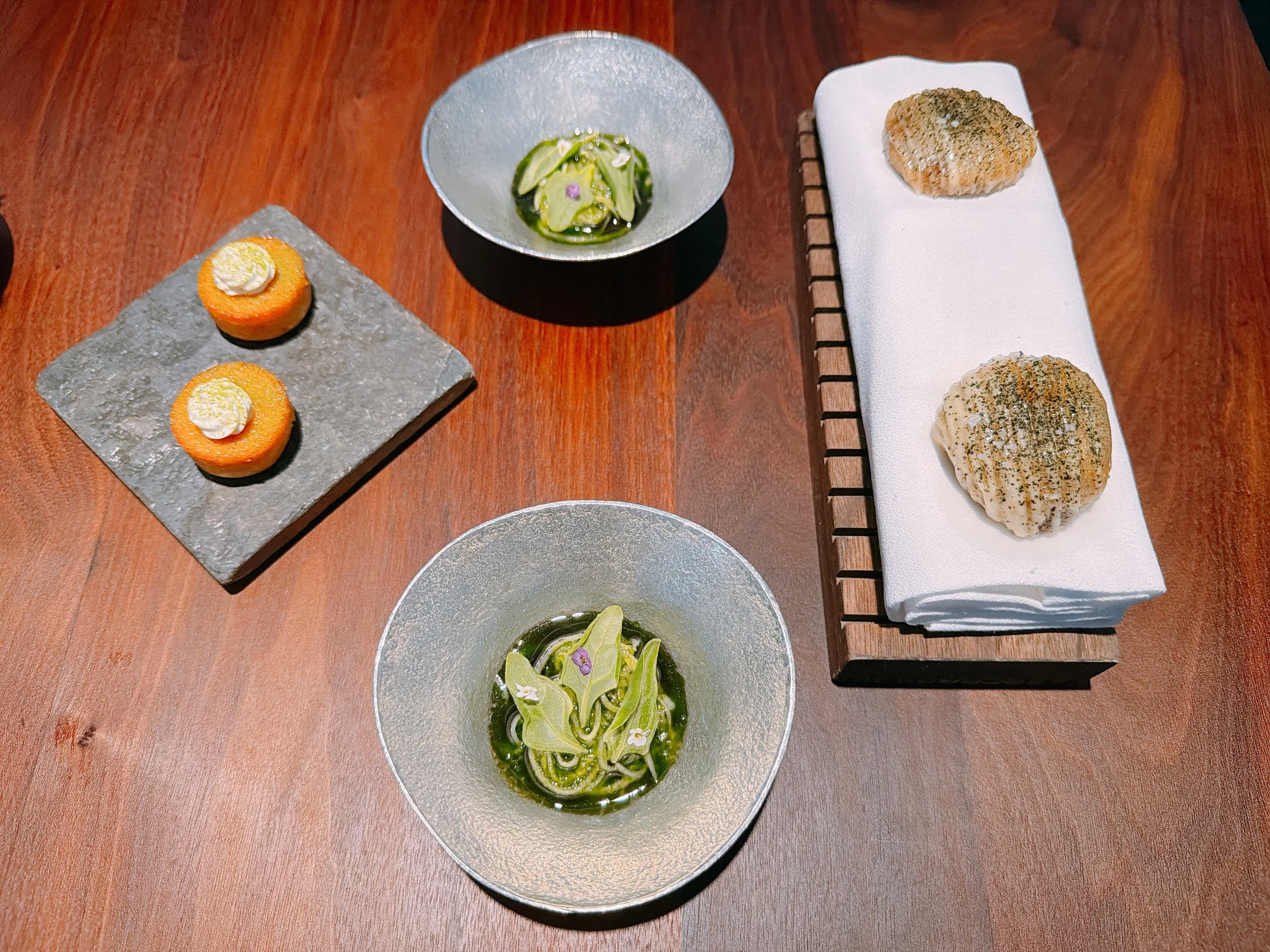
Our dinner started with three small bites (sadly not yet accompanied by the pairing). First, we tried a caramelized onion financier that was topped with a dollop of sour cream. The onion flavor was pretty light here, the bite tasted essentially just like a sweet financier 14. A shiitake mushroom was covered with a taro crust and seasoned with pickled garlic. This dish was served warm, but sadly tasted mostly fried and a bit oily. The mushroom was fine, but the other flavors were hard to detect 14. Finally, there was a little bowl containing an oyster, unripe green mangoes, and dill. Compared to the previous two bites, this one practically burst with flavors. It tasted very herbal and distinctly of dill, especially thanks to the aromatic oil. The mango added some crunch to the dish, and the oyster's light flavor was noticeable but not very prominent - the dill was so much stronger 17.
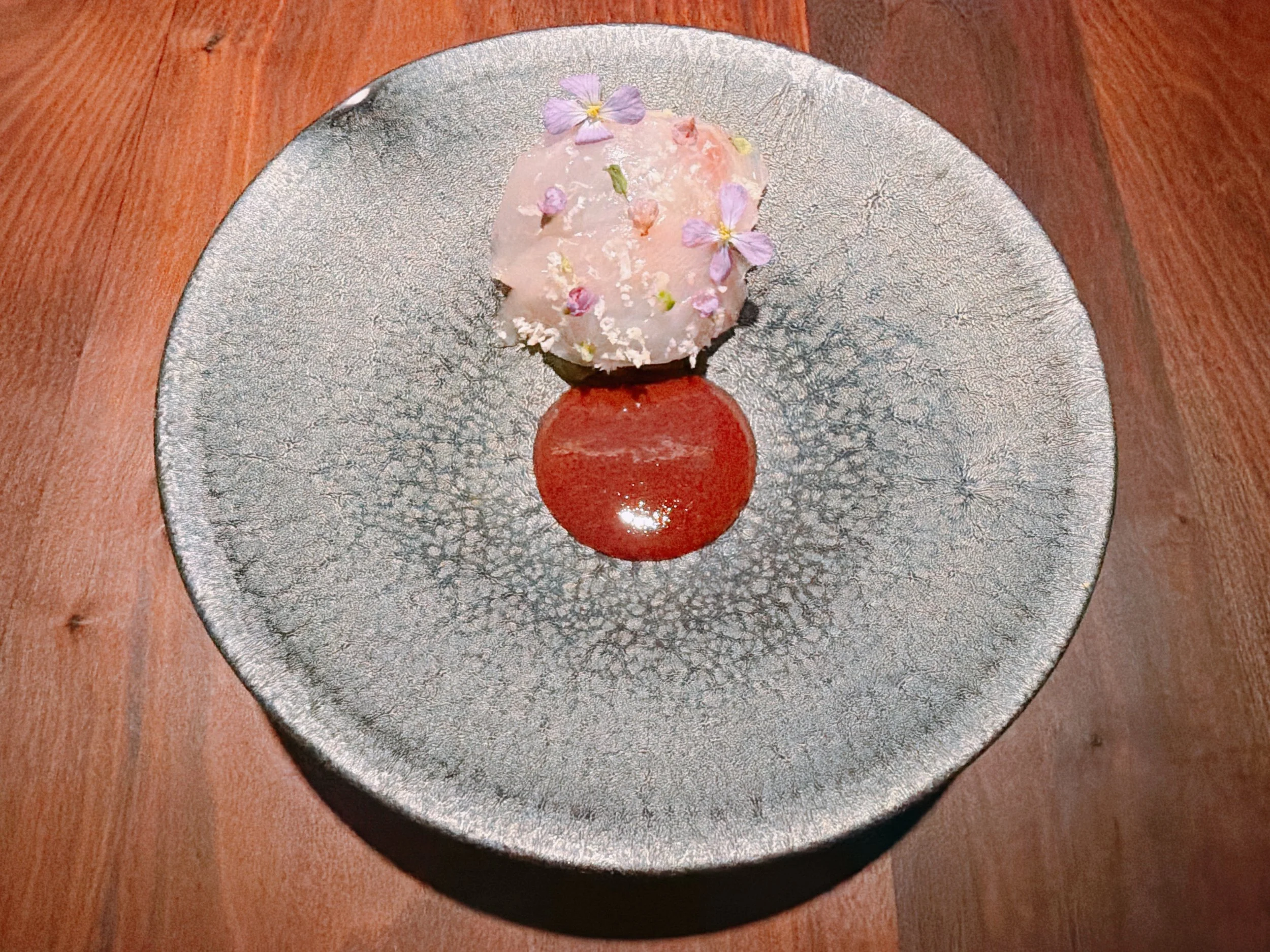
The first “regular” course featured slices of hay-smoked shima aji that were draped over cherries, topped with horseradish shavings, and accompanied by a perilla-flavored sauce. The fish was extremely tender, and the combination of smoky fish and not-too-sweet cherries was quite interesting. This dish was paired with a Belgian sour ale (Duchesse de Bourgogne) that drank almost like a wine - a courageous choice that actually worked quite well with the fruitiness of the dish 17.
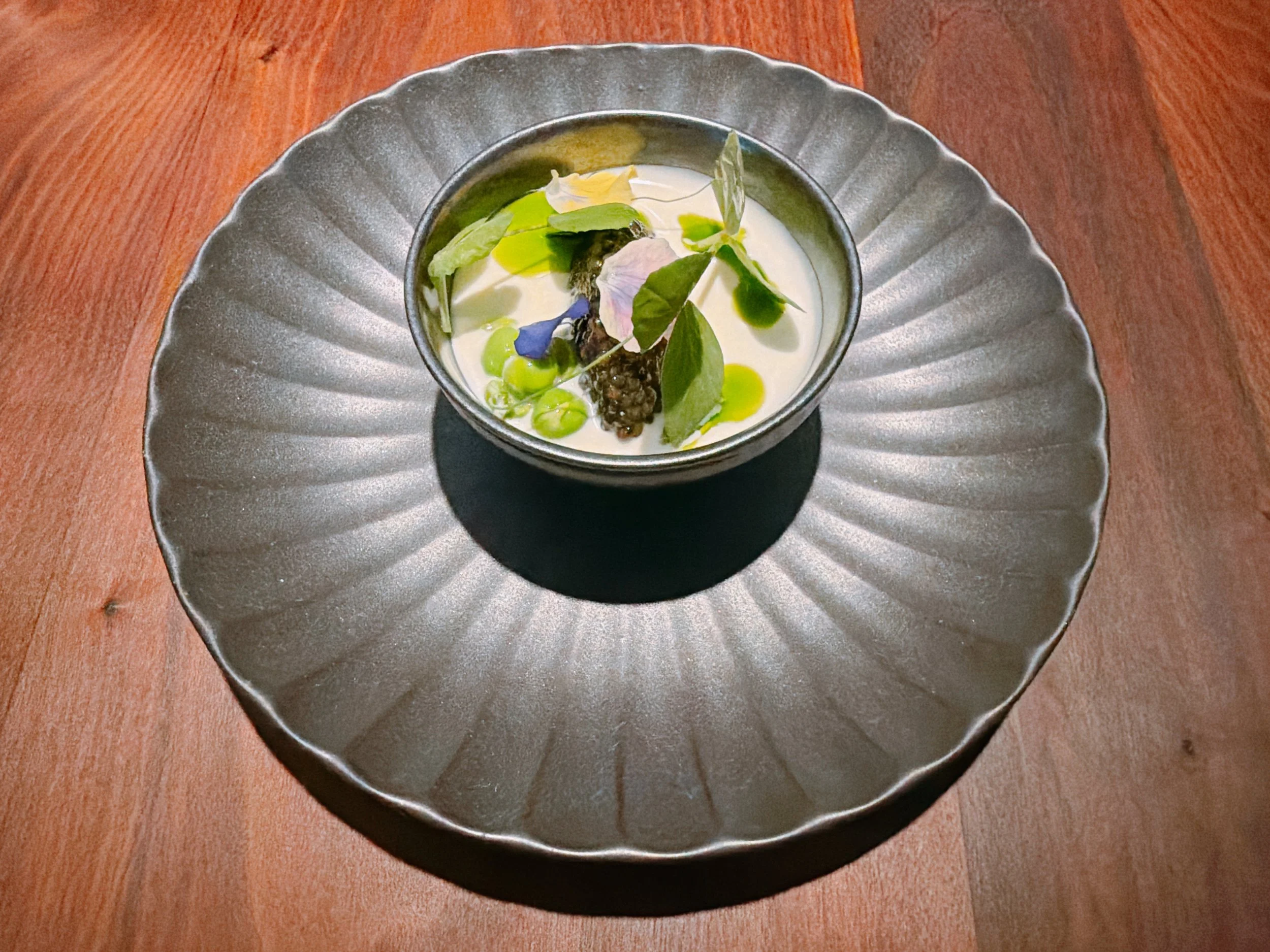
Next was a pea/pea leaf mousse seasoned with mint and topped with a white chocolate sauce and osetra caviar. The mousse was quite nice - it had a fresh pea taste, to which the caviar was a welcome salty, lightly fishy addition. The white chocolate was a bit too sweet for my taste, but there was very little of it, so it didn't affect the overall dish too much 16.
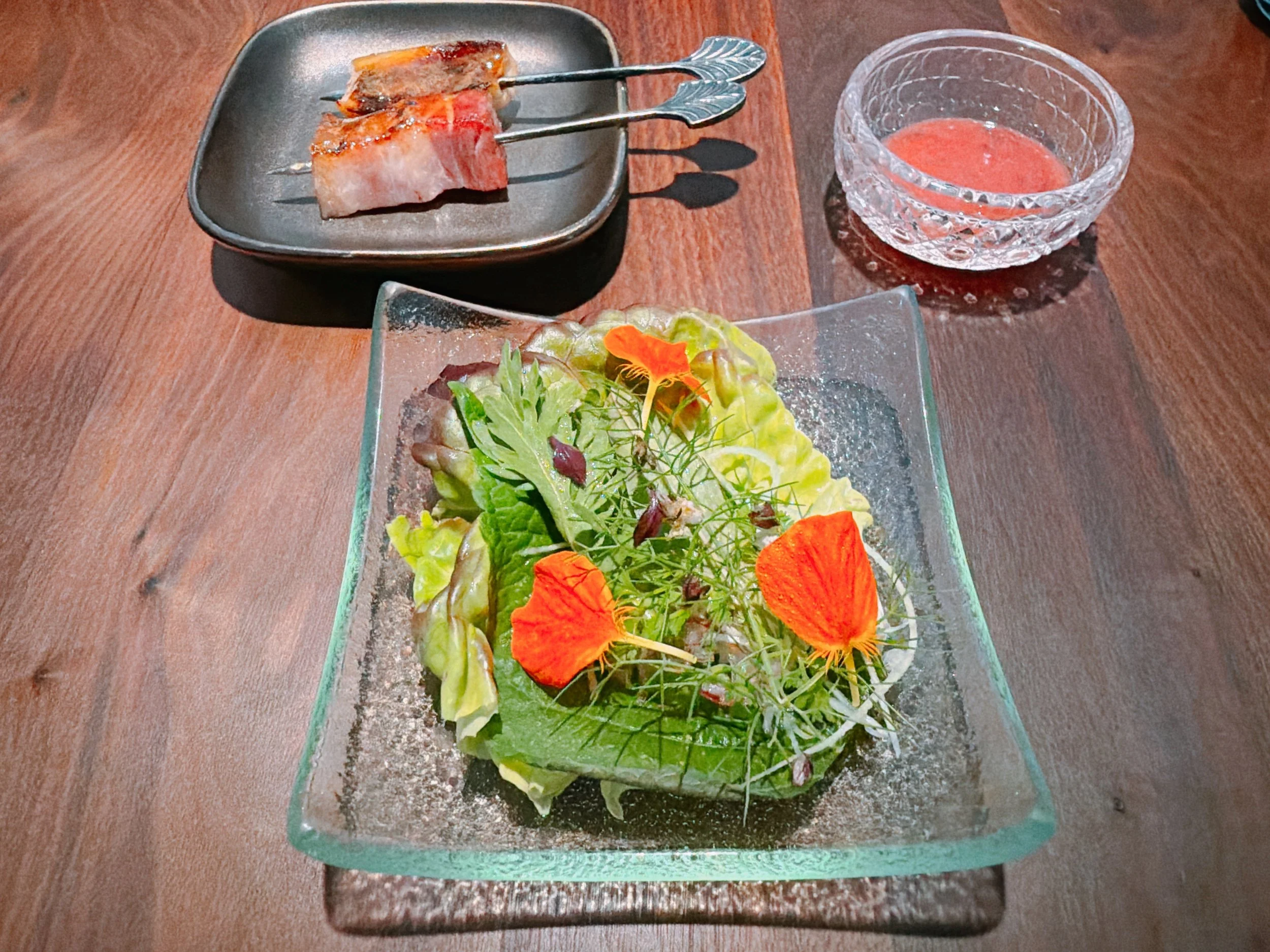
Some finger food followed. We were given a rice-cured, binchotan grilled pork belly that was meant to be wrapped in lettuce leaves along with herbs and a Japanese hot plum mustard. (A vegetarian version replaced the pork with a trumpet mushroom, but I didn't get to try it.) The main impression here was of a fresh, herbal salad wrap. The pork was nicely cooked, but not too prominent in flavor, and the mustard also mostly disappeared in the final product. Or maybe that was the intention - to create a fresh dish where nothing stood out too much 16.
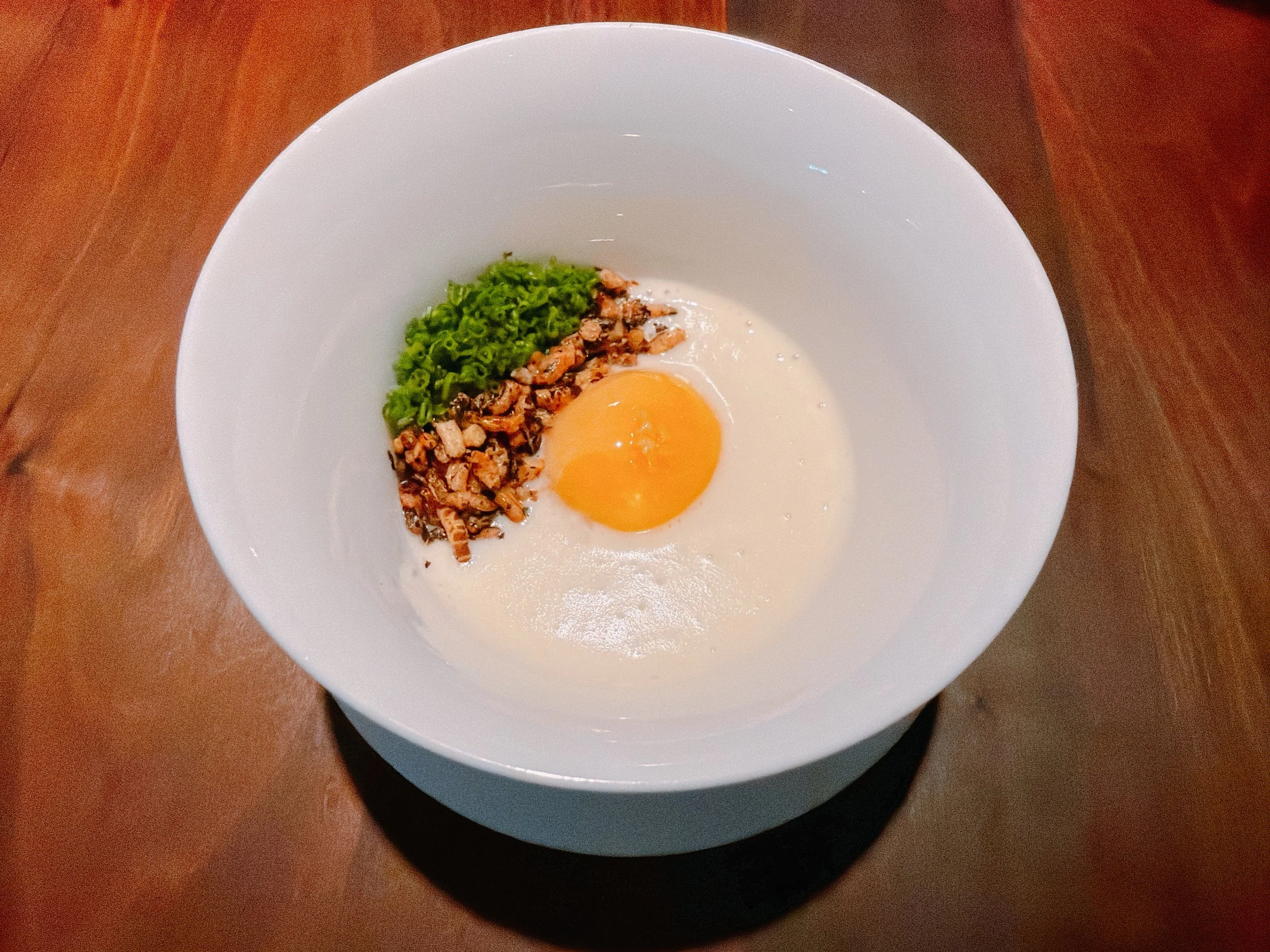
A slow-poached egg yolk was at the center of a dish that incorporated dates, toasted malt, and several preparations of onions, including an onion foam. But it was surprisingly easy to forget that this dish contained onions - their caramelization had definitely taken away their flavor edge. As a side effect, the dish was pretty sweet, verging towards dessert territory. The malt added some nice crunch. Overall, an enjoyable preparation, but a stronger onion taste and less sweetness might have made this even better 16.
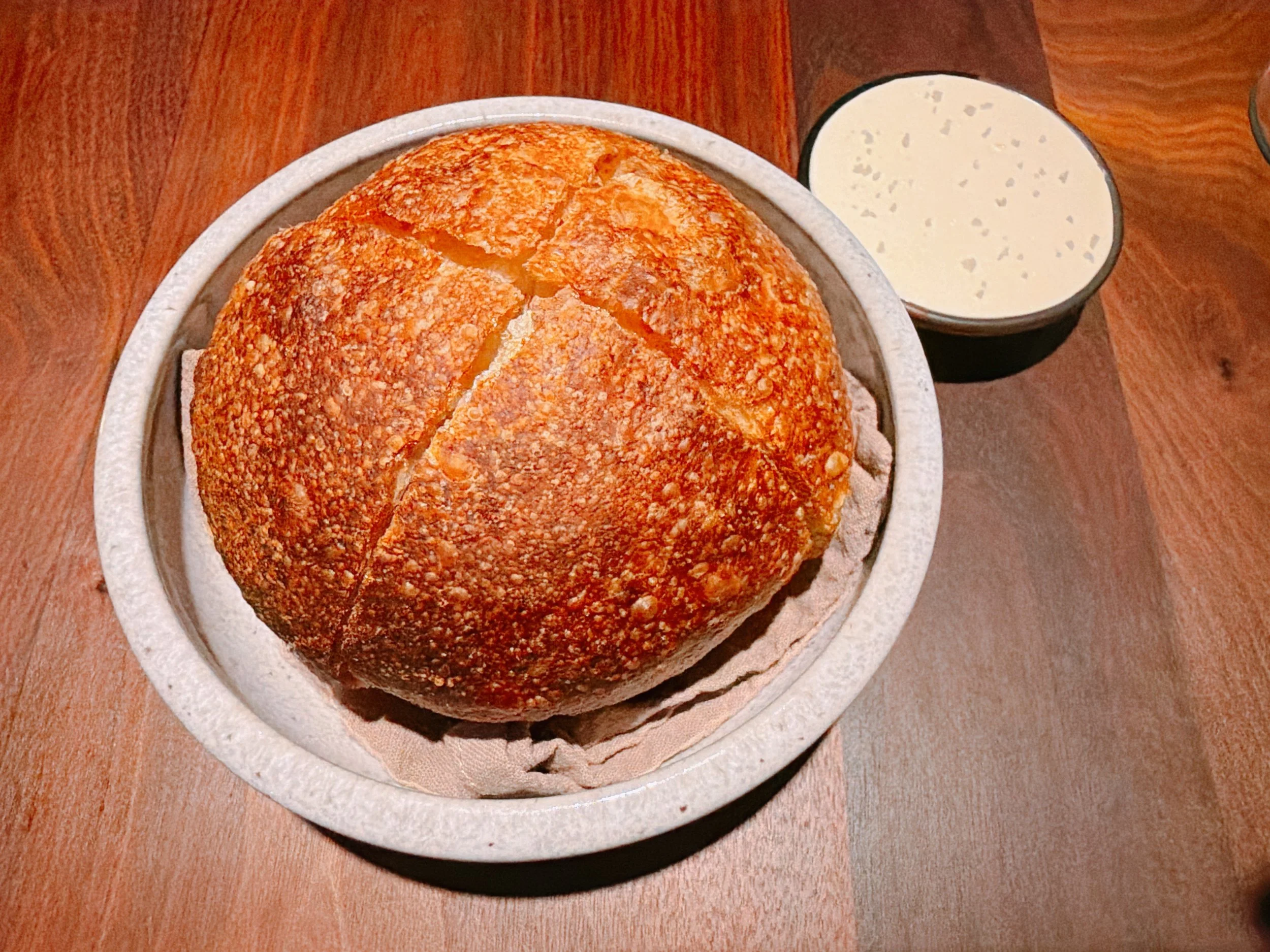
At this point, we received our single bread serving for the night. A sourdough boule made with rice koji was paired with a sweet butter. The bread's texture was remarkable: a very airy interior and a very thin, but quite crunchy, crust. Tastewise, this arguably felt closer to white bread than sourdough, but the warm bread was undeniably delicious with the butter. My dining companion made half the bread disappear in virtually no time. Only a great exertion of will kept me from doing the same 15.
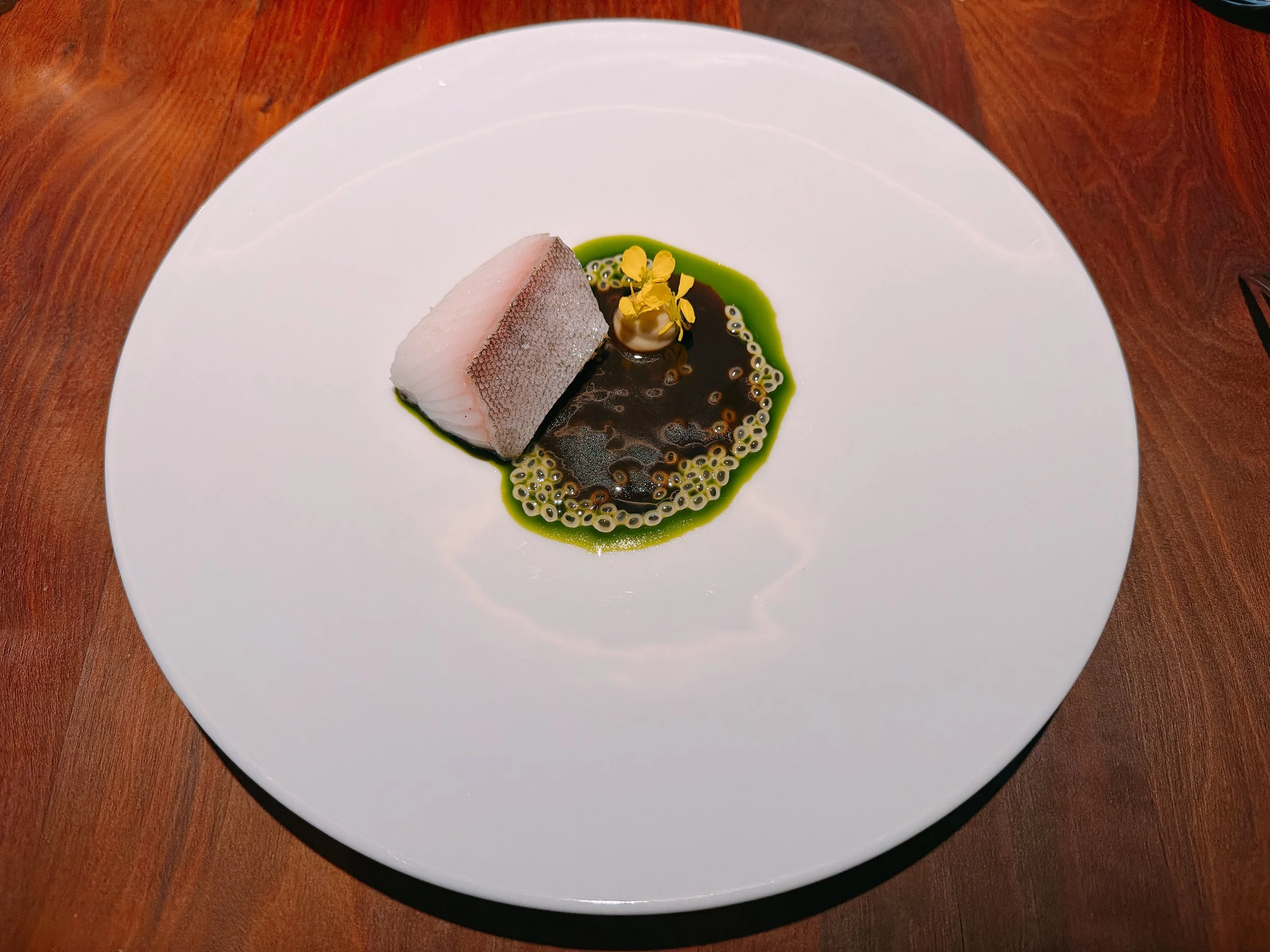
A filet of black cod was served with a black sauce made with Monterey Bay squid ink. Also on the plate: an artichoke puree, hydrated Thai basil seeds, and Thai basil oil. The fish was cooked perfectly: it was both tender and silky in texture. The sauce exhibited light Thai flavors and a hint of spice. The overall impression was one of smoothness and elegance - very nicely done 17.
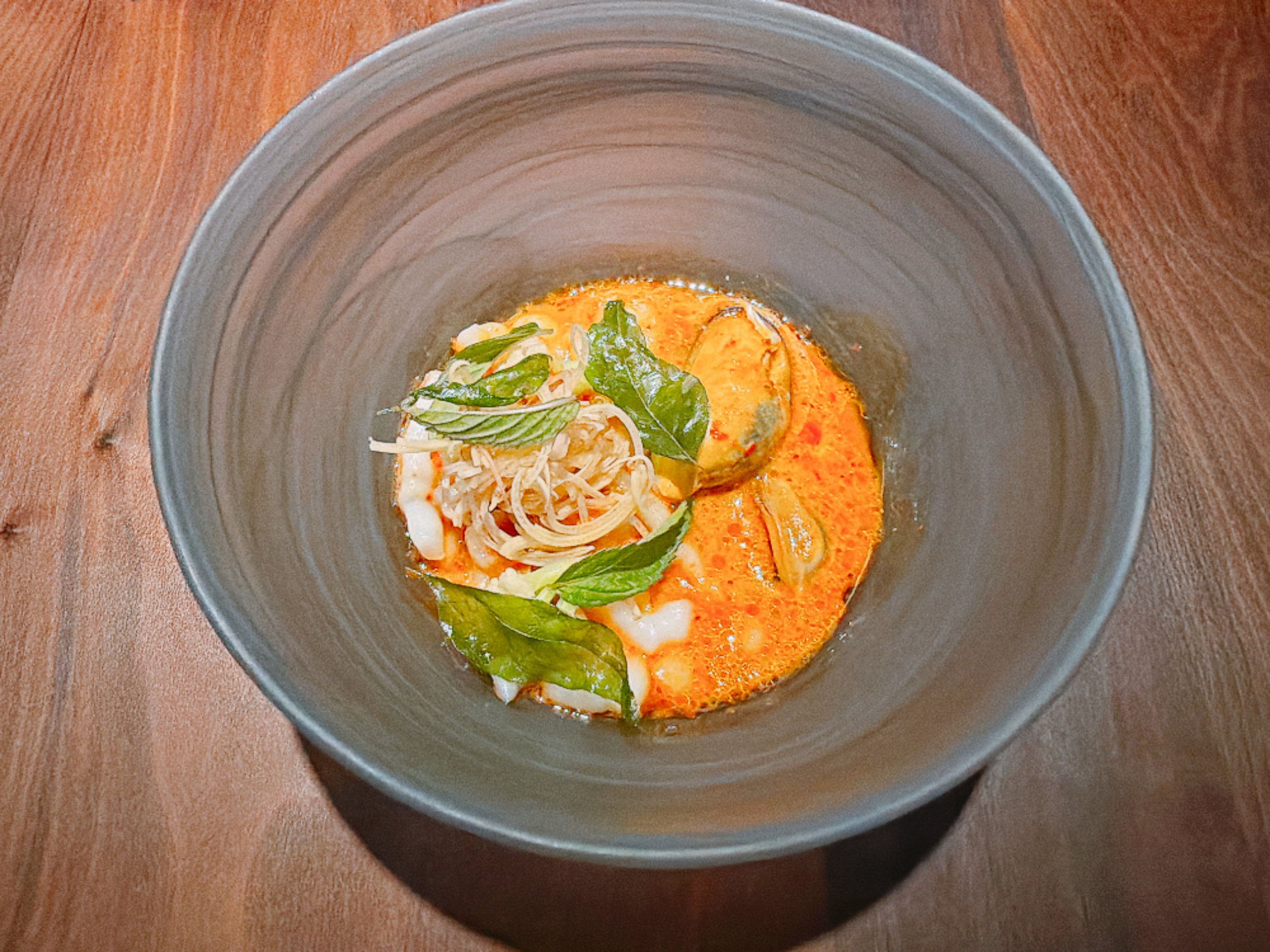
The following dish also had a Thai flavor profile, but turned up the spice level considerably. Mussels were served in a red curry along with some fried curry leaves, mint, banana blossoms, little florets of cauliflower, and rice-flour spätzle pasta. This might sound like a pretty eclectic list of ingredients, but it was actually a great combination of different textures. And the result tasted good, too. For starters, the curry itself was lovely and quite spicy. The mussels were meaty and fresh, the cauliflower gave the dish some crunch, the spätzle added heft, and the mint provided freshness. The paired white wine was great at cutting through the spiciness. A lovely dish 17.
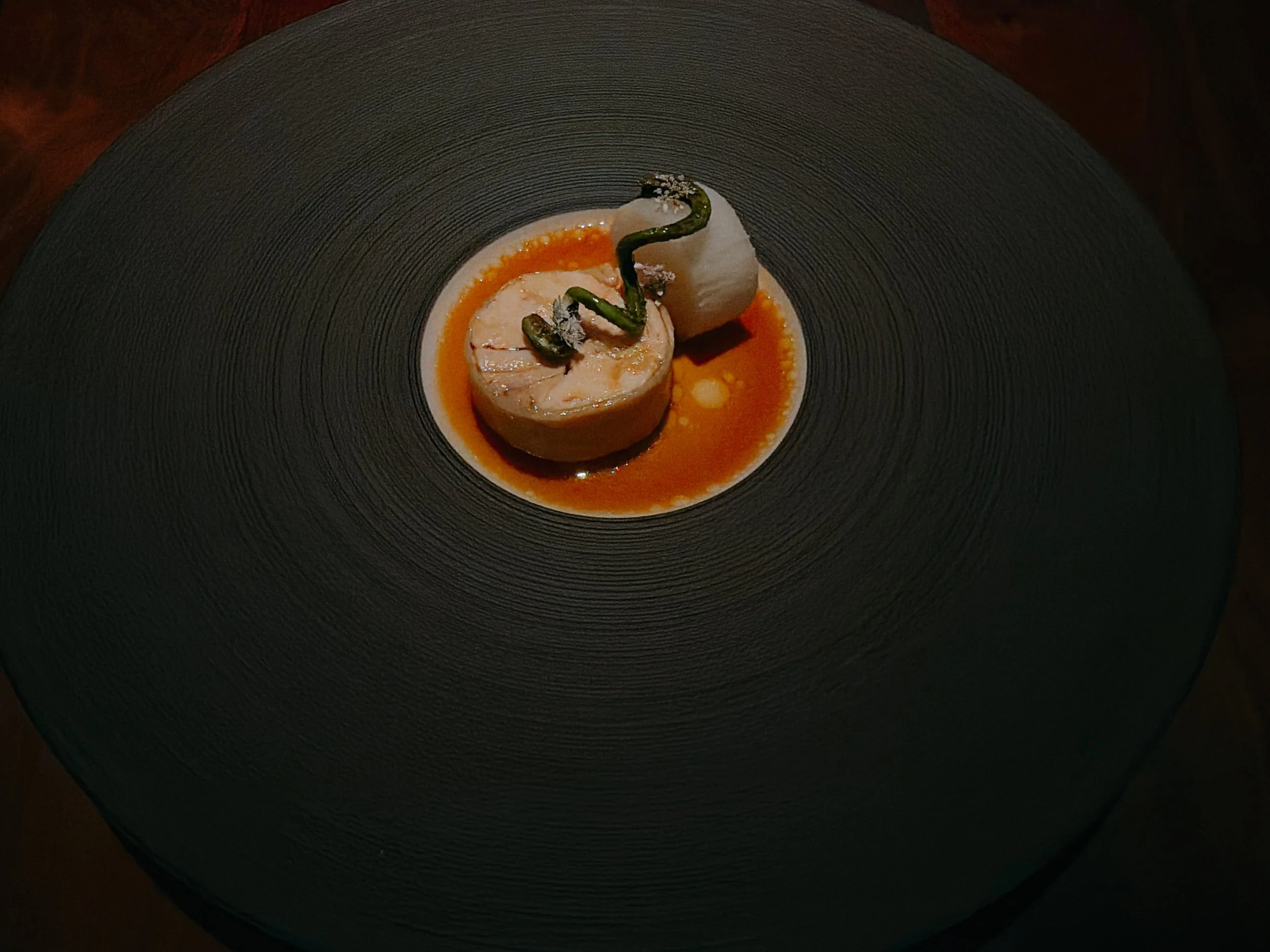
With the next course, we moved from Thailand to China. It featured a drunken heirloom hen that was wrapped in its own skin and served with a mountain yam and a coil of spring fern. A boneless take on the classic “drunken chicken” dish. Especially compared to the preceding red curry, the flavors here were very light. Most of the taste was in the sauce, but we didn’t have a spoon and the sauce didn't adhere well to the chicken either. Sopping the sauce up with bread was actually the best way to fully appreciate it. The chicken by itself had only light flavors, and while its meat was mostly tender, it could have been cooked a smidgen less. The mountain yam tasted essentially like a light potato, coming without its often slimy consistency (for better or worse). The fern's flavor was very unique - hard to put into words, but interesting. Overall not a bad dish, but stronger flavors - or simply a sauce spoon - could have made it even better 16.
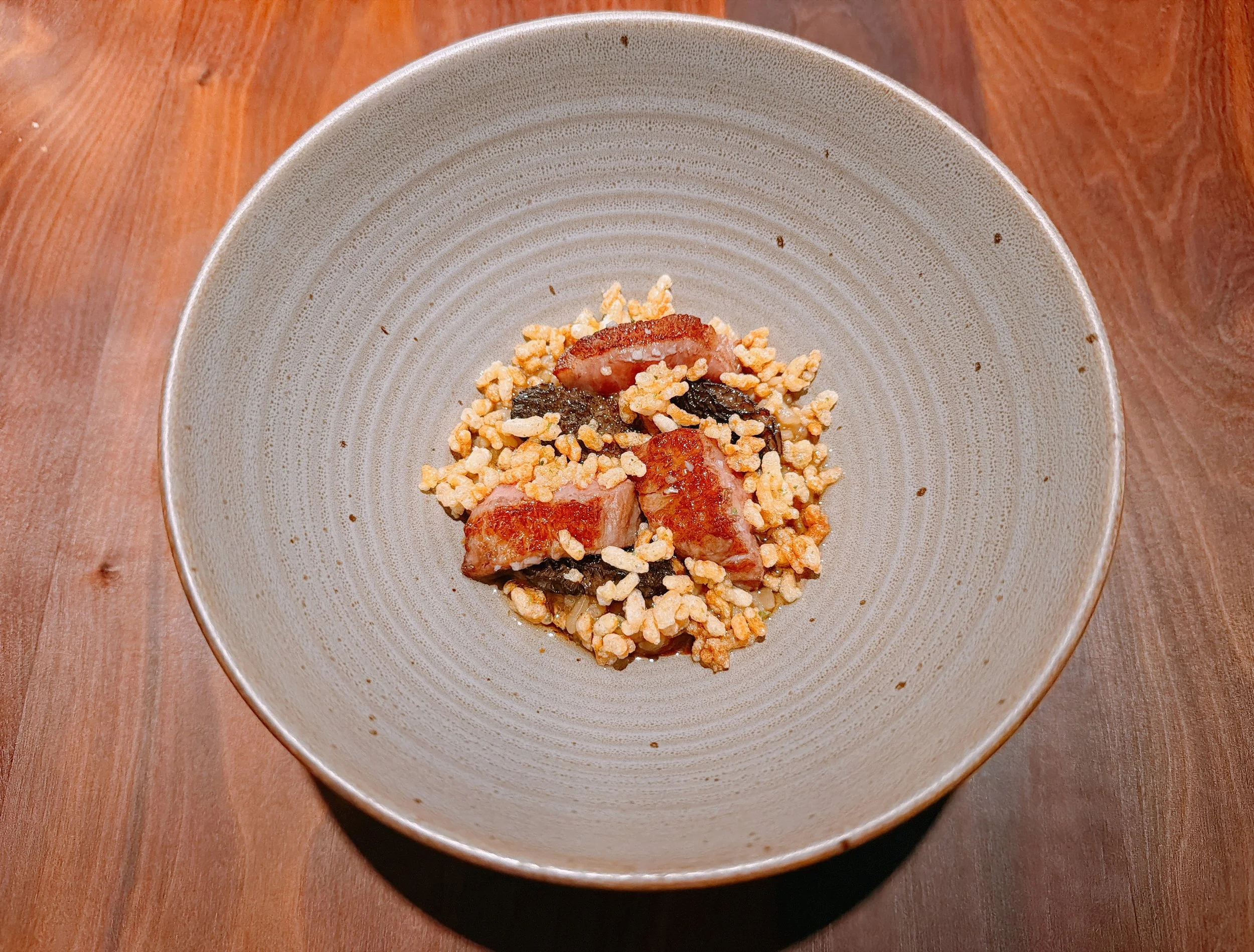
This brought us to the last savory course, a rice dish. As I mentioned above, this course came without any wine pairing. When we asked why, the sommelier told us that when the chef grew up, the rice course would always be the highlight of each home-cooked meal. Conversations would stop, drinks were forgotten, and everyone just concentrated on the food. For that reason, the chef still insists on serving his rice course without a paired wine. I guess that makes sense, but I wish that we had been given this explanation without having to ask for it - otherwise the lack of a pairing was simply mystifying. In any case, one can definitely order a glass (or half-glass) of wine to bridge the gap.
Back to the food, though. According to our servers, what we received was a “rice congee”, but the dish was actually much closer to a rice bowl, since its consistency was relatively dry. The rice was seasoned with beef fat and aged rice vinegar, and was topped with morel mushrooms and (for an additional $30) A5 Japanese wagyu beef from Kagoshima. Toasted rice on top of the dish added a crunchy texture that nicely complemented the more creamy rice underneath. The sauce made this dish very rich - arguably a reason for (rather than against) pairing a wine with it. This was a nice dish, with the only letdown being the wagyu beef, which was a very chewy cut. Not worth adding in this case 16.
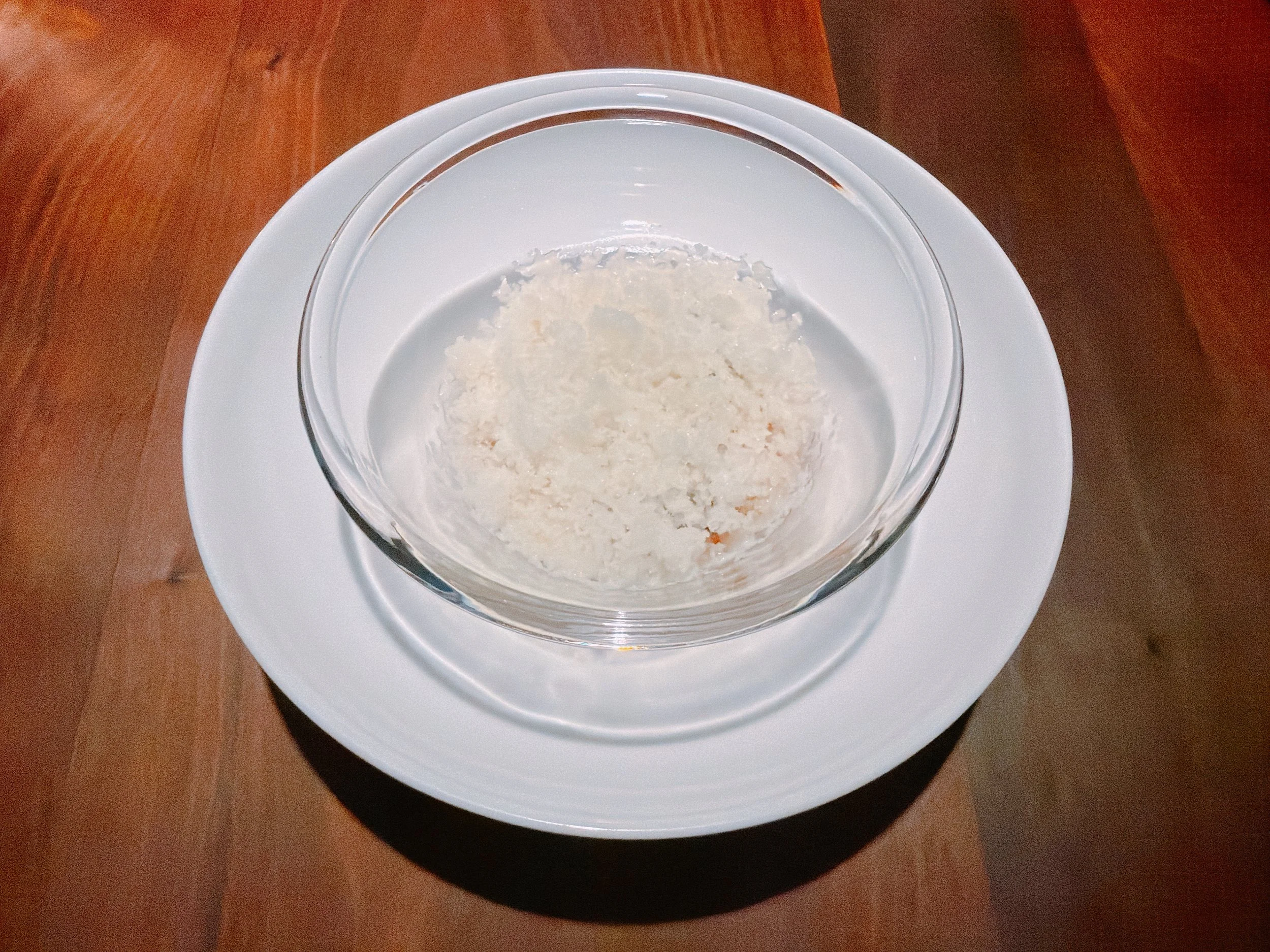
The following palate cleanser was made from sweet milk, apricots, osmanthus tea and a brown sugar foam. It was a light dish that was slightly sweet (but not too much), with a hint of fruit flavor from the apricots. Different textures, from ice cream to a mochi-like ingredient, gave it variety. Tasty 16.
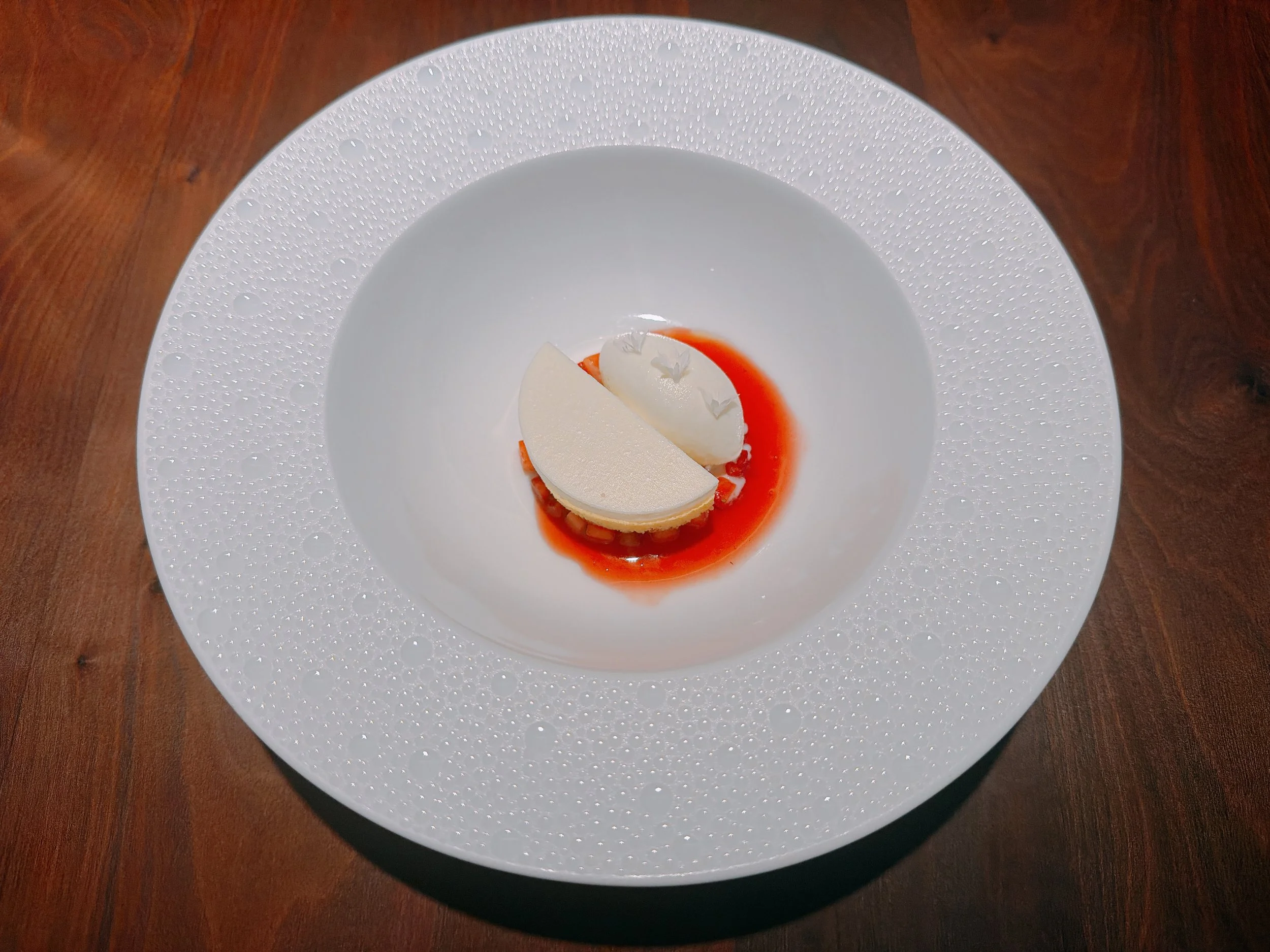
For our main dessert, we received a chiffon cake that came with a rose-geranium ice cream and variations of strawberries and rhubarb. The cake was light, the ice cream had a noticeable rose flavor, and the strawberries and rhubarb added a nice amount of fruit. A well done and not too heavy dessert 17.
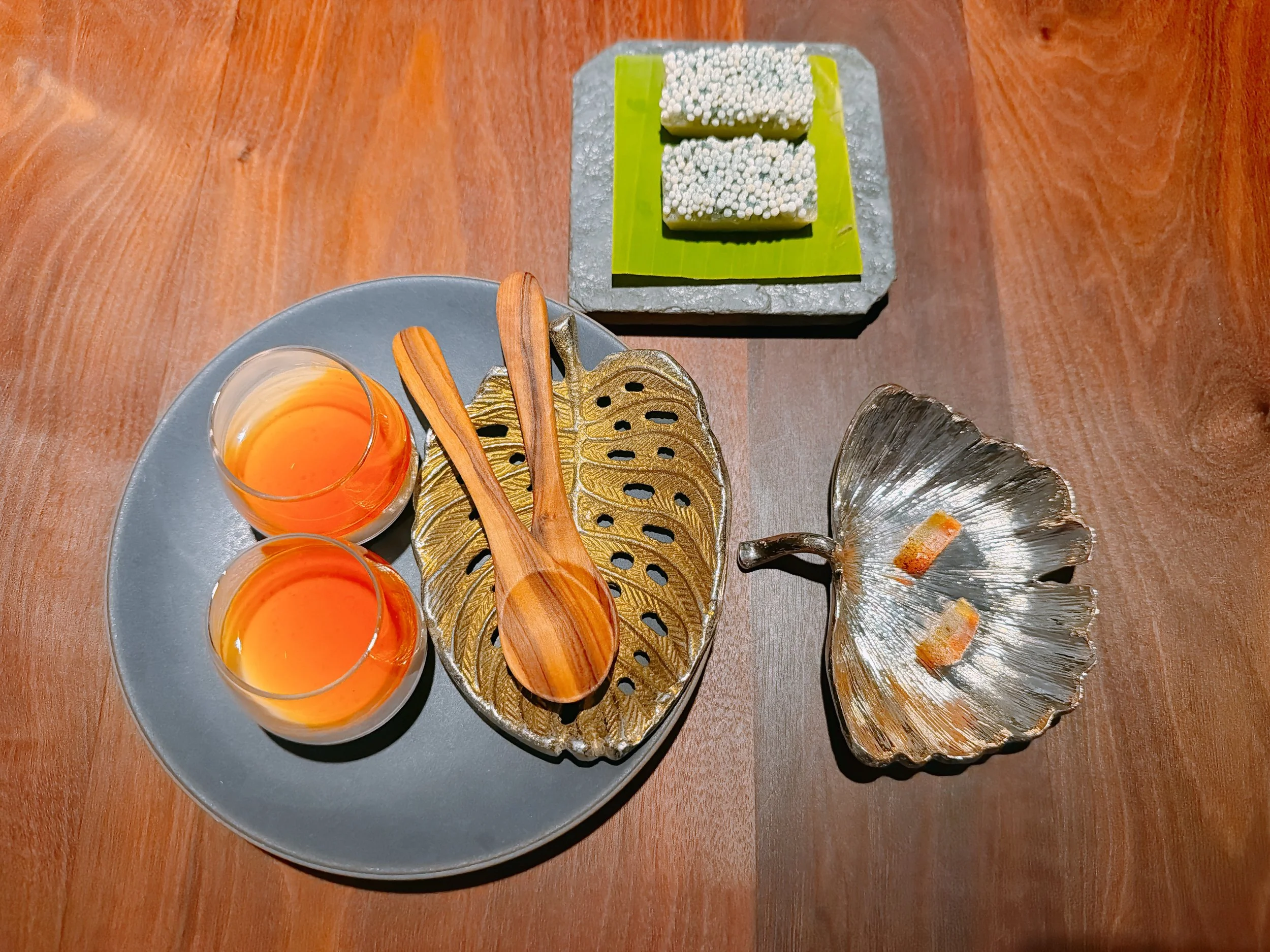
The dinner concluded the same way that it had started - with three small bites. A lotus root pudding was topped with Thai tea. The pudding itself was lovely, and the sauce added a taste of lightly sweet Thai tea 16. A pandan sponge cake was seasoned with coconut and topped with crunchy pearls. The flavors here were pretty light: of coconut and of pandan 15. Finally, a kiwi/guava/black lime pate de fruit had a good combination of flavors that blended together nicely, and a good amount of acidity 16.
Overall: It's hard to summarize Commis' cuisine succinctly. There were aspects of Californian cuisine, using local, seasonal ingredients, but also dishes that were inspired by Thai, Chinese and maybe even Japanese cuisines. But who says that a tasting menu needs to have a simple theme. It was definitely fun to follow the progression of dishes, never quite knowing what would come next. Personally, I preferred the dishes that most heavily leaned into different cuisines, such as the red curry. But this was definitely an enjoyable dinner with good service, especially from the sommelier. Hopefully it won't be another eleven years before we return 16.