Kong Hans Kælder - Copenhagen
Underground dining
Rating: 17/20
Where: Copenhagen, Denmark
When: Dinner for 2 on 28 May 2026
Cost per Person: Tasting menu 2950 DKK ($460), Wine Pairing 2400-8500 DKK ($375-$1325)
Accolades: 2 Michelin Stars
Why: Classic French cuisine with many Danish ingredients
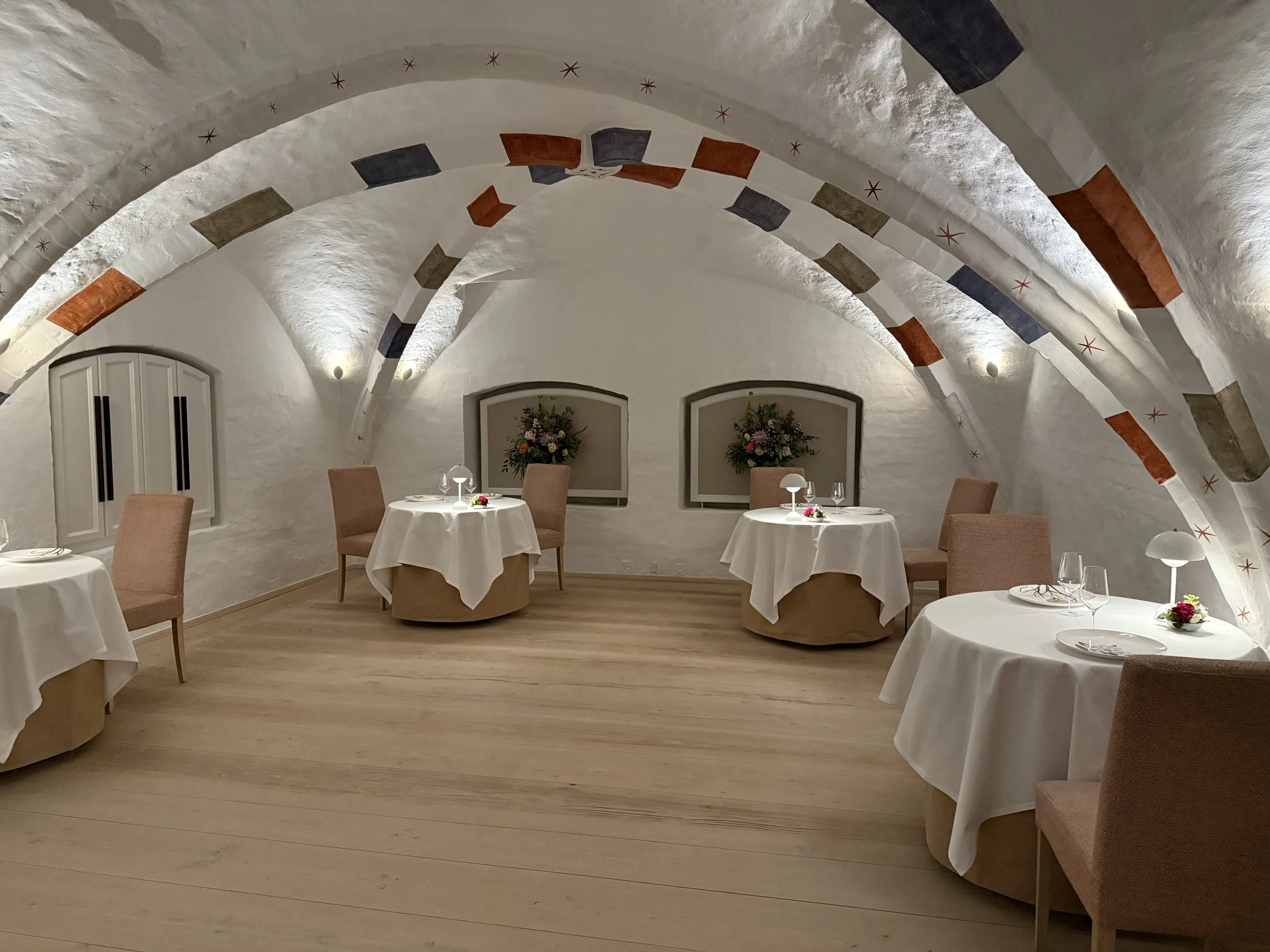
If you speak Danish, the location of “Kong Hans Kælder” will come as no big surprise - it is down a few steps from street level, occupying a vaulted basement (kælder = cellar). In the early 1500s, the eponymous wine cellar of King Hans could be found here, but the actual building has long since been replaced. Today, it houses one of Copenhagen's oldest fine-dining restaurants. Kong Hans Kælder opened in 1976, and therefore was celebrating its 50th anniversary during our visit. Back in 1983, it was the first restaurant in Denmark to receive a Michelin star, and kept it until 2014. After that loss, current chef Mark Lundgaard took over the kitchen, and not only quickly gained back the star, but even got a second one in 2021.
When one thinks of fine-dining restaurants in Copenhagen, “New Nordic” cuisine will probably come to mind. But Kong Hans Kælder deviates from the current main stream: it serves classic French fare. Compared to the other starred restaurants in the city, the meal here is a bit heavier, and it puts more emphasis on meat courses (there were three total). Good news for red wine drinkers, no doubt.
The restaurant's underground space is split into two main dining rooms. We sat in the smaller one in the back, which held a total of five tables. Due to the vaulted ceilings, the acoustics of the room were sometimes a bit challenging - when multiple tables were served at the same time, the overlapping echos made it difficult to understand the descriptions of the dishes. Other than that though, the service was wonderful, remaining well-paced throughout our 4+ hour dinner.
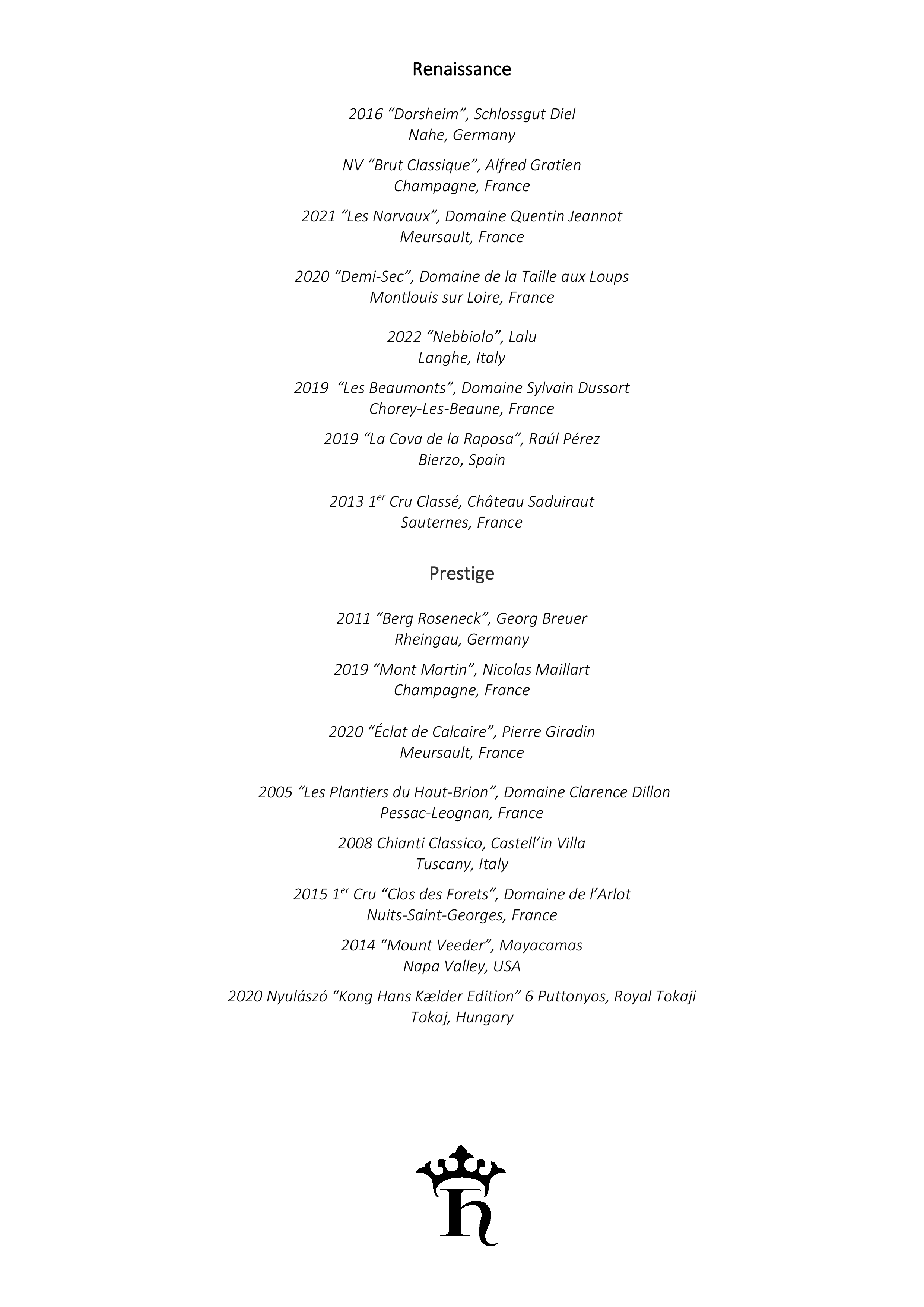
Kong Hans Kælder served just a single tasting menu, but it was possible to adjust it for dietary restrictions with prior notice (such as for my pescatarian dining companion). The menu's price of 2950 DKK (about $460) was slated to increase to 3100 DKK ($485) the week after our visit. Three wine pairings were offered, with prices ranging from 2400 DKK to 8500 DKK ($375-$1325). In the rest of the world $375 might be the price of a restaurant’s most expensive pairing, and not the entry-level one. Alas, this was Denmark... I tried the lowest-priced pairing, and the wines were all quite enjoyable and generally matched the food well, with generous pours that were topped off when necessary.
Since the pairing began only with the “main” courses, an aperitif to accompany the appetizers is not a bad idea. I chose the restaurant's mocktail, a fizzy drink made with lemongrass, juniper and cocoa beans. As mocktails go, this one was actually pretty decent, having some flavor, but not too strong to interfere with the food. There were plenty of other non-alcoholic options, such as sparking teas, wines and juices. And of course several cocktails - for around 200 DKK ($30) each - and glasses of champagnes ranging from 300 DKK to 750 DKK ($45-$115).
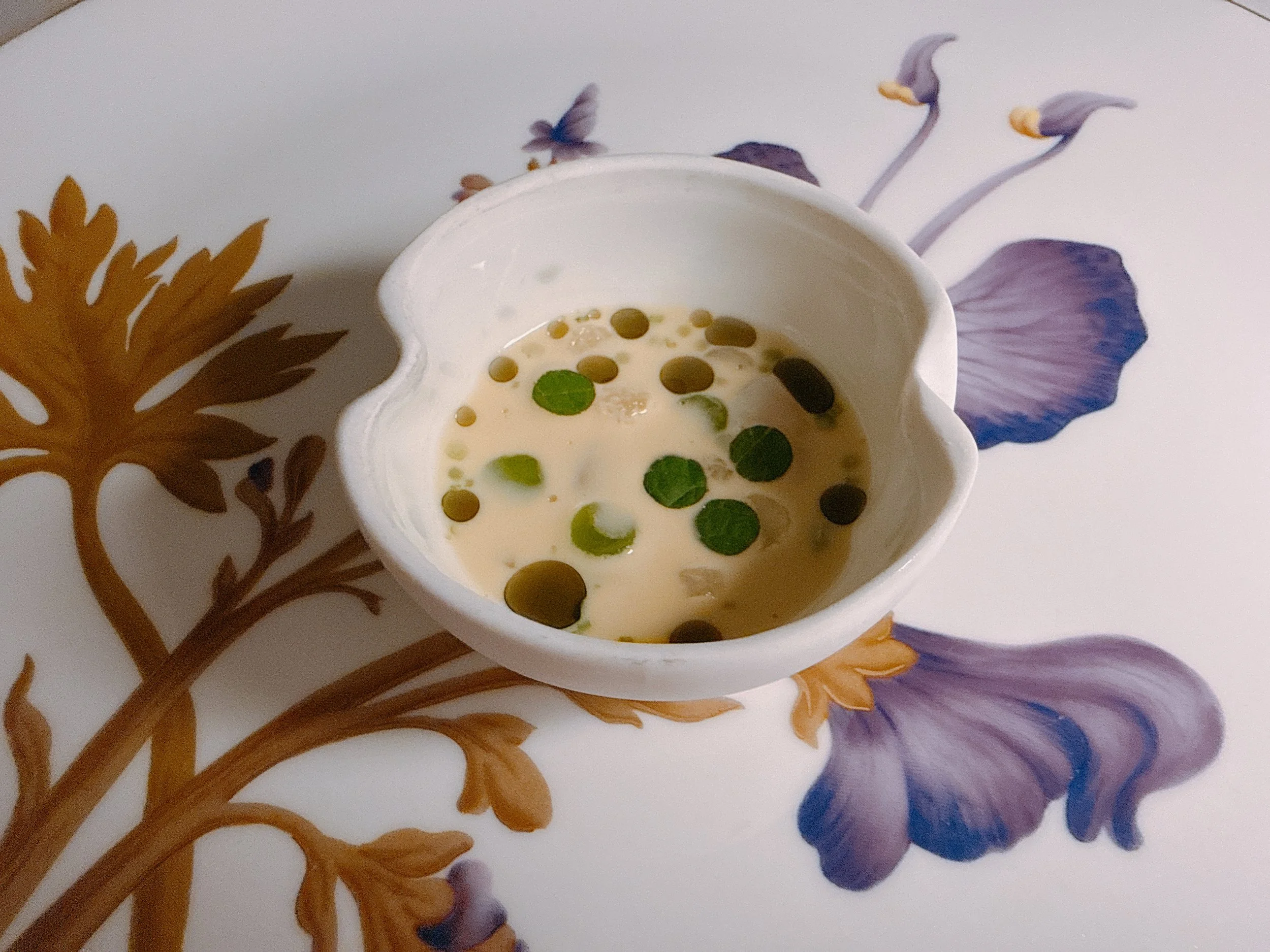
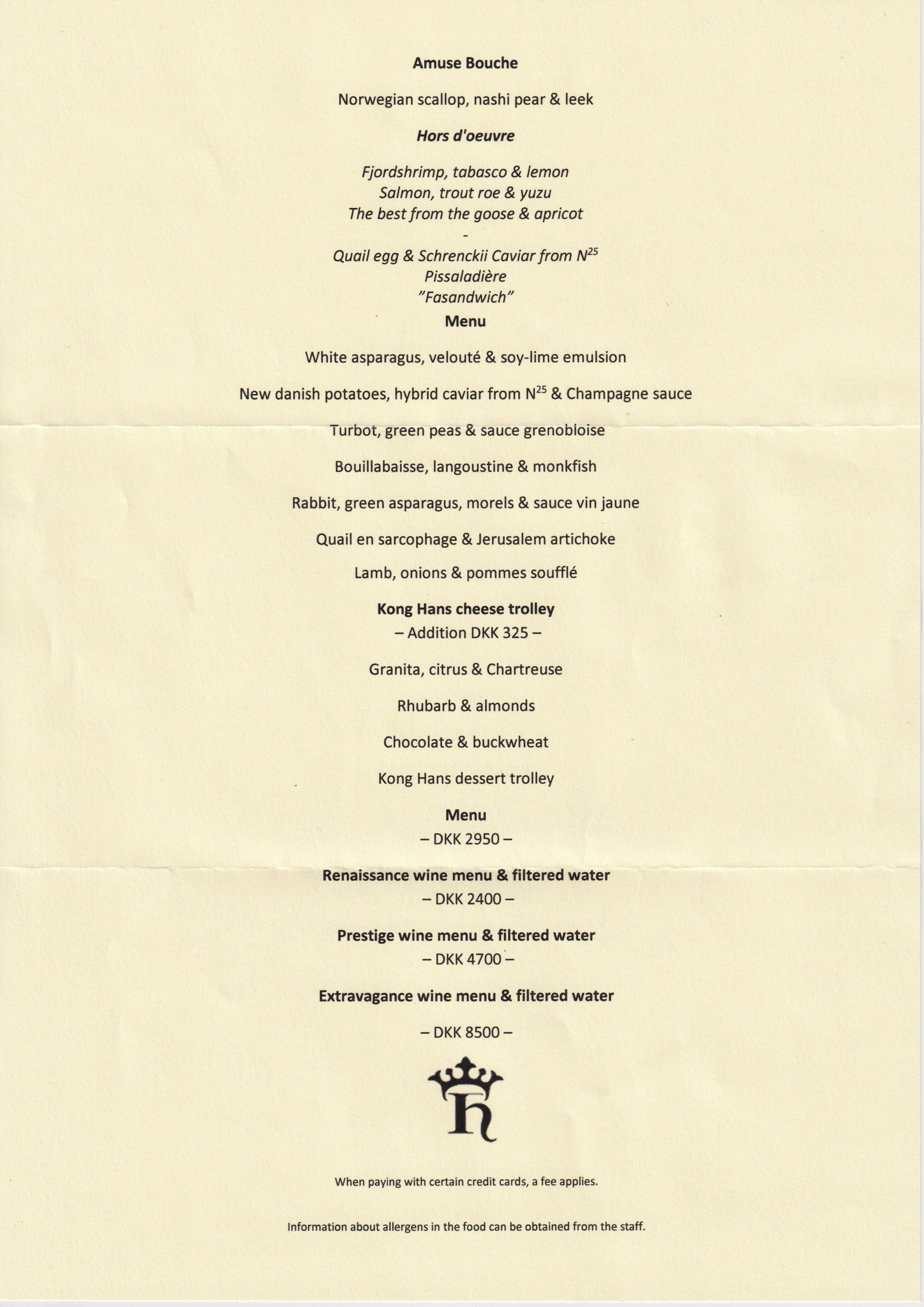
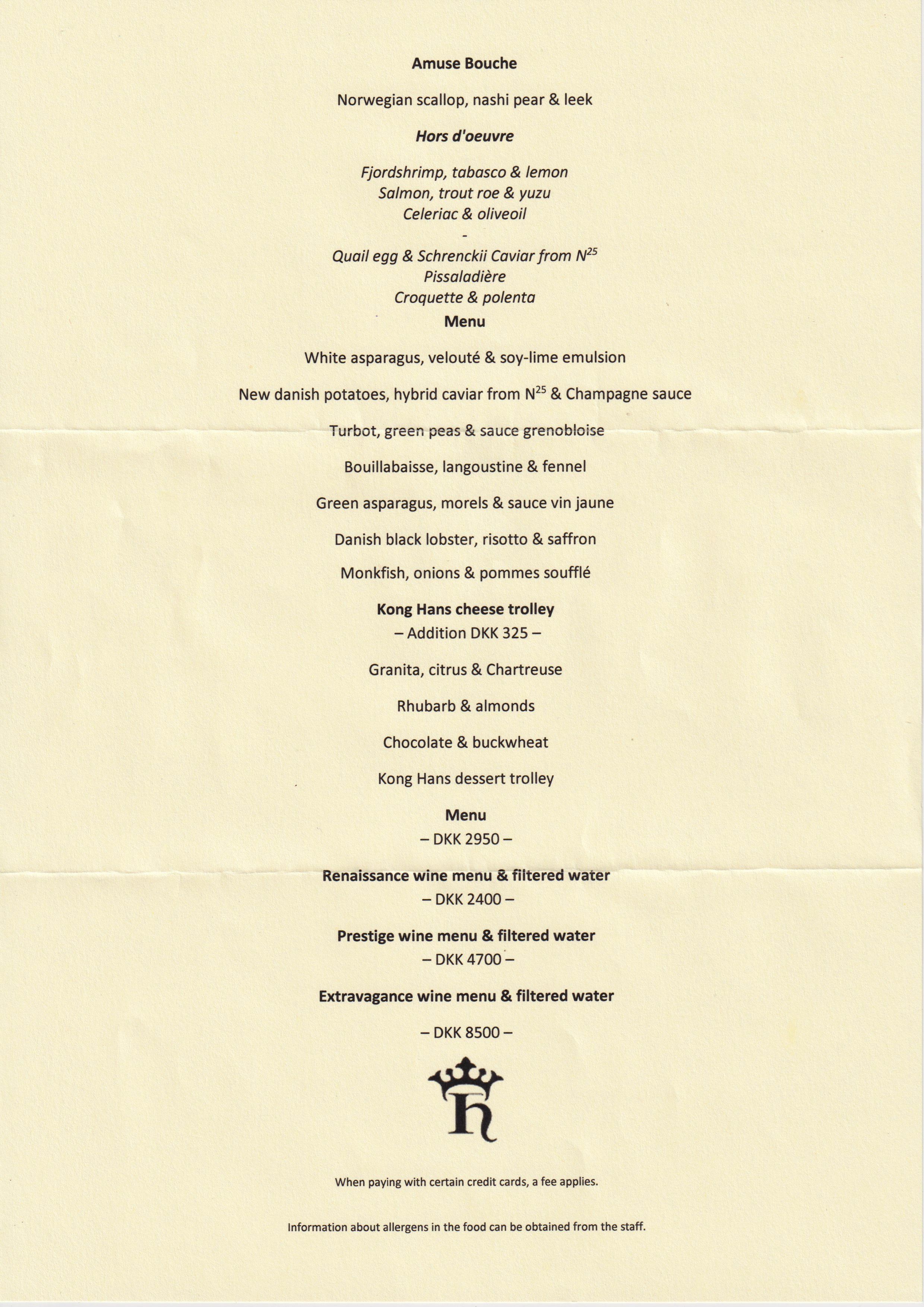
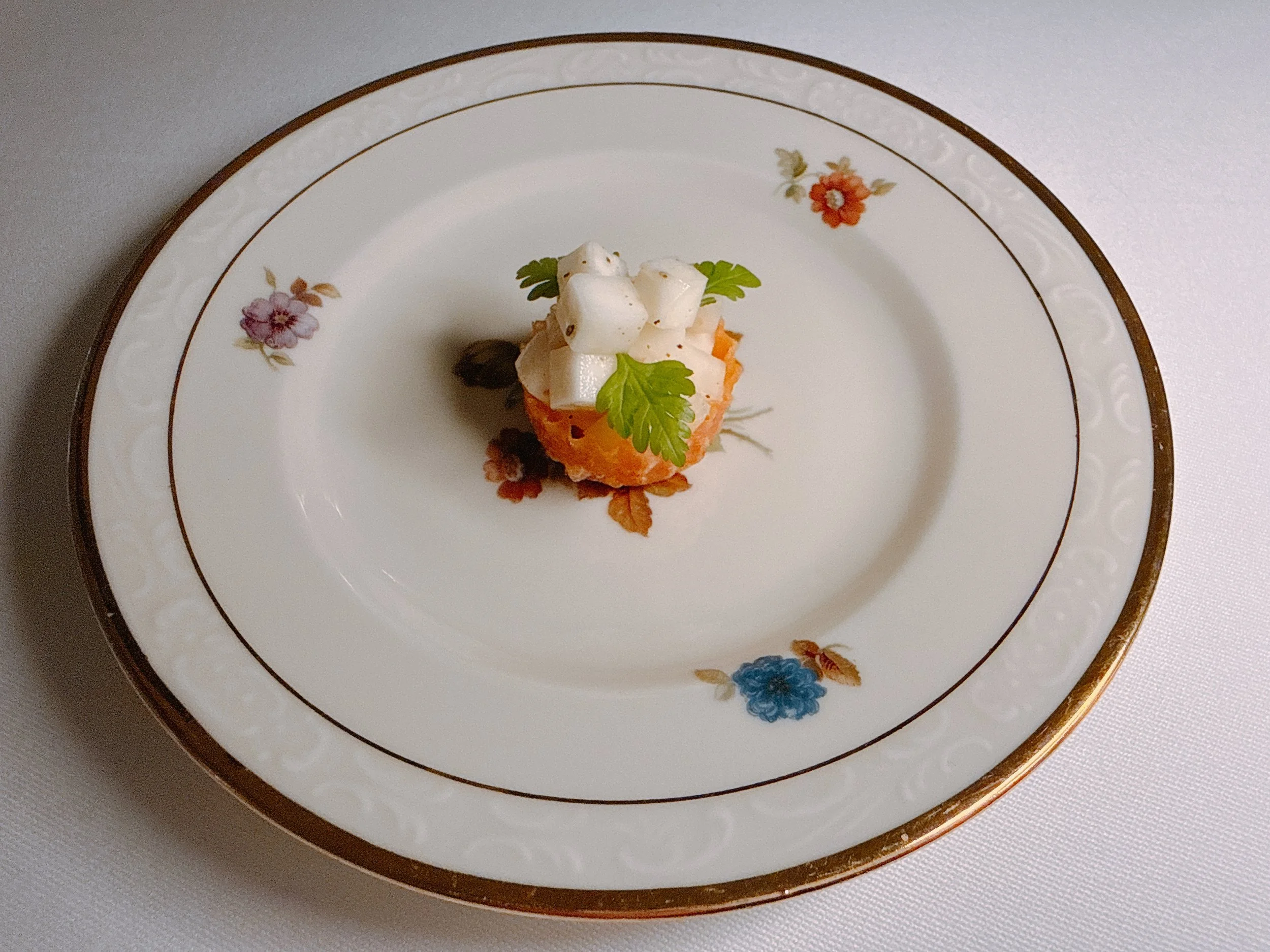
Our dinner started with a small amuse bouche, a ceviche of Norwegian scallops. The scallops were served in a leche de tigre sauce with little cubes of leeks and pears. Prepared a la minute, the scallops were very tender in the nicely acidic sauce. The pears and leeks added mostly texture rather than taste 17.
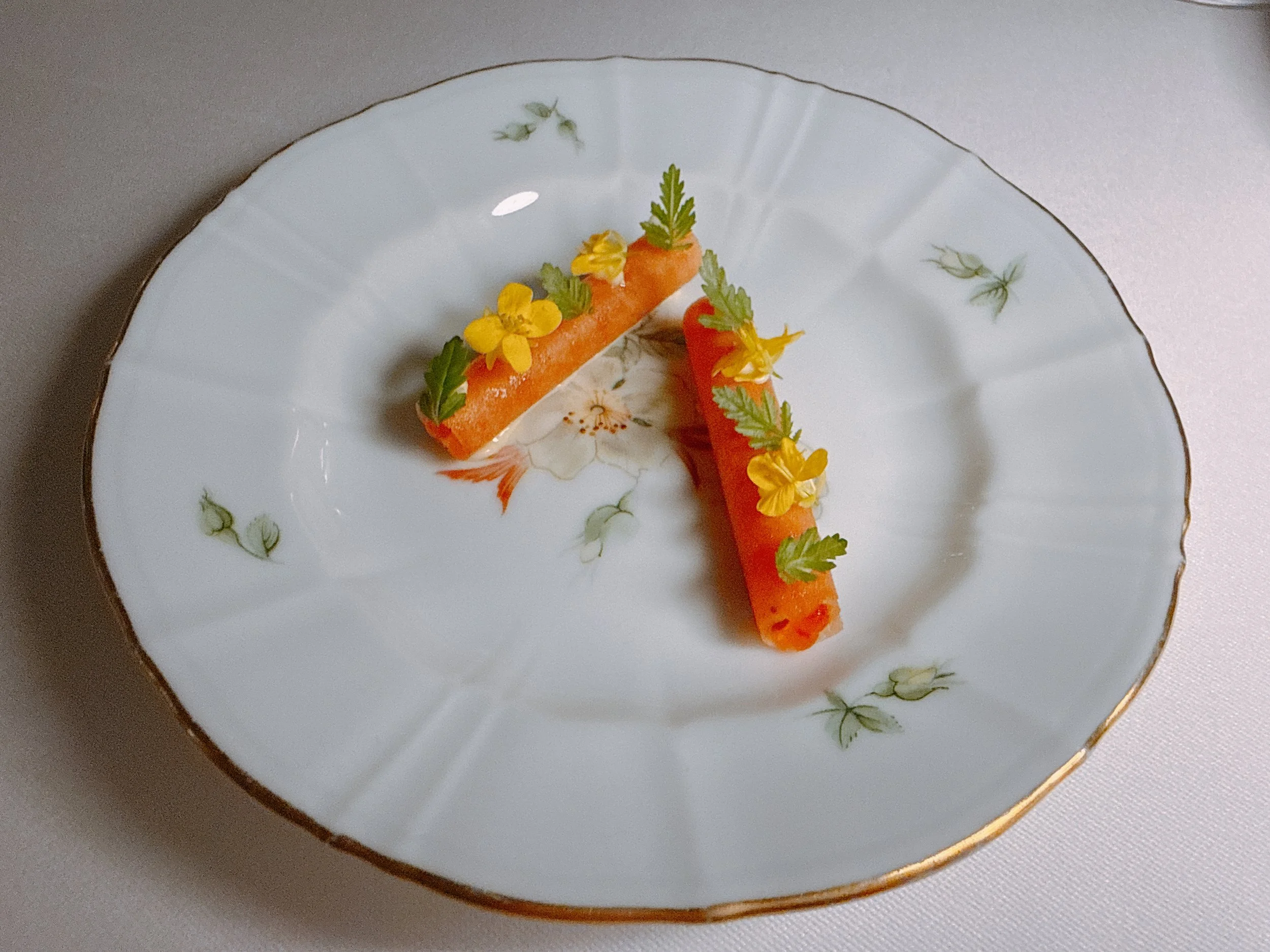
The next three bites were served together. A thin cracker roll was filled with salmon, a yuzu emulsion, and trout roe. The cracker wrapping was very delicate, and the salmon flavor similarly light. Sadly, there was hardly any yuzu flavor to be found. Compared to the ceviche, this was definitely a step down in flavor intensity - elegant, but missing a punch 16.
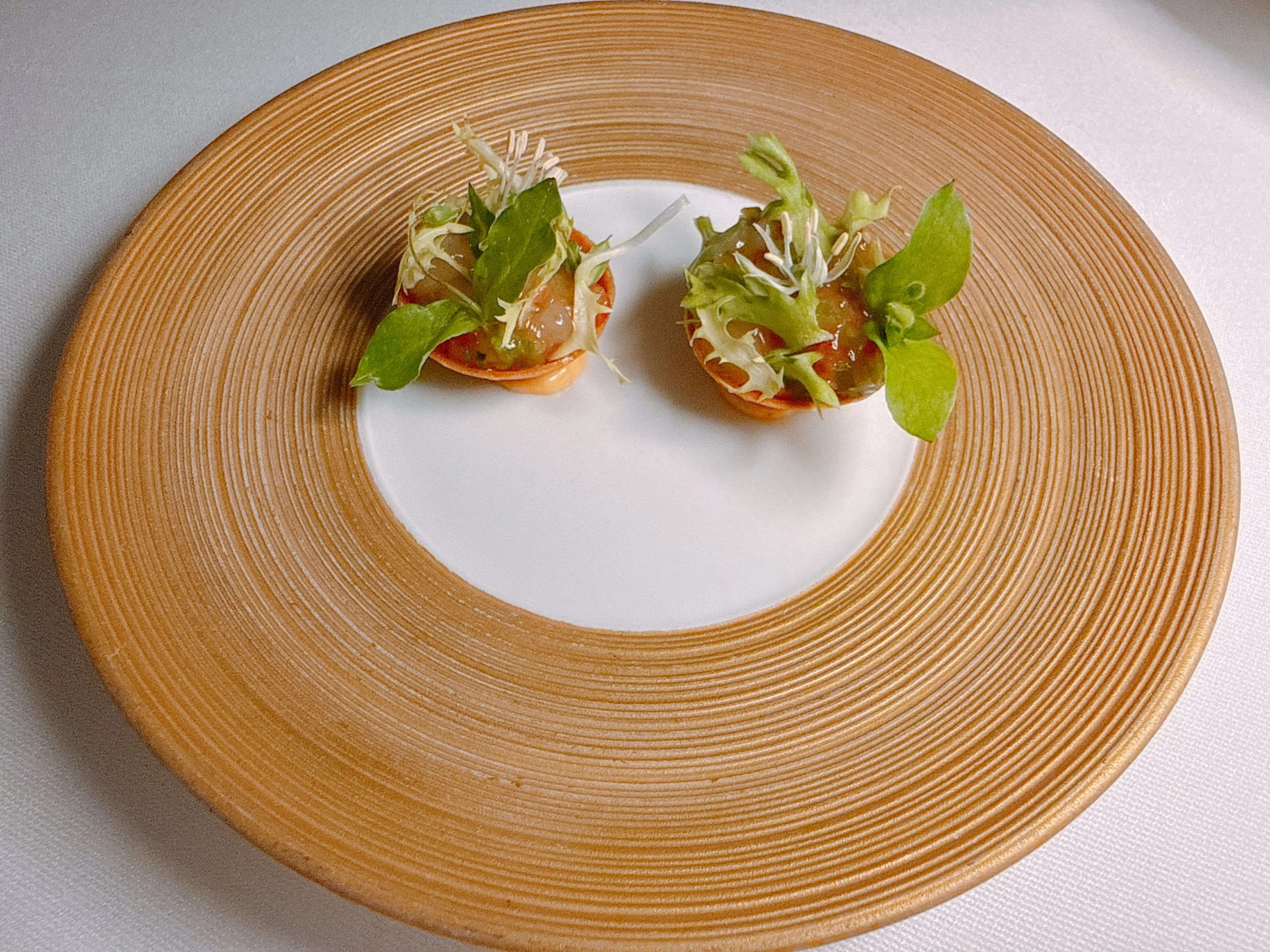
Fjord shrimp came with celeriac, tabasco, and lemon inside a cracker shell. This cracker was much more solid than the preceding one - verging on being too hard -, but its filling was delicious and notably spicy 17.
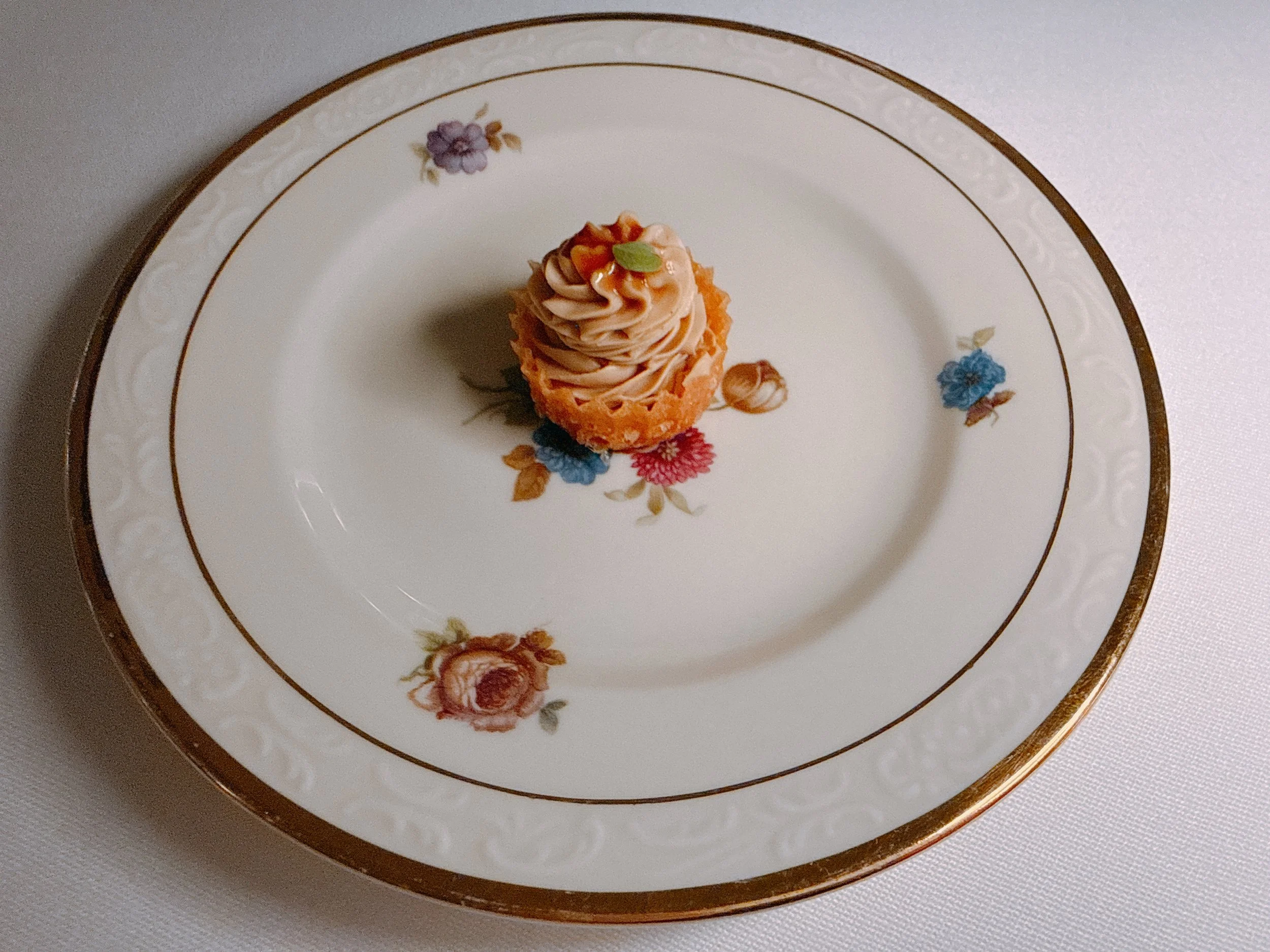
Lastly, there was a pastry shell filled with foie gras and apricots. Creamy, flavorful, and pretty heavy, this tasted mostly of foie gras - I didn't notice the apricots 16. The pescatarian alternative skipped the foie gras and used celeriac instead of apricot, which made for much lighter and somewhat vegetably flavors 15.
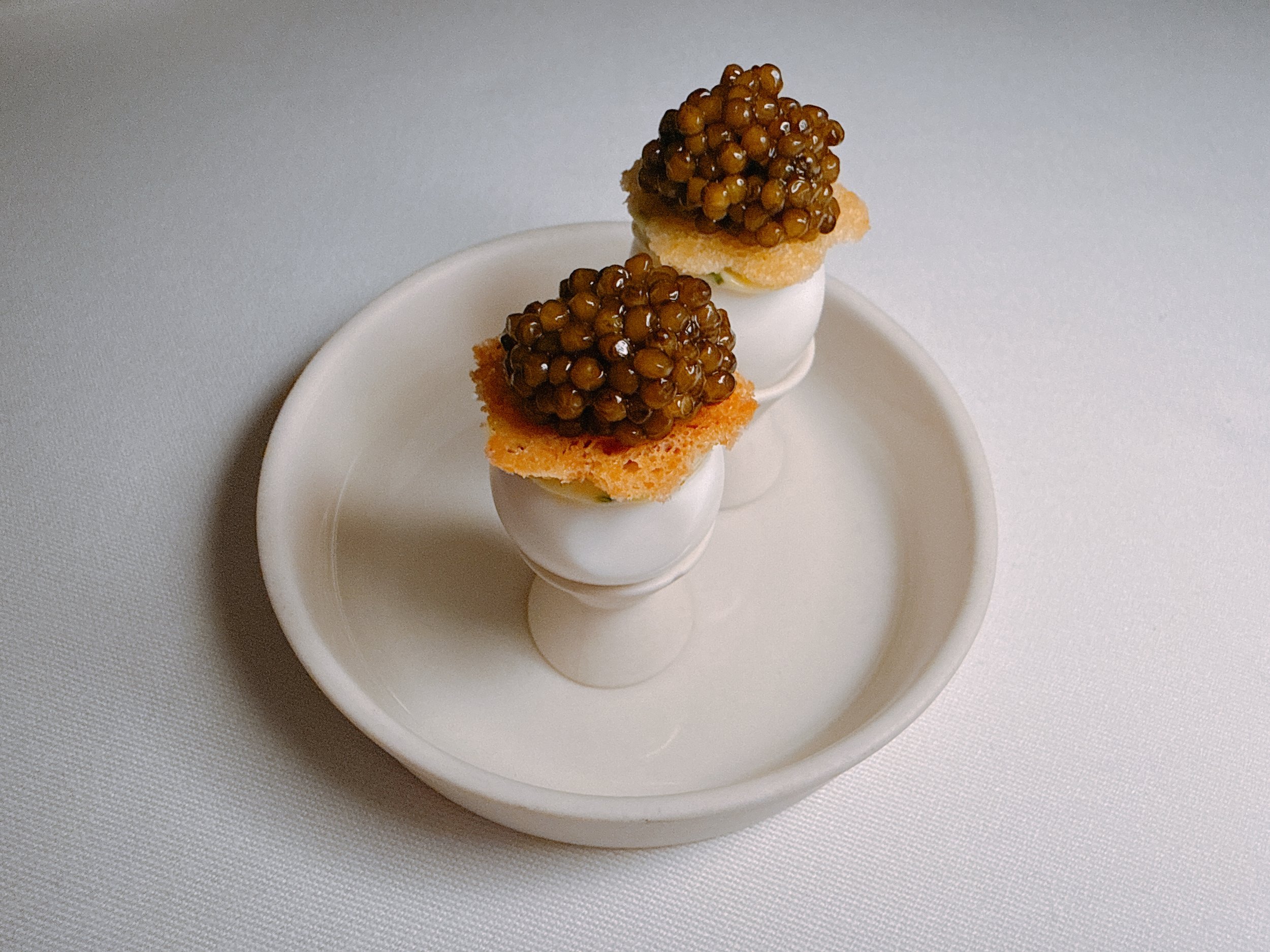
The next round of dishes again consisted of three small appetizers. We started with a soft-boiled quail egg topped with a thin cracker and N25 caviar. The egg yolk was still liquid, giving this creamy bite lots of umami, complemented by some very good caviar. Yum 17.
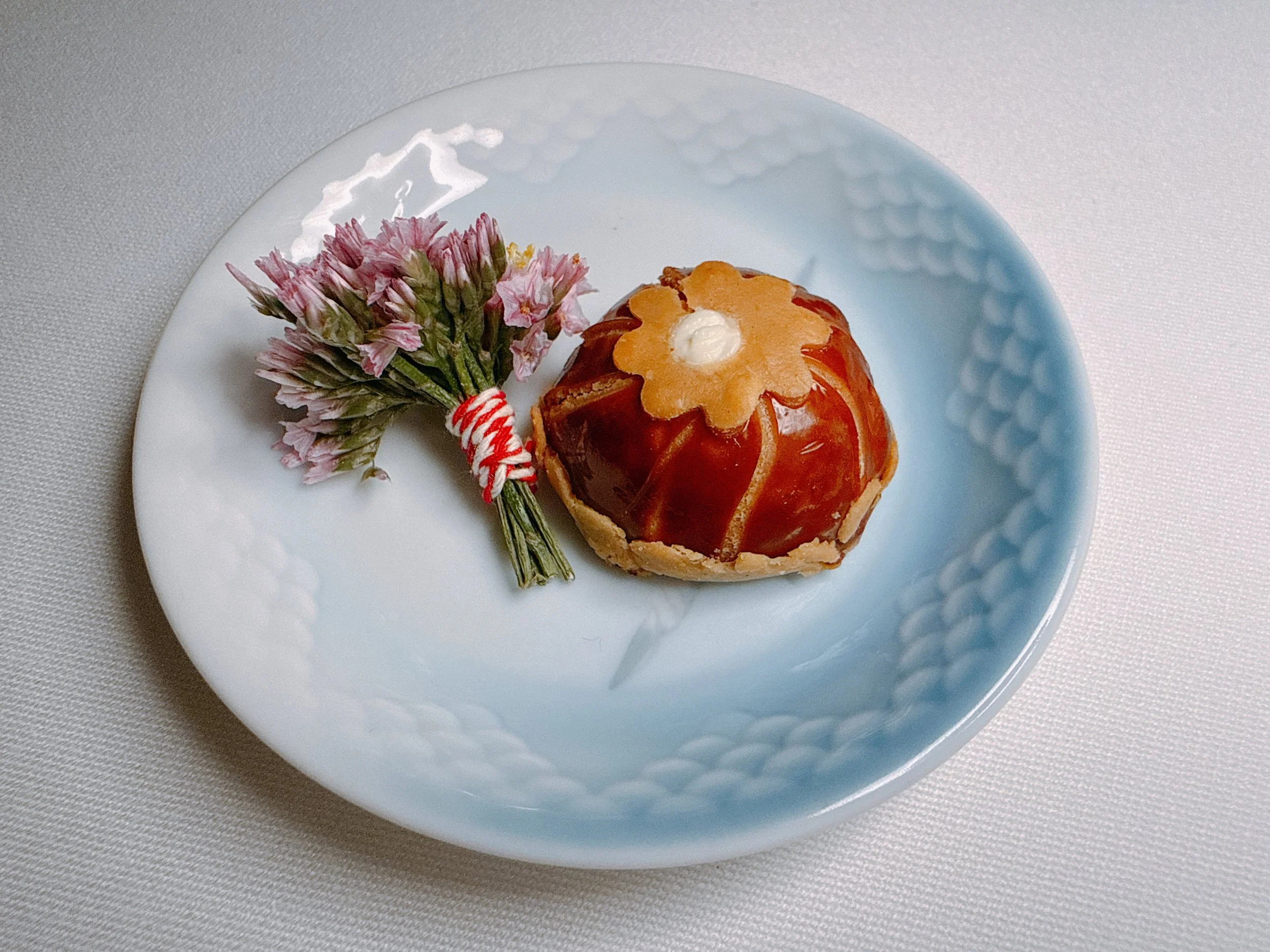
A “pissaladière” was a small French onion tart, served with a (decorative) bouquet of herbs. The bite’s mealy cracker shell surrounded a filling with a light roasted onion flavor. Fine, but less distinctive than what had come before 14.
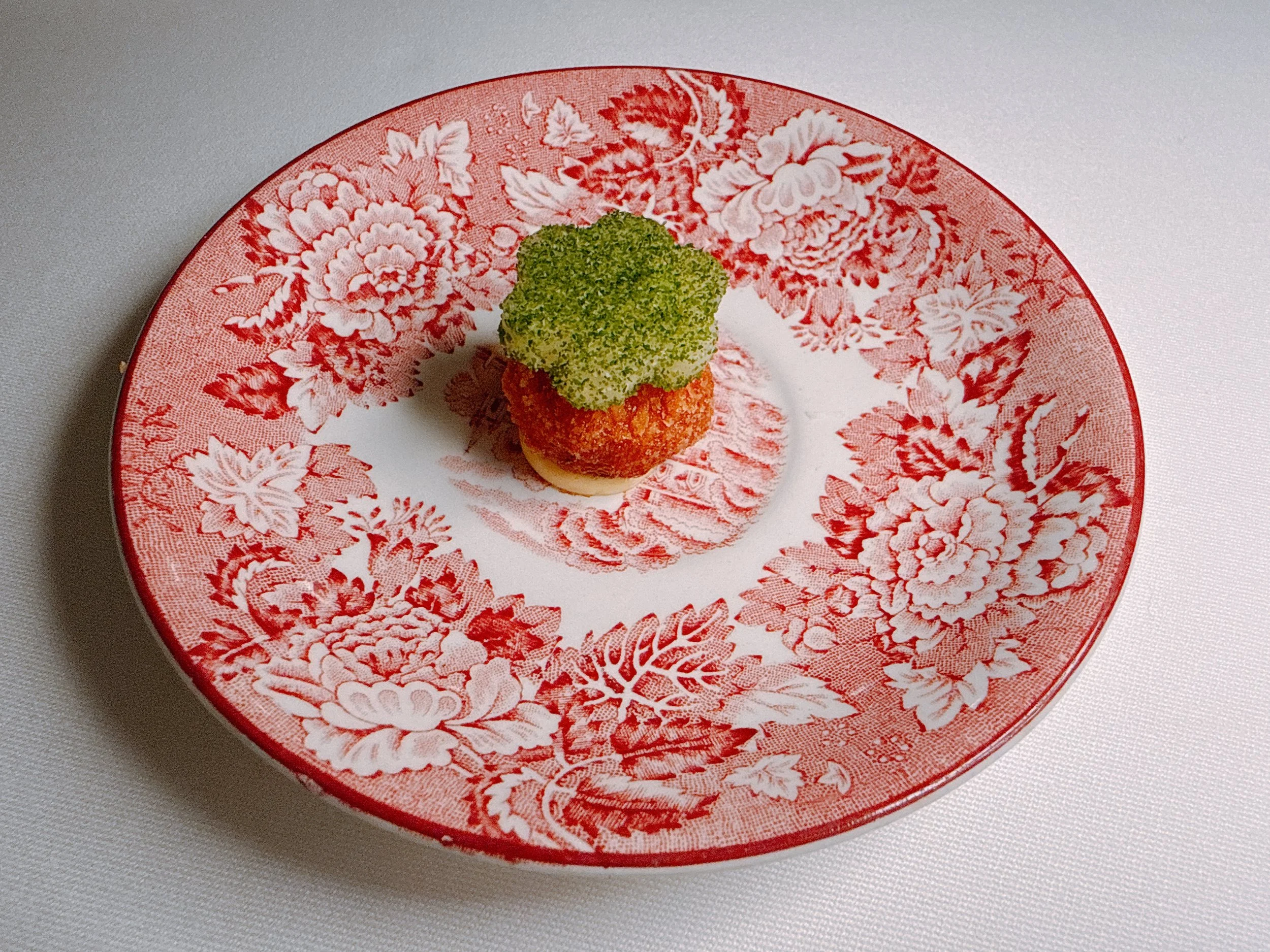
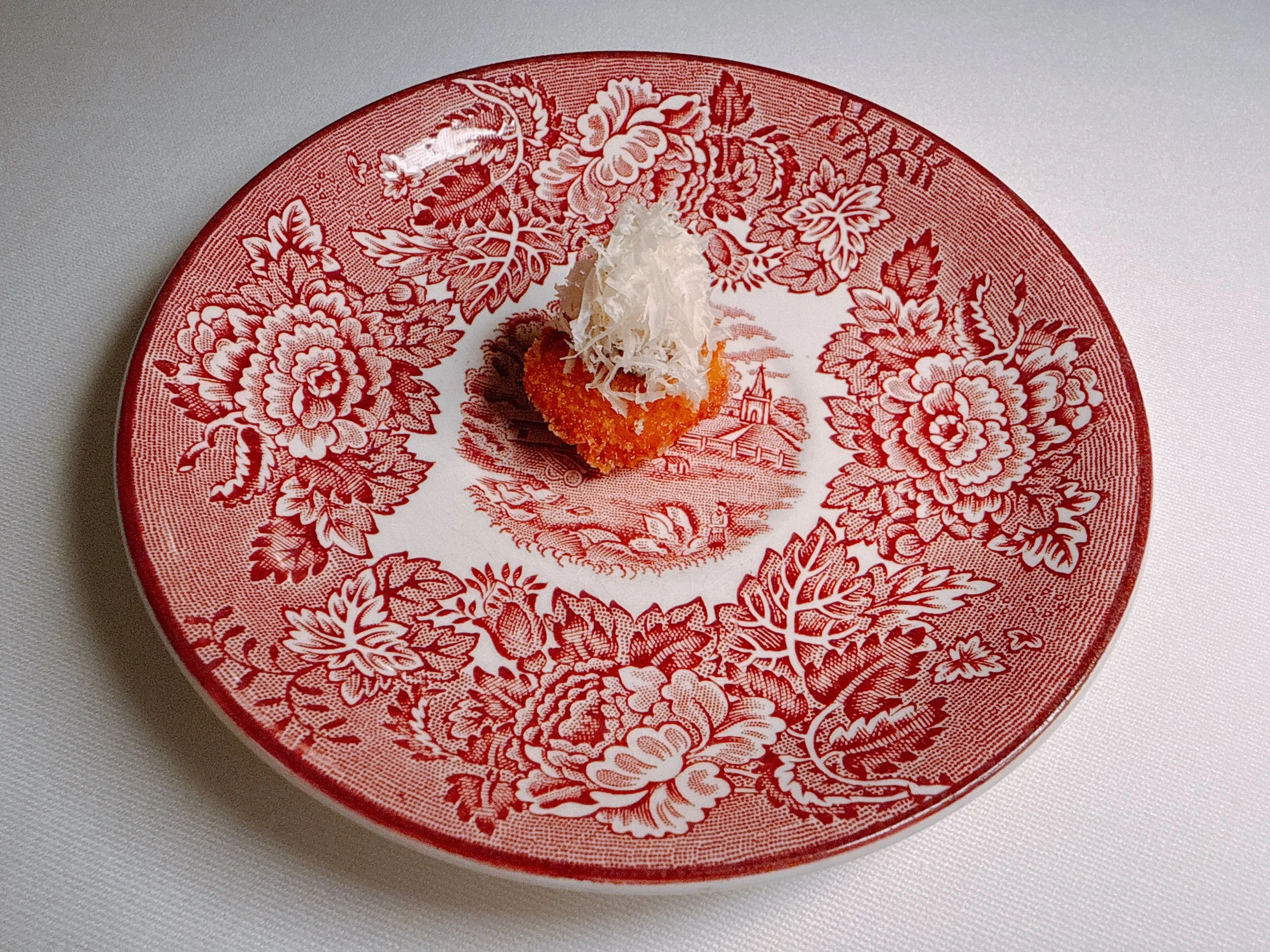
Lastly, we got a “fasandwich” - its name a play on the words “fasan” (pheasant) and, well, sandwich. In reality, this was not really a sandwich, but rather a croquette made with polenta that was filled with pheasant leg meat and topped with a Michelin-star-shaped cucumber slice. The result was quite meaty with a spicy aftertaste, but was lightened up by the crunchy cucumber 15. The pescatarian version used cheese instead of meat, and thus felt a bit more pedestrian - it was simply breaded and fried cheese. My dining companion quite liked it though, and also tasted some mushroom/truffle notes that I didn't get 13.
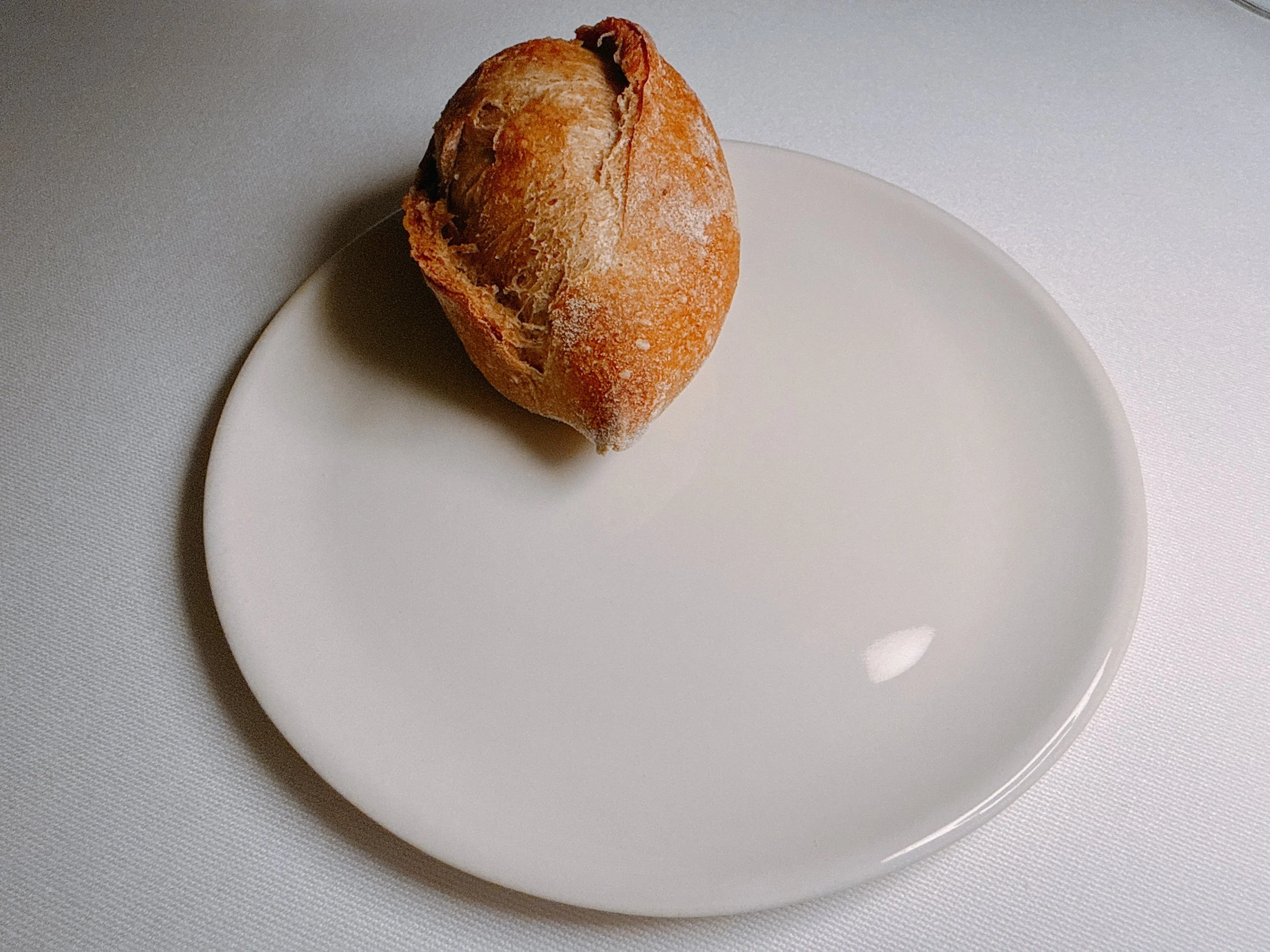
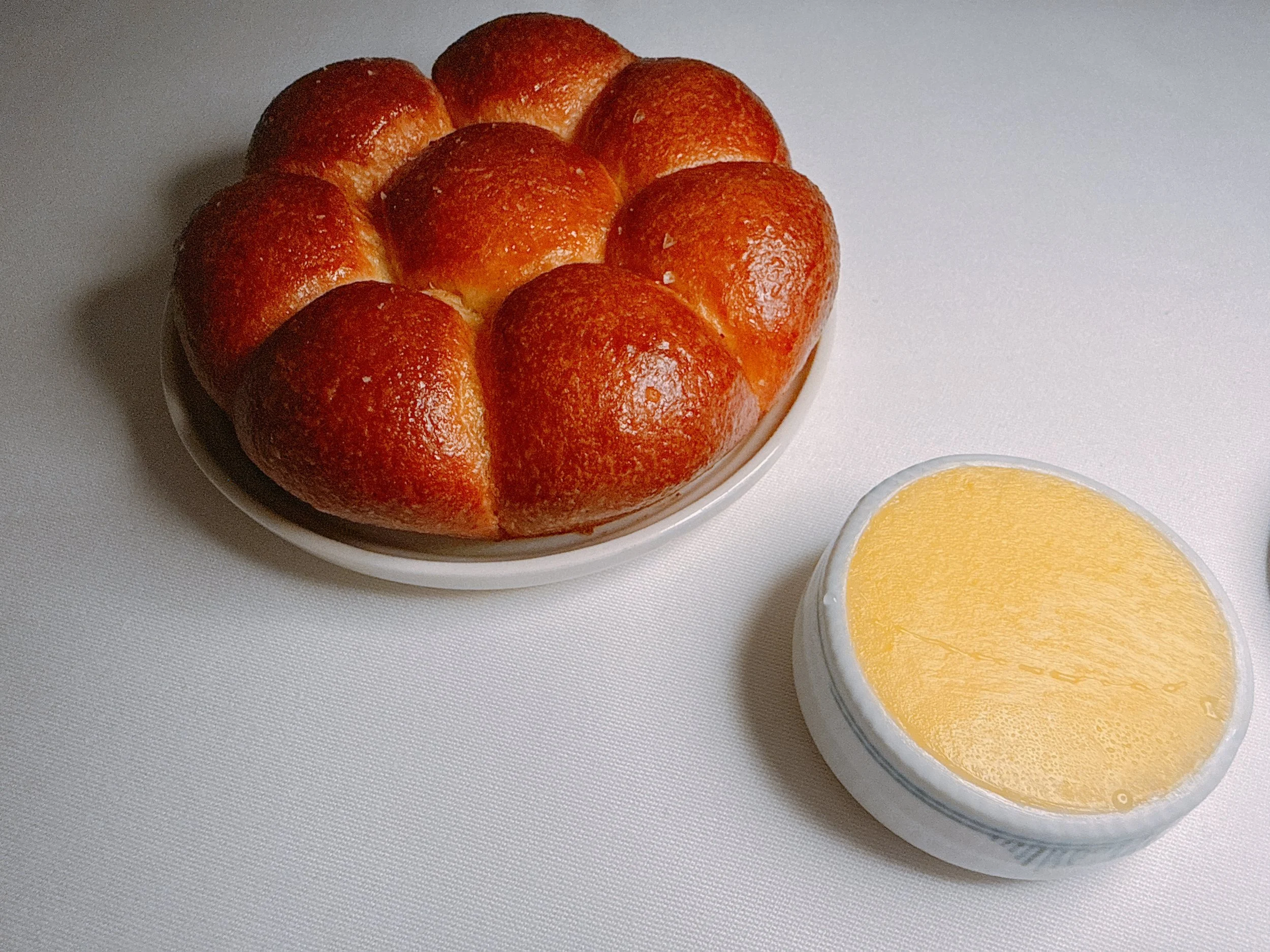
The single bread serving of the night featured two different breads. One was a little sourdough baguette that had been made with malt flour, giving the bread a brownish color. The other was a brioche wheel brushed with brown butter and topped with salt. Both came from the restaurant's own bakery, and were served warm, alongside a salted butter from France. The brioche was quite nice - not too heavy -, and the baguette had a light crunch and light flavors. Both went excellently with the lovely butter 16.
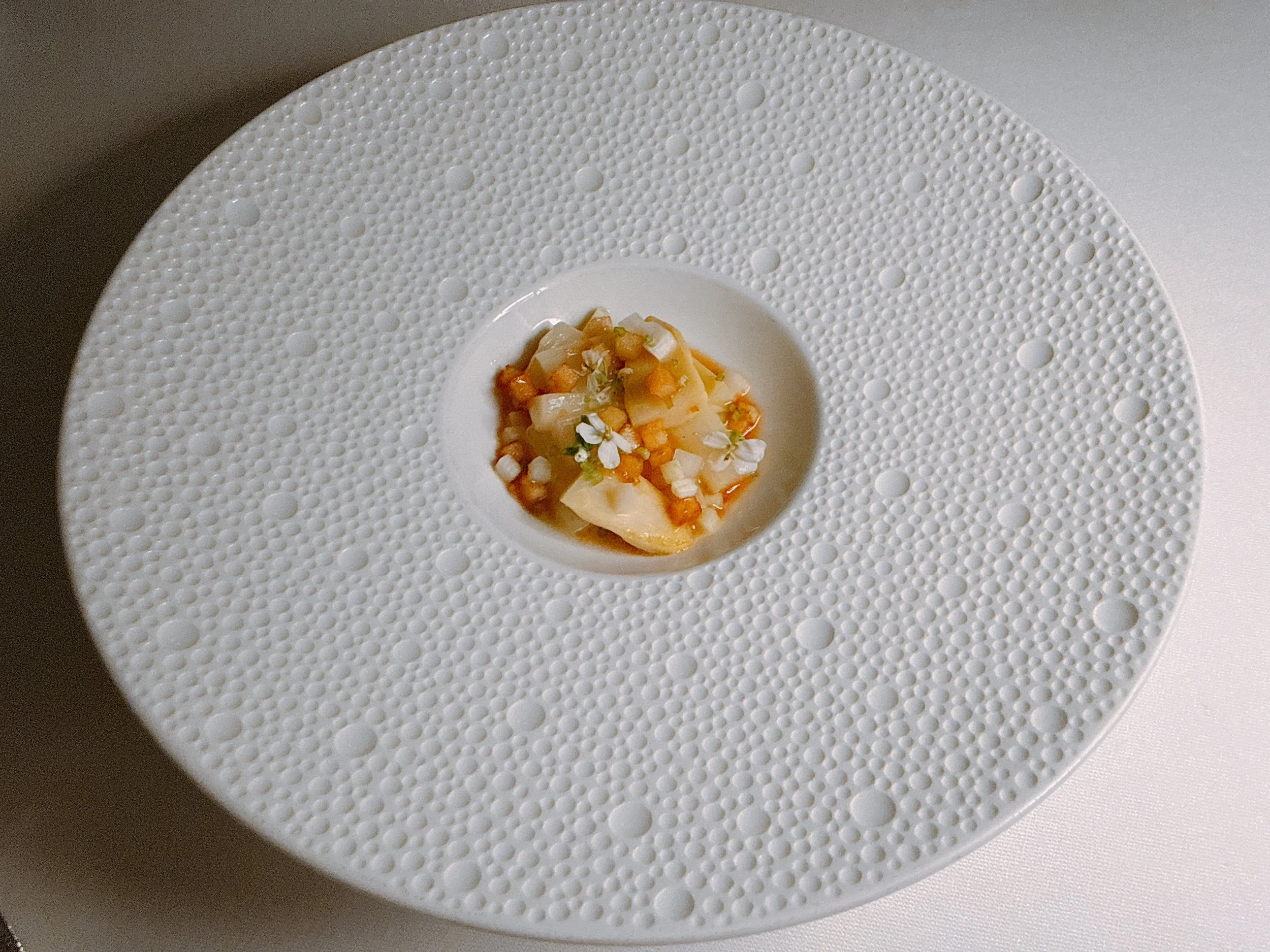
What followed was the first official course of the tasting menu. Danish white asparagus came with a velouté made from trimmings of white and green asparagus, baby fennel, a soy-lime emulsion, and little pieces of granny smith apples and ginger. The quality of the white asparagus was outstanding, it was cooked perfectly, highlighting its subtle, but distinctive flavor. This was world-class produce, and I kind of wished that the asparagus had been allowed to stand on its own. The accompanying sauce was oddly sweet, and it felt neither necessary nor the best flavor profile to complement the asparagus 16.
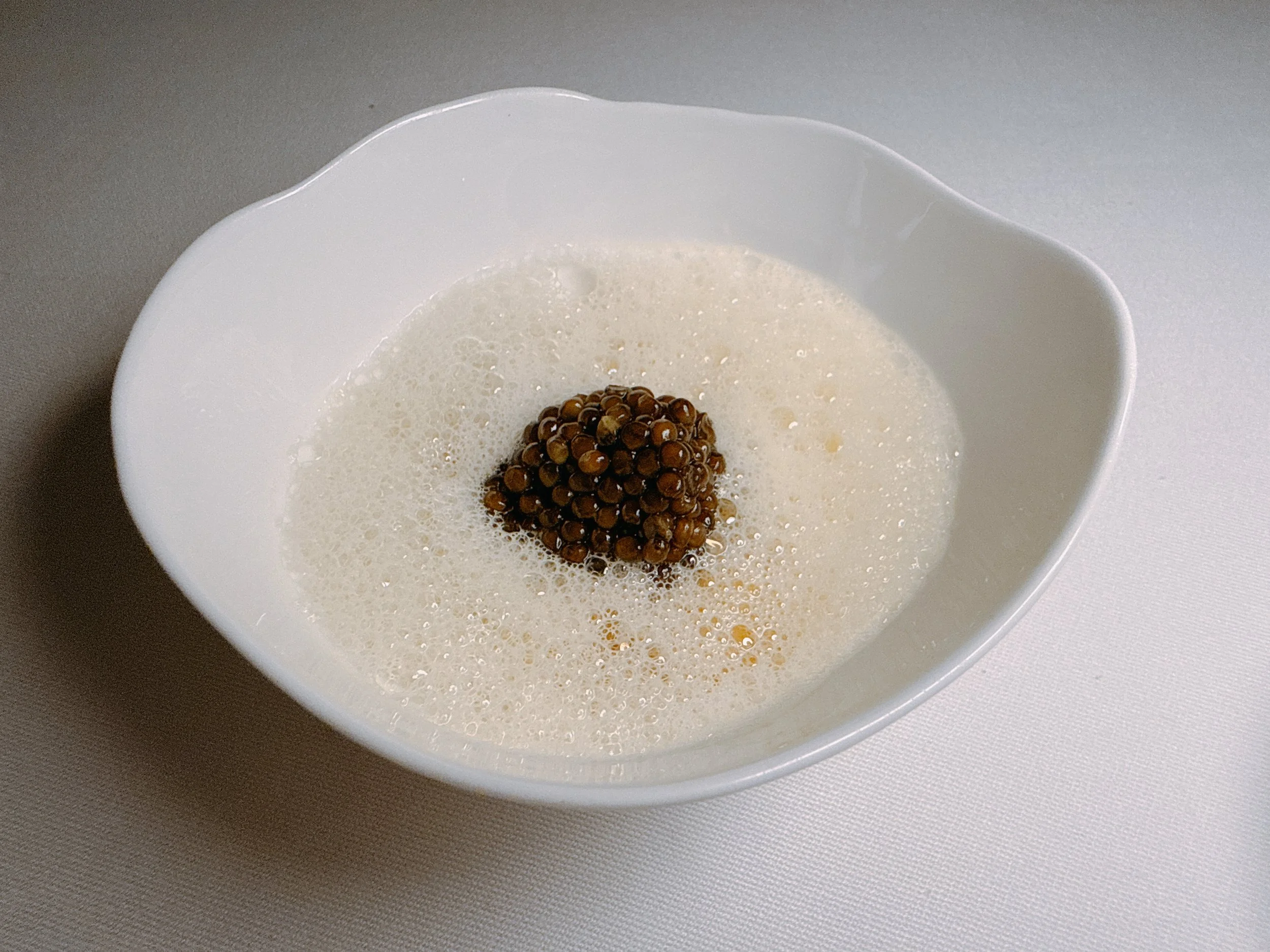
The next dish was also mainly about a single ingredient. This time, we got new Danish potatoes, prepared with only butter and salt. They were topped with two sauces - one made of egg yolks, the other of champagne -, as well as a dollop of N25 caviar. The potatoes were of the same amazing quality as the preceding asparagus, and cooked equally flawlessly. There is not much more that one can ask from cooked potatoes. The sauces added some acidity and creaminess, but kept the dish light. The caviar was a good addition as well. But in this case, the other ingredients didn't detract from the main star - the potatoes -, they merely made the dish even more compelling 18.
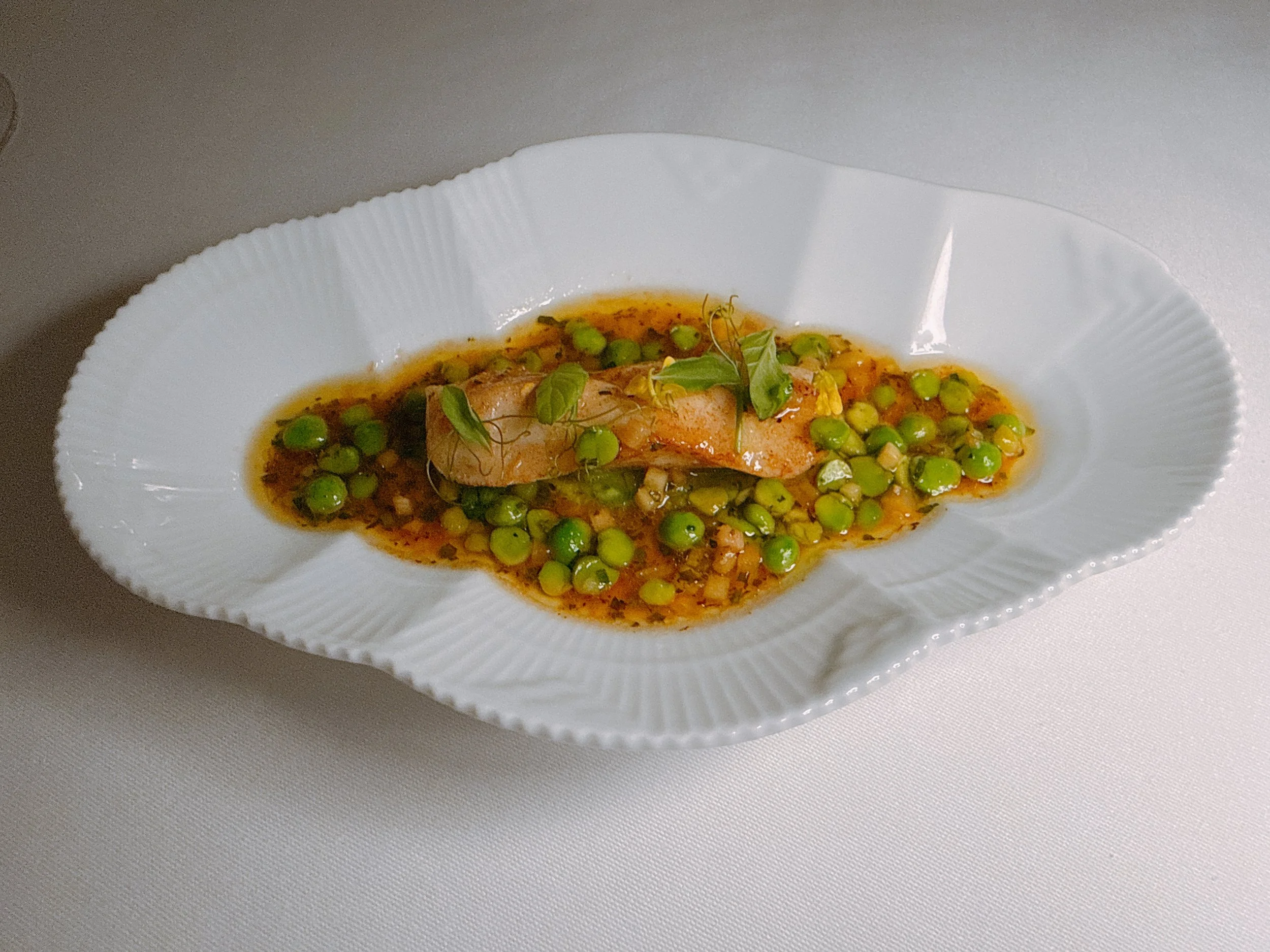
The vegetable courses were followed by two seafood dishes. First up was a filet of turbot hailing from Denmark's western coast. It sat on a pea puree and was served with a variant of a sauce grenobloise - made here with green peas, fresh mint, Spanish olives and olive oil (in fact, plenty of the latter, as the picture shows). The fish was fine, maybe a tad overcooked, but essentially all the flavor came from the lovely sauce. Crunchy peas, lemon, mint, olive oil - they combined to a strong-tasting sauce, that somehow didn't feel heavy at all even though it was swimming in oil. This was one of those dishes that was best eaten with a spoon. That way, one could experience all the components in a single bite. More rustic than what had come before, but very good 16.
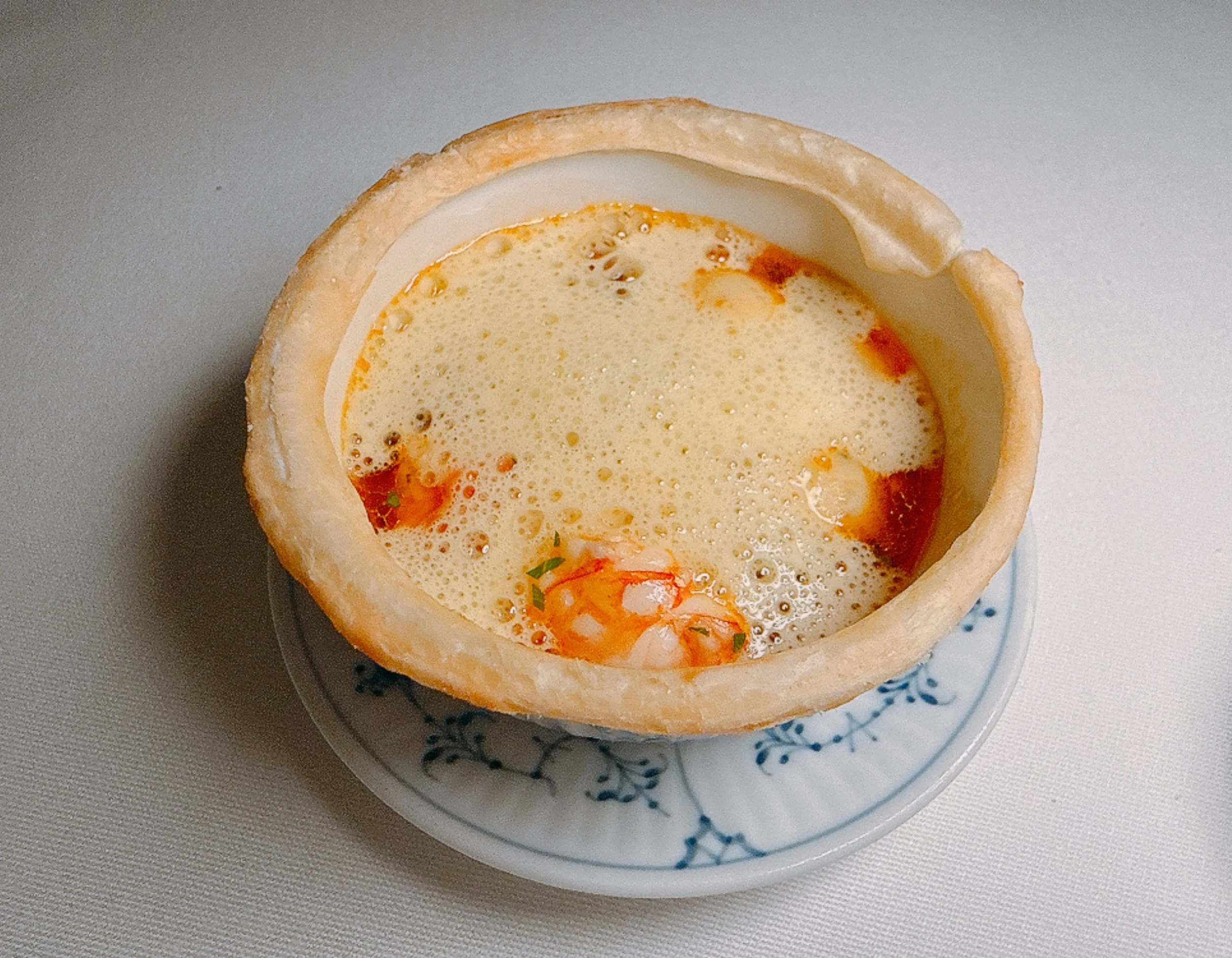
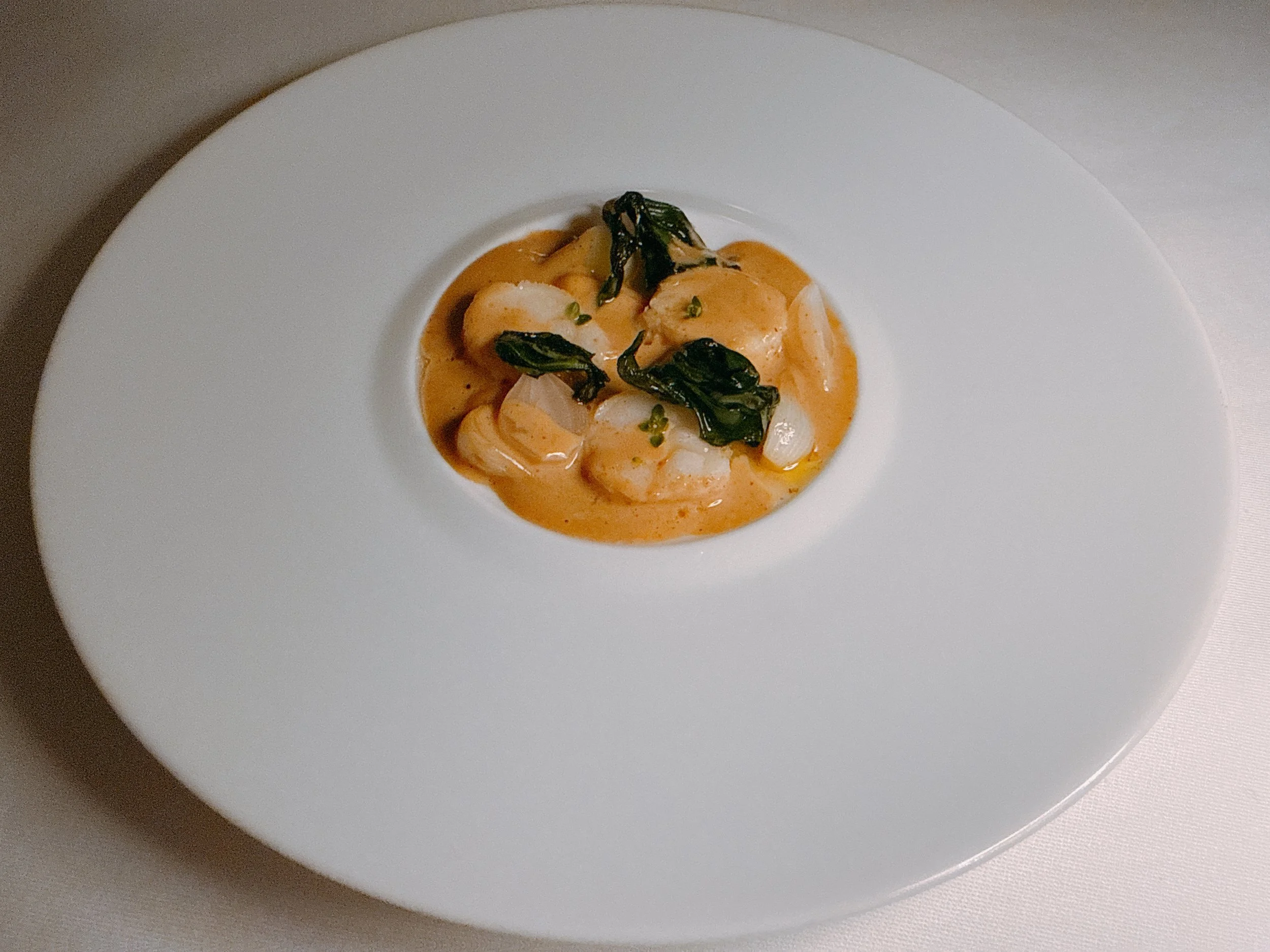
Next was the restaurant's take on a bouillabaisse. This dish contained langoustines, two kinds of fishcakes (made of monkfish and of turbot trimmings, respectively), as well as pickled tomatoes, zucchini, onions, a puff pastry rim on the hot serving bowl (not easy to eat, though), as well as a saffron/garlic foam. The fishcakes were somewhat unusual, the vegetables quite crunchy, and the sauce light and fragrant with saffron. A dish that also veered a bit towards the rustic side. Ostensibly straightforward, but very tasty 17.
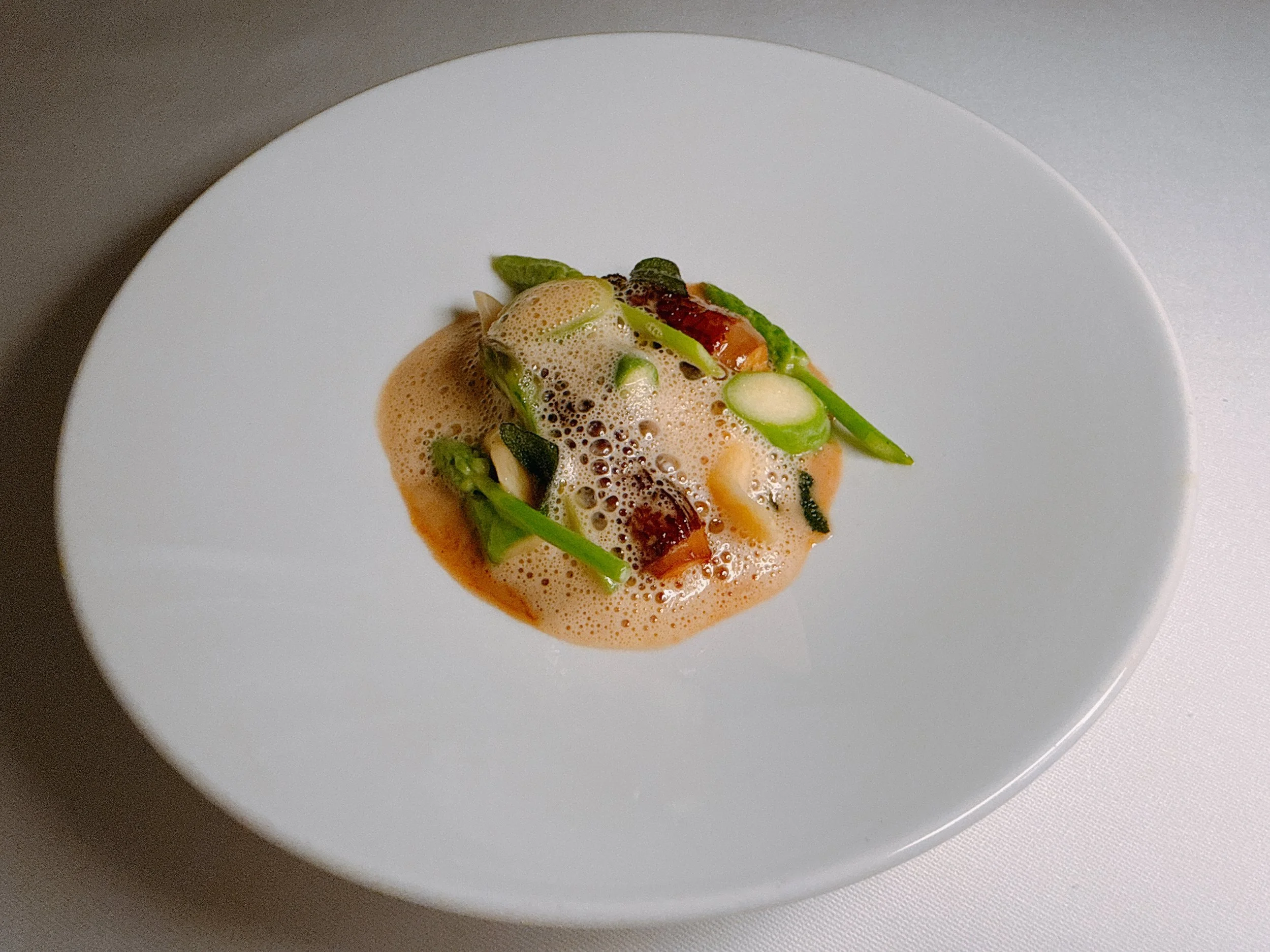
The three final savory dishes were all meat-based. That also meant that there were three red wines in the pairing, an unusually high number - not that I'm complaining, mind you. The first of the meat courses was technically a pasta dish. Scarpinocc pasta was filled with polenta and accompanied by a vin jaune sauce, green asparagus, and morel mushrooms stuffed with rabbit meat. The pasta with its creamy filling was somewhat heavy, and the stuffed morels felt more like a sausage than a mushroom. Not a very light dish, for sure. The mushroomy umami-filled sauce was wonderful, though, and the green asparagus was equally excellent 17. The pescatarian version of this dish merely dropped the meat filling from the morels (no picture since it looked the same as the “original”). That made the morels not only very buttery but also tasting much more of mushrooms. They were cooked perfectly with a noticeable bite. I actually preferred this meatless version of this dish 17.
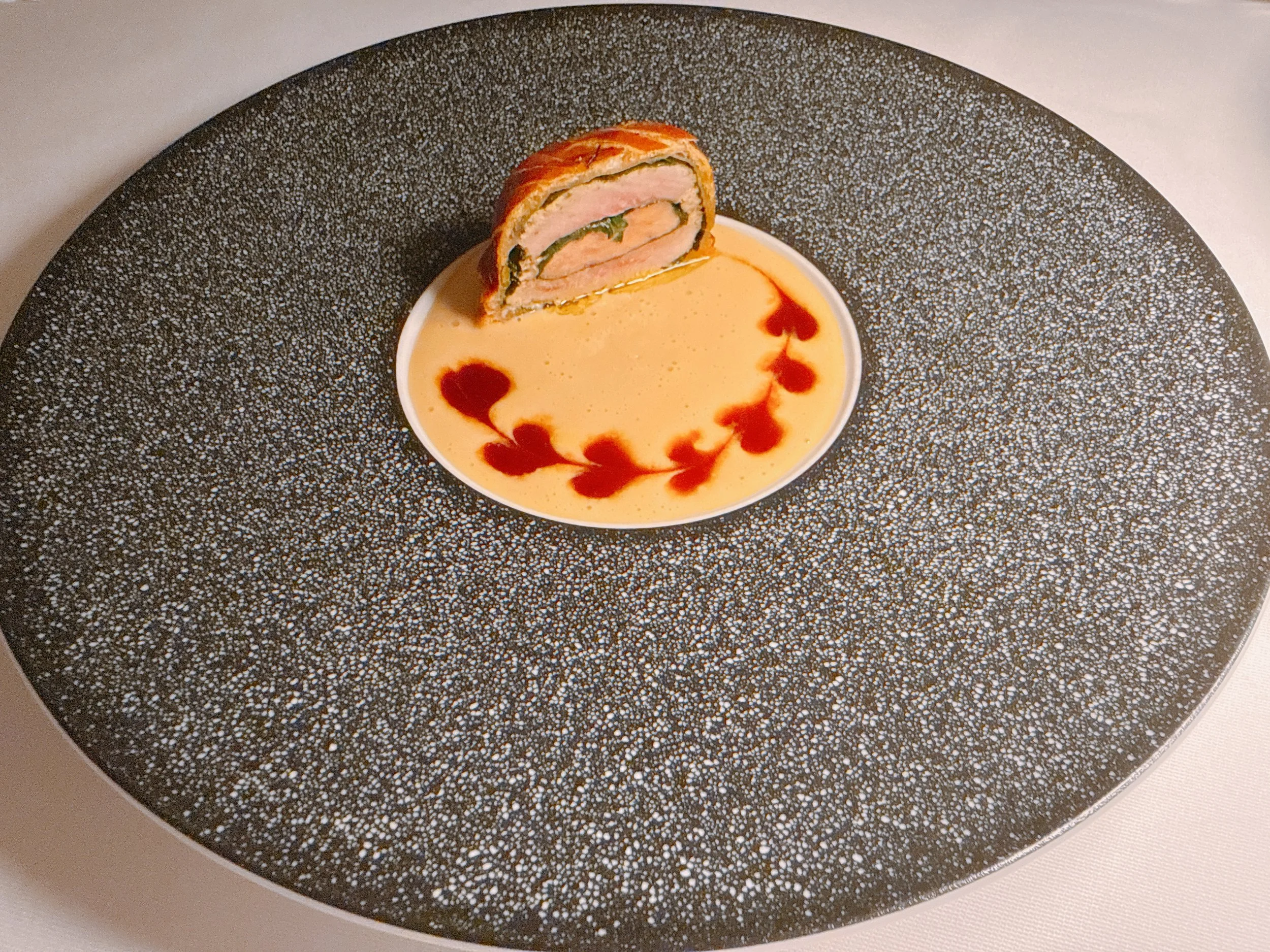
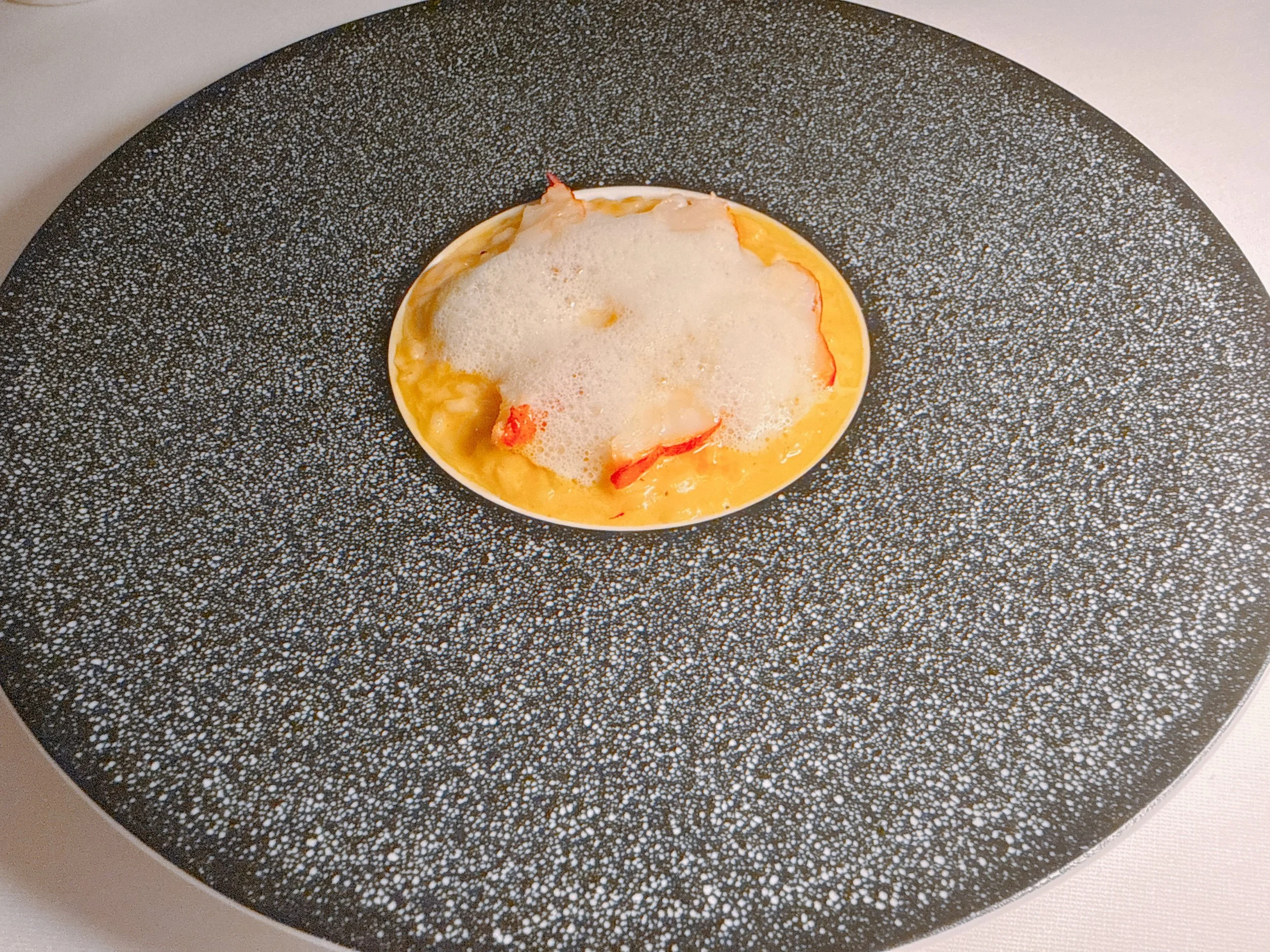
“Quail en sarcophage” was a small puff pastry shell filled with foie gras, quail breast, spinach, and a farce made from quail trimmings. Two sauces were on the plate, one made of sunchokes, the other an Alsatian bacon glaze. This was probably the heaviest dish of the night - meaty, juicy, with a creamy liver, and heavy sauces, and unfortunately nothing to cut through the fat. Admittedly, the dish was well executed for what it was, but I would have preferred a slightly lighter touch here 17. The pescatarian replacement was entirely different. A saffron risotto was topped with Danish black lobster and a Parmesan foam. The al dente risotto was quite well done, the lobster very tender and the sauce creamy. Very nice - and much lighter than the dish that it was replacing 17.
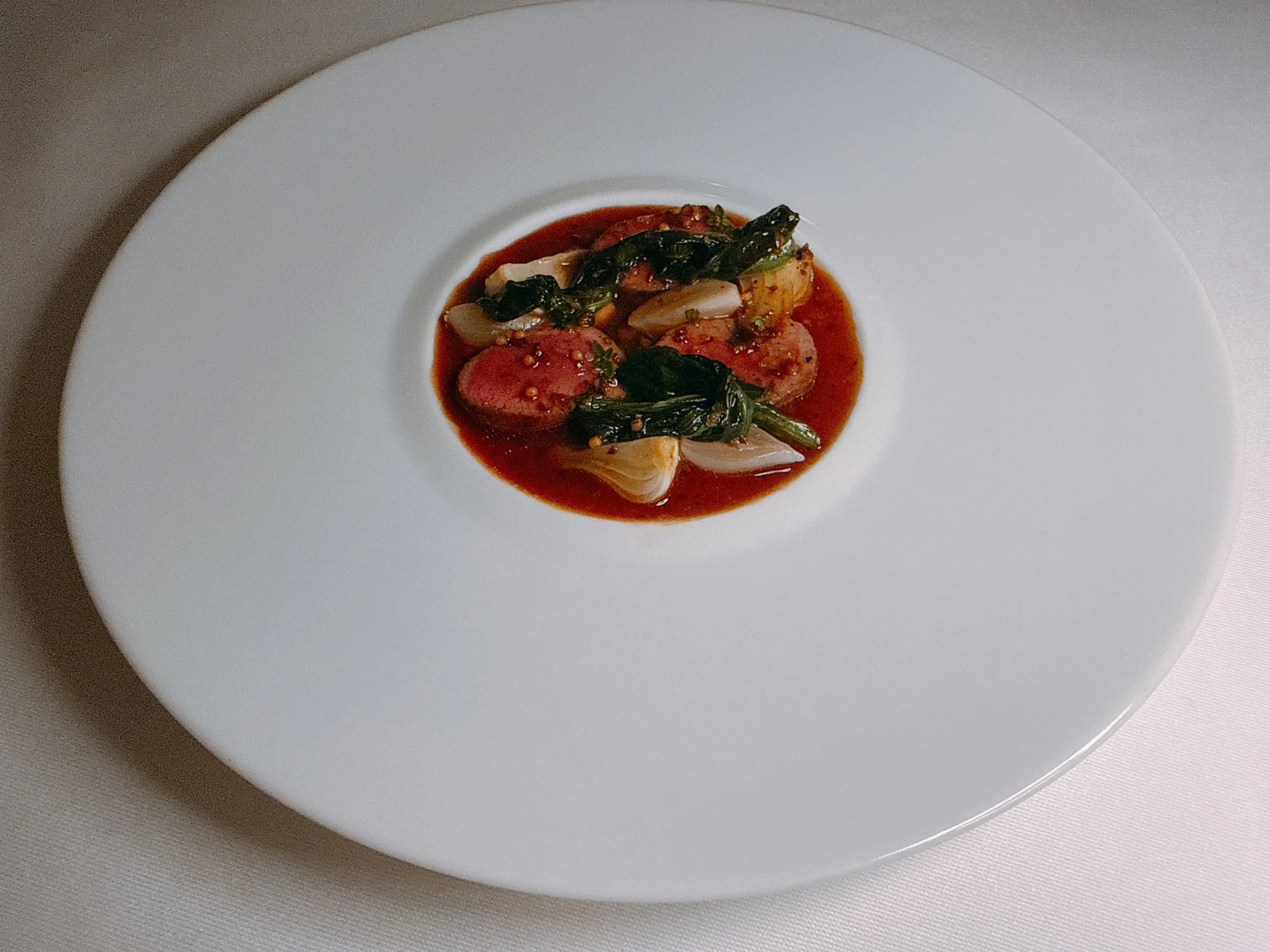
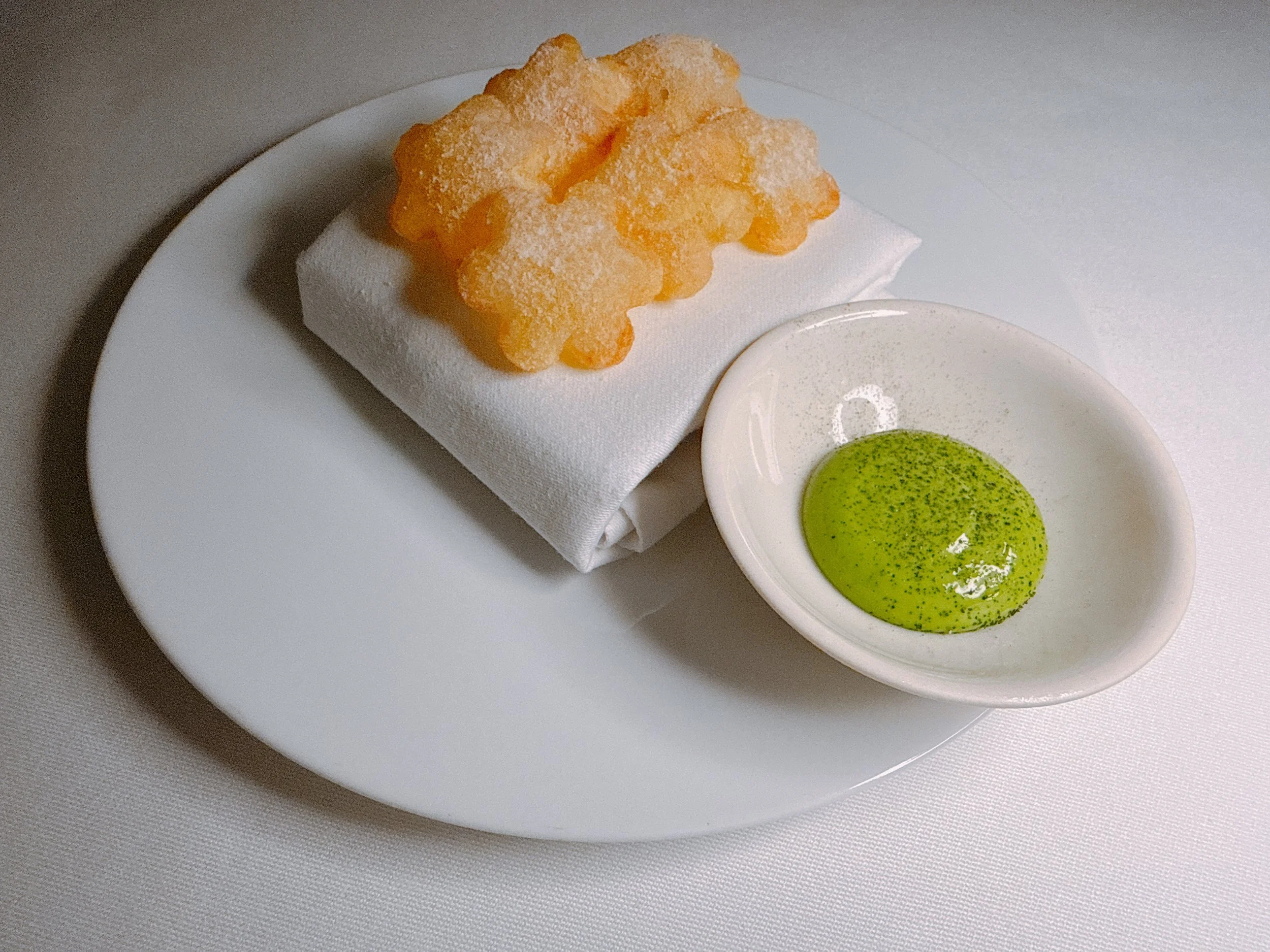
The final savory dish of the night was based on lamb. The lamb meat was accompanied by spinach, onions, an onion puree, and a sauce provençale that was made with garlic, black pepper and lemon thyme. On the side were some pommes soufflées that were shaped (again) like Michelin stars, and accompanied by a ramson emulsion. The lamb itself had a light flavor, and was quite lean with a not-too-soft texture. Not the most tender cuts of lambs, for sure. The greens were incongruously chewy. Unexpectedly, I liked the pickled onions in this dish the best - almost the perfect example of how to prepare them: marinated, lightly acidic, and delicious. The puffed potatoes felt slightly stale, but the green, creamy, flavorful sauce was a great addition. For the onions alone 17. The pescatarian version replaced the lamb with monkfish, and the sauce with a garlic/pepper sauce. The spinach and onions were the same, but the fish was much more tender than the lamb had been, and the sauce was more flavorful, making this a superior dish overall 18.
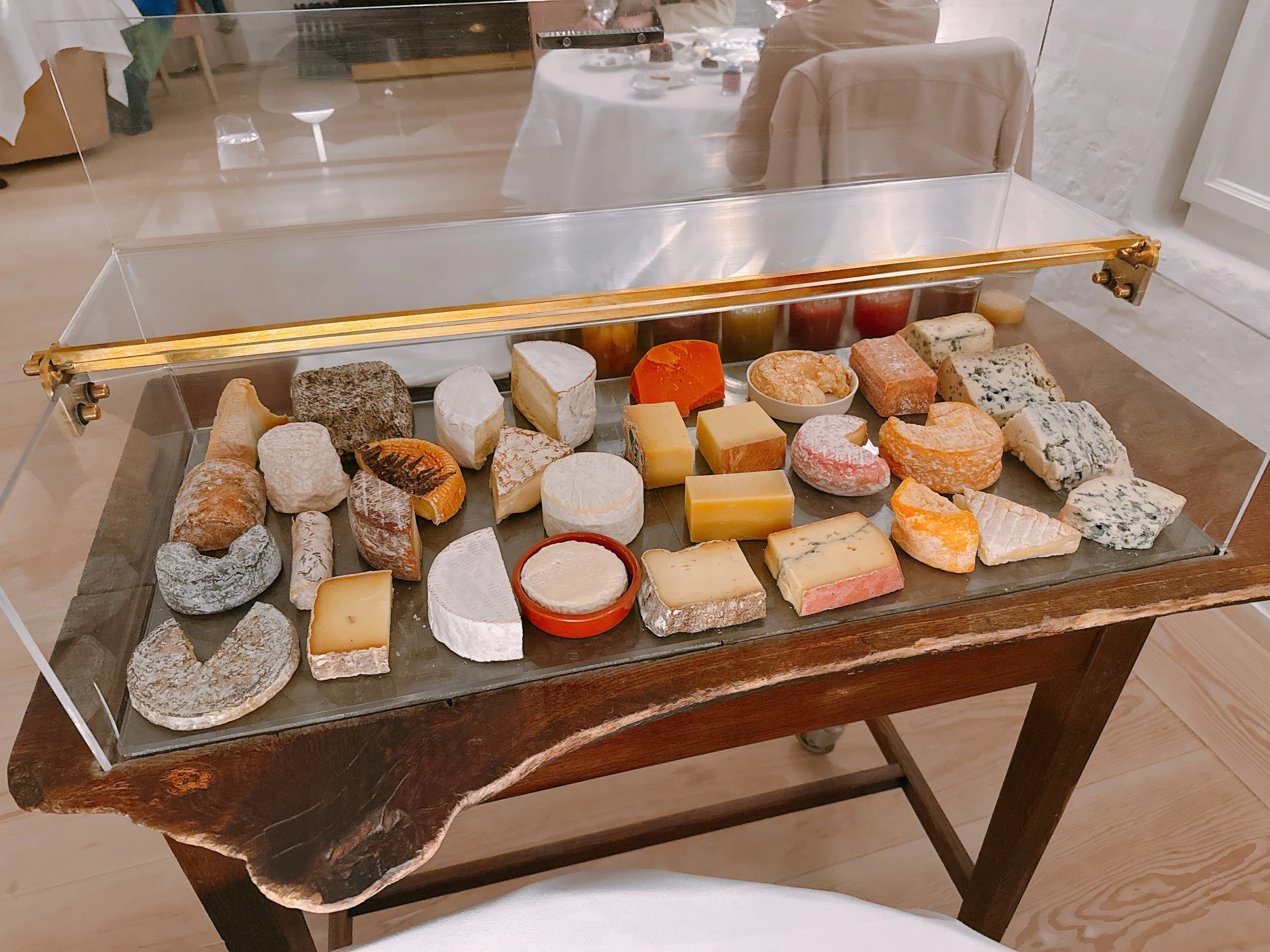
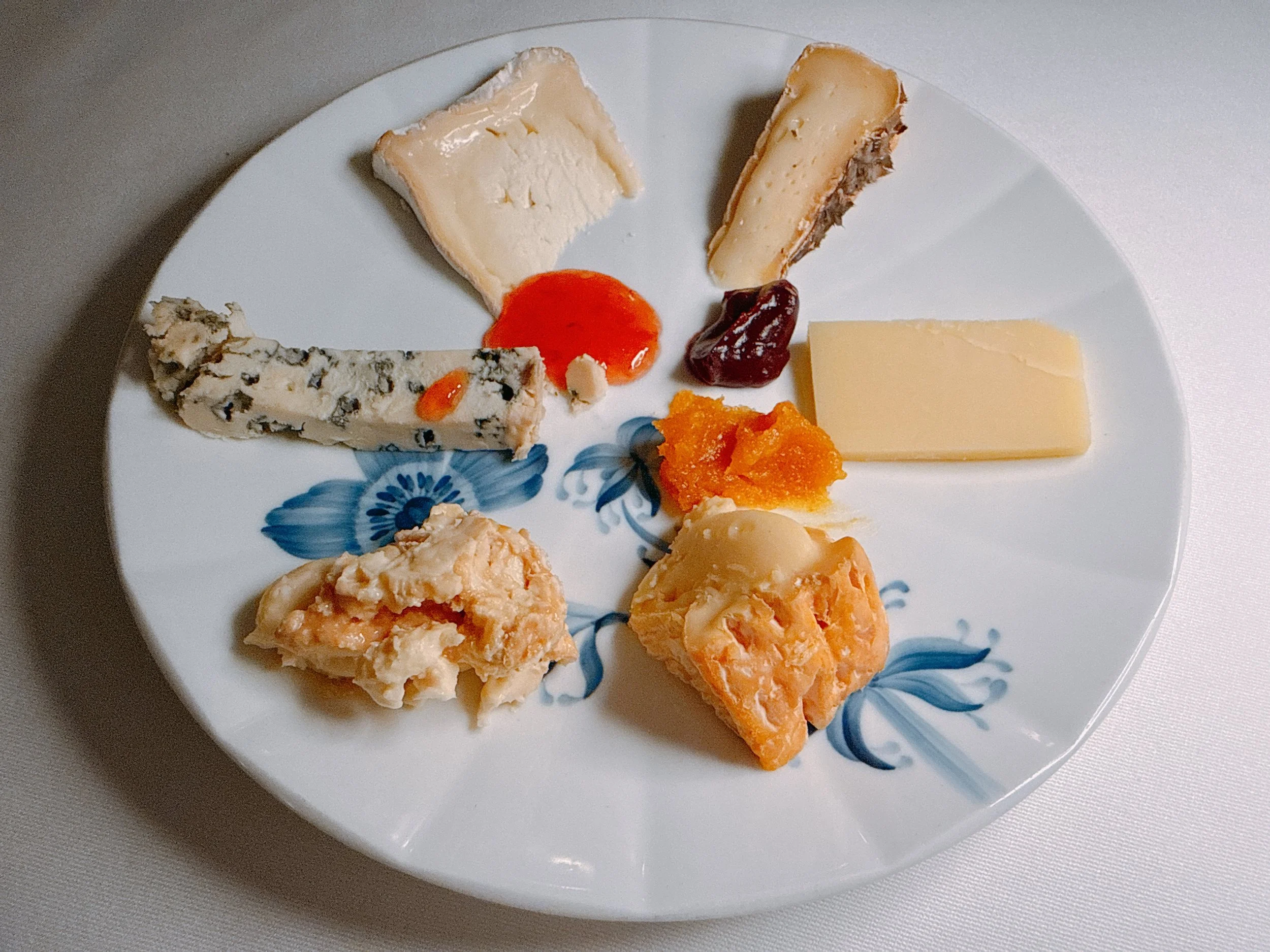
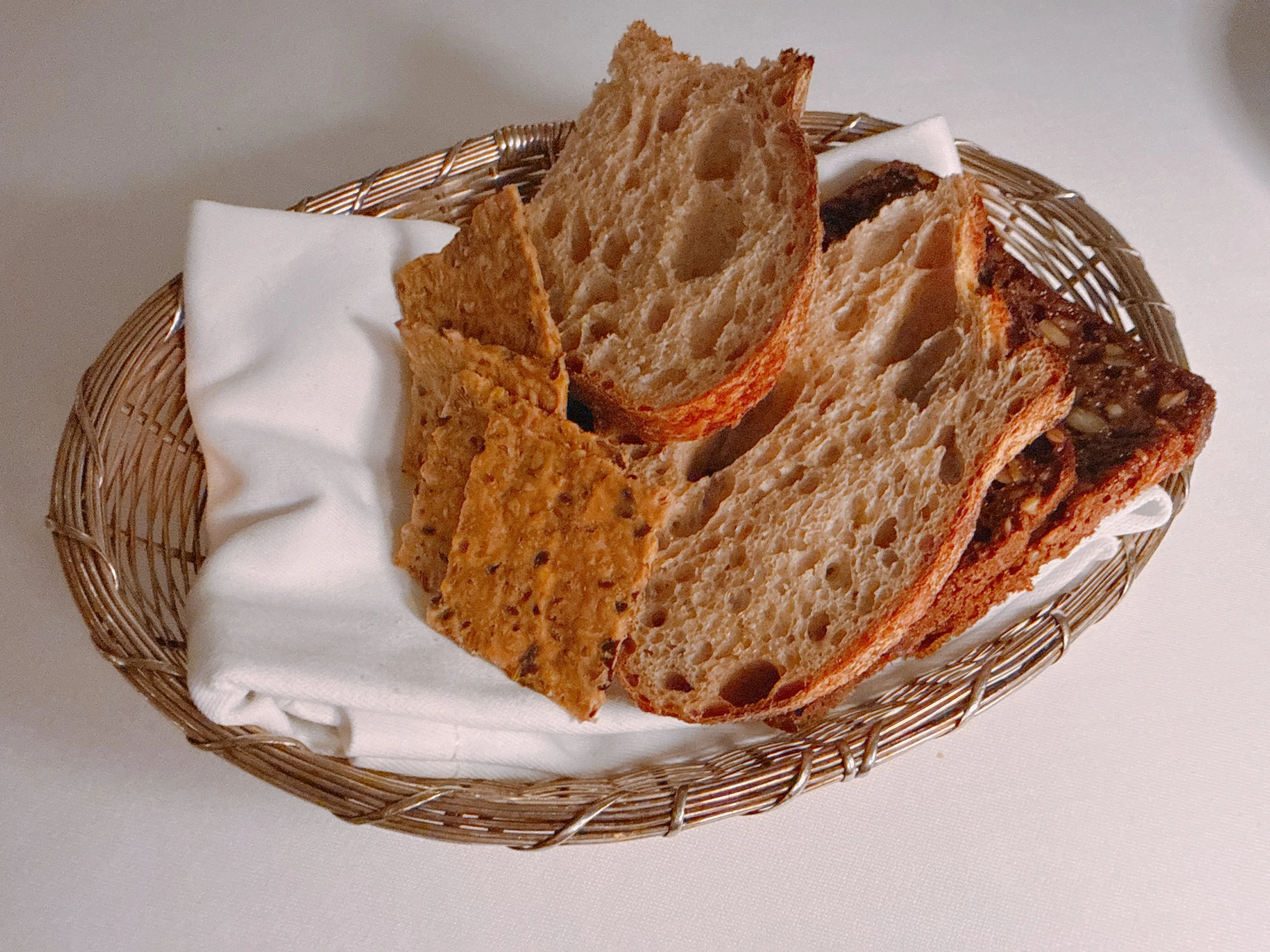
We shared a single serving of the (optional) cheese course, which was priced at 325 DKK ($50). A cheese trolley held about thirty French and one Swiss cheese (no Danish cheeses here - apparently a decision made at the restaurant's founding). Plus, there were fifteen different condiments and several breads: sourdough, butter-toasted rye, and some crackers, all served warm. (I was particularly fond of the crackers.) We tried an impressive mix of strong cheeses. All in all maybe not quite at the level of what a top restaurant in France might serve, but probably as good as one can get in the rest of the world. (No rating since it would very much depend on the cheese selection.)
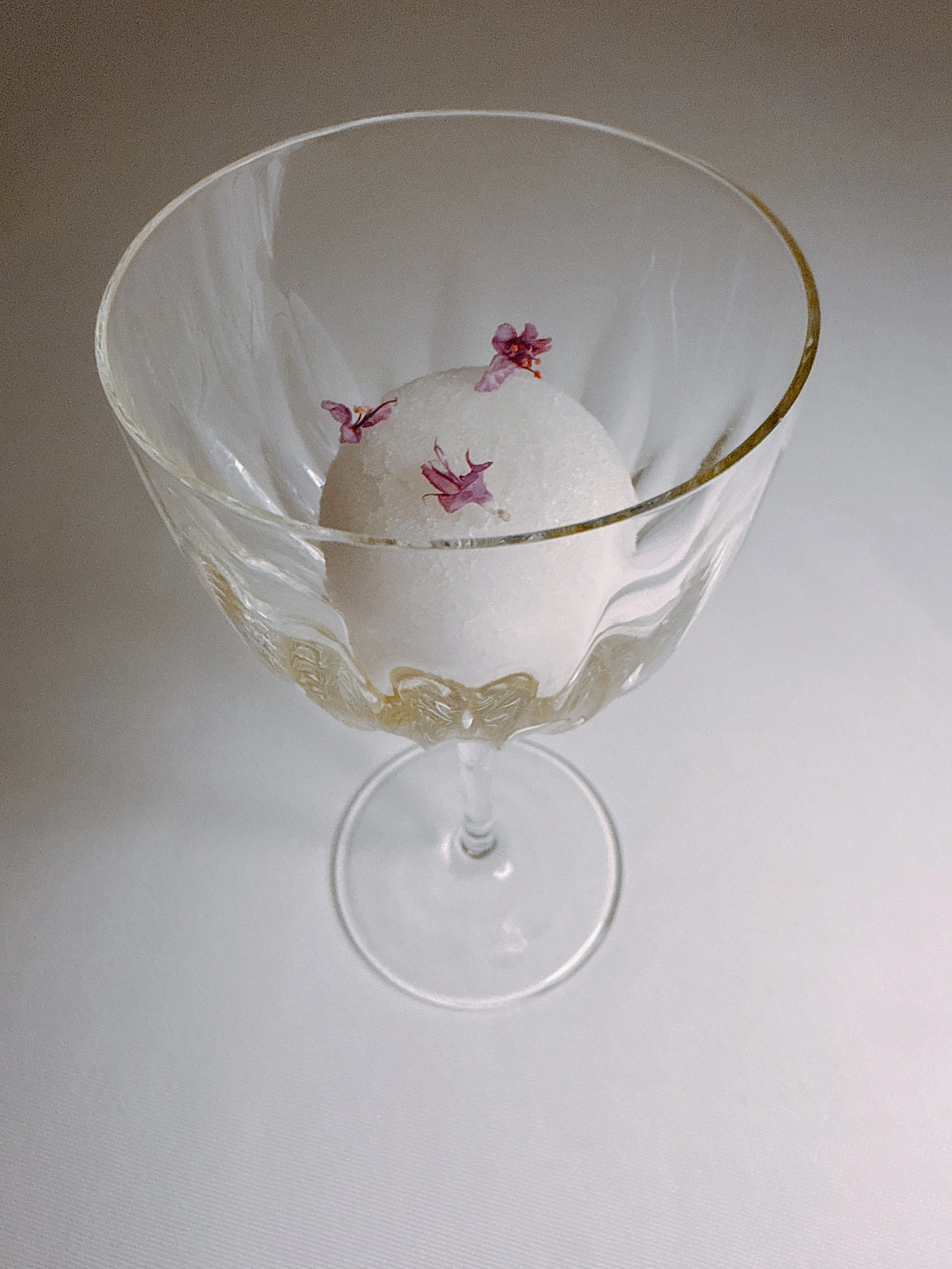
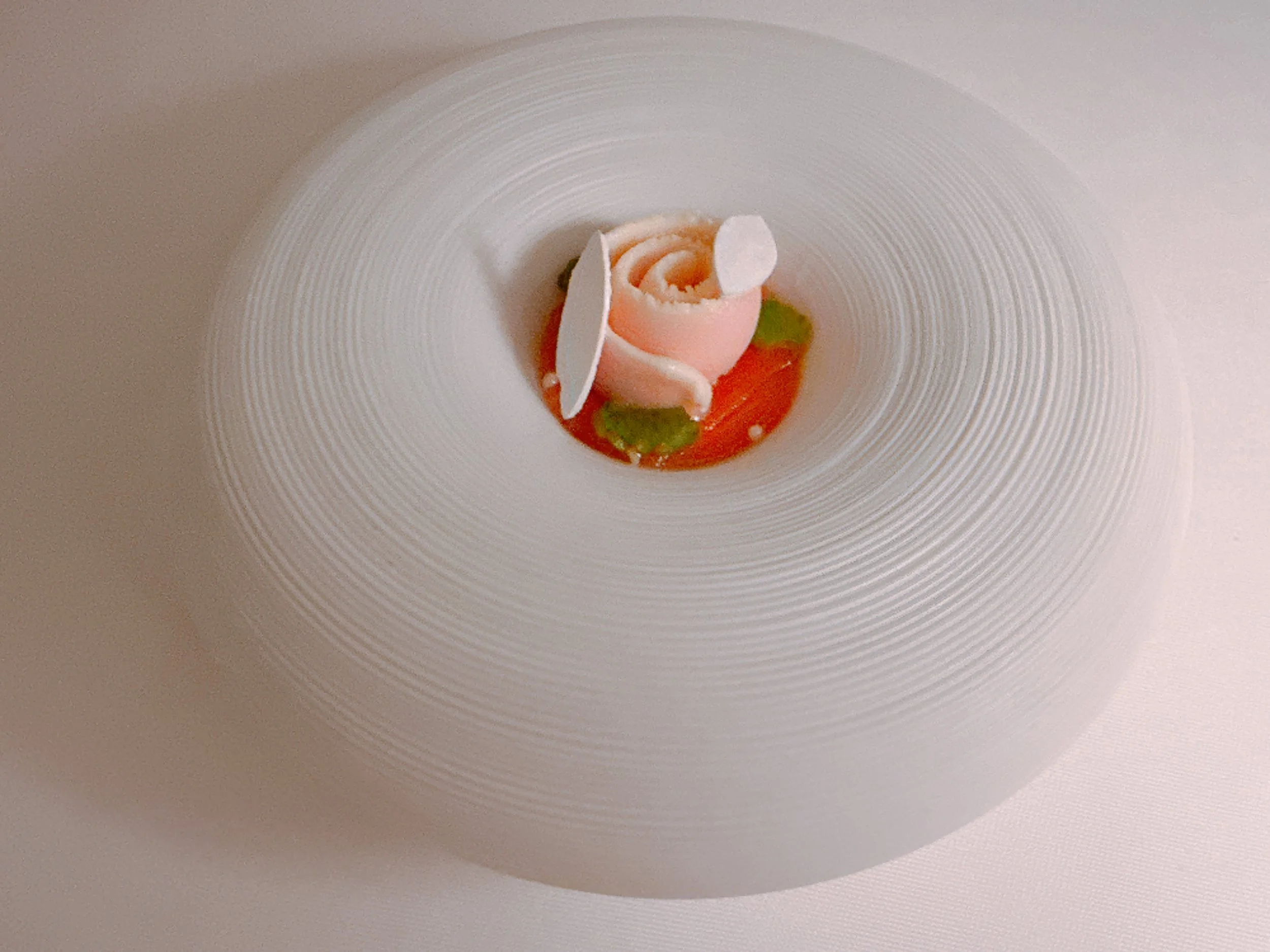
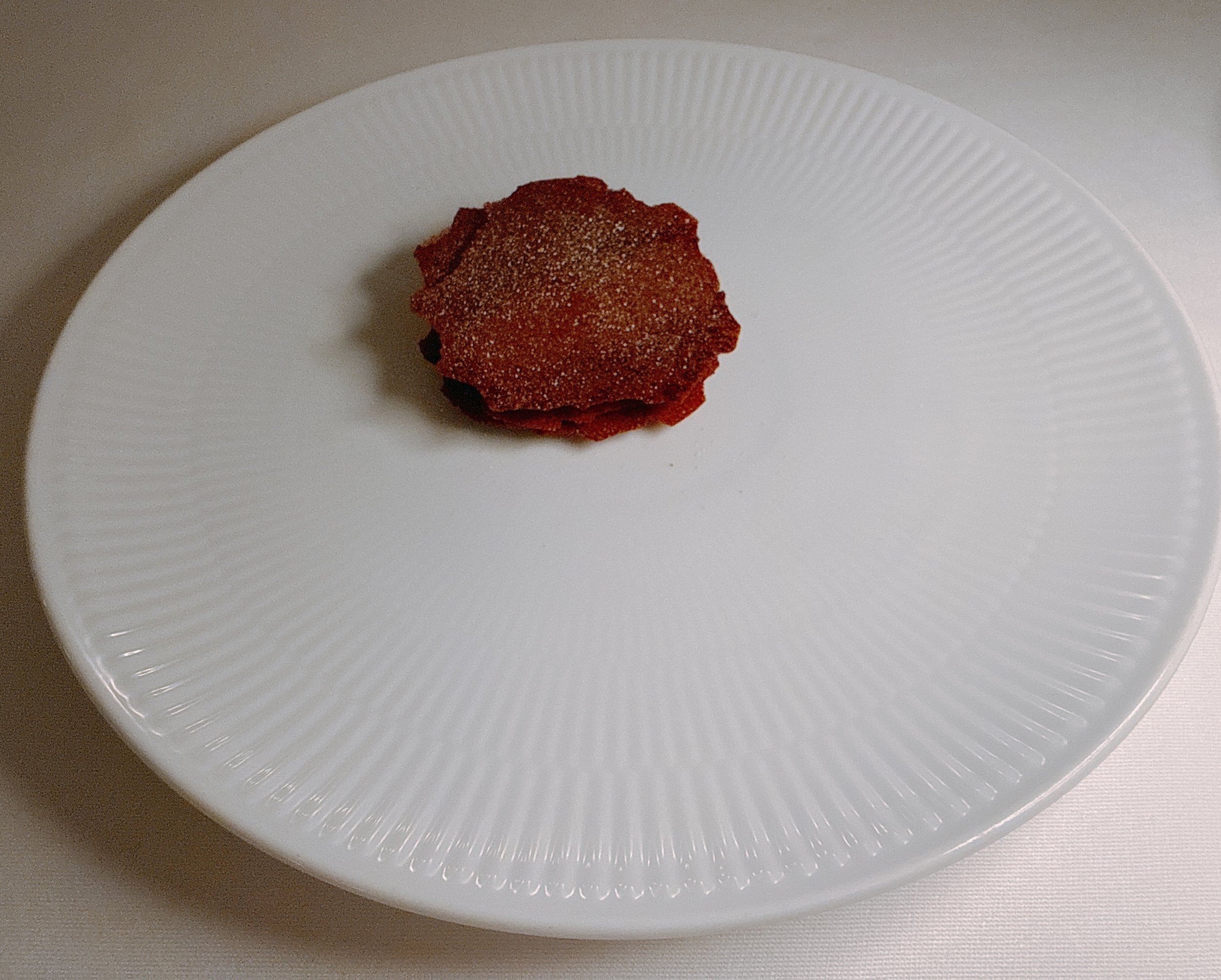
The following palate cleanser was a citrus granita wrapped around a juniper berry sorbet, served with some green chartreuse. The outside of this icy treat was citrusy and fresh, and its interior was creamy with some candied citrus peel. A great palate cleanser: light, fresh and citrusy 18.
Our first dessert had a swirl of almond ice cream layered with a rhubarb sorbet, sitting atop a rhubarb compote, an almond panna cotta and a mint meringue. In combination, this dish had a strong rhubarb flavor, but didn’t taste much of almonds. Light and tasty 17.
The second (and final) dessert was based on chocolate and buckwheat. A millefeuille-like stack of chocolate crackers was filled with praline, buckwheat, and a cocoa pulp mousse. The thin crunchy layers were very light and the mousse was chocolaty with a hint of fruit. This dessert was also not very heavy 17.
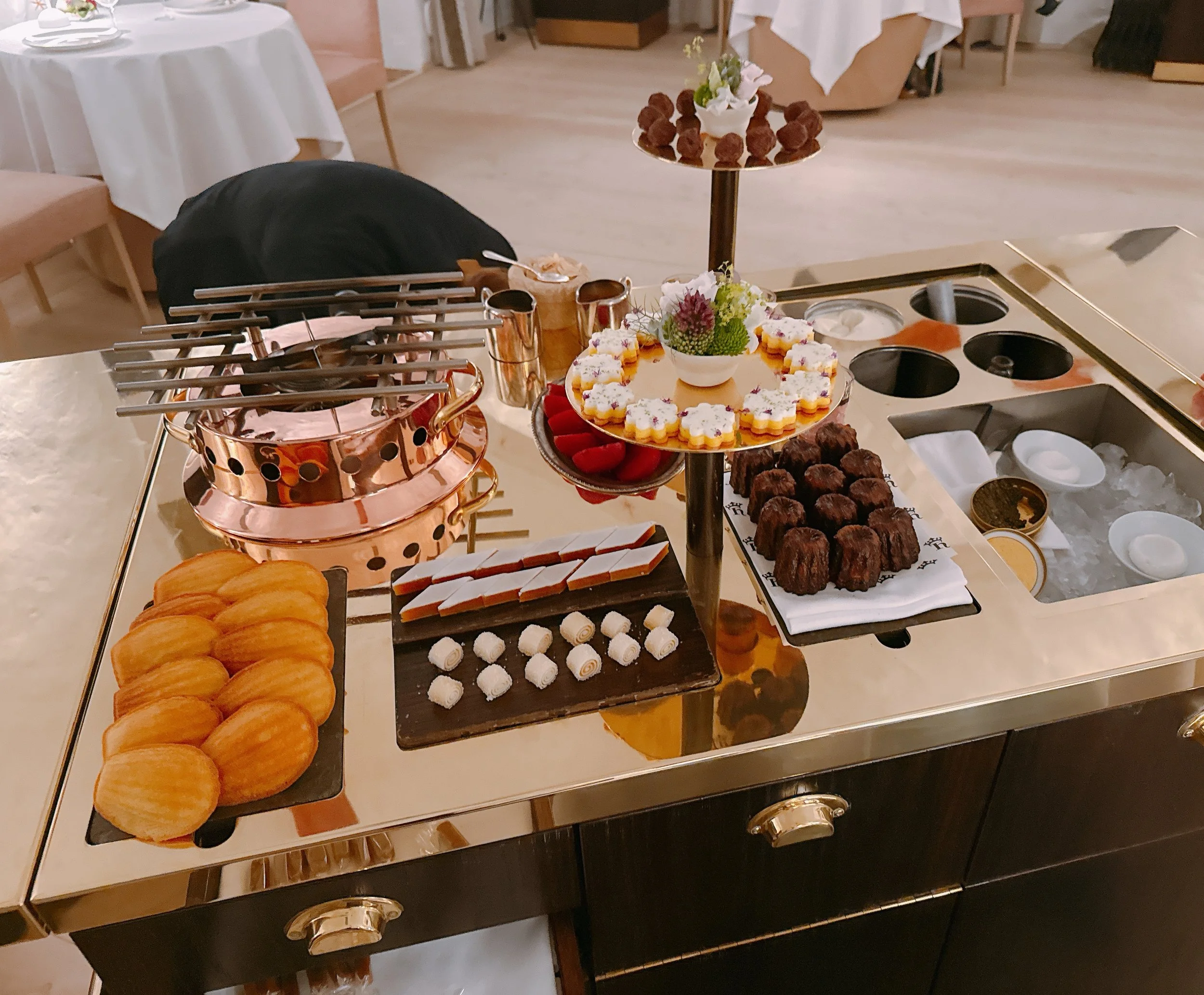
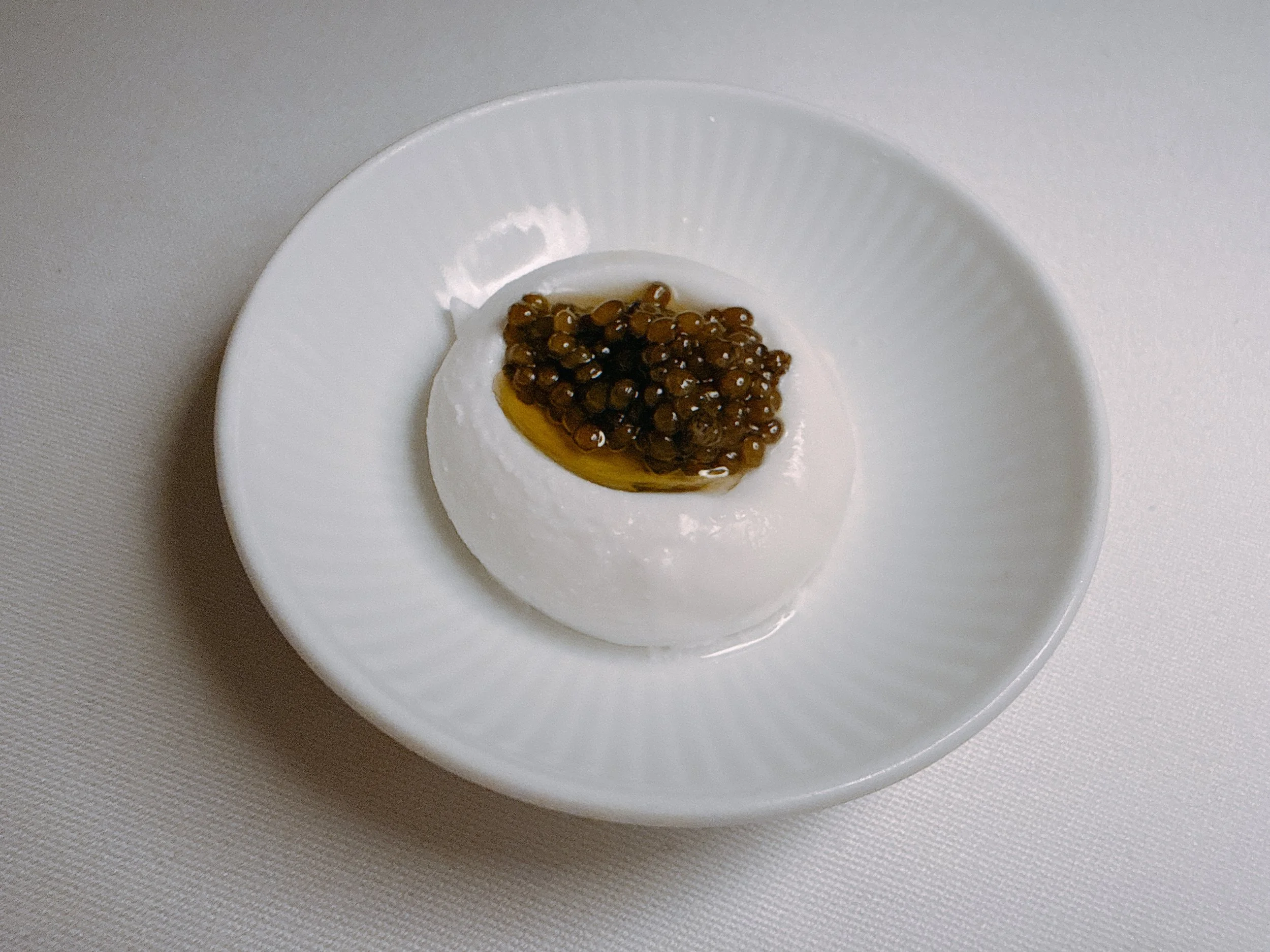
Our dinner concluded with a dessert trolley sporting almost a dozen different offerings. Since we were running late to relieve our babysitter, we took most of the little bites to go, and only tried the three dishes than had to be eaten in the restaurant. The first one was a dish made of coconut, topped with caviar and olive oil. It tasted mostly of (sweet) coconut, with some saltiness added by the caviar 16.
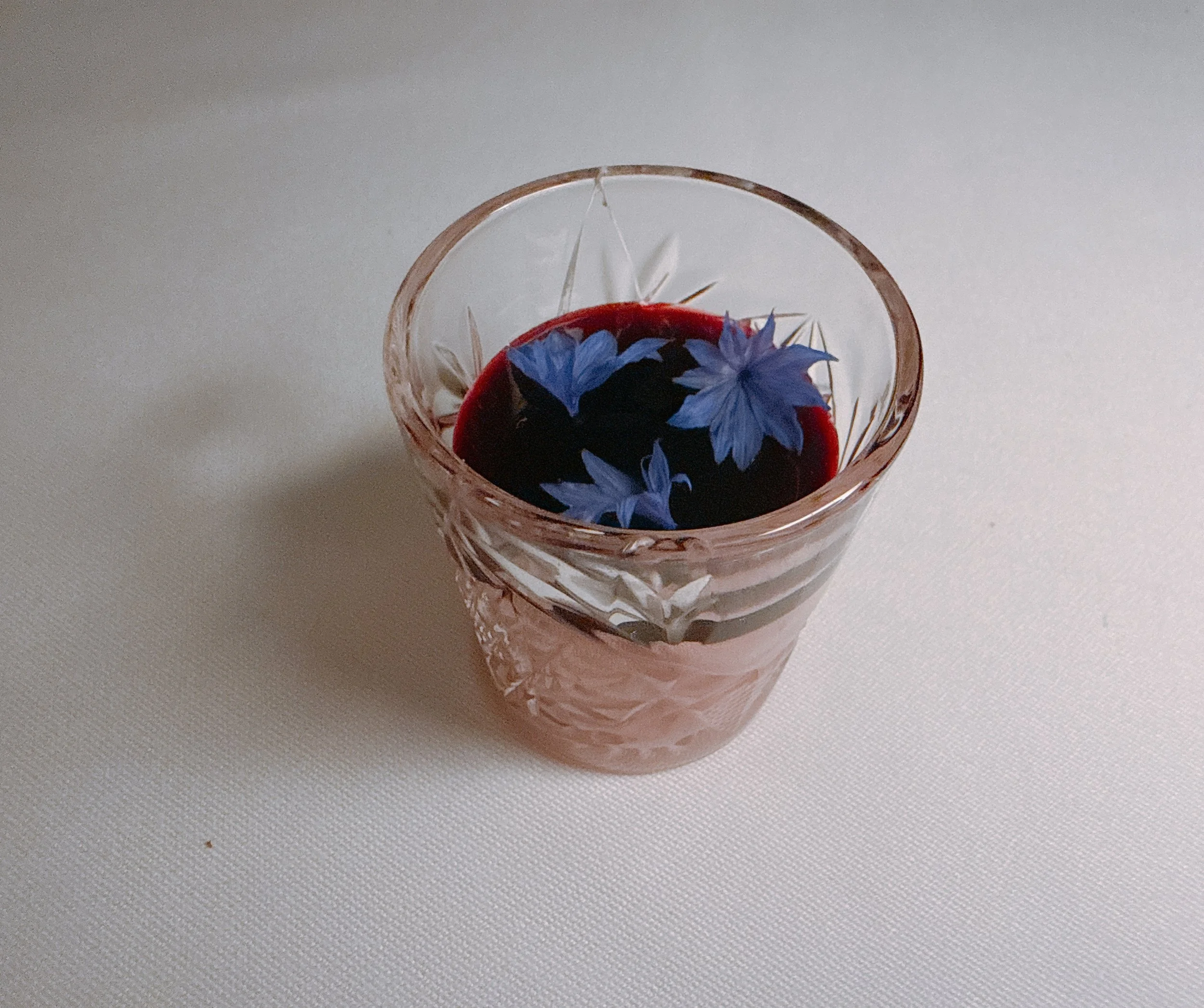
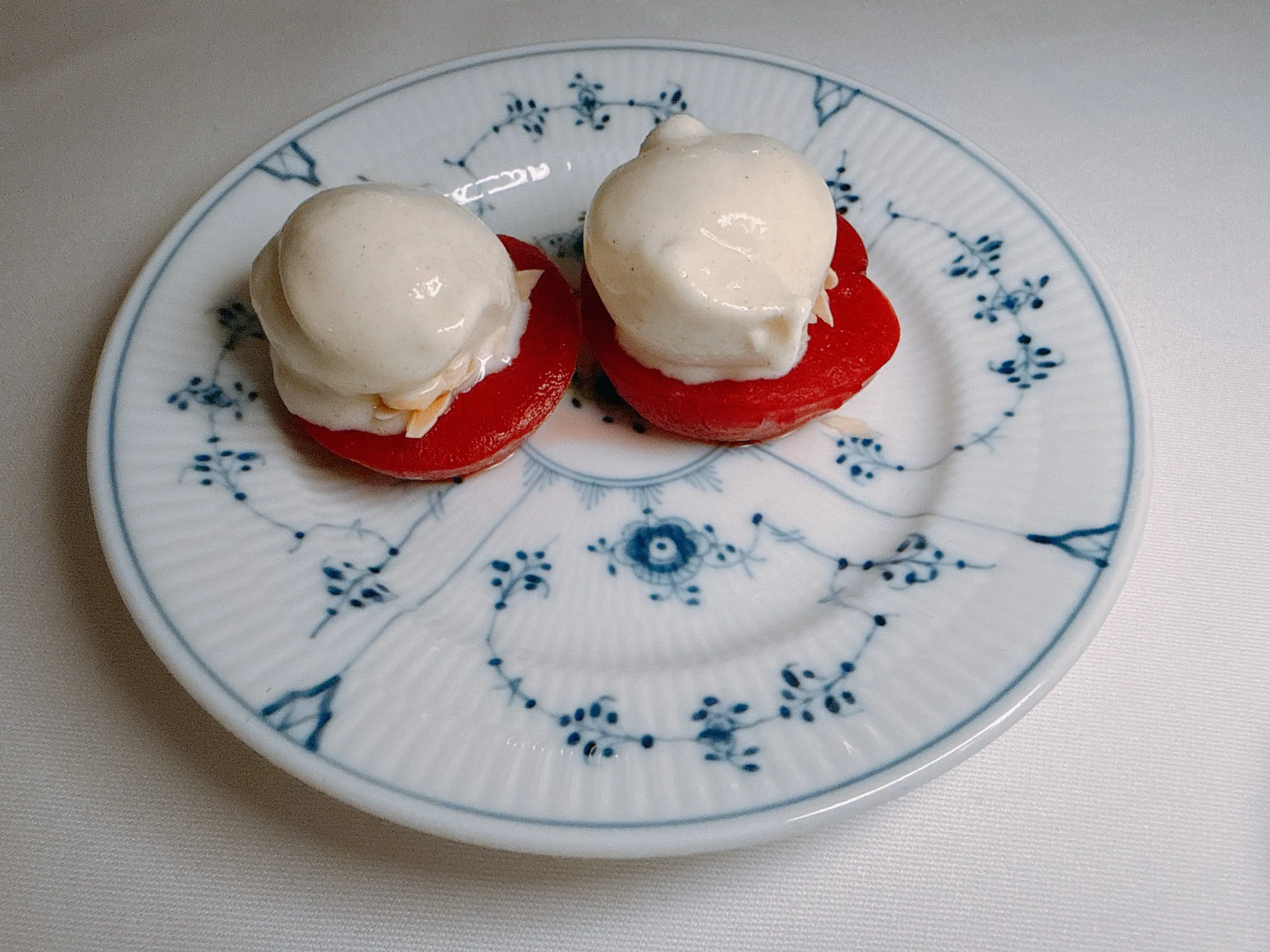
Next was a cherry mousse that had different layers, making it both tart and sweet, with a good cherry flavor overall 17. Finally, a plum that had been flambéed tableside was served with sliced almonds and a honey-vanilla ice cream. The ice cream was lovely, and the plum only half-cooked, giving it some bite 16.
Back at the hotel, we tried the remaining sweets. Unfortunately, there were no descriptions, so the following will be a bit light on details. A canelé had a good crunchy exterior, but a somewhat odd taste 14. A madeleine had a good lemon flavor, but felt a bit dry 14. A rhombus-shaped fruit bar tasted citrusy and bitter 13. A smile-emoji-shaped cookie was crunchy and caramelly 14. A chocolate praline was filled with nuts 16. A crunchy chocolate ball had a nutty flavor as well 15. A fruit roll-up had a light lime flavor 16. And finally, a wrapped caramel bonbon was quite tasty with a hint of vanilla 16.
Overall: A nice dinner of French cuisine that tended more towards classic, heavier dishes than generally seen in modern French cuisine. The execution was consistently very good - even for the dishes that were not entirely up my alley (generally because they were on the heavier side). A few courses were genuinely amazing, featuring outstanding local produce. While I personally lean more towards the New Nordic cuisine that is so abundant in Copenhagen, Kong Hans Kælder definitely stands out as a compelling alternative when one is ready to try something different 17.