Les Morainières - Jongieux
The view is better before the dinner
Rating: 17/20
Where: Jongieux, France
When: Dinner for 2 on 27 March 2026
Cost per Person: Tasting menu 220-280 Euro ($255-$325), Wine Pairing 110-130 Euro ($125-$150)
Accolades: 3 Michelin Stars
Why: Highly varied, seafood-centric French cuisine based on local ingredients
Dramatic vistas abound on a trip to “Les Morainières”, a newly three-Michelin-starred restaurant in France's Savoie district. Cragged snow-covered mountain peaks, placid lakes, and countless vineyards dot the landscape. If you’re the one driving though, you’ll probably pay more attention to the steep drops right next to the narrow, winding roads. It seems inconceivable that these streets would admit two-way traffic, but then, for one near collision at a time, they inexplicably do.
This might be as good a place as any to mention that the restaurant owns a little bed-and-breakfast about a ten minute drive away. The modernly furnished rooms were quite nice, and several had pretty views. But more importantly, a driver took guests to and from the restaurant. During our visit, we were the only diners staying here, and I can only imagine the post-dinner experiences of the remaining guests: driving back - not entirely sober - on narrow, twisty roads in total darkness. There is a reason why the restaurant takes payment before you leave...
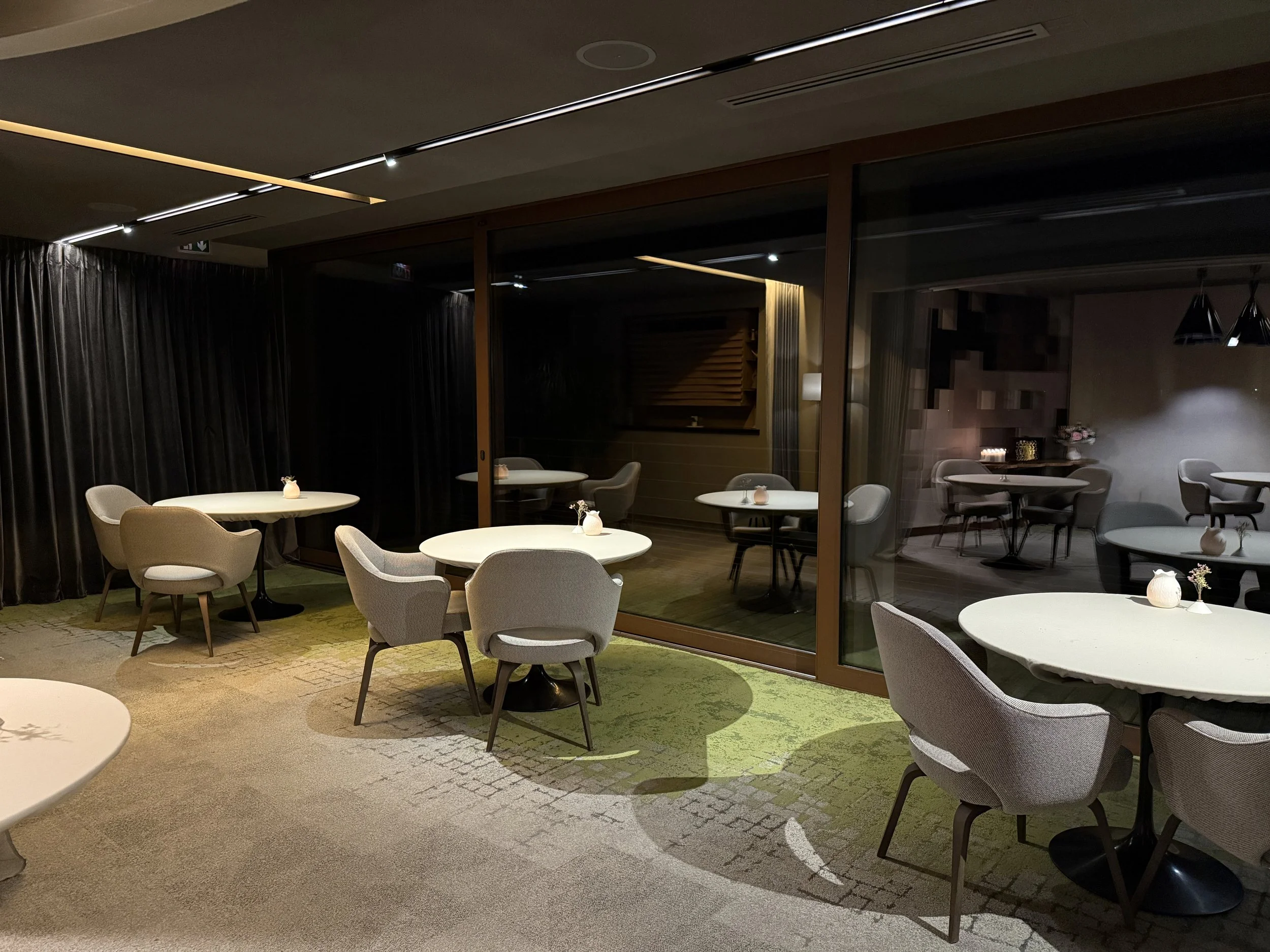
Les Morainières is located in a former wine storage facility. After entering the building at street level, we immediately descended a staircase that led to a glass-enclosed wine cellar. From there, it was only a few steps to the dining room. Here, about ten tables faced floor-to-ceiling windows that looked west towards a picturesque valley carved by the Rhone river. A great place to admire the sunset, at least when one visits during daylight savings time, which we unfortunately missed by two days. Still, we could see some dots of lights in the distance - houses, farms, and (presumably) wineries throughout the darkening valley.
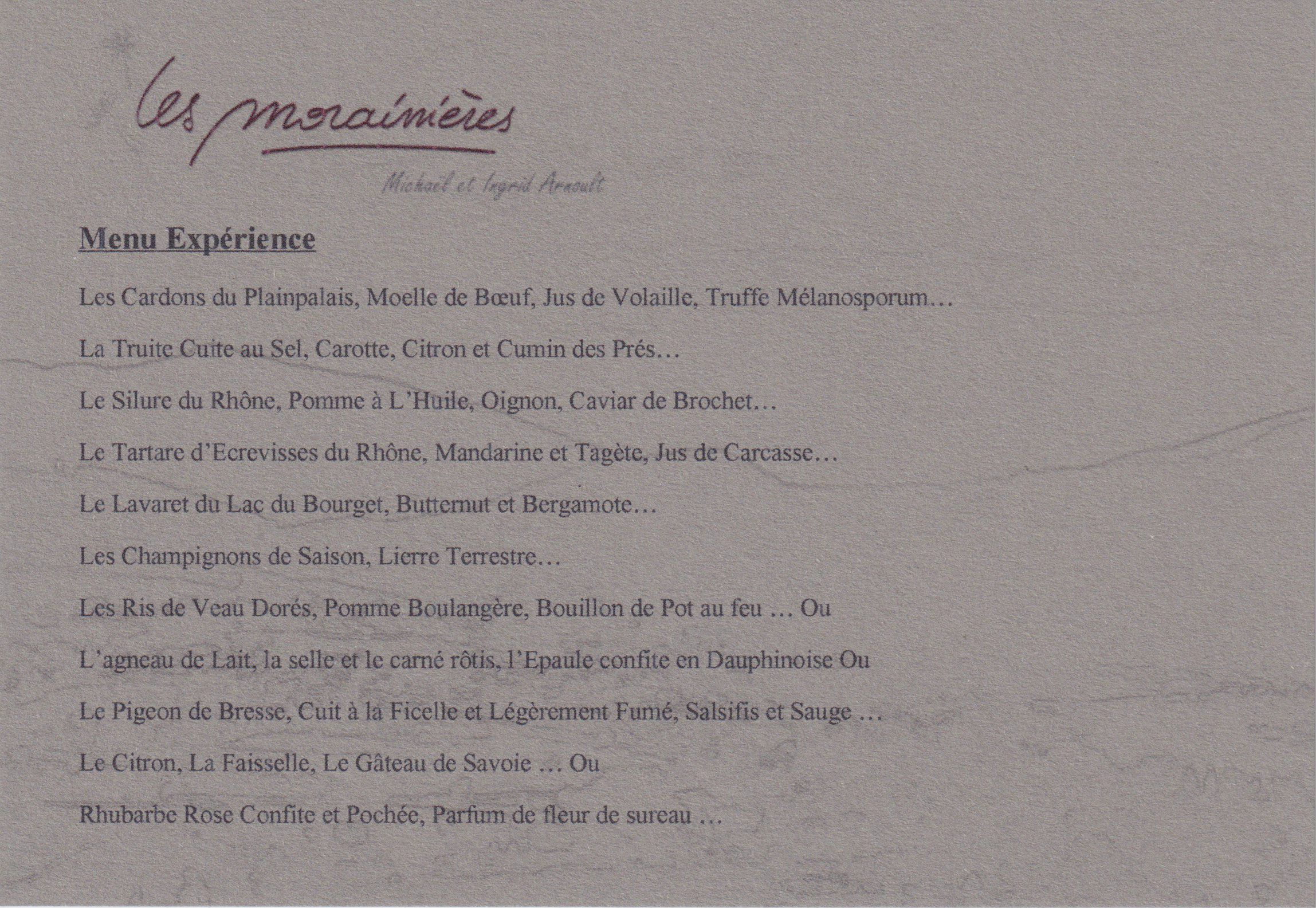
Two tasting menus were offered, a shorter one with seven courses, and a longer one that added two fish courses. At 220 and 280 Euro, respectively (about $255 and $325), the price per course was pretty much the same. We went for the longer menu - after traveling this far, we might as well. There were no optional additions or upgrades: the caviar and black truffles were already part of the regular menu. It felt a bit like a window into a simpler, less revenue-optimized past. For the main meat course, there was a choice of three dishes, based either on sweetbreads, pigeon, or lamb. When my dining companion said that none of those options really appealed to her, the kitchen managed to prepare her an additional fish course. For the main dessert, there were also two choices, and we received one of each. Wines by the glass were not explicitly listed on the menu, but ranged in price from 16 to 25 Euro ($18-$29). A wine pairing was available as well, for 110 or 130 Euro ($125 and $150), depending on the length of the chosen tasting menu. Pour sizes were fair, and the wines were mostly white (with only one or two reds, depending on what one chose for the cheese course), all were French, and a couple even came from the surrounding area. All wines went well with the food, and were generally fine, but not outstanding. Given the seafood-heaviness of the menu, it might a better a idea to just get a good bottle of white instead. (The two tables closest to us chose a bottle of red, though, so I guess anything is possible.)
Fun fact: our knives didn't get replaced between courses - a custom we'd seen at other restaurants in the region. However, it was quite possible to eat almost the entire meal without even using the knife - only the meat course truly required it.
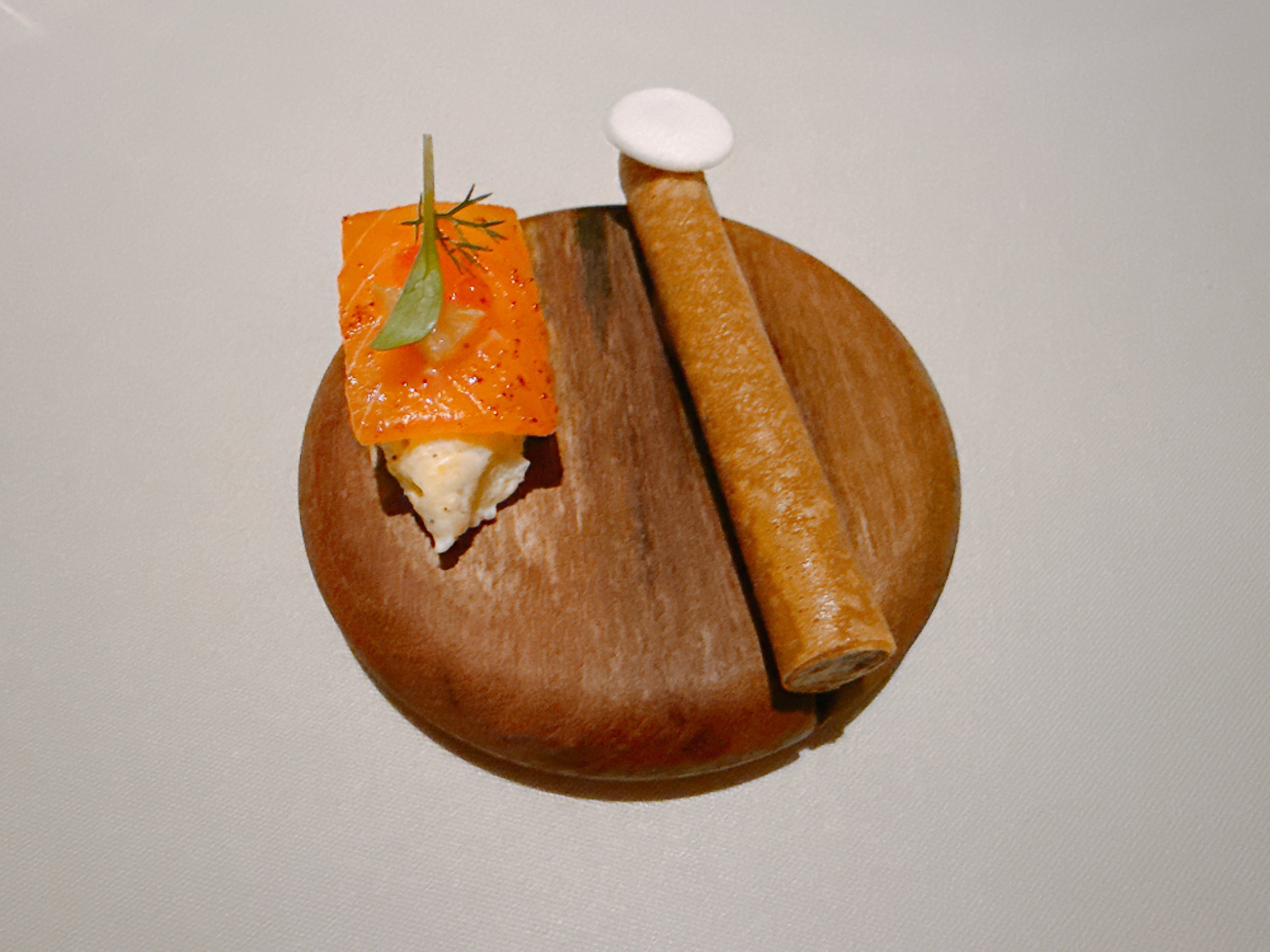
Not long after we sat down, we were served two small bites. One was a slice of local trout draped over a semolina dumpling, which ended up looking a bit like a piece of nigiri. The fish had a very light flavor - probably not helped by being served well below room temperature. As a result, this dish tasted mostly of the cold, creamy semolina 13. Next to it was a “mushroom cigarette”, a thin cylindrical cracker filled with mushrooms. This dish was served warm; the cracker was crispy and thin, which resulted in a great, light crunch. But the best thing about this dish was the intense mushroom flavor of its filling 17.
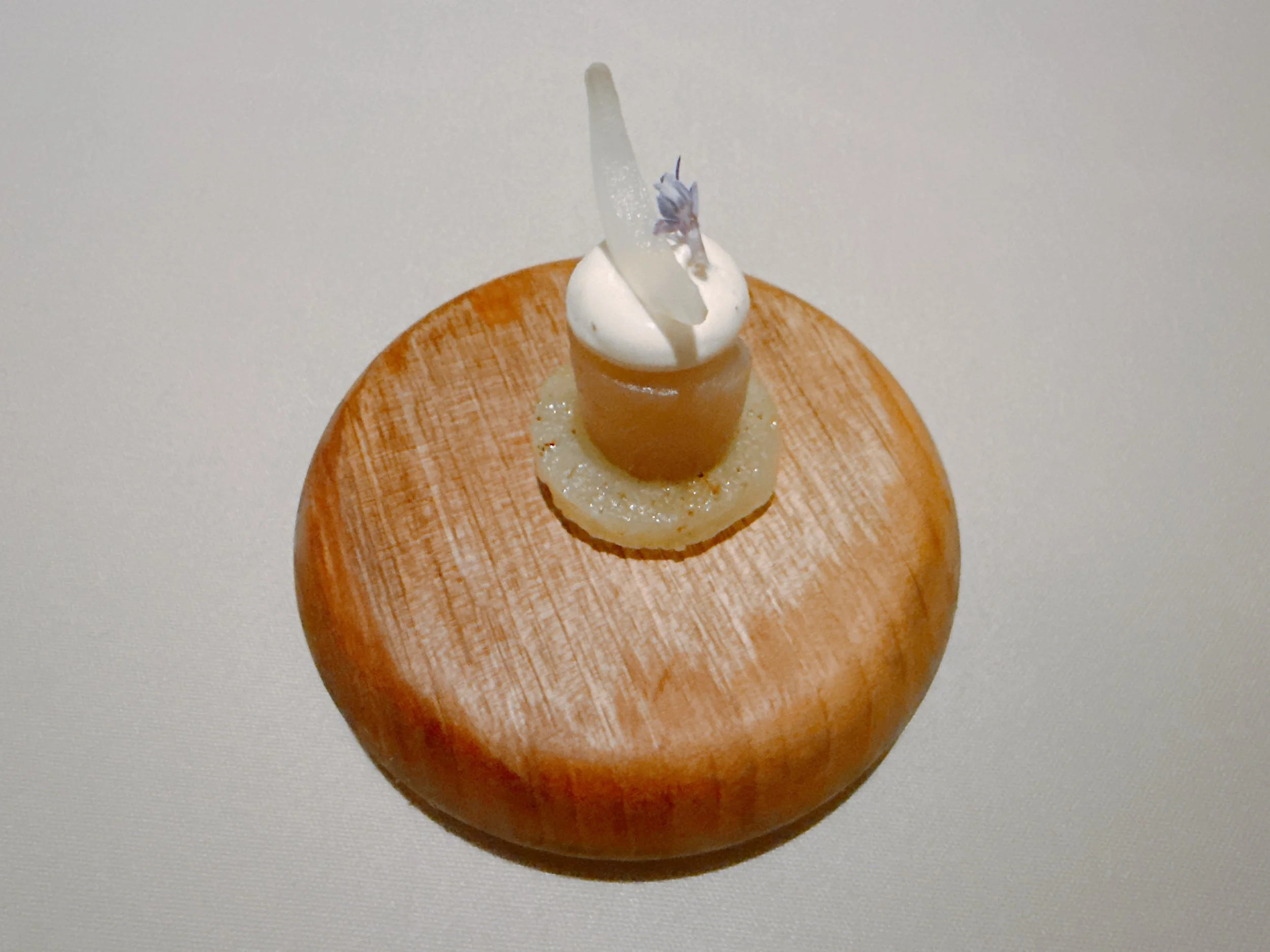
Two more bites followed soon thereafter. Ok, maybe not exactly “soon”, but “eventually”. At the beginning of our meal, there were long gaps between servings. We suspected that the kitchen wanted to sync up all tables to receive the same courses at the same time. So we - as the earliest seating - had to wait for later arrivals to catch up with us. Once we had reached the main courses, the pace had returned to normal.
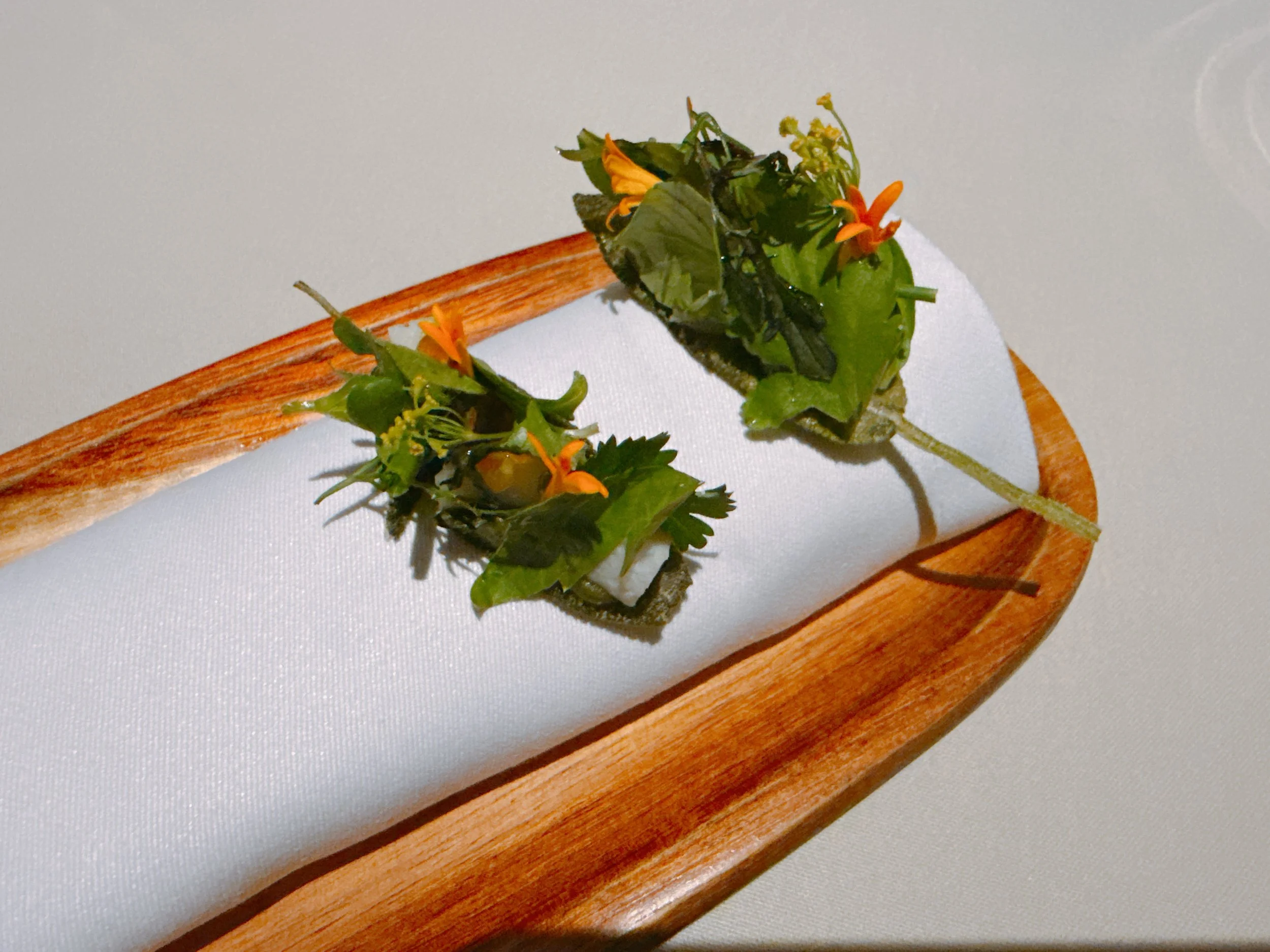
The first of the next two bites was a smoked whitefish served with cream. This fish was a bit difficult to pick up, but had a good consistency and tasted lightly fishy 15. The second bite was a bouquet of garden herbs that incorporated some perch and squash. Tastewise, this was essentially just a really nice collection of herbs. Nicely chewy, a bit salty, and having a much more intense flavor than the whitefish 17.
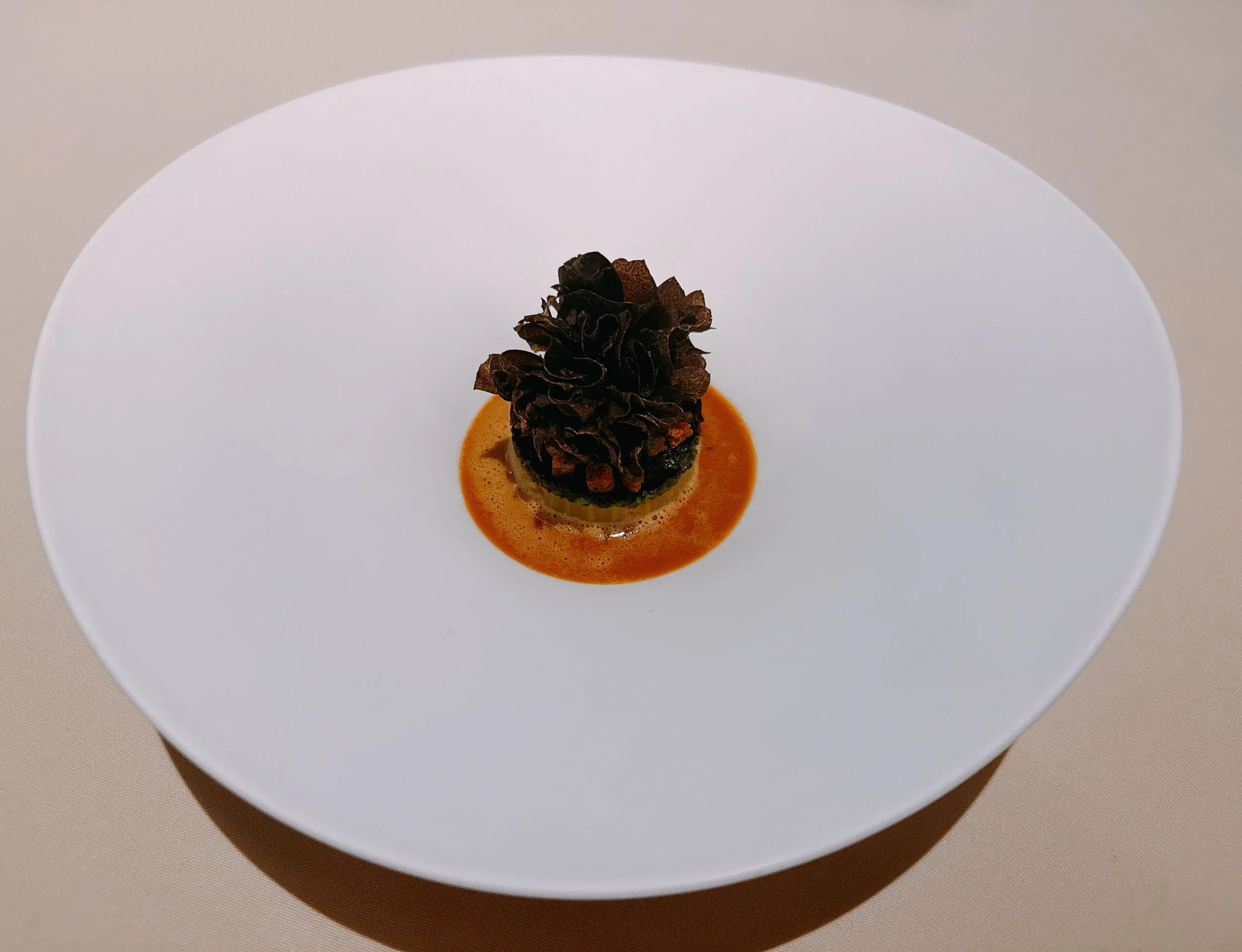
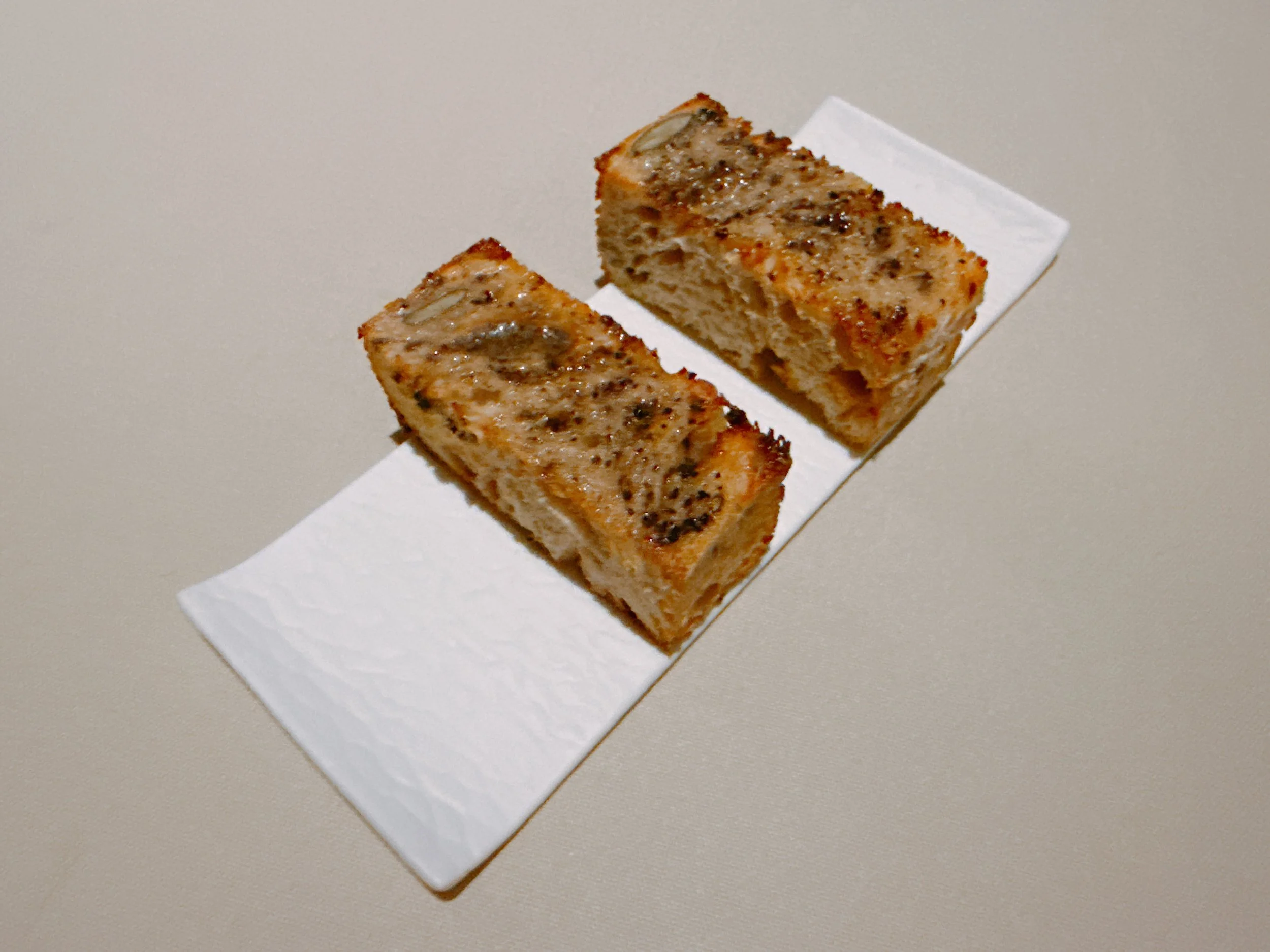
Then, we came to the main part of the tasting menu. The first course was based on cardoon, a heritage French vegetable. It was topped with beef marrow and plenty of shaved black truffles. Those truffles were also incorporated in the poultry-based sauce. (Extras of the sauce(s) were provided for this and the following courses.) Not only did this dish smell of truffles, it also had a strong, nutty truffle and mushroom flavor - delicious! The vegetable itself was lightly marinated, which added some acidity. The sauce had some sweetness, creating an overall balance of sweet and savory. Little croutons added texture to the presentation 18. With this dish we also received a little piece of grain-studded bread topped with truffle butter. At least that's what our server told us - unfortunately, I didn't get any truffle notes from the bread, but it's possible that the much more intense cardoon dish overpowered them. In the end: slightly warm and crunchy, but not too remarkable 13.
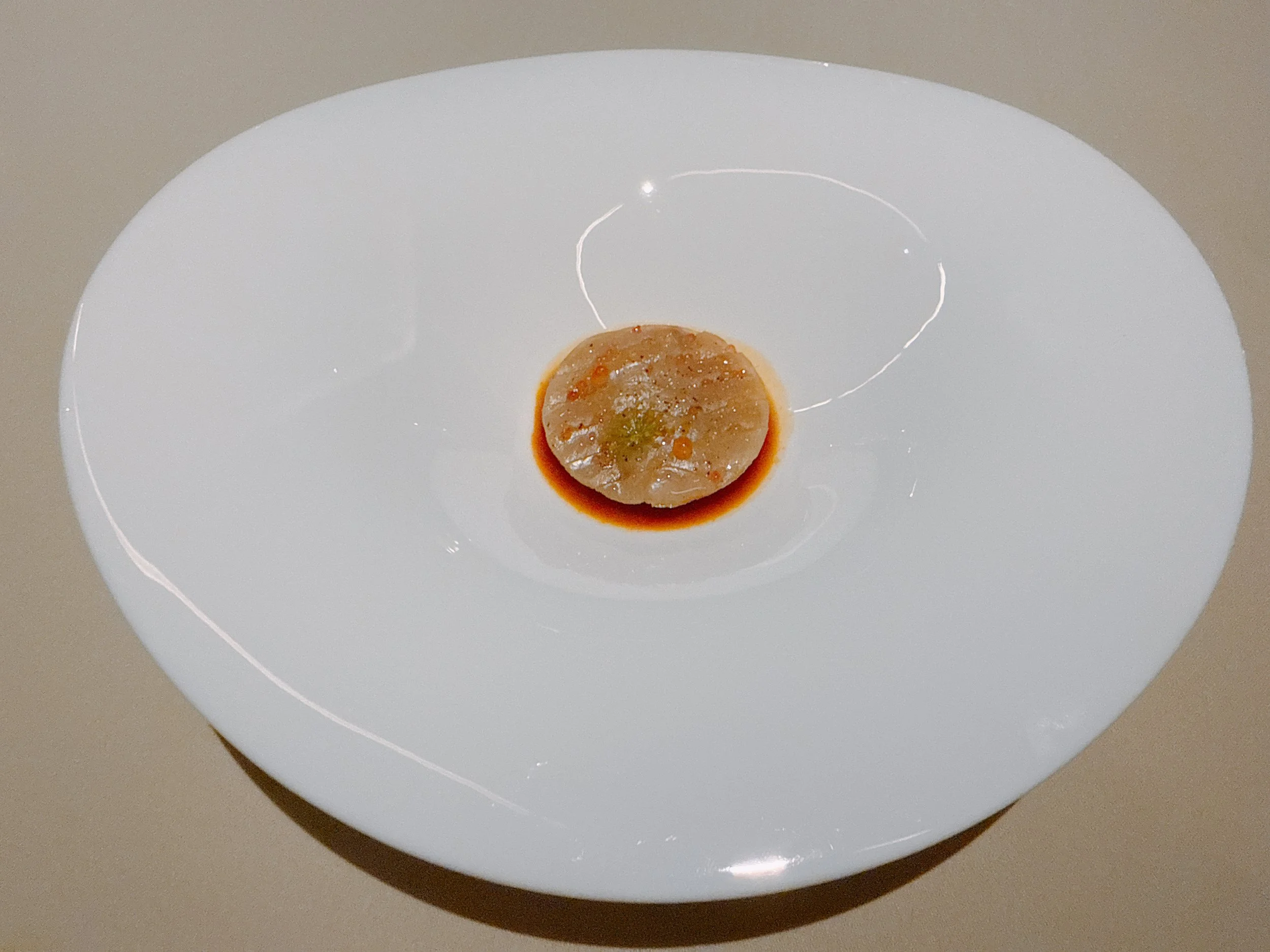
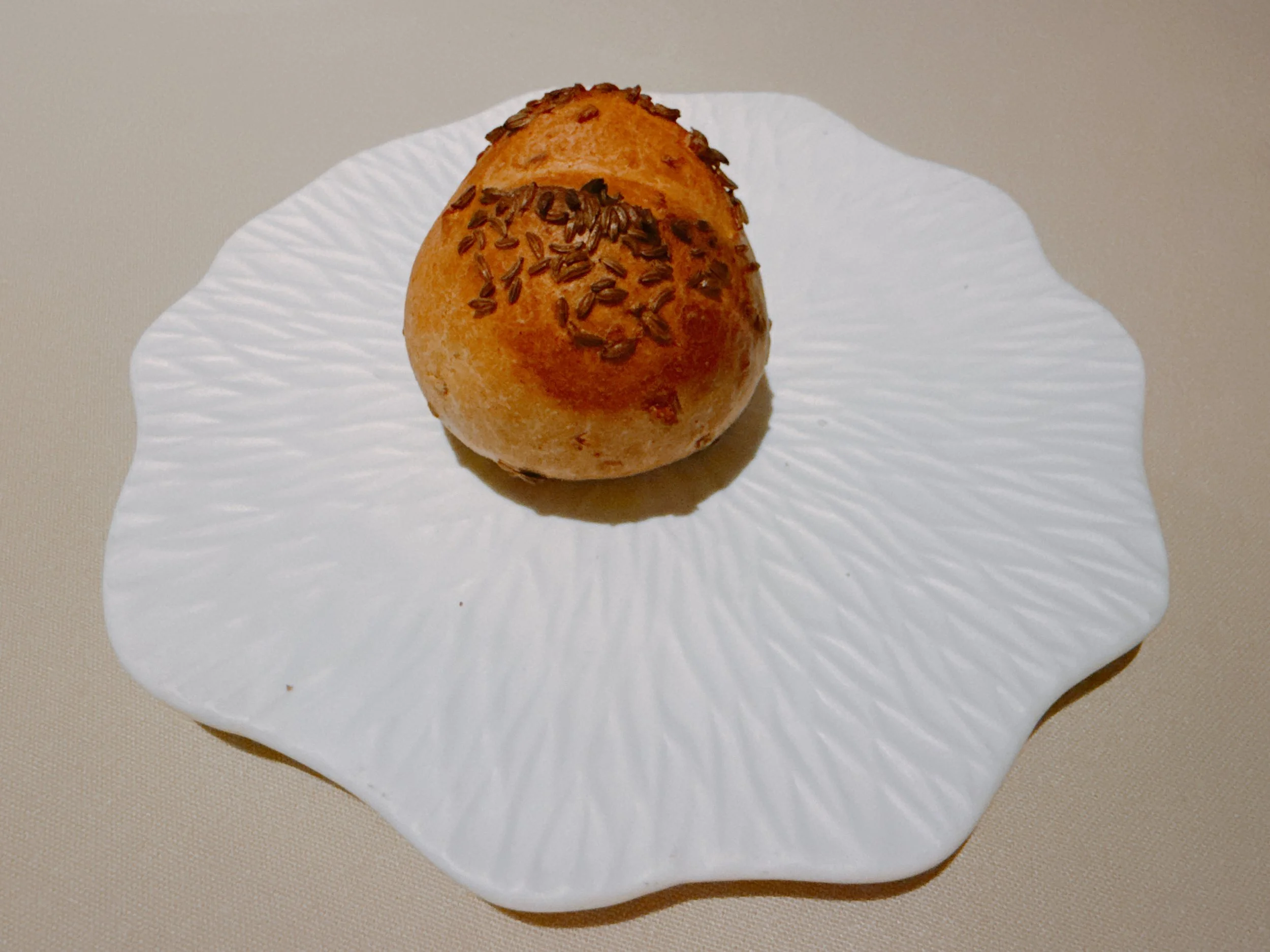
Salt-cured, sliced trout was served with trout roe, lemons, and cumin. The most I can say about this fish is that it was tender, since whatever flavor it might have had was overpowered by the much stronger sauce. This sauce was again lightly sweet, citrusy, and also had some acidity. There was an odd disparity of temperatures in this dish: the sauce was served warm whereas the fish was closer to room temperature 17. With this course, we received a little bread roll topped with cumin seeds. Its outside was quite crunchy, and it had a noticeable cumin flavor 16.
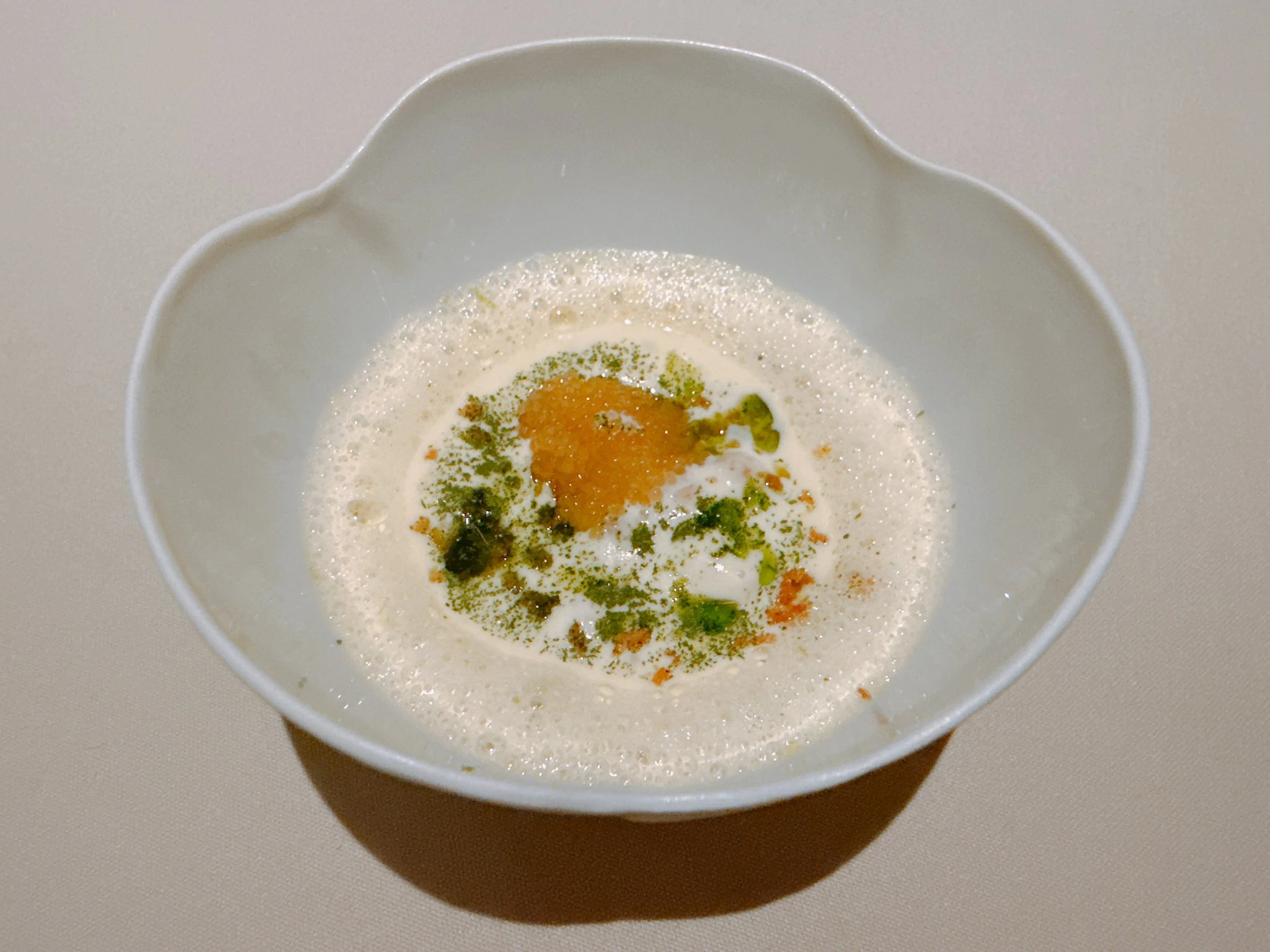
Small pieces of catfish from the Rhone river were served in a potato/leek broth, which was topped with pike roe. This dish also used different temperatures: the fish and broth were both warm, while the roe - added tableside - was cold. After several almost raw or marinated fish, this catfish was fully cooked. Flavorwise, the sauce dominated (again): a potato-y broth that was nicely seasoned with green herbs. Little croutons added some crunch to the dish 17.
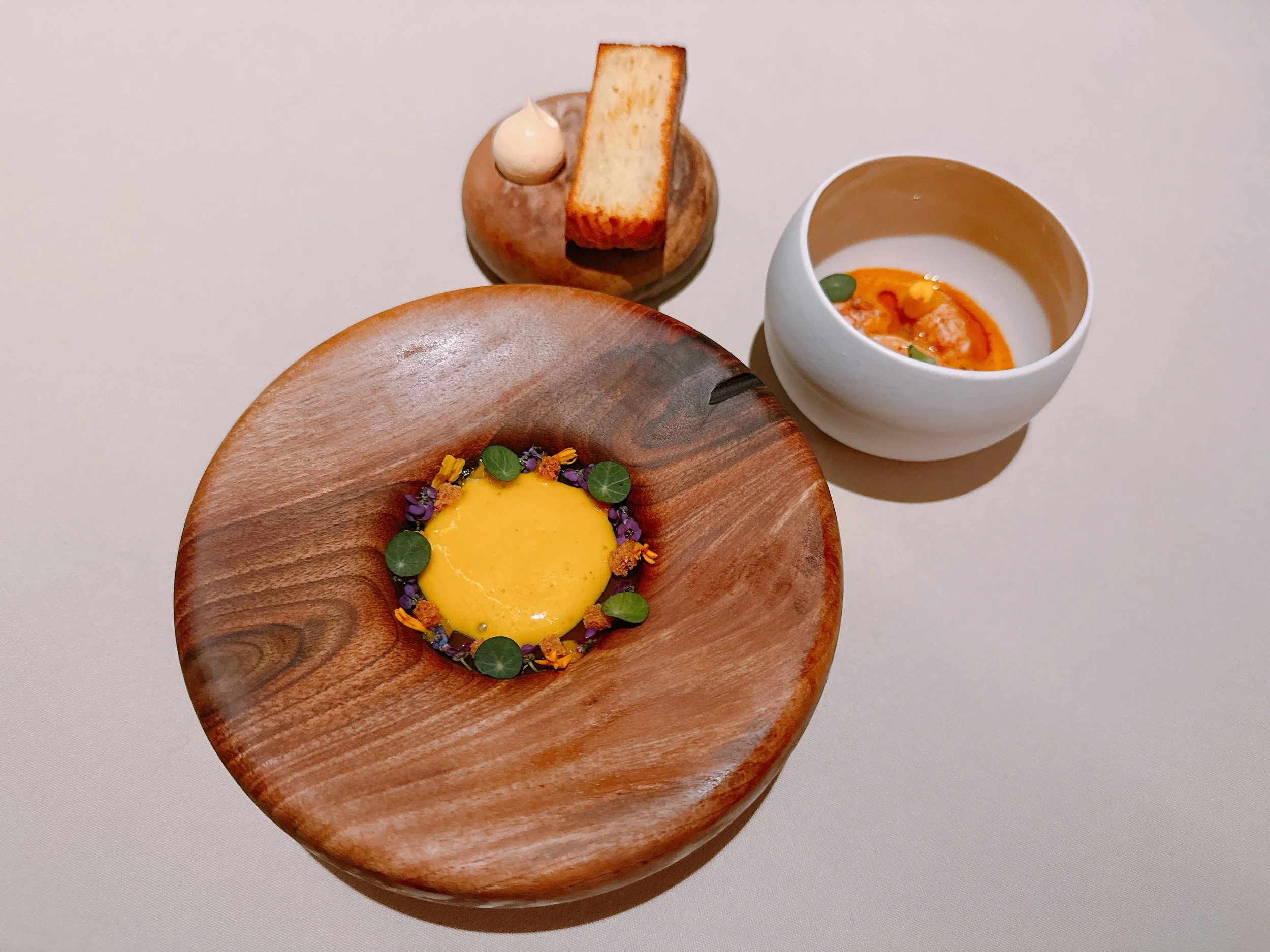
The following course presented one ingredient in three different ways, a pattern that would be used three more times during our dinner. The repeated ingredient was crayfish, also from the Rhone river. Preparation #1 featured a crayfish/onion tartare topped with a mandarin butter sauce. The addition of the onions made this feel a bit more like beef tartare than a traditional seafood tartare. And the yellow sauce on top recalled (at least visually) the egg yolk that one might add to a beef tartare. And just like beef tartare, this dish felt a bit more rustic than what had come before. (It’s possible that I'm overanalyzing this...) There were some herbal notes (from marigold?) and the sauce added a bit of fruitiness 17. In a separate bowl were some cooked crayfish tails that were served in a crayfish head jus. Not quite a bouillabaisse, but going in that direction. A savory dish that had some sweetness as well 16. Finally, there was a slice of brioche next to a crayfish butter. The bread was laminated, and already very buttery by itself. In other words, one didn't really need the crayfish butter. Which was just as well since this butter sadly didn't really taste much of crayfish 16.
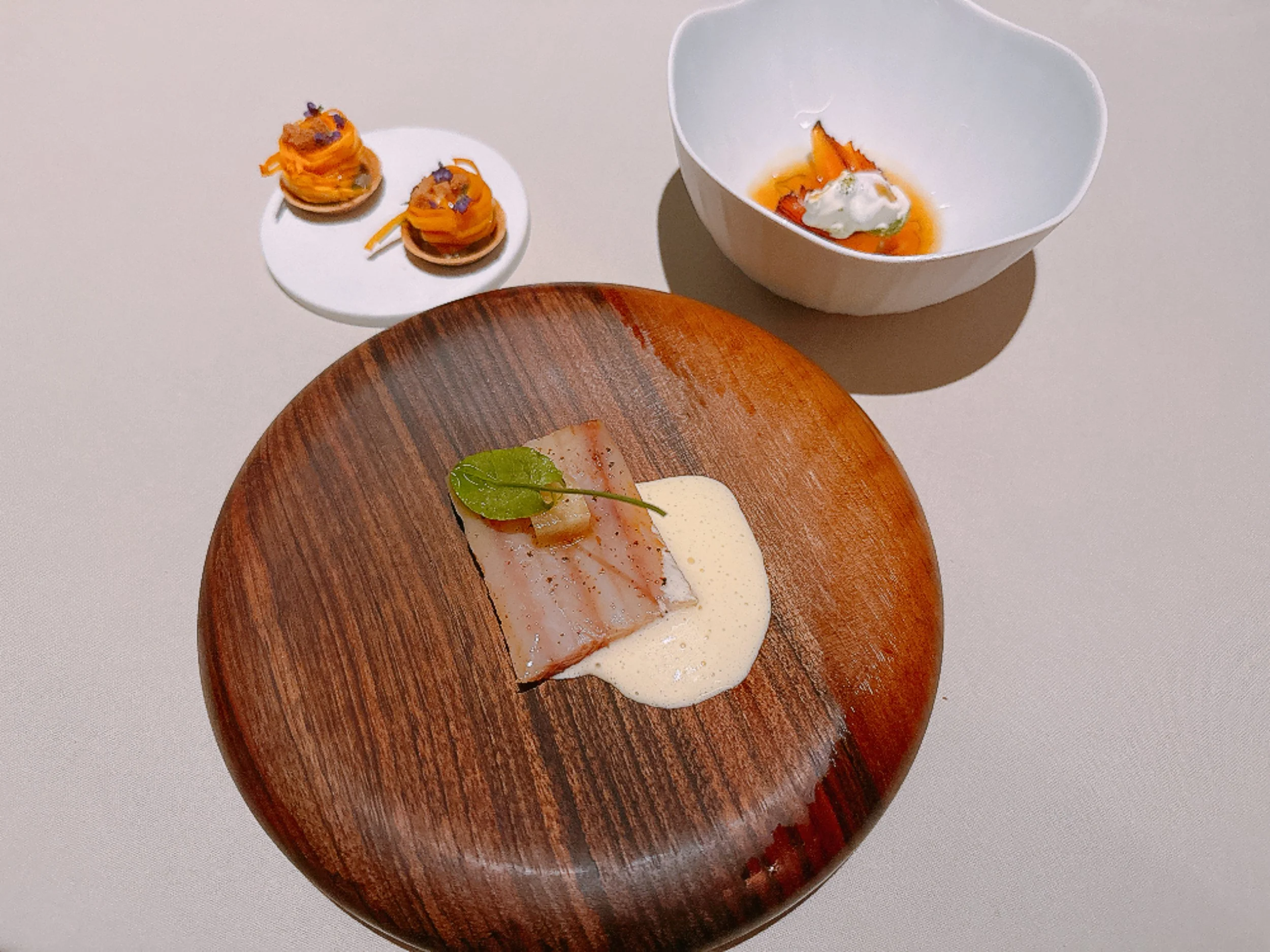
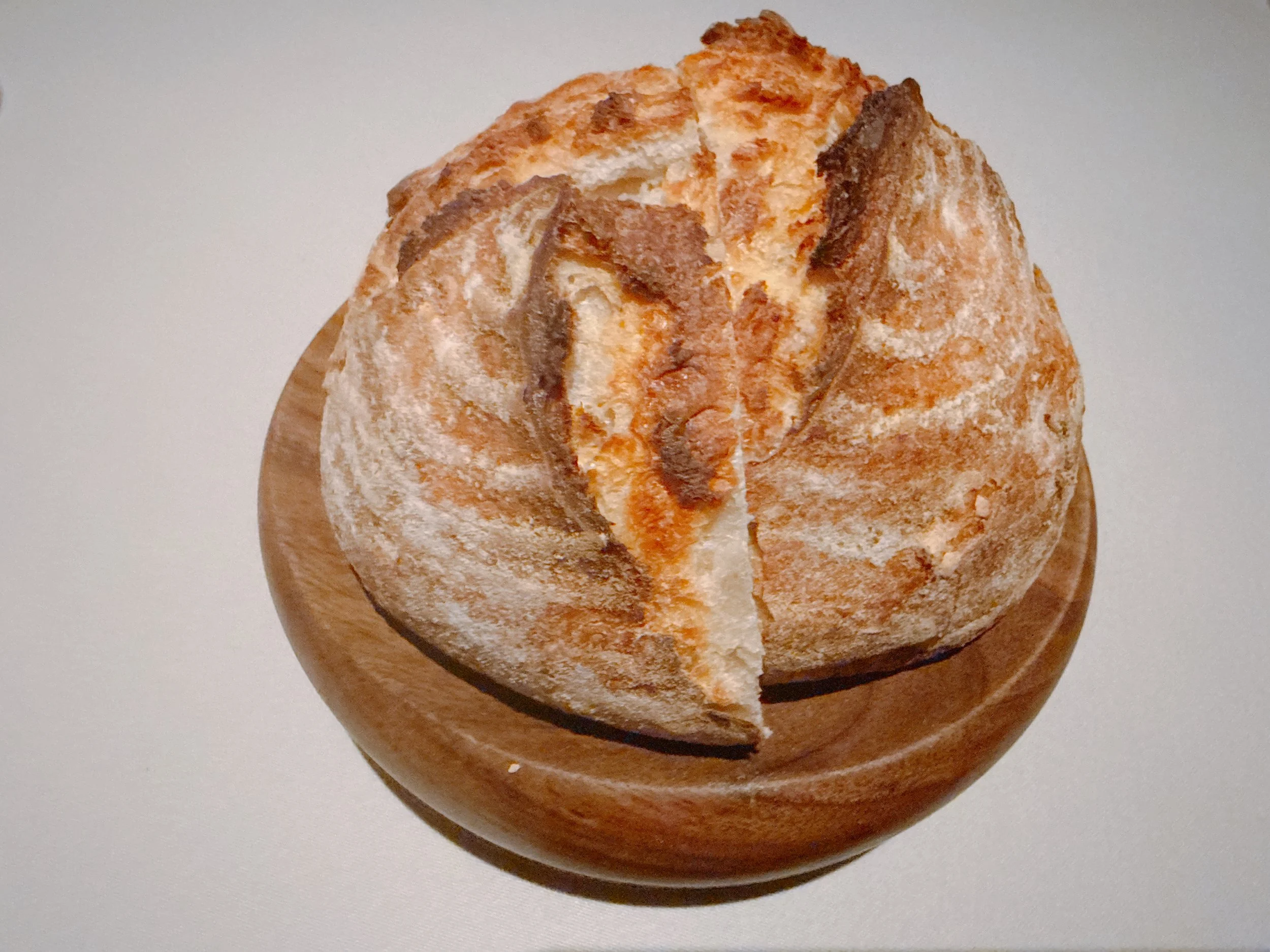
The next course also consisted of three different dishes, this time with the common ingredient of butternut squash (or maybe kabocha, the descriptions varied). A whitefish (lavaret) from local Lake Bourget appeared in two of the preparations. First, we tried a dish served on a wooden plate where the fish was clearly the main ingredient. A slice of whitefish was served with a butternut/bergamot sauce. The fish's texture was amazing: extremely tender, practically melting in the mouth. Placed on top were a small cube of fruit (or citrus?) that was slightly bitter, and a very acidic herb leaf. Both were probably meant to balance the butteriness of the fish 18. In a bowl was a vegetarian rendition of butternut squash, served in a lightly acidic broth with some nuts and cream. I appreciated that the squash was not particularly sweet, but unfortunately, the different components of dish didn't fully come together as a whole for me 14. Much better was a little tart that was filled with whitefish and butternut squash. The dish was quite flavorful and tasty, also thanks to the incorporated crunchy, lightly salted vegetables 17. Alongside this course, we received a bread loaf, cut into quarters, and some salted butter. The bread was nicely crunchy, but very neutral in flavor 15.
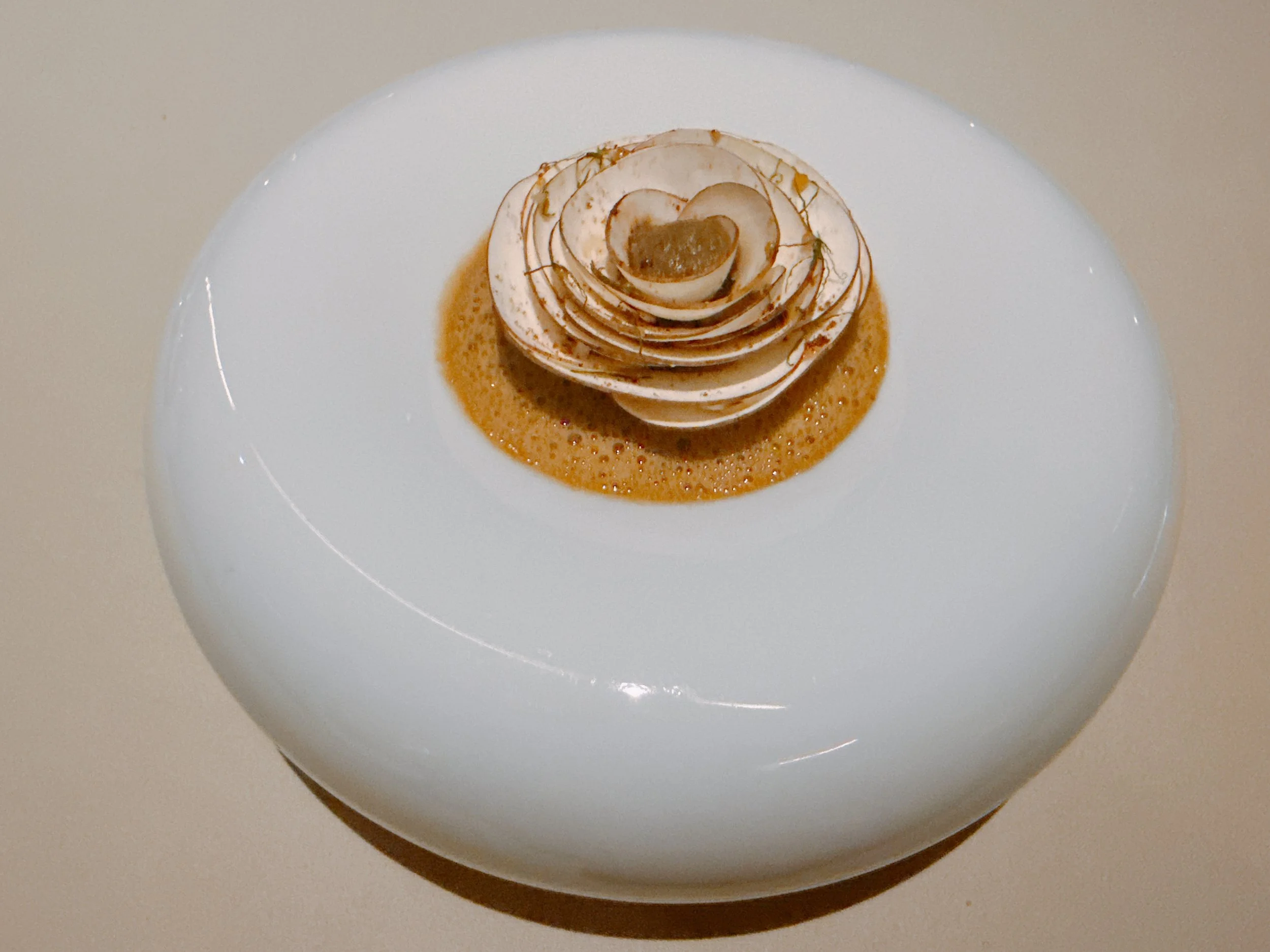
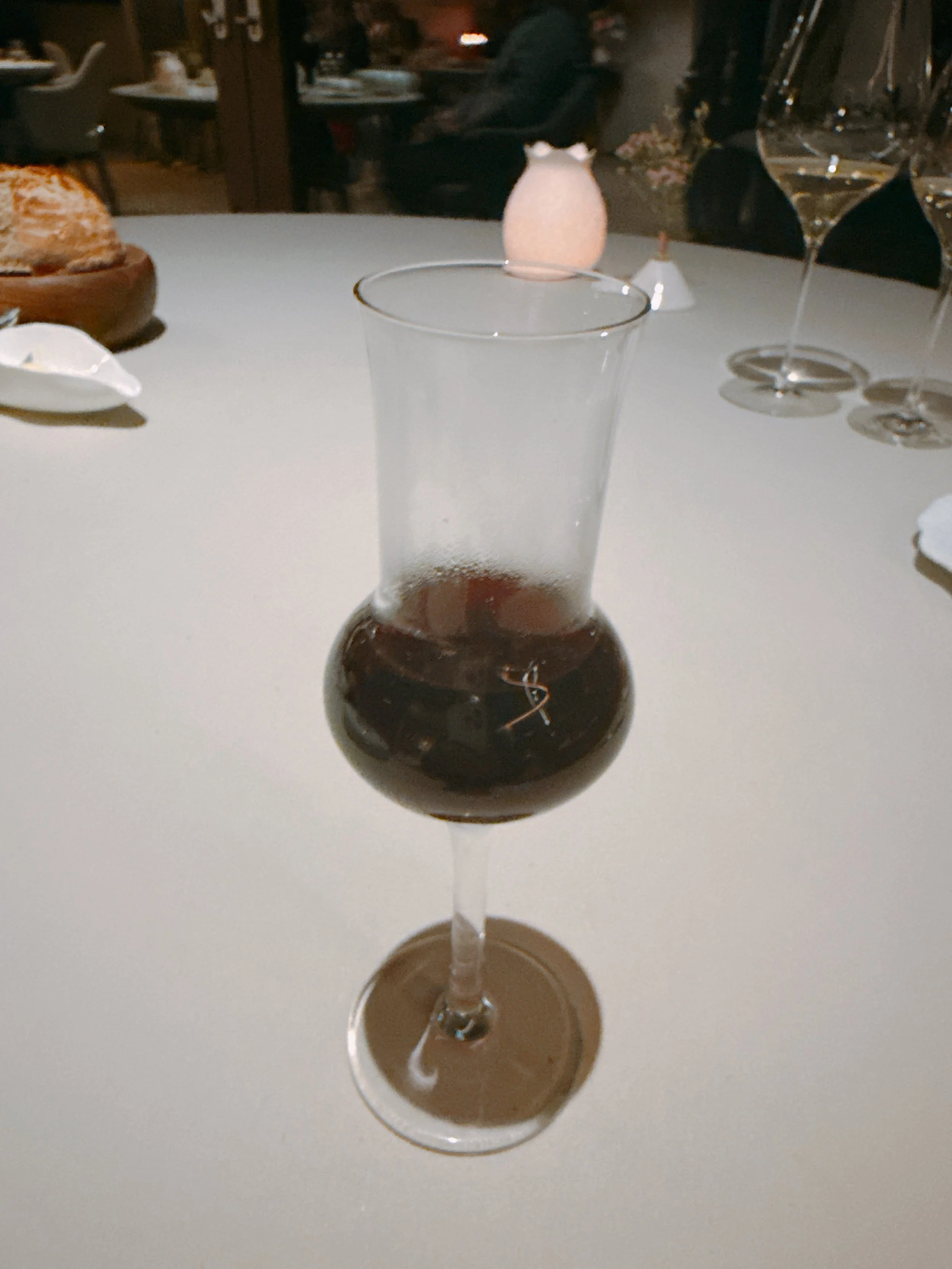
Mushrooms were the star of the following dish, with several different kinds represented, including trumpet mushrooms and champignons de Paris. They appeared as part of a mushroom sauce, and in various textures, ranging from raw to chopped to cooked. A cracker disc added texture to the dish, and also helped in separating the pretty “flower” made of raw sliced mushrooms from the cooked mushrooms underneath. (A presentation only topped by Clos des Sens in nearby Annecy.) As far as intense mushroom flavors go, this was pretty much as good as it gets 18. In a long-stemmed glass, we were also served a mushroom infusion. This broth was not quite as strongly flavored. Instead, it was light, a bit earthy, and a tad sweet 17.
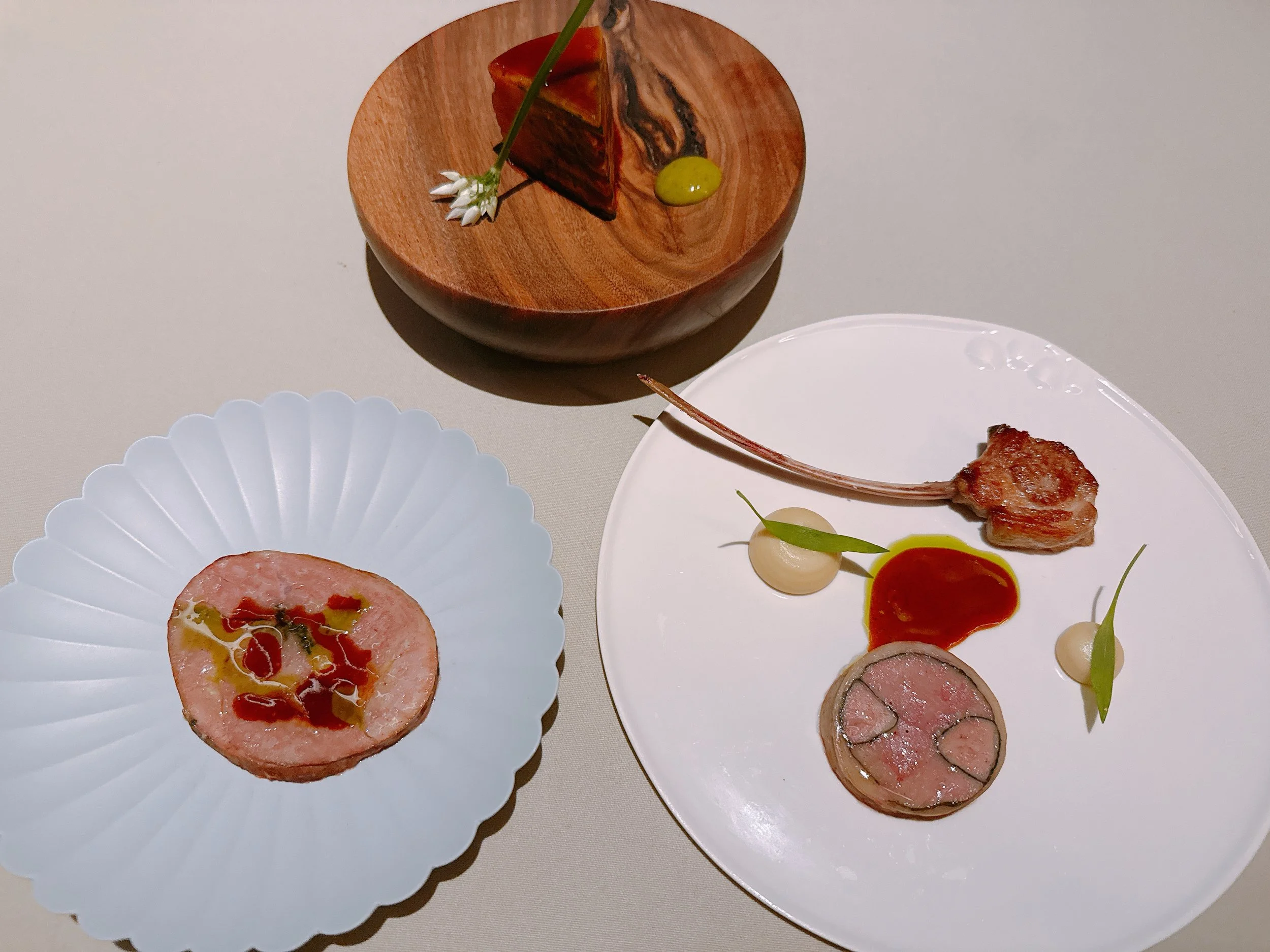
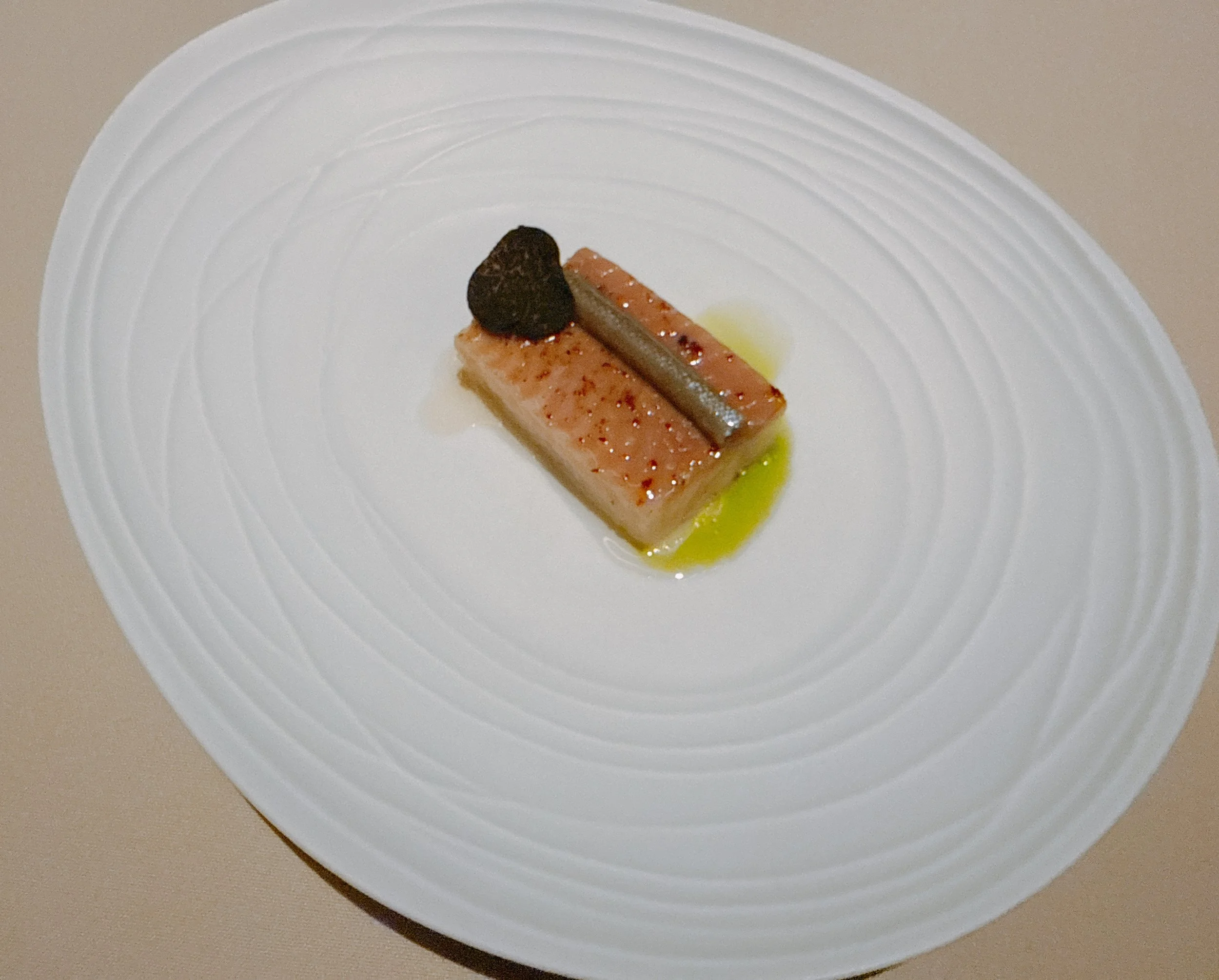
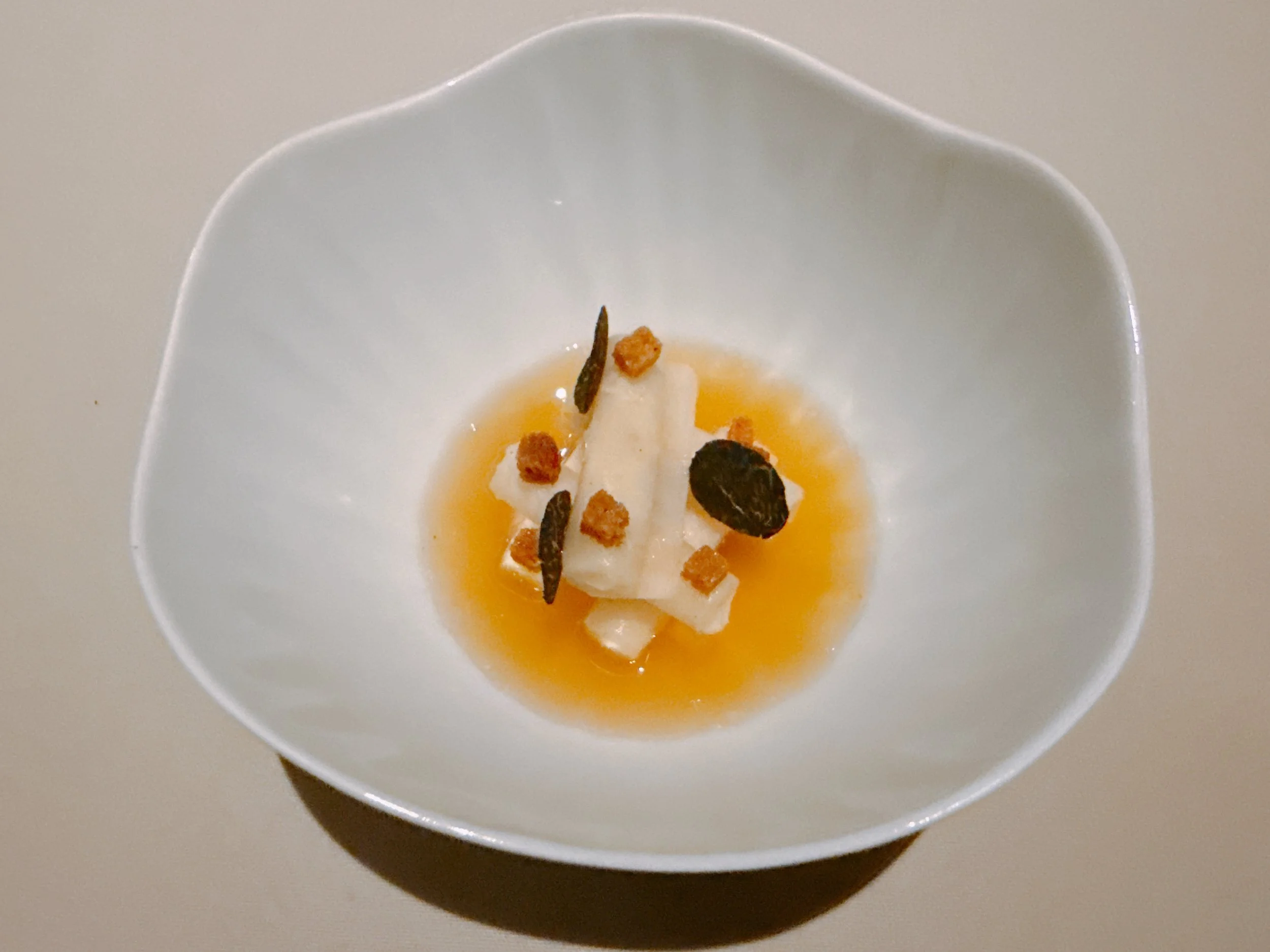
Then it was already time for the last savory course, which happened also to be the only meat course in the menu. Not being a great fan of either sweetbreads or pigeons, this was an easy choice for me - I went for the lamb, which was also presented in three different ways. The “main” plate featured the rack and the saddle of the milk lamb. Both were tender, and had a hint of gaminess, but not enough to be unpleasant. The saddle appeared to be wrapped in a slice of fat (lamb lardo?) - but again, not enough to be unenjoyable. Two little dollops of vegetable purees on the plate were very tasty as well 17. A lamb leg cooked for seven hours was unfortunately not as tender as the other cuts, it still had some bite left. The sauce on top was not very strong, but seemed to have a note of pines or firs 14. Finally, what looked like a slice of cake was actually a lamb confit had been layered with potato slices. A quite rustic preparation that strangely didn't taste much of meat at all 13.
As I mentioned before, my dining companion received a fish dish for her main course. It was split into two parts. On a plate was a filet of arctic char, which was very light in flavor, even after adding more of the buttery sauce 15. In a bowl were some celery “ravioli” that had been seasoned with truffles. They were crunchy, and had a notable truffle flavor 16.
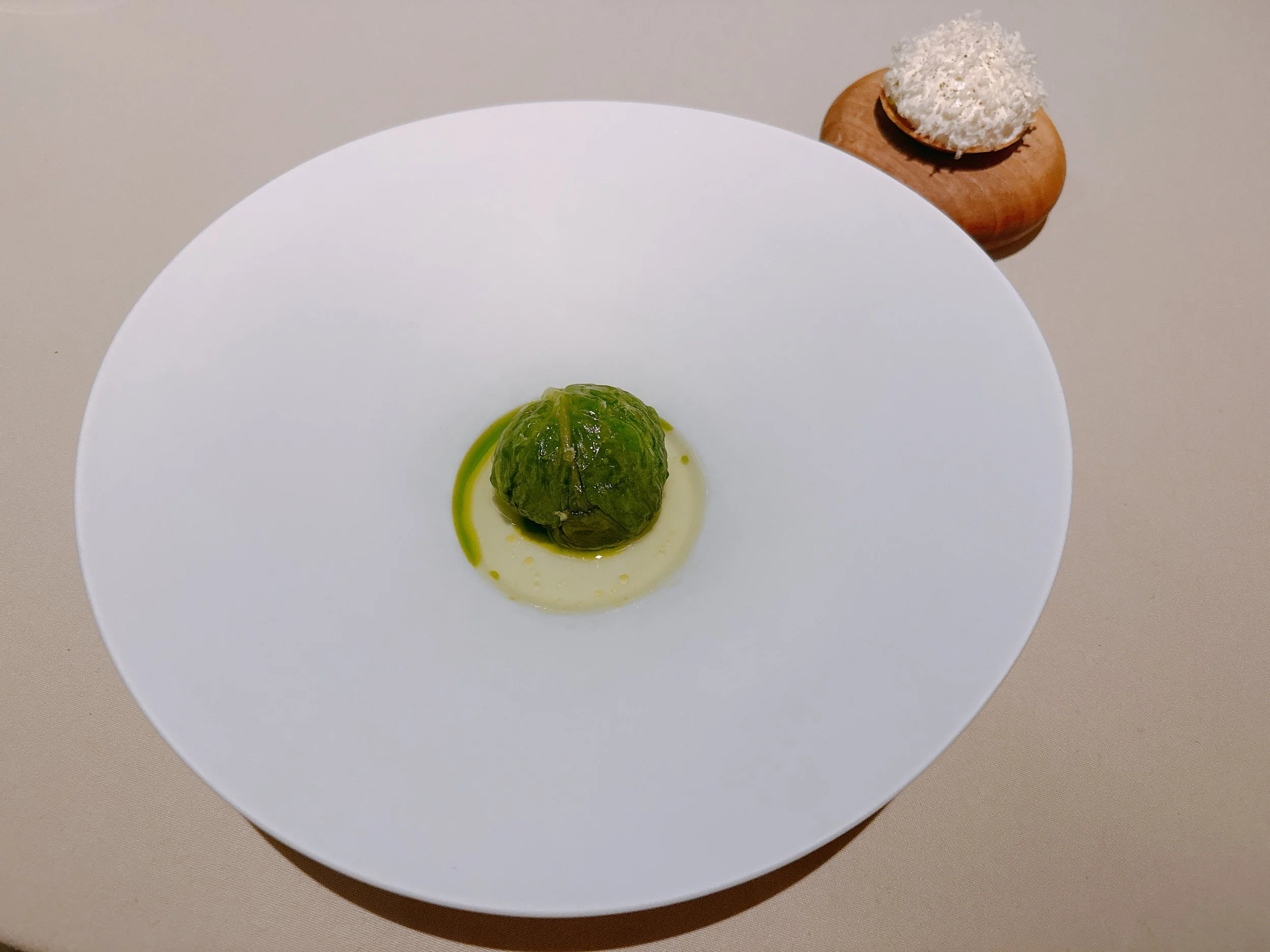
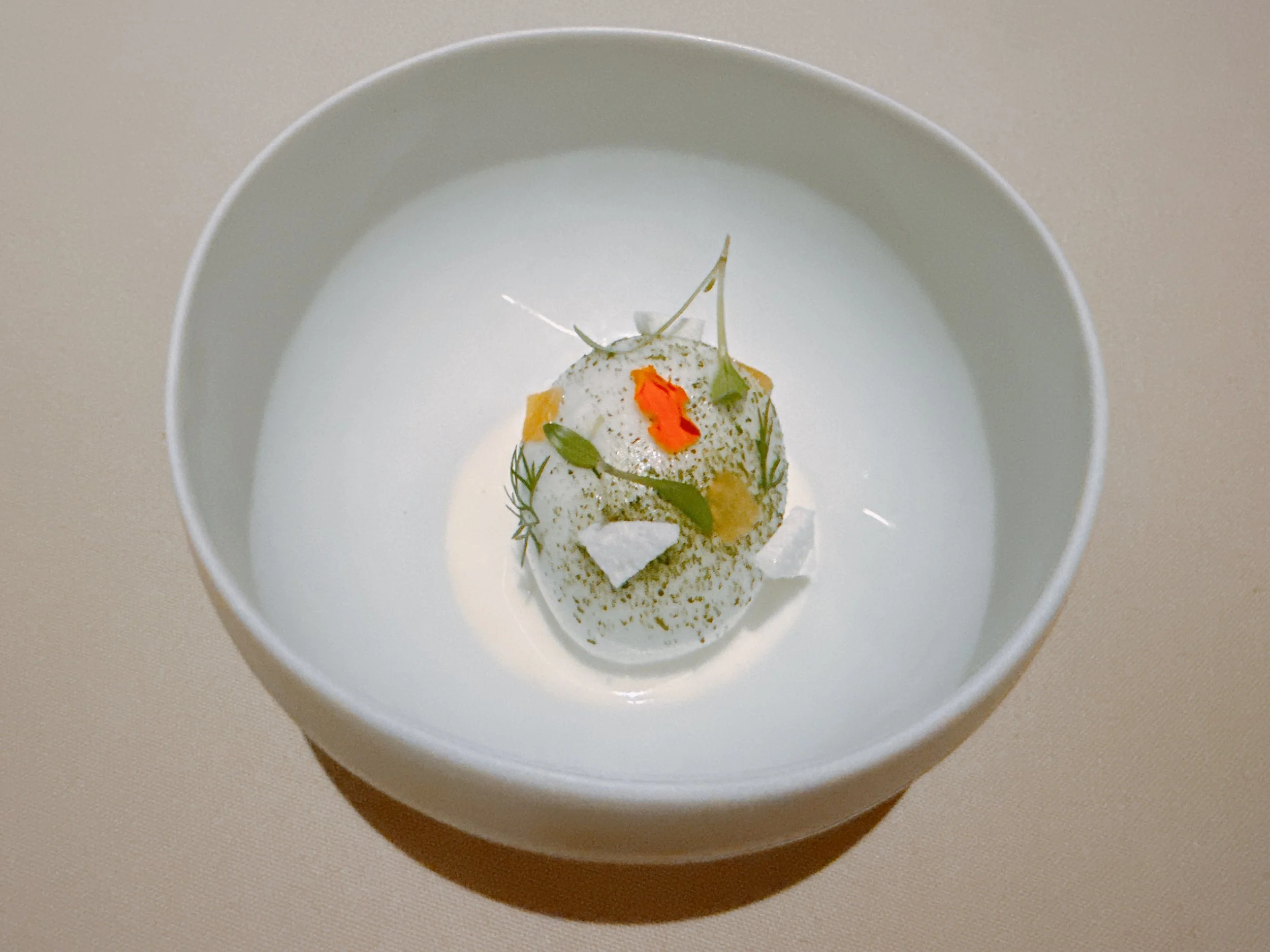
For the following cheese course, there was no cheese cart in sight - instead we received two prepared dishes based on a local goat cheese. Interestingly, both dishes seemed to have exactly the same ingredients, but in different proportions. Atop a small wooden plate sat a little tartlet filled with an airy, moussy preparation of goat cheese, topped with creamy, dried, shredded goat cheese. Below the mousse were some greens (possibly salad leaves?). A lovely and not too heavy meditation on goat cheese, where the different textures of the cheese, together with the greens and the cracker kept the dish interesting 18. On a larger plate was some lettuce filled with goat cheese, croutons, and even more lettuce, all cooked with vinegar. Goat cheese, greens, and crackers - the same ingredients as before. This dish tasted essentially like a salad: fresh, crunchy, lightly creamy, a bit bitter and somewhat acidic. Given that eating a fresh salad with a cheese course is a French tradition, this was a perfect fit 16. Although this was a substantial amount of food for a cheese course, none of it was particularly heavy, which was much appreciated.
As a palate cleanser, we received an herb ice cream that was served with a meringue and fermented milk. Herbal and citrusy, this dish was more sweet than savory 16.
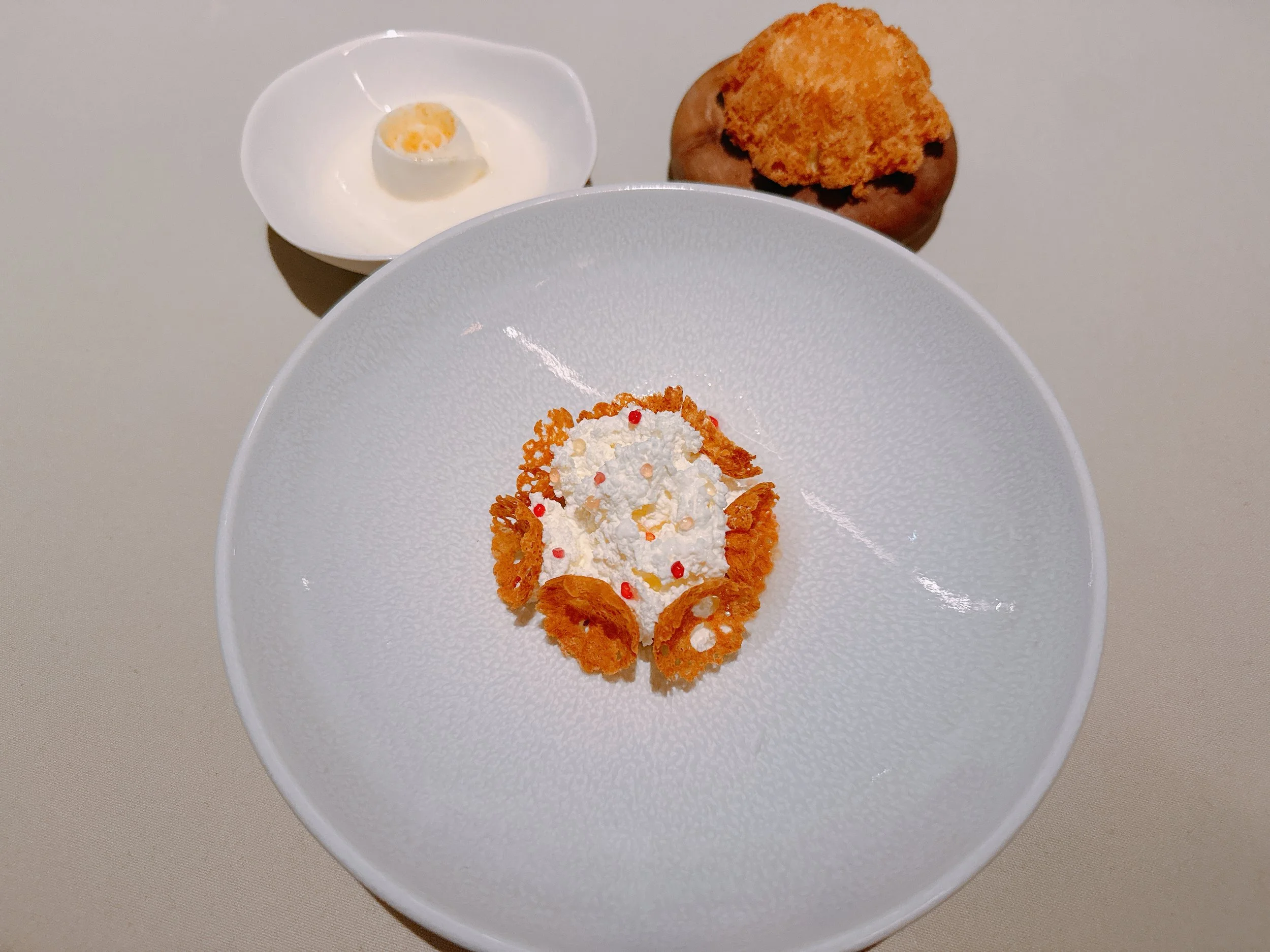
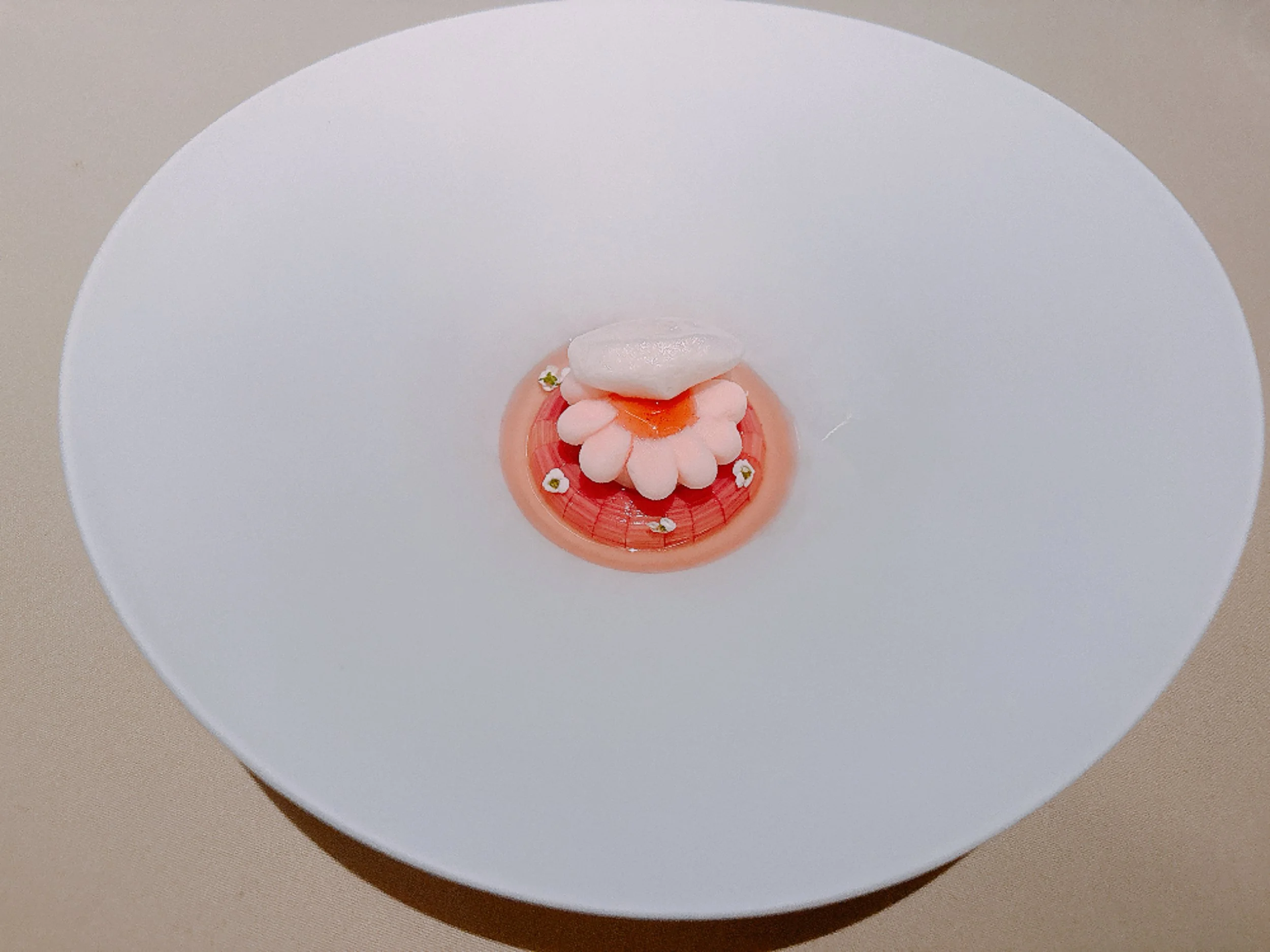
There were two choices for the (single) dessert course, and we were given one of each. For the wine pairing, we had to pick between a dessert wine and a glass of beer. Not being a great fan of beer in general, I chose the former - but it would have been interesting to find out why the sommelier thought that a beer was a good pairing here.
The first dessert consisted of three ingredients - a Savoie biscuit, lemons and yogurt -, and used them to create three different dishes. For one, there was the cookie by itself: sweet, but a bit indistinctive. Then, a yogurt ice cream paired with a lemon sauce: lemony and creamy. And finally a yogurt mousse that was adorned with biscuit chips. This last dish was not particularly sweet, meaning that it was best eaten together with one of the other two. Overall, this was a decent dessert course, but not quite as compelling as the earlier savory ones 14.
The other dessert was based on the season's first rhubarb, which appeared in multiple forms: poached, as a marmalade, and as an ice cream. There was some elderflower in the dish as well. I particularly liked the rhubarb's crunchy texture. Similar to the other dessert, though, this one was only lightly sweet - parts of it were in fact quite tart. As long as one didn't mind that, this was a pretty good dish based on essentially just a single ingredient 16.
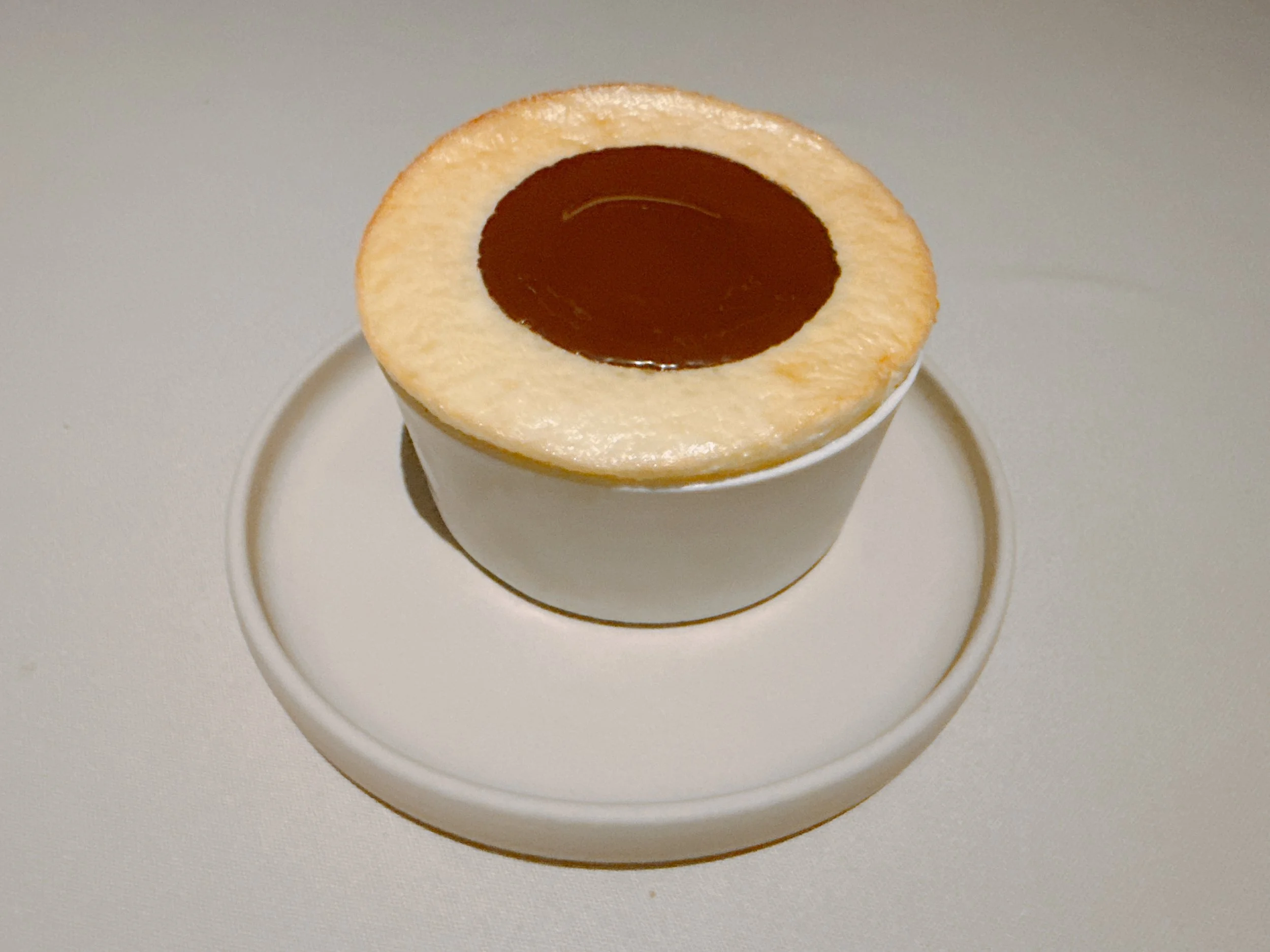
To share, we got a soufflé made with chartreuse and topped with chocolate. The soufflé was quite airy and light. Its flavor profile reminded me a bit of a marshmallow, putting the whole dessert close to a s’more 16.
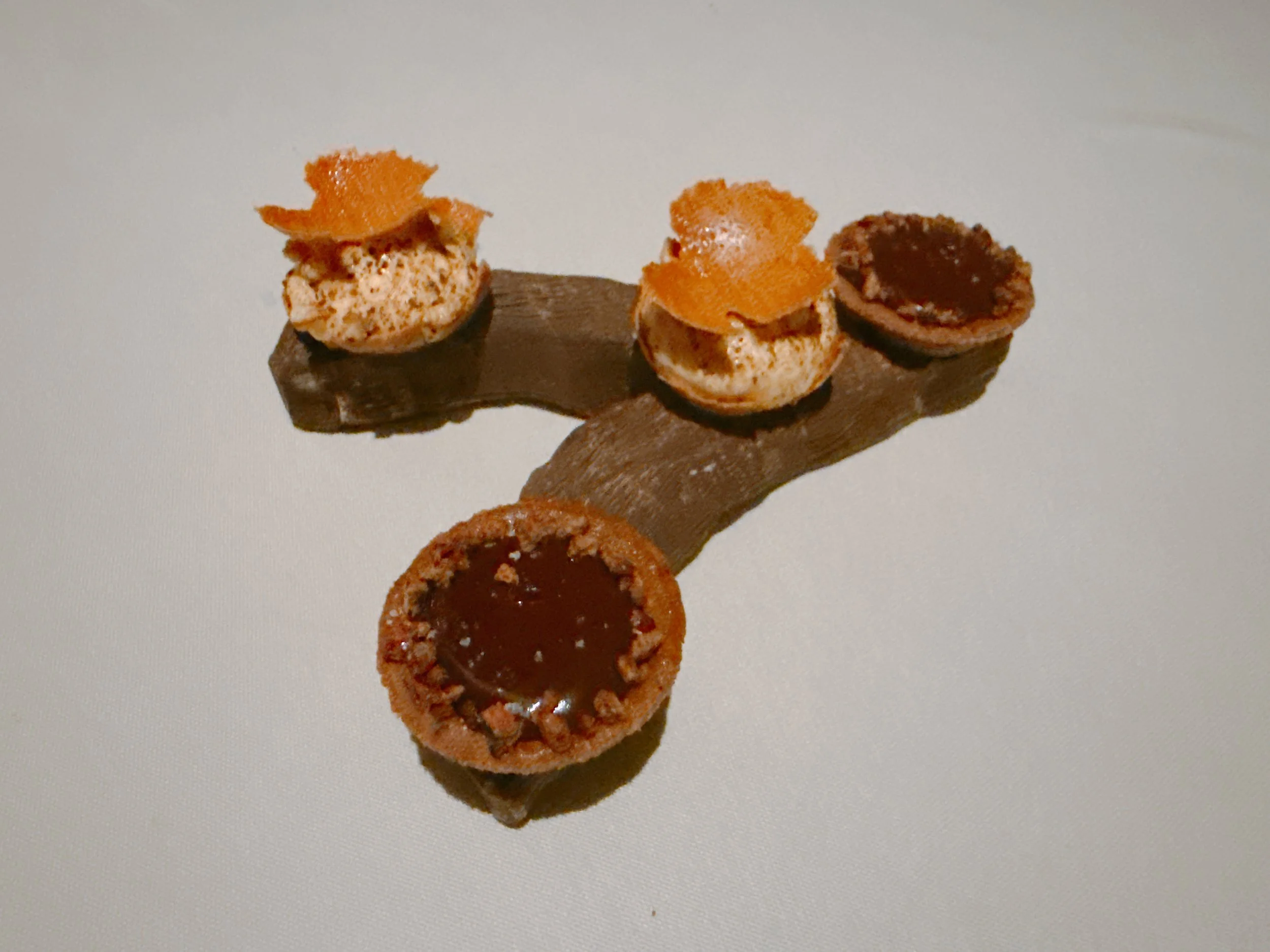
Two little tartlets were the last bites of the night. One was filled with chocolate, cocoa nibs and salt. It was very chocolaty, and had a nice crunch thanks to the nibs. There was at most a hint of salt, though 17. Another tartlet was filled with milk, vanilla, and some candied puffed grains that gave it an unexpectedly crunchy texture. The main flavor here was vanilla, and I liked this bite slightly better than the chocolate one 17.
Overall: Modern French cuisine with mostly local ingredients and a strong focus on seafood from the area. What was notable was the sheer variety in dishes - nothing felt repetitive. A nice touch was the pattern of using the same ingredient(s) in multiple - but very different - dishes in the same course. Similarly thoughtful were the preparations that used a single ingredient in different forms. The best dishes were clearly at a three-star level: very strongly flavored, and successfully playing with textures and temperatures. There were a few dishes that were merely ok, and the desserts were generally a bit weaker than the savory ones, but the vast majority was still very enjoyable. Add a beautiful view and good service, and we were definitely glad to have made the trip 17.