Hakuba - Paris
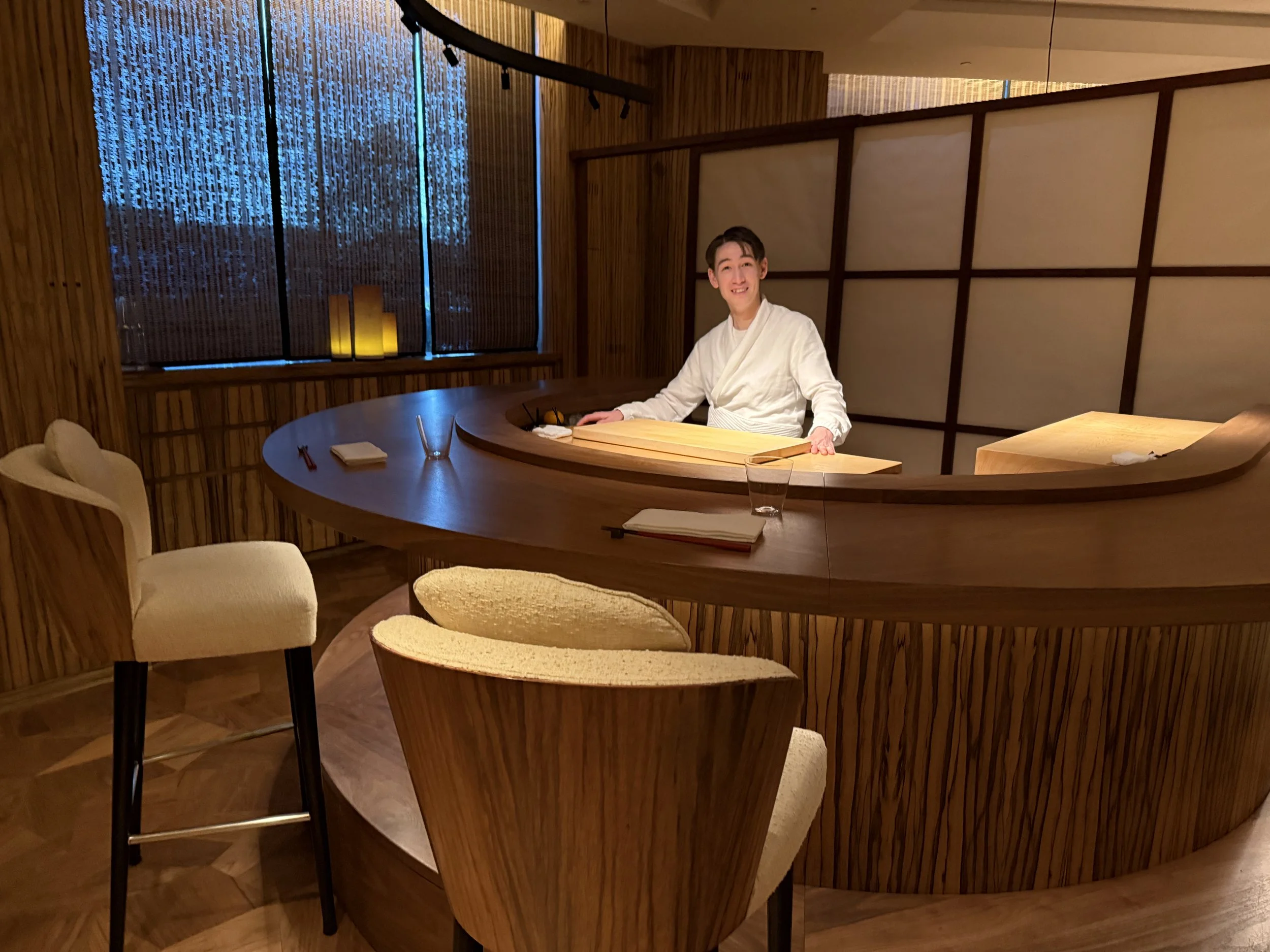
One of the smaller sushi counters
Rating: 17/20
Where: Paris, France
When: Dinner for 1 on 26 March 2026
Cost per Person: Tasting menu 420 Euro ($485), Wine Pairing 195-495 Euro ($225-$570)
Accolades: 2 Michelin Stars
Why: Japanese cuisine, including lots of sushi, “amped up” for a Western audience
The Cheval Blanc hotel group has an enviable track record when it comes to opening Michelin-starred restaurants. It helps to be backed by a billionaire, presumably, but the execution is nevertheless impressive. So I found myself, early on a Thursday night in late March, in the lobby of the Cheval Blanc hotel in Paris. The hotel is in a prime location on the Seine in Paris' 1st arrondissement, which makes it easy to get to. The hotel is known in fine-dining circles mostly for the three-Michelin-starred Plénitude on the second floor, but this time I was here for “Hakuba”, the hotel's newly two-starred restaurant, located to the left of the lobby. (Hakuba means “white horse”, i.e. “cheval blanc”, in Japanese.)
Hakuba’s Japanese-born chef Takuya Watanabe has been a fixture of the Parisian sushi scene for well over a decade. He helmed the city's first Michelin-starred sushi restaurant (Jin), and in 2024 opened Hakuba, in collaboration with Plénitude's chef Arnaud Donckele. Calling Hakuba a Japanese restaurant is probably a good first approximation, but one is unlikely to find a restaurant such as this one anywhere in Japan.
Modern French cuisine has long liberally borrowed techniques and ingredients from Japan, and in a sense, Hakuba goes in the opposite direction: it delivers a Japanese cuisine that draws heavily on French produce and inspirations. That leads to changes big and small. All the fish and seafood come from France and the Mediterranean rather than Japan. The menu structure is based on kaiseki, but very loosely. But the most significant difference are the sauces and seasonings, which are considerably stronger than what one would encounter in Japan.
That's a lot of words to say that Hakuba is not a traditional Japanese restaurant, but it's also not meant to be. And taken at face value, the food served here is actually very, very good. But I'm getting ahead of myself…
A meal at Hakuba follows a typical Japanese dining format, where customers are seated at a counter and everybody is served the same dishes at the same time - an omakase-style menu, if you will. That said, the restaurant offers multiple seating times, which is accomplished by having several different counters, separated from each other by movable walls. In addition, the counter used for the first seating is reused for the last one - so if you want to linger, don’t go early. At first, I was a bit disappointed to be led to a “smaller” side counter after entering the restaurant. In Japan, those side counters often have a sous chef or apprentice preparing the sushi, while the master helms the main counter. Thankfully, chef Watanabe makes the sushi for all customers, and takes over each counter at the appropriate time in the menu progression. Our chef for the non-sushi dishes happened to be British, making communication particularly easy. But of course, this being a high-end hotel, all of the staff spoke excellent English.
The dinner menu was essentially fixed, but there were two ways to spend more money on food: by adding black truffles to a few dishes for 95 Euro (about $110), or by getting an additional uni (sea urchin) sushi course for 30 Euro ($35). I skipped the truffles, but added the uni. There were also two choices for the main dessert, and each guest had to pick one at the beginning of the meal. Beverage-wise, there were several wines and sakes available by the glass (including pricier ones using Coravin), and two five-glass pairings for 195 and 495 Euro ($225/$570), respectively. These pairings could be customized to be all sake, all wine, or a mix of the two (the latter being the recommendation of the staff). With unusually generous pours of 100ml for sake and 150ml for wine, this was a substantial amount of alcohol to complement a relatively light sub-two-hour dinner, so be forewarned. The wines and sakes in the 195 Euro pairing were all surprisingly good, so much so that I'd happily reorder all of them. The least successful beverage pairing might have been the slightly off-dry sake that was came with dessert. There was nothing wrong with the sake itself - I simply would have preferred something slightly sweeter at that point. The pairing started only after a few initial bites, but given how light these were, ordering an aperitif didn't really seem necessary.
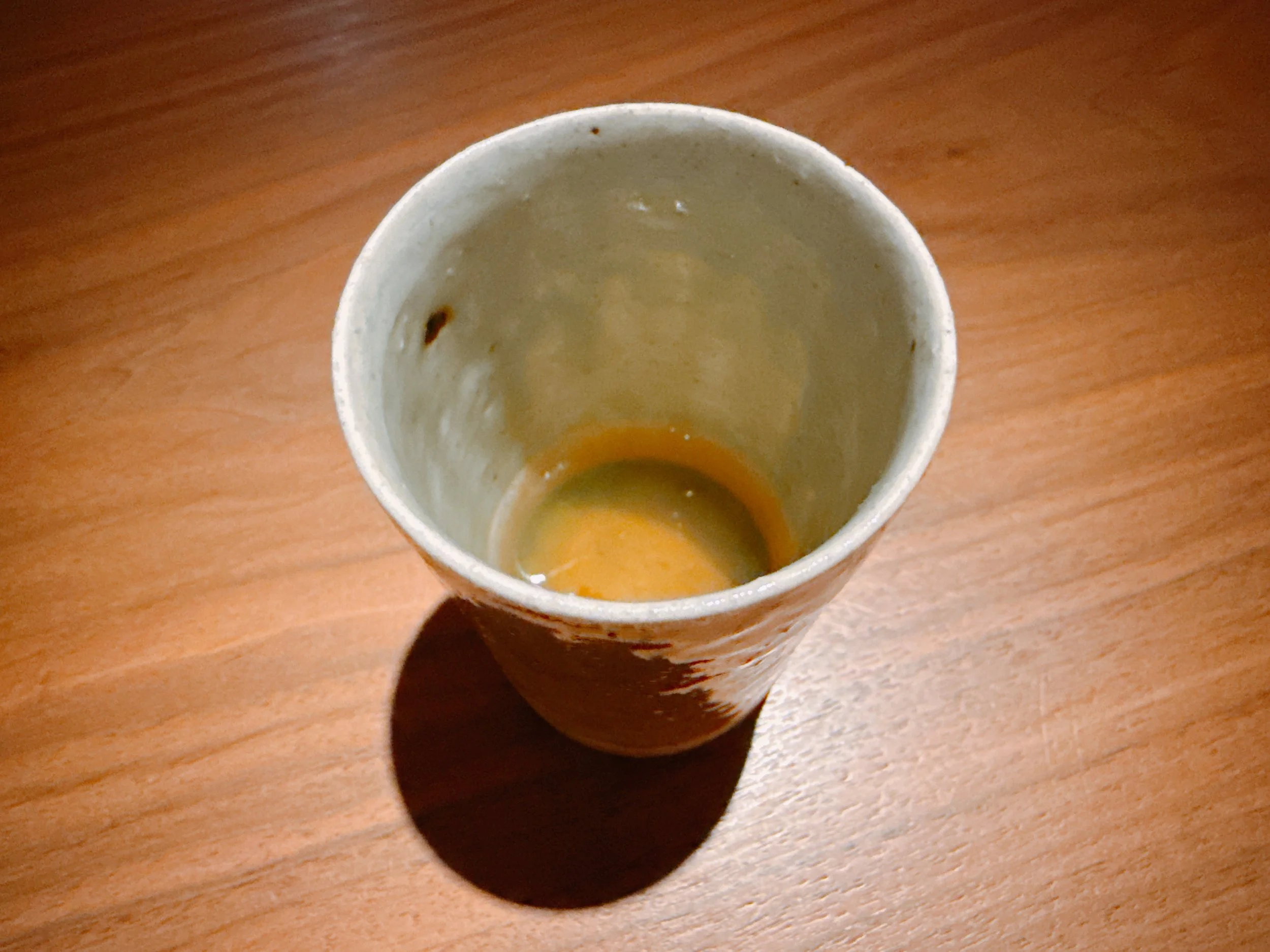
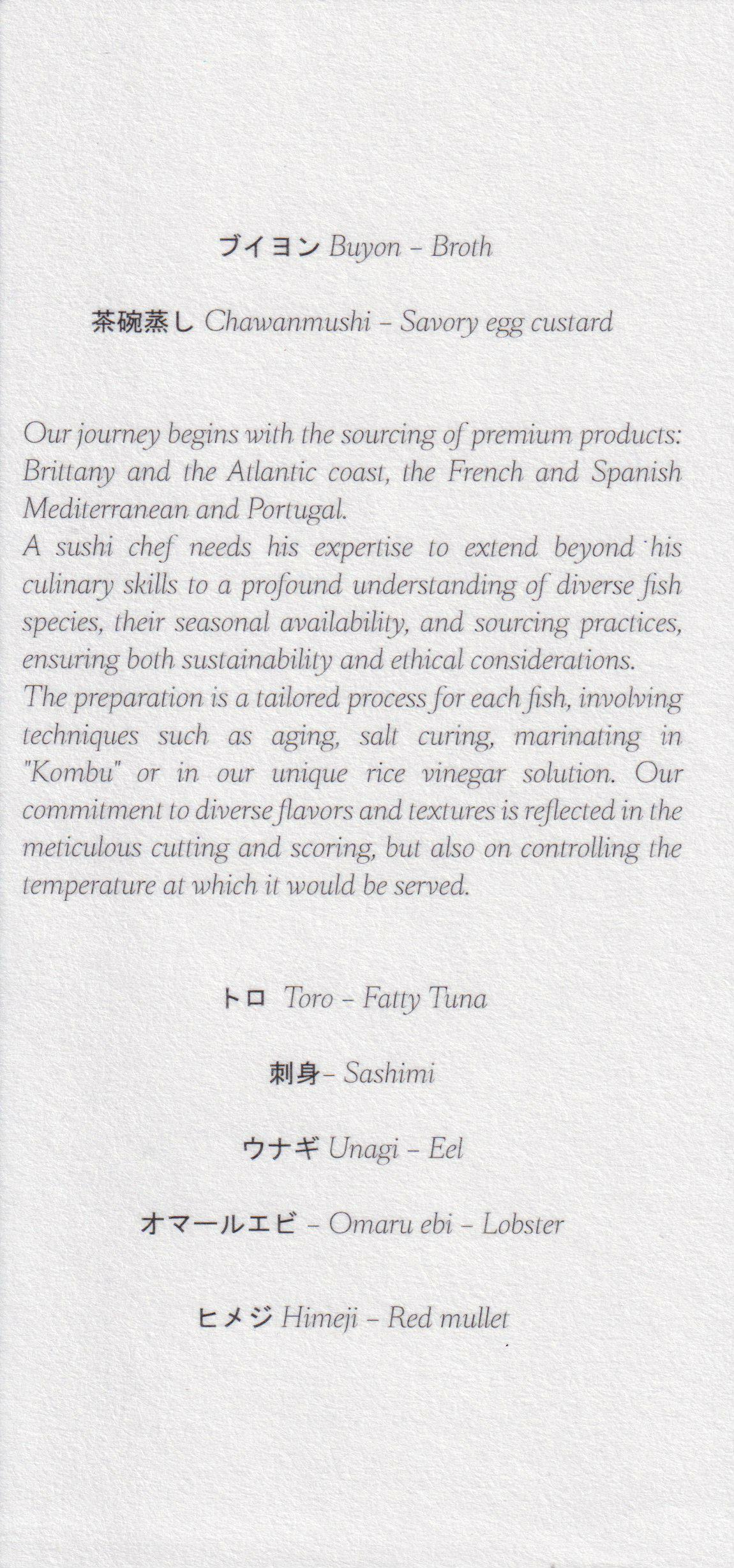
The dinner began and ended with a drink. We started with a ceramic cup filled with a mixture of dashi and genmaicha tea that had been seasoned with yuzu. The different ingredients were well balanced, providing for a light seafood flavor with a hint of citrus. I wouldn't have guessed that there was tea in the mix, but otherwise this was quite tasty 16.
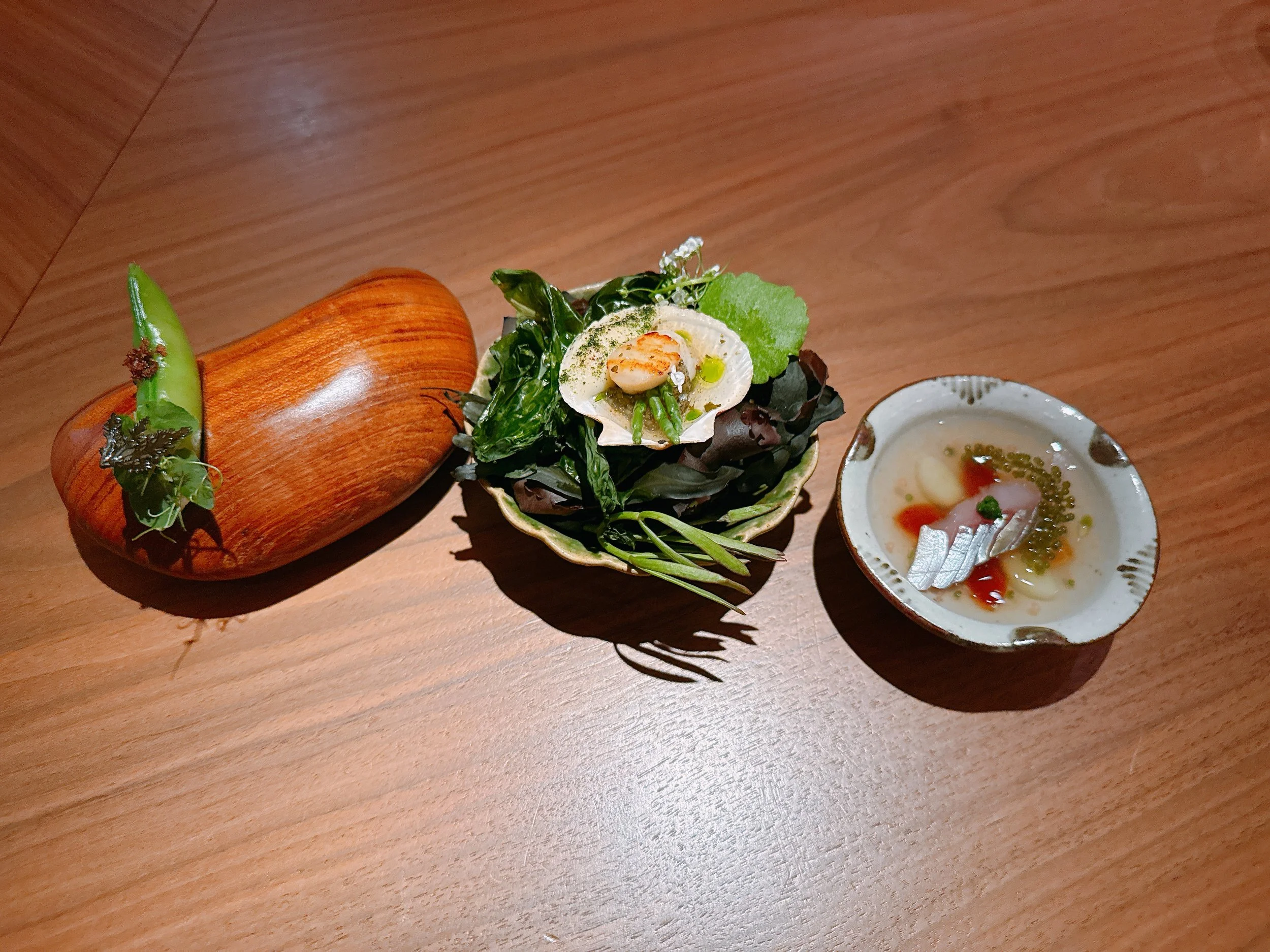
Three small dishes arrived at the same time. A tiny seared scallop was served in its shell with a sunchoke foam, caviar, and salicornia. The scallop had a good texture, and the greens added some crunch as well. There was plenty of sauce in this dish, and that's in fact where most of the flavor came from 17. A piece of horse mackerel was served in a broth together with some sea grapes, cucumbers, and jellys made from different kinds of rice vinegar. By itself, the fish did not taste of much, but there was plenty of flavor in the sauce and - even more so - from the intensely flavored jellies. I wish I could have found a way to eat everything in one bite 17. Last, but not least, there was a pea pod filled with trout and ume plums. Crunchy and fresh, this bite also had a lightly smoky flavor 17.
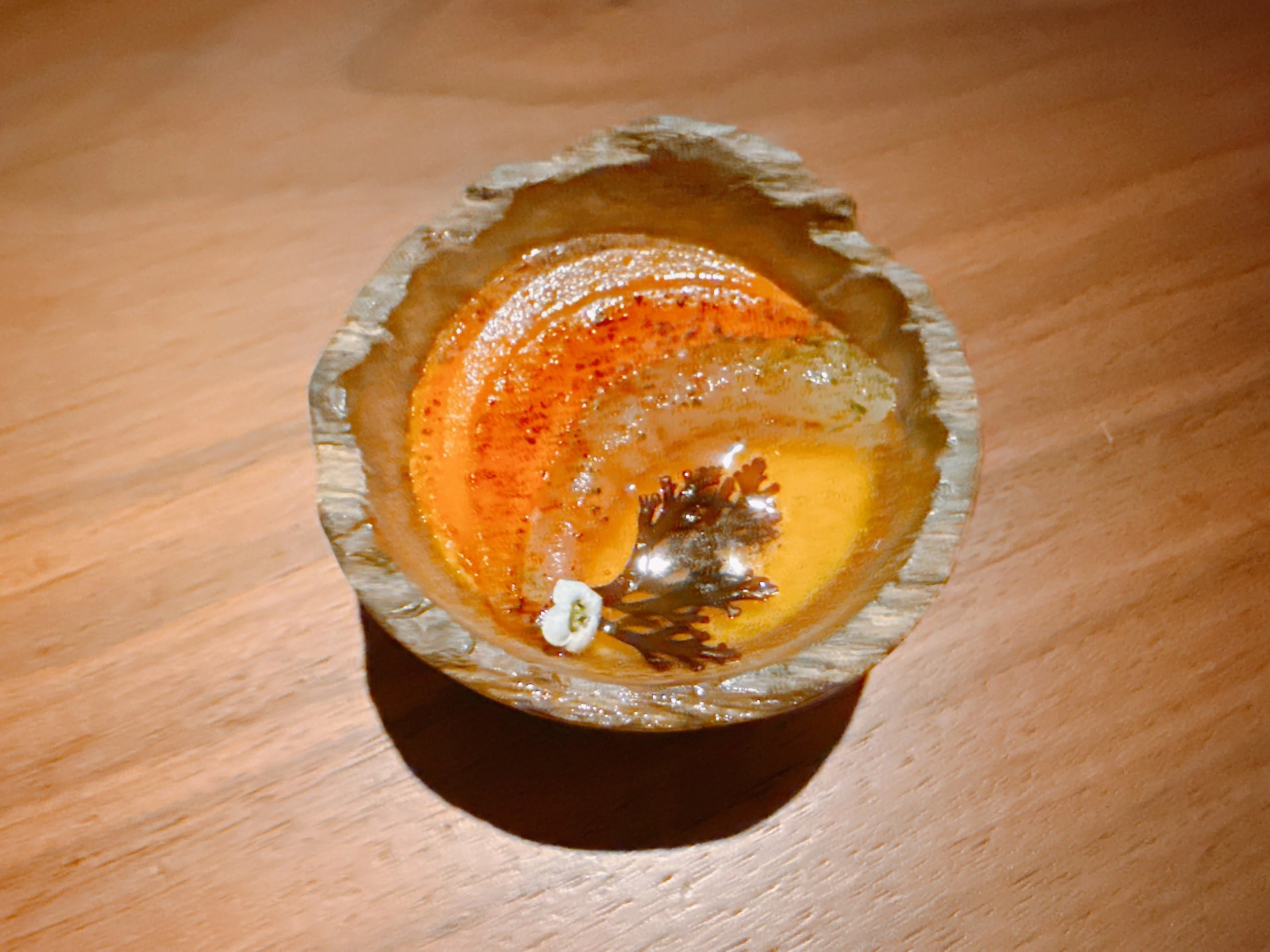
Chawanmushi (Japanese egg custard) had been seasoned with kabocha squash and was topped with an almost raw shrimp - we were instructed to eat this dish right away, so the shrimp wouldn’t get heated by the chawanmushi. The shrimp was tender and had a hint of sweetness, and there was a light butternut squash flavor throughout the dish. Fine overall, but a less intense taste experience that the preceding bites. Also, the consistency of the custard seemed a bit too thin: more liquid than I would have expected 16.
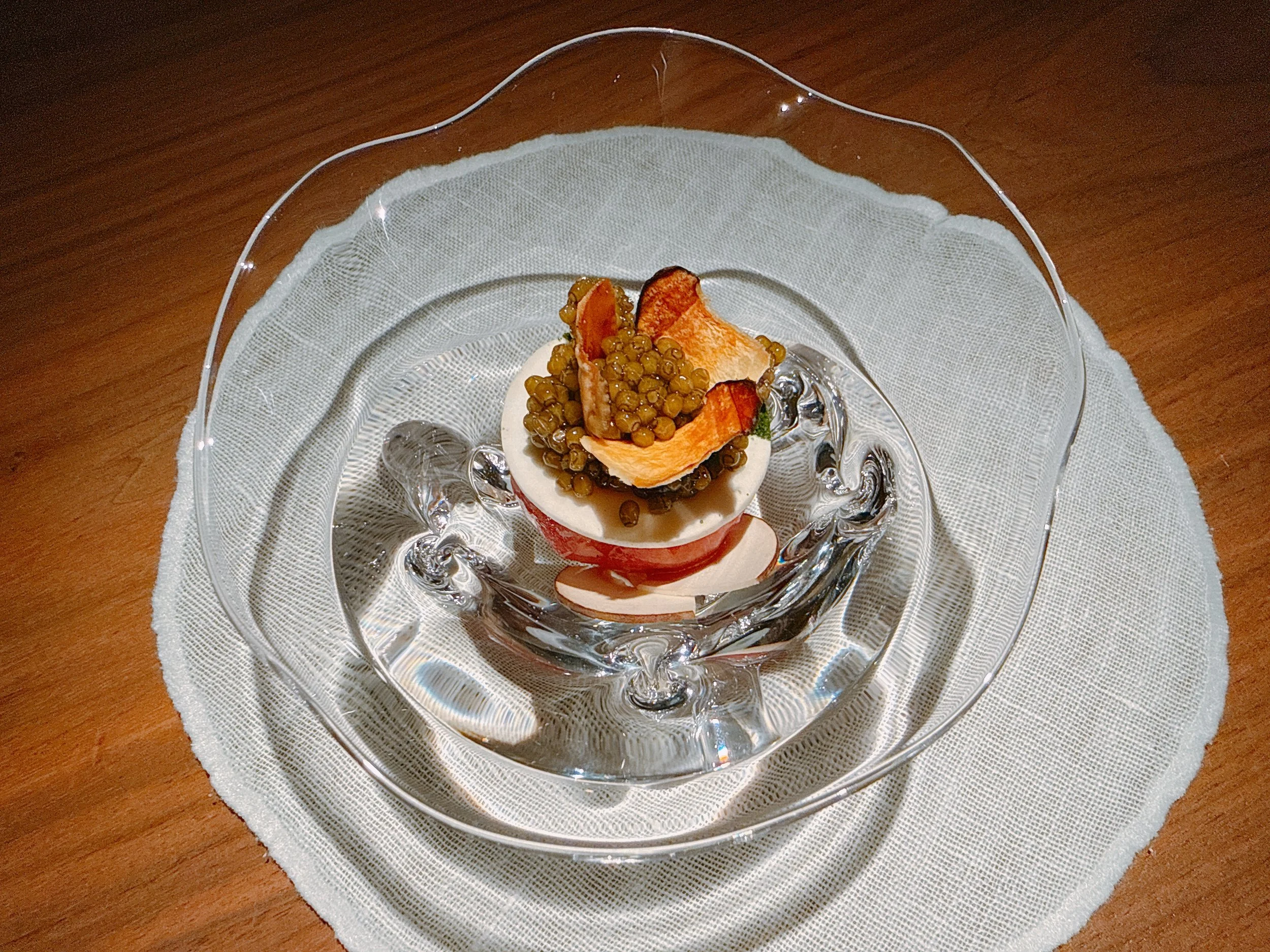
Mediterranean tuna otoro was served in a glass bowl topped with seasonal mushrooms and some caviar. Sadly, the tuna did not have much flavor by itself. So this was primarily a mushroom dish - they came in different textures, and even added some crunch. The caviar provided saltiness to the dish 17.
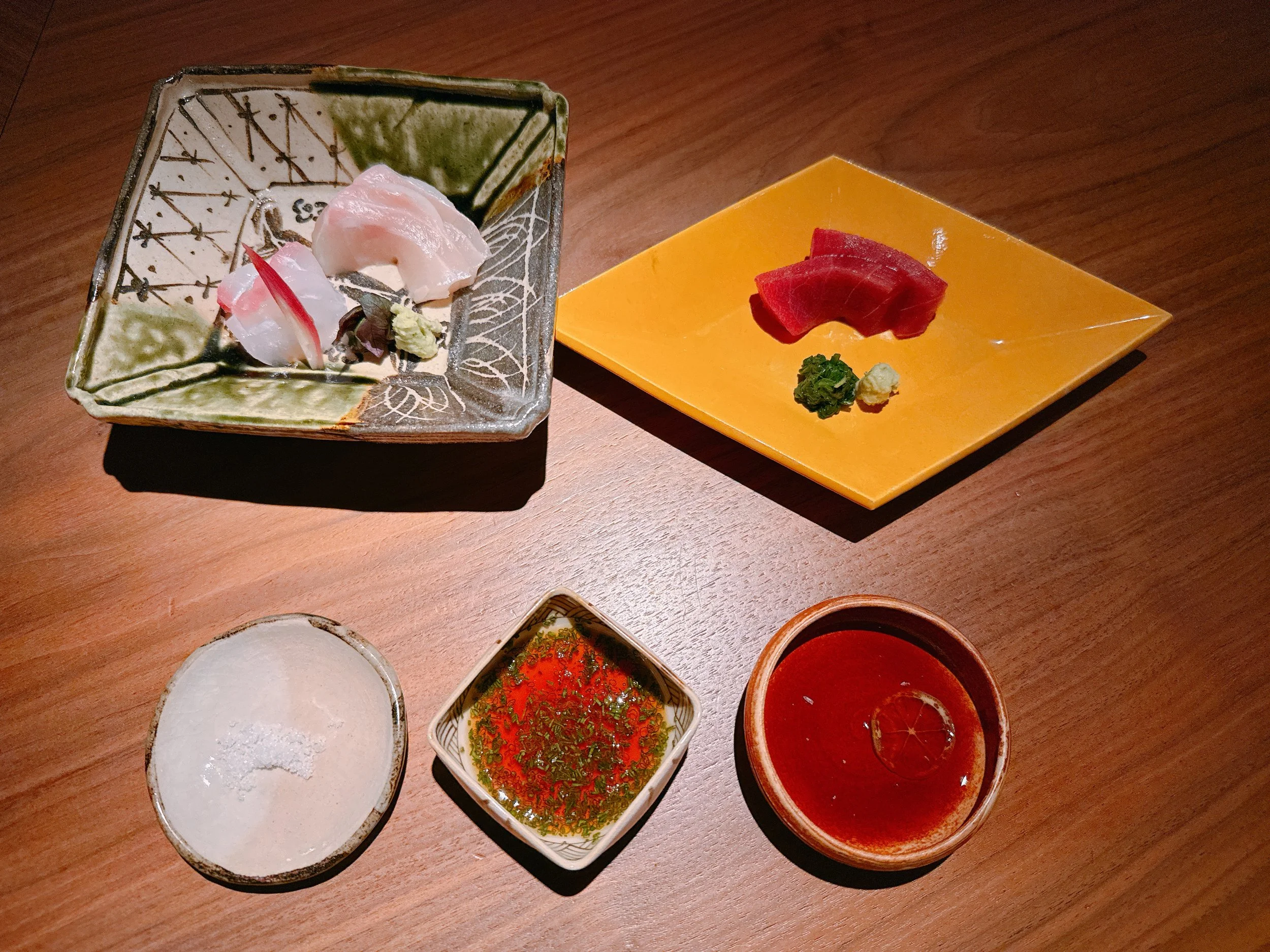
Three different kinds of sashimi were presented next, each with its own dedicated condiment. First up: sea bream paired with salt. The fish was very tender, almost creamy, and its subtle flavor was enhanced by the salt 17. Trout from Chablis was interleaved with crunchy radish slices and served with a ponzu sauce containing fennel and chives. This was also a tender fish, but its inherent flavor was unfortunately totally overwhelmed by the much stronger sauce 16. Finally, red tuna (akami) was paired with a condiment made from soy sauce and bonito flakes. This tuna was a bit underwhelming - it felt watery in consistency -, and the sauce was the lightest of the three. Still fine, but a step down from what had come before 15.
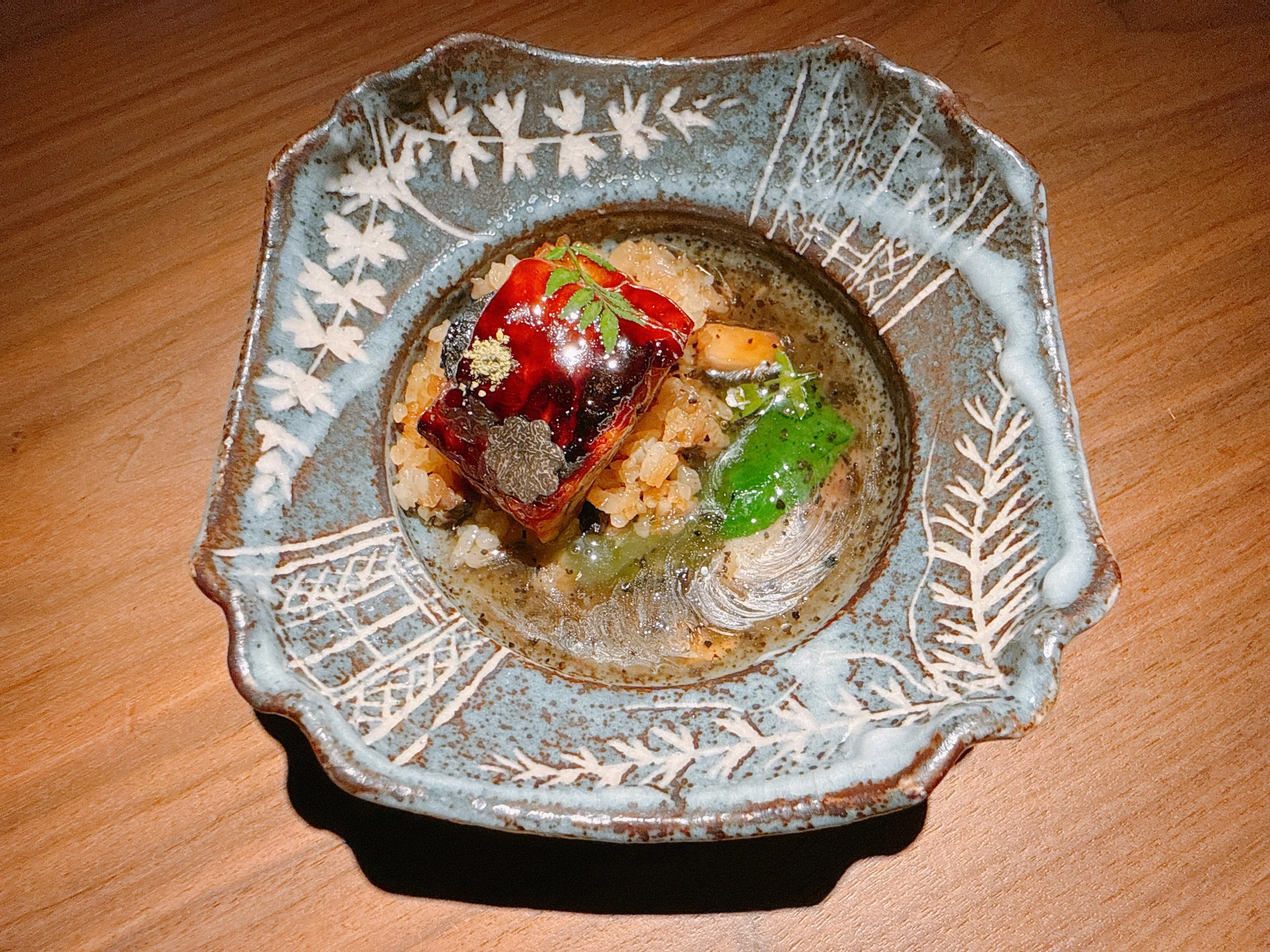
Next up was a rice pot (donabe), containing glazed unagi (eel) and truffles. After the dish was portioned out, a thickened broth was added. A purist might be aghast at seeing a rice dish in the middle rather than at the end of a Japanese meal. But this serving was actually much more about the eel than about the rice. Said eel was cooked excellently, with lots of flavor coming from its glaze. The mushroomy broth was a tasty accompaniment 17.
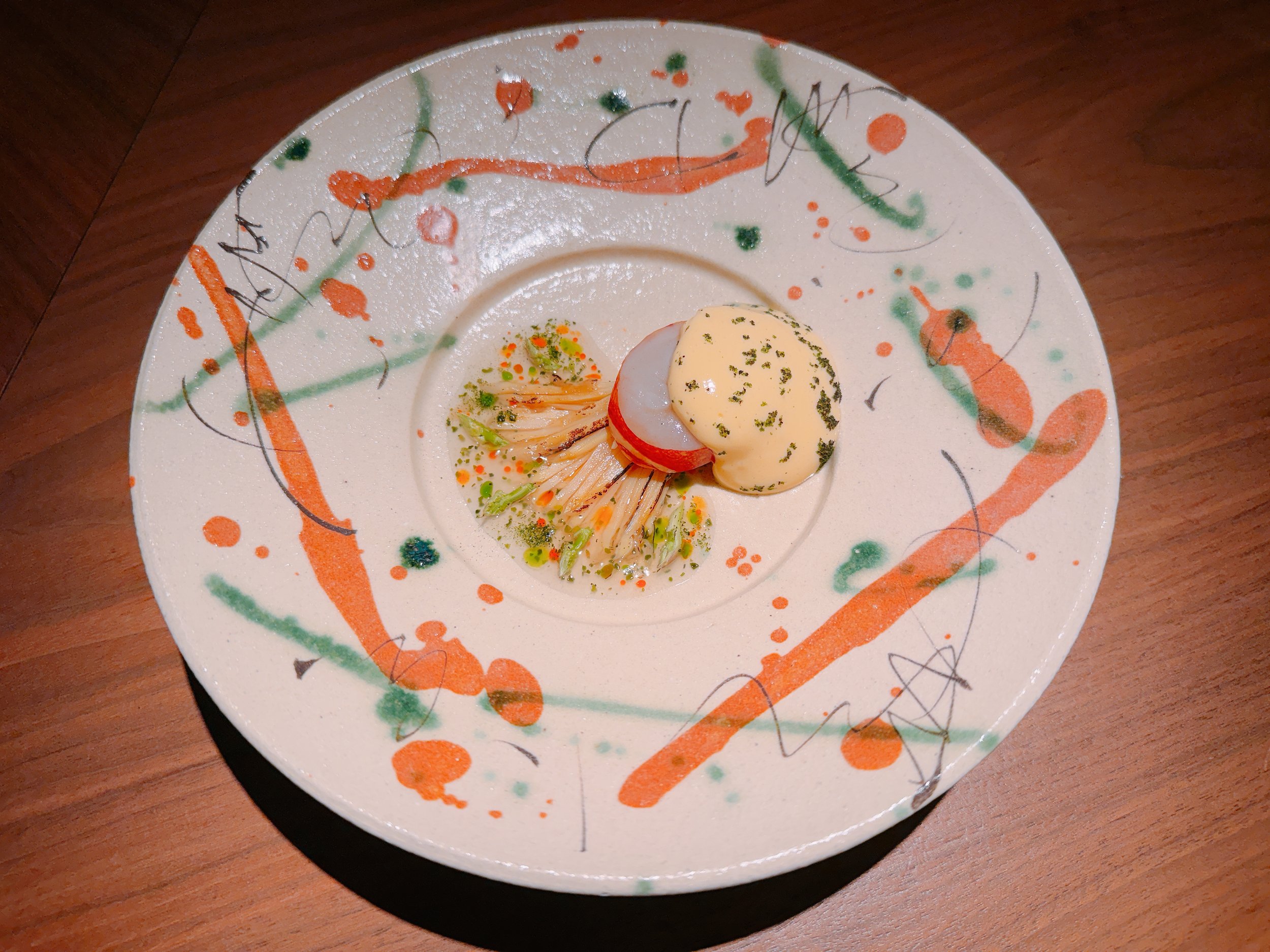
The following dish was arguably more French than Japanese. A piece of lobster was paired with white and wild asparagus, a kimchi broth, and a creamy sauce. The lobster was wonderfully tender, but most of the flavor came from the two sauces: from the intensely flavored foamy sauce, and from the acidity of the kimchi sauce that surrounded the artfully spliced asparagus. Very, very good - in fact, my favorite dish so far -, showing the influence of the nearby three-star kitchen 17.
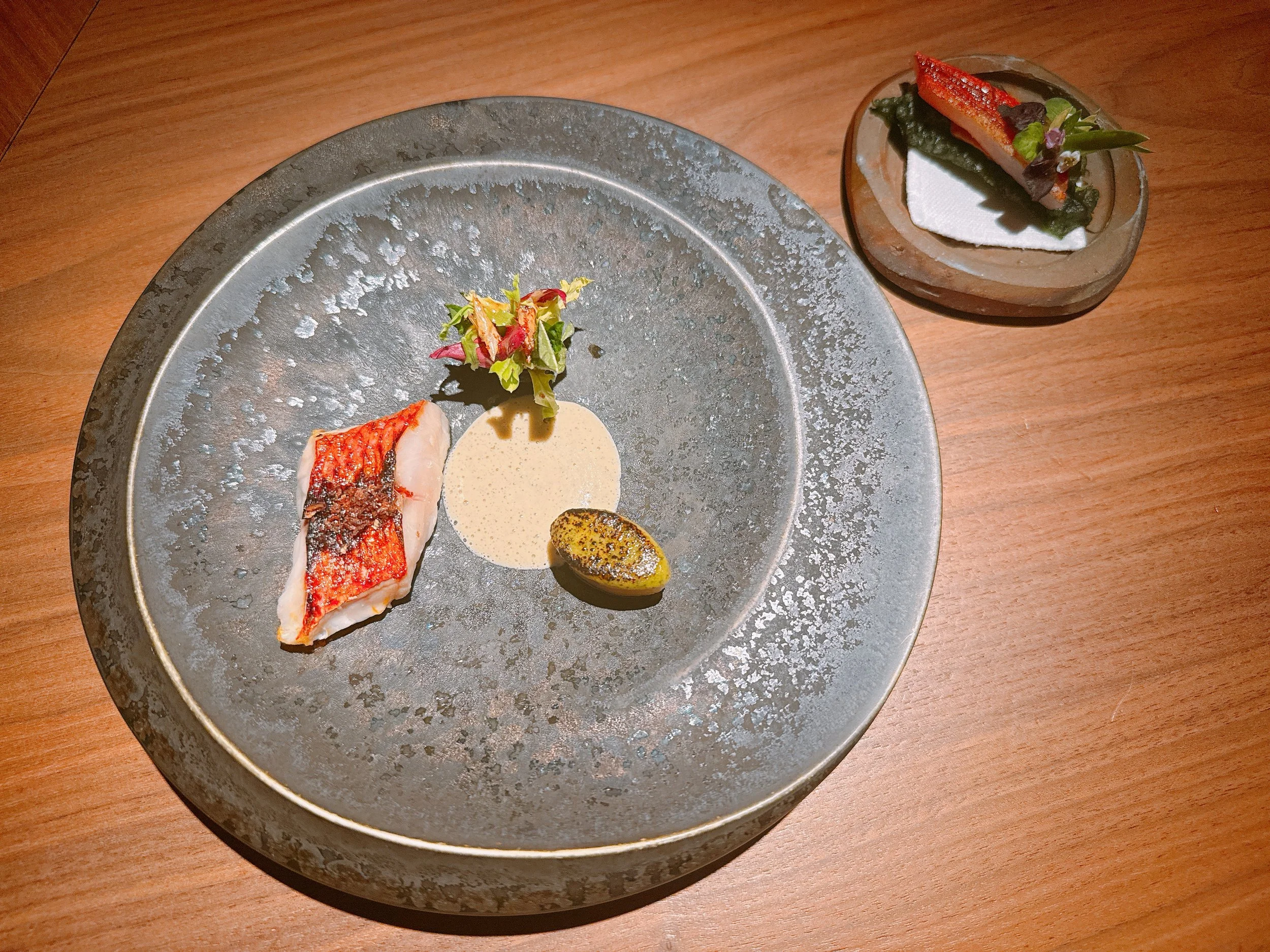
Red mullet was served in two different preparations, presented side-by-side. On a smaller plate, a piece of ume-marinated fish was served atop a crispy shiso leaf, all meant to be eaten in a single bite. The fatty, crunchy shiso leaf gave this bite a feeling of tempura - without using any batter or frying. A neat idea. The fish was quite acidic thanks to its marinade, which made for a good balance to the fattier shiso 17. On a larger plate was also red mullet, but this time marinated in koji and finished on the binchotan grill. Next to it was a piece of eggplant topped with a shiso miso, a little herb salad, and a sauce made from red mullet, koji and eggplant. The presentation was almost like a Venn diagram, with the sauce at the center of the plate incorporating all the ingredients placed around it. The fish here was a bit disappointing, feeling dry and very firm - maybe it was overcooked? The eggplant was tender, a bit juicy and its topping was slightly spicy. The best part of the dish might have been the crunchy, fresh, herbal salad 15.
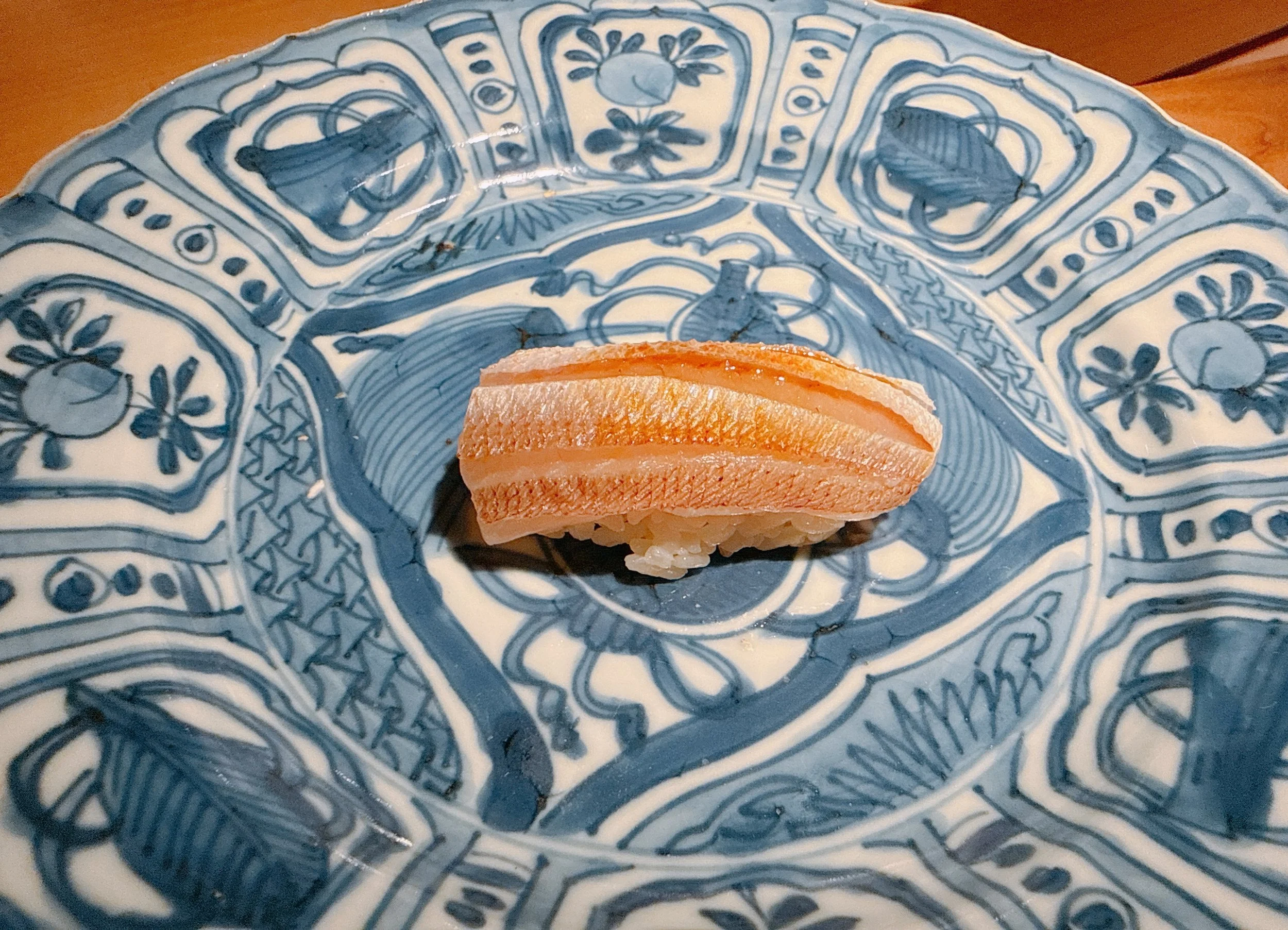
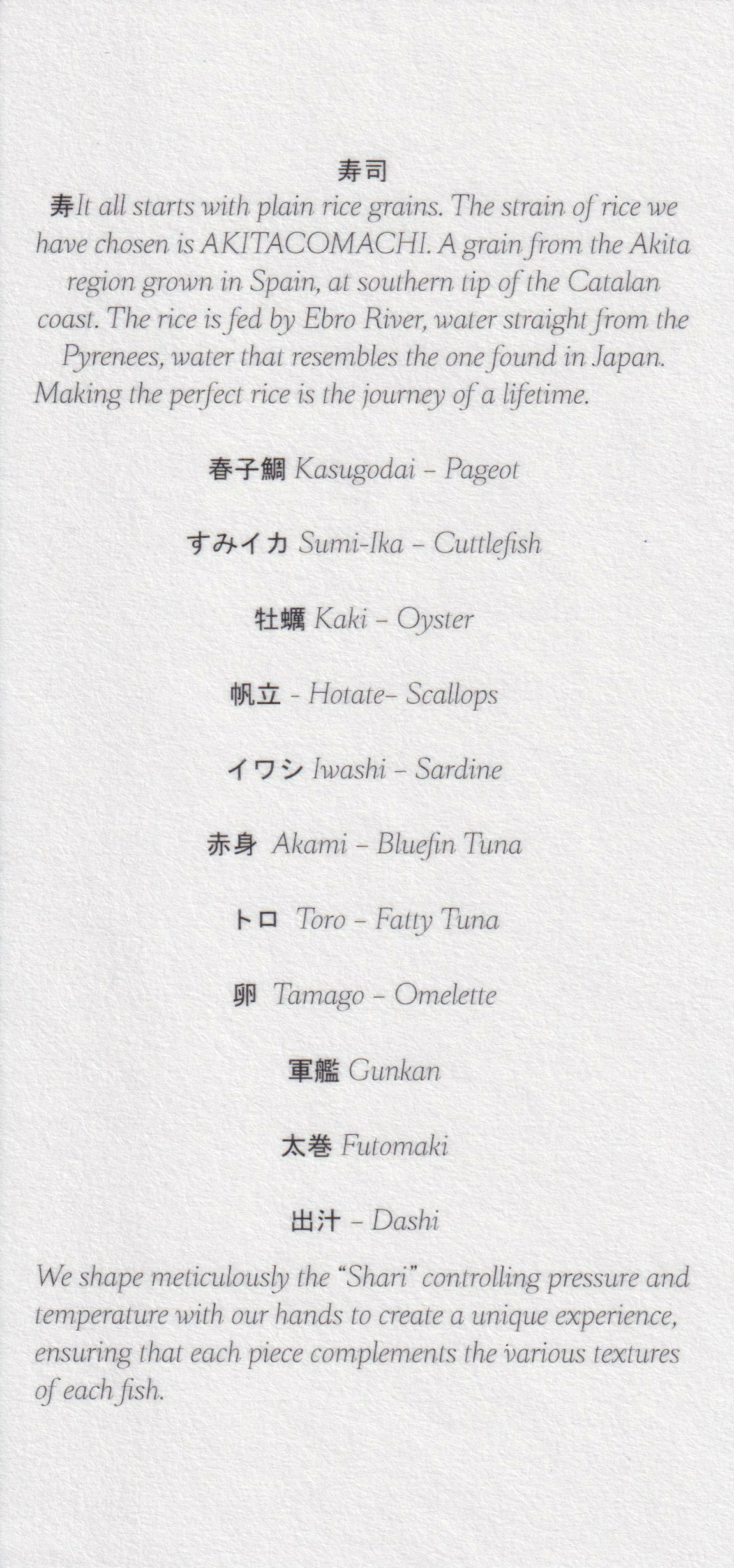
This brought us to the main attraction of the evening: the sushi! We started with a nigiri of white sea bream. This bite had a notable acidity, and a hint of spiciness. The rice felt maybe a bit too firm, with some grains being chewy. But either this was just the first batch, or I was imagining things, since I didn't notice this for any of the following pieces 17.
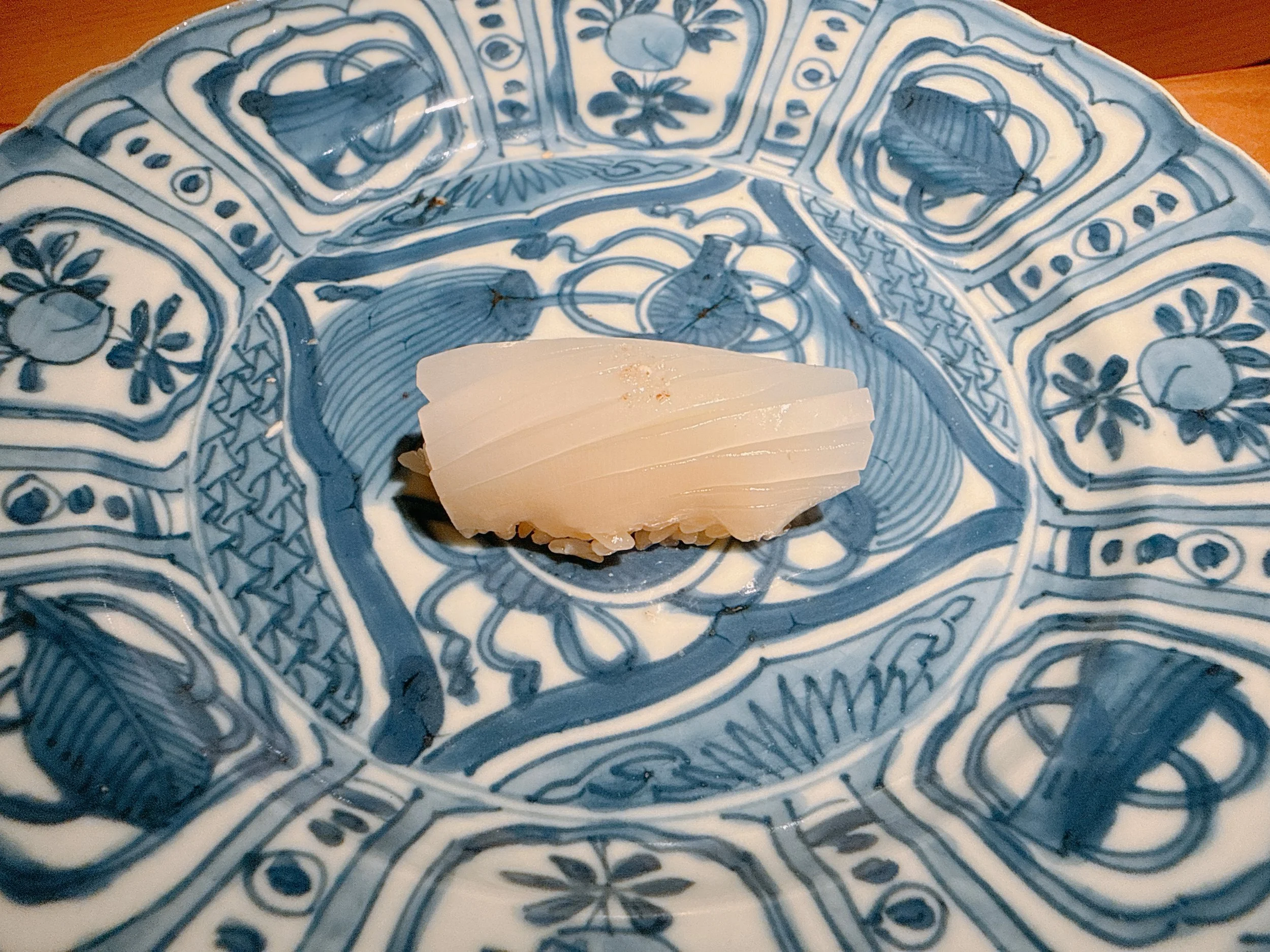
Squid had a great texture - firm, but easily edible. There was a good amount of spice and acidity here as well. First, I thought that the acidity came from the sushi rice, but I was later told by the chef that they “like to play with acidity” a lot, meaning that it could have been from a marinade, from the rice, or both 17.
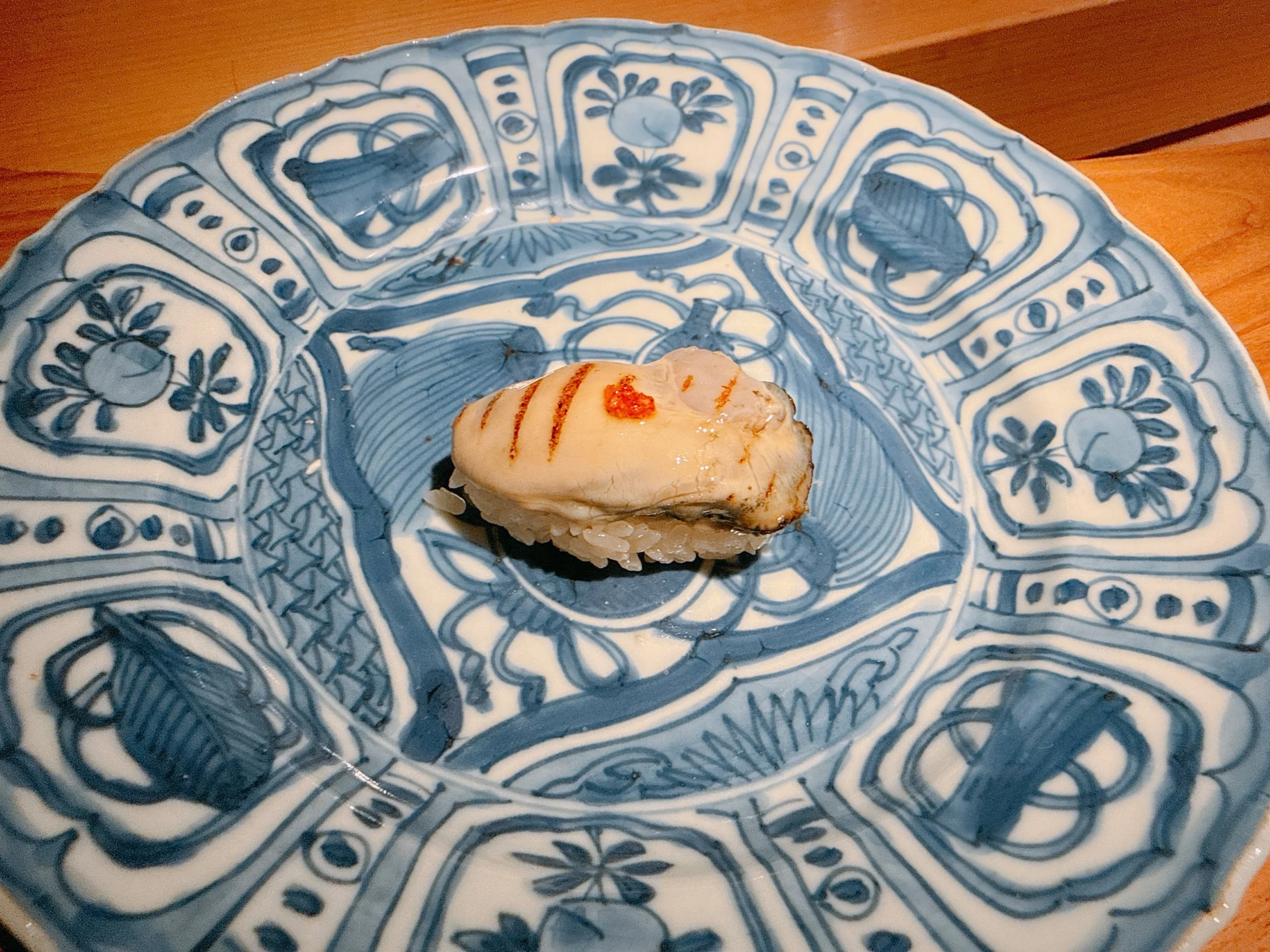
An lightly warmed oyster nigiri was seasoned with a sauce, but still maintained a strong oyster flavor. Arguably, not the most Japanese of nigiri 16.
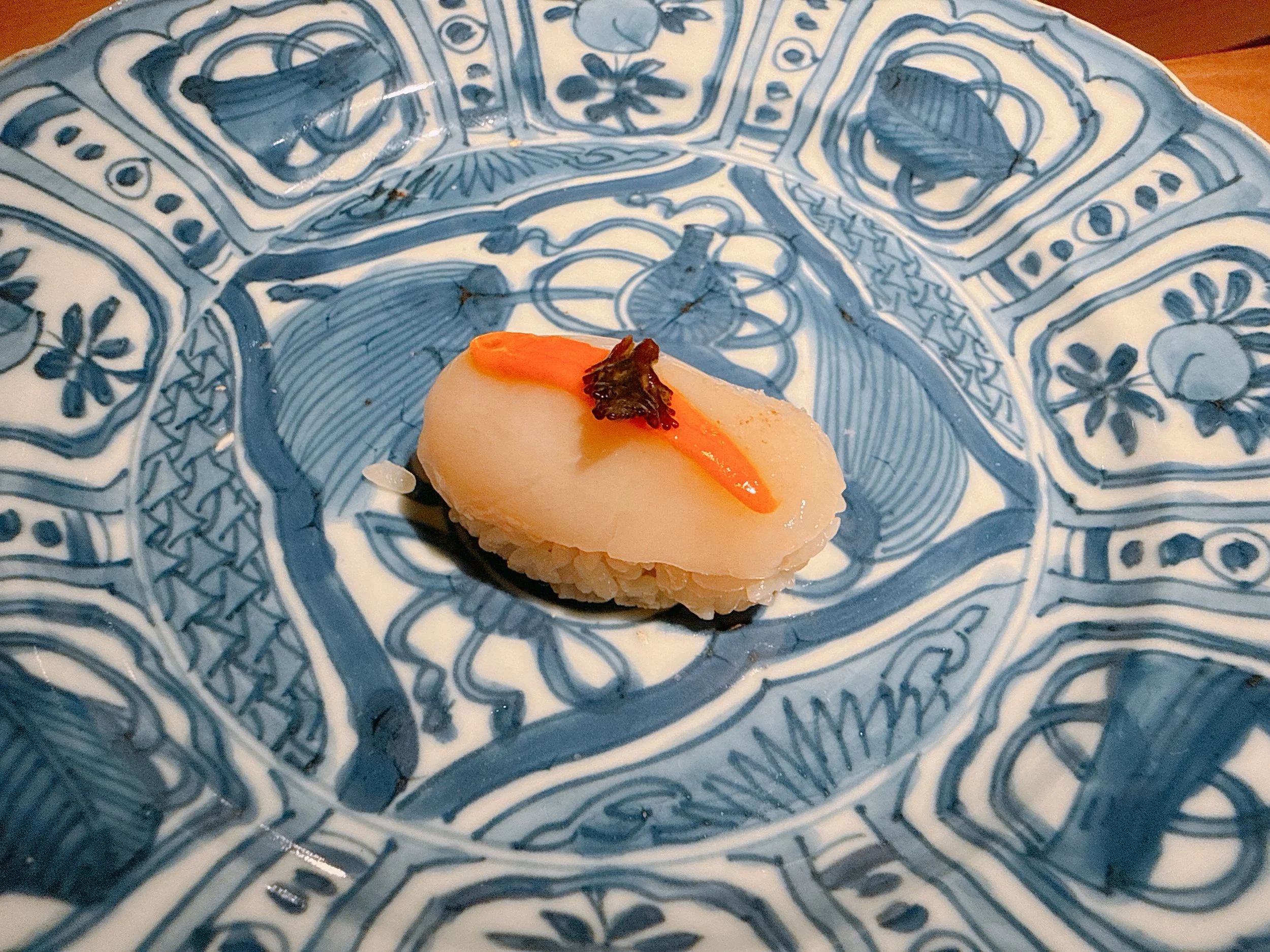
Next was a scallop nigiri, incorporating marinated seaweed and citrus. The scallop was nicely tender, with a good combination of flavors and a healthy amount of wasabi. Authenticity 0, taste 1 17.
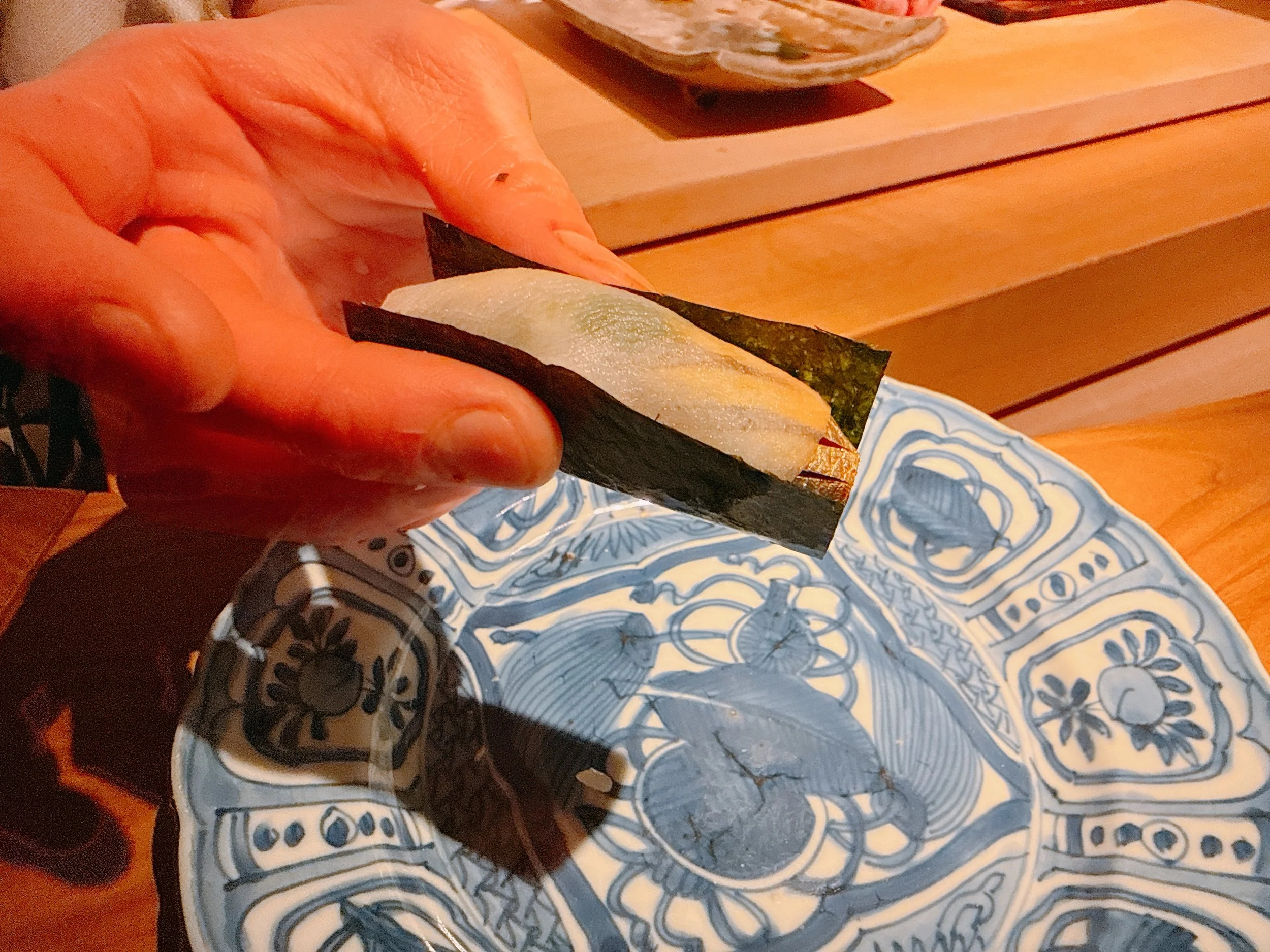
A marinated sardine was served inside a toasted piece of nori. Fishy (the right kind), with notable acidity, and overall lots of flavor 18.
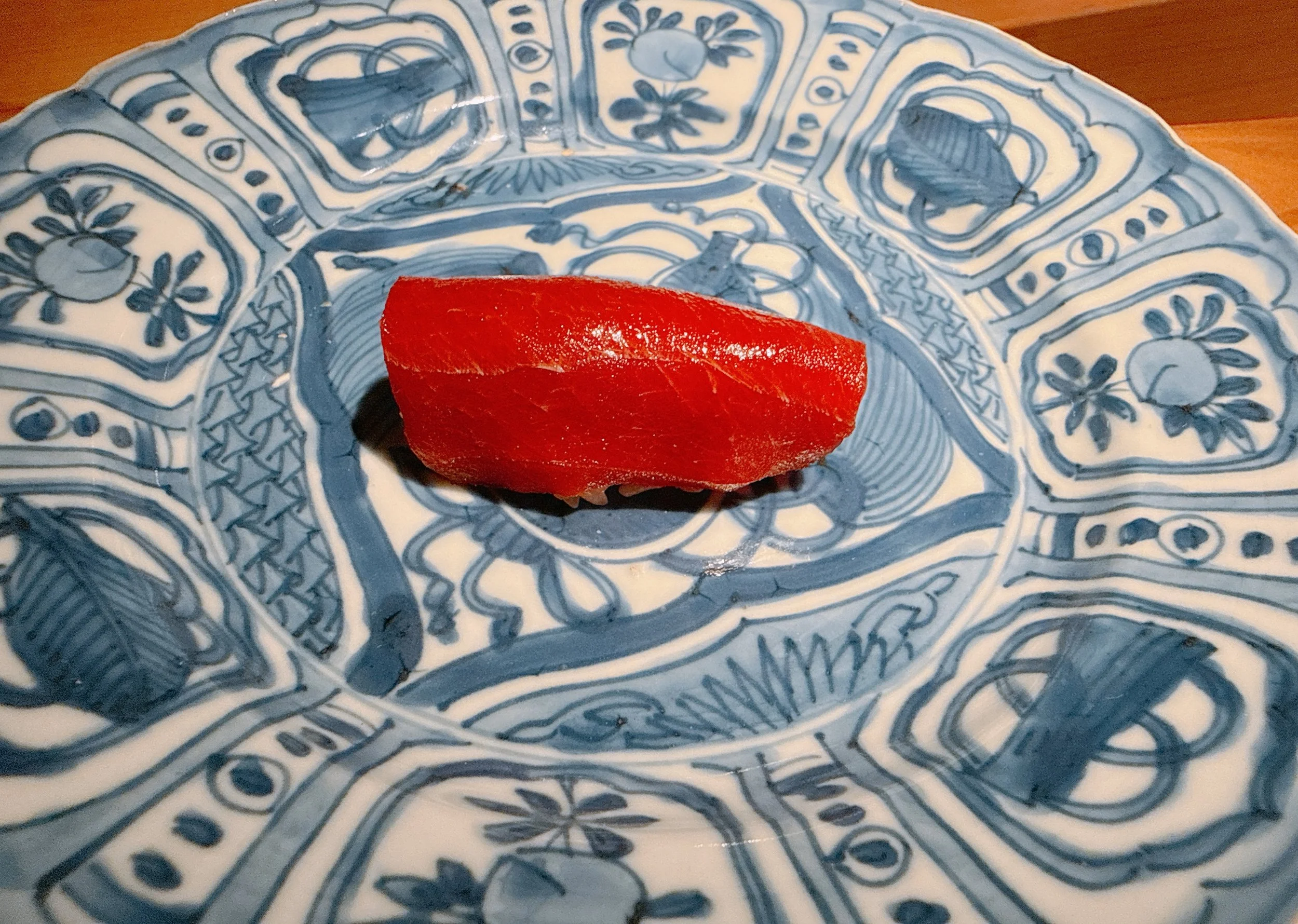
The following tuna (akami) nigiri was extremely flavorful thanks to its marinade, and the consistency of the fish was equally perfect - very creamy. Mind blowing 20.
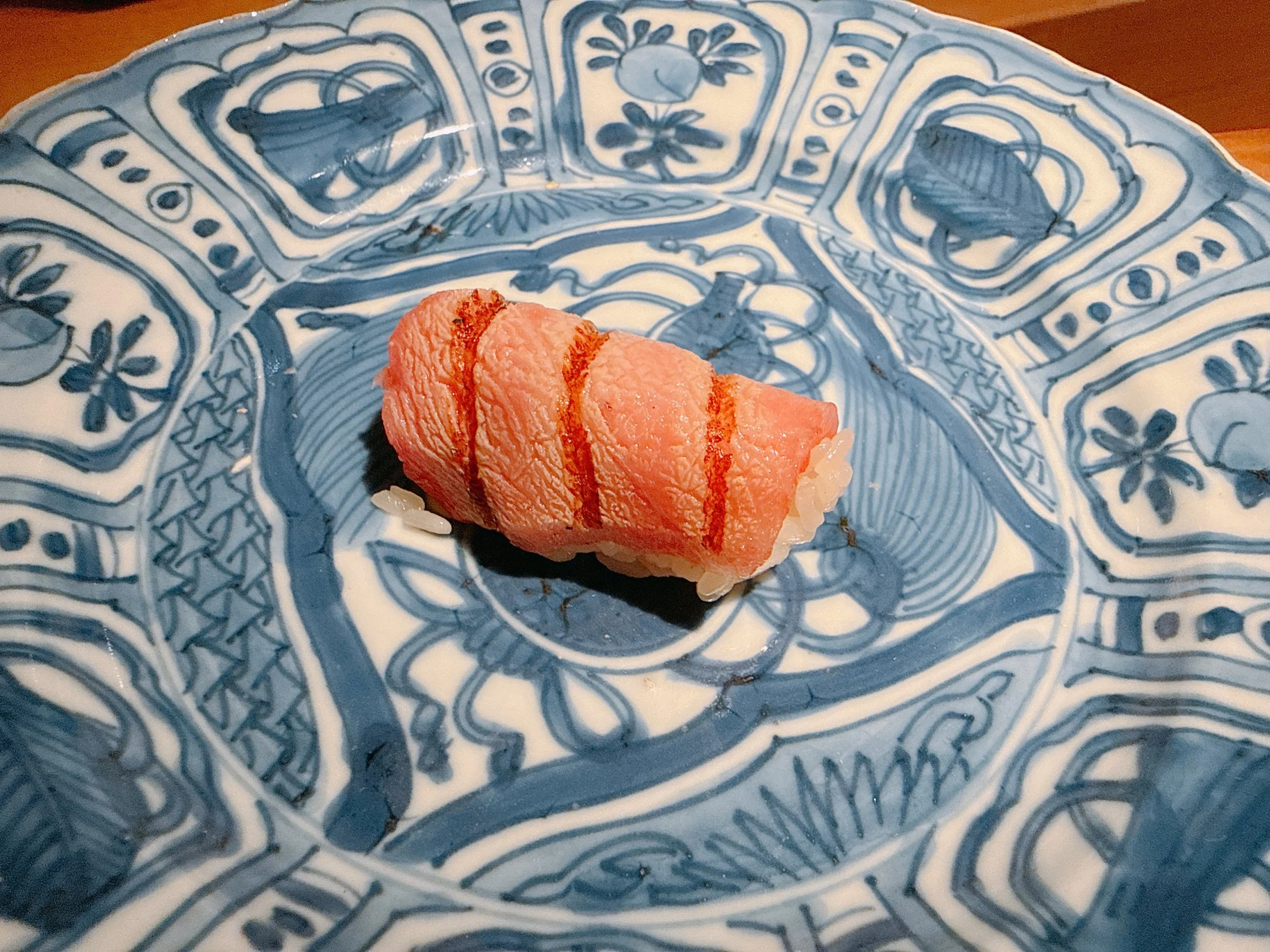
Tuna otoro, the fatty part of the fish, was partially seared in front of us. This resulted in a lightly smoky flavor, again with some acidity, but the texture of the otoro was less impressive than the preceding akami. It probably didn't help that I had had a far superior half-seared fish dish at Tohru in Munich 17.
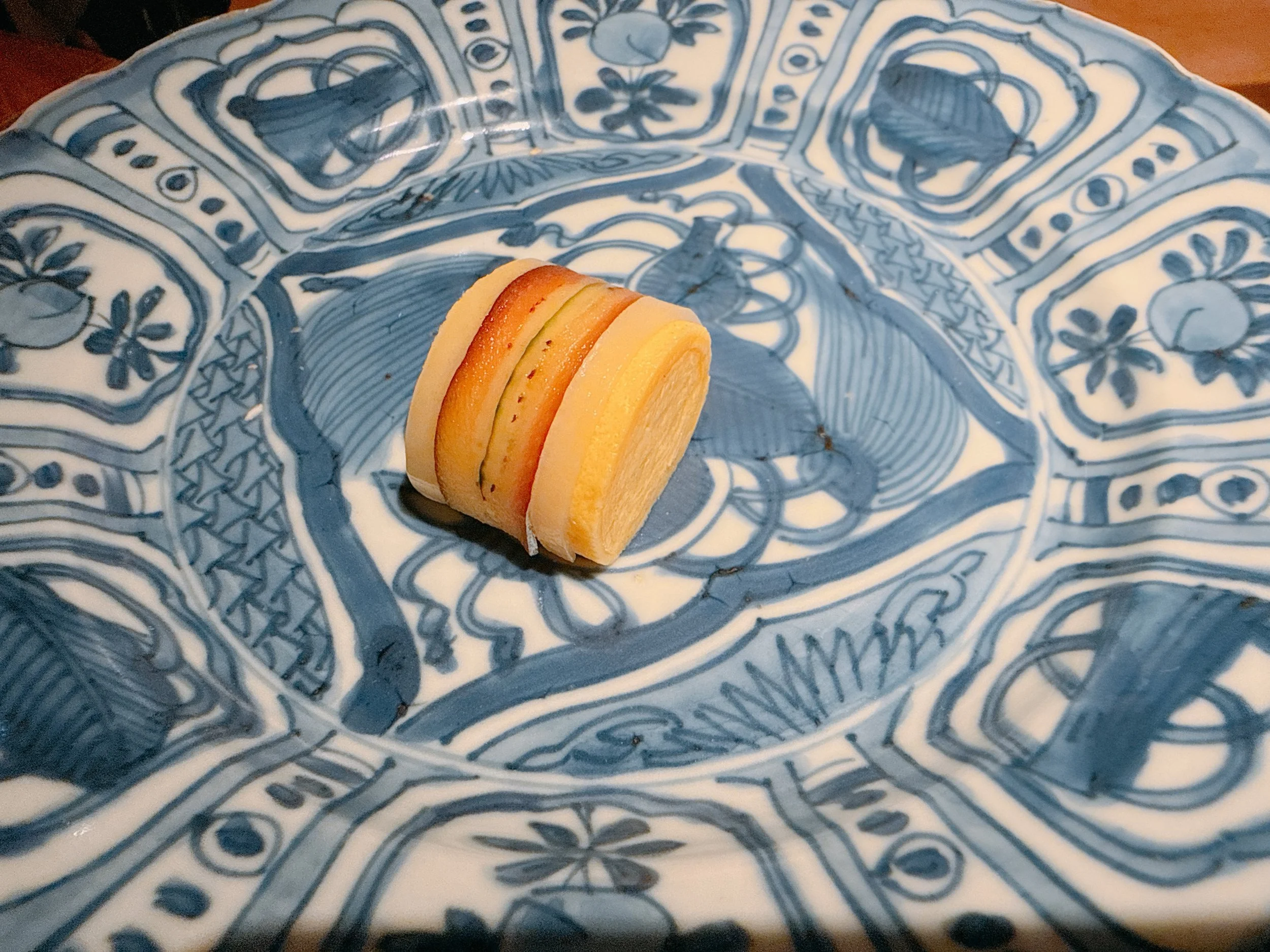
Tamago (egg omelet) was wrapped with cured cuttlefish, squid and anchovy. Essentially a very flavorful, savory omelet 16.
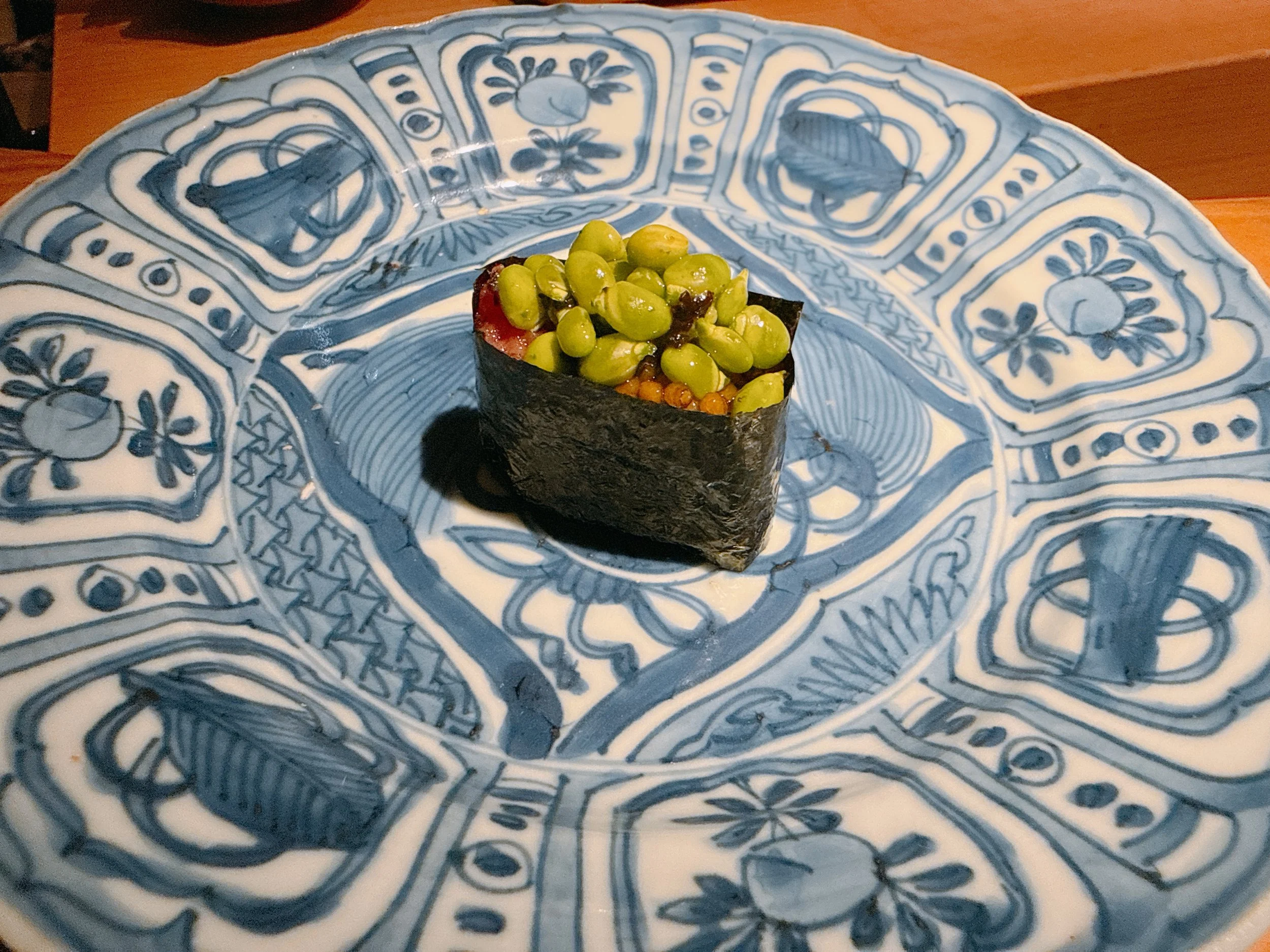
The remaining sushi servings were all rolls and handrolls. A gunkan maki contained toro tartare, caviar, and green peas. This was a quite acidic bite, with some saltiness from the caviar, a creamy texture from the tuna, and some sweetness from the peas. Tasty 17.
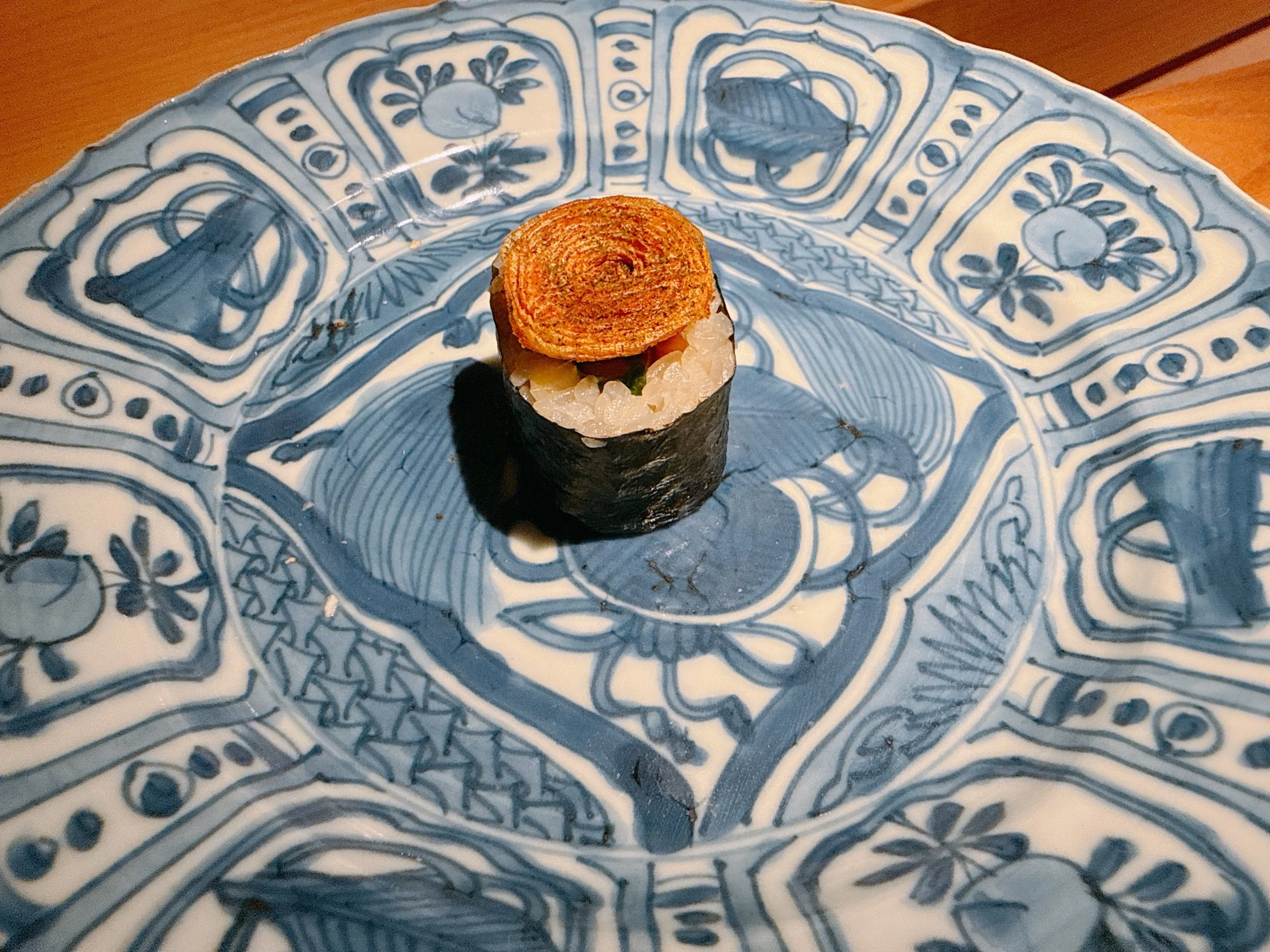
A futomaki roll contained seasonal vegetables (white asparagus, mushrooms, etc) marinated in sweet vinegar and dashi. It was served topped with “vegetable caviar” and a crispy leek disk. The vegetables were fresh and crunchy, and had taken on the flavor of the slightly acidic marinade 16.
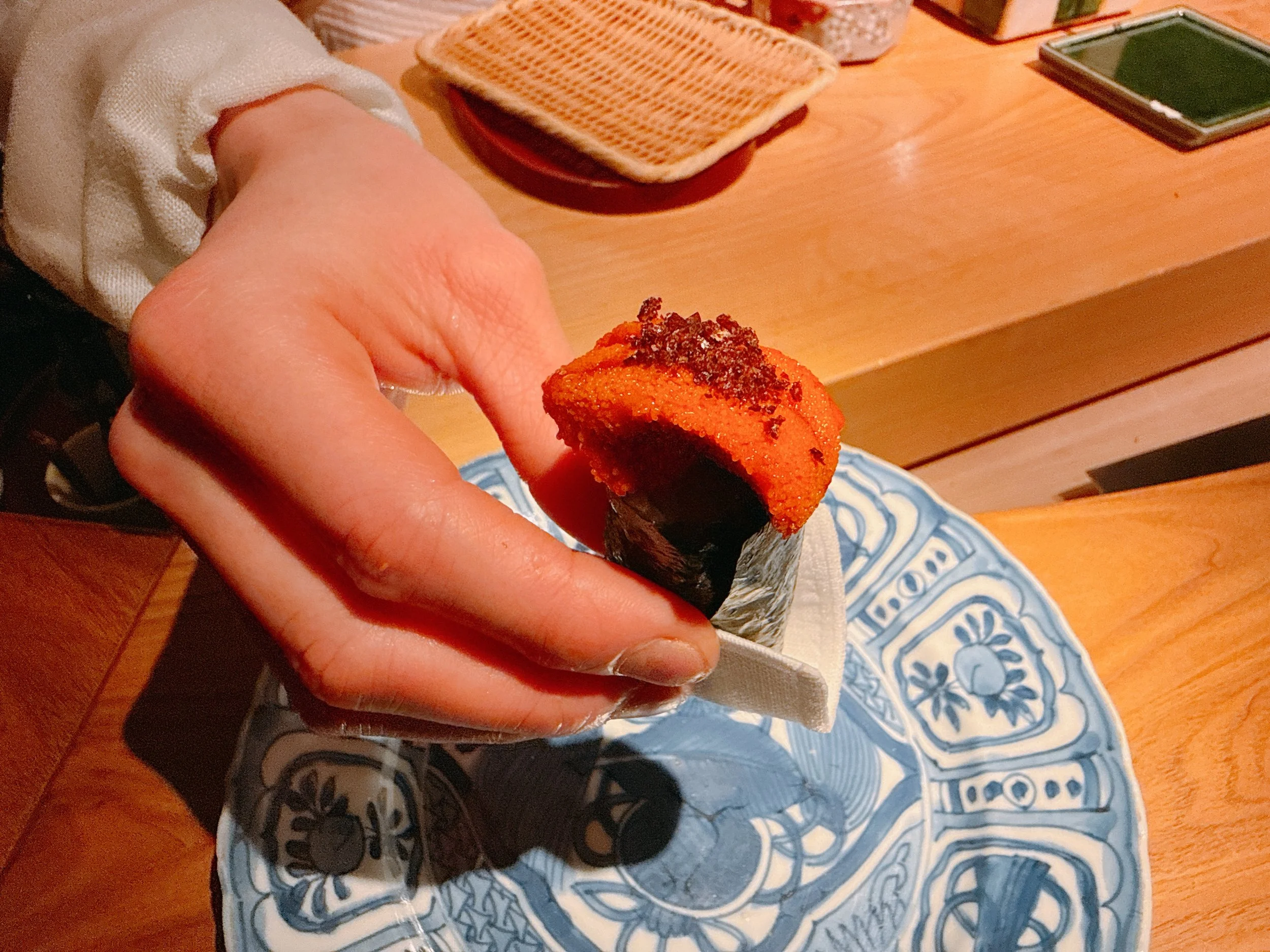
The optional uni handroll was topped with dried, crunchy soy sauce. Sadly, the uni itself was on the watery side and not very flavorful 15.
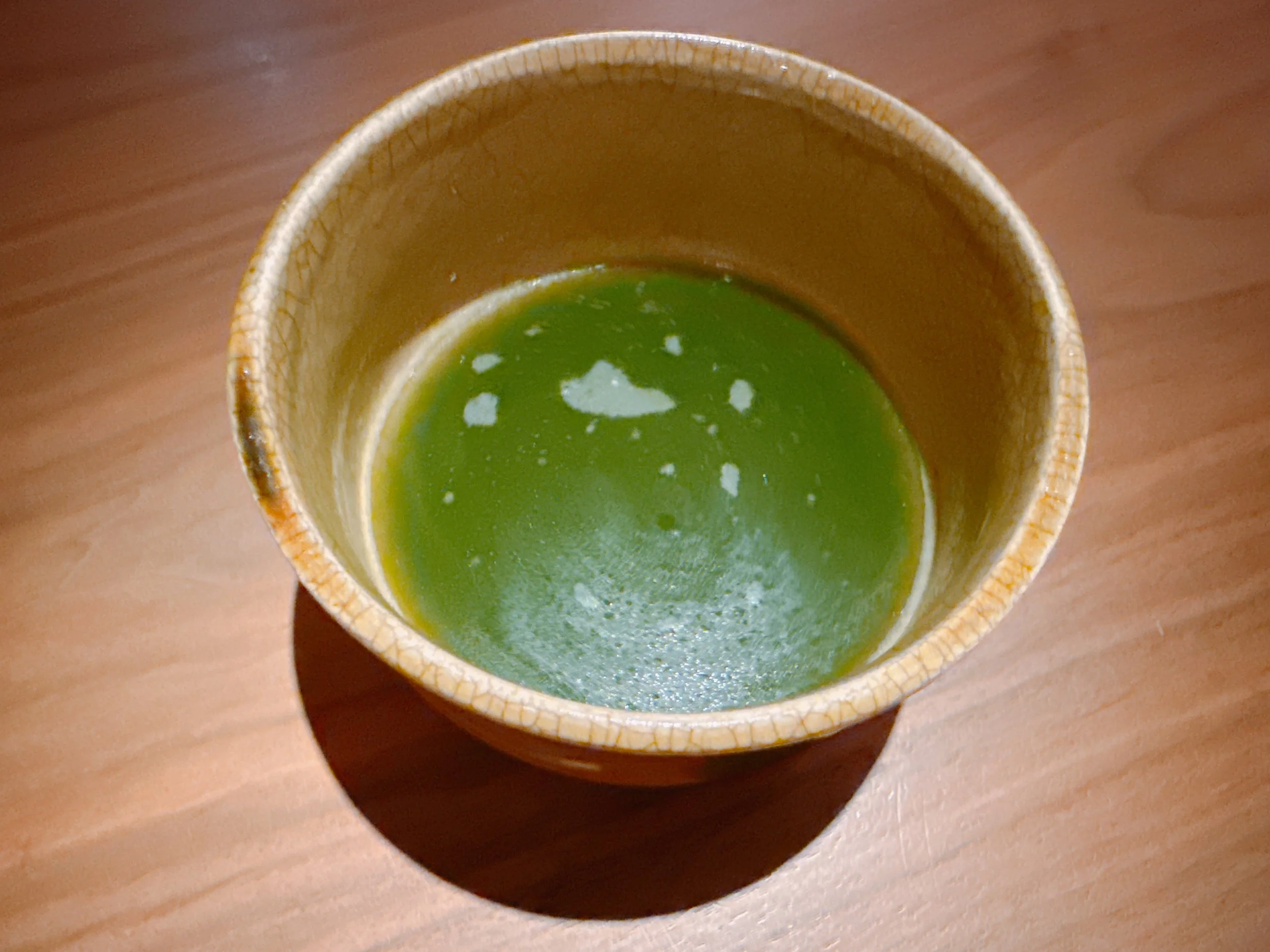
The final savory dish looked like matcha tea, and was even prepared with a matcha whisk, but didn’t contain any tea. Instead, it was a rockfish broth that had been made with shiso and garlic. It tasted slightly herbal from the shiso, but overall didn't have any too strong flavors. Nothing stood out, making this essentially a gentle landing after the sushi extravaganza 14.
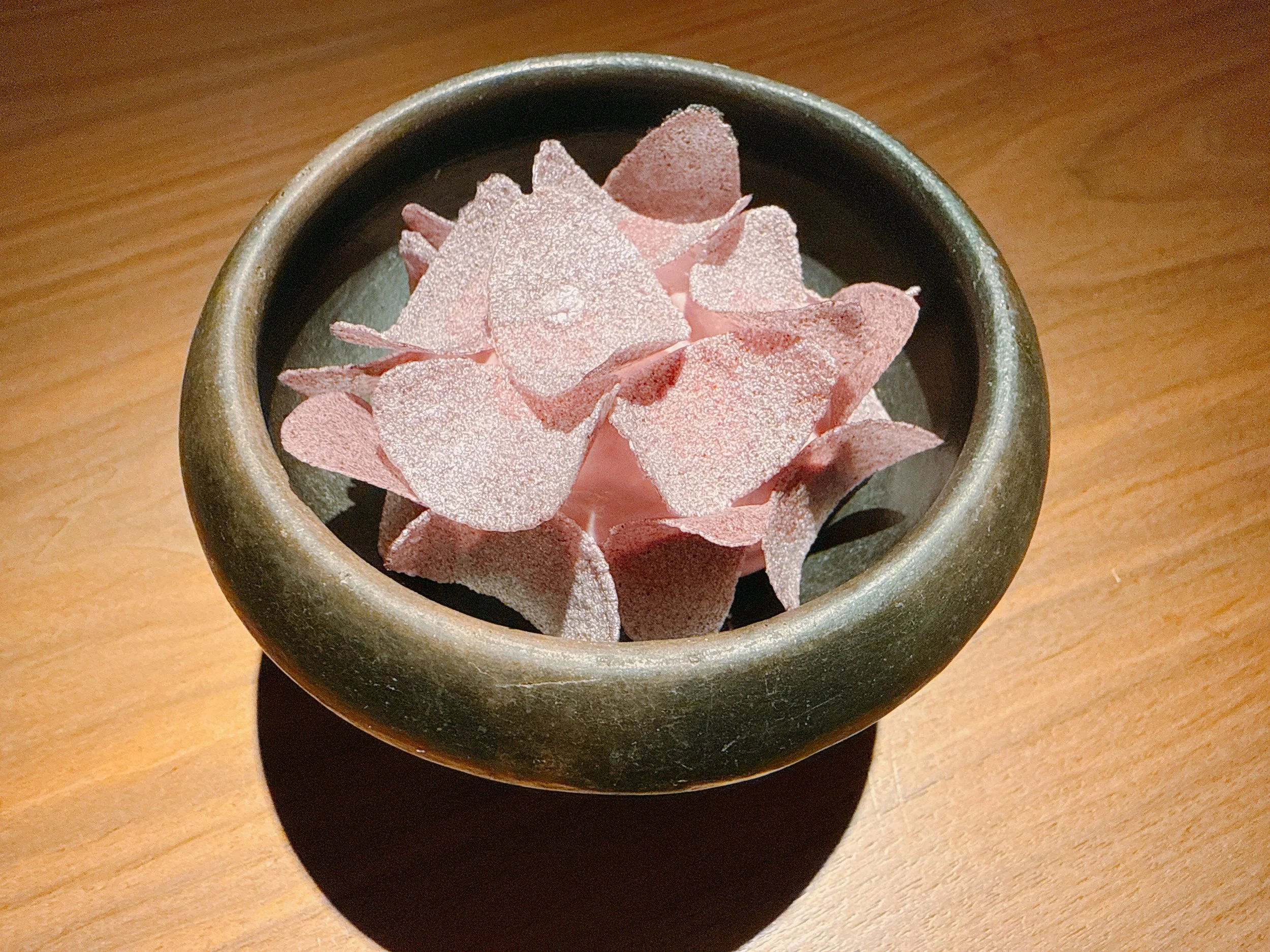
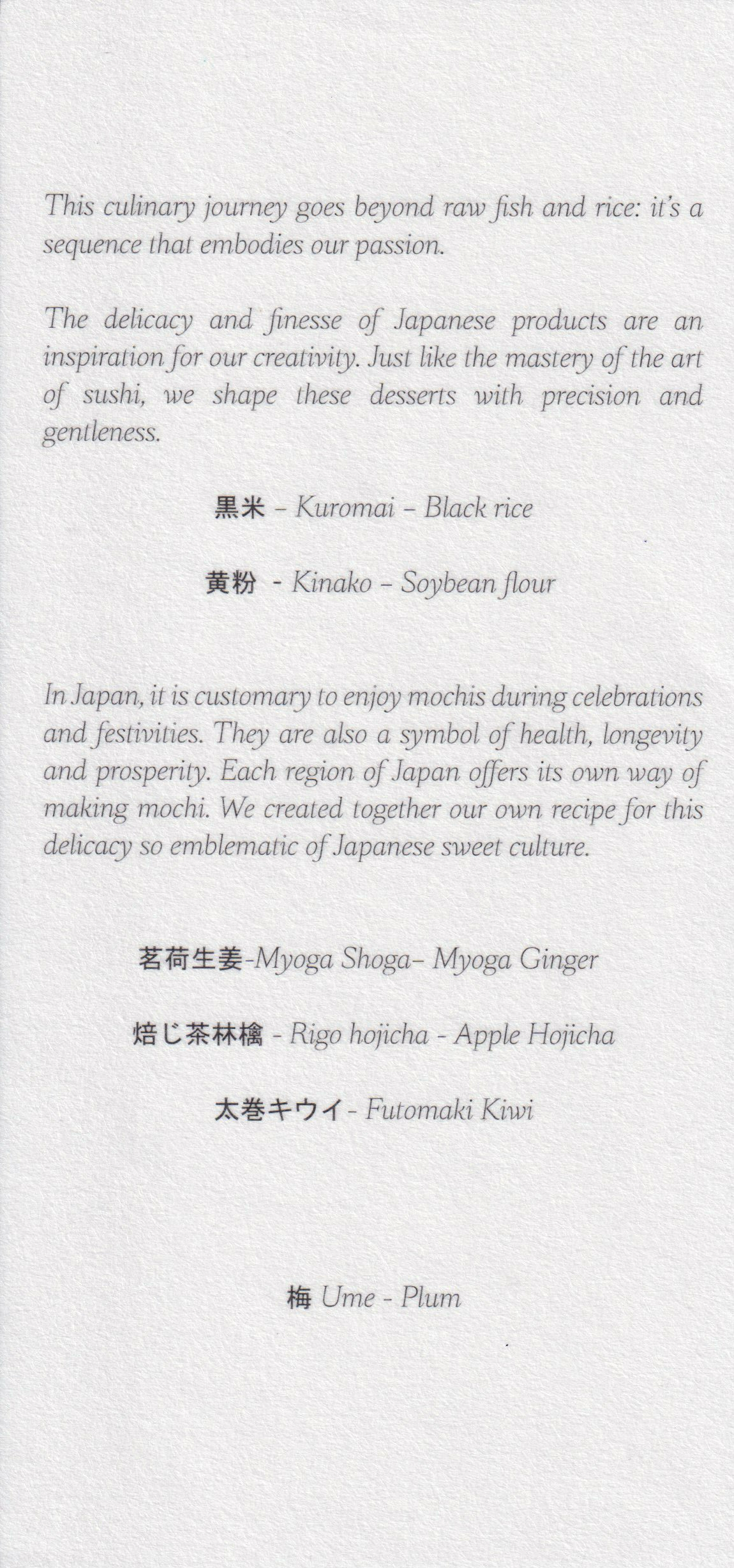
At this point, a dessert chef took over the counter for the rest of the meal. The dessert I had chosen was based on rice. A white rice ice cream was topped with a black rice emulsion and crispy rice flakes. This dish was very lightly flavored - the closest comparison I can think of is soft serve ice cream with some crackers on top 15.
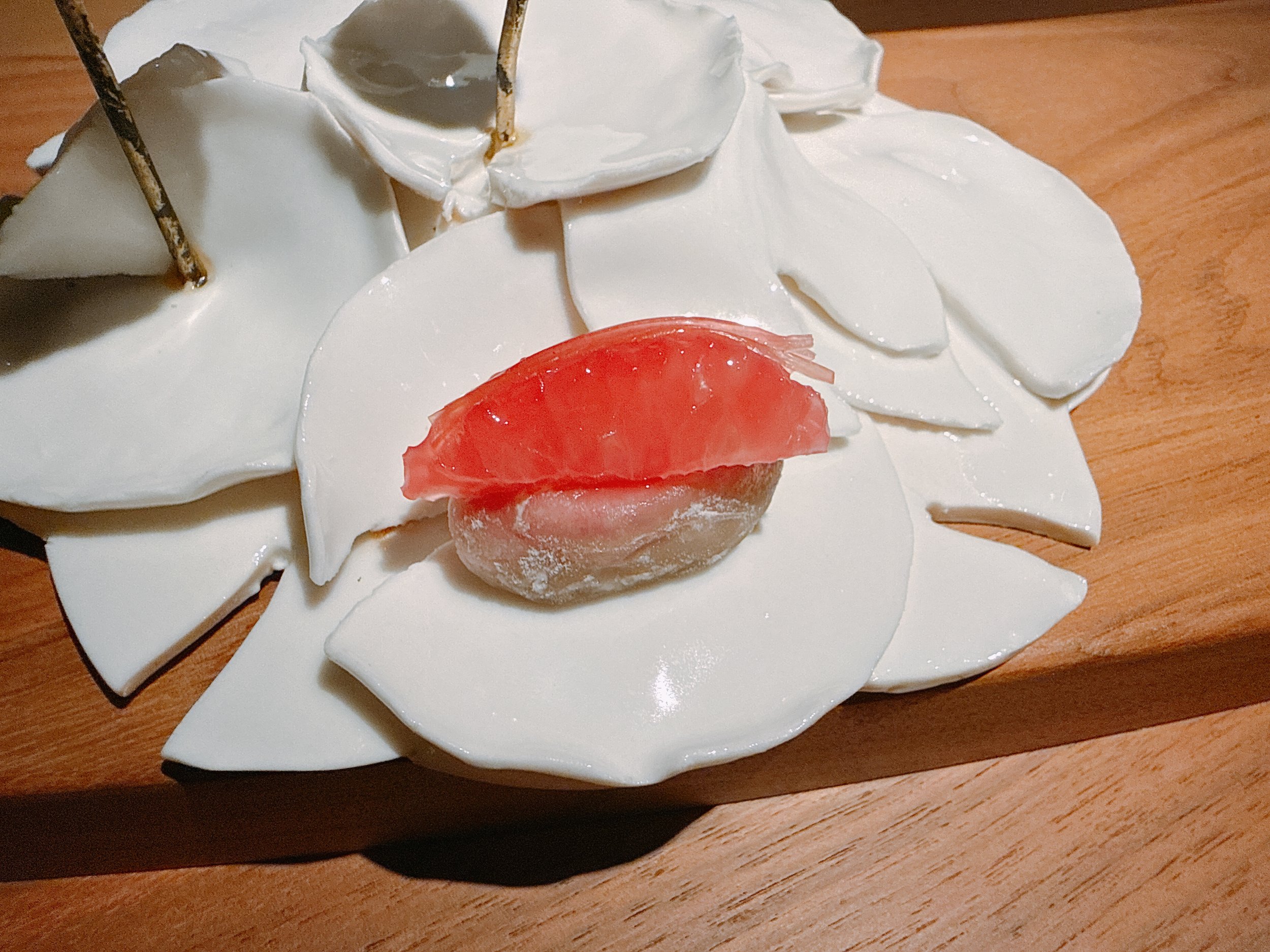
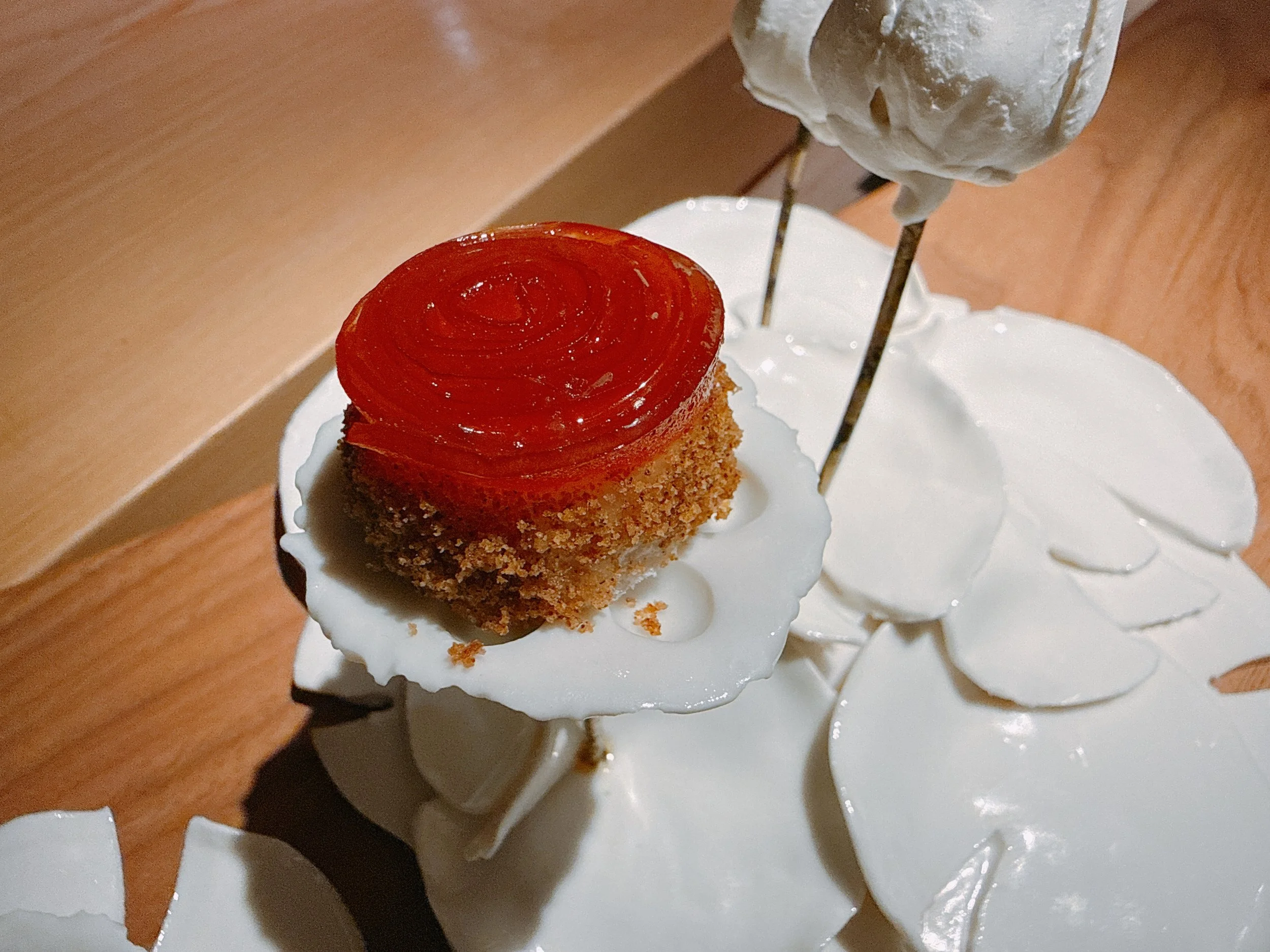
The dinner ended with some petit fours. They were served on a custom-made “plate”. But curiously, even though the plate had room for all petit fours, we were told to eat each one right away (some were frozen). So we never got a view of all bites sitting together on the pretty plate. The first serving was an iced mochi topped with grapefruit and ginger. It looked a bit like another piece of nigiri. The toppings provided all the flavor here: the ginger was pretty strong, and the grapefruit very sour. Due to its intensity, this bite lacked subtlety, and felt a tad one-dimensional as a result 14. The next mochi was made with hojicha tea and was topped with a piece of caramelized apple, providing for light, autumnal flavors 15.
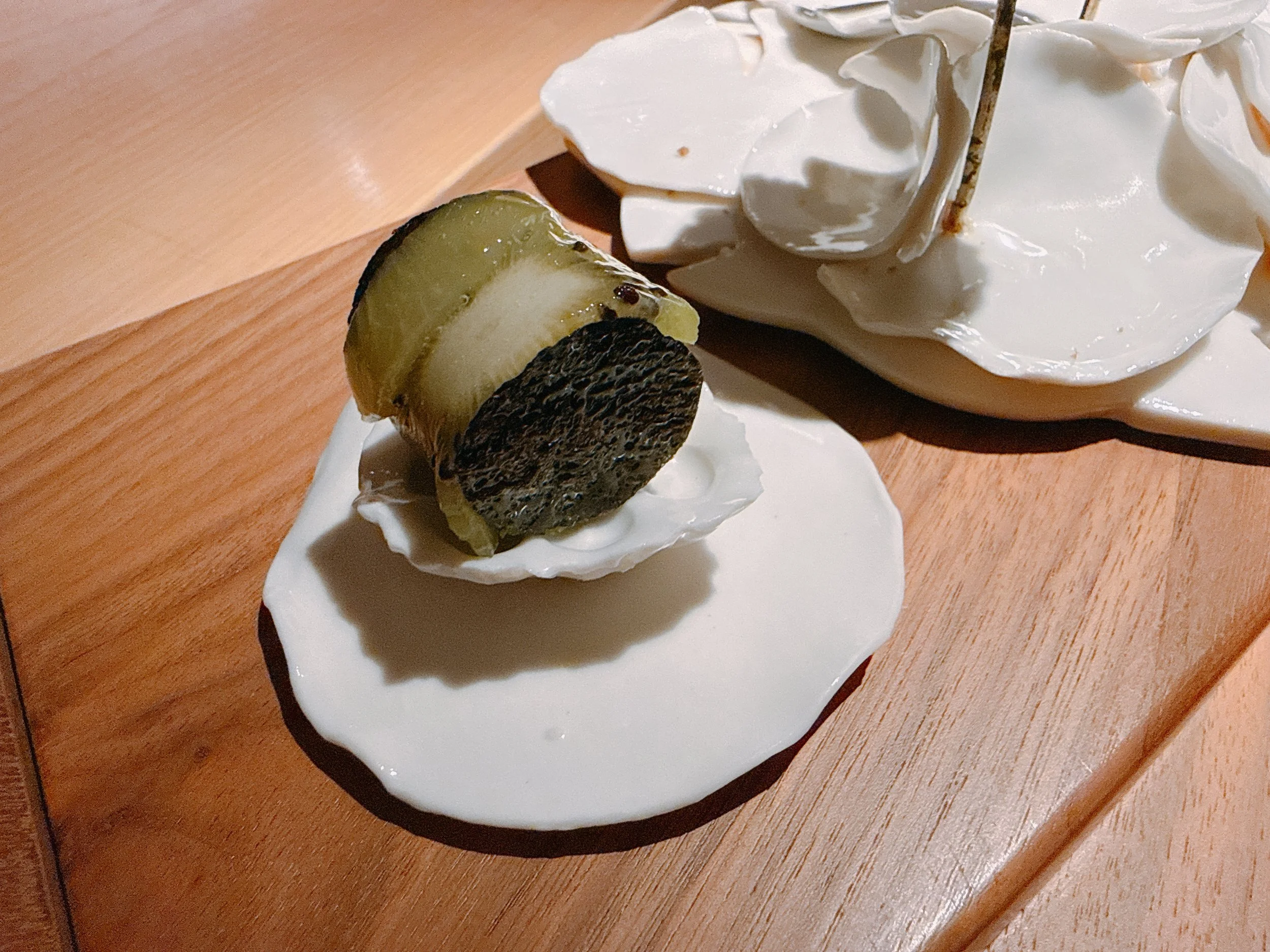
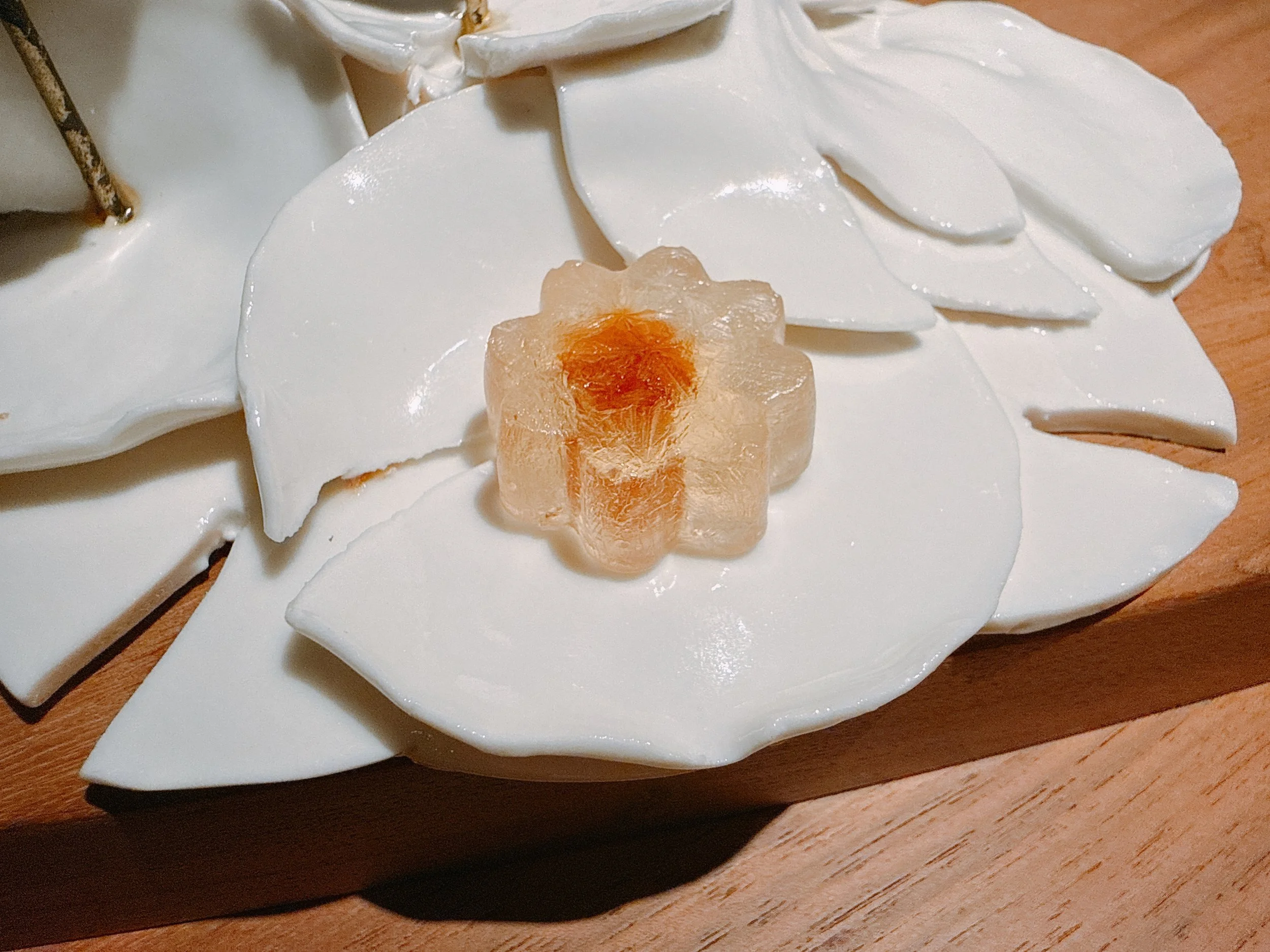
A cream cake roll was made with yellow and green kiwi, matcha, and ginger. Pieces of nori were added to the ends of the slice to make it possible to pick it up. The visual play on a maki was cute, but otherwise this was “just” a decent cream cake 14. The last bite was a little piece of ume plum, candied inside a sugar hull. There was a bit of crunch from the sugar, and a light plum flavor 14.
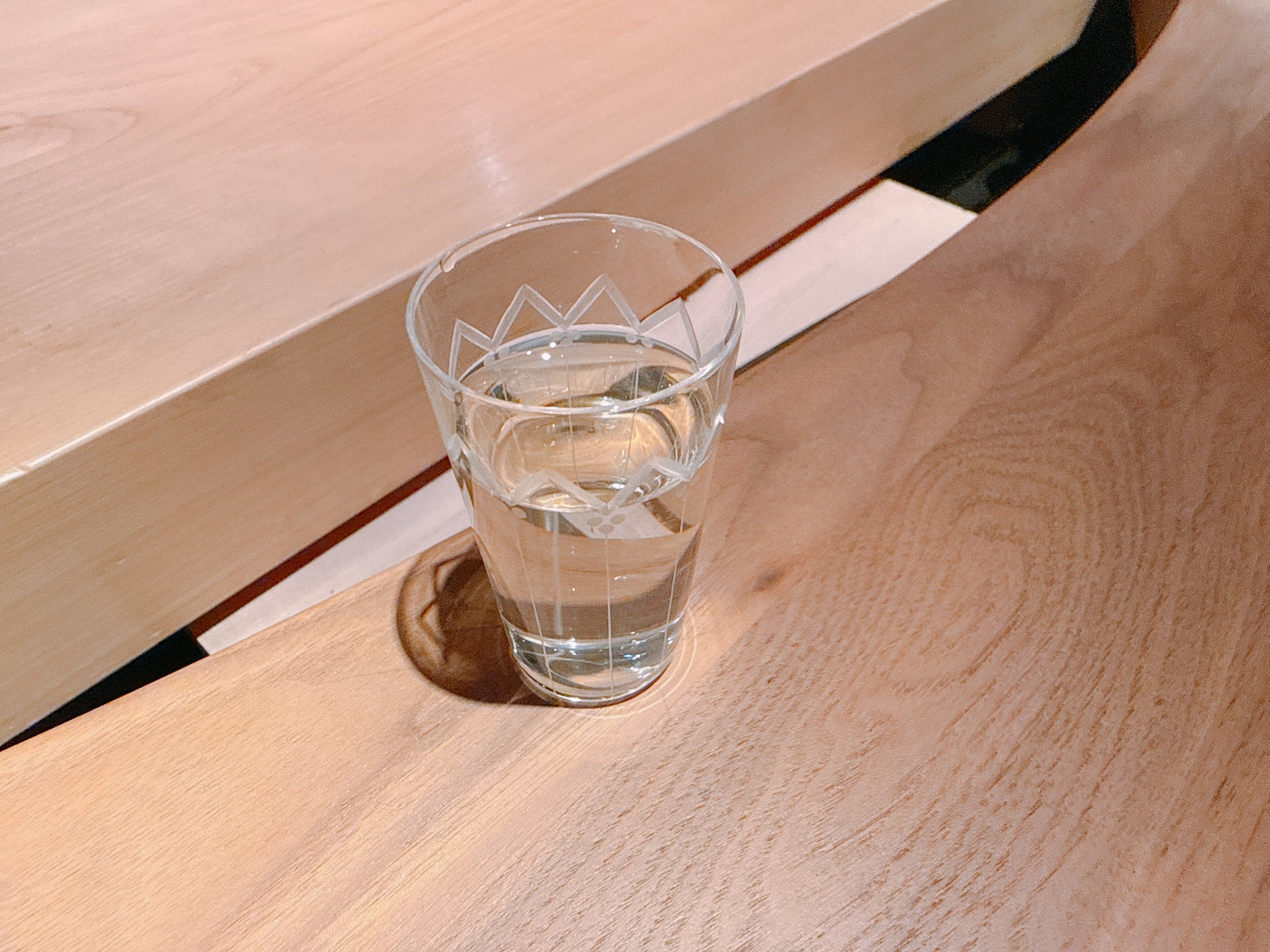
A glass of “jasmine water” concluded the meal. Its flavor was so subtle that it could almost have been plain water.
Overall: A compelling, delicious sushi dinner that reinterpreted Japanese dishes for a Western audience. Lots of acidity, stronger flavors, and local ingredients made for a tasty, solid two Michelin stars. Not cheap, but otherwise definitely worth a visit 17.