715 - Los Angeles
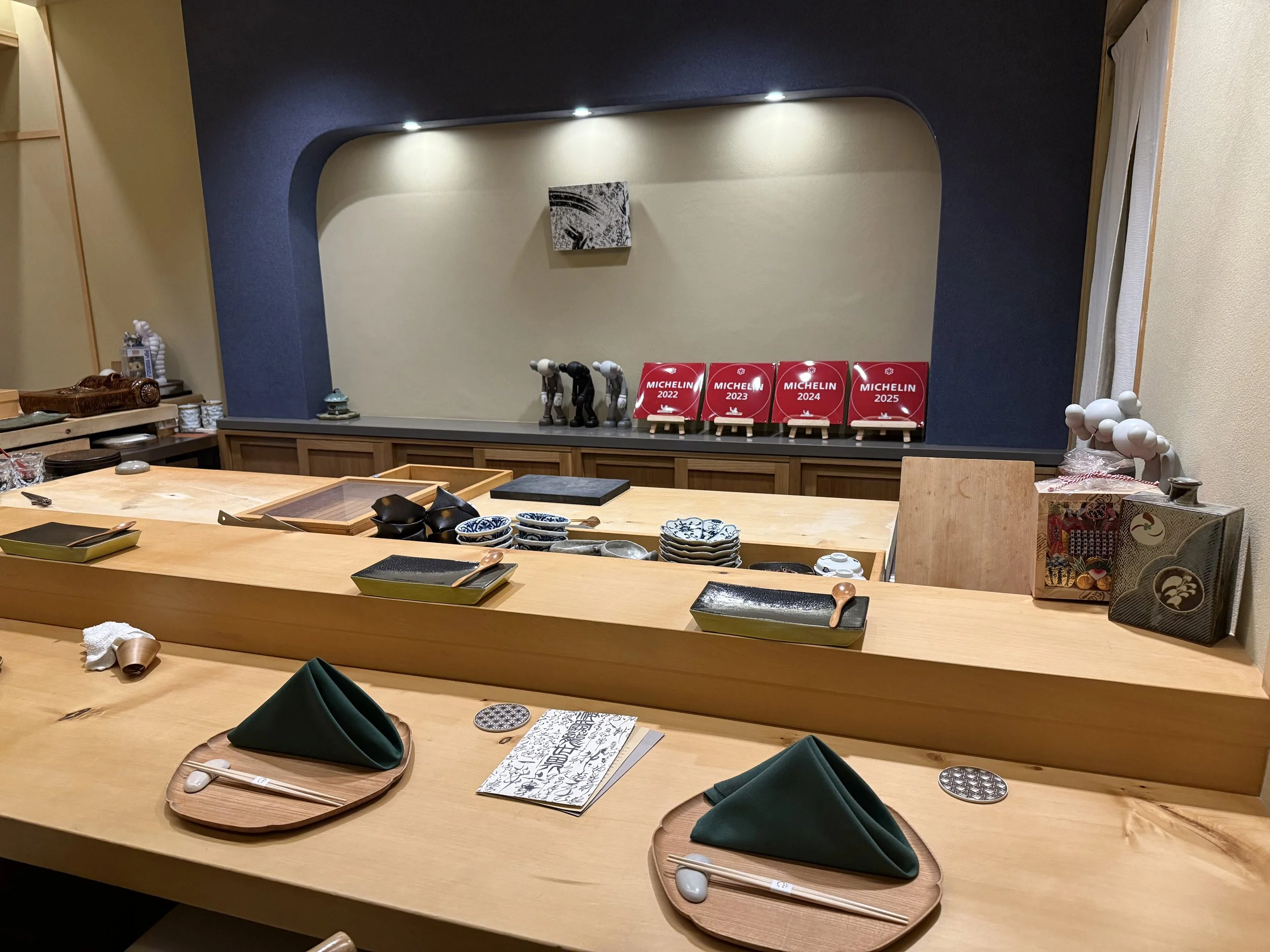
Sushi counter before the action starts
Rating: 15/20
Where: Los Angeles, CA
When: Dinner for 2 on 17 February 2026
Cost per Person: Tasting menu $350, Sake Pairing $150+
Accolades: 1 Michelin Star
Why: Consistently good sushi paired with many non-sushi dishes
Los Angeles is definitely one of the hot spots for good sushi in the United States. Over the past decade, the $300+ omakase counters in the area seem to have proliferated to the point that there is always one nearby, no matter where one happens to be. Spoiled for choice, we're thus always able to try a new sushi place whenever we visit LA. So it came to be that in mid-February, safely after the Valentine's Day-related restaurant price hikes, we stopped by “715”, a one-Michelin-starred sushi restaurant on the border of the Little Tokyo neighborhood in downtown Los Angeles.
Trying to call an Uber to 715 was surprisingly difficult since the app tried to auto-complete 715 to various addresses (715 S Normandie Ave, anyone?) instead of the restaurant itself. In fact, the restaurant's name has nothing to do with its address - according to our server, the beginnings of the numbers 7,1,5 in Japanese sound out the first name of chef Seigo Tamura.
Having finally made our way to the correct location, we found ourselves in front of an unmarked building. Thankfully a staff member was out front, checking names off the reservation list. The dinner itself took place at an eight-seat, L-shaped counter that surrounded chef Tamura, who silently created the sushi in front of us. I read that the chef is more talkative with Japanese customers, but there were none present during our visit. He introduced all fish in both English and Japanese, and the non-sushi dishes were presented by the waitstaff, who spoke great English.
An omakase dinner at 715 runs to $350 per person, with a 20% tip being added automatically. Sake pairings were offered as well, starting at $150, and increasing in increments of $50 - presumably (hopefully?) leading to better and better sakes. I tried the $250 pairing, which had five generous pours that were good, but not exceedingly memorable. At a similar price point, the sake pairing at Sushi Sho in New York was far superior. Wines were available only by the bottle or half-bottle.
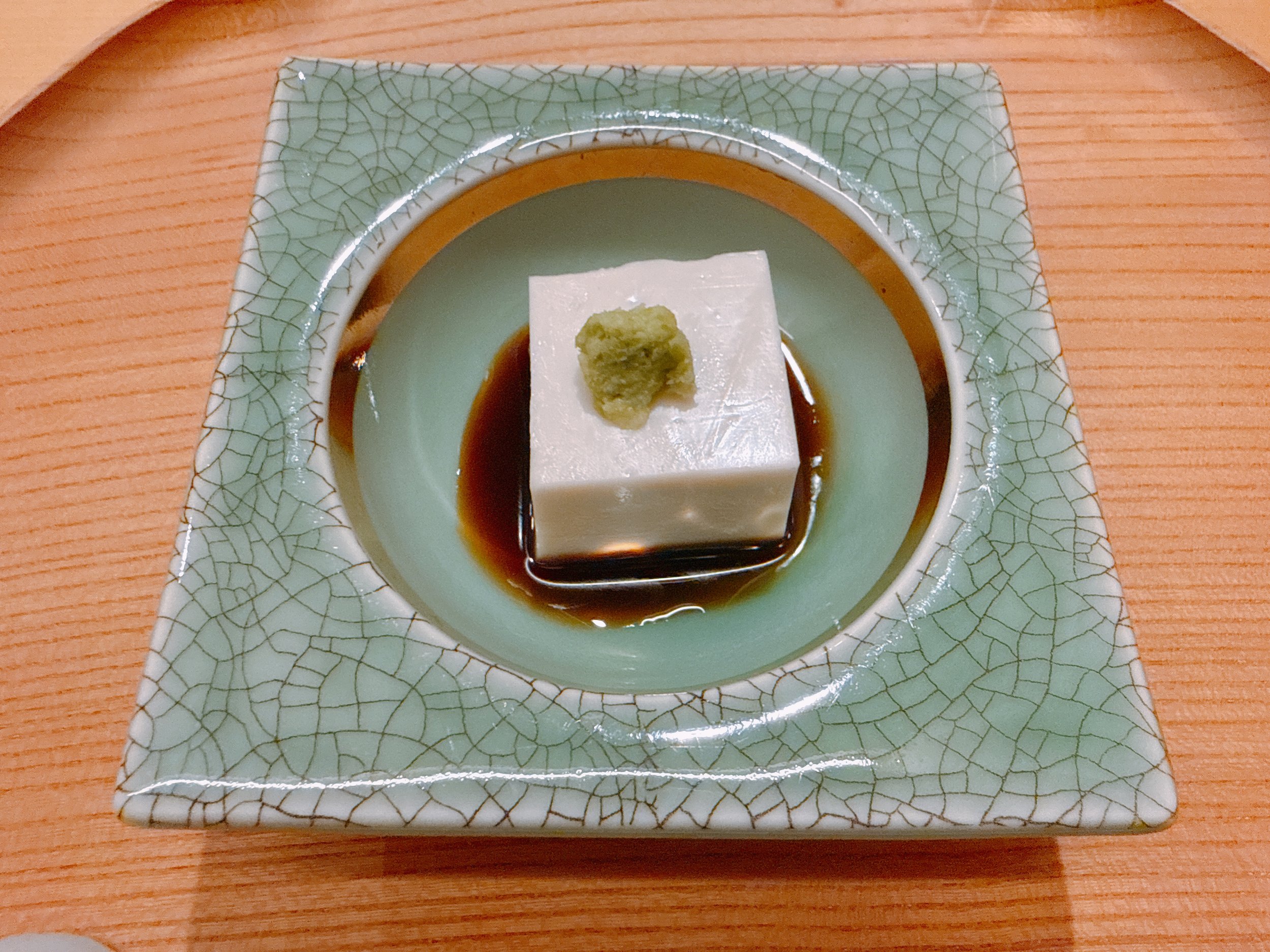
Our dinner began with a few non-sushi appetizers. First, we tried a peanut tofu topped with fresh wasabi. Creamy, with a light peanut taste - not bad 15.
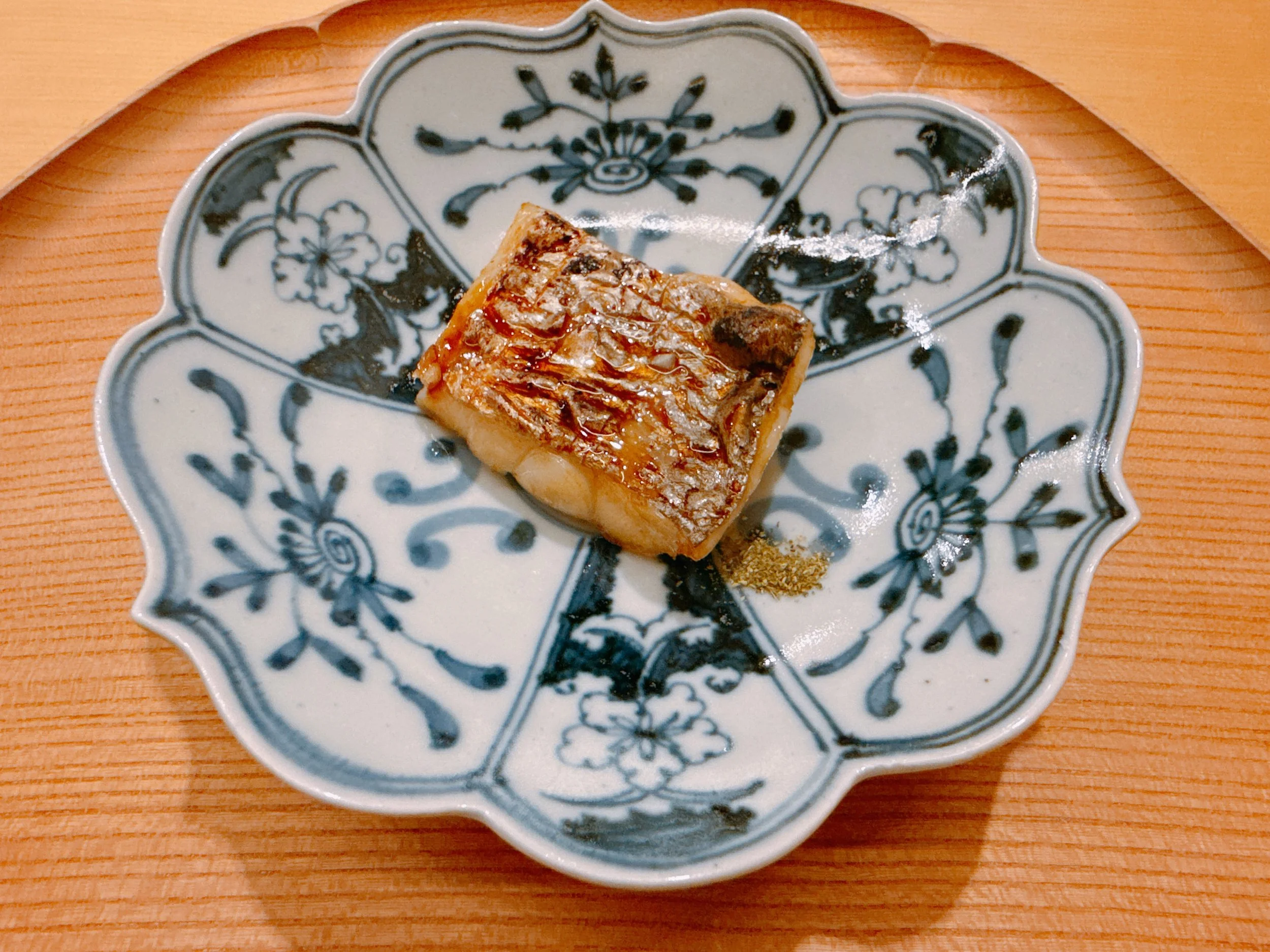
Next was a char-grilled beltfish accompanied by some sansho pepper powder. The fish was nicely grilled, flaky and tender. The pepper added some aroma to the fish, but was not very spicy 15.
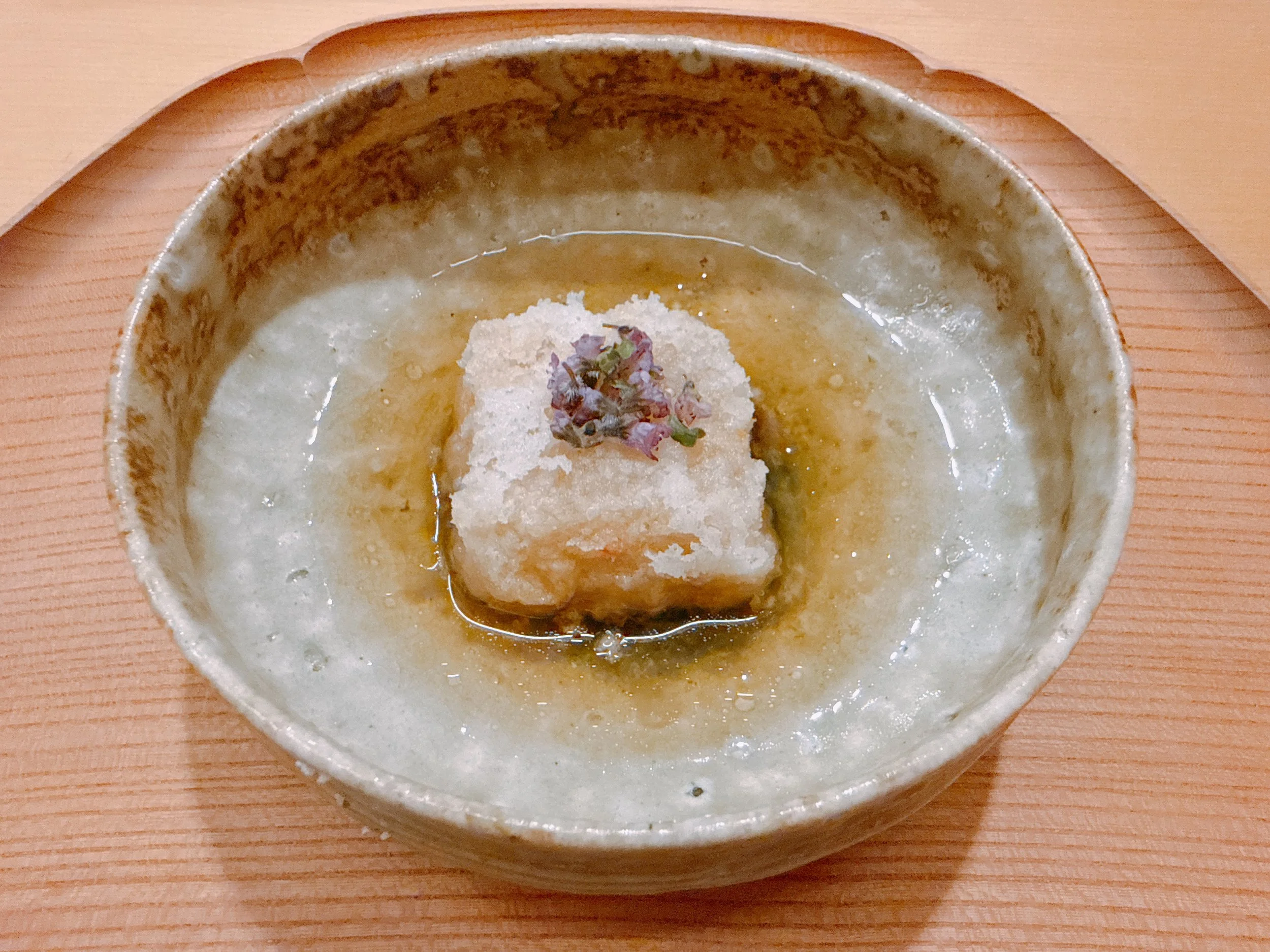
A crab cake served in dashi looked pretty much like agedashi tofu, and was also prepared in a similar manner - the crab meat had been mixed and breaded with a starch mixture and then fried, before being topped with shiso flowers and served in a bowl of dashi. The glutinous mixture of starch and crab was pretty lightly flavored, and maybe a bit more crab would have been better. The shiso added a little sharpness to the bite 15.
In a small cup, shirako (milt) was served over chawanmushi (Japanese egg custard) - sadly without photo. The shirako had a faintly bitter aftertaste, contrasting with the much sweeter chawanmushi. Their textures were also quite different, from the distinct consistency of the shirako to the soft (even softer than normal) texture of the custard 14.
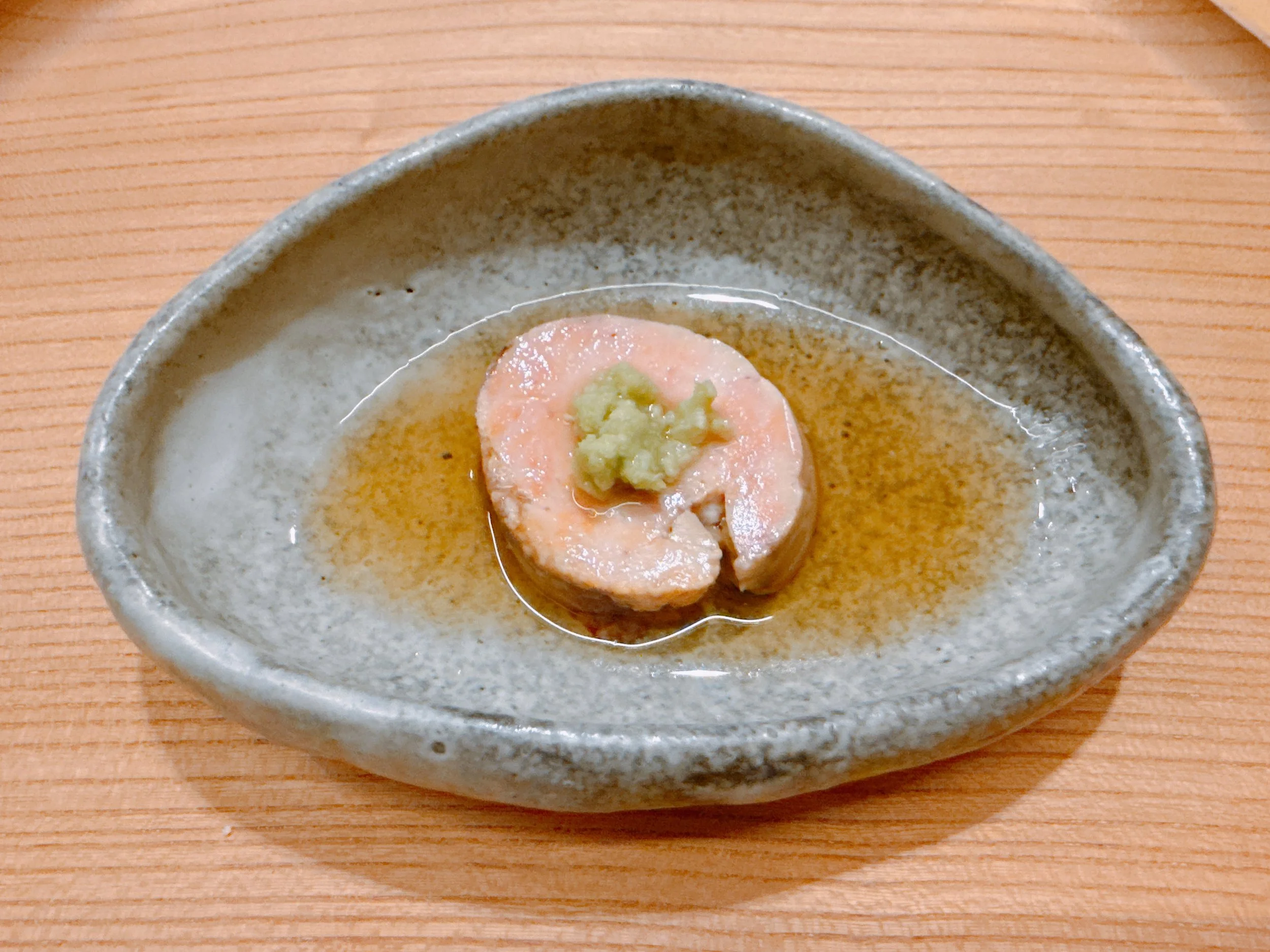
Our final appetizer was ankimo (monkfish liver) topped with wasabi. Interestingly, we were told that we shouldn’t try to finish this dish before the sushi, and instead nibble at it throughout the meal. That suggestion was a first for me, but maybe not a bad idea since this was by far the heaviest appetizer. The ankimo looked a bit chunky, but it had the usual creamy texture. The wasabi felt a tiny bit coarser than normal, actually adding a hint of texture 15.
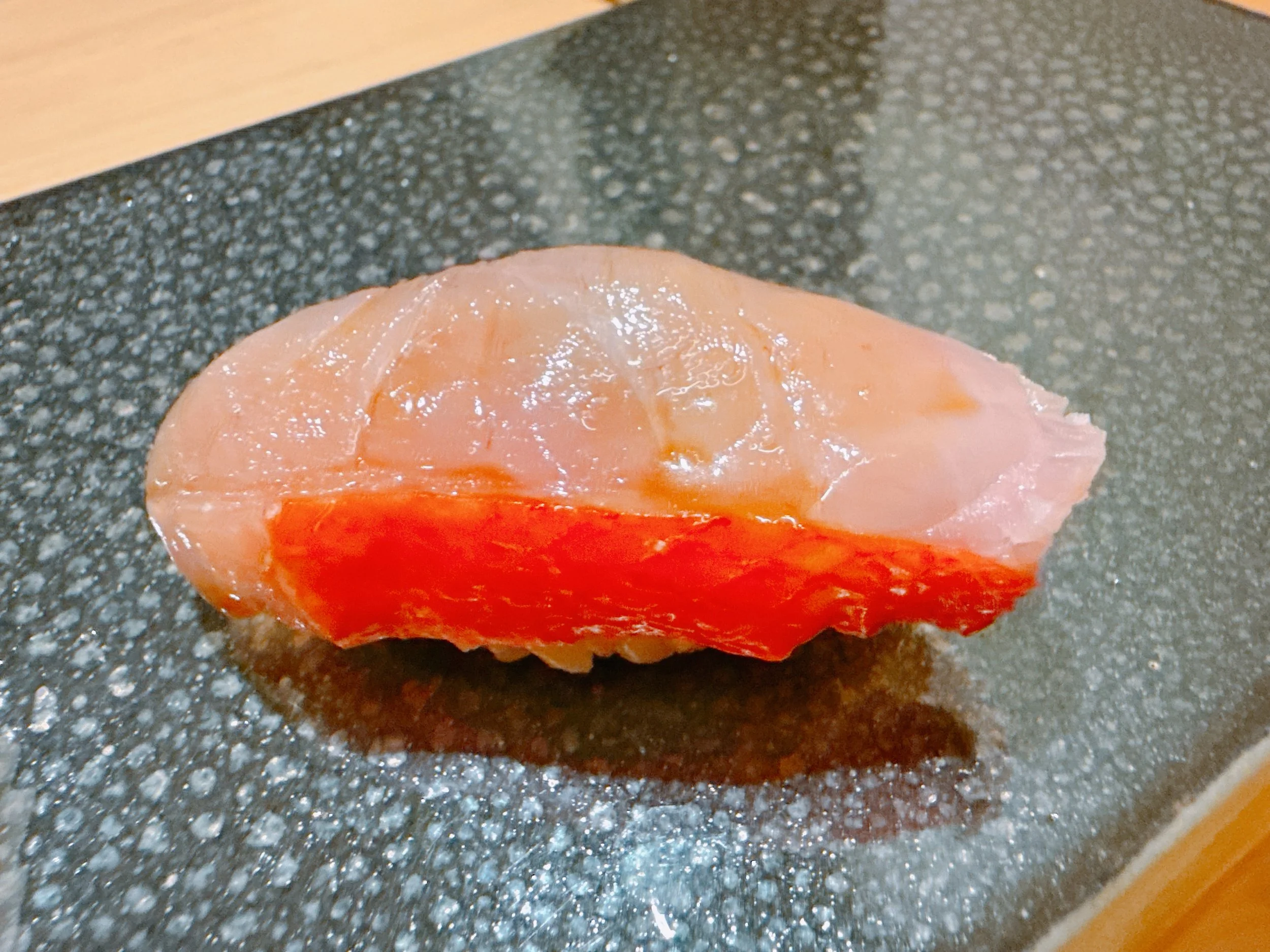
This led us to the first series of sushi. The first nigiri was topped with kinmedai (goldeneye snapper). It was a lovely fish that was not too flavorful by itself. The sushi rice on the other hand had more flavor than one would usually expect, with even a hint of soy sauce. All the sushi was also notable for having a very high fish to rice ratio 15.
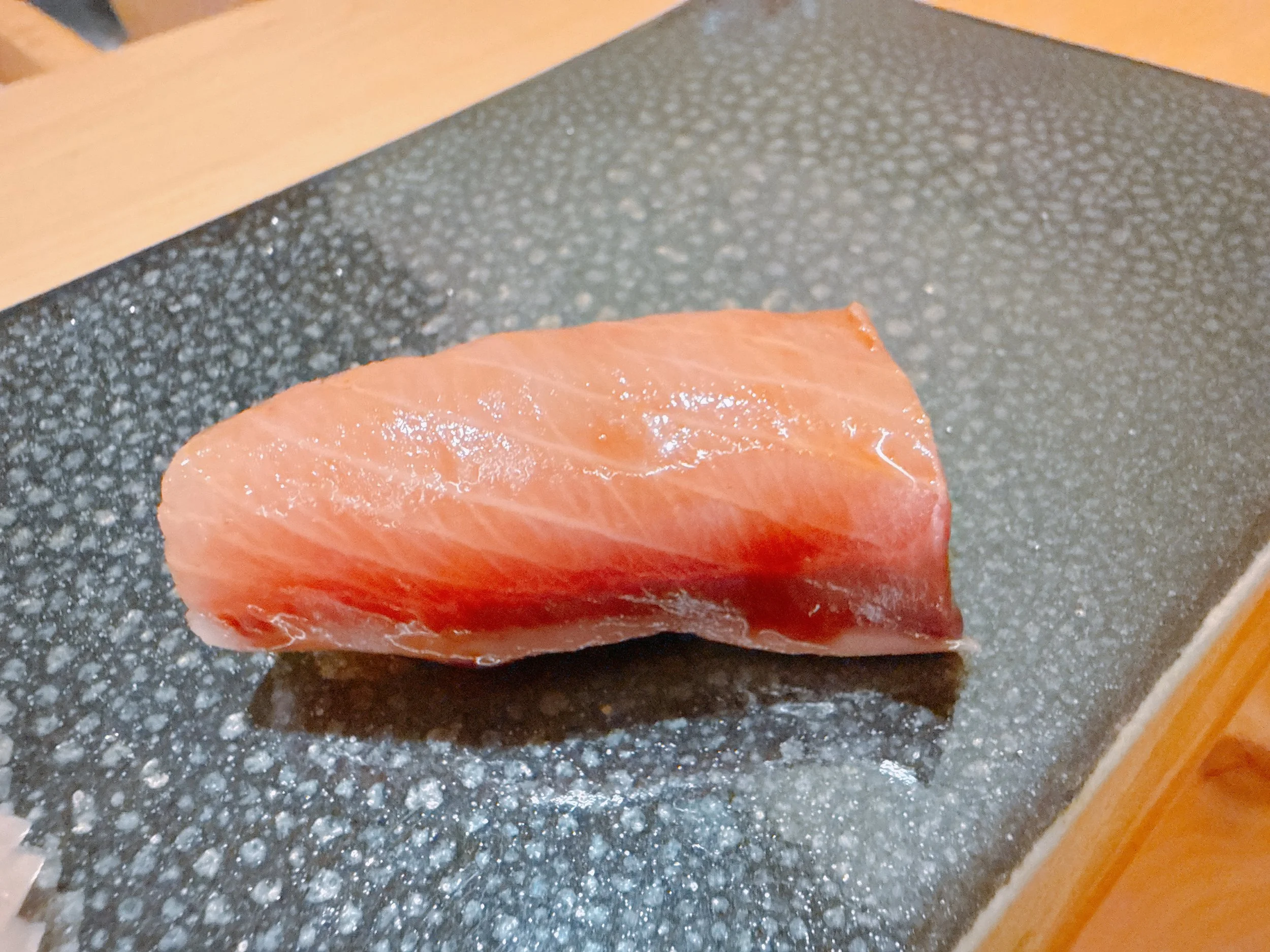
Buri (yellowtail) had a bit of bite and a good flavor 16.
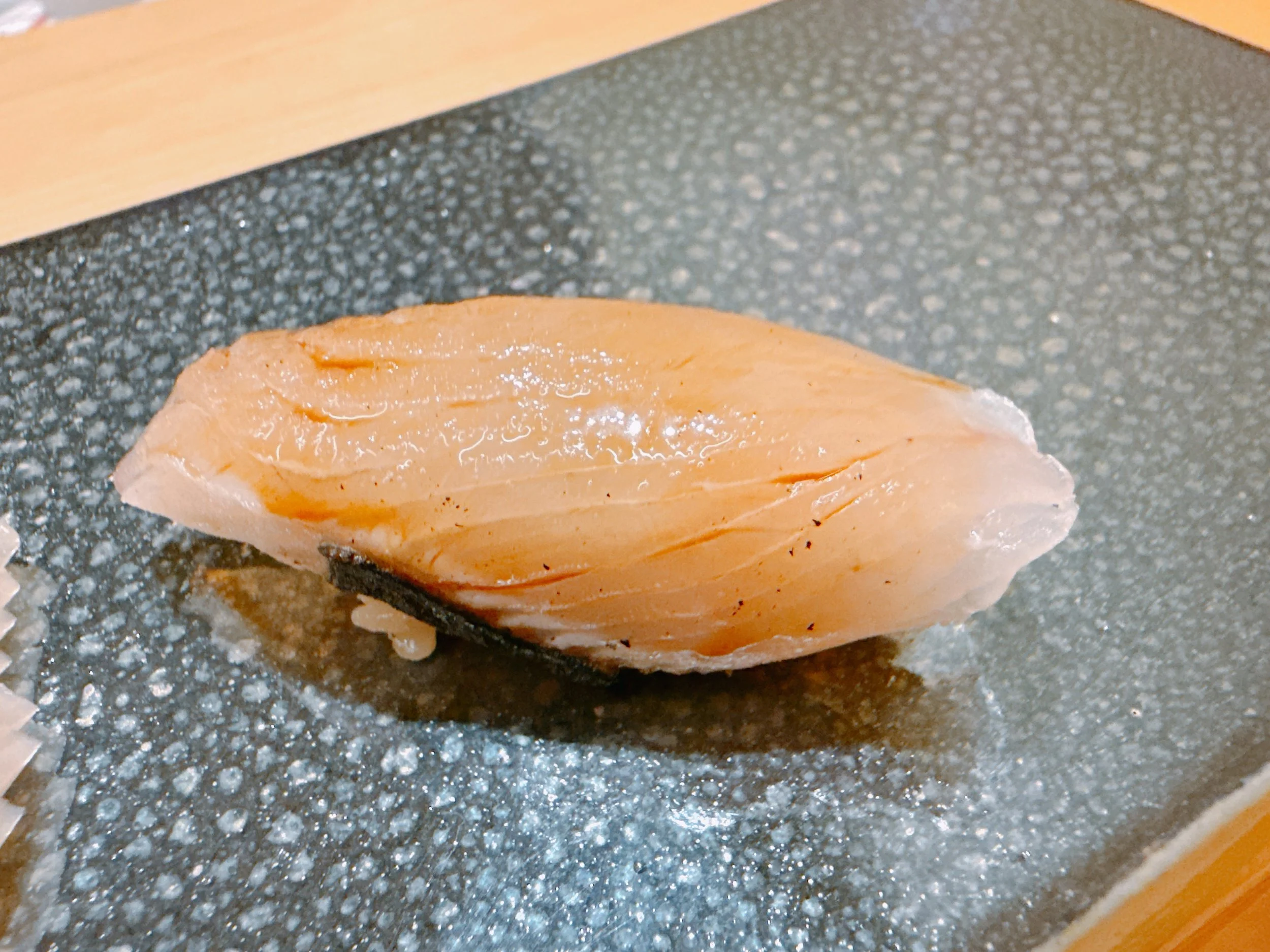
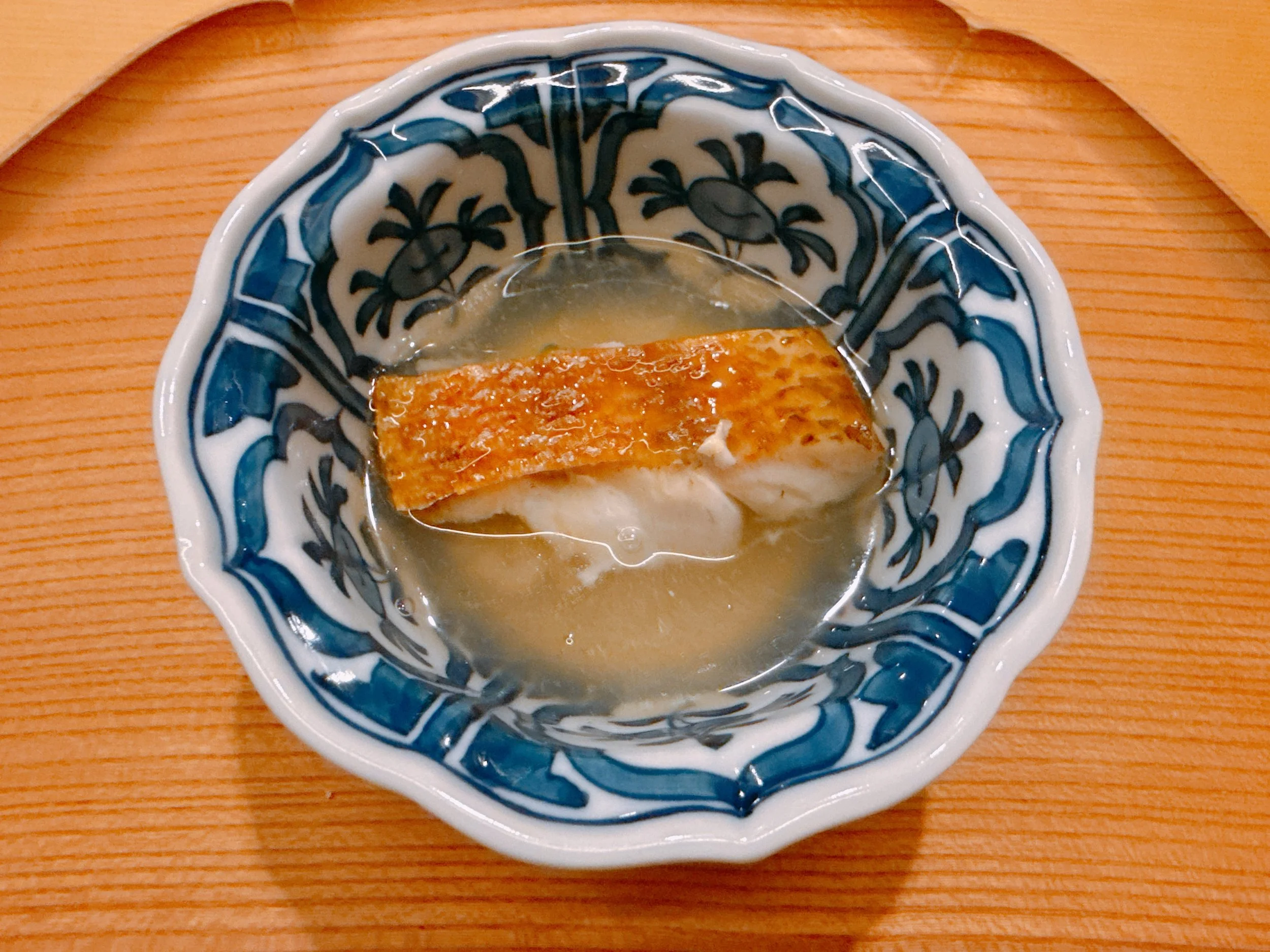
Sawara (Spanish mackerel) was lightly flavored and tender 16.
Taking a break from nigiri, we received a filet of nodoguro (blackthroat seaperch), served over rice in a broth made from the same fish. The filet was only lightly flavored, so that the broth and the rice actually provided much more flavor that the fish by itself 15.
Back to sushi, we next had chutoro (medium fatty tuna - sadly without a picture). It had been marinated in soy sauce, which brought out its lovely flavor. The cut was relatively lean 16.
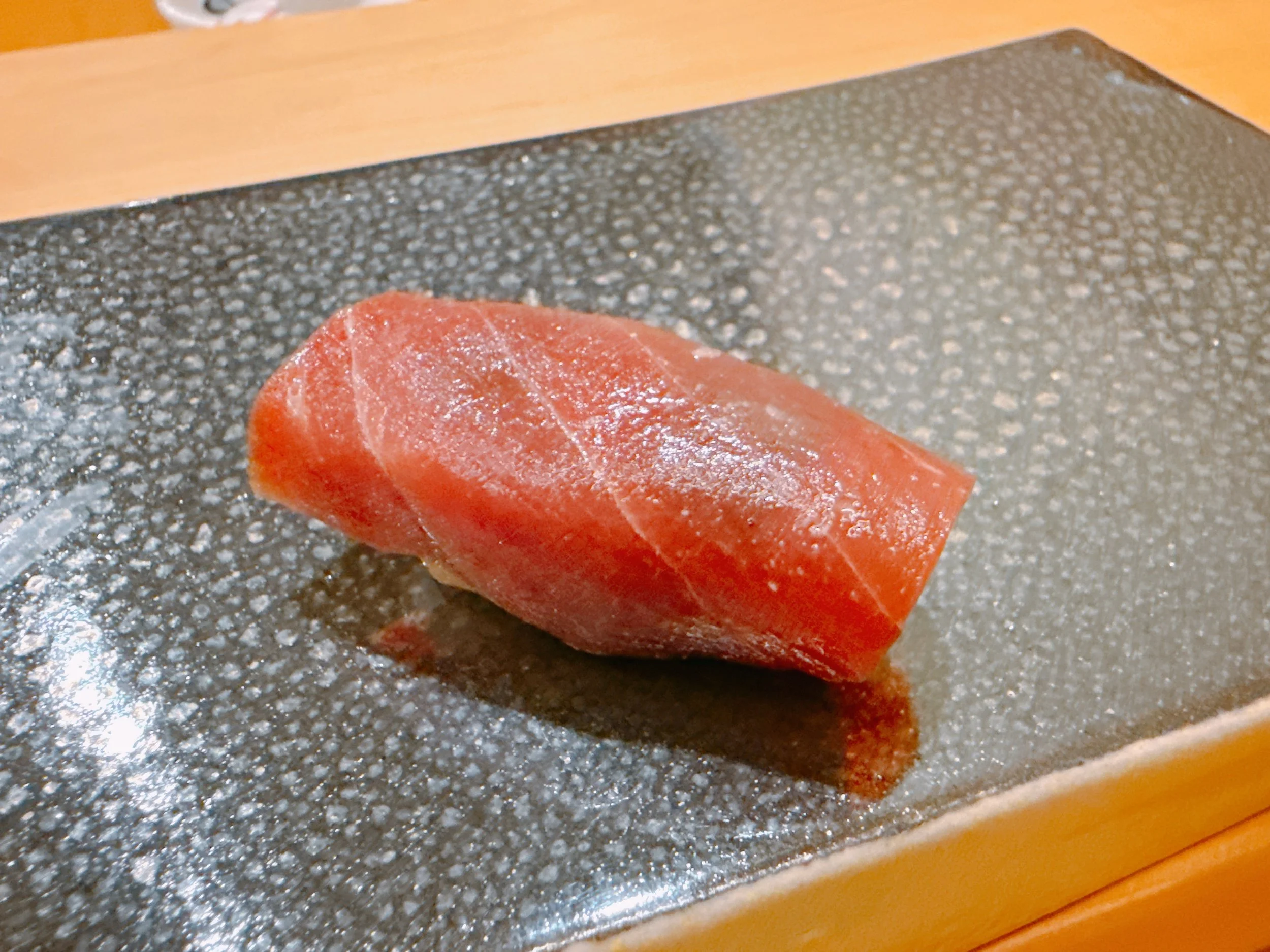
Lean bluefin tuna was tender and had a hint of a nutty flavor, probably from the rice 15.
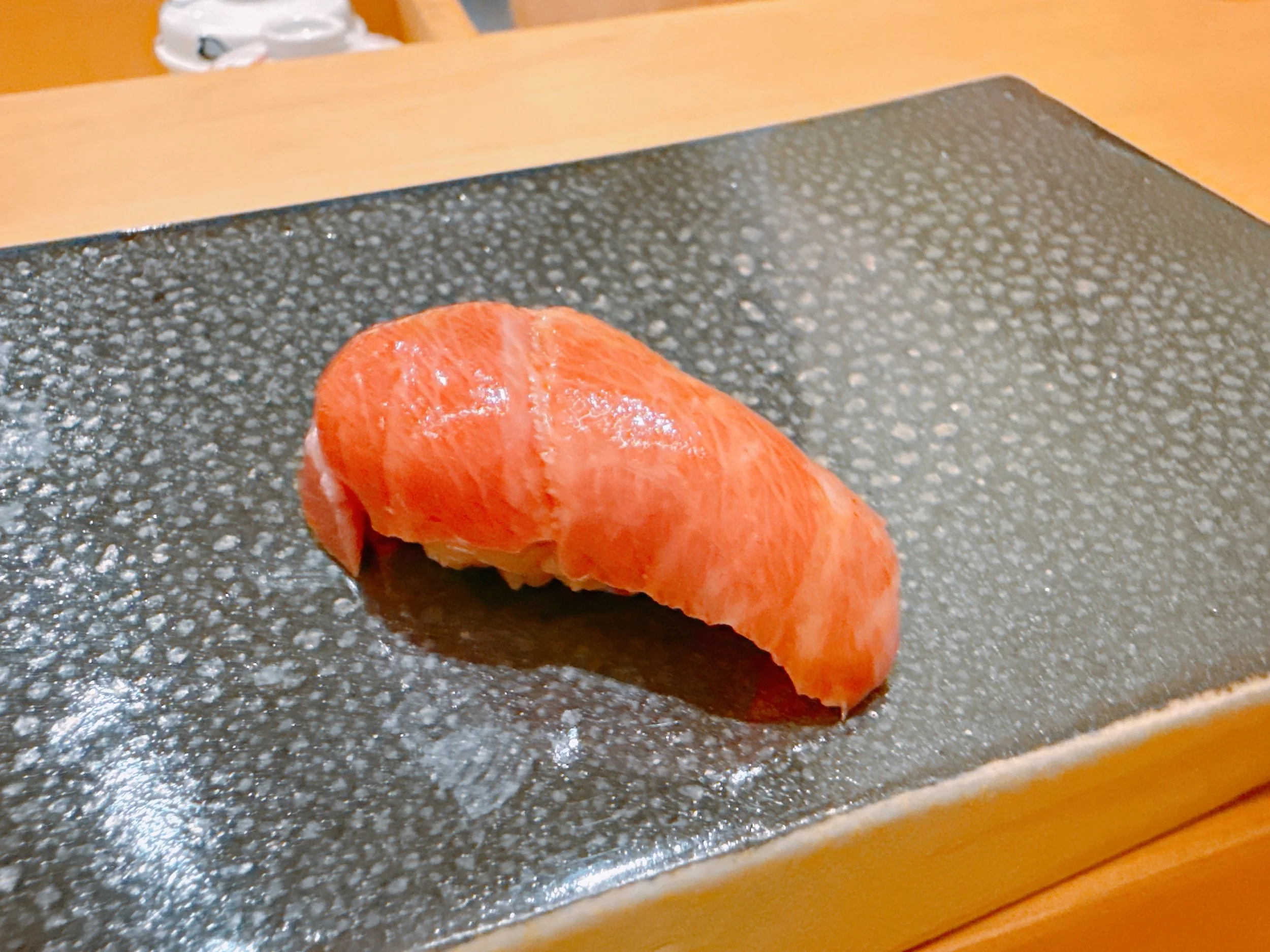
Finally, the otoro (fatty tuna) was quite good, and melted in the mouth without feeling too heavy 16.
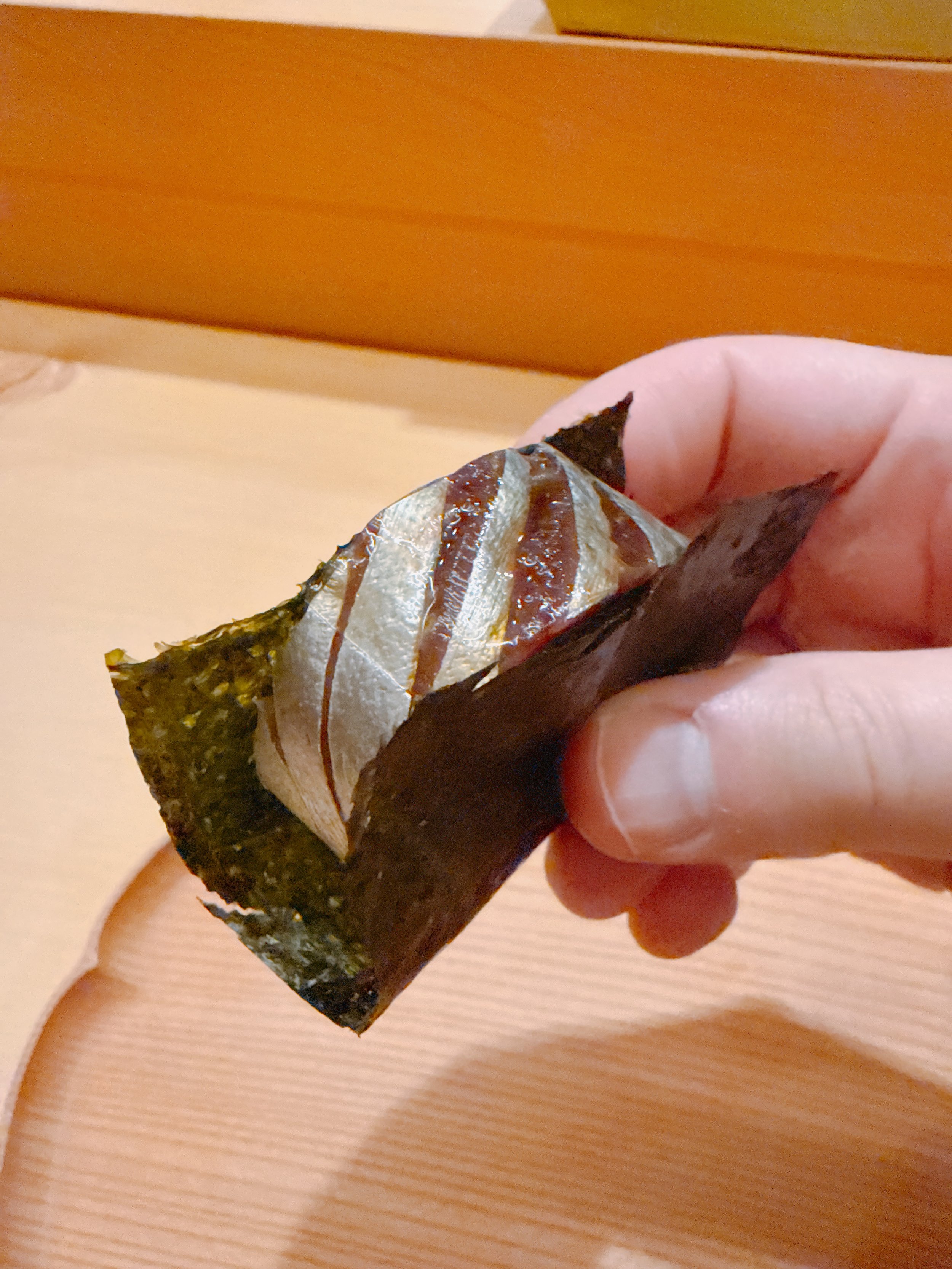
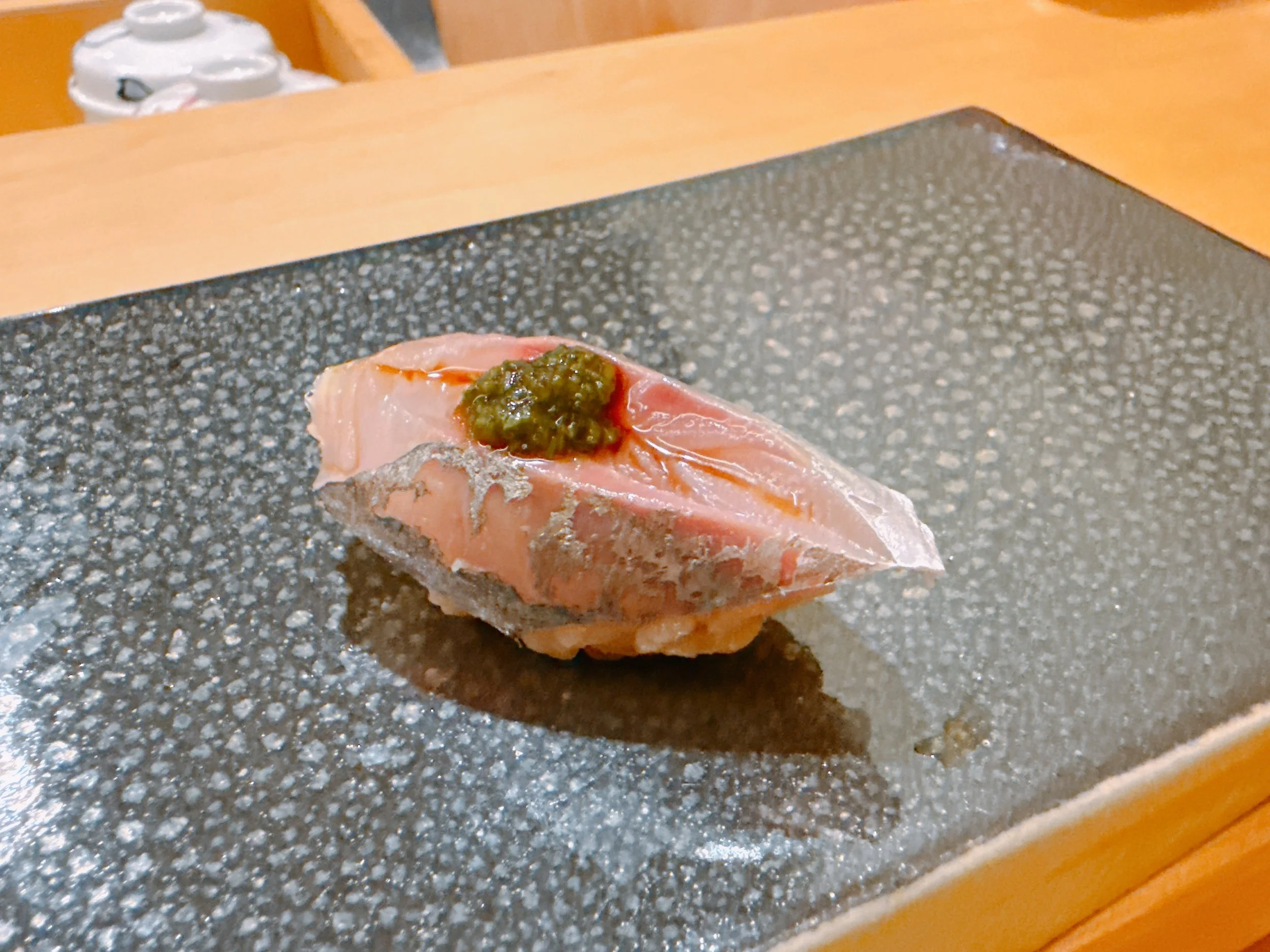
Saba (mackerel) was served as a taco: nori seaweed held a saba sushi roll. The roll featured a combination of flavors that worked quite well together: the fish (not too strongly flavored by itself), a shiso leaf and some fruity sweetness 15.
More “regular” sushi followed. Aji (horse mackerel) had a spicy topping, possibly of green onions 16.
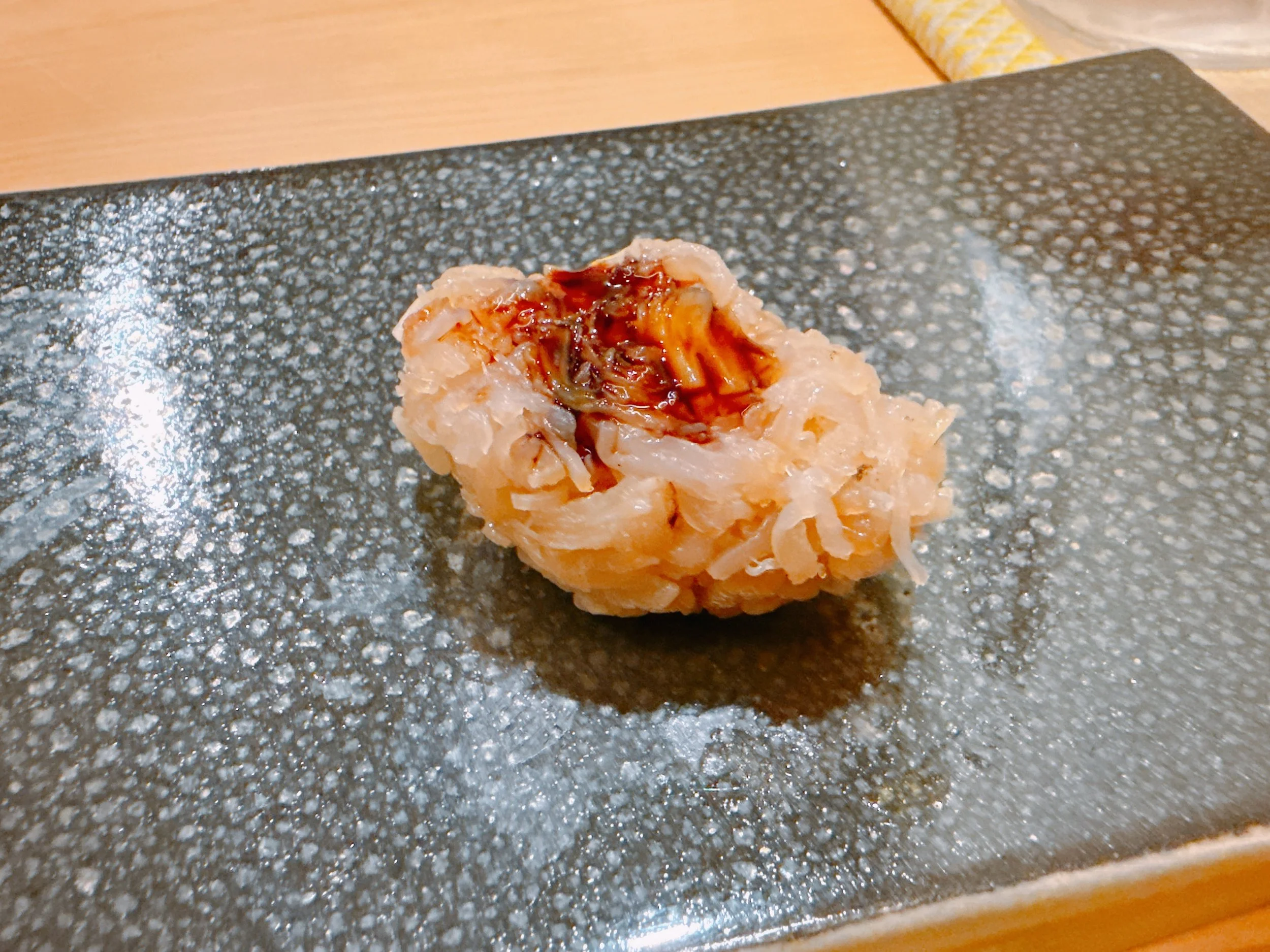
A scallop had been seasoned with yuzu and a sweet sauce, and was served in an unusual way. The scallop was on the inside of the sushi piece, whereas the rice was on the outside. A creative presentation 15.
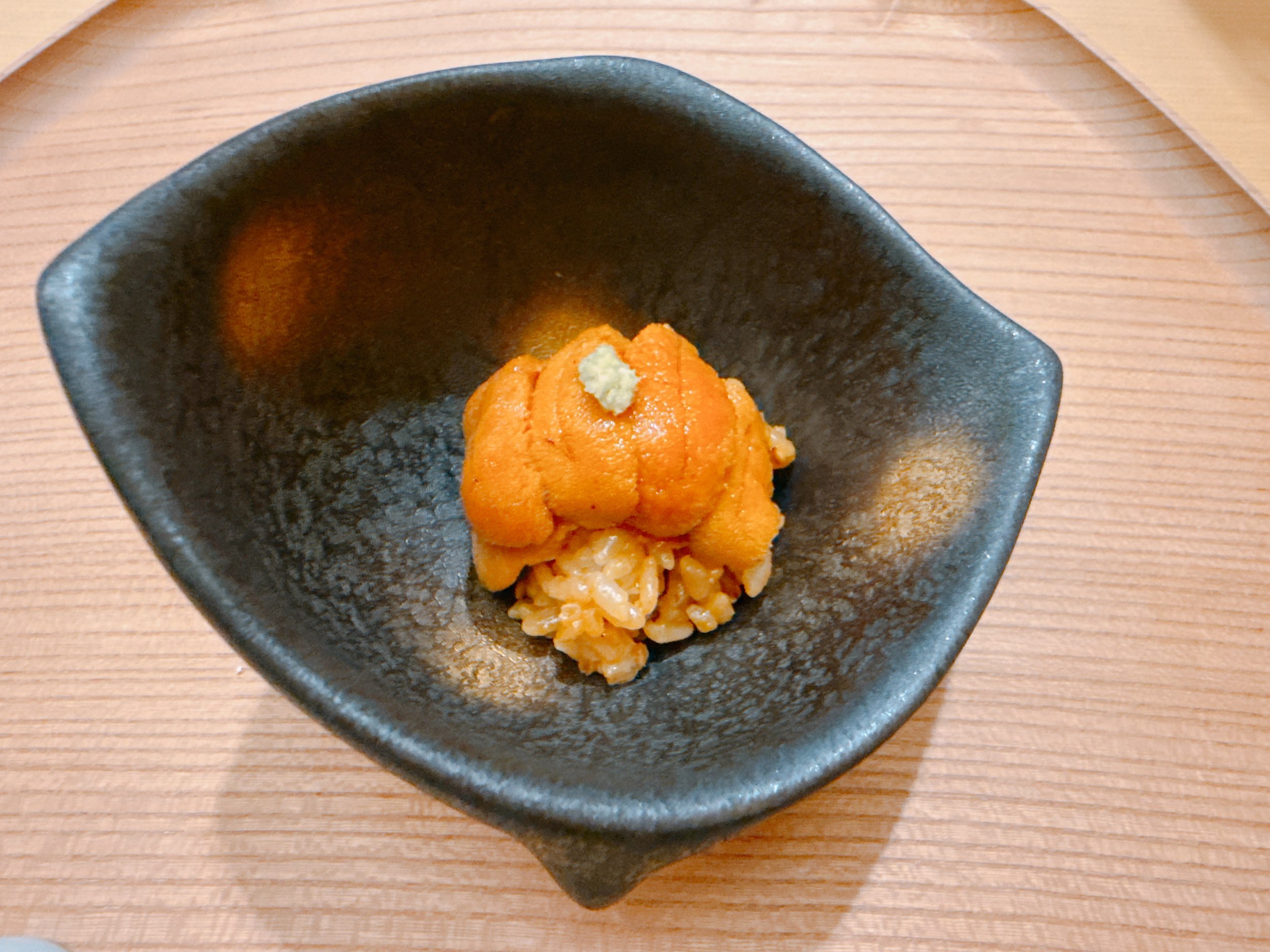
Hokkaido uni was served over uni rice - a rarely seen combination that totally made sense, though. The uni itself was not too flavorful, unfortunately, but the rice was slightly nutty 15.
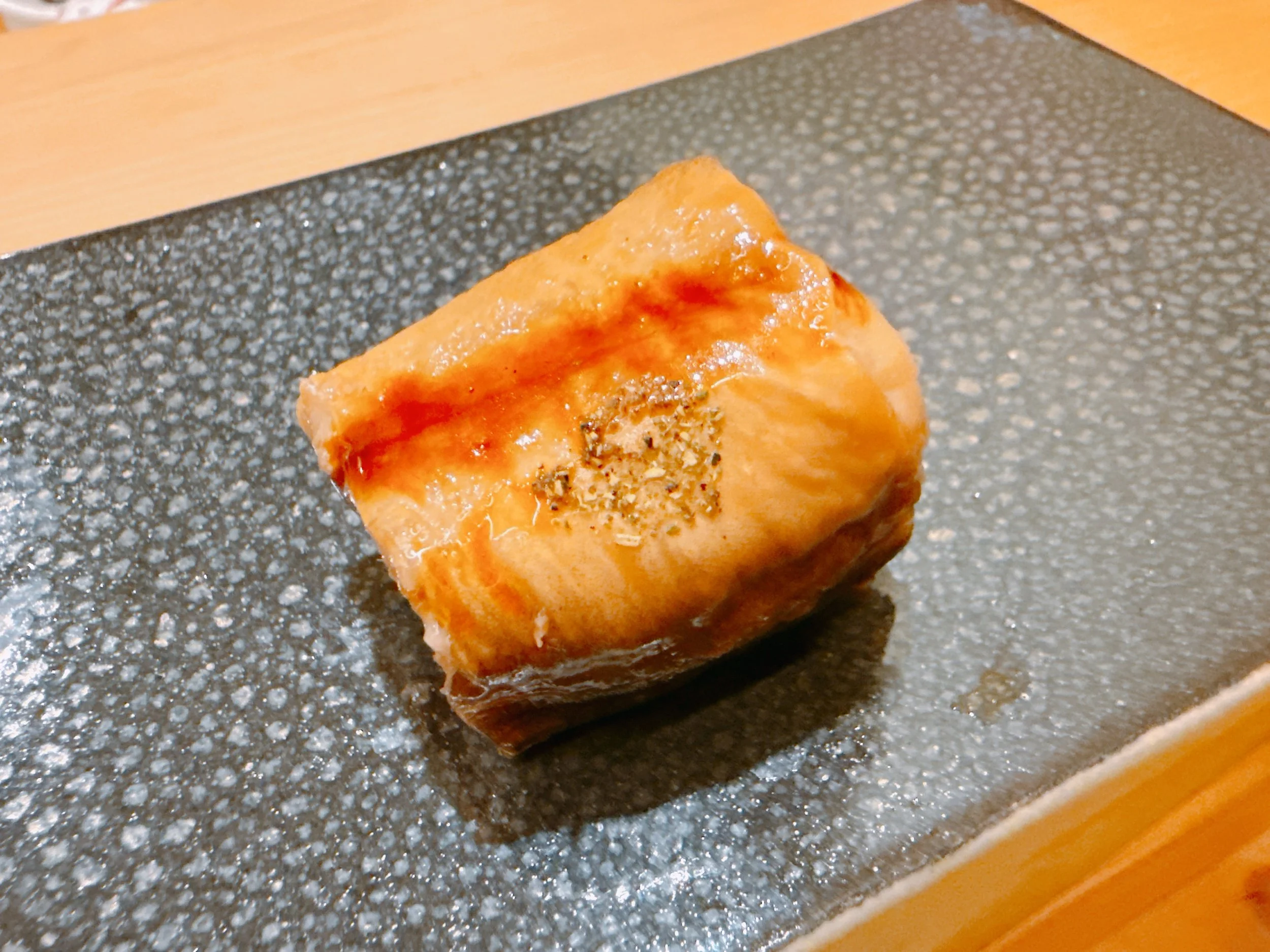
Anago (sea eel) was served warm over rice. It had a tender, lovely texture and a pronounced eel flavor - my favorite bite of the night 17.
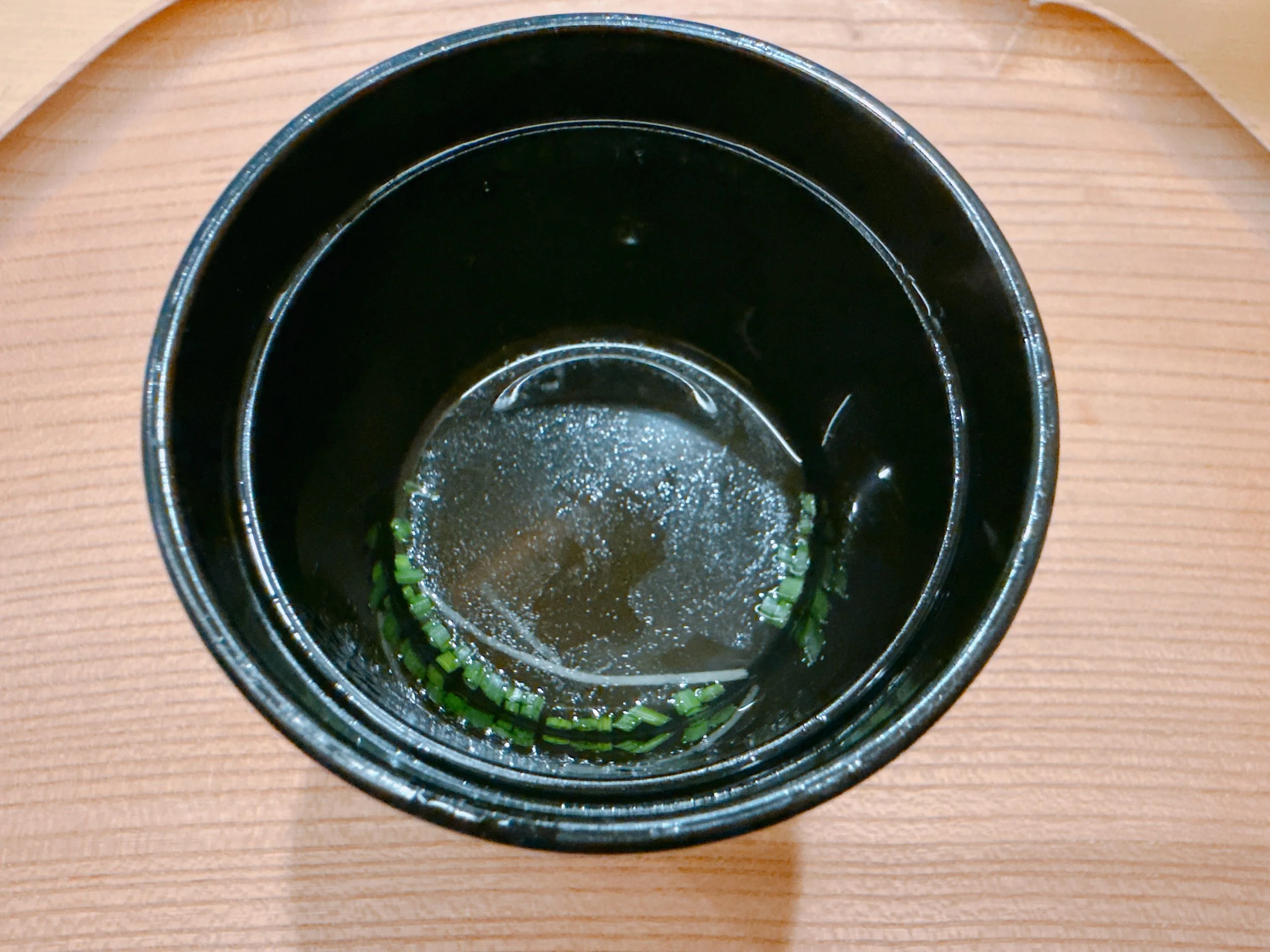
Sadly, the eel also marked the end of the sushi. We continued with a broth made from both goldeneye snapper and seaperch. The cup contained just the essence of the fish and no actual pieces. Light, a bit peppery, and quite tasty 15.
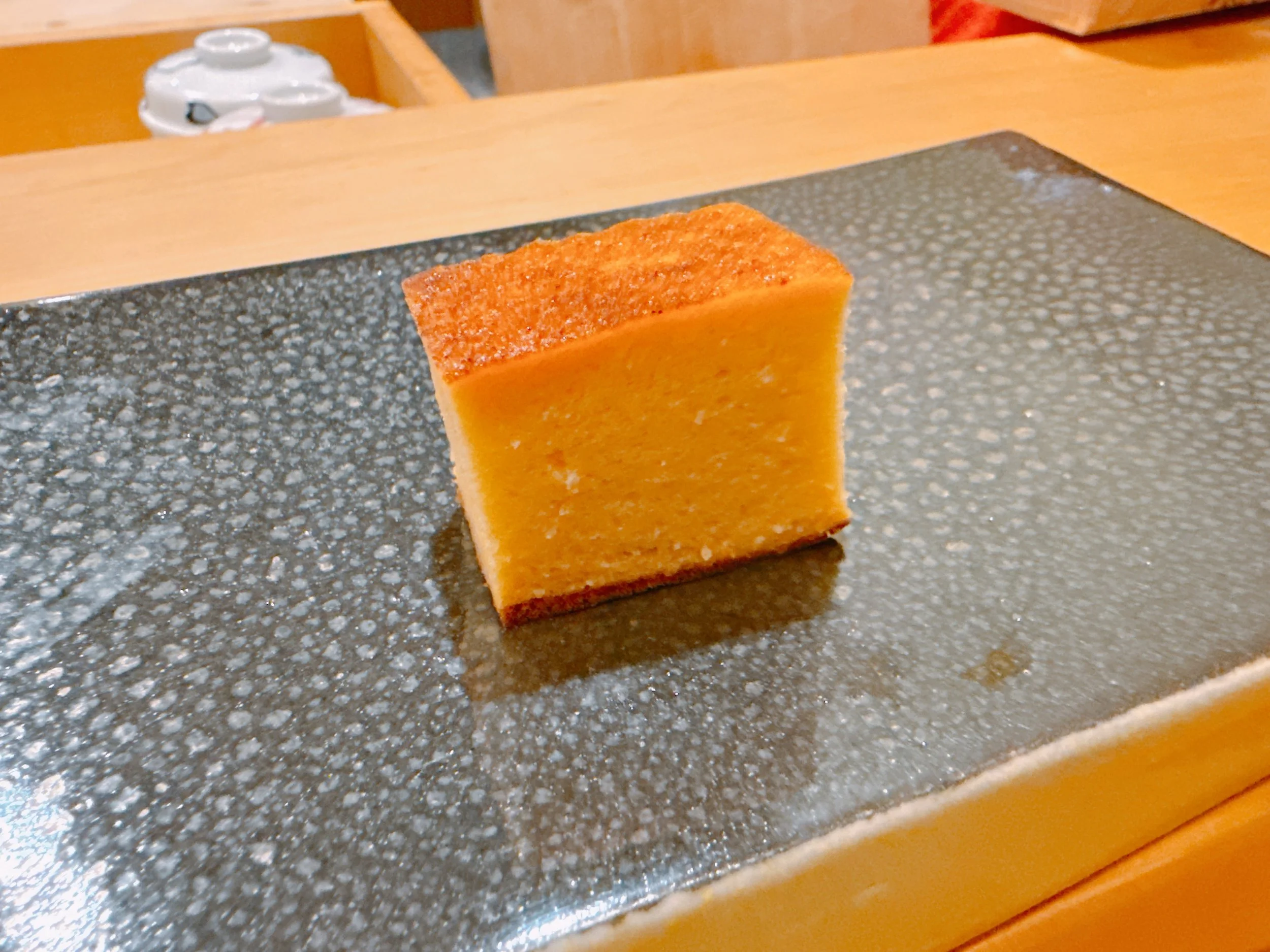
The traditional tamago (egg omelet) was nicely airy and had a good balance, being neither too sweet nor too eggy 14.
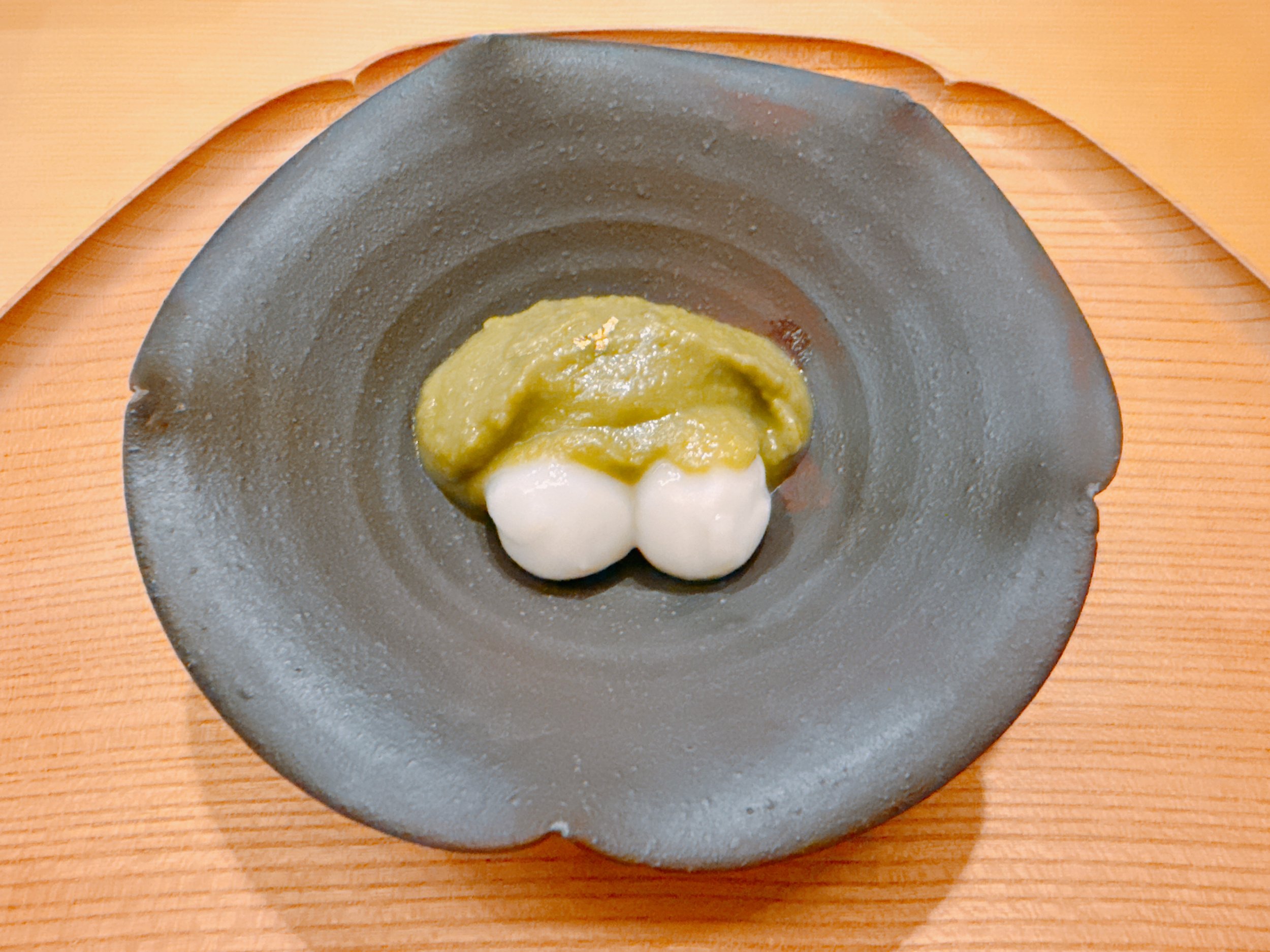
Along with a cup of hojicha tea, we received the only dessert of the night: an edamame-matcha paste served over mochi. The green paste was sweet, and one could easily identify the flavors of both edamame and matcha - a combination that worked surprisingly well. The mochi was fresh, but didn't have too much taste by itself 15.
Overall: An enjoyable sushi omakase with a fair number of non-sushi dishes. The consistency here was remarkable: there was not a single dish that “didn't work”, everything was quite enjoyable. On the other hand, nothing really stood out as exceptionally memorable (well, the eel was quite good). So, in summary, this was a solid one-star sushi omakase in a city that doesn't have a shortage of them. Michelin's judgment of “worth a stop, but not necessarily worth a journey” seems appropriate 15.