Camille - Orlando
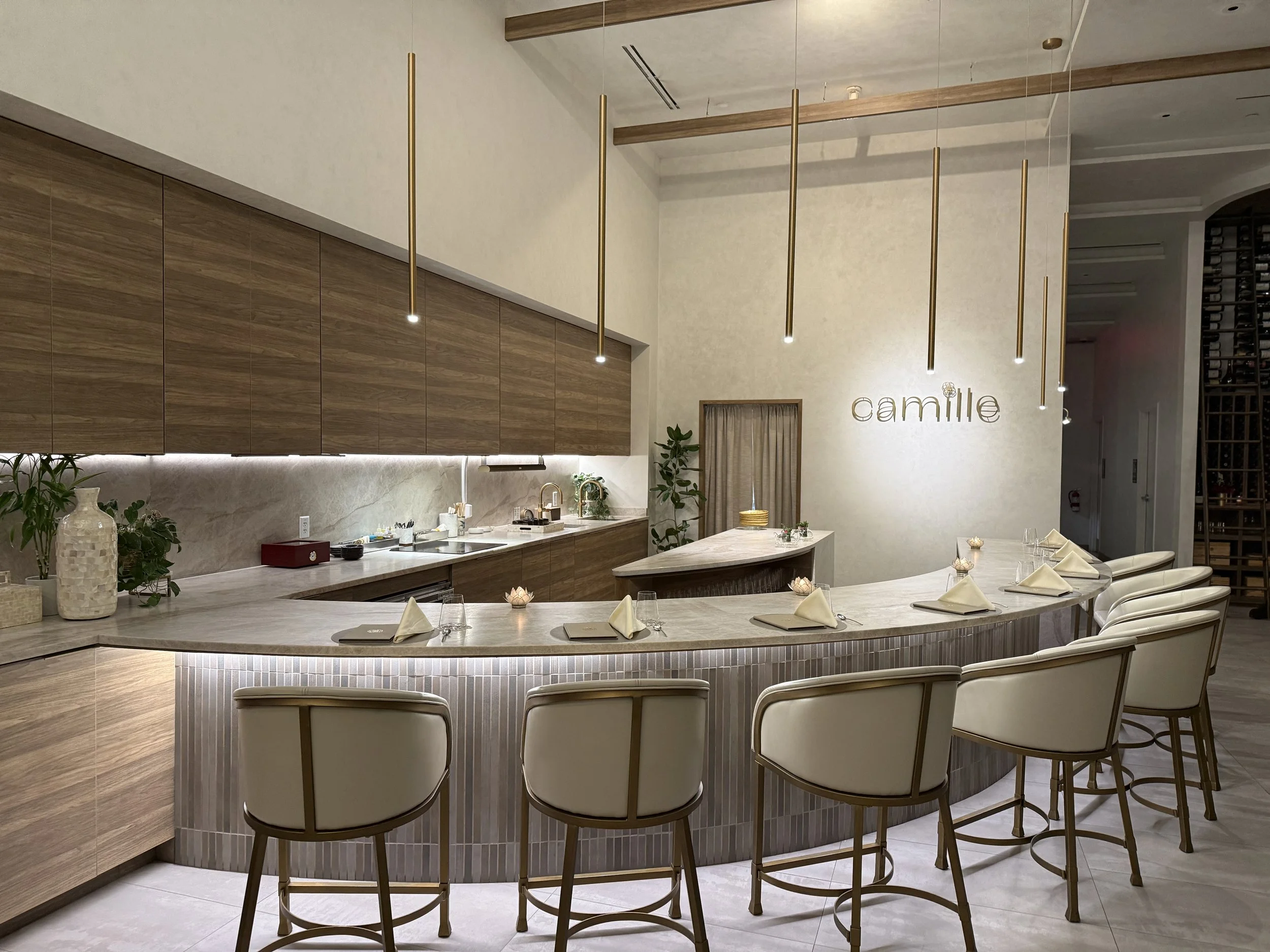
Counter seating
Rating: 15/20
Where: Orlando, FL
When: Dinner for 2 on 1 January 2026
Cost per Person: Tasting menu $195, Wine Pairing $125-$750
Accolades: 1 Michelin Star
Why: French cuisine with light inspirations from Vietnamese cuisine
North-east of downtown Orlando is the Baldwin Park neighborhood, which is mostly residential, but has a walkable “downtown” bordering Lake Baldwin. This relatively new construction is home to not just one, but two Michelin-starred restaurants, literally across the street from each other. Both are backed by local restaurateur Johnny Tung, who either has a culinary Midas touch (with four Michelin-starred restaurants to his name), or proves that creating a Michelin-starred restaurant is somewhat plannable.
I wasn't aware of the connection between these two restaurants in Baldwin Park when I made my reservations for them, since at first glance, they looked very different. “Camille” serves a French-Vietnamese cuisine, while “Sorakara” is a high-end Japanese restaurant. They wound up being our first two Michelin-starred meals in 2026.
It was an unseasonably chilly January evening when we made our way to “Camille”. Right upon entering, we definitely felt a Michelin-star vibe. High ceilings, a modern interior design with everything in shades of beige, a chef's counter for eight diners prominently placed in the room, and four booths (and one glassed-in private dining room) along the opposite wall. Even before getting to our counter seats, we were welcomed with a complimentary glass of sparkling tea (with or without alcohol). A nice touch.
Unfortunately, our hopes in choosing the counter seating - of seeing cooking performed in front of us, or at least some interaction with the chefs - were not fulfilled. The only activity that happened behind the counter was the silent plating of some of the dishes. All of the actual preparation happened in an out-of-sight kitchen. The chefs themselves handed us some of the dishes, but their explanations were no different from the ones given by the front-of-house staff. When I asked one of the chefs what cut of the beef was being used, he had to go back to the kitchen to get me an answer. (The notable exception to this was the dessert chef, who showed some genuine and infectious excitement for his dishes.) All in all, this made the experience feel a bit cold and impersonal - clearly a missed opportunity. By way of (possibly unfair) comparison, LA's Somni also does all of its cooking in an out-of-sight kitchen and only plates dishes in front of the guests, but there is so much interaction between the chefs, servers and guests that one feels right in the middle of the action.
Camille served a single tasting menu, priced at $195 for the counter and $175 in a booth. It was possible to “upgrade” the experience at booking time for an additional $95. Unfortunately, what exactly this upgrade entailed was left unspecified at the time, so we passed. We saw some other guests getting an additional dessert, so maybe the upgrade consisted of this and of getting truffles shaved over two dishes. There was a wide variety of beverage pairings, either five glasses for just the savory dishes ($125/$280 for wine, $150/$280 for sake) or a seven-glass pairing including a dessert wine ($450/$750). I tried the $125 pairing option, and the wines were all pretty good, though not outstanding. Still, for $25 per glass and some very generous pours, this was not a bad choice.
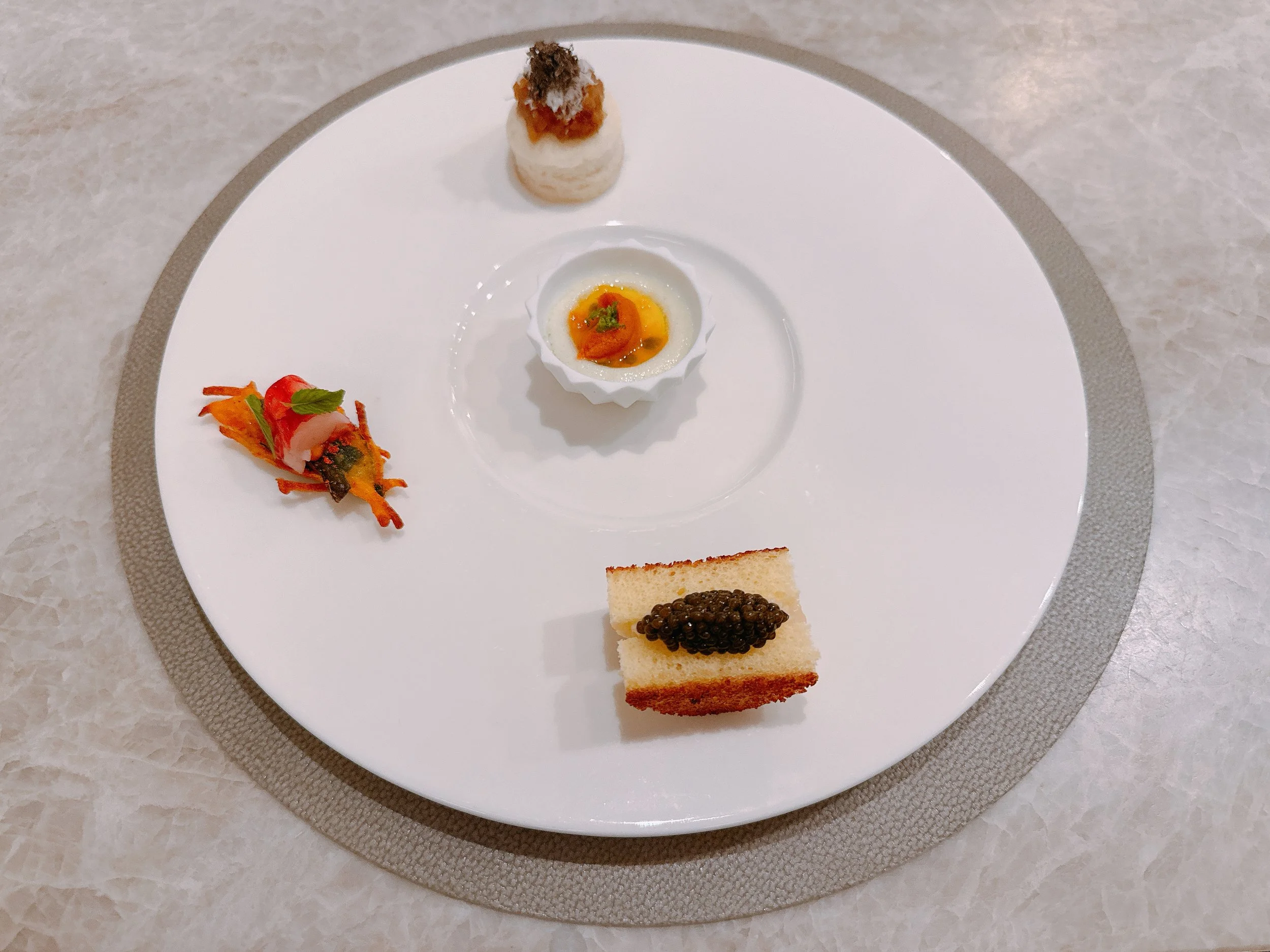
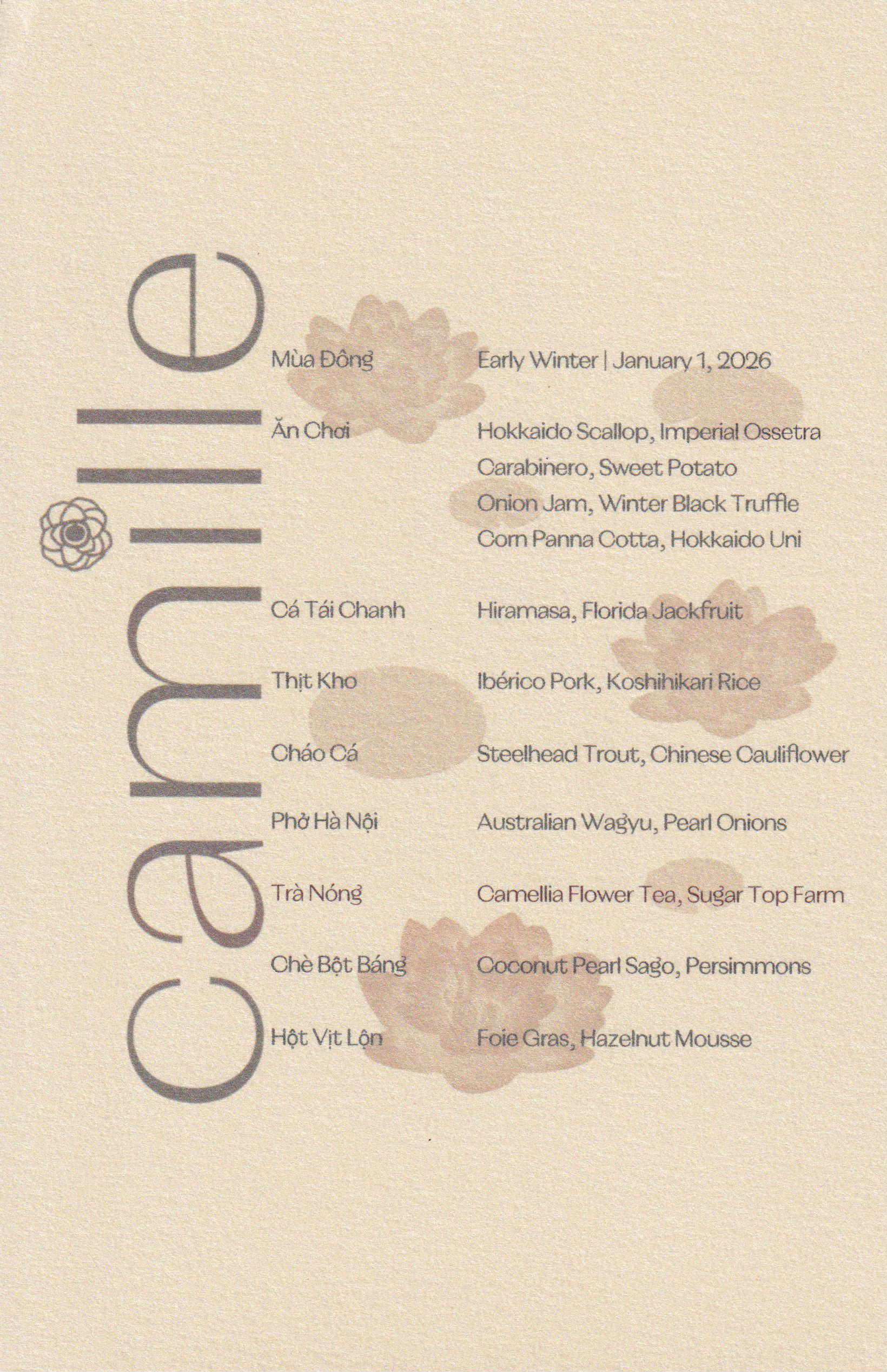
The first course that we received was a collection of four individual dishes, each supposedly prepared by a different chef. We started with a little toasted brioche sandwich that was filled with scallops, seasoned with garlic and chives, and topped with Ossetra caviar. A nice enough bite with a creamy scallop, but the caviar (as so often) disappeared a bit in this dish 15. Next, we tried a sweet potato fritter topped with a piece of prawn. Crunchy, light and vegetably. I wonder if this would have been better served warm rather than at room temperature 14. Our third bite was a steamed bun topped with caramelized onions and black truffles. The main taste came from the sweet onions, but overall, this was a bit too doughy for me 14. Finally, there was a sweet corn panna cotta, topped with uni (sea urchin) and seasoned with kaffir lime zest and passion fruit. The dish was sweet and a bit acidic, overwhelming the lighter flavor of the uni 14.
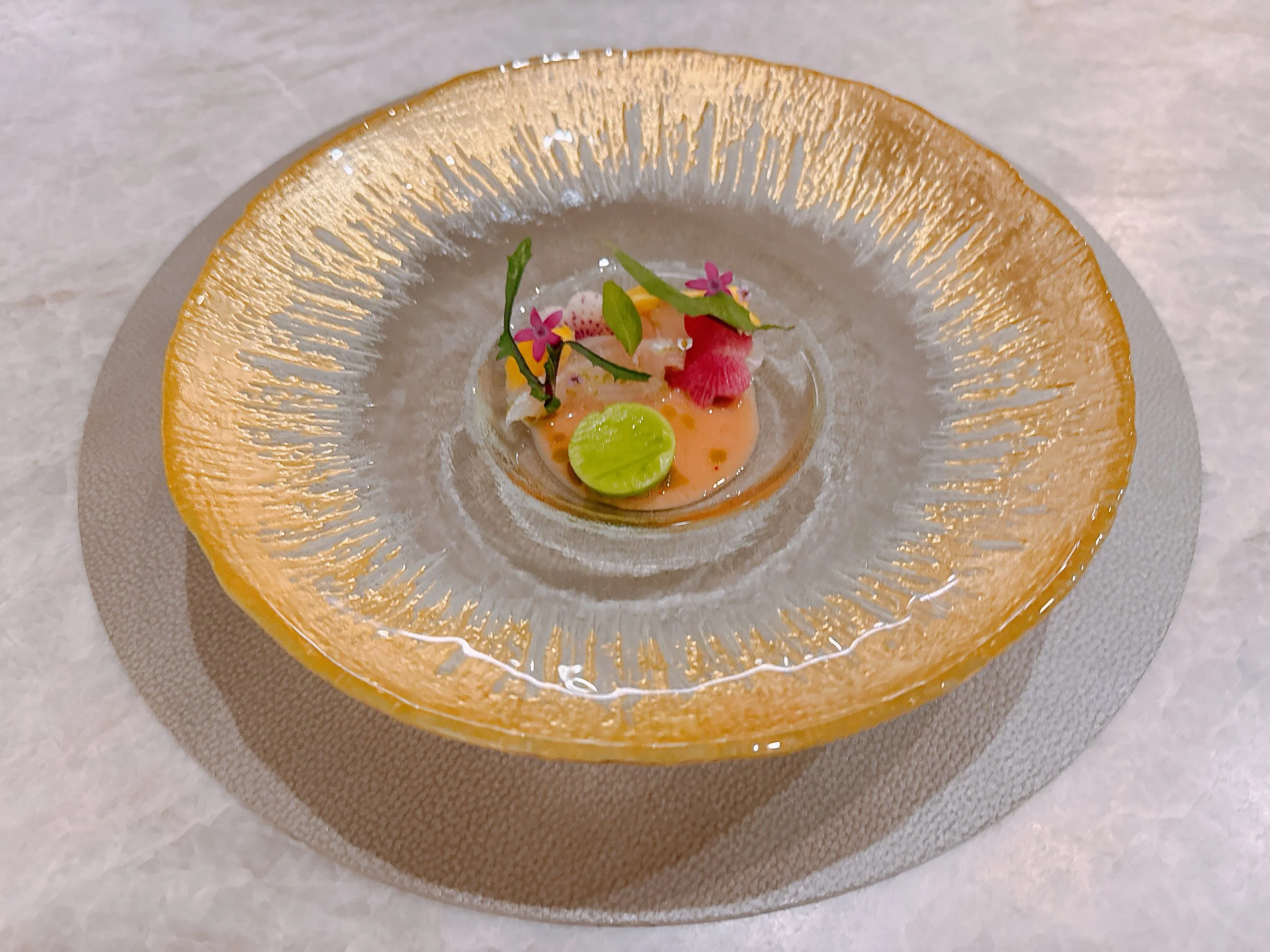
Next, we got a ceviche made from salt-cured New Zealand hiramasa. The fish was accompanied by local microgreens, local jackfruit, a mustard greens sorbet, and a leche de tigre sauce. Overall, this was a nicely balanced mix of sweetness, acidity and a hint of spice (from the jalapenos in the sauce). Oddly, the mustard greens sorbet was mostly sweet - I wonder if a more herbal or spicy flavor would have made the dish more complex 15.
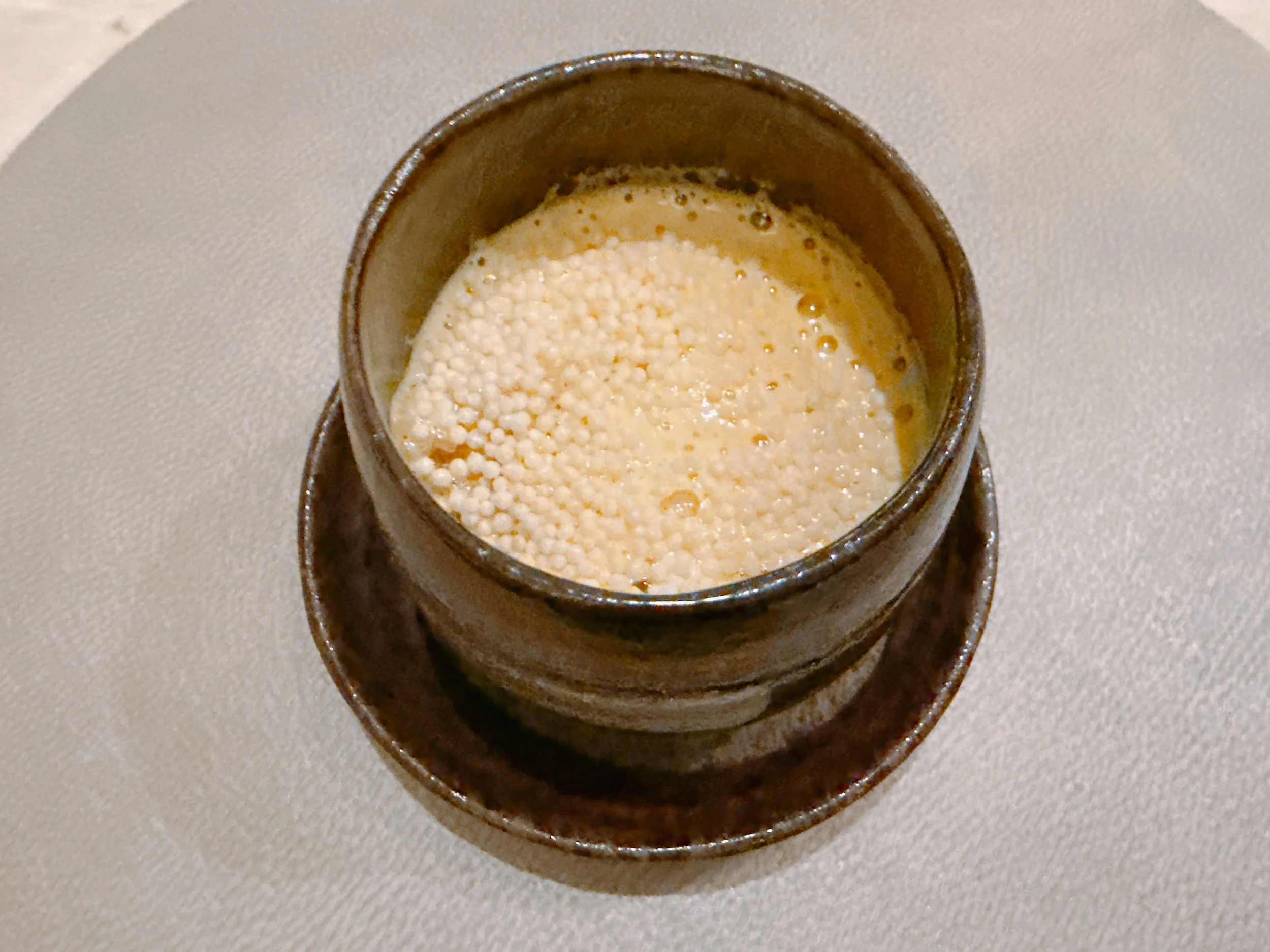
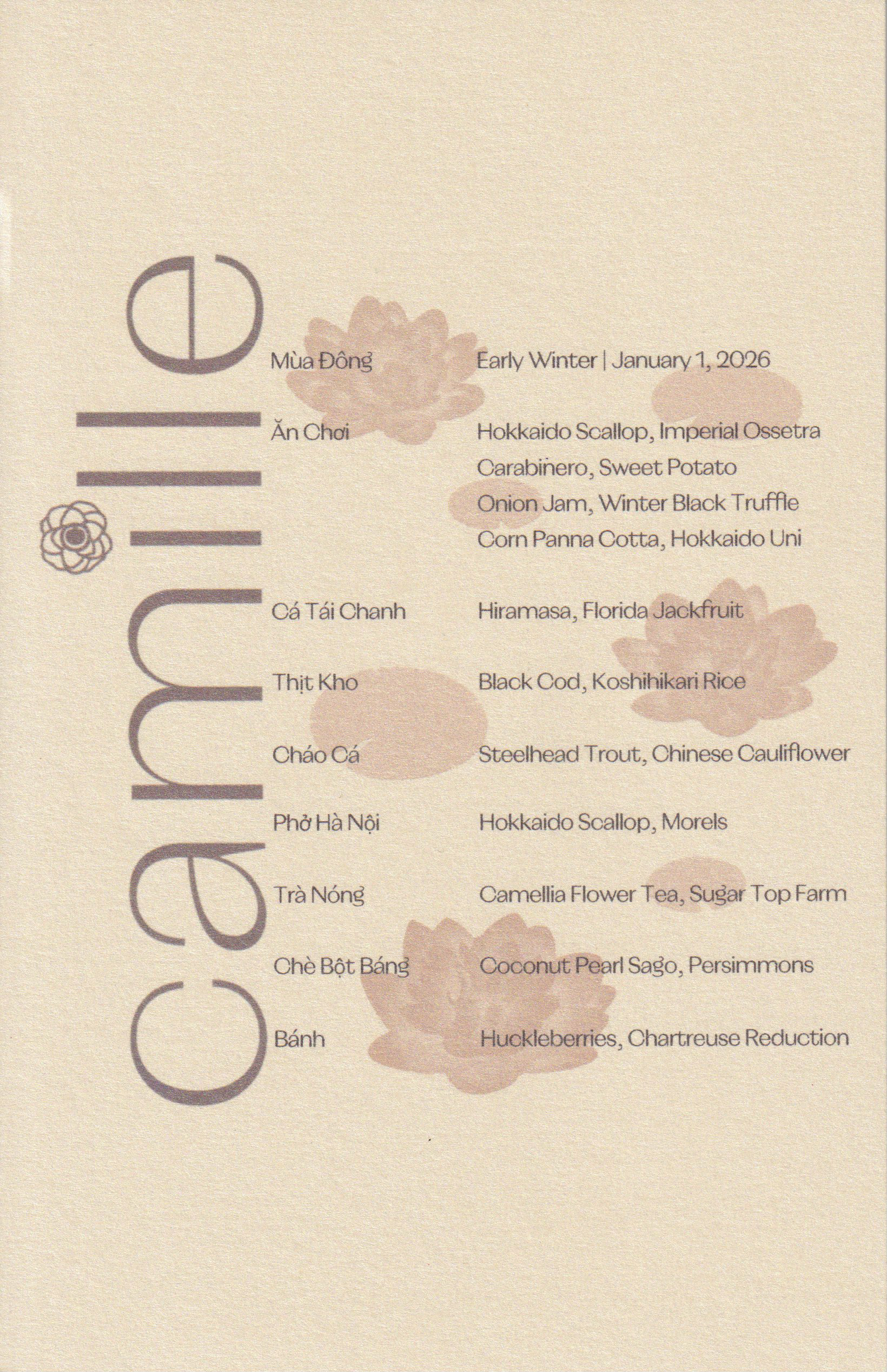
Next, a rice dish. Japanese koshihikari rice came with an egg foam, rice crackers and Iberico pork. Tastewise, this was essentially bacon and eggs plus rice - something you are more likely see at breakfast rather than dinner. Marinated mushrooms gave the dish some acidity. Overall, this was a much more rustic dish than what had come before 15. The pescatarian version had black cod instead of pork. Fine other than the fact that it was being served lukewarm 15.
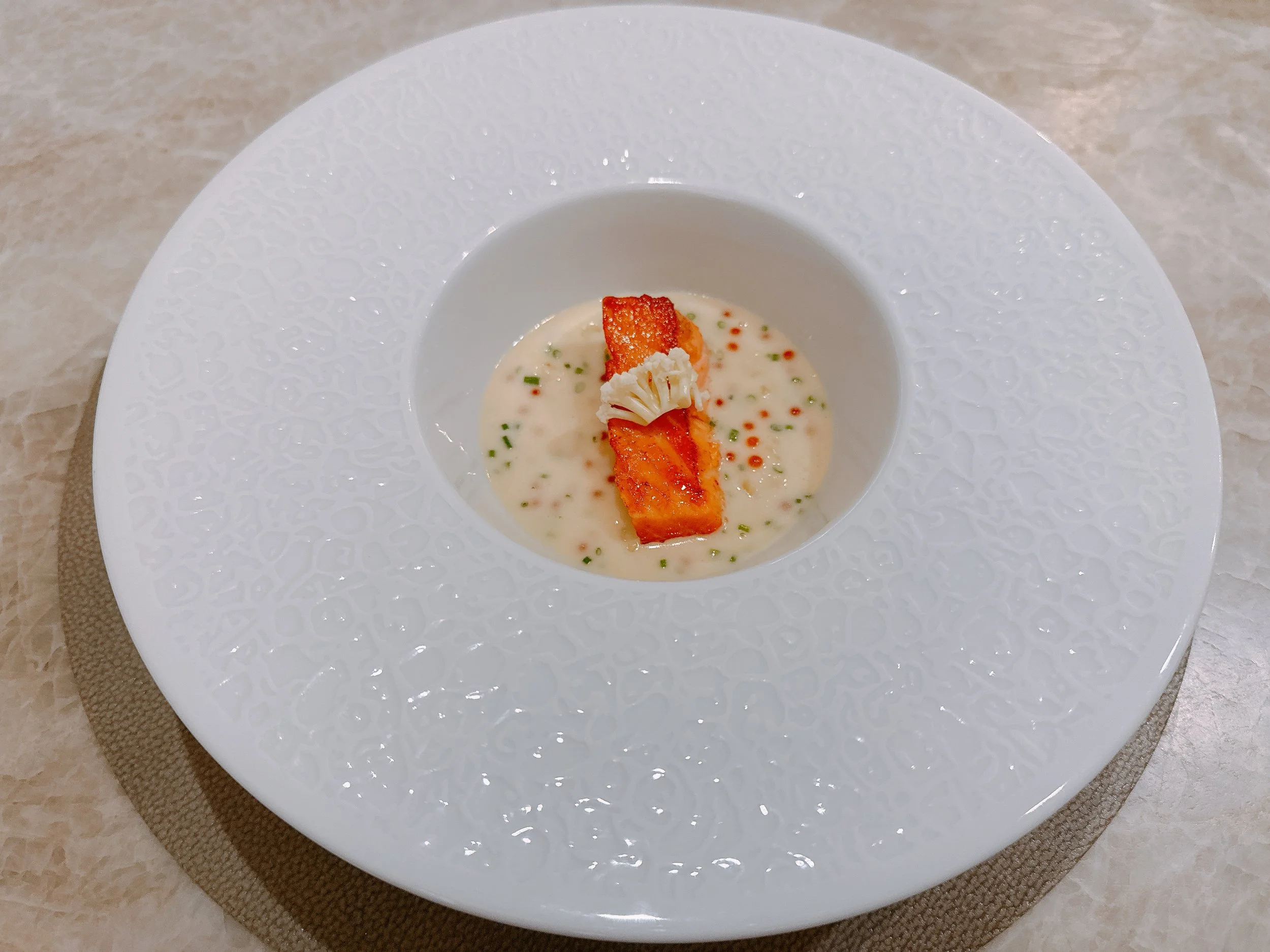
The following fish dish featured a filet of Scottish steelhead trout served over multiple preparations of Chinese cauliflower, which came pickled, as a puree, and as a congee. Chives and smoked trout roe gave the dish some dots of color. This course might have been the first one of the night that was served properly hot and not just warm or lukewarm. Overall, this was more of a cauliflower dish than a fish dish. The fish was flaky and fine, but flavorwise couldn't compete with the far more abundant sauce. Speaking of flavors, overall they were pretty light for this dish, the pickled cauliflower might have been the strongest contributor. Also, nothing about this dish felt particularly Asian other than the name-dropped “congee”. Well, maybe a true French rendition would have used a beurre blanc, but that also might have been an improvement in terms of flavor intensity 15.
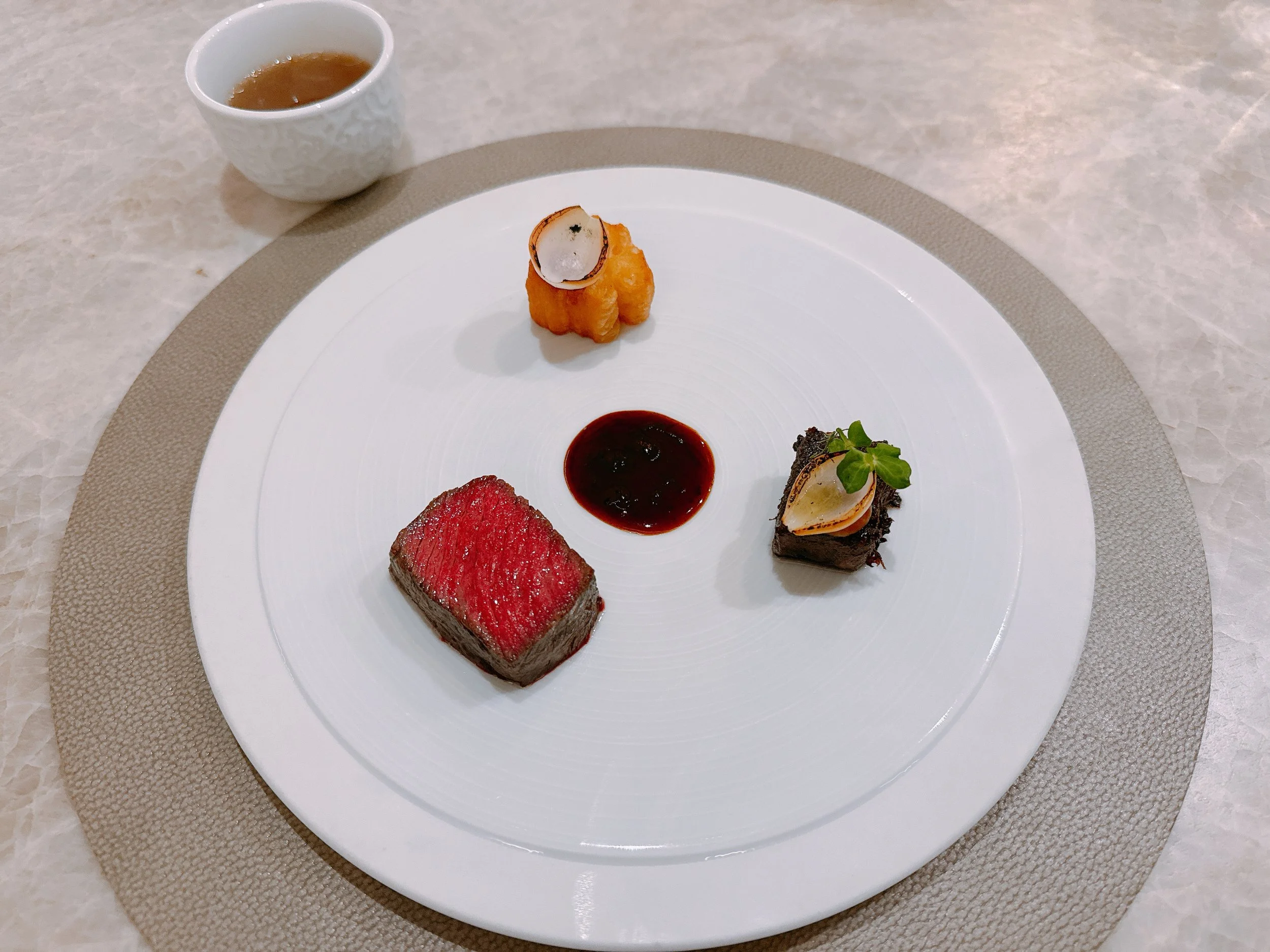
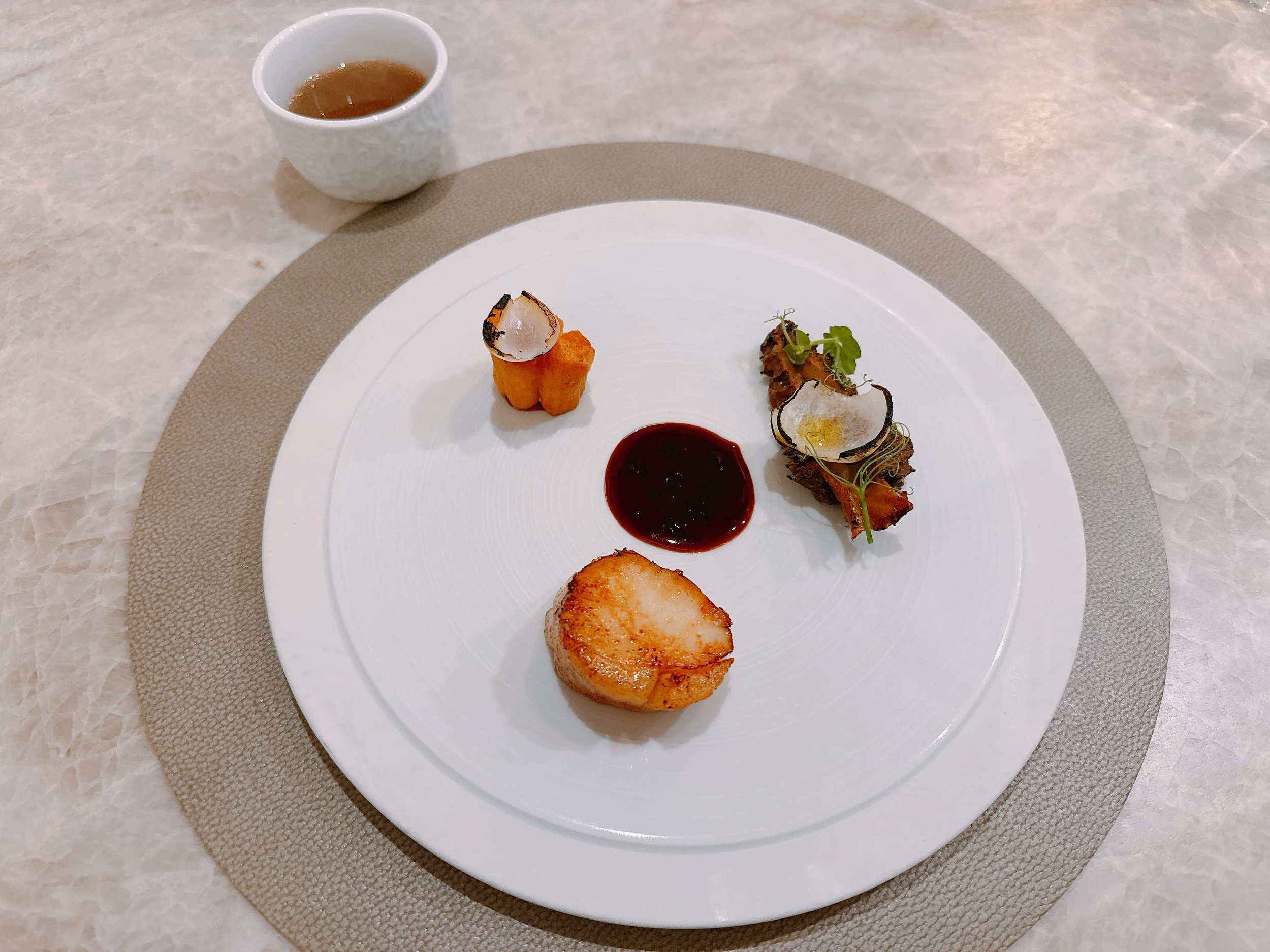
The final savory dish of the night was loosely inspired by northern Vietnamese pho. Two different cuts of Australian wagyu beef were served with a hoisin/beef jus sauce. Also on the plate: a breakfast donut dipped in pho, and a couple pieces of pearl onions. On the side was a small cup filled with pho broth. The two pieces of beef were very different. One was braised and very tender, the other had a significant bite - definitely not melting in the mouth. The accompanying sauce was pretty nice though, and very flavorful. The onions added a bit of freshness and acidity to the dish. The donut was a bit of a head-scratcher, though - oily and cold, it came with at most a hint of pho flavor. The hot broth tasted almost Christmassy - sadly I don't know enough about Vietnamese cuisine to judge whether that is typical for Northern pho 15. The pescatarian version had a scallop and a morel mushroom instead of the two beef cuts. According to my wife, the scallop was nicely seasoned, but felt previously frozen and was indeed still cold in the middle. The morel mushroom was juicy and flavorful 14.
A cup of black tea mixed with local herbs such as rosemary and sage heralded the transition to the desserts.
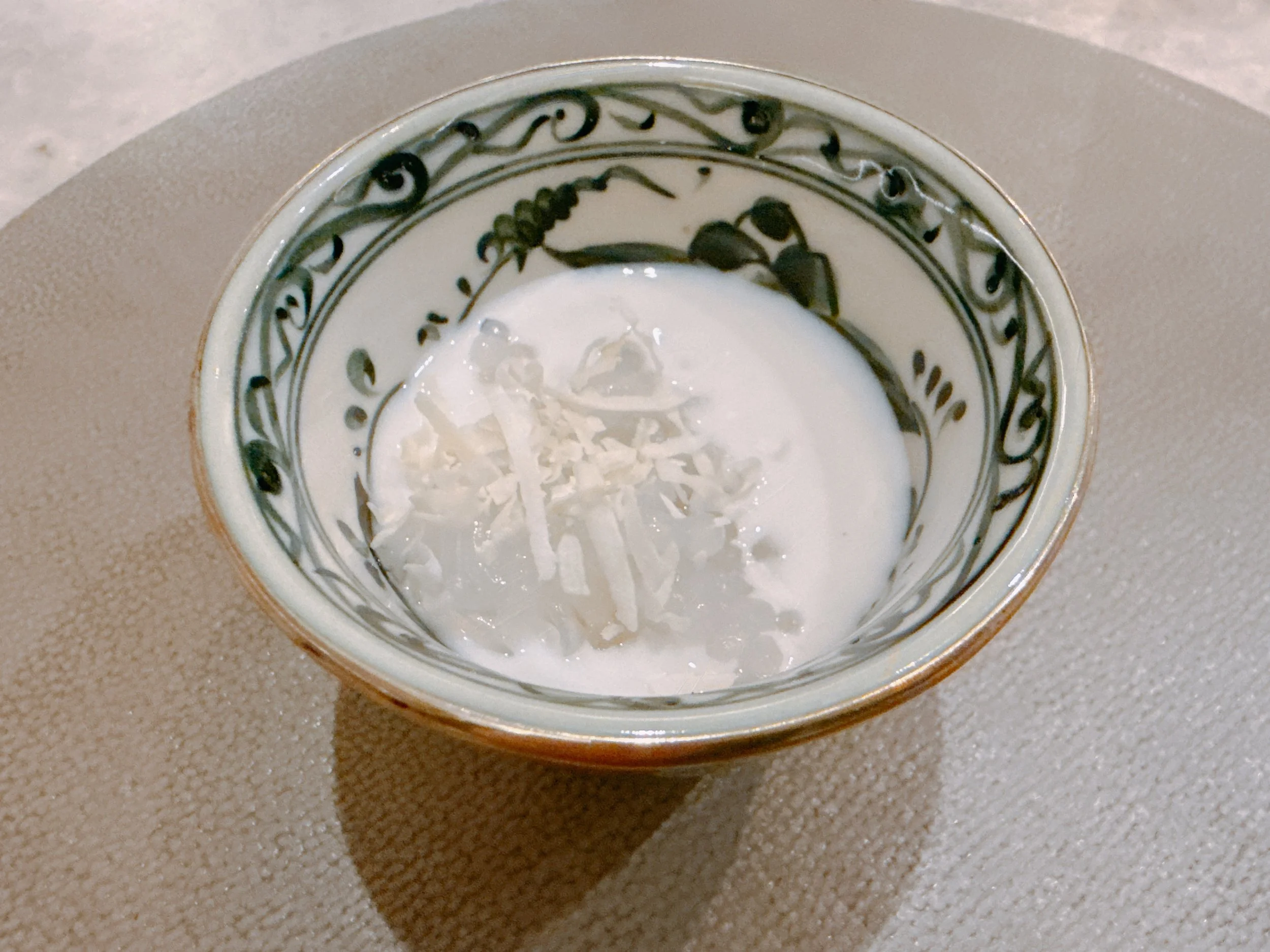
Our first dessert was a dish made with tapioca pearls, sago, coconut cream, persimmons and limes. It tasted mostly of coconut rather than fruit, with the tapioca pearls providing texture. Not bad 15.
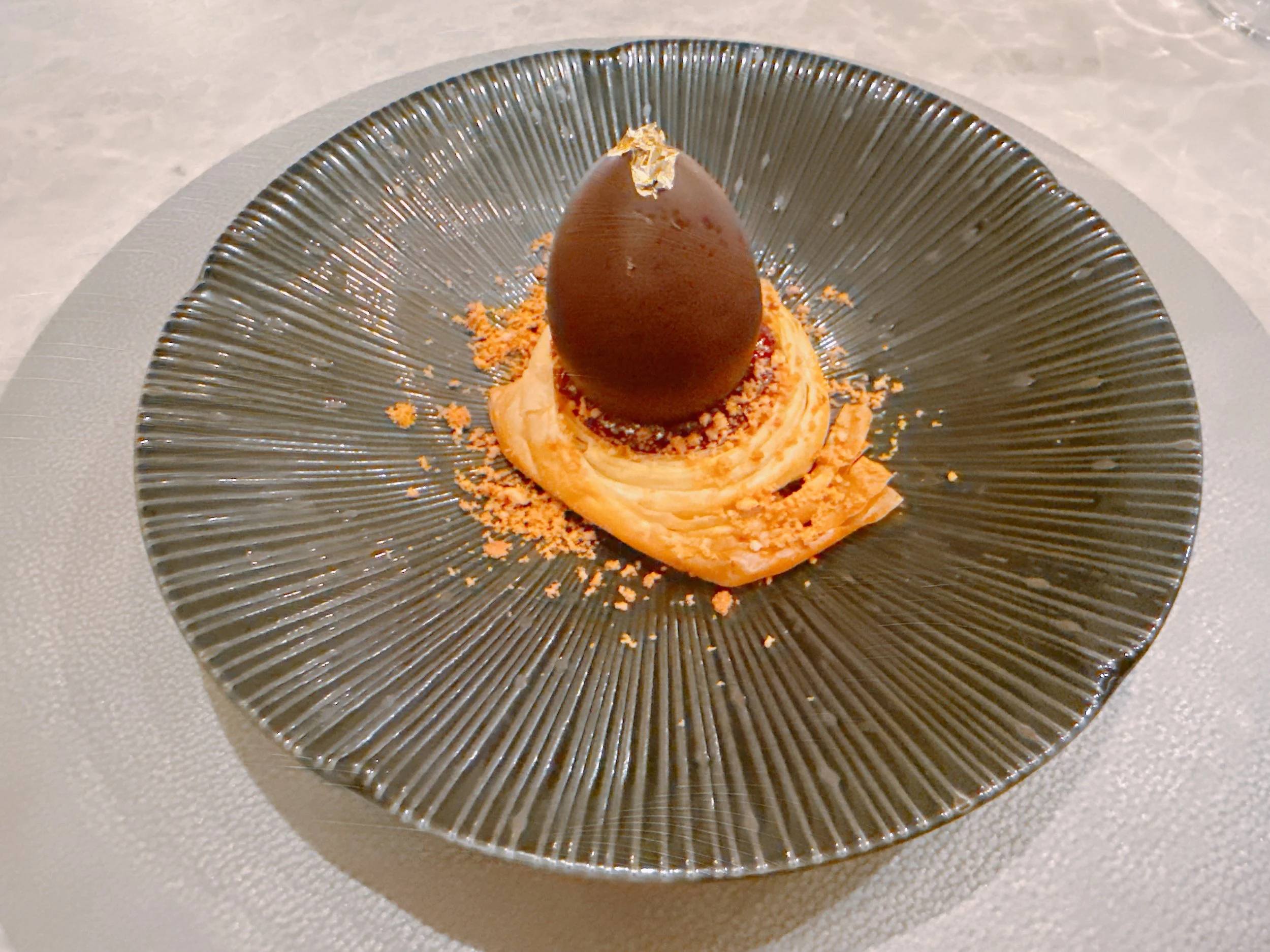
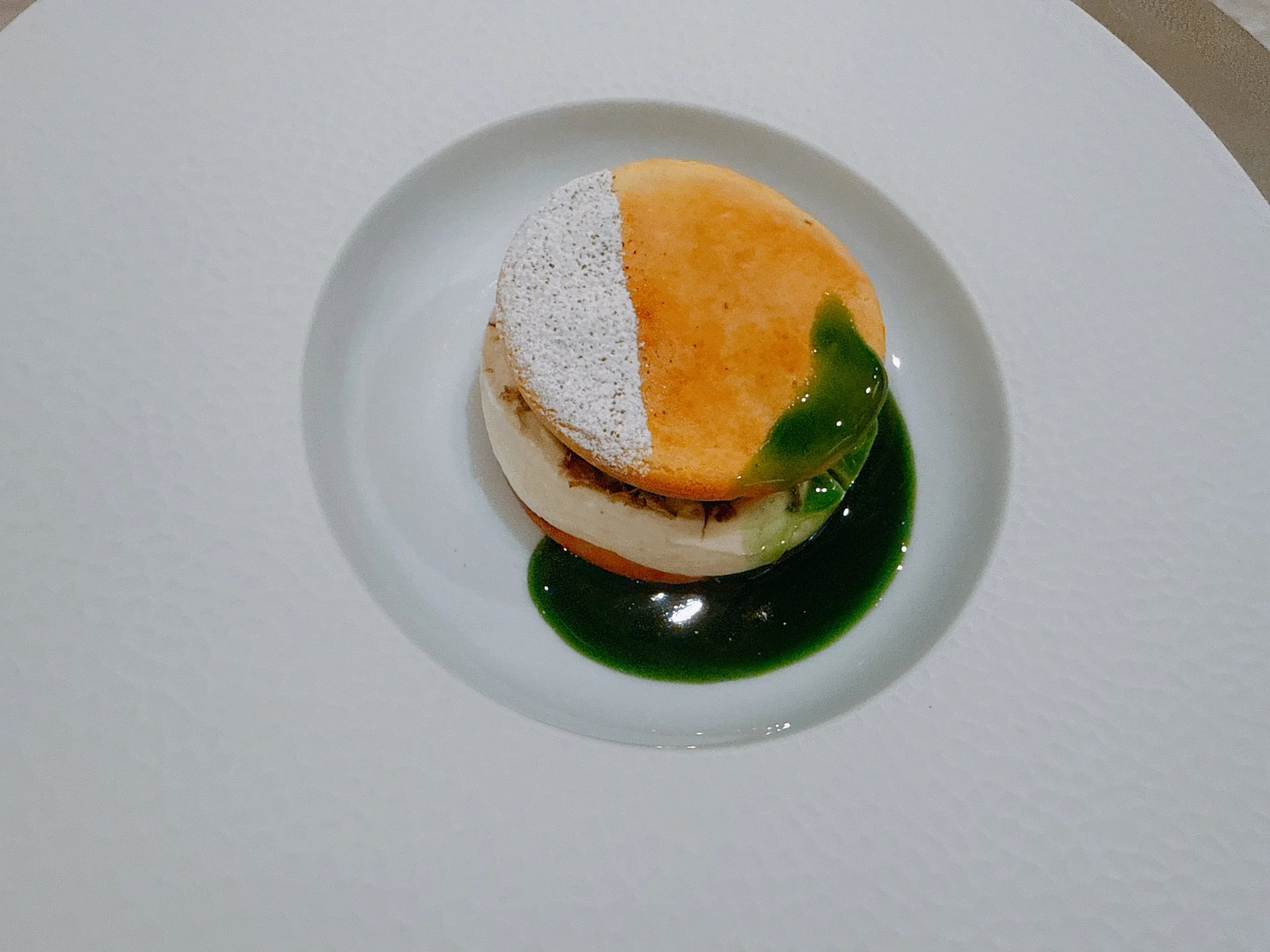
The second and final dessert was inspired by “balut”, but thankfully was not a literal rendition. Instead, we got a chocolate egg filled with foie gras (the “meat” part of the balut), a hazelnut mousse, and Vietnamese coriander. All of this sat on a “nest” of filo dough and blood orange jam. This was primarily a hazelnut/chocolate dish, but there were some fruit components as well (with possibly some pear inside?). I was getting beyond full at this point, but this was a lovely dessert 16. The vegetarian version of the dessert was a cookie sandwich filled with a white truffle pastry cream and huckleberry jam. Also quite sweet and maybe a bit lighter than the chocolate dish 15.
Overall: This was a fine dinner, but fell a bit short of our expectations. We had hoped that “French-Vietnamese” meant a somewhat distinctive taste experience. However, the Vietnamese flavors were extremely subdued, and in fact, there wasn't even a single dish that could have been considered strongly Asian-influenced. Several dishes were served on the room-temperature to lukewarm side, possibly because of the lengthy plating process? And the interaction at the chef's counter was virtually non-existent. Maybe we didn't catch the restaurant at its best - everyone might have been exhausted after partying hard on New Year's Eve the night before 15.