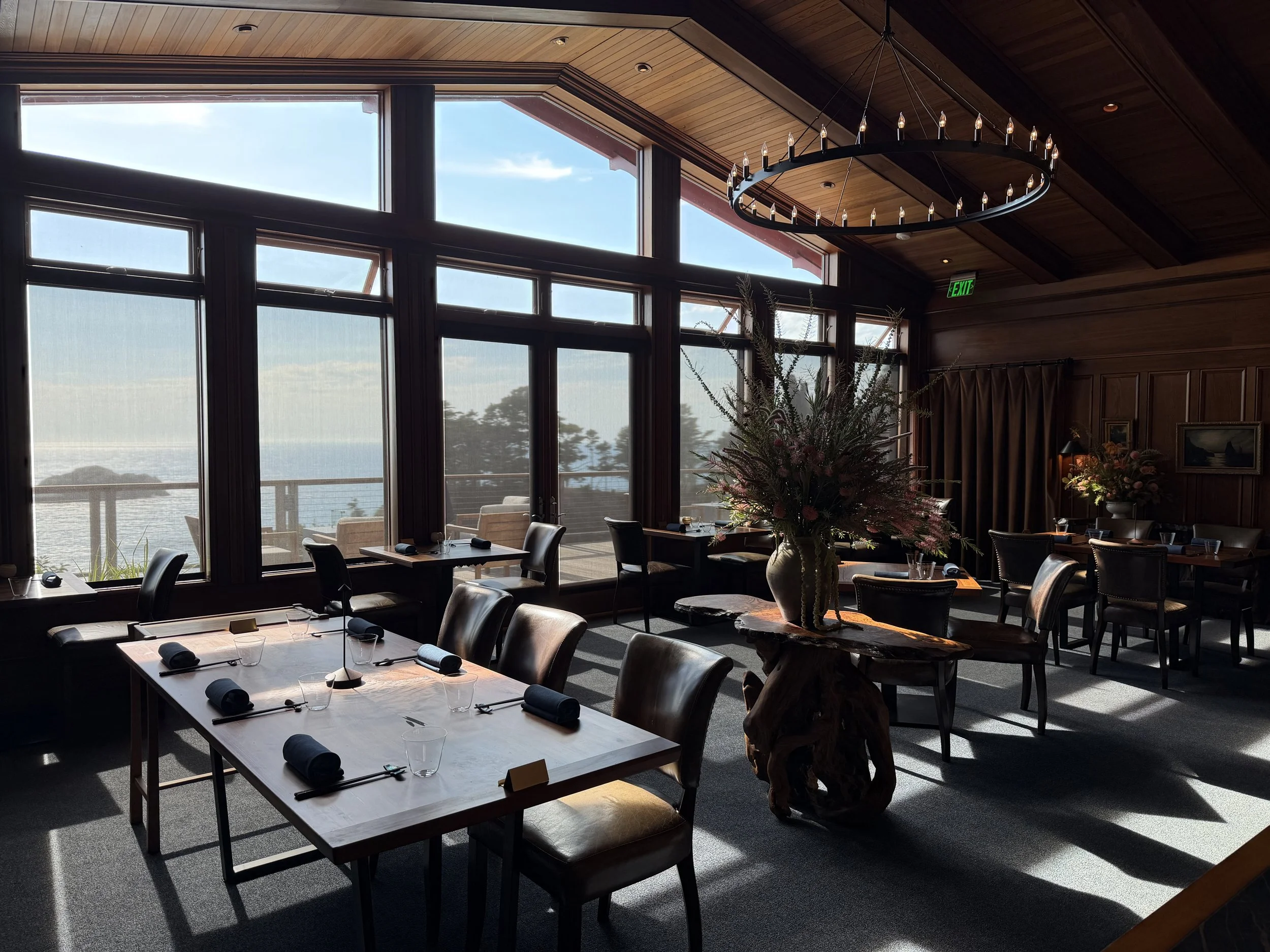
Afternoon light in the dining room
Rating: 17/20
Where: Elk, CA
When: Dinner for 2 on 4 October 2026
Cost per Person: Tasting menu $350, Wine pairing $300
Accolades: 2 Michelin Stars
Why: Local Northern Californian cuisine, great views
Visiting California's Mendocino coast in October involves gambling on the weather. Everything is possible: blue skies with gorgeous sunsets, or clammy, omnipresent fog resulting in zero visibility. Or one might even encounter both options right after one another, as during our recent trip here. Our drive took us past vineyards, sea cliffs and majestic redwood forests to “The Harbor House Inn”, the northernmost (and most remote) Michelin-starred restaurant in California.
The restaurant occupies a building that was constructed in 1916 as a demonstration home by a local logging company, intended to showcase how well redwood trees could be used in domestic construction. The house went through a number of owners over the next one hundred years, and in 2018, after a 4 ½ year renovation, opened in its current incarnation as a boutique inn / fine-dining restaurant combination. Chef Matthew Kammerer has been leading the kitchen ever since, having moved from San Francisco, where he spent several years at then-three-starred Saison. He and his team earned their first Michelin star in 2019. We visited a couple years later, and had one of those mind-blowing dinners where we couldn't believe that the restaurant only had a single star. A few months later, Michelin deservedly handed them a second one.
Ever since, we'd been looking for an excuse to repeat our four-hour drive to the restaurant. And after a five year wait, a nearby wedding of two of our friends provided the perfect opportunity. In addition to dinner, we also spent the night at the property, which seemed preferable to braving curvy roads in total darkness with either steep cliffs or immovable redwood trees on either side of us. The fact that the accommodations were lovely (if not necessarily cheap) didn't hurt either. As for things to do other than eating: the inn sits right above a protected cove, reachable via some surprisingly steep stairs. The kitchen reportedly harvests seaweed from there. Other than that, one can either relax or go on a hike through the redwood forests (a trailhead is a few minutes drive away). City life, this is not.
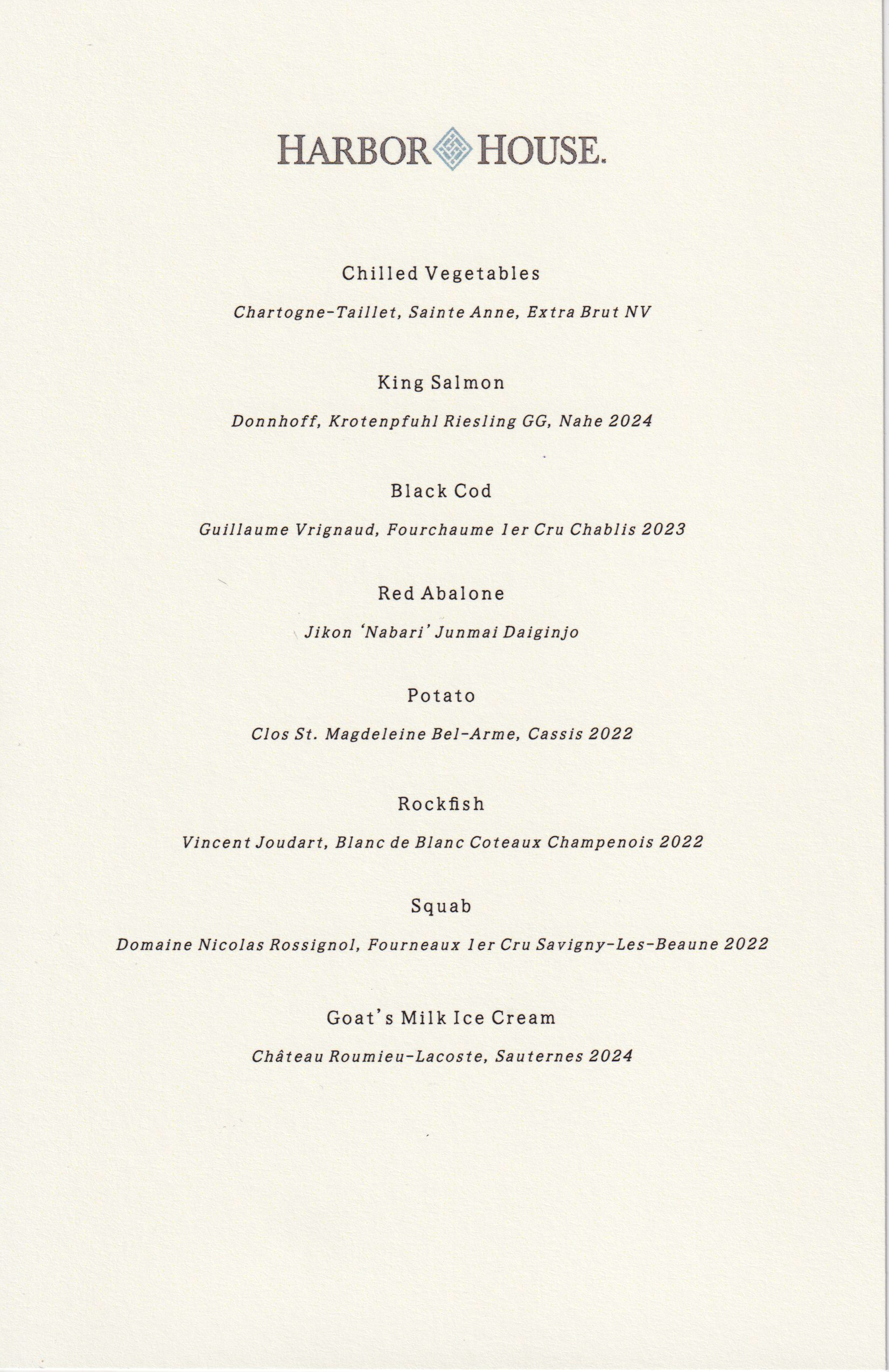
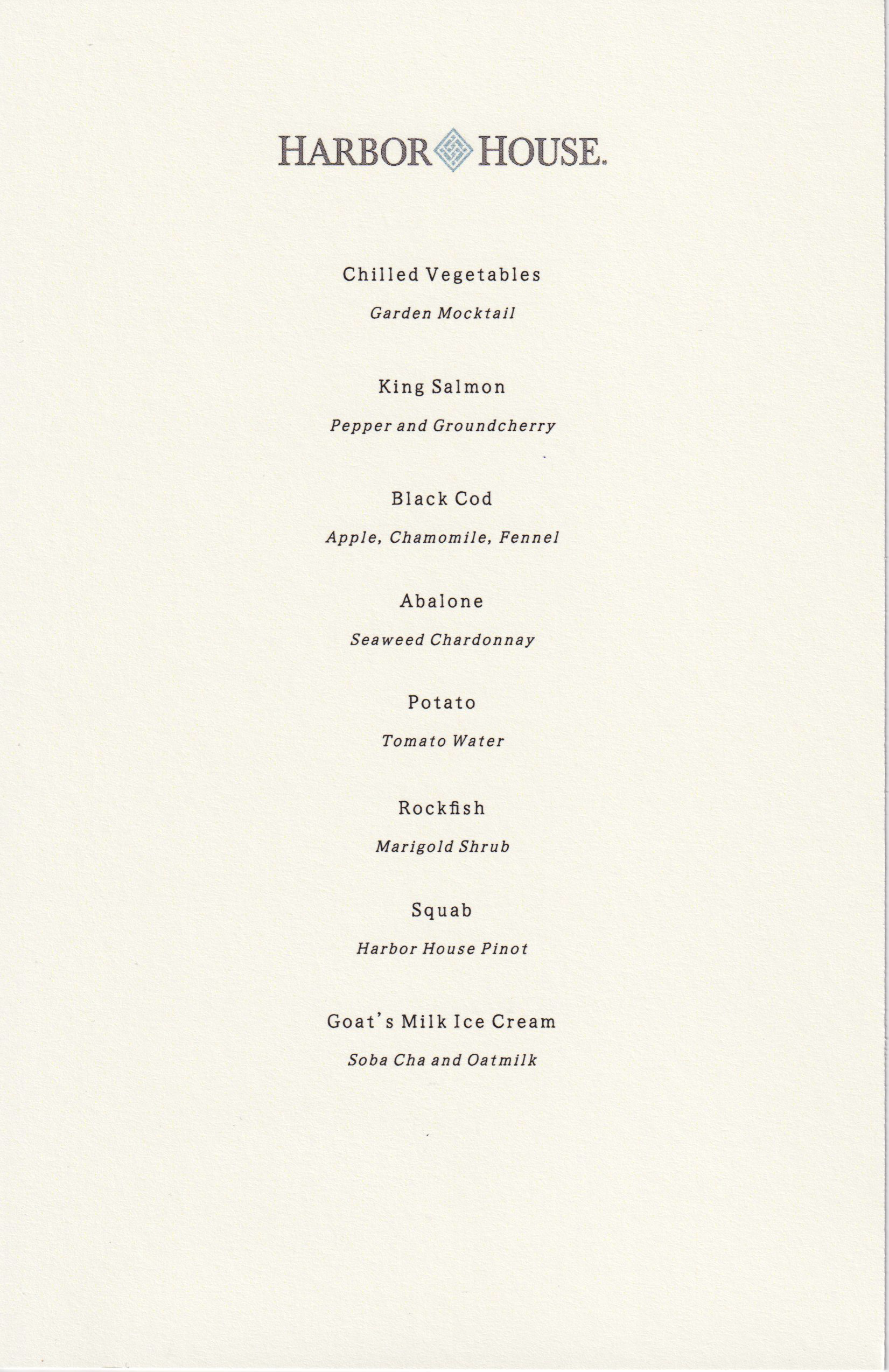
Foodwise, The Harbor House Inn offered a single tasting menu, with only some dietary restrictions accommodated - for example, one couldn’t avoid seafood altogether. There was a wine pairing for $300, a non-alcoholic pairing for $125, and a half-and-half mix of the two for $225. (At lunchtime, a shorter menu with correspondingly lower prices was served.) The wines (and one sake) in the pairing were quite nice, and good matches for the food. However, given the not insignificant price of the pairing, one might want to consider getting a bottle (or several by-the-glass orders) instead. We also tried the non-alcoholic pairing, which mostly consisted of grape juices with aromatic additions such as peppers or seaweed. Due to its heavy focus on juices, the pairing felt a bit too sweet for the food.
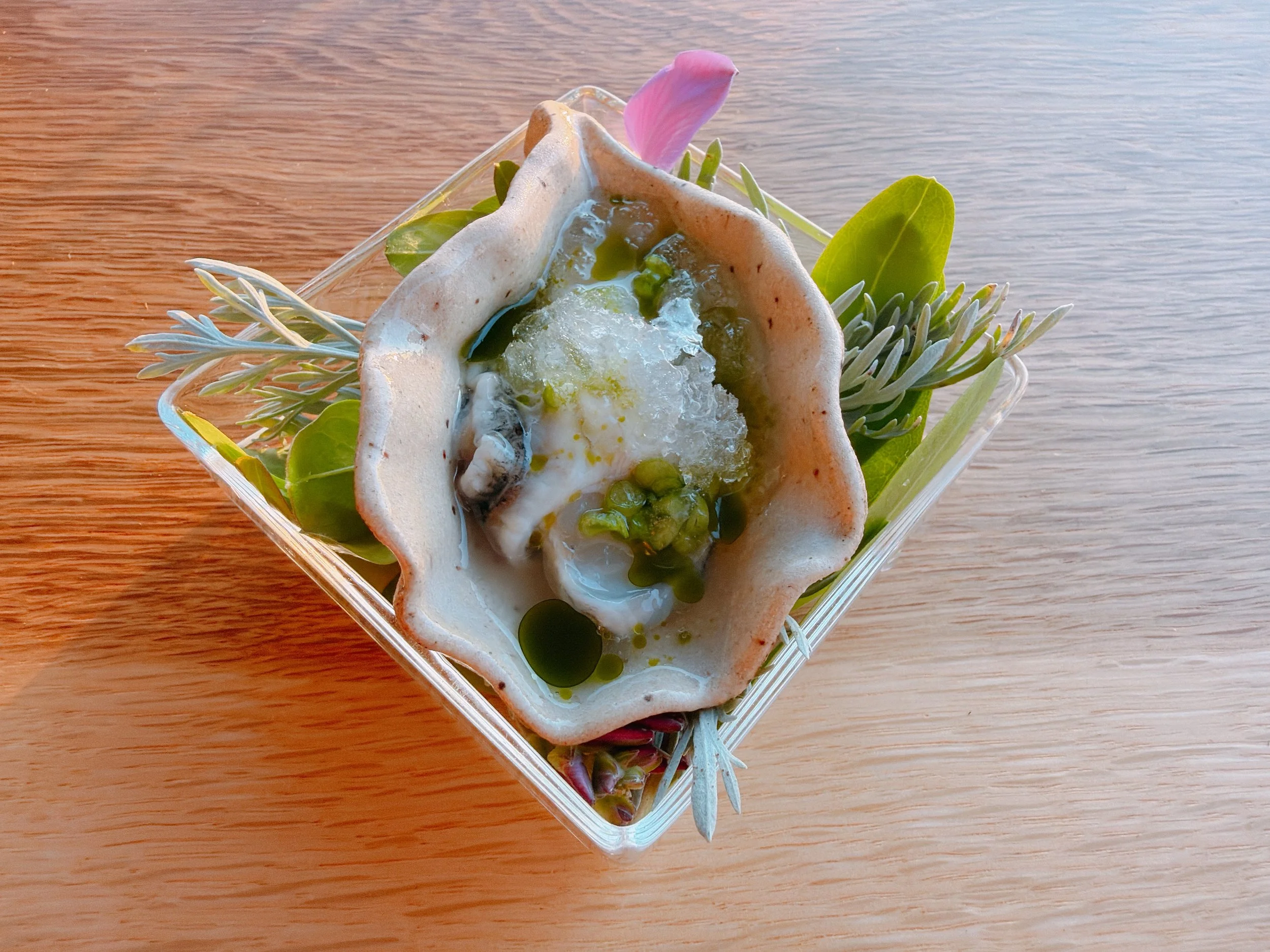
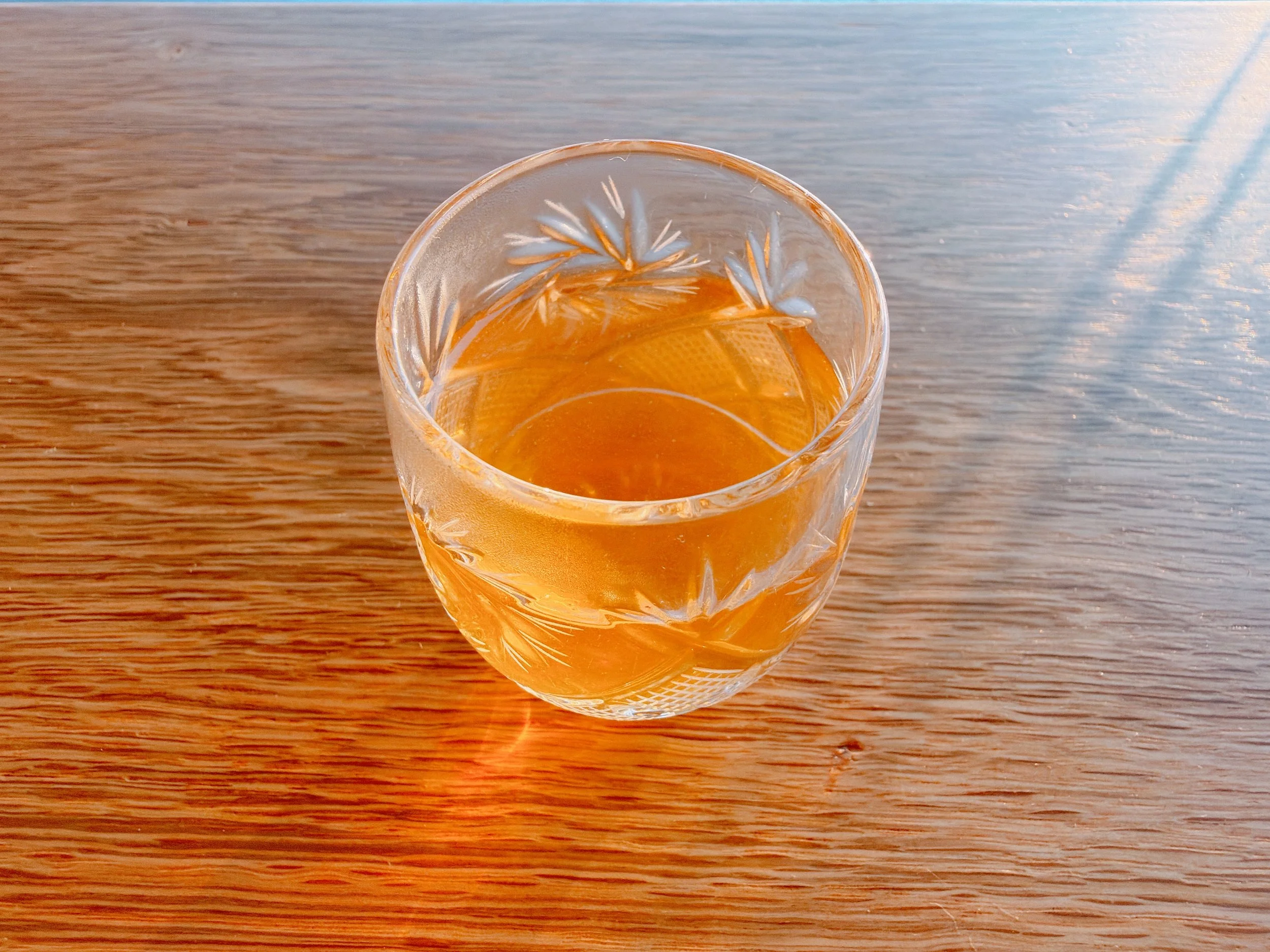
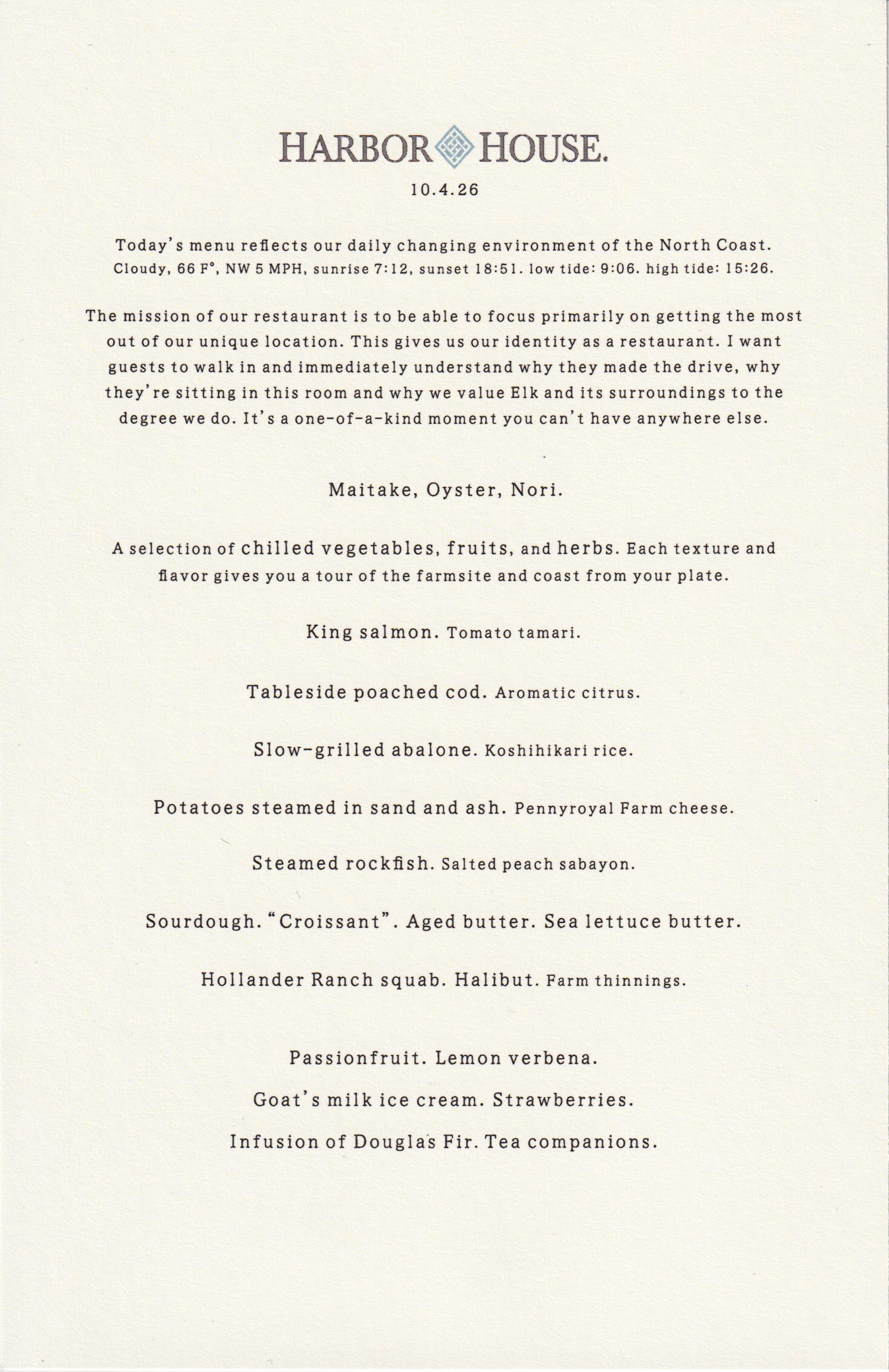
Our dinner began outdoors on the restaurant's patio, overlooking the cove and providing a great view of the sun setting over the Pacific ocean. A gas fireplace provided welcome warmth - the temperature dropped quickly in the evening. Out here, we were served three appetizers. First, we tried a sweetwater oyster that was served with nasturtium prepared in multiple ways: smoked, as a granita, as an oil, and the nasturtium's stem. The first taste impression was of sweetness, mostly from the granita it seemed. The oyster itself had a creamy texture, but there was hardly any seafood flavor here 15. Next was a drink made from nori seaweed collected from the restaurant's cove. It was savory, salty (but not too salty), and had an intense seaweed flavor. Yum 18.
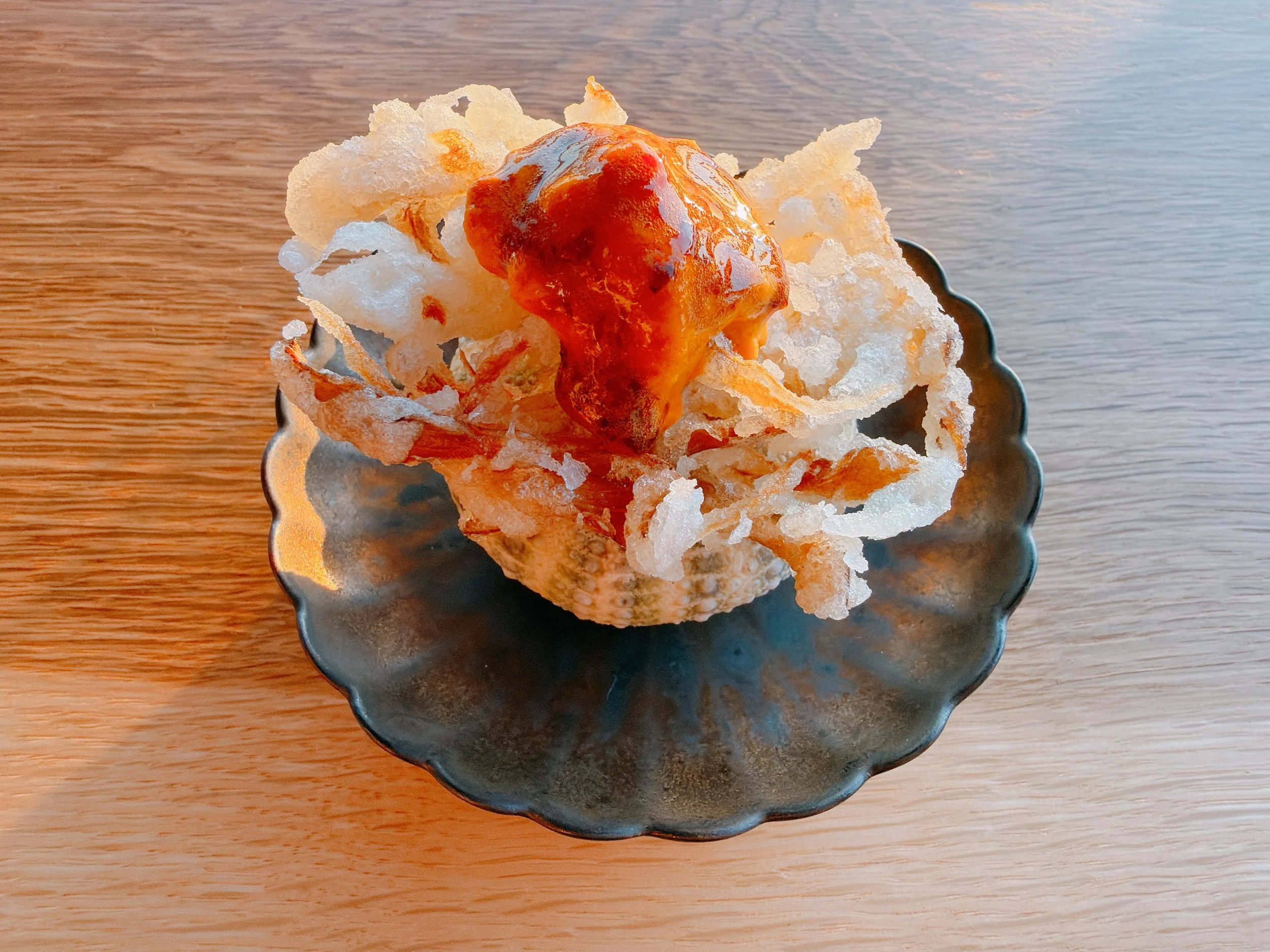
Finally, a maitake mushroom tempura was topped with purple uni (sea urchin), and brushed with egg yolks and nori. This bite was quite crunchy (partly offset by the creamy uni), somewhat oily, and had a light mushroom flavor 16.
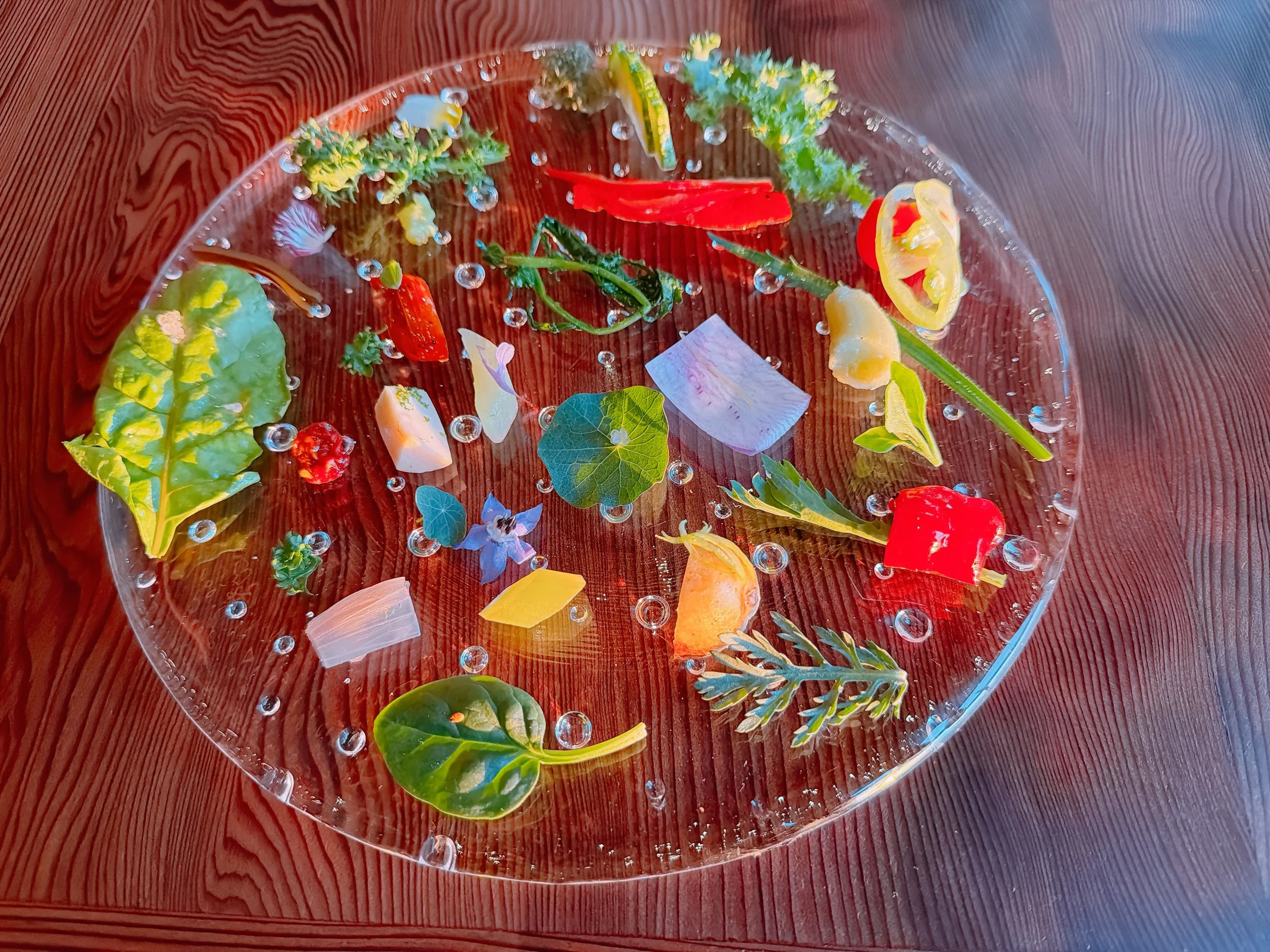
The first indoor course was a selection of chilled vegetables and herbs that came from the restaurant's garden right next to the inn and from its farm further down the road. Some were served raw, others had been cooked, poached, grilled, and/or smoked. This was not a cohesive salad, but rather a sampling of individual ingredients. With that caveat, it was lovely, featuring fresh produce that had very distinct taste profiles. The cooked bites in particular were quite flavorful 17.
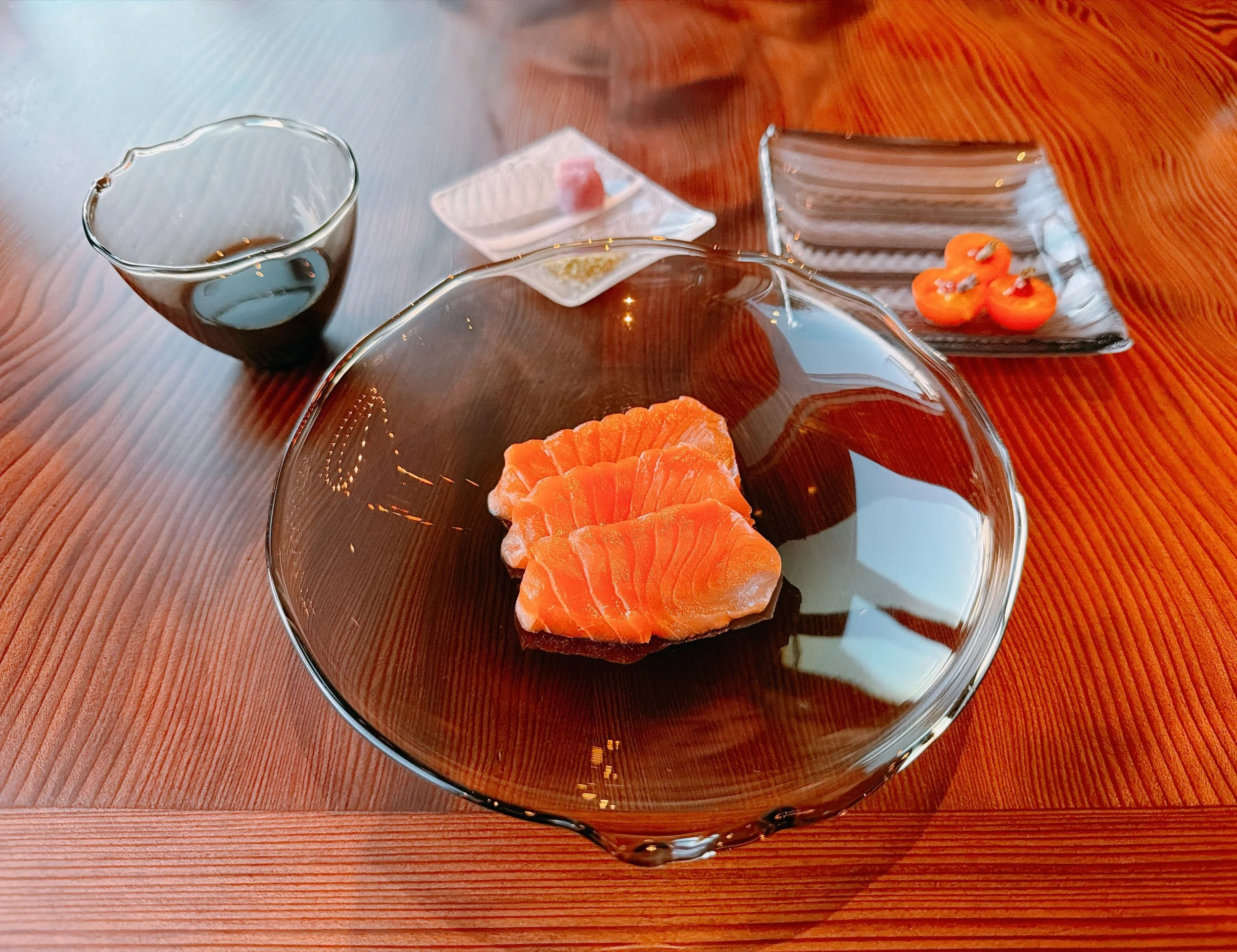
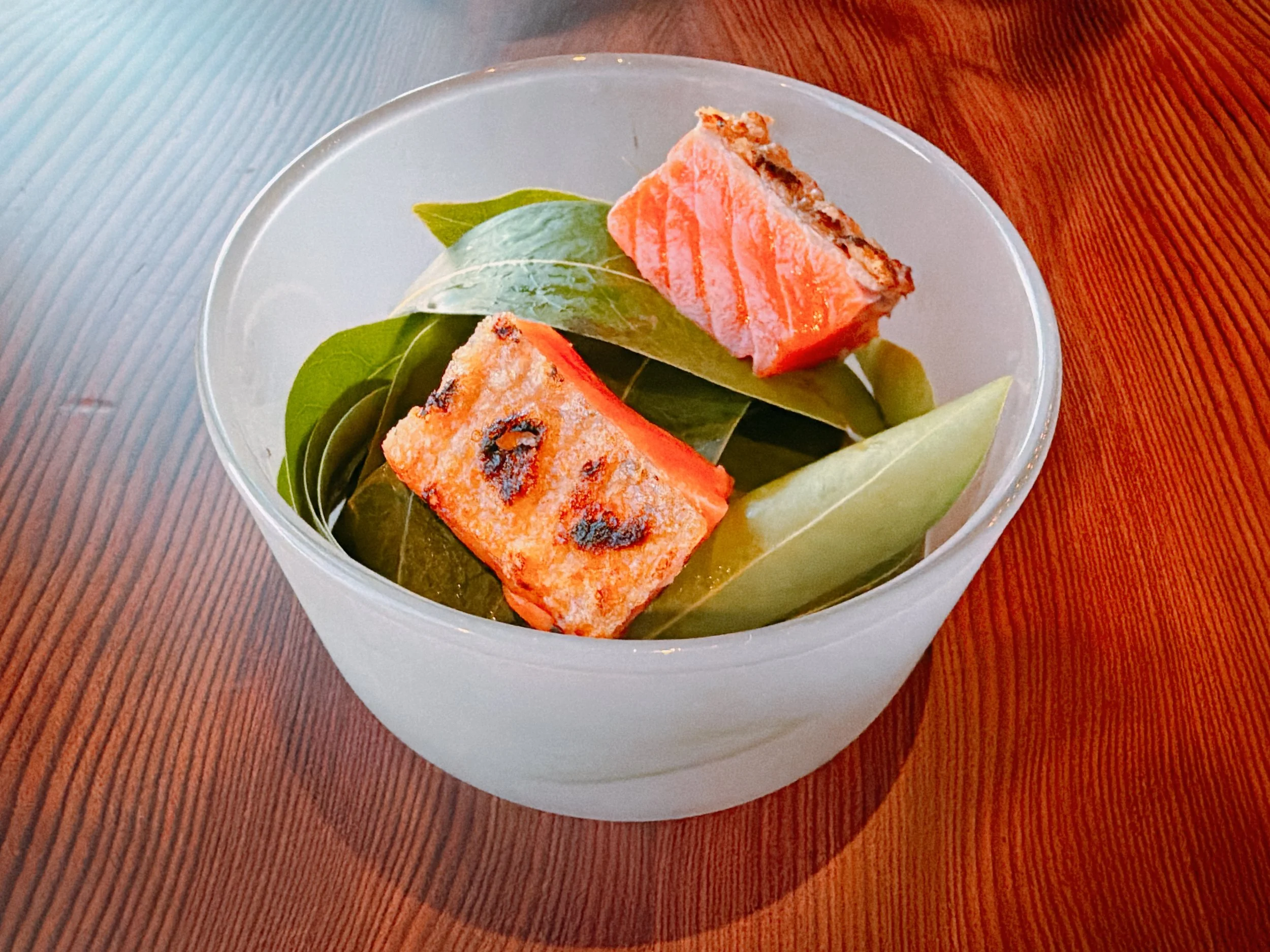
A very focused dish followed: three slices of king salmon sashimi were served with a dipping sauce made from tamari (soy sauce) and tomatoes. Also present: a kinome (sansho pepper leaf) salt, shredded purple daikon, and halved cherry tomatoes topped with shiso flowers. In a separate bowl, served warm, was a piece of salmon belly that had been grilled over bay leaves. At our waiter's suggestion, we tried the grilled salmon first. It had a very crunchy skin and was quite fatty, but only had a very light smoky flavor. The sashimi was lovely, and the seasoning(s) added depth and saltiness. The late-season tomatoes were surprisingly sweet and quite tasty 17.
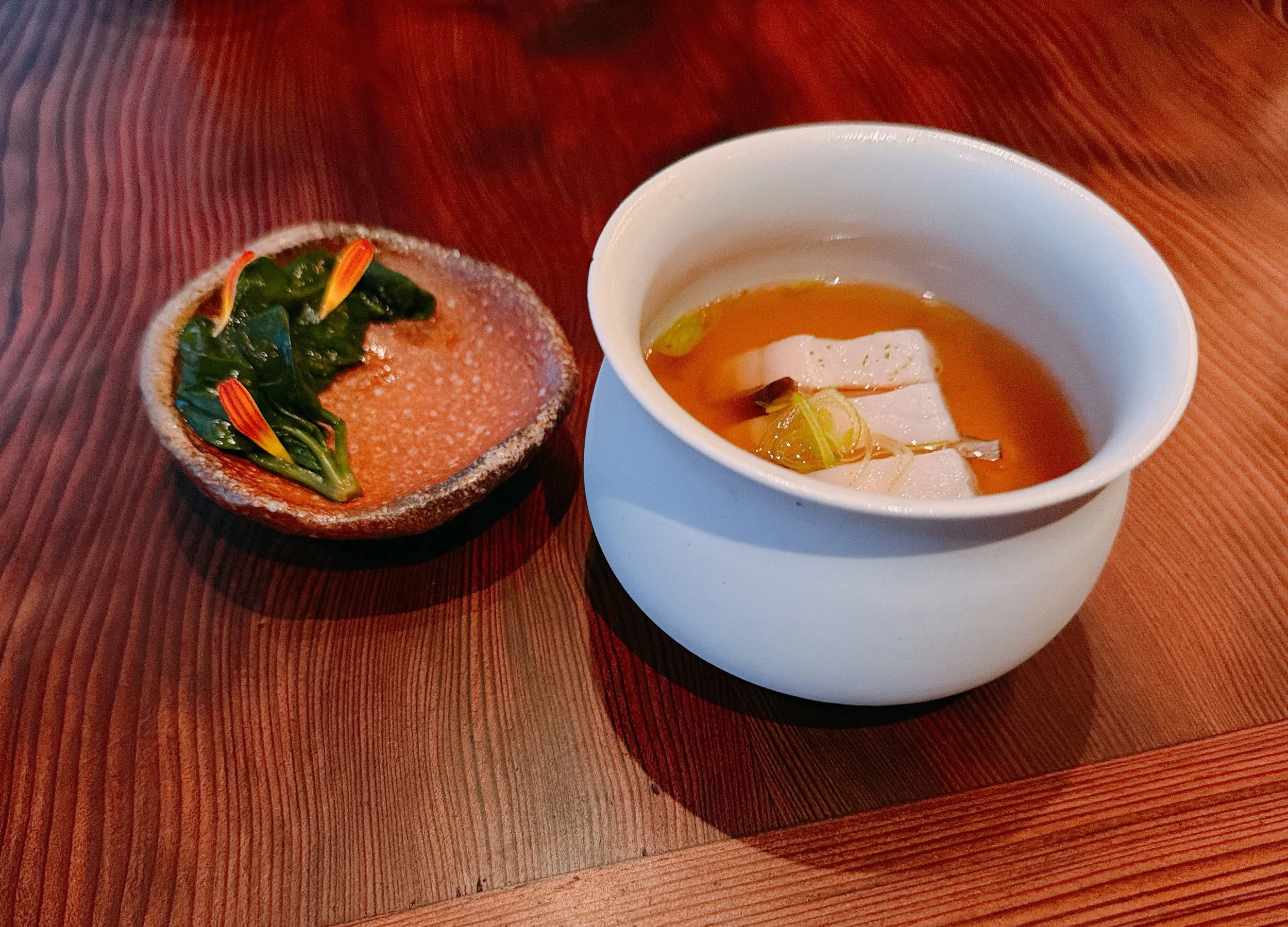
For our next dish, we were served four slices of black cod in a bowl. The slices were interleaved with trumpet mushrooms and topped with red onions. Our server added a hot dashi to the bowl and covered it. An hourglass timer was used to measure the cooking time. A couple minutes later, we were allowed to (re)open the bowl and enjoy its contents. On the side was a plate of poached spinach leaves seasoned with onion top oil. The tableside cooking might have been a bit of a gimmick, but there was no arguing with the result - the fish was amazing. Tender, flaky, and with a strong flavor of cod, this preparation was close to perfect. The mushrooms were fine; they had some bite left. The broth was - somewhat surprisingly - much lighter in flavor than the cod. Not bad, but a quite mellow ending to the dish. The spinach was cold, crunchy, vegetably, and had maybe a hint of acidity. Maybe it was meant as a palate cleanser? For the amazing cod alone, though, this was a 18.
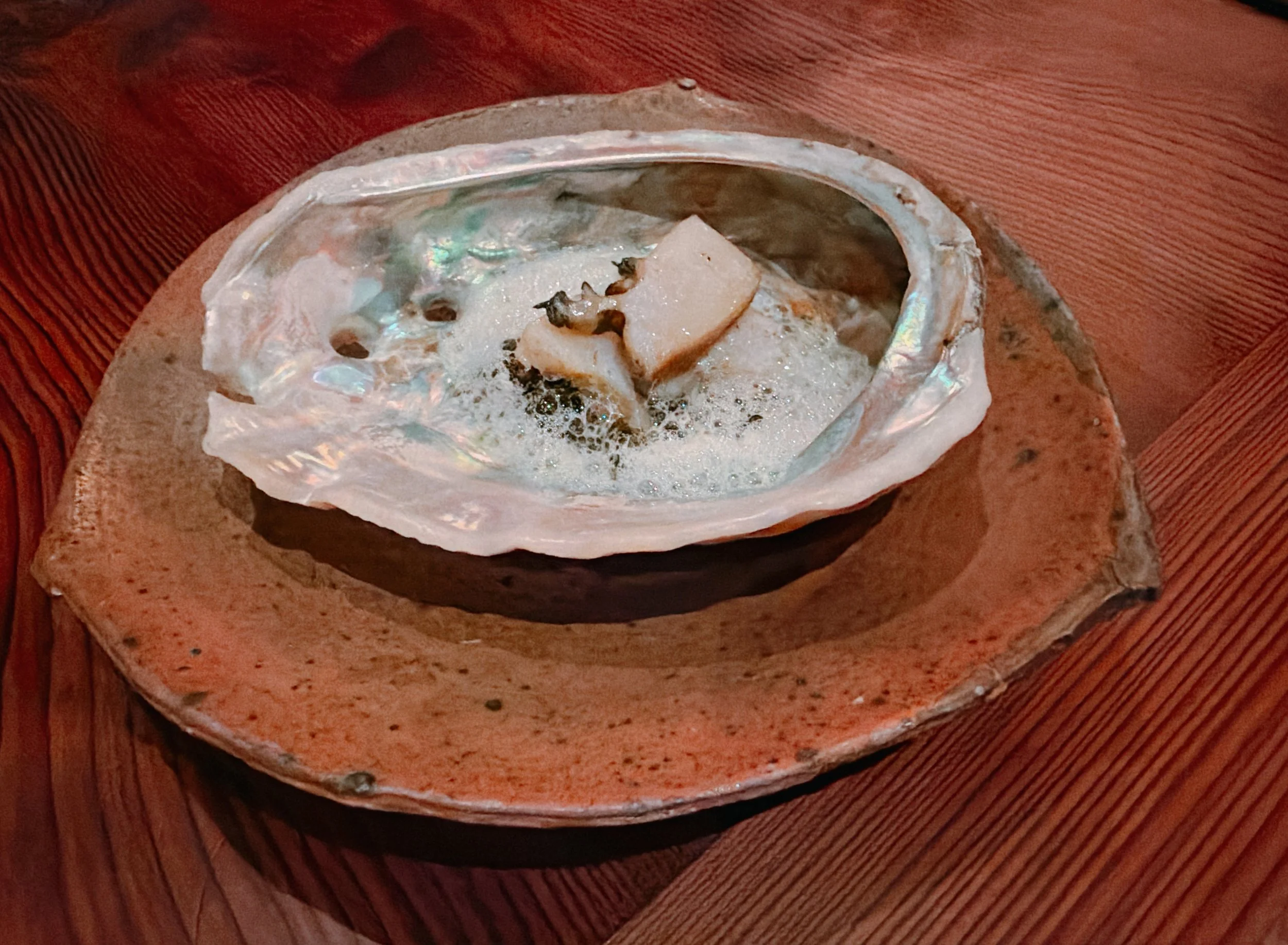
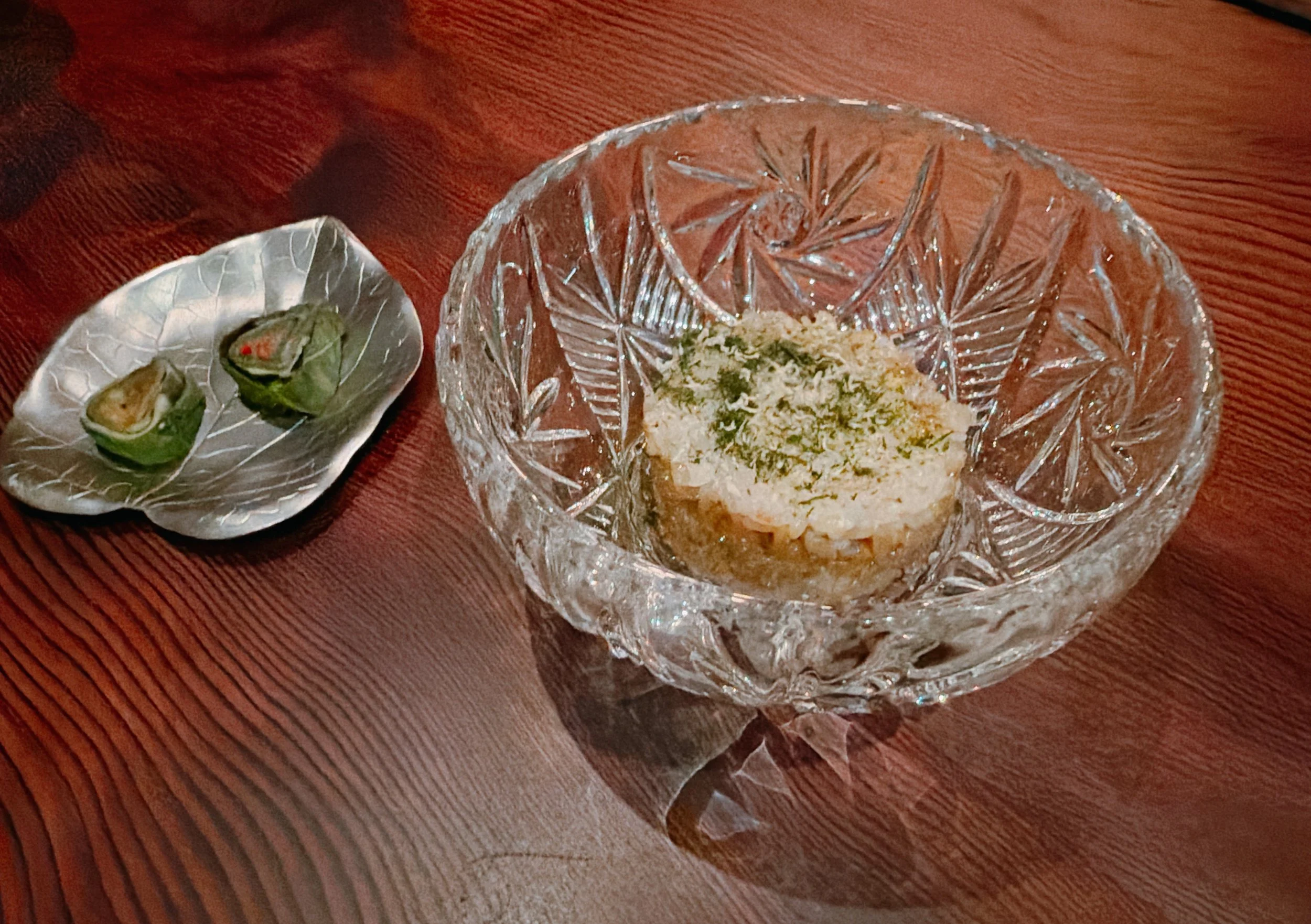
A red abalone from Monterey Bay had been smoked over oak wood, and was served in its shell together with shishito peppers and a foamy sauce made from the abalone's liver, stomach and mantle. There were two more bowls in this course: one had koshihikari rice mixed with abalone offal and nori, the other held some pickled vegetables. Harbor House Inn's abalone had a very distinct texture - it was very, very tender. Reportedly, this was due to how it was dispatched, and therefore fully intentional. I have to admit, though, that I actually enjoy a bit of bite in abalone, and this one just didn't have any. Otherwise, this was a fine preparation with only one additional nitpick: the peppers were a bit too charred. The rice was buttery and had a light abalone flavor. The vegetables and leaves were crunchy and lightly pickled 16.
The following dish had an impressive preparation technique. A Red Norland potato had been made into a confit, and then “clay baked” wrapped inside of squash leaves that were themselves covered with a black ash dome made from black sand, red flour, and oil. Tableside, the potato was rescued from its enclosure and then added to a dish of salted zucchini ribbons seasoned with a cheese sauce and squash blossom oil. The potato tasted cheesy (thanks to the sauce), and had a nicely creamy texture, but its taste didn't seem dramatically changed by the way that it had been cooked. To me, the best part of this dish was actually the zucchini: crunchy, salty, and intensely flavorful, it carried the whole presentation 18.
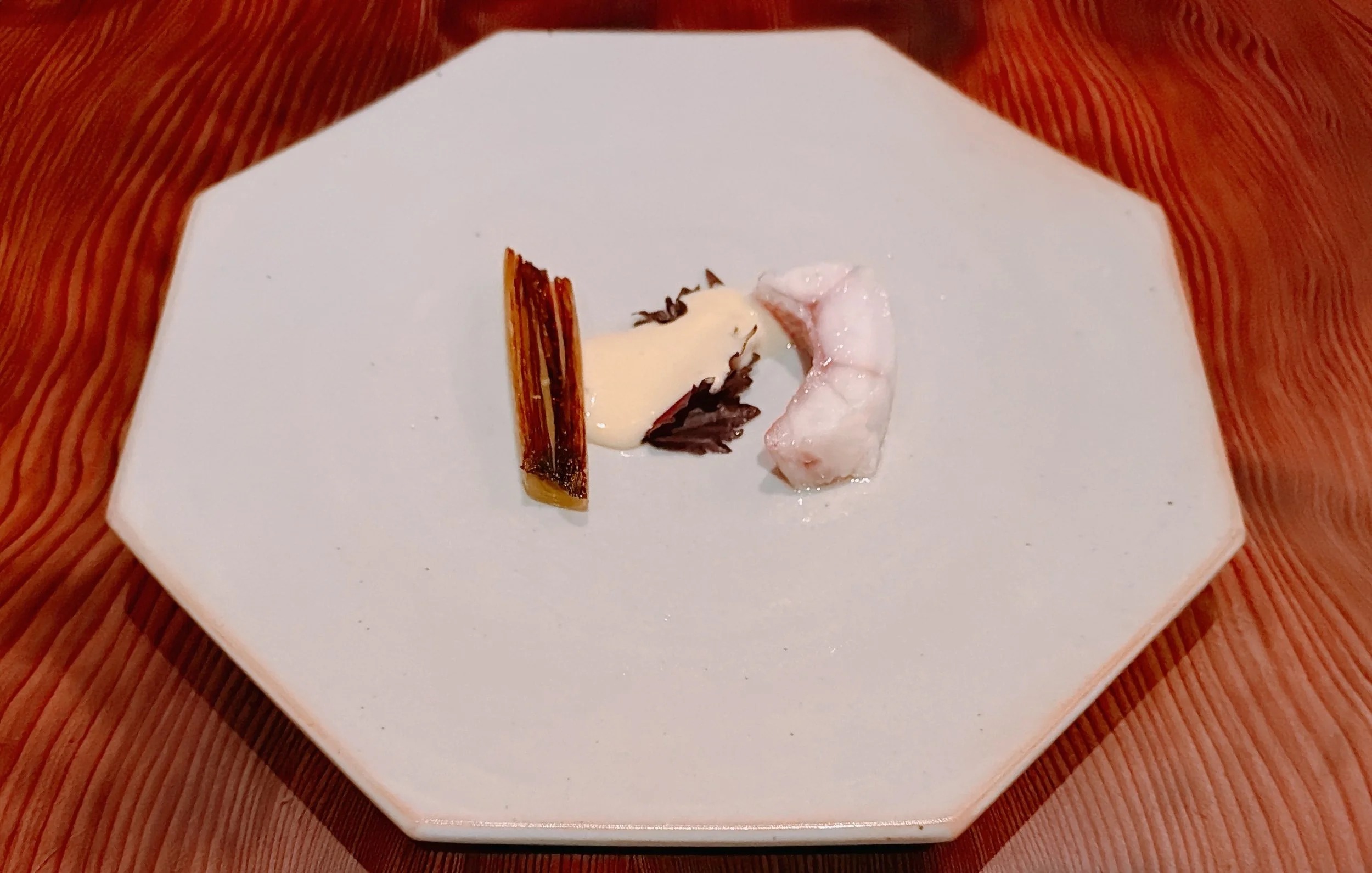
The last seafood dish of the evening featured rockfish from Fort Bragg, about forty minutes north of the restaurant. It had been cooked en papillote, and was brushed with seaweed butter. Also on the plate were a hibiscus leaf, a salted peach sabayon and some grilled leeks. The fish was tender with a good flavor, the leeks buttery, and the sabayon very flavorful, but also way oversalted (and this is coming from someone who doesn't mind salty dishes) 17.
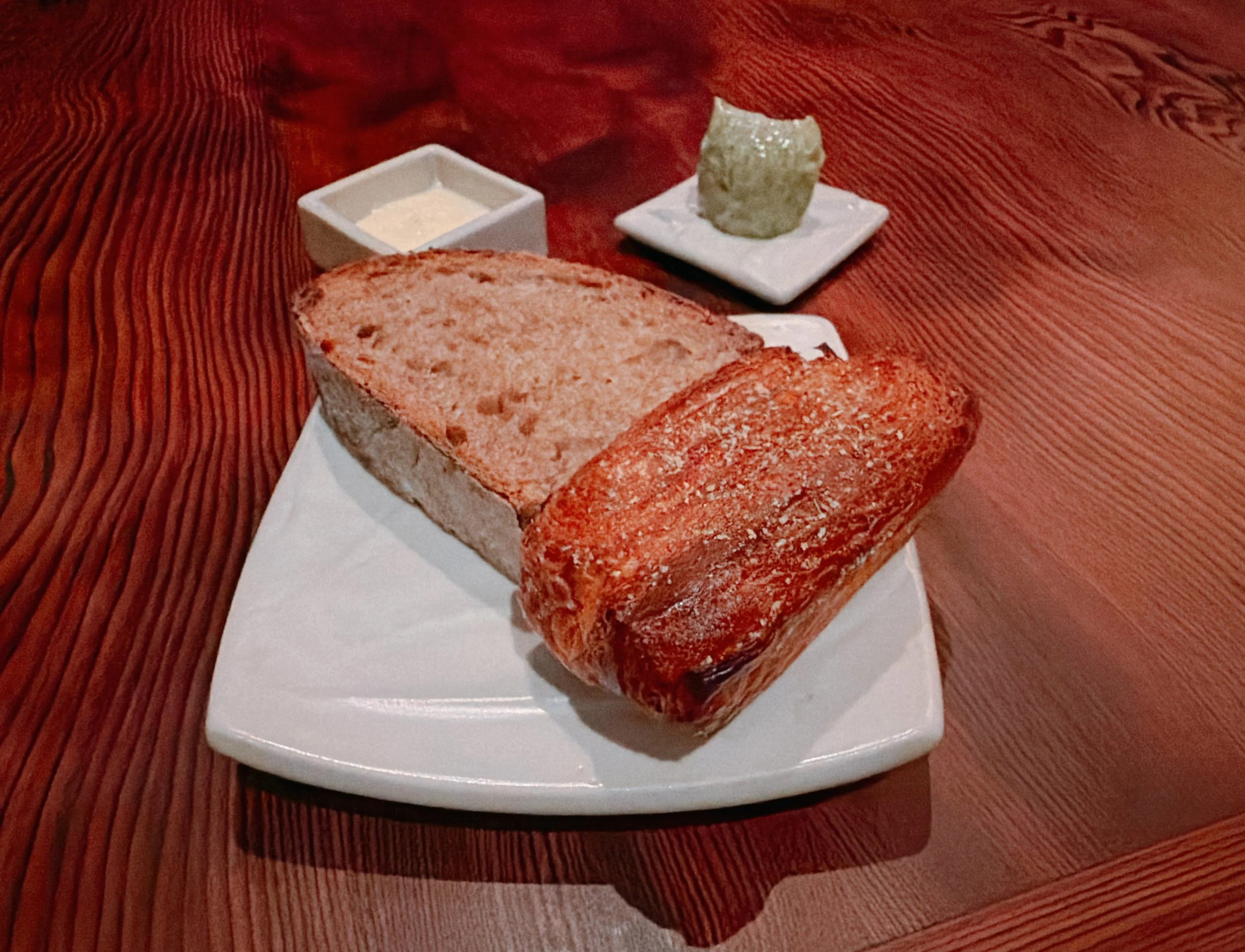
Two butters (one aged, the other flavored with sea lettuce) were served together with two breads. A slice of whole wheat sourdough was slightly crunchy, and neutral enough flavorwise to go well with both butters; in particular the sea lettuce butter had a very distinct aroma. It was also great to sop up the sauce in the following course (15). Much better was a laminated pastry made with a cow parsnip seed salt. It was very crunchy and airy (18). On average 17.
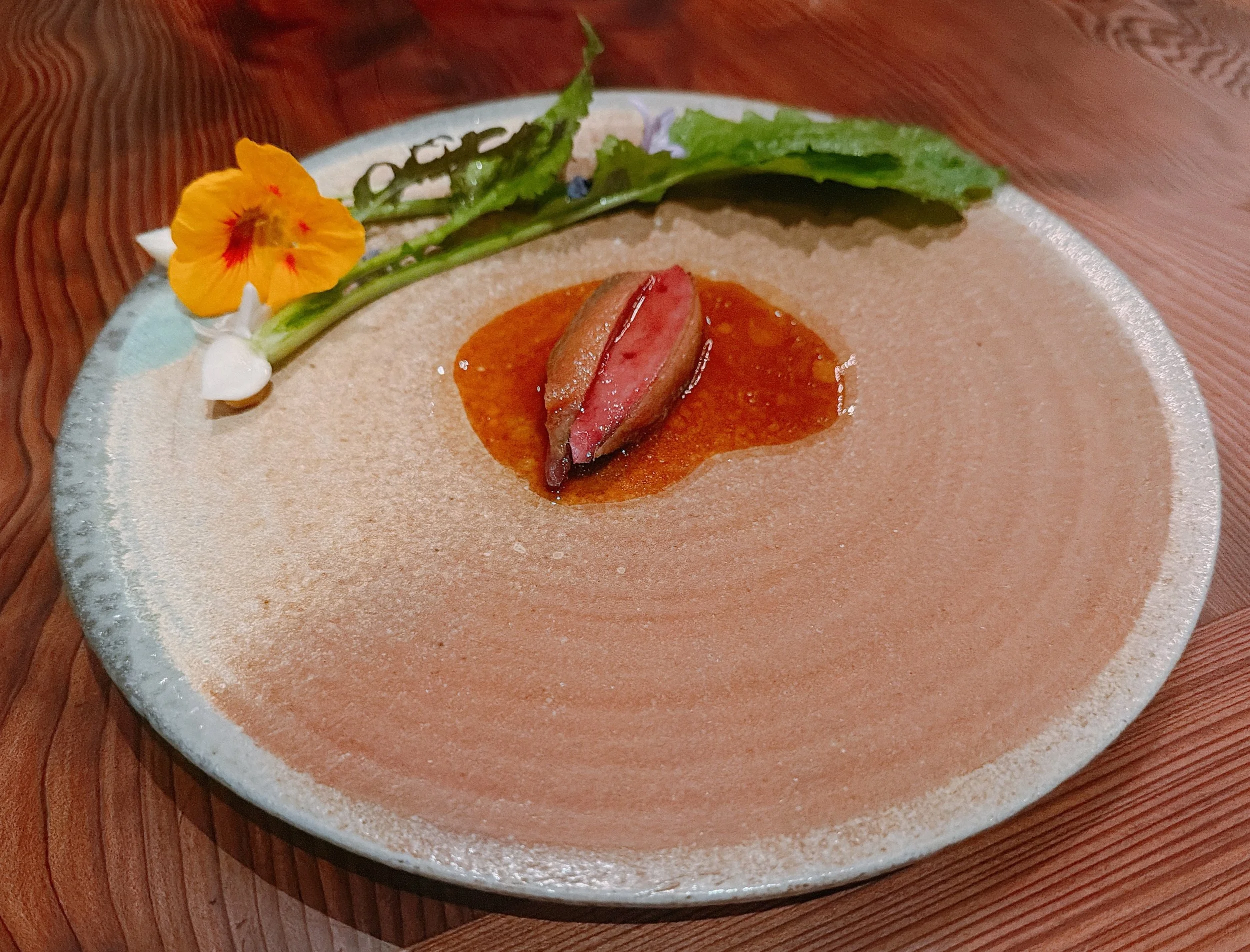
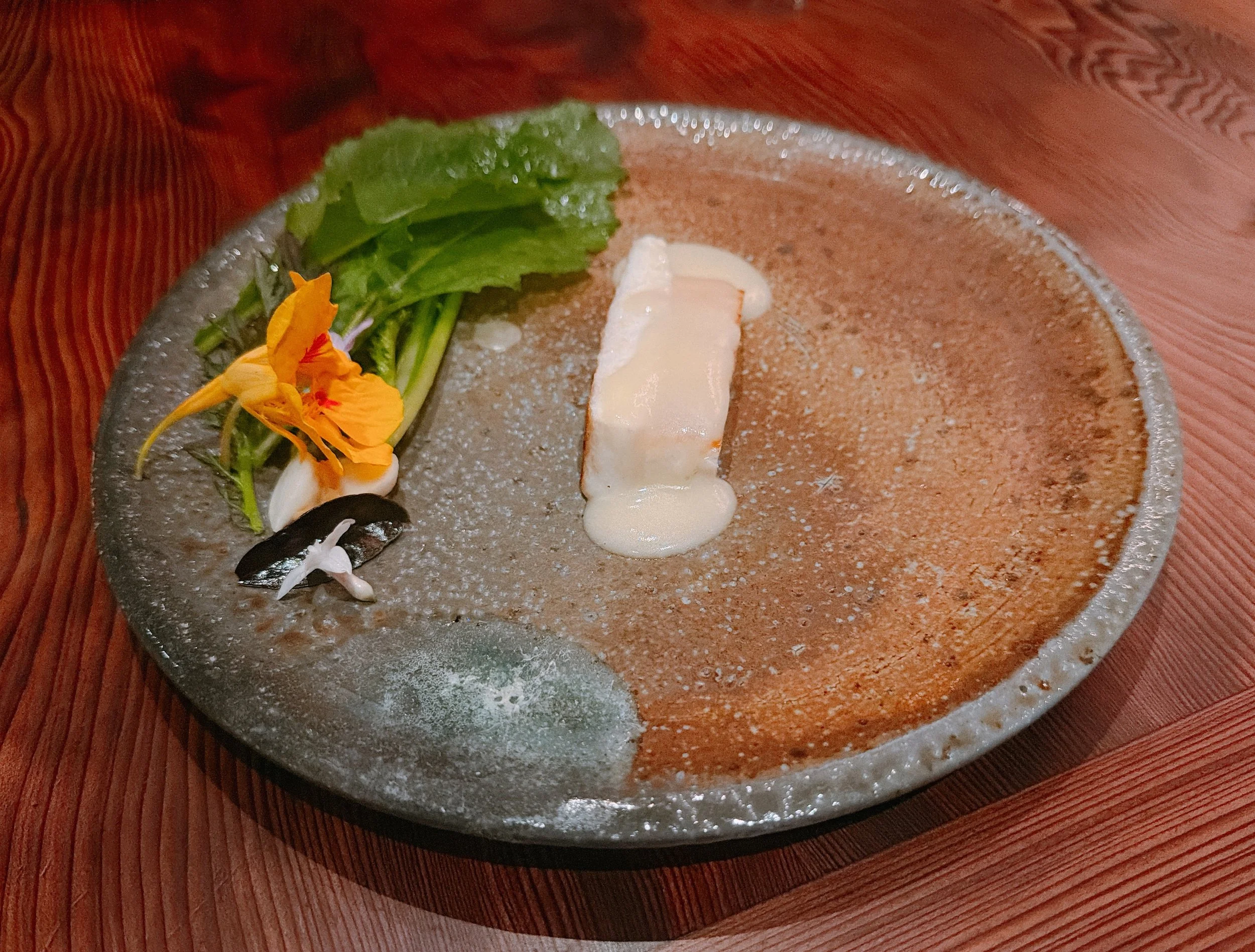
A two-week-aged squab breast from Modesto was served with a jus made from the squab's trims and blackberry vinegar. In addition, there were some baby turnips, nasturtium, and a garlic puree. The squab had an earthy flavor and a relatively soft skin. The herbs were juicy and tender; the garlic in particular was a spicy addition to the dish 17. The pescatarian replacement of the squab was a halibut served with a lemon sauce. This had a nice lemon flavor, but the fish's texture was crumbly to the point of feeling a bit overcooked 16.
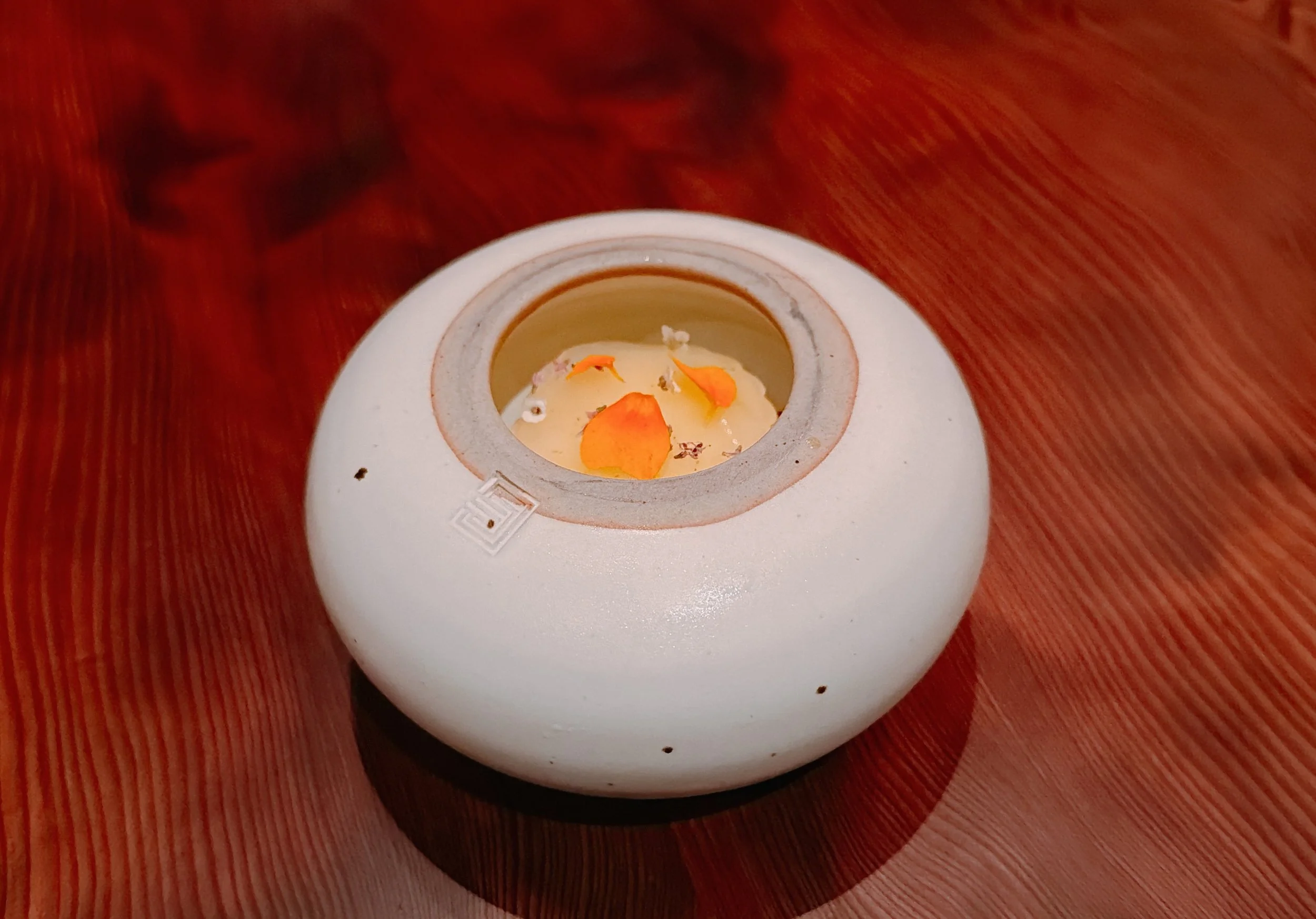
On to desserts. First, we got a custard made with passion fruit, fig leaves, and lemon verbena, paired with a granita made with fig leaves and grapefruit, as well as a passion fruit foam. A lovely combination of fruit, passion fruit and citrus flavors, as well as textures ranging from creamy to airy to foamy to jelly 17.
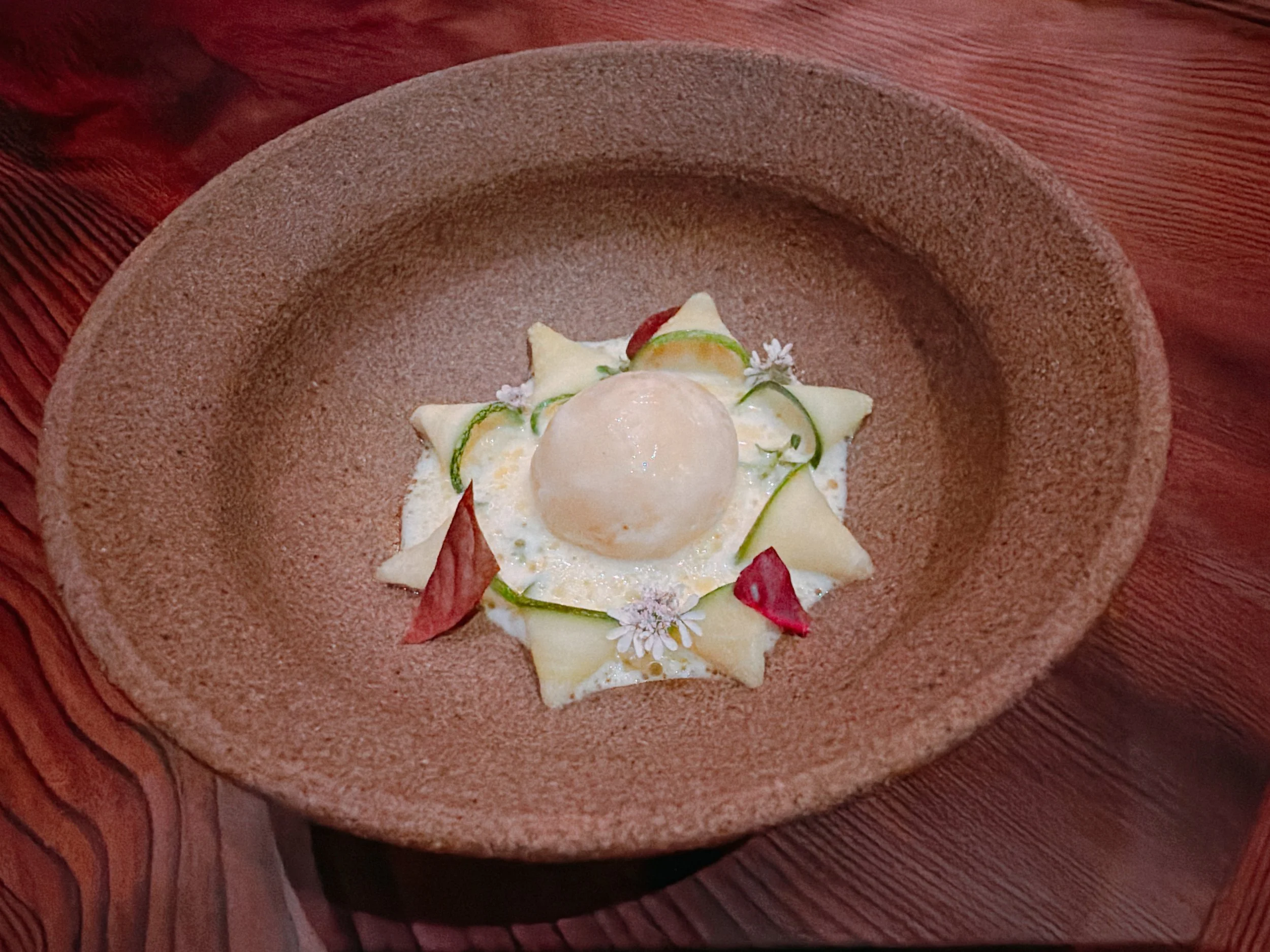
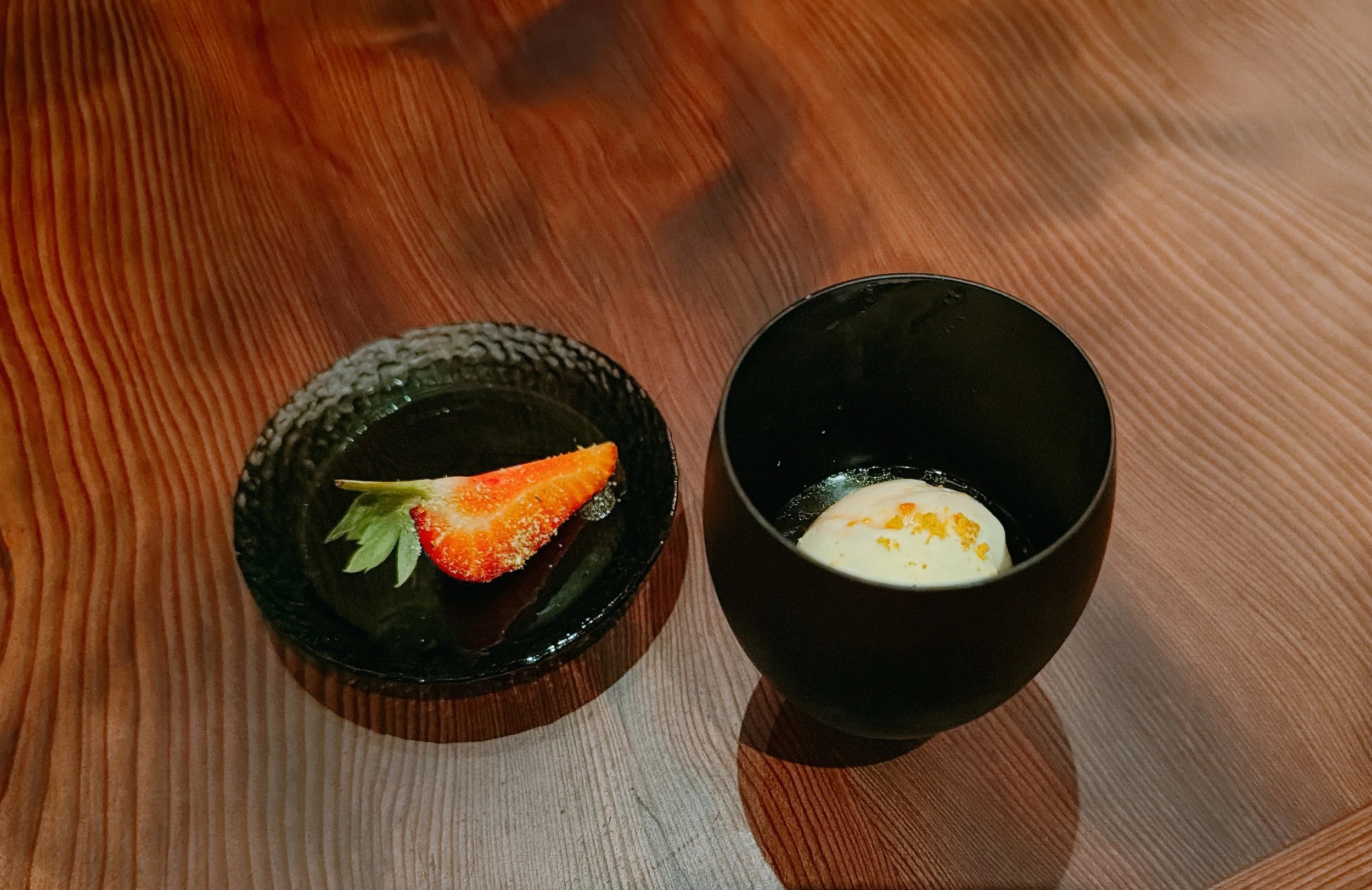
Next, we received a goat milk ice cream served with strawberry juice, honey combs, and bee pollen. On the side was a strawberry segment dusted with hand-milled sugar. The ice cream was very creamy and had a light strawberry flavor. There was a hint of pollen, and the crumbly honeycomb underneath the ice cream added texture. The sweet strawberry on the side was lovely as well. A well executed dish that felt nicely focused 16.
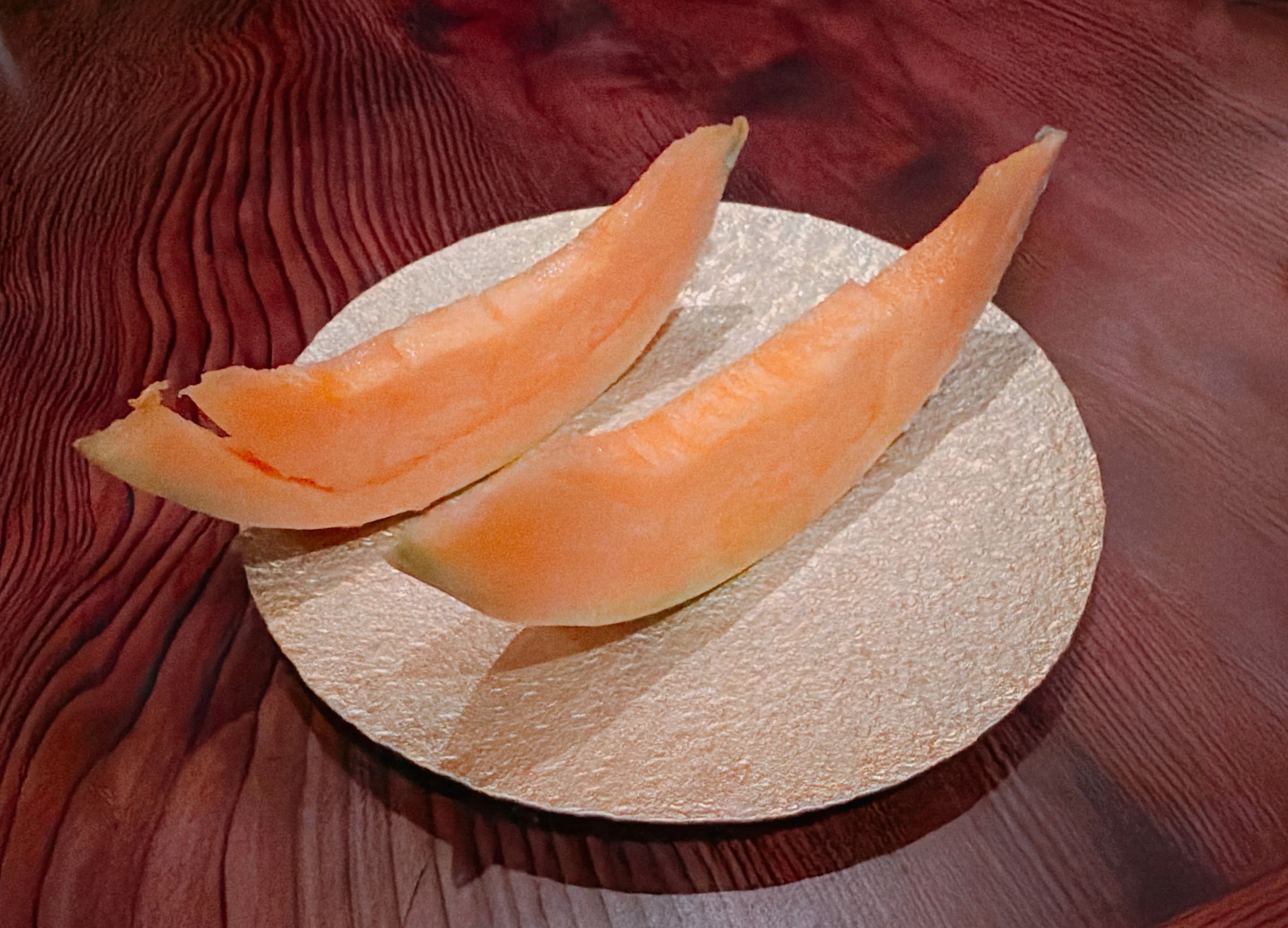
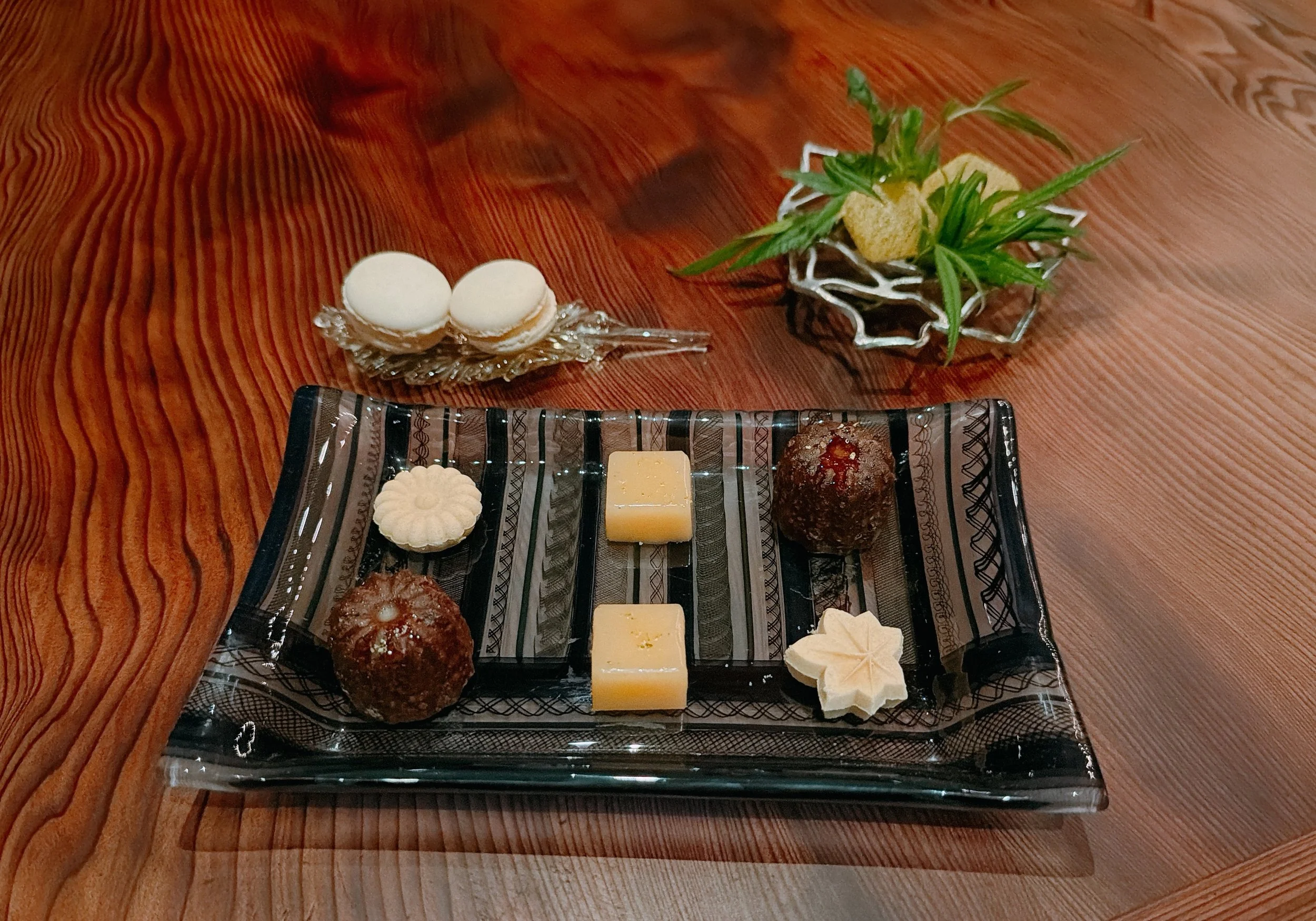
Our dinner concluded with a cup of tea and some petit fours. The tea was made from Douglas firs, and was accompanied by grilled honey as a sweetener. The honey could be added to the tea by dipping a provided flower/herb bundle into the honey and then into the tea. (If that seemed too complicated, a spoon was also available.)
A precut melon slice was very sweet, and had surprisingly complex flavors. Very good - I wish I had written down its variety 17. A mini canelé topped with beeswax had a crunchy exterior, and a soft, but small interior. It had a notable aftertaste of wax, so maybe a touch less beeswax would have done the job, too 16. A kaffir lime caramel was very caramelly, and had a light citrus flavor, but no acidity 16. Japanese wasanbon sugar had been shaped into a sugar cube by using a bit of apple syrup. When eaten, it immediately dissolved back into fine sugar - sweet, with a flavor vaguely related to brown sugar 15. A lemon verbena/citrus/marigold gummy candy was not very sweet and had a pretty firm texture - this took some chewing 15. Finally, macaroons made with candy cap mushrooms had a hint of savory flavors, and reminded me of maple walnut ice cream 16.
Overall: This was a seasonal dinner featuring lots of ingredients from coastal Northern California; sometimes they were even hyper-local, coming from just a few steps outside the restaurant. The dishes were consistently very good: focused, full of flavor, and featuring some very impressive seafood. While a few dishes flirted with three stars, overall this felt more like a solid two, since not every component of every course worked. That said, given that the menu changes often based on market availability, I’d be happy to return here more often. If only there wasn't that four hour drive... 17