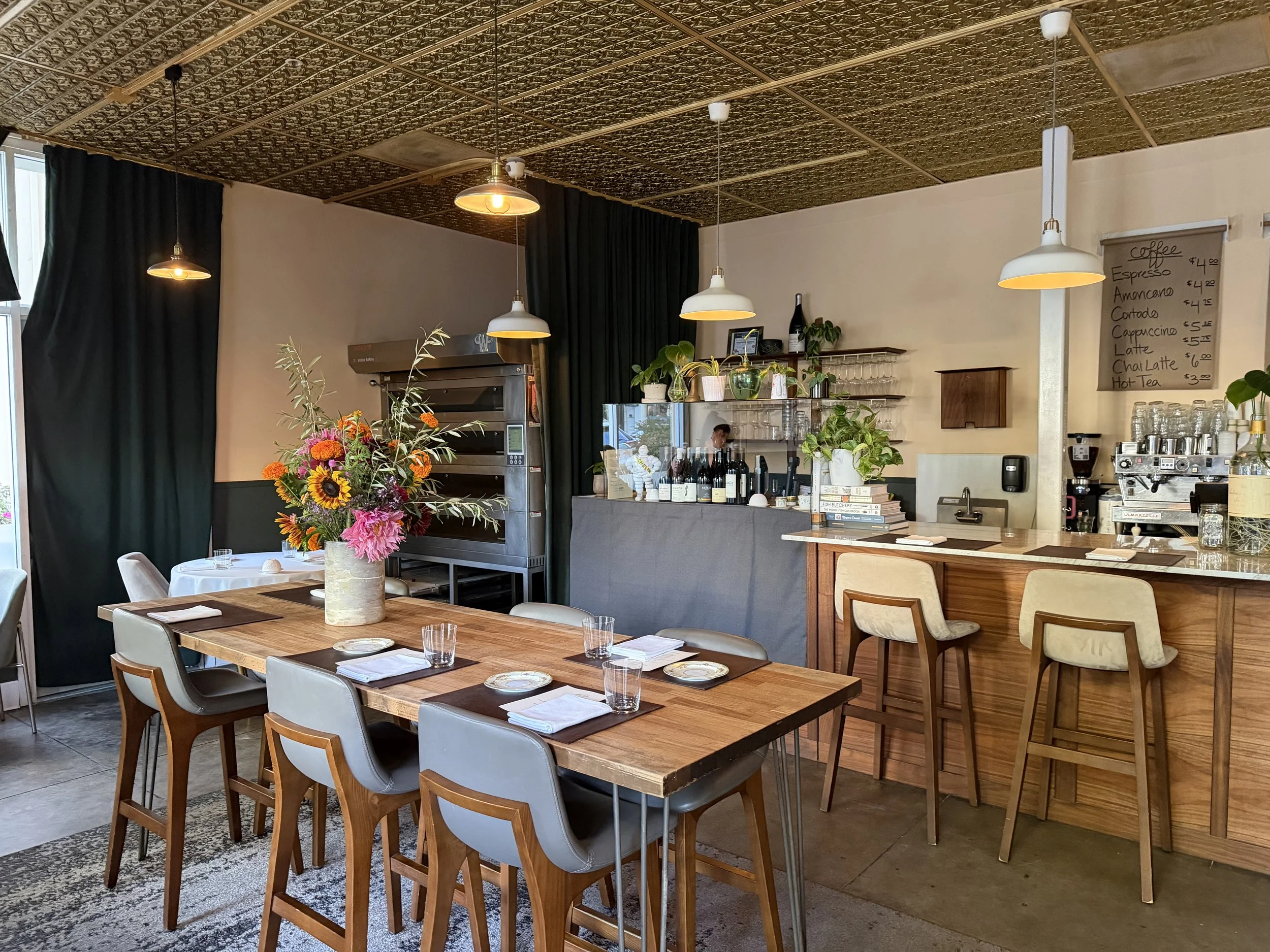
Only the coffee price sheet reminds one of the day-time sandwich shop
Rating: 16/20
Where: Healdsburg, CA
When: Dinner for 2 on 2 October 2026
Cost per Person: Tasting menu $205-$295, Wine pairing $125-$225
Accolades: 1 Michelin Star
Why: Well-executed French-inspired dishes, lovely private dining room
The town of Healdsburg, about a ninety minute drive north of San Francisco, arrived on the global culinary scene with the opening of the now three-starred restaurant SingleThread in 2016. Today, its impact can be felt all over town. For example, consider chef Sean McGaughey. After working at SingleThread for five years, he started his own business with his wife Melissa, herself an accomplished baker. The result was Quail and Condor, now one of the best bakeries in the area, reliably sold out whenever I come to visit.
In 2022, the dynamic duo opened a sandwich shop called Troubadour in downtown Healdsburg, and after a while added a dinner service. And this dinner was very different from what had come before: Troubadour served French-inspired food, and the newly awarded Michelin star convinced us to take the road trip.
When we arrived at Troubadour at 6pm on a warm October night, the restaurant's main dining room had already begun to fill up. The bistro-like setting with a bar in the background gave no indication that this establishment had been busy selling sandwiches and bakery items earlier in the day. Tonight, we had reserved the restaurant’s private dining room (available for two to six people). And this backroom was indeed truly private, physically removed from both the kitchen and the main dining room. We even got to choose our own background music by putting records on a record player. Cupboards full of preserved foods and countless cookbooks provided plenty of opportunity to browse between courses.
Troubadour served a single tasting menu during dinner hours, priced at $205. In the private dining room, that price increased to $295, partially due to the special setting, but also because the dinner was slightly longer with eleven instead of eight courses. We later learned that there was no overlap between the two menus. Some ingredients might appear in both, but the actual preparations were totally different for the two dining rooms - a quite unusual setup. The wine (and one sake) pairing for the private dining room ran to $225 ($125 for the main dining room). Only the single red wine was local, all other wines came from Europe - mostly from France. An interesting choice given that we were right in the middle of wine country. These were enjoyable, but not mind-blowing, wines that matched the food well.
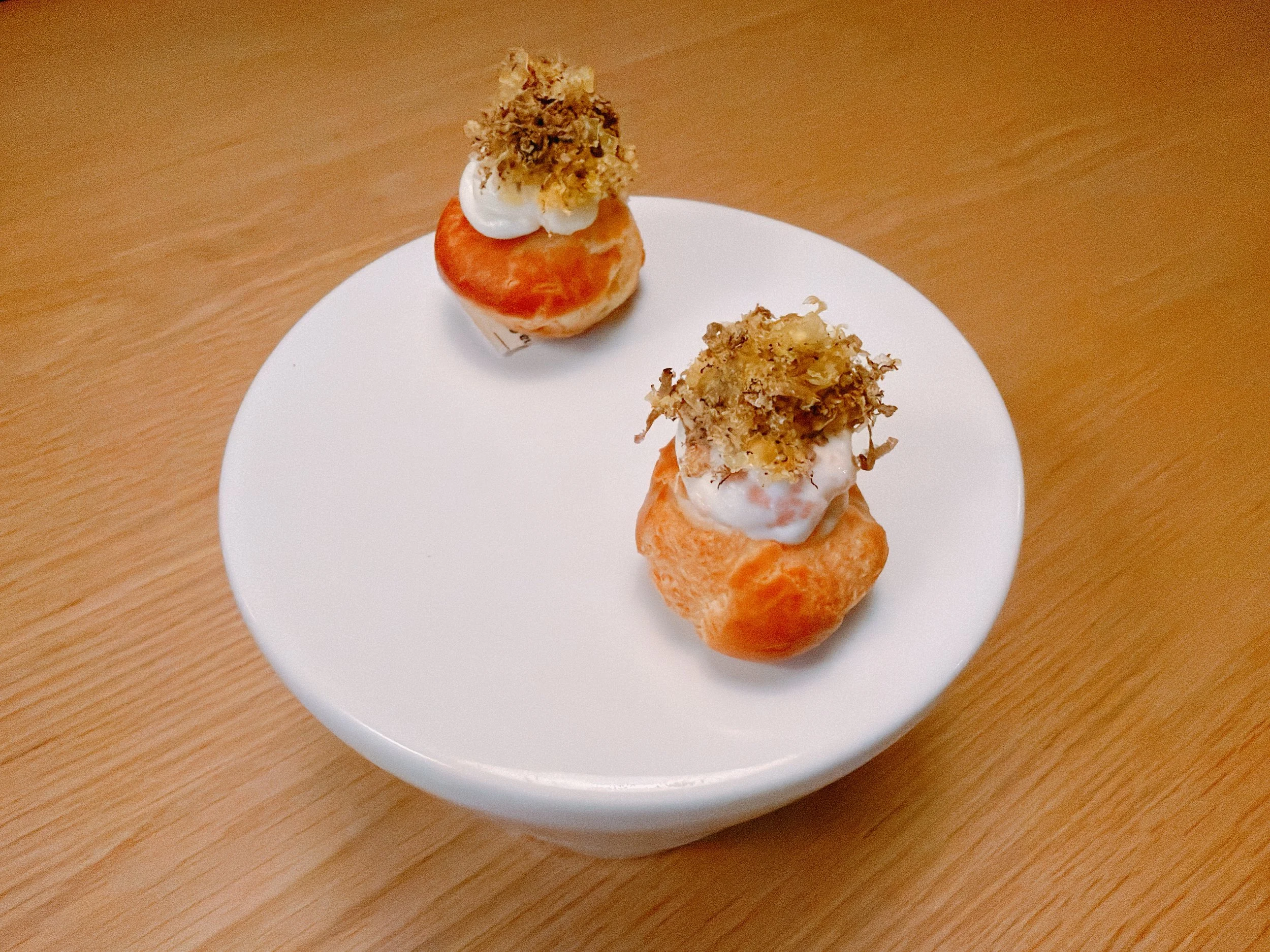
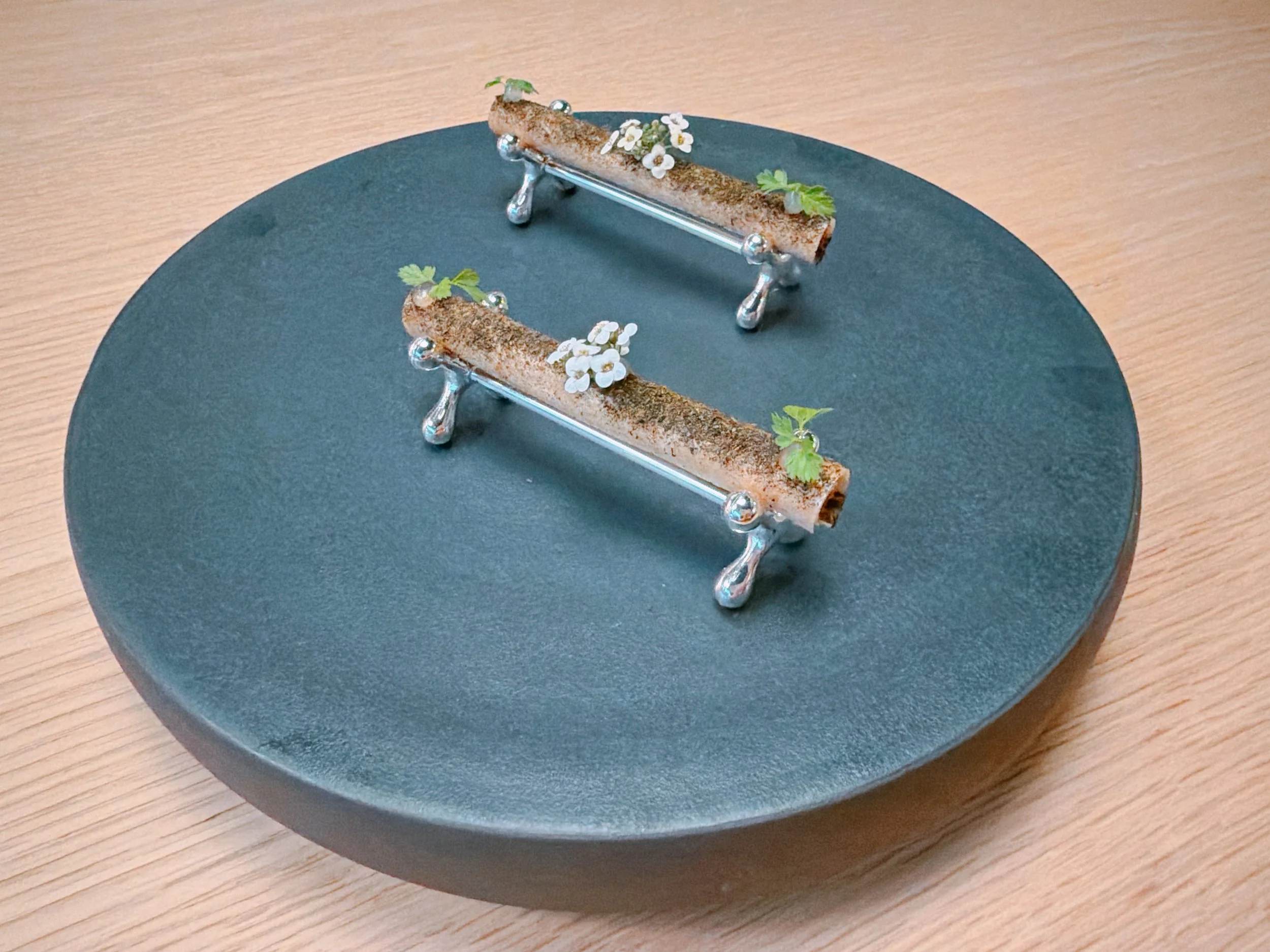
Our dinner started with a complimentary glass of champagne to accompany the first few appetizers, which could be interpreted as a play on French bistro life: a sandwich, a beef tartare, and the customary cigarette.
A “croque madame” actually looked more like a cream puff and was topped with a sauce made of gruyere, ham, and cured egg yolks, in addition to some shaved truffles from Burgundy. Seeming simply, but quite tasty, with pronounced flavors of cheese and ham 15.
A “chicken skin cigarette” was made with feuilles de brick pastry, chicken and a fermented grain powder. The cracker on the outside was nicely crunchy, and its filling meaty with an acidic/fermented note. Again, quite good 15.
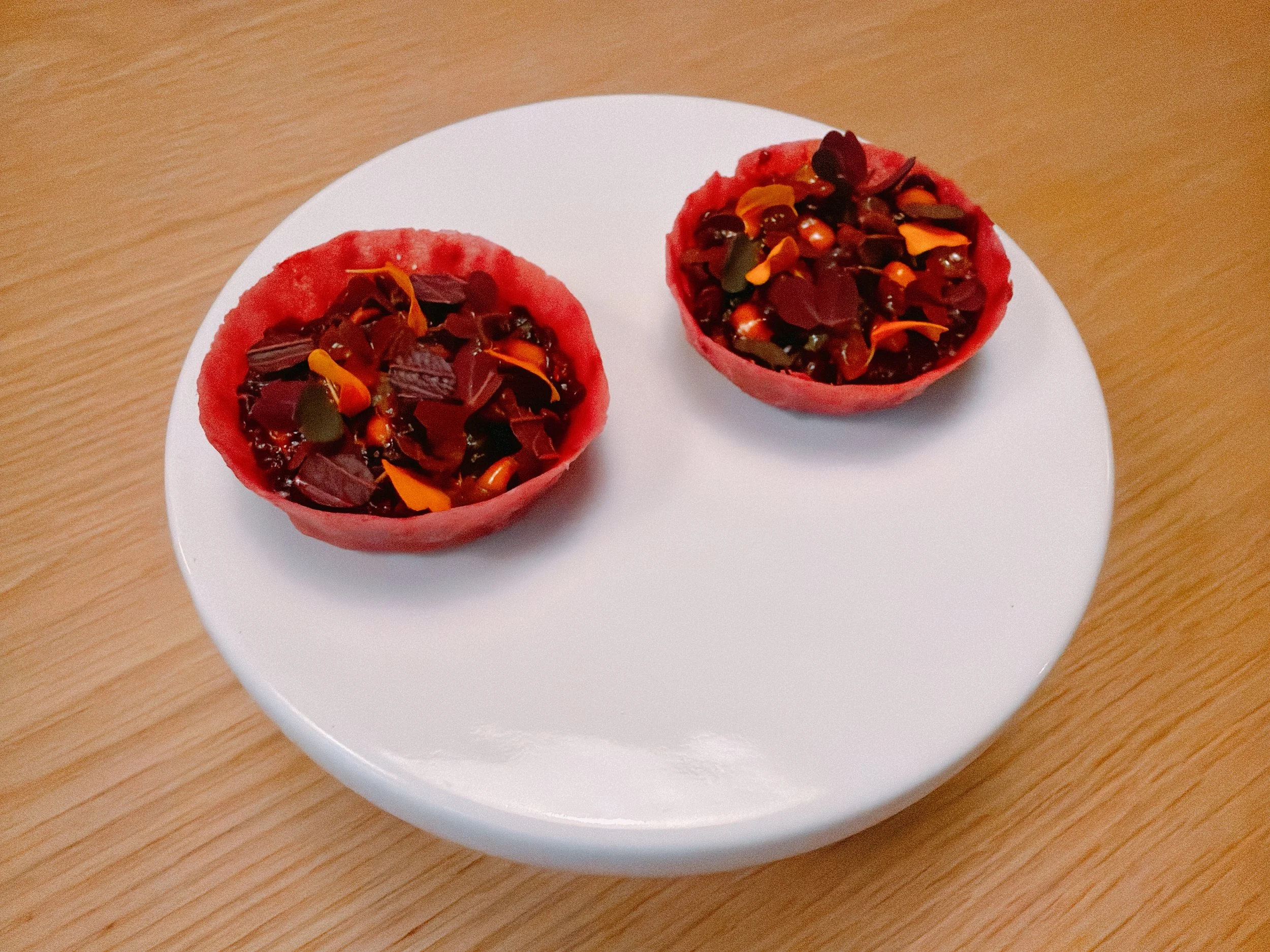
A little red cracker cup was filled with a tartare. Usually, this would have been a beef tartare, but since I was accompanied by a pescatarian, we both received a beet tartare instead. The chopped red beets had been dehydrated in successive stages to concentrate their flavor, and were served with oxalis leaves, an egg jam, and a Jimmy Nardello pepper cream. The beet flavor was indeed very, very intense, without becoming overly sweet. There was some umami from the eggs, and the whole dish was pretty salty. The meaty texture almost made one forget the lack of actual meat. A bit rustic, but very tasty 17.
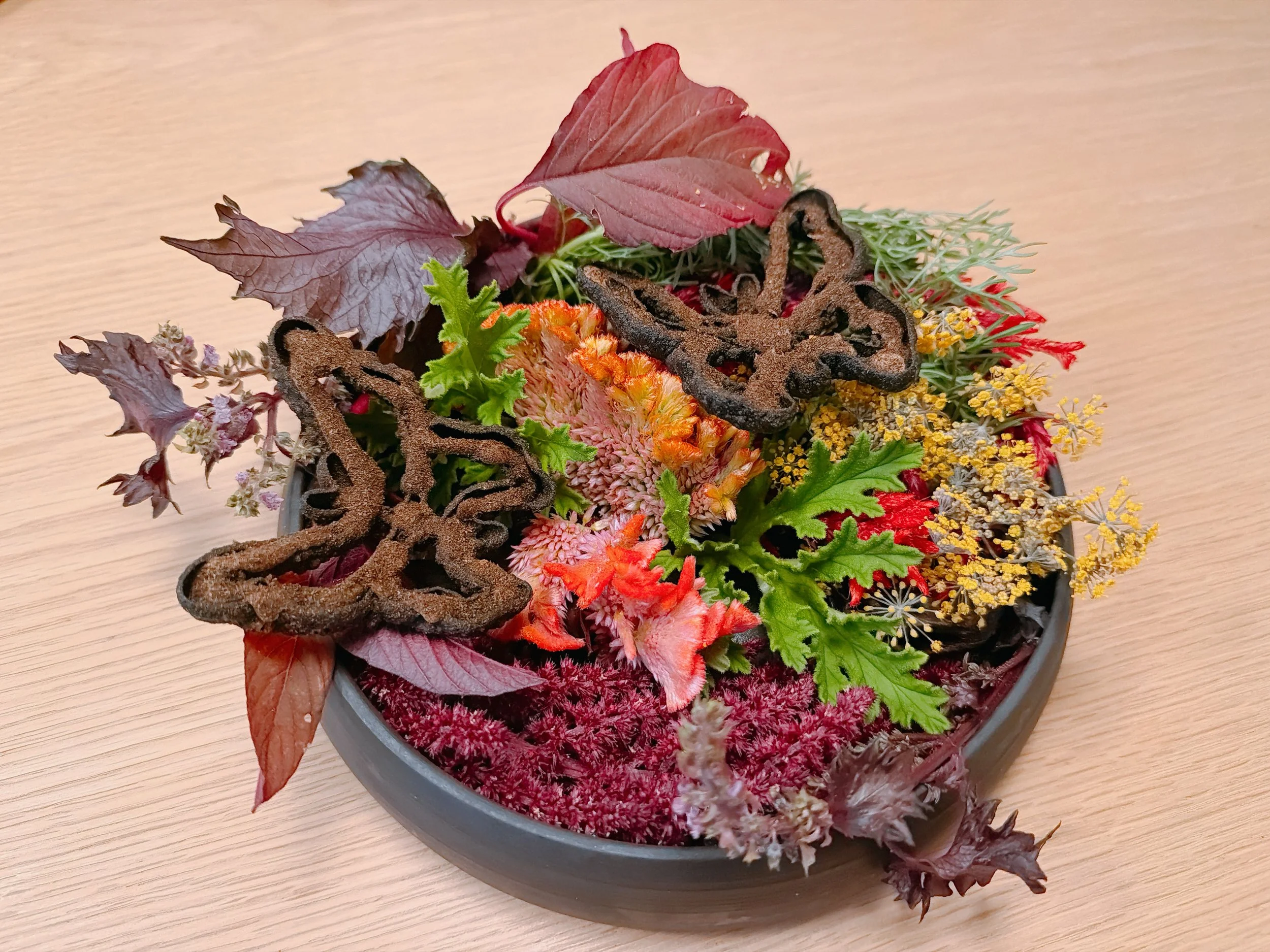
The final appetizer was a butterfly made from charred vegetables, dusted with an allium powder, and filled with a cashew cream. The result was crunchy, and surprisingly light. Salty, with a light onion ring flavor, but not much (any?) notes of cashew. In texture and taste, this was reminiscent (in a good way) of eating a burnt bread crust 17.
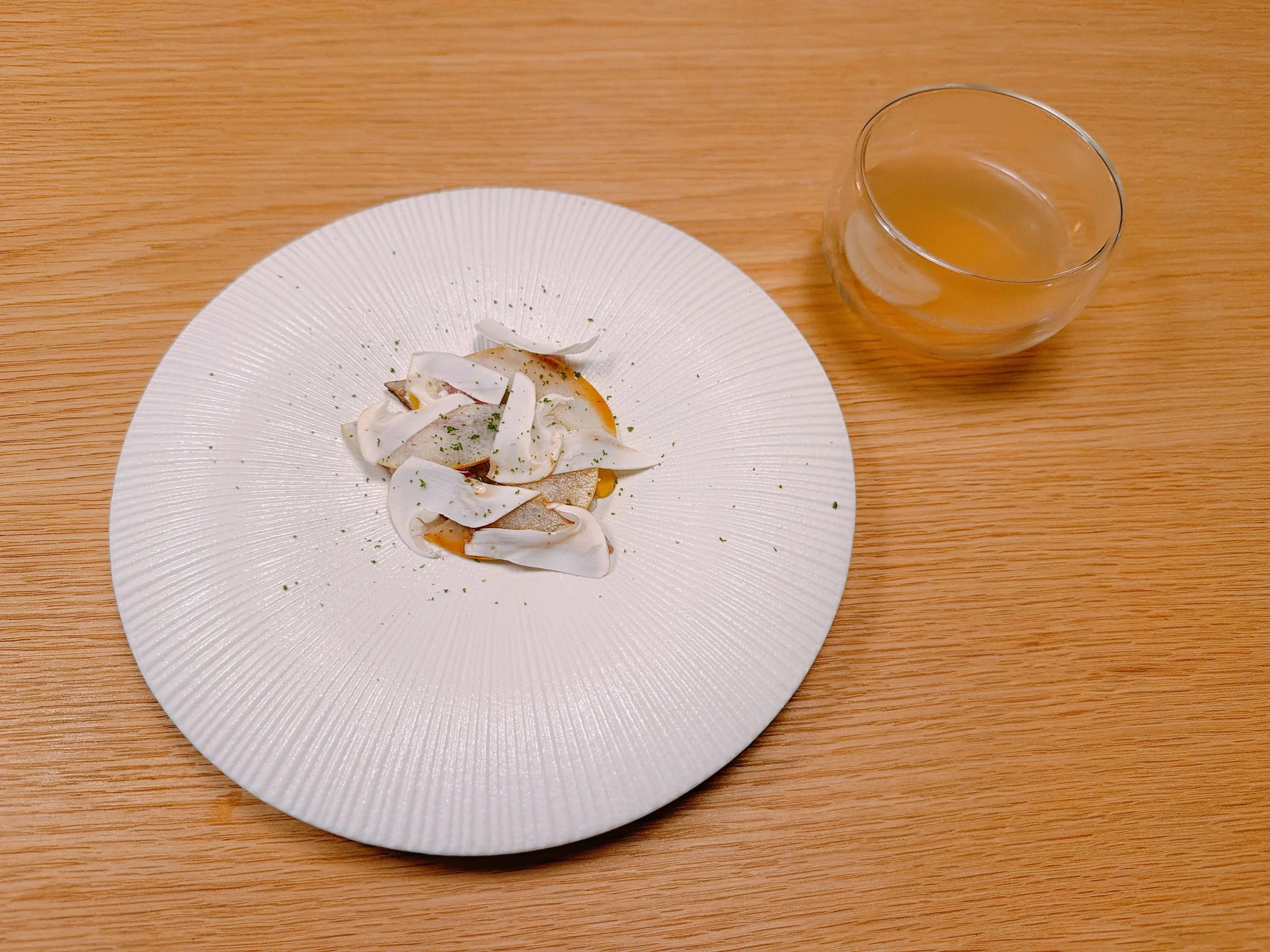
Kampachi crudo was served with a matsutake cream, sliced Asian pears, sliced matsutake mushrooms, and yuzu zest. On the side was a glass of matsutake tea seasoned with yuzu. That tea was amazing - salty, and with intense flavors of both mushrooms and citrus (17 by itself). The fish was slightly less exciting, and its flavor was overpowered by the other ingredients. Its texture, with a bit of bite, was nice enough though. The mushroom slices didn’t have much flavor either, but there was a significant amount of sweetness from the pears. I would have preferred if the fish had played a stronger role in the dish 15.
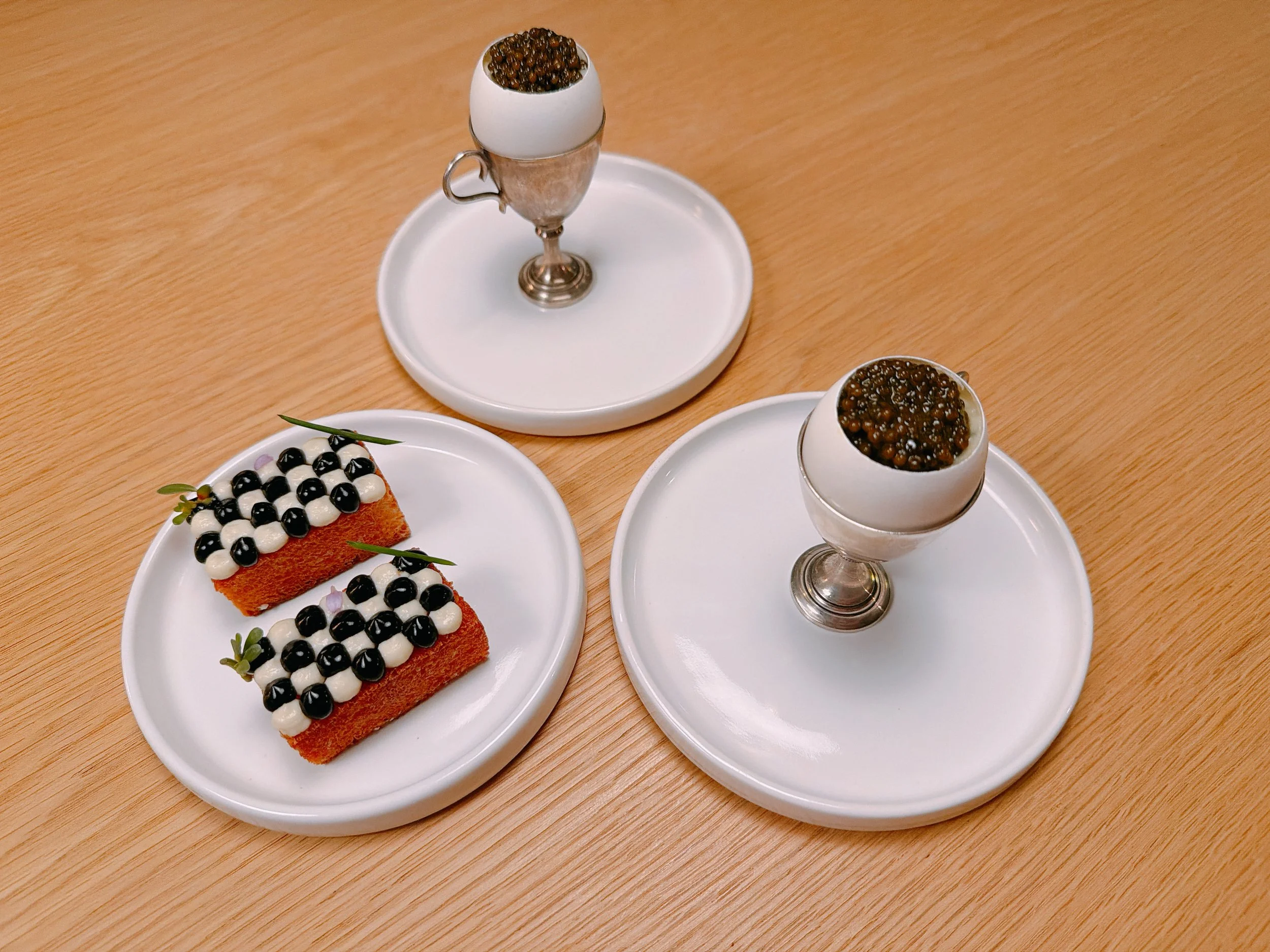
Next was a caviar dish served in two parts, paired with a glass of sake. In a hollowed out egg shell was a soft scrambled egg, some dashi bavarois, a beurre blanc, chives and caviar. On the side was a toasted pain au lait decorated with two dips: one made of white onions, the other from charred onions. The egg part of the dish was creamy and salty, tasting strongly of caviar and chives. That was nice to see: many so-called “caviar dishes” taste of anything but the actual caviar. Without the eggs, this dish at first reminded me a bit of the French Laundry's famous “oysters and pearls”. After adding the scrambled eggs, the taste profile changed a bit to give the dish its very own identity. The milk bread was delicious as well: crunchy, with a creamy topping that added a notable onion flavor. I'd give the egg the edge over the bread, but both were very good 16.
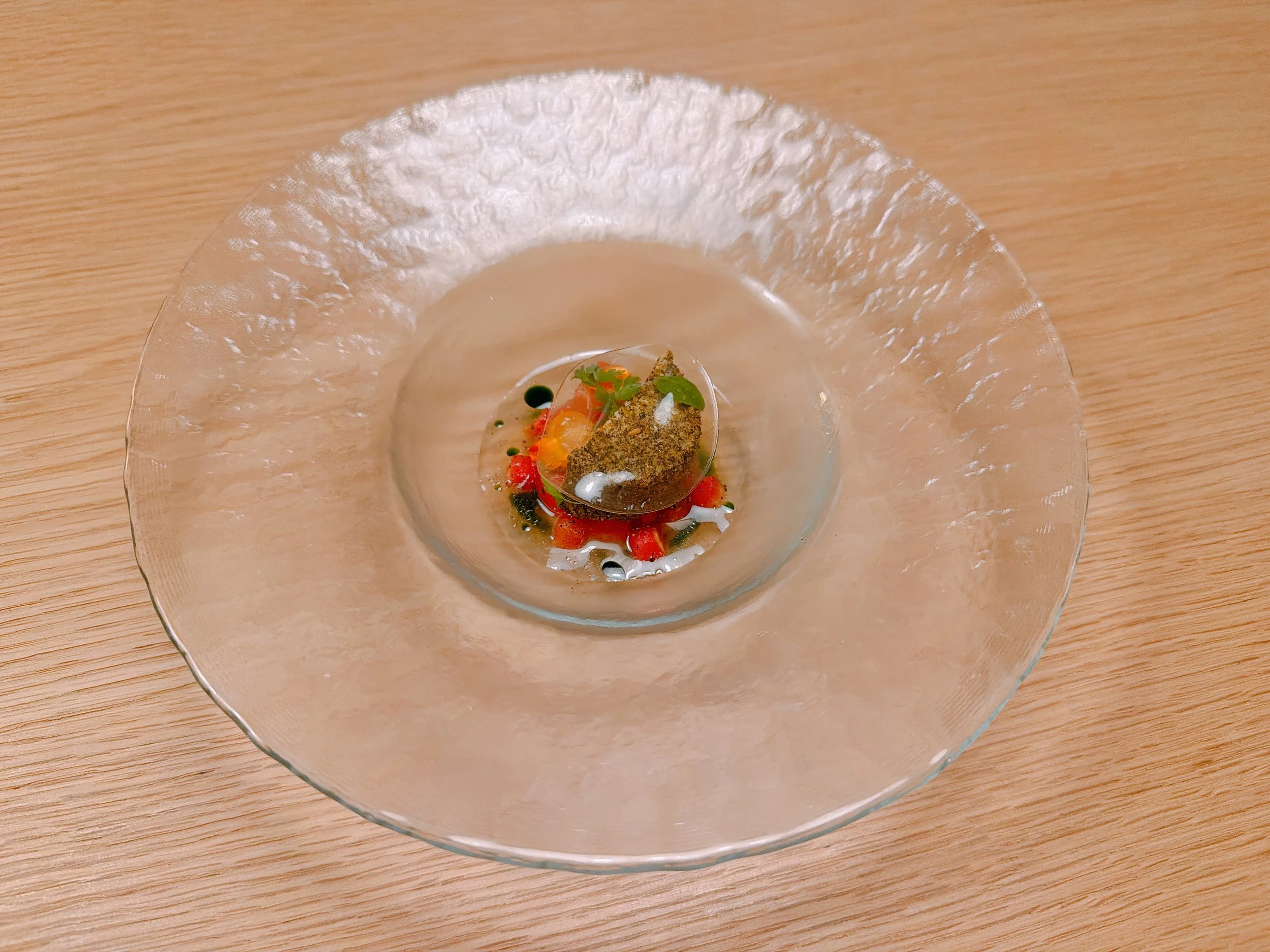
A cod rillette was served with tomatoes, a tomato gelee, and a “garden tea” sauce. The fish had a crumbly, almost cheesy consistency, and the herbs on top of the fish reminded me a bit of pesto. The tomatoes were fine, but didn't have very much flavor; riper specimen might have made this a better dish 16.
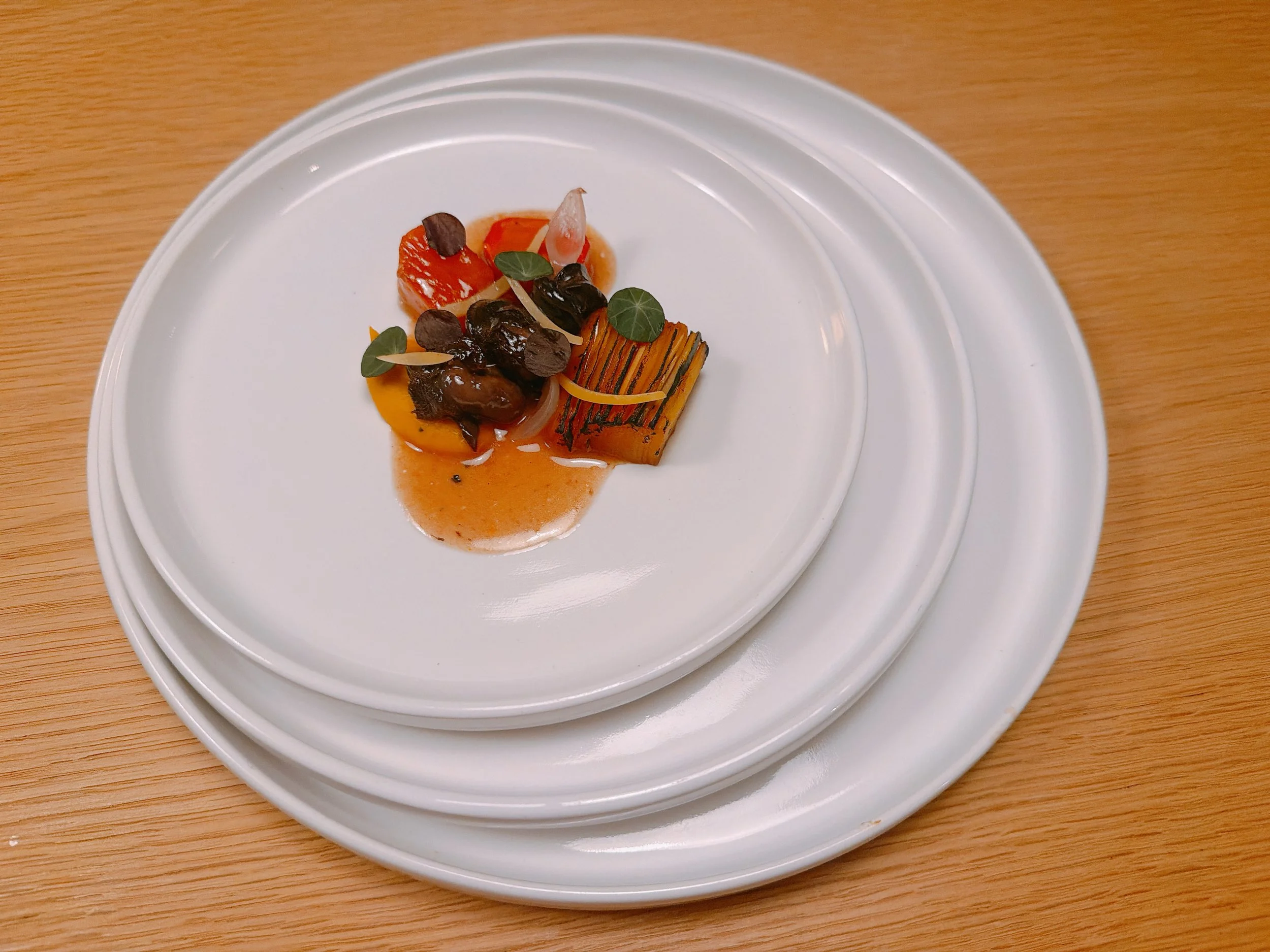
Braised escargots were served with their own braising liquid and different kinds of squash: delicata squash, red curry squash, and a puree made from different kinds of squash. The delicata squash had been prepared thinly sliced - potato pavé style. They even had a starchy texture similar to potatoes, and seemed to be seasoned with orange peel. The red curry squash had more flavor, as did the puree, which had a quite complex taste profile. It was nice to see so many distinct squash flavors, without any of them being too sweet. The escargots felt quite meaty, both due to their texture and the flavors in the sauce 15.
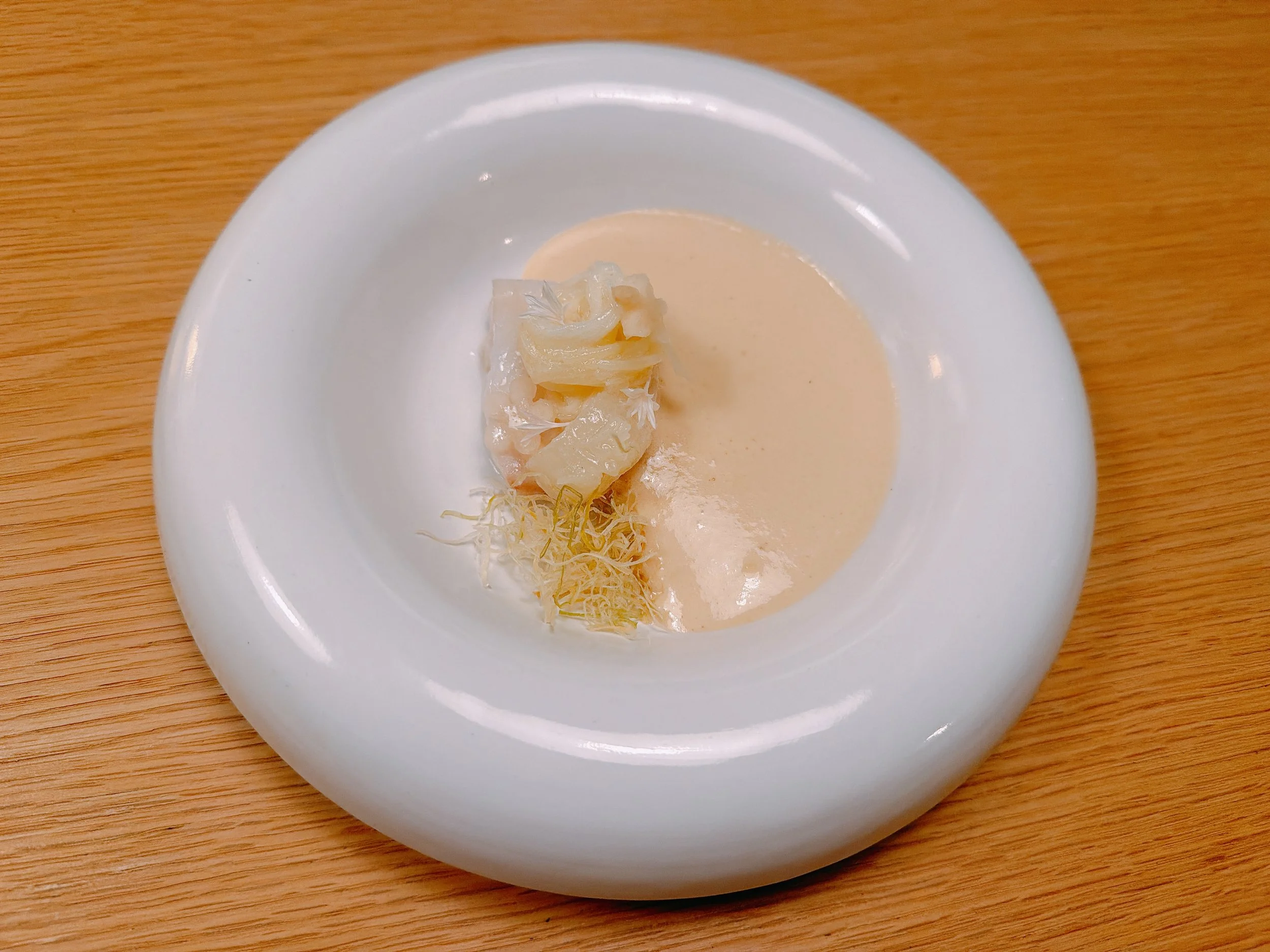
The theme of the next dish was “white”, which was the color of all ingredients. We had a fish, ironically black cod, roasted with butter, a kohlrabi pasta, daikon snowflakes, apples, fried leeks, and a soubise sauce. The star here was the amazing sauce, which had a pronounced onion flavor - very, very good. The fish was tender, rich, and flaky. The one thing that didn't work for me was the considerably over-salted kohlrabi - and this is coming from someone who doesn't mind a lot of salt in dishes. The rating would have been even higher otherwise 17.
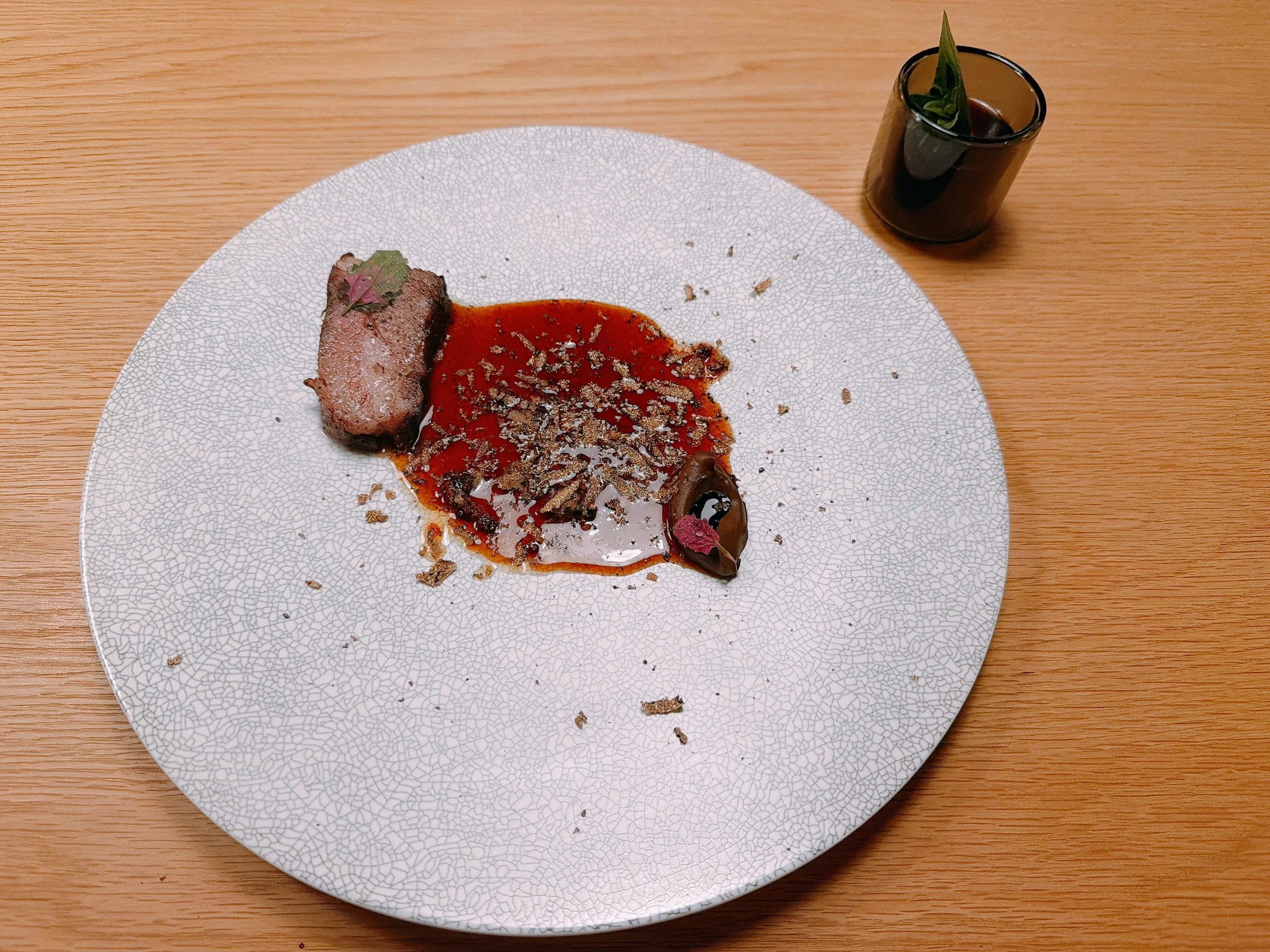
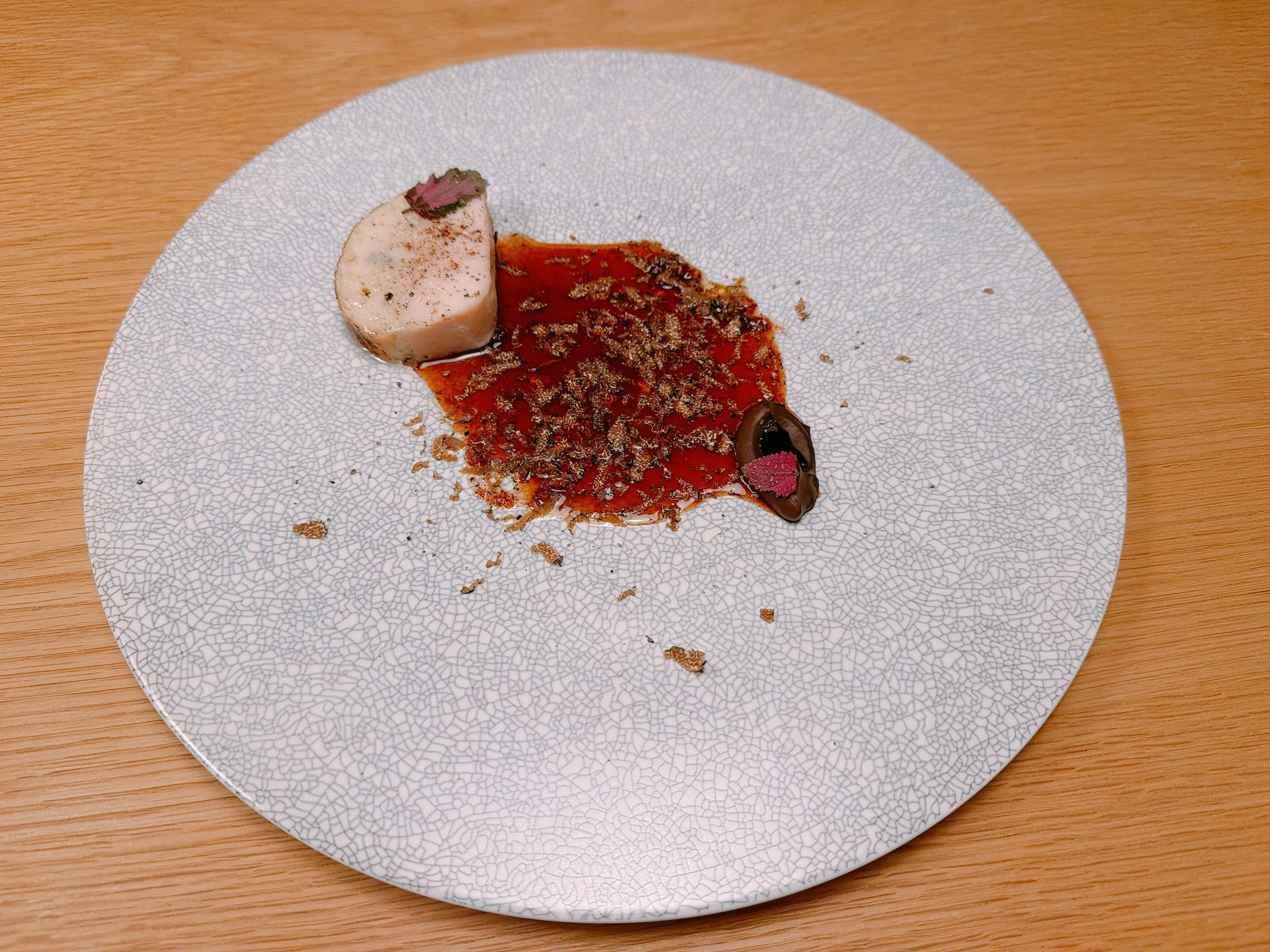
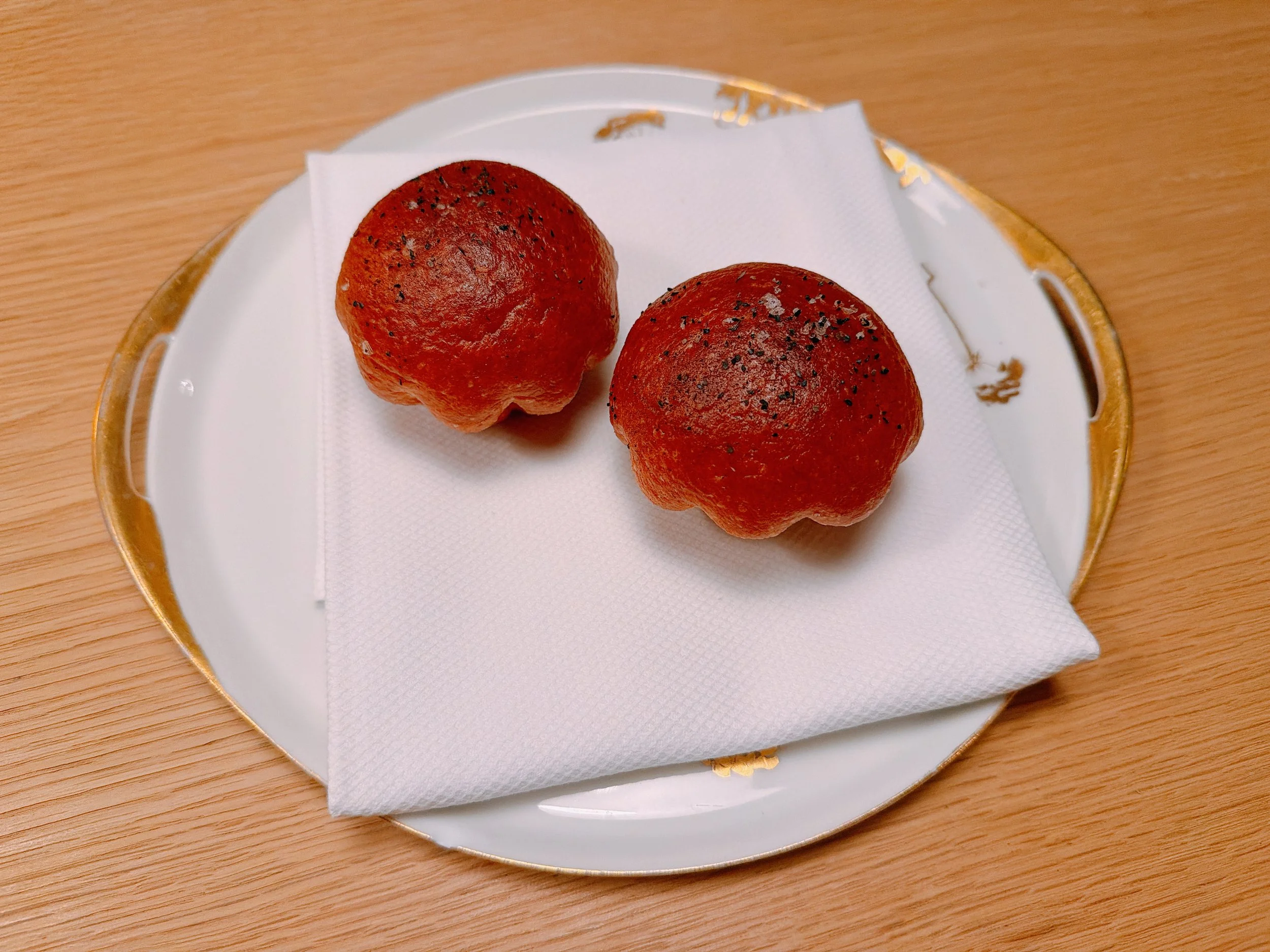
The final savory course was based on an Australian Westholm wagyu short rib, served with an XO sauce, beef jus, a porcini puree seasoned with herb oil, and shaved truffles. On the side came a mushroom consomme and a fluted brioche topped with black trumpet mushroom powder. Let's start at the end: the brioche was buttery and lightly warm; great for sopping up the sauce (16 by itself). The best part of the dish for me was the very intense mushroom broth, herbal and mushroomy (17). The beef was quite fatty, but cooked to a very tender, falls-off-the-bone consistency. Personally, I would have preferred a less thoroughly cooked steak, but this was very good otherwise (16). The steak was delicious when eaten together with the provided sauce. Overall, this dish felt a bit rustic compared to some of the previous courses 16. Instead of the steak, my dining companion received a Petaluma chicken breast, which was very nicely done: juicy, tender, and flavorful 16.
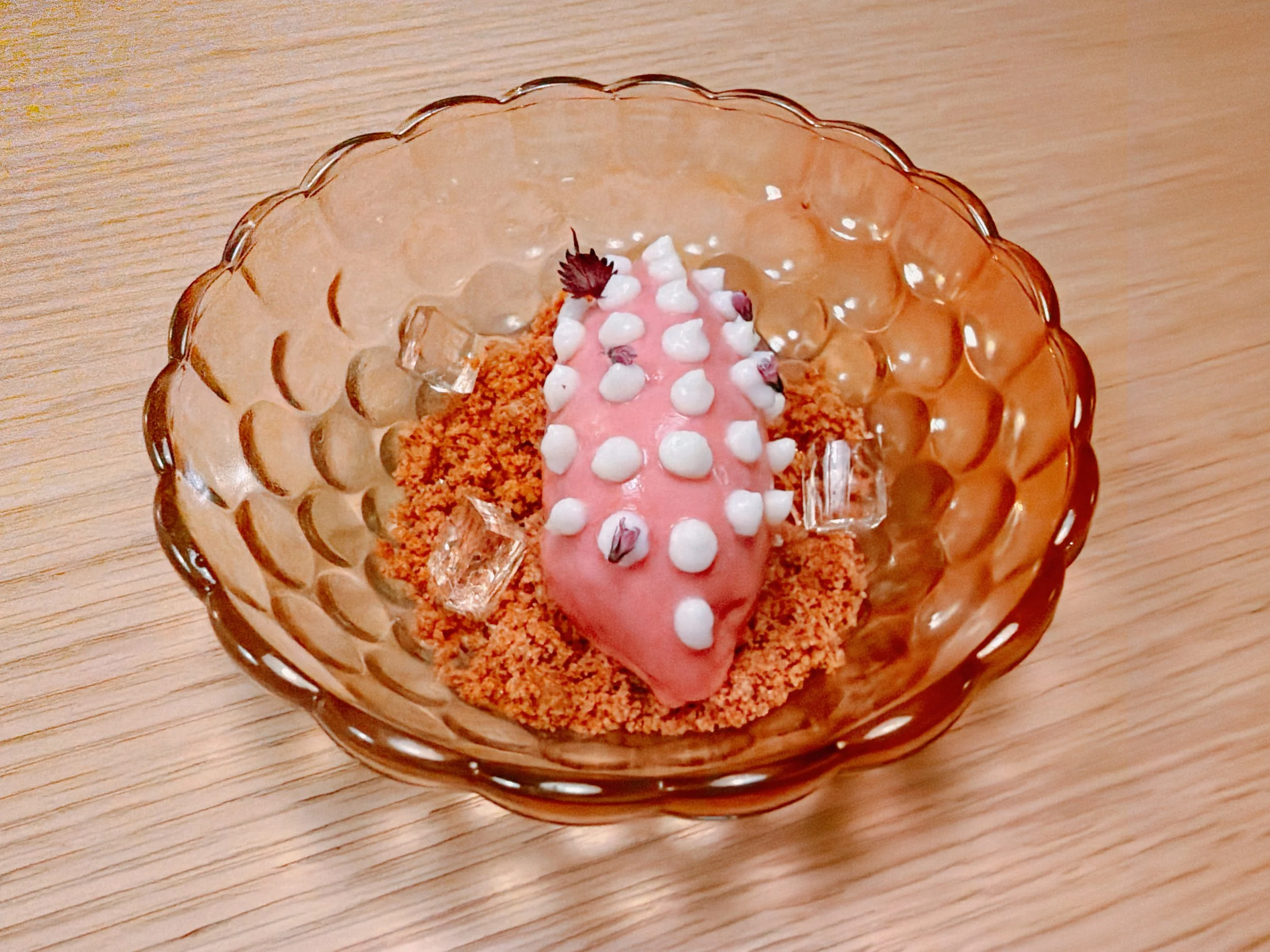
The first of two desserts featured a plum sorbet topped with buttermilk gel dots, surrounded by a brown butter crumble and shiso gel cubes. The sorbet had a light plum flavor, and the brown butter was nicely crumbly. The flavor of the latter was somewhat hard to place, but thankfully not fatty 15.
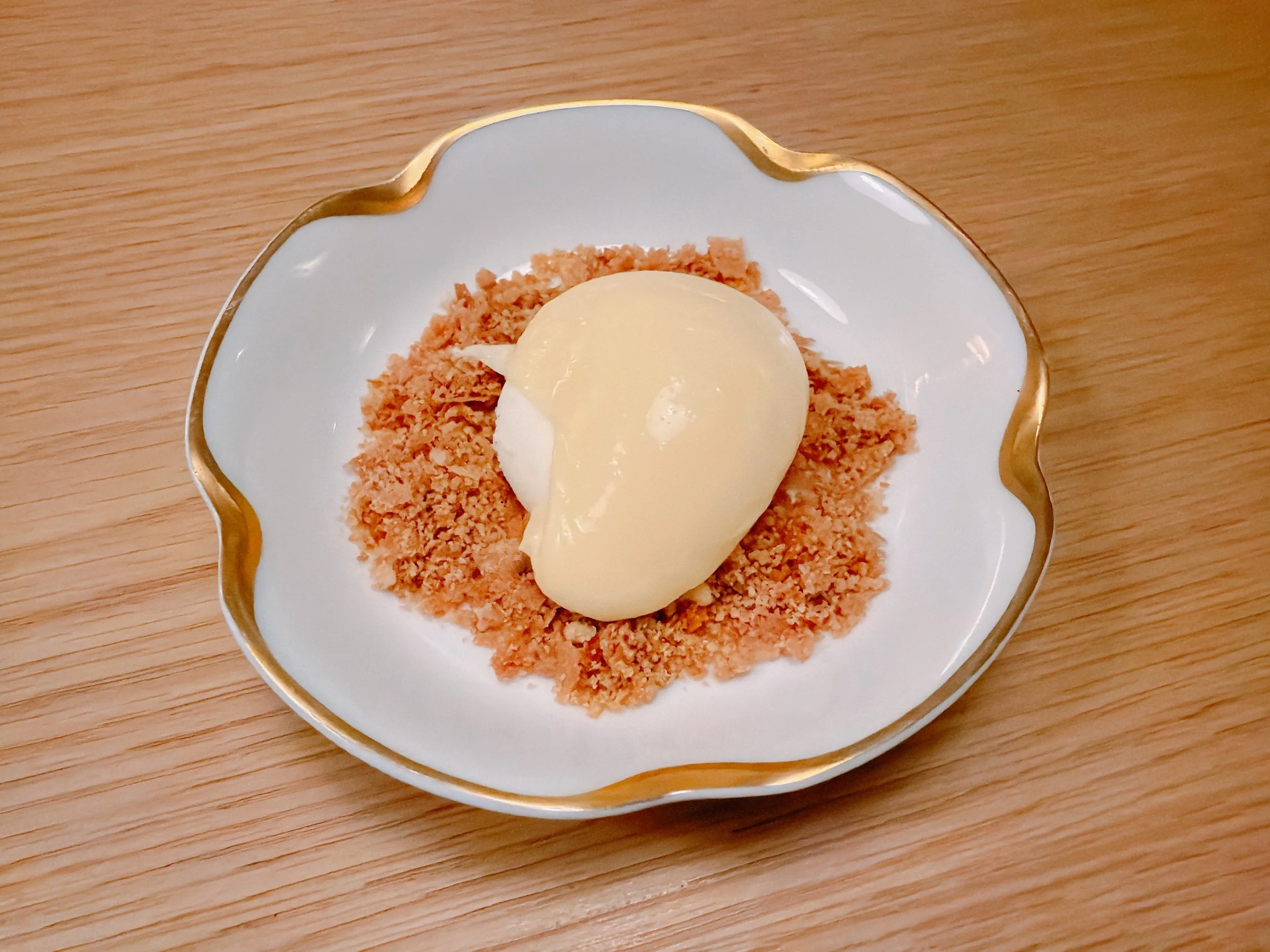
Dessert number two had a vanilla mousse and lemon curd atop a feuilletine (think: streusels made from crepe batter). Lemony, crunchy, and creamy. Yum 16.
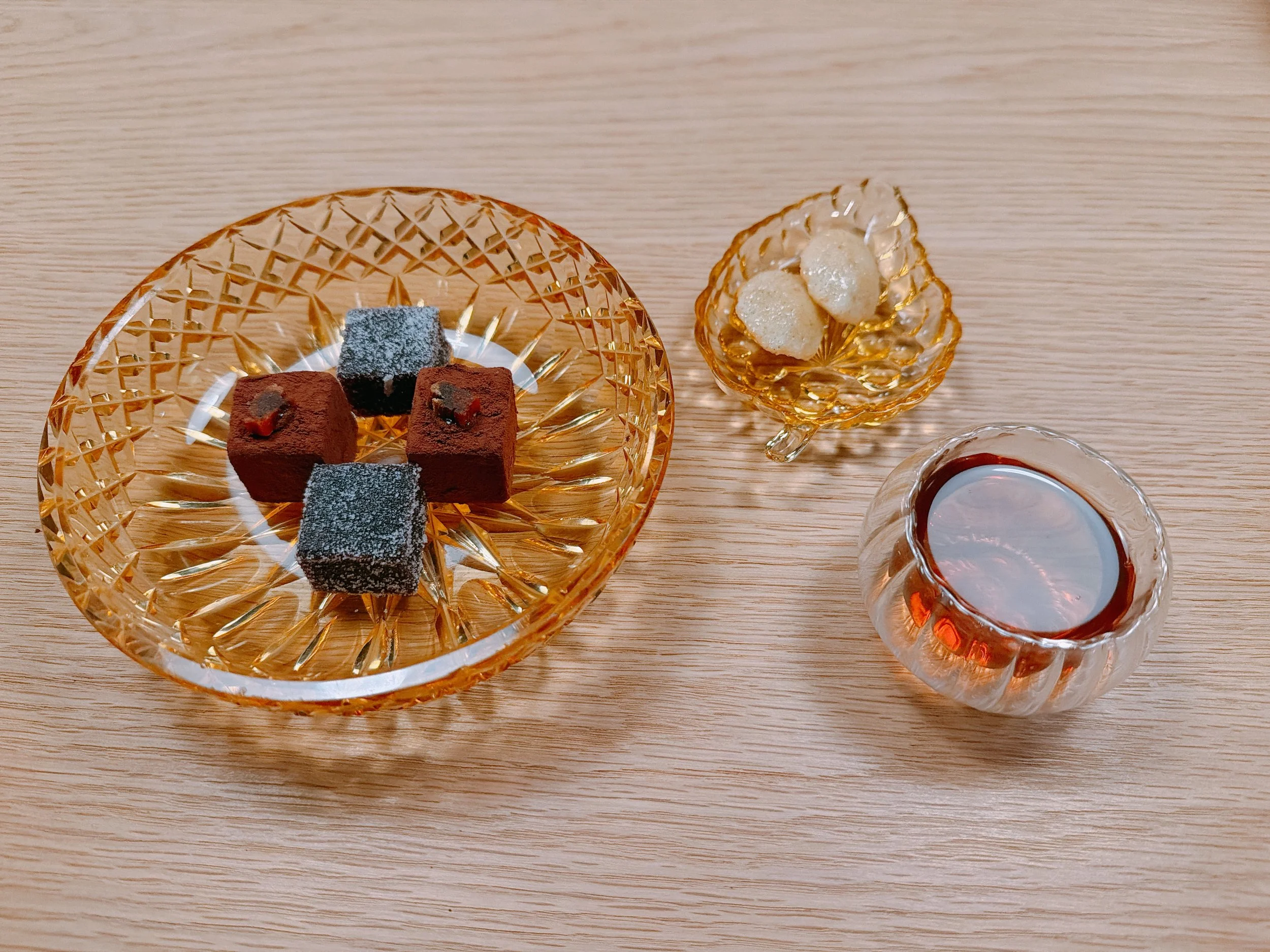
Three petit fours concluded our dinner. A citrus/fig madeleine was fine and not too sweet 14. A blueberry pate de fruit was very sweet, and it was hard to tell what fruit it was 13. A chocolate ganache was the best of the three 16.
Overall: Considering that it had only just received its first Michelin star, Troubadour's dinner was exceptionally strong, with some dishes even venturing into two star territory. There was a nice variety of well-executed dishes, and really nothing much to complain about (unless one disliked onions, which appeared several times). The great service and the private dining room made our dinner feel extra special, so this was definitely a place we'd happily return to. If only it wasn't such a long drive away 16.