Xin Rong Ji - Chengdu
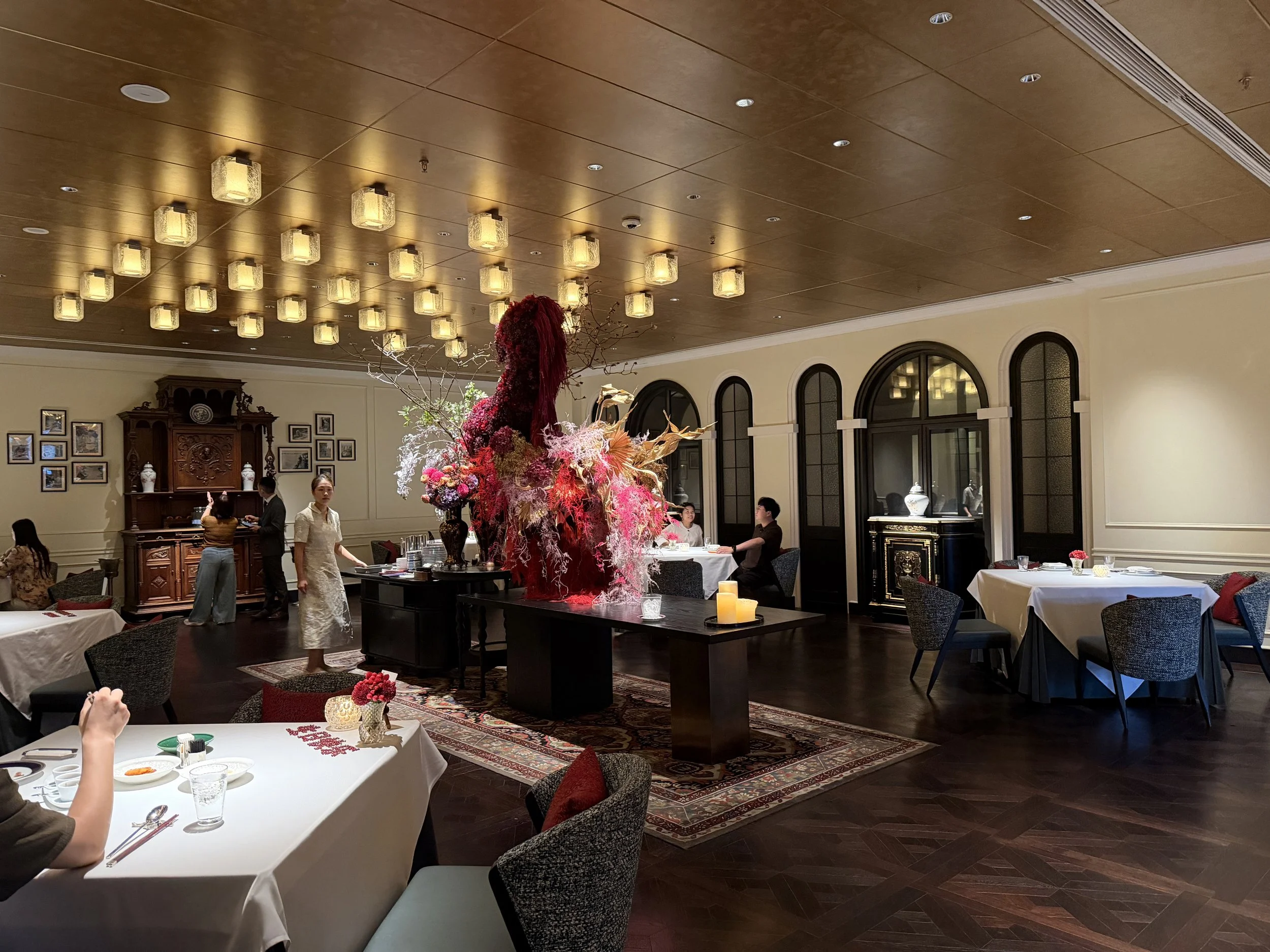
One of three dining rooms
Rating: 16/20
Where: Chengdu, China
When: Dinner for 2 on 27 September 2026
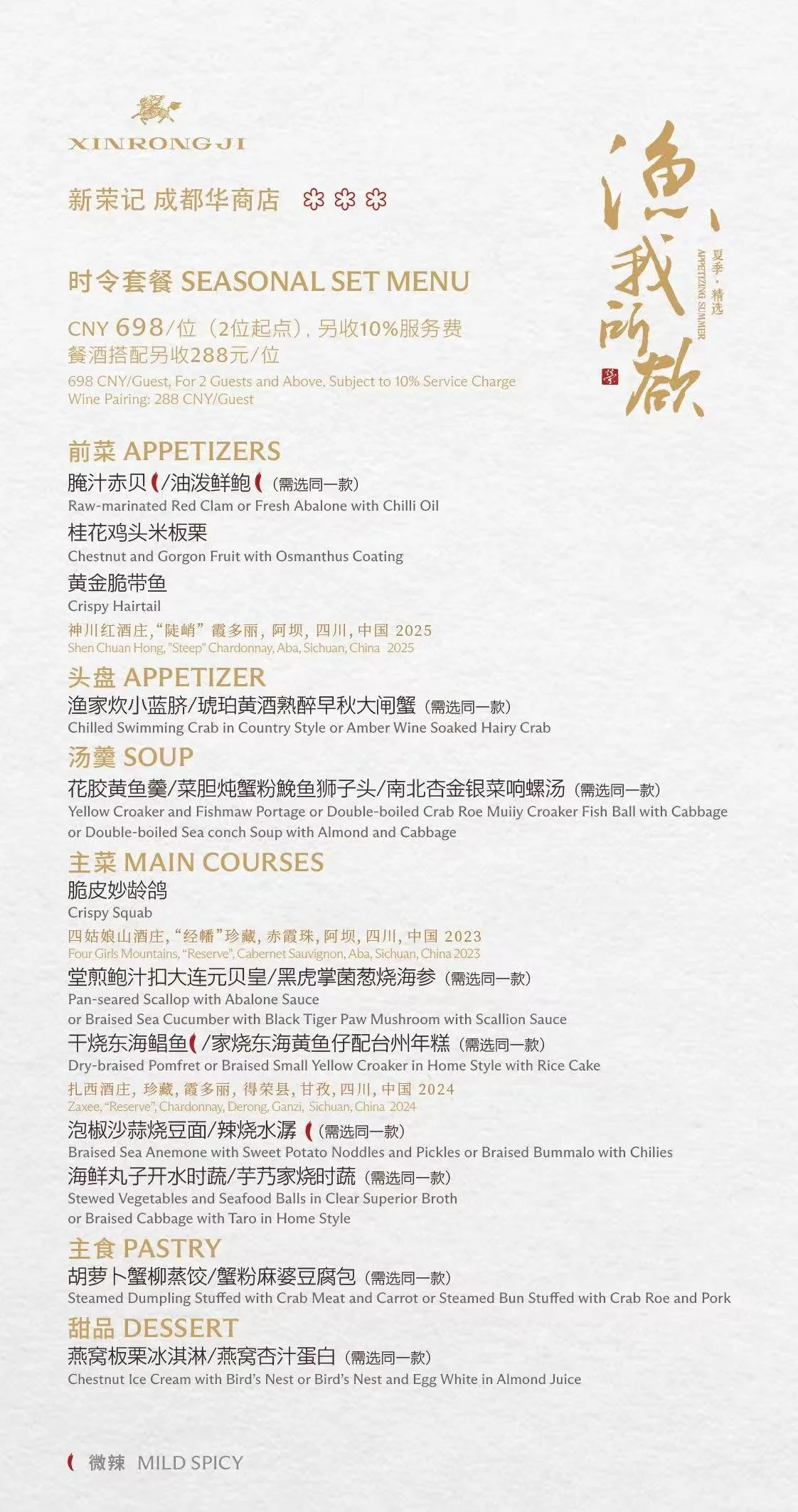
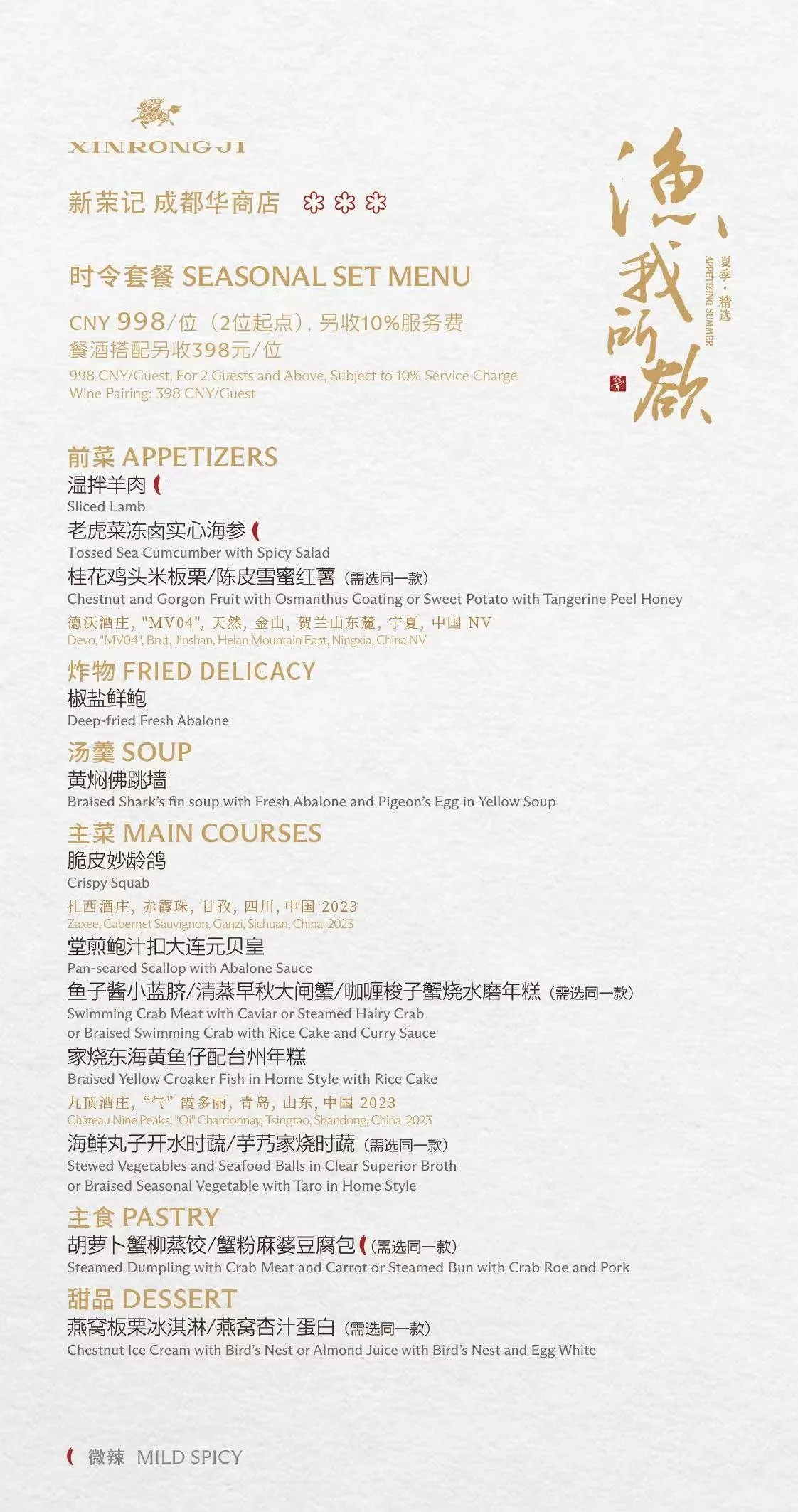
Cost per Person: Tasting menu 698-1980 CNY ($105-$295), Wine pairing 288-568 CNY ($40-$85)
Accolades: 3 Michelin Stars
Why: Seafood-focused Chinese cuisine in an elegant setting; amazing sauces
“Xin Rong Ji” is undoubtedly the most successful fine-dining restaurant chain in China. What started 1995 with a single roadside stall in Linhai (near the coast south of Shanghai) gradually expanded to now fifteen Michelin-starred locations across the country and Hong Kong. Xin Rong Ji’s Beijing location has held three Michelin stars since 2020, and our dinner there in 2023 still ranks among the best Chinese meals that I’ve ever had. So when its Chengdu outpost became the second one in the group to receive three Michelin stars, our hopes were obviously high.
It's probably good to set expectations regarding the type of food served at the restaurant. Chengdu is the capital of China's Sichuan province - renowned for its very spicy food. However, the dishes served at Chengdu's Xin Rong Ji only give the slightest nod to its location. The chain's cuisine remains true to its coastal, seafood-heavy origins, even in a location where the closest ocean is over 1000 kilometers away. (Fresh seafood is flown in daily.)
As far as reservations went, I started with having a Mandarin-speaking family member calling the restaurant. After that initial contact, though, the rest of the booking process was handled in English over WeChat. So presumably calling in English would have worked as well... During our visit, our main server and the sommelier spoke good English, so no concerns there, either.
Xin Rong Ji is located in the Chengdu Financial City, about a half an hour drive south of the city center. The area boasts lots of newly-built apartments and offices, with the iconic “Twin Towers” at its center. These two towers, one containing serviced apartments, the other offices, are lit up at night with projected videos and art, reminding me a bit of the Las Vegas Sphere, only, well, not round. Our destination was just south of the Twin Towers, in the Chinese Financial Center. The first five floors of this office building are essentially a lively upscale food court full of countless restaurants. While the lower four floors are connected via escalators, one has to take a special elevator from the building's southern entrance to reach the fifth floor, which is where one finds Xin Rong Ji.
The restaurant seemingly occupies about half of the building's floor - an astonishingly huge space that is split among three large dining rooms, several private dining rooms, a bar, a small aquarium's worth of fish tanks, a walk-in wine cellar, an open dim sum kitchen, etc, etc. One could easily get lost in the maze of corridors here. That said, our dining room only had eight tables, so it came in a more human-level scale. The directly adjacent terrace, available for desserts or after dinner drinks, had good views of the Twin Towers.
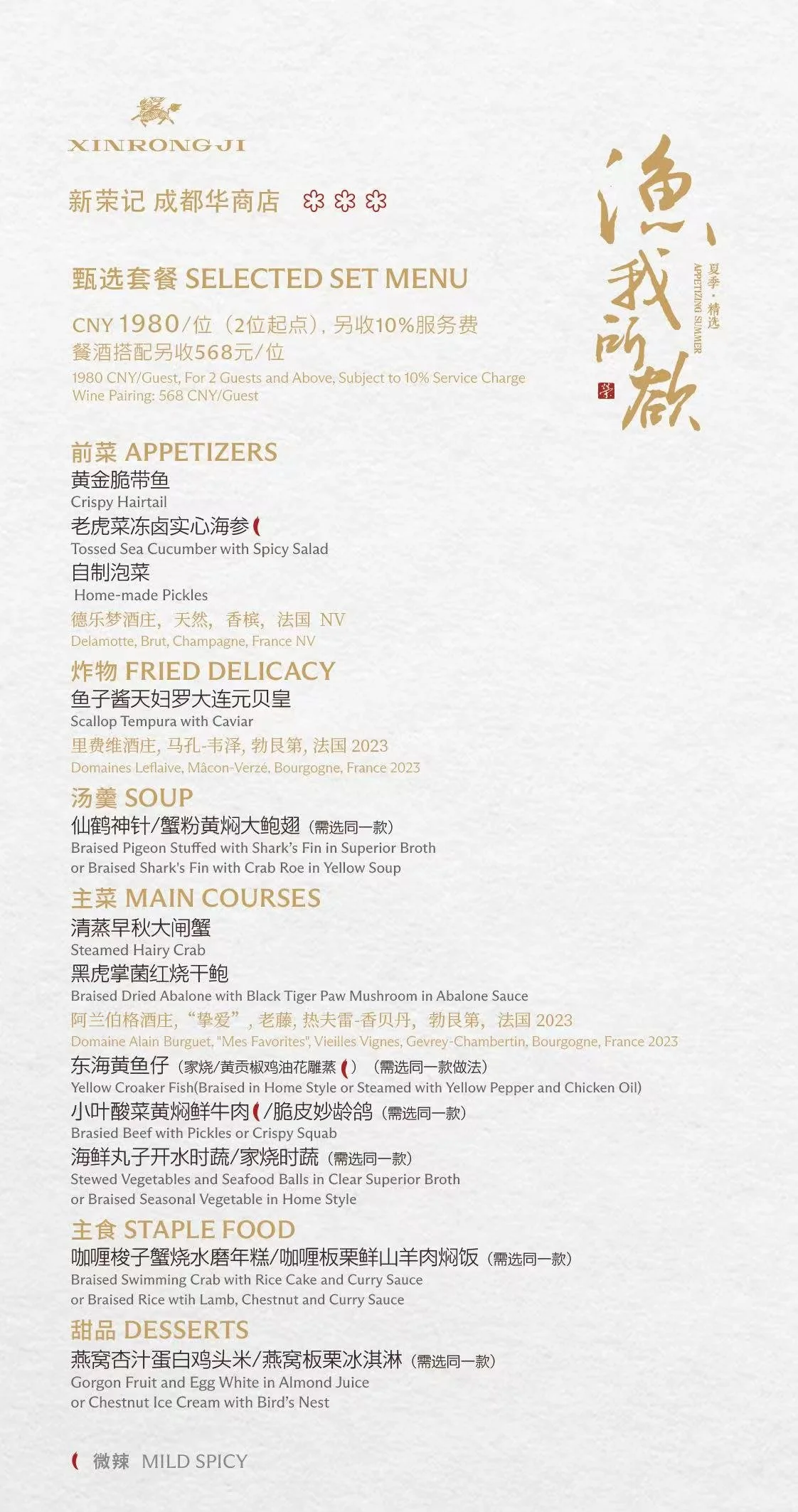
Like many Chinese restaurants, Xin Rong Ji had an encyclopedic a la carte menu. Many dishes (including a gigantic fish maw for 49800 CNY - about $7500) required preordering, though - a sensible way to avoid food waste. So if one showed up without planning ahead, one would probably miss out on the majority of the restaurant's signature dishes. And if studying the long menu sounded like too much work, there were also three tasting menus, priced at 698, 998, and 1980 CNY ($105, $150, and $295, respectively). The tasting menus had to be ordered at least a day ahead of time as well. If one went that way, only drinks had to be decided upon at game time (aka dinner time). The tasting menus each came with a corresponding wine pairing, priced at 288, 398, and 568 CNY ($40, $60, $85). These pairings consisted of three glasses, and the wines came from China for the first two menus and from France for the 1980 CNY menu. We had picked that latter menu, and the three French wines (a Champagne, a white and a red Burgundy) were fine, but not outstanding. Interestingly enough, the best wine we had all evening was a glass of red from China's Ningxia region (2021 Chateau Huahao Billions Year of Terroir Marselan). It was bold, fruity, and full of flavor - not exactly the best match for the seafood, but otherwise very good.
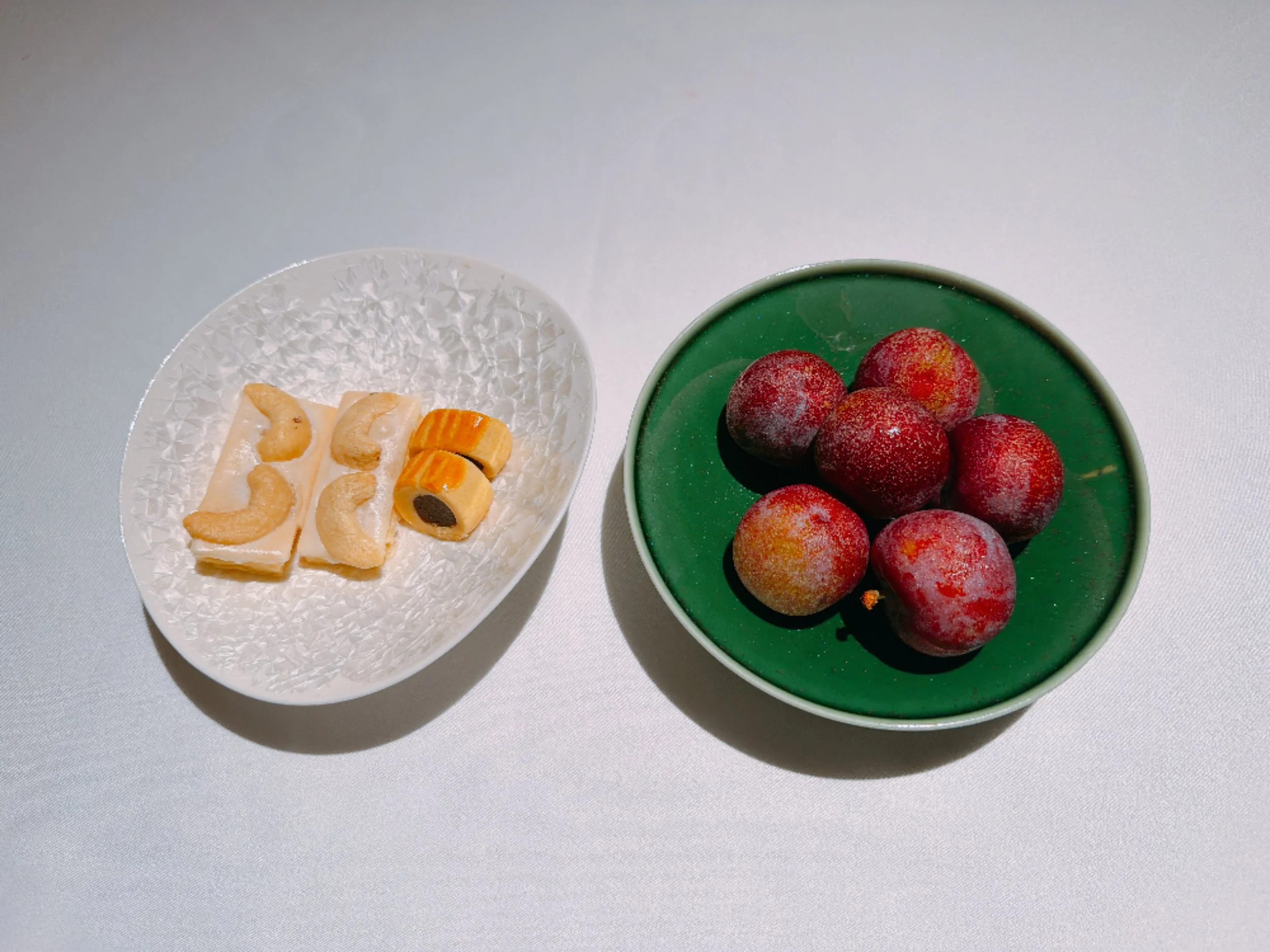
After all the decision making, it was finally time to enjoy the food. Our dinner began with several welcome snacks. They were all sweet, which might be unusual for a Chinese restaurant in the West, but matched what I had seen at my previous dinner in Chengdu. Red plums from Sichuan were fresh, crunchy, and lightly sweet. Very tasty 15. A “red date cake” was a freshly-made crumbly pastry 16. And finally, a “cashew pastry” was essentially a good cookie with a crunchy base 16.
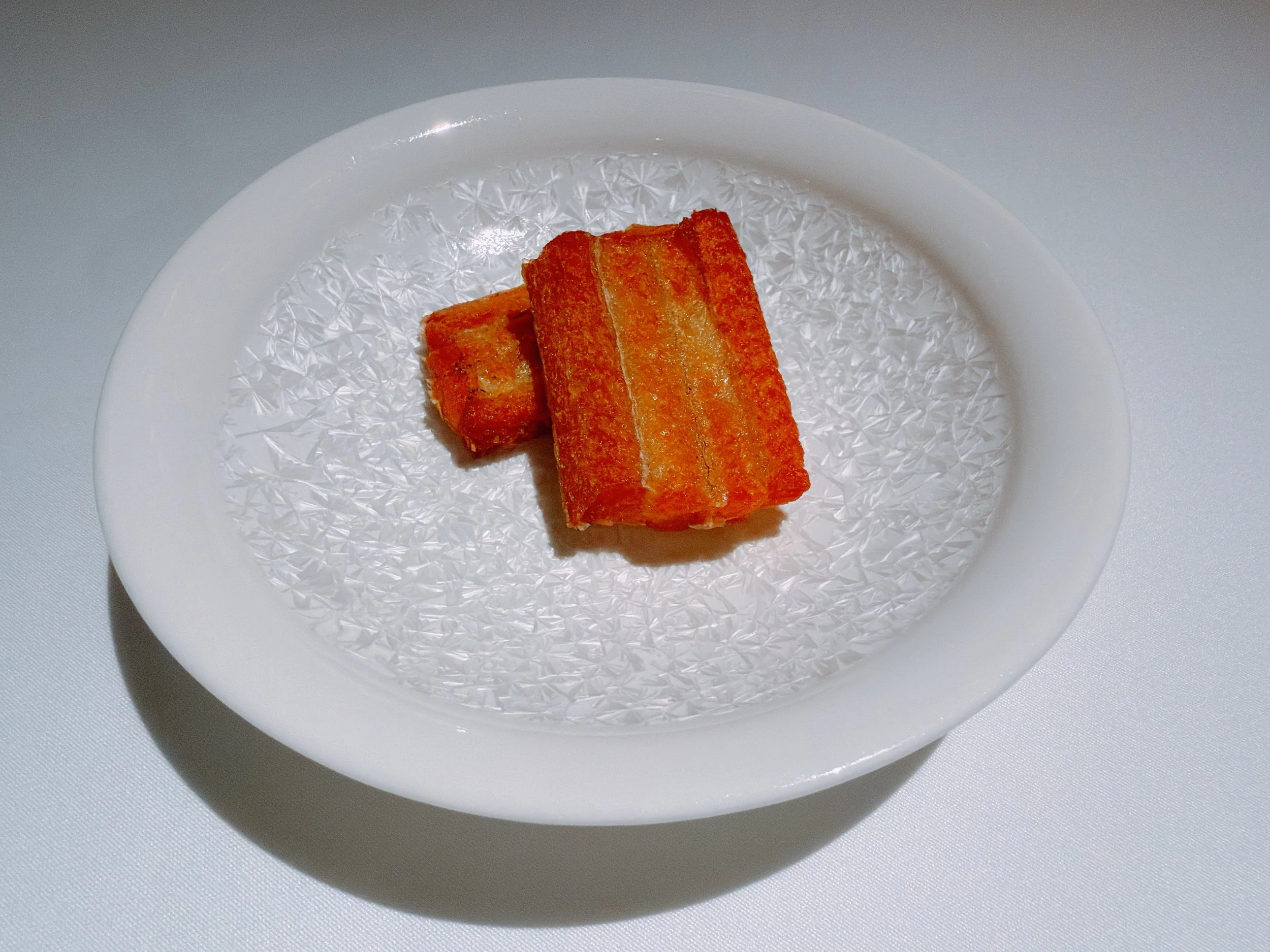
After that, we received three appetizers, all served at the same time. We started with a deep-fried filet of hairtail fish. Served warm, it came with a crispy exterior. The fish was nicely fried, but only had subtle flavors and a soft/mealy texture instead of a firm one. It also came with fish bones, but they were easy to work around 15.
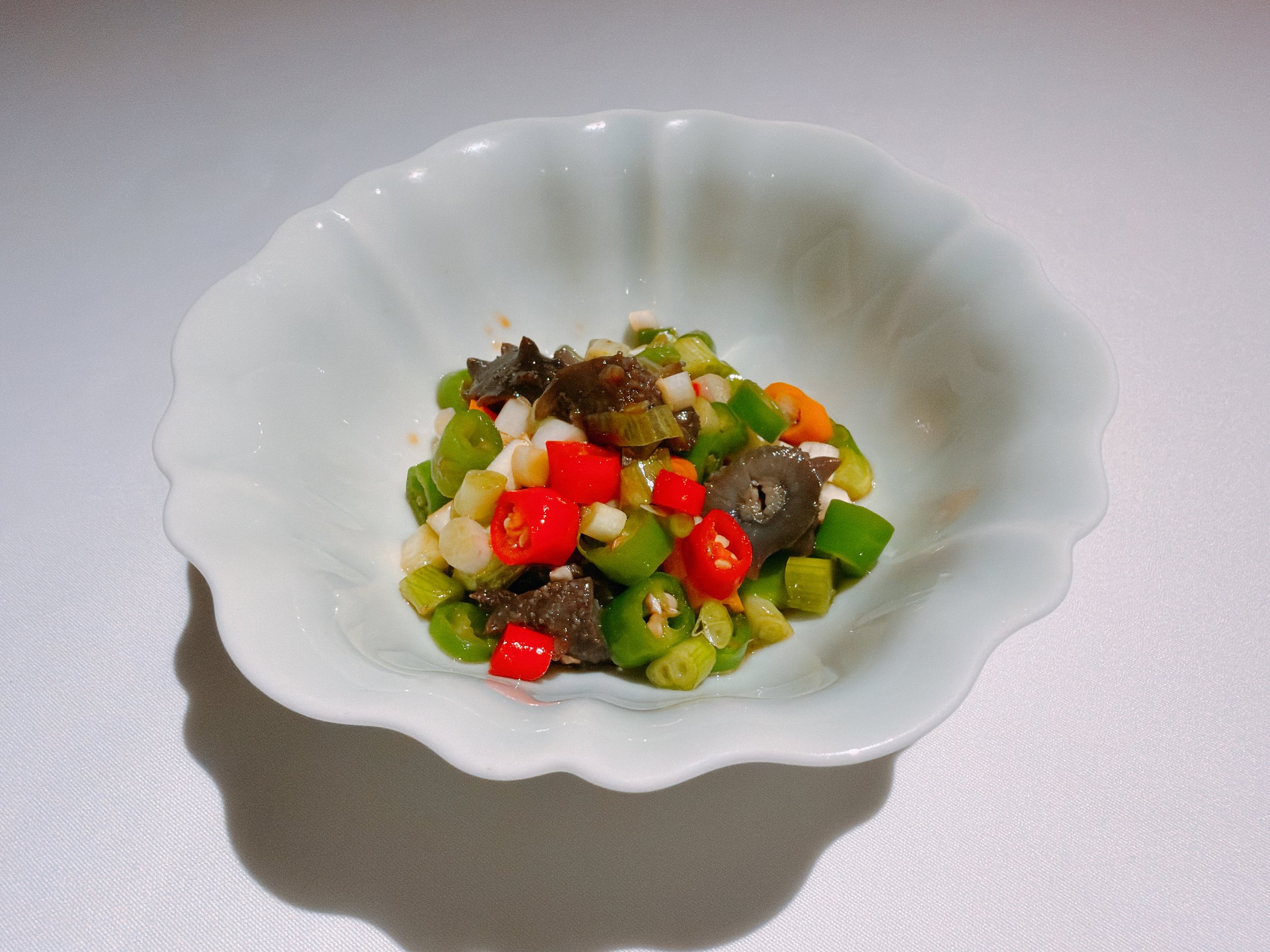
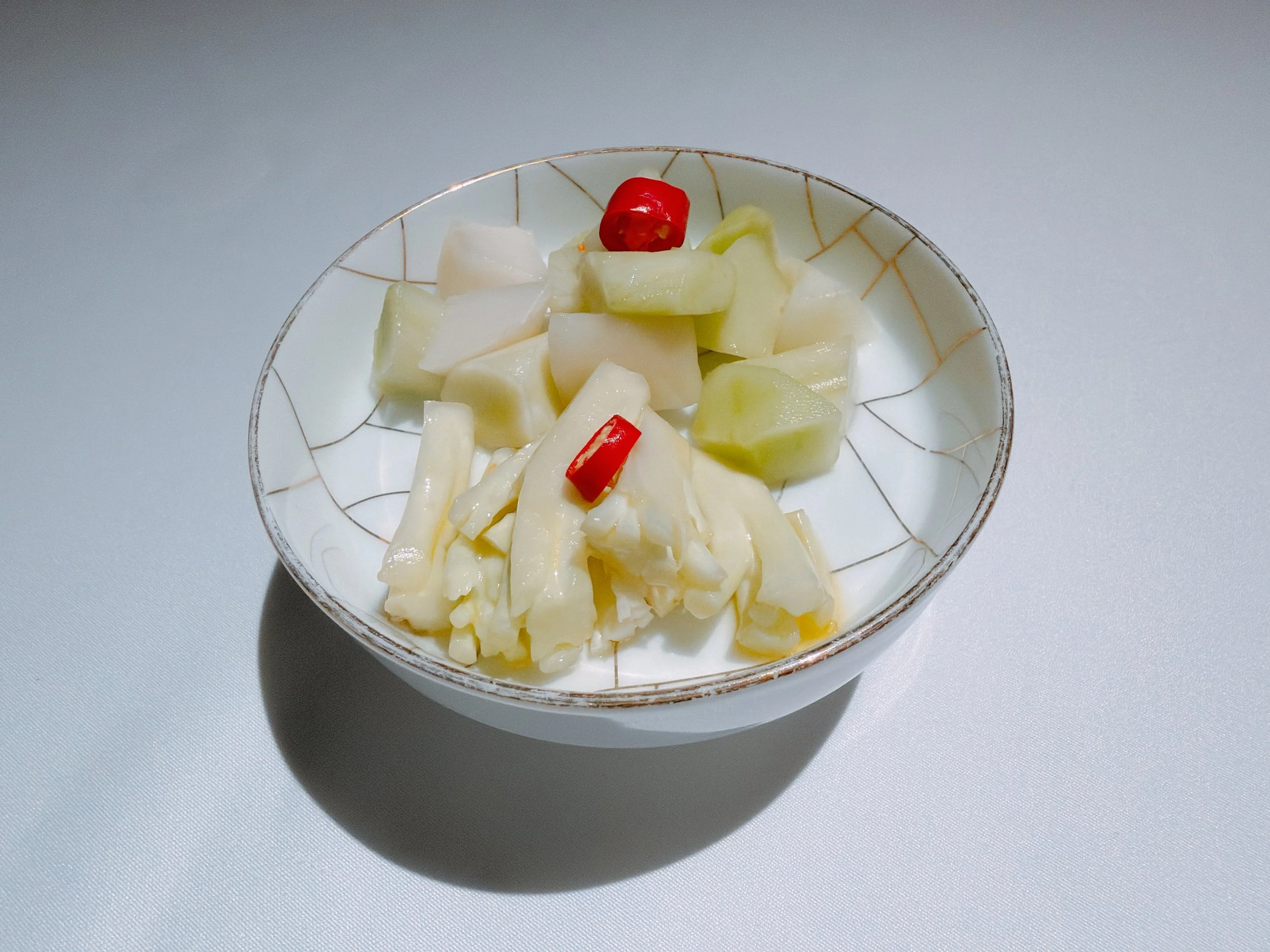
Next was a salad made from green onions, spicy peppers and sea cucumbers, served with a “Dongbei-style Tiger sauce”. That sauce was delicious, having a complex, hard-to-pin-down flavor. It went great with the crunchy green onions. The peppers added a substantial amount of heat to the dish, presumably a nod to us being in Sichuan. The sea cucumbers had their typical gelatinous texture and had taken on a bit of flavor from the sauce 16. Finally, there were two kinds of pickles, one made from cauliflowers, the other from the root of Chinese lettuce. These were only lightly pickled, but otherwise excellent: delicious, crisp and crunchy. The cauliflower pickle had a hint of sweetness 17.
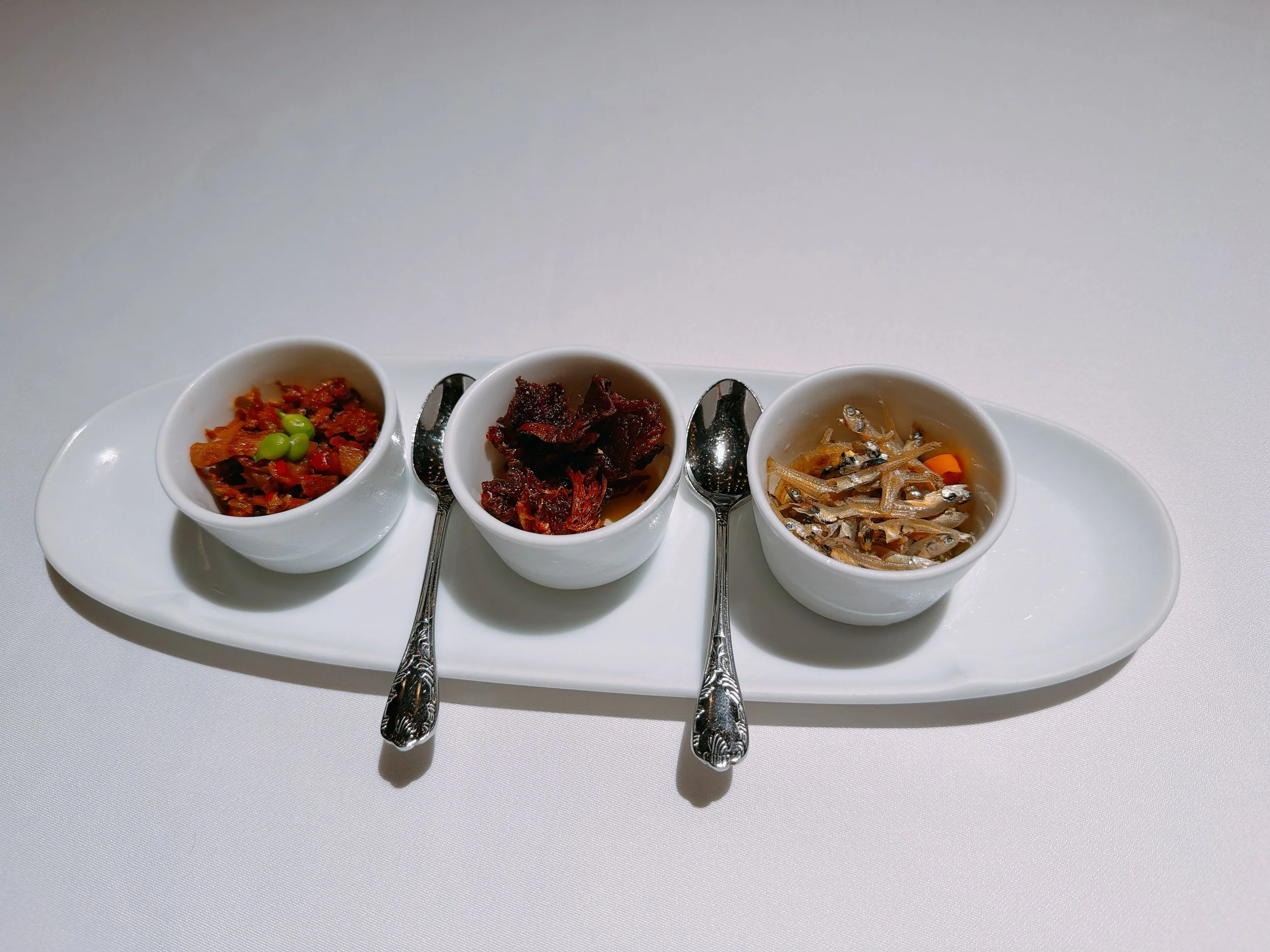
At this point, we were served three condiments, meant to be used throughout the rest of the meal. These were (from left to right in the picture): so-called “grandma vegetables”, termite mushrooms preserved in oil, and dried fish. The veggies had some good umami, the mushrooms were sadly lacking in flavor, and the fish had a hint of spice. On average, these were fine, but not exceptional, and I didn't really feel any need to use them during our dinner 14.
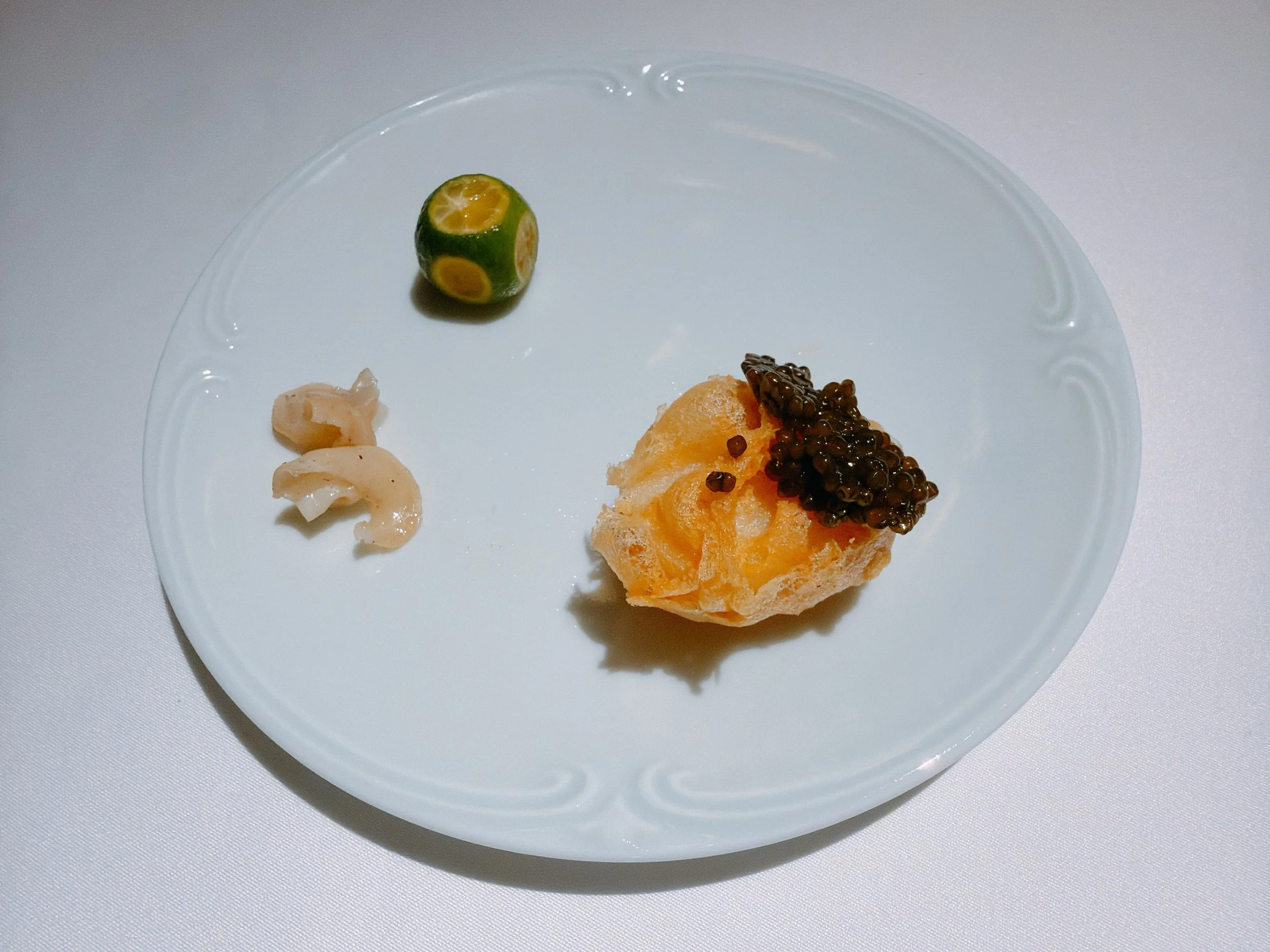
The first “real” course was a scallop from Dalian that had been prepared as tempura and topped with Beluga caviar from Sichuan. Next to it was the side muscle of the scallop and a citrus fruit cut into a cube shape. The in-season scallop was amazing. It was extremely fresh, perfectly cooked, and tender, all the while keeping its subtle inherent, lightly sweet flavor. The crunchy tempura covering added some texture, and the caviar some saltiness. This dish was great with or without the addition of the citrus juice, and it's truly rare to see a scallop preparation that brings out the mollusk's flavor so cleanly. The crunchy side muscles were not as compelling - they barely tasted of anything 18.
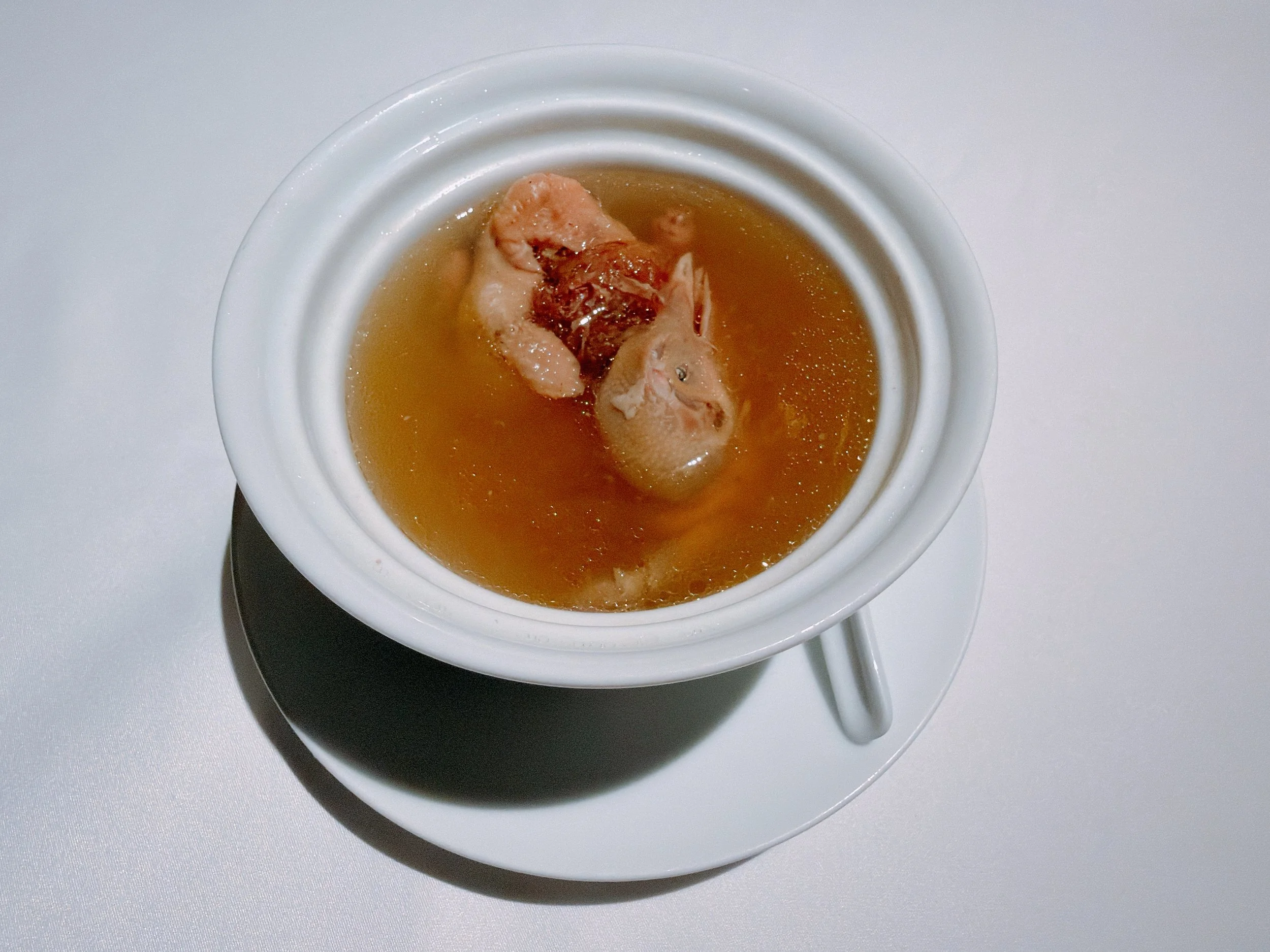
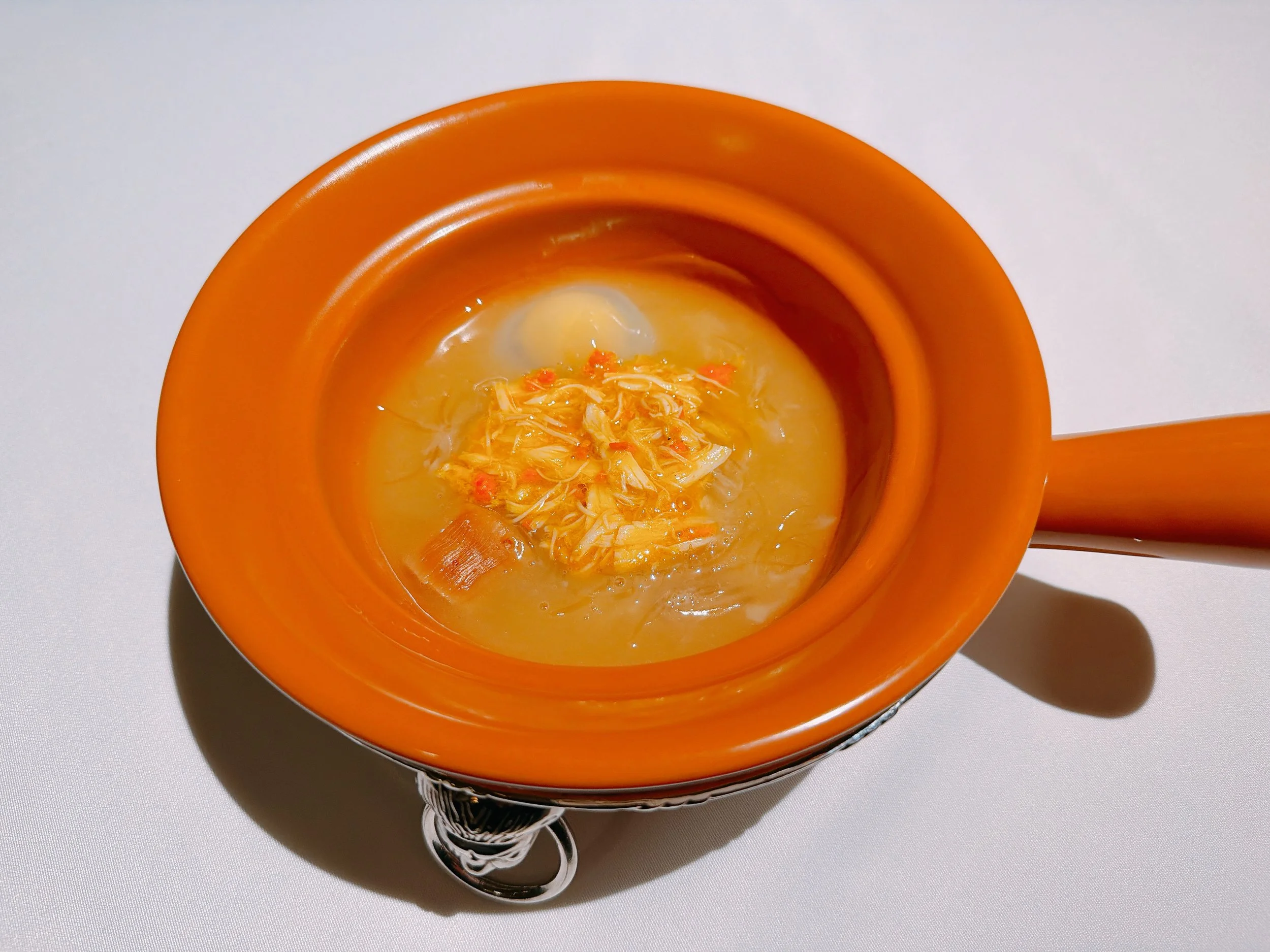
For the following soup course, the tasting menu offered two choices, and we opted for one of each. The first soup contained a pigeon that had been stuffed with shark fin and braised for eight hours in a broth made from pigeons, ducks and pork. The pigeon was cooked to a very well done consistency (not a surprise given the preparation time), and was meaty but also quite bony. The shark fin had its usual vermicelli-like texture, and had taken up some flavor from the pigeon and the broth. Said broth was lovely: full of flavors and meaty, yet quite light 15. The alternative was a yellow soup made with the meat and roe of a hairy crab, dried scallops, shark fin, and a boiled pigeon egg. The texture of the soup was quite gelatinous and creamy. While the crab meat was of good quality, its inherent flavor was not very strong. At least the scallops added some saltiness. We didn't see the advertised shark fin 16.
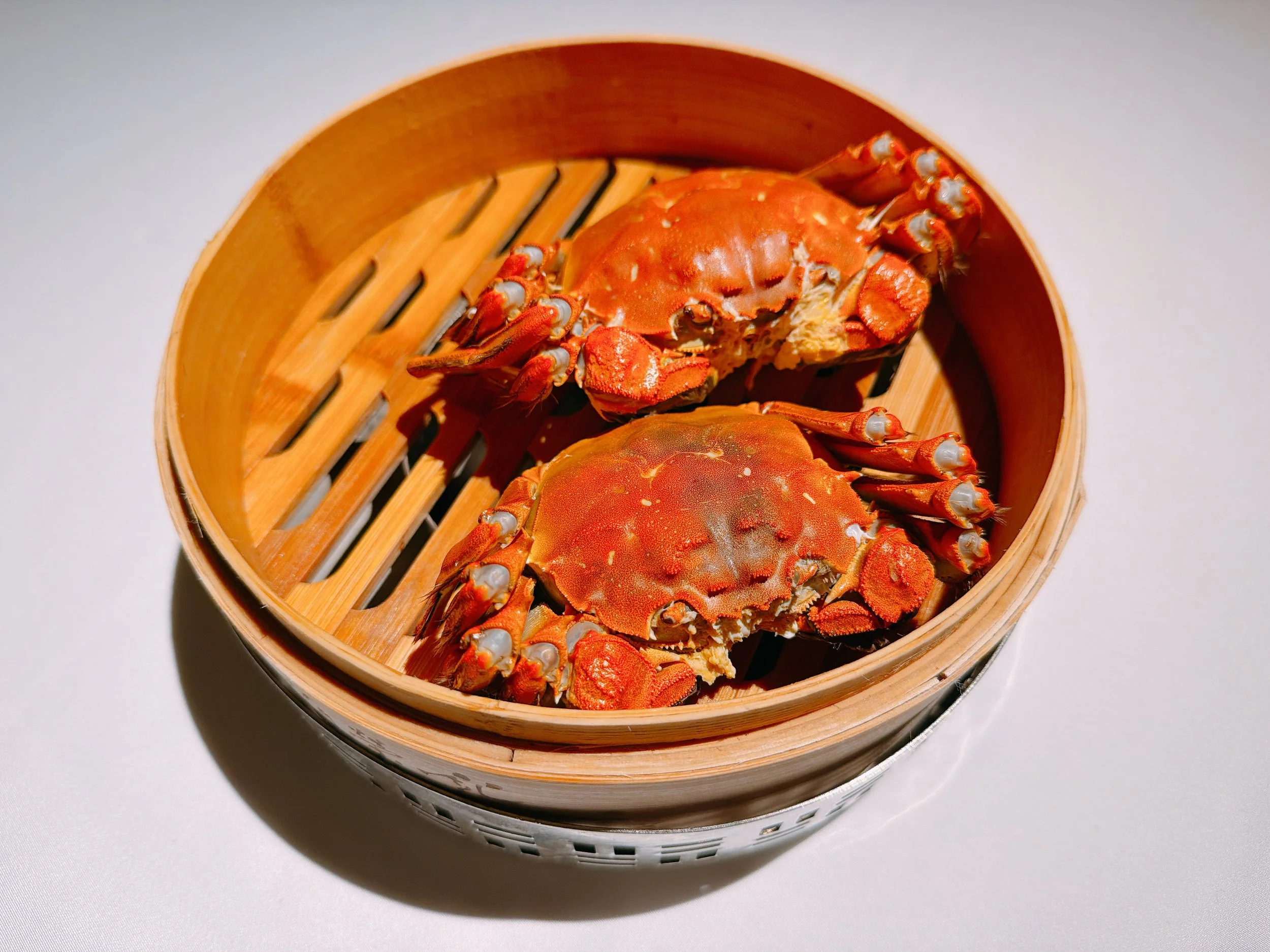
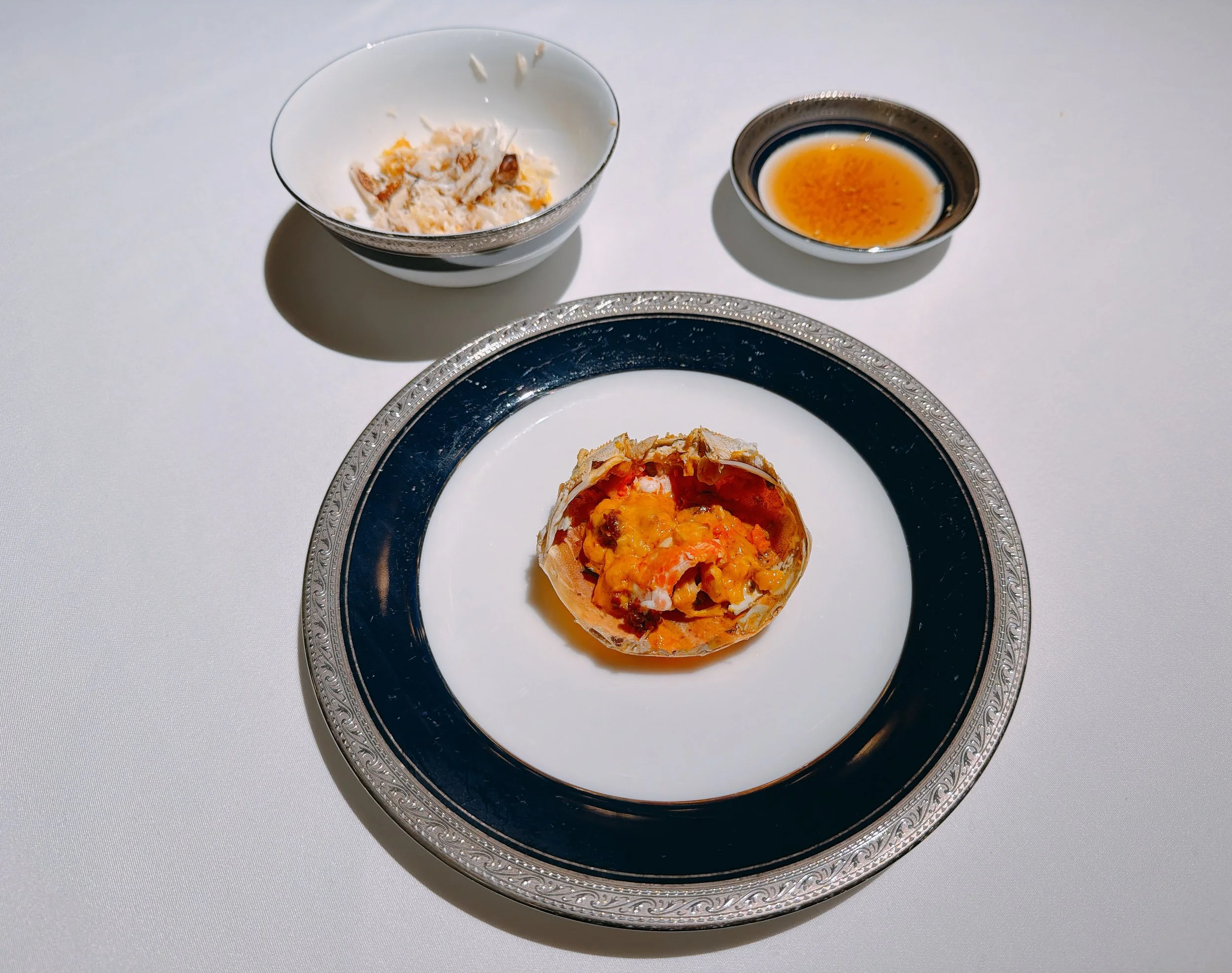
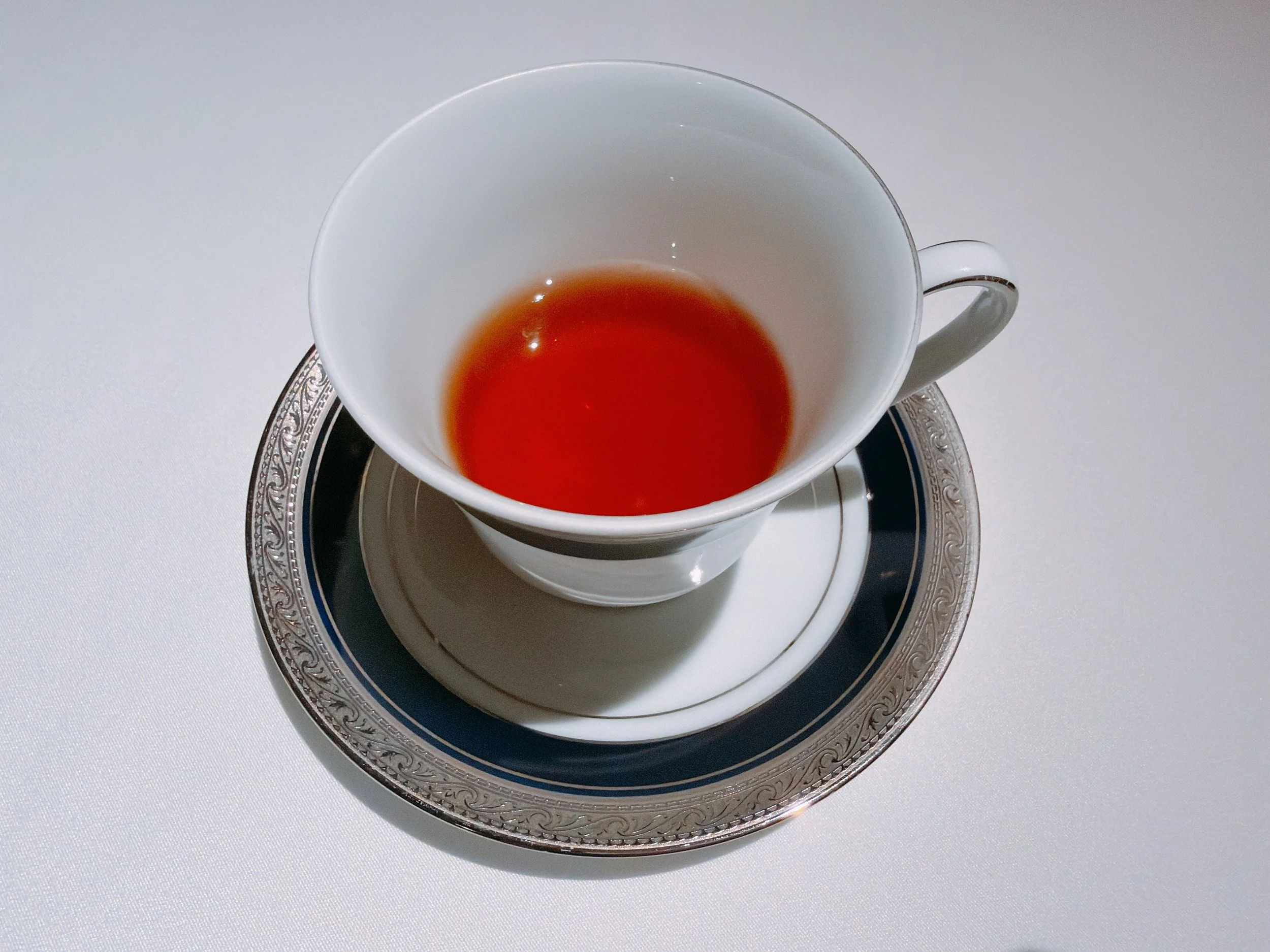
A hairy crab from Dongbei (Northeastern China) was served with a ginger and vinegar dip, and was accompanied by a cup of ginger tea. Our server thankfully offered to extricate the meat from the steamed crab. It took her quite a while, so if it had been up to me, we'd probably still be at the dinner table in Chengdu. The crab meat was very fresh and went great with the wonderfully fragrant sauce which added a welcome touch of acidity. The (female) crab's roe and innards were faintly bitter and had the expected crumbly texture. The tea was quite sweet with a strong ginger taste 16.
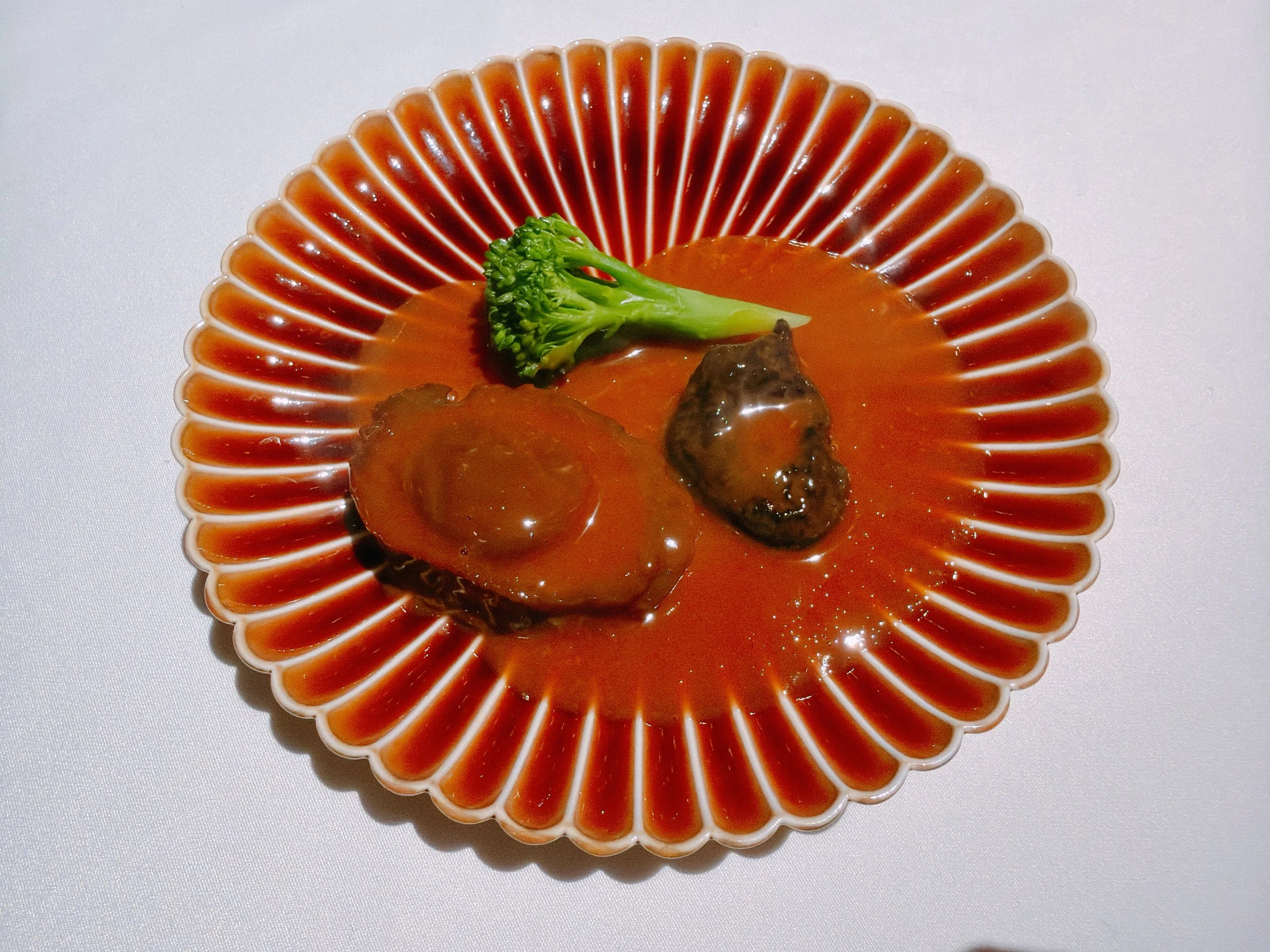
A medium size (15 head) abalone was served with a mushroom from Yunnan, a piece of steamed broccoli, and an abalone liver sauce. The abalone had some bite and had soaked up some flavor from the sauce, so that it tasted lightly of liver. Fine, but not the most compelling abalone preparation I've seen. The mushroom was actually better: almost crunchy in texture, it had more bite than the abalone, and also a notable mushroom flavor. The broccoli was served cold (a bit surprising in this otherwise warm dish), and was not particularly memorable. The unqualified star of this dish though was the sauce. Delicious, full flavored, and complex, it was truly exceptional - the kind of thing you'd expect from a three-star restaurant (19 by itself). The rest of the dish was considerably weaker 17.
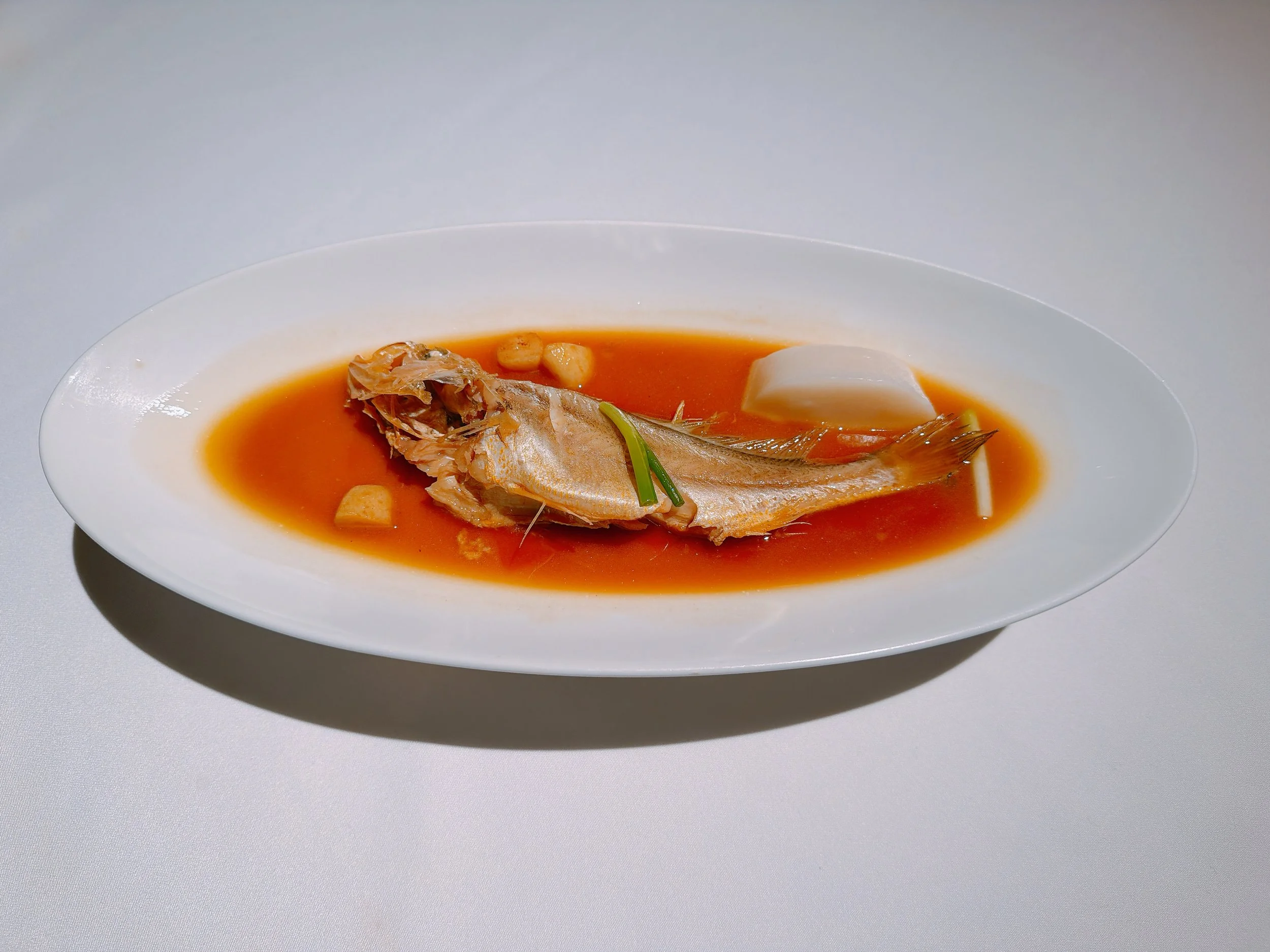
The signature dish of the Xin Rong Ji chain is the yellow croaker fish. We had chosen its “home style” preparation that came with rice cakes and garlic in a fragrant sauce. The fish itself didn't feel that special - it was only lightly flavored, and so full of bones that eating it became a chore. I remembered the rendition from Xin Rong Ji's Beijing branch more fondly. The rice cakes were great, having just the right kind of chewiness, and even the garlic was quite tasty. The reason why the two accompaniments were so flavorful was the sauce, which was (again) amazing. Flavorful, salty and vinegary, it also would have rated 19, had it been the only thing on the plate. With the less exciting fish, a 17.
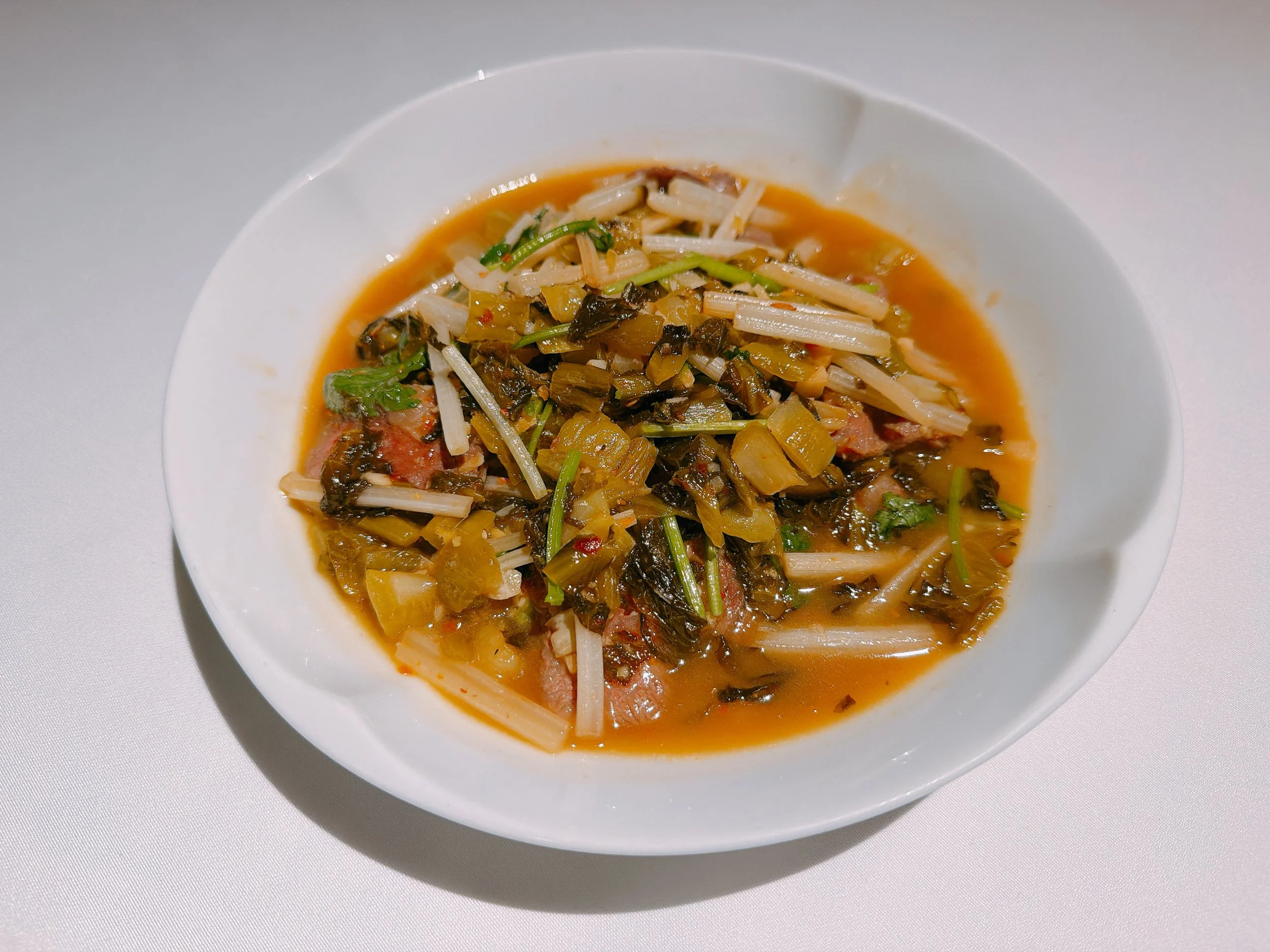
Slices of braised beef were served with vegetables and chilies. The beef itself was the weakest part of this dish, cooked to a well done consistency and having some chewy parts. Much more compelling were the vegetables, which were fresh, crunchy and pickled - somewhat reminiscent of sauerkraut. The chilies were similar to pepperoncini. There was a bit of a Sichuan pepper flavor as well, making this dish spicy, but not too spicy. A nicely rustic presentation; I just wish that the beef had been better 16.
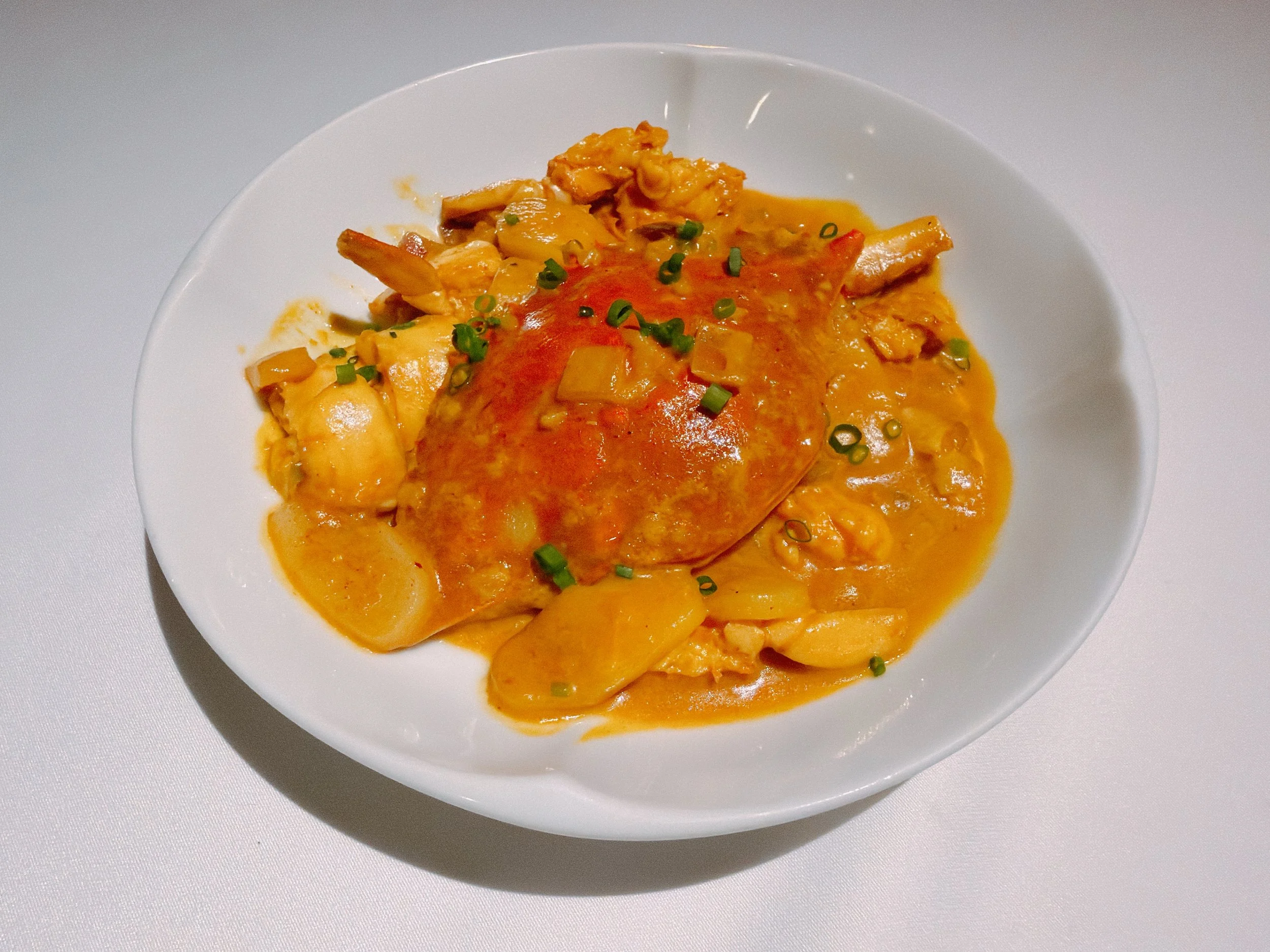
Next, we were served a dish made with a swimming crab from the East China sea, rice cakes, onions, and a curry sauce. The crab meat was good - sweet and fresh -, but not mind-blowing. The rice cakes were also fresh (as they had been with the yellow croaker), the onions crunchy, and all were infused with the taste of the excellent curry-flavored sauce. This delicious sauce would have deserved a 18 by itself, but with the slightly less compelling ingredients, a 17.
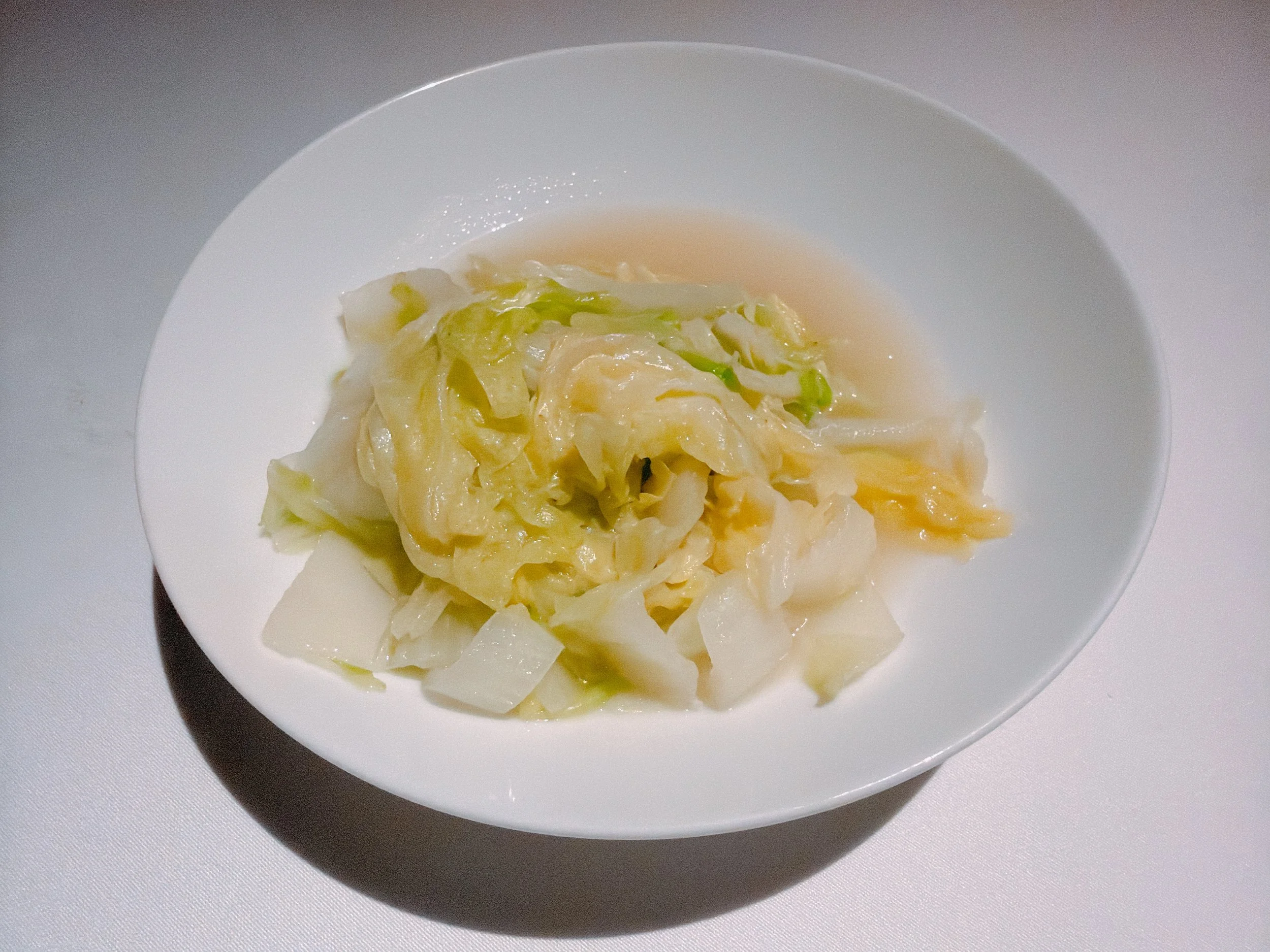
Our final dish, which according to the menu should have arrived before the curry, was a baby cabbage prepared “home style”. This dish sadly did not have much flavor; the sauce was pretty light with maybe a slight hint of pork. The lack of flavor was presumably intentional - as a lead-in to the more flavorful curry dish, if only they had been served in the correct order. But taken by itself, it was a lackluster finish to the savory courses 14.
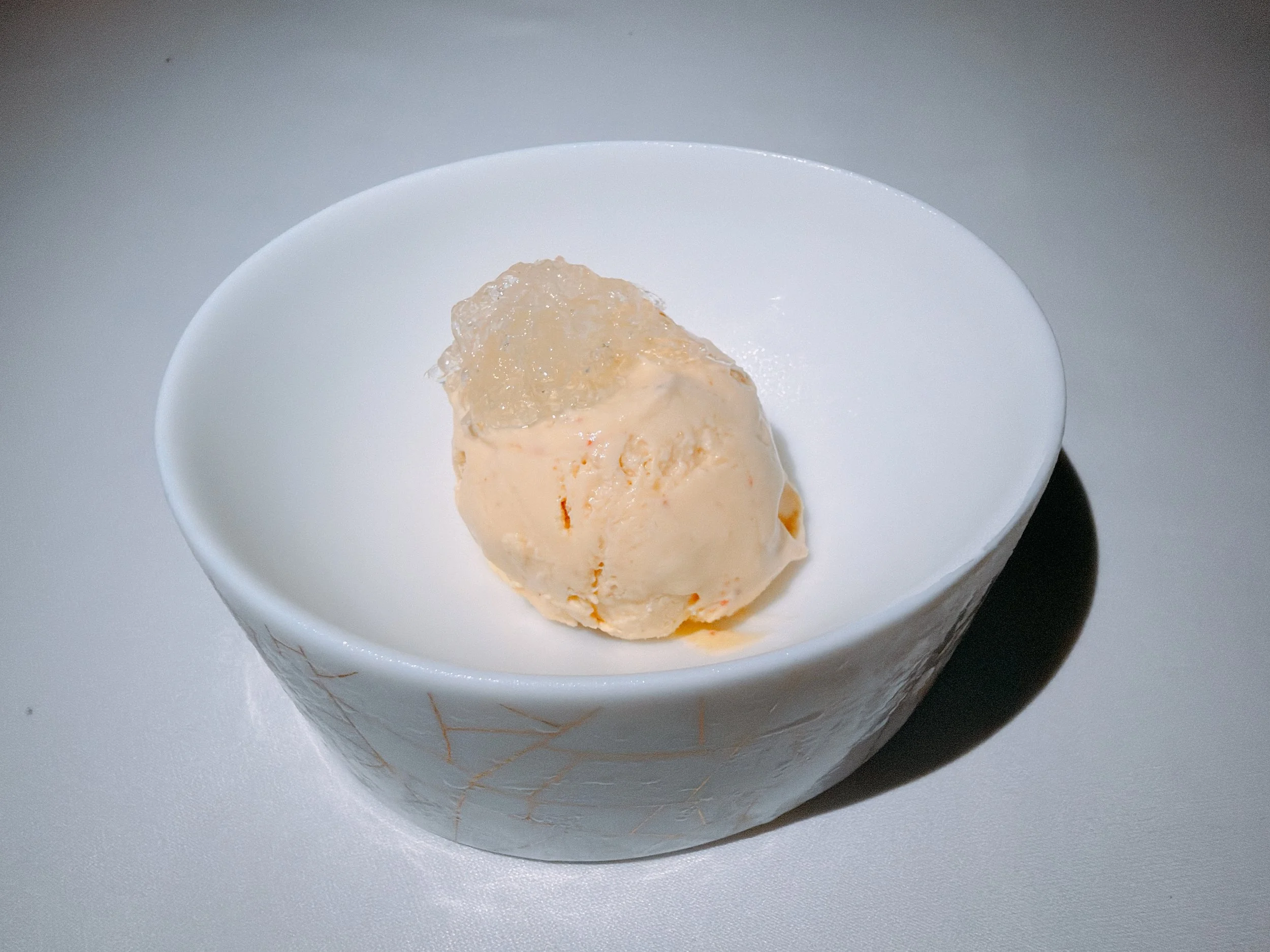
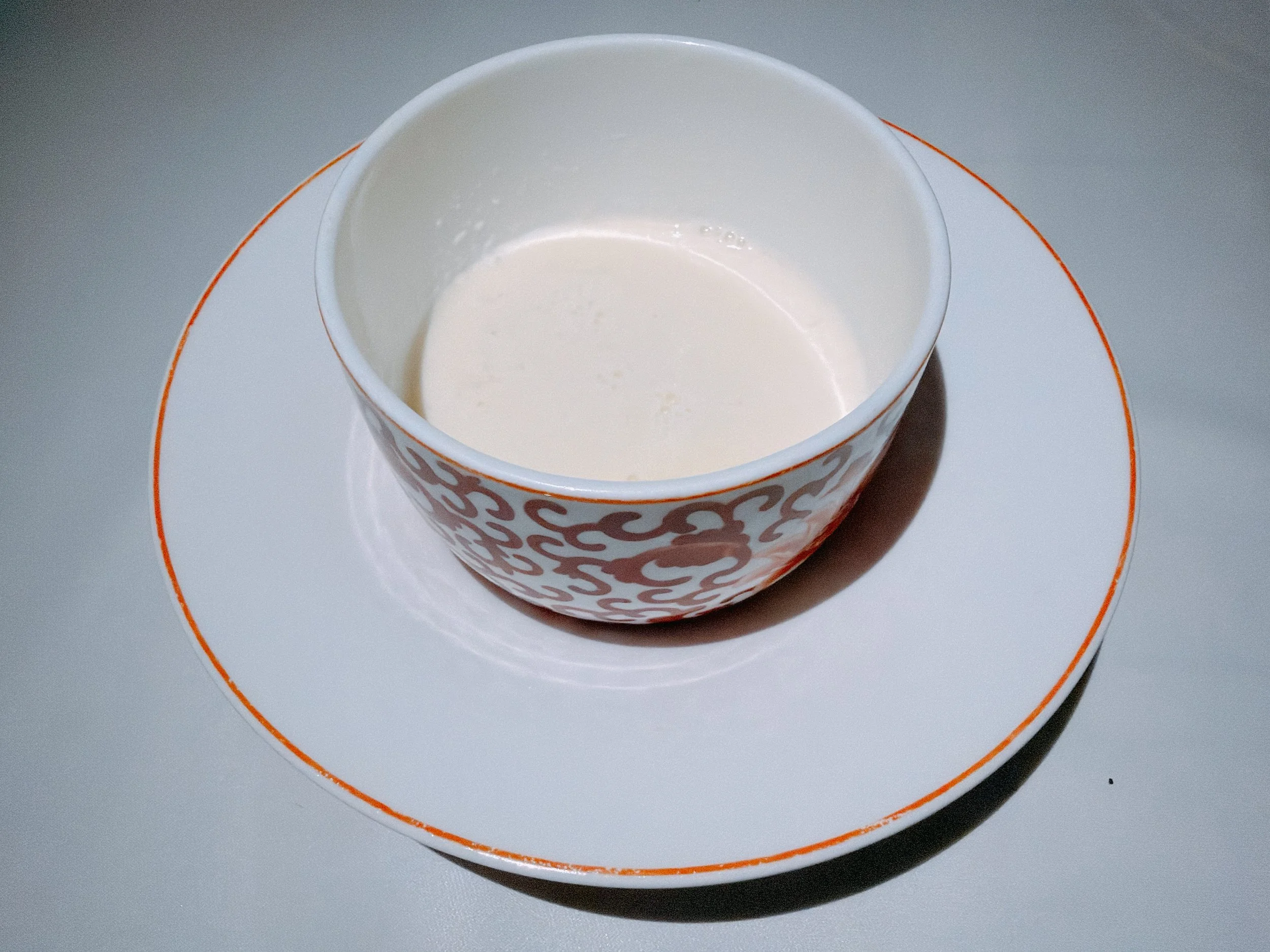
We then moved outside onto the patio for our desserts, and caught the tail end of the light show on the Twin Towers. There were two desserts to choose from, so we naturally picked one of each. The first one was a chestnut ice cream topped with a bird's nest. The ice cream was tasty and nicely creamy, but the bird's nest provided only texture and no flavor 16. The second dessert, served warm, also (supposedly) contained a bird's nest, but this time it was paired with gorgon fruit, egg whites and almond milk. The gorgon fruit reminded me of ginkgo nuts, while the egg whites unfortunately felt a bit like an omelet. The strongest flavor overall came from the almonds. I didn't see anything of the advertised bird's nest 15.
Overall: A very enjoyable seafood-forward dinner of Chinese coastal cuisine with good service. I was particularly impressed by the sauces on display here, these were almost all at a strong three-star level. The rest of the dishes were still good, but a step down. In restaurants with such an encyclopedic menu, one always wonders if one has ordered “correctly”. We did have a notably better meal at Xin Rong Ji's Beijing location, but our tasting menu there also cost twice as much and therefore contained many more premium ingredients. Perhaps sometimes you do get what you pay for? 16