Mi Xun Teahouse - Chengdu
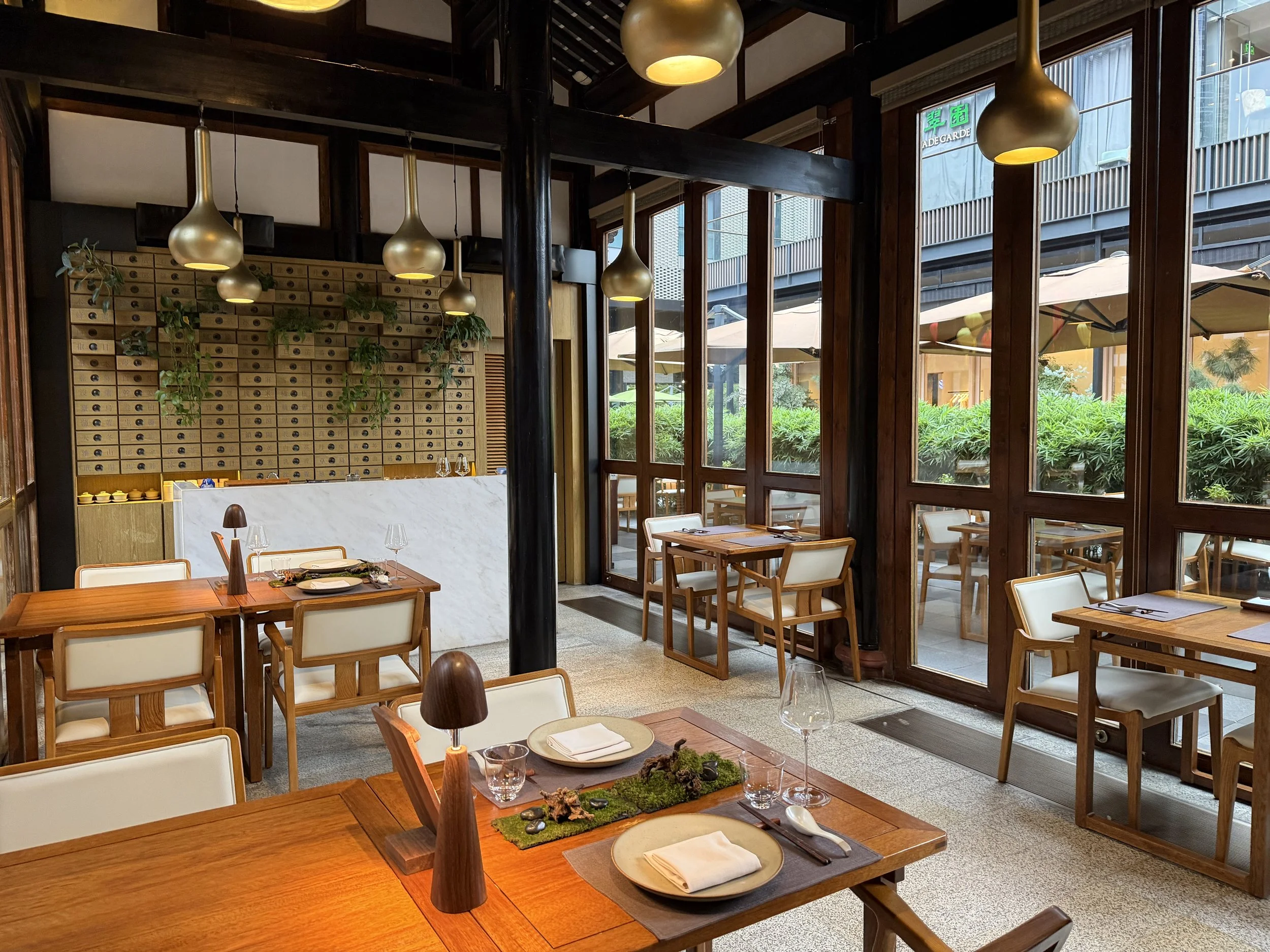
Relaxed dinner; spa in same building
Rating: 15/20
Where: Chengdu, China
When: Dinner for 2 on 28 September 2026
Cost per Person: Tasting menu 488 CNY ($75)
Accolades: 1 Michelin Star
Why: Vegetarian Sichuan cuisine
For tourists looking to do some shopping in Chengdu, one popular destination is Chunxi Road, a pedestrian shopping street lined with countless stores, stands, restaurants, and even a giant panda climbing a building. At the eastern end of the street lies a more recent development. Here, the stores and restaurants are more upscale, and occupy both historical buildings and newer constructions designed to fit in. One of the city's best hotels, one-Michelin-keyed “Upper House”, is also in that area. Technically part of that hotel, but situated in a separate building, is “Mi Xun Teahouse & Spa”, the unlikely combination of a one-Michelin-starred restaurant and the hotel's spa. Among all the Michelin-starred restaurants in Chengdu, Mi Xun Teahouse stood out by being the only fully vegetarian one. This made for an intriguing contrast to the often meat-heavy Sichuan cuisine, so we chose to check it out on a Monday night in late September. Reservations were easy to obtain via email, but the restaurant was not particularly full during our visit, so walk-ins might also be possible.
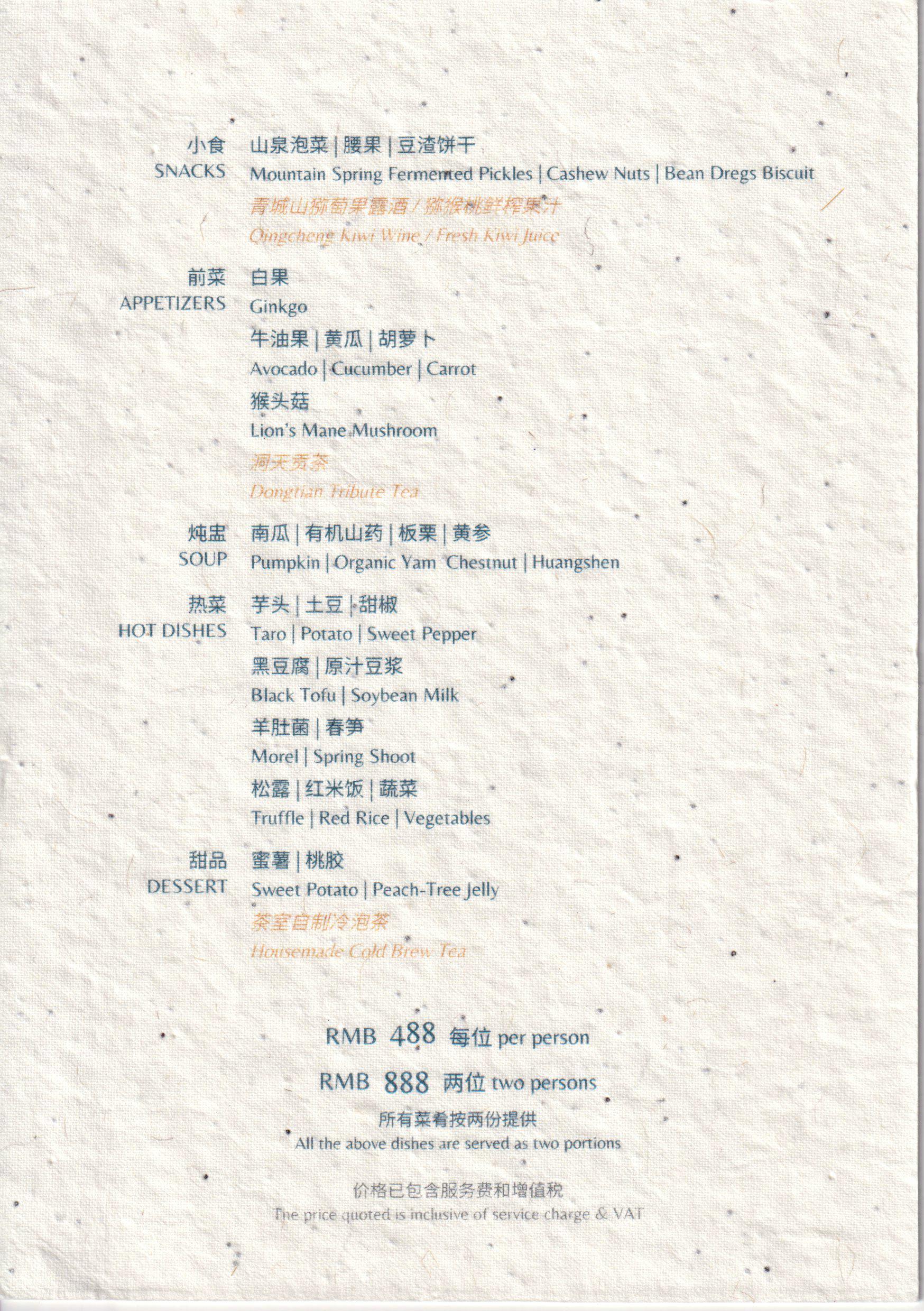
In addition to an a la carte menu, Mi Xun Teahouse offered a tasting menu called “Shanshui”. This menu was meant to explore different regions of Sichuan by focusing on their produce. We tried the first iteration, for “Mount Qingcheng & Dujiangyan”. The menu was priced at 488 CNY for one person, or 888 CNY for two people (about $75 and $130, respectively). It included a beverage pairing consisting of a kiwi wine, a hot and a cold tea. The compact wine list also offered two wines by the glass (a chardonnay and a pinot noir), as well as about two dozen bottles.
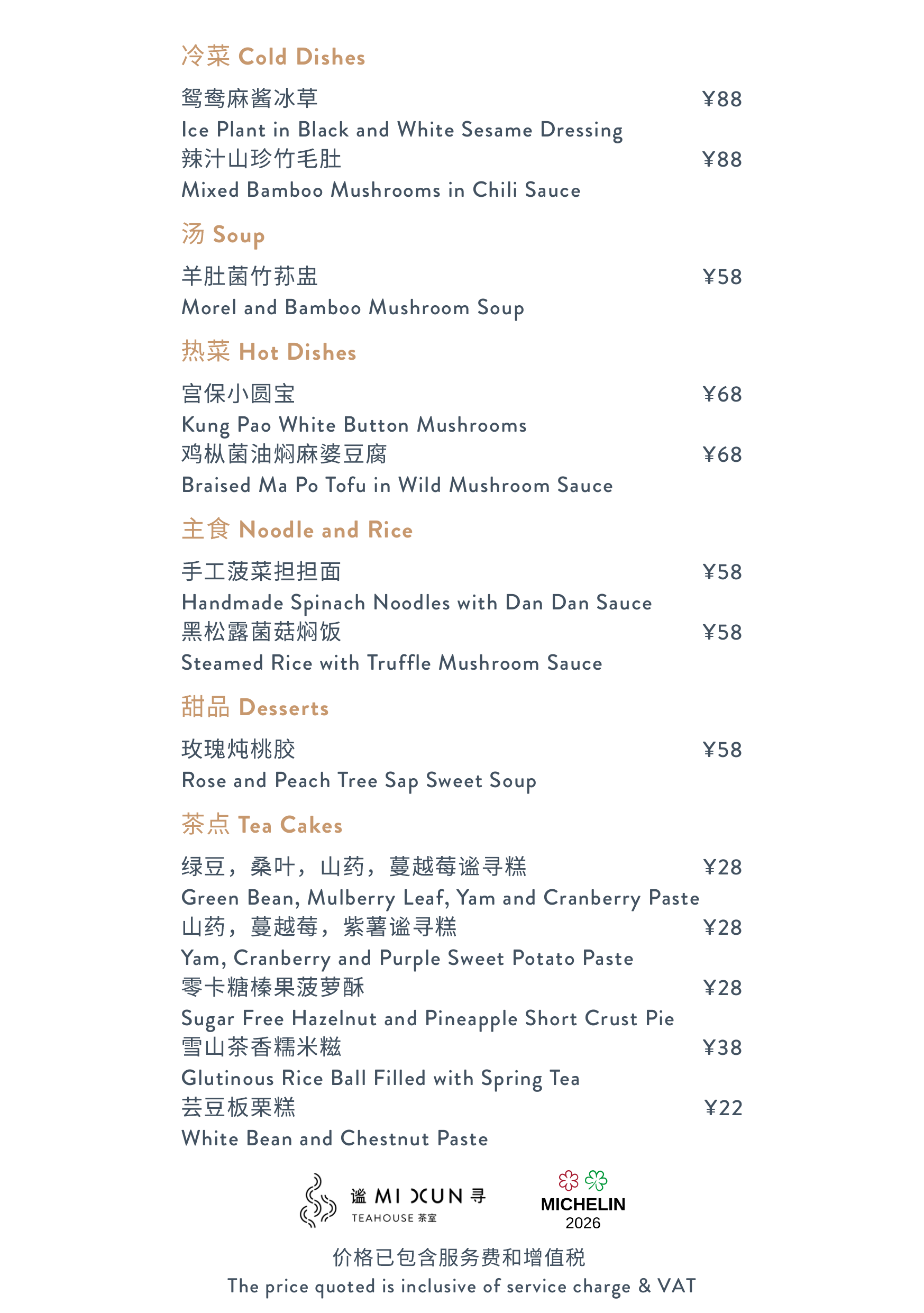
We had pre-ordered the tasting menu, but added a couple of dishes from the a la carte menu as well.
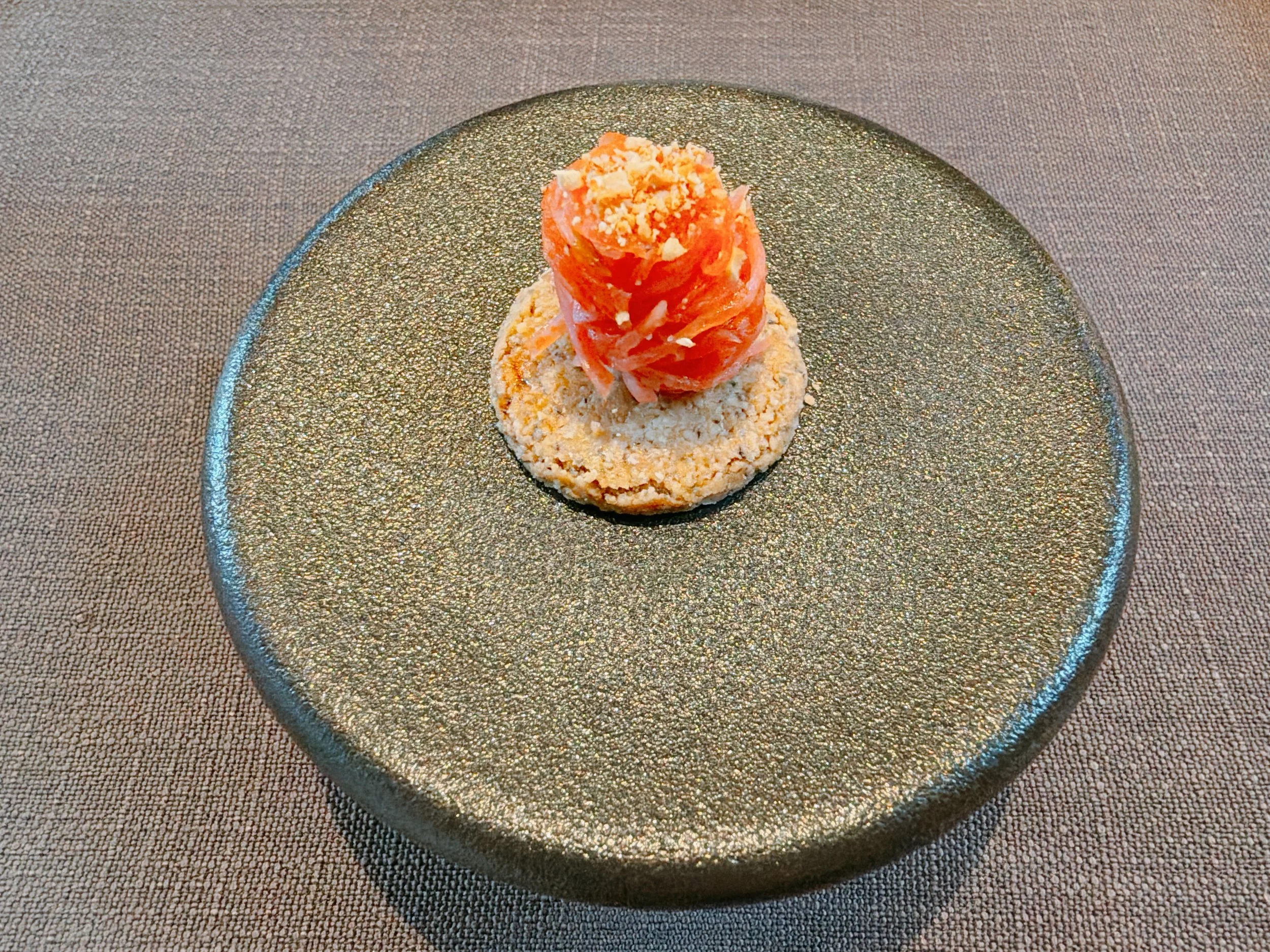
Our dinner began with a snack: pickles topped with cashew crumbles sitting on a cookie made from “bean dregs”. The pickling was on the lighter side, and the vegetables had a bit of spice. The cookie's texture was an interesting combination of being both firm and crumbly 16.
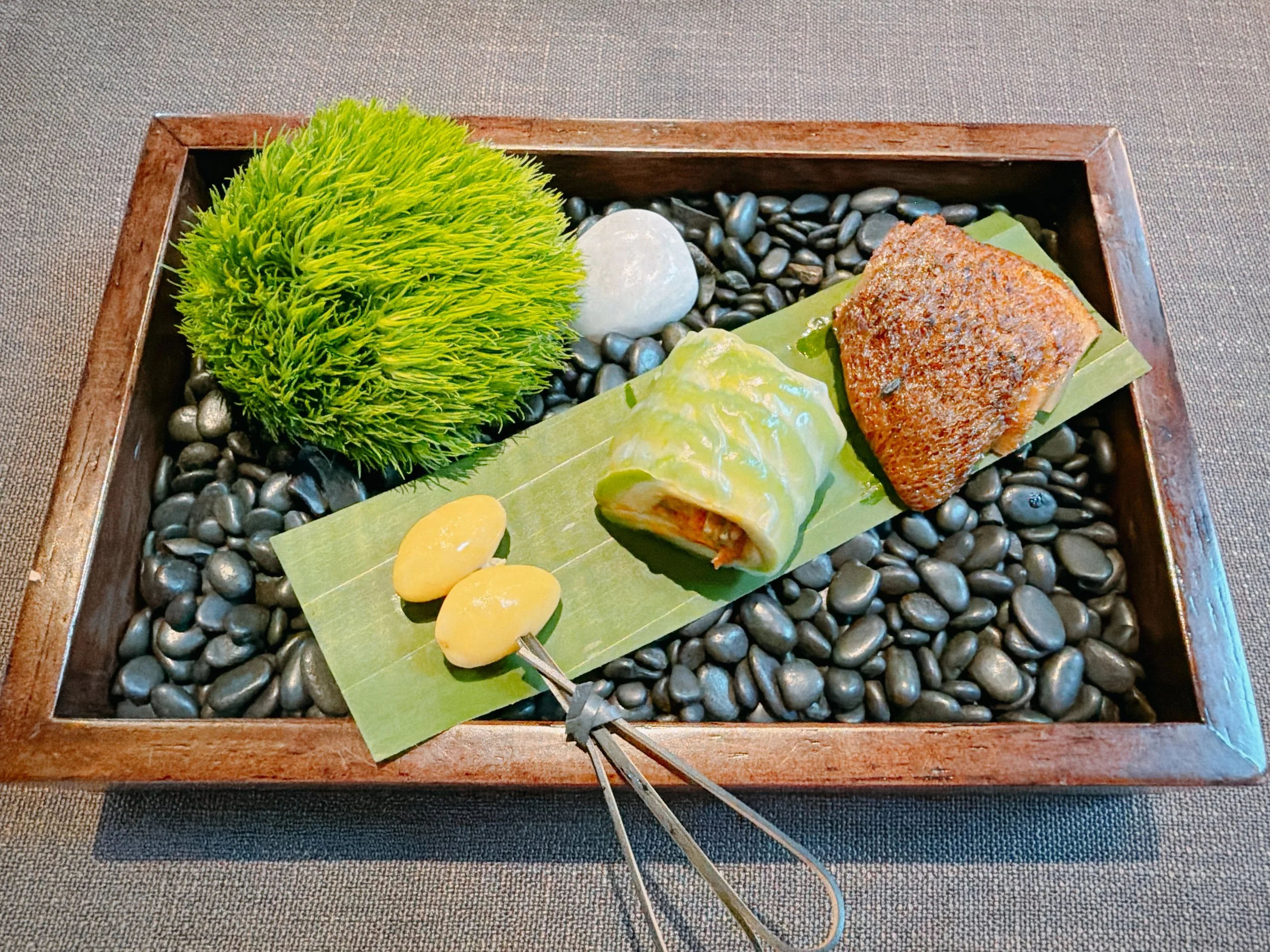
Three small appetizers followed. Ginkgo nuts were tender and not too mealy. They had only light flavors and a hint of bitterness 15. What looked like a sushi roll were an avocado, cucumber and carrot wrapped with rice paper. Tastewise, the avocado dominated, but there was some crunch from the vegetables, and a light peppery spice note 15. Finally, there was a marinated grilled lion's mane mushroom, that had a meaty texture, but was very light on seasoning 14.
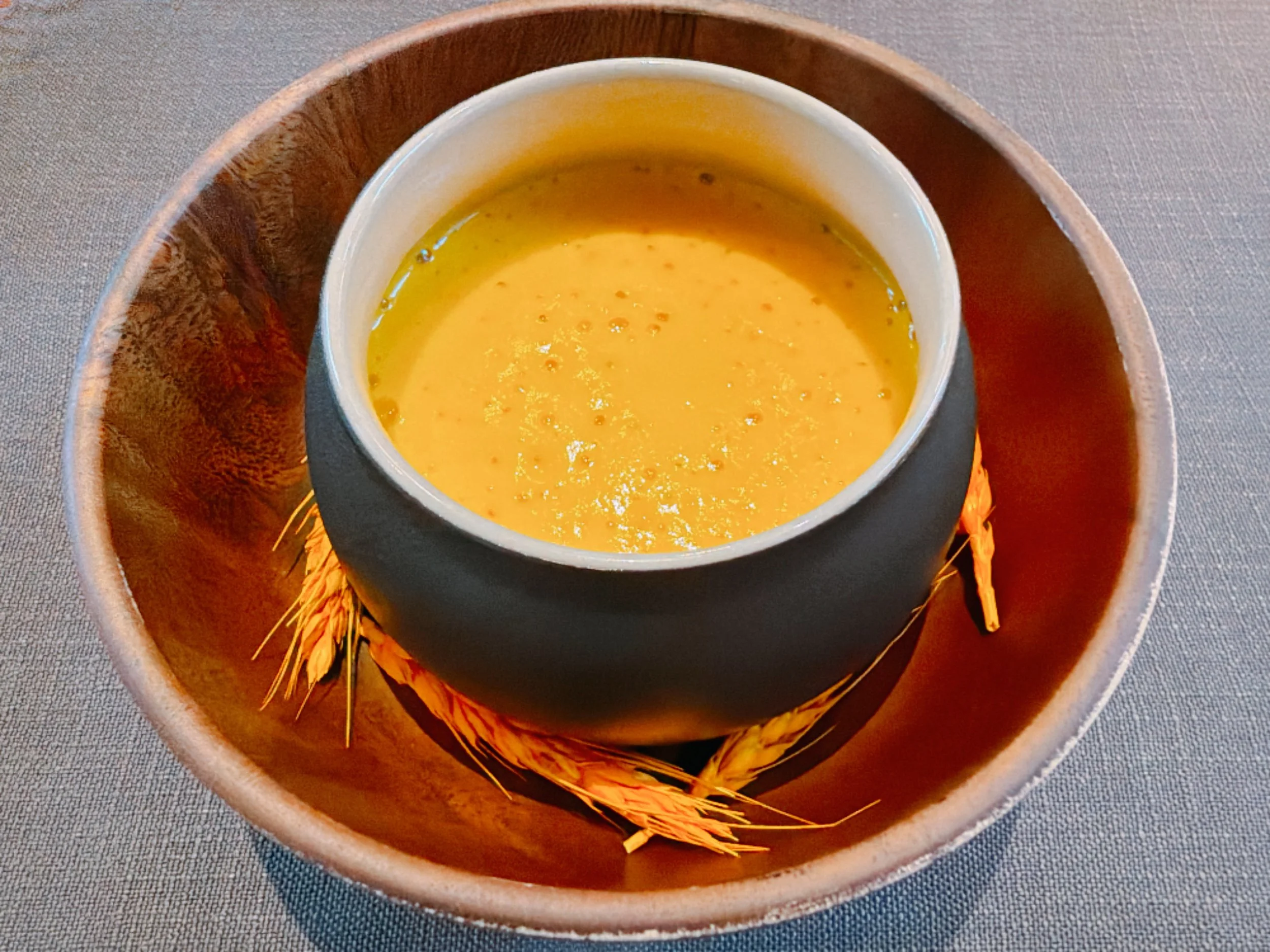
A soup made from pumpkins and sweet potatoes had some (but not too much) sweetness from the pumpkin, and a frothy, airy texture. This soup seemed more Western than Chinese, but was quite good otherwise 15.
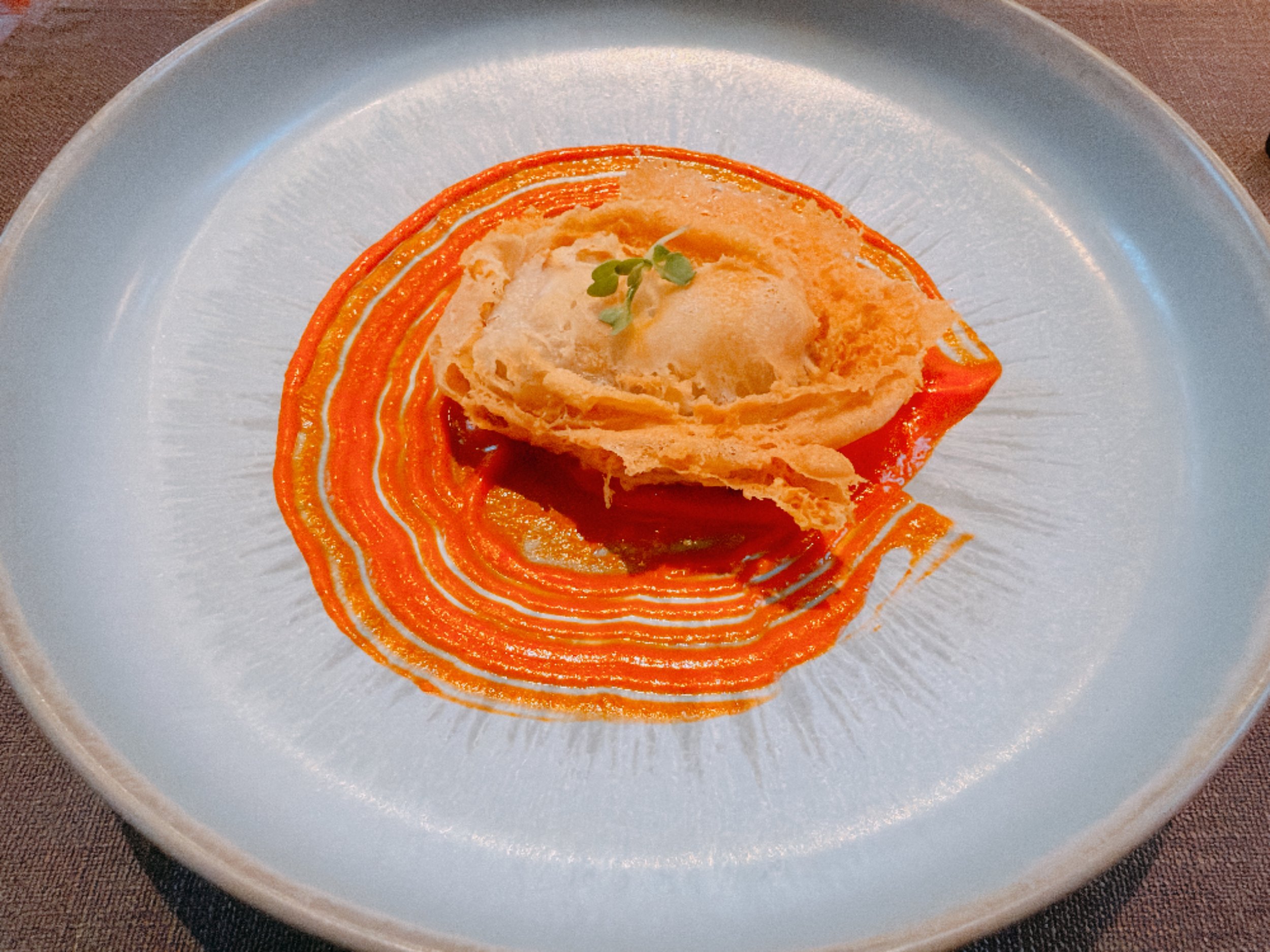
The remaining hot dishes arrived one at a time. First, we got a deep-fried mix of taro and potato, served with a bell pepper sauce. This was a quite rustic dish, crispy on the outside and with a filling that felt more like mashed potatoes than typical taro. The sauce was fragrant and had a hint of spice, similar to Eastern European ajvar - lovely, we just wished that there had been more of this sauce 14.
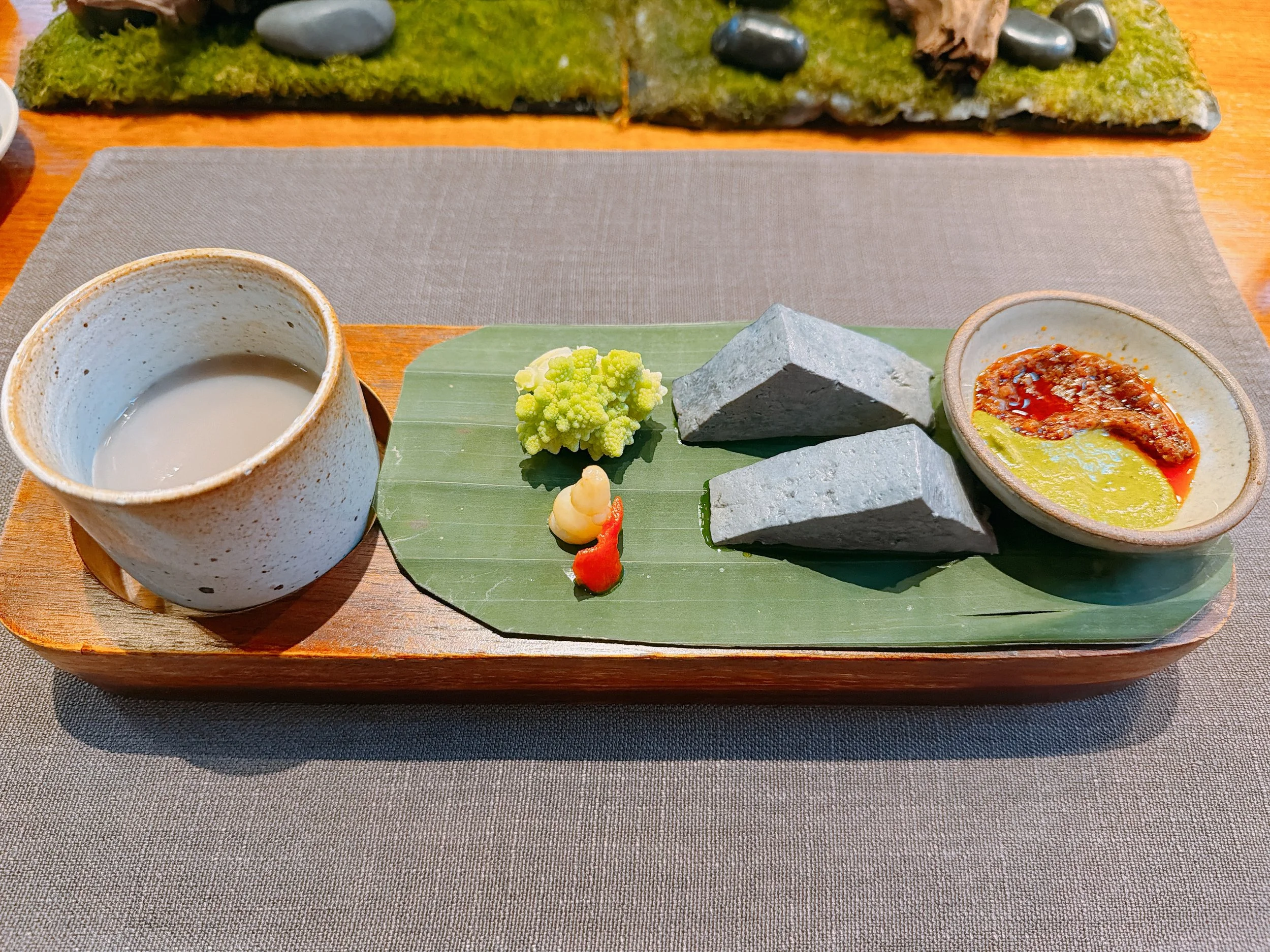
Black tofu was served with two sauces: a green bell pepper sauce and a spicy mushroom sauce. Next to it were a romanesco broccoli floret, some spicy pickles, and a cup of hot soy bean milk. The best part here were the two sauces: full of flavor, spicy and lightly smoky (17 or 18 by themselves). They added flavor to the faintly ashy-tasting tofu and the crunchy broccoli. The soy milk didn't have much flavor compared to the intense sauces 16.
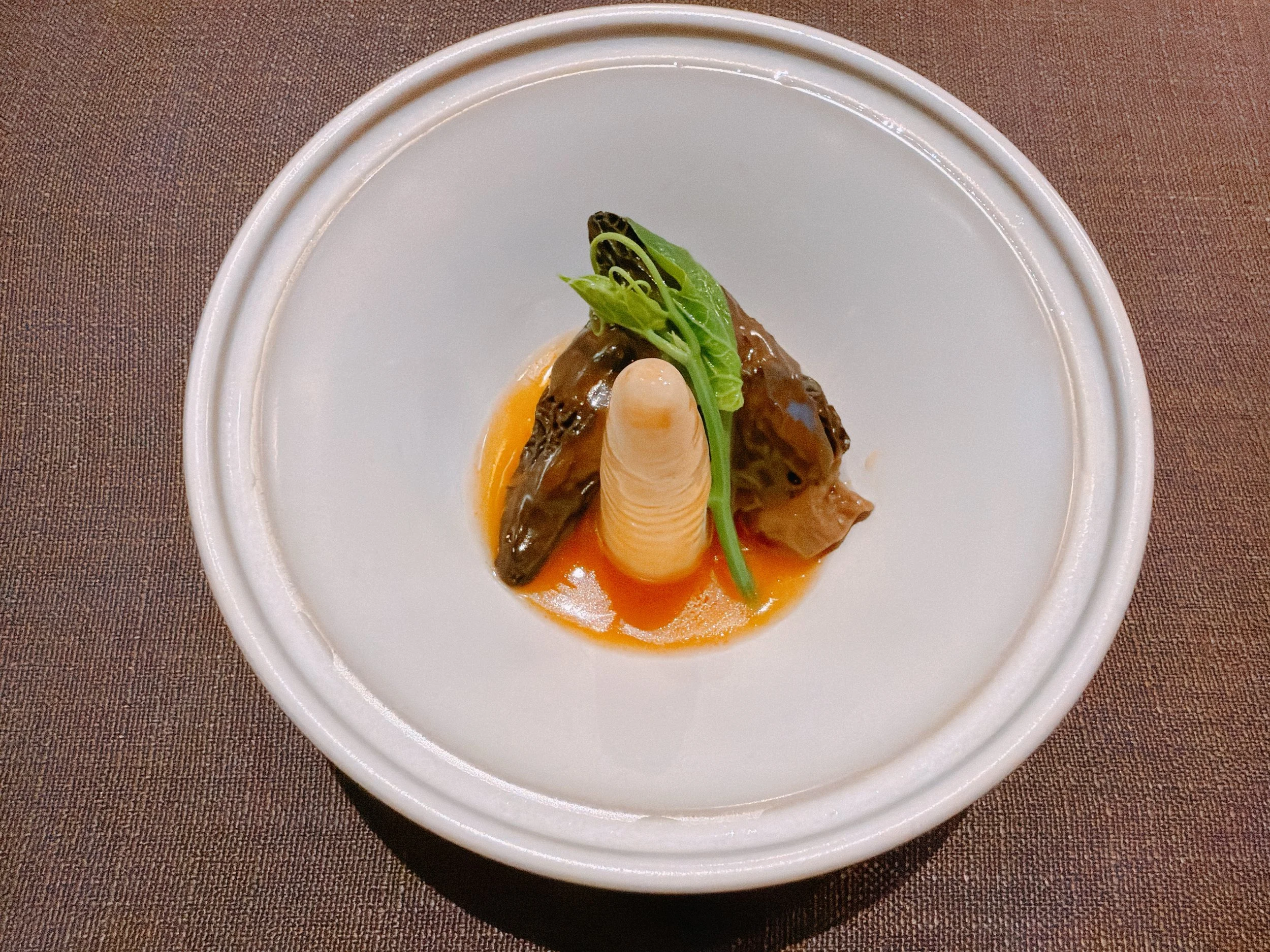
A bamboo shoot and a morel mushroom were served with a “spicy-sour” sauce. I'm using quotes since the sauce was actually neither spicy nor sour, but rather light in flavor overall. This made for a healthy tasting dish. The bamboo shoot was tender and the mushrooms had been filled with crunchy slices of bamboo shoots. For me, this dish could have used more flavor 14.
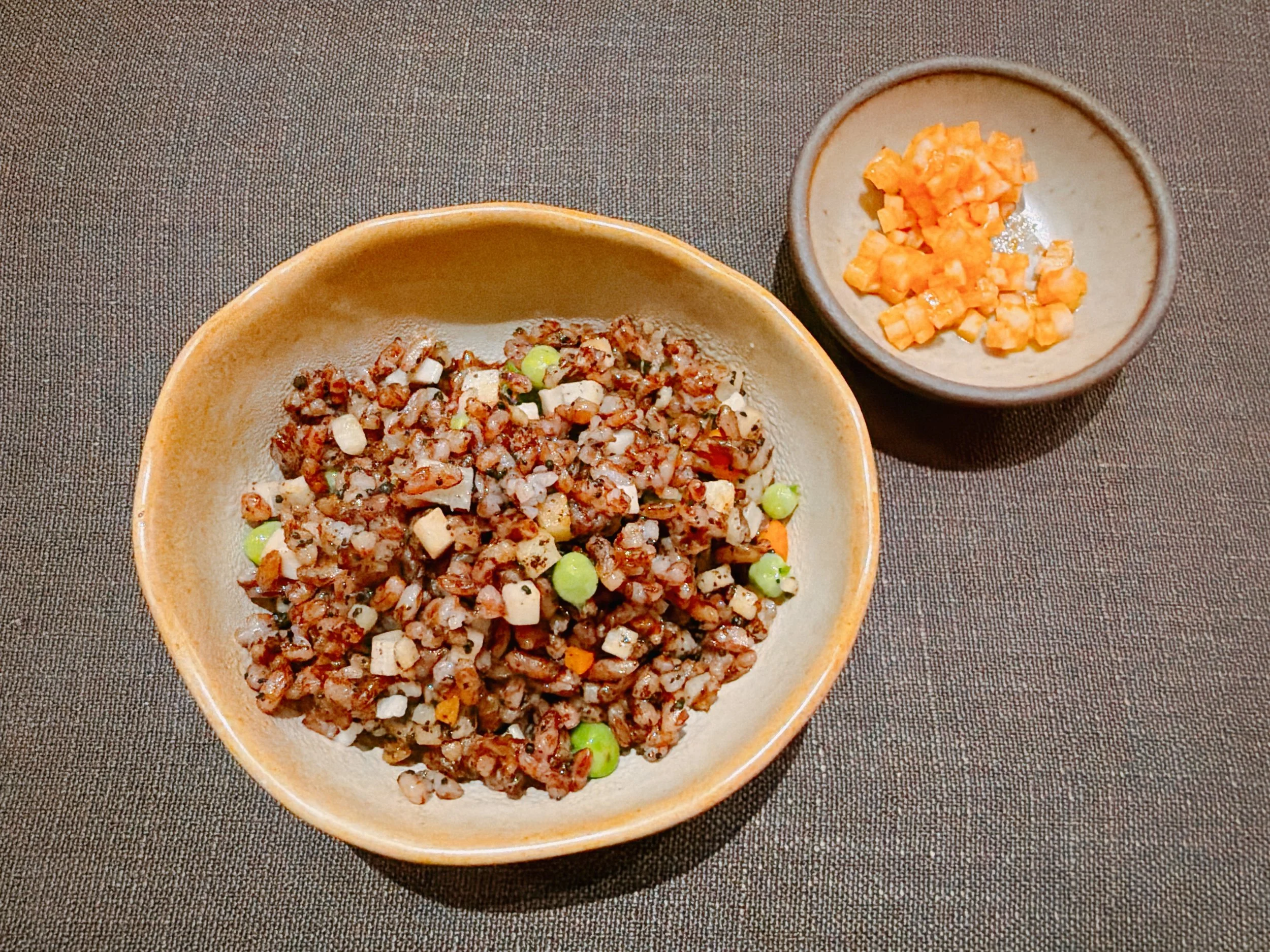
The final savory dish of the tasting menu was a stir-fried rice, prepared table-side by the affable chef himself. Red rice was fried in soybean oil, together with some white daikon, peas, a black truffle sauce, and soy sauce. On the side were some finely cut, lightly spicy pickles that could be added to taste. A fairly rustic dish that tasted very fresh, had a noted truffle aroma and a hint of spice. The pickles added some more spice, but also managed to brighten up the dish with their acidity. Quite tasty 14.
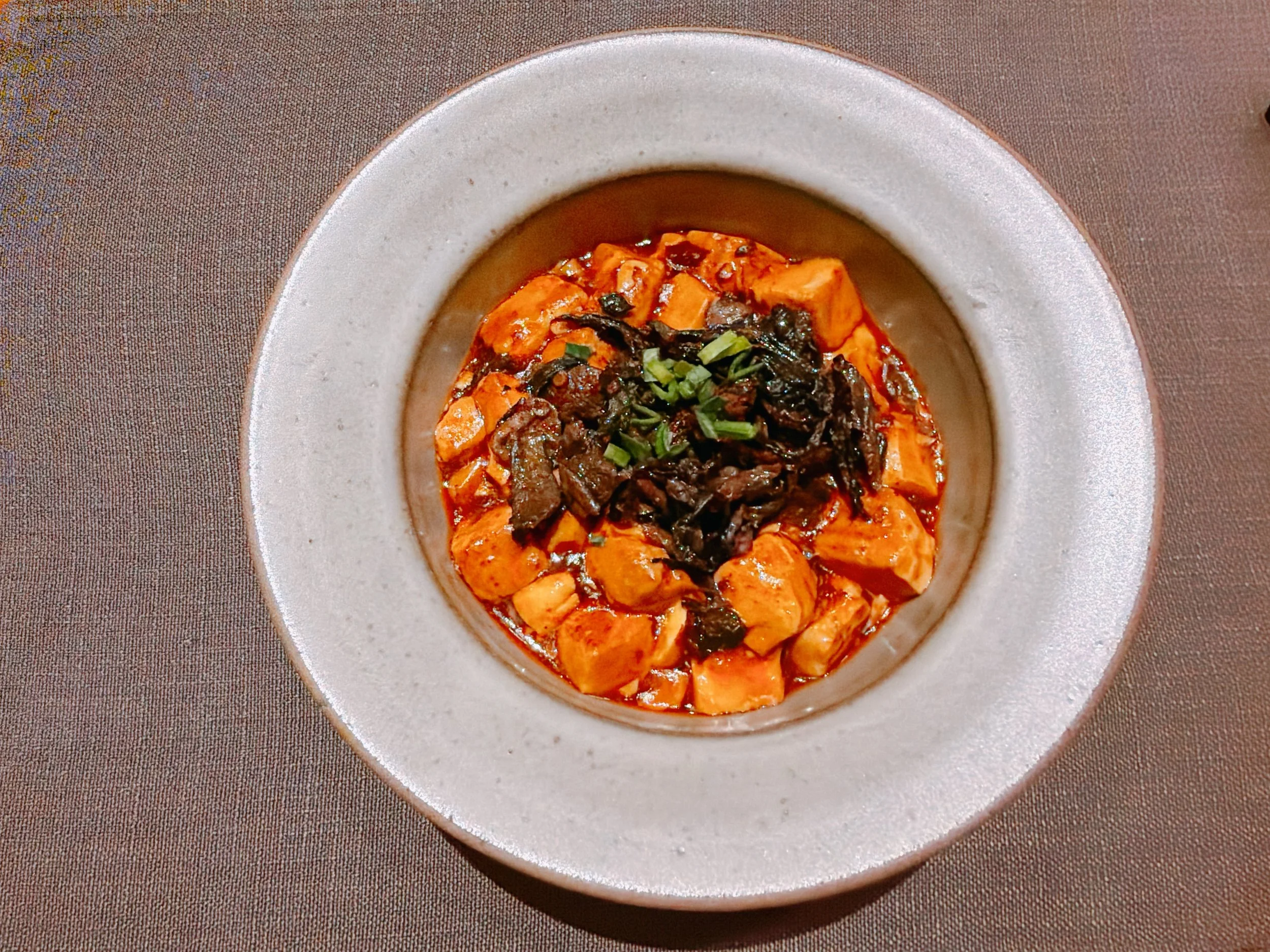
At this point, we added two dishes from the a la carte menu, to see the restaurant's take on some traditional staples of Sichuan cuisine. First up was mapo tofu: tofu cubes in a spicy sauce, topped with dried mushrooms (68 CNY, $10). The tofu was very soft, fresh and of great quality, and the lovely sauce had a nice lingering spiciness. Initially, the heat didn't seem like much, but it continued to build up over time. The mushrooms added some nice crunch. The tofu and sauce made for a very elegant take on the traditional dish 16.
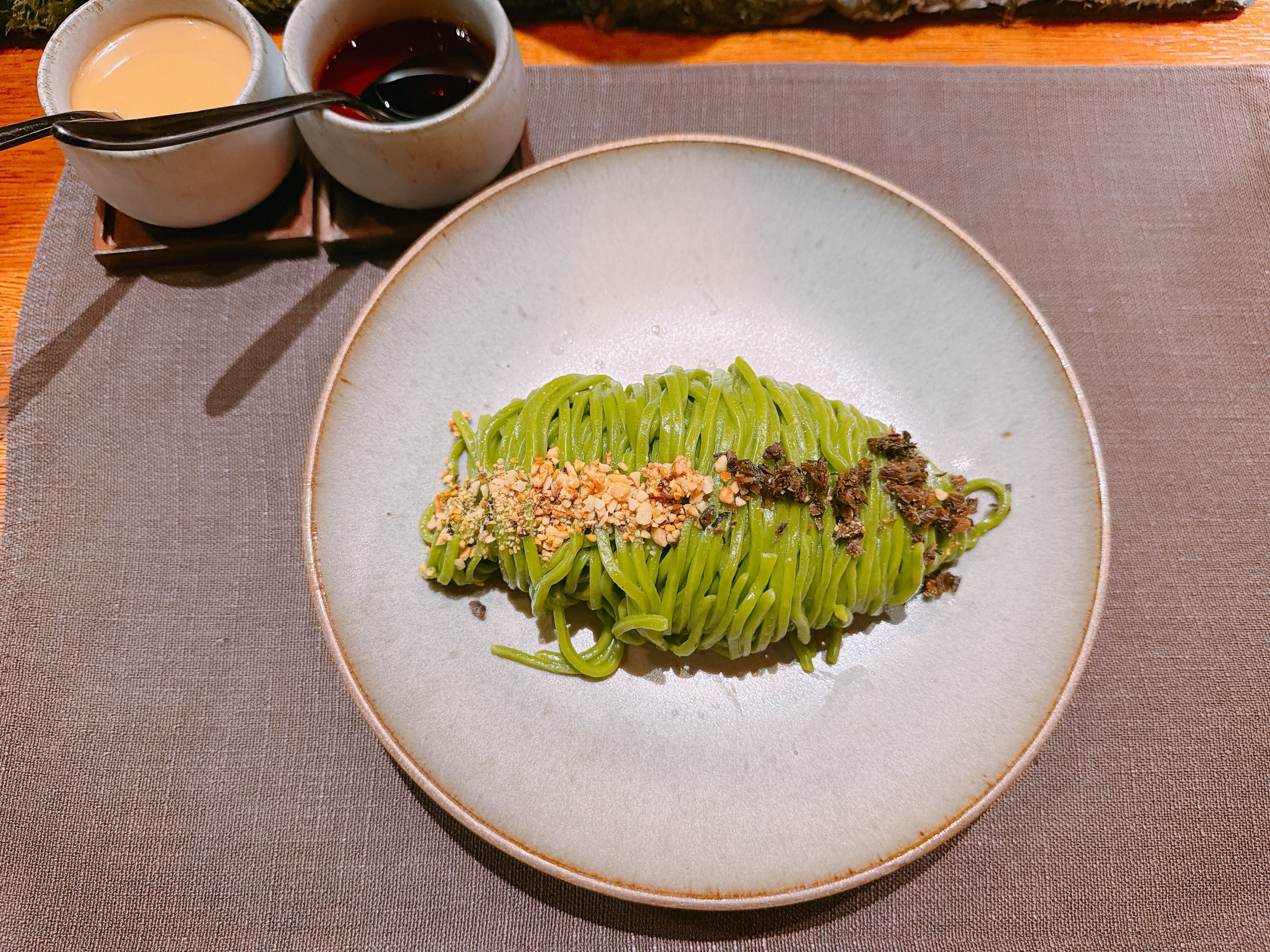
Green dandan noodles were served with a sesame sauce and chili oil on the side - meant to be added to taste (58 CNY, $9). The noodles were cooked nicely, and the dish had a great sesame flavor and as much spice as one might desire 15.
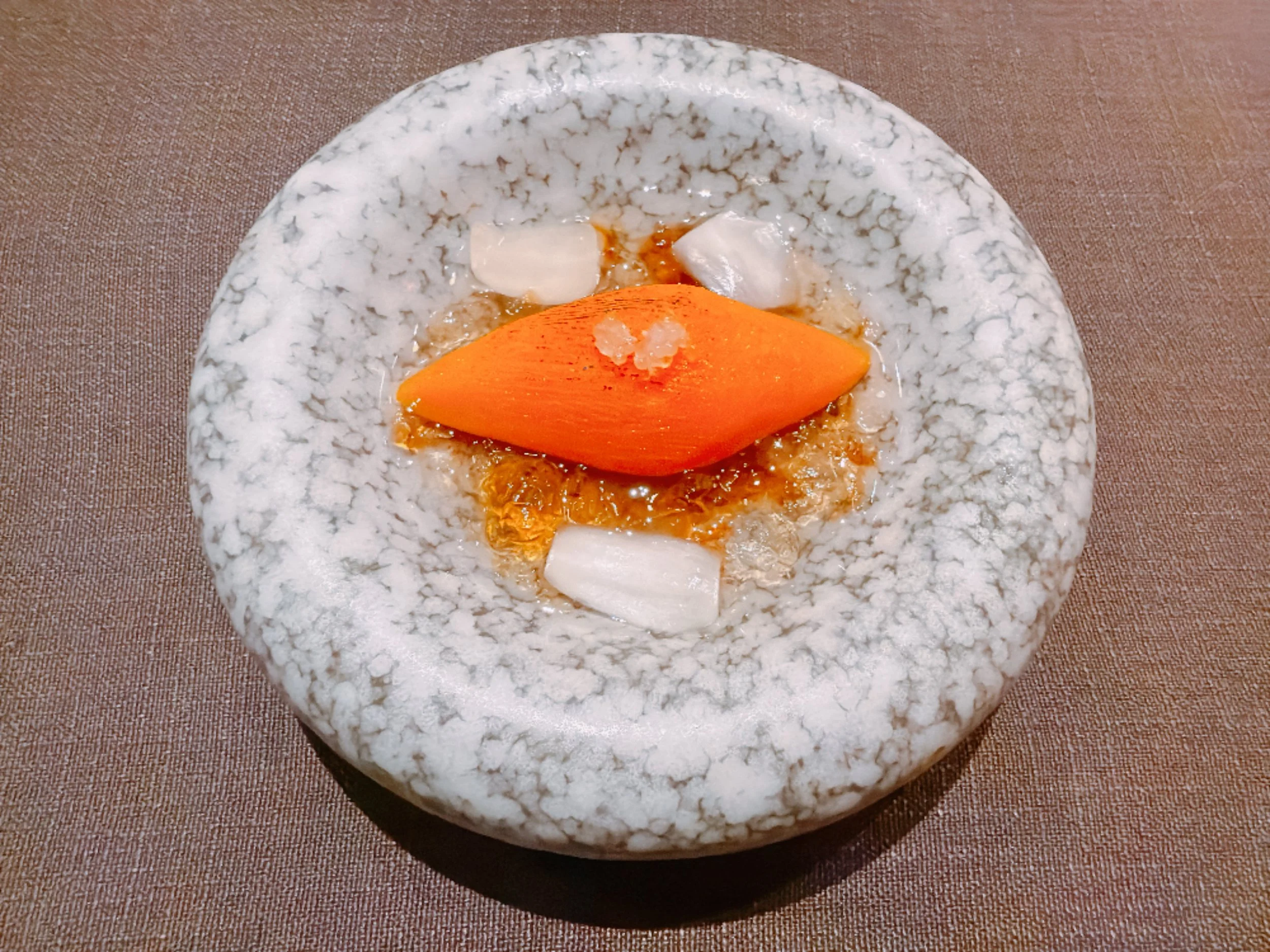
The main dessert was based on a yam topped with finger limes, next to some crunchy lily bulbs, all surrounded by a sweet jelly made from peach trees. The yam was lightly sweet with a mealy texture to which the finger limes added plenty of acidity. The jelly had a flavor similar to brown sugar. The crunchy lily bulbs were not sweet at all, and as such were an outlier in this dish, which would have been fine without them 15.
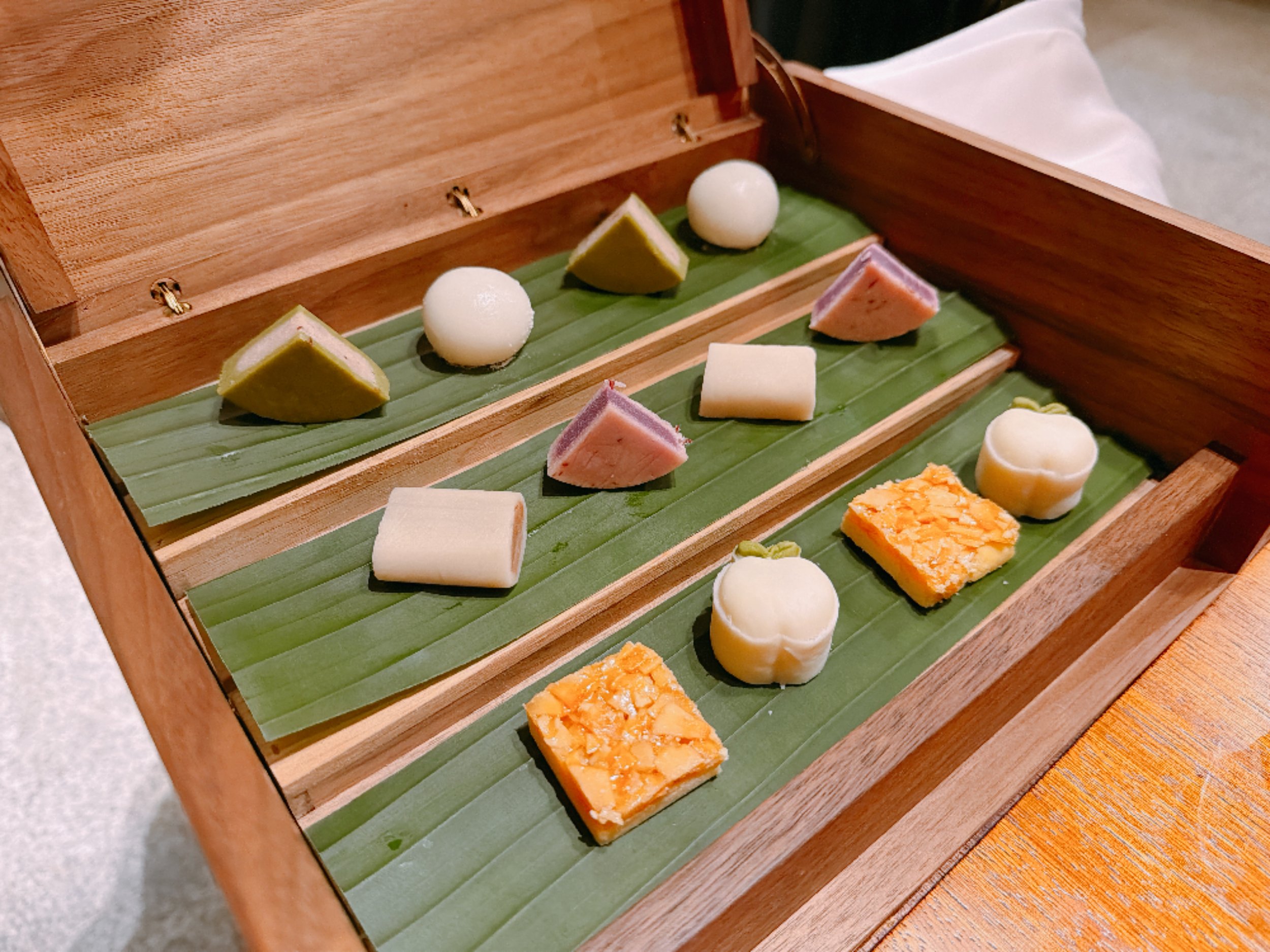
Concluding our meal were a selection of little cookies and cakes from which we were allowed to pick two per person. A white bean/chestnut cake was creamy, slightly sweet and had an aftertaste of chestnut 15. A cranberry/yam cake was fruitier and seemed to have a hint of coconut 15. The best of the lot was a coconut cookie topped with roasted coconuts. It had a strong coconut flavor throughout 16. Finally, a rice ball with a spring tea filling was glutinous in texture, and tasted sweet with an aftertaste of tea 15.
Overall: A lovely dinner that included some elegant vegetarian renditions of staples of Sichuan cuisine. It was nice that all dishes felt inherently like vegetarian dishes, there was no “fake meat” in sight anywhere. In some cases, I would have preferred a bit more flavor or more spiciness, but maybe the restaurant’s restraint owes to the spa in the same building. A relaxed, healthy, and light meal choice in a city that is not short of good food 15.