Kochi - New York
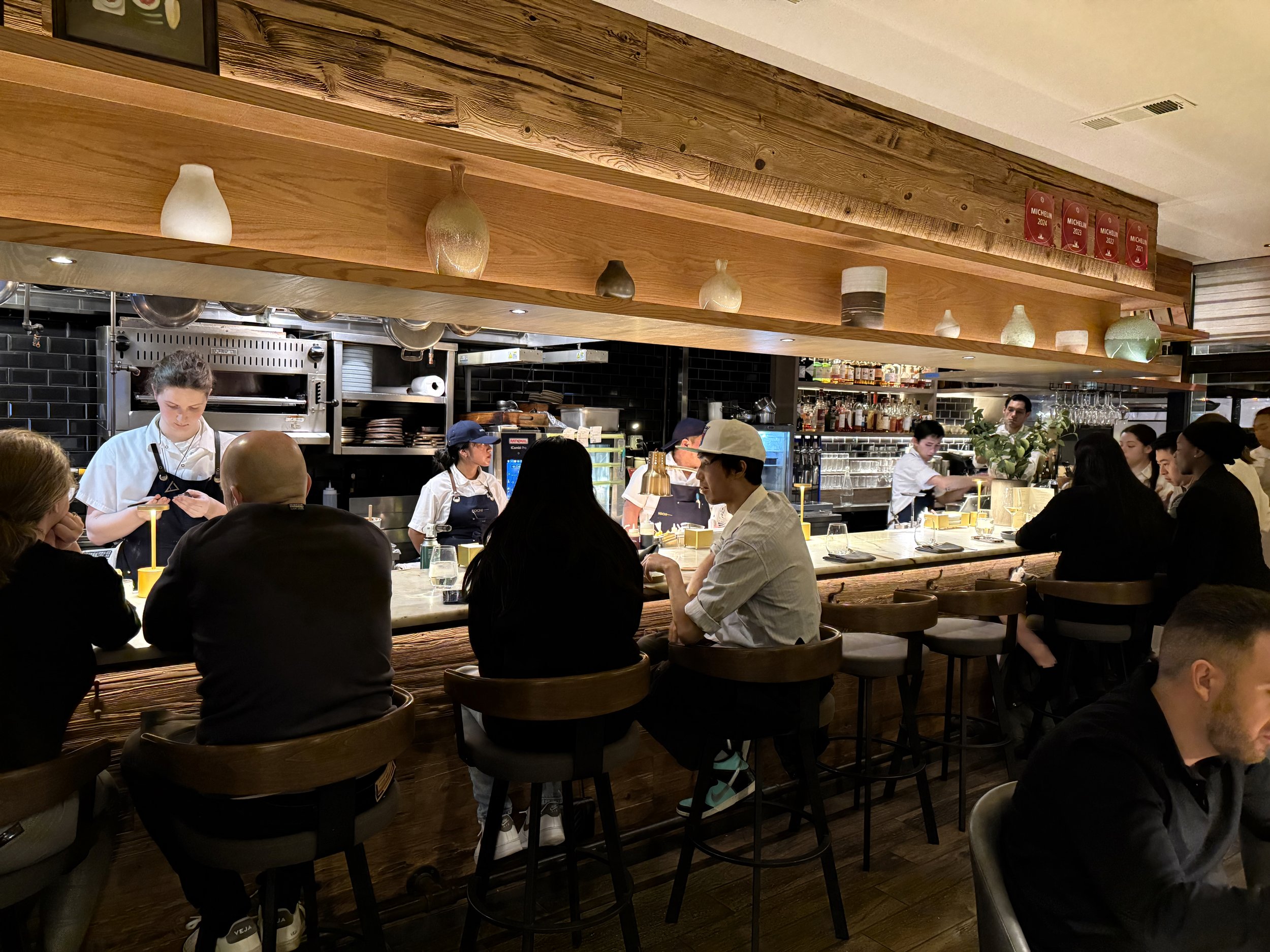
The counter is where the action is at
Rating: 16/20
Where: New York, NY
When: Dinner for 2 on 29 November 2025
Cost per Person: Tasting menu $145, Wine pairing $110
Accolades: 1 Michelin Star
Why: Elevated takes on Korean cuisine; casual, relaxed atmosphere
For some reason, New York City has the world's highest concentration of Korean Michelin-starred restaurants, surpassing even Seoul. More keep opening up all the time, with some even moving from Korea to the Big Apple. One-Michelin-starred “Kochi”, located in the Hell's Kitchen neighborhood, might almost be considered middle-aged in that category, since it opened long ago in 2019. The original chef has since opened a number of other restaurants nearby, including Michelin-starred “Mari”.
The food served at Kochi is Korean-inspired, with a fair number of grilled items (“kochi” means “skewer” in Korean). The setting is casual: there are counter seats facing the kitchen and several wooden tables both inside and outside (the latter equipped with heat lamps during our visit in late November). This is not a place where diners tend to dress up, casual clothes are the way to go. The service was friendly and efficient, managing to get through three sequential seatings in a single evening. We didn't feel particularly rushed during our two hour dinner, though, and the portions were small enough to leave us full, but not stuffed.
Kochi offered a single eight-course tasting menu, with a number of possible upgrades: an additional abalone course, a signature dish of the restaurant ($24), additions of caviar ($25), uni ($16) and white truffles ($75) to some dishes, and the possible replacement of the duck main course with Japanese wagyu ($59). So if one was in the mood, it was quite easy to more than double the cost of the dinner. A beverage pairing was available for $110, and consisted of four wines and three Korean alcoholic beverages. These were all quite enjoyable (though not necessarily mind-blowing), and all very different from each other. For the price, a reasonable choice.
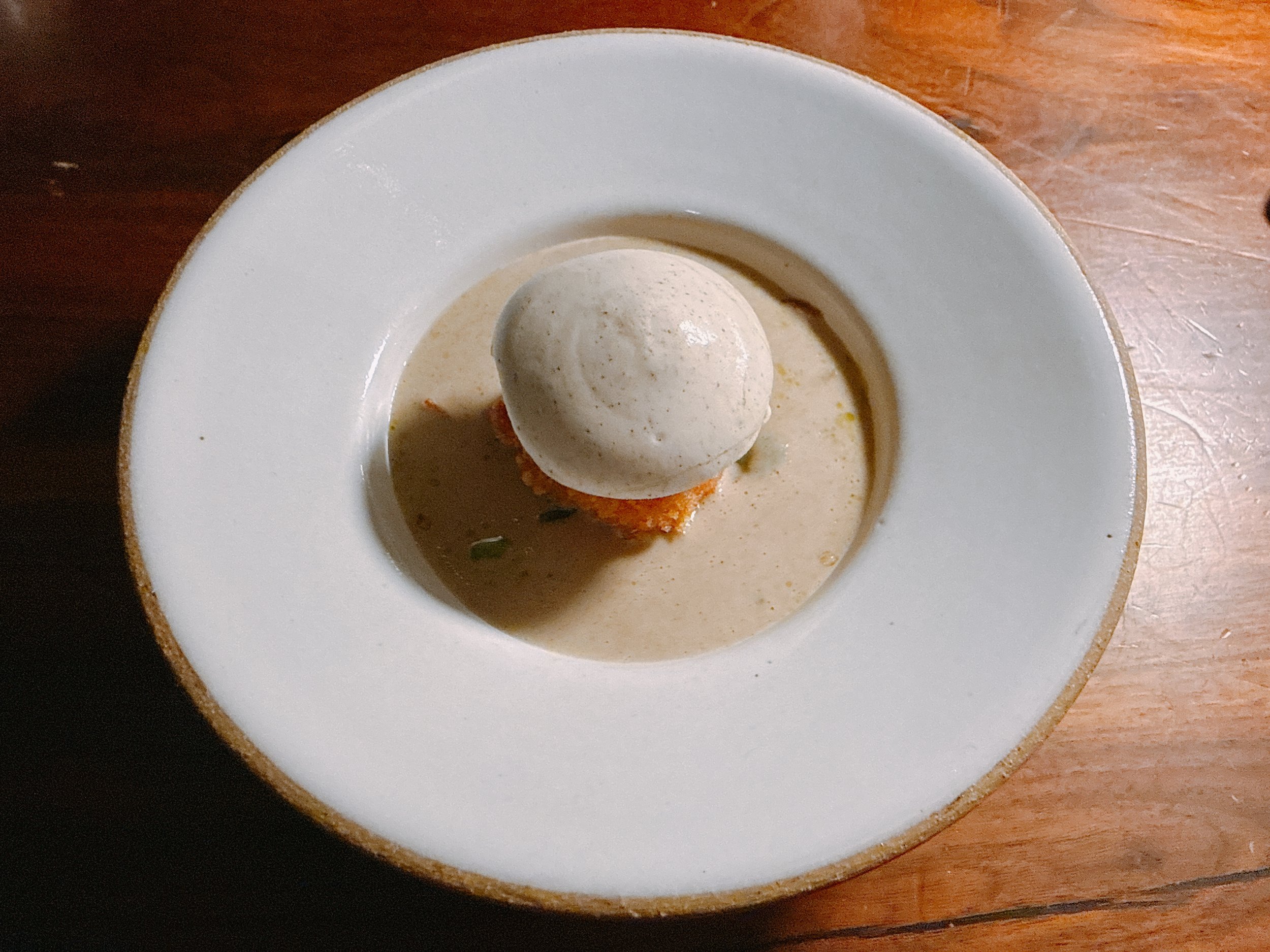
Our first course was based on mushrooms. A maitake mushroom soup came with a portobello mushroom fritter filled with Parmesan, a shiitake meringue, and crispy enoki. There was a variety of mushroom flavors, and they were pleasant and natural rather than concentrated. The different textures - the crunchy sweet meringue, the marinated mushrooms, the hot fritter - were all quite nice, but this dish was also creamy and notably sweet, maybe a tad too sweet for my taste 15.
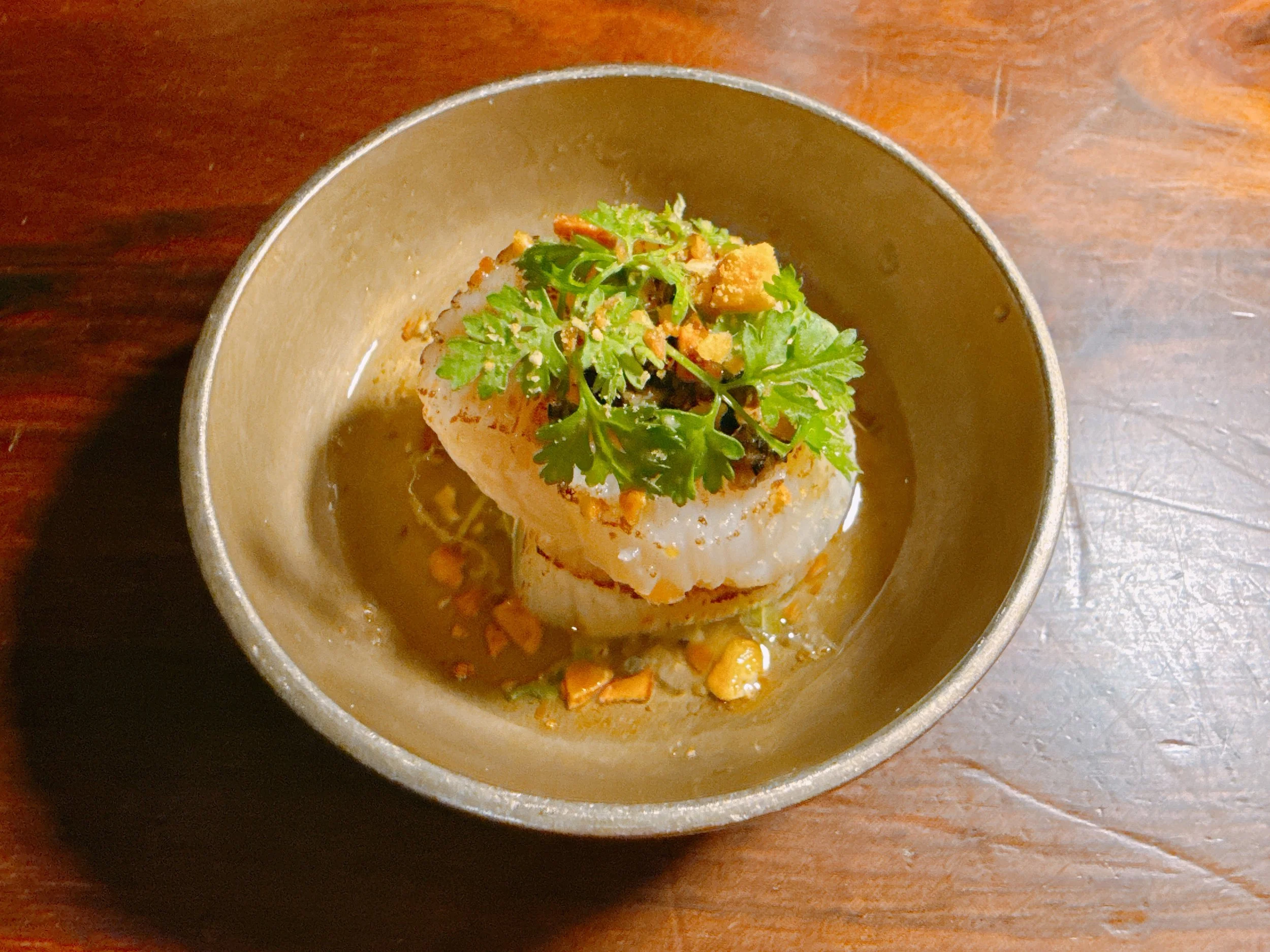
A marinated Hokkaido scallop was served with white kimchi, pickled celery, a cucumber salad, crumbled chestnuts and a cherry vinaigrette. In a sense, this was a play on a ceviche, but with a much less acidic dressing. The scallop had a pretty neutral flavor, so that the dish had a lightly herbal taste, with some crunchy bits for texture. We felt that more salt might have brought out more flavors here - they were not bad, just very, very light 15.
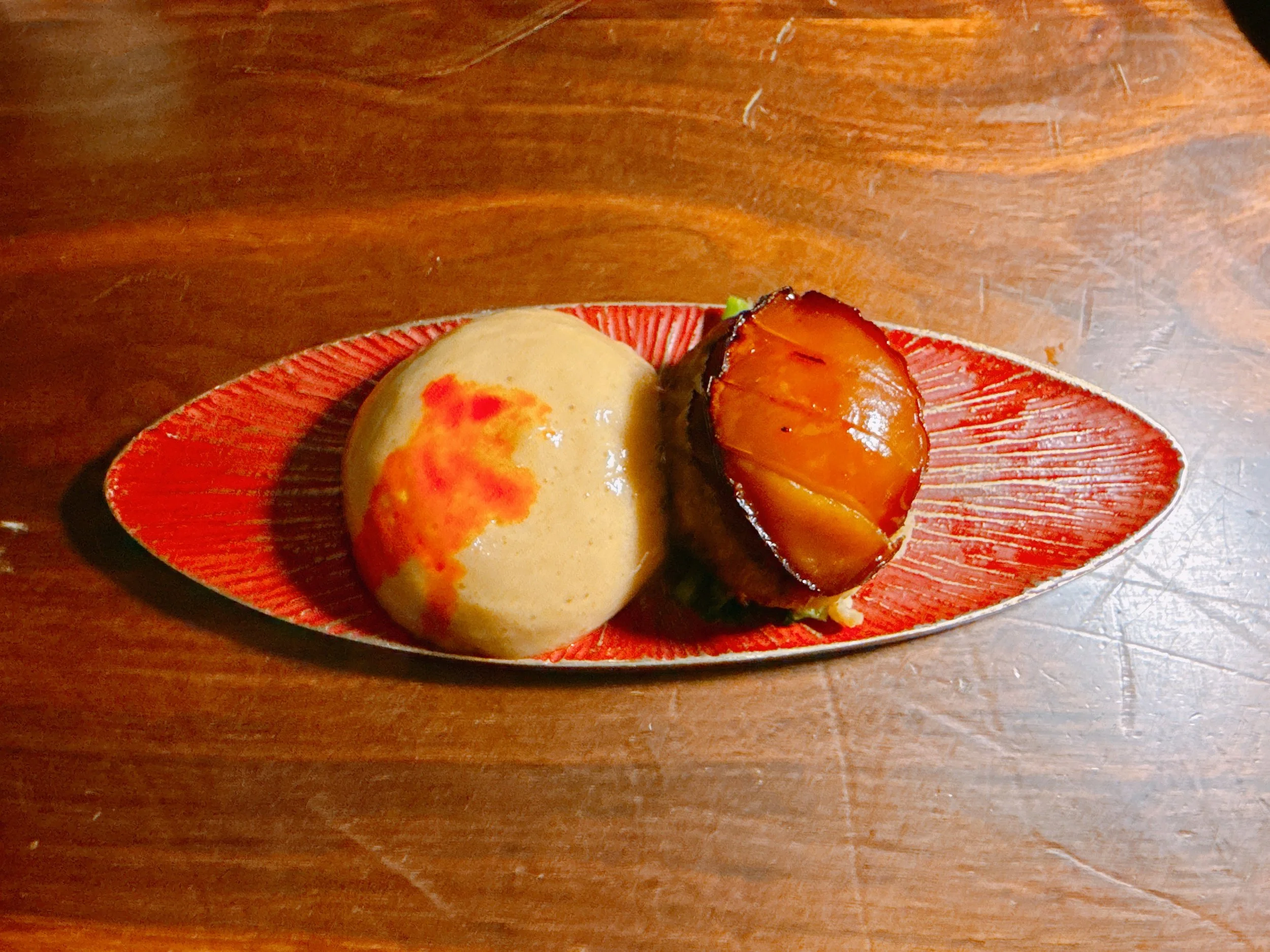
Our next course was an optional addition to the tasting menu. A soy-braised abalone sat on top of a Korean shrimp pancake and garlic pea shoots. The dish was sliced into four pieces that could be dipped into a citrus foam seasoned with chili oil. The abalone was tender, but still had some bite, and went nicely with the shrimpy-tasting seafood ball and the spicy sauce. Yummy 16.
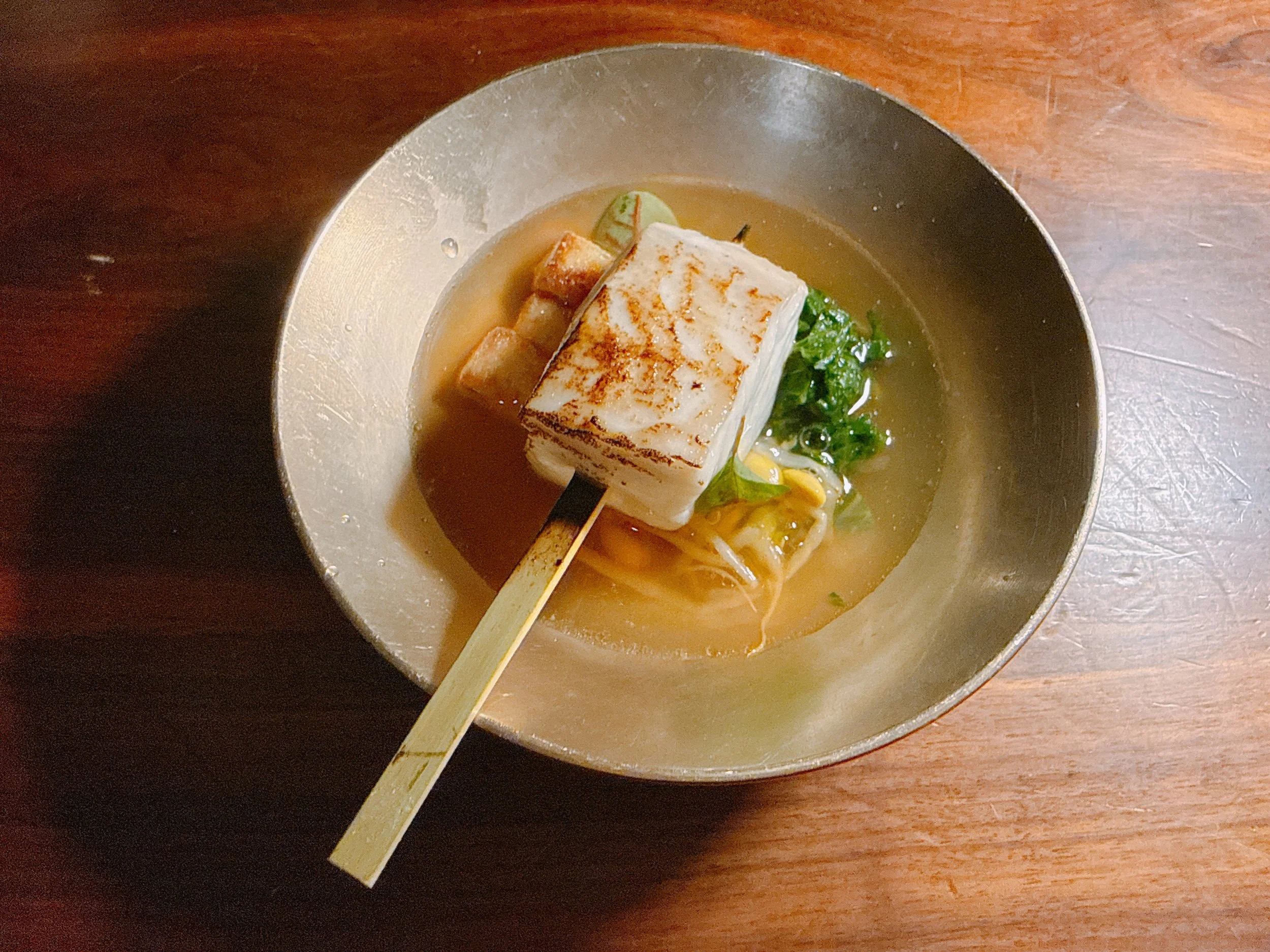
This is when we finally received one the restaurant's namesake skewers. Butter-poached Atlantic halibut on a stick was served in a seafood broth alongside crispy tofu and some bean sprouts. The lightly smoky halibut was not that flavorful by itself, but the nicely spiced and spicy broth made up for that. The bean sprouts were crunchy, and the tofu a tad sweet 16.
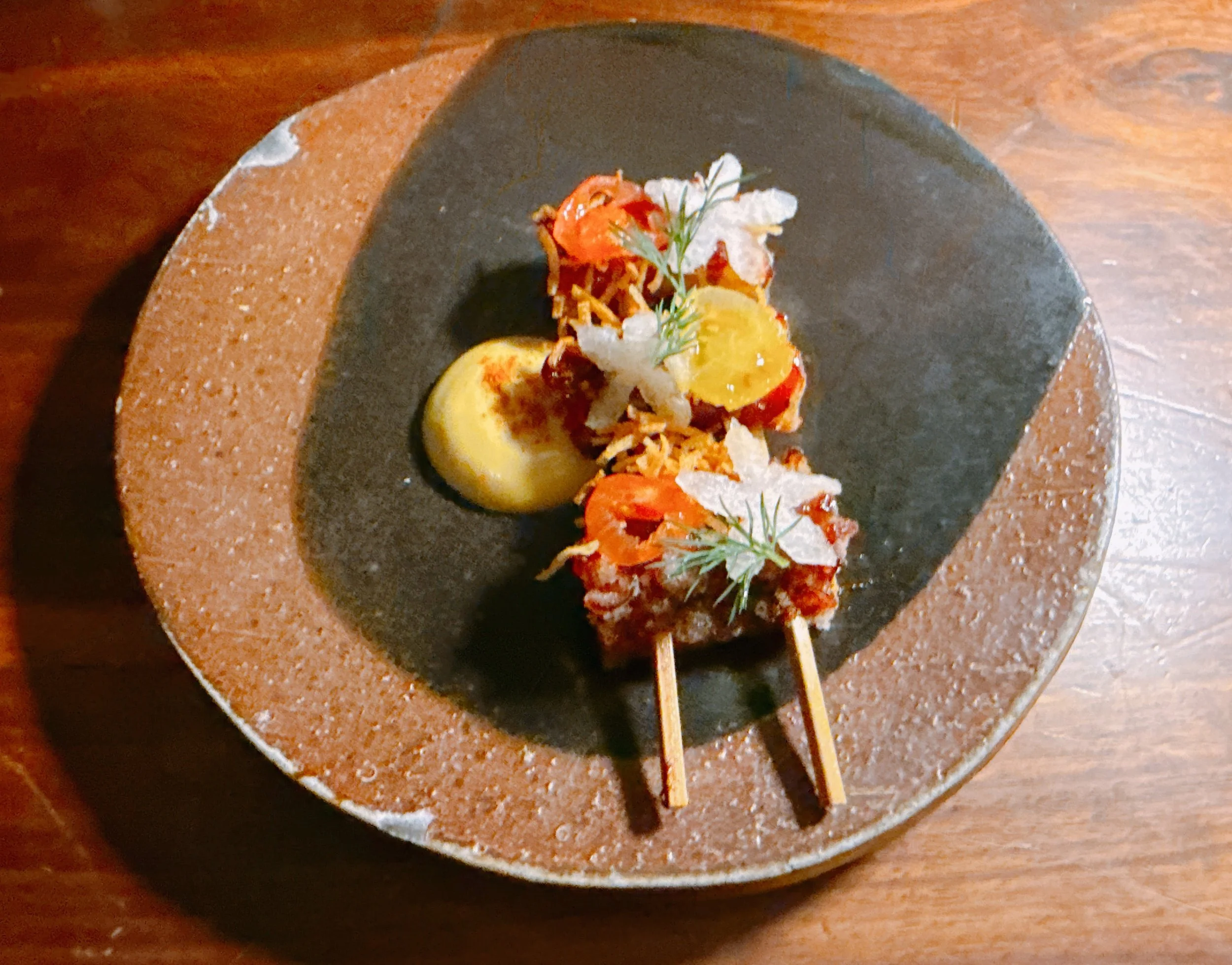
Skewered grilled octopus was paired with slices of onions and celtuce and topped with tomatoes and Korean pears. Next to it was a curry aioli topped with chili powder, ready for dipping. This was a dish that had a lot going on: the tasty curry, crunchy toppings, some spice, the only slightly cooked onions and the earthier celtuce. Amidst all of this, it would have been hard to guess what the protein was - the octopus provided more texture rather than taste. Otherwise, this was a very good dish 16.
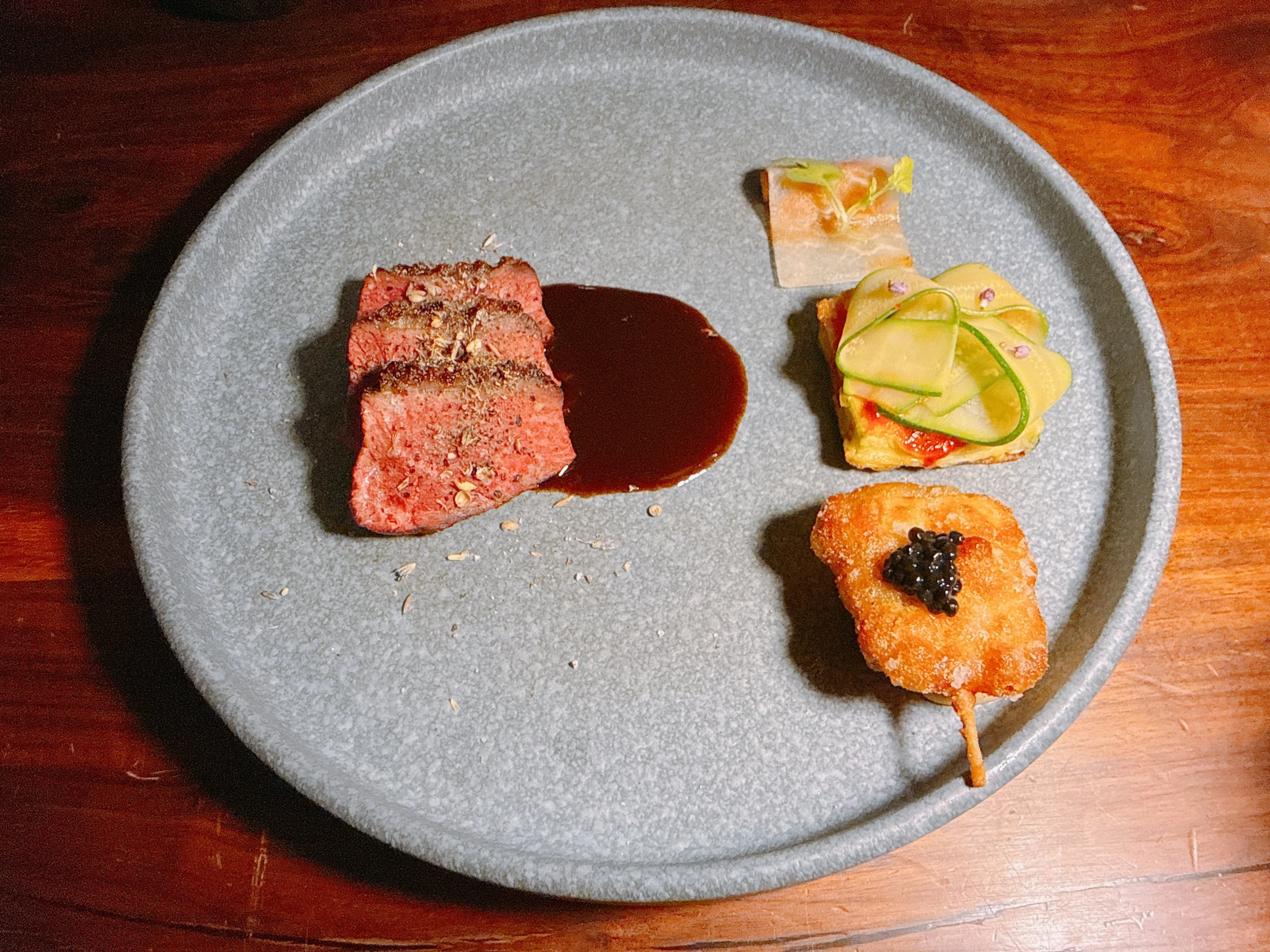
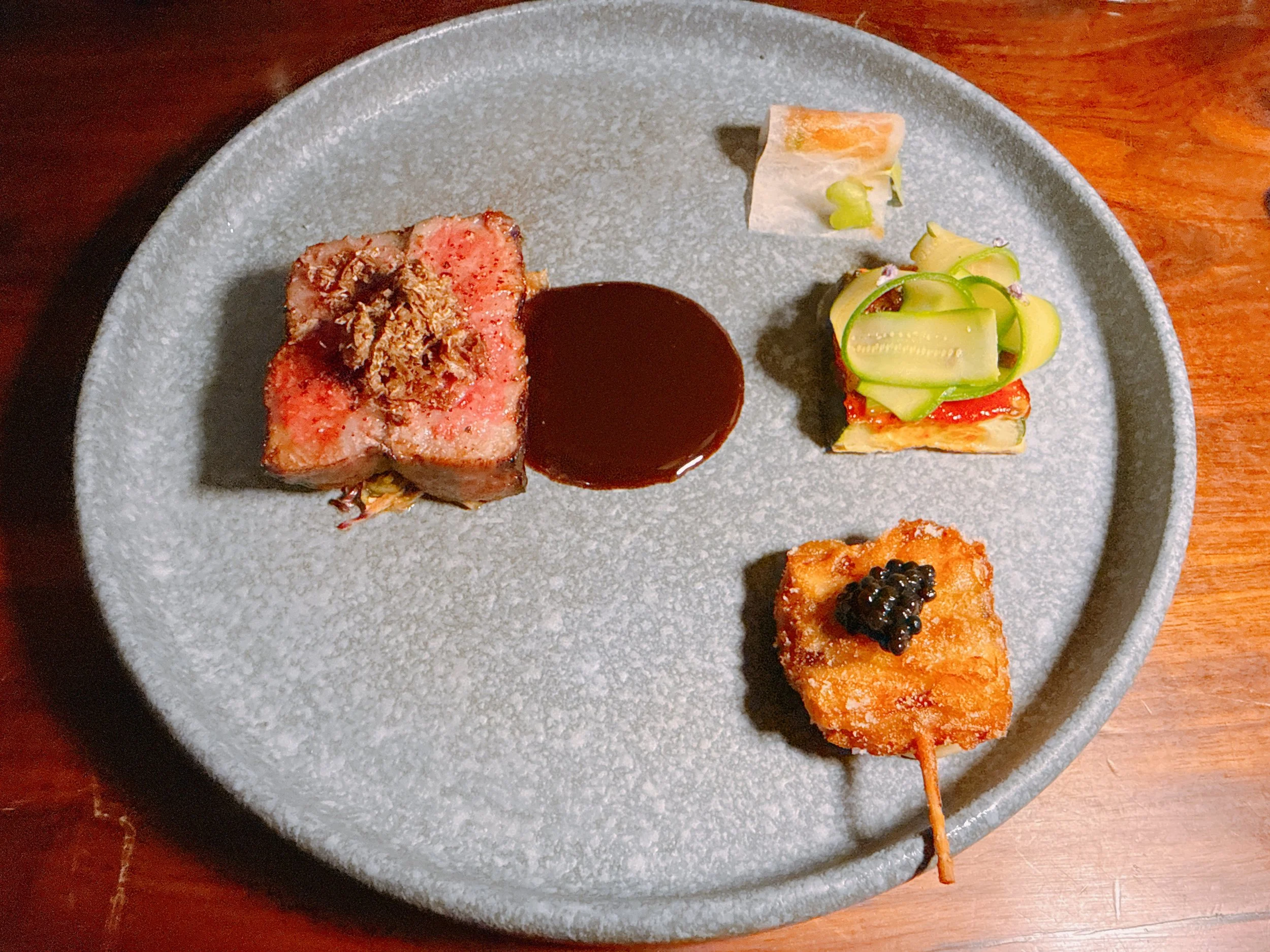
The main savory course was based on a duck breast (or Japanese wagyu ribeye for an additional cost), served over an acorn jelly/radicchio salad and a black garlic jus. On the side was Kochi's interpretation of banchan: a cucumber kimchi wrapped in pickled daikon, a zucchini jeon with broccoli on a kimchi tartine, and a fried eggplant skewer topped with truffle pearls. I'm not a big fan of duck, and thought that this one was just ok, but appreciated that it didn't have any layers of fat (15 by itself). The wagyu was marbled and quite fatty with a nice flavor (16 by itself). And the banchan were mostly good as well: the kimchi spicy, fresh and crunchy (15), the eggplant tempura crunchy (in a different way) with a hint of truffle flavor (15). Only the zucchini dish, spicy and maybe a bit eggy was not particularly exciting (13). Overall, 15.
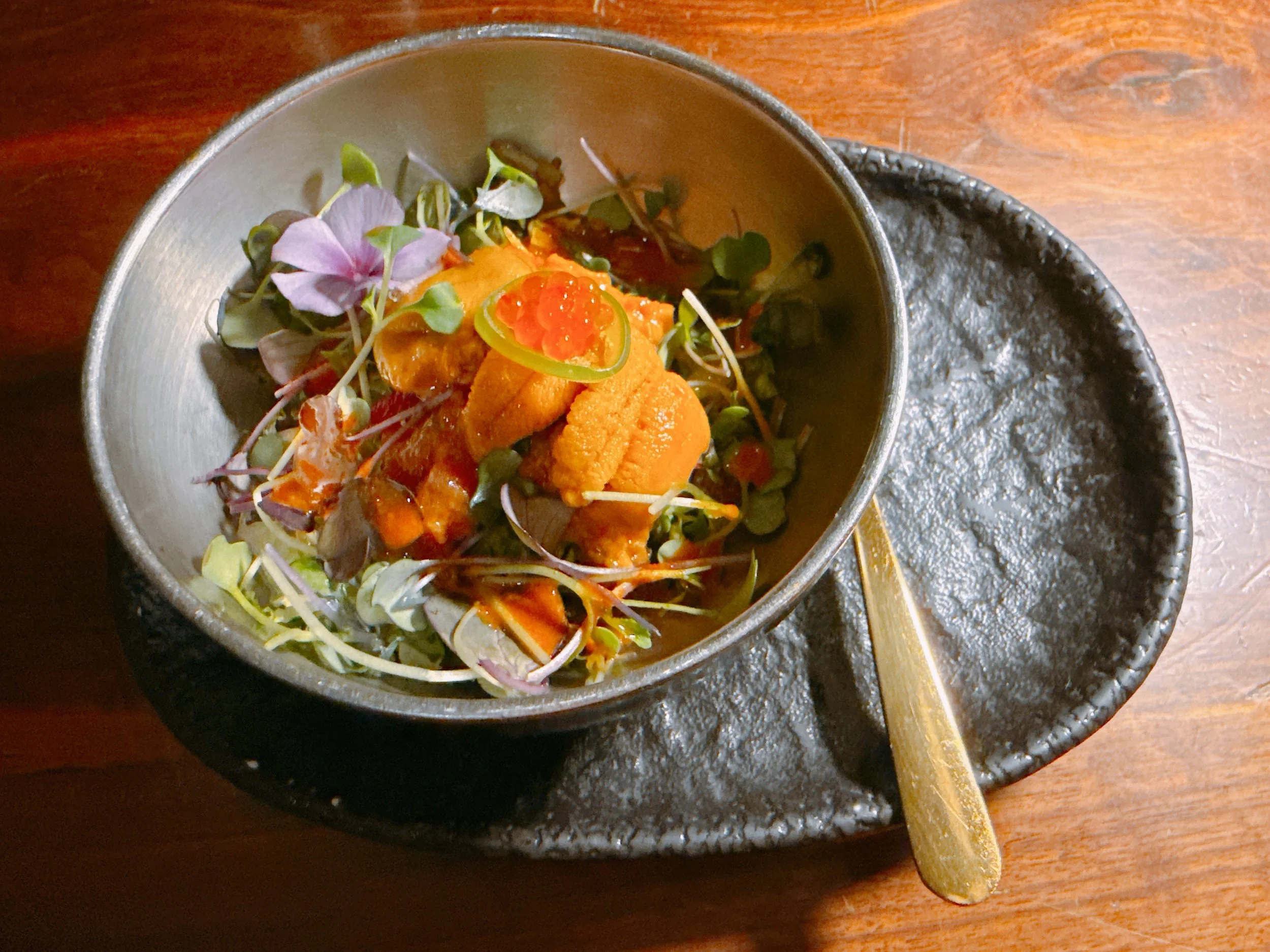
A bibimbap rice dish concluded the savory part of our dinner. A bowl of rice was topped with chopped tuna, kimchi, a sous vide egg yolk, candied anchovies and a gochujang vinaigrette. I had also chosen to add uni (sea urchin) as an upgrade. This dish had lots going on: it was spicy and herbal, the tuna and uni were creamy, the rice was slightly warm, but sadly without a burnt bottom since it came in a cold metal serving bowl. A rustic, but tasty course; only the rice felt a bit generic 16.
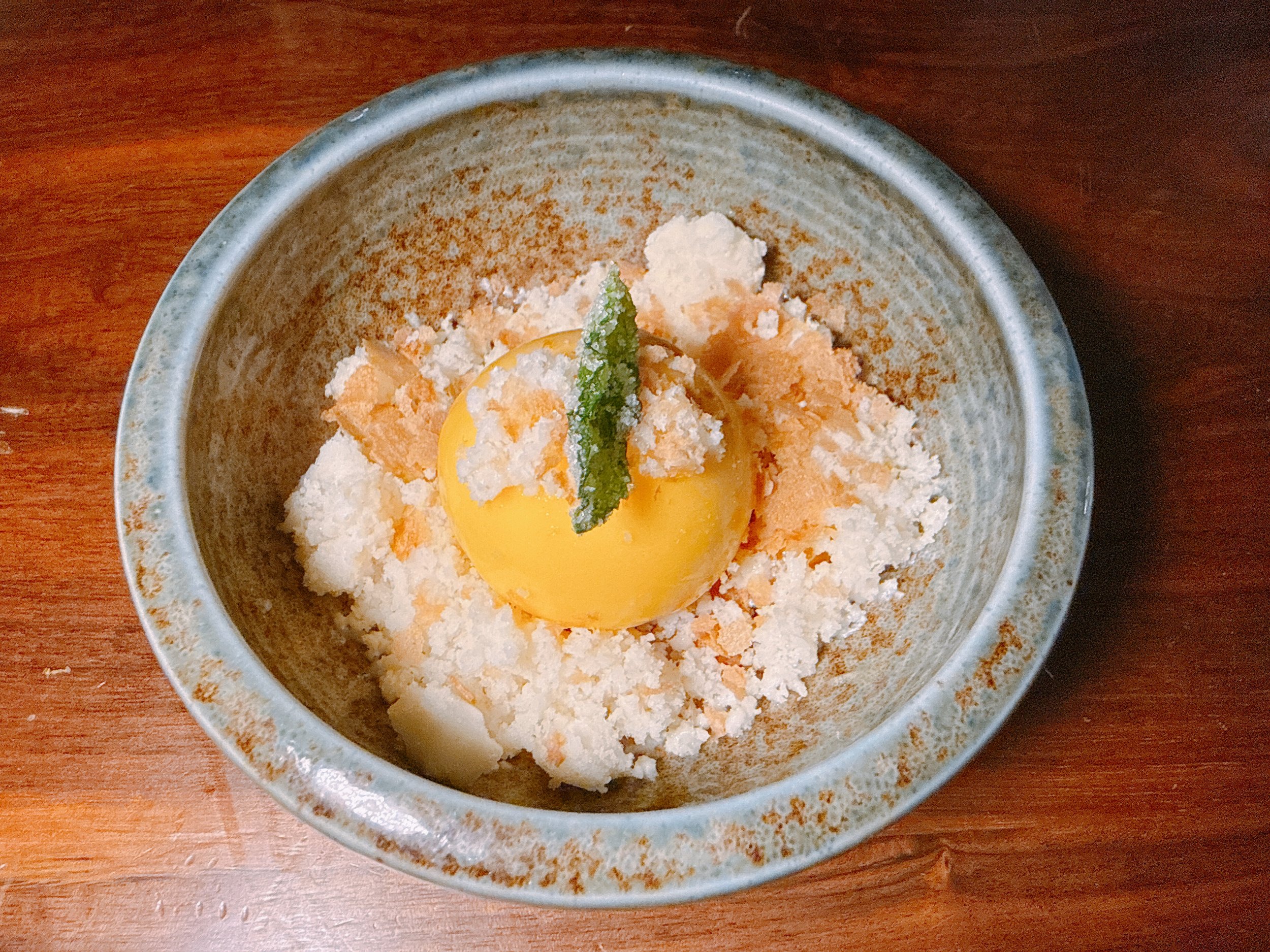
Our first dessert consisted of a tangerine sorbet, milk ice cream, waffle pieces and a piece of candied mint. The tangerine flavor was very strong, and combined with the milk it felt like a deconstructed tangerine ice cream. The crunchy waffles added some nice texture 16.
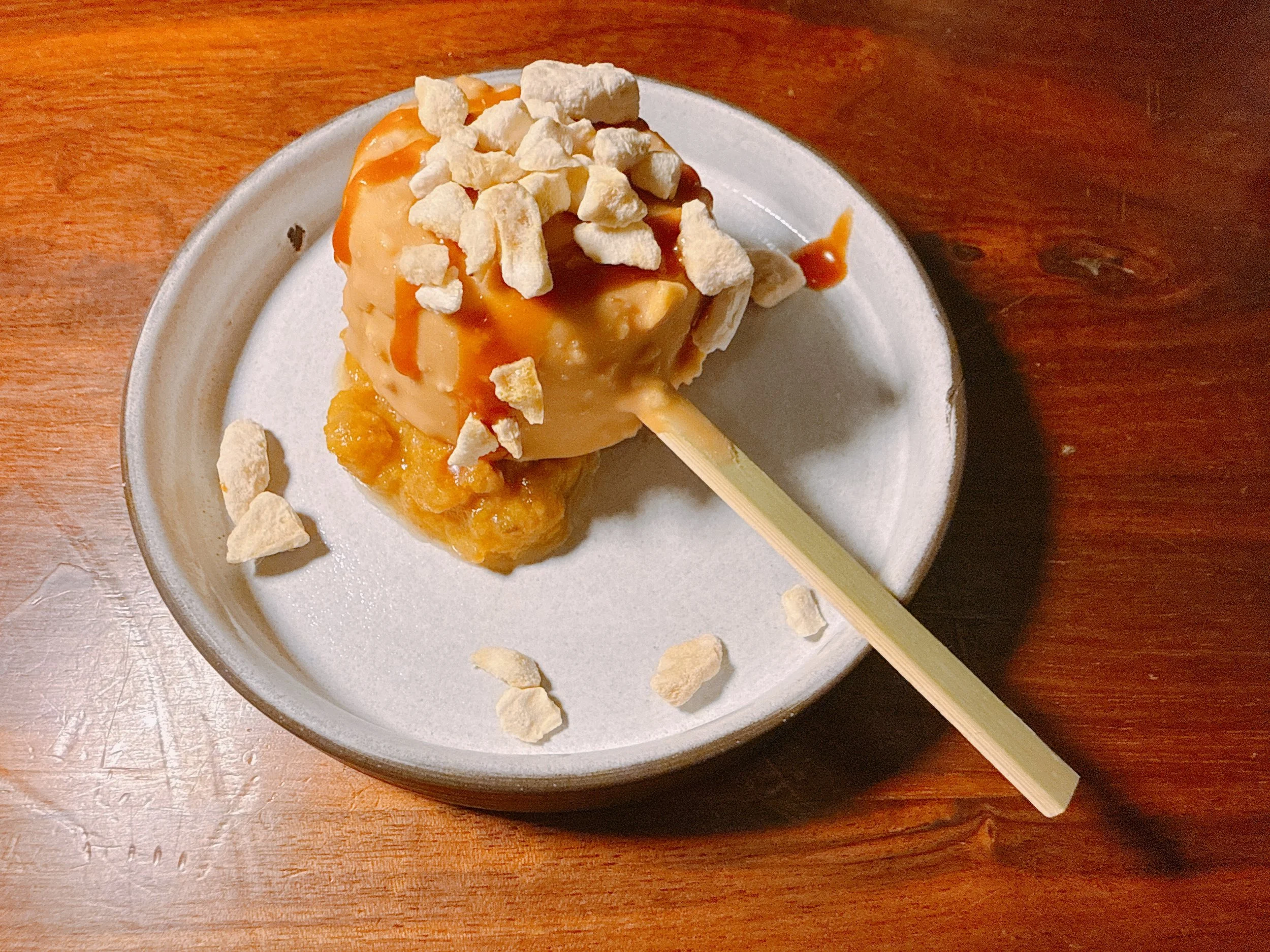
Finally, we received another dish on a stick. A banana milk parfait was dipped in chocolate and drizzled with a soy caramel. It sat on top of a maple/banana compote. Essentially, this was a banana ice cream lollipop - creamy, not too sweet, and actually very good for a banana-based dessert. Bananas are not the easiest ingredients to build a dessert (or any dish) around, and this one succeeded by having just the right level of banana intensity and no other competing flavors. Oddly, the shell of the parfait was quite salty for my dining companion, but not for me 16.
Overall: An enjoyable dinner of elevated, but unfussy Korean dishes in a relaxed setting. No show-stopper courses, but a great casual choice among New York's Korean fine-dining restaurants 16.