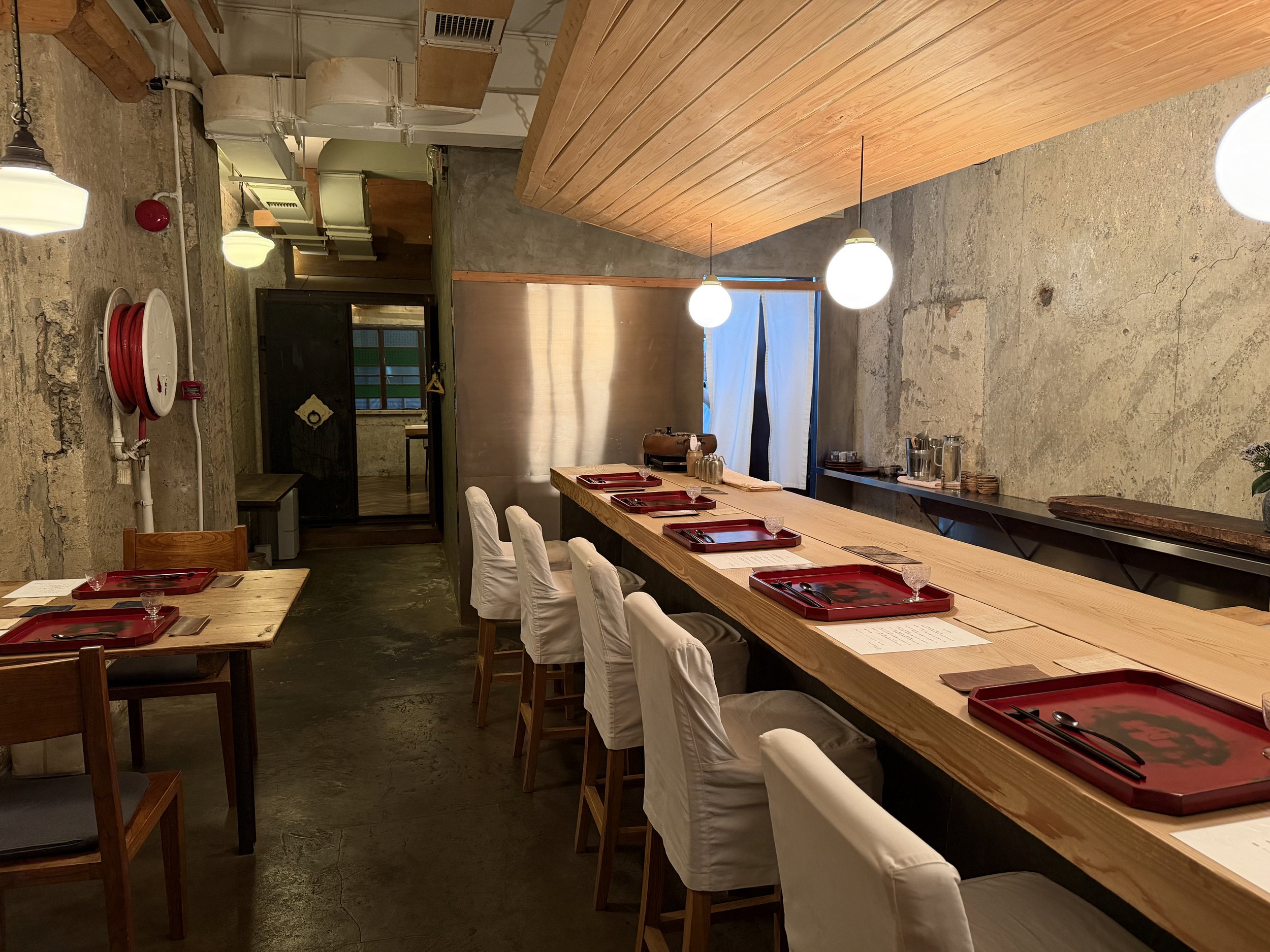
Unfinished interior = all the focus is on the sake and food
Rating: 16/20
Where: Hong Kong, Hong Kong
When: Dinner for 2 on 29 September 2026
Cost per Person: Tasting menu 1900 HKD ($240), Sake pairing 400 HKD ($50)
Accolades: 1 Michelin Star
Why: Sake given a sommelier's treatment; ostensibly simple, but well-executed Japanese dishes
Most restaurants are all about the food. The menu is front and center, and beverages are an optional addition, clearly secondary to the main show. Hong Kong's one-Michelin-starred “Godenya” does it the other way around. Here, everything begins with a flight of sake, and Japanese food is then prepared to match the drinks.
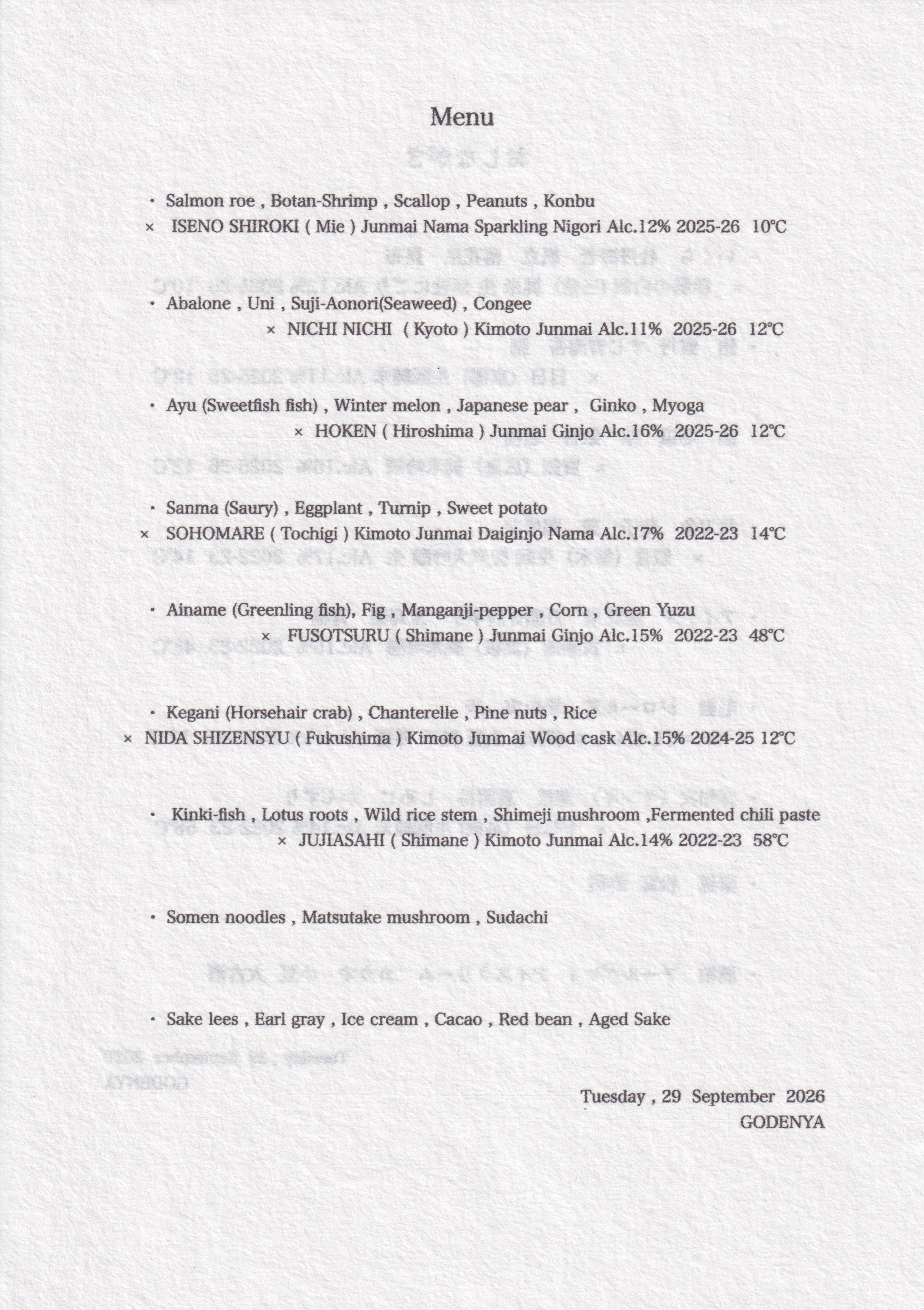
Given this unusual setup, it’s no big surprise that Godenya's owner Shinya Goshima is really into sake. He has a collection of over a thousand bottles, in various stages of aging. When he is serving sake, each carafe is cooled or heated to a specific temperature, exact to a single degree Celsius (the menu even lists those temperatures). That's an attention to detail that I've never seen for a (wine) sommelier. We had the good luck to sit at the counter right in front of chef Goshima, and he was quite happy to talk about all things sake. For example, he showed us an almost ten-year-old sake that had become virtually black from aging.
Getting to Godenya was an adventure in itself. It is located in Hong Kong's Central district, and technically next door to the Wellington building, itself home to a trifecta of fine dining restaurants: The Chairman, Wing, and Vea. I'm saying “technically” since Godenya had to be entered from a narrow alley on the backside of the Wellington. This dark alley was not a place where anyone would reasonably expect to find a Michelin-starred restaurant, and Godenya's nameplate was hard to see thanks to the lack of street lights. Luckily, we eventually found the wooden sliding door that led into the restaurant's compact interior.
The restaurant’s walls were all exposed concrete, giving the room a surprisingly unfinished feel. There was a wooden counter with six seats, a small table for two and a private dining room in the back. Chef Goshima poured his sakes at the left end of the counter, while the kitchen labored unseen behind a curtain.
On its website, the restaurant quoted a dinner price of 2300 HKD (about $295) including the sake pairing, and suggested that if one didn't like sake, one probably shouldn't visit the restaurant. A half pairing lowered the price to 2100 HKD ($270), and if one went totally without alcohol, the dinner cost 1900 HKD ($240). As for beverage options other than sake, there were literally only water and hot tea. So should one even consider coming here if one didn’t plan on drinking? There are probably more sensible choices, but my wife - who decided to skip the sake pairing - loved the food regardless.
In the following review, I'll talk at length about the food. But before that: how was the sake? I thought it was pretty good, and the full pairing was definitely a healthy amount of alcohol. A total of seven courses were paired with sake, and the carafes amounted to about two glasses of sake per course (admittedly, sake glasses are smaller than wine glasses, but still). What was most interesting was the chef's commentary regarding the pairings, highlighting how the sake flavors matched the food. I've been to many restaurants that spend lots of time discussing the polishing level of the sake rice, often just as a justification of its price. At Godenya, this was not even mentioned. Instead, it was all about the kind of water being used, the aging process, or, as I mentioned, the sake’s flavor notes as far as the accompanying food was concerned. So while this was not the best sake that I've ever had, the pairing as a whole was among my most interesting sake-related experiences. If one wants to see sake given a proper sommelier's treatment then Godenya is a great place to go.
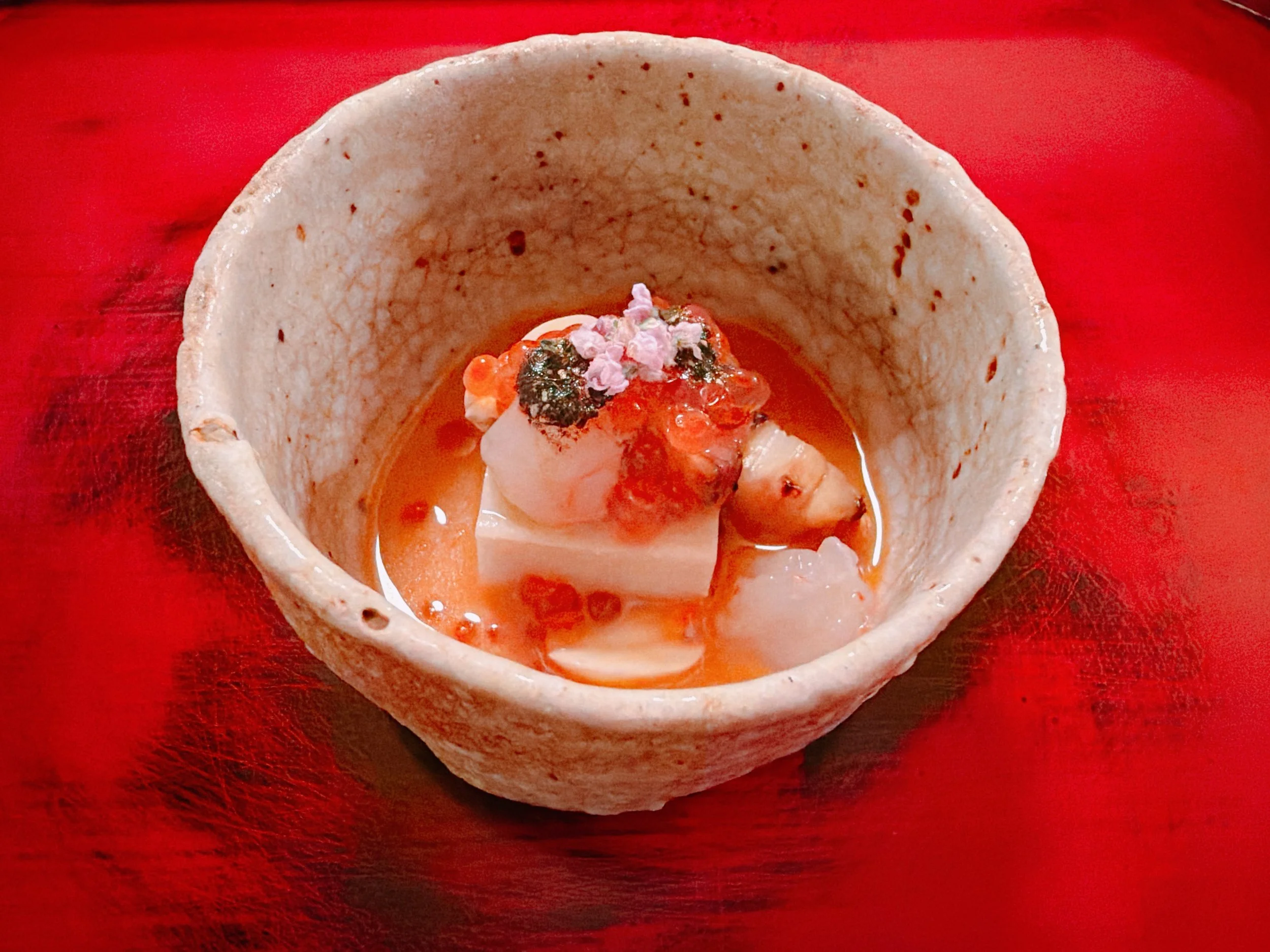
But let’s get to the food. Our first course featured shrimp, scallops, salmon roe, a kombu sauce and two unique components. For one, there was a peanut “tofu” that had been prepared with peanut milk instead of soy milk. And second, we got a salmon roe sauce that had been made by first peeling the roes, and then using their insides to make a flavorful sauce - apparently not easy, since one had to avoid cooking the eggs when the sauce was heated. I don't recall having had such a preparation before, and it was quite delicious. The tofu had only a light peanut flavor, in line with the mealy whole peanuts also found in the dish. The strongest flavors here came from the salty scallops and the fresh shrimp. A sparkling sake was paired with the dish, probably because of the roe (not caviar, but related). To me, this pairing felt a bit too sweet for a savory dish, but that was really the only pairing that was questionable throughout the night - the rest was spot-on 16.
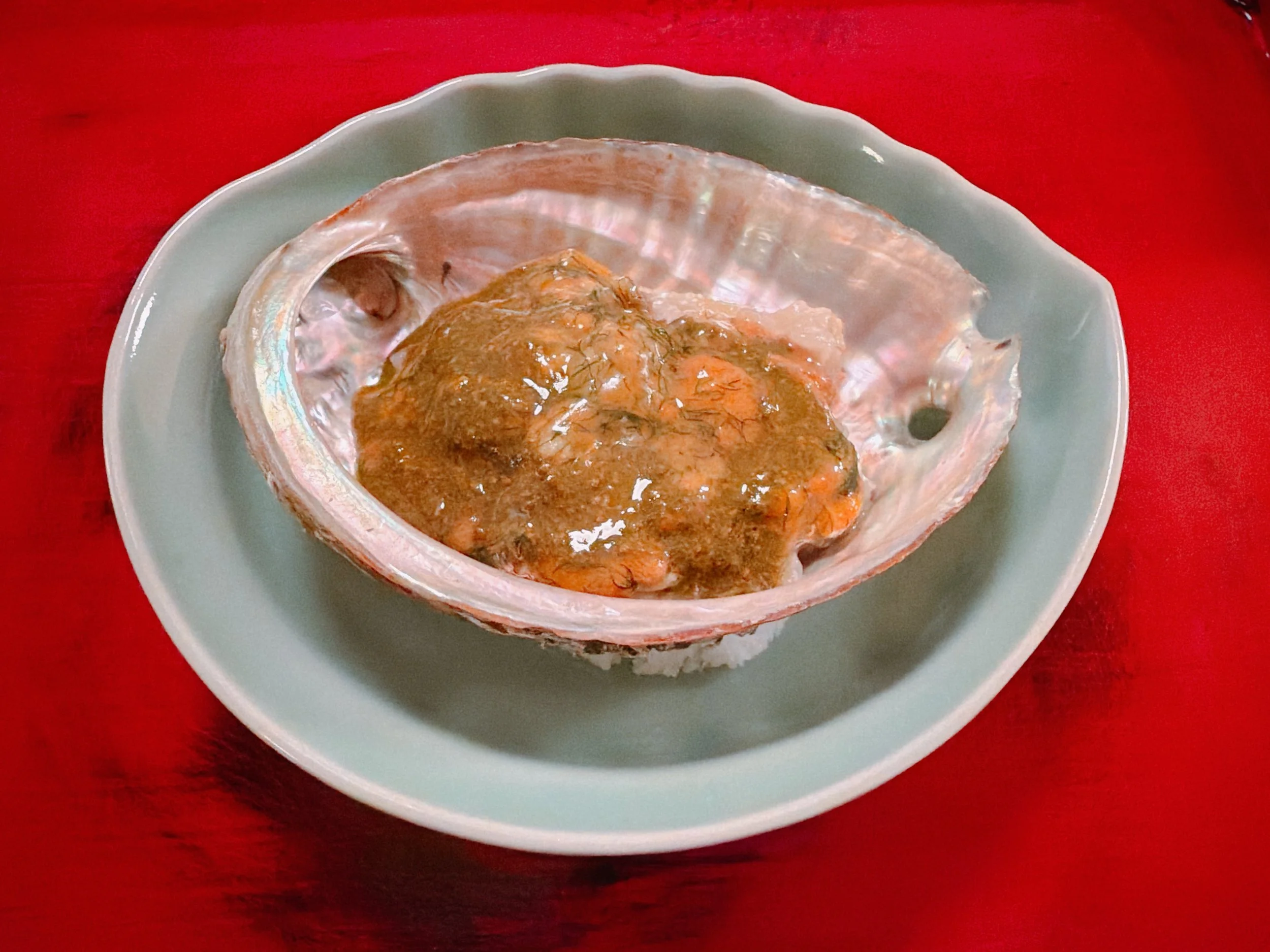
Next was a chopped, steamed abalone that was served with some uni (sea urchin), seaweed, and an abalone liver sauce over rice congee. The abalone didn't have much texture, since it had been cut into very small pieces. But ignoring that and the fact that the dish was served only lukewarm, this was a lovely presentation. Ostensibly simple, but executed very well 16.
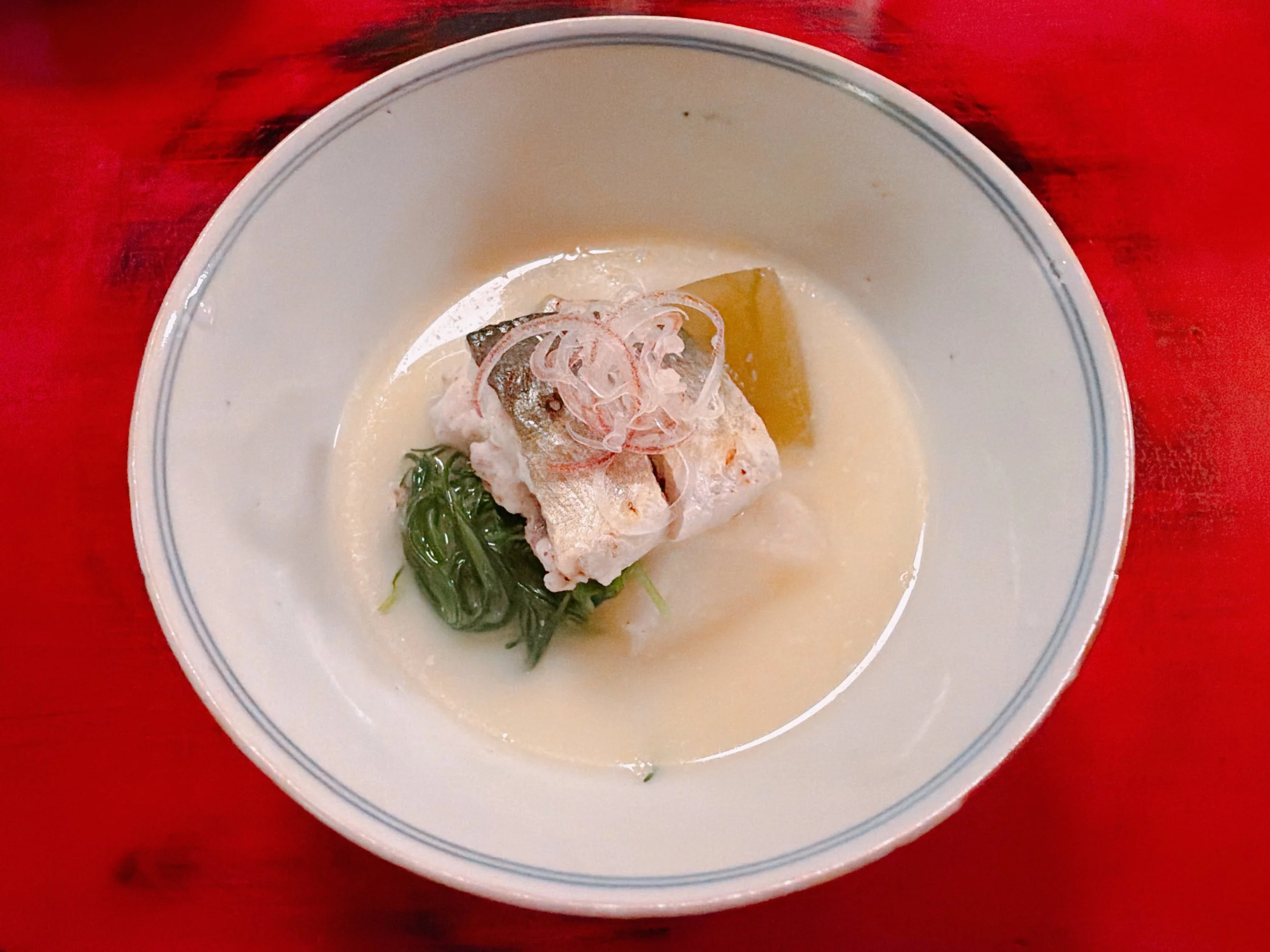
Boneless ayu was served cold with winter melons and Japanese pears in a fish bone broth. The ayu was much less bitter than when it is served whole, and had a tasty, notably fishy flavor. The winter melon was equally lovely, having been soaked in dashi. The milky broth was more subtly flavored. The Japanese pear was incongruously sweet, and didn't really fit well with the rest of the dish 15.
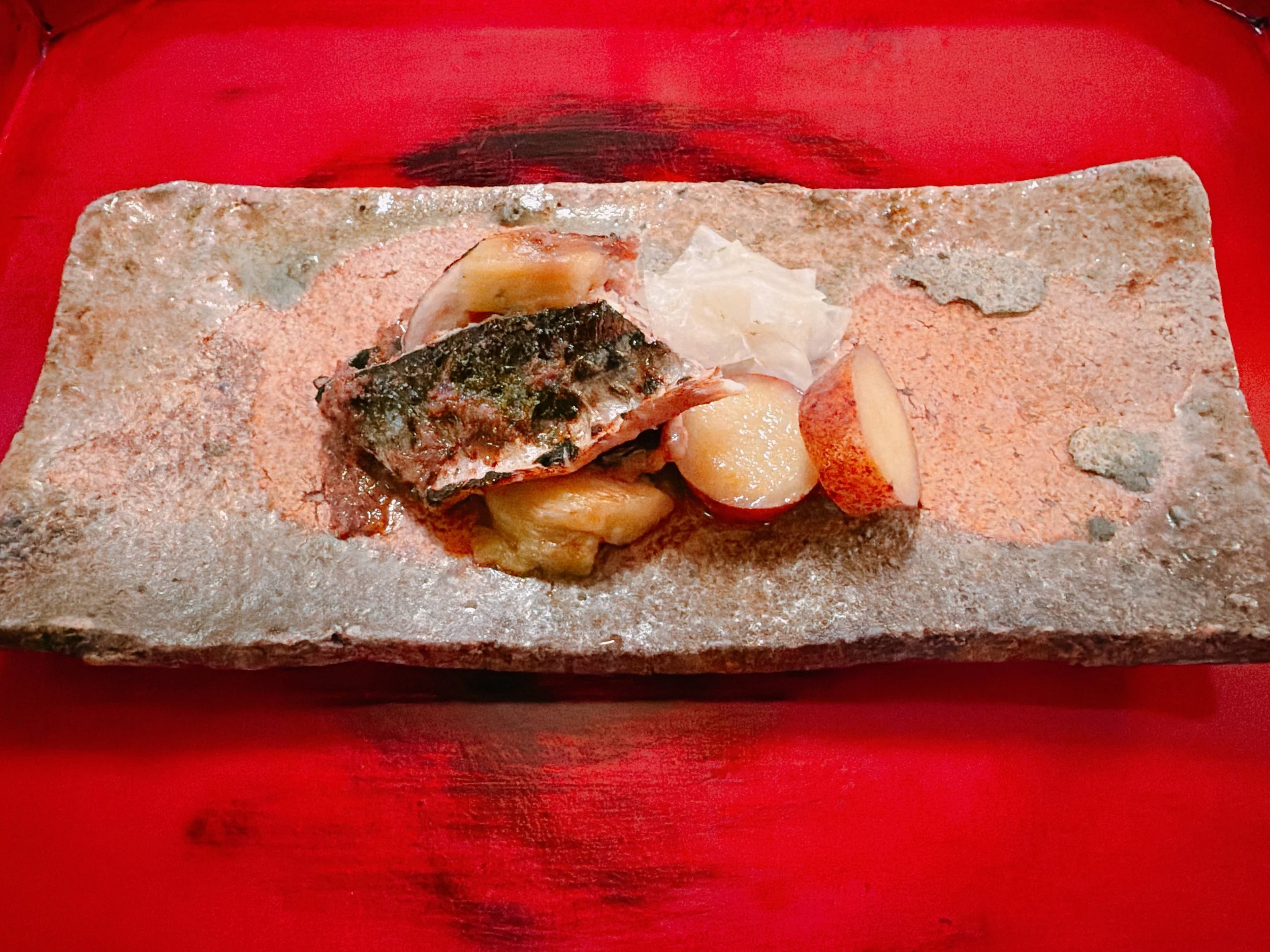
Grilled, boneless sanma had a crispy skin and was served with a bone sauce, some smoky eggplant, sweet potatoes, and thinly sliced turnips. The fatty fish was seasoned wonderfully, making it very flavorful. The paired aged sake did a great job at bringing out the smokiness of both the fish and the eggplant. The rest of the dish was not quite as exciting: the turnips didn't have much flavor, and the yam felt too sweet for this savory dish (was this becoming a theme?) 15.
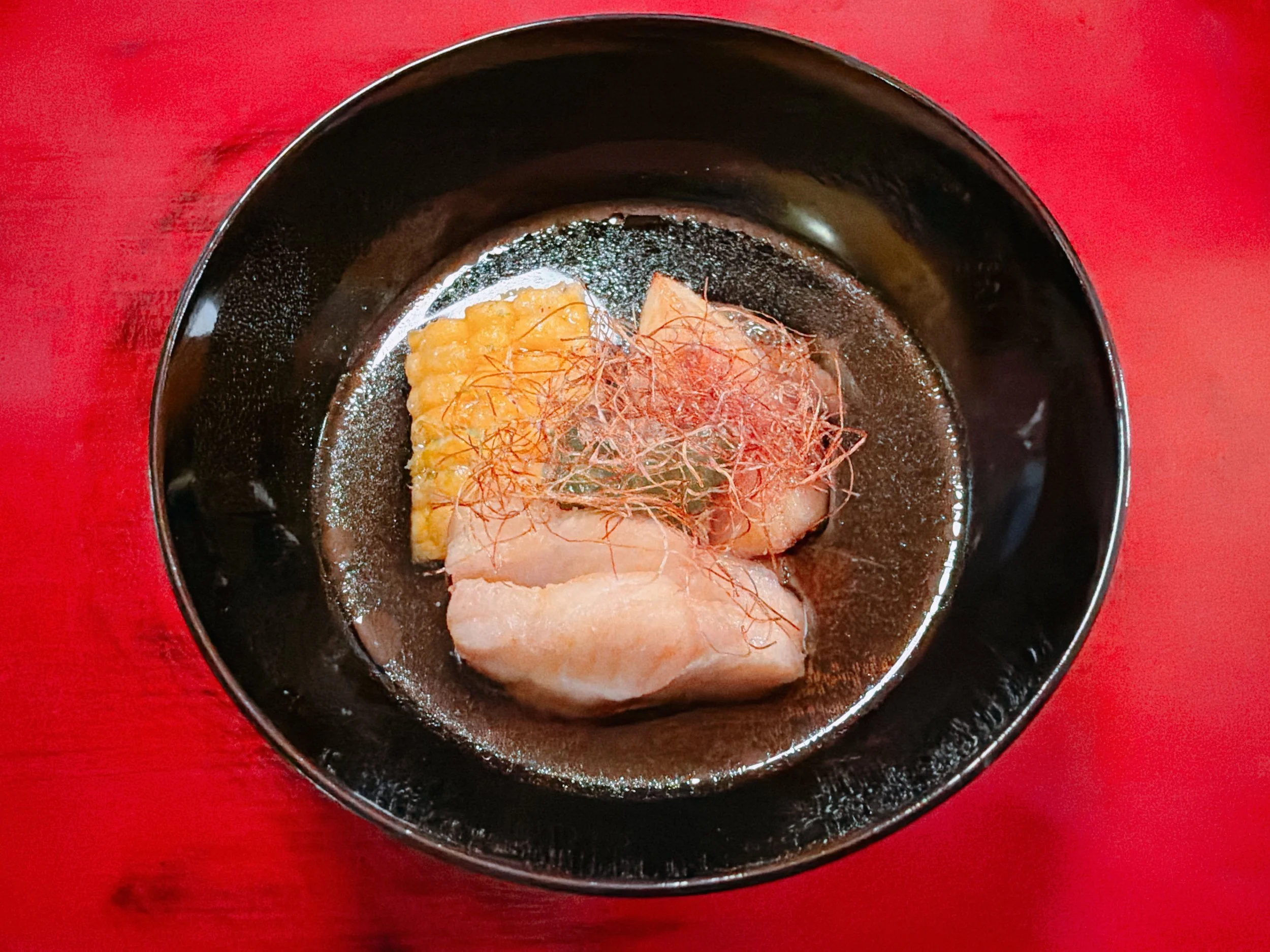
The following clear soup was paired with a hot sake - a sensible choice to avoid a temperature whiplash. The broth had a yuzu flavor, and contained some corn, peppers, ainame (greenling fish), and a fig. This fish was again great: fatty and flavorful. The lightly sweet corn and the peppers were lovely as well. The broth had complex flavors. For the third time in a row, we had a savory dish with a very (I'd say, too) sweet ingredient - the fig. The rest was very good, though 16.
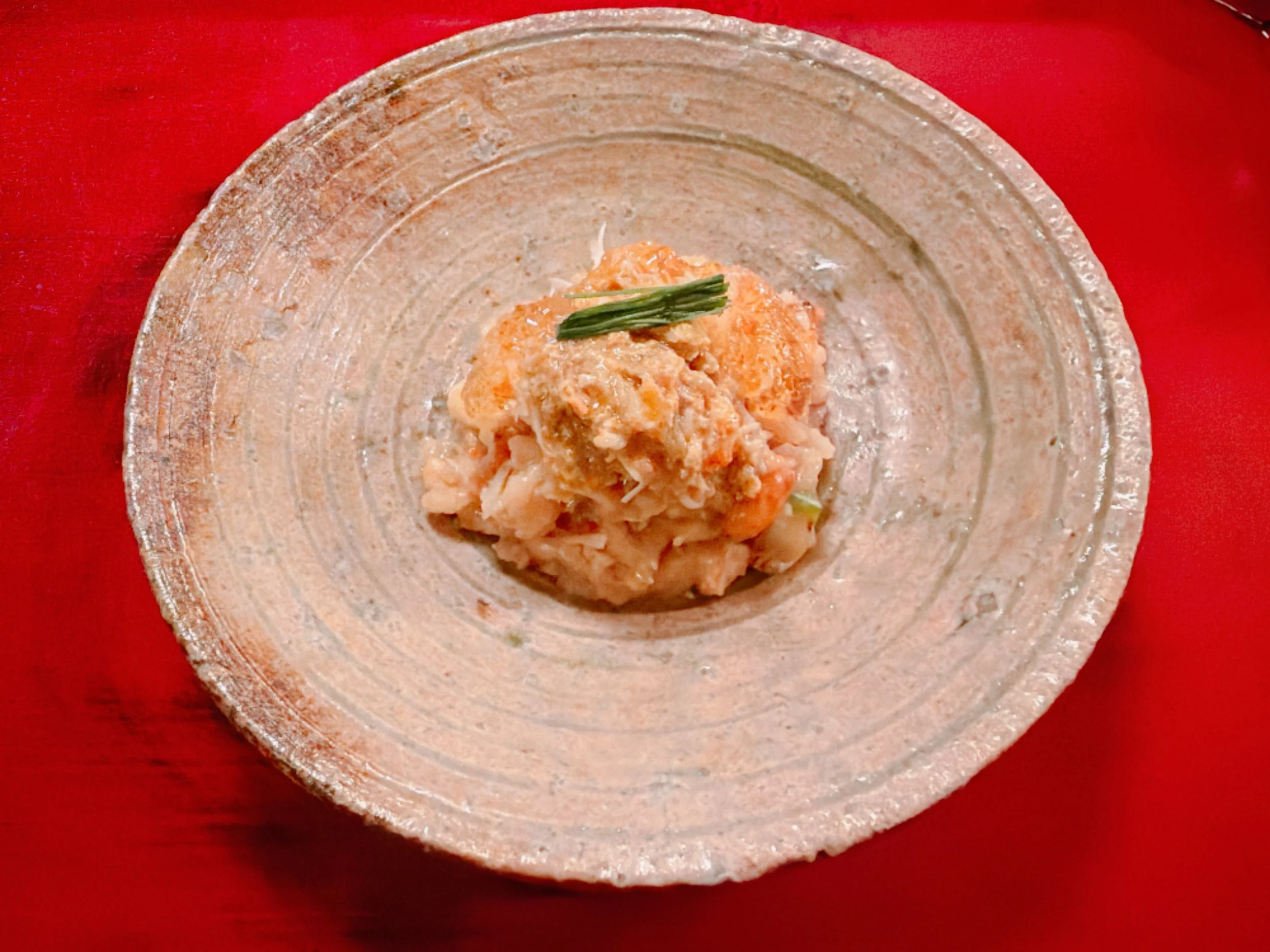
Japanese risotto made with pine nuts and chanterelle mushrooms was topped with a generous amount of crab meat and a miso sauce. The crab meat was lovely, and the dish had a notable mushroom flavor and some crunch from the pine nuts. A rustic, but tasty presentation 15.
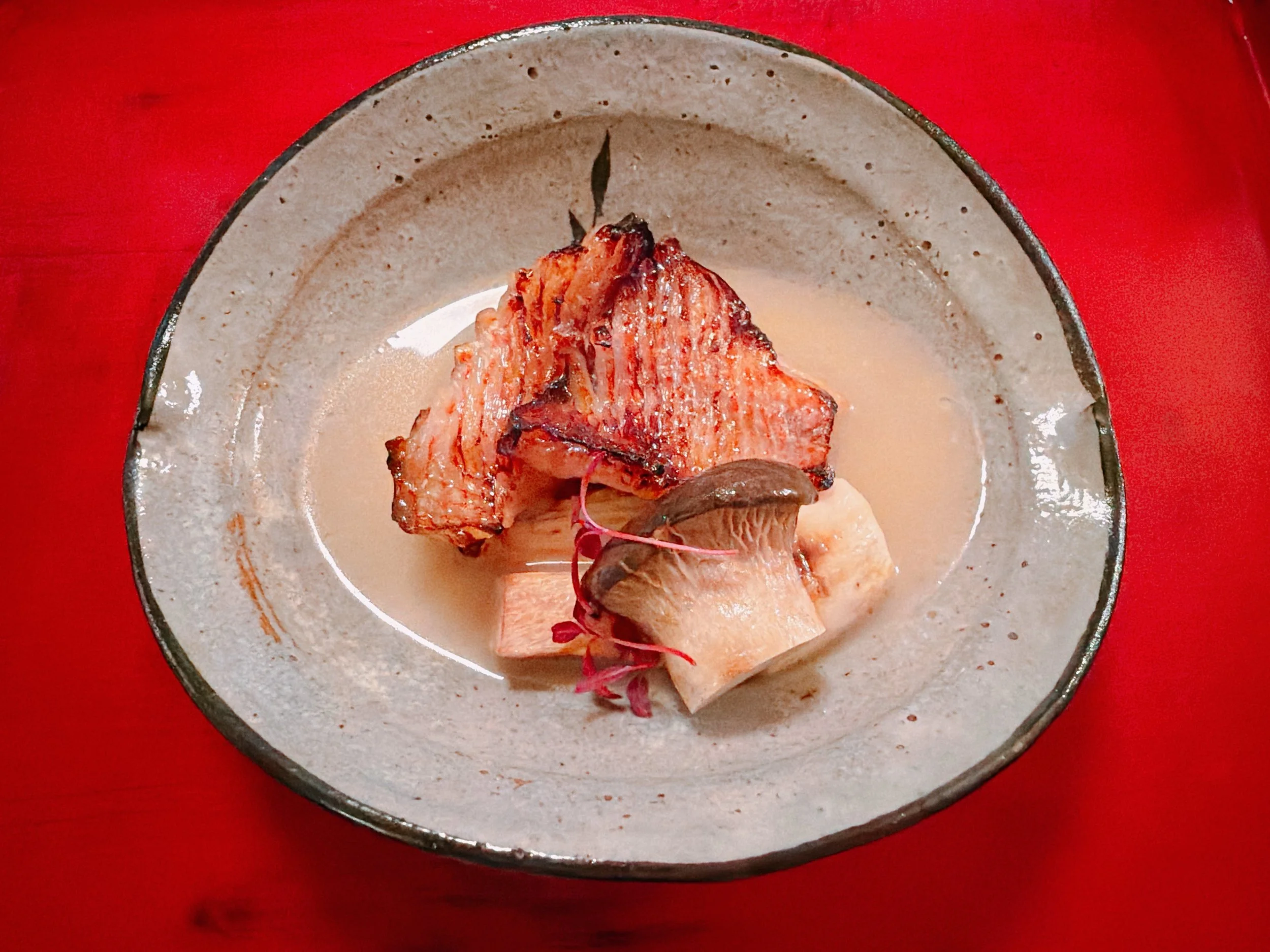
Charcoal-grilled kinki fish glazed with sake was served with shimeji mushrooms, rice stems, slices of lotus roots, and a lightly spicy fish broth. This fish was outstanding: flaky and reminiscent of miso cod, but executed perfectly (possibly a 19 by itself - hard to do this much better). The broth might have felt simple, but was a perfect accompaniment. The rest of the dish was a bit less exciting: the mushroom top had a good flavor, but the stem didn't. The rice root did not taste of much and felt somewhat watery. The lotus root was crunchy and a bit sweet, but otherwise pretty standard 16.
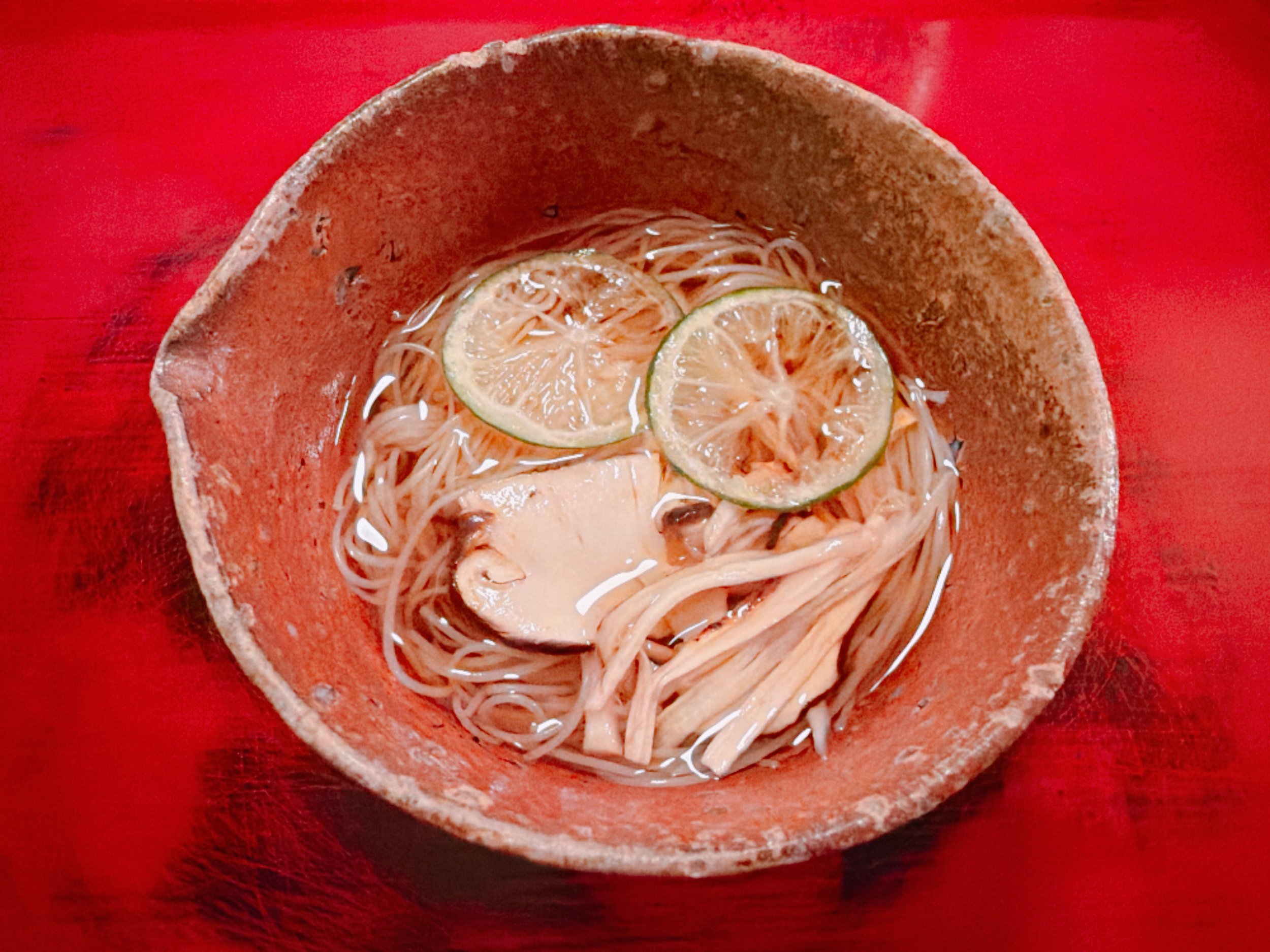
Our last savory dish was a broth filled with somen noodles, sliced matsutake mushrooms, and slices of sudachi citrus. The noodles were cooked nicely, the mushrooms added a subtle, but notable flavor, and the citrussy broth was delicious 16.
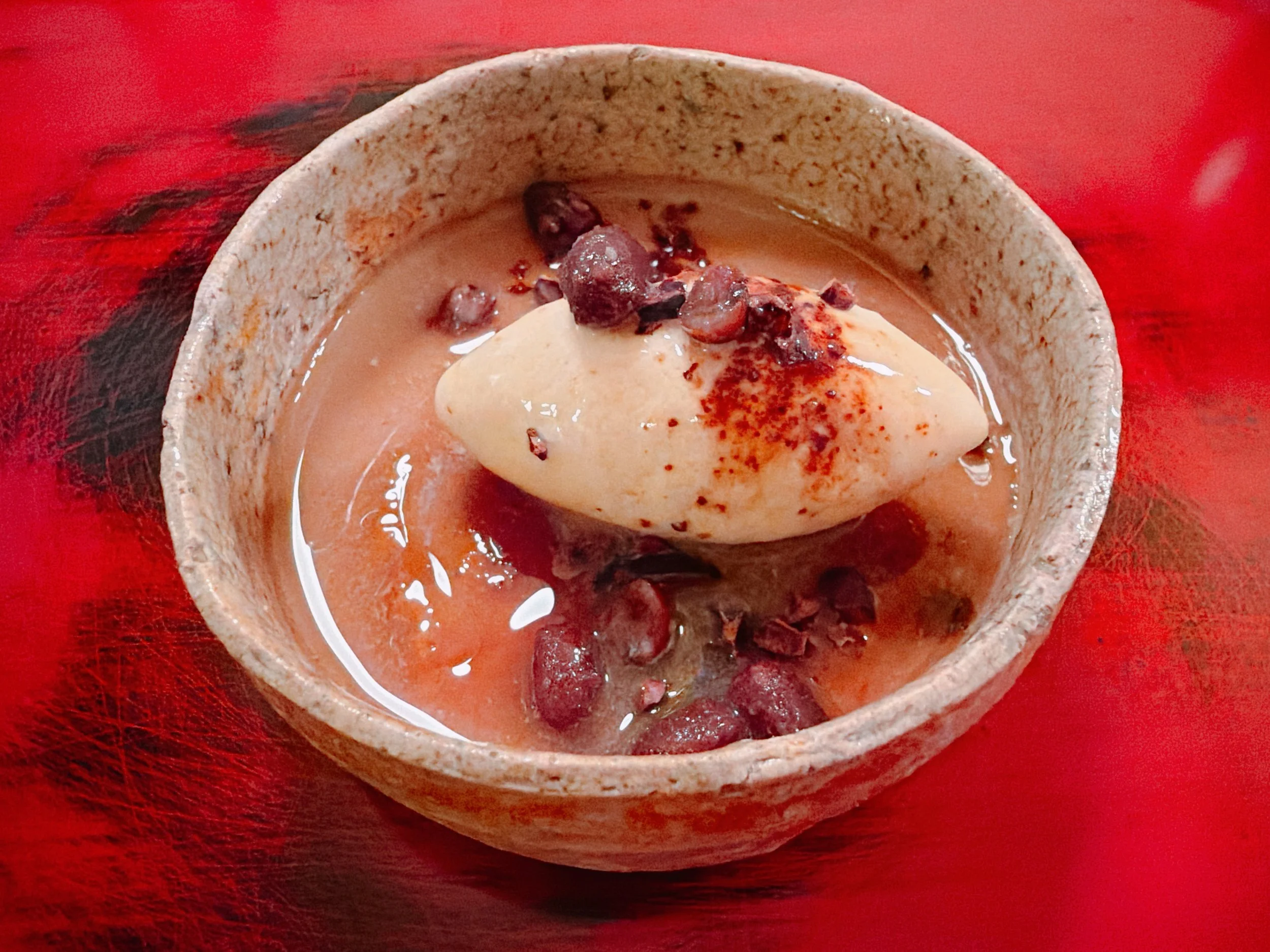
For the single dessert, we got a “crème brûlée”. It had the expected crunchy burnt sugar layer, but the custard underneath had been made with sake lees instead of cream. On top were a coconut/tofu ice cream, some red beans, and cocoa nibs. As a final flourish, the chef added some aged sake from 1989. This was a lovely dessert with deep flavors, without being heavy. Caramel, cocoa and umami - yum 16.
Overall: Godenya served a lovely seafood-heavy rendition of Japanese food. Some dishes looked ostensibly simple, but one could tell that these were not straightforward preparations, and actually very well executed. But most distinctive was the thoughtful sake pairing accompanied by the chef's descriptions. A worthwhile stop for anyone interested in Japanese sake, novice and expert alike 16.