D.O.M. - São Paulo
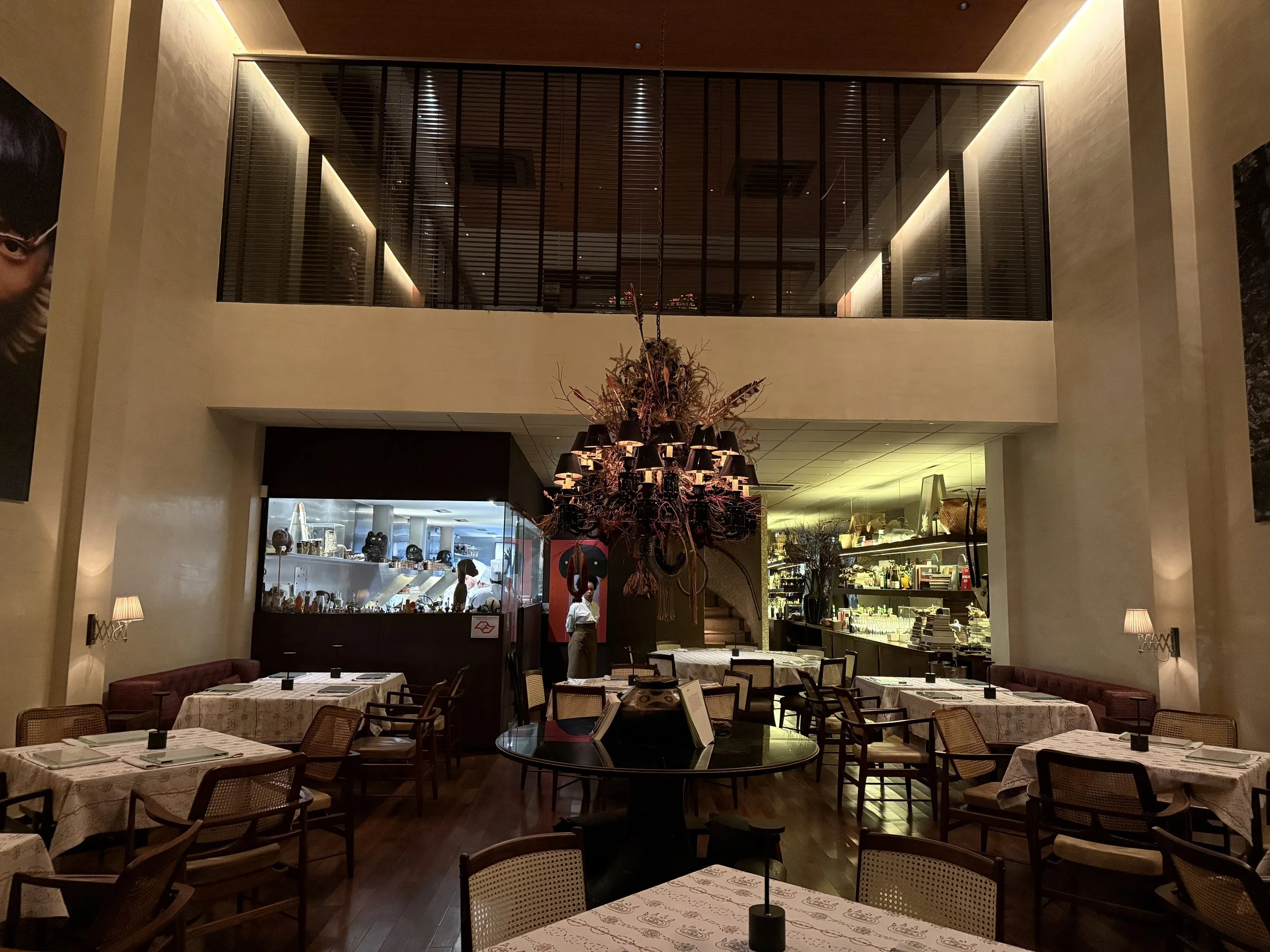
Dining room with open kitchen on the left and semi-private dining room upstairs
Rating: 16/20
Where: São Paulo, Brazil
When: Dinner for 2 on 5 May 2026
Cost per Person: Tasting menu 1150 BRL ($235), Wine Pairing 780 BRL ($160)
Accolades: 2 Michelin Stars
Why: Indigenous Brazilian ingredients in a fine-dining menu; wine pairing featuring Brazilian wines
The restaurant D.O.M. in São Paulo has been around for a while. It was opened by chef Alex Atala in 1999, with the goal of exploring indigenous, often obscure, Brazilian ingredients and presenting them in a fine-dining setting. A bit like a South American Noma maybe, but preceding the famous Danish restaurant by several years. By the 2010s, D.O.M. (short for “deo optimo maximo”) had appeared on the radar of many international food travelers. It was the only restaurant to receive two stars in Michelin's 2015 inaugural guide for Brazil, and has kept them ever since. It peaked at 4th place of the 50 Best Restaurants list in 2012, and was featured in the second season of Netflix’ “Chef's Table” in 2016. Since then, things have become a bit quieter for the restaurant. The forever fad-chasing 50 Best list has long since moved on, and two other Brazilian restaurants became the first ones to claim three Michelin stars in 2026. So we were curious: how good was this restaurant that once pioneered Brazilian fine-dining today, 27 years after its opening? On a Tuesday evening in early May, we stopped by to find out.
D.O.M. is located on a cul-de-sac in a neighborhood with a fair number of stylish eateries, some of which were already thronging with a youngish clientele at our 7pm dinner time - somewhat early by São Paulo standards. At D.O.M., we were the first to be seated, and it took another hour or two for the restaurant to fully fill up. The most distinctive feature of the dining room was the very dramatic three-stories-high ceiling. There were about a dozen tables in the main dining room, which was soon filled with a background noise of conversation. A second, semi-private dining room was upstairs on the mezzanine floor - the “semi” referring to the fact that there was a continuous parade of other guests looking for the upstairs bathrooms. On the ground floor, an open kitchen was visible behind glass panes, and a bar was situated in front of the slatted street-side windows. Tables were covered with printed table cloths, which later on were replaced by straw mats, that in turn were removed to expose the lacquered dark brown wooden tables underneath. The furniture felt a bit dated, and the ambiance was pretty casual - several guests were wearing polo shirts and T-shirts.
The staff spoke great English, and in fact they spoke English to all tables in our hearing range. The dearth of local customers could be due to the fact that D.O.M. changes its menu only once a year, making frequent revisits less compelling. In May 2026, the theme of the menu was “When The Jaguar Drinks Water”. There was some artwork on the walls that was inspired by this theme, but the food itself was only loosely based on the premise - at least the staff didn't make any particular efforts to highlight any connections.
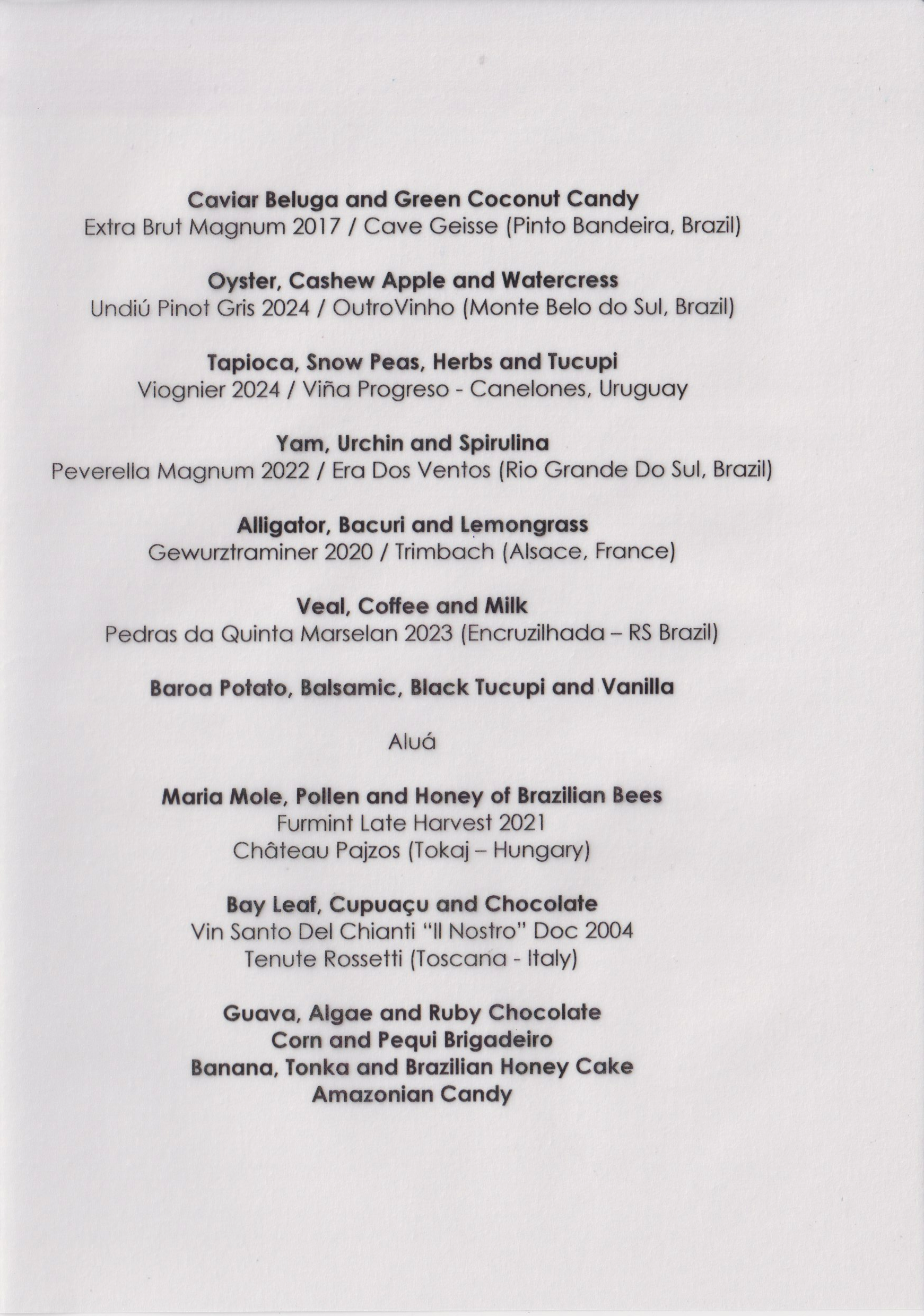
D.O.M. served a fixed tasting menu, with all but a couple of courses being pescatarian. A wine pairing was available as well, consisting of eight glasses of predominately Brazilian wines for 780 BRL (about $160). Since I am living in a place where South American wines tend to be either Argentinian or Chilean, just being able to try Brazilian wines was a sufficient reason to get the pairing. And the wines were also pretty good. I wouldn't necessarily have wanted to commit to a whole bottle for any of them, but they were quite varied and matched the food well. Definitely no regrets here. Whether one ordered the pairing or not, the dinner started with a complimentary glass of Brazilian sparkling wine - a nice touch to accompany the appetizers with bubbles.
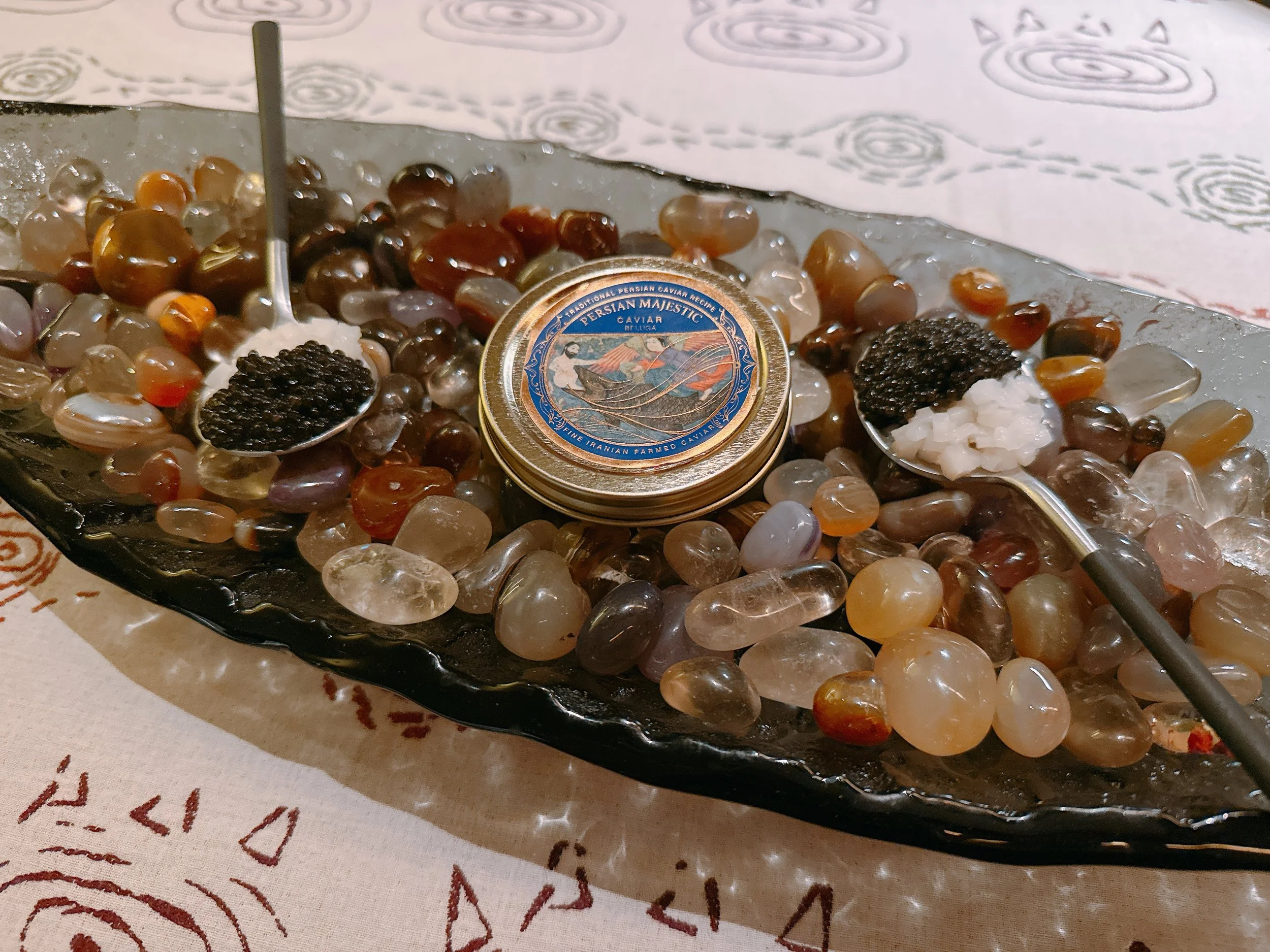
Our first bite was inspired by the “Meeting of Waters”, the confluence of two rivers in Brazil: the darker Rio Negro and the lighter-colored Solimões River. Interpreting the visuals of that natural phenomenon (if not necessarily its taste profile) was a spoon that contained half Iranian Beluga caviar and half candied green coconut. Flavorwise, this bite started out with the very salty caviar, while the coconut merely added a crunchy texture. But it ended on a note of sweetness. A nice taste progression with surprisingly compatible flavors 17.
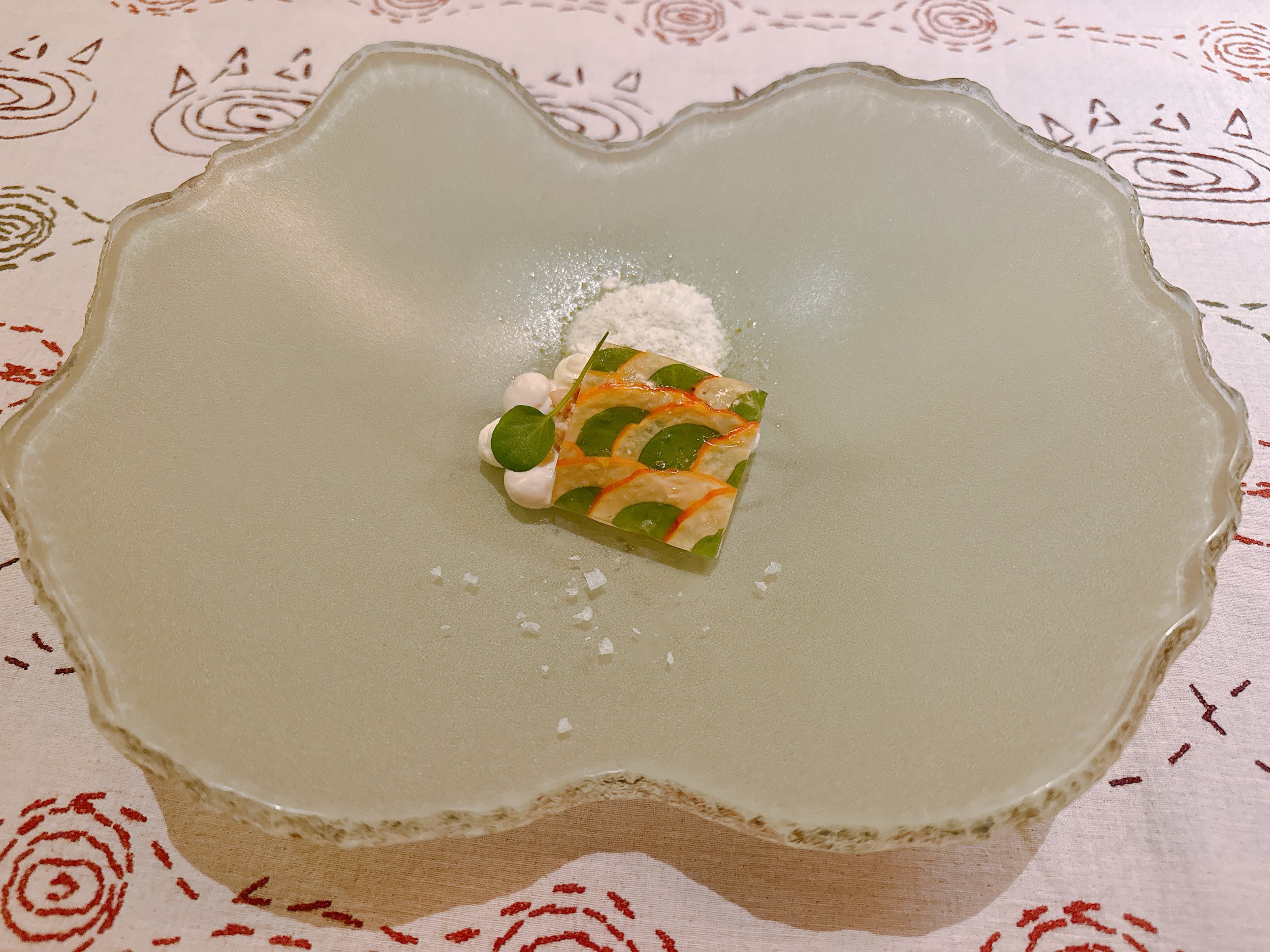
The next dish featured oysters that came with a heart of palm salad, dollops of sour cream, a layer of cashew fruit and watercress, as well as a cashew fruit “snow” made with liquid nitrogen. The latter created wafts of fog when it was added tableside. The strongest flavors came from the oysters and from the heart of palm “salad” - really closer to a chopped, lightly acidic salsa. I appreciated that one could clearly taste the oysters - there are too many “oyster dishes” where the other ingredients overwhelm the bivalves. The other parts of the dish were lighter in flavor: the sour cream just added texture, and the cashew fruit was light and not too sweet, tasting vaguely of plums. Incidentally, the cashew fruit didn’t taste of nuts at all, but the “snow” had a bit of a nutty note. The dish had a pleasant combination of varied flavors 17.
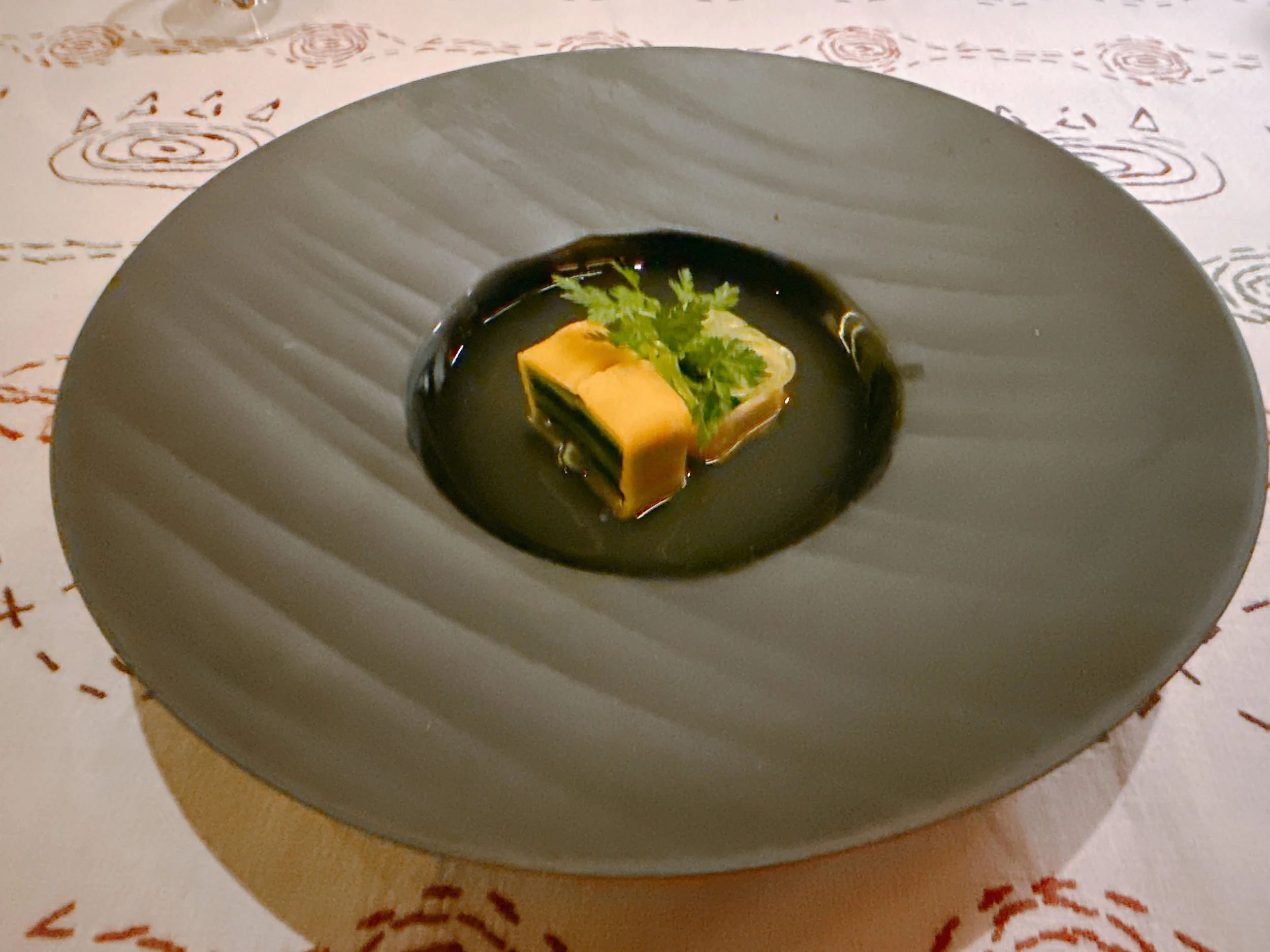
Precut “ravioli” consisted of a tapioca shell filled with fresh, crunchy herbs that looked a bit like a mille-feuille. They were served in a mushroom/tucupi broth. Tucupi is an extract of the cassava root, which explained the thickened consistency of the sauce. This dish was served cold, and had two distinct sets of flavors. First, there was the “pasta” itself, which tasted like the proverbial herb garden - fresh, crunchy and very intensely herbal. Second, the broth, which had a light mushroom flavor and some acidity. Both flavors were lovely, and would probably have complemented each other as well, but it was hard to eat them together, since the sauce didn't really “stick” to the ravioli. Still, a very nice vegetarian dish 17.
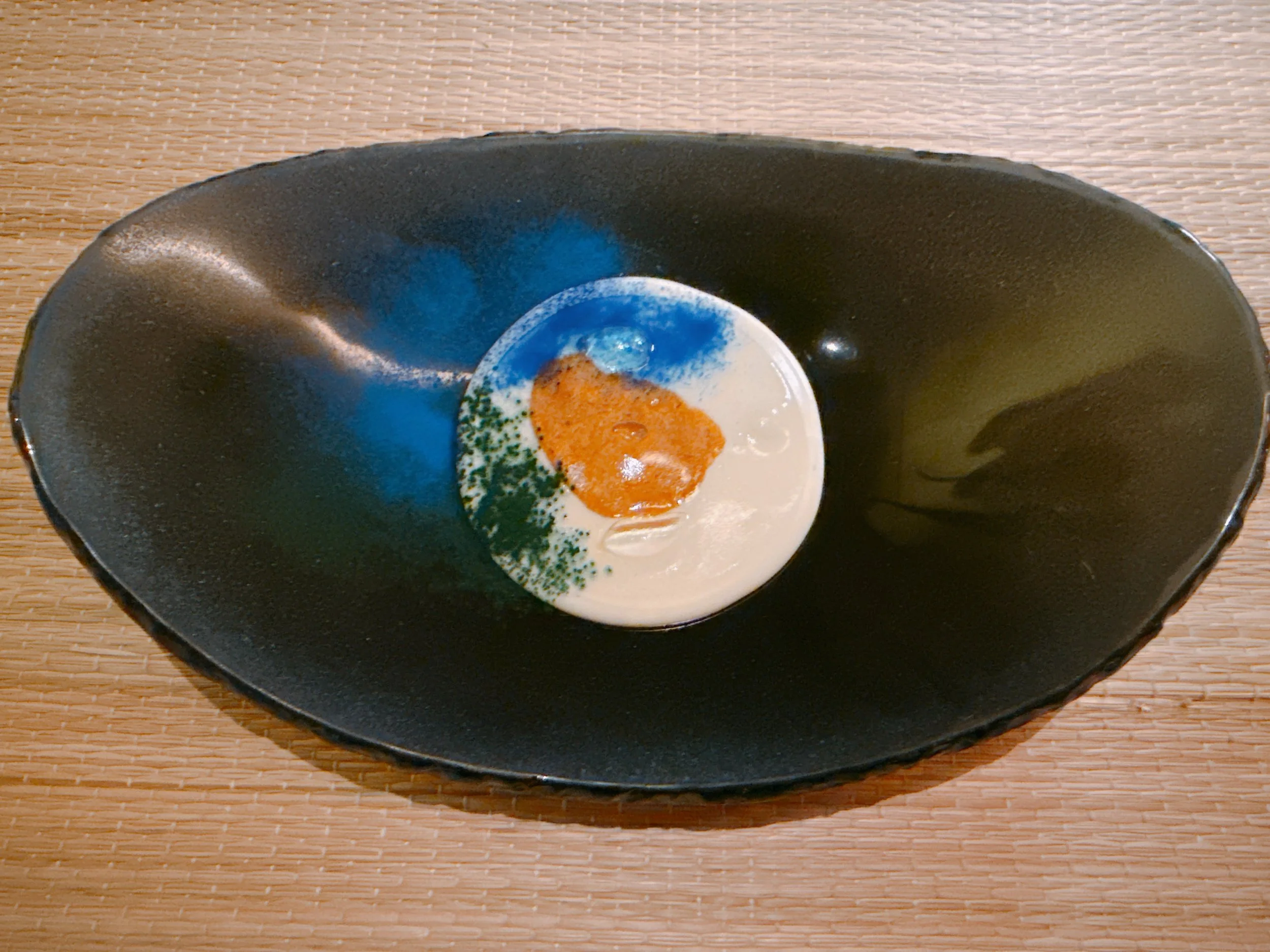
The following dish reminded me a bit of the colorful potato cream served at three-starred Le Calandre in Italy. The basis of this presentation was yam seasoned with baked garlic and dashi. The dish was topped with uni (sea urchin) and spirulina for color. Essentially, this was a serving of warm, very creamy mashed potatoes, and despite being made from yams, the dish was not very sweet. The green-colored dust added a peppery taste, and the uni a seafood note - easily detectable and thankfully not hidden by the other ingredients. My dining companion mentioned that this felt more like a dip or a side dish than a full-blown course. But it's hard to argue with good mashed potatoes 17.
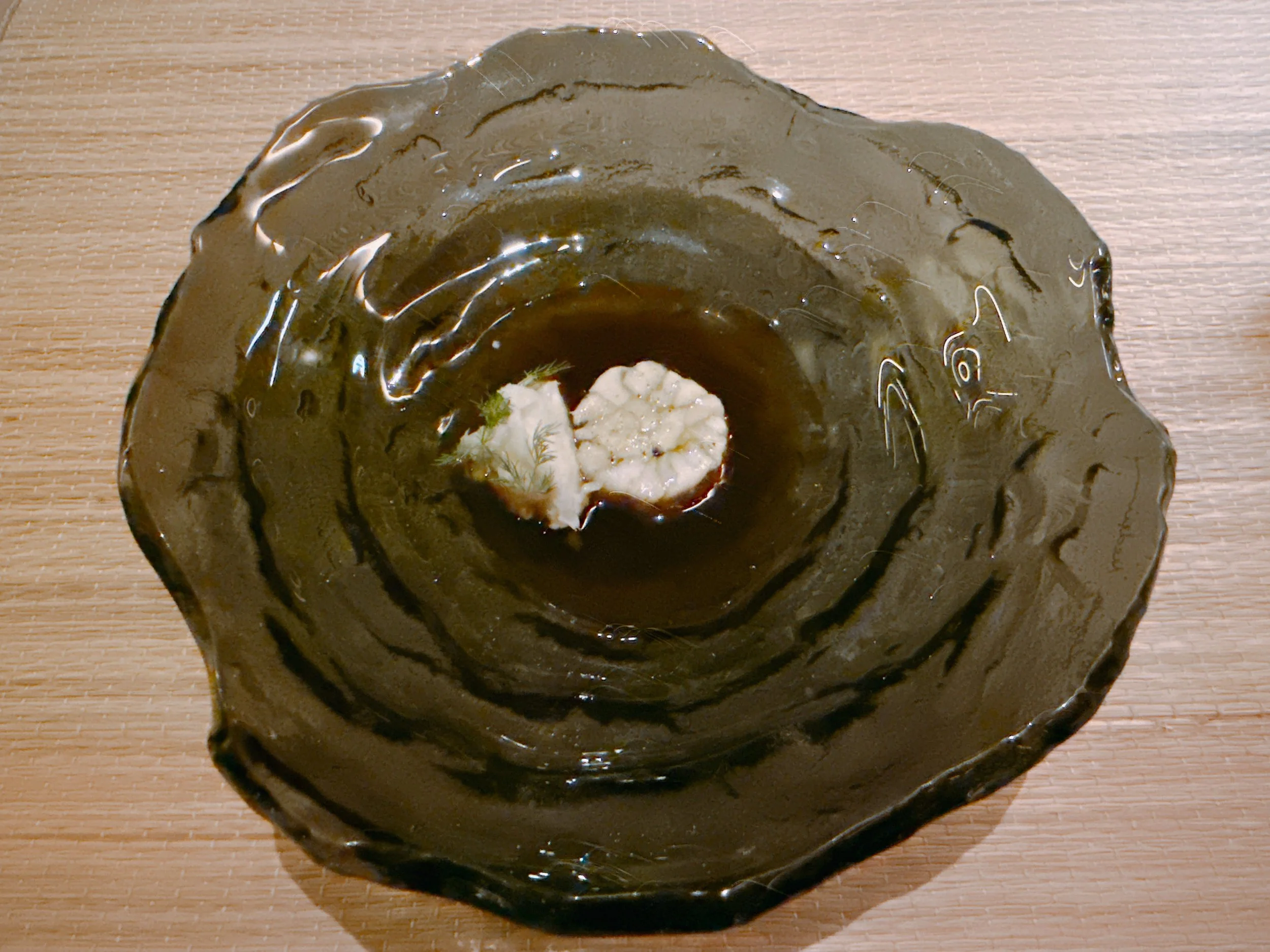
Then we traveled to the Amazon, at least ingredients-wise. Alligator meat was served with bacuri fruit in a clarified alligator sauce flavored with lemongrass, basil, and orange. The meat was firm - texture-wise somewhere between fish (maybe swordfish) and land-based meat, leaning a bit towards to the latter. The alligator by itself had only a subtle flavor, and (at least for me) fell more in the interesting-to-try-once, rather than the order-more-of category. The native bacuri fruit next to the meat was not very sweet and instead lightly acidic, and - curiously - was topped with dill. The sauce was full of umami, almost mushroomy in flavor. As I mentioned, it was interesting to try these uncommon ingredients, but the overall combination didn't blow me away. Sadly, the paired Alsatian Gewürztraminer also felt a tad too sweet for this savory dish 15.
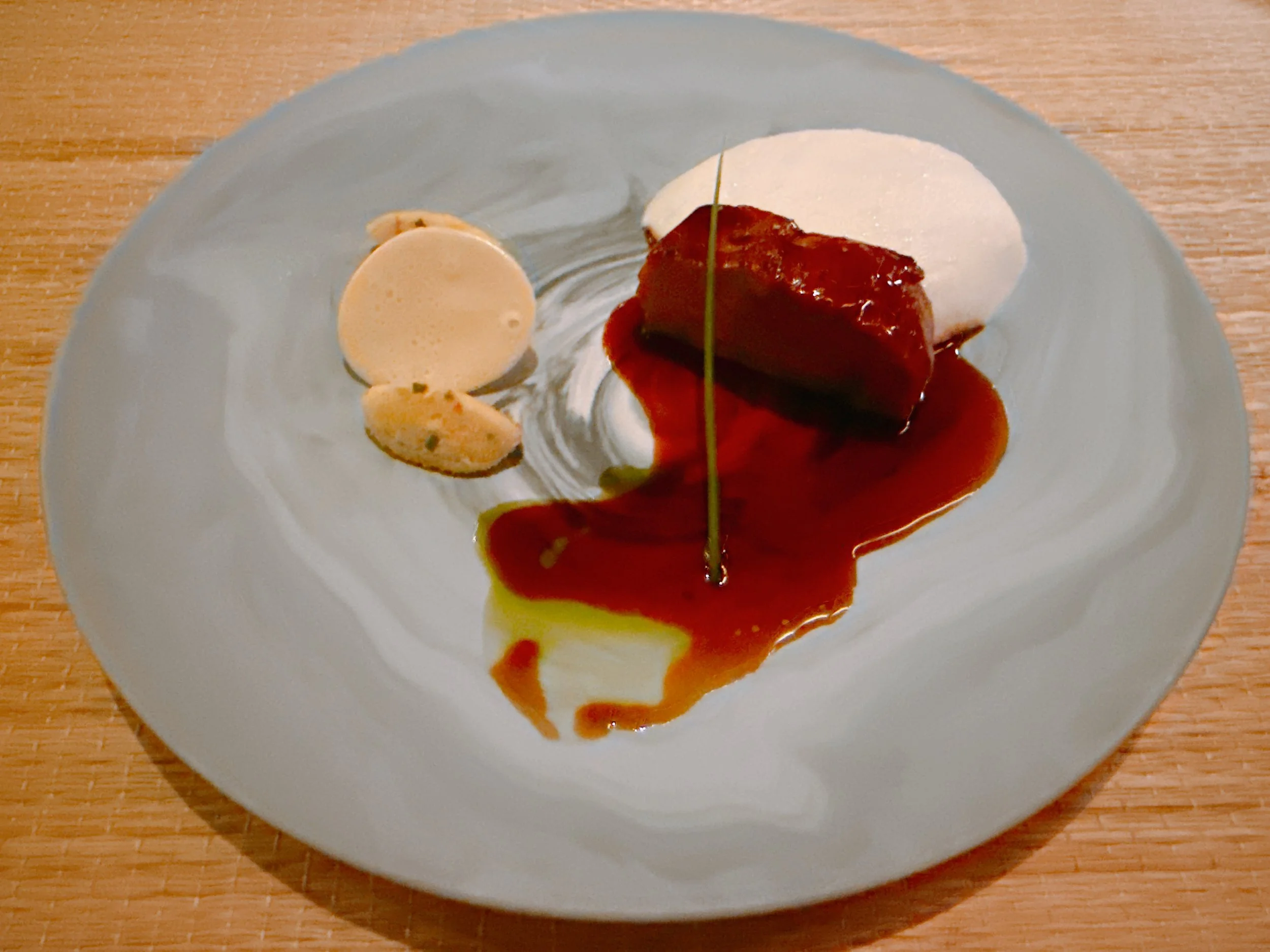
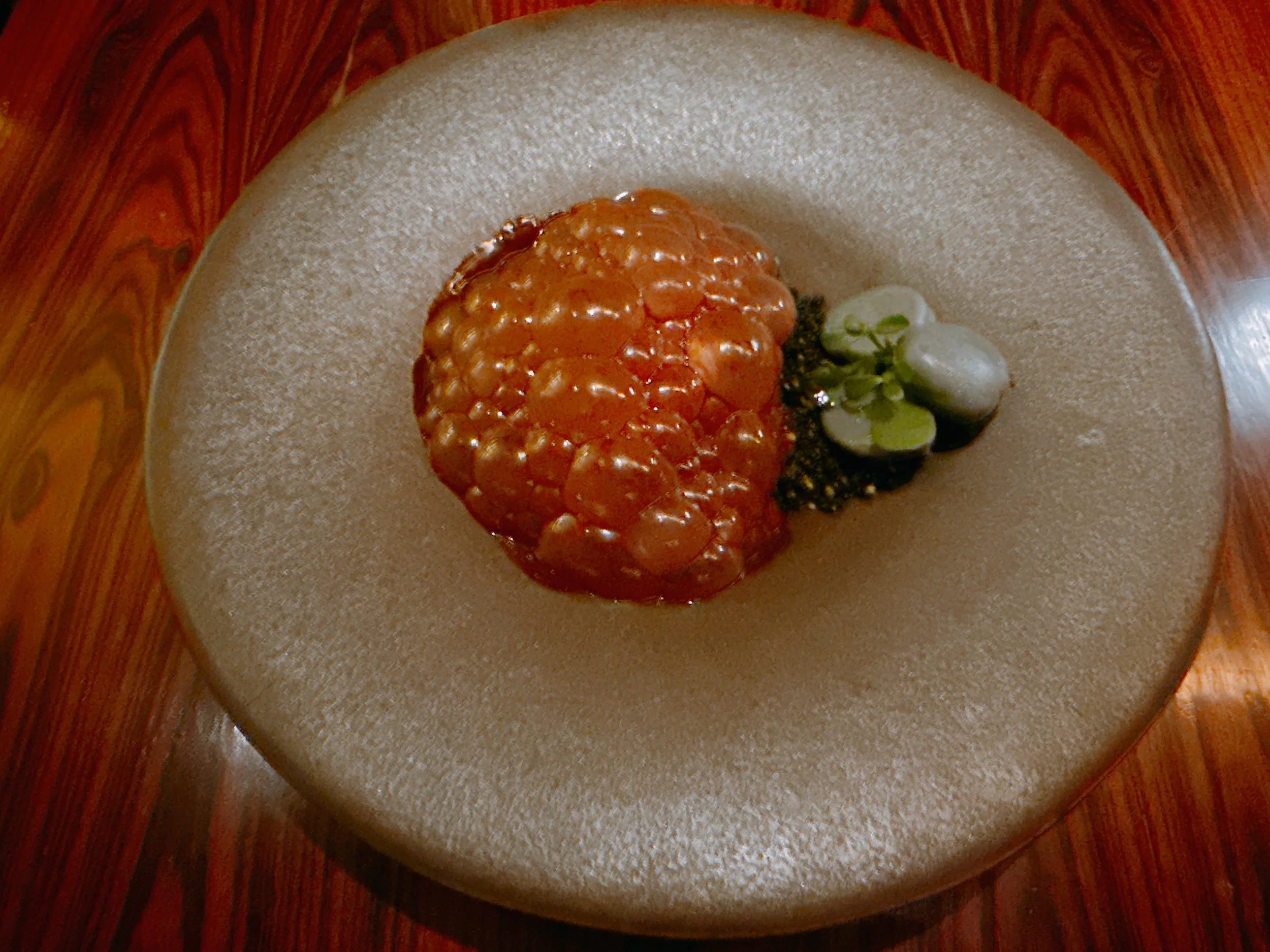
Our final savory course featured a filet of veal, paired with a coffee sauce, milk foam, a milk chip, and little dumplings made from cassava flour. The meat, while mostly quite tender and fine flavorwise, was overall not too distinctive. The sauce was indeed strongly coffee-flavored, but that was only apparent when one tried it by itself, the flavor blended nicely with everything else. The milk chip was not that sweet, and the (room temperature) cassava dumplings reminded me of an (uncooked) potato dumpling mix - starchy, with a shredded texture. Fine, but curious to see in a two-star setting 16.
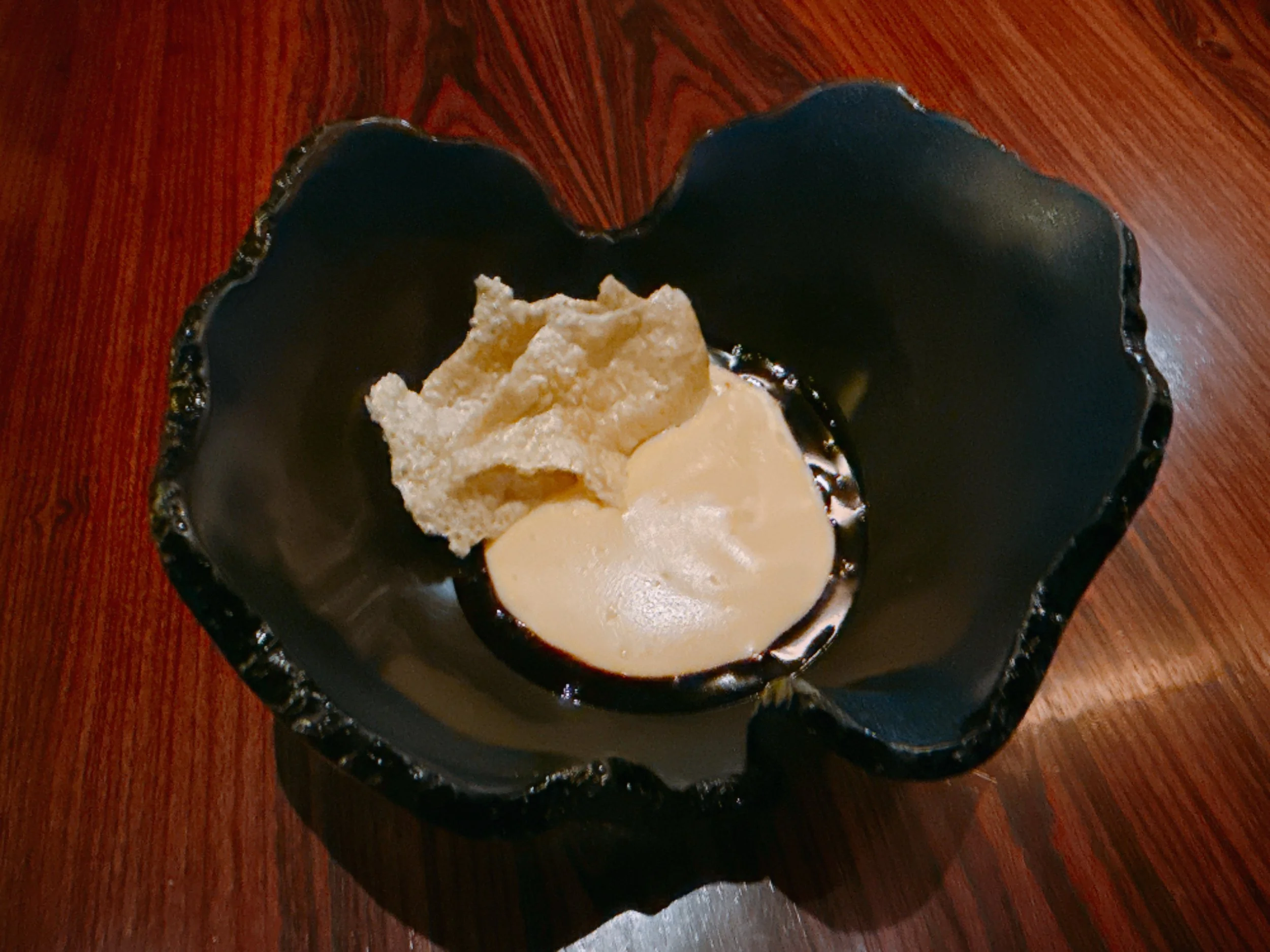
The following palate cleanser was a dip made from baroa (a sweet potato), balsamic vinegar, and vanilla, served with a tapioca crisp. The vinegar added a lot of flavor to the dish, but no acidity, and I unfortunately couldn't detect the vanilla. This dish had a good balance of being neither too sweet nor too savory - good news for a palate cleanser. But with its thick creamy texture, though, it felt a bit heavy - maybe not so good for a palate cleanser 15.
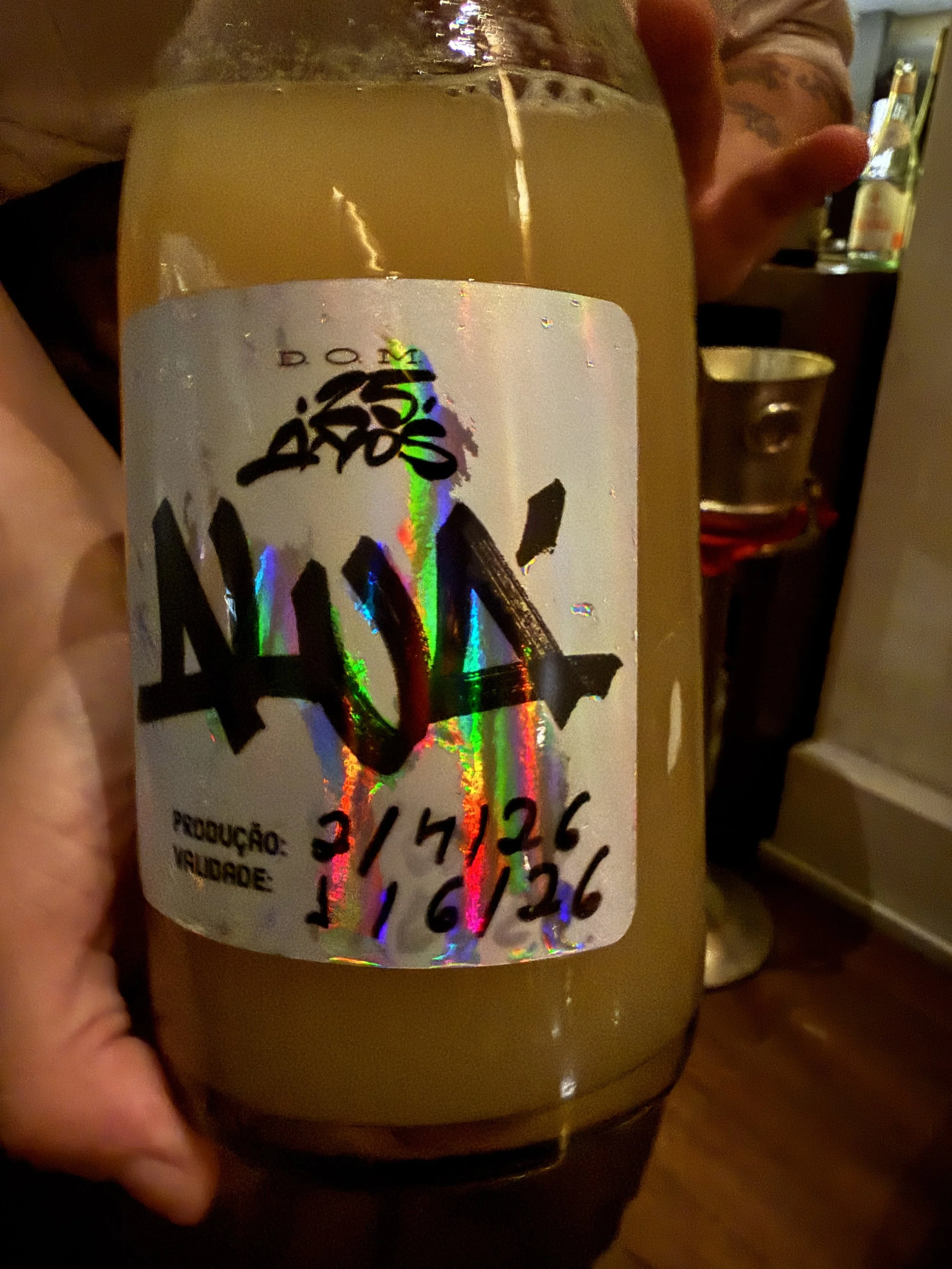
A house-made fermented drink containing pineapples, ginger, and brown sugar was served next. Lightly fizzy and tasting strongly of ginger, but less so of pineapple, it was actually not that sweet. Good for digestion presumably, and vaguely reminiscent of kombucha 14.
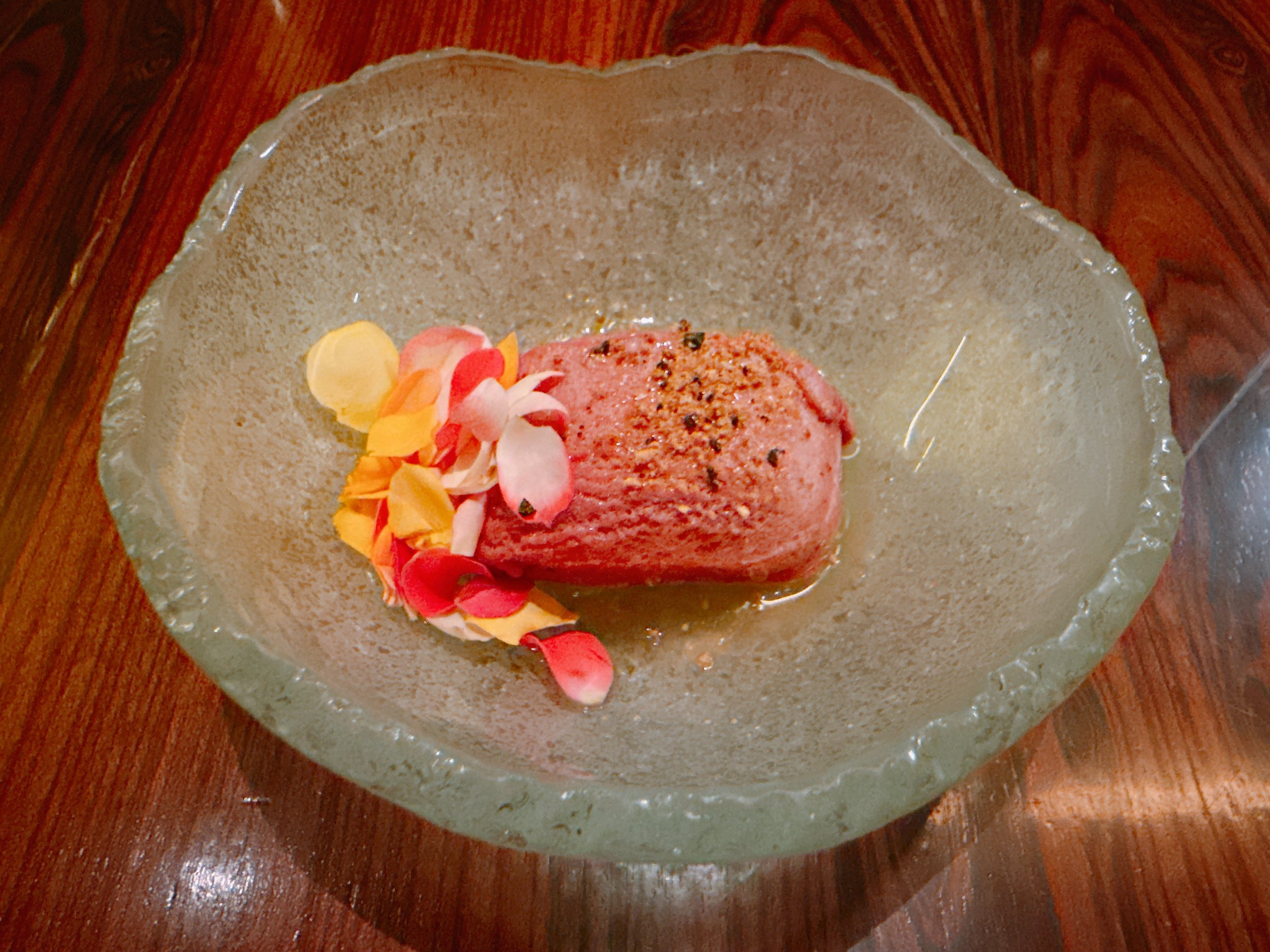
Our first dessert was a “Maria Mole”, a Brazilian dish with a stiff moussy texture. It was flavored with jabuticaba (a local berry), and topped with honey and pollen made by Amazonian bees, as well as some flower petals. The textural contrast of mousse and flower petals was interesting, and essentially this was a berry dish with some aftertaste of honey 15.
The main dessert was mostly based on chocolate, which appeared in multiple ways. Most prominently, there was a foam made from dark chocolate water that covered a bay leaf ice cream and a chocolate crunch. On the side were some white chocolate pralines made with matcha and filled with cupuaçu fruit. Chocolate desserts are often on the heavier side, but this one thankfully was pretty light. The foam, together with the chocolate crunch and the ice cream (which didn't really taste of bay leaves) were a lovely combination. The green pralines had an interesting mix of being herbal and fruity - the latter being an outlier in the overall flavor profile. The dish would probably have been fine without them 16.
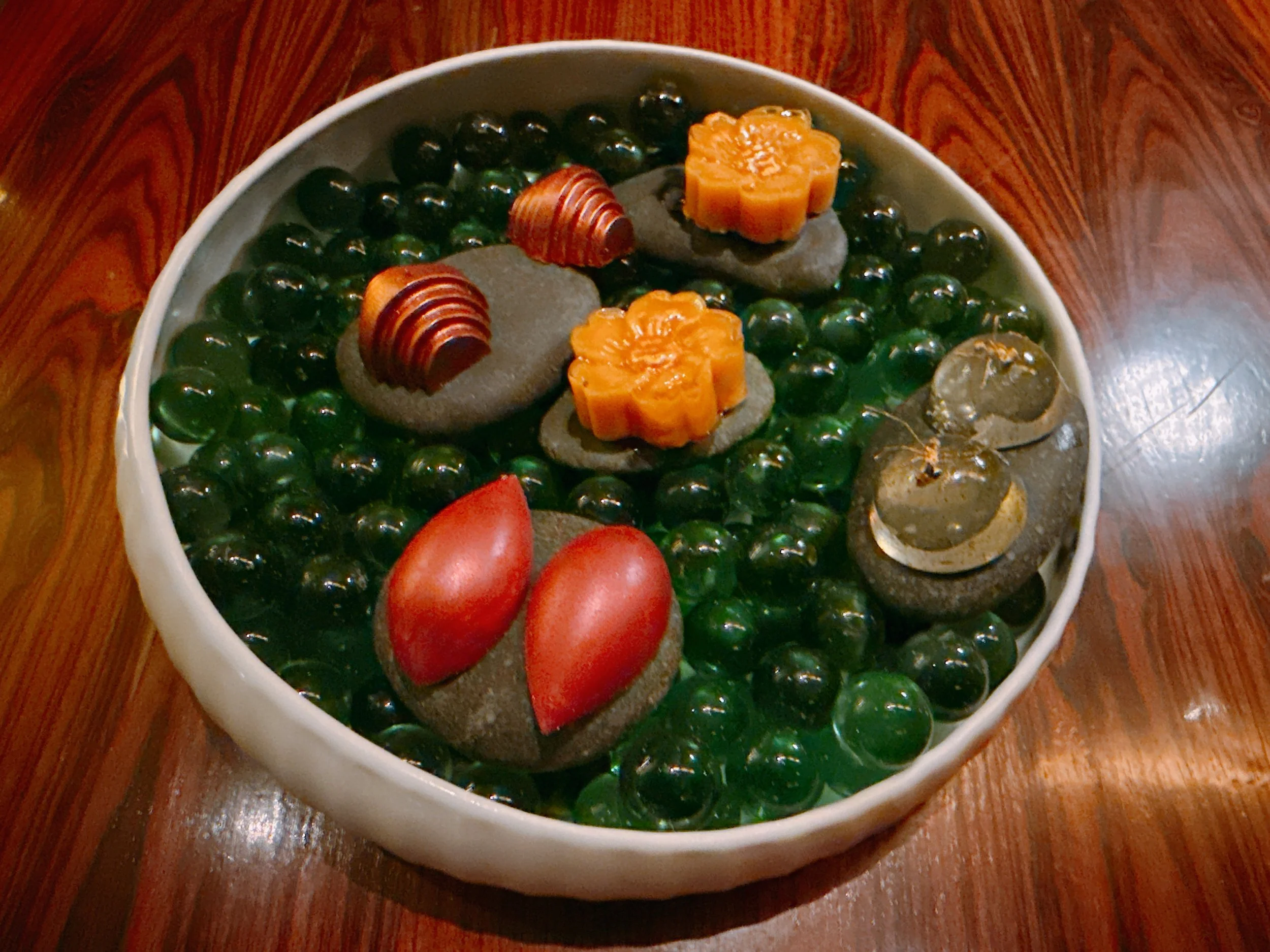
Four petit fours concluded our dinner, accompanied by a (complimentary) wine glass filled with red catuai coffee. We started with a pineapple jelly topped with an Amazonian ant. First, this bite tasted strongly of ginger, then of pineapple. The ant only added some minimal crunch, which made it feel like ticking a “weird ingredient” box rather than being a crucial part of the dish 16. A little cake make from corn and pequi fruit had a crunchy sugar exterior and a slightly mealy center, along with a light fruit taste. Fine, I suppose, but I didn't fully know what to make of it, possibly because it was based on a Brazilian dessert that I was unfamiliar with 14. A ruby chocolate praline was filled with guava and seaweed. It started out with a very intense seaweed flavor, before transitioning to the chocolate and finally a hint of fruit. Very opinionated flavorwise, but unfortunately (thanks to the seaweed) not entirely my thing 14. Finally, he had a second praline that was filled with honey and banana. It tasted pretty much like a banana bread praline, combining chocolate and banana flavors 14.
Overall: An enjoyable journey through native Brazilian ingredients, accompanied by a wide selection of Brazilian wines. For better or worse, the use of indigenous ingredients was relatively tame (compared to, say, Noma) - if one didn't know, one might not even have guessed that they were there. Compared to the restaurant's opening in 1999, ingredients like cassava, ants and alligators are now featured in Western cuisine, so the novelty might have worn off a bit. A stronger focus on the local ingredients, bringing out their distinctive taste profiles and what makes them special might have made our meal more compelling. Apart from that nitpicking, though, this was a lovely dinner 16.